

Ah, retail therapy. Who doesn’t love a little shopping spree?
Your future self, that’s who; when she checks her bank account and wonders where all the money went.
Shopping has been the downfall of many otherwise solid budgets. After all, stores (both online and in person) are designed to make you spend money. Their goal is to lull you into a false sense of security, then spring subtle traps you don’t even notice until your bank statement arrives and ruins your vibe. Fending off their tricks requires the vigilance of a tourist navigating pickpockets in a crowded plaza.
So how do you protect your hard-earned cash?

Step One: Make Shopping Inconvenient
One of the biggest tactics stores use is reducing friction, they want buying to be as easy as breathing. So I turn that strategy on its head and make shopping inconvenient. For starters, I delete my saved payment info on online stores. Why? Because getting up to grab your card adds just enough effort to kill the impulse buy. Bonus: it also improves your online security. The fewer websites that store your payment details, the fewer doors hackers have to kick in. In a store, implement a cash only policy the act of having to get out cash before you shop helps you stick to a budget and makes it less likely that you will impulsively wander into a store to buy.
Step Two: Impose a Waiting Period
Impulse buys lose their shine with time. I wait at least 24 hours for in-person purchases and two weeks for anything online. If I still remember the item—and care enough to go back and buy it—then I probably truly want it. This one habit has saved me from many would-be regrets.
Step Three: Question the Urgency
Most “deals” aren’t urgent. If I miss a sale, it’ll come back around. I use browser extensions to track price history and compare retailers—no FOMO required. Spoiler alert: a lot of “sale” items are actually at that price 90% of the time. Retailers love using “suggested price” vs. “actual price” as a manipulation tactic. Ignore it. Nine times out of ten, I can find it secondhand for less, which keeps stuff out of landfills and cash in my wallet.
A Word on Thrifting
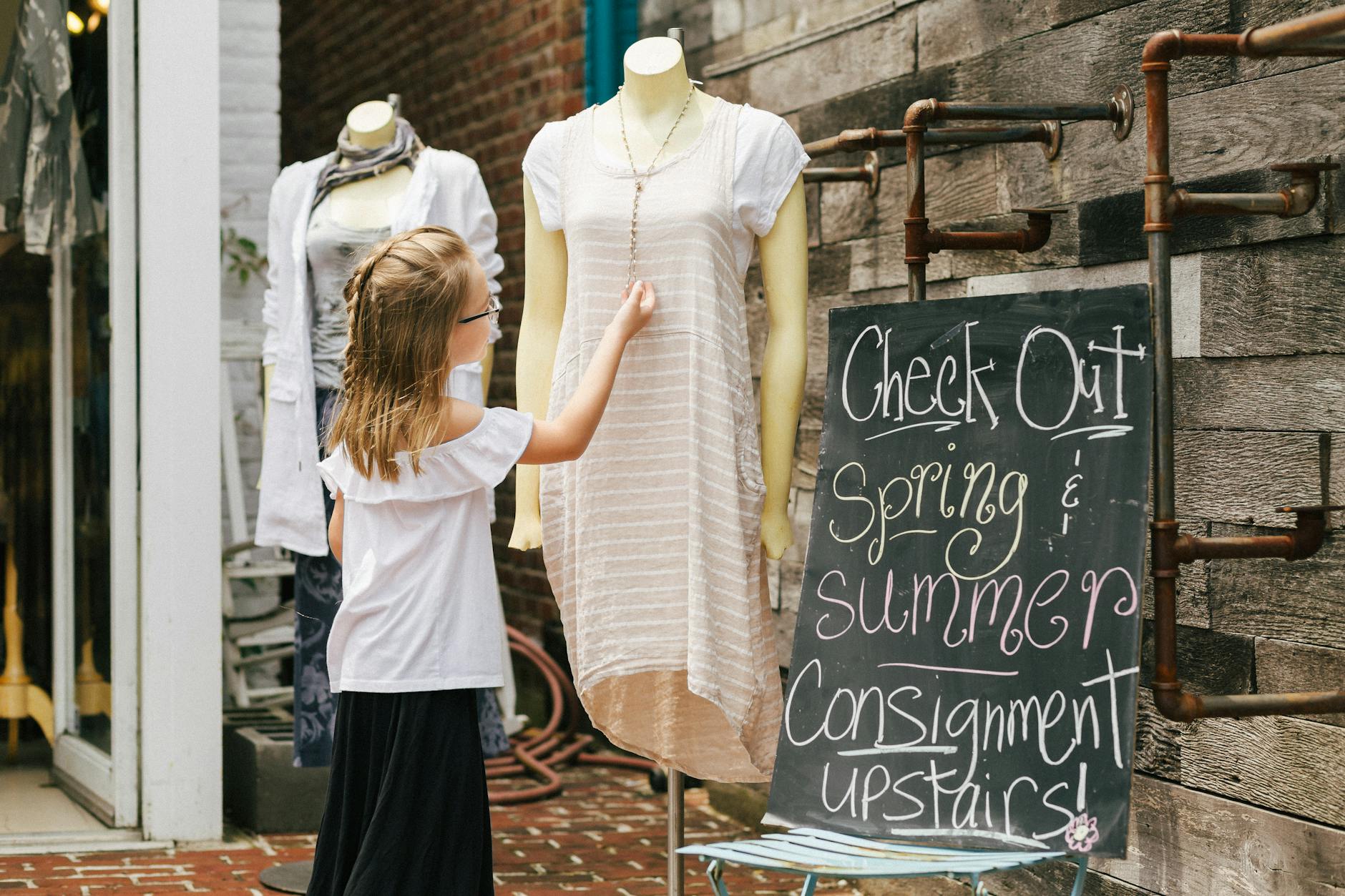
Thrifting is a beautiful thing—but it’s not a budget fail-safe. You might “save” $50 on an item, but if you spent $150 on things you didn’t need, did you really save anything? That feeling of “this is my one shot” can be strong at the thrift store or on Facebook Marketplace. But I’ve learned that “one-of-a-kind” often isn’t. I’ve lost track of how many “unique” items I’ve passed on, only to find something nearly identical (and often better) a few weeks later.
When I thrift, I come prepared. I shop with a plan: I’m looking for specific colors, staple pieces, or items I’ve previously identified as gaps in my wardrobe or home. If it doesn’t fit the plan, it stays on the rack. Accessories are my one soft spot—but even they have a budget cap.
Facebook Marketplace Favorites
I love Marketplace for:
- Garden tools and supplies
- Home décor and furniture
- Miscellaneous odds and ends
But even there, I stay vigilant. A “great deal” is only great if it doesn’t become clutter.
My Shopping Litmus Test
Before I buy anything, online, in person, or secondhand, I ask myself:
1. Is this something I would have bought anyway?
The “girl math” mindset is fun in theory, but let’s be real: spending $150 to “save” $50 only works if you were already planning to spend the $150. Otherwise, you’ve just spent $150 you weren’t going to spend.
2. Does this item solve a real problem I’ve actually noticed?
Marketers are sneaky. They’ll convince you that you have a problem so they can sell you the solution. If I’ve never thought, “Wow, this task is a nightmare—I wish I had a tool to fix it,” then I probably don’t need it. Too often, new gadgets end up collecting dust while we go back to the old method that worked just fine. If you weren’t looking for a solution, it wasn’t a problem.
3. Do I have space for it?
Space is not infinite, even if you’ve mastered Tetris-level closet organization. Every item you bring home costs you space—and that has a price. A cluttered environment can raise stress levels, affect your eating habits, and even mess with your cognition. So while I’ll never be a minimalist, I understand the appeal. An uncluttered home is cheaper than therapy.
4. What’s the quality like?
I take time to learn about quality. I look at materials, stitching, thread count, and overall craftsmanship. I’ve ditched the “expensive = better” myth. If I’m unsure, I’ll phone a friend who knows what they’re talking about. When I was car shopping, I brought my mechanic friend along. He spotted warning signs I’d have missed—and steered me toward a vehicle that’s lasted me almost eight years with minimal issues.

Extra Shopping Smarts
- Use cashback apps and credit card rewards—but wisely.
- Unsubscribe from marketing emails. Temptation isn’t your friend.
- Always factor in the cost of storing, cleaning, and maintaining what you buy.
- Repurpose what you already have before replacing it.
Final Thoughts: Budgeting That Works for You
None of these tips are one-size-fits-all—and that’s the point. Real-life budgeting should work for your lifestyle, not against it. For me, that means prioritizing comfort, avoiding waste, and being mindful. The goal isn’t to hoard every dollar (we can’t take it with us), but to spend in a way that supports what matters most.



 Budget Bliss: Bucket List