

Did you know that over 75% of people report being fearful of public speaking? Some people even have anxiety or even full blown panic attacks. My very first one happened while giving a speech in 10th grade. I ended up in the bathroom in tears and could not finish the speech I was giving in class. It probably could have happened during any sort of anxiety inducing activity, but unfortunately or fortunately depending on how you look at the situation, it happened during a speech and my “fate” as it were, was sealed.
Most people don’t realize that the first anxiety attack can be triggered off without warning, but whatever situation you’re in the first time it happens, becomes a trigger for more. For me, it became speeches and auditions. Which sort of tanked any career in music. I had wanted to do music, but performing in front of anyone solo was impossible. Perhaps, if I had been a piano player I could have managed my shaking fingers to do something productive, but alas I chose a cruel and mercurial mistress. The violin is not for the faint of heart for she must be played boldly and masterfully, lest she shake you off as unworthy of her affections.
In my Freshman year of college, I had to take a communications course. I picked intrapersonal communications because everytime I went to give a speech, I would end up having an anxiety attack. I purposefully picked courses where speeches were at a minimum to non-existent. I might be able to get through the speech (barely) and then immediately run to the bathroom to cry. Like many people, I avoided the thing that made me anxious. However, as fate would have it, I had an amazing psychology professor for Psych 101 who briefly talked about anxiety and panic attacks from his clinical practice. He told us about how he would help his clients get over their fears. Which was to face them and to not run from the situation when the attacks happened because it was training the brain to respond to the stimulus as something catastrophic and life threatening.
Which meant that I learned from him that I had to stop running out of the room every time the panic and anxiety hit and at least finish the speech. Curiously, there was one place where I could give speeches without panicking. German class. An interesting tidbit for you gentle reader, is that when we activate the more logical parts of our brain it’s harder for us to anxious. So asking someone who is having a panic attack to complete simple math problems helps activate the parts of their brains which can help emotionally regulate them.
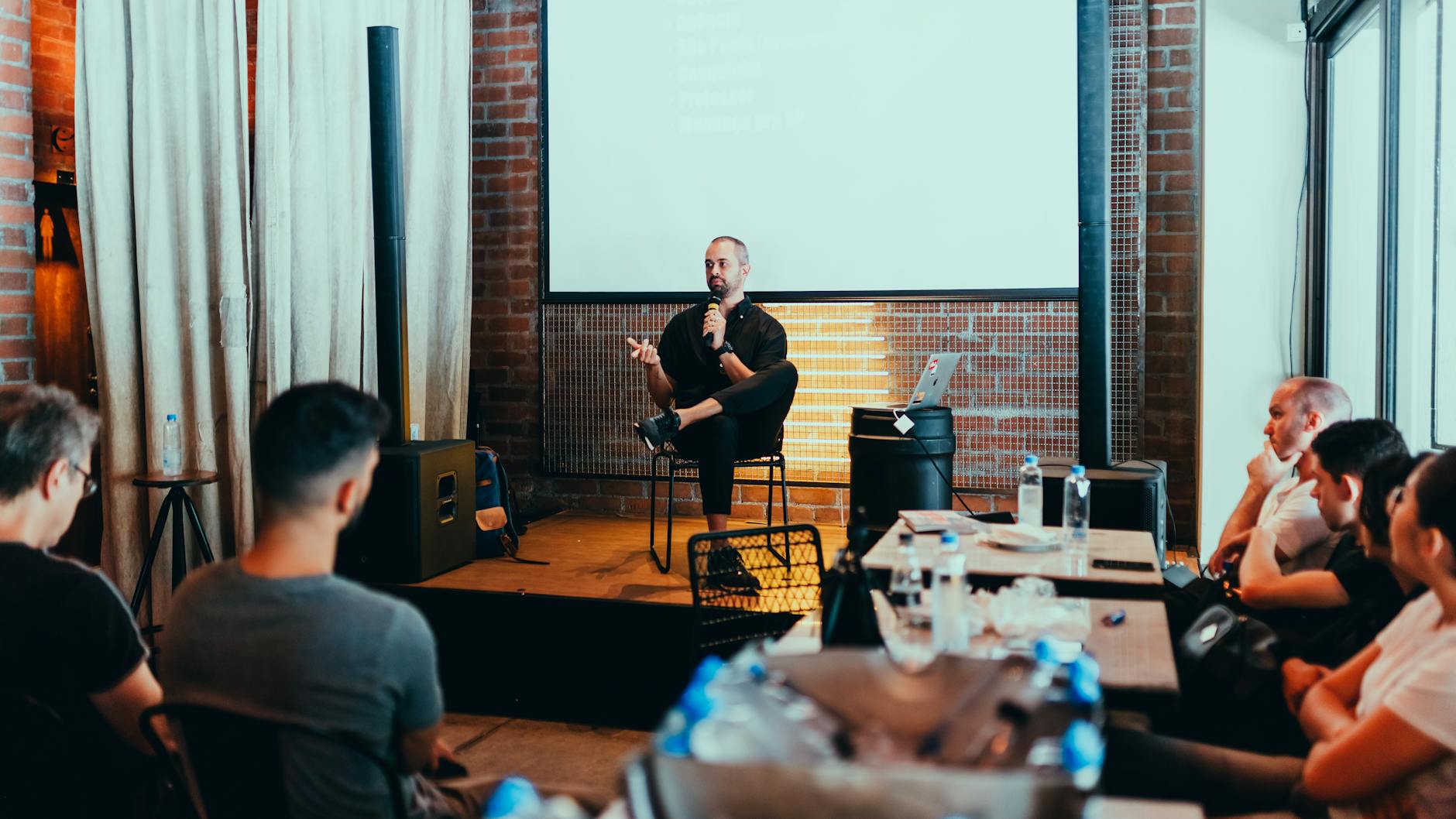
Because German was a second language, it helped to activate that part of my brain. I was so focused on just getting the words out regardless of how it was delivered I half-forgot it was technically a speech. Also it helped that I was being graded more on how I spoke the language and not my presentation skills. However, it helped me find a place of strength to build from. I was able to see where the symptoms weren’t present in a similar activity in order to find a starting point. I understood that it was stemming from an underlying anxiety related to performance and perfectionism, so I worked to find ways to manage the anxiety and to put myself in situations where I could safely not be perfect. No one expects you to speak your second language perfectly so it was easy to shrug off mistakes.
From my successes in German class where I stopped having any anxiety during presentations at all, I was able to sign up for a pass/fail acting class. I purposefully choose it as pass/fail so that way even if I completely bombed it wouldn’t negatively impact my GPA and the worst outcome that could be was not earning the credits I didn’t need. It was difficult at first to stand up in front of people and read off lines. I felt awkward with my expressions and that I wasn’t doing it very well. My stance felt wooden and my deliverance stilted. The professor was enthusiastic and my fellow students were gracious. We bonded over trying to overcome the awkwardness together. It was kind of like being in German class where no one expected to do great, but we’re all trying and learning anyways. I only ended up crying in the bathroom once the whole semester and it was after the “final” exam.
The experiences I had in college, helped me form a foundation from which to build from. I learned about how to better manage my anxiety, what triggered it, and how to challenge some of the thoughts that came with it. I started to look at public speaking differently recognizing that when I tied expectations and pressure of performance that’s when I made it worse. When I could relax and just enjoy the interplay between myself and the audience, it became a lot less stressful. I went back to grad school and was able to do better with presentations once again analyzing when I was able to do well to replicate the success, and forcing myself to stick with it even when the panic started to rise, remembering that I wasn’t going to train my brain to see this as something to freak out about.
After graduate school, I have been in positions where I’ve needed to do case presentations in front of a hundred other clinicians. I have given speeches at multiple churches and other functions to raise money and recruit volunteers. I’ve developed and given trainings to volunteers and staff. All with ease. The road was not by any means easy, and it took over 15 years to really conquer it and there are still times when I start to feel the anxiety rising once again in the middle of a speech. However, each time, I roll with it, use positive self-talk, take a few deep breaths and refuse to let it control me. I will probably be giving a presentation in a few months and I’m actually looking forward to it.

How can you conquer your fears?
Not everyone has a fear of public speaking, but I bet, dear reader, you’re afraid of something. You may not have panic attacks or anxiety attacks which leave you gasping for breath and crying uncontrollably, but you probably have things that you avoid doing or places you avoid going because of anxiety. Don’t get me wrong, I’m not saying we remove all fears and begin to simply roam around in the dark without any regard for safety, that unlit alley at midnight should probably be avoided. Fear and anxiety help to inform us of danger to keep us safe. That is why conquering fear can be so tricky, it’s meant to help us survive.
The key is to try and start with something that is similar enough to the thing without causing the panic and then exposing yourself repeatedly to the it. Let’s say you’re terrified of spiders. Perhaps, you can kill them in World of Warcraft, you might not be thrilled about them, but a tiny one on your desk makes you freak out. So you’d start with maybe going out of your way to kill them in the game. It teaches you that hey this big scary spider isn’t so scary after all, in fact, I can conquer them. Or if you’re not into gaming, maybe just a picture of one. You look at a whole slew of pictures, using grounding, deep breathing and other calming techniques to keep yourself from feeling overly anxious. A little is good, but not too much.
Once you are able to handle the baseline situation well, you move onto the next stage. Maybe it’s watching movies with spiders (not scary ones but like documentaries). Once you can handle that then you move up again. Maybe it’s visiting spiders in a zoo and spending a long time with the spiders at the zoo or pet store. You may follow up this step with touching the spider or letting it crawl on you. As you can see, the process is a gradual exposure to increasingly more difficult and fear-inducing things. However, by scaffolding the experiences you are continually teaching yourself not to respond with fear but instead relative calmness. Each small step is a building block upon which you can add to.

Now this isn’t something that will be done in an afternoon and you have to be intentional in your approach to the fear. I purposefully sought out and put myself in situations where I would have to speak in public in order to get myself to get over it. Our natural inclination is to avoid that which makes us afraid because it’s a survival instinct. Don’t go hang out with the hungry lions, the fool who wasn’t afraid of them got eaten! However, we need to recognize when our emotional brain is in the driver seat making up irrational nonsense. Public speaking won’t kill me, hundreds of people do it every day. Very few spiders will actually cause me harm and many are quite useful. When we see that it’s irrational nonsense, then we have to take over and show it, gently, that there isn’t anything to be afraid of and that we are indeed safe.
If you are someone who suffers from panic and anxiety attacks, my recommendation is to seek professional assistance in this journey. I know very few people who were able to do it on their own. Know that this is the process you will most likely endure, a gradual exposure to the things you’re afraid of. There may be other cognitive behavioral components such as an exploration of why you developed this fear, where it comes from and how your beliefs shape and fuel it.
 Budget Bliss: Bucket List