

We now, come to the end of my travel tips and my post on various modes of traveling, automobiles which usually come in two flavors when traveling abroad, taxis/ubers and rental cars.
Taxis are famously expensive and so I avoid them if possible, but sometimes you simply won’t have much of a choice, whether public transit isn’t running, doesn’t go to the destination or you’re simply too exhausted to bother hauling your luggage onto a subway in the middle of rush hour. On a recent trip to England, I actually opted for a combination of all these forms of transportation, a plane, buses, trains, subways, taxis and a rental car. I ended up taking a taxi mostly when the rental car wasn’t available because I arrived late on a Saturday afternoon several hours after it closed and it didn’t open until Monday and I really wanted to have time to go to Saint Michael’s Mount that Sunday because of other various parameters, Sunday was the optimal time to visit. Now as a tidal island, it’s only accessible by a causeway during low tide which happened to be from 11:30 to about 3:30 that. The bus didn’t leave until Sennen Cove until 12:00 pm and was an hour and a half ride meaning I wouldn’t have arrived until 1:30 pm, I still would have had a significant walk to the causeway giving me a rather slim amount of time to visit. Additionally, I would have been waiting until about 5 pm for a bus back to Sennen Cove. Meaning I would have had almost and hour and a half of waiting around outside. Given the parameters, I opted for a taxi.
If you find yourself at a major hub, hailing a taxi is usually as easy as walking up to the assembled line of taxis and hopping in the first one. Just be sure you’re going to an official taxi stand. Keep in mind you will pay an arm and a leg if you’re traveling far away from the hub. Now if you are going further out, you may run into taxi drivers refusing your business. Most countries have laws in place to protect you, but they may still try to. The best way to avoid that is first do your research to see if there are laws to protect you and the second is to wait until you get in the cab to tell the driver where you’re going. It’s a little harder for them to simply refuse your business once you’re all settled and they’ve pretty much committed to driving you.
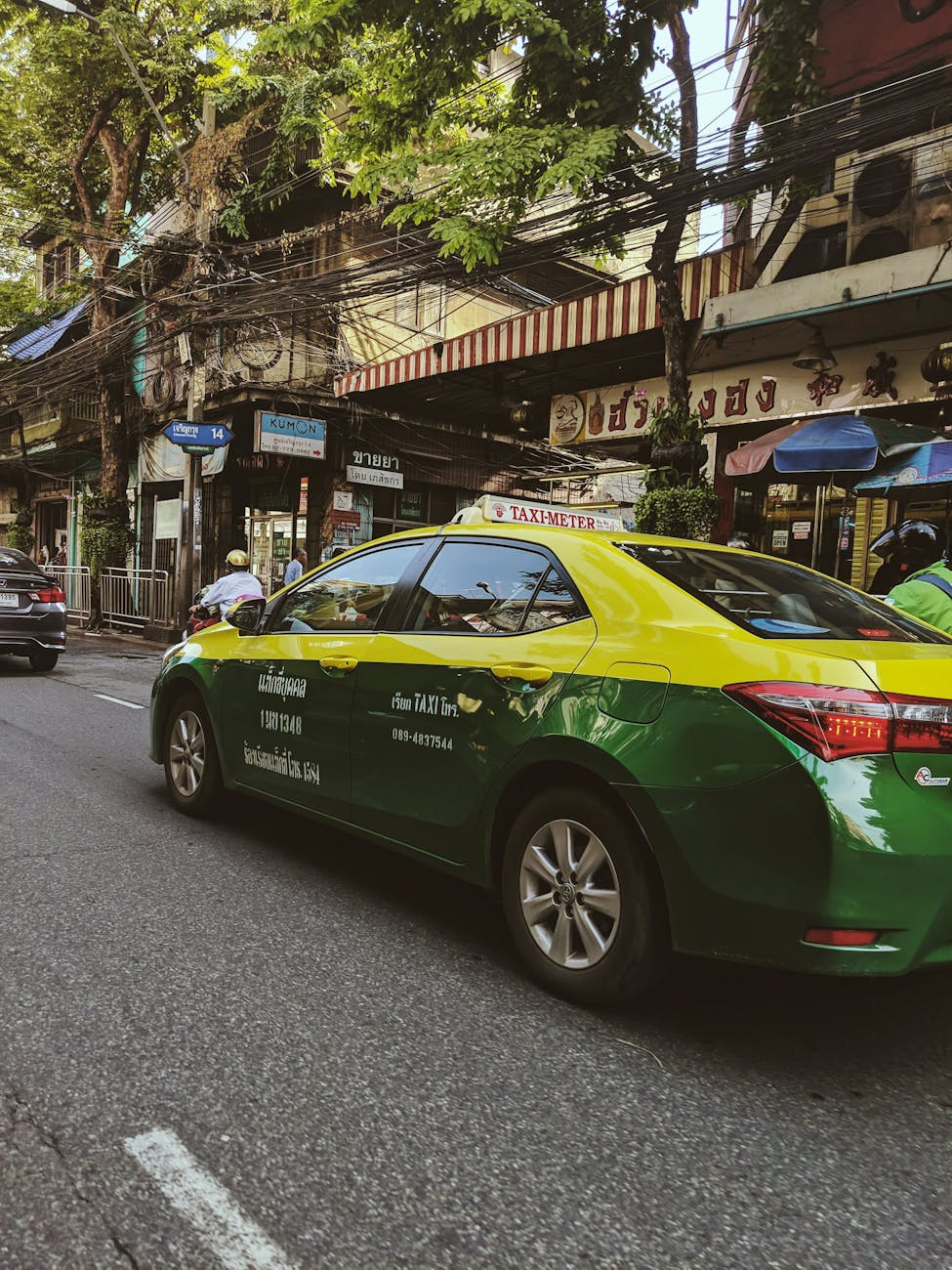
If you aren’t at a major hub, you may need to either reserve a taxi ahead of time or call one. Make sure to verify the taxi’s credential look for the company’s name, logo and the driver’s identification card. If the local laws don’t require that or you’re using an app like Uber or Lyft be certain to note the license plate number. When using an ride hailing app double-check the car’s make, model and license plate match the information provided in the app. Other safety tips include refraining from sharing personal information, paying in cash if possible, sharing your trip details and keeping your valuables secure. If you ever feel unsafe, you can always request the driver drop you off at a safe place and call for a different cab. Make sure you know the local emergency numbers.
Make sure you have the address of your destination in an easily accessible place as you would hate to have the meter start running while you fumble about trying to confirm your destination. Don’t assume your driver will know precisely where to go.
Be sure you understand the fare structure when you’re traveling some places may charge a flat rate for rides within a given area, most use a meter to calculate fares based on distance and time. Knowing this ahead of time can help you budget. Make sure you research common scams and pitfalls related to taxi fares especially in high tourist areas as you may find yourself being charged unfairly. However, most of the time the drivers are honest and quite pleasant. In my experience most drivers prefer cash over card and they will often round down if you do offer them cash rather than card. You won’t save a ton of money but you may save a few bucks, so be prepared to pay with cash over card.

Now you may say, to heck with all this public transit and taxi nonsense, I’ll simply rent a car and drive as God intended! And it may be worth doing that. Depending on where you want to go, the availability of public transit to your desired destinations, how much time you have and the expense of taxis, renting a car may be the best option.
Remember that small trip to Saint Michael’s Mount? The taxi ended up costing me nearly 80 pounds for just one back and forth trip. Given that I desired to go to multiple places where buses and other forms of public transit simply did not go, taking a taxi everywhere was going to be quite a bit expensive. This meant that I opted for a rental. My rental car cost me 60 a day for the week (perhaps a little more with gas factored in). I was able to take multiple trips in a day, didn’t have to wait for a taxi to pick me up and didn’t have to worry about a meter running.
Additionally, I wanted to venture a bit further afield visiting Stonehenge, Bath, the Seal Sanctuary and Tintagel. Had I attempted to visit Stonehenge using public transit, I would have spent nearly 7 to 9 hours traversing the country side by taxi, bus and train. With a rental car, the trip was only 4 hours and I was able to add on Bath. The unexpected expense was of course the price of gas. It was astronomical, I certainly complain about gas prices in my home state of PA, but the UK made it look positively cheap.
The other unexpected challenge was not that I was driving on a different side of the road or even the traffic circles (we actually have several of them in my area), no instead it was that I had inadvertently rented a giant SUV and those roads are tiny! There were plenty of places in Cornwall where you couldn’t even fit two cars together meaning you had to drive backwards until hitting a spot with a section just wide enough for your to squeeze your car into while they passed you or they had to drive backwards to let you pass (I shall write a whole post about the adventures of driving in a foreign country eventually).

This meant that everytime I drove, I was worried about scratching the darn thing, so much so that I sprang for a little extra protection against damage to the car to reduce potential costs from 2,000 to 250. As it turns out most of the world does have tiny roads and unfortunately car manufacturers insist on making ever bigger cars. It may be worth it to research the models of car and pick the smaller one or to simply forego the SUV. Although, you may not want to do that if you will be going into the backroads since some of them are little more than dirt paths. I really felt that it was a no win situation with regards to the risk of damage to the car. Luckily, the fates were with me and I managed not to scratch the car. The key is not to rely solely on the camera and the sensors but rather ensure your mirrors are positioned so you can see the rear wheels and a little bit next to them. I learned this trick from an ambulance driver and I think if anyone knows how to maneuver a vehicle backwards without getting into an accident it would be them.
Additionally when renting a car, and this is very important, make sure you’ve rented an automatic car. Much of the world drives stick and much of America does not. I do not recommend renting a manual car if you’ve not driven them much before especially if going to a country like the UK. Do you really want to try driving on the opposite side of the road, with a million traffic circles, trying to drive stick while jet lagged? I didn’t think so. Additionally, make sure you’ve taken the time to research and review the relevant traffic laws and common symbols of the country you’ll be traveling to. Don’t assume that traffic signs are universal, yes most are self-explanatory but some aren’t.
There are other common pitfalls with rentals such as mileage, tolls, insurance, late returns and different pick up and drop off locations which can cost you money. When you do rent a car be certain to check the mileage as not every rental comes with unlimited mileage. Some will even limit you on taking your rental out of state or the local region. When traveling in the United States, a common issue for tolls is that rental cars will vastly overcharge you for any tolls that they cover. It can be difficult to opt out unless you ensure the toll transponder is closed and that you make sure you pay directly at the booth or online. Most places recommend you bring your transponder. The other option is to avoid toll roads altogether.
Insurance can be another place where you get overcharged. If you have a personal car insurance policy or a credit card that covers rental car insurance then getting it through the rental car company may be something you don’t need. If you have a credit card for coverage make sure it offers primary collision damage waiver and that the type of car you’re renting is covered and the country you’re traveling in is covered. However, credit card collision damage waivers do not cover personal injuries to you, your passenger or pedestrians involved in an accident.

Many rental car companies define rental period by 24 hours so if your return time is later than your pick up time, you’re going to pay for an entire additional day even if it’s a few hours difference. Some companies do have a grace period from 30 minutes to 2 hours if you return the car after the designated return time. This probably would have been helpful knowledge when I rented a car in England and saved me $60 as my pick up time was 9 am and I selected my drop off time as 12. I ended up picking it up closer to 10 am and dropping it off at around 11 am and could have saved about $60. Additionally if you pick up and drop off at a different location be prepared to be charged extra. Even if it’s convenient and easy for you to do so, it isn’t for the company and they’ll be certain to charge you for their trouble.
I also would recommend avoiding booking through third party sites. They may be attractive for lower prices but you lose a lot of protections if something goes amiss. If you need to alter your reservation or get a refund, it’s much easier to get what you need if dealing directly with the rental car company to begin with.
Finally, make sure that you check the vehicle before you drive off. Make sure that it has a full tank of gas, you take pictures and video of the car to note any damage and make sure you check the car’s vehicle identification number for information on the car’s features and any recalls. Be certain that any of issues are documented at the time of pick up.
Hopefully, you’ve found my tips to be informative and helpful for maximizing your travels and checking off your list. After all, while most of the things can be done closer to home, there are some things that can only truly be experienced by traveling.
 Budget Bliss: Bucket List