Keep the Thing You Love Useless

Dear readers, I have been in the midst of an ADHD hyperfixation.

Poetry.

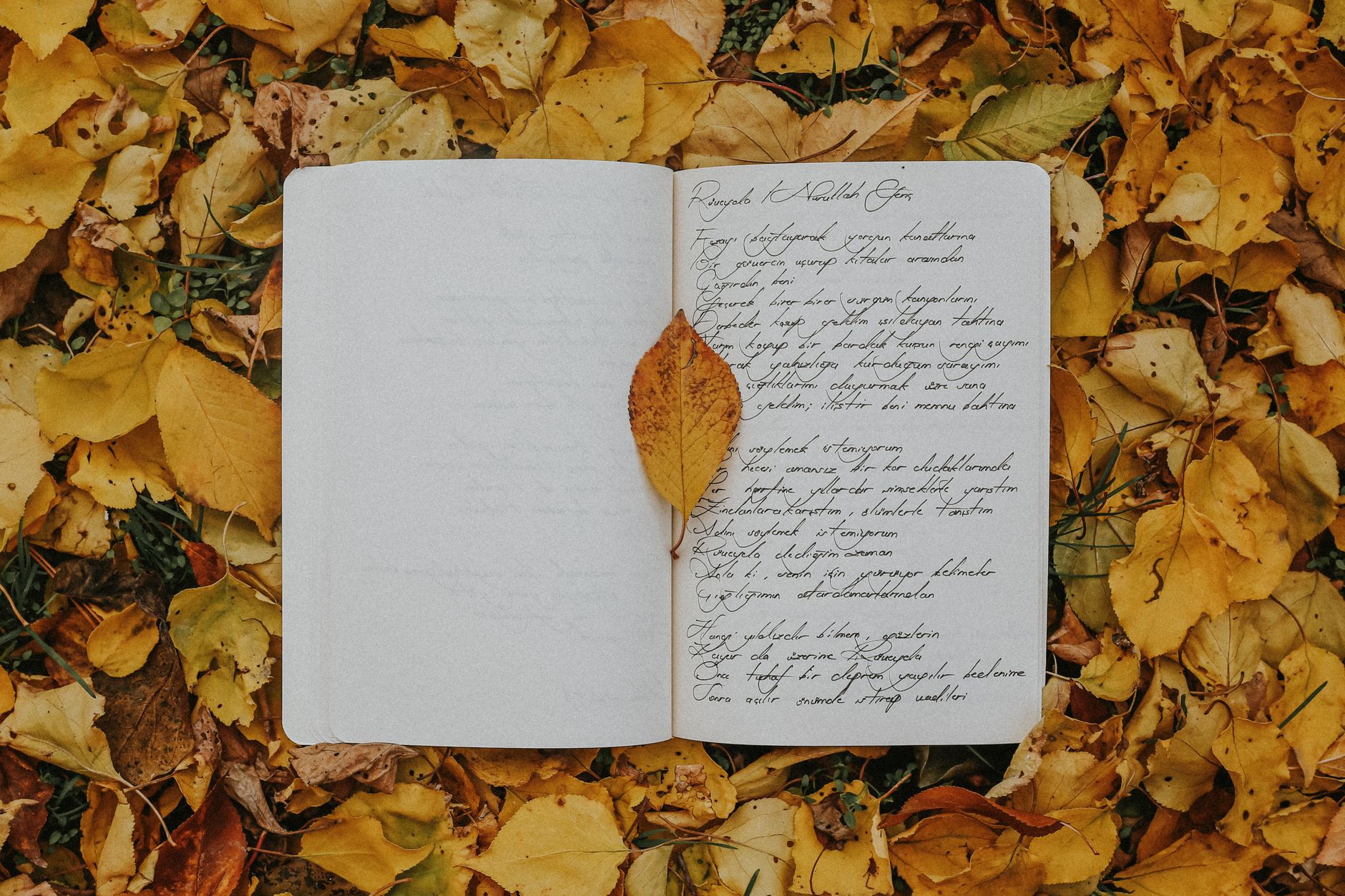
For the past three months, I have been utterly consumed—writing forty-plus poems in three months, which even I have to admit is a slightly absurd amount of poetry

Now, I shalln’t subject you to the entirety of the collection. However, I have shared a few with friends and family, who have begun to gently (and not so gently) encourage me to seek publication. After all, it seems such a shame that such a collection should simply languish on my desktop.

Suddenly, a list of journals sits before me, complete with deadlines looming and pressure quietly building. Some even come with significant cash prizes if the poems are selected.

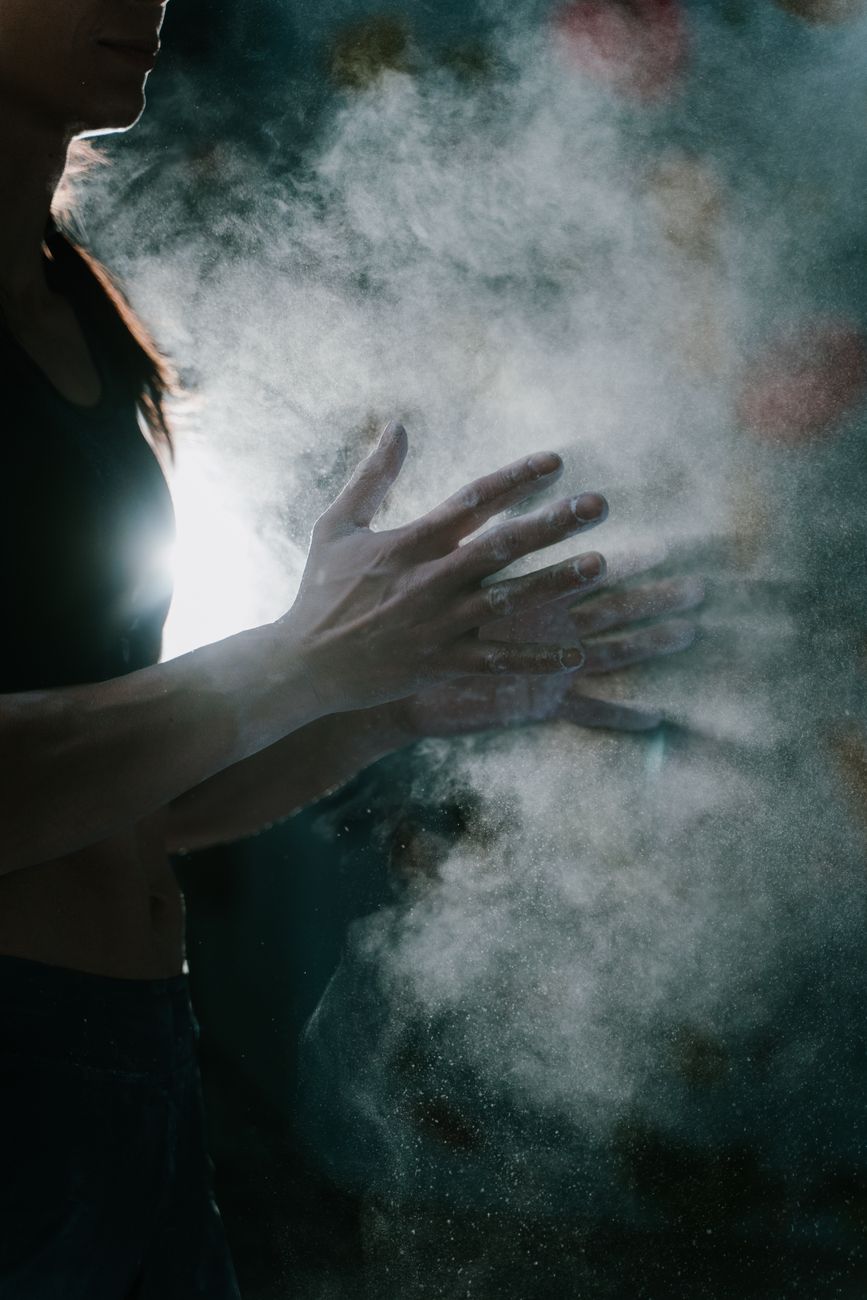
Photo by Hatice Baran on Pexels.com

Isn’t that just the way of hobbies?

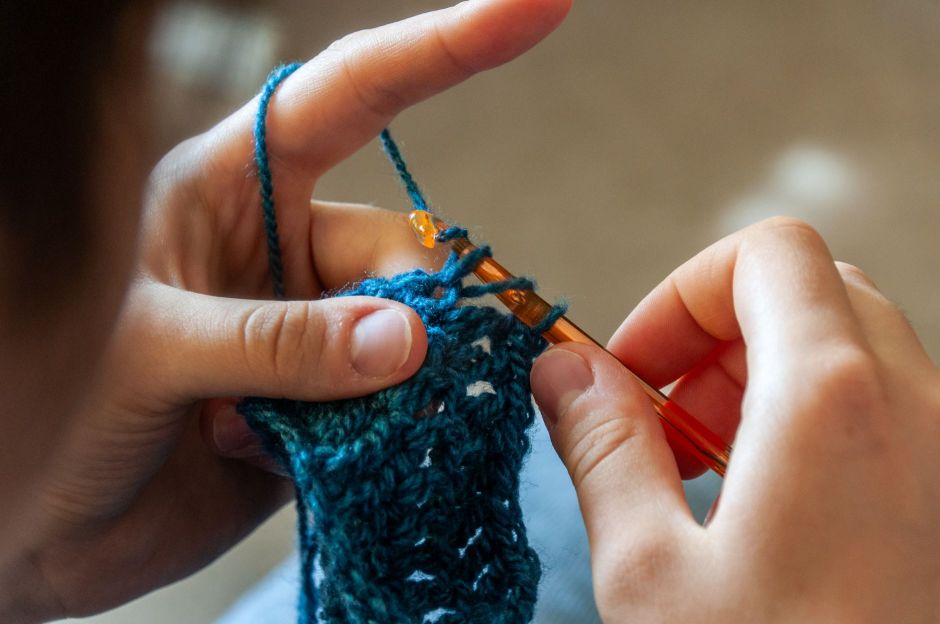
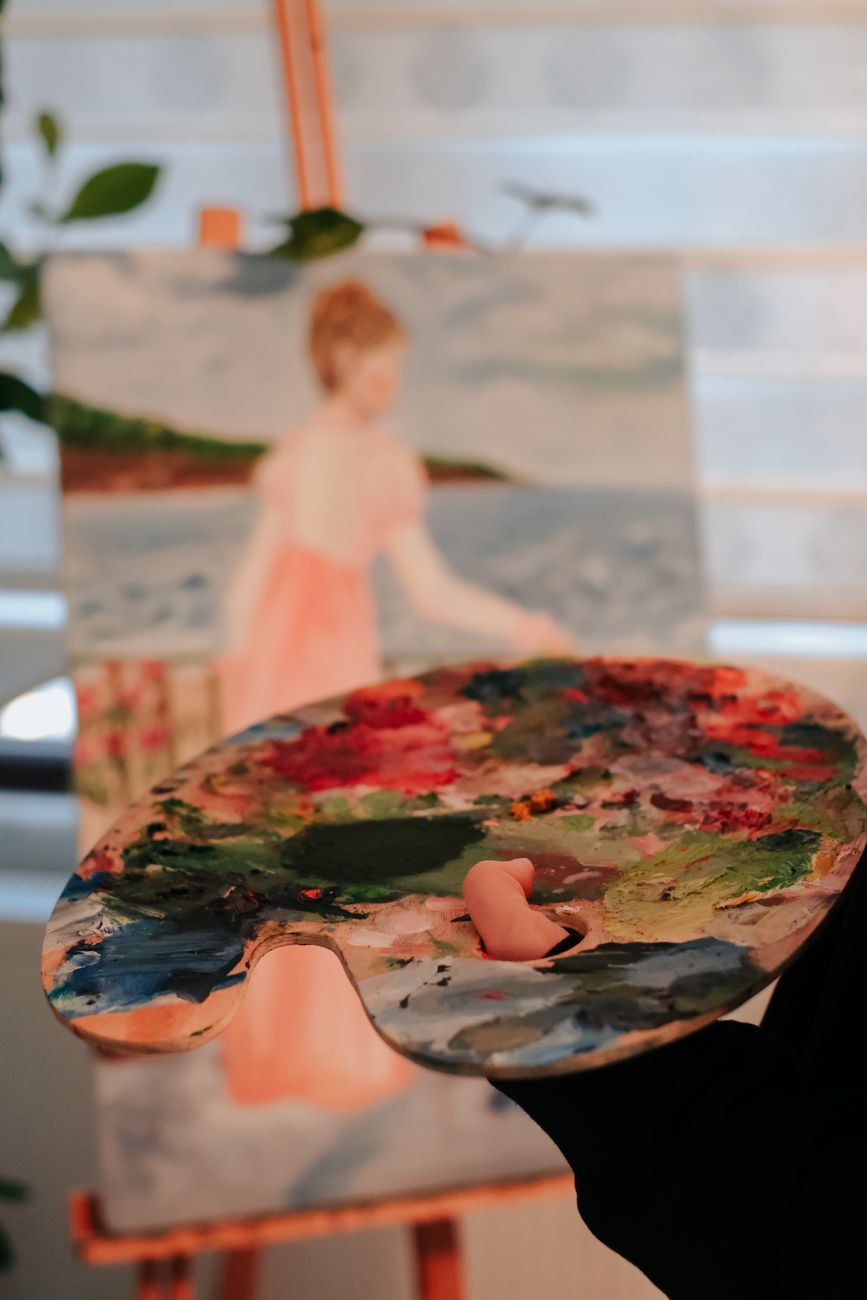
The crocheter is asked when she’s opening an Etsy shop. The painter is asked if they’ve considered the local gallery. The yoga enthusiast is told they should teach. The baker is suddenly “volunteered” for every birthday cake in a five-mile radius. And the poet, inevitably, is encouraged to submit to journals.

And it sounds reasonable, doesn’t it?

We are constantly told to pursue our passions. To follow what we love. To “do what you love and you’ll never work a day in your life.” A beautiful idea. And also… a slightly suspicious one. Because somewhere along the way, we stopped asking whether turning everything we love into something productive might quietly change the thing itself.

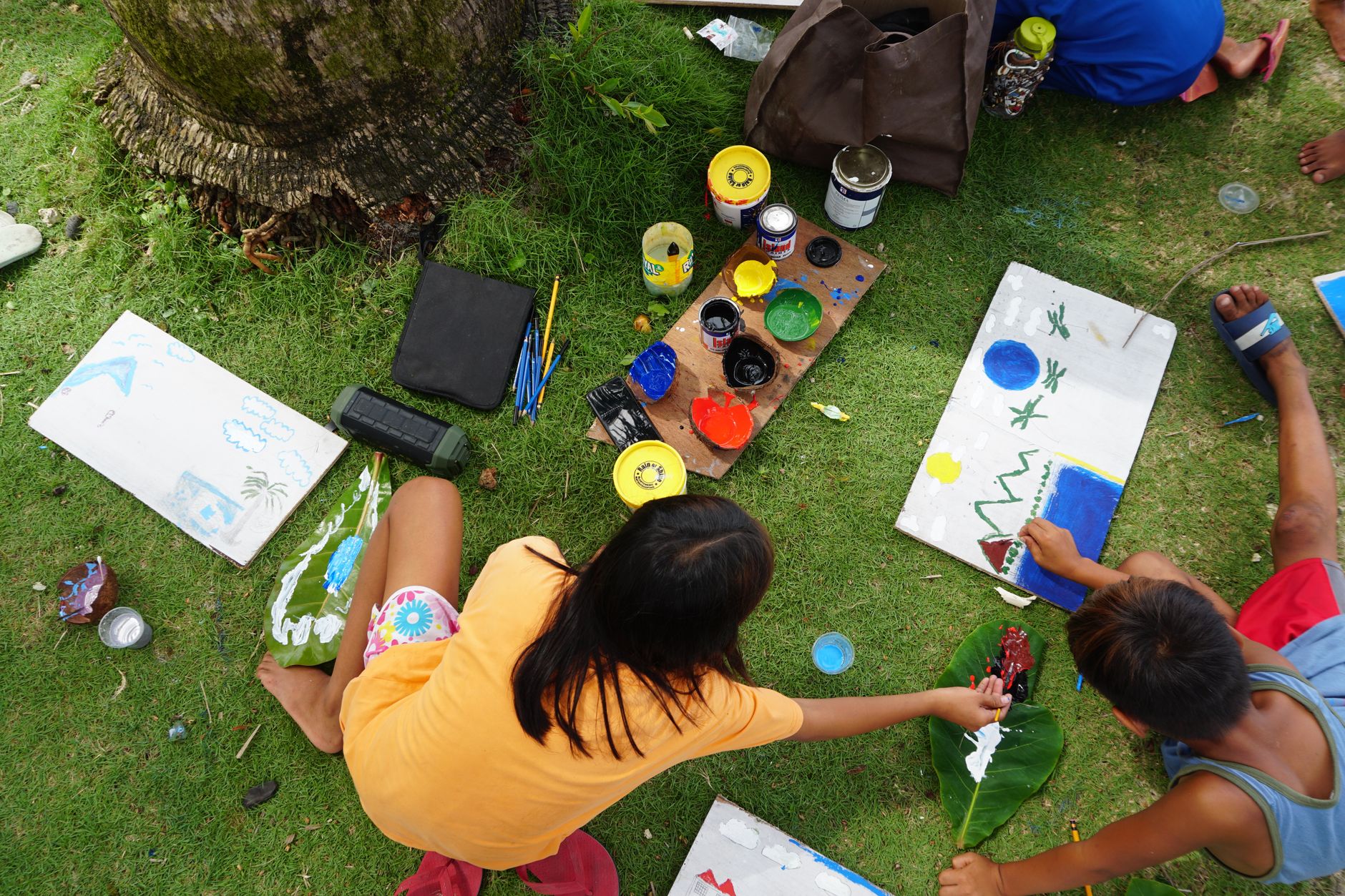
There was once an experiment with children who loved to draw. They were divided into groups—one received an external reward for drawing, the other did not.

The result was surprisingly consistent: the group that drew without reward maintained their interest. The group that drew for the reward lost motivation over time. And the group that received an unexpected reward? They also maintained their enjoyment.

In other words: motivation thrives not on chasing reward, but on the absence of needing one. We are most creatively alive when we are not negotiating with outcomes.

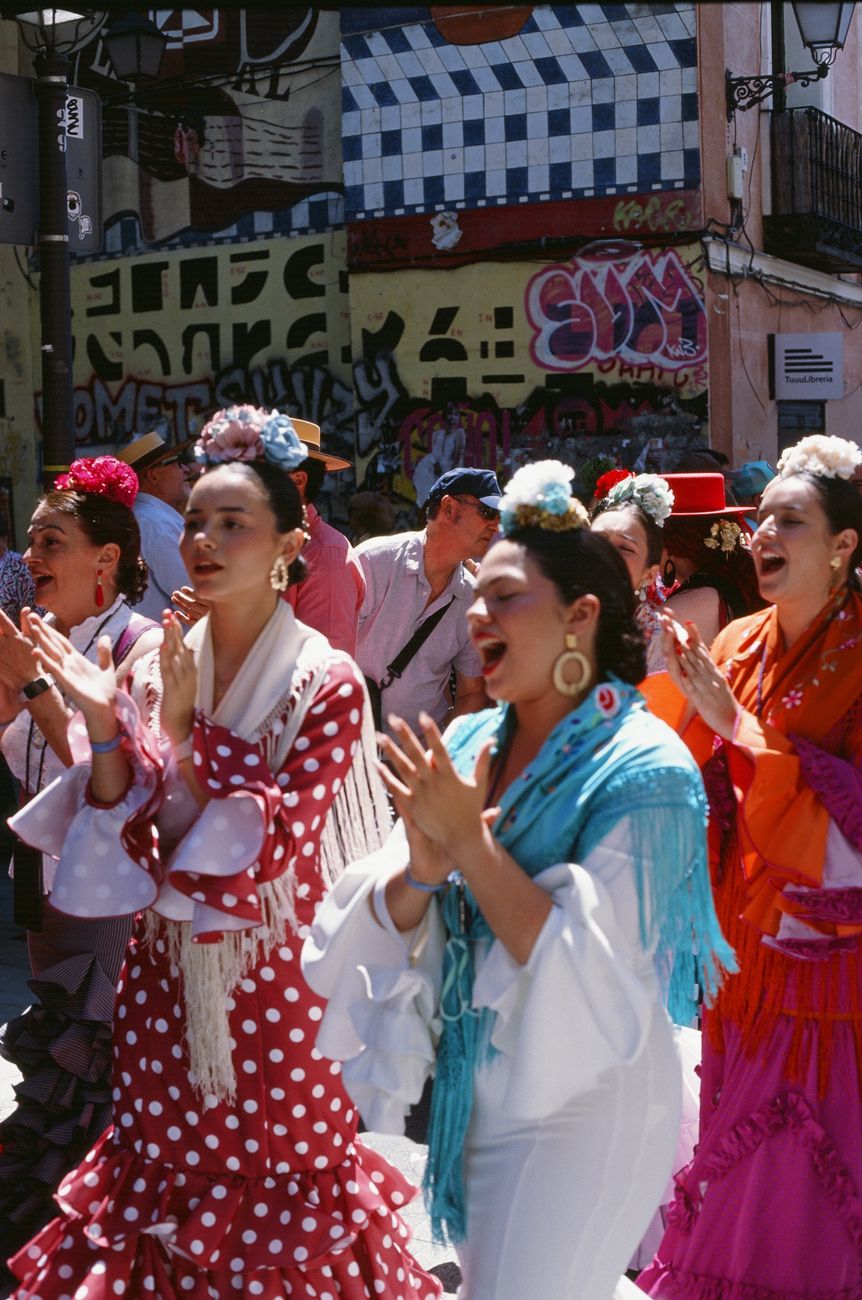
Photo by Cort Landt on Pexels.com

Another study, this time with adults, found something equally odd. One group completed a deliberately dull task before being asked to solve creative problems. The group that had just done the “boring” task actually produced more creative solutions.

Which is funny, because some of my best poetry has never arrived at a desk. It arrives while driving. While walking. While weeding the garden or cleaning something I definitely didn’t want to clean. It arrives when the conscious mind is occupied just enough to step aside.

But that kind of mental spaciousness is hard to come by when every hour is accounted for, optimized, monetized, or squeezed into productivity. And that’s where hobbies quietly begin to change shape. Because turning a hobby into a side hustle sounds empowering—until it isn’t.

At first, it’s just sharing something you love. Then it becomes selling something you love. Then it becomes needing to sell something you love. Then it becomes needing to make something people will buy. And slowly, almost imperceptibly, the question shifts from: “What do I want to make?” to “What will perform well?” The hobby is still there. But the play is not. And without play, something essential quietly drains out of the work. Not always immediately. Not dramatically. But steadily—like a color fading from fabric left in too much sun.

Photo by SHVETS production on Pexels.com

The uncomfortable truth is that most side hustles do not pay nearly as much as we imagine they will. Often, the return is small compared to the time invested. Sometimes it amounts to a few dollars an hour—or less—once everything is accounted for.

Which would be fine, if the primary goal was joy. But when the goal becomes income, validation, or traction… the relationship changes. We stop being in conversation with the thing we love. And start being evaluated by it. And I think that is the part we rarely say out loud: Not everything we love is meant to be optimized. Not everything we create is meant to scale. And not everything beautiful needs to become a business plan.

Sometimes the point is simply that it exists at all. Sometimes the point is that it made you feel alive while you were making it. And perhaps the real danger is not that we fail to monetize our passions… But that we succeed in doing so, and lose the ability to enjoy them without permission. So for now, I remain in my poetry hyperfixation. Not as a product. Not as a strategy. Just as a person who has been, for a while, deeply interested in making things that do not need to become anything else.

Oh do not get me wrong, dear reader, I will submit things to journals here and there, but not for any other reason than to put them out into the world. But mostly, I shall continue to focus on having fun.

Photo by betu00fcl nur akyu00fcrek on Pexels.com

The Lost Art of Becoming a Regular

Subscribe to continue reading

Subscribe to get access to the rest of this post and other subscriber-only content.

The Day My Phone Saved Me From Buying Another Purse

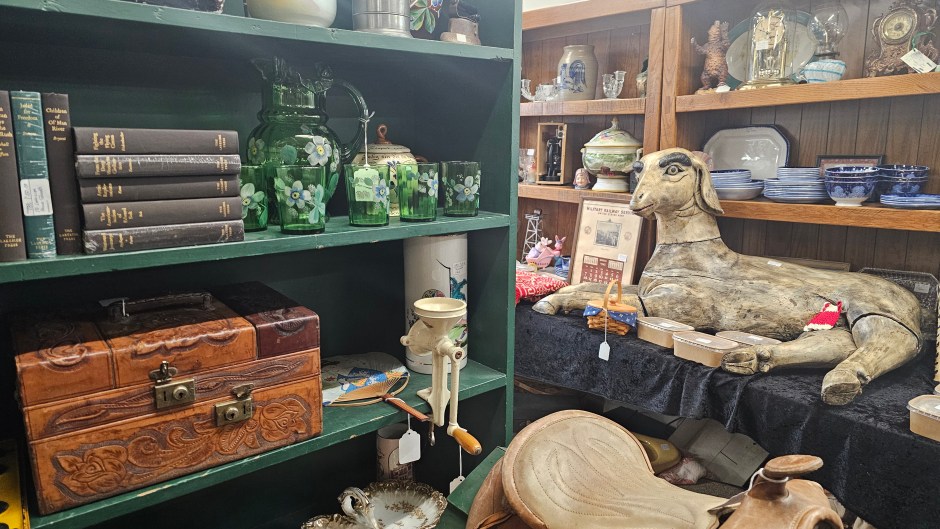
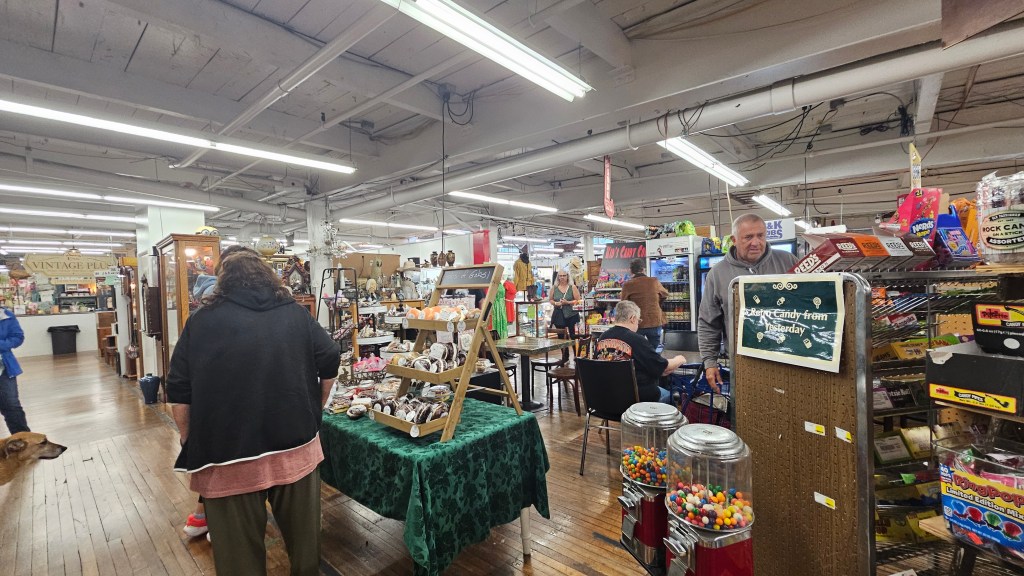
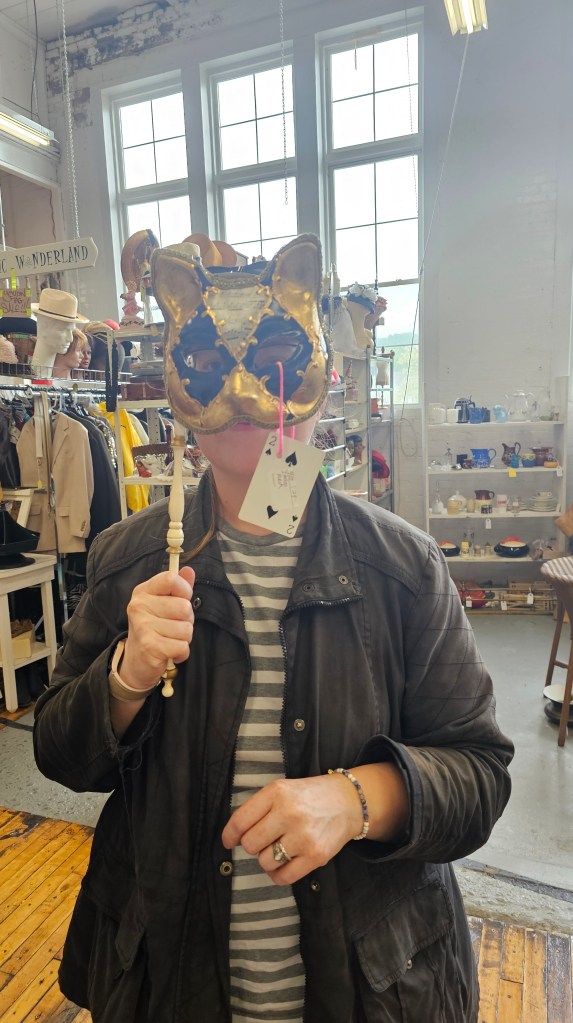
The other weekend, on a rainy afternoon, my sister and I ventured into a massive indoor antique store housed in an old warehouse. Two stories of treasures stacked on top of each other unfolded into a sprawling maze of booths, each one as varied as the colors of the rainbow.

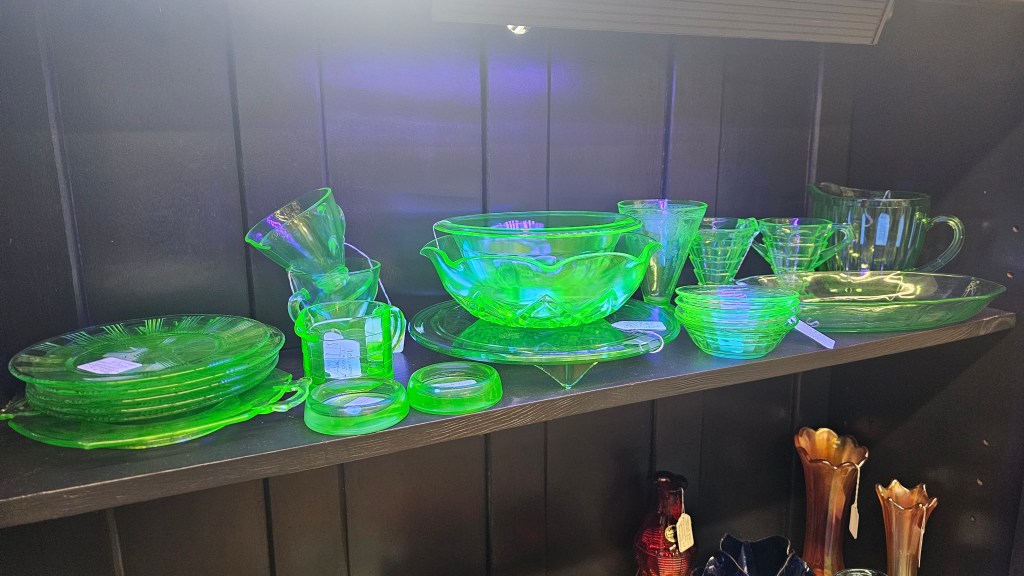
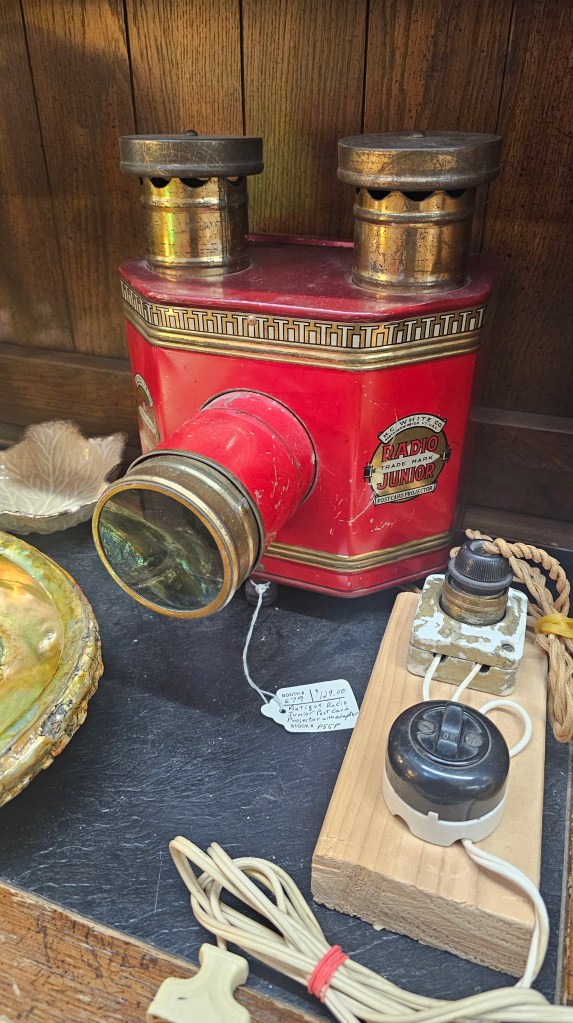
Old uranium glassware sat beside vintage clothing. A now-derelict gas pump stood comfortably next to forgotten household tools. It was a hodge-podge of decades and even centuries, all jumbled together in a kind of quiet, chaotic harmony. A cacophony of objects, each with its own story, none of them particularly concerned with being organized by time period.

We happily set off on a kind of treasure hunt, letting whatever caught our eye guide us. There is something uniquely joyful about wandering without purpose except curiosity, being delighted by strange finds and pausing often to compare notes.

Being both history nerds, we took turns educating one another, filling in the gaps of each other’s knowledge as we went. “Oh, that’s a…” inevitably became the start of several long conversations that may or may not have been entirely accurate but were delivered with great confidence nonetheless.

What makes antique stores so uniquely fun is that unlike museums, where objects are carefully preserved behind glass with a strict “do not touch” policy, here you are invited to engage directly. You can pick things up. Turn them over in your hands. Imagine not just where they came from, but what it would feel like to let them live in your space now. History becomes something you can hold, not just observe.

My sister and I have many fond memories of antiquing with our mother when we were younger, learning about objects we didn’t yet have the language to name, and giggling over cultural relics that felt ancient at the time but are now beginning to resemble our own childhood.

There is always a slightly unsettling moment, of course, when you realize something from your own past has made its way into an antique store. Yes, I am approaching forty, but are we really prepared to call the Tamagotchi “historical artefact” rather than simply “vintage nostalgia with battery anxiety”? Time, it turns out, is a bit unkind that way.

But that is part of the charm. Antique stores collapse time in on itself. What was once ordinary becomes curious again. What was once discarded becomes interesting. And what was once personal history becomes someone else’s discovery.

It turns out you don’t always need a destination to have an adventure. Sometimes you just need a rainy afternoon, a large warehouse full of forgotten things, and someone beside you willing to say, “Wait, come look at this.”

My sister, in her own successful treasure hunt, found a brass penguin, her husband’s favorite animal, which will now take up residence in her living room as a small but very specific piece of joy.

I, on the other hand, left empty-handed in the most literal sense. Well… almost.

There was an adorable purse shaped like a magazine that I briefly considered adopting. Unfortunately, it failed the most important test of all: it would not fit my phone. And if a purse cannot carry the one object I am legally required to bring everywhere, then it is more sculpture than accessory.

Honestly, my phone has probably saved me more money on impulsive purse purchases than any amount of self-control ever could. Perhaps it has already paid for itself in avoided financial mistakes alone.

And yet, even without a purchase, I did not leave empty. Because sometimes the point is not what you bring home. It is what you notice along the way.

How can you experience the thrill of the hunt?

If you ever find yourself with a rainy afternoon and a bit of curiosity, I would encourage you to go on your own treasure hunt. You never quite know what you will find when you let yourself wander without expectation. What’s wonderful is that antique stores litter the US so you’re almost certain to live nearby one. Of course, you will be hard pressed to beat Adamstown, the Antique Capital of the United States (located conveniently in my backyard), but don’t let that discourage your treasure hunt! 

If you do it right, you might even come home with something unexpected. Maybe a story. Maybe an object. Maybe both. Or, if you are my sister, a brass penguin that now lives quite happily on a living room shelf, quietly reflecting on the meaning of life but never sharing. 

Either way, the hunt is the point. 

Miles from home: 45 miles

Cost: Free (well gas is getting expensive)

Completed: First in childhood

Want to discover more adventures? Check out my whole Bucket List and Reverse Bucket List

When Life Only Happens in Big Moments

There is a particular kind of exhaustion that does not come from doing too much, but from feeling like your life only really happens in rare bursts. Oh certainly vacations, “milestones”, trips and celebrations are all well and good.  After all these are the “big moments” which make everything else feel worth it. Or are they?

Because if that’s true then….everything in between starts to feel like waiting. Waiting for the next thing that will make life feel real again. 

I think, in some quiet way, many of us fall into this pattern without noticing it. We begin to outsource our sense of aliveness to future events. We tell ourselves, I’ll feel better when I travel, or when this season is over, or when things finally calm down, or when I get to that version of my life that feels more like mine. And slowly, without meaning to, the present becomes something we are simply passing through.Not living in. Just moving through.

Don’t get me wrong, there is nothing inherently wrong with looking forward to things. Anticipation is a form of joy. But there is a difference between anticipation that enriches your life and anticipation that replaces it. One expands your experience. While the other quietly erases it.

Modern life does not exactly discourage this pattern. If anything, it reinforces it. We are surrounded by highlight reels, curated moments, and constant reminders of what life could look like if we were elsewhere, doing something else, being someone slightly different. So it becomes very easy to believe that life is happening over there rather than here or now. I am tempted dear reader to quote Yoda when he was talking to Luke Skywalker “All his life has he looked away… to the future, to the horizon. Never his mind on where he was. Hmm? What he was doing.” Forgive me there are just some temptations I cannot deny. 

Photo by Lydia Murray on Pexels.com

If you are not careful, your ordinary days begin to feel like maintenance. Something to get through. Something to manage. Something to endure until the next meaningful thing arrives. But a life that only feels real in its highlights is a fragile kind of life. Because highlights are, by definition, rare. And everything else is where you actually live.

This is where the trouble starts. Not in the big moments themselves, but in the assumption that they are the only moments that matter. Because if that is true, then most of your life becomes a kind of emotional outsourcing. You send your sense of meaning elsewhere and wait for it to return in concentrated form. A weekend. A trip. A breakthrough. A celebration. A “milestone” (whatever those actually are).

And in between those moments, you are left with everything else. The ordinary. The repetitive. The unglamorous structure of being a person who still has to answer emails and wash dishes and figure out what dinner is going to be. It is easy to dismiss those moments as unimportant. But they are not the exception to your life. They are your life where you wish to admit that or not. 

And this is where things begin to shift, because once you notice this pattern, you start to see how much of life is not actually made of peaks, but of repetition. The same mornings. The same responsibilities. The same quiet routines that shape your days more than any single highlight ever will. So the question becomes not how to eliminate the big moments, but how to stop abandoning your life in the meantime.

Because a life worth living cannot only be something you visit occasionally. It has to be something you can exist inside of. Something that does not require escape in order to feel bearable. This does not mean every moment must be exciting or meaningful in a dramatic sense. That would be its own kind of pressure.

Photo by Pixabay on Pexels.com

Instead, it might mean learning to notice what is already here, even in its simplicity. The small textures of a day that is not special, but is still yours. The way light comes through a window. The rhythm of familiar tasks. The quiet continuity of being alive without anything particularly remarkable happening.

And sometimes, it means gently asking yourself what you are waiting for. Not in a harsh way. Not as judgment. But as awareness. Because often, when we are honest, we are not waiting for one specific thing. We are waiting for life itself to begin feeling like it counts.

If you’ve ever watched or read the play “Our Town” there is a specific scene in which a woman, Emily Webb, has died in childbirth and asks to go back to relive parts of her life. She’s warned not to pick a big day like her wedding because it will be too much. No, she’s told to pick a quite ordinary day and so she picks her birthday as a young girl. She is immediately overwhelmed by how young and beautiful her mother looks, but she is instantly struck by a painful realization. The living are moving too fast, completely caught up in the routine details of the day. When her mother hands her a birthday gift without truly pausing to look at her, Emily experiences a rush of grief. She sees that human beings are blind to the preciousness of the present moment, treating time as if they have a million years to waste. 

Photo by Viktoria Panova on Pexels.com

How often do we live that way? How many times do we not really look at one another and savor the small moments of connection? 

But life is not waiting for permission to be meaningful. It already is happening. Even here. Even now. Even in the in-between.

“Oh, earth, you’re too wonderful for anybody to realize you. Do any human beings ever realize life while they live it—every, every minute?” – Emily Webb “Our Town” 

So perhaps the invitation is not to chase fewer big moments, but to stop outsourcing your aliveness to them. To let the big moments be a part of your life, not the place where your life finally starts. And to remember, gently, that a life well lived is not built in rare highlights. It is built in the ordinary days you stop overlooking.

Paris Part 4: The Paris You Don’t Plan For

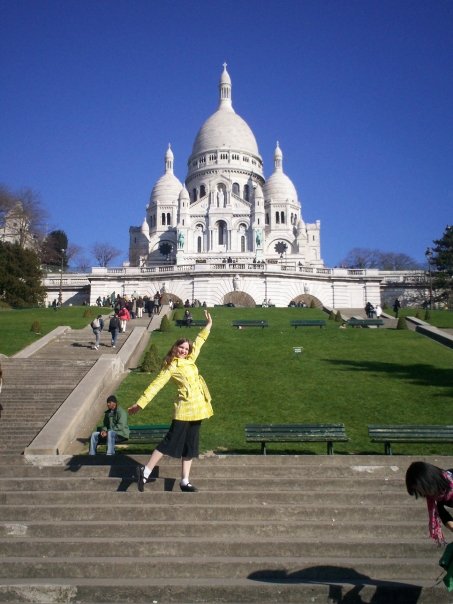
We left our story (Part 1, Part 2, Part 3), dear reader, at the steps of the Basilique du Sacré-Cœur, with the universe laughing as I stared in disbelief at a place I had already declared far too distant to reach that day. In the years since, I have often found myself accomplishing things that once felt equally out of reach. When doubt creeps in, I return to this memory. The path may not be direct, but you will arrive. The trick is learning to enjoy the detours.

And perhaps, if I am being honest, that is part of why I share stories like this at all.

Occasionally, I wander further afield in these tales. Not to abandon the spirit of this blog, but to present it honestly. Some dreams require more than staying close to home. Some experiences ask you to stretch beyond your usual borders. I have no desire to present a life neatly curated into something it is not. The truth, as it turns out, is far more interesting. And far more instructive.

Had we marched straight to Sacré-Cœur, we would have missed the Eiffel Tower and the Archaeological Museum entirely. Travel, when approached with openness, teaches far more than what sits behind glass displays.

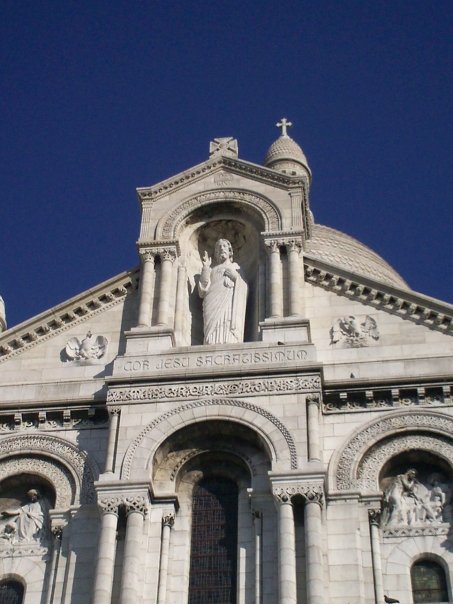
The Basilique du Sacré-Cœur stood in quiet contrast to the more widely known Notre-Dame Cathedral. There was a preserved sacredness here. Where Notre-Dame hums with the steady rhythm of tourism, Sacré-Cœur felt… guarded. Not unwelcoming, but intentional.

No photographs. Voices lowered to a hush. Nuns gently, but firmly, reminding visitors that this was not merely a site to be consumed, but a space still in use, still sacred.

Some may find that restrictive. I found it grounding.

We were the ones intruding, and we were given boundaries. Watching worshippers in quiet devotion, I felt something I can only describe as a pull upward, a stillness that settled over the space and demanded respect. It remains one of my favorite memories, not despite those restrictions, but because of them.

We left eventually, though I could have lingered longer, stepping once more into the lively streets of Paris as though emerging from another world.

Our destination was the Musée d’Orsay, home to some of my favorite artists. In those pre-smartphone days, coordinating across countries required optimism and a bit of guesswork. When the appointed meeting time with Frieman came and went, we were left waiting… and waiting… only to discover later we had managed to wait for one another at entirely different museums.

A perfect summary of early 2000s travel, really.

Accepting defeat for the day, we went inside anyway, trusting that an email later would sort things out.

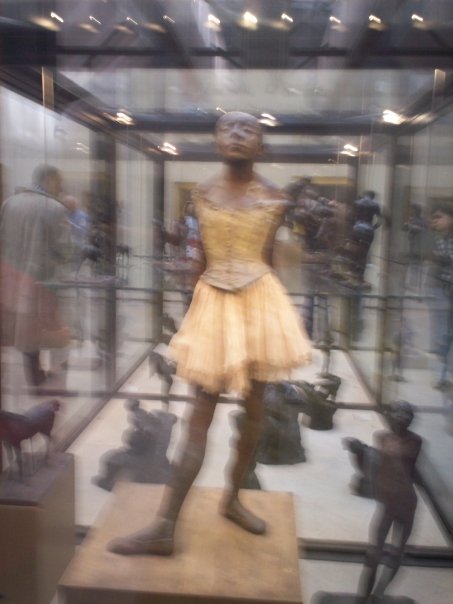
The Musée d’Orsay itself deserves more than a passing mention. Once a grand train station, its soaring ceilings and iron framework still echo its former life. There is something poetic about a place once built for movement now holding stillness. Light pours in through enormous windows, illuminating canvases that themselves chase fleeting moments.

We wandered slowly, letting the space guide us. Monet’s work shimmered with that signature softness, as though the world itself refused to stay still long enough to be fully captured. Renoir’s figures felt alive in a different way, their warmth and movement drawing you into their world. Impressionism has always felt less like observation and more like memory, imperfect, glowing, and deeply human.

With our plans unraveled, we turned next to Sainte-Chapelle.

There are beautiful places, and then there are places that feel almost unreal.

Sainte-Chapelle belongs firmly in the second category.

The structure itself nearly disappears, replaced by walls of stained glass that stretch impossibly high. Over a thousand panels catch the light and fracture it into color so vivid it feels alive. Reds, blues, and golds spill across the floor and over the people standing within it. You do not simply look at the windows. You stand inside them.

It is overwhelming in the best possible way. Quiet falls over the room, not because it is enforced, but because it feels required.

Still caught in that awe, we wandered into the gift shop, and it was there that something clicked into place.

I had been seeing unicorn tapestries everywhere.

At first, I dismissed them. Tourist fare. Decorative patterns meant to evoke something vaguely medieval. But they kept appearing, on bags, on notebooks, in displays. Persistent.

Curious, I asked the woman behind the counter, half expecting a vague answer.

Instead, she smiled and told me exactly where they were.

Right here. In Paris. At the Musée de Cluny.

Now, dear reader, it should come as no surprise that I love unicorns. This is me after all.

(If you’d like the full story behind that lifelong obsession, and a deeper dive into the tapestries themselves, you can read it here.)

This is not a casual appreciation. This is a lifelong commitment.

My very first stuffed animal was a unicorn named Rainbow, a music box that played Somewhere Over the Rainbow. She traveled with me across countries and still sits on a shelf in my room. Growing up in the 90s, unicorns were not nearly as easy to find as they are now, which only made each one feel that much more special. Books, toys, anything I could find, I devoured it. Really today’s children have no idea how easy it is to find them!

And somewhere along the way, I discovered The Lady and the Unicorn.

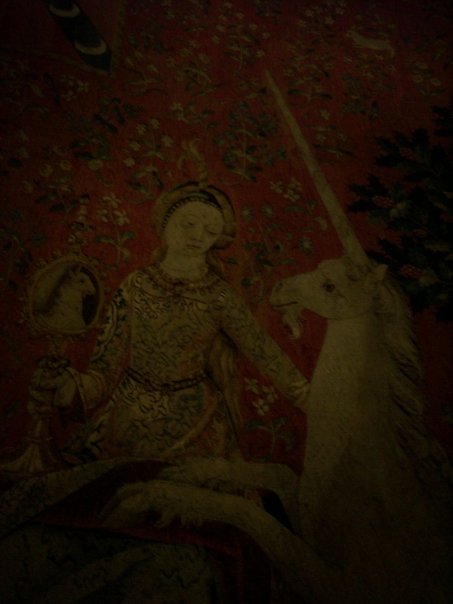
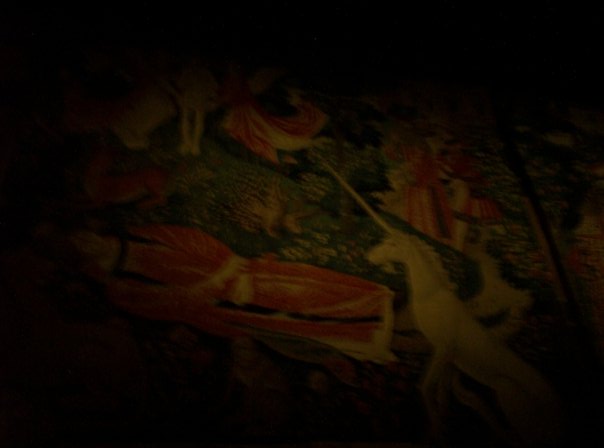
A series of six medieval tapestries, each rich with symbolism, each woven in the millefleurs style—“a thousand flowers”, their backgrounds alive with intricate botanical detail. Created around the turn of the 16th century, likely in Flanders, they depict the five senses: taste, touch, smell, sight, and hearing. The sixth, bearing the phrase À mon seul désir, “to my only desire”, remains something of a mystery.

Interpretations vary. A renunciation of earthly pleasures. A declaration of free will. Perhaps even a representation of a sixth sense, something beyond the physical. I have always liked that it resists certainty.

It felt fitting.

Armed with directions and far too much enthusiasm, Erika and I set off at once. My feet protested. Fifteen miles the day before had seen to that. But there are moments when discomfort becomes irrelevant.

This was one of them.

There were unicorns to see.

I did my best to behave like a reasonable adult upon entering the museum. I failed. Spectacularly. While I attempted to maintain composure, I am fairly certain my barely contained excitement gave me away. To her credit, Erika insisted we take our time, lingering over artifacts, allowing the museum to unfold properly.

I tried.

I truly did.

And then we reached them.

The tapestries did not merely meet expectations. They erased them.

Reproductions flatten them. They shrink them. They strip away the very things that make them extraordinary. In person, every thread is visible. Every flower distinct. The scale alone is commanding, but it is the detail that captures you. And I apologize dear reader that my photos do them little justice. As it was the early 2000s technology was woefully lacking and I did not use flash photography. However, the ones you see are the ones I took.
You begin to think about the time embedded in them. The hands that worked them. The months, perhaps years, of labor required to bring them into existence. These were not casual creations. They were declarations of wealth, of artistry, of devotion to craft.

In a world where we can summon decoration with a click, it is difficult to comprehend that level of patience.

As I stepped into the dim gallery, my excitement softened into something quieter.

Awe.

My breath caught as I approached, drawn forward as though the space itself required stillness. I do not know how long I remained there. Time loosened. I studied each panel carefully, tracing patterns, noting symbols, wishing—once again—that I knew enough about botany to name every plant.

I said very little.

What could be said?

Some things refuse translation. They must be experienced fully, in person, to be understood at all.

Too soon, we moved on. There was still more of Paris waiting.

And so, from a missed meeting, a chance question, and a persistent pattern I almost ignored, we found ourselves swept into yet another unexpected adventure.

Want to discover more adventures? Check out my whole Bucket List and Reverse Bucket List

If the Mask Came Off, Would You Recognize Yourself?

We live in a digital age where we can curate our lives to project an idea of who we are into the world. Are we bubbly and outgoing? Sophisticated and refined? We can place almost any lens or filter over our photos and our lives. With artificial intelligence, that line blurs even further. We can compose music, generate art, write entire essays, and pass them off as our own. We can feed in a photo and receive a picture-perfect version in return.

All of it in pursuit of likes and comments.
All of it for confirmation that we are enough.

Which is what we’re all striving for, isn’t it?

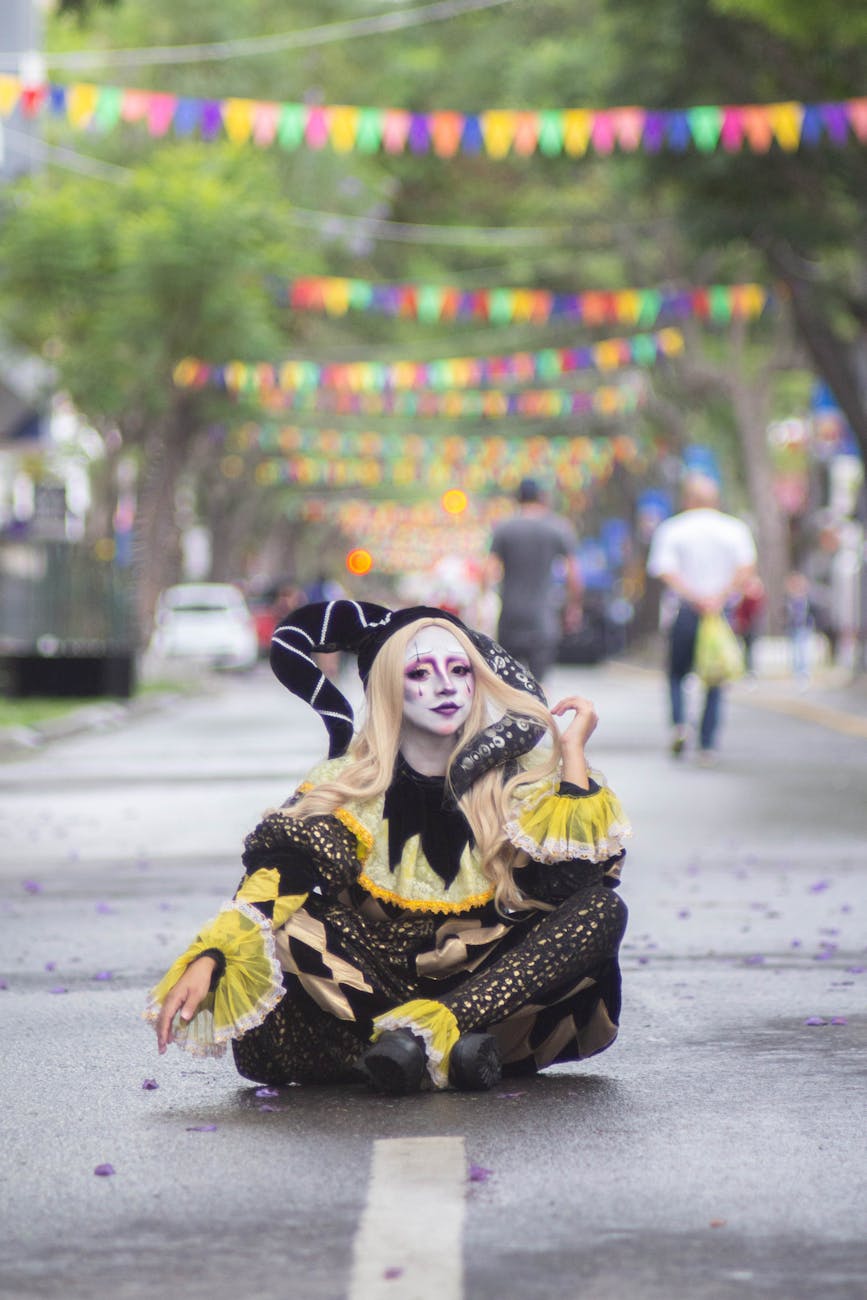
It becomes easy to let these illusions shape our identity. The mask we wear for acceptance begins to fuse with who we are. Much like The Mask, it clings to us until we can no longer separate it from our face. And without it, we’re not entirely sure who we are.

Maybe when you were younger, your father took you to baseball games. You wore the jersey, learned the lingo, found community in the crowd. When he asked if you wanted to play, you said yes. You spent your childhood in a sport that never quite fit, quietly forgetting about the gymnastics class you once wanted to try. When the Olympics came on, you changed the channel rather than sit with the ache in your chest as athletes flipped and soared with ease.

After all, that’s not what earns a high five from Dad.
That’s not what earns acceptance.

Photo by Zen Chung on Pexels.com

Or maybe you were told you were too loud, so you became soft. Too much, so you became small. You watched a sibling get scolded for being wild, so you became controlled, composed. You saw a parent retreat when overwhelmed, so you learned to hide your emotions. You absorbed opinions about “the kind of people” who go to college or work with their hands, and somewhere along the way, your own desires got quieter.

Without the judgment of others, who are we?
What do we actually like?
What are our passions?

If no one were watching, what would we choose?
If no one were clapping, what would we keep?

Deciding to live authentically is not a small thing. Especially when our relationships have been built on versions of ourselves that were easier to accept. There’s a quiet fear that lingers: Who stays if I change? If they really see me, will they accept me? If I tell them my truth, will I be cast out? They say they love me, but if they never knew who I really am, was it ever actually love?

Not every truth is seismic. Not every revaluation risks losing everything. Sometimes it’s quieter. You grow up dismissing a genre of music you’ve never actually heard, repeating what you were taught. Then one day, you listen. And you like it. You begin to question what else you’ve inherited without examination.

You realize how much of you was shaped before you ever had the chance to choose.

Of course, not all of this comes from a place of harm. A father may have brought his child to baseball games simply to connect, to give what he never received. A mother may have hidden her tears to protect her child from carrying burdens that were never theirs to hold.

But even well-intentioned messages can clip our wings.

Photo by Camilo Ospina on Pexels.com

We try on identities like hats, convinced they fit, until one day they don’t. We outgrow them. Or maybe we never grew into them at all. We become fractured. The version of us at work looks different from the one at a party, which looks different from the one who sits alone in the quiet.

And eventually, the question surfaces:

Who am I, really?

Maybe that’s the real fear.
Not that others won’t recognize us…
but that we won’t recognize ourselves.

If the mask came off, would you recognize yourself?

Rethinking Love in February

Love is in the air, or at least Valentine’s Day is.

It’s the time of year when the town is painted red, couples linger a little closer, and a different kind of warmth permeates despite the bitter chill of winter. The days are growing lighter. Spring is promised. Something soft waits patiently beneath the cover of snow.

And yet, Valentine’s Day carries a strange contradiction.

Did you know it is one of the most common days for breakups?

For a holiday brimming with sappy poems, fragrant flowers, and sweet chocolate, it has earned a surprisingly bitter reputation. Perhaps that is because a day devoted to love forces us to reflect on what love actually is… and sometimes, upon closer examination, we discover that what we thought was love… wasn’t.

Believe it or not, our culture, and often even our families, do a poor job of teaching us what real, authentic love looks like.

We talk about butterflies in our stomachs and feeling lightheaded from a kiss. In love songs, boundaries blur and two people fuse into one. In stories, love is intense and consuming. The hero protects the heroine, but also possesses her, sealing devotion with the words: “You are mine.”

Sometimes we are taught to view love through obligation and duty. Love becomes something we owe. Something we earn by fulfilling expectations and playing our roles correctly. Love becomes sacrifice at the expense of the self.

Photo by Pixabay on Pexels.com

But is that love?

I would argue that these versions are infatuation at best, and unhealthy, even abusive, at worst. And yet, between cultural depictions and our own internal patterns, we often confuse what love is.

We learn from our earliest experiences what love looks like. As we grow older, we don’t always seek what is healthy, we seek what is familiar.

I could list a million examples of unhealthy love. I could write out endless red flags. But the problem with red flags is that if something doesn’t match them exactly, we may dismiss what we feel.

We tell ourselves, “Well, it’s not abusive.”

And yet, something can fall short of abuse while still falling far short of love.

That is why I want to focus instead on what healthy love actually looks like.

Across poems, philosophy, research, and human experience, certain themes arise again and again. Love is more than a feeling or an attachment. Healthy love is a consistent presence, the willingness to stay, not because one must, but because one chooses to.

And while love may cost us something at times, it should never come at the cost of ourselves.

Healthy love is not self-erasure. It is not martyrdom. It is a widening sense of us that still contains a me. Sacrifice in love should not diminish either partner, but strengthen both.

To love someone is also to truly see them.

Love recognizes the beloved as they are: flawed, human, singular, worthy. Love says, “You matter. You are not interchangeable. You cannot simply be replaced.”

Love is not possession. It is not fear disguised as devotion. Nor is it the merging of two souls into one entwined being, as popular as the fated-mate trope may be.

Photo by Pixabay on Pexels.com

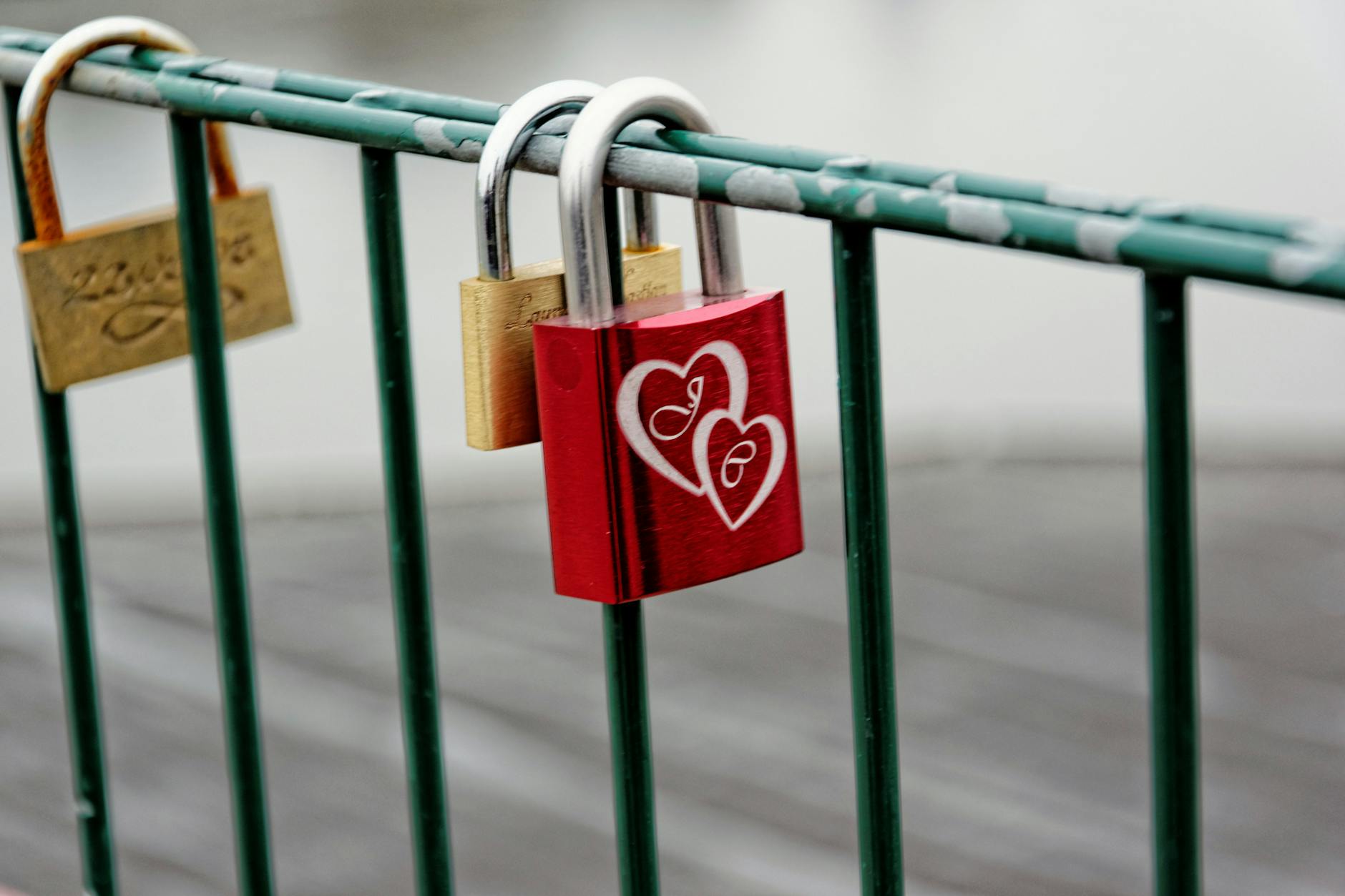
Love does not have chains.

It is choice and freedom.

Healthy love enhances rather than restricts. It fosters growth rather than suffocation. One person is not diminished so the other can shine. Both are made better, not because they complete one another, but because they support one another.

In short, healthy love is a relationship where both people feel emotionally safe, seen as they are, and free to grow without fear of punishment, abandonment, or control.

Love says:

“I won’t disappear when you’re inconvenient.”
“I won’t punish you for being human.”
“I won’t leave you alone in your pain.”

But healthy love does not say:

“I will erase my own needs.”
“I will surrender my boundaries.”
“I will make your suffering my identity.”

Love is safety for both.

It allows both partners to exist without feeling they must earn their right to be there.

And perhaps that is the quiet challenge of Valentine’s Day, beneath all the roses and romance. Love is not something waiting for us in some distant future, once we are finally healed, finally perfect, finally enough. It is something we practice in the present, in the relationships we choose, in the boundaries we hold, in the way we refuse to mistake survival for devotion. A life well lived is not built “someday.” It is built here, now, in the steady courage to believe that love can be both real and safe, and that we are worthy of it exactly where we are.

Photo by Rogu00e9rio Souza on Pexels.com

Eat Bravely: A Love Letter to Curious Appetites

Not all adventures require stepping out into the world and exploring new places. There is not always a need to don our shoes or cross the threshold of our homes. Some adventures wait for us in a far more intimate space, where heat and spice mingle to create expectation. Where anticipation builds slowly. Where the experience lingers in memory and sends small electric thrills through the senses. Where worries are set aside, hands get busy, and something deeply satisfying, and dare I say even sensual, takes shape.

Lower your eyebrows, this is a family blog.

Of course, dear reader, I speak of the kitchen.

For thousands of years, humans have gathered around fire and flame, bonding through the shared rituals of preparing and eating food. Long before written language, recipes were passed hand to hand, memory to memory. Food has always been warmth, safety, and love made tangible. It is how we celebrate, how we grieve, and how we care for one another when words fall short. I once had a Puerto Rican colleague who would bring me food during especially stressful seasons of my life. One day, she arrived with a cake she had carefully crafted just for me. It was not simply a dessert or a cultural exchange. It was care wrapped in sweetness, a quiet reminder that I was not alone. 

Food is deeply embedded in a people. It is history, culture, memory, and survival served on a plate. Entire stories can be told through a single dish. Take Haiti’s Soup Joumou, a pumpkin-based soup once forbidden to enslaved people and now eaten each year to celebrate independence and freedom. Or consider corned beef and cabbage, a meal that became closely associated with Irish-American immigrants, not because it was common in Ireland, but because it was affordable and accessible in their new home. These dishes tell stories of resilience, adaptation, and identity.

Pasta dinner in Rome

Sometimes food carries the quiet evidence of cultural exchange. Italy, so famously associated with pasta and tomato sauce, sits at a historical crossroads of trade. Noodles arrived through contact with the East, while tomatoes made their way from the New World. Local tradition met imported ingredients, and something entirely new was born. That cuisine later traveled across the Atlantic, where it transformed yet again into what we now call Italian-American cooking. This is why beloved favorites like fettuccine Alfredo or chicken parmigiana are rarely found in Italy itself. Food evolves as people move, adapt, and make do.

Many of the dishes I have named so far are familiar to most of us, especially here in America. But adventurous eating does not have to stop at what we already know. Those of us with wandering spirits often associate travel with food, and for good reason. What marks a journey more clearly than the flavors we encounter along the way? Thanks to global shipping networks and the rapid exchange of information, it is now easier than ever to recreate dishes from around the world in our own kitchens, no plane ticket required.

Will it always be perfect? No. The clotted cream I buy at my local grocery store is not quite the same as the clotted cream I was served in Cornwall. Still, for those of us who are budget-conscious or simply curious, it is close enough to spark delight and inspiration. Sometimes approximation is not a failure, but an invitation.

I am fortunate to live in a place that makes culinary exploration especially accessible. My hometown is something of a food mecca. We have a specialty meat and cheese shop, several farmers markets, close access to fresh seafood, and grocery stores that carry an impressive range of international ingredients. We are also home to many authentic markets representing cultures not typically found in mainstream American stores. This means I can often find traditional ingredients locally and at a fraction of the cost of ordering them online.

Lancaster is also known as America’s refugee capital, thanks in large part to the ongoing efforts of Church World Service. Refugees from around the world have made their homes here, continuing a long tradition of welcome rooted in our Amish and Mennonite history. With them, they have brought their food. And generously, they have shared it. Restaurants that prioritize employing refugees allow them to tell the story of their culture through cooking, creating a deeply local melting pot of flavors. It is history you can taste. Remember, food tells a story and in Lancaster it tells more than just an exchange of culture, it whispers welcome as well. 

Escargot

Perhaps that is why I have always been adventurous with my food. I grew up with the world’s kitchen at my doorstep. I learned early that flavor has no single nationality and that spices are not something to be feared. When people joke that white people do not use spices, I laugh, spice is all I’ve known. My spice cabinet is perpetually overflowing with flavors from every corner of the globe. One of my favorite dishes to make is lamb with five spices, a recipe that fills the kitchen with warmth and complexity long before it reaches the plate.

Over the years, I have tried an astonishing range of foods. Kangaroo and lychee. Beluga caviar and jackfruit. Escargot, conch, buffalo, alligator, raw oysters. Authentic pad Thai and ramen. Croissants in Paris, doner kebab, calamari, and a full English breakfast. I have sipped absinthe, fine wines, countless teas, and more than a few drinks whose names I can no longer recall. I have eaten at Ichiban grills, Brazilian churrascarias, four-diamond restaurants, and casual pig roasts. I have wandered farmers markets while sipping fresh coconut water straight from the shell and watched rolled ice cream take shape on a freezing plate. Street food, in all its glorious variety, deserves an essay of its own. I’ve eaten at rotating restaurants high above the skyline. I’ve also eaten deep in the earth in old wine cellars. I’ve dined on the ocean and at the peak of mountains. 

Some of my most meaningful food memories, though, were made at home. Hours spent in the kitchen with my mother, learning new dishes together, experimenting, tasting, and laughing. Food is not only about novelty or prestige. It is about connection.

Lebanese Cuisine

In the end, adventurous eating is not about chasing the most exotic ingredient or the most impressive dish. It is about the willingness to step outside your comfort zone and try something new. It is about expanding your palate beyond the familiar rotation of meals. I still remember the first time I tried lavender ice cream. It stopped me in my tracks. I had never considered lavender as a flavor before, and suddenly a door opened. I started seeking out all sorts of new flavors like rose and violet. Since then, I have fallen in love with pine and rosemary ice cream as well.

If lavender feels intimidating, start small. Try substituting lavender for rosemary in a recipe. Their flavor profiles are surprisingly similar, and the result is both comforting and slightly unexpected. That small shift is often all it takes. There are plenty of recipes and flavors out there. The world is truly your oyster! Adventure does not always roar and it doesn’t always require a passport. Sometimes it simmers quietly on the stove, waiting for you to take the first bite.

Want to discover more adventures? Check out my whole Bucket List and Reverse Bucket List

Stop Waiting for the After

After the trip. After things calm down. After I fix myself. After I get my finances together.

Always after. Always somewhere in the future.

We tell ourselves these stories so often they begin to feel like truth. Life will really begin once the chaos settles, once we become more disciplined, more organized, more healed, more prepared. Until then, we endure. We keep our heads down, grit our teeth, and tell ourselves this is just a season—even when that season stretches on for years.

And yet, time has a way of slipping through our fingers when we are always waiting. One day we look up and realize we have not so much lived as survived. The days were filled. The calendar was full. But the life itself felt strangely absent.

Of course, there were moments of joy. There always are.

A long-awaited weekend getaway. A carefully planned weeklong vacation. Maybe, if we were especially lucky or brave, a two-week escape that felt almost indulgent. These moments gave us oxygen. We counted down to them obsessively, letting anticipation carry us through exhausting workweeks. The promise of rest, novelty, and beauty became the thing that kept us moving forward.

For a brief while, we could breathe.

Photo by MART PRODUCTION on Pexels.com

But then the trip ended. The air thinned again. And the familiar weight returned, heavier somehow for having been briefly lifted. The emotional letdown after travel crashed over us like a wave, knocking us off our feet. What was meant to restore us instead highlighted how depleted we were the rest of the time.

I remember this feeling vividly after my very first cruise.

I had been so excited to experience it with my sister, who had gone on one before and filled my imagination with stories and photos. We planned everything meticulously, savoring the anticipation as much as the trip itself. And the week away truly was a dream. Swimming with dolphins. Snorkeling over a shipwreck. Walking along the famed pink beaches of Bermuda. For a few precious days, life felt expansive and light.

Then it ended.

I was sitting in a train terminal in New York, waiting for the train back to Philadelphia, when a familiar sense of dread began to creep in. My heart started pounding. My mind raced ahead of me, already back at my desk. Had I missed deadlines? What had happened with my clients while I was gone? What did my inbox look like? Would I be returning to chaos I could never quite get ahead of?

The anxiety built quickly, swallowing all the ease and joy I had felt just hours earlier. The relaxation I had carefully collected over the week evaporated, replaced by a sense of impending doom. I realized, with startling clarity, that the problem was not that the vacation was too short. It was that my daily life was unsustainable.

I did not stay at that job much longer.

Photo by Jill Wellington on Pexels.com

Looking back, I can see what was really happening. Time away had become the only time I felt fully alive. Travel was no longer something that enhanced my life. It was something that made my life bearable. It was not a chance to breathe deeply, but the only moment I was allowed to breathe at all.

That is a heavy thing to place on something meant to be joyful.

Travel, adventure, and novelty are not the villains here. They are generous teachers. They show us beauty. They remind us of wonder. They broaden our perspective and refresh our spirits. But when they become lifelines rather than highlights, they quietly reveal a deeper problem: a life structured in a way that requires escape.

It is hard to feel at home in your own life if every day feels like scaling a mountain rather than taking a gentle walk through the woods. When effort is constant and rest is rationed, even joy begins to feel transactional—something we earn only after enduring enough discomfort.

Living well does not happen by accident. It requires intention, attention, and a willingness to examine the parts of our lives we have normalized simply because they are familiar.

So what does it mean to design a life that supports you rather than one you need rescuing from?

It does not mean eliminating hard work or responsibility. It does not mean chasing constant happiness or turning every day into a highlight reel. It means building rhythms that allow you to inhabit your life rather than flee from it. It means making choices—sometimes small, sometimes uncomfortable—that reduce the daily friction slowly draining your energy.

Photo by Quincy Anderson on Pexels.com

It might look like boundaries that protect your evenings. Or financial systems that lower your baseline anxiety. Or a job that challenges you without consuming you. It might look like simplifying instead of accumulating, choosing enough instead of more, rest instead of relentless self-improvement.

Most of all, it means refusing to postpone your life until some imagined version of yourself finally arrives.

If we are always waiting to become someone better before we allow ourselves to live well, we may wait forever. Growth does not require self-denial as proof of worthiness. A meaningful life is not a reward reserved for those who have perfected themselves.

When we begin to live well now—imperfectly, quietly, intentionally—something subtle but powerful happens. Travel changes its role. Adventures stop carrying the weight of our unmet needs. They become what they were always meant to be: enhancements rather than escapes.

Instead of giving our lives color, travel adds highlights.

A beautiful trip becomes like the right accessory. It does not replace the outfit. It elevates it. It brings contrast, texture, and delight to something already functional and meaningful. The joy of returning home no longer feels like loss, but like integration—bringing what we learned and felt back into a life that can hold it.

This is not a call to stop dreaming, exploring, or longing for more. It is an invitation to stop living entirely in the future. To notice where you are postponing joy out of habit rather than necessity. To ask, gently and honestly, what would make this season more livable.

The goal is not to suck the marrow out of every moment. The goal is to stop starving ourselves the rest of the year.

A life you do not want to escape from does not have to be extraordinary. It simply has to be yours, tended to with care, lived in with intention, and allowed to matter right now, not later. So what are you waiting for dear reader? Go forth and create a life for now.
How to Find Wonder Again: Practicing Everyday Awe in Darker Months

December is always the darkest month. The Winter Solstice arrives with the longest night of the year, quietly marking the slow ascent back toward the light of spring. It is both an ending and a beginning. A hinge in the calendar. A pause between what has been and what might be.

It is also a time of renewal. We reflect on the year behind us, tallying lessons learned and losses survived, and we look ahead with cautious hope. Yet for all that symbolism, December still represents another three to four months before winter fully loosens its grip. The cold does not politely retreat once the holidays end. The bitter reach of Arctic winds lingers, stretching farther south than usual this year, brushing even warmer regions with frost and ice.

With the sun reduced to a pale visitor and the cold driving us indoors, many people feel the familiar post-holiday letdown. The lights come down. The tinsel disappears. The steady drumbeat of gatherings and celebrations fades into silence. Roads turn ugly with soot and slush. Gardens lie flattened and forgotten. Trees stand stripped bare, their branches like exposed bones against the sky. Everything feels gray, muted, suspended.

Time stretches out ahead of us, long and uncertain, offering only the occasional tease of warmth on a rare day that creeps near fifty degrees. It can feel like winter has sucked the life out of the world. And sometimes, out of us too.

All this to say, winter can really drain a person.

And yet, over the years, I have learned something important. Winter is not devoid of wonder. We are simply out of practice at seeing it.

Photo by Dave Haas on Pexels.com

Why Wonder Feels Harder in Winter

Wonder thrives on contrast, novelty, and movement. Spring explodes with color. Summer buzzes with life. Autumn dazzles us with fire and gold. Winter, by comparison, feels like subtraction. Color drains away. Sound is muffled. Life retreats underground or inward. Our modern world does not help. We are conditioned to associate wonder with spectacle, with big moments and bright displays especially at Christmas time. When those disappear, we assume wonder has gone with them. 

But winter does not offer pageantry in the same way. It offers something quieter. Subtler. More restrained. Like a dancer who understands that all she needs is a stage and her movements to create beauty, rather than an entire set and multiple costume changes. 

As we are often exhausted by the time winter truly sets in, we are not exactly primed to go looking for subtlety. December often follows a marathon of busyness. Social obligations. Emotional labor. Financial strain. The pressure to show up smiling and generous even when you are running on fumes. By the time January arrives, many of us are not ready to be curious. We are ready to be done.

So when the world slows down, we interpret it as emptiness instead of invitation to rest, reflect and truly see what is all around us.

Photo by Darius Krause on Pexels.com

The Magic Hidden in Plain Sight

Yes, driving in snow can be maddening. The clenched jaw. The white knuckles on the steering wheel. The muttered curses when traffic crawls and visibility drops. And yet, there are moments when the frustration cracks open into something else. Sunlight hits freshly fallen snow and suddenly everything sparkles. The world looks newly made. Ordinary streets turn luminous. Even the most familiar landscape feels briefly enchanted.

A winter forest carries its own kind of beauty. Bare trees reveal shapes and patterns hidden all summer long. Branches lace together like sketches against the sky. Fog drapes itself through trunks and hollows, softening edges and swallowing sound. There is a stillness there that feels almost sacred. There is nothing quite like a walk in the forest alone in the winter. For that brief time it feels as if you have been swallowed up into another world long forgotten. 

Winter wonder often arrives unannounced and unadorned. It does not shout for attention. It waits for you to notice.

Learning to Look Differently

Finding wonder in darker months requires a shift in how we look at the world. Not faster. Slower. Not broader. Narrower. It asks us to trade spectacle for attention.

This is not a season that rewards multitasking. It rewards presence, something many of us struggle with these days. Winter is asking us to be grounded, to notice the smaller things. It’s the warm cup of tea in your hands. Watching the steam curling upwards as you gaze out at footprints in freshly fallen snow an echo of life passing through. These are not dramatic moments. They are small, fleeting, and easily overlooked.

Winter teaches us that awe does not always arrive dressed in grandeur. Sometimes it arrives disguised as ordinary.
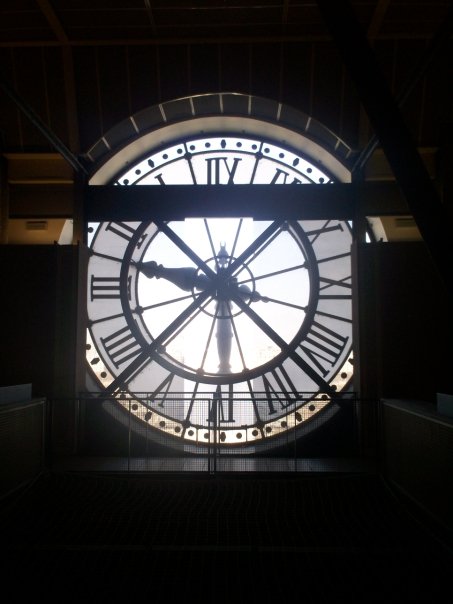
Photo by Roman Biernacki on Pexels.com

Practicing Everyday Awe

Awe is often framed as something rare. Something reserved for mountaintops and once-in-a-lifetime experiences. But everyday awe is built through habit, not circumstance.

Start small. Choose one moment each day to truly notice. The quality of the light. The texture of cold air in your lungs. The sound of wind moving through bare branches. Write it down if you can. Not to be poetic. Just to be honest.

Create rituals that slow you down. An evening walk at dusk. A morning routine that does not involve a screen. Lighting a candle not for ambiance but for intention. These small acts train your attention. They remind your nervous system that the world is still capable of holding beauty, even now.

Stillness as a Teacher

After a month of constant motion, winter almost demands that we become still. Nature itself seems to insist on it. Fields lie fallow. Animals hibernate. Growth pauses beneath frozen ground. Nothing is rushed, but rather everything seems to be waiting. 

We resist this at first. Stillness can feel uncomfortable. Without constant distraction, we are left alone with our thoughts, a dangerous proposition for many.  We are faced with questions we have postponed and emotions we have not fully processed. But stillness is not emptiness. 

Winter invites us to stop long enough to hear what has been whispering beneath the noise all year. It asks us to listen not to the loud and boisterous, but to the quiet and the waiting. To the parts of ourselves that are not yet ready to bloom but are still very much alive. Perhaps, they are parts that we have not heard in years. We may find that whatever those parts have to offer are far better ideas to pursue than whatever resolution we came up with when we were caught up in the dazzle of celebrations. 

Photo by Teona Swift on Pexels.com

Carrying Wonder Forward

Winter wonder is fragile. It thrives in moments of pause and disappears when rushed. But once you learn how to find it here, you can find it anywhere.

The practice of noticing does not end when spring returns. It deepens. The quiet skills winter teaches us carry forward into brighter seasons. Attention. Patience. Reverence for small things.

Winter is not an obstacle to wonder. It is a different teacher of it.

And perhaps that is the greatest gift of the darker months. They remind us that beauty does not only exist in bloom and abundance. Sometimes it exists in rest. In waiting. In the soft whispers of what has not yet awakened.

If you listen closely enough, winter is not empty at all. It is full of quiet promises.