Dear reader, some of the most important traditions in my life aren’t traditions that my family created.
At least, not my family by blood.
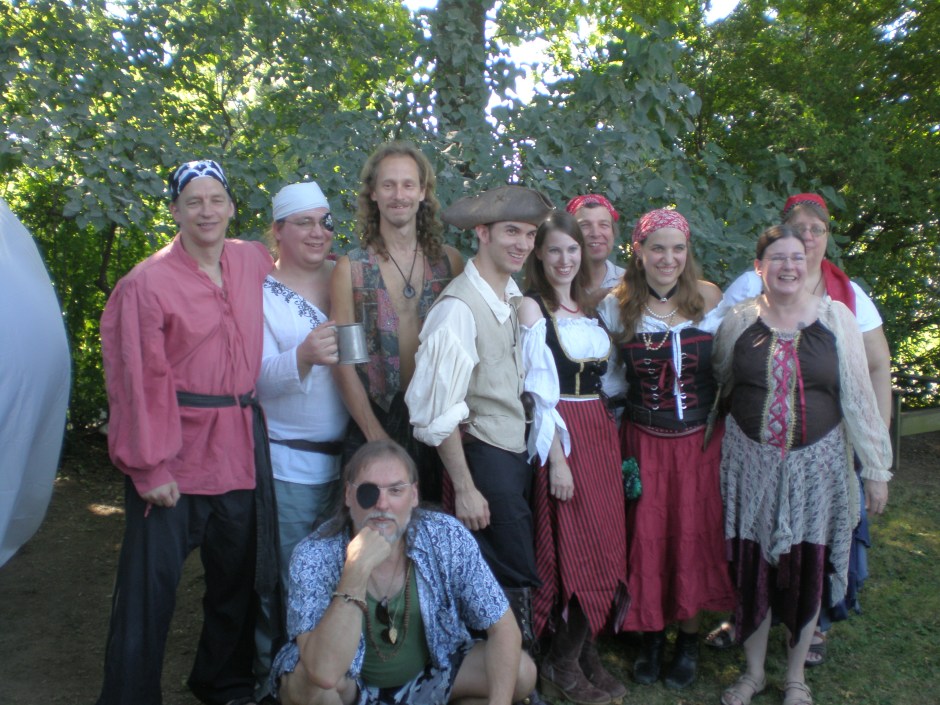
They began with a group of college friends of my parents who, somewhere along the way, decided that friendship deserved to be celebrated. Perhaps because most of them came from dysfunctional families, so they formed a family of their own and it was into this family that I was born. Decades later, the gatherings continue. The faces have changed over the years. Some people have joined us, others have moved away or passed on, and the locations have occasionally changed. But the traditions remain, some remain untouched from their beginnings. Others have slowly morphed or rolled into other traditions.
Three times a year, give or take, we gather.
St. Patrick’s Day brings together those who share an Irish heritage, or perhaps simply an appreciation for good food, good drink, and the opportunity to sing Irish folk songs at increasingly enthusiastic volumes. We used to gather for Mid-summer’s and Mid-winter’s but they were rolled into St. Patrick’s when Mid-winter’s kept getting snowed out and our host for Mid-summer was no longer able to accommodate everyone camping on his property. And while I miss the bonfire where Jay would dress up like Merlin and entertain me with colored flames, I am a bit old for that now. I would want to be the one dressed up as a wizard.
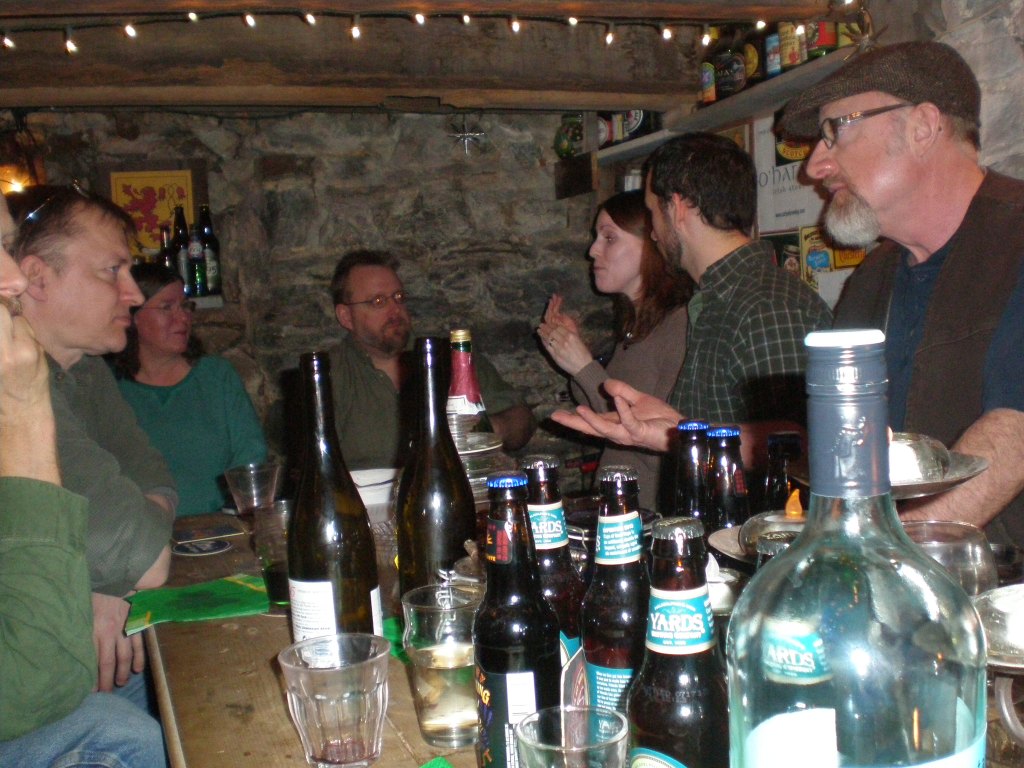
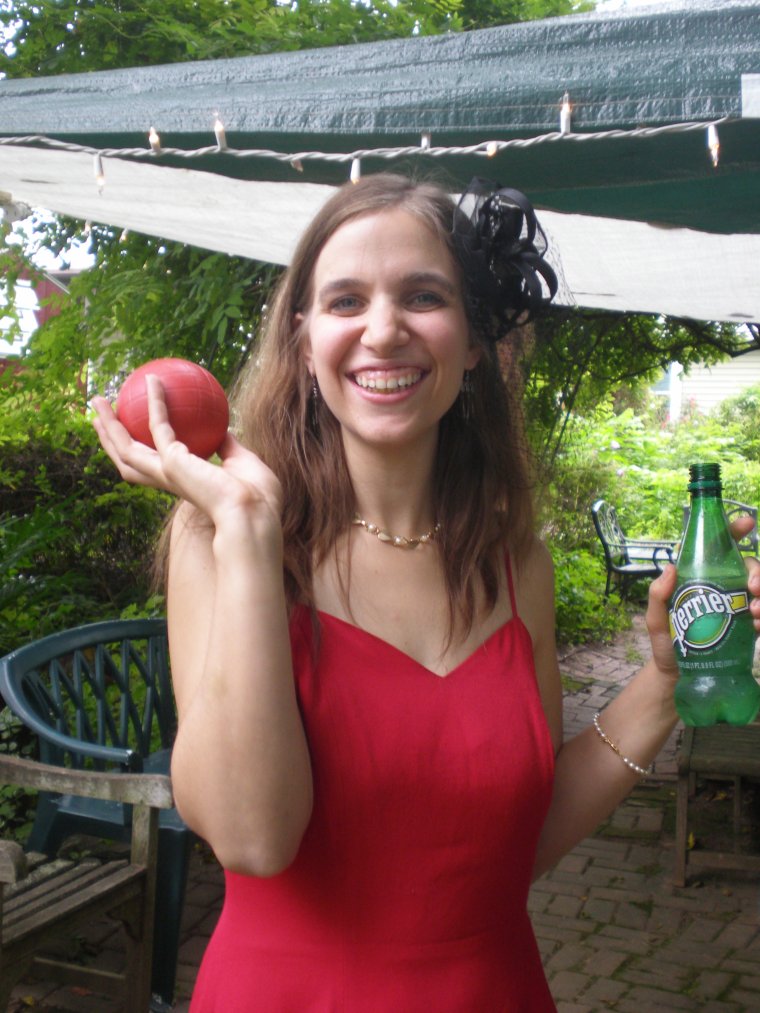
The Garden Party marks the end of summer with music, food, lawn games, and sometimes dancing. It is the sort of afternoon where nobody seems particularly concerned about what time it is because there is always another game to play, another conversation to join, another drink to refill. It goes long into the night and often into the next day for those who choose to stay over. Each year is a different theme ranging from Morocco to China, from France to Mexico and even different decades.
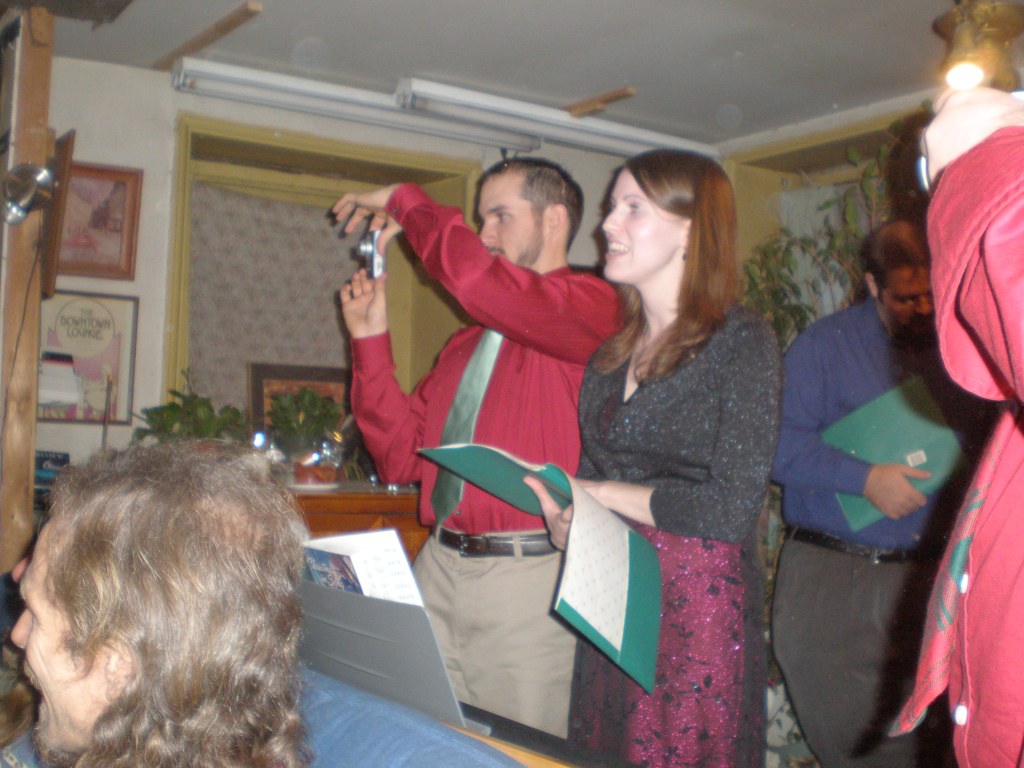
Then comes the Holiday Feast, an amalgamation of Thanksgiving and Christmas. We give thanks for the blessings of the year, eat an enormous meal, sing Christmas carols, and inevitably discover whatever puzzle has been devised for us that year. The puzzles have ranged considerably in ambition. Some years it has been little more than a worksheet. Other years have involved elaborate murder mysteries requiring us to search the house and garden for clues. Apparently, gratitude and Christmas cheer are insufficient entertainment for this particular group. We also require an opportunity to investigate fictional homicide.
There is usually a familiar menu as well. If you attend either St. Patrick’s or Holiday Feast you never need to check the menu, you simply know.
And then there is the house. For most of my childhood, these gatherings took place at my godparents’ home, a house originally built in the 1700s and expanded in the 1800s. It is the sort of house that seems to remember the people who have passed through it.
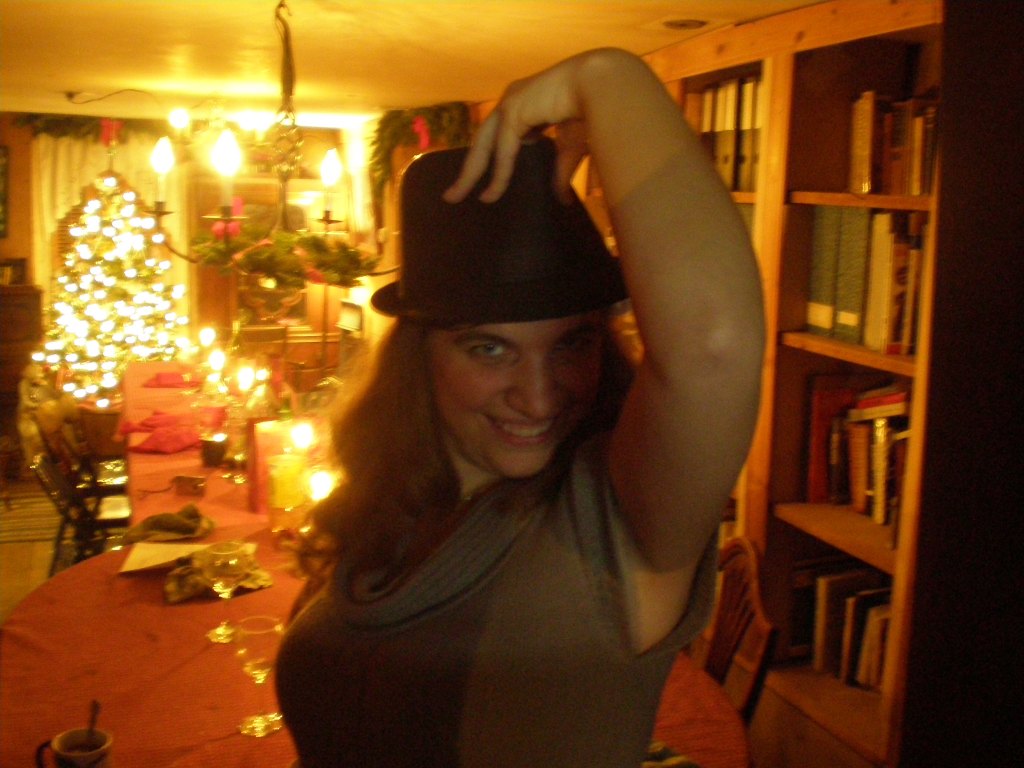
There is an old wood stove tucked into the hearth room. The cellar contains an Irish “pub” that my godfather quite literally dug out by hand, enlarging the space until there was enough room for our heads. The rough stone walls make you feel as though you have somehow stepped out of Pennsylvania and landed in the old country.
Every room has its own history. Every corner contains a memory. There are whispered ghost stories. There are stories about people who aren’t there anymore. There are objects whose significance I probably wouldn’t understand if I hadn’t spent so many years seeing them in the same places.
I can mark my childhood by these parties. At first, there was the children’s table. Playing with my siblings and my “god-sister”. Eventually, I graduated to the adults’ table. There was the first time I was old enough to drink at one of the parties. I learned crochet. I learned to play bocce ball. I learned how to mix drinks from our resident “expert” bartender. I listened to stories about places I had never been and people I had never met.
These people were my aunts and uncles, even though most of them weren’t related to me at all. One of them eventually became my college professor, which created the rather peculiar situation of having to remind myself not to call her Aunt Val in class. But the others taught me things, too. Not in the formal sense of sitting me down for a lesson, but through years of conversations and arguments. They brought their own adventures with them and regaled us with stories. They introduced me to art, music, philosophy, history, and different ways of understanding the world.
We argued about politics, religion, economics, and just about everything else people are generally advised not to discuss over dinner. And they made me think. Perhaps that is one of the greatest gifts these gatherings gave me. They showed me that learning doesn’t only happen in classrooms. Sometimes it happens around a crowded dinner table with people who have lived long enough to have stories to tell and opinions they are more than willing to defend.
As a child, I mostly listened. As I grew older, I began participating. Eventually, I became one of the adults arguing across the table. And somewhere along the way, I stopped being a child who attended these parties and became one of the people who helped carry the traditions forward.
That transition happened so gradually that I don’t think anyone announced it. There was no ceremony. No one said, Congratulations, you are now an adult member of the ritual. I simply found myself there. That may be the strange magic of tradition. The first time you experience something, it is an event. The tenth time, it is familiar. The twentieth time, you know what comes next. And eventually, you don’t even have to discuss it. The parties become almost like a dance. Everyone knows the steps. We know when we eat. We know when the games happen. We know when the drinks come out. We know which songs will be sung and, more importantly, when everyone is expected to join in. Nobody has to announce the choreography. We simply know it. And yet the dance is never quite the same. The people change. The stories change. Someone brings a new dish. Someone learns a new song. A child who once sat at the kids’ table is suddenly old enough to pour drinks. Someone who was always there is now conspicuously absent.
The ritual remains, even as the people within it change. I think that is why traditions matter so much. We often talk about experiences as though their value comes from novelty. We put new places, new activities, and new adventures on our bucket lists because there is something wonderful about doing something for the first time. But there is another kind of magic in doing something for the hundredth time. Traditions give us continuity. They give us something to return to. They create a shared history that stretches beyond any one person and allows memories to accumulate over generations. They remind us that our lives are not isolated events but part of a much longer story.
And perhaps most importantly, they create belonging. These people didn’t become my family because we share a last name or DNA. They became my family because we kept showing up. Year after year. Party after party. Song after song. We cultivated rituals together until they became part of the fabric of our lives. That is something worth putting on a bucket list, too.
Not necessarily a particular holiday or a particular meal. Instead, consider creating something that you can return to. A yearly garden party. A friends’ Thanksgiving. A monthly dinner. An annual camping trip. A ridiculous family competition. A holiday tradition that makes absolutely no sense to anyone outside your groupIt doesn’t have to be elaborate. It simply has to be yours.
Someday, you may look back and realize that you aren’t merely remembering the parties. You’re remembering your childhood. Your friendships. The people who taught you things. The people who watched you grow. The people who became family simply because they kept showing up. And perhaps that is one of the greatest adventures of all. Not discovering somewhere new, but building something worth returning to.