Opening the Tupperware

I think it is fair, dear reader, to believe that there are many of you who have gone through trials and tribulations in this life. It is also fair to believe that there are many of you who have not made it through those trials unscathed. You may think that you are irreparably broken from the experience. I assure you, you are not. You are probably quite resilient and resourceful. However, you may not yet realize it and I do not think you are entirely to blame. 

Something that frequently irritates me is the media’s depiction of healing. A character suffering from PTSD suddenly has a realization that they are able to face their fears and suddenly the flashbacks stop. A story about a girl grieving the loss of her mother goes back to being happy by writing a letter, stuffing it in a bottle and throwing it in the ocean. Healing is done through a flashbulb moment, a small act or a one time therapy session with a counselor. So when we have our flashbulb moments, take those small acts and go to counseling and we still aren’t “fixed”, we begin to wonder if we will ever be healed. Because why wouldn’t we question our ability to heal when the narrative we’ve been given is that it’s quick and easy. 

It’s like everything else in our society, we want a quick solution without a lot of effort. Take this shot, you’ll lose weight. Play this game for 10 minutes a day and you’ll be fluent in Spanish months! Go to counseling for a few sessions and your trauma will be cured. And you won’t ever have a set back again! 

Photo by Antoni Shkraba Studio on Pexels.com

The truth is that isn’t how healing works. It’s a messy, difficult and sometimes frustrating process. It’s taking what feels like three steps forward only to fall five steps back and then have to walk three steps forward to have taken one actual step. It’s like cleaning out the refrigerator where you have to open the old tupperware knowing that you’re about to discover what might be the start of new intelligent life because you’ve allowed it to evolve for so long. No one wants to open the tupperware to see what’s inside and unlike the tupperware you don’t have the option to just throw the whole thing in the trash. You have to open it up and deal with whatever you find, no matter how unpleasant. 

Emotions, unfortunately, require care and ignoring them doesn’t make them go away. Because when we turn off our ability to feel the negative emotions, we also turn off our ability to feel positive emotions. That’s why we can end up feeling emotionally numb even when the difficult times are over and we don’t understand why we can’t be happy now. No one wants to sit in the negative emotions. We often jump to problem solving or attempting to reason with them rather than simply sit and hold space for whatever may be there. 

Photo by Julio Motta on Pexels.com

You don’t want to face it because it’s not enjoyable but the only way to the other side is through it. Not once, not twice but again and again and again. Because processing once often isn’t enough, not with more complex and complicated issues. If it were, you could just write a journal entry and be on with your life. What really sucks is when you you think you’re good only to get into a situation many years later where you’re triggered all over again. So you take deep breaths, count out 5 things you can see, four things you can hear, three things you can feel, two things you can smell and one thing you can taste – an excellent grounding technique. You remind yourself that you’re in the present and that what you’re responding to is in the past. It’s followed by the frustration of not being “over it”, forgetting that our emotional minds aren’t subject to logic or even the constraints of time. 

If you aren’t going through something then chances are you know someone who is and it can be tempting to try and fix the problem. Remember your presence is all that is required to let them know that they aren’t alone. 

If you find yourself overwhelmed in your healing journey, I recommend reaching out to your supports and consider expanding your support system as well whether that be a therapist, counselor, life coach, priest, etc. 

This isn’t a post about how to heal, but rather about being kind to yourself in the process. Healing isn’t linear nor is grief. It’s a process that’s often circular, confusing and paradoxical. Which is, honestly, the human experience. In living a life well lived, taking the time to allow ourselves to feel the full spectrum instead of trying to rush through it can be one of the best things you can do because healing takes time. 

Photo by Vika Glitter on Pexels.com

Stop Waiting for the After

After the trip. After things calm down. After I fix myself. After I get my finances together.

Always after. Always somewhere in the future.

We tell ourselves these stories so often they begin to feel like truth. Life will really begin once the chaos settles, once we become more disciplined, more organized, more healed, more prepared. Until then, we endure. We keep our heads down, grit our teeth, and tell ourselves this is just a season—even when that season stretches on for years.

And yet, time has a way of slipping through our fingers when we are always waiting. One day we look up and realize we have not so much lived as survived. The days were filled. The calendar was full. But the life itself felt strangely absent.

Of course, there were moments of joy. There always are.

A long-awaited weekend getaway. A carefully planned weeklong vacation. Maybe, if we were especially lucky or brave, a two-week escape that felt almost indulgent. These moments gave us oxygen. We counted down to them obsessively, letting anticipation carry us through exhausting workweeks. The promise of rest, novelty, and beauty became the thing that kept us moving forward.

For a brief while, we could breathe.

Photo by MART PRODUCTION on Pexels.com

But then the trip ended. The air thinned again. And the familiar weight returned, heavier somehow for having been briefly lifted. The emotional letdown after travel crashed over us like a wave, knocking us off our feet. What was meant to restore us instead highlighted how depleted we were the rest of the time.

I remember this feeling vividly after my very first cruise.

I had been so excited to experience it with my sister, who had gone on one before and filled my imagination with stories and photos. We planned everything meticulously, savoring the anticipation as much as the trip itself. And the week away truly was a dream. Swimming with dolphins. Snorkeling over a shipwreck. Walking along the famed pink beaches of Bermuda. For a few precious days, life felt expansive and light.

Then it ended.

I was sitting in a train terminal in New York, waiting for the train back to Philadelphia, when a familiar sense of dread began to creep in. My heart started pounding. My mind raced ahead of me, already back at my desk. Had I missed deadlines? What had happened with my clients while I was gone? What did my inbox look like? Would I be returning to chaos I could never quite get ahead of?

The anxiety built quickly, swallowing all the ease and joy I had felt just hours earlier. The relaxation I had carefully collected over the week evaporated, replaced by a sense of impending doom. I realized, with startling clarity, that the problem was not that the vacation was too short. It was that my daily life was unsustainable.

I did not stay at that job much longer.

Photo by Jill Wellington on Pexels.com

Looking back, I can see what was really happening. Time away had become the only time I felt fully alive. Travel was no longer something that enhanced my life. It was something that made my life bearable. It was not a chance to breathe deeply, but the only moment I was allowed to breathe at all.

That is a heavy thing to place on something meant to be joyful.

Travel, adventure, and novelty are not the villains here. They are generous teachers. They show us beauty. They remind us of wonder. They broaden our perspective and refresh our spirits. But when they become lifelines rather than highlights, they quietly reveal a deeper problem: a life structured in a way that requires escape.

It is hard to feel at home in your own life if every day feels like scaling a mountain rather than taking a gentle walk through the woods. When effort is constant and rest is rationed, even joy begins to feel transactional—something we earn only after enduring enough discomfort.

Living well does not happen by accident. It requires intention, attention, and a willingness to examine the parts of our lives we have normalized simply because they are familiar.

So what does it mean to design a life that supports you rather than one you need rescuing from?

It does not mean eliminating hard work or responsibility. It does not mean chasing constant happiness or turning every day into a highlight reel. It means building rhythms that allow you to inhabit your life rather than flee from it. It means making choices—sometimes small, sometimes uncomfortable—that reduce the daily friction slowly draining your energy.

Photo by Quincy Anderson on Pexels.com

It might look like boundaries that protect your evenings. Or financial systems that lower your baseline anxiety. Or a job that challenges you without consuming you. It might look like simplifying instead of accumulating, choosing enough instead of more, rest instead of relentless self-improvement.

Most of all, it means refusing to postpone your life until some imagined version of yourself finally arrives.

If we are always waiting to become someone better before we allow ourselves to live well, we may wait forever. Growth does not require self-denial as proof of worthiness. A meaningful life is not a reward reserved for those who have perfected themselves.

When we begin to live well now—imperfectly, quietly, intentionally—something subtle but powerful happens. Travel changes its role. Adventures stop carrying the weight of our unmet needs. They become what they were always meant to be: enhancements rather than escapes.

Instead of giving our lives color, travel adds highlights.

A beautiful trip becomes like the right accessory. It does not replace the outfit. It elevates it. It brings contrast, texture, and delight to something already functional and meaningful. The joy of returning home no longer feels like loss, but like integration—bringing what we learned and felt back into a life that can hold it.

This is not a call to stop dreaming, exploring, or longing for more. It is an invitation to stop living entirely in the future. To notice where you are postponing joy out of habit rather than necessity. To ask, gently and honestly, what would make this season more livable.

The goal is not to suck the marrow out of every moment. The goal is to stop starving ourselves the rest of the year.

A life you do not want to escape from does not have to be extraordinary. It simply has to be yours, tended to with care, lived in with intention, and allowed to matter right now, not later. So what are you waiting for dear reader? Go forth and create a life for now.

The Gift You Give Yourself

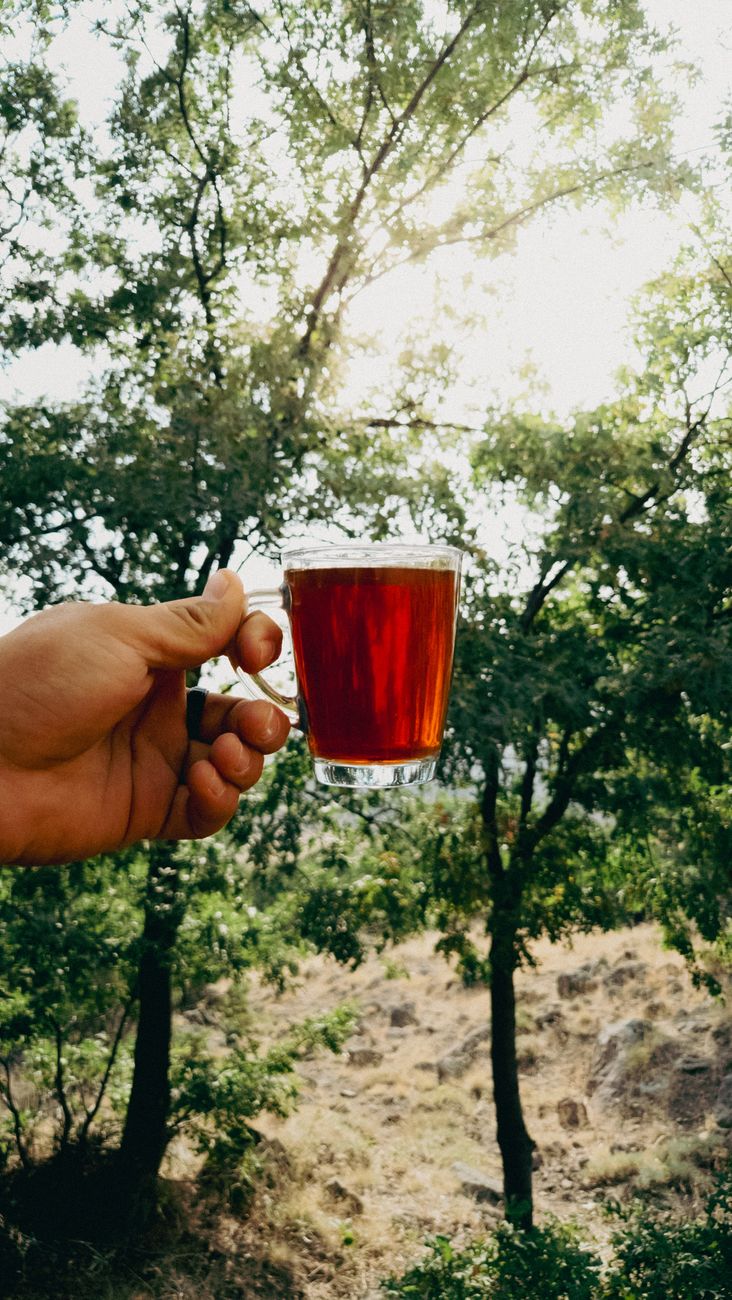
There comes a point in adulthood when you look around at your own life and realize just how much of it was built from other people’s expectations. Parents, partners, coworkers, even strangers on the internet all seem to carry opinions about what a “good” life should look like whether that’s the classic white picket fence and 2 kids, jetting around the world or having that corner office. With the shorter days and colder nights which entice us to stay inside sipping a warm cup of tea, December has a way of handing us a quiet pause in the middle of all that noise. In that stillness you can ask a gentler and more liberating question: What if the best gift you give yourself this year is a life that actually fits you? Not a life you are supposed to want. Not a life that earns gold stars. A life that feels like home when you step into it.

Most of us carry at least a few pieces of life that no longer fit. A commitment you keep out of habit. A routine that once served you but now drains you. A goal you set years ago that you are still dragging around even though it no longer reflects who you are. Just like clothes that shrink in the dryer, some roles tighten over time until they restrict your movement. One of the most compassionate things you can do for yourself is to notice what feels constricting. If something consistently brings dread or resentment, it deserves a second look.

Try asking yourself: What do I continue to do only because I feel I should? What parts of my week feel like a performance? What drains me more than it fills me? These small gut checks can reveal more truth than grand resolutions ever will. Because often resolutions are about adding things to our lives when maybe we should be asking what isn’t serving us anymore. 

Photo by The Lazy Artist Gallery on Pexels.com

Permission to Want What You Want

Wanting something different for your life can feel almost rebellious. We are taught early that desire is selfish or impractical. Yet desire is really a compass. It points you toward what brings meaning. The permission you refuse to give yourself is often the permission you most need. You are allowed to want a simple life. You are allowed to want a bold one. You are allowed to want rest, creativity, adventure, peace or a mix of them. 

Let go of the guilt around wanting something others do not understand. You do not have to justify your dream life like it is a court case. Your preferences do not require a panel of approval. They only require your honesty. After all, the only person who gets to live your life is you. They have their own. 

Every person inherits a set of default settings. These can be expectations from family, cultural messages or values absorbed without question. Some defaults are helpful. Others keep you living a script that never belonged to you. December is an ideal moment to ask where those settings came from. Did you choose them or were they assigned to you? Are they aligned with who you are now or with a past version of you who no longer exists?

Letting go does not always require a dramatic overhaul. It can be as simple as replacing one outdated belief with a more generous one. It can be as quiet as deciding your worth is not measured by productivity. Sometimes the life that fits begins with subtracting what never matched your shape in the first place.

Photo by Kassandre Pedro on Pexels.com

Crafting a Life That Fits

Once you clear the space, you can begin creating a life that feels right in your hands. Think of it like tailoring. Small adjustments can change everything. You might shift your morning routine to match your natural rhythm. You might redefine what rest means so it supports you instead of feeling like a guilty pleasure. You might choose relationships that nourish you instead of ones that keep you hustling for belonging.

Crafting a life that fits is not a single grand gesture. It is a set of choices made consistently. When something feels peaceful instead of performative, you are moving in the right direction.

A good life should give you room. Room to breathe. Room to change your mind. Room to fail safely. Room to explore new interests without embarrassment. If your life feels like a tight shoe, it is not a sign that you need to force yourself into it. It is a sign that you need to loosen the laces. When you prioritize a life that can expand with you, you trade perfection for sustainability. You also create conditions in which joy can actually take root instead of feeling like a visitor.

Photo by JESHOOTS.com on Pexels.com

A Gift You Keep Giving Yourself

The gift of a well-fitting life is not wrapped once and placed under a tree. It is something you give yourself again and again. Through honesty. Through reflection. Through paying attention to what your life is telling you. You will outgrow some things. You will discover new ones. You will learn what brings you back to yourself. The point is not to build a life that looks impressive. The point is to build one that feels true.

As this year winds down, take a moment to appreciate the small ways you have already reshaped your life into something more authentic. And if you have not started yet, that is all right. The gift is not in the timing. The gift is in choosing yourself.