Keep the Thing You Love Useless

Dear readers, I have been in the midst of an ADHD hyperfixation.

Poetry.

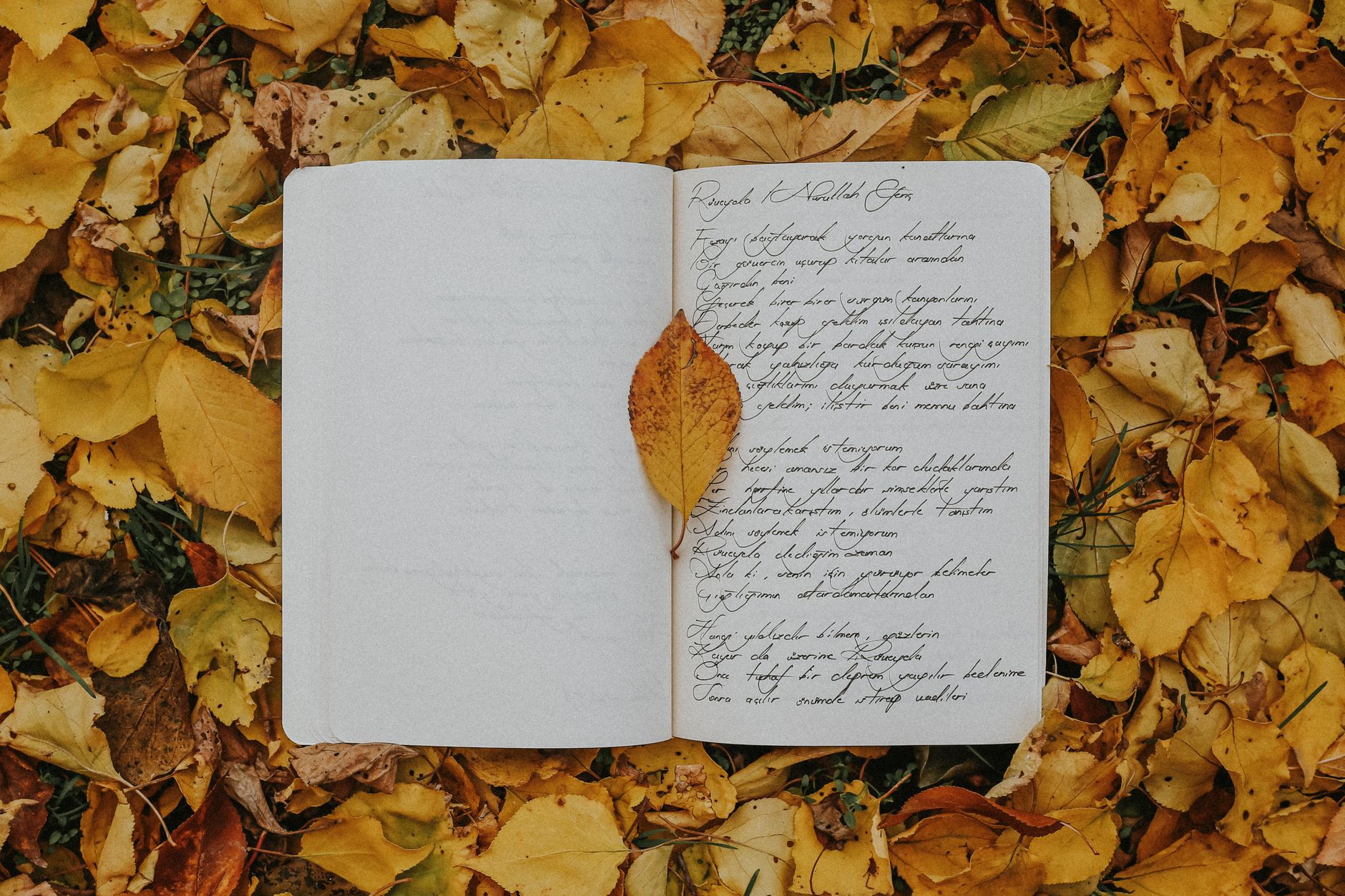
For the past three months, I have been utterly consumed—writing forty-plus poems in three months, which even I have to admit is a slightly absurd amount of poetry

Now, I shalln’t subject you to the entirety of the collection. However, I have shared a few with friends and family, who have begun to gently (and not so gently) encourage me to seek publication. After all, it seems such a shame that such a collection should simply languish on my desktop.

Suddenly, a list of journals sits before me, complete with deadlines looming and pressure quietly building. Some even come with significant cash prizes if the poems are selected.

Photo by Hatice Baran on Pexels.com

Isn’t that just the way of hobbies?

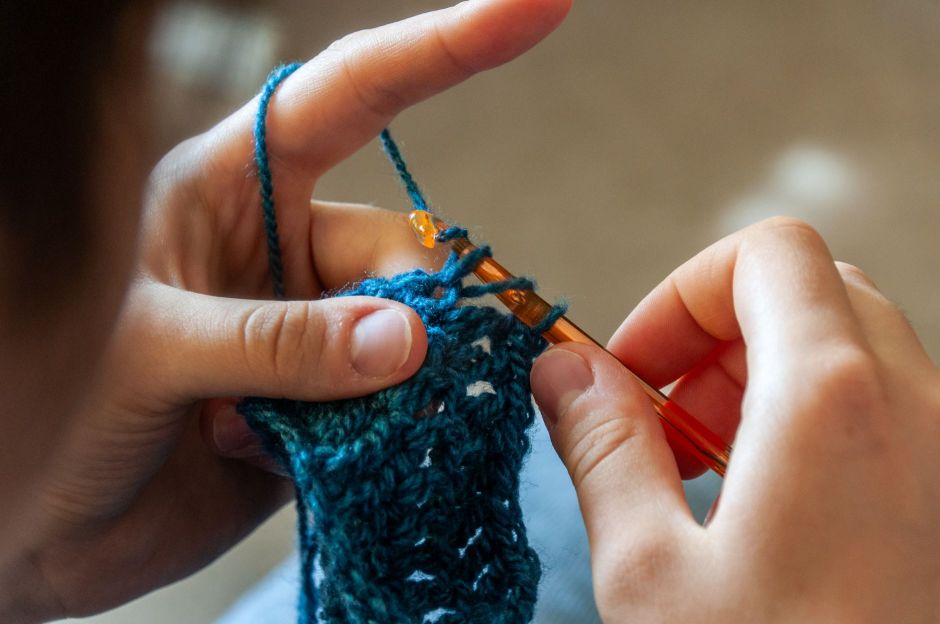
The crocheter is asked when she’s opening an Etsy shop. The painter is asked if they’ve considered the local gallery. The yoga enthusiast is told they should teach. The baker is suddenly “volunteered” for every birthday cake in a five-mile radius. And the poet, inevitably, is encouraged to submit to journals.

And it sounds reasonable, doesn’t it?

We are constantly told to pursue our passions. To follow what we love. To “do what you love and you’ll never work a day in your life.” A beautiful idea. And also… a slightly suspicious one. Because somewhere along the way, we stopped asking whether turning everything we love into something productive might quietly change the thing itself.

There was once an experiment with children who loved to draw. They were divided into groups—one received an external reward for drawing, the other did not.

The result was surprisingly consistent: the group that drew without reward maintained their interest. The group that drew for the reward lost motivation over time. And the group that received an unexpected reward? They also maintained their enjoyment.

In other words: motivation thrives not on chasing reward, but on the absence of needing one. We are most creatively alive when we are not negotiating with outcomes.

Photo by Cort Landt on Pexels.com

Another study, this time with adults, found something equally odd. One group completed a deliberately dull task before being asked to solve creative problems. The group that had just done the “boring” task actually produced more creative solutions.

Which is funny, because some of my best poetry has never arrived at a desk. It arrives while driving. While walking. While weeding the garden or cleaning something I definitely didn’t want to clean. It arrives when the conscious mind is occupied just enough to step aside.

But that kind of mental spaciousness is hard to come by when every hour is accounted for, optimized, monetized, or squeezed into productivity. And that’s where hobbies quietly begin to change shape. Because turning a hobby into a side hustle sounds empowering—until it isn’t.

At first, it’s just sharing something you love. Then it becomes selling something you love. Then it becomes needing to sell something you love. Then it becomes needing to make something people will buy. And slowly, almost imperceptibly, the question shifts from: “What do I want to make?” to “What will perform well?” The hobby is still there. But the play is not. And without play, something essential quietly drains out of the work. Not always immediately. Not dramatically. But steadily—like a color fading from fabric left in too much sun.

Photo by SHVETS production on Pexels.com

The uncomfortable truth is that most side hustles do not pay nearly as much as we imagine they will. Often, the return is small compared to the time invested. Sometimes it amounts to a few dollars an hour—or less—once everything is accounted for.

Which would be fine, if the primary goal was joy. But when the goal becomes income, validation, or traction… the relationship changes. We stop being in conversation with the thing we love. And start being evaluated by it. And I think that is the part we rarely say out loud: Not everything we love is meant to be optimized. Not everything we create is meant to scale. And not everything beautiful needs to become a business plan.

Sometimes the point is simply that it exists at all. Sometimes the point is that it made you feel alive while you were making it. And perhaps the real danger is not that we fail to monetize our passions… But that we succeed in doing so, and lose the ability to enjoy them without permission. So for now, I remain in my poetry hyperfixation. Not as a product. Not as a strategy. Just as a person who has been, for a while, deeply interested in making things that do not need to become anything else.

Oh do not get me wrong, dear reader, I will submit things to journals here and there, but not for any other reason than to put them out into the world. But mostly, I shall continue to focus on having fun.

Photo by betu00fcl nur akyu00fcrek on Pexels.com

When Life Only Happens in Big Moments

There is a particular kind of exhaustion that does not come from doing too much, but from feeling like your life only really happens in rare bursts. Oh certainly vacations, “milestones”, trips and celebrations are all well and good.  After all these are the “big moments” which make everything else feel worth it. Or are they?

Because if that’s true then….everything in between starts to feel like waiting. Waiting for the next thing that will make life feel real again. 

I think, in some quiet way, many of us fall into this pattern without noticing it. We begin to outsource our sense of aliveness to future events. We tell ourselves, I’ll feel better when I travel, or when this season is over, or when things finally calm down, or when I get to that version of my life that feels more like mine. And slowly, without meaning to, the present becomes something we are simply passing through.Not living in. Just moving through.

Don’t get me wrong, there is nothing inherently wrong with looking forward to things. Anticipation is a form of joy. But there is a difference between anticipation that enriches your life and anticipation that replaces it. One expands your experience. While the other quietly erases it.

Modern life does not exactly discourage this pattern. If anything, it reinforces it. We are surrounded by highlight reels, curated moments, and constant reminders of what life could look like if we were elsewhere, doing something else, being someone slightly different. So it becomes very easy to believe that life is happening over there rather than here or now. I am tempted dear reader to quote Yoda when he was talking to Luke Skywalker “All his life has he looked away… to the future, to the horizon. Never his mind on where he was. Hmm? What he was doing.” Forgive me there are just some temptations I cannot deny. 

Photo by Lydia Murray on Pexels.com

If you are not careful, your ordinary days begin to feel like maintenance. Something to get through. Something to manage. Something to endure until the next meaningful thing arrives. But a life that only feels real in its highlights is a fragile kind of life. Because highlights are, by definition, rare. And everything else is where you actually live.

This is where the trouble starts. Not in the big moments themselves, but in the assumption that they are the only moments that matter. Because if that is true, then most of your life becomes a kind of emotional outsourcing. You send your sense of meaning elsewhere and wait for it to return in concentrated form. A weekend. A trip. A breakthrough. A celebration. A “milestone” (whatever those actually are).

And in between those moments, you are left with everything else. The ordinary. The repetitive. The unglamorous structure of being a person who still has to answer emails and wash dishes and figure out what dinner is going to be. It is easy to dismiss those moments as unimportant. But they are not the exception to your life. They are your life where you wish to admit that or not. 

And this is where things begin to shift, because once you notice this pattern, you start to see how much of life is not actually made of peaks, but of repetition. The same mornings. The same responsibilities. The same quiet routines that shape your days more than any single highlight ever will. So the question becomes not how to eliminate the big moments, but how to stop abandoning your life in the meantime.

Because a life worth living cannot only be something you visit occasionally. It has to be something you can exist inside of. Something that does not require escape in order to feel bearable. This does not mean every moment must be exciting or meaningful in a dramatic sense. That would be its own kind of pressure.

Photo by Pixabay on Pexels.com

Instead, it might mean learning to notice what is already here, even in its simplicity. The small textures of a day that is not special, but is still yours. The way light comes through a window. The rhythm of familiar tasks. The quiet continuity of being alive without anything particularly remarkable happening.

And sometimes, it means gently asking yourself what you are waiting for. Not in a harsh way. Not as judgment. But as awareness. Because often, when we are honest, we are not waiting for one specific thing. We are waiting for life itself to begin feeling like it counts.

If you’ve ever watched or read the play “Our Town” there is a specific scene in which a woman, Emily Webb, has died in childbirth and asks to go back to relive parts of her life. She’s warned not to pick a big day like her wedding because it will be too much. No, she’s told to pick a quite ordinary day and so she picks her birthday as a young girl. She is immediately overwhelmed by how young and beautiful her mother looks, but she is instantly struck by a painful realization. The living are moving too fast, completely caught up in the routine details of the day. When her mother hands her a birthday gift without truly pausing to look at her, Emily experiences a rush of grief. She sees that human beings are blind to the preciousness of the present moment, treating time as if they have a million years to waste. 

Photo by Viktoria Panova on Pexels.com

How often do we live that way? How many times do we not really look at one another and savor the small moments of connection? 

But life is not waiting for permission to be meaningful. It already is happening. Even here. Even now. Even in the in-between.

“Oh, earth, you’re too wonderful for anybody to realize you. Do any human beings ever realize life while they live it—every, every minute?” – Emily Webb “Our Town” 

So perhaps the invitation is not to chase fewer big moments, but to stop outsourcing your aliveness to them. To let the big moments be a part of your life, not the place where your life finally starts. And to remember, gently, that a life well lived is not built in rare highlights. It is built in the ordinary days you stop overlooking.

Opening the Tupperware

I think it is fair, dear reader, to believe that there are many of you who have gone through trials and tribulations in this life. It is also fair to believe that there are many of you who have not made it through those trials unscathed. You may think that you are irreparably broken from the experience. I assure you, you are not. You are probably quite resilient and resourceful. However, you may not yet realize it and I do not think you are entirely to blame. 

Something that frequently irritates me is the media’s depiction of healing. A character suffering from PTSD suddenly has a realization that they are able to face their fears and suddenly the flashbacks stop. A story about a girl grieving the loss of her mother goes back to being happy by writing a letter, stuffing it in a bottle and throwing it in the ocean. Healing is done through a flashbulb moment, a small act or a one time therapy session with a counselor. So when we have our flashbulb moments, take those small acts and go to counseling and we still aren’t “fixed”, we begin to wonder if we will ever be healed. Because why wouldn’t we question our ability to heal when the narrative we’ve been given is that it’s quick and easy. 

It’s like everything else in our society, we want a quick solution without a lot of effort. Take this shot, you’ll lose weight. Play this game for 10 minutes a day and you’ll be fluent in Spanish months! Go to counseling for a few sessions and your trauma will be cured. And you won’t ever have a set back again! 

Photo by Antoni Shkraba Studio on Pexels.com

The truth is that isn’t how healing works. It’s a messy, difficult and sometimes frustrating process. It’s taking what feels like three steps forward only to fall five steps back and then have to walk three steps forward to have taken one actual step. It’s like cleaning out the refrigerator where you have to open the old tupperware knowing that you’re about to discover what might be the start of new intelligent life because you’ve allowed it to evolve for so long. No one wants to open the tupperware to see what’s inside and unlike the tupperware you don’t have the option to just throw the whole thing in the trash. You have to open it up and deal with whatever you find, no matter how unpleasant. 

Emotions, unfortunately, require care and ignoring them doesn’t make them go away. Because when we turn off our ability to feel the negative emotions, we also turn off our ability to feel positive emotions. That’s why we can end up feeling emotionally numb even when the difficult times are over and we don’t understand why we can’t be happy now. No one wants to sit in the negative emotions. We often jump to problem solving or attempting to reason with them rather than simply sit and hold space for whatever may be there. 

Photo by Julio Motta on Pexels.com

You don’t want to face it because it’s not enjoyable but the only way to the other side is through it. Not once, not twice but again and again and again. Because processing once often isn’t enough, not with more complex and complicated issues. If it were, you could just write a journal entry and be on with your life. What really sucks is when you you think you’re good only to get into a situation many years later where you’re triggered all over again. So you take deep breaths, count out 5 things you can see, four things you can hear, three things you can feel, two things you can smell and one thing you can taste – an excellent grounding technique. You remind yourself that you’re in the present and that what you’re responding to is in the past. It’s followed by the frustration of not being “over it”, forgetting that our emotional minds aren’t subject to logic or even the constraints of time. 

If you aren’t going through something then chances are you know someone who is and it can be tempting to try and fix the problem. Remember your presence is all that is required to let them know that they aren’t alone. 

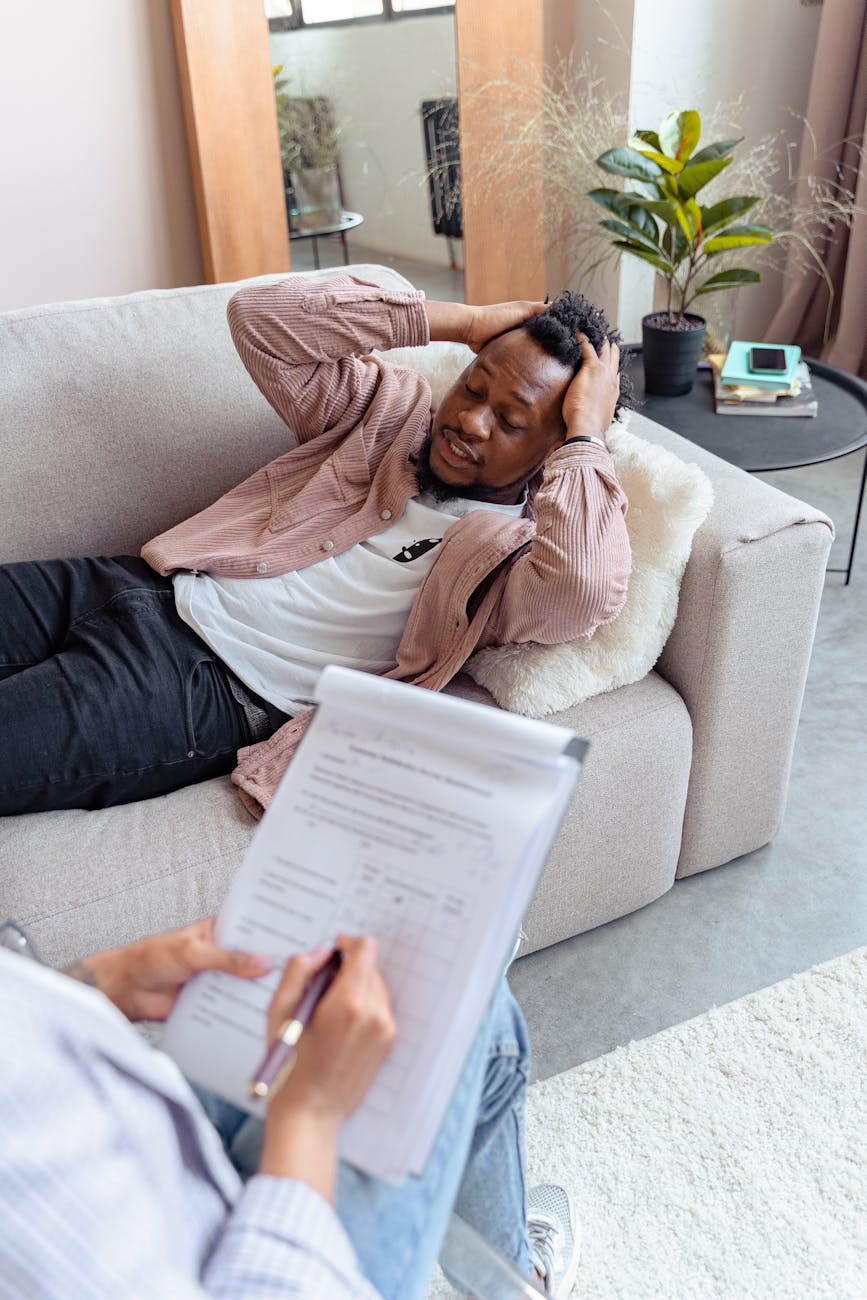
If you find yourself overwhelmed in your healing journey, I recommend reaching out to your supports and consider expanding your support system as well whether that be a therapist, counselor, life coach, priest, etc. 

This isn’t a post about how to heal, but rather about being kind to yourself in the process. Healing isn’t linear nor is grief. It’s a process that’s often circular, confusing and paradoxical. Which is, honestly, the human experience. In living a life well lived, taking the time to allow ourselves to feel the full spectrum instead of trying to rush through it can be one of the best things you can do because healing takes time. 

Photo by Vika Glitter on Pexels.com

If the Mask Came Off, Would You Recognize Yourself?

We live in a digital age where we can curate our lives to project an idea of who we are into the world. Are we bubbly and outgoing? Sophisticated and refined? We can place almost any lens or filter over our photos and our lives. With artificial intelligence, that line blurs even further. We can compose music, generate art, write entire essays, and pass them off as our own. We can feed in a photo and receive a picture-perfect version in return.

All of it in pursuit of likes and comments.
All of it for confirmation that we are enough.

Which is what we’re all striving for, isn’t it?

It becomes easy to let these illusions shape our identity. The mask we wear for acceptance begins to fuse with who we are. Much like The Mask, it clings to us until we can no longer separate it from our face. And without it, we’re not entirely sure who we are.

Maybe when you were younger, your father took you to baseball games. You wore the jersey, learned the lingo, found community in the crowd. When he asked if you wanted to play, you said yes. You spent your childhood in a sport that never quite fit, quietly forgetting about the gymnastics class you once wanted to try. When the Olympics came on, you changed the channel rather than sit with the ache in your chest as athletes flipped and soared with ease.

After all, that’s not what earns a high five from Dad.
That’s not what earns acceptance.

Photo by Zen Chung on Pexels.com

Or maybe you were told you were too loud, so you became soft. Too much, so you became small. You watched a sibling get scolded for being wild, so you became controlled, composed. You saw a parent retreat when overwhelmed, so you learned to hide your emotions. You absorbed opinions about “the kind of people” who go to college or work with their hands, and somewhere along the way, your own desires got quieter.

Without the judgment of others, who are we?
What do we actually like?
What are our passions?

If no one were watching, what would we choose?
If no one were clapping, what would we keep?

Deciding to live authentically is not a small thing. Especially when our relationships have been built on versions of ourselves that were easier to accept. There’s a quiet fear that lingers: Who stays if I change? If they really see me, will they accept me? If I tell them my truth, will I be cast out? They say they love me, but if they never knew who I really am, was it ever actually love?

Not every truth is seismic. Not every revaluation risks losing everything. Sometimes it’s quieter. You grow up dismissing a genre of music you’ve never actually heard, repeating what you were taught. Then one day, you listen. And you like it. You begin to question what else you’ve inherited without examination.

You realize how much of you was shaped before you ever had the chance to choose.

Of course, not all of this comes from a place of harm. A father may have brought his child to baseball games simply to connect, to give what he never received. A mother may have hidden her tears to protect her child from carrying burdens that were never theirs to hold.

But even well-intentioned messages can clip our wings.

Photo by Camilo Ospina on Pexels.com

We try on identities like hats, convinced they fit, until one day they don’t. We outgrow them. Or maybe we never grew into them at all. We become fractured. The version of us at work looks different from the one at a party, which looks different from the one who sits alone in the quiet.

And eventually, the question surfaces:

Who am I, really?

Maybe that’s the real fear.
Not that others won’t recognize us…
but that we won’t recognize ourselves.

If the mask came off, would you recognize yourself?

Rethinking Love in February

Love is in the air, or at least Valentine’s Day is.

It’s the time of year when the town is painted red, couples linger a little closer, and a different kind of warmth permeates despite the bitter chill of winter. The days are growing lighter. Spring is promised. Something soft waits patiently beneath the cover of snow.

And yet, Valentine’s Day carries a strange contradiction.

Did you know it is one of the most common days for breakups?

For a holiday brimming with sappy poems, fragrant flowers, and sweet chocolate, it has earned a surprisingly bitter reputation. Perhaps that is because a day devoted to love forces us to reflect on what love actually is… and sometimes, upon closer examination, we discover that what we thought was love… wasn’t.

Believe it or not, our culture, and often even our families, do a poor job of teaching us what real, authentic love looks like.

We talk about butterflies in our stomachs and feeling lightheaded from a kiss. In love songs, boundaries blur and two people fuse into one. In stories, love is intense and consuming. The hero protects the heroine, but also possesses her, sealing devotion with the words: “You are mine.”

Sometimes we are taught to view love through obligation and duty. Love becomes something we owe. Something we earn by fulfilling expectations and playing our roles correctly. Love becomes sacrifice at the expense of the self.

Photo by Pixabay on Pexels.com

But is that love?

I would argue that these versions are infatuation at best, and unhealthy, even abusive, at worst. And yet, between cultural depictions and our own internal patterns, we often confuse what love is.

We learn from our earliest experiences what love looks like. As we grow older, we don’t always seek what is healthy, we seek what is familiar.

I could list a million examples of unhealthy love. I could write out endless red flags. But the problem with red flags is that if something doesn’t match them exactly, we may dismiss what we feel.

We tell ourselves, “Well, it’s not abusive.”

And yet, something can fall short of abuse while still falling far short of love.

That is why I want to focus instead on what healthy love actually looks like.

Across poems, philosophy, research, and human experience, certain themes arise again and again. Love is more than a feeling or an attachment. Healthy love is a consistent presence, the willingness to stay, not because one must, but because one chooses to.

And while love may cost us something at times, it should never come at the cost of ourselves.

Healthy love is not self-erasure. It is not martyrdom. It is a widening sense of us that still contains a me. Sacrifice in love should not diminish either partner, but strengthen both.

To love someone is also to truly see them.

Love recognizes the beloved as they are: flawed, human, singular, worthy. Love says, “You matter. You are not interchangeable. You cannot simply be replaced.”

Love is not possession. It is not fear disguised as devotion. Nor is it the merging of two souls into one entwined being, as popular as the fated-mate trope may be.

Photo by Pixabay on Pexels.com

Love does not have chains.

It is choice and freedom.

Healthy love enhances rather than restricts. It fosters growth rather than suffocation. One person is not diminished so the other can shine. Both are made better, not because they complete one another, but because they support one another.

In short, healthy love is a relationship where both people feel emotionally safe, seen as they are, and free to grow without fear of punishment, abandonment, or control.

Love says:

“I won’t disappear when you’re inconvenient.”
“I won’t punish you for being human.”
“I won’t leave you alone in your pain.”

But healthy love does not say:

“I will erase my own needs.”
“I will surrender my boundaries.”
“I will make your suffering my identity.”

Love is safety for both.

It allows both partners to exist without feeling they must earn their right to be there.

And perhaps that is the quiet challenge of Valentine’s Day, beneath all the roses and romance. Love is not something waiting for us in some distant future, once we are finally healed, finally perfect, finally enough. It is something we practice in the present, in the relationships we choose, in the boundaries we hold, in the way we refuse to mistake survival for devotion. A life well lived is not built “someday.” It is built here, now, in the steady courage to believe that love can be both real and safe, and that we are worthy of it exactly where we are.

Photo by Rogu00e9rio Souza on Pexels.com

Your Loved Ones Will Not Be Around Forever

Growing up, there was a cross stitch that hung on the wall of our house. On it was an except from “A Song for the Seventh Child” and it ended with the following line “Cleaning and scrubbing can wait ‘till tomorrow, for children grow up as I’ve learned to my sorrow, so quiet down cobwebs and dust go to sleep, I’m rocking my baby ‘cause babies don’t keep.” 

One might wonder why such a thing stayed with me all these years, not yet having children. However, I have almost always had a beloved cat or dog and they grow old as I’ve learned to my own sorrow. There are moments when the dishes sit undone because a cat is snuggling on my lap. In fact, when my sister lived with us there was an established rule that if a cat decided to sit on you, the other sister did the dishes. It might seem like a strange thing but both of us agreed that it was more important to spend the time giving love and attention to a creature who would only be with us a short time than to fuss over whose turn it was to wash dishes. What was more important? 

If I can apply that to pets, how much more to people? Almost no one gets to the end of their lives thinking they should have worked more or spent more time at the office. So often the refrain is “I should have spent more time with my family and friends. I should have made time for my children when they needed me. I should have snuggled my puppy just a little while longer.” Nor do we know how much time we really have with anyone. 

My sister hugging me at graduation; she made sure to be there for me.

I have been surprised by the number of classmates already lost to accidents and diseases even though I’m not yet 40. The expectation is that you won’t hear of loss so young and that you won’t face the news of their passing until you’re well into your 70’s or 80’s. Car accidents happen, cancer happens, life happens. I’ve shared my mother had a stroke at 46 and clots in both her lungs in her late 50’s. These are precious moments you won’t get back so choose how you spend them wisely! 

Furthermore, it is important to make sure we are cultivating relationships with our loved ones. There are plenty of stories to illustrate that when you do not prioritize your loved ones, your loved ones will find people who do. You may find yourself having built a beautiful life of loneliness without those you care about. How empty it must be to work so hard and sacrifice so much only to have accidentally sacrificed the thing you were working so hard to provide for? In the pursuit of a goal, you may lose contact with friends and family, over time they may simply conclude that you do not care about them, unless  you make the time to be there. Be careful about what you give up when chasing a dream even if the dream is for a good reason. 

There are times when I do consider pursuing higher things, pushing myself further, adding yet another hobby or taking on yet another responsibility. But then I consider what I would give up. The time I would miss out on spending with my friends, my family and yes, my cats. When such thoughts tempt me, I make a nice cup of tea, lay on my bed to have my cats nestle next to me and settle in for an afternoon of reading and snuggles. I have yet to regret a day spent with cats or those I love dearly. 

Taking time out of my day to snuggle a cat.