The Family We Gathered Into

Dear reader, some of the most important traditions in my life aren’t traditions that my family created.

At least, not my family by blood.

They began with a group of college friends of my parents who, somewhere along the way, decided that friendship deserved to be celebrated. Perhaps because most of them came from dysfunctional families, so they formed a family of their own and it was into this family that I was born. Decades later, the gatherings continue. The faces have changed over the years. Some people have joined us, others have moved away or passed on, and the locations have occasionally changed. But the traditions remain, some remain untouched from their beginnings. Others have slowly morphed or rolled into other traditions.

Three times a year, give or take, we gather. 

St. Patrick’s Day brings together those who share an Irish heritage, or perhaps simply an appreciation for good food, good drink, and the opportunity to sing Irish folk songs at increasingly enthusiastic volumes. We used to gather for Mid-summer’s and Mid-winter’s but they were rolled into St. Patrick’s when Mid-winter’s kept getting snowed out and our host for Mid-summer was no longer able to accommodate everyone camping on his property. And while I miss the bonfire where Jay would dress up like Merlin and entertain me with colored flames, I am a bit old for that now. I would want to be the one dressed up as a wizard.
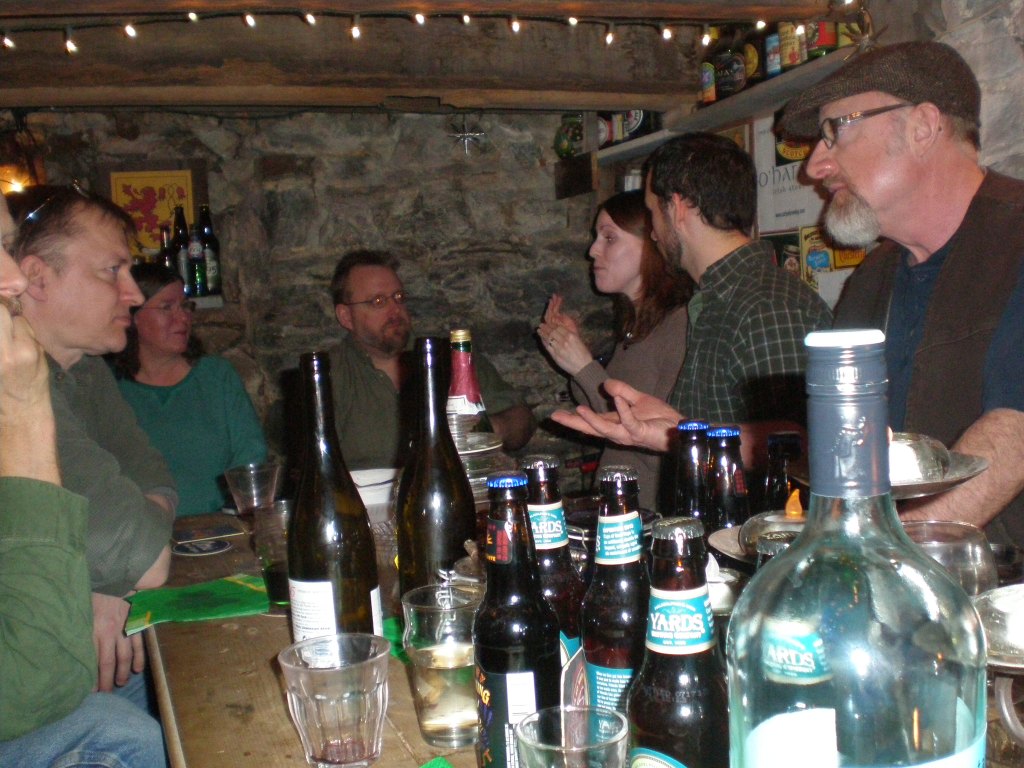
the infamous “pub”

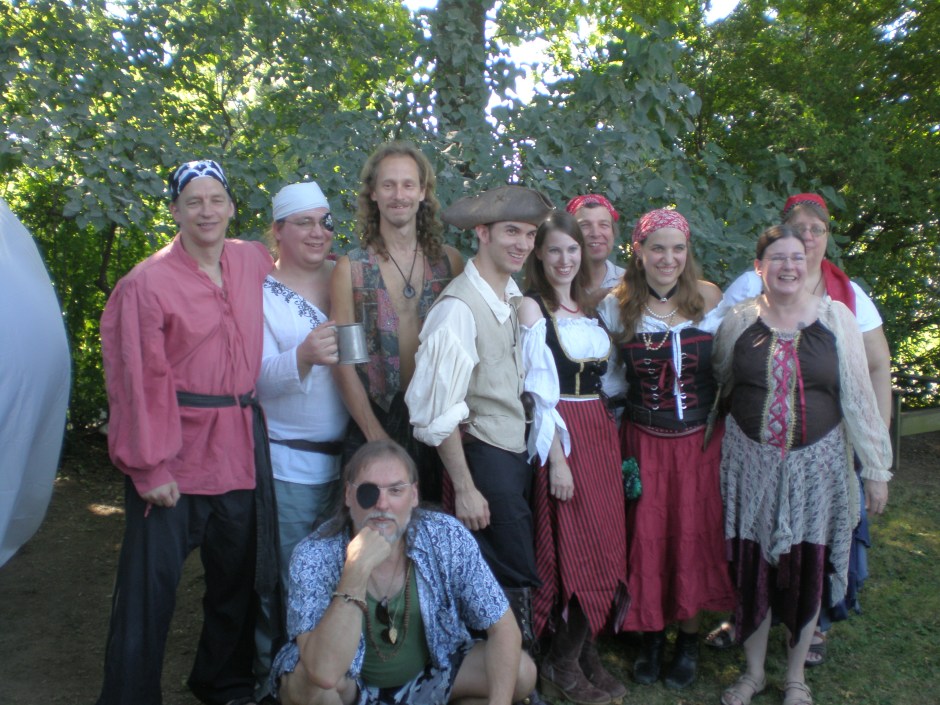
The Garden Party marks the end of summer with music, food, lawn games, and sometimes dancing. It is the sort of afternoon where nobody seems particularly concerned about what time it is because there is always another game to play, another conversation to join, another drink to refill. It goes long into the night and often into the next day for those who choose to stay over. Each year is a different theme ranging from Morocco to China, from France to Mexico and even different decades. 

Then comes the Holiday Feast, an amalgamation of Thanksgiving and Christmas. We give thanks for the blessings of the year, eat an enormous meal, sing Christmas carols, and inevitably discover whatever puzzle has been devised for us that year. The puzzles have ranged considerably in ambition. Some years it has been little more than a worksheet. Other years have involved elaborate murder mysteries requiring us to search the house and garden for clues. Apparently, gratitude and Christmas cheer are insufficient entertainment for this particular group. We also require an opportunity to investigate fictional homicide. 

There is usually a familiar menu as well. If you attend either St. Patrick’s or Holiday Feast you never need to check the menu, you simply know.

And then there is the house. For most of my childhood, these gatherings took place at my godparents’ home, a house originally built in the 1700s and expanded in the 1800s. It is the sort of house that seems to remember the people who have passed through it.
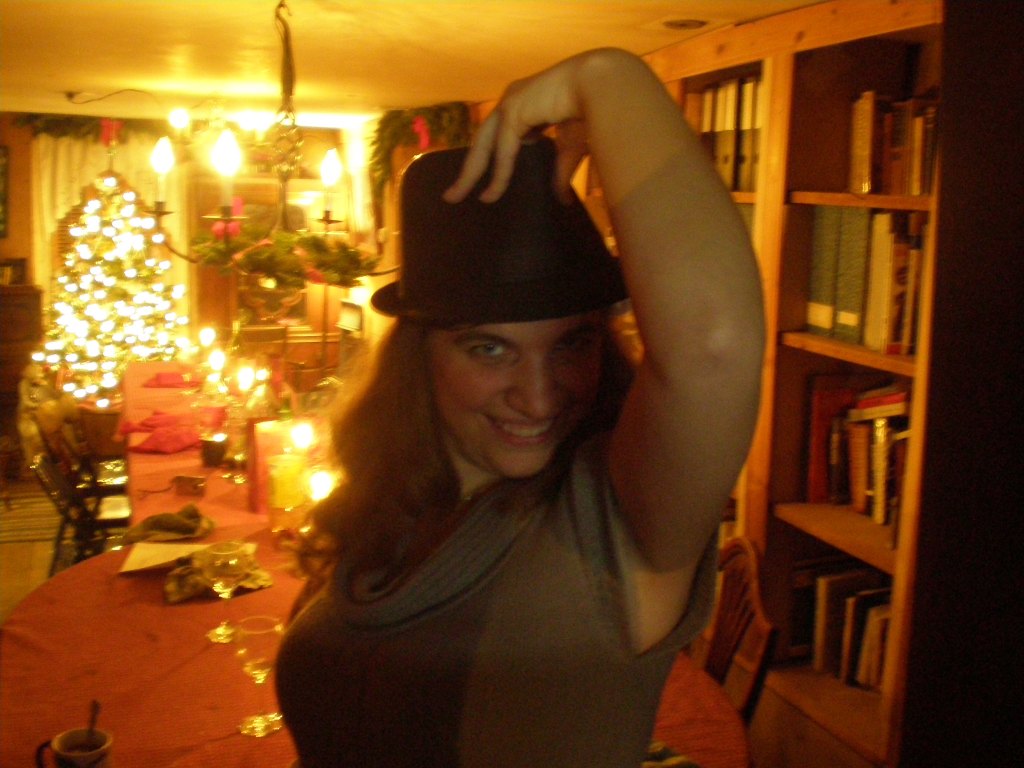
Getting into the holiday spirit

There is an old wood stove tucked into the hearth room. The cellar contains an Irish “pub” that my godfather quite literally dug out by hand, enlarging the space until there was enough room for our heads. The rough stone walls make you feel as though you have somehow stepped out of Pennsylvania and landed in the old country.

Every room has its own history. Every corner contains a memory. There are whispered ghost stories. There are stories about people who aren’t there anymore. There are objects whose significance I probably wouldn’t understand if I hadn’t spent so many years seeing them in the same places.

I can mark my childhood by these parties. At first, there was the children’s table. Playing with my siblings and my “god-sister”. Eventually, I graduated to the adults’ table. There was the first time I was old enough to drink at one of the parties. I learned crochet. I learned to play bocce ball. I learned how to mix drinks from our resident “expert” bartender. I listened to stories about places I had never been and people I had never met.

These people were my aunts and uncles, even though most of them weren’t related to me at all. One of them eventually became my college professor, which created the rather peculiar situation of having to remind myself not to call her Aunt Val in class. But the others taught me things, too.  Not in the formal sense of sitting me down for a lesson, but through years of conversations and arguments. They brought their own adventures with them and regaled us with stories. They introduced me to art, music, philosophy, history, and different ways of understanding the world.

We argued about politics, religion, economics, and just about everything else people are generally advised not to discuss over dinner. And they made me think. Perhaps that is one of the greatest gifts these gatherings gave me. They showed me that learning doesn’t only happen in classrooms. Sometimes it happens around a crowded dinner table with people who have lived long enough to have stories to tell and opinions they are more than willing to defend.
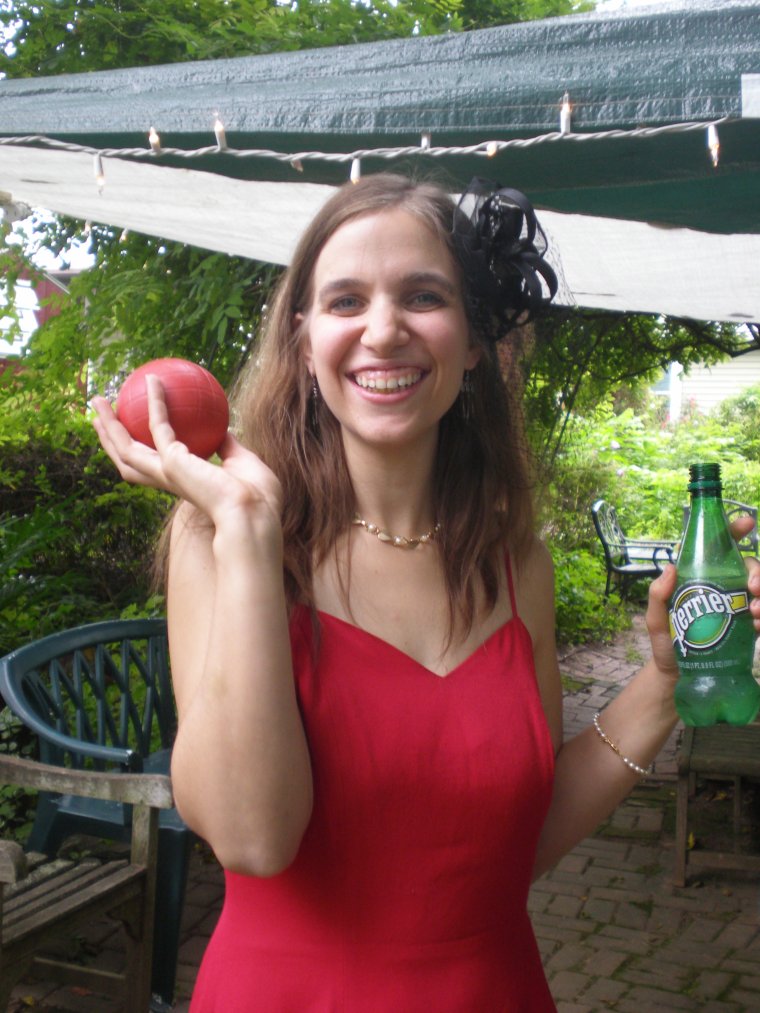
Anyone for a game?

As a child, I mostly listened. As I grew older, I began participating. Eventually, I became one of the adults arguing across the table. And somewhere along the way, I stopped being a child who attended these parties and became one of the people who helped carry the traditions forward.

That transition happened so gradually that I don’t think anyone announced it. There was no ceremony. No one said, Congratulations, you are now an adult member of the ritual. I simply found myself there. That may be the strange magic of tradition. The first time you experience something, it is an event. The tenth time, it is familiar. The twentieth time, you know what comes next. And eventually, you don’t even have to discuss it. The parties become almost like a dance. Everyone knows the steps. We know when we eat. We know when the games happen. We know when the drinks come out. We know which songs will be sung and, more importantly, when everyone is expected to join in. Nobody has to announce the choreography. We simply know it. And yet the dance is never quite the same. The people change. The stories change. Someone brings a new dish. Someone learns a new song. A child who once sat at the kids’ table is suddenly old enough to pour drinks. Someone who was always there is now conspicuously absent.

The ritual remains, even as the people within it change. I think that is why traditions matter so much. We often talk about experiences as though their value comes from novelty. We put new places, new activities, and new adventures on our bucket lists because there is something wonderful about doing something for the first time. But there is another kind of magic in doing something for the hundredth time. Traditions give us continuity. They give us something to return to. They create a shared history that stretches beyond any one person and allows memories to accumulate over generations. They remind us that our lives are not isolated events but part of a much longer story.

And perhaps most importantly, they create belonging. These people didn’t become my family because we share a last name or DNA. They became my family because we kept showing up. Year after year. Party after party. Song after song. We cultivated rituals together until they became part of the fabric of our lives. That is something worth putting on a bucket list, too.
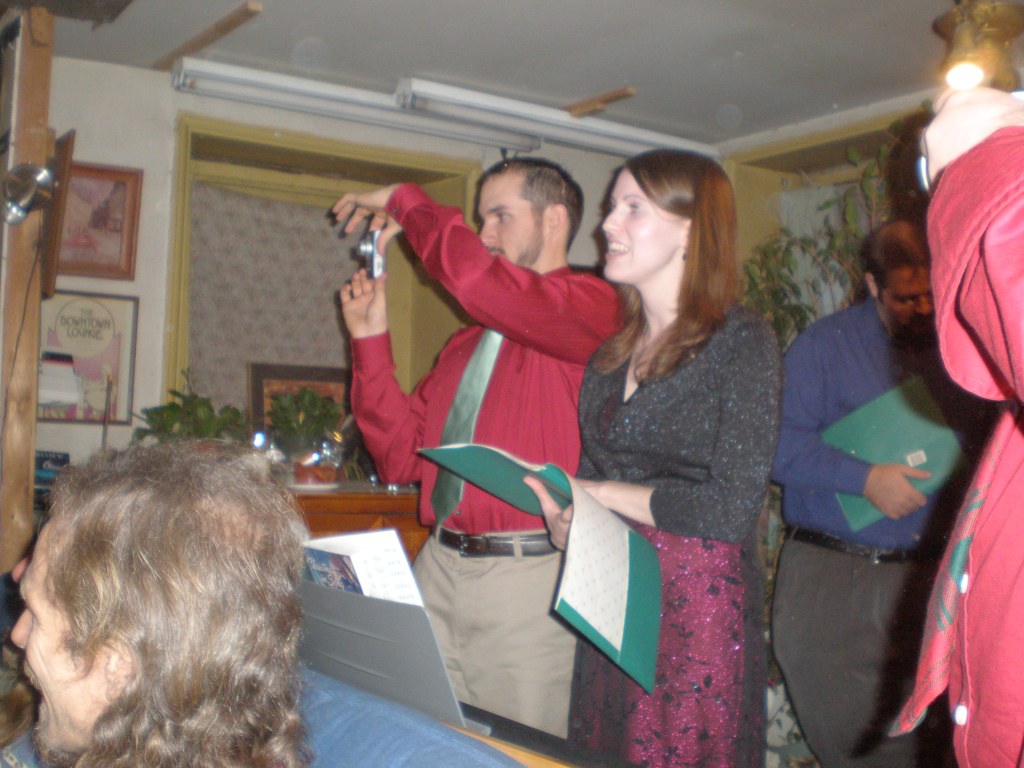
Christmas Carols

Not necessarily a particular holiday or a particular meal. Instead, consider creating something that you can return to. A yearly garden party. A friends’ Thanksgiving. A monthly dinner. An annual camping trip. A ridiculous family competition. A holiday tradition that makes absolutely no sense to anyone outside your groupIt doesn’t have to be elaborate. It simply has to be yours. 

Someday, you may look back and realize that you aren’t merely remembering the parties. You’re remembering your childhood. Your friendships. The people who taught you things. The people who watched you grow. The people who became family simply because they kept showing up. And perhaps that is one of the greatest adventures of all. Not discovering somewhere new, but building something worth returning to.
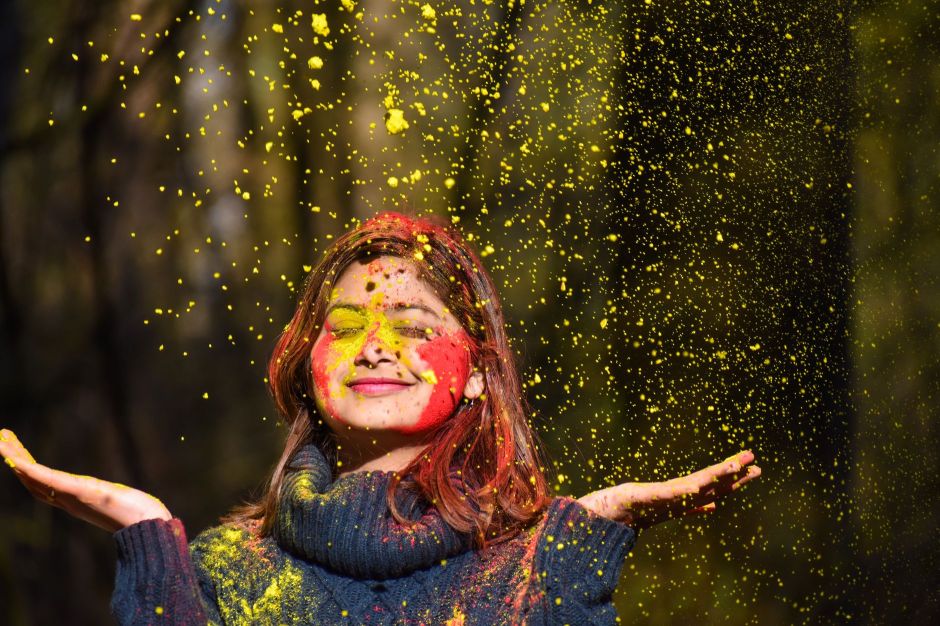
Letting the World Spin Without You: JOMO

Dear reader, I think I have made it quite clear over the years that I am, for a myriad of reasons, simply not a sports person. I don’t typically watch or participate in many sports, nor do I have any particular inclination to change that. I have nothing against them, of course. Why should I advocate for depriving someone else of an activity that brings them joy?

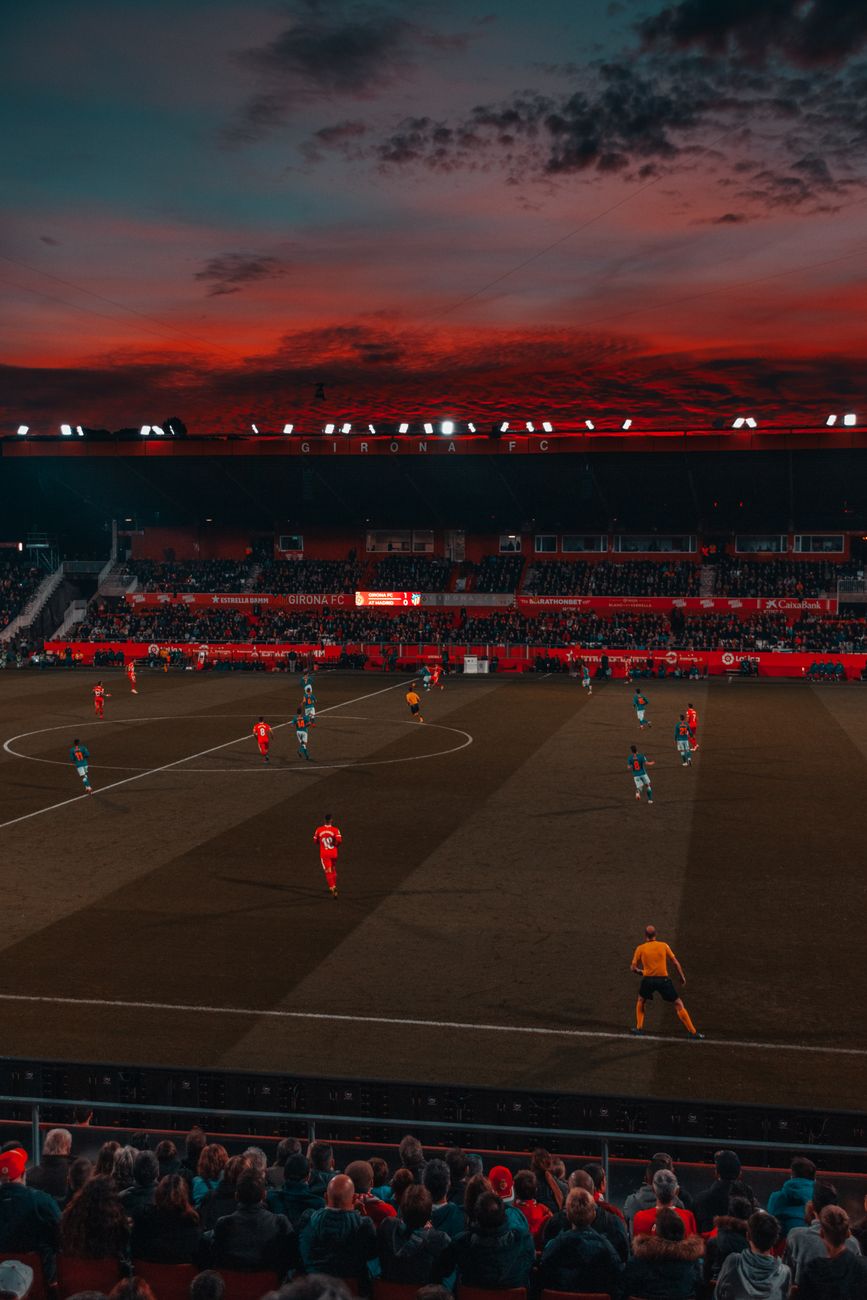
Yet over the past few weeks I found myself, quite unexpectedly, drawn into the orbit of soccer—or football, as nearly everyone outside the United States insists on calling it. (I’m beginning to suspect America simply enjoys being contrarian.)

The World Cup had arrived, and suddenly it seemed to be everywhere. Friends hosted watch parties. Restaurants filled with cheering fans. Social media overflowed with celebrations, dramatic finishes, and clips of supporters singing in unison. Perhaps it was because the tournament was being played on home soil, but even people I had never known to care much about soccer suddenly had passionate opinions about offsides, penalty kicks, and championship predictions.

Photo by Unknown User on Pexels.com

Watching all of this unfold, I experienced something surprisingly familiar.

The fear of missing out.

It wasn’t that I had suddenly developed a deep appreciation for the sport. I hadn’t. It was the feeling that everyone else was participating in a shared cultural moment while I stood quietly on the outside looking in.

Perhaps I should learn the rules.

Maybe I ought to watch a few matches.

Should I start reading about the teams so I can contribute to the conversation?

If you’ve ever felt that little tug, you know exactly what I’m talking about. FOMO has very little to do with the activity itself. More often, it stems from our deeply human desire to belong. We see everyone around us enjoying something together, and we begin to wonder whether we should be enjoying it too.

But somewhere along the way, I realized something.

I didn’t actually want to watch soccer.

What I wanted was the feeling of being included.

Those are not the same thing.

There is something wonderfully liberating about recognizing the difference.

Photo by Ali Karimiboroujeni on Pexels.com

In recent years people have begun talking about JOMO—the Joy of Missing Out. Rather than anxiously trying to participate in every trend, every event, every conversation, JOMO invites us to make peace with the opportunities we choose not to pursue.

Not everything has to become our hobby.

Not every cultural phenomenon needs our attention.

Not every invitation must be accepted.

Every “yes” we give something is also a “no” to something else. Our time and attention are finite, and spending them intentionally is one of the greatest gifts we can give ourselves.

For me, that meant happily scrolling past match highlights while smiling at the unmistakable enthusiasm of Dutch fans dancing in brilliant seas of orange. Their joy was contagious, even if their pastime wasn’t. I could appreciate their excitement without feeling compelled to make it my own.

Perhaps that is the real lesson.

We do not need to borrow someone else’s passions in order to live a meaningful life. We simply need to cultivate our own.

So the next time the entire world seems to be rushing toward the newest trend, the latest series, the biggest sporting event, or whatever everyone insists you simply must experience, remember this:

It is perfectly acceptable to let other people have their joy while you quietly pursue your own.

Sometimes the greatest peace comes not from doing more, but from realizing there was never any need to join the crowd in the first place.

Photo by Tobias Bju00f8rkli on Pexels.com

Paris, Part 2: Walking the City and Choosing What Matters

Forgive the brief interlude in my tale of Paris, but as you well know, I always sprinkle tidbits of wisdom between my stories of adventure. After all, I don’t just want you to go off and have fun. I truly hope this is a place where we can grow together and create lives punctuated by adventure rather than longing for it as an escape from daily misery.

Now, we left off, dear reader, with my arrival: tired and exhausted from a sleepless night but pumped full of adrenaline, the equivalent of five or six cups of coffee coursing through my veins.

I had already gotten thoroughly lost on the way to the hostel and had largely given up on public transit as a viable means of navigating the city. Honestly, that’s only a feat a young twenty-something can get away with.

Now, I’m not entirely certain what the rules are for crossing the streets in Paris, but they did not appear to follow the ones I had grown up with. There were multiple occasions when the light was clearly red and people were walking, and others when it was green and everyone simply stopped.

Both my travel partner and I were quite confused by this apparent inconsistency.

It was decidedly not like Germany, where people display an almost obsessive adherence to rules. Even if there isn’t a car in sight, they will dutifully wait at the crosswalk until the light indicates it is time to cross.

However, after one or two close calls with traffic, we simply looked at each other, shrugged, said “when in Rome,” and followed the Parisians for guidance, forgoing the lights entirely since they clearly could not be trusted.

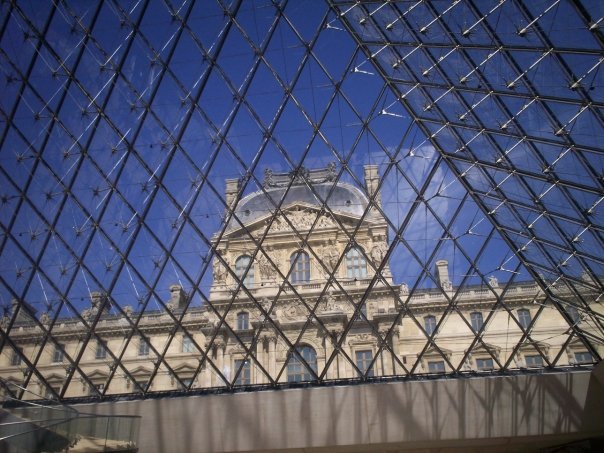
Our first stop was the Louvre, which is a must for any lover of art and history. Not only does it house one of the most famous paintings on earth, it is also the largest and most visited art museum in the world.

Originally built as a fortress and later expanded into a royal palace, the Louvre now spans roughly 2.3 million square feet. Of its approximately 380,000 objects, around 35,000 are on display at any given time.

Considering it would take over three months to see the entire collection, we decided to focus only on the highlights and the pieces that spoke most to us.

There are plenty of guides that will tell you the “must-see” works at the Louvre. But if something doesn’t speak to you, skip it. Focus on the areas of art and history you genuinely enjoy.

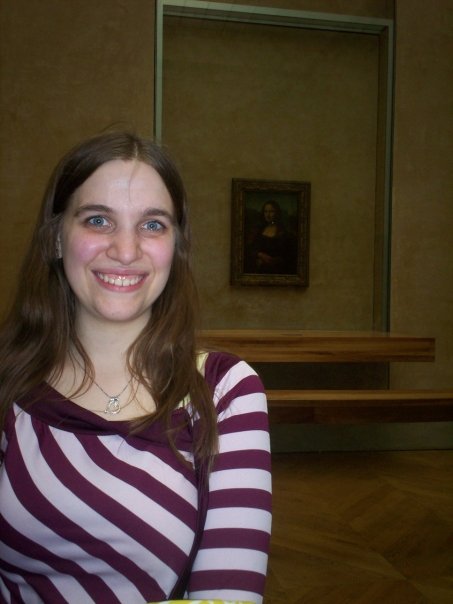
I, for one, would recommend skipping the Mona Lisa.

All it really amounts to is a photo opportunity for social media. It’s tiny, placed behind thick glass in a poorly lit room with hundreds of people pushing and shoving for a better look. You’re honestly better off googling a picture for all you’ll actually see.

Any contemplative awe you might have felt is drowned out by the din of the crowd and the smell of raised armpits as phones are hoisted into the air for a better shot.

If you aren’t paying attention, your belongings might get nicked, and you could spend the rest of your Paris trip trying to recover stolen credit cards while cursing the day you were introduced to the pernicious lady with her sly smile.

After all, she too was once stolen. Why not cavort with thieves once again?

As I’ve said in other posts, don’t let other people’s opinions dictate what you do or do not do. So if you must see the Mona Lisa, I shall not judge you for it.

Just remember that the Louvre houses centuries of art, offering millennia of history to explore, not just stuffy Italians and pretentious French painters.

Its oldest piece is estimated to be around 9,000 years old and is well worth the trek to see.

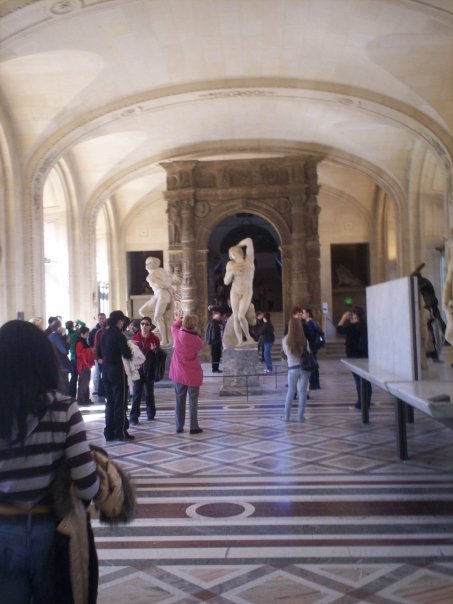
Since I was traveling with an archaeology major, we spent most of our time in the Greek and Roman sections, along with some of the French collections.

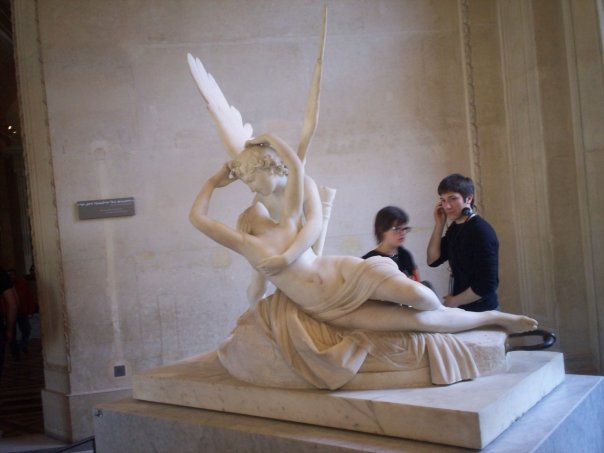
My personal favorite was the sculpture Psyche Revived by Cupid’s Kiss. Not because I have a particular fondness for eighteenth-century French sculpture, but because one of my favorite books is Psyche and Cupid by C. S. Lewis.

Art isn’t always just about what the artist intended, its place in history, or the techniques used. It is also about what it evokes in us.

I would argue that this is what art is most about: what we bring to the moment of encounter.

When I looked at that sculpture, I did not simply see the Greek myth. I saw it retold through a different lens. A revival not just of Psyche, but of myself.

Small tip: book your ticket in advance.

Prior to the pandemic, the best way to get into the Louvre was through one of the side entrances to skip the long lines. However, with its ever-growing popularity, daily visitor numbers are now capped, meaning the only way to guarantee entry is with a pre-booked ticket.

Sorry to all my free-spirited wanderers.

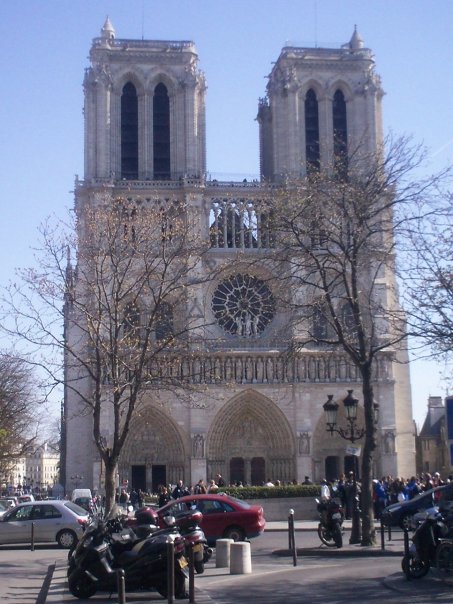
Having conquered a small portion of the Louvre, we ventured forth to the Lady of Paris: the Notre Dame Cathedral.

Walking through Paris instead of taking public transit allows you to experience the city in a completely different way. You breathe it in.

On foot, you notice the small shops and hidden corners that would otherwise blur past from a bus window or subway seat. The scent of coffee lingers in the air as you stroll by cafés, while the temptation of fresh-baked bread drifts from bakeries onto the street.

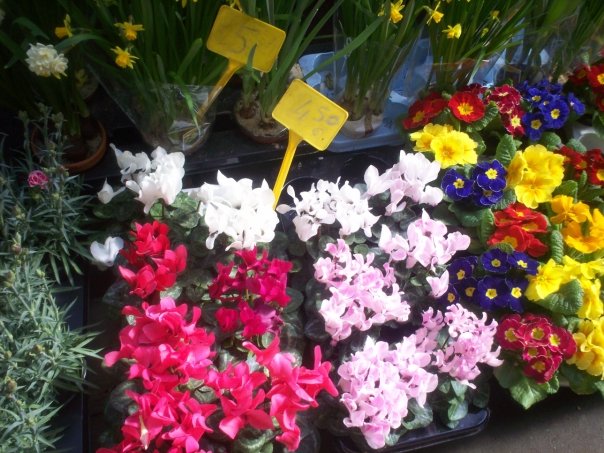
In early spring, the flowers spill across the sidewalks and painters emerge as if the season itself has burst through the concrete, refusing to remain buried beneath winter any longer.

Everywhere is a riot of color and life. Musicians greet you with cheerful melodies, and you cannot help but sway your hips just a bit in time with the music.

It was on our way to Notre Dame that we stumbled upon an artist selling watercolor paintings of the Eiffel Tower, the Arc de Triomphe, Notre Dame, and the Basilica of the Sacred Heart of Montmartre.

For a set of four, it was perhaps forty euros, an absolute steal, and it was there that my habit of buying art as a souvenir was born.

Erika and I split the cost and decided we would determine who received which painting at the end of the trip.

Long before we saw its doors, the twin towers of Notre Dame rose proudly above the surrounding buildings, beckoning us closer.

The cathedral was completed in 1260, though additions were made in the centuries that followed. Like any church nearly eight hundred years old, it has seen its share of glory and hardship: wars, neglect, desecration, and most recently, fire.

Fortunately, we visited before the fire and the subsequent debates over the restoration of its windows.

As a Christian myself, I was fascinated by the displays of Catholic artifacts that told the story of the church’s role in medieval Europe. I saw relics carefully displayed and read about how the church intersected with everyday life in the heart of France.

However, much like the Mona Lisa room, it was not a place of hushed awe but rather a chaotic stream of tourists passing through.

Contemplation was not something I readily found there. (For that, I recommend seeking out some of the lesser-known churches.)

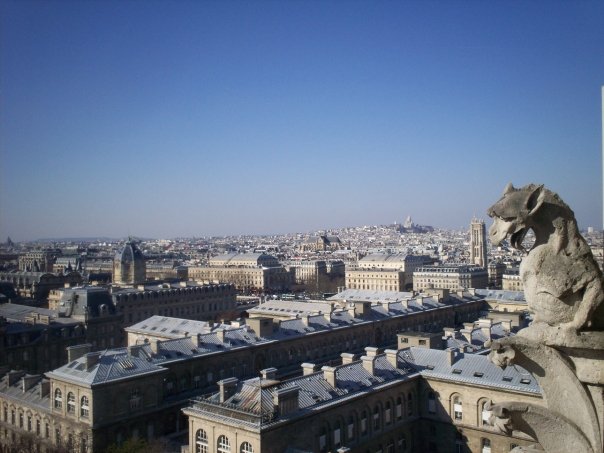
By this point my legs were beginning to feel the day’s journey, but that did not dissuade me from climbing to the top of the cathedral to take in the city below.

From there we saw, glittering in the bright spring sun, the white dome of the Basilique du Sacré-Cœur.

At the time, I must admit my ignorance. I had never heard of the church, and neither had Erika.

She suggested we should visit it.

I squinted across the grid of busy streets at what appeared to be an impossible distance to walk and declared quite confidently that there was absolutely no way I would trek all the way there.

Oh, dear reader, how the universe loves to laugh at the things we believe are beyond us.

For unbeknownst to me, I would indeed walk there.

But that is a story for another day.

And so, in the interest of time, I must pause my tale here.

You will have to return for Part Three.

Want to discover more adventures? Check out my whole Bucket List and Reverse Bucket List

Sunflower Fields: Turn Towards the Light

“I don’t think there’s anything on this planet that more trumpets life that the sunflower. For me, that’s because of the reason behind its name. Not because it looks like the sun but because it follows the sun. During the course of the day, the head tracks the journey of the sun across the sky. A satellite dish for sunshine. Wherever light is, no matter how weak, these flowers will find it. And that’s such an admirable thing. And such a lesson in life.” – Tim Firth

I have always loved sunflowers, but after hearing that quote, I adored them. I loved that they followed the light even when the sun was hidden away. No matter how dark their world becomes they turn to the light. Isn’t that just what we humans fail to do so often when our lives become darkened? What a beautiful reminder and how special it is that they do so resemble the sun to give us some of the light they have taken into themselves? 

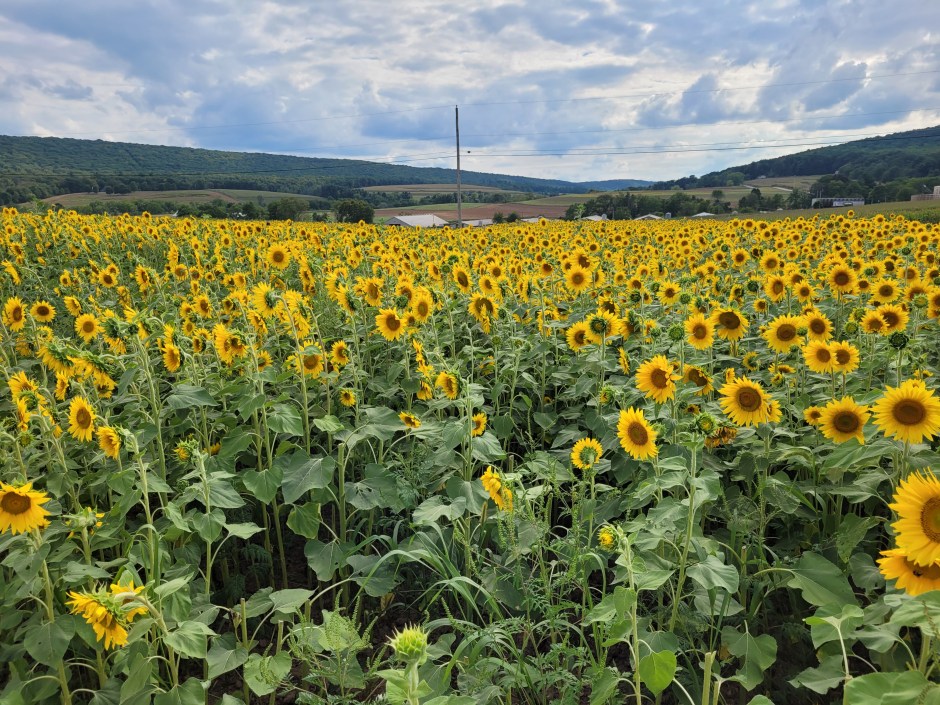
When one thinks of sunflower fields, one may think of the endless fields of Tuscany and forget to look in one’s own backyard. I will say that sunflower fields have been gaining popularity, at least in my area with farmers now taking time to plant fields for visitors to come and enjoy. Most will allow you to leave with a single memento of your visit. One flower to bring you sunshine. At Second Mountain, you are encouraged to bring as many containers as you can because for just a few dollars, you can pick as many sunflowers as you desire! And I did! 

My mother and I drove up at the very end of the sunflower season to catch the last blooms of the season. We had been carefully awaiting this for almost a year as we had learned of this hidden gem to the north of us from a work colleague shortly after the sunflower season had ended. Unfortunately, peak sunflower season is in August which usually has beastly weather of heat and humidity. Being as my mother is an asthmatic those two are not the greatest combination for her being able to enjoy the great outdoors. Being allergic to bees, it was important for me to avoid warmer days when they would be more active, so we carefully watched both their facebook page and the weather, hoping for just the right conditions. Finally, at the end of the season the weather was just right; we packed up our car with containers and made the hour-long drive up north. 

Even in their last days the fields were a glorious feast for the eyes. The vibrant flowers naturally were turned towards the evening sun. A rock cover band played in the background, which if you enjoy such things, I am certain it added to the enjoyment. Not being a fan of such things, I did not find it particularly enjoyable. I would have preferred a cello performance or swing band, but to each their own. I am not one to dictate to others what sort of music they can listen to or even if music should be playing. Just if you do visit a field with live music, bring your earbuds or headphones so that you can put on something you do enjoy if the music isn’t to your taste. Then again, even if there isn’t a live band, bring them anyway. It is good to have music close at hand to enhance an experience or help drown out unpleasant noise. The small crowd of people were taking photos and harvesting flowers. I took some time to photograph the sunflowers to help capture the glory of the fields, even the ones who were nearing the end of their life cycle.

Perhaps, I am a bit gothic in nature, but I always found the end of the growing season to be beautiful in its own right. There is a certain loveliness to the death of a flower; having lived brilliantly and gloriously, it now loses its color, going quietly into that good night to make way for the next season. There is a quiet stillness about it as it is no longer abuzz with visitors, often robbed of its seeds by birds or other creatures. It is only a shadow of itself, like an echo. What struck me as even in their last days, they still were turned faithfully to the sun, never losing the light. 

Turning back to the brighter field, I gathered up sunflowers in my arms until I could carry no more. Walking through the golden sea, with my arms filled with flowers felt almost surreal, as if I had entered a dream. The flowers stand proud as if they are sentinels of the very sun itself. Stray breezes wind their way through the fields causing some to break their vigil to dance, perhaps rebelliously, but more likely for the sheer joy of our closest star. 


Personally, I enjoyed the fields most when the band was quiet and I could simply enjoy the wonder of nature. To have time to disconnect from the world and tune into the natural world. It was almost transformative to be in their midst, laden with the flowers, as if I were about to become a nature spirit one with the fields. The quiet of the fields let me really listen to the ecosystem going on around me. The buzz of insects and the way the wind rustled through the flowers. Truly, a sunflower field is summer incarnate and I made certain to fill my car with lots of summer. 

While I admonish your dear reader to not live in regret, I do have a small regret from our trip. Not having more containers to bring even more sunflowers home! Part of the joy of our trip was having a house filled with sunflowers. Every corner of our living room boasted these bright blooms. It was like we had brought the sunflower fields home with us! They lasted for about a week and a half which more than made the trek worth it, even though there were closer fields nearby which were just as glorious to witness. 

How can you visit a sunflower field?

Unfortunately, most of the sunflower fields will not permit you to cut their flowers by the bucket full. So if you are looking for the ability to bring as much of summer home with you as possible, that may be a bit tricky or cost you quite a bit more than my $10 admission. However, there are plenty of places which offer sunflower fields to visit and photograph. Personally, the bigger the fields the better they are, but do not count out the smaller fields, for their charm. 

I encourage you to take your time when visiting. Don’t fill it up with endless photos but rather take moments to pause and drink in the moment. The blossoms of the sunflowers are the last hurrah of summer before the leaves begin to turn and fall all too quickly becomes winter. Bask in the warmth of the season, let it seep into your bones for you will need those memories when the wind roars and cuts through to your core. Enjoy the brightness of the yellow blossoms, because color will be slowly drained away after one last defiant show by the trees. Take the memories with you into the winter of life so that way when the darkness comes, you can recall the lessons of the sunflower and turn towards the light. 

Completed: Late Summer 2022

Miles from home: 45

Cost: $10