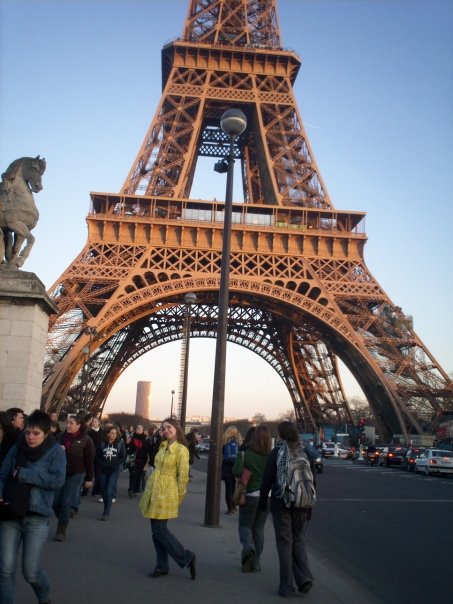
Paris, Part 3: Secrets Beneath the City and a Lesson in Letting Go

We continue our journey through beautiful, enchanting Paris.

It is important, dear reader, that when traveling one is not too set on any particular place or thing, lest you miss out on a spectacular find or hidden gem the guidebook overlooked. This is one of the reasons I rarely book a full day of activities. I like to leave space for moments of serendipity to take hold.

Which is precisely where we found ourselves next.

For beneath the vaulted ceilings and looming gargoyles, the Lady of Paris holds a small secret: the Archaeological Crypt. A title, as you know, certain to get my attention.

Just as we were about to leave the cathedral in search of the Eiffel Tower, we stumbled upon a small sign beckoning us to explore below.
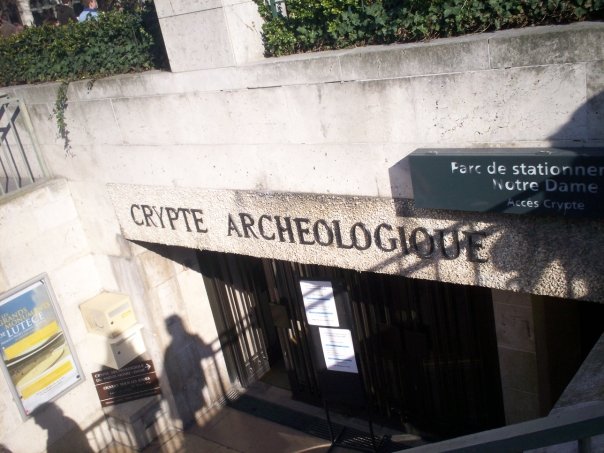
It felt almost mythical descending the steps into the dimly lit corridors of the crypt, as if stepping through a portal in time.

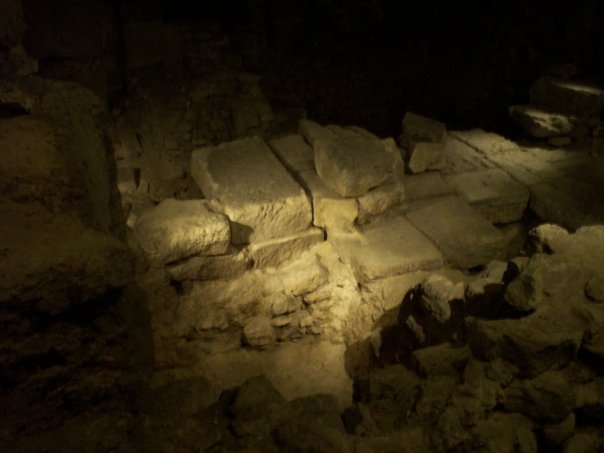
Unlike most museums, where artifacts are removed, broken apart, and neatly arranged in brightly lit halls with placards explaining their importance, this space preserves them exactly where they were found.

The layers tell the story of Paris.

Stone remains whisper of traders calling out their wares, pilgrims making their way to holy places, children laughing in the morning sun. The quiet of the crypt stands in sharp contrast to the cacophony above.

Most tourists pass it by in their rush toward the next “must-see.” They do not pause to reflect on the centuries that built this city.

Yet the stones remember.

Roman ruins: wharves and docks once used for trade. Bathhouses where elites conducted business. Defensive walls against invading Germanic tribes. Medieval streets leading travelers toward the cathedral. Remnants of an ancient chapel. Foundations of a Renaissance orphanage.

Today, the museum includes interactive displays that bring the past to life. But even without them, I could feel the weight of history, a hundred generations whispering across time.

We emerged from the crypt back into the sunlight, now drifting toward the horizon.
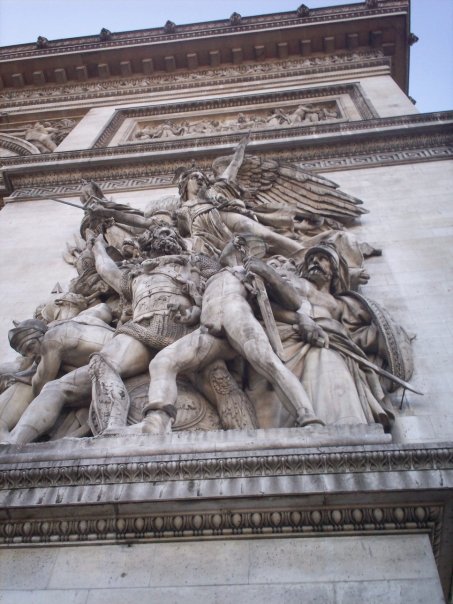
Consulting our map, we had two more “must-sees” to check off our list: the Arc de Triomphe and, of course, the Eiffel Tower.

Now, dear reader, a word of warning. The Arc de Triomphe sits in the middle of a very busy traffic circle. Do not do as we did and dart across the road, flirting equally with traffic and death.

There are underground entrances, as we later discovered, that allow for safe and easy access to this memorial honoring those who fought in the Revolutionary and Napoleonic Wars.

To be honest, while impressive in size, it lacked emotional weight for me. In contrast to the crypt, it felt flashier but ultimately hollow.

Perhaps for a French citizen, it carries far greater meaning, standing as a reminder of the blood shed for their country. But for me, it was something I could have skipped in favor of lingering in a café.
And then, of course, the Eiffel Tower.

What other landmark is more instantly recognizable as the symbol of a city, or even a country? A single silhouette, and the mind goes immediately to Paris.

Dear reader, I highly recommend visiting the tower at dusk.

The daytime crowds begin to thin, and a kind of hush settles over the air. Oh, there are still tourists milling about, but there is a softness to the evening, as if people have remembered that life is not about rushing, but about savoring small moments.

We approached the tower after a long day of walking and purchased tickets for the elevator (though today, you would be wise to book ahead).

The top level was closed for renovations, but we did not mind. We could still visit the café and take in the view.

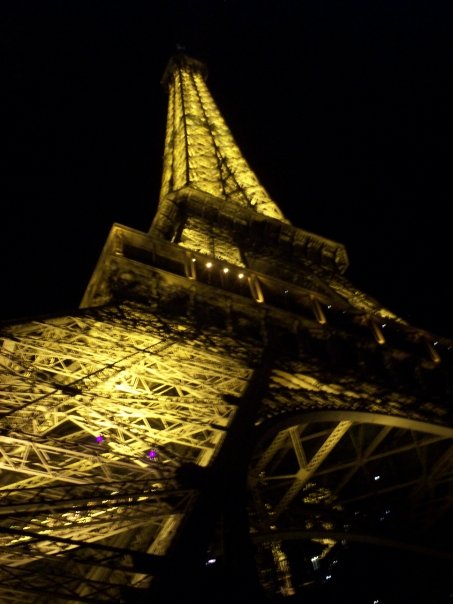
As the sun dipped below the horizon, the city transformed.

Lights flickered on like scattered stars. Colors softened into shades of gray. And the tower itself shimmered to life in a glittering display.

We sipped warm hot chocolate and looked out across the city, quietly content.
Exhausted, famished, and thrilled, we made our way back toward the hostel, stopping at a restaurant for dinner.

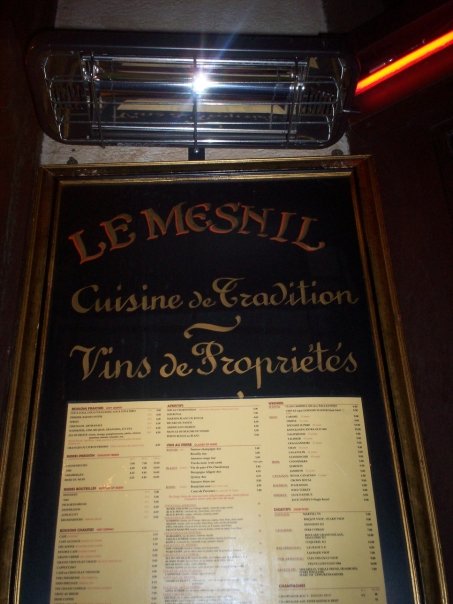
I had taken one year of French in eighth grade, which proved entirely useless when attempting to decipher the menu. I could identify mushrooms and cheese in a few places, but the rest was complete gibberish.

Hungry and overwhelmed, I did not relish the idea of struggling through a back-and-forth with the wait staff.

So I employed a trick that has served me well ever since: I asked the waiter what his favorite dish was and told him to bring me that.

He seemed delighted that I was entrusting my palate to him.

This approach is not for picky eaters, but I am fairly adventurous. In fact, there are only two foods I genuinely detest: pickles and Jell-O.

In the years since, this trick has never failed me. Wait staff often know the menu better than anyone. They return to the same dishes again and again, and those are often exactly what you want to try.

Now, I would be remiss not to mention the shameless flirting that followed, nor the belated April Fool’s joke he played on two unsuspecting Americans.

Having entrusted him with our meal, we had also, to some extent, entrusted him with our wallets.

So imagine my surprise when he returned with a bill for nearly 300 euros, entirely in French.

Unsure what else to do, I prepared to pay it. After all, we had ordered the food. If there had been a misunderstanding, I was ready to take responsibility for it.

I believe he was just as surprised by my reaction as I was by the bill.

Instead of arguing, I simply accepted it.
Fortunately, he did not take advantage of my naivety. He laughed and revealed it was a joke, much to my immense relief.

He did, however, invite us dancing. We politely declined. We were both spoken for and had no desire to lead him on.

The lesson here is simple: if you let someone choose your meal, have them point to it on the menu. No surprises.

And do not be intimidated by a language you do not know. A little pointing and a rough mental tally go a long way.

We were fortunate. The lesson came through humor rather than costly experience.

Late that evening, we wandered back to our hostel through quiet, darkened streets.

Surprisingly, whether due to youth or good shoes, I was not footsore despite walking all day. Instead, I was happily exhausted, my head filled with history and excitement.

It felt like a waking dream. Paris was no longer an abstract idea, but something real and tangible.

Still, exhaustion finally caught up with me, and I fell asleep almost instantly.

Morning came with sunlight streaming through the window.

I stretched lazily, not quite as energized as the day before, but still eager to see what lay ahead.

As we discussed our plans before meeting Frieman later, I happened to glance up.

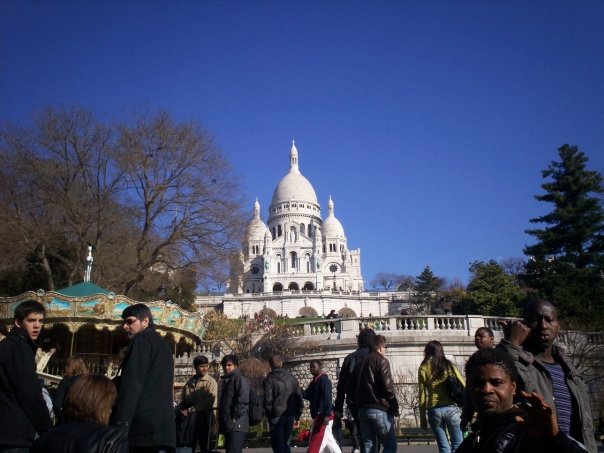
There, just beyond the buildings, stood the white dome of the Basilique du Sacré-Cœur.
I turned to Erika.

“Remember how I said there was no way we were walking all the way across the city to see that church?”

“Yes?”

“Well… we already did. Because it’s right there.”

Oh, how the universe laughs, dear reader.

Paris, Part 2: Walking the City and Choosing What Matters

Forgive the brief interlude in my tale of Paris, but as you well know, I always sprinkle tidbits of wisdom between my stories of adventure. After all, I don’t just want you to go off and have fun. I truly hope this is a place where we can grow together and create lives punctuated by adventure rather than longing for it as an escape from daily misery.

Now, we left off, dear reader, with my arrival: tired and exhausted from a sleepless night but pumped full of adrenaline, the equivalent of five or six cups of coffee coursing through my veins.

I had already gotten thoroughly lost on the way to the hostel and had largely given up on public transit as a viable means of navigating the city. Honestly, that’s only a feat a young twenty-something can get away with.

Now, I’m not entirely certain what the rules are for crossing the streets in Paris, but they did not appear to follow the ones I had grown up with. There were multiple occasions when the light was clearly red and people were walking, and others when it was green and everyone simply stopped.

Both my travel partner and I were quite confused by this apparent inconsistency.

It was decidedly not like Germany, where people display an almost obsessive adherence to rules. Even if there isn’t a car in sight, they will dutifully wait at the crosswalk until the light indicates it is time to cross.

However, after one or two close calls with traffic, we simply looked at each other, shrugged, said “when in Rome,” and followed the Parisians for guidance, forgoing the lights entirely since they clearly could not be trusted.

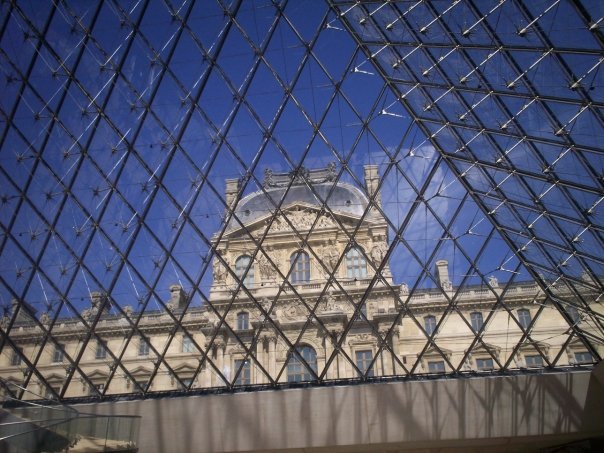
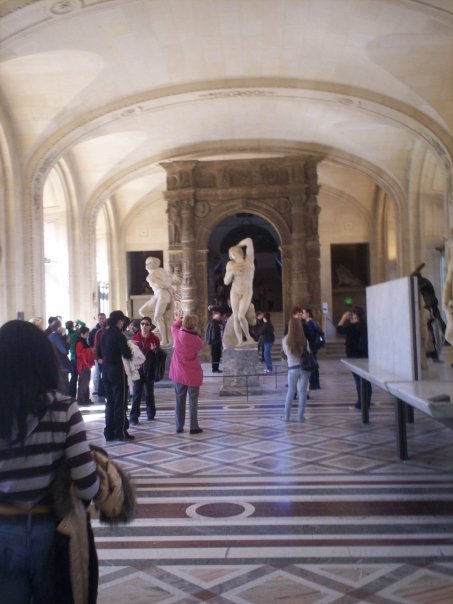
Our first stop was the Louvre, which is a must for any lover of art and history. Not only does it house one of the most famous paintings on earth, it is also the largest and most visited art museum in the world.

Originally built as a fortress and later expanded into a royal palace, the Louvre now spans roughly 2.3 million square feet. Of its approximately 380,000 objects, around 35,000 are on display at any given time.

Considering it would take over three months to see the entire collection, we decided to focus only on the highlights and the pieces that spoke most to us.

There are plenty of guides that will tell you the “must-see” works at the Louvre. But if something doesn’t speak to you, skip it. Focus on the areas of art and history you genuinely enjoy.

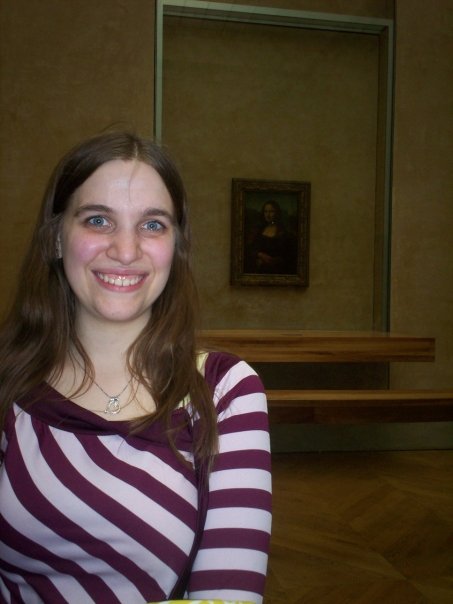
I, for one, would recommend skipping the Mona Lisa.

All it really amounts to is a photo opportunity for social media. It’s tiny, placed behind thick glass in a poorly lit room with hundreds of people pushing and shoving for a better look. You’re honestly better off googling a picture for all you’ll actually see.

Any contemplative awe you might have felt is drowned out by the din of the crowd and the smell of raised armpits as phones are hoisted into the air for a better shot.

If you aren’t paying attention, your belongings might get nicked, and you could spend the rest of your Paris trip trying to recover stolen credit cards while cursing the day you were introduced to the pernicious lady with her sly smile.

After all, she too was once stolen. Why not cavort with thieves once again?

As I’ve said in other posts, don’t let other people’s opinions dictate what you do or do not do. So if you must see the Mona Lisa, I shall not judge you for it.

Just remember that the Louvre houses centuries of art, offering millennia of history to explore, not just stuffy Italians and pretentious French painters.

Its oldest piece is estimated to be around 9,000 years old and is well worth the trek to see.

Since I was traveling with an archaeology major, we spent most of our time in the Greek and Roman sections, along with some of the French collections.

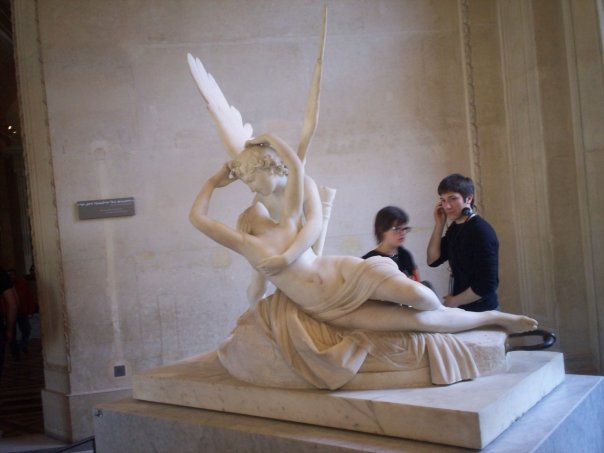
My personal favorite was the sculpture Psyche Revived by Cupid’s Kiss. Not because I have a particular fondness for eighteenth-century French sculpture, but because one of my favorite books is Psyche and Cupid by C. S. Lewis.

Art isn’t always just about what the artist intended, its place in history, or the techniques used. It is also about what it evokes in us.

I would argue that this is what art is most about: what we bring to the moment of encounter.

When I looked at that sculpture, I did not simply see the Greek myth. I saw it retold through a different lens. A revival not just of Psyche, but of myself.

Small tip: book your ticket in advance.

Prior to the pandemic, the best way to get into the Louvre was through one of the side entrances to skip the long lines. However, with its ever-growing popularity, daily visitor numbers are now capped, meaning the only way to guarantee entry is with a pre-booked ticket.

Sorry to all my free-spirited wanderers.

Having conquered a small portion of the Louvre, we ventured forth to the Lady of Paris: the Notre Dame Cathedral.

Walking through Paris instead of taking public transit allows you to experience the city in a completely different way. You breathe it in.

On foot, you notice the small shops and hidden corners that would otherwise blur past from a bus window or subway seat. The scent of coffee lingers in the air as you stroll by cafés, while the temptation of fresh-baked bread drifts from bakeries onto the street.

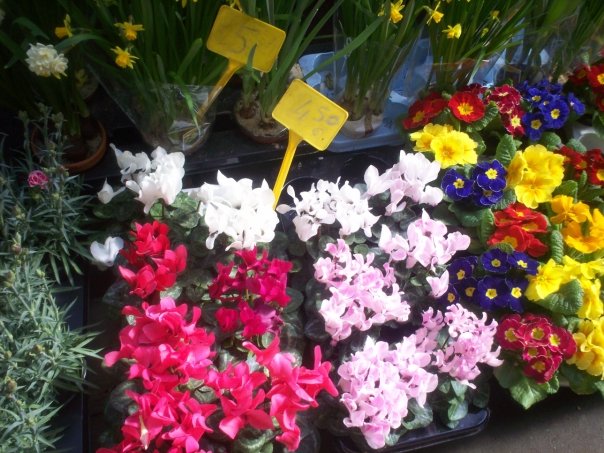
In early spring, the flowers spill across the sidewalks and painters emerge as if the season itself has burst through the concrete, refusing to remain buried beneath winter any longer.

Everywhere is a riot of color and life. Musicians greet you with cheerful melodies, and you cannot help but sway your hips just a bit in time with the music.

It was on our way to Notre Dame that we stumbled upon an artist selling watercolor paintings of the Eiffel Tower, the Arc de Triomphe, Notre Dame, and the Basilica of the Sacred Heart of Montmartre.

For a set of four, it was perhaps forty euros, an absolute steal, and it was there that my habit of buying art as a souvenir was born.

Erika and I split the cost and decided we would determine who received which painting at the end of the trip.

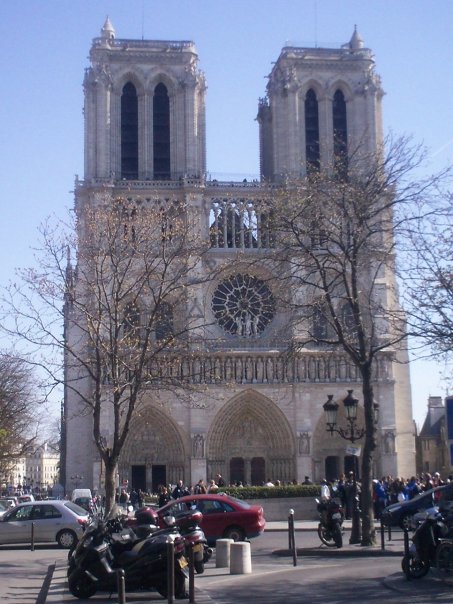
Long before we saw its doors, the twin towers of Notre Dame rose proudly above the surrounding buildings, beckoning us closer.

The cathedral was completed in 1260, though additions were made in the centuries that followed. Like any church nearly eight hundred years old, it has seen its share of glory and hardship: wars, neglect, desecration, and most recently, fire.

Fortunately, we visited before the fire and the subsequent debates over the restoration of its windows.

As a Christian myself, I was fascinated by the displays of Catholic artifacts that told the story of the church’s role in medieval Europe. I saw relics carefully displayed and read about how the church intersected with everyday life in the heart of France.

However, much like the Mona Lisa room, it was not a place of hushed awe but rather a chaotic stream of tourists passing through.

Contemplation was not something I readily found there. (For that, I recommend seeking out some of the lesser-known churches.)

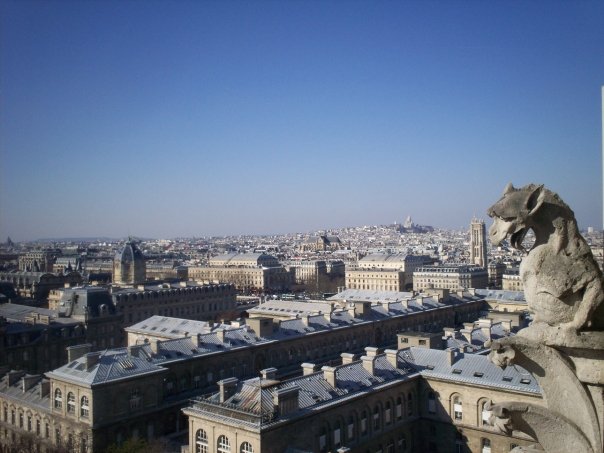
By this point my legs were beginning to feel the day’s journey, but that did not dissuade me from climbing to the top of the cathedral to take in the city below.

From there we saw, glittering in the bright spring sun, the white dome of the Basilique du Sacré-Cœur.

At the time, I must admit my ignorance. I had never heard of the church, and neither had Erika.

She suggested we should visit it.

I squinted across the grid of busy streets at what appeared to be an impossible distance to walk and declared quite confidently that there was absolutely no way I would trek all the way there.

Oh, dear reader, how the universe loves to laugh at the things we believe are beyond us.

For unbeknownst to me, I would indeed walk there.

But that is a story for another day.

And so, in the interest of time, I must pause my tale here.

You will have to return for Part Three.