
Paris, Part 5: A Perfectly Imperfect Weekend

The day was winding down. The museum had closed, and the sun was beginning its slow descent. Erika and I stepped out into the cool, crisp spring air, the kind that carries just a hint of evening chill beneath the fading warmth of the day.

The urgency that had driven us, our mad dashes across the city, our constant checking of maps, began to dissolve. In its place came something softer. A quiet curiosity. Without a list to check off, we were once again free to fully embrace the moment. 

We wandered without purpose through streets washed in dusky light, watching as Paris slowly stirred to life for the night. Café lights flickered on one by one. The low hum of conversation drifted out onto the sidewalks. Glasses clinked. Laughter rose and fell like a tide.

Paris, it seemed, was just waking up.

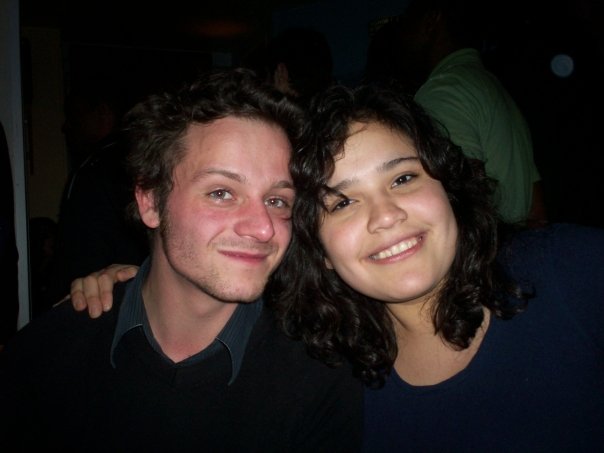
It was in this gentle wandering that we met Julian and his girlfriend, Sandra.

They asked what had brought us to Paris, and we answered in kind. Soon, we were deep in conversation, trading stories of our lives, ours in America, theirs in Paris. There is a certain kind of fleeting camaraderie that forms in moments like these, where neither side expects permanence, and yet both lean fully into the connection.

For a few hours, we were simply part of one another’s stories.

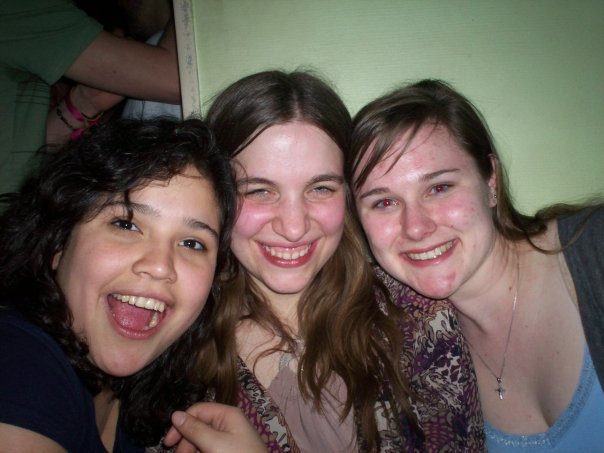
They led us to a club, one far removed from anything we had originally planned.

It was the sort of place where locals belonged, where the rhythm of the night pulsed differently. It was tucked along a street. Do not ask me where, for I doubt I could find it again. With a nod from Julian to the bouncer, we slipped inside, crossing an invisible threshold into another version of Paris.

The air was warm and thick with music. The dim light created an intimate atmosphere like it was holding a secret only Parisians knew. We sipped wine and talked, our voices rising to meet the hum of the crowd as the hours stretched on.

And then, suddenly, the room erupted.

A woman appeared, dressed in something delightfully eccentric, a candle balanced atop her head (and I am not entirely sure if her chest was bare, she had on quite the number of necklaces). She sang loudly, joyfully, with a theatrical abandon, moving with a confidence that demanded attention. The crowd joined her instantly, clapping, singing, cheering.

Sandra leaned in to tell us it was her birthday.

It was not how I would have chosen to celebrate, but who was I to question a Parisian in her element?

As the night wore on, exhaustion crept in, the kind that settles deep in your bones after days of walking, of seeing, of feeling everything all at once.

Reluctantly, we apologized and said our goodbyes.

We exchanged Facebook information with every intention of keeping in touch. But as life so often goes, we never did.

Some things, perhaps, are meant to remain exactly where they happened.

In Paris.

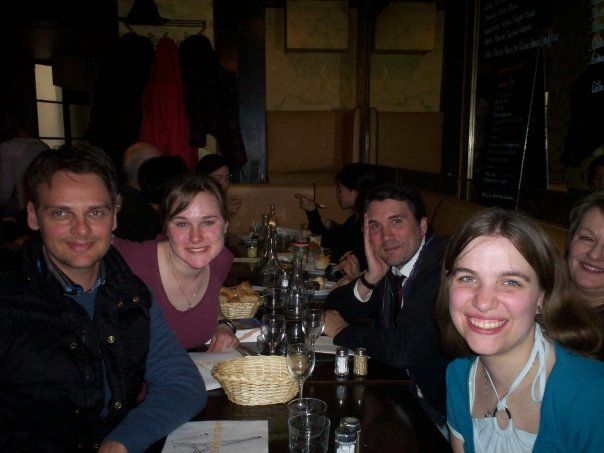
Back at the hostel, I checked my email and confirmed our meeting place with Frieman.

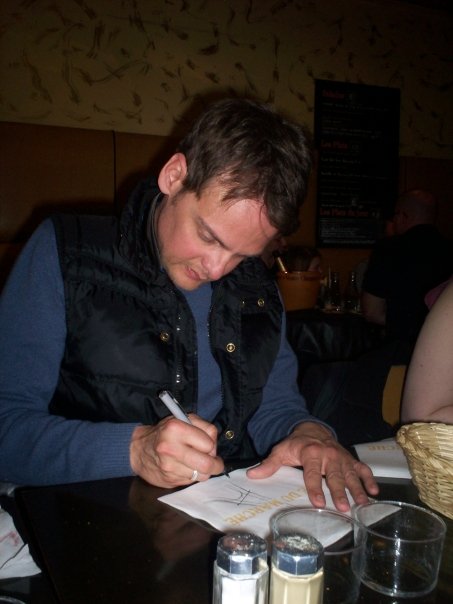
The next morning, we set out once more into the city, this time successfully finding him. Though we did not have long together, we lingered over lunch, swapping stories and savoring the flavors of a city that had already given us so much. He drew me a small Eiffel Tower on a napkin, the perfect memento of my trip. 

After lamenting our struggles with the metro, Frieman kindly took the time to explain it to us. Confident now, we set off to retrieve our luggage before catching our train.

We followed his directions carefully.

At least, we thought we did.

Emerging from the metro into the bright spring afternoon, we found ourselves somewhere entirely unexpected.

The red light district. 

We stood there for a moment, taking it in, the bold storefronts, the neon signs, the unapologetic nature of it all.

Then we looked at each other and burst into laughter.

Never one to miss an opportunity, I leaned in and said, with what I hoped was convincing innocence, “Well… since we’re here, and we’re both engaged, we may as well find something memorable for the honeymoon.”

Smirking and trying not to laugh too loudly, we stepped into a shop and that may or may not have been our only stop.

What exactly we purchased shall remain between Erika and me, and left to your imagination, dear reader.

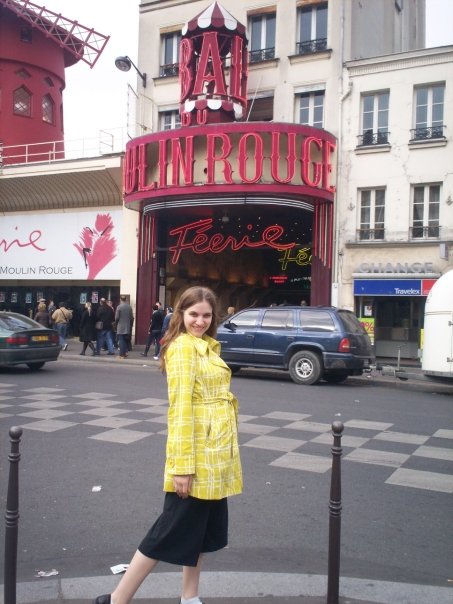
But we did make certain to stop for a picture in front of the Moulin Rouge before making our way back to the hostel… and eventually, to the train. Only stopping a few times to ask for directions from bemused shop owners. 

All in all, it was a weekend in Paris well spent.

A true bucket list adventure, full of mishap and magic, art and laughter, wine and wandering, fleeting friendships and unexpected stories.

And perhaps that is what travel is meant to be.

Not a perfect itinerary.

But a collection of moments, some planned, many not, that come together to form something far richer than anything we could have designed ourselves.

Paris Part 4: The Paris You Don’t Plan For

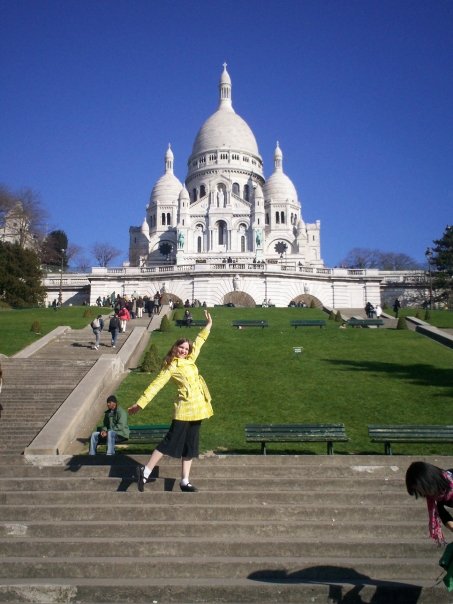
We left our story (Part 1, Part 2, Part 3), dear reader, at the steps of the Basilique du Sacré-Cœur, with the universe laughing as I stared in disbelief at a place I had already declared far too distant to reach that day. In the years since, I have often found myself accomplishing things that once felt equally out of reach. When doubt creeps in, I return to this memory. The path may not be direct, but you will arrive. The trick is learning to enjoy the detours.

And perhaps, if I am being honest, that is part of why I share stories like this at all.

Occasionally, I wander further afield in these tales. Not to abandon the spirit of this blog, but to present it honestly. Some dreams require more than staying close to home. Some experiences ask you to stretch beyond your usual borders. I have no desire to present a life neatly curated into something it is not. The truth, as it turns out, is far more interesting. And far more instructive.

Had we marched straight to Sacré-Cœur, we would have missed the Eiffel Tower and the Archaeological Museum entirely. Travel, when approached with openness, teaches far more than what sits behind glass displays.

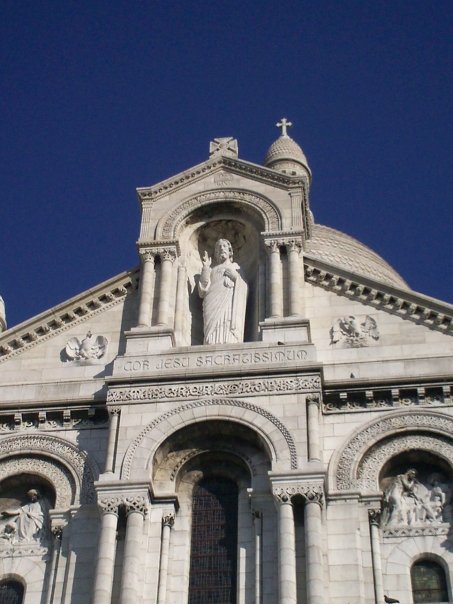
The Basilique du Sacré-Cœur stood in quiet contrast to the more widely known Notre-Dame Cathedral. There was a preserved sacredness here. Where Notre-Dame hums with the steady rhythm of tourism, Sacré-Cœur felt… guarded. Not unwelcoming, but intentional.
No photographs. Voices lowered to a hush. Nuns gently, but firmly, reminding visitors that this was not merely a site to be consumed, but a space still in use, still sacred.

Some may find that restrictive. I found it grounding.

We were the ones intruding, and we were given boundaries. Watching worshippers in quiet devotion, I felt something I can only describe as a pull upward, a stillness that settled over the space and demanded respect. It remains one of my favorite memories, not despite those restrictions, but because of them.

We left eventually, though I could have lingered longer, stepping once more into the lively streets of Paris as though emerging from another world.

Our destination was the Musée d’Orsay, home to some of my favorite artists. In those pre-smartphone days, coordinating across countries required optimism and a bit of guesswork. When the appointed meeting time with Frieman came and went, we were left waiting… and waiting… only to discover later we had managed to wait for one another at entirely different museums.

A perfect summary of early 2000s travel, really.

Accepting defeat for the day, we went inside anyway, trusting that an email later would sort things out.

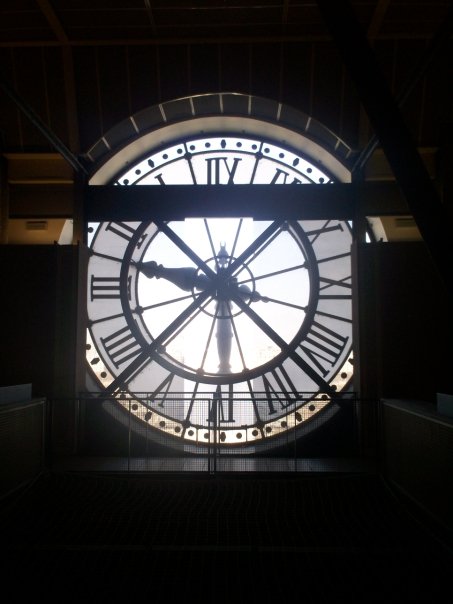
The Musée d’Orsay itself deserves more than a passing mention. Once a grand train station, its soaring ceilings and iron framework still echo its former life. There is something poetic about a place once built for movement now holding stillness. Light pours in through enormous windows, illuminating canvases that themselves chase fleeting moments.

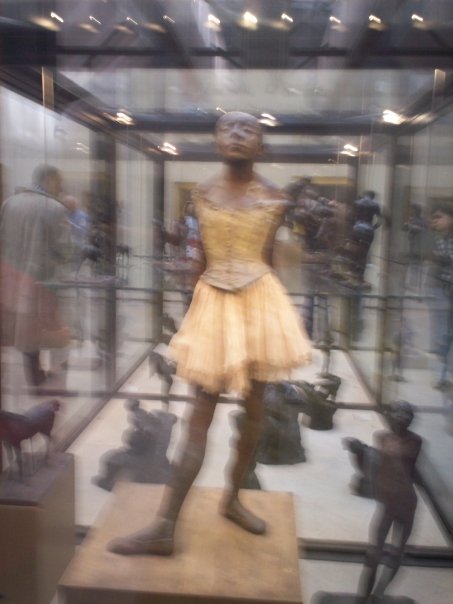
We wandered slowly, letting the space guide us. Monet’s work shimmered with that signature softness, as though the world itself refused to stay still long enough to be fully captured. Renoir’s figures felt alive in a different way, their warmth and movement drawing you into their world. Impressionism has always felt less like observation and more like memory, imperfect, glowing, and deeply human.

With our plans unraveled, we turned next to Sainte-Chapelle.

There are beautiful places, and then there are places that feel almost unreal.

Sainte-Chapelle belongs firmly in the second category.

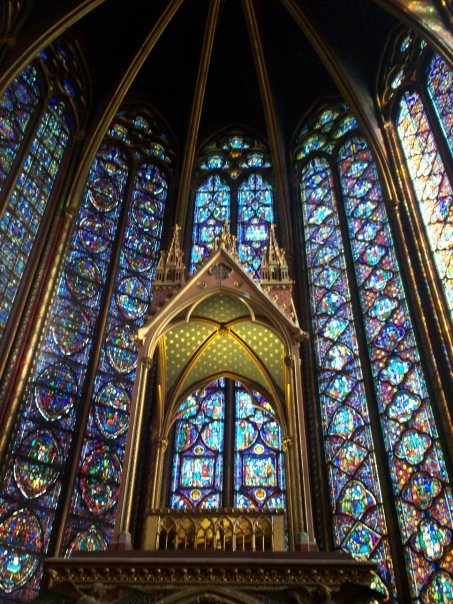
The structure itself nearly disappears, replaced by walls of stained glass that stretch impossibly high. Over a thousand panels catch the light and fracture it into color so vivid it feels alive. Reds, blues, and golds spill across the floor and over the people standing within it. You do not simply look at the windows. You stand inside them.

It is overwhelming in the best possible way. Quiet falls over the room, not because it is enforced, but because it feels required.

Still caught in that awe, we wandered into the gift shop, and it was there that something clicked into place.

I had been seeing unicorn tapestries everywhere.

At first, I dismissed them. Tourist fare. Decorative patterns meant to evoke something vaguely medieval. But they kept appearing, on bags, on notebooks, in displays. Persistent.

Curious, I asked the woman behind the counter, half expecting a vague answer.

Instead, she smiled and told me exactly where they were.

Right here. In Paris. At the Musée de Cluny.

Now, dear reader, it should come as no surprise that I love unicorns. This is me after all.

(If you’d like the full story behind that lifelong obsession, and a deeper dive into the tapestries themselves, you can read it here.)

This is not a casual appreciation. This is a lifelong commitment.

My very first stuffed animal was a unicorn named Rainbow, a music box that played Somewhere Over the Rainbow. She traveled with me across countries and still sits on a shelf in my room. Growing up in the 90s, unicorns were not nearly as easy to find as they are now, which only made each one feel that much more special. Books, toys, anything I could find, I devoured it. Really today’s children have no idea how easy it is to find them!

And somewhere along the way, I discovered The Lady and the Unicorn.

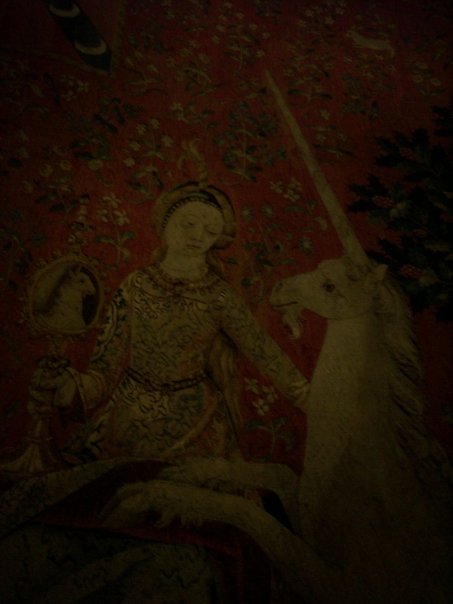
A series of six medieval tapestries, each rich with symbolism, each woven in the millefleurs style—“a thousand flowers”, their backgrounds alive with intricate botanical detail. Created around the turn of the 16th century, likely in Flanders, they depict the five senses: taste, touch, smell, sight, and hearing. The sixth, bearing the phrase À mon seul désir, “to my only desire”, remains something of a mystery.

Interpretations vary. A renunciation of earthly pleasures. A declaration of free will. Perhaps even a representation of a sixth sense, something beyond the physical. I have always liked that it resists certainty.

It felt fitting.

Armed with directions and far too much enthusiasm, Erika and I set off at once. My feet protested. Fifteen miles the day before had seen to that. But there are moments when discomfort becomes irrelevant.

This was one of them.

There were unicorns to see.

I did my best to behave like a reasonable adult upon entering the museum. I failed. Spectacularly. While I attempted to maintain composure, I am fairly certain my barely contained excitement gave me away. To her credit, Erika insisted we take our time, lingering over artifacts, allowing the museum to unfold properly.

I tried.

I truly did.

And then we reached them.

The tapestries did not merely meet expectations. They erased them.

Reproductions flatten them. They shrink them. They strip away the very things that make them extraordinary. In person, every thread is visible. Every flower distinct. The scale alone is commanding, but it is the detail that captures you. And I apologize dear reader that my photos do them little justice. As it was the early 2000s technology was woefully lacking and I did not use flash photography. However, the ones you see are the ones I took.

You begin to think about the time embedded in them. The hands that worked them. The months, perhaps years, of labor required to bring them into existence. These were not casual creations. They were declarations of wealth, of artistry, of devotion to craft.

In a world where we can summon decoration with a click, it is difficult to comprehend that level of patience.

As I stepped into the dim gallery, my excitement softened into something quieter.

Awe.

My breath caught as I approached, drawn forward as though the space itself required stillness. I do not know how long I remained there. Time loosened. I studied each panel carefully, tracing patterns, noting symbols, wishing—once again—that I knew enough about botany to name every plant.

I said very little.

What could be said?

Some things refuse translation. They must be experienced fully, in person, to be understood at all.

Too soon, we moved on. There was still more of Paris waiting.

And so, from a missed meeting, a chance question, and a persistent pattern I almost ignored, we found ourselves swept into yet another unexpected adventure.

Paris, Part 3: Secrets Beneath the City and a Lesson in Letting Go

We continue our journey through beautiful, enchanting Paris.

It is important, dear reader, that when traveling one is not too set on any particular place or thing, lest you miss out on a spectacular find or hidden gem the guidebook overlooked. This is one of the reasons I rarely book a full day of activities. I like to leave space for moments of serendipity to take hold.

Which is precisely where we found ourselves next.

For beneath the vaulted ceilings and looming gargoyles, the Lady of Paris holds a small secret: the Archaeological Crypt. A title, as you know, certain to get my attention.

Just as we were about to leave the cathedral in search of the Eiffel Tower, we stumbled upon a small sign beckoning us to explore below.

It felt almost mythical descending the steps into the dimly lit corridors of the crypt, as if stepping through a portal in time.

Unlike most museums, where artifacts are removed, broken apart, and neatly arranged in brightly lit halls with placards explaining their importance, this space preserves them exactly where they were found.

The layers tell the story of Paris.

Stone remains whisper of traders calling out their wares, pilgrims making their way to holy places, children laughing in the morning sun. The quiet of the crypt stands in sharp contrast to the cacophony above.

Most tourists pass it by in their rush toward the next “must-see.” They do not pause to reflect on the centuries that built this city.

Yet the stones remember.

Roman ruins: wharves and docks once used for trade. Bathhouses where elites conducted business. Defensive walls against invading Germanic tribes. Medieval streets leading travelers toward the cathedral. Remnants of an ancient chapel. Foundations of a Renaissance orphanage.

Today, the museum includes interactive displays that bring the past to life. But even without them, I could feel the weight of history, a hundred generations whispering across time.

We emerged from the crypt back into the sunlight, now drifting toward the horizon.

Consulting our map, we had two more “must-sees” to check off our list: the Arc de Triomphe and, of course, the Eiffel Tower.

Now, dear reader, a word of warning. The Arc de Triomphe sits in the middle of a very busy traffic circle. Do not do as we did and dart across the road, flirting equally with traffic and death.

There are underground entrances, as we later discovered, that allow for safe and easy access to this memorial honoring those who fought in the Revolutionary and Napoleonic Wars.

To be honest, while impressive in size, it lacked emotional weight for me. In contrast to the crypt, it felt flashier but ultimately hollow.

Perhaps for a French citizen, it carries far greater meaning, standing as a reminder of the blood shed for their country. But for me, it was something I could have skipped in favor of lingering in a café.

And then, of course, the Eiffel Tower.

What other landmark is more instantly recognizable as the symbol of a city, or even a country? A single silhouette, and the mind goes immediately to Paris.

Dear reader, I highly recommend visiting the tower at dusk.

The daytime crowds begin to thin, and a kind of hush settles over the air. Oh, there are still tourists milling about, but there is a softness to the evening, as if people have remembered that life is not about rushing, but about savoring small moments.

We approached the tower after a long day of walking and purchased tickets for the elevator (though today, you would be wise to book ahead).

The top level was closed for renovations, but we did not mind. We could still visit the café and take in the view.

As the sun dipped below the horizon, the city transformed.

Lights flickered on like scattered stars. Colors softened into shades of gray. And the tower itself shimmered to life in a glittering display.

We sipped warm hot chocolate and looked out across the city, quietly content.

Exhausted, famished, and thrilled, we made our way back toward the hostel, stopping at a restaurant for dinner.

I had taken one year of French in eighth grade, which proved entirely useless when attempting to decipher the menu. I could identify mushrooms and cheese in a few places, but the rest was complete gibberish.

Hungry and overwhelmed, I did not relish the idea of struggling through a back-and-forth with the wait staff.

So I employed a trick that has served me well ever since: I asked the waiter what his favorite dish was and told him to bring me that.

He seemed delighted that I was entrusting my palate to him.

This approach is not for picky eaters, but I am fairly adventurous. In fact, there are only two foods I genuinely detest: pickles and Jell-O.

In the years since, this trick has never failed me. Wait staff often know the menu better than anyone. They return to the same dishes again and again, and those are often exactly what you want to try.

Now, I would be remiss not to mention the shameless flirting that followed, nor the belated April Fool’s joke he played on two unsuspecting Americans.

Having entrusted him with our meal, we had also, to some extent, entrusted him with our wallets.

So imagine my surprise when he returned with a bill for nearly 300 euros, entirely in French.

Unsure what else to do, I prepared to pay it. After all, we had ordered the food. If there had been a misunderstanding, I was ready to take responsibility for it.

I believe he was just as surprised by my reaction as I was by the bill.

Instead of arguing, I simply accepted it.

Fortunately, he did not take advantage of my naivety. He laughed and revealed it was a joke, much to my immense relief.

He did, however, invite us dancing. We politely declined. We were both spoken for and had no desire to lead him on.

The lesson here is simple: if you let someone choose your meal, have them point to it on the menu. No surprises.

And do not be intimidated by a language you do not know. A little pointing and a rough mental tally go a long way.

We were fortunate. The lesson came through humor rather than costly experience.

Late that evening, we wandered back to our hostel through quiet, darkened streets.

Surprisingly, whether due to youth or good shoes, I was not footsore despite walking all day. Instead, I was happily exhausted, my head filled with history and excitement.

It felt like a waking dream. Paris was no longer an abstract idea, but something real and tangible.

Still, exhaustion finally caught up with me, and I fell asleep almost instantly.

Morning came with sunlight streaming through the window.

I stretched lazily, not quite as energized as the day before, but still eager to see what lay ahead.

As we discussed our plans before meeting Frieman later, I happened to glance up.

There, just beyond the buildings, stood the white dome of the Basilique du Sacré-Cœur.

I turned to Erika.

“Remember how I said there was no way we were walking all the way across the city to see that church?”

“Yes?”

“Well… we already did. Because it’s right there.”

Oh, how the universe laughs, dear reader.

Paris, Part 2: Walking the City and Choosing What Matters

Forgive the brief interlude in my tale of Paris, but as you well know, I always sprinkle tidbits of wisdom between my stories of adventure. After all, I don’t just want you to go off and have fun. I truly hope this is a place where we can grow together and create lives punctuated by adventure rather than longing for it as an escape from daily misery.

Now, we left off, dear reader, with my arrival: tired and exhausted from a sleepless night but pumped full of adrenaline, the equivalent of five or six cups of coffee coursing through my veins.

I had already gotten thoroughly lost on the way to the hostel and had largely given up on public transit as a viable means of navigating the city. Honestly, that’s only a feat a young twenty-something can get away with.

Now, I’m not entirely certain what the rules are for crossing the streets in Paris, but they did not appear to follow the ones I had grown up with. There were multiple occasions when the light was clearly red and people were walking, and others when it was green and everyone simply stopped.

Both my travel partner and I were quite confused by this apparent inconsistency.

It was decidedly not like Germany, where people display an almost obsessive adherence to rules. Even if there isn’t a car in sight, they will dutifully wait at the crosswalk until the light indicates it is time to cross.

However, after one or two close calls with traffic, we simply looked at each other, shrugged, said “when in Rome,” and followed the Parisians for guidance, forgoing the lights entirely since they clearly could not be trusted.

Our first stop was the Louvre, which is a must for any lover of art and history. Not only does it house one of the most famous paintings on earth, it is also the largest and most visited art museum in the world.

Originally built as a fortress and later expanded into a royal palace, the Louvre now spans roughly 2.3 million square feet. Of its approximately 380,000 objects, around 35,000 are on display at any given time.

Considering it would take over three months to see the entire collection, we decided to focus only on the highlights and the pieces that spoke most to us.

There are plenty of guides that will tell you the “must-see” works at the Louvre. But if something doesn’t speak to you, skip it. Focus on the areas of art and history you genuinely enjoy.

I, for one, would recommend skipping the Mona Lisa.

All it really amounts to is a photo opportunity for social media. It’s tiny, placed behind thick glass in a poorly lit room with hundreds of people pushing and shoving for a better look. You’re honestly better off googling a picture for all you’ll actually see.

Any contemplative awe you might have felt is drowned out by the din of the crowd and the smell of raised armpits as phones are hoisted into the air for a better shot.

If you aren’t paying attention, your belongings might get nicked, and you could spend the rest of your Paris trip trying to recover stolen credit cards while cursing the day you were introduced to the pernicious lady with her sly smile.

After all, she too was once stolen. Why not cavort with thieves once again?

As I’ve said in other posts, don’t let other people’s opinions dictate what you do or do not do. So if you must see the Mona Lisa, I shall not judge you for it.

Just remember that the Louvre houses centuries of art, offering millennia of history to explore, not just stuffy Italians and pretentious French painters.

Its oldest piece is estimated to be around 9,000 years old and is well worth the trek to see.

Since I was traveling with an archaeology major, we spent most of our time in the Greek and Roman sections, along with some of the French collections.

My personal favorite was the sculpture Psyche Revived by Cupid’s Kiss. Not because I have a particular fondness for eighteenth-century French sculpture, but because one of my favorite books is Psyche and Cupid by C. S. Lewis.

Art isn’t always just about what the artist intended, its place in history, or the techniques used. It is also about what it evokes in us.

I would argue that this is what art is most about: what we bring to the moment of encounter.

When I looked at that sculpture, I did not simply see the Greek myth. I saw it retold through a different lens. A revival not just of Psyche, but of myself.

Small tip: book your ticket in advance.

Prior to the pandemic, the best way to get into the Louvre was through one of the side entrances to skip the long lines. However, with its ever-growing popularity, daily visitor numbers are now capped, meaning the only way to guarantee entry is with a pre-booked ticket.

Sorry to all my free-spirited wanderers.

Having conquered a small portion of the Louvre, we ventured forth to the Lady of Paris: the Notre Dame Cathedral.

Walking through Paris instead of taking public transit allows you to experience the city in a completely different way. You breathe it in.

On foot, you notice the small shops and hidden corners that would otherwise blur past from a bus window or subway seat. The scent of coffee lingers in the air as you stroll by cafés, while the temptation of fresh-baked bread drifts from bakeries onto the street.

In early spring, the flowers spill across the sidewalks and painters emerge as if the season itself has burst through the concrete, refusing to remain buried beneath winter any longer.

Everywhere is a riot of color and life. Musicians greet you with cheerful melodies, and you cannot help but sway your hips just a bit in time with the music.

It was on our way to Notre Dame that we stumbled upon an artist selling watercolor paintings of the Eiffel Tower, the Arc de Triomphe, Notre Dame, and the Basilica of the Sacred Heart of Montmartre.

For a set of four, it was perhaps forty euros, an absolute steal, and it was there that my habit of buying art as a souvenir was born.

Erika and I split the cost and decided we would determine who received which painting at the end of the trip.

Long before we saw its doors, the twin towers of Notre Dame rose proudly above the surrounding buildings, beckoning us closer.

The cathedral was completed in 1260, though additions were made in the centuries that followed. Like any church nearly eight hundred years old, it has seen its share of glory and hardship: wars, neglect, desecration, and most recently, fire.

Fortunately, we visited before the fire and the subsequent debates over the restoration of its windows.

As a Christian myself, I was fascinated by the displays of Catholic artifacts that told the story of the church’s role in medieval Europe. I saw relics carefully displayed and read about how the church intersected with everyday life in the heart of France.

However, much like the Mona Lisa room, it was not a place of hushed awe but rather a chaotic stream of tourists passing through.

Contemplation was not something I readily found there. (For that, I recommend seeking out some of the lesser-known churches.)

By this point my legs were beginning to feel the day’s journey, but that did not dissuade me from climbing to the top of the cathedral to take in the city below.

From there we saw, glittering in the bright spring sun, the white dome of the Basilique du Sacré-Cœur.

At the time, I must admit my ignorance. I had never heard of the church, and neither had Erika.

She suggested we should visit it.

I squinted across the grid of busy streets at what appeared to be an impossible distance to walk and declared quite confidently that there was absolutely no way I would trek all the way there.

Oh, dear reader, how the universe loves to laugh at the things we believe are beyond us.

For unbeknownst to me, I would indeed walk there.

But that is a story for another day.

And so, in the interest of time, I must pause my tale here.

You will have to return for Part Three.

Podcast From a Galaxy Not All That Far Away

Dear readers, I have a bit of a confession to make. I am not always the posh, delicately spoken flower you may have come to know me as. There are moments when I am decidedly less than ladylike, especially when I am in the throes of passion. Passionate nerdom, to be precise.

Picture me fiercely debating and analyzing the world of science fiction with three of my friends. Add to that the unfortunate fact that I learned to swear from a literal sailor, and when I get salty, I bring the whole ocean with me. It is actually rather freeing to allow a different aspect of myself to shine. After all, we are all multifaceted beings with many sides to ourselves. I am not always channeling my inner Victorian. Sometimes it is my inner Viking warrior, and in this case, it is a girl with some serious beef with filmmakers who simply cannot respect the source material. Is it really so difficult? But honestly, that is part of the fun. My wit and banter at full strength, turned loose on a topic near and dear to my heart: science fiction.

About twice a month, I get together with Scott, Miles, and Dave to review and discuss all things sci-fi. We tend to focus on movies and television, largely because not everyone in the group is as avid a reader as I am. Asking someone to complete an 800-page novel in two weeks is unlikely to end happily. A film, by contrast, is a two-and-a-half-hour commitment instead of twenty hours of reading. Well, twenty hours for them. I can usually polish off a book in eight to ten, depending on how compelling it is.

Alongside reviews, we dive into science fiction news, theories, and the occasional heated debate. Opinions are shared freely, defended passionately, and sometimes gleefully attacked. There is a lot of laughter, teasing, and the kind of spirited disagreement that only works when everyone genuinely enjoys one another. Lest you worry that the boys cannot hold their own against me, fear not. Listen long enough and you will hear them all start to sing “It’s Been a Long Road” just to derail me. Of course, we cannot help but needle Dave for his love of lens flares in Star Trek (for the record, he detests the J. J. Abrams films known for them).

It wouldn’t be a convention without cosplayers

One of my favorite aspects of the podcast is that we do not limit ourselves to recent releases. Often, we revisit older films, the kind that have been forgotten, overlooked, or never widely known in the first place. Sometimes we strike gold. Other times we are left staring into the abyss, wondering how something ever made it to screen. Either way, the process has expanded my palate and deepened my appreciation for different kinds of media.

Some of the films I have ended up loving are ones I never would have chosen on my own. Not because they were masterpieces, but because they offered a fascinating window into how past generations imagined the future. One surprising treasure was Battle Beyond the Stars, which drew inspiration from The Magnificent Seven and the classic Japanese story Seven Samurai. Was it campy? Yes. Was it ridiculous? Absolutely. But goodness, was it funny to watch. Which, admittedly, I was already primed to enjoy given my fondness for older Japanese films. Believe it or not, it was nominated for five Saturn Awards, including Best Science Fiction Film and Best Special Effects. Watching films like this, you can see how cultural values, fears, and hopes were projected forward in time. I have found myself thinking more about how special effects have evolved, how our expectations of technology have shifted, and how often we miss the mark when predicting where we will be in twenty, fifty, or even a hundred years. It makes me wonder what things we consider innate and unchanging now will one day be quietly overturned.

That is what I love most about science fiction. It asks questions. It forces us to examine the implications of technologies just beyond our reach and to consider whether they will ultimately be used for good or for harm. Science fiction reflects the norms of its time, but at its best, it challenges them.

My pilgrimage to Star Trek’s Enterprise housed in the Smithsonian

Star Trek, in particular, has always excelled at this. It does not just explore the possibilities among the stars, but asks us to consider what is possible here on Earth. It gave us the first interracial kiss on television. It pushed audiences to wrestle with the idea of artificial personhood through Data, asking what consciousness really is and what, if anything, separates us from a machine.

This franchise comes up the most on our podcast, likely because it has spanned generations, but also because it is such a deeply philosophical show, challenging and shaping its viewers’ thinking. It certainly shaped mine growing up. I vividly remember watching the Voyager episode “Nemesis,” where Chakotay is seemingly taken in by an alien race, the Vori, who are fighting against the technologically advanced and oppressive Kradin. It is later revealed that this conflict is part of a brainwashing simulation designed to condition him to hate the Kradin. Even after the truth is uncovered, Chakotay struggles to be in their presence. That episode left a lasting impression on me, illustrating how propaganda can turn a compassionate heart toward hatred more effectively than any history book ever could.

I have been podcasting with the guys for nearly ten years now, and it has been a wild ride. Beyond broadcasting my thoughts and engaging with listeners on social media, the podcast has taken me to science fiction conventions, where I have had the opportunity to interview actors, creators, and other figures within the genre.

None of them have been A-list celebrities, but many have graced a red carpet or two. More importantly, the vast majority have been genuinely lovely people: gracious, thoughtful, and generous with their time. They offer insightful answers, often laced with humor, and seem truly appreciative that anyone still cares about the stories they helped bring to life.

Star Trek Panel 2025 Shore Leave Convention

I still vividly remember my first solo interview. It was surreal walking up to the booth at the start of the convention and being handed a press pass. Me? Press? I had not gone to school for journalism. I was a cheeky woman arguing on the internet with her friends for entertainment. I glanced down again and began taking pictures of the wild chaos that is a convention: costumed characters from different franchises co-mingling with those of us dressed in street clothes. I studied the map and instructions for where I needed to go and made my way through the crowd, stopping to take photos and absorb everything around me. Since the interview would not happen for an hour or two, I scouted the location so I knew exactly where I needed to be. In the meantime, I checked the convention schedule, trying to determine which panels to cover so I could report back properly to my colleagues who were counting on me. Ever the overachiever, I was determined not to disappoint the guys.

As the time approached, my nervousness grew. Here I was, face to face with someone who surely had better things to do than talk to me, yet had kindly agreed to do so anyway. I had carefully written and submitted my questions in advance for approval, determined to avoid any last-minute improvisation. My stomach fluttered with butterflies as I reread my notes, silently begging my ADHD impulse control to please, just this once, stick to the script. Somehow, I managed not to fumble with the recording equipment.

After the first question, something shifted. The nerves faded, and the conversation began to flow. Perhaps it was the therapist in me, instinctively comfortable in a question-and-answer rhythm. I promise there was no psychoanalyzing involved. Mostly. Some habits are harder to turn off than others. I walked away with the realization that these people are, at their core, just like everyone else I have met along the way. One particularly lovely memory from this past summer is of Tracee Cocco, who was simply delightful. She seemed genuinely stunned by the crowd cheering for her, walking out on stage with her phone raised, filming the audience with the same awe we felt toward her. This from a woman who has spent over thirty years in Hollywood as an actress, model, and stuntwoman, appearing in more than one hundred Star Trek episodes and rubbing elbows with the likes of Patrick Stewart.

Not all my interviews were famous for their screen time: Charles Dunbar is an anthropologist who studies anime

Being on the podcast has opened doors I never imagined possible and has cemented friendships across generations: Boomer, Gen X, and Millennial, with the occasional appearance by Scott’s son, a Gen Z. When I was first invited on, I never imagined I would still be doing this years later, or that saying “sure” to chatting about shows I loved would lead to such unexpected experiences.

What it has ultimately given me is a space where all my selves are welcome: the thoughtful analyst, the passionate fan, the therapist, the nerd, the woman who swears too much and cares deeply. In a genre devoted to imagining better futures, the podcast has quietly given me something just as meaningful in the present, a place to belong, to question, to laugh, and to keep wondering.

Thinking About Starting a Podcast?

If you have ever considered starting a podcast, my best advice is to begin simply. Pick a topic you genuinely care about and find people you enjoy talking to. You do not need professional equipment or a perfectly polished format right out of the gate. What matters most is consistency, curiosity, and a willingness to keep showing up even when the audience is small. A good podcast grows out of conversation, not performance. If you are having fun and asking thoughtful questions, listeners will feel it.

Give yourself time to find your rhythm. Early episodes may feel awkward, unfocused, or rough around the edges, and that is completely normal. Podcasting, like any creative practice, is learned by doing. The skills come with repetition, reflection, and the humility to improve as you go.

Miles getting attacked by an alien

A Gentle Reality Check

It is also worth saying that starting a podcast does not automatically lead to press passes, convention access, or interviews with celebrities. Those opportunities take time and careful cultivation. They are built on reputation, respect for the process, and a genuine appreciation for the people whose work you are covering.

If you hope to conduct interviews at conventions, begin by reaching out to the event’s leadership to learn their specific process. Each convention handles media requests differently, and respecting those boundaries matters. From there, reach out to guests thoughtfully, ideally through their handler or publicist when possible, and be prepared to hear no. A declined request is not a failure; it is simply part of the landscape.

Always do your research. Know who you are speaking with, understand their work, and come prepared with questions in advance. Showing up informed and professional signals that you value their time. Over time, that consistency builds trust. And trust, more than anything else, is what earns you a reputation as someone who is respectful, reliable, and welcome in these spaces.

Completed: Started 2018

Cost: I honestly have no idea how much it costs Scott to host the website each month or the recording equipment for me it’s free.

Miles from home: We record virtually

For more reflections on meaningful experiences, future dreams, and moments worth remembering, explore my Bucket List and Reverse Bucket List posts.

The Game of Kings (and Curious Commoners)

For 85 years, a curious spectacle has unfolded each summer Sunday on a quiet stretch of Pennsylvania grass. Horses graze peacefully beneath the trees while a few of their compatriots are dressed in elegant regalia by riders buzzing with anticipation. Across the field, spectators unfurl picnic blankets, create elegant table spreads, uncork wine bottles, and crank up the music, all in preparation to watch a sport nearly 2,000 years old: polo.

Though largely unknown to many American audiences, polo is far from obscure. Played in at least 16 countries and once an Olympic sport from 1900 to 1936, it began in ancient Persia as cavalry training and evolved into a game for royalty and, more recently, for anyone bold enough to mount a horse and swing a mallet. The name “polo” is derived from the Tibetan word pulu meaning ball, a term eventually anglicized after the British encountered the sport in India and brought it back to England in the 1800s.

Often called the “Game of Kings,” polo is surprisingly inclusive. Men and women compete alongside one another in most parts of the world, though America, characteristically, has a separate women’s federation.

The game itself is straightforward in concept: two teams of four try to drive a ball through the opposing team’s goal using long-handled mallets, all while galloping full-tilt on horseback. The match is divided into chukkas (short periods lasting about 7.5 minutes), and a game usually includes six to eight of them. The rules may be simple on paper, but in practice, it takes incredible precision, timing, and horsemanship.

Growing up, I often saw flyers and glimpses of these summer polo matches. I was always struck by the grace of the horses and the fluid choreography between rider and steed. Truthfully, the sport seemed quite magical as if from another world. Still, I never actually made the effort to watch a full match. Summer after summer slipped by, my interest mild but never quite motivated.

Was it the fear of sweltering in the midday sun from 1 to 5 p.m.? Or maybe the lingering belief that polo was reserved for the wealthy and well-heeled? I wasn’t sure. Perhaps the former was simply a socially acceptable excuse to avoid confronting the latter. Would I, a clear outsider to this world, be welcomed, or merely tolerated with tight-lipped smiles and sidelong glances?

Besides, I’m not exactly a sports person. My athletic literacy is on par with a particularly confused golden retriever. I spent six years attending football games in marching band and still couldn’t explain the rules beyond “ball goes in the end zone.” But dear reader, I’m not one to retreat in the face of self-imposed challenges. So this summer, I finally asked myself the honest question: what was really stopping me?

A little research gave me just enough confidence to understand the basics of the game. I picked out a charming outfit to look the part without overdoing it, an elegant black sheath dress with white polka dots and a flirty wrap skirt. I added a sunny yellow bow to my hair, antique gold and pearl necklace, and matching earrings. The pearls lent a quiet elegance, the polka dots kept things playful, and the whole ensemble whispered “chic,” not “trying too hard”, which is honestly a good rule of thumb when encountering an unknown social situation which most likely requires at least some form of dressing up.

Admission was a modest $10. While many of the best sidelines were claimed by patrons whose names were proudly displayed on small plaques, there were metal bleachers dead center offering a great view to those of us without season passes. Tailgaters lined the edge of the field, sipping rosé and nibbling on charcuterie. Food trucks formed a loose U-shape, doling out delectable treats to tempt even the pickiest of diners. A cornhole tournament buzzed nearby, a surprising attention, and the unseasonably cool June weather had people donning sweaters instead of sundresses.

The field was roughly the size of four or five soccer fields, bounded by red-painted wooden planks barely a foot high. A modest scoreboard hung opposite the bleachers, manned by cheerful volunteers ready to update the chukkas and scores. Trees lined either side to provide shade and natural ambiance. Everything had a homegrown, almost quaint quality to it, from the weathered announcer’s booth to a timeworn shed on the edge of the grounds. The whole setup felt far less intimidating than I’d feared, far more neighborly than exclusive. Instead of a glittering world of inaccessibility, it held a rustic charm, more countryside than country club.

To my delight, the crowd was warm and welcoming. Several patrons stopped to chat, and one even offered a crash course in polo rules. I met a retired player, his name escapes me, but his gorgeous collie, Koda, certainly doesn’t. He shared stories of falling off horses, fond memories of team camaraderie, and the tradition of having teammates sign the ball after scoring your first goal.

The game itself was surprisingly gentle. There was minimal jostling, and players called out plays supportively, checking in with one another to ensure both rider and horse remained safe. Perhaps this courtesy was because the match featured junior players, but I had the feeling this mutual respect was baked into the sport. Spectators clapped enthusiastically for every goal, regardless of team allegiance.

During intermissions, we all wandered onto the field for the charming tradition of field stomping, where spectators repair divots by stomping the grass back into place, all while pop music blared from the announcer’s booth. (Pro tip: verify that what you’re stomping is indeed turf, not… fertilizer.)

Halfway through the match, we were summoned to the center for a celebratory champagne toast. Each guest received a plastic glass stamped with the Lancaster Polo emblem. I raised mine high in salute, and now it sits proudly on my shelf as a souvenir of an afternoon well spent.

The Lancaster team won in the end, though no one seemed particularly bothered by the score. The teams congratulated one another with genuine smiles and handshakes. It was sport in its purest form, competition rooted in grace, community, and camaraderie.

And as I walked back, pearls gleaming, polka dots swaying, I couldn’t help but smile. I may not be a sports person. But I might just be a polo person as I immediately texted my sister, that I may have found a future sister date for the two of us later that summer.

Want to See a Match Yourself? Here’s How to Find One Near You

If you’re now a little bit curious (or at least craving champagne and turf-stomping), you might be surprised to learn that polo is more accessible than it sounds. Here are a few tips to help you track down a match near you:

  • Start with the United States Polo Association (USPA): Their website (uspolo.org) has a club directory where you can search by state or zip code. Many clubs host free or low-cost public matches during their season, typically from late spring through early fall.
  • Google is your friend: Try searching “polo matches near me” or “equestrian events [your city/state].” Bonus points if you add “tailgating” or “spectator” to the search.
  • Check out local event sites or social media: Many smaller clubs advertise matches on Facebook, Instagram, or local tourism calendars rather than big-ticket platforms. Look for community boards, weekend roundup newsletters, or even Eventbrite listings.
  • Call your local riding or equestrian center: If they don’t host matches, they probably know who does.

Don’t be shy about going as a first-timer, polo spectators are often an eclectic mix of devoted fans, casual picnickers, and curious newcomers just like you. Wear something fun, bring snacks, and prepare to cheer. (And maybe pack a sweater. Or a hat. Or both. It’s an outdoor sport, after all.)

Completed: June 2025

Cost: $10 at the gate

Miles from home: 1 mile

One never knows what might be lurking just outside your door. Be sure to check out the rest of my Bucket List and Reverse Bucket List for ideas of what might be outside yours!

A Blind Date: A Bookshop, A Park, and A Historic Site

We were first introduced on Indie Book Day, with a subtle hint of mystery and the allure of suspense among the bookshelves of the BookBar. The bartender handed me a drink on the house with a wink and a smile. The aroma wafted up from the cup, promising a rare treat. With a slow sip, a burst of rich flavor exploded across my tongue, accenting the dark roast and chocolate with a lingering whisper of strawberry for a sweeter finish. It was with this drink in hand that I browsed the shelves in search of hidden treasures.

The aesthetic of the shop resembled an old private library in England with a slightly gothic bent: dark walls, rich old leather sofas, and trinkets more expected in a professor’s office than a place of capitalism. It all set the atmosphere of whispered stories on stormy nights. But indie bookstores are known for their peculiarities.

It was there that I was first introduced. Not directly, of course—nothing so uncouth. Our meeting was arranged through the usual channels: a third party carefully selecting options suited to a lady’s general tastes. The matchmaker, ever busy, offered a short meeting and a curated selection of potentials. Each came wrapped, labeled only by genre, with a few clues as to what might await.

I made my choice and a plan was hatched: a rendezvous, a park, a picnic, and of course, my blind date. My sister joined me, not as a chaperone, but with a date of her own. A married woman, you ask? Was I part of a scandal? Not when the blind date is with a book, dear reader!

Yes, BookBar not only serves up delicious coffee and mocktails with a side of dark academia, but it also offers a unique reading experience designed to stretch your literary palate. Each mystery book is carefully wrapped with a genre label, accompanied by a few sprigs of lavender, a lip balm, bookmarks, and stickers—everything you need to charm a curious reader.

A few days before, we checked the weather and settled on a park near my sister’s home. To our delight, we discovered a local hidden gem: the oldest existing water transportation tunnel in the United States. Naturally, the history nerds in us were thrilled.

The canal’s beginnings date back to 1792, during George Washington’s administration, though financial troubles delayed its completion until 1828. This golden link of trade connected east and west, serving the expanding nation until 1881, when the Lebanon Valley Railroad rendered it obsolete.

Today, the remaining stretch is lovingly maintained by the Historical Society of Lebanon County. Only a small fraction of the canal remains, surrounded by parkland and dotted with plaques detailing the history and engineering marvels of the time. The park includes a pavilion, picnic benches, and a meandering path alongside the river. Every Sunday, they even offer boat tours through the tunnel—a dream for any history buff.

My sister and I spread out a picnic of crackers, cheese, and meats under a shady grove. We caught up on life as the breeze gently rustled the trees. The weather was cool for mid-May, but nearly perfect for reading. No harsh glare from the sun, no stifling heat—just peace and pages.

When we opened our blind date books, mine turned out to be a historical mystery thriller with a dash of time travel, set in Victorian Scotland. A surprisingly perfect pairing with our 19th-century setting! I found the forensic methods of the era fascinating, especially in contrast to modern crime-solving techniques. My sister’s book was a thriller translated from Ukrainian, and she was equally pleased with her pick. We agreed this date was well worth repeating.

After an hour of reading, we explored the rest of the park. What we found was a quiet oasis tucked away from the modern world. Birdsong echoed across the water, interrupted only by the occasional “plop” of frogs and fish. We climbed a small hill to better see the tunnel and read each historical plaque. A small bridge overlooked an old lock that once helped boats travel along the canal.

It wasn’t quite the Panama Canal we visited last spring, but it was still an impressive feat of engineering and a reminder of human perseverance. We couldn’t help but reflect on how far we’ve come—not just in terms of technology, but culture and society. What would the Irish laborers who built the canal think of the world today?

Want to Plan Your Own Literary Adventure?

You don’t need a fancy bookstore to enjoy the fun of a blind date with a book. Etsy has plenty of options, and you can always go with a DIY version. Take a friend or sibling to a bookstore, pick out books for one another, wrap them up, and head to your favorite park for a reading picnic.

Even cheaper? Just borrow something new from a friend’s bookshelf. My sister and I frequently swap books this way, and we’ve each discovered new favorite authors as a result.

To find local gems, try Google Maps with keywords like “historic site”, “attractions,” “museums” “hidden park,” or “walking trails.” Check the reviews on obscure places with 4.5+ stars but few reviews as these are often true gems. Believe it or not Reddit can be a source for ideas from locals that you won’t find on the travel sites. Try searching for hidden gems in your city or browse the local subreddits. I also recommend going to your local library and checking out the bulletin board. Some cities have bloggers devoted to uncovering local secrets—you might be surprised what you find just outside your front door.

Completed: 2025

Miles from home: 25 miles

Cost: $50 (for the book and picnic)

Looking for other unique ideas for your Bucket List? Check out both my Bucket List and Reverse Bucket List!

Beneath the Blooms: Sakura Dreams

I believe it shall come as no surprise to you, dear reader, that I’ve long held a dream of visiting Japan and count myself as a bit of an otaku. I’ve imagined seeing Mt. Fuji rising above the mist, taking in the sights of Tokyo, enjoying the fashion, engaging in traditional dances, exploring vibrant festivals, wandering through a pagoda, pausing at a temple, sipping macha in a teahouse, visiting a cat café, contemplating nature in a garden and, of course, strolling beneath the cherry blossoms.

A few of these I’ve managed to do here in the States. Others remain only possibilities, others still achievable only if I someday find myself walking on Japanese soil.

Each spring, I see flowering trees dotting my neighborhood and lining the roads, and I sigh wistfully. They tease me with just a taste of what could be. My social media feeds fill with dreamy pictures from the far East (or perhaps more accurately, the West?). Japan’s landscape becomes a fleeting spectacle of pink and white blooms, a soft riot of ephemeral beauty.

This delicate flower, sakura, is more than just a seasonal joy. It is a cultural icon, deeply rooted in Japanese tradition and mythology. The goddess of blossoms and delicate matters is said to have nurtured the cherry trees. One beloved tale tells of Princess Sakura, cursed to bloom and wither like the trees she loved. Only a prince who could watch her fade without despair could break the spell. The blossoms have graced artwork for centuries, inspired poets, and appeared again and again in anime and manga as symbols of renewal and hope.

Is it any wonder, then, that I too have fallen in love with this flower?

So, each spring, I look longingly at the blooming trees and wish I could follow the blossoms across Japan, chasing their brief splendor up the country. Imagine my delight, then, when I discovered that a nearby town is home to a row of 150 cherry trees that burst into bloom each year. Naturally, I set out on a quiet morning to witness the display.

The trees stood in a stately row, forming a tunnel of soft pink. The delicate scent hung in the air, and a gentle breeze coaxed the blossoms into a graceful dance. Bicyclists glided past on the quiet street, and two painters sat capturing the season’s glory on canvas.

I wandered beneath the trees, breathing in the fragrance, taking photos to help preserve the memory. There was no formal path beneath them, just dark, soft earth that yielded slightly beneath my feet. The blossoms hadn’t yet begun to fall, though a few brave petals had already drifted to the ground, a gentle reminder that all too soon the branches would give way to summer’s green.

I was in good company as several painters were scattered along the row of trees. It was a delightful treat to be able to watch them capture the beauty of the trees extending it beyond the ephemeral spring season.

While it may not rival the landscapes of Japan, it was a small and beautiful taste of a dream. I’m glad I made the short journey to Marietta to witness their bloom, even if only for a moment.

How can you stroll beneath the cherry blossoms?

You may not need a passport or a plane ticket to find them. Sometimes, the dreams we tuck away for “someday” bloom quietly just down the road. Perhaps your local trees are smaller, or fewer, or missing the dramatic backdrop of a mountain temple, but their beauty is no less worthy of awe. A few trees in a quiet town, the whisper of petals in the breeze, and a moment stolen from the rush of life to simply stand and marvel, that, too, is magic.

So, dear reader, look around. Google may be your travel agent, but curiosity is your compass. The world, as it turns out, is blooming right outside your door.

Completed: 2025

Miles from home: 20

Cost: Free

Don’t forget to look around the rest of my Bucket List and Reverse Bucket List to get your curiosity going!

Tiptoe Through the Tulips

Tulips the early heralds of spring and the changing weather fill the hills with bright rows of color. Their hues stretch across the spectrum, from fiery red to deepest purple, and their petals are just as varied. They’re also famously tied to history’s first financial speculative bubble, a craze that plunged many Dutch citizens into ruin and left a lasting mark on market regulations. Still, despite that rocky past, the Dutch never forgot their love affair with the flower. Today, they remain a leading producer of tulip bulbs, and each spring, massive swaths of land transform into a living quilt of color as millions of flowers bloom.

I’ve always loved pictures of those majestic fields, windmills standing vigil over seas of blossoms. That said, my allergies would likely stage a protest in the Dutch countryside—and truthfully, the Netherlands doesn’t rank high on my list of must-see destinations. Maybe I’d go if the opportunity presented itself, but there’s no guarantee that it would align with the short-lived tulip season.

What’s a budget-minded girl to do? As it turns out, sometimes you stumble upon the perfect solution when you’re not even looking for it.

There are times when an answer appears to a question you didn’t even know you’d asked. I’ve certainly enjoyed pictures of Holland’s flower fields, but they never inspired the wistful longing other countries have stirred in me. So, I didn’t add them to my list, dismissing the idea out of hand. I try to keep my travel dreams at least somewhat realistic—or else the list would be three times as long. But let this be a lesson, dear reader: never dismiss a dream, no matter how small or unformed.

Though I never truly asked, the universe still answered with a humble billboard: “Tulip Field, Opening April 12th.” Tulip fields? In Pennsylvania? Perhaps I was too quick to rule out my floral fantasy.

April 12th turned out to be cold, wet, and rainy and not ideal for tiptoeing through anything. Besides, opening day crowds come with added chaos and, let’s be honest, possibly terrible music. Twangy Country or bouncy pop blasting over loudspeakers isn’t how I envision my contemplative flower field stroll. I checked my calendar for a better date, one early enough to catch peak bloom, but not a weekend (crowds again!) and ideally with cheaper tickets (this is a budget minded blog, after all).

Less than a week later, on a balmy spring day, I made my way to Flaughbach’s Orchard. The temperature was a perfect 70°F (21°C), and a cheerful breeze danced among the tulips, gently teasing them as she passed. While it was a far cry from the sprawling Dutch fields of my imagination, it was a lovely scene in its own right. Had I been truly committed to a riot of color, I could’ve waited two more weeks and driven three hours north to Brown Hill Farms, where 500,000 tulips bloom across four acres.

Upon arrival, I was handed a pair of shears and informed I could pick two flowers as part of my ticket (with the option to purchase more). But my goal wasn’t to build a bouquet, it was to bask in beauty. I wandered through neatly arranged rows of flowers, encountering charming photo ops along the way: antique bikes, vintage tractors, even a swing for a more whimsical touch. Naturally, I couldn’t resist snapping a few photos, but mostly, I just walked. The field reminded me of a stained-glass window or a floor made of colorful mosaic tiles.

Benches were thoughtfully scattered around the field, perfect for quiet contemplation. I loved feeling the warm sun on my face and the breeze on my skirt. I didn’t stay long, but long enough to enjoy the moment and properly welcome spring in all her glory.

Next year, I may make that pilgrimage north to see the larger fields that have enchanted me for so long. But maybe not. This experience might fall under my “good enough” category; it was joyful, beautiful, and deeply satisfying.

So, how can you tiptoe through the tulips?

You don’t need to wait for the universe to come knocking. Just open your browser and search for tulip fields near you. If you live in the South, it may be a bit trickier, but don’t lose hope. Pilot Point, Texas, and New Market, Alabama both boast quite respectable fields. Up North, there are plenty of spots to chase tulip season. Some may come in the form of botanical gardens; others, humble local farms like Flaughbach’s. Or you might go all in and visit Windmill Island Gardens in Holland, MI (with over four miles of tulips!), or top spots like Pella, Iowa; Woodburn, Oregon; Modesto, California; Mount Vernon, Washington; and Exeter, Rhode Island.

The lesson I learned? Don’t be so quick to downplay your dreams, even the small ones. I try to keep my “undone” list reasonable, and I often add to my “done” list as opportunities arise, especially if they’re spur-of-the-moment or just for fun. But this was something I truly wanted to do, and I’m glad the universe nudged me toward it.

So, I encourage you, dear reader: dream big. Write it all down. Ask for it. The blessing may find you anyway.

Completed: 2025

Cost: $7 to visit the field

Miles from home: 25

Be certain to tiptoe through my other stories listed on my Bucket List and Reverse Bucket List!

Tea at Sea!

Alright gentle reader, technically, it was a bay and not a sea. However, I did get to hoist the sails and attempt to steer the ship. Yes, technically it was a boat; although I”m not sure I know the difference if we’re being honest. Regardless of the pesky nomenclature, I provided an excellent afternoon tea out on a large body of water in a sailing vessel of some sort. Additionally, I made sure to be properly attired for a day’s outing on the water. With the help of a well placed hat pin not even the wind could dissuade me from my determination to have a little extra flare. After all, where would we be as a society if we allowed ourselves to descend into the mundane and boring, especially when it comes to fashion?

In the midst of COVID, with everything shut down and limitations on movement and gathering, the small but scrappy non-profit I worked for decided to offer its employees a day out with one of our board members, Peggy, on her private boat. To say that I was excited is truly an understatement. It was once again, one of those Bucket List Items that I had mentally placed under “most likely not happening any time soon” as I thought it would cost a lot of money to go. This might be the reason I was a little over the top, but honestly that’s part of who I am. I’m the woman who will put together an entire costume or outfit for even the most slightly themed party or obscure holiday. 

It was truly the morale boost that we needed. To avoid a disruption of vital client services and given the size of the boat, we divided ourselves into two teams which would go on two different days. We also divided up bringing food and other snacks to share. I led the way with letting them all know that I was going to have us do a tea at sea, I would provide the sandwiches, the tea cups, scones and clotted cream. Was it the more costly and time consuming option? Yes, but I was going to take this opportunity that the universe presented me and make the absolute most of it. Before you question my judgement of bringing tea cups on board a ship, know I take quite good care of my china and wouldn’t subject them to the dangers of the open waters. I found these absolutely gorgeous paper cups online! 

We loaded ourselves up early that morning, crammed into one of my co-worker’s vans like the start of some quiet, well-mannered heist armed with gps and good humor. I had chosen to go with the more reserved, soft-spoken of my co-workers. What can I say? They paired better with tea than with the loud, pirate-hearted group that went the day before, I am fairly certain they snuck booze despite the prohibition against it, like I said, pirates. Not that I couldn’t hang with both, I absolutely could. And the temptation to burst into sea shanties was quite real, I assure you.

As we drew closer to our destination, the world around us began to shift. The foliage thinned, and the trees gave way to the briny breath of the sea. The air changed too, tinged with salt and carried on a breeze that hinted at something just beyond the horizon. We heard the call of gulls before we even saw the water. Then suddenly, there it was—a small forest of masts rising from the docks like white trees, standing in quiet anticipation.

Waiting for us at the dock was our fearless leader and Executive Director, Deb, who waved us down with her signature confidence. She led us up the wooden planks to our boat, where we were introduced to our captain for the day, Peggy’s husband, Captain Bob.

I was surprised by the size of the boat as it was deceptively spacious, like a magician’s trick. Every inch of it had a purpose. Storage tucked into nooks, seating that converted, a compact bathroom that came with very specific instructions. Bob walked us through the essentials with the seasoned calm of someone who knew that one improperly flushed toilet could quite ruin the whole experience.

After a short safety overview, it was time to sail. Bob asked for volunteers, and I naturally stepped forward to hoist the sails. He called out instructions with the steady ease of a man who’s done this a thousand times, while Peggy provided cheerful backup support. I took hold of the rope with both hands to gleefully, heave ho and all that. The wind caught, the sails filled, and the boat surged forward with a kind of wild grace.

From that moment on, everything shifted into something more elemental. The boat leaned into the wind, the ropes pulled taut, and the world became motion and sound—the rush of air, the splash of spray, the low groan of wood and rope in motion. It felt like stepping out of the everyday and into something ancient.

Those brave enough made their way to the prow, legs dangling over the edge, laughing as waves splashed up to greet them. Time didn’t pass in hours out there. It passed in shadows, in sunlight shifting on the water, in bursts of laughter and long silences where we just watched the horizon breathe.

Then came the offer I hadn’t expected, Bob asked if anyone wanted to steer.

Of course, I wanted to steer the ship!

Taking the wheel was like grabbing hold of something alive. The boat didn’t just move; it responded. The wind pulled one way, the water pushed another, and the rudder spoke a language I didn’t quite know but instinctively wanted to understand. Every twitch of my hands echoed through the vessel. I had to fight the urge to overcorrect—big boat, big movements, right? Wrong. It was the subtle shifts that mattered. I wasn’t just steering a boat, I was holding a moment in my hands, trying not to crush it. I shall admit, I was not the best helmsman, but it wasn’t bad for a first go! 

At lunchtime, I unveiled my small, slightly theatrical feast of tea sandwiches and scones. Though there was no clinking of teacups, people were quite amused by them. A delighted Peggy gasped when she spotted the clotted cream asking for where on earth I had found it; she hadn’t had clotted cream since she was in England years ago.

I smiled and told her, with all the drama she deserved, “The local grocery store.”

We laughed, we feasted, we sipped, and apart from poor Beth, who succumbed to a bit of seasickness, our tea at sea was a grand success.

The rest of the sail was a blend of freedom and focus, the hiss of waves, the sudden thrill of turning into the wind, the scent of salt and sun warming the deck. It was chaos and calm, all wrapped into one. I couldn’t have asked for a more perfect day for checking off my list. . 

By late afternoon, we returned to the dock. We changed into swimsuits and slipped into the pool, letting the cool water wash away the heat of the day. We splashed and floated, reluctant to let the water go.

That evening, we gathered for dinner at a local seafood spot, the kind with fresh-caught fish, buttery hushpuppies, and that oh, so infamous, Maryland crab. I will say the crab practically demanded a moment of silence in appreciation. Luckily for the crab, eating is just about the only time I am quiet. And just when we thought the day had ended, someone suggested a detour when they spotted a sign for ice cream. Because some days deserve a sweet ending. And this one? This one absolutely did.

So how can you enjoy a sailing adventure?

I’ll admit, not everyone has a friend with a boat—or a boss generous enough to invite you aboard. But that doesn’t mean a day at sea is out of reach. You can always charter a boat for yourself and a few intrepid comrades. Prices can range from around $200 to upwards of $2000, depending on the type of vessel and the duration of your trip. That said, splitting the cost among your group makes it much more manageable. If you’re like me and pack your own feast, you can trim expenses even further. The boat we sailed on would’ve likely cost each of us about $50 to $75 had we booked it ourselves. Sure, we probably wouldn’t have been trusted to hoist the sails or steer, but with seven of us, the cost would have been quite reasonable. 

This was one of those rare gifts from the universe, an unexpected adventure in the middle of a pandemic, at a time when most people could only dream of checking something off their list. I felt deeply grateful, especially after working so hard to help people who were experiencing homelessness with nowhere to go. Those long hours, with little reprieve and a general feeling of hopelessness at times to solve the problem can begin to wear on a person’s spirit. Sometimes, when you’re out there trying to do good, life surprises you with something beautiful in return.

So go ahead, pursue the good. You never know where it might take you, gentle reader.

How can you enjoy a day on the water?

Cost: Free (food was about 50) 

Miles from home: 115 miles

Completed 2020

Ready to break out of the mundane for something new? Check out my Bucket List and Reverse Bucket List for inspiration!