Visiting Exhibtions: When the World Comes to You

Pennsylvania is known as the Keystone State in part because of its strategic position on the Eastern Seaboard. It sits at the heart of the action on the East Coast and, thanks to the Mississippi River, serves as a gateway to the West. This historic and geographical advantage means I have relatively easy access to some incredible places. By extension, when traveling exhibitions come to those places, it’s not a terrible imposition for me to make the trip. Cities like New York, Philadelphia, Washington D.C., Pittsburgh, and Baltimore are all within reasonable distance.

It was by leveraging this advantage that I was able to see the Darwin exhibition at the American Museum of Natural History in New York, the King Tut exhibition in Philadelphia, and the Russian Tsars exhibition in Delaware. I’m not sharing this to brag about my state but rather to point out that, depending on where you are, you may be closer to the action than you realize. There are often more opportunities in your area than meet the eye.

The Darwin exhibition offered a fascinating look at the scientist’s life, work, and impact. It even featured two Galápagos giant tortoises. Darwin was a keen observer of nature, and through those observations, he developed one of the most revolutionary theories in the history of biology. His theory of evolution has shaped everything from genetics and epidemiology to biodiversity and our understanding of the fossil record. Prior to Darwin, most people saw the natural world as static and unchanging since the moment of creation. Instead, he proposed a dynamic and interdependent system in which relationships and exchanges alter the inhabitants of the world, who in turn shape their environment.

One of my favorite stories is how he looked at an orchid and hypothesized the existence of an undiscovered insect capable of pollinating it. That insect was discovered forty years after his death. This exhibit was the perfect combination of science, history, and anthropology. It showed how discoveries ripple outward into society and helped me understand just how interconnected everything truly is. Is it any wonder that seeing Darwin’s journals, tools, and legacy made its way onto my Bucket List?

Not to be outdone by New York, Philadelphia often hosts exhibitions and installations that rival its northern neighbor. Just because it’s the Keystone State doesn’t mean it lets the other states have all the fun. In the winter of 2007, I braved a snowstorm to visit the exhibition Tutankhamun and the Golden Age of the Pharaohs at the Franklin Institute. The exhibition included fifty major objects from King Tut’s tomb—among them a vessel containing his mummified organs—and over seventy artifacts from the royalty of Egypt’s 18th Dynasty (1555 to 1305 BC), including a sarcophagus.

King Tut’s tomb was discovered in 1922, sparking a global fascination with ancient Egypt that still persists—my own obsession included. Many of these artifacts have rarely left Egypt, so I certainly wasn’t going to let a snowstorm stop me from seizing this rare opportunity. It was history made tangible, a brush with the ancient world that I’ll never forget.

In 1998, Delaware hosted the first major Tsarist exhibition, Nicholas and Alexandra, and I was lucky enough to see it on a fifth-grade field trip. It left a lasting impression on me. We had spent several weeks learning about Russia’s history leading up to the Bolshevik Revolution and the rise of the Communist Party. Featuring nearly 700 objects, it was one of the largest and most prestigious collections of Russian treasures ever to tour outside the country. Most of the items had never before left Russia.

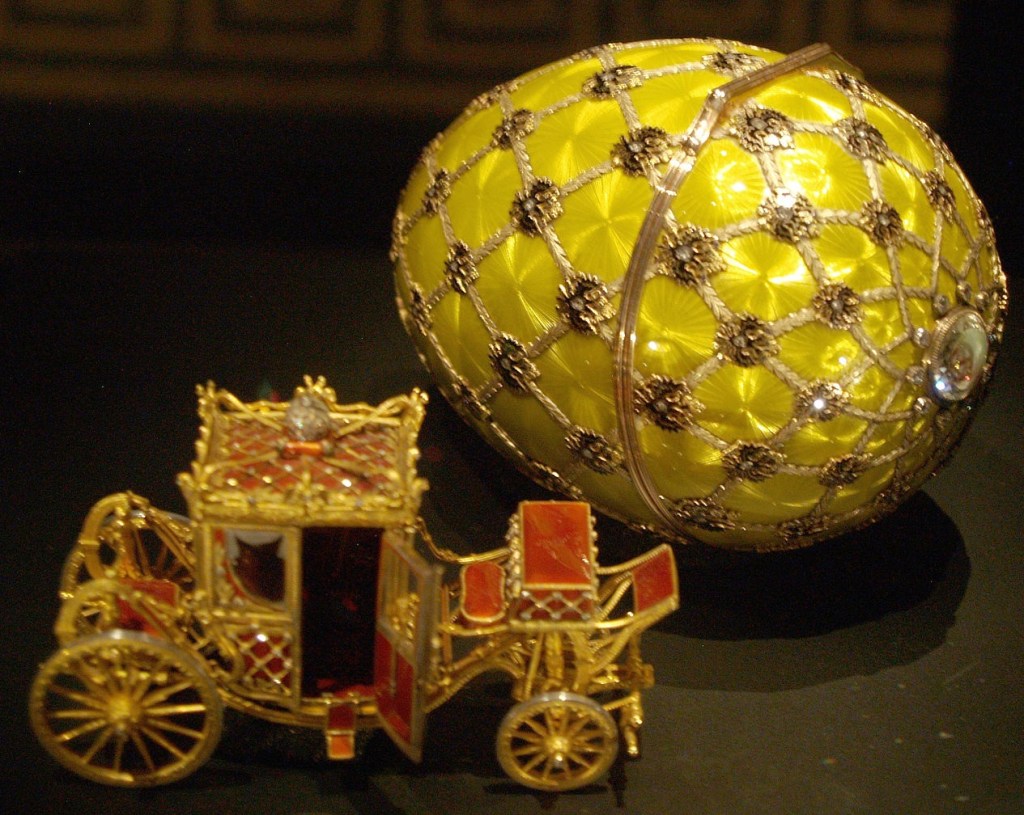
Among the many items on display were the Coronation Egg, an imperial throne, court gowns and uniforms, a gilded state carriage, and artifacts from the Russian Orthodox Church. Even as a child, I was struck by the sheer opulence of the exhibit—particularly the Fabergé Egg, which felt all the more extravagant when considered against the suffering of the Russian people at the time. The experience helped solidify my understanding of the revolution and the dangers of unchecked power and inequality. I’ll avoid getting too political here, but suffice it to say, it made an impression.

Each of these exhibitions made my Bucket List for different reasons. Each one broadened my perspective, deepened my understanding, and shaped how I see the world. They weren’t just collections of artifacts; they were immersive experiences that gave context to history, society, culture, and their ongoing relevance today. Most importantly, they taught me that I don’t always need to travel far to experience the world. Sometimes, the world comes to me.


How Can You Experience Unique Exhibitions?

Start by identifying how far you’re willing to travel. Then make a list of major cities or cultural hubs within that radius—they’re your best bets for hosting large-scale or rare exhibitions. But don’t count out smaller museums, either.

Check their websites to find out when they release their exhibition calendars. I’ve found that many post their schedules for the coming year, although some are less predictable. Once you know when they update their schedules, you can simply mark your calendar to check back. If there’s no set schedule, just take note of when the current exhibition ends and plan to check again around that time.

If you’re searching for something specific—say, an artist or historical topic you love—an online search every six to eight months may yield results. Just be prepared to wait. Some exhibitions, like the Russian Tsars, are generational events.

Lastly, if you’re visiting a city you don’t often travel to, take a few minutes to see what exhibitions are currently on display. You never know what rare gem you might find. It’s easy to miss out by only checking travel sites when planning your trip.

Costs: Range in price from $15 – $25 for museum entrance

Miles from home: Range from a 35 miles to 150

Completed: Childhood – College

The world may not always seem like it’s just outside your door step, but it really can be! Don’t believe me? Check out my Bucket List and Reverse Bucket List for stories both near and afar that are sure to challenge those preconceived notions of what is possible.
Tales from Abroad: Stonehenge

I am, as of this writing, recently returned from a trip to Merry Ol’ England after finding myself with the unexpected invitation to join a family friend, Shelia, at her long term rental in the beautiful Penzance area of Cornwall. The previously unaffordable trip of plane tickets, lodging, food and sightseeing, suddenly became much more affordable with her willingness to host myself and my mom for over a week. Naturally, I did not let such an opportunity slip through my fingers as England was home to one of my top Bucket List items, Stonehenge.
Now, my non-American readers may be a bit perplexed at my excitement of going to Penzance when Stonehenge is a good four hours away. You may very well think, it’s so far, you couldn’t possibly add that on to your trip! First, dear reader, you underestimate the American enthusiasm for driving. After all, the road trip is a quintessential American experience! Besides lacking any sort of reasonable public transit, driving is just what we do and if you’re like me who drives for a living (at the time of this writing) spending several hours in the car is nothing. I had a co-worker who regularly thought nothing of driving 8 hours every other weekend up to New England to help take care of her ailing mother. Americans love driving. 

Second, given that in order to have the opportunity to see Stonehenge again I would need to take another 6 hour flight after needing to take up an additional 2 to 3 hours just to get onto the flight after arriving at the airport after a 2 hour drive to the airport, and another 2 hours driving from London to Stonehenge, I think I can afford the day trip back and forth when considering the time and money it would cost to do at a later date. It was this cost analysis that really tipped the scales in favor of renting a car and visiting this site. As I am always reminding you, dear reader, that when one travels one ought to maximize the opportunity in order to get the most bang for your buck. We are, as much as it pains us all to admit, on a budget and when’s the next time we’re gonna be able to hop a plane to England from America? Exactly. 

After determining that in addition to Stonehenge there were sites scattered about Cornwall that were simply too inconvenient to get to via bus (why they don’t go to the neolithic sites like the Merry Maidens or the Cuny Village is beyond me) and given that taking multiple taxis in a day would prove to be quite expensive to do multiple trips to various places around Cornwall in one day, renting a car ended for the week ended up being the optimal solution of almost $175 in savings when I broke down the costs. Plus, I didn’t have to wait around for rides or worry about meeting my taxi driver at a designated pre-booked time. Once again, my cost benefit analysis kicked in and it tipped it in favor of car rental as much as I prefer relying on public transit.

Now, the best laid plans of mice and men will go astray. In this case, the hiccup I encountered was my phone’s gps. Despite paying for the ability to roam and setting it up ahead of time, when I arrived in England my phone refused to connect and kept telling me that I needed to turn on international data. I would go into the phone settings to see that it was indeed turned on and got a text message from my provider stating that it was turned on. We tried several different work-arounds suggested by the internet once I got to my friend’s place and was able to connect to her internet but nothing worked. Luckily, Sheila allowed us to use her phone for the day to get around. With the crisis adverted, we set out in the wee hours of the morning to make it for our 10 am admission time. 

I had downloaded music to my phone for us to jam to and decided to put my newfound mastery of the British road system to the test. I had (smartly in my estimation) scheduled Stonehenge for the middle of the week in order to give me two full days of test driving on the opposite side of the road in more rural areas before trying to go to more populated and congested places. I actually took to it quite well and credit my dyslexia for being an advantage as I really could hardly tell the difference. I just kept the steering wheel in the middle and followed the visuals provided by the gps rather than following her left or right turns since I can’t do that anyways. So, cross off driving on the opposite side of the road as a bonus!

The way up to Stonehenge was relatively uneventful and I got to really take in the rolling English countryside. The morning started out with classic English weather of rain. However, by the time we reached our destination the rain had cleared leaving a mostly overcast sky that threatened sunshine. 

Now to say that I was excited to see this legendary place, is bit of an understatement. Of all the monuments and sights in this world, Stonehenge is without a doubt one of my top destinations and probably one of the first places I ever truly longed to visit. I was fascinated by the ancient world of Great Britain and Ireland, obsessed with learning about them even though I could (when I was younger) find very little about it. It was this blank hole of questions that burned into my mind, what were they like, why did they build this, how did they build it, what spiritual meaning did it have, how did it connect to other sites and on and on these questions plagued me. I loved the theories, no matter how crazy or outlandish they were. And what I love is that we’re still uncovering things about it, only just last year they did yet another study of the stones and discovered that they come from all over indicating that this may have been a unifying project to unite the island.How does that fit with other archaeological evidence for the rest of Britain? There’s just so much we don’t know. 

Stonehenge is over 5,000 years old and is the largest neolithic monument in Britain. There is evidence of important structures and even other henges prior to the building of Stonehenge in the general area marking it as an important or prominent site in the stone age. Some of those sites are from 8000 BC You may be forgiven dear reader for thinking it’s just a stone circle, as impressive as that may be; it actually sits upon an earther work with a marked avenue leading up to it. A “heel stone’ marks the alignment with the summer solstice. This avenue and stone is the reason we can say it aligns with solstice and not some other random astrological event. It is also not just one stone circle but two concentric circles and other stone pieces to create a masterpiece of that era.

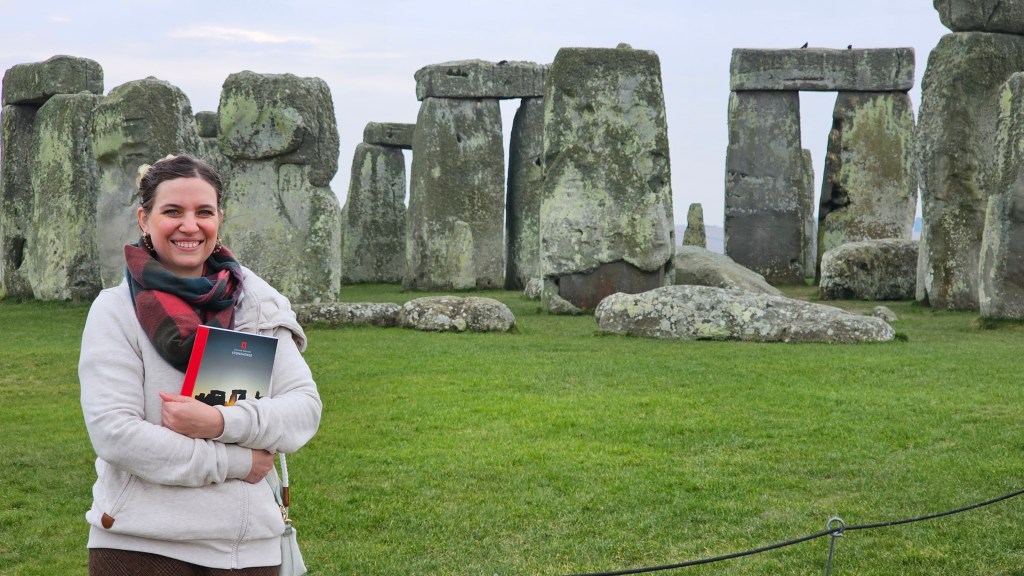
I am standing by the “heel stone” which marks the line of the summer solstice

It took over 1,500 years to complete in four different stages. The first stage was in 3100 BC, the second stage occurred in 2500 BC; the third took place 150 years later and the final stage occurred in 1,500 BC. This is when the stones were rearranged into their iconic horseshoe shape. There were about 60 stones originally, but sadly many are broken or even missing today.  Despite the presence of human remains, it is not believed to have been a burial site but that these remains were utilized in religious ritual. Although if you read other people’s opinions they’ll tell you that it was a burial site. See? So much mystery!

It was being armed with this knowledge (and much more, but I shalln’t bore you with all the details), that I practically squealed in sheer anticipation more than once as we approached. I was finally actually there, instead of seeing it on a screen or in a book. There was equal parts excitement and awe as we drew closer. The thing about the site is it is actually located in an almost surreal location because one expects that it would be in an area relatively built up. However, it is just out in the middle of nowhere surrounded by sheep and farmer’s fields. Yet, it fits exactly in the landscape that one finds it in because thousands of years ago the builders may have had sheep. For all we know sheep have been hanging out near those stones this entire time.

I loved being able to closely study the stones, to see how they may have been joined together by the knobs at the top of some of them and to picture how it may have once been so many years ago. I marveled at the craftsmanship that must have taken to hew rock into rough formations of giant blocks and to lift them up atop each other. 

What was particularly nice was that I went at the slower time of the year for England, choosing to go right before spring at the end of winter, so it was relatively uncrowded. I didn’t have to fight to look at it and I was even able to snag pictures without people in them. Most pictures contained very few people. This also meant that I was able to really focus on what I was seeing without having to worry about what everyone else was doing around me. After my first circle around the stones snapping lots of pictures, I put my phone away and made another loop so that I would be able to just enjoy the place taking in the sight and locking it in my memory. Too often we are so busy “documenting” our experiences we forget to actually experience them. I was determined to not make that mistake. 

After spending nearly two hours at Stonehenge, we journeyed back on the bus to the visitor center for a quick bite to eat before departing. There was a reconstructed Stoneage village that I took a brief detour in. But having been in the ancient village of Carn Euny the day before (another post on that later), I didn’t spend very long. They also had a small museum of the artefacts found in and around Stonehenge which is very informative if you haven’t spent a lot of time studying the site. 

How to visit Stonehenge (and other suggested sites): 

I’ll not insult you with instructions on how to get to England. However, it is important to know Stonehenge is located about 2 hours south of London making it a fairly easy trip for most people who are intended to tour the country. It is a far less easy trip if you’re flying into Scotland. My American readers may be forgiven for underestimating the size of Great Britain as it is about a 7 hour drive between the two and while we do love driving that is a bit of a haul even for us unless it’s part of an entire road trip especially since most of us only have two weeks of vacation a year.  

However upon arrival, you have two options to see the actual site. Option 1: Is paying the admission ticket (and parking) to Stonehenge which grants you access to the bus transfer over, the reconstructed village and museum. The main advantages to this option is the bus transfer if you’re with someone with mobility issues and the ability to walk around the entire site to see it from all angles.

Option 2: Is parking a little away from the site and accessing the footpath which traverses right next to the walkway in front of Stonehenge. It does require a bit of a hike to get from where you can park the car and Stonehenge. The path isn’t well maintained, in part because while the English have the right to roam on the ancient footpaths, the right to roam doesn’t necessarily convey the promise that someone will be maintaining those footpaths. It also only allows you to really see the front, but it is the best and most famous vantage point. If you go during the peak season you’ll probably be disappointed by the sheer number of people blocking your view and any pictures you’ll want to take. If you go during the non peak season you will probably be able to get a decent view and maybe a few pictures with only a few people milling around in the background. It honestly depends on your priorities. 

My wonderful and amazing mum!

For me, I was traveling with my mom, who doesn’t have the best health and needed the extra support with mobility. I also wanted to be able to get as close as I was permitted. There was an option to get there at 8 am, pay a lot of extra money and be able to go into the circle at sunrise, but I would have needed to leave by like 3:30 am, wake up at like 2:30 am which would have meant no sleep for me and I didn’t want to be driving that long on no sleep as driving without sleep is akin to driving drunk. I wanted to see Stonehenge, not die in a car accident on the way there. Remember we want to check off our bucket list, not hurry the bucket along. 

Now, you may be thinking that there is absolutely no way that I could possibly write a list of “good enoughs” when comparing them to Stonehenge, but it entirely depends on you as an individual. For me, Stonehenge has been a top priority since childhood, so when given the opportunity I jumped on it. However, there are many Neolithic sites and Neolithic stone circles scattered not only across Britain and Europe but also throughout the world and you may be closer to them than you think. Granted there aren’t many that are quite as old as Stonehenge but there are many that are within the 3,000 – 1,000 range. 

If you don’t care much about the size of the stone circles, Britain, Ireland, and Brittany (France) has over 1,300 circles. Many are quite impressive in their own way. They are also less visited and often allow you to be able to go right up to them without needing to pay for tickets or have them roped off, meaning you don’t have to fight with crowds, you can actually touch them and you can enjoy them more as they were intended, as places of spiritual connection, celebration and reflection.

The Merry Maidens of Cornwall!

Stone circles aren’t just found in Europe. There are stone circles in Australia which are sacred to the Aboriginal peoples like the stone arrangements in Victoria at Carisbrook. You may also be surprised to find out that Japan has stone circles from the late Jomon period located in the northern region. Like Stonehenge the Japanese Stone circles contain an inner and outer ring which is aligned with solstices. Even the states has its own stone circle in Wyoming called the Medicine wheel. There are other less famous circles hidden in Nebraska’s Sandhills and Bluemont Virginia.

If you don’t really care what formation a neolithic site takes, then the world is truly your oyster because scattered throughout the globe are sites from ancient pre-civilization peoples. Ohio is famous for its Great Snake Mound as well as the Newark Earthworks. White Sands New Mexico has footprints from over 20,000 years ago – take that Stonehenge! Colorado is home to the Cliff Palace located in Mesa Verde National Park. New Mexico has its own cliff dwellings as well as Aztec ruins. The small island of Malta has Megalithic temples. Ireland is home to Newgrange. One of the oldest known megaliths in the world, Gobekli Tepe, can be found in Turkey. Spain is home to the Dolmen Menga. India has its own dolmens in Marayoor Munnar and I could go on. As you can see dear reader the world is awash with ancient monuments if you know where to look. You may very well be shocked at how close you are to one. So don’t feel the need to put Stonehenge on your list of “must-do’s” if you haven’t already developed an obsession like me, but if you happen to find yourself in England the it is decidedly something I would recommend you make part of your trip.

Cost: $50*

* give or take with the exchange rate, going during non-peak season for a “super saver” discount and pre-booking online for an additional 15% discount and then accounting for the gas to arrive there from the rental.

Miles from home: 2,000

Miles from rental: 200 miles

Cost accounting for plane tickets, etc.: $150*

* You may wonder how I arrived at this number, it’s simple, I took the total cost of my travel (planes, buses, taxis, etc.) and then counted up all the places I checked off my list as a result of traveling to England, divided the total cost of travel by the number of places I got to go to arrive at about $100 per place. As it turns out England has a lot of places and experiences that are on my list which is why it was a top place to visit. I made certain to check off that list to maximize the money I was spending. Using this basic formula is something you can do when deciding where to go and what to do in order to maximize your travels. Yes, the upfront overall cost is quite high, but when considering how many things you can do at once, it may be worth the cost.

While this post was from an adventure many miles from home and involved a plane ride, many of my adventures were just a short drive away. Be sure to check my other posts listed on my Bucket List and Reverse Bucket List.
A Macabre House of Oddities 

You may be familiar, dear reader, with the traveling shows, carnivals and even houses of “oddities” of yesteryear. Those peddlers of myths and horror to fascinate and perhaps even, scandalize their audience. The most famous of which would have been P.T. Barnum’s, Barnum & Bailey Circus home to such attractions as Myrtle Corbin the Four Legged Woman (a woman born with two pelvises and four legs), Fedor Jeftichuw, The Dog Boy (an individual with hypertrichosis), Isaac Sprague, the Feejee mermaid (a small monkey glued to the tail of a large fish), and many more. Though the “freak show” has been around since the medieval era (and probably before) where crowds would gather to see humans with deformities, it wasn’t until the Victorian Era that they fully matured into a for profit exhibition. It was Barnum’s “Greatest Show on Earth” that truly brought it to the forefront of American culture. Though not all abnormalities were real and were actually made up for the purposes of the show. While freak shows and circuses were exploitative, some, like P. T. Barnum’s Circus did pay well and was (for the time) quite progressive in its treatment of its “human oddities”. 

Under brightly colored fabric and dazzling lights, crowds of spectators stared in amazement at the parade of “strangeness” before them. This was in a time before movies and colored photographs where one might see such things otherwise. It was certainly before commercial flight where far flung places such as Siam and Turkey were easily accessible. Certainly before the internet where one could fact check to see that, there was no missing Albanian prince who was raised in a harem and that woman he claims is 160 years old, is in fact only 80. I imagine quite a few left the shows believing they had seen something truly remarkable and perhaps even mythical. Is it any wonder this was the same era for seances and contacting the dead?

When perusing freak shows and museums of strangeness, visitors unfamiliar with taxidermy were easily fooled by the macabre art  of combining parts of different animals to support outlandish claims of myth come true such as the Jackalope. They may also display artifacts such as cursed monkey paws or pictures. As America expanded its colonization of the New World, so too did folk stories of the legendary creatures and strange happenings such as sasquatch or the vampires of New England. All adding to the idea that the world is truly far stranger than science can account for. 

For the most part it seems that over the years, such places have dwindled down. The circuses no longer showcase individuals with abnormalities for exploitation and with medical advancements many are able to be addressed to improve quality of life. Nor are abnormalities viewed with such suspicion and fear, but are increasingly welcomed as a part of life. Most of the oddities have been lost, destroyed or merely forgotten. Although there are a few small roadside attractions which have collected or perhaps re-created various pieces of history in the same spirit of P. T. Barnum who when accused of duping the public with hoaxes responded “I don’t believe in duping the public, but I believe in first attracting and then pleasing them.” So it made no difference to me if what I was looking at was truly the same pair of pants from Barnum’s giant or just a really large pair of pants. That’s part of the charm, it is a house of hoaxes. Perhaps, it is fun to pretend for a bit.

It was with this strange and controversial history in mind, that I went to the House of Oddities and Curious Goods in Elizabethtown, PA. This free museum was the beneficiary of a now closed down Gettysburg Dime Museum preserving Jo-Jo the Dog-Faced Boy (from P. T. Barnum’s circus) and Edgar the Alligator Man. The house certainly captures the odd mixture of barely contained horror and ridiculousness. Like almost all museums of this nature there is little rhyme or reason to the displays as everything is haphazardly squeezed together. Everywhere one looks there is a new, at times stomach churning, oddity as music reminiscent of the circuses of old plays in the background. 

It was a small place of barely two rooms, though the second room was more of a back hallway. Most of it were obvious hoaxes that at one time fascinated the public and led the more easily duped into belief that monsters truly do exist. There were a few genuine gems such as the alligators who had been deformed due to improper disposal of chemicals in the neighboring bayous. Some of the items had small paper “plaques” with explanations of what they were, but most were left to my imagination. I found most of it to be a strange mix of delight and eerie. It was truly like stepping into the beginning of a horror movie. The only thing missing was the creepy person offering to tell your fortune or to sell you some cursed object. Actually, there was a small offer to purchase some cursed objects at the front, but I kindly passed and instead put a small donation in the box (after all, one should probably avoid the ire of the owner of so many “cursed and powerful objects”). 

The museum was less a museum of true oddities and more an experiential museum of what people may have seen in decades past and how they thought of seemingly unexplainable phenomena. It was intriguing to see how people interpreted scant pieces of data and extrapolated it out as evidence for monsters. I wondered how many people walk away from it truly believing in what they see or if, like me, they find it a fascinating piece of living history of a time and phenomena of when such shows were taken seriously. Of a time when the world still held a hint of magic before all the maps were filled in and science explained most of what we experience. Do not get me wrong, I like living in the era I live in now, but we don’t have a must mystery as we once did. Still, I can now tell people I have beheld one of the legendary Giants of Lovelock Cave and a Wolpertinger! 

Ready for your own adventure into the macabre, mysterious and strange?

Obviously a google search of your local area would be easiest. However, it can be a bit difficult to know precisely what to google “freak show”, “museum” “house of oddities”, “curiosity house”. You may need to play around with the precise terms of your search as they are not (to my knowledge) the most popular of attractions. I have stumbled upon the site https://www.roadsideamerica.com which may be a good source for not only such places as these but also other fun attractions not readily advertised. I was surprised by the number of curiosity houses listed nearby that I had never heard of before. 

Completed: Early 2025

Cost: Suggested Donation $5

Miles from home: 20

There are certainly more unique and interesting discoveries to be made and some of them can be found on my Bucket List and Reverse Bucket List.
A Trip Back in Time: Tubing at Sickman’s Mill

Ah, summer. What springs to mind when we think of those blazing hot days and long evenings? Cookouts and water games, people gathered round, laughing gaily as dogs drift in and among the crowd, children playing lawn games? The reality is that, sadly, summer is spent far too often on our phones. Even when out and about, they are an ever-present distraction. Speaking with strangers is practically taboo, lest you disrupt their very important text conversation or latest social media doom-scrolling venture. There are few sanctuaries of the bygone eras where summer meant a blissful abandonment of the world for nature and all her bountiful glory.

It was one such sanctuary that I happened upon on a summer morning—not entirely by accident, as I had made plans to go—but I was surprised to discover that Sickman’s Mill was such a place. Nestled in the southern part of Lancaster County, it doesn’t have the best reception, and lacking any Wi-Fi, one is forced, as their sign proudly declares, to pretend it’s 1969 and talk to other people. I found the bartenders friendly and hospitable, eager to make me feel welcome to a party I didn’t know I’d been invited to as I awaited my friend Kayla’s arrival. They assured me that despite the weather forecast for potential showers, I would still be able to participate in the not-quite-forgotten summer tradition of tubing down a river.

Almost as soon as there were rubber inner tubes leftover from tires, there have been people putting tubs in rivers and floating down them. What could be a more relaxing way to beat the summer heat? After a trip down the Pequea Creek, I’m not sure I can answer that question. It was the perfect panacea for the blistering heat of the season.

The rain from the night before had raised the creek’s levels and left the morning quite comfortable. The clouds that had threatened thunderstorms gave way to beautiful blue skies, allowing dappled rays of sunlight to stream down through the trees. The crowds had not yet arrived, leaving the creek mostly to ourselves to enjoy the sounds of nature all around us. Occasionally, we were treated to faster-moving sections as the water flowed rapidly over a series of rocks. The only main concern was the occasional felled tree that created unexpected obstacles, but aside from those minor disruptions, it was a beautifully relaxing trip.

The entire route took us about an hour to complete, as the creek was moving more rapidly that morning due to the recent rainfall. It can take up to two hours when the water is slower. We were directed by a polite young man to get out of our tubes and climb the convenient stairs to await a bus that would transport us back to the mill. We didn’t need to wait long before it came lumbering up the lane, and after another group disembarked from the creek to board, we were on our way. It was a short but delightful ride through the countryside.

The old mill itself was not open for exploration, but they more than made up for it with the bar affectionately named Jimmy’s Place after the family’s dog. Naturally, Kayla and I tried the Jimmy Juice—all four flavors. She had the Pineapple and Cranberry, whereas I enjoyed an Orange and a Ginger. Our favorites were the Pineapple and the Ginger, and we were able to take a four-pack home to share. For food, we went only a few feet away from the bar to Mama T’s. I learned the name is a bit of a joke, as Mama T is by all accounts a terrible cook. Don’t worry—the food was quite delicious and includes vegetarian options. Prices ranged from $5 for a slice of sourdough pizza to the more expensive Mama T Burger at $14. The portion sizes were as generous as the people serving us.

When we returned to the mill, we were surprised to see that the sleepy bar had transformed into an impromptu party. Dogs ran among the people and splashed into the creek with their owners. Some had taken chairs to sit directly in the creek while sipping on the infamous Jimmy Juice, a vodka-based cocktail. Children and adults played lawn games together, and everywhere I looked, people were actually talking to each other instead of scrolling on their phones. It felt as if I had indeed been transported back to 1969. I even had the distinct pleasure of meeting Mama T, who had just landed from Ireland.

It would seem that while the mill has taken on many purposes in its 250-plus years of existence, it remains timeless. One certainly feels as if time simply melts away. Hours and minutes blend together as the party stretches into the afternoon. You forget to check the time, and text messages go unanswered—if they even get through the spotty reception. It is a place to forget the modern world and embrace the echoes of summers past. Though I wouldn’t have thought it all that different from a lazy river at an amusement park, there was something special about tubing down a real river in the middle of the woods. It may be a relic of an era now gone, but it remains a time-honored tradition. As long as there are tubes and rivers, people will continue to float down them.

How can you go tubing?

Luckily, the United States is dotted with rivers, and if nothing else, you can probably find one nearby to float down—provided you have a tube. It’s recommended to bring a friend along and park your cars in two different places unless you find a spot like Sickman’s Mill where you can rent a tube and catch a bus ride back. It’s a bit more adventurous doing it yourself. Though I must confess, as someone with a poor sense of direction, I’d likely miss the designated pickup spot, drift miles downriver, and end up hopelessly lost.

If you don’t want to go the DIY route, finding a place like Sickman’s is usually as simple as Googling “water tubing.” There are plenty of places that offer this kind of summer activity. I can’t promise they’ll all have the same family cookout atmosphere, but the river experience will be similar. I do think there’s something magical about finding a place where cell service isn’t great and Wi-Fi isn’t available. It encourages people to put their phones away and genuinely engage with each other.

Completed: August 2024
Cost: $25 for tubing ($40 additional for drinks and food)
Miles from home: 20
Potentially time warped: 55 years into the past

Be sure to check out my other adventures on my Bucket List and if you’re looking to travel back in time again with me, check out my Reverse Bucket List.
From Fire and Ash a Phoenix Rises: Firebird Festival in Phoenixville

For the past twenty years a mysterious sight has unfolded in the midst of the winter’s cold. A community builds a giant wooden bird and then sets it on fire much to the delight of the spectators. And, dear reader, it is as awesome as it sounds. 

The Firebird Festival, was a dream of a Henrik Stubbe Teglbjaerg, an immigrant from Denmark who has resided in the States since the late 1980’s. He, with four other Phoenixville residents, came up with the idea, in part inspired by similar festivals of Europe where they build things and set it on fire. When he first arrived Phoenixville was a dreary little town. However, it started to revive itself, opening up a theater, art galleries, coffee house and it was as if there was a rebirth, a town rising up out of the ashes. So what could be a more perfect fit than to celebrate with the symbol of rebirth and the town’s own namesake? 

What is more is that each year, the ashes from the burned phoenix are taken and made into clay birds which are then placed inside the wooden bird. When set on fire, the wooden structure acts as a kiln, firing the birds and thus completing the cycle of last year’s bird when they are transformed into decorative pottery. 

What started as a small 150 person event has grown into a 20,000 person festival. Complete with food trucks, fire dancers, a parade, live music, and various wares for sale. It is a celebration of the town and the arts. But rather than relying on fancy performance artists most of the event is volunteer and community run which only speaks to the strength and spirit of the community, despite the growing size of the festival they have protected its heart as a grassroots events that remains untainted by the scale of the crowd. 

Most years, this event takes place in December just as the northern hemisphere enters its darkest stage and the year is coming to a close. However due to an unusually dry spell, the 2024 Firebird Festival was delayed as having a 20 foot wooden set aflame near exceedingly dry forest isn’t exactly the safest idea. Remember dear reader, as much as we all desire to check off our lists we want to make sure we live to check off the rest of our lists when doing so. 

This misfortune of weather was my opportunity. For you see, my sister and I typically celebrate the holiday season each year with our extended family on the second weekend of December. It so happens that the Firebird Festival also happens on that same weekend meaning that we are always previously engaged as the annual Holiday Feast has been a set date since before I was born. So when the organizers moved the Firebird Festival to the first weekend in February it became the must do event of the winter season. 

The new date was also fortuitous as it coincided with an ancient celebration of spring’s light returning. The ancient Celtic holiday of Imbolc was associated with the Celtic Goddess Brigid, the guardian of Hearth and Flame, a perfect pairing for the new date. The ancient holiday was a time of purification, renewal and preparation for the change in season. Fire rituals which honored the returning sun were frequently integrated into the Imbolc celebrations. It was celebrations like these which inspired the Firebird Festival in the first place making the new date perfect. 

As it happened, it was one of the coldest nights of the winter as arctic wind was carried down from the north freezing all that it touched with its icy fingers. Only a few days before the weather had been warm thawing out the ground and making it moist and muddy. Posts about the event warned celebrants of the potential for treacherous conditions on the field as the mud became slick and icy. 

My sister and I did our best to buddle up in preparation for the cold. I fared a bit better than her having a coat that mimicked a fur one, leather gloves lined with kashmir, thick socks and shoes with thick soles to keep out the cold. She had a rather old coat that she put several layers on beneath but the wind still managed to cut through the fabric and whisk away what warmth she had. As the Germans say “there is no bad weather, only bad clothing” and this was a prime example. I stayed pretty toasty throughout the evening but my poor sister struggled. Worry not, I often acted as a wind break once the crowd gathered. 

The festival occurs in two different places, the field where the bird is and downtown Phoenixville where most of the art events occur. After looking at the events and options, we determined that we wouldn’t arrive at 4 pm when the event started but rather closer to 5:30 pm to find parking, walk down to the field. That gave us about 21/2 – 2 hours before the bird was scheduled to be lit at 8 and the fire dancers would start their own performances around 6 (something else I’ve been wanting to see as part of my BucketList, maybe I’ll have to add Fire Dancing to the list now that I know I can volunteer to be one!) 

We followed the instructions for parking and managed to snag a great spot that was near enough to the field to make an easy walk in and out. It was a place that opened for parking after the official event time, I assume in part to help manage crowds. This made it a breeze to get to the Veterans Memorial Park where we were greeted by friendly volunteers who directed us into the event. They had buckets to collect donations which went to supporting it. When we got there we were a little surprised as the lackluster crowd as it seemed only a hundred people were milling about. There were a few food trucks and some tents set up. The band wasn’t playing yet and the sun was only just starting to set. We milled around looking at the different options and then decided to watch the Fire Dancers. We saw some people had chairs set up right at the center of the staging area but other than directly in front, the area was clear. We picked a spot to the left to watch and decided we’d take turns running to the food trucks. 

It felt a little paranoid to hold our spots when there were so few people, but as it turned out this was a crucial strategy because it seemed that within 15 minutes the crowd had tripled in size and the entire perimeter of the bird was lined with spectators enthralled by the fire dancers. Just as twilight fell, the arrived each with a unique costume and different types of instruments to move the flames about. They juggled, they moved around balls of fire, they twirled long lances and staves, they mimicked a bird with wing-like props, they used hoops of fire to make large circles. One wore a plaque mask, another looked like she came from the assassin’s creed, there were knights with shields and spears, there was a woman in a leopard catsuit. Some of the volunteers were better than others but all of them were mesmerizing in their own way as in the background a band played music. 

By the time the sky had gone dark, the crowd had ballooned behind us and we had to jostle our way to back to each other when we went for warm drinks or snacks. We nibbled on delicious food from a truck and sipped on warm apple cider available for purchase from some enthusiastic teens manning a volunteer tent. It seemed a little pricey for warm cider but the proceeds went to support the event and as it didn’t have an entry fee I was happy to pay a little more. The cider warmed my hands which had gotten cold from taking pictures of the fire dancers. 

As the appointed hour grew near, the crowd and the cold intensified. However, it was all great fun as we stood there making friends with the people behind us, chatting and laughing. We helped them hold a spot for their friend when she slipped out. Then around 7:45 the parade arrived. Headed by a giant pheonix of paper mache and cloth, the parade was host to more costumed revelers adorned with lights who danced to the beat of drums. Around the bird they circled to the cheers of the onlookers as the crowd only grew more excited in anticipation of the main event. 

Unfortunately, there seemed to be a bit of a delay as 8 pm came and went. Then 8:05, then 8:10, then 8:15, by the time 8:20 rolled around there were chants of “light the bird” which would be taken up and then die down after a minute or so. This went on for another 10 or 15 minutes until finally the torch bearers chosen by lottery were assembled and permitted to put torch to wood. At first, the flames barely licked up the wooden structure. It seemed as if the wind would snuff out the small fires struggling to find purchase against such icy conditions. How could such small flames survive? Would we be disappointed? 

No, the flames did not die. They continued their merry dance along the wooden structure, flickering brightly in the night. While it was a nice sight to see, it was hardly worth the nearly 3 hours in the freezing cold, perhaps we should pack it in, my sister suggested. I told her that I wanted to spend a little bit longer because we had been there so long and I wanted to enjoy it regardless. Then suddenly, conflagration! The whole thing was alight, the phoenix was finally truly lit. The heat pushed back the cold becoming almost more than we could bear even so far way. I pushed my hands out towards it drinking in the sudden heat. It was a glorious sight to behold as it was truly worthy of its name.It really did look like a mythical creature crackling in the cold night with the promise of the summer’s sun. We stood there enthralled by it, saying goodbye to the old and welcoming the new. 

How can you experience a Firebird Festival?

Obviously if you don’t live near Phoenixville attending this event won’t be cheap or easy and while it is certainly something I recommend if you’re in the area, it isn’t something I would plan an entire vacation around. However, there are lots of different local traditions and festivals throughout the country with their own unique and special. Florida is home to an Underwater Music Festival,  New Mexico has one dedicated to UFOs, Ohio is obsessed with Duck Tape and Washington State hosts a Kite Festival and there are many more. With some searching, you’re almost certain to find a quirky festival near you. Many of these festivals take place in the Spring and Summer months so now is the perfect time to look around your wider area for fun and interesting events.

What’s awesome is that the story of the Firebird Festival demonstrates that it only takes a few people gathering together to make something amazing. It started off as 4 friends getting together, building a small phoenix and setting it alight for 150 people. It has ballooned into an event that attracts thousands each winter. Your own event doesn’t have to be this “big thing” and there’s nothing to stop you from starting your own tradition! Don’t worry about a 20 year commitment though, as once it takes off there will be people to pass the torch to (pun very much intended). 

Small disclaimer:

Technically, there are things that can stop you from starting your own tradition. Local ordinances may prohibit you from doing certain activities like setting things on fire and I really don’t recommend that you do that if you live out in places that a prone to wildfires. I don’t want this blog to be in the news because after reading this, you decided to start your own firebird festival and set the state of California on fire. So as always check your local ordinances and use common sense before trying something you read online.

Cost: Free

Miles from home: 50

Be sure to check out the other festivals and events that I’ve attended on my Bucket List and Reverse Bucket List.

Water Lantern: A Festival of Reflection 

It was a warm summer evening, when my sister and I embarked on a journey to the far east or rather to partake in some food and traditions imported from Asia to the United States. This particular evening, we were attended a Water Lantern Festival. One of the amazing things about America is our immigrant roots, welcoming people from across the globe. These people come and bring with them their culture, traditions, beliefs, music and cuisines. It is what makes America a rich, cultural tapestry of endless variety.

We began our journey by stopping at a Thai restaurant which is owned and operated by Thai people. I always get excited when I can stop at places owned by people who intimately understand the cuisine they are cooking, whether that be because they are originally from there, have family originally from there or spent enough time in careful study to obtain a level of mastery in the authentic way the cuisine ought to be prepared. As someone who doesn’t necessarily have the money to hop on a plane to experience authentic Thai food, I appreciated the opportunity and the culinary skill of the chef. Dinner was a delicious red curry, since I cannot resist a menu item with Thai Basil and my sister had their drunken noodles of which I stole a few bites. 

After dinner, we headed over to Harrisburg to the Italian garden where the Water Lantern Fest would be held. The Italian garden is beautiful in its own right, but it was extra festive for the fest and the weather proved to be perfect. It wasn’t too hot, nor was it chilly. The blue sky was clear overhead and it promised to be a lovely evening. It took us a little time to locate the actual stand to obtain the water lanterns as the park was open for all to enjoy. We did eventually find the true “entrance” to the fest by asking some people for directions and headed up the hill to obtain our goodie bags and lanterns. After claiming our prizes, we walked around the end of the manmade lake to find a good spot under the shade of a tree. 

I had attended a lantern fest before, where you release lanterns into the sky which took on a more party atmosphere for the people attending with music and bounce houses, bonfires and food trucks. This one had most of those things tucked away from the main event so that you could still enjoy vendors, food and other activities, but it did not distract from what you were there to do.  Nor was the crowd quite as big as at the Lantern Fest which was just as well, since I tend to favor smaller events to the massive crowds. What I enjoyed about this one was the more subdued and even reflective atmosphere. Flags proudly proclaimed things like gratitude, healing, love and connection, encouraging you to reflect rather than party. The crowd was fairly quiet with many people conversing with their heads together, smiling and laughing. The goodie bag even included conversation cards with prompts to start deeper discussions with the people you were with in order to foster deeper connections. My sister and I were delighted by these and have taken them out at other occasions and have found them to be great at prompting conversations. 

The kit for the lantern included a wooden base, a lantern which could be written upon and a small led candle to turn on and place in the lantern. We noted that most of the lantern components could be reused, recycled or easily be broken down in the environment. Being a manmade lake, the lanterns were in no danger of polluting local waterways or interfering with native wildlife. In addition, the event organizer One World proudly supports water.org. Water.org is an organization which focuses on increasing global access to safe drinking water. They include an informational pamphlet and easy options to donate to raise money to support this cause. I love it when an event is able to go beyond just an enjoyable evening and helps to provide a positive impact.

I decorated my lantern with things that I was grateful for and my sister decorated hers with art including a celtic knot and a flowers. Once the sun slipped beneath the horizon, they asked us to gather around the edges of the lake and to pause for reflection. Then they invited us to release our lanterns to allow them to float upon the water. One by one, they spread out, glittering together like stars. As I stepped back to take in the sight, I was able to let out a deep sigh of contentment. Naturally, we snapped a few photos, but mostly my sister and I just walked along the path enjoying the sight and quietly conversing. 

It should be noted that while my dinner was still firmly rooted in its culture of origin, the Water Lantern Fest was less so. Water Lamps originated in India and spread throughout Asia most likely through Buddhist diffusion. They appear in many festivals and have many meanings ranging from worshiping gods, praying for a good marriage, welcoming happiness, guiding the spirits of the departed or welcoming happiness. In Vietnam, there is a town which releases them quite frequently. In China, they are released throughout the year. In Japan, they usually release them to help guide the souls of the dead to the spirit world and allows for reflection for lost loved ones. Sometimes, things are lost in translation especially as it gets diffused across different cultures as it has in Asia since they have a lot of different meanings all over the continent.

Still, despite being a bit unmoored from its roots, it still felt as if it were in the spirit of the original customs. Where other events encourage a sort of frantic, frenanic frenzy of activity, this festival invited you to slow down, to pause and reflect. It encouraged building relationships between people and being more mindful of your surroundings. They also allowed people to come up to a microphone and share their stories. Some people shared their loss, others shared their victories, whereas others shared gratitude. There were lanterns that people dedicated to their loved ones. In a sense, the festival was a melting pot of the many traditions associated with water lanterns from Asia and transforming into something uniquely American. It certainly was not an authentic experience, but it falls under my “good enough” category. 

How can you experience a Water Lantern Fest?

The best way is to go to their website WaterLanternFestival.com and click on your state to see when they might be coming to you. I encourage you to buy tickets early since they increase in price as the date approaches. 

However, there is nothing to stop you from ordering some lanterns and LED candles and hosting your own smaller version with a group of friends. Although, it doesn’t quite hold a candle (pun intended) to seeing a few hundred floating all together, their reflections shimmering in the darkness of the water. It is also important to note that there may be local ordinances preventing such an activity and you would need to ensure proper clean up. After all, we want to keep our local environments beautiful so we can continue to enjoy it for years to come.

Completed: July 15, 2023

Cost: $36 per person (was advertised as $27 but there were vendor fees)

Miles from home: 45 

Did I visit a Botanical Garden or Paradise?

The title is a slight exaggeration, but I think the comparison is apt. After all, in three of the world’s major monotheistic religions, paradise is a garden. 

So, what exactly is a botanical garden? Aside from being a beautiful place to wander around in quiet contemplation, botanical gardens are gardens with a documented collection of plants for the purposes of scientific research, education, conservation and display. They feature the botanical names of the plants. Hence the name botanical garden – not necessarily the cleverest of names, but it certainly gets the job done. 

Some of my earliest memories consist of gardening. Lacking cable, one of my favorite pastimes was actually watching “The Digging Show” or my parents gardening. I loved spending time among the plants and the flowers learning their names, cataloging their color, inhaling their scents and at times nibbling upon them. I quite enjoyed the various herbs and was quite familiar with which ones were safe for me to consume and which ones were best avoided. I spent many hours going to various nurseries. As my parents shopped, they became my playgrounds. Not that I disturbed the merchandise (I had been taught to look not to touch), but I still explored, searching out new plants and finding the statutory and other garden decor scattered about. Our garden was huge and well known in the neighborhood as one of the best. We even had a photographer request to come and take photographs of our garden. 

It should come as no surprise then, that I love going to botanical gardens to stroll among the flowers and greenery. Each one is so different which only serves to highlight the vast biodiversity of our planet where no two gardens are alike. Some focus on specific areas while others span ecosystems throughout the planet. No matter what I always find a bit of wonder in them as I am taken in by the majestic blooms and vibrant hues of the leaves. I’ve seen giant lilly pads and a huge array of orchids. I have been overpowered by the sweet scent of roses and delighted by the scent of apple blossoms.

The architecture of these gardens are often a highlight as well featuring delicate archways and imposing pillars. Many of the gardens have various fountains and waterways snaking through them. They may even have plunging waterfalls. Longwood Gardens in particular is known for its spectacular water show which is predominately displayed in the center of the gardens. However, it is also home to more humble buildings, small wooden cottages or small towers tucked away in forested areas.  To traverse the gardens is to move from landscape to landscape each with its own unique take on what makes a garden. There are times when the juxtaposition of the two can almost seem jarring as one moves from one area to the next as if the doorways themselves are portals to between worlds. 

Each world is a delight to the senses and one hardly notices the passage of time or the encroaching heat of a warm day or the way the chill of a winter begins to seep its way into your bones on those cooler days. In all seasons, the gardens offer something new as they are always changing with the pattern of the year. It means there is never a bad time to visit and one can visit quite often as there is always a shift. What was in bloom only a few weeks ago may have faded and a new plant has come to take its turn in the spotlight. The gardens can be enjoyed both in quiet solitude or with a group of friends. 

I find that day among the plants and flowers is as refreshing as a day at the spa. A connection to nature is an important part of mental health. Time outdoors helps to reduce stress and anxiety. Fresh air is also correlated with increased physical health. Exposure to nature is associated with better cognitive function. Certainly spending time in such oxygen rich environments is good for your lungs when we spend so much of our time inside. So yes, it can certainly feel like one has discovered a small slice of paradise when visiting as the stress of the outside world begins to melt away. I certainly envision heaven as a botanical garden, populated with cats of course, with ready access to a vast library of books and tea. 

How can you visit your own slice of paradise?

Luckily, botanical gardens are found throughout the country and indeed the world, so finding one should be relatively simple. I recommend wearing comfortable walking shoes and to pick a day when the weather is particularly good. You will most likely want to bring some water as they are often deceptive in size – they are always bigger than you anticipate. Armed with proper hydration and shoes, you will ensure that your beautiful garden experience doesn’t become hellish. 

Completed: First completed in childhood in a visit to Longwood Gardens

Cost: $32 per person (can vary depending on time of year)

Miles from home: 45 miles from home

I have also visited other gardens throughout the country as I am always up for visiting a garden.

Baldwin’s Bookstore: Beautiful Books! 

Book lovers know the allure of bookstores and libraries. There’s something about walking into these sanctuaries of knowledge and stories. The distinct smell of the books, the quiet atmosphere that is seldom found in other public spaces, the aesthetic symmetry of rows and rows of carefully shelved worlds. The promise that an entire universe may be unlocked with just the turn of a page. The stories almost seem to whisper an invitation and your fingers start to itch with an eagerness to begin the search. So many dance partners want to fill your card and it is almost dizzying. 

There is even something extra special about a bookstore that offers a little more. Beautiful bookstores, charming bookstores, the ones with cats and tea, the ones with stacks upon stacks of books. Ones that even use books as structures like the book tunnel in L.A.’s famous Last Bookstore. Baldwin’s bookstore is just the sort of bookstore for booklovers. Named one of the most beautiful Bookstores in America, this hidden treasure of Chester County can be easily overlooked if one is not careful. 

Seriously, you can drive right by it and not even notice that you’ve passed it as outside it is an unassuming stone barn. One would never guess that it houses 5 stories of books and has a sizeable collection of rare and antique books. As it is primarily a used bookstore, it is always a treasure hunt and one never knows what one will find tucked away on the shelves. It is so large and extensive that it has a map for visitors at the front and even with the map, one can find oneself semi-lost among the stacks of books. 

A quirk of the bookstore is that many of the shelves are not shelves at all, but rather nailed together crates. This charming store invites you to venture up stairs to ever higher levels. Tucked around every corner are chairs, some more enticing than others, for you to sit and read to your heart’s content. It would be easy to spend hours if not days inside the store. 

My sister and I ventured forth on a cold’s winter’s day after grabbing breakfast together at a coffee shop near my house. We had saved this particular outing for the colder months as we are not overly fond of extreme hot or cold weather. It is always good to have a few indoor activities in your back pocket for those times when it is simply too miserable to spend much time outdoors. 

Upon entering the store, we were greeted by a delightful display of older and rare books. We breathed in deep, savoring the familiar smell of books. The older gentleman behind the front desk said good morning and inquired as to whether it was our first time to the store. He showed up the map and politely explained the general layout of the store and encouraged us to peak in the backroom which housed a few artifacts from when this barn was also a home. After the short orientation, we began our exploration of the store. 

We carefully meandered through the rows of books of over 300,000 books, stopping to peruse for overlooked gems. One of the gems was the map of Philadelphia from over 100 years ago displayed on a table (not for sale). Both my sister and I adore old maps, so it was an unexpected treat to be able to sit and study it before continuing our book adventure. 

One thing of note for the taller readers, there are numerous signs to “duck” when going up and down the stairs, so be wary when transitioning between floors. Despite being in a barn, most of the areas were quite comfortable with only one or two places lacking in proper insulation for the temperature to be comfortable. We did stop to take a few pictures of ourselves in the books. 

It was easy to see why it was named one of the loveliest bookstores both inside and out. The original stone building was built in 1822 and the rustic shelving and floors only add to its charm. Sadly, I did not spy any of the rumored cats said to be residing in the barn. It is possible they were sleeping in a corner somewhere or perhaps they were no longer in residence.

My sister and I found a few treasures and made our way down the steps to the front of the building for our purchases. Satisfied with our treasure hunt, we went home to enjoy our books. I am certain that I will make the journey again for another visit. After all, with an ever changing inventory there is certain to be other diamonds in the rough to find in the future. 

How can you visit a beautiful bookstore?

Bookstores abound and business is booming. Something good that came out of the pandemic was the increased demand for real things, real recommendations from real people. We’re wired for community and connection, something that a digital reality can’t really replicate (though they do try). Not only are books a form of entertainment, but also people are forming communities around books. Bookstores are also one of the few places that seemed to sell a variety of board and card games aimed at adults. Bookstores have become hubs of community and connection. 

Going to Indie and used bookstores like Baldwin’s is often a treat not only for finding books but also for the atmosphere they provide. I encourage you to seek out the hole in the wall places. They don’t necessarily have to make a list of “most beautiful” because with all the hundreds of bookstores, how could a writer of a popular magazine or blog really know if they missed yours? And besides beauty is in the eye of the beholder. 

A Wickedly Good Time: A Broadway Musical in New York

Considering the movie version is at its height of being popular, It seems that now is the perfect time to write about my very first Broadway Musical experience, Wicked (from my Reverse Bucket List).

I must confess my confusion that after 20 plus years of being on the stage, the musical is still so beloved that it should have such a large fanbase that has flocked to the theaters to see it and sing along. It certainly is a good musical, catchy music, compelling characters, interesting plot, and full of deeper themes that will stand the test of time. However, I just hadn’t heard much about it since it first debuted back in 2003 which followed on the heels of the 1995 book. Seeing all the excitement surrounding the movie version of it has made me reminisce about my Broadway experience.  

I was in my senior year of high school when the music department was able to schedule a trip up to New York city in order to see Wicked the musical. As our high school was about a 3 hour drive from New York, it wasn’t too far for us to do occasional class trips. As it happened, this trip was scheduled for the day after another trip to New York to see the Darwin Exhibit – so I happened to go twice in one week (but a post for another time). I had recently read the book from my library, curiosity finally winning out to discover what precisely had everyone in such a frenzy of excitement. As my school had done the Wizard of Oz musical in my freshman year, i was extremely curious to not only read the story from an alternative point of view but see the story from an alternative point of view. 

Our field trip actually began in the later part of the school day as the performance would not be until the twilight hours. We piled onto the charter bus as a group of exuberant, nerdy teens ready to take on the world. For most of us, this would be the first time seeing a Broadway musical and for some it was their first time going to New York. The air was palpable with excitement which soon wore off after the initial jostling for seats and everyone settled into their places for the long trip up. There was the usual chatter, the occasional flirtatious glance between people, whispered gossip and playful teasing for which groups of teens are known for. 

I was no different sitting with my friends and giggling most of the way uncertain of exactly what I was in for. I had of course heard of the infamous broadway and grew up watching various performances of musicals recorded on video. I didn’t know precisely what made Broadway so special other than that was where musicals were born. Even though I had just seen the famous city, I had not yet visited when the daylight fades and gives way to the bright lights of the streets. Would it really transform itself as I had been lead to believe? 

As the bus rolled along, we began to start seeing signs for New York and signs for Wicked. The excitement on the bus began to build once again. The energy was barely contained within the seats. For myself, I remember half bouncing up and down in glee. Shortly – though not nearly quick enough – we had arrived in the big city. We were given leave to divide ourselves up into groups and we were taken to have pizza. 

I remember walking through the streets taking in all the sites. The daylight had just started to fade, turning the sunlight to rose. There seemed to be too much to take in at once. Buildings towering over us. Music blared over the cacophony of sounds, traffic, horns, and construction. We spotted a street performer. Cars were everywhere, some of them quite unique like the limo humvee which alternatively amused and baffled us as quintessentially New York. Looking up we saw the famous billboards and lights, soon they would light the night and block out the stars and moon. 

We were ushered into an upscale restaurant which was known for its pizza, though to this day I cannot quite recall its name. But I recall the atmosphere quite well. Like most upscale restaurants, the lighting was dim which only accentuated the richness of the dark wooden panels on the lower part of the walls. The upper half seemed to be a lighter cream though the shadows obscured the truth. I distinctly recall that we ate on the upper level looking down over the rest of the patrons. Perhaps, knowing that they would play host to rambunctious adolescents they wisely seated us away from their other customers lest we became a disturbance. If we were, I did not hear of it, though I cannot quite imagine that we were not at least slightly disruptive. However, most of us had been raised with at least decent enough manners, the problem of course is that when in the company of other teens, those manners seem to get forgotten. 

I will fully admit that while yes, I had the infamous New York pizza, it didn’t really taste all that much better than the pizza I order from down the block monthly. Granted, the pizzeria is owned by a 2nd generation Italian immigrant whose grandparents owned a restaurant in Italy, so I may be a bit spoiled when it comes to Italian food. 

What I remember most about the evening after arriving at the theater was that it was both exactly what I expected and not what I expected at all. First, dear reader, you must recall that a Broadway musical or really any theatrical performance “on Broadway” could take place on any one of 41 stages in New York City which can seat 500 or more persons. There are in point of fact only three theaters located on Broadway itself: Broadway Theater, Palace Theatre and Winter Garden Theatre. So even though one might picture Broadway and one of these three theaters, one might find oneself in a theater several blocks away.

Prior to going to a Broadway production, my theater experiences consisted of the Fulton in Lancaster and the Hershey Theater, neither of which are architectural sisters to those in New York. So while I had a vague notion of what a theater looked like from pictures and movies, it was still in juxtaposition to the Hershey which was designed after a cathedral in Venice and the Fulton which was designed as a Victorian Opera house. What struck me most was the sheer amount of red velvet that they had at the entrance. It seemed quite a bit odd while still ornate. I remember thinking that the entrance was a bit smaller than I had imagined as we were ushered into what seemed to be too small a space before opening up into a larger area. 

To be honest, the venue vaguely reminded me of a posh movie theater. It had a more modern flair and everything was a rich dark red and black accented with golds. Sound was softened by the lush carpet so that the conversation of the crowd swarming inside was a hushed murmur around me. Everywhere I looked people were smiling with an eagerness of anticipation. Once inside the theater, the air positively hummed with the activity of people quickly seeking out their spots. I was situated stage left towards the middle of theater close enough to see well enough but not to really see the more subtle expressions of the actors. 

It hardly mattered, from the moment the curtain rose and the first notes rang out, I was transfixed. Glinda floated down in a sparkling blue dress singing that no one would mourn the Wicked Witch. I remember watching the Wizard dance around the stage with Elphaba’s mother singing and giggling with one another, a slight deviation from the book already. By the second song of Dear Ol’ Shiz, I was taken up into the story which asks what makes someone wicked? The very same question that first led me to explore psychology and later a career in social work. 

It’s hard to exactly describe the sheer spectacle of a broadway production from the sets to the costumes; everything is meticulously crafted to convey subtle messages and create impressions which help tell the story. Scattered throughout were small references to the original Wizard of Oz while still firmly establishing the differences from the source material. It began to take an almost dreamlike quality where your mind begins to fill in the holes that the set leaves open, a few trees become a forest, a few mock houses spring into a whole town until your mind is sort of tricked into thinking there was more than there really was.

It could be that it’s the songs that help weave the enchantment for there is ever magic in song. It makes it easy to slip out of solid reality and into the dream realm. After all, it’s really only in dreams that people would be singing and dancing to tell a story. Perhaps, the music really does help place your mind in an altered state allowing you to more fully experience it. The choreography only adds to dream as people twirl about the stage becoming whirls of color. During the songs with larger ensembles it becomes too much to take all in, your eyes unable to drink in each movement and the lyrics blend together in your ears. 

However, just like the spells woven in the musical, so too, does the spell the cast holds over the audience eventually shatter. The last song sung, the last line spoken and as if on cue the audience breaks into applause the thundering of hundreds of hands slapping together creating a wave of discordant sound which rouses them out of their half dazed slumber. Half stumbling out into the night and slightly stiff from sitting too long, the crowd begins to dissipate. Each person with a sort of half glazed look in their eyes as if they aren’t quite free from the enchantment of the stage. Patrons speak excitedly to one another, a few hum, fewer still hum on key. A number of them will most likely find themselves in bars later drunk on more than just showtunes. For a group of rowdy teens, the only thing left to do was to be herded back onto the coach bus. 

Considering the lateness of the night, we returned in relative quiet, the lights were turned low to allow us the opportunity to sleep. I was never one to really sleep during transportation, did not. Although the next day, I was exhausted for yet a third field trip with my German class, but that is a post for another time. I recall mostly stumbling into my bed in the wee hours of the morning resigned to the idea that in only a few short hours I would have to return to the waking world. Still, as I lay in my bed the songs played over in my mind and my dreams were swirls of color. 

Years later, I went to another Broadway Musical, this time Kiss Me Kate, a retelling of Shakespear’s Taming of the Shrew. The magic that was cast was as real as the first time. Time once again was suspended and I was overtaken by the spell of the theater. 

How can you see a Broadway Musical?

If you are lucky enough to be relatively close to New York City, then it is quite easy for one to get there. You can either be like my music department and secure transportation for the same day knowing that you may end up crawling back into your bed in the wee hours of the morning utterly spent and exhausted or you can arrange to stay overnight like I did when I went with my sister with a hotel close by. The latter option is of course far more expensive.

However, my sister and I had tacked on an evening in New York as part of a larger trip as we were departing from New York. We had determined that rather than trying to get to New York the same day as departure we opted to go the day before to ensure that we did not miss our cruise ship. This is certainly an option I encourage you to consider when traveling, dear reader. If you find that you need to arrive to or depart from a city you otherwise would not travel to, consider if it’s possible to extend your trip by a day in order to enjoy the sights. My sister did this in Barcelona as well and I hope to do so in London. If one is going to be there anyways then it is far cheaper in the long run to spend a little extra on a day rather than spending even more later on a separate trip. 

Still, not everyone will be traveling in and out of New York nor is everyone able to travel to it on a lark for a day trip. Then the principle of the thing is what one must turn to. Now a Broadway production is a grand thing, but it is not the only way to enjoy a Broadway Musical which is a genre rather than the thing itself. There are many beautiful and glorious venues which put on performances of musicals. Take the earlier mentioned Hershey Theater which is a masterpiece of architecture. The quality of performances that have graced its stage are certainly equal to New York’s Broadway or London’s West End. Some performances may even surpass what one may see on Broadway depending on the quality of the actors, costumes and set pieces.

There is after all nothing inherently magical about a particular venue, Broadway just happens to be the place where most musical productions are developed and debuted. It is the place to go if you want to see the newest musicals; it is not the only place with capable of phenomenal performances. This is great news, as you, dear reader, are almost certainly within a reasonable distance of a grand theater which hosts performances. I encourage you to go forth to your nearest performance hall and find yourself lost in the magic of musical theater!

Completed: Spring 2006

Cost: Current cost $100 – 200 per ticket 

Miles from home: 150

Be sure to check out my other Bucket List items whether my current list or my reverse list.

Christkindlmarkt: A 700 Year Old German Tradition 

Since the 1300’s small pop-up markets have been part of the Christmas season in Europe. These small December markets intended to allow people to stock up on meat and other necessities at the beginning of the winter season. These markets grew overtime to allow toy makers, confectioners and other craftsmen to set up stalls under the name “Saint Nicholas market”. They also began to sell roasted chestnuts, nuts and almonds. This tradition spread throughout the German Speaking world. It was later renamed Christkindlmark during the Reformation and the tradition continues to this day. 

Each December stalls are set up to showcase various wares for either a few days or for weeks depending on the event. Along with the wares, food vendors come out to sell traditional foods like currywurst, potato pancakes, gulasch, sauerkraut and of course Gluhwein (a mulled red wine). Those stalwart enough to brave the cold can enjoy pursuing these outdoor markets by the light of twinkling lights. 

So popular and beloved are these markets, that there are entire river cruises devoted to taking tourists along the Rhein to visit them during the Christmas season. These visitors bring back tales of the delicious food, sparkling lights and of course carefully crafted wares. After seeing photos of these places, one might begin to think that the magic of the season is best found abroad and start to dream of flying over to the old country. However, dear reader, as you have no doubt already guessed, these coveted markets are not only found across the vast expanse of ocean but rather can be found right here in the United States. Like their European counterparts, there are the larger and more famous Christkindlmarkts, such as the ones found in Grand Rapids Michigan or Bethlehem Pennsylvania. However, just as there are smaller markets in the smaller towns of Germany, there are smaller markets here in the United States. 

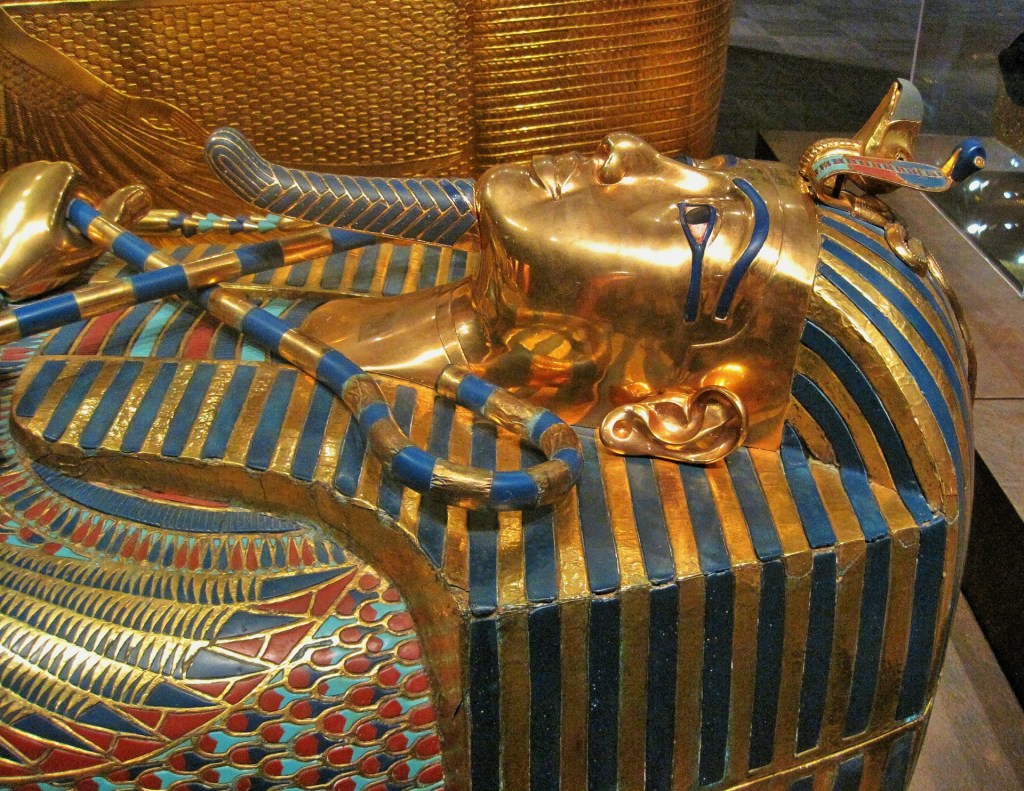
So it was early in the evening that I set out with my work partner, Nicole, to visit the Reading Liederkranz Christkindlmarkt. We choose that time because the market would just be getting dark and the lights would really pop against the darkness of the sky. The city of Reading is situated along the Blue Mountain Ridge of the Appalachian Mountains and so part of our journey included going up the side of the ridge overlooking the city. As we climbed above the urban center, the city gave way to suburban areas covered with trees, reminding us both of our time in Marburg, Germany. Up, up, up we went, passing houses that vaguely resembled German architecture and it was if we had been transported across the sea. Suddenly on our right the forest gave way to a small piece of Germany, the Reading Liederkranz. 

For those not in the know a Liederkranz is a German singing and cultural society which was established to promote and perpetuate German singing, dancing, music, language, foreign exchange and culture. Branches of Liederkranz can be found throughout the United States with many of them established in the mid to late 1800’s. There does not appear to be one overarching society which oversees all the branches, but rather each branch is independent of the others. Like many branches, the Reading Liederkranz hosts various german festivals throughout the year to mirror the ones in Germany. So, just like their German counterparts the Christkindlmarkt of the Reading Liederkranz occurs for a few short days during the Christmas season with stalls set up outside for customers to shop for unique gifts for their loved ones.

In addition to unique gifts, some of them imported from Germany and Austria, they offered traditional German food that can be found at the markets. I naturally had to buy some choosing to partake in the Currywurst, and potato pancakes. I was a little disappointed that the potato pancakes did not come with the traditional applesauce but instead came with sourcream. It is possible that they were simply sold out of the applesauce. I noted there were some items crossed off the menu as no longer available. As it was cold, I could not pass up the opportunity to sip on some warm Gluhwein. Gluhwein is a mulled red wine served at almost every Christkindlmarkt and I highly recommend it as a part of your Christmas tradition. 

Not every stand was exclusively German, many of the stands featured local artisans and craftsmen selling their wares. I managed to find a few treasures while I was there for both my loved ones and myself. I picked up a few business cards for later reference. I met Santa Claus giving out Candy Canes and hopefully made it to the nice list (fingers crossed). Nicole found a book that she promised I could borrow from her later and her own gifts.We enjoyed looking at the different wares and meeting the sellers which is not something one can often do these days when looking online or shopping at a big box store.  

It was not a huge Christkindlmarkt, certainly not like the larger one in Bethlehem, PA which mirrors more closely those larger markets of Vienna and Munich and is open from Mid November through late December Friday through Sunday. It’s a sprawling market of hundreds of stalls, dozens of food vendors, authentic German artists, ice skating, St. Nicholas, music and more. It’s known as one of the top holiday markets in the world rivaling its European counterparts. 

However, as I have said in other places, I’m not a huge fan of crowds and sometimes it’s better to enjoy something on a smaller, more intimate scale. After all, the towns of Germany often have their own smaller celebrations and what could be more authentic than a homegrown festival? So I spent about an hour or so wandering bundled up against the cold, sipping my Gluhwein and enjoying the piece of Germany they’ve carved out on the side of the mountain. I will certainly have to see what other festivals they bring across the ocean for us to enjoy here in the states. It may not have been perfectly authentic after all, I didn’t have to stumble through my half forgotten German to order my food, but to two people who lived in Germany it certainly got our stamp of approval. Just proving once again that one doesn’t need to book a ticket to see the world, sometimes the world comes for a visit in a nearby town. 

How can you visit a German Christkindlmarkt?

The first step is to obviously wait for the right time of the year, it is after all a Christmas Market. Most of them take place between Thanksgiving and Christmas with a few occurring earlier in November. The smaller ones often only occur on one weekend with the larger markets spanning the entire season. There are of course the more famous ones such as the one in Bethlehem but there are smaller ones like the one I went to in Reading, PA and the one in Lancaster, PA (which I am told has even better food). 

Travel websites are a useful tool to get a start as they will often name the “best” ones. Keep in mind these “best” are subjective and will be prone to more tourists and crowds. If you’re looking for a smaller, more intimate version, then google searching Christkindlmarkt or Weihnachtsmarkt (another name for these markets) may yield some good results. As always, I keep an eye out on my Facebook events page. I haven’t found other social media formats that so easily showcase events in my area. 

Completed: December 2024

Cost: $30 for admission and food 

Miles from home: 30 miles

Below is a small list of Christkindlmarkts in the United States. It is by no means a complete list but it is a good place to start especially if you’re in these areas. The dates vary each year and there is often a ticket price associated with entry.  

Arlington, TX Texas Christkindl Market

Atlanta, GA Atlanta Christkindl Market

Augusta, NJ German Christmas Market of NJ

Baltimore, MD Christmas Village in Baltimore

Belleville, IL Belleville Christkindlmarkt

Bethlehem, PA Christkindlmarkt Bethlehem

Cambria, CA Cambria Christmas Market

Canandaigua, NY Canandaigua Christkindl Market

Carlinville, IL Carlinville Christmas Market

Carmel, IN Carmel Christkindlmarkt

Charlotte, NC Charlotte Christkindlmarkt

Chicago, IL Chicago Christkindlmarkt

Chicago, IL Christkindlmarkt Wrigleyville

Cincinnati, OH Germania Christkindlmarkt

Dayton, OH Dayton Liederkranz Turner Christkindlmarkt

Denver, CO Denver Christkindlmarkt

Des Moines, IA Christkindlmarket Des Moines

Elkhart Lake, WI Old World Christmas Market

Ferdinand, IN Ferdinand Christkindlmarkt

Frankenmuth, MI Frankenmuth Christkindlmarkt

Georgetown, CO Georgetown Christmas Market

Harmony, PA Harmony Museum WeihnachtsMarkt

Helen, GA Helen Christkindlmarkt

Holland, MI Holland Kerstmarkt

Lake Worth, FL The American-German Club of the Palm Beaches Christkindlmarkt Leavenworth, WA Leavenworth Christkindlmarkt

Mifflinburg, PA Mifflinburg Christkindl Market

Minneapolis, MN Holidazzle

Mountain View, CA German Holiday Market

Nevada City, CA Nevada City Victorian Christmas

New Orleans, LA New Orleans Deutsches Haus Christmas Market

New York, NY Bank of America Winter Village at Bryant Park

New York, NY Union Square Holiday Market

New York, NY Columbus Circle Holiday Market

Oconomowoc, WI German Christmas Market of Oconomowoc

Philadelphia, PA Christmas Village in Philadelphia

Pittsburgh, PA Peoples Gas Holiday Market

Poughkeepsie, NY Germania Club of Poughkeepsie Christkindlmarkt

Reading, PA Reading Liederkranz Christkindlmarkt

San Francisco, CA The Great Dickens Christmas Fair & Victorian Holiday Party

Solvang, CA Solvang Julefest

St Paul, MN St Paul European Christmas Market

Tomball, TX Tomball German Christmas Market

Tulsa, OK German American Society of Tulsa Christkindlmarkt

Washington DC DowntownDC Holiday Market