A Million People, One Very Silly Idea

What Is the Sound of Nearly 8 Billion People Clapping?

What is the sound of nearly 8 billion people clapping? We still don’t actually know!

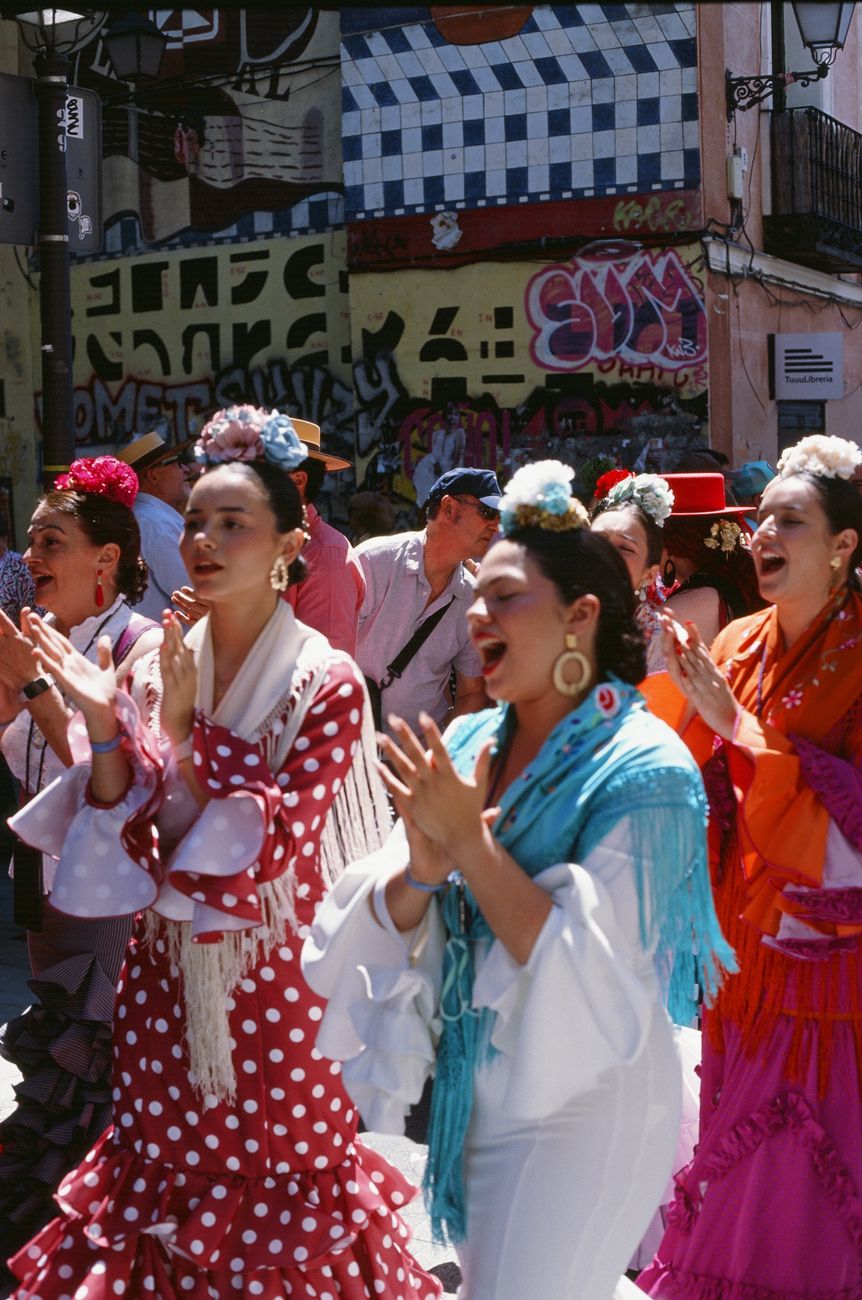
But for a brief moment on a Sunday, thousands of people around the world stopped what they were doing and clapped. The sound could be heard by the people who were actually there, but that, dear reader, was not the point.

The point was that, for one moment, people around the world, regardless of country, race, religion, ethnicity, economic status, or whatever other category you care to create, came together in a small act of silliness.

So naturally, I set my alarm for 9:55 a.m. Eastern Time to make sure I stopped whatever I was doing, and another alarm for five minutes later so I could clap along with the scattered members of humanity participating with me.

Photo by Rob Volz on Pexels.com

Did I feel any sort of cosmic connection? No. It honestly felt ridiculous and a little pointless. Nothing changed. There wasn’t a loud sonic boom of nearly 8 billion people clapping together. There was no great sense of unity that descended upon the planet. No wars were stopped. No marriages were saved.

It was actually quite quiet sitting in my kitchen, sweaty from gardening, dirt smeared on my pants, my hair in desperate need of washing from sweat and debris. 

Just me.

Clapping.

In my kitchen.

So why even do it?

Well, because I’m almost always down to try new things, especially things that seem a bit silly. And there is something rather wonderful about World Clap Day. We’re all different, yet we could all participate in exactly the same ridiculous little act. Nobody had to agree on politics, religion, nationality, or anything else. We didn’t have to accomplish anything. We simply had to clap. Which is, honestly, pretty beautiful. Beautiful enough that 1.7 million people signed up on the website to participate. Now, did 1.7 million people actually clap? Probably not.

Photo by cottonbro studio on Pexels.com

I’m certain plenty of people forgot. Others may have signed up with every intention of participating and then found themselves distracted by work, children, errands, or the eternal black hole of the internet. At the same time, there were undoubtedly people who never signed up at all but happened to hear about it and decided to join in. So perhaps it wasn’t thousands but closer to a million people who actually participated. Which sounds like a huge number until you put it into perspective. Even a million people would be only about one in every 8,000 people on Earth.

And somehow I find that both hilarious and impressive. A million people is almost incomprehensibly large. It is also almost nothing compared with humanity as a whole.

So how did this even become a thing?

Apparently, Andrea Bechis, a UK fitness entrepreneur, had a question back in December: essentially, What would happen if everyone on Earth clapped together. Rather than simply wonder about it, he decided to make it a thing. He picked a date and started gathering support. Originally, he hoped people would gather together in town squares and celebrate collectively. The actual execution was considerably more modest.

Basically, sitting in my kitchen sweating from gardening and clapping. I filmed it, but I doubt I’ll post it here.

Still, there is something inspiring about the whole ridiculous endeavour. With enough gumption and a willingness to endure a little ridicule, you can convince a considerable number of people to participate in your wild vision of silliness. And World Clap Day isn’t the only example.

Photo by Marvin Corea on Pexels.com

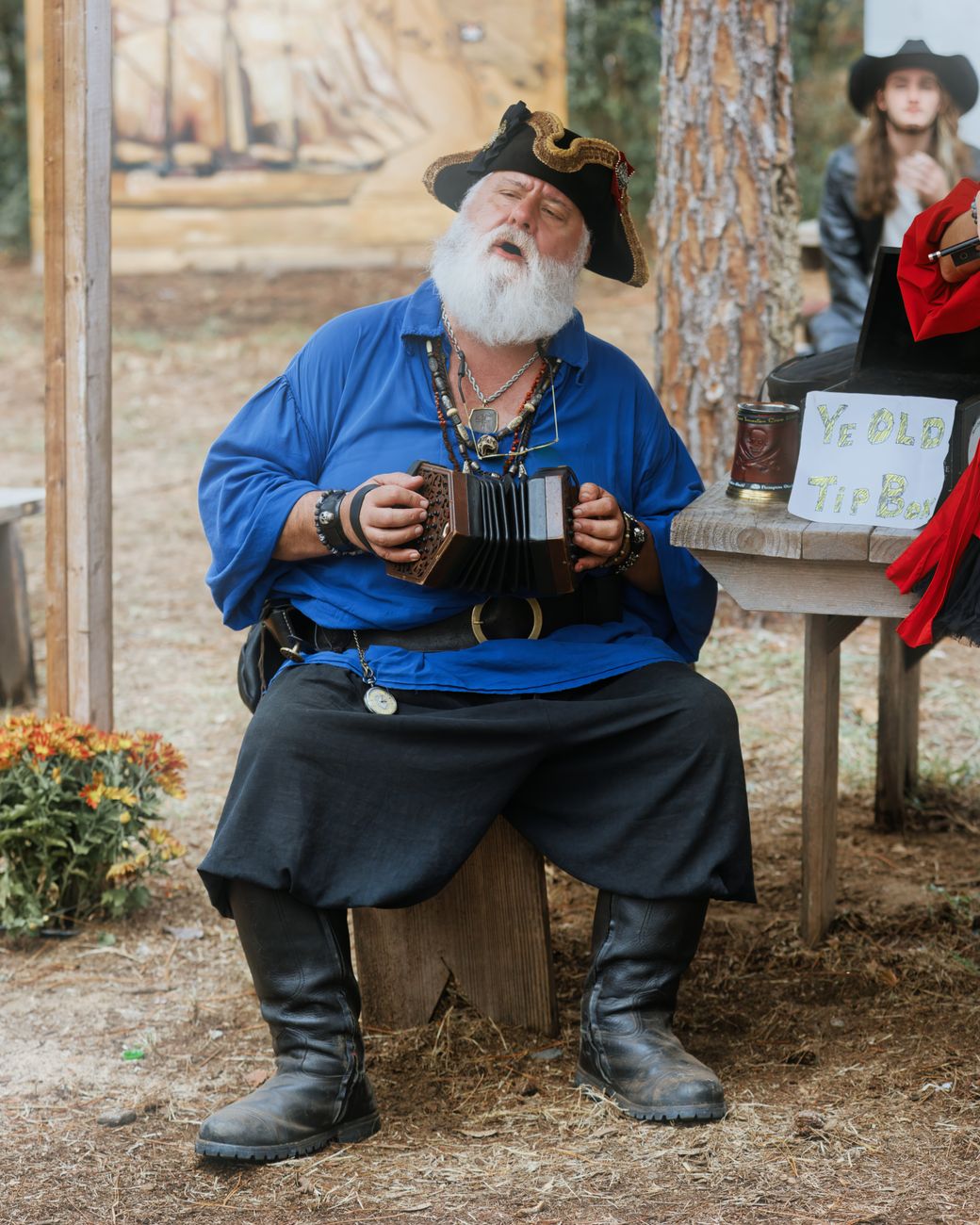
It reminds me of my favourite holiday, Talk Like a Pirate Day, entirely because it is silly. Created in 1995 by two friends as an inside joke, it escaped Australia in 2002 when Dave Barry wrote about it and transformed into a semi-official holiday celebrated each September 19 by those of us with a sense of humour and a willingness to be seen as a bit odd.

It’s now been going for more than 30 years. It may eventually die out, or it may continue. Who knows? In 500 years, there may still be people celebrating it with the same level of gusto that they celebrate Halloween. Although I’m not sure I envy the future month of August being besieged by all things pirate instead of witches and ghosts.

World Clap Day and Talk Like a Pirate Day share something I find rather charming: neither one is necessary.

Nobody needs us to clap together. Nobody needs us to talk like pirates. There is no practical benefit to either activity. There’s no rich cultural heritage or religious event associated with it. It’s just kind of there as pure amusement. And perhaps that’s precisely why they’re worthwhile.

We live in a world that constantly asks us to be productive. Improve ourselves. Accomplish something. Build our careers. Exercise. Make money. Learn something useful. Optimize our lives. Sometimes I think we could stand to do a few things simply because they’re ridiculous.

Photo by Ivan Babydov on Pexels.com

There is also something about silliness that makes connection easier. When you’re willing to approach other people with humility and a sense of humour about yourself, you open doors that you might otherwise have trouble walking through. You don’t have to take yourself so seriously. You can laugh at your own absurdity and invite other people to laugh with you.

Comedians do this all the time. They point out the ridiculous things we all do and, for a moment, give us permission to laugh at ourselves together.

So was World Clap Day a success?

Possibly.

Will it happen again?

Who knows?

But perhaps those aren’t the questions that matter.

For a few minutes, people scattered across the planet stopped whatever they were doing and participated in the same completely unnecessary, wonderfully ridiculous activity.

There was no great transformation. No cosmic event. No world-changing consequence. Just people clapping and going about their day. And maybe that’s enough. Because not every moment of connection needs to change the world. Sometimes it can simply remind us that we’re all here, together, being ridiculous little humans on the same planet.

And perhaps that’s what makes it Bucket List worthy. Not because I accomplished something extraordinary. Not because I changed the world. Not even because I felt some profound cosmic connection.

I just tried something silly.

And somewhere out there, about a million other people did too.

Which, dear reader, is a pretty good reason to clap

Photo by olia danilevich on Pexels.com

Make Tuesday a Life Worth Coming Home To

It’s a cup of tea in my hand as I look out over the garden, listening to music through my headphones. It’s the feel of warm wood beneath my chin as I play the violin. It’s admiring the neighbors’ gardens and noticing the subtle shifts as the seasons progress on my walks with Pixel. It’s spending Sunday afternoons in my own garden, pulling weeds and watching everything grow. And of course, dear reader, there are long, lazy Saturday mornings filled with cat snuggles.

Small daily or weekly rituals. Almost stolen moments that fill my days with joy.

Life, dear reader, is not always adventures. Sometimes escape consists of a journal entry or a thirty-minute yoga session. Other times, it’s a book and a cup of coffee on your porch. Lately, it has been a morning visit from a cardinal, courtesy of a bird feeder I recently installed outside my bedroom window to entertain my cats.

I have inadvertently taken up birdwatching.

I may or may not be trying to learn his song on my violin.

A girl needs hobbies, dear reader, and in my fast-approaching middle age, I have decided to go full-on eccentric. I shall soon be donning enormous hats and calling people darling. ’Tis a cruel fate, but I plan on embracing it.

Photo by Andrew Patrick Photo on Pexels.com

But underneath all of these little eccentricities is something more important. Each of these habits fulfills a different need.

The violin and poetry fulfill my need to create. When I play music, I lose myself in the notes, sometimes reaching an almost meditative state where the sheet music ceases to be something I consciously process. My fingers simply know where to go. In poetry, I get to play with form, sound, rhythm, and the compression of ideas. I may spend hours contemplating a sonnet, drop a villanelle onto the page in a few minutes, and then follow it with free verse where I experiment with repetition, alliteration, rhyme, and half-rhyme.

On my walks and in my garden, I connect with nature. There is something grounding about putting my hands into the dirt, watching the seasons change, and noticing things that would otherwise pass unnoticed. And of course, there is Pixel, who seems to believe that every walk is an important expedition requiring his immediate participation.

A cup of tea or coffee gives me permission to stop. Sometimes I listen to music. Sometimes I simply sit and think. Sometimes I read or write in my journal. The ritual itself creates a small pause in the day, a moment to breathe before rushing into whatever comes next.

Photo by u0410u043bu0435u043au0441u0435u0439 u0412u0435u0447u0435u0440u0438u043d on Pexels.com

These things may seem insignificant.

They aren’t.

This blog is much more than Bucket List Adventures. It is also about building a Bucket List Life.

A Bucket List Life is not one where you are constantly chasing the next spectacular experience. It is a life where those spectacular experiences are woven into something that already feels meaningful. Travel can be wonderful, but if you need a two-week vacation every year simply to tolerate the other fifty weeks, perhaps the more interesting question is not “Where should I go next?” but “What is missing from the life I come home to?”

One way to begin answering that question is to look at the different areas of your life and consider whether they are receiving enough attention.

Some of you may recognize this concept from Dr. Bill Hettler’s Wellness Wheel, developed in the 1970s as a way of examining different dimensions of wellness. The model considers areas such as physical, social, occupational, intellectual, environmental, spiritual, financial, and emotional wellness. The premise is fairly simple: you can be doing wonderfully in several areas while struggling significantly in others.

Photo by Sergey Ochkanov on Pexels.com

Travel might temporarily touch several of those areas. A trip could provide physical activity, social connection, intellectual stimulation, environmental novelty, and emotional rejuvenation all at once. But eventually you come home.

Your luggage gets unpacked.

The vacation photos get posted.

And Monday morning arrives.

The goal, then, isn’t to use travel to fill every empty space in your life. It is to build enough small sources of nourishment into your ordinary routine that you aren’t depending on the next vacation to make you feel alive.

Photo by MART PRODUCTION on Pexels.com

For me, my violin and poetry provide intellectual and emotional stimulation. Tea and coffee, often accompanied by music, reading, or a devotional, give me opportunities for reflection and spiritual connection. Walking and gardening provide physical movement and environmental connection. My cats provide companionship. Friends and family fill another part of the picture entirely.

None of these things fills an entire category by itself. Nor do they need to.

They’re simply little threads woven into the larger fabric of my life.

And that’s an important distinction because wellness should not become another thing we feel obligated to optimize.

You do not need to maximize every category.

You don’t need a perfectly balanced Wellness Wheel.

You need to notice where you feel nourished and where you feel hungry.

Photo by Mike Jones on Pexels.com

Perhaps you look at your own life and realize that you’re getting plenty of intellectual stimulation from your career but almost no physical movement. Maybe your answer isn’t another vacation but a weekly hiking group, a dance class, gardening, yoga, or simply walking around your neighborhood after dinner.

Maybe you spend your entire day surrounded by people and realize that what you’re actually missing is solitude.

Maybe your work is deeply meaningful but you’re financially stressed.

Maybe you’re financially comfortable but have lost touch with creativity.

Maybe your social life is full but you haven’t spent any time alone with your own thoughts in months.

The point isn’t to judge yourself for what is missing. It’s to notice.

Then ask yourself what small, repeatable habit might help.

And make it something you actually want to do.

We don’t need to turn every empty space into a self-improvement project. If you’re deficient in intellectual stimulation, perhaps you don’t need to take an online course. Maybe you want to learn about birds. Maybe you want to read about astrophysics. Maybe you want to learn German, pick up a violin, study medieval history, or finally understand how that strange machine in the kitchen actually works. I’m currently studying the Drottkvaett form from Old Norse Court Poetry and seeing if I can’t apply it to modern English. It’s a lot harder than it sounds, but so much fun! 

If you’re lacking physical movement, you don’t necessarily need to join a gym. Maybe you want to garden. Maybe you want to walk around your neighborhood and admire everyone’s flowers. Maybe you want to take up dancing or sword fighting! 

Photo by Vitaly Gariev on Pexels.com

The best habit is often the one you will actually keep because it brings you some measure of joy.

That, ultimately, is what I mean by building a Bucket List Life.

Keep the adventures.

Absolutely take the trip to Italy. Go see the concert. Try glassblowing. Wander through the strange old arcade. Eat the deep-dish pizza in Chicago when your flight gets delayed.

Put extraordinary things on your list.

But don’t save all of your living for those moments.

Build a life that contains little adventures on an ordinary Tuesday. Find things you look forward to on Sunday morning. Give yourself reasons to put down your phone, step outside, make something, learn something, call someone you love, or simply sit quietly with a cup of tea.

Because eventually, every bucket-list trip ends.

The airplane brings you home. The suitcase gets put away. The souvenirs find their places on the shelf.

And then there is Tuesday.

Make Tuesday a life worth coming home to.

Finding Opportunities in the Storm

Dear reader, life does not always go as planned. There are times when fires, storms, and even pandemics disrupt our carefully laid plans. We are, after all, but mere mortals battered about by fate’s whims. That does not mean we should throw in the towel. Quite the contrary, we should throw our hats into the ring, step forward to meet fate where she stands, take her hand, and dance.

Which is exactly what I did on a recent trip to Michigan, where the bucket list adventure happened not at my destination but somewhere along the journey.

I certainly had no intention of adding an airport to my bucket list, but when life hands you lemons, make lemonade, or perhaps lemon drops if you’re inclined to add a little vodka and triple sec (and I am inclined). But I digress.

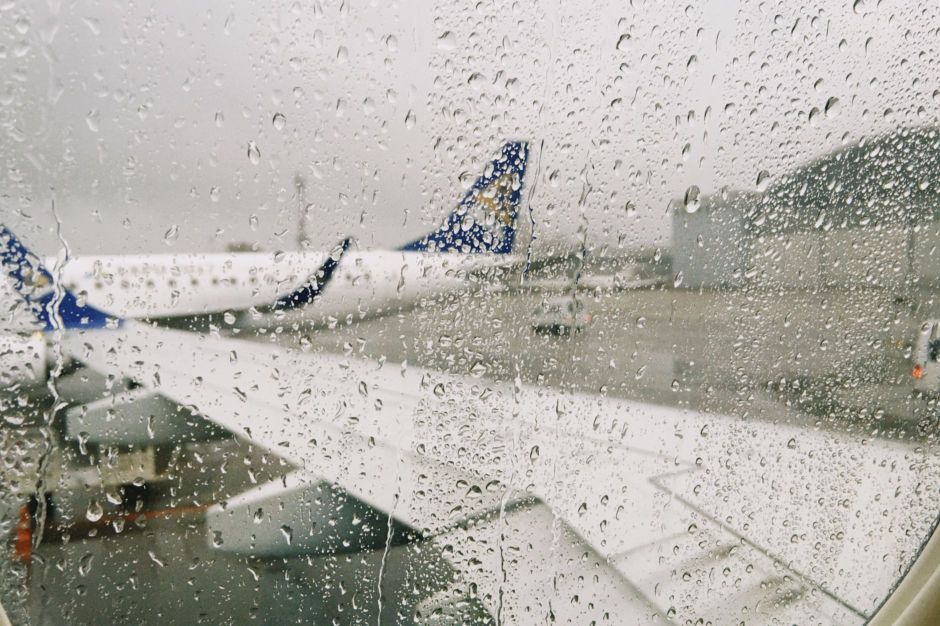
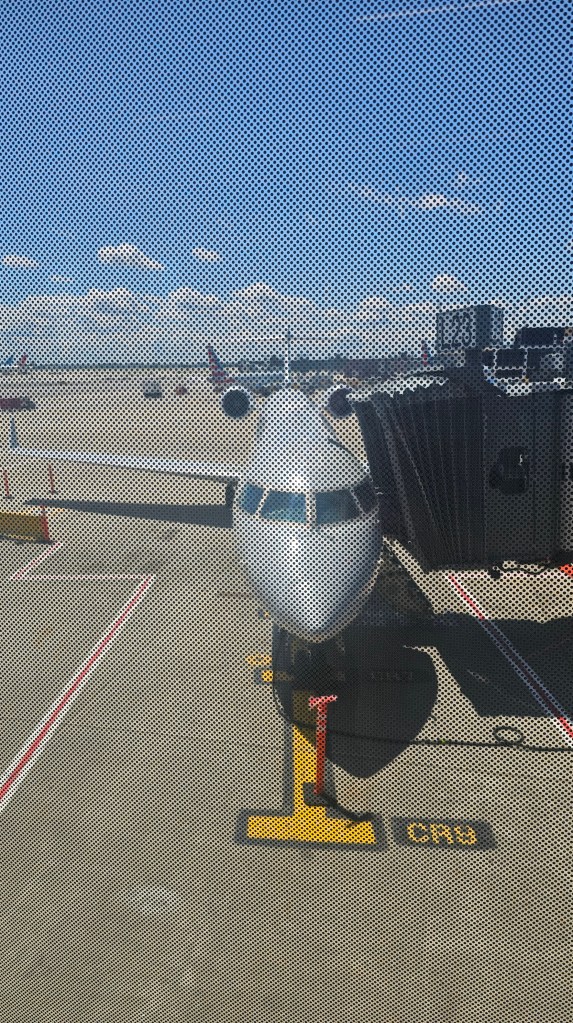
The plan had been simple: depart from Harrisburg, make a brief connection through Chicago O’Hare, and continue on to a small airport in Michigan. As it turns out, dear reader, one ought to be cautious about booking evening flights to the Midwest during thunderstorm season. A powerful summer storm settled over Chicago, grounding flights for hours. 

Consider this your bonus travel tip: Don’t schedule evening flights in the summer if you’re going to the mid-west.

At first, I did what nearly every traveler does when a delay appears on the departure board. I sighed, checked the app for the tenth time, looked hopefully toward the gate agent and realized I had a decision to make; chance going to Chicago once the ground order was lifted and potentially miss my connecting flight late that night or wait until the next morning and have a significant layover. 

After discussing my options with the gate agent, it was clear that if I missed my connecting flight there wouldn’t be another flight until nearly 1 pm the next day and if I went out the next morning on the first flight out I would still be stuck in the airport for hours until 1 pm. I opted for the second option rather than chance a 15 hour layover in an airport. I wasn’t going to chance falling asleep and then missing my flight.  

Regardless, I found myself red eyed in the wee hours of the morning in Chicago sighing in frustration wondering if I shouldn’t have chanced it the night before. 

Then I realized something.

How often does one actually have the opportunity to explore one of the busiest airports in the world?

Normally airports are places we hurry through with singular determination. We race from terminal to terminal, clutching boarding passes, eyes darting from gate numbers to departure screens, scarcely noticing where we are. This time, however, there was nowhere I needed to be except exactly where I already was.

Freed from the tyranny of the boarding clock, I began to wander.

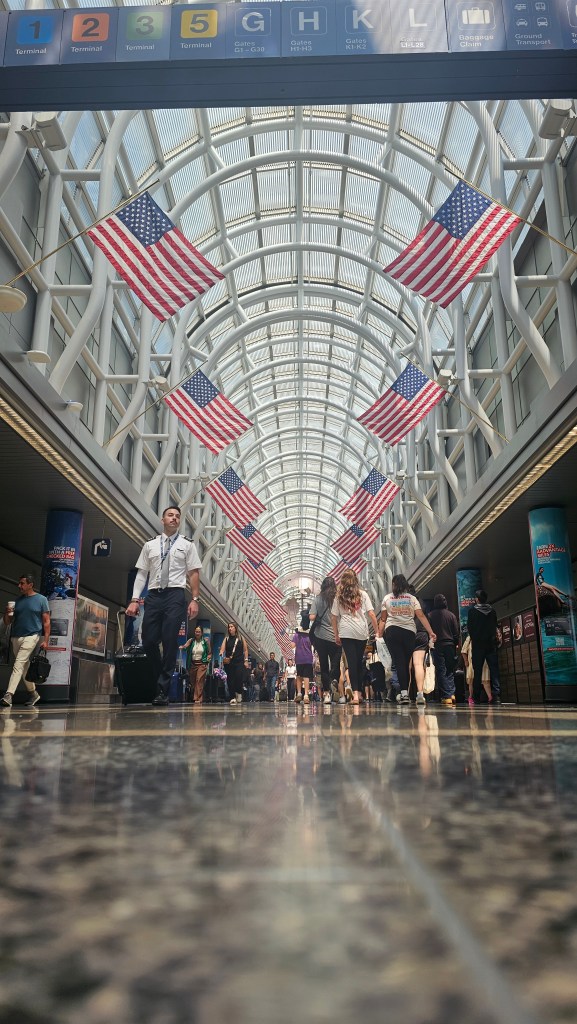
Sunlight poured through towering vaulted windows high above the concourse, washing the polished floors in warm afternoon light. Massive American flags hung proudly from the ceiling while a giant globe floated overhead, quietly reminding travelers just how many corners of the world intersected beneath this roof. Off to one side, almost hidden from the hurried crowds, I discovered displays detailing the airport’s history, small exhibits that most people likely rushed past without ever noticing. Another terminal displayed banners from all over the world proudly declaring all the destinations one might jet off to if only one could secure a boarding pass. 

The airport itself felt less like a transportation hub and more like a bustling indoor city.

The aroma changed every few dozen steps. Fresh coffee drifted from cafés just opening another pot. Warm pretzels perfumed the air outside bakeries while cinnamon, butter, and freshly baked pastries tempted even those who had no intention of eating again. Somewhere nearby onions sizzled on a grill while deep-dish pizza disappeared into ovens. Every restaurant seemed to compete with the next, each trying to lure weary travelers in with one more irresistible smell. I found the juxtaposition of a restaurant pretending luxury next to a kiosk of questionable food to be quite curious. Where else can one find the appearance of luxury sitting so comfortably beside convenience? 

The shops were equally fascinating. Tiny storefronts overflowed with merchandise, every square foot carefully maximized. Shelves stretched from floor to ceiling. Jewelry glittered beneath bright display lights while colorful clothing spilled from crowded racks. Stacks of books, souvenirs, snacks, electronics, and travel gadgets filled every available corner, transforming even the smallest kiosk into something resembling a magician’s cabinet of curiosities. Of course, basic necessities were priced for desperation, but we’ll leave the commentary on exploitive practices for a different author.

Then there were the people.

Thousands upon thousands of them.

Business travelers marched purposefully toward their gates while families attempted the impossible task of shepherding overtired children through the crowds. Couples wandered hand in hand. Flight crews glided confidently through the chaos as though they possessed some secret map unavailable to the rest of us. I caught snippets of conversations in languages I couldn’t identify. Some travelers wore tailored suits destined for important meetings while others looked as though they had rolled directly out of bed and into the security line. Matching family vacation shirts mingled with backpacks, hiking boots, designer luggage, and neck pillows.

The people watching alone was worth the delay.

My favorite moments, however, were the unintentionally comedic ones. Travelers had surrendered completely to exhaustion, sleeping wherever they could find an empty patch of floor. Some curled up beneath windows. Others stretched across rows of chairs. One industrious soul had somehow wedged themselves into a quiet corner between two pillars, blissfully oblivious to the constant parade of rolling suitcases. Nearby, passengers jockeyed for position as boarding announcements echoed through the terminal, each convinced that standing in line fifteen minutes early would somehow get them onto the airplane faster. Even if they did manage to get on sooner, it’s not like the plane was going to leave until everyone in the line was on. Such a curious practice, I never did quite understand.
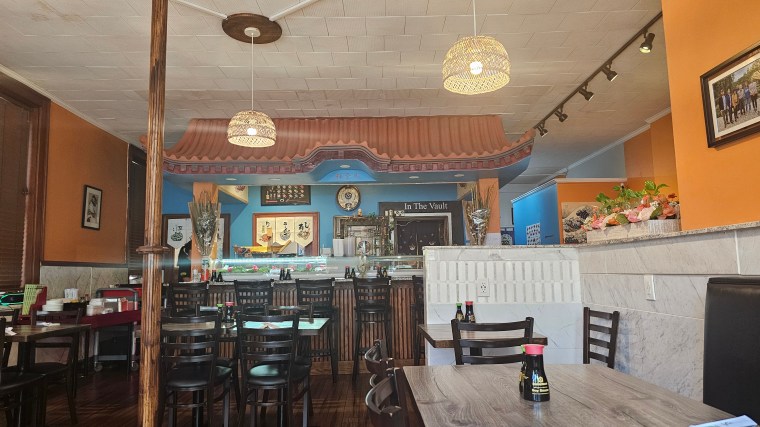
Naturally, I couldn’t leave Chicago without adding one more item to my bucket list: eating Chicago-style pizza in Chicago. Was it the greatest deep-dish pizza ever created? Probably not. But considering I have little intention of making a dedicated trip into the city itself, I decided this was my one and only opportunity, and it seemed a shame to let it pass me by.

Another traveler might have grumbled about their bad luck. Instead, I found myself unexpectedly grateful.

Normally, I write a paragraph about how you can experience this for yourself. However, this is one instance in which the only advice I offer is this:

Sometimes the greatest adventures arrive disguised as inconveniences. They invite us to slow down, pay attention, and discover that even an airport, a place designed simply to move us somewhere else, can become a destination if we are willing to wander.

Perhaps the next time your carefully crafted itinerary falls apart, don’t immediately look for the nearest customer service desk. Look around instead.

You may discover your next bucket list adventure waiting exactly where you never intended to stop.

Reverse Bucket List: A Weekend in Paris (Part I)

“How do you feel about a weekend in Paris?”

I twirled in my chair, hair whipping across my face, and fixed my friend Erika with a look that needed no elaboration. Her response was immediate. A squeal. A clap. An emphatic, “Yes.”

After all, what else does one say to Paris in the spring?

Such spontaneity, dear reader, is only possible when you are determined to drink deeply from the cup of life while living abroad. For an American especially, there is something intoxicating about the ability to hop on a train and cross into another country before lunch. When you come from a place where a single state can rival the size of an entire nation, the idea feels almost illicit, perhaps even scandalous.

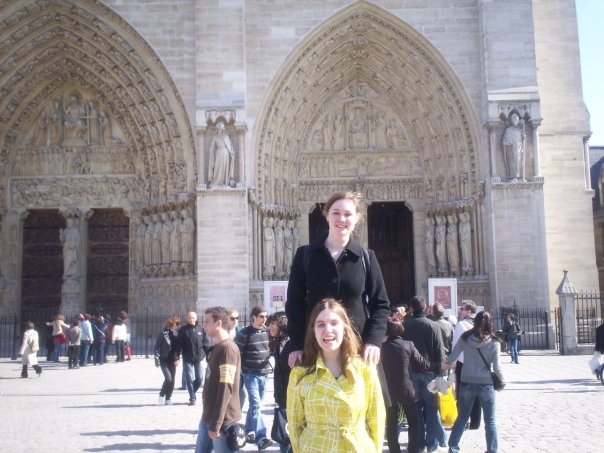
So without further ado, we secured tickets on the high-speed train from Frankfurt to Paris. Arm in arm, we walked toward the station, already breathless with plans: art, museums, music, culture, food, people. And what a people!

A sudden unplanned Paris in a weekend?

Madness. An affliction surely.

Which is precisely why we had to do it.

The true catalyst was a message from a dear friend who would be spending a week in the city and wondered if I might join him for a day. An afternoon in Paris with a friend who happened to be an artist of some renown? The answer could only be yes. After all, who could be the more perfect tour guide?

This was before smartphones lived in our pockets. Before we had google at our fingertips and the assuredness that comes with having all the answers tucked away. We packed lightly, wrote down the number of the American embassy, ensured we had our emergency contacts into our bags, and armed ourselves with a travel guide and a healthy dose of gumption. Travel then required nerve. Trust. If you got lost, you figured it out. If you mispronounced something, you survived the embarrassment. There was no digital rescue waiting in your palm. Which is honestly, what I miss most about travel these days.

The train hurled us across the countryside, fields bursting with early spring color flashing past the windows. I could not help comparing it to Pennsylvania. Lancaster County, in particular, bears a resemblance to parts of Germany, and for the first time I understood, in a small but tangible way, why so many Germans had settled there. Hiemweh melted away leaving a strange sense of coming home even across an ocean.

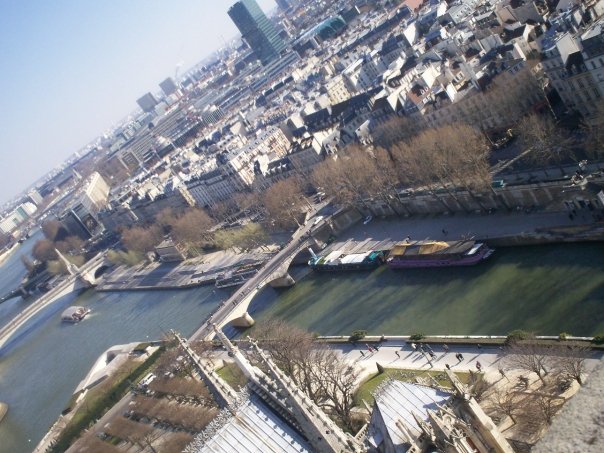
Three hours is long enough to plan a city and short enough to realize you cannot conquer it. We trimmed our ambitions to a few must-sees and a handful of hopefuls. The Louvre alone could swallow a week. Paris, we decided, would not be conquered. It would simply be experienced.

Crossing the border was almost anticlimactic. An announcement crackled overhead. That was all. No passport stamp. No interrogation. It felt like slipping into Ohio, except the anticipation hummed in your bones. No offense to Ohio of course, but really are we going to say it compares to France?

And then we arrived.

First Things First: Find the Bed

Before romance, before art, before croissants on café terraces, there is one universal truth of travel; You must find where you are sleeping.

Armed with a folded map and confidence wildly disproportionate to our navigational skill, we set off to locate our hostel.

Now, in our defense, the streets of Paris are confusing.

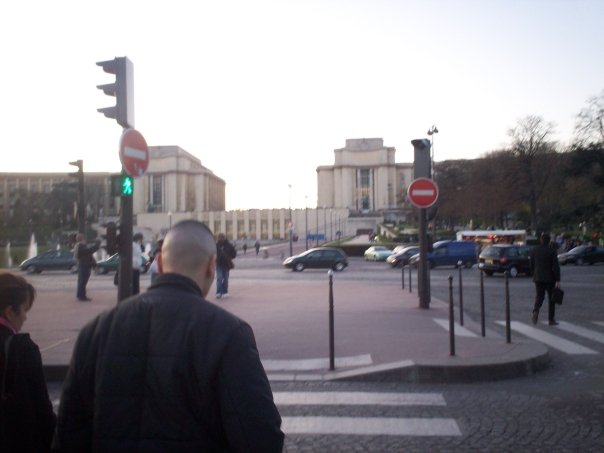
Unlike the tidy grid systems Americans grow up with, Paris feels as though it was designed by someone who enjoyed curves, diagonals, and the occasional act of mischief. Streets fork unexpectedly. They change names without warning. A road that appears straight on a map somehow bends in real life. And the street signs? They are affixed to the sides of buildings, charming blue plaques that would be immensely helpful if they were not routinely obscured by graffiti, peeling posters, or layers of mysterious paper advertising concerts long since passed. It was an exercise in hopeless confusion and frustration.

More than once we stood directly beneath a sign, craning our necks and squinting upward, trying to determine whether we were on Rue de Something Important or merely staring at a band flyer partially concealing our destiny.

And then there was the metro.

For the uninitiated American traveler, the Paris metro is not transportation. It is an initiation ritual.

Lines spiderweb across the city in a dizzying tangle of colors and numbers. Trains are labeled by their final destination rather than the direction you believe you are traveling, which requires you to know far more geography than you actually do. Stops are announced quickly, sometimes swallowed by the metallic roar of the car, and the maps inside the train might as well have been abstract art for all the clarity they offered at first glance. Especially, if one has never traversed public transit before. Which alas, many Americans have never been on anything more than a school bus.

You descend into the underground with confidence. You emerge twenty minutes later into a vast plaza with six exits, each pointing toward a different arrondissement, blinking in the daylight thinking, This seems right.

It is rarely right.

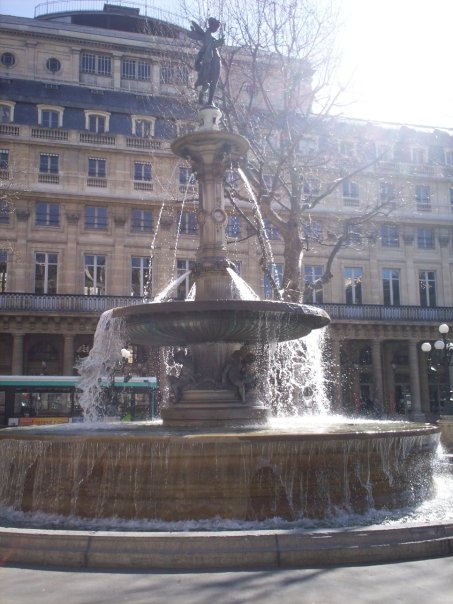
One exit leads you in the exact opposite direction. Another deposits you onto a boulevard you did not know existed. A third leaves you staring at a fountain that looks vaguely familiar but is, in fact, not the fountain you were seeking.

Given these small obstacles, I consider it nothing short of miraculous that after a few wrong turns and some enthusiastic but misguided pointing, we found our hostel at all. 

Little did we know, this was only the beginning of our navigational adventures and given the amount of confusion the metro caused, we determined that the best way to get anywhere was by foot. Yes, you read that correctly. I walked Paris in a weekend. I estimated that I traversed at least 15 miles. Though as this was before the popularity of step counters, I only have my best estimates.

The hostel itself was functional in the most generous sense of the word.

If you have never experienced a European student hostel, allow me to clarify something, it is not glamorous by any stretch of the imagination. It is economical. And it is very much a young person’s sport.

The shower required physical encouragement. You had to press the button, and water would flow for approximately twelve optimistic seconds before shutting off again. Want to rinse shampoo from your hair? You had to keep pressing it like you were negotiating terms. The “hot” water hovered somewhere between hopeful and politely lukewarm.

Breakfast was included, which sounded promising until we discovered that “included” meant toast, jelly, and coffee. For Americans raised on sprawling hotel buffets complete with eggs, waffles, fruit, yogurt, and pastries, this was a humbling cultural exchange. There was no omelet station. No waffle iron. There was toast.

And you were grateful for it.

We adapted quickly. A stop at a neighborhood grocery store provided bread, cheese, and sliced meat. It was the perfect strategy: sustain ourselves during the day, conserve our funds, and reserve our modest budget for dinners out in the evening. For two college students, it was a masterclass in practical travel. Frugal by day. Indulgent by night.

The hostel was never meant to be the highlight. It was the launchpad. A place to drop our bags. A place to sleep. A place from which to begin.

And begin we did.

What followed was a blur of museums and miscalculations, attempted French and accidental detours. We wandered into neighborhoods we had only read about. We misread maps. At one point, quite unintentionally, we discovered that we had strayed into the red-light district. There is nothing quite like realizing you are lost in a foreign city and that the neon lighting is… intentional.

But that, dear reader, deserves its own telling.

Because Paris was not merely art and architecture. It was a lesson in courage. In frugality. In friendship. In the quiet bravery required to step into the unknown without guarantees and trust that you will find your way.

This is what I mean by a reverse bucket list. Not the grand achievements we hope to accomplish someday when everything is perfect, but the moments we dared to say yes to when they appeared. The train we boarded. The map we unfolded. The hostel we made work. The city we entered anyway.

A fulfilling life is not built by waiting until conditions are ideal.

It is built by saying yes before you feel entirely ready.

In the next post, we will step fully into the city itself. The beauty. The bewilderment. The glorious inconvenience of getting lost in Paris.

And why, sometimes, that is exactly the point.

Want to discover more adventures? Check out my whole Bucket List and Reverse Bucket List

Instagram Lied: Travel Is Gross, Beautiful, and Worth It

Ah, social media. A window to the wider world, filled with sweeping drone shots, glamorous airport lounges, perfect sunsets. A bastion of lies and filtered falsehoods.

I particularly love the “expectation vs. reality” videos: serene music turning to off-key chaos as the camera pans from a peaceful mountaintop to the hordes of tourists swarming the same spot. A perfect reminder that what’s posted is rarely what’s actually experienced.

Most social media travel stars wake up at 4 a.m. to beat the crowds and capture that “authentic” moment. What they don’t show? The sweaty hikes, the blistered feet, the questionable toilets, the stress, the transit delays, and the minor existential crises that often come free with your ticket.

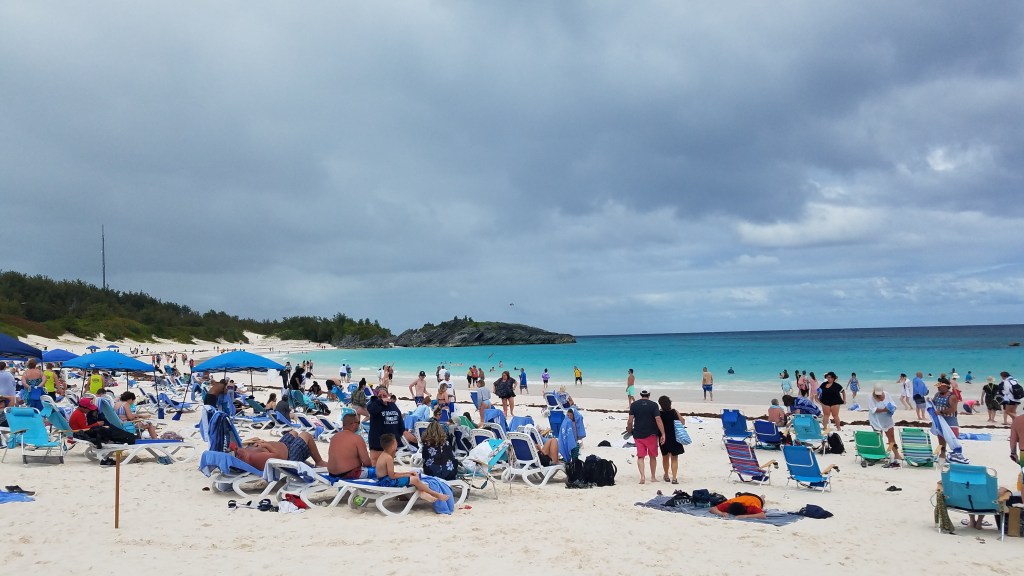
A crowded beach on the pink sands of Bermuda.

Let’s be honest, travel isn’t always glamorous. Plane rides can feel like being packed into a flying sardine tin. That dreamy Airbnb may smell like artificial lavender death. And the less we say about the bathroom situation in some places, the better. Seriously, though.

Even the photos lie. Take the pyramids, for example; they’re usually depicted as isolated wonders in the desert. In reality? Turn around and there’s the city of Cairo, complete with a McDonald’s. The rainbow hills of Peru? Instagram makes them look like Lisa Frank threw up on the Andes. In person, they’re fascinating but much more subdued.

And even when something is worth the hype, there are still snags. During my trip to England, I didn’t plan for a closed castle (thanks, high winds) or a GPS signal that vanished the minute I needed it. I didn’t expect public transit to lack accessibility for my mom, or for delays with the trains. My trip was amazing and beautiful; it was everything I would have hoped for, but there were still moments that kind of sucked.

2017 Solar Eclipse

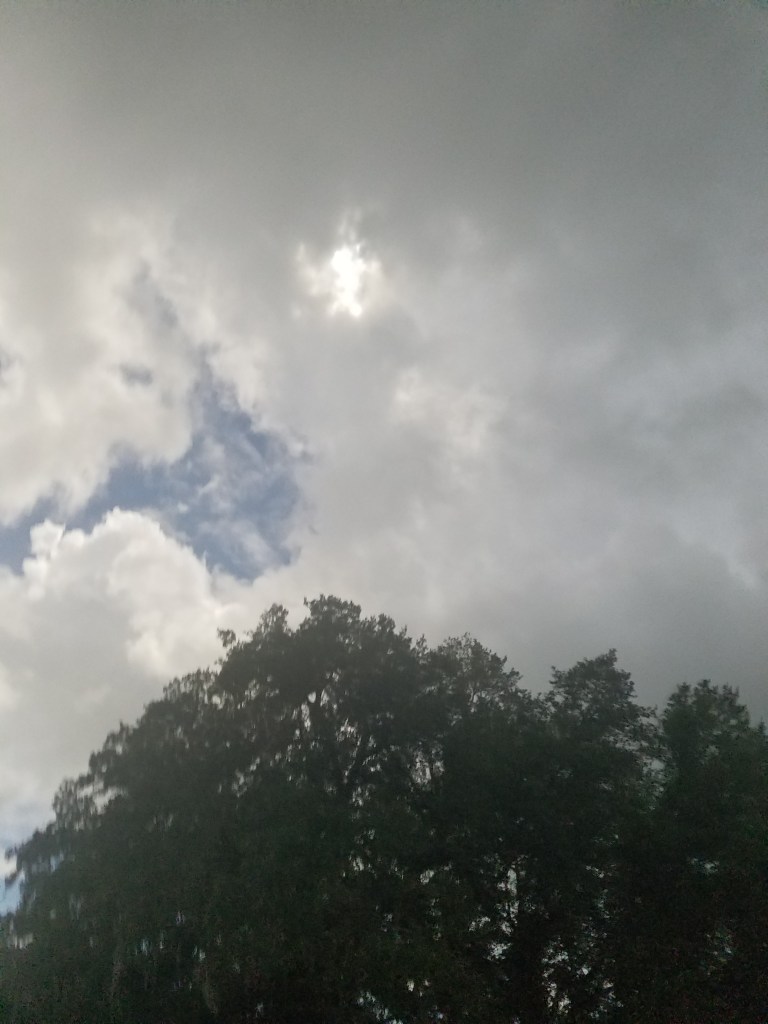
The 2017 solar eclipse? Cloud cover rolled in exactly at totality after I waited sweating in the southern heat for hours! Nature has a sense of humor.

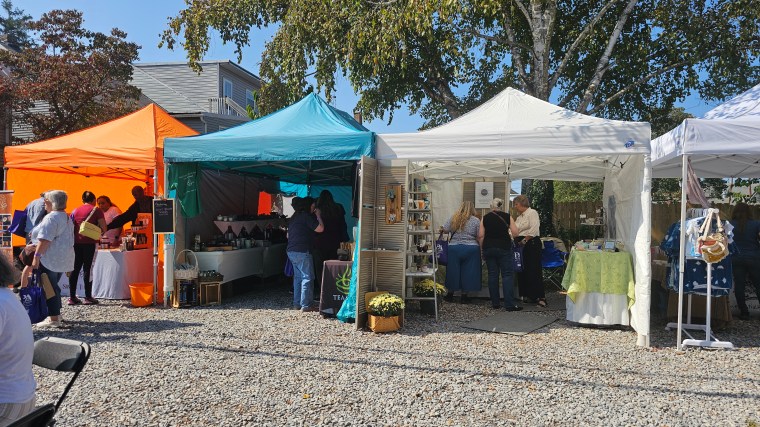
Closer to home, even my local excursions are rarely perfect. The Firebird Festival? Visually stunning, yes, but also freezing cold and delayed by 30 minutes. My toes were plotting a rebellion as soon as they were thawed. The Tea Festival? Lovely, but forced into a crowded church basement by rain. Less “royal tea” and more “steamy sardine can.” That long-awaited hot air balloon ride? Grounded due to “iffy conditions” on what looked like a perfectly fine day. Perhaps, the balloon was sick.

And yet, those imperfect moments are the ones that stick. They’re the ones you tell stories about. They’re the quirks that make a trip memorable instead of just photogenic.

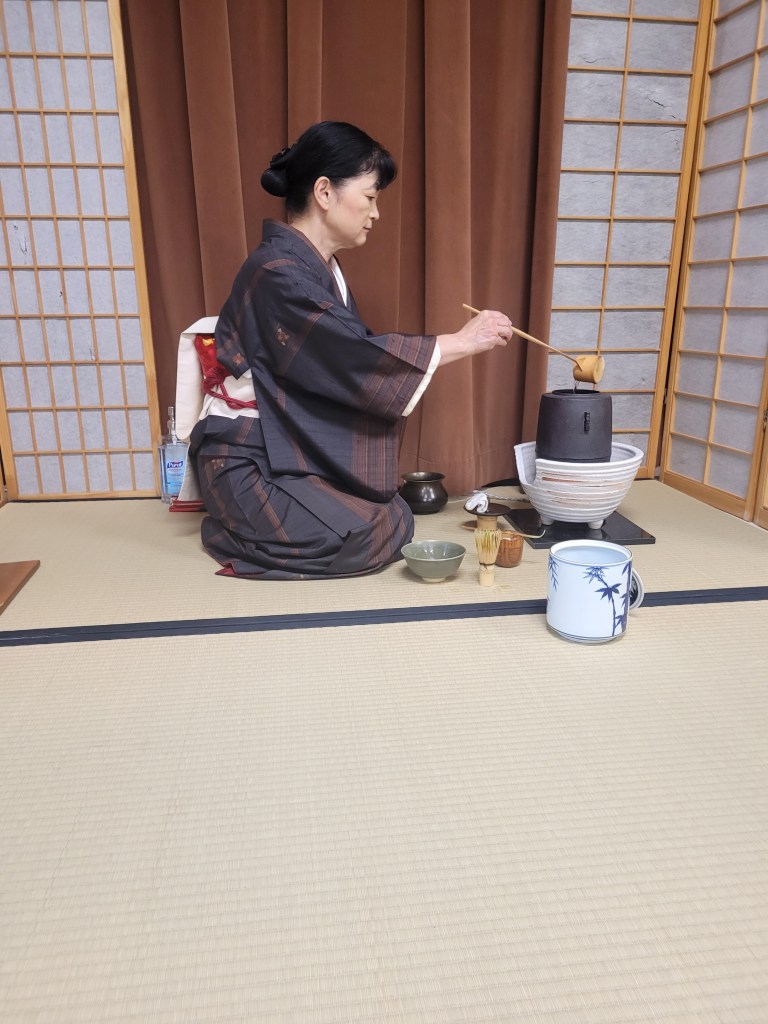
An intimate Japanese Tea Ceremony

When the Firebird crowd chanted “Light the bird!” in shared frostbitten frustration, I joined in. It was hilarious. When the rain forced us indoors at the tea festival, I ended up experiencing an intimate Japanese tea ceremony I otherwise would’ve missed. The cancelled balloon ride meant exploring a unique Star Barn one of the last in the nation. And a delayed train led me to a delightful conversation with fellow travelers about the cultural quirks of the U.S. and the U.K., a highlight of that entire trip. Getting lost in Washington D.C. led to snagging the last tour of the Congressional Building.

Setbacks create space for serendipity. They force us to slow down, reframe, or reroute, and in doing so, they give us something richer than a postcard-perfect moment. They give us stories, growth, and sometimes even stronger relationships.

That attitude—embracing the obstacle—has completely transformed how I travel. My sister and I started tackling trips together we never thought we could. Our bond has grown deeper because of the messiness, not despite it. I’ve even expanded my circle because of the chance encounters that travel disasters can bring.

Perfect trips don’t exist.

But imperfect trips?

They make perfect adventures

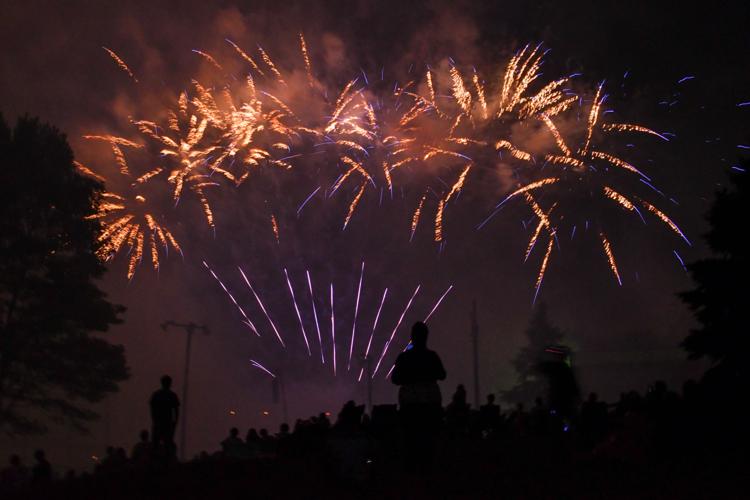
Sky Glitter and Cannon Fire: Firework Memories from Home and Abroad

Dear reader, today is the day that my home country celebrates its independence! Our festivities may vary from cookouts to parades to poolside parties to relaxing in the woods, but almost everyone celebrates with fireworks. It’s practically a patriotic requirement. So it seems appropriate to reminisce about some of my favorite firework experiences, both from this time of year and from unexpected corners of the world.

Let’s begin where traditions run deep: the annual Fourth of July celebration at Lititz Springs Park. Nestled in one of America’s oldest and most charming small towns, this celebration is one of the longest-running Independence Day events in the country. The entire town rolls out the proverbial red, white, and blue carpet. There’s a lively parade, complete with waving kids, twirling batons, and the obligatory fire engine sirens. In the park, music drifts through the air, mingling with the scent of funnel cakes, roasted corn, and sunscreen. The spring-fed stream is transformed into a glowing ribbon of light, lined with thousands of floating candles. Wooden swans from the 1950s, elegant, slightly weathered, and endlessly photogenic, glide across the water like time travelers from a more genteel age. And of course, there’s the Queen of Candles pageant, which, in a uniquely Lititz twist, has historically filled the role of prom queen, hence the local high school doesn’t crown one separately. As dusk settles in and fireflies join the fun, the evening culminates in a firework display that lights up the night sky, echoes through the nearby hills and can be seen throughout the surrounding area.

But that’s not the only show in town. Just a few miles away, another local tradition offers a decidedly more dramatic flair, complete with orchestras and cannon fire. Yes, dear reader, you read that correctly: cannon fire. In a neighboring park, an open-air concert features a full symphony performing patriotic and classical pieces. Families sprawl out on blankets, picnics are enjoyed, and toddlers chase bubbles while the sun slowly dips below the treetops. As the orchestra swells into the iconic strains of the 1812 Overture, a real, honest-to-goodness cannon is wheeled out. At the appointed moment, BOOM! The shockwave hits your chest, toddlers jump, and somewhere a dog begins howling in protest. Then of course the second one rings out in time with the music just as Pyotr Ilyich Tchaikovsky intended! And then, fireworks! Bright, bursting blooms cascading overhead in a breathtaking finale that leaves your ears ringing and your soul strangely soothed.

Not all firework memories come with stars and stripes. In the summer of 2009, I found myself studying abroad in Marburg, Germany. As July 4th approached, I was surprised by a small, sentimental wave of homesickness. Normally, I wasn’t one for the massive crowds that accompany large celebrations (after all, humanity is best enjoyed in moderation), but the quiet sense of cultural ritual was something I missed. I was preparing myself for a solo evening of wistful nostalgia, perhaps consoled with chocolate. Instead, I learned that Marburg hosts its own festival around the same time of year. I joined the locals for ice cream by the Lahn River, enjoyed a leisurely boat ride beneath the canopy of summer trees, and danced (awkwardly) to rock music echoing through the cobbled streets. As night fell, fireworks erupted in a brilliant display over the 13th-century Landgrave Castle. Watching colors explode above a medieval fortress while nestled in the Oberstadt (Marburg’s charming old town) felt like stepping into a fairytale. It was a reminder that celebration and beauty know no borders.
And then there are the fireworks that set the global standard: Disney. If America had a national fireworks team, Disney would be it. Their shows are not just displays; they are full-blown productions of light, music, narration, lasers, and occasional pyrotechnic sorcery the likes that only Disney’s mouse are capable of! I’ve had the pleasure of witnessing them both at Epcot and Magic Kingdom. At Epcot, it wasn’t just nostalgia that hit me, but personal pride, my high school marching band once choreographed an entire halftime show to the music of “Reflections of Earth.” Seeing it performed live, as fireworks danced to familiar melodies, was a surreal and deeply satisfying moment, especially since that was the show that landed us 7th at our Championships. At Magic Kingdom, the fireworks soar above Cinderella’s Castle like Tinkerbell’s own personal art project. The crowd gasps, the music swells, and even the most stoic adults find themselves grinning like five-year-olds in awe of the magic.

Fireworks are more than just explosions in the sky. They are shared moments of awe, connection, and celebration, tiny temporary galaxies that remind us, if only for a moment, to look up and be amazed.

So, dear reader, how might you best enjoy your own firework festivities?

I needn’t tell you were to find fireworks as displays abound, especially at this time of year. However, whether you’re lighting your own sparklers in the backyard or attending a grand symphonic spectacular complete with live cannon fire (as one should), a little preparation turns a chaotic scramble into a delightful experience. Here are some practical tips to help you enjoy the show like the seasoned firework connoisseur I know you are (or could be):

1. Stake Out Your Spot Early
Fireworks wait for no one, and neither do the best viewing spots. Arrive at least an hour before dusk if you’re heading to a public park or festival. Bonus points if you bring a blanket and a foldable chair, doubly so if the chair has a cupholder.

2. Embrace the Picnic Mentality
Don’t rely on concession stands unless you love $8 hot dogs and unidentifiable cheese. Pack your own snacks, fruit, cheese, a cheeky beverage (where legal), and something sweet for the grand finale. A thermos of hot cocoa for chilly nights or a chilled lemonade for sweltering ones makes all the difference.

3. Dress for the Elements
Check the weather, then dress for being outside twice as long as you think. Mosquitos? Bring bug spray. Chilly breeze? Bring a wrap. Possibly raining? Ponchos over umbrellas, they’re less stabby in a crowd. Sensible shoes are your friend. You will be walking in the dark, on grass. Heels are for fantasy novels and indoor galas.

4. Think Like a Scout: Be Prepared
Wet wipes, tissues, and a flashlight app will instantly make you the MVP of your group. And for those with sensitive ears (or children in possession of them), ear protection can turn terror into delight.

5. Make It a Whole Evening
Fireworks are the climax, not the whole story. Bring a book, a deck of cards, or engage in the ancient art of people-watching. Let the pre-show ambiance become part of the memory.

6. Be Kind to the Creatures
If you’re a pet parent, please remember that Fido is not a fan of fireworks. Leave him safely at home with a white noise machine and his favorite toy. Fireworks are for humans and ducks that didn’t get the memo to migrate.

7. Take It All In: With Your Eyeballs
I say this with love: put your phone down. Snap one or two photos if you must, then actually watch the show. Fireworks are about the experience, the sound rumbling in your chest, the heat of the crowd, the oohs and aahs, and your iPhone will never do it justice.

In the end, whether you’re watching from a blanket in a quiet town park, a crowded theme park plaza, or your own backyard with sparklers and a playlist of John Philip Sousa, the magic is the same. For a few brief moments, we all look up at the same sky, eyes wide, hearts light, reminded of wonder.

Completed: multiple times in childhood

Cost: Ranges from Free to $164 (Epcot day pass circa 2025)

Miles from home: 0 (hometown) to 4,000 (Marburg, Germany)

Share your own adventures with me on Instagram! Just tag BudgetBucketList!

Remember to check out my other adventures on my Bucket List and Reverse Bucket List

A Festival of Flavor: PA Tea Festival

I believe, dear reader, that I have already espoused my love and adoration for tea. I love the aroma of it wafting up from a warm cup in my hand. The first sip as it hit my tongue in an explosion of flavor. The way it moves the warmth down my throat and into my stomach. I love how well it pairs with little sandwiches. I love scones topped with clotted cream and curd. I love the frilly lace and fussy accouterments. I love the various honeys I can add for a hint of flavor from orange to lavender to raw to clover.  I love adding cream. I love adding milk to chai. I will drink it hot or cold, in the morning, afternoon or late at night. I’ve enjoyed it at my desk at work and as high tea in a parlor. So it should come as no surprise that I jumped at the chance to go to a festival devoted to this beverage.  

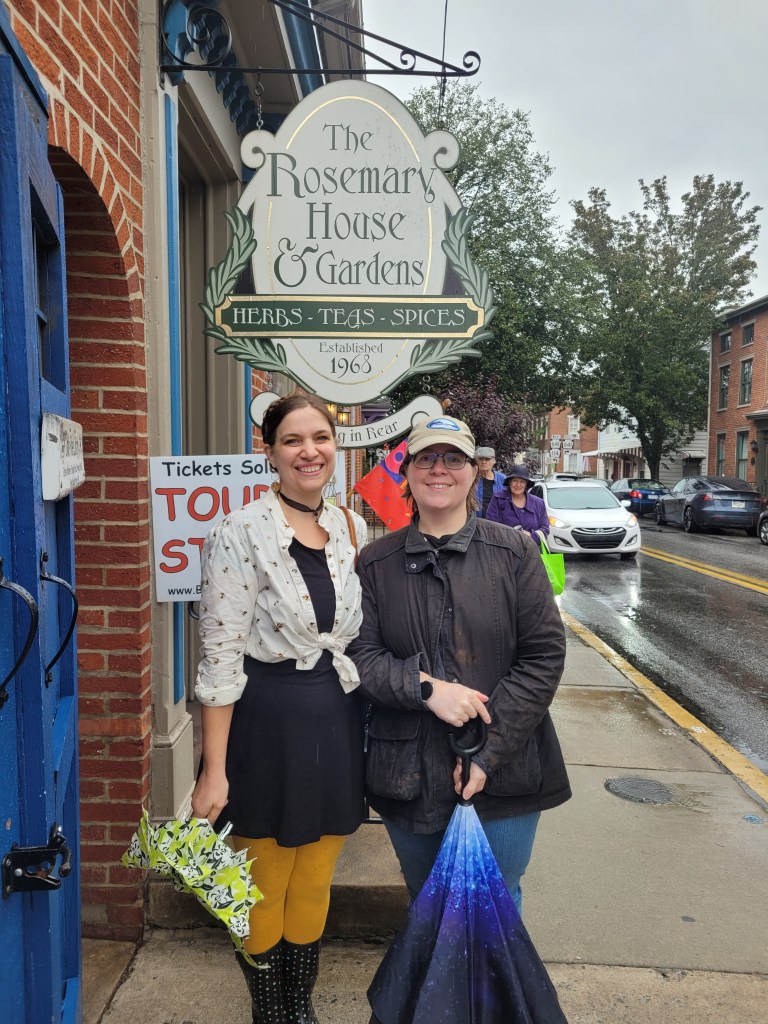
Our hosts for the Tea Festival are the ladies of The Rosemary House & Gardens. The shop is tucked in a small corner of Mechanicsburg, PA. It’s unassuming front hides an almost enchanted shop and herb garden. From the first moment, you walk in the door you know you are in someplace particularly special. The gentle smell of herbs instantly calms you as you take in the plethora of items adorning every corner of the shop. Everywhere you look merchandise is displayed on every available surface. It ranges from teas, to herbs, to honeys, to curds, to teapots, to fairies, to charms, to books and more. One could easily be mistaken into thinking one had stumbled into a fairy tale with the two older ladies carefully tending to the customers. 

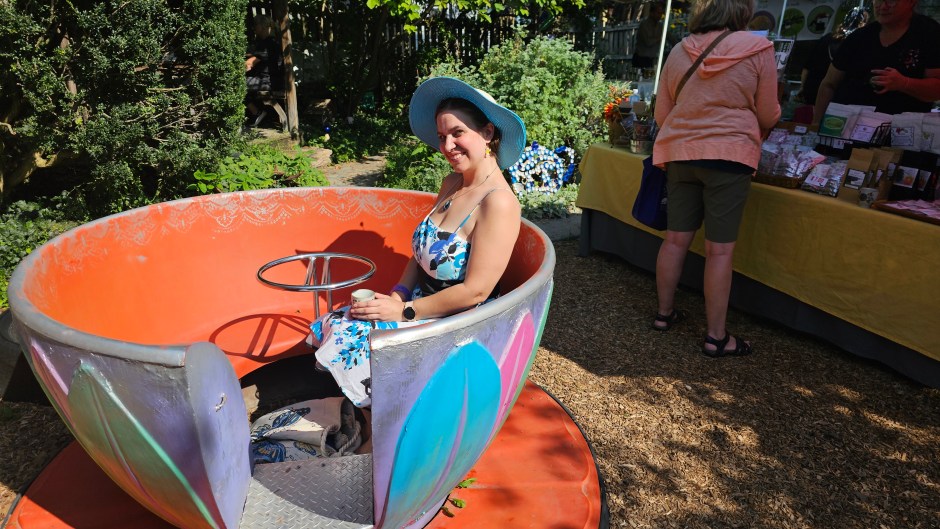
Being situated in an old house, the shop consists of two main rooms, the front and the back. The back leads out to a garden as delightful as the shop itself. The well worn paths lead visitors through the herb beds which continue to delight both the eyes and the nose. The garden is a delight to wander through as every single bed contains a surprise. One may spot a small turtle statue or be delighted by a miniature table and chairs (surely left for the visiting fae-folk). A visitor may see a sign welcoming said fair folk as well as a tower of teapots reaching for the sky. There is also no shortage of seating from the gazebo, to the benches, to a giant tea-cup from a carnival ride. The house is worth a visit even on days when a dozen or more vendors have not journeyed to grace it with their presence. 

After paying for our tickets at the shop’s counter, my sister and I slipped onto the porch where we collected a small tea cup, a bag, a tea magazine and a schedule of the day’s events. The cup was to be used for sampling the teas offered at the various vendors – which is of course the main reason we journeyed an hour from home to the festival. There was a woman offering tea ceremonies in the garden, but we opted to skip it this year as we attended one at the festival the year before and attended one at the Japanese Gardens just outside of Philadelphia. Instead, my sister selected “A Dark History of Tea” from the lectures that were offered, noted the times and determined that we would start at the front and make our way back through. 

Our first destination did not actually have any tea samples, but rather was a creative display of artwork on tea bags of all things. I was amazed at the variety of pictures she was able to create incorporating the tea bags into the paintings. I was so smitten with them, my sister ended up buying one as a birthday present. 

We then got to the highlight of the festival, the tea tasting. Each vendor had a variety of samples to showcase some of their best teas. The first one we had was a very smooth oolong tea from Taiwan that was a delight for the tongue. We then took turns smelling different teas and sipping on more. We sampled teas from Napal, Hawaii, Africa, China and beyond. There were herbal teas, white teas, black teas and green teas. There were teas that were pure and teas that had herbal additions like the lemon butterscotch teas. There was a chocolate vendor for tea and chocolate pairings. I purchased various teas for my later personal use. 

We did attend the lecture on the dark history of tea and its connection to prostitution, opium, smuggling, poisoning, and slavery. It was a fascinating look at the history of international trade, commerce and greed. It was also a sad reflection that despite efforts at reform for the past 300 years, many of the problems that were prominent throughout the 1700’s, 1800’s and 1900’s are still going on today, if in different forms. The lecture did not get into how the issues in the tea industry can be seen in the fashion and chocolate industries, but my sister and I discussed it at lunch later. One of the things I enjoyed about the tea festival was that many of the vendors were from the countries that the teas were from. We were often speaking with direct representatives of the farmers rather than a corporate sales person several steps removed from the growing and processing of the product. We felt fairly confident that our teas were ethically sourced and free of adulterations and unhealthy additives. 

After a few hours of sipping teas and wandering around the festival, the caffeine did start to get to me. I was surprised because I am such a huge tea drinker even at home, but I typically do a cold brew which tends to have less caffeine. So my advice dear reader is to bring some snacks along to help with all the tea that you will be drinking, because after three hours of sipping on the delicious beverage, I was quite jittery. With our stash of tea fully replenished for the coming winter months, my sister and I made our way back into the shop for some final purchases. We then wandered back to the car to decide where we wanted to eat. After consulting google, we realized there was a Japanese place not a five minute’s walk from her car, so we left a few of our items behind and journeyed to the former bank now turned restaurant. 

If you happen to be in Mechanicsburg, dear reader, I recommend Kanagawa. It was a quiet, intimate place with polite and friendly staff who were attentive and conscientious. My sister and I choose the small plate of salmon teriyaki with extra vegetables. The vegetables were cooked to perfection with just the right amount of sauce. They were a nice variety of zucchini, onions, mushrooms, and broccoli. The salmon was delectable, practically melting in your mouth with every bite. My sister and I split the fried cheese cake, which was a rare treat for us both. It was a mouth watering delight that must be tasted to be properly appreciated. The outside was perfectly crunchy with just the right amount of chocolate sauce which covered the delicious inside. It was the perfect ending to the day. 

How can you attend a tea festival?

I am not entirely certain that tea festivals are exceedingly popular, but that is not to say that they don’t exist in your area. They certainly could! However, there are many popular festivals devoted to different foods and drinks. There may be a beer festival or a wine festival. In my area, I have seen a bacon festival being advertised which may be difficult to convince my non-pork eating sister to attend. If you’re passionate about a particular food or just enjoy eating, then go. You will discover all sorts of flavors you’ve never dreamed of. You may learn new culinary skills or interesting history you never knew about. It could deeper your appreciation for how we obtain our food and how to make more ethical decisions about your purchases. You may discover that you actually like certain foods you always hated. You could be introduced to different cultures or ways of thinking about the foods you eat. Either way, I highly recommend adding culinary adventures to your list. After all, we have to consume food every day just to survive, why not expand your pallet, widen your horizons and explore the world with a different sense than we usually think to use. 

Completed: Fall 2023

Cost: $10 per person for tickets and much more for all the tea I bought, which we won’t talk about here. I was weak and the tea was so delicious! In my defense I have like so much tea now, it will last me months. 

Miles from home: 51

Now if this was your cup of tea, a whole world of excitement awaits you! Check out my Bucket List and Reverse Bucket List for more stories of fun and whimsy!

Tales from Abroad: Stonehenge

I am, as of this writing, recently returned from a trip to Merry Ol’ England after finding myself with the unexpected invitation to join a family friend, Shelia, at her long term rental in the beautiful Penzance area of Cornwall. The previously unaffordable trip of plane tickets, lodging, food and sightseeing, suddenly became much more affordable with her willingness to host myself and my mom for over a week. Naturally, I did not let such an opportunity slip through my fingers as England was home to one of my top Bucket List items, Stonehenge.

Now, my non-American readers may be a bit perplexed at my excitement of going to Penzance when Stonehenge is a good four hours away. You may very well think, it’s so far, you couldn’t possibly add that on to your trip! First, dear reader, you underestimate the American enthusiasm for driving. After all, the road trip is a quintessential American experience! Besides lacking any sort of reasonable public transit, driving is just what we do and if you’re like me who drives for a living (at the time of this writing) spending several hours in the car is nothing. I had a co-worker who regularly thought nothing of driving 8 hours every other weekend up to New England to help take care of her ailing mother. Americans love driving. 

Second, given that in order to have the opportunity to see Stonehenge again I would need to take another 6 hour flight after needing to take up an additional 2 to 3 hours just to get onto the flight after arriving at the airport after a 2 hour drive to the airport, and another 2 hours driving from London to Stonehenge, I think I can afford the day trip back and forth when considering the time and money it would cost to do at a later date. It was this cost analysis that really tipped the scales in favor of renting a car and visiting this site. As I am always reminding you, dear reader, that when one travels one ought to maximize the opportunity in order to get the most bang for your buck. We are, as much as it pains us all to admit, on a budget and when’s the next time we’re gonna be able to hop a plane to England from America? Exactly. 

After determining that in addition to Stonehenge there were sites scattered about Cornwall that were simply too inconvenient to get to via bus (why they don’t go to the neolithic sites like the Merry Maidens or the Cuny Village is beyond me) and given that taking multiple taxis in a day would prove to be quite expensive to do multiple trips to various places around Cornwall in one day, renting a car ended for the week ended up being the optimal solution of almost $175 in savings when I broke down the costs. Plus, I didn’t have to wait around for rides or worry about meeting my taxi driver at a designated pre-booked time. Once again, my cost benefit analysis kicked in and it tipped it in favor of car rental as much as I prefer relying on public transit.

Now, the best laid plans of mice and men will go astray. In this case, the hiccup I encountered was my phone’s gps. Despite paying for the ability to roam and setting it up ahead of time, when I arrived in England my phone refused to connect and kept telling me that I needed to turn on international data. I would go into the phone settings to see that it was indeed turned on and got a text message from my provider stating that it was turned on. We tried several different work-arounds suggested by the internet once I got to my friend’s place and was able to connect to her internet but nothing worked. Luckily, Sheila allowed us to use her phone for the day to get around. With the crisis adverted, we set out in the wee hours of the morning to make it for our 10 am admission time. 

I had downloaded music to my phone for us to jam to and decided to put my newfound mastery of the British road system to the test. I had (smartly in my estimation) scheduled Stonehenge for the middle of the week in order to give me two full days of test driving on the opposite side of the road in more rural areas before trying to go to more populated and congested places. I actually took to it quite well and credit my dyslexia for being an advantage as I really could hardly tell the difference. I just kept the steering wheel in the middle and followed the visuals provided by the gps rather than following her left or right turns since I can’t do that anyways. So, cross off driving on the opposite side of the road as a bonus!

The way up to Stonehenge was relatively uneventful and I got to really take in the rolling English countryside. The morning started out with classic English weather of rain. However, by the time we reached our destination the rain had cleared leaving a mostly overcast sky that threatened sunshine. 

Now to say that I was excited to see this legendary place, is bit of an understatement. Of all the monuments and sights in this world, Stonehenge is without a doubt one of my top destinations and probably one of the first places I ever truly longed to visit. I was fascinated by the ancient world of Great Britain and Ireland, obsessed with learning about them even though I could (when I was younger) find very little about it. It was this blank hole of questions that burned into my mind, what were they like, why did they build this, how did they build it, what spiritual meaning did it have, how did it connect to other sites and on and on these questions plagued me. I loved the theories, no matter how crazy or outlandish they were. And what I love is that we’re still uncovering things about it, only just last year they did yet another study of the stones and discovered that they come from all over indicating that this may have been a unifying project to unite the island.How does that fit with other archaeological evidence for the rest of Britain? There’s just so much we don’t know. 

Stonehenge is over 5,000 years old and is the largest neolithic monument in Britain. There is evidence of important structures and even other henges prior to the building of Stonehenge in the general area marking it as an important or prominent site in the stone age. Some of those sites are from 8000 BC You may be forgiven dear reader for thinking it’s just a stone circle, as impressive as that may be; it actually sits upon an earther work with a marked avenue leading up to it. A “heel stone’ marks the alignment with the summer solstice. This avenue and stone is the reason we can say it aligns with solstice and not some other random astrological event. It is also not just one stone circle but two concentric circles and other stone pieces to create a masterpiece of that era.

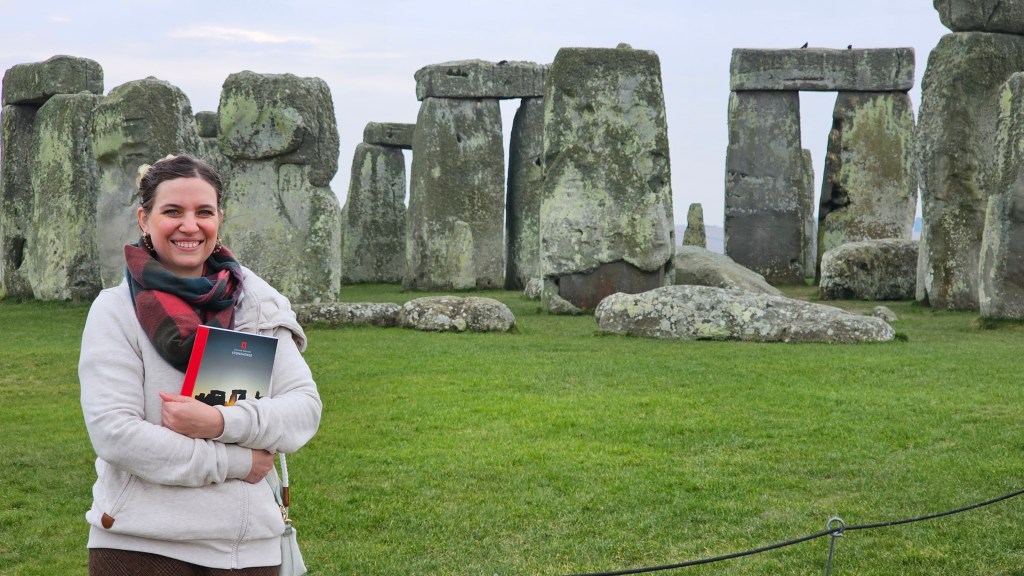
I am standing by the “heel stone” which marks the line of the summer solstice

It took over 1,500 years to complete in four different stages. The first stage was in 3100 BC, the second stage occurred in 2500 BC; the third took place 150 years later and the final stage occurred in 1,500 BC. This is when the stones were rearranged into their iconic horseshoe shape. There were about 60 stones originally, but sadly many are broken or even missing today.  Despite the presence of human remains, it is not believed to have been a burial site but that these remains were utilized in religious ritual. Although if you read other people’s opinions they’ll tell you that it was a burial site. See? So much mystery!

It was being armed with this knowledge (and much more, but I shalln’t bore you with all the details), that I practically squealed in sheer anticipation more than once as we approached. I was finally actually there, instead of seeing it on a screen or in a book. There was equal parts excitement and awe as we drew closer. The thing about the site is it is actually located in an almost surreal location because one expects that it would be in an area relatively built up. However, it is just out in the middle of nowhere surrounded by sheep and farmer’s fields. Yet, it fits exactly in the landscape that one finds it in because thousands of years ago the builders may have had sheep. For all we know sheep have been hanging out near those stones this entire time.

I loved being able to closely study the stones, to see how they may have been joined together by the knobs at the top of some of them and to picture how it may have once been so many years ago. I marveled at the craftsmanship that must have taken to hew rock into rough formations of giant blocks and to lift them up atop each other. 

What was particularly nice was that I went at the slower time of the year for England, choosing to go right before spring at the end of winter, so it was relatively uncrowded. I didn’t have to fight to look at it and I was even able to snag pictures without people in them. Most pictures contained very few people. This also meant that I was able to really focus on what I was seeing without having to worry about what everyone else was doing around me. After my first circle around the stones snapping lots of pictures, I put my phone away and made another loop so that I would be able to just enjoy the place taking in the sight and locking it in my memory. Too often we are so busy “documenting” our experiences we forget to actually experience them. I was determined to not make that mistake. 

After spending nearly two hours at Stonehenge, we journeyed back on the bus to the visitor center for a quick bite to eat before departing. There was a reconstructed Stoneage village that I took a brief detour in. But having been in the ancient village of Carn Euny the day before (another post on that later), I didn’t spend very long. They also had a small museum of the artefacts found in and around Stonehenge which is very informative if you haven’t spent a lot of time studying the site. 

How to visit Stonehenge (and other suggested sites): 

I’ll not insult you with instructions on how to get to England. However, it is important to know Stonehenge is located about 2 hours south of London making it a fairly easy trip for most people who are intended to tour the country. It is a far less easy trip if you’re flying into Scotland. My American readers may be forgiven for underestimating the size of Great Britain as it is about a 7 hour drive between the two and while we do love driving that is a bit of a haul even for us unless it’s part of an entire road trip especially since most of us only have two weeks of vacation a year.  

However upon arrival, you have two options to see the actual site. Option 1: Is paying the admission ticket (and parking) to Stonehenge which grants you access to the bus transfer over, the reconstructed village and museum. The main advantages to this option is the bus transfer if you’re with someone with mobility issues and the ability to walk around the entire site to see it from all angles.

Option 2: Is parking a little away from the site and accessing the footpath which traverses right next to the walkway in front of Stonehenge. It does require a bit of a hike to get from where you can park the car and Stonehenge. The path isn’t well maintained, in part because while the English have the right to roam on the ancient footpaths, the right to roam doesn’t necessarily convey the promise that someone will be maintaining those footpaths. It also only allows you to really see the front, but it is the best and most famous vantage point. If you go during the peak season you’ll probably be disappointed by the sheer number of people blocking your view and any pictures you’ll want to take. If you go during the non peak season you will probably be able to get a decent view and maybe a few pictures with only a few people milling around in the background. It honestly depends on your priorities. 

My wonderful and amazing mum!

For me, I was traveling with my mom, who doesn’t have the best health and needed the extra support with mobility. I also wanted to be able to get as close as I was permitted. There was an option to get there at 8 am, pay a lot of extra money and be able to go into the circle at sunrise, but I would have needed to leave by like 3:30 am, wake up at like 2:30 am which would have meant no sleep for me and I didn’t want to be driving that long on no sleep as driving without sleep is akin to driving drunk. I wanted to see Stonehenge, not die in a car accident on the way there. Remember we want to check off our bucket list, not hurry the bucket along. 

Now, you may be thinking that there is absolutely no way that I could possibly write a list of “good enoughs” when comparing them to Stonehenge, but it entirely depends on you as an individual. For me, Stonehenge has been a top priority since childhood, so when given the opportunity I jumped on it. However, there are many Neolithic sites and Neolithic stone circles scattered not only across Britain and Europe but also throughout the world and you may be closer to them than you think. Granted there aren’t many that are quite as old as Stonehenge but there are many that are within the 3,000 – 1,000 range. 

If you don’t care much about the size of the stone circles, Britain, Ireland, and Brittany (France) has over 1,300 circles. Many are quite impressive in their own way. They are also less visited and often allow you to be able to go right up to them without needing to pay for tickets or have them roped off, meaning you don’t have to fight with crowds, you can actually touch them and you can enjoy them more as they were intended, as places of spiritual connection, celebration and reflection.

The Merry Maidens of Cornwall!

Stone circles aren’t just found in Europe. There are stone circles in Australia which are sacred to the Aboriginal peoples like the stone arrangements in Victoria at Carisbrook. You may also be surprised to find out that Japan has stone circles from the late Jomon period located in the northern region. Like Stonehenge the Japanese Stone circles contain an inner and outer ring which is aligned with solstices. Even the states has its own stone circle in Wyoming called the Medicine wheel. There are other less famous circles hidden in Nebraska’s Sandhills and Bluemont Virginia.

If you don’t really care what formation a neolithic site takes, then the world is truly your oyster because scattered throughout the globe are sites from ancient pre-civilization peoples. Ohio is famous for its Great Snake Mound as well as the Newark Earthworks. White Sands New Mexico has footprints from over 20,000 years ago – take that Stonehenge! Colorado is home to the Cliff Palace located in Mesa Verde National Park. New Mexico has its own cliff dwellings as well as Aztec ruins. The small island of Malta has Megalithic temples. Ireland is home to Newgrange. One of the oldest known megaliths in the world, Gobekli Tepe, can be found in Turkey. Spain is home to the Dolmen Menga. India has its own dolmens in Marayoor Munnar and I could go on. As you can see dear reader the world is awash with ancient monuments if you know where to look. You may very well be shocked at how close you are to one. So don’t feel the need to put Stonehenge on your list of “must-do’s” if you haven’t already developed an obsession like me, but if you happen to find yourself in England the it is decidedly something I would recommend you make part of your trip.

Cost: $50*

* give or take with the exchange rate, going during non-peak season for a “super saver” discount and pre-booking online for an additional 15% discount and then accounting for the gas to arrive there from the rental.

Miles from home: 2,000

Miles from rental: 200 miles

Cost accounting for plane tickets, etc.: $150*

* You may wonder how I arrived at this number, it’s simple, I took the total cost of my travel (planes, buses, taxis, etc.) and then counted up all the places I checked off my list as a result of traveling to England, divided the total cost of travel by the number of places I got to go to arrive at about $100 per place. As it turns out England has a lot of places and experiences that are on my list which is why it was a top place to visit. I made certain to check off that list to maximize the money I was spending. Using this basic formula is something you can do when deciding where to go and what to do in order to maximize your travels. Yes, the upfront overall cost is quite high, but when considering how many things you can do at once, it may be worth the cost.

While this post was from an adventure many miles from home and involved a plane ride, many of my adventures were just a short drive away. Be sure to check my other posts listed on my Bucket List and Reverse Bucket List.

A Trip Back in Time: Tubing at Sickman’s Mill

Ah, summer. What springs to mind when we think of those blazing hot days and long evenings? Cookouts and water games, people gathered round, laughing gaily as dogs drift in and among the crowd, children playing lawn games? The reality is that, sadly, summer is spent far too often on our phones. Even when out and about, they are an ever-present distraction. Speaking with strangers is practically taboo, lest you disrupt their very important text conversation or latest social media doom-scrolling venture. There are few sanctuaries of the bygone eras where summer meant a blissful abandonment of the world for nature and all her bountiful glory.

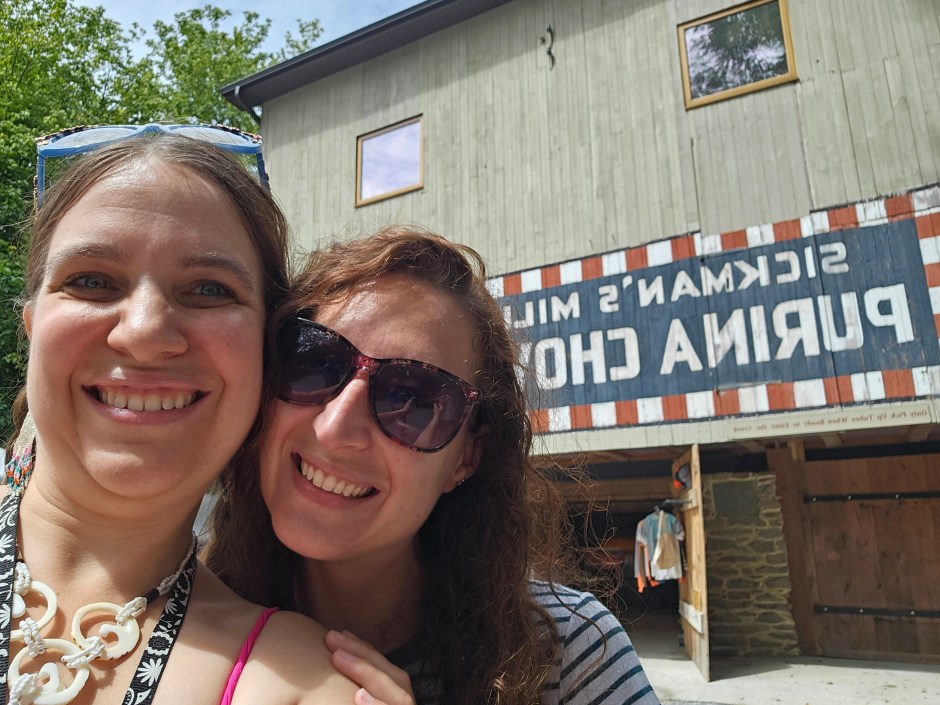
It was one such sanctuary that I happened upon on a summer morning—not entirely by accident, as I had made plans to go—but I was surprised to discover that Sickman’s Mill was such a place. Nestled in the southern part of Lancaster County, it doesn’t have the best reception, and lacking any Wi-Fi, one is forced, as their sign proudly declares, to pretend it’s 1969 and talk to other people. I found the bartenders friendly and hospitable, eager to make me feel welcome to a party I didn’t know I’d been invited to as I awaited my friend Kayla’s arrival. They assured me that despite the weather forecast for potential showers, I would still be able to participate in the not-quite-forgotten summer tradition of tubing down a river.

Almost as soon as there were rubber inner tubes leftover from tires, there have been people putting tubs in rivers and floating down them. What could be a more relaxing way to beat the summer heat? After a trip down the Pequea Creek, I’m not sure I can answer that question. It was the perfect panacea for the blistering heat of the season.

The rain from the night before had raised the creek’s levels and left the morning quite comfortable. The clouds that had threatened thunderstorms gave way to beautiful blue skies, allowing dappled rays of sunlight to stream down through the trees. The crowds had not yet arrived, leaving the creek mostly to ourselves to enjoy the sounds of nature all around us. Occasionally, we were treated to faster-moving sections as the water flowed rapidly over a series of rocks. The only main concern was the occasional felled tree that created unexpected obstacles, but aside from those minor disruptions, it was a beautifully relaxing trip.

The entire route took us about an hour to complete, as the creek was moving more rapidly that morning due to the recent rainfall. It can take up to two hours when the water is slower. We were directed by a polite young man to get out of our tubes and climb the convenient stairs to await a bus that would transport us back to the mill. We didn’t need to wait long before it came lumbering up the lane, and after another group disembarked from the creek to board, we were on our way. It was a short but delightful ride through the countryside.

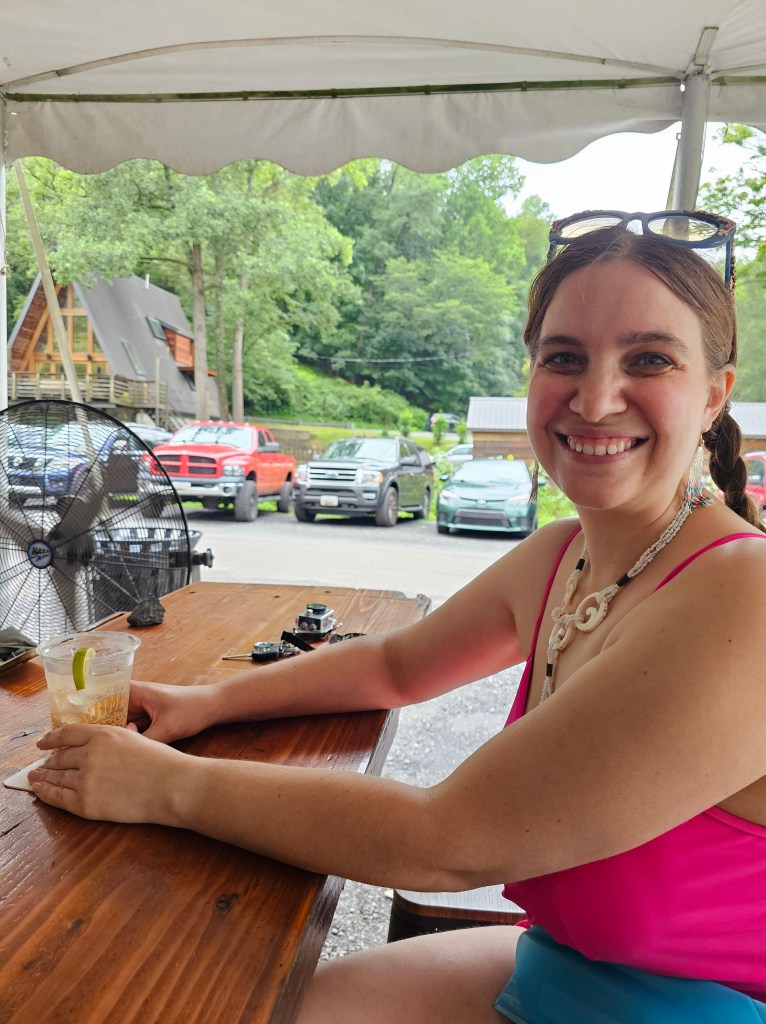
The old mill itself was not open for exploration, but they more than made up for it with the bar affectionately named Jimmy’s Place after the family’s dog. Naturally, Kayla and I tried the Jimmy Juice—all four flavors. She had the Pineapple and Cranberry, whereas I enjoyed an Orange and a Ginger. Our favorites were the Pineapple and the Ginger, and we were able to take a four-pack home to share. For food, we went only a few feet away from the bar to Mama T’s. I learned the name is a bit of a joke, as Mama T is by all accounts a terrible cook. Don’t worry—the food was quite delicious and includes vegetarian options. Prices ranged from $5 for a slice of sourdough pizza to the more expensive Mama T Burger at $14. The portion sizes were as generous as the people serving us.

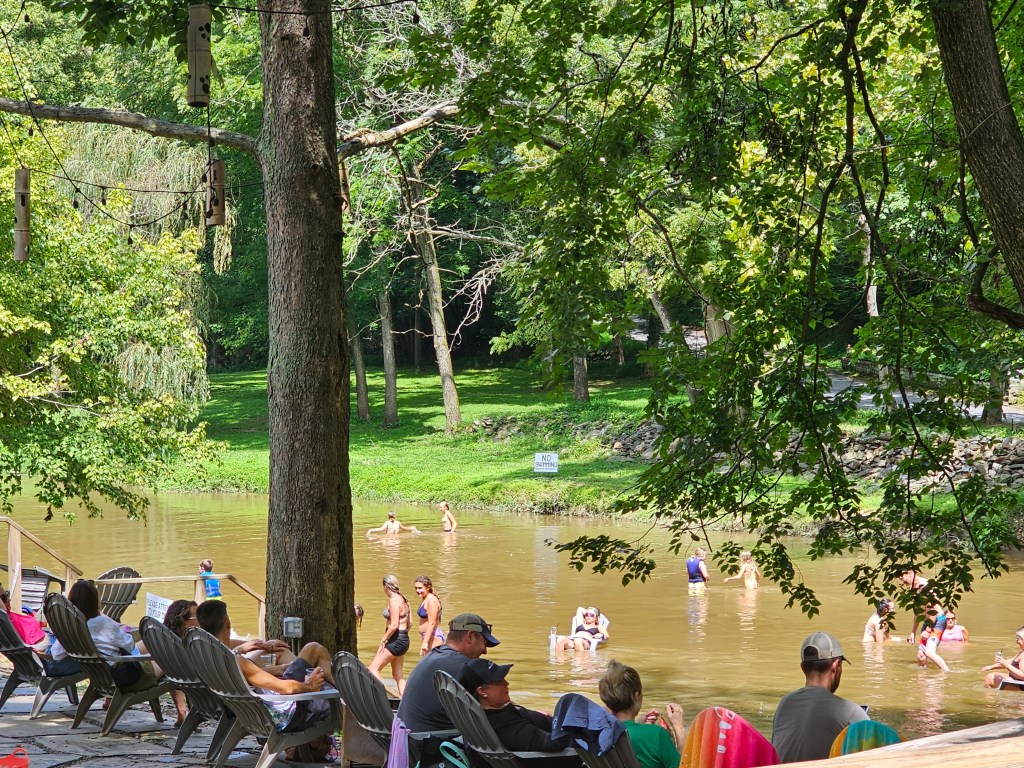
When we returned to the mill, we were surprised to see that the sleepy bar had transformed into an impromptu party. Dogs ran among the people and splashed into the creek with their owners. Some had taken chairs to sit directly in the creek while sipping on the infamous Jimmy Juice, a vodka-based cocktail. Children and adults played lawn games together, and everywhere I looked, people were actually talking to each other instead of scrolling on their phones. It felt as if I had indeed been transported back to 1969. I even had the distinct pleasure of meeting Mama T, who had just landed from Ireland.

It would seem that while the mill has taken on many purposes in its 250-plus years of existence, it remains timeless. One certainly feels as if time simply melts away. Hours and minutes blend together as the party stretches into the afternoon. You forget to check the time, and text messages go unanswered—if they even get through the spotty reception. It is a place to forget the modern world and embrace the echoes of summers past. Though I wouldn’t have thought it all that different from a lazy river at an amusement park, there was something special about tubing down a real river in the middle of the woods. It may be a relic of an era now gone, but it remains a time-honored tradition. As long as there are tubes and rivers, people will continue to float down them.

How can you go tubing?

Luckily, the United States is dotted with rivers, and if nothing else, you can probably find one nearby to float down—provided you have a tube. It’s recommended to bring a friend along and park your cars in two different places unless you find a spot like Sickman’s Mill where you can rent a tube and catch a bus ride back. It’s a bit more adventurous doing it yourself. Though I must confess, as someone with a poor sense of direction, I’d likely miss the designated pickup spot, drift miles downriver, and end up hopelessly lost.

If you don’t want to go the DIY route, finding a place like Sickman’s is usually as simple as Googling “water tubing.” There are plenty of places that offer this kind of summer activity. I can’t promise they’ll all have the same family cookout atmosphere, but the river experience will be similar. I do think there’s something magical about finding a place where cell service isn’t great and Wi-Fi isn’t available. It encourages people to put their phones away and genuinely engage with each other.

Completed: August 2024
Cost: $25 for tubing ($40 additional for drinks and food)
Miles from home: 20
Potentially time warped: 55 years into the past

Be sure to check out my other adventures on my Bucket List and if you’re looking to travel back in time again with me, check out my Reverse Bucket List.

From Fire and Ash a Phoenix Rises: Firebird Festival in Phoenixville

For the past twenty years a mysterious sight has unfolded in the midst of the winter’s cold. A community builds a giant wooden bird and then sets it on fire much to the delight of the spectators. And, dear reader, it is as awesome as it sounds. 

The Firebird Festival, was a dream of a Henrik Stubbe Teglbjaerg, an immigrant from Denmark who has resided in the States since the late 1980’s. He, with four other Phoenixville residents, came up with the idea, in part inspired by similar festivals of Europe where they build things and set it on fire. When he first arrived Phoenixville was a dreary little town. However, it started to revive itself, opening up a theater, art galleries, coffee house and it was as if there was a rebirth, a town rising up out of the ashes. So what could be a more perfect fit than to celebrate with the symbol of rebirth and the town’s own namesake? 

What is more is that each year, the ashes from the burned phoenix are taken and made into clay birds which are then placed inside the wooden bird. When set on fire, the wooden structure acts as a kiln, firing the birds and thus completing the cycle of last year’s bird when they are transformed into decorative pottery. 

What started as a small 150 person event has grown into a 20,000 person festival. Complete with food trucks, fire dancers, a parade, live music, and various wares for sale. It is a celebration of the town and the arts. But rather than relying on fancy performance artists most of the event is volunteer and community run which only speaks to the strength and spirit of the community, despite the growing size of the festival they have protected its heart as a grassroots events that remains untainted by the scale of the crowd. 

Most years, this event takes place in December just as the northern hemisphere enters its darkest stage and the year is coming to a close. However due to an unusually dry spell, the 2024 Firebird Festival was delayed as having a 20 foot wooden set aflame near exceedingly dry forest isn’t exactly the safest idea. Remember dear reader, as much as we all desire to check off our lists we want to make sure we live to check off the rest of our lists when doing so. 

This misfortune of weather was my opportunity. For you see, my sister and I typically celebrate the holiday season each year with our extended family on the second weekend of December. It so happens that the Firebird Festival also happens on that same weekend meaning that we are always previously engaged as the annual Holiday Feast has been a set date since before I was born. So when the organizers moved the Firebird Festival to the first weekend in February it became the must do event of the winter season. 

The new date was also fortuitous as it coincided with an ancient celebration of spring’s light returning. The ancient Celtic holiday of Imbolc was associated with the Celtic Goddess Brigid, the guardian of Hearth and Flame, a perfect pairing for the new date. The ancient holiday was a time of purification, renewal and preparation for the change in season. Fire rituals which honored the returning sun were frequently integrated into the Imbolc celebrations. It was celebrations like these which inspired the Firebird Festival in the first place making the new date perfect. 

As it happened, it was one of the coldest nights of the winter as arctic wind was carried down from the north freezing all that it touched with its icy fingers. Only a few days before the weather had been warm thawing out the ground and making it moist and muddy. Posts about the event warned celebrants of the potential for treacherous conditions on the field as the mud became slick and icy. 

My sister and I did our best to buddle up in preparation for the cold. I fared a bit better than her having a coat that mimicked a fur one, leather gloves lined with kashmir, thick socks and shoes with thick soles to keep out the cold. She had a rather old coat that she put several layers on beneath but the wind still managed to cut through the fabric and whisk away what warmth she had. As the Germans say “there is no bad weather, only bad clothing” and this was a prime example. I stayed pretty toasty throughout the evening but my poor sister struggled. Worry not, I often acted as a wind break once the crowd gathered. 

The festival occurs in two different places, the field where the bird is and downtown Phoenixville where most of the art events occur. After looking at the events and options, we determined that we wouldn’t arrive at 4 pm when the event started but rather closer to 5:30 pm to find parking, walk down to the field. That gave us about 21/2 – 2 hours before the bird was scheduled to be lit at 8 and the fire dancers would start their own performances around 6 (something else I’ve been wanting to see as part of my BucketList, maybe I’ll have to add Fire Dancing to the list now that I know I can volunteer to be one!) 

We followed the instructions for parking and managed to snag a great spot that was near enough to the field to make an easy walk in and out. It was a place that opened for parking after the official event time, I assume in part to help manage crowds. This made it a breeze to get to the Veterans Memorial Park where we were greeted by friendly volunteers who directed us into the event. They had buckets to collect donations which went to supporting it. When we got there we were a little surprised as the lackluster crowd as it seemed only a hundred people were milling about. There were a few food trucks and some tents set up. The band wasn’t playing yet and the sun was only just starting to set. We milled around looking at the different options and then decided to watch the Fire Dancers. We saw some people had chairs set up right at the center of the staging area but other than directly in front, the area was clear. We picked a spot to the left to watch and decided we’d take turns running to the food trucks. 

It felt a little paranoid to hold our spots when there were so few people, but as it turned out this was a crucial strategy because it seemed that within 15 minutes the crowd had tripled in size and the entire perimeter of the bird was lined with spectators enthralled by the fire dancers. Just as twilight fell, the arrived each with a unique costume and different types of instruments to move the flames about. They juggled, they moved around balls of fire, they twirled long lances and staves, they mimicked a bird with wing-like props, they used hoops of fire to make large circles. One wore a plaque mask, another looked like she came from the assassin’s creed, there were knights with shields and spears, there was a woman in a leopard catsuit. Some of the volunteers were better than others but all of them were mesmerizing in their own way as in the background a band played music. 

By the time the sky had gone dark, the crowd had ballooned behind us and we had to jostle our way to back to each other when we went for warm drinks or snacks. We nibbled on delicious food from a truck and sipped on warm apple cider available for purchase from some enthusiastic teens manning a volunteer tent. It seemed a little pricey for warm cider but the proceeds went to support the event and as it didn’t have an entry fee I was happy to pay a little more. The cider warmed my hands which had gotten cold from taking pictures of the fire dancers. 

As the appointed hour grew near, the crowd and the cold intensified. However, it was all great fun as we stood there making friends with the people behind us, chatting and laughing. We helped them hold a spot for their friend when she slipped out. Then around 7:45 the parade arrived. Headed by a giant pheonix of paper mache and cloth, the parade was host to more costumed revelers adorned with lights who danced to the beat of drums. Around the bird they circled to the cheers of the onlookers as the crowd only grew more excited in anticipation of the main event. 

Unfortunately, there seemed to be a bit of a delay as 8 pm came and went. Then 8:05, then 8:10, then 8:15, by the time 8:20 rolled around there were chants of “light the bird” which would be taken up and then die down after a minute or so. This went on for another 10 or 15 minutes until finally the torch bearers chosen by lottery were assembled and permitted to put torch to wood. At first, the flames barely licked up the wooden structure. It seemed as if the wind would snuff out the small fires struggling to find purchase against such icy conditions. How could such small flames survive? Would we be disappointed? 

No, the flames did not die. They continued their merry dance along the wooden structure, flickering brightly in the night. While it was a nice sight to see, it was hardly worth the nearly 3 hours in the freezing cold, perhaps we should pack it in, my sister suggested. I told her that I wanted to spend a little bit longer because we had been there so long and I wanted to enjoy it regardless. Then suddenly, conflagration! The whole thing was alight, the phoenix was finally truly lit. The heat pushed back the cold becoming almost more than we could bear even so far way. I pushed my hands out towards it drinking in the sudden heat. It was a glorious sight to behold as it was truly worthy of its name.It really did look like a mythical creature crackling in the cold night with the promise of the summer’s sun. We stood there enthralled by it, saying goodbye to the old and welcoming the new. 

How can you experience a Firebird Festival?

Obviously if you don’t live near Phoenixville attending this event won’t be cheap or easy and while it is certainly something I recommend if you’re in the area, it isn’t something I would plan an entire vacation around. However, there are lots of different local traditions and festivals throughout the country with their own unique and special. Florida is home to an Underwater Music Festival,  New Mexico has one dedicated to UFOs, Ohio is obsessed with Duck Tape and Washington State hosts a Kite Festival and there are many more. With some searching, you’re almost certain to find a quirky festival near you. Many of these festivals take place in the Spring and Summer months so now is the perfect time to look around your wider area for fun and interesting events.

What’s awesome is that the story of the Firebird Festival demonstrates that it only takes a few people gathering together to make something amazing. It started off as 4 friends getting together, building a small phoenix and setting it alight for 150 people. It has ballooned into an event that attracts thousands each winter. Your own event doesn’t have to be this “big thing” and there’s nothing to stop you from starting your own tradition! Don’t worry about a 20 year commitment though, as once it takes off there will be people to pass the torch to (pun very much intended). 

Small disclaimer:

Technically, there are things that can stop you from starting your own tradition. Local ordinances may prohibit you from doing certain activities like setting things on fire and I really don’t recommend that you do that if you live out in places that a prone to wildfires. I don’t want this blog to be in the news because after reading this, you decided to start your own firebird festival and set the state of California on fire. So as always check your local ordinances and use common sense before trying something you read online.

Cost: Free

Miles from home: 50

Be sure to check out the other festivals and events that I’ve attended on my Bucket List and Reverse Bucket List.