
Keep the Thing You Love Useless

Dear readers, I have been in the midst of an ADHD hyperfixation.

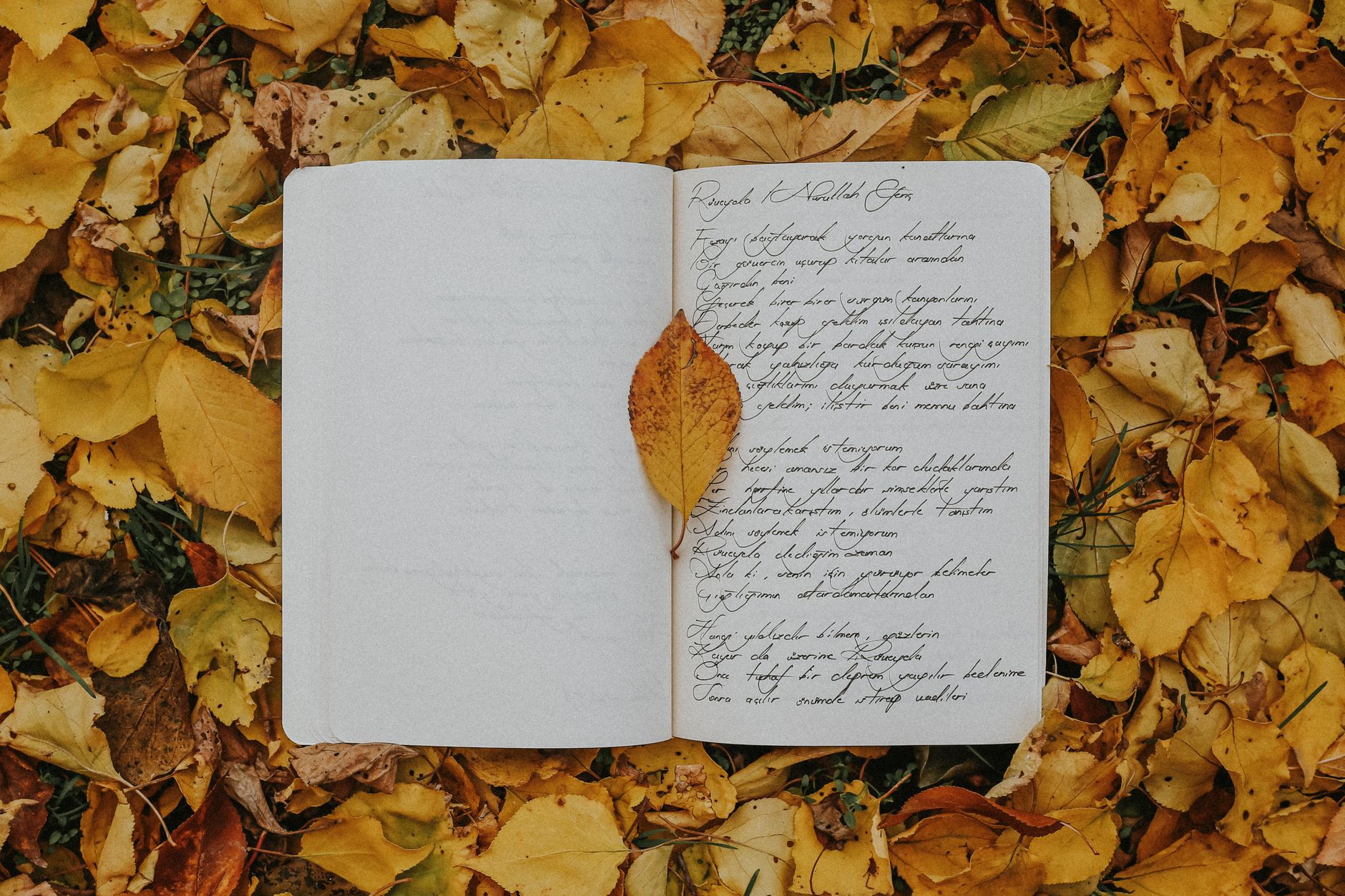
Poetry.

For the past three months, I have been utterly consumed—writing forty-plus poems in three months, which even I have to admit is a slightly absurd amount of poetry

Now, I shalln’t subject you to the entirety of the collection. However, I have shared a few with friends and family, who have begun to gently (and not so gently) encourage me to seek publication. After all, it seems such a shame that such a collection should simply languish on my desktop.

Suddenly, a list of journals sits before me, complete with deadlines looming and pressure quietly building. Some even come with significant cash prizes if the poems are selected.

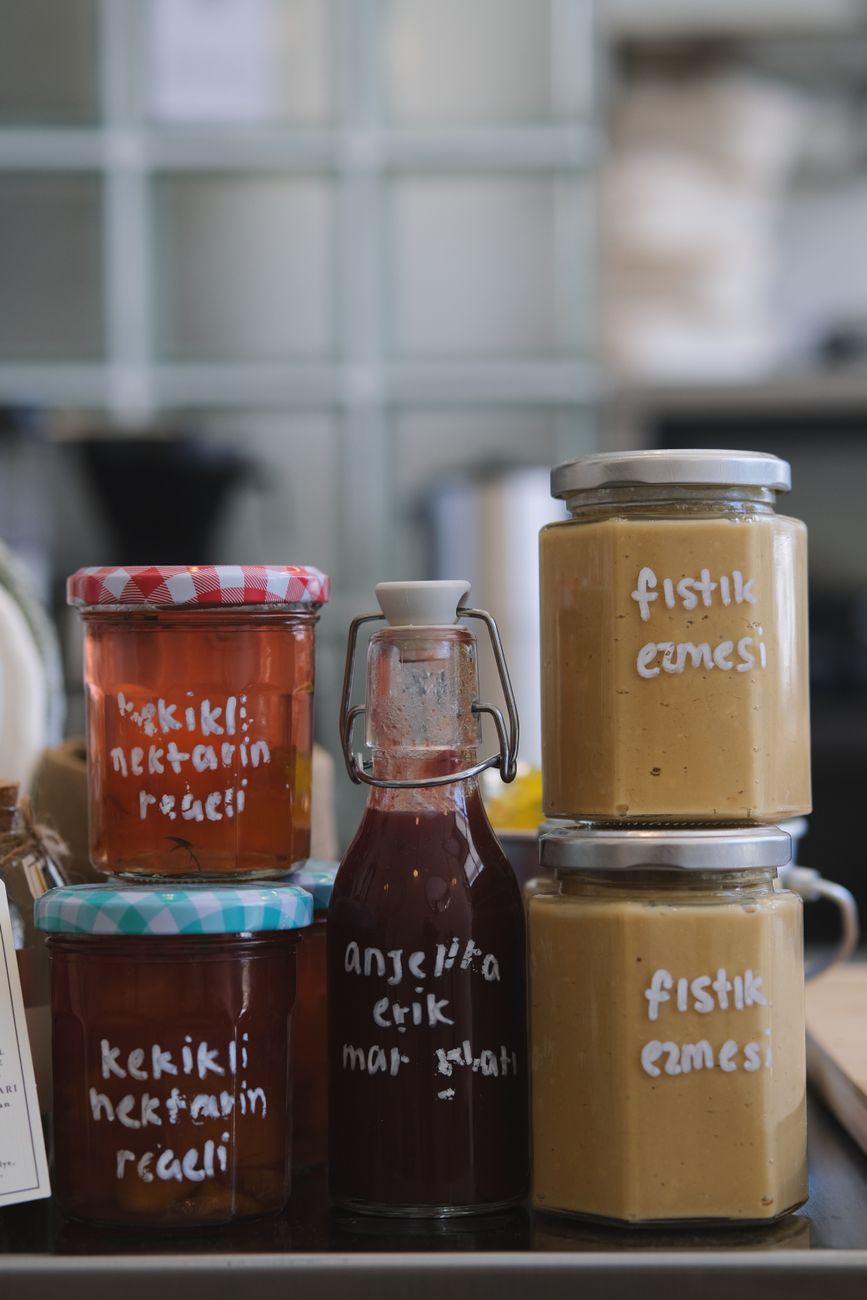
Photo by Hatice Baran on Pexels.com

Isn’t that just the way of hobbies?

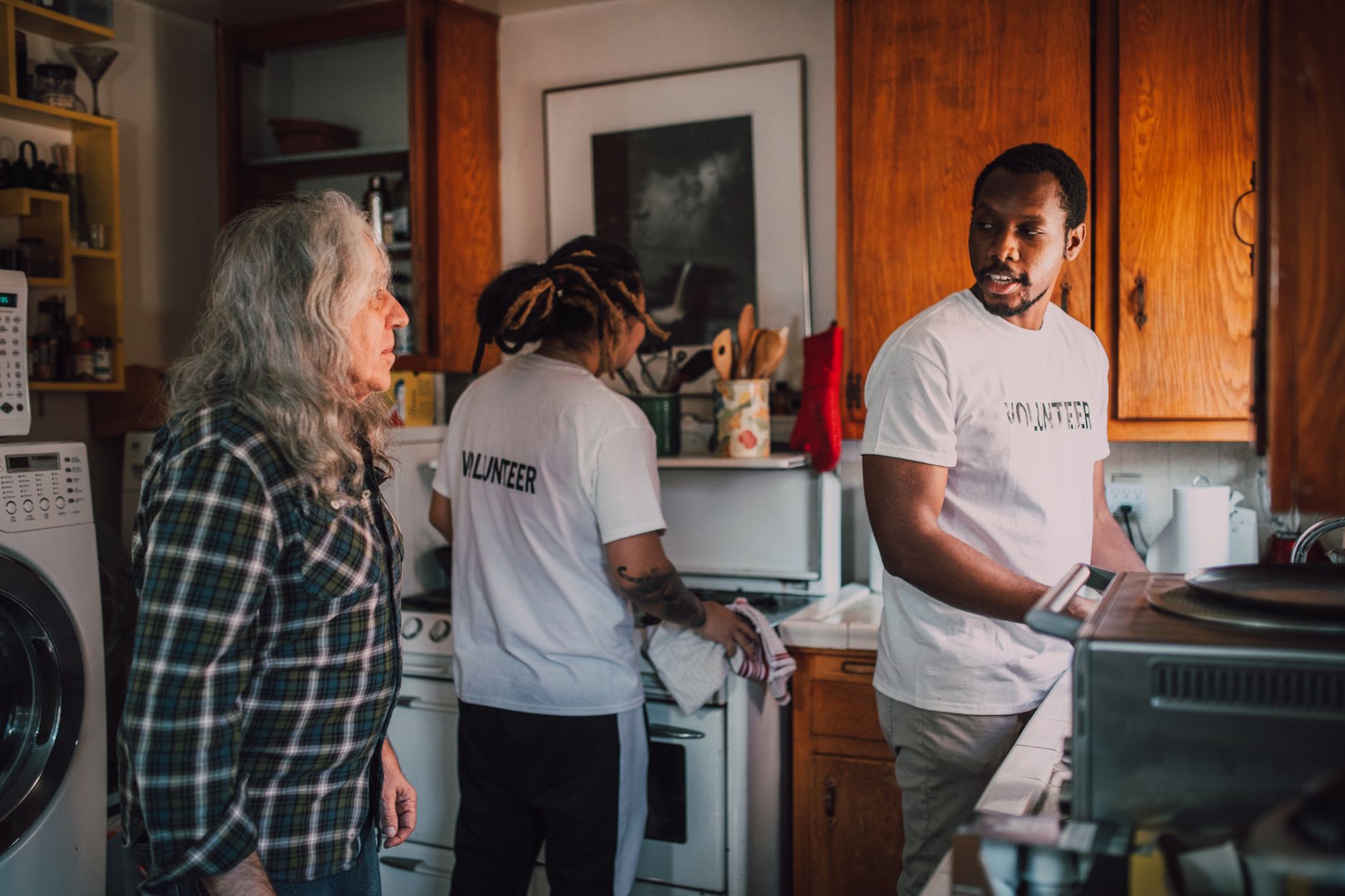
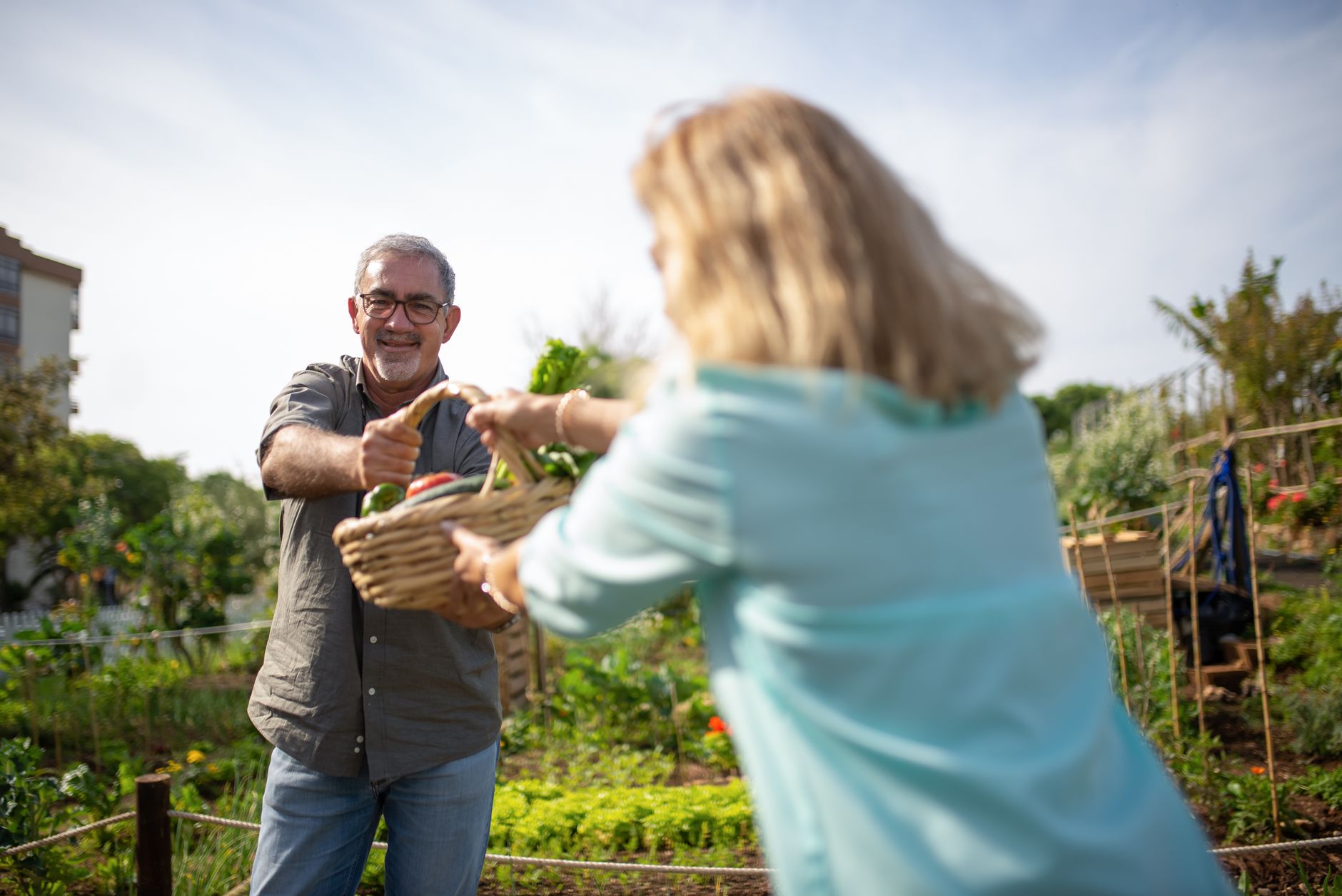
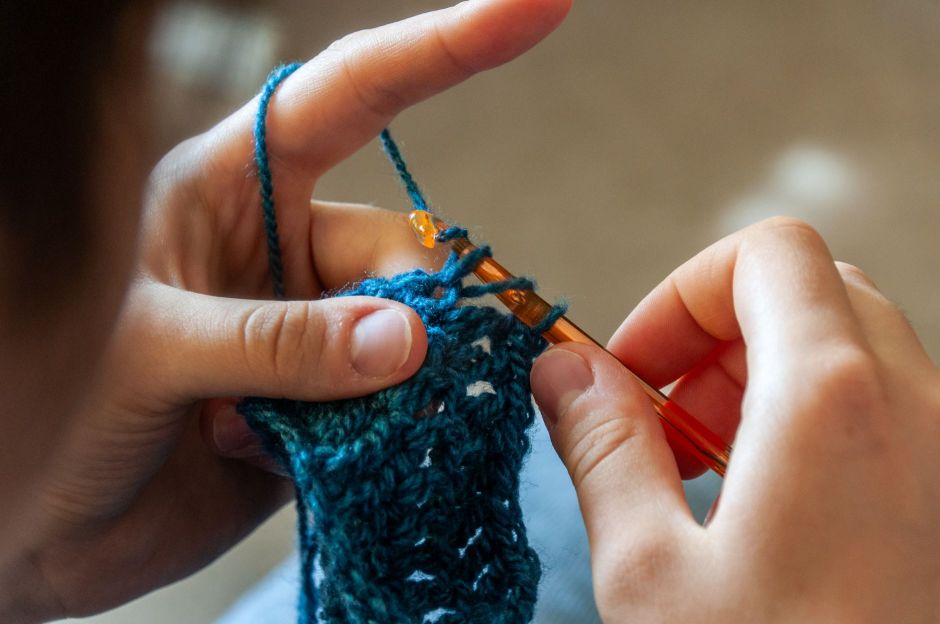
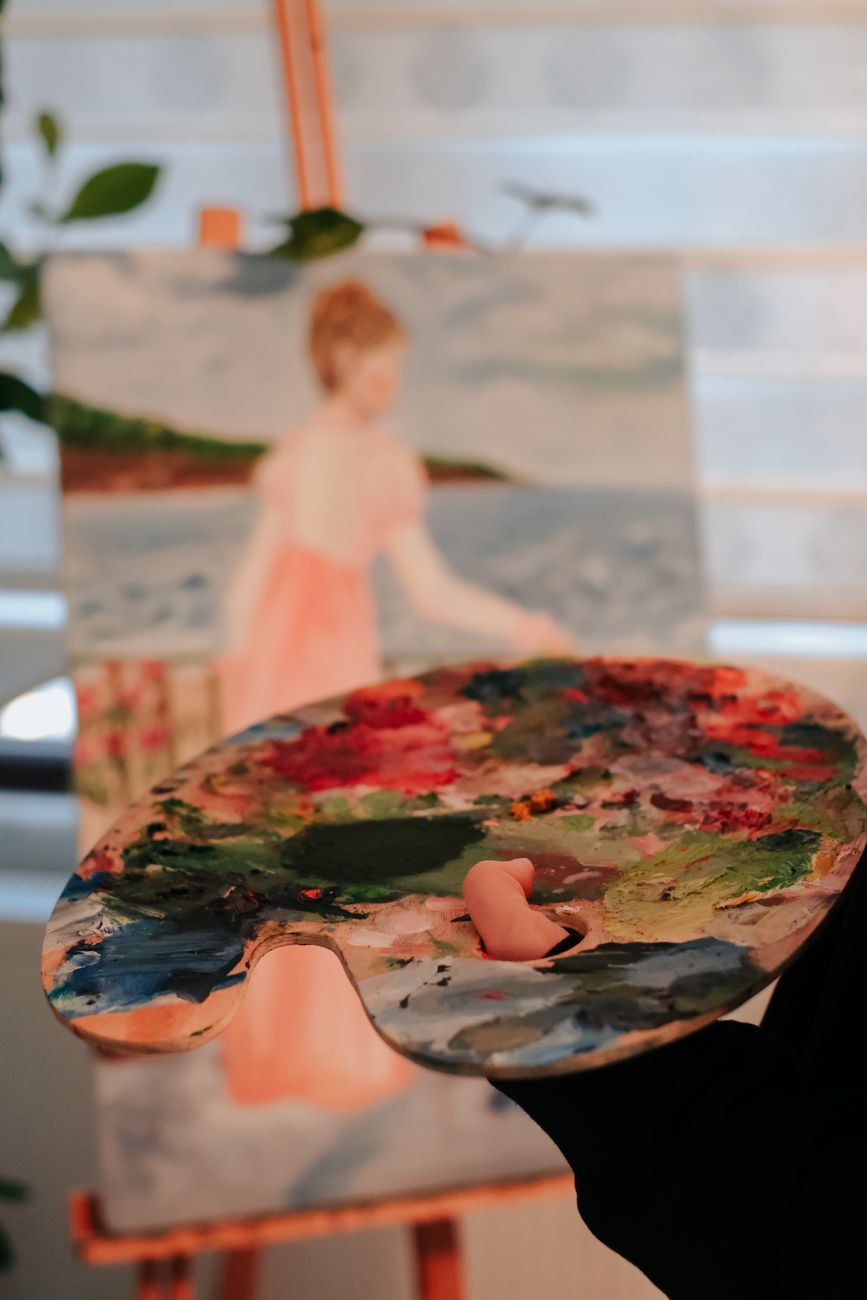
The crocheter is asked when she’s opening an Etsy shop. The painter is asked if they’ve considered the local gallery. The yoga enthusiast is told they should teach. The baker is suddenly “volunteered” for every birthday cake in a five-mile radius. And the poet, inevitably, is encouraged to submit to journals.

And it sounds reasonable, doesn’t it?

We are constantly told to pursue our passions. To follow what we love. To “do what you love and you’ll never work a day in your life.” A beautiful idea. And also… a slightly suspicious one. Because somewhere along the way, we stopped asking whether turning everything we love into something productive might quietly change the thing itself.

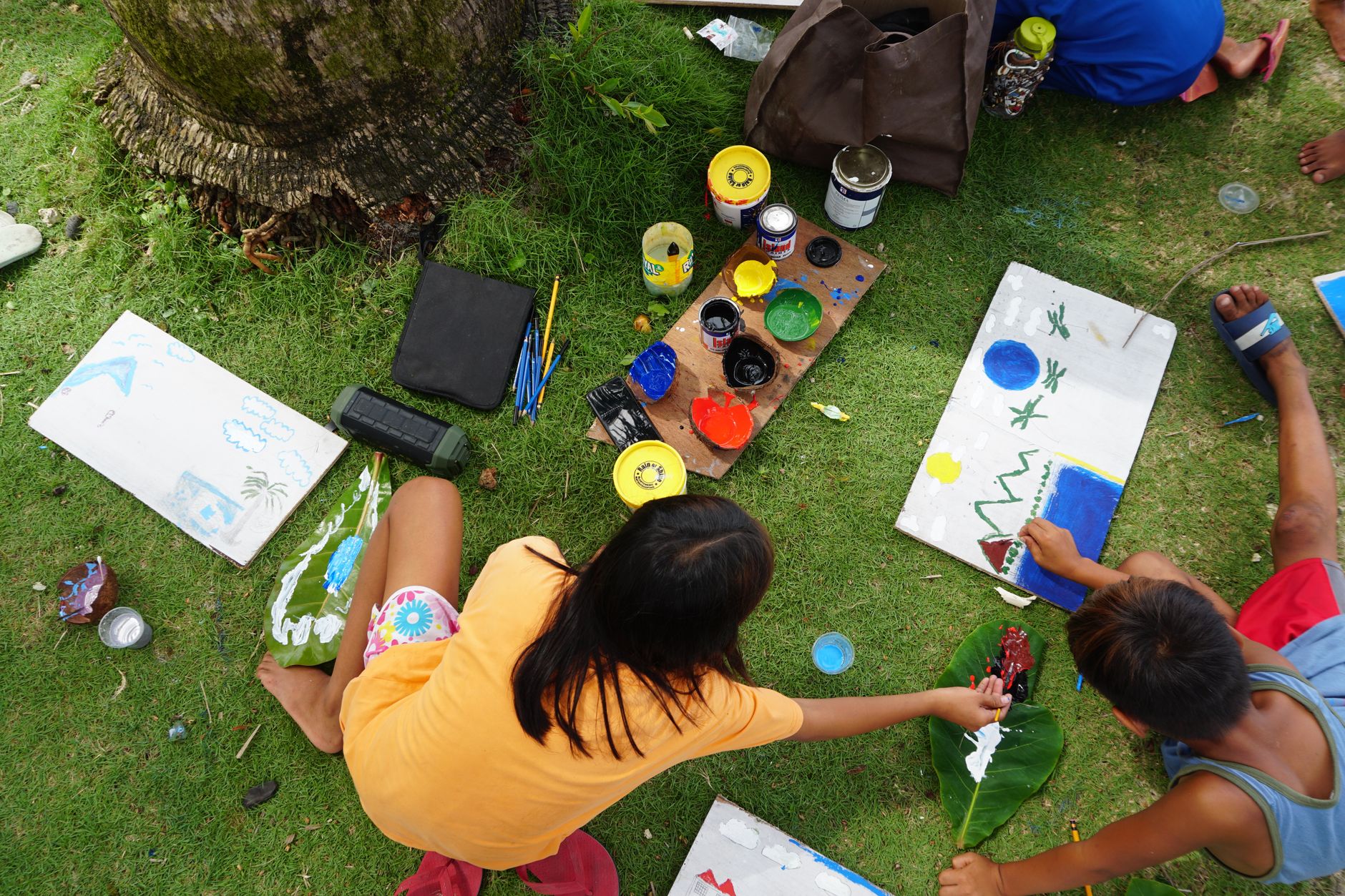
There was once an experiment with children who loved to draw. They were divided into groups—one received an external reward for drawing, the other did not.

The result was surprisingly consistent: the group that drew without reward maintained their interest. The group that drew for the reward lost motivation over time. And the group that received an unexpected reward? They also maintained their enjoyment.

In other words: motivation thrives not on chasing reward, but on the absence of needing one. We are most creatively alive when we are not negotiating with outcomes.

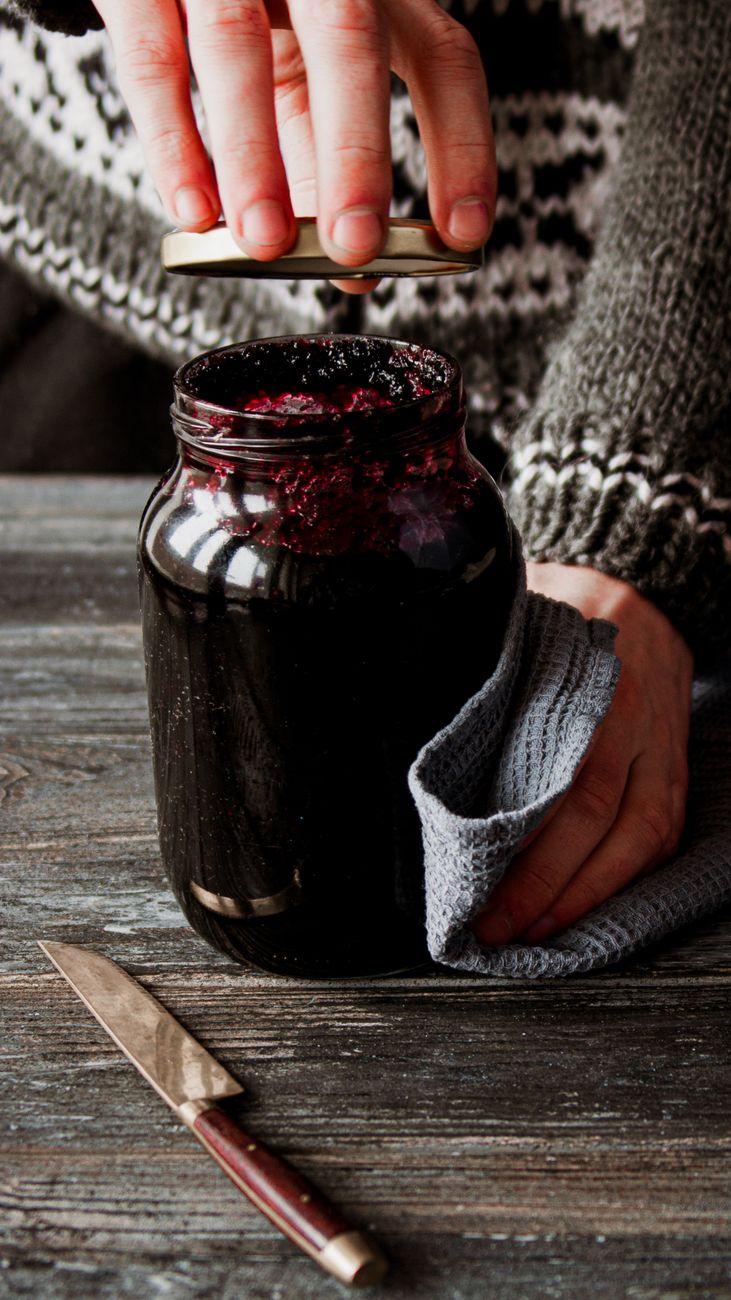
Photo by Cort Landt on Pexels.com

Another study, this time with adults, found something equally odd. One group completed a deliberately dull task before being asked to solve creative problems. The group that had just done the “boring” task actually produced more creative solutions.

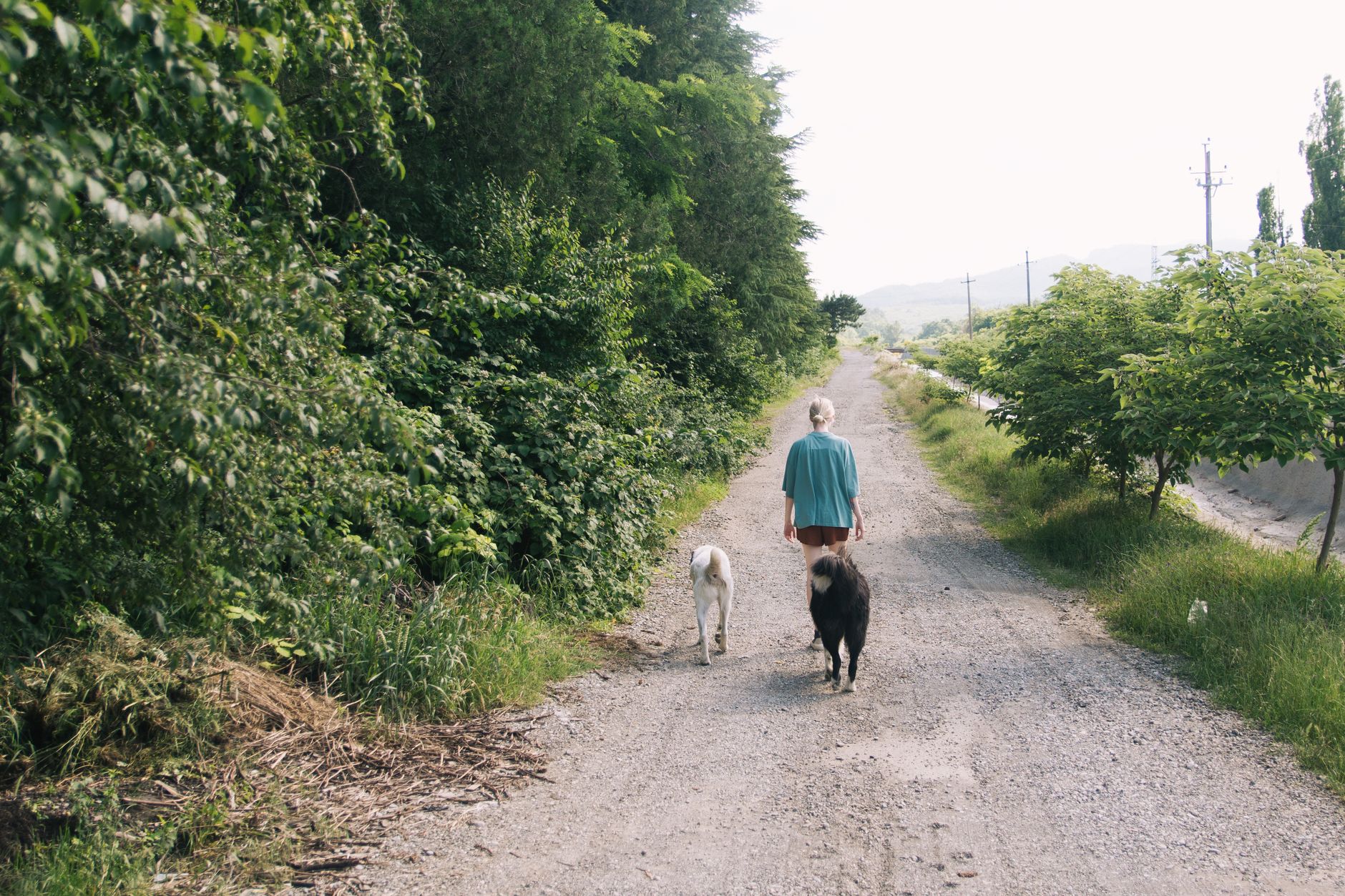
Which is funny, because some of my best poetry has never arrived at a desk. It arrives while driving. While walking. While weeding the garden or cleaning something I definitely didn’t want to clean. It arrives when the conscious mind is occupied just enough to step aside.

But that kind of mental spaciousness is hard to come by when every hour is accounted for, optimized, monetized, or squeezed into productivity. And that’s where hobbies quietly begin to change shape. Because turning a hobby into a side hustle sounds empowering—until it isn’t.

At first, it’s just sharing something you love. Then it becomes selling something you love. Then it becomes needing to sell something you love. Then it becomes needing to make something people will buy. And slowly, almost imperceptibly, the question shifts from: “What do I want to make?” to “What will perform well?” The hobby is still there. But the play is not. And without play, something essential quietly drains out of the work. Not always immediately. Not dramatically. But steadily—like a color fading from fabric left in too much sun.
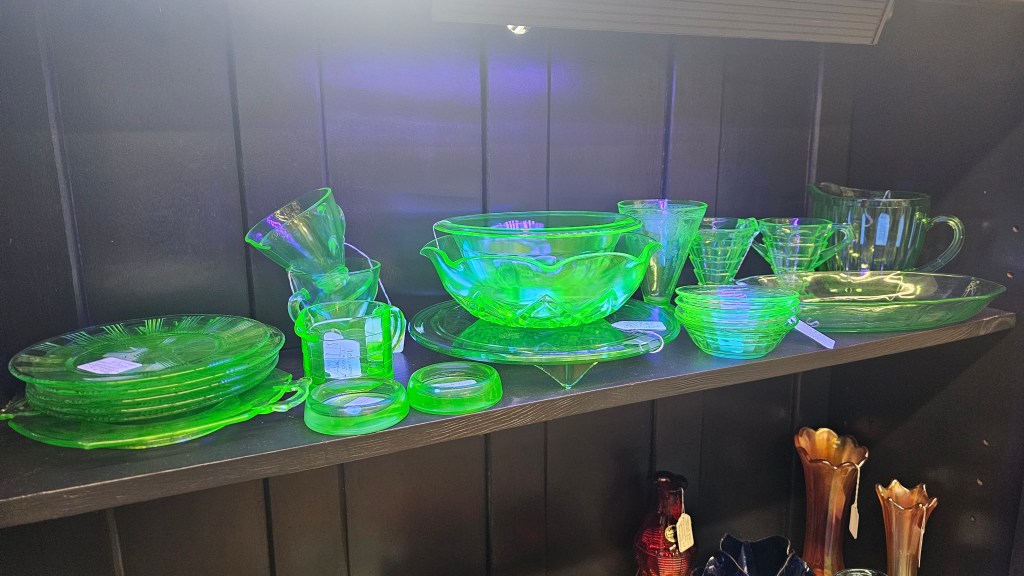
Photo by SHVETS production on Pexels.com

The uncomfortable truth is that most side hustles do not pay nearly as much as we imagine they will. Often, the return is small compared to the time invested. Sometimes it amounts to a few dollars an hour—or less—once everything is accounted for.

Which would be fine, if the primary goal was joy. But when the goal becomes income, validation, or traction… the relationship changes. We stop being in conversation with the thing we love. And start being evaluated by it. And I think that is the part we rarely say out loud: Not everything we love is meant to be optimized. Not everything we create is meant to scale. And not everything beautiful needs to become a business plan.
Sometimes the point is simply that it exists at all. Sometimes the point is that it made you feel alive while you were making it. And perhaps the real danger is not that we fail to monetize our passions… But that we succeed in doing so, and lose the ability to enjoy them without permission. So for now, I remain in my poetry hyperfixation. Not as a product. Not as a strategy. Just as a person who has been, for a while, deeply interested in making things that do not need to become anything else.

Oh do not get me wrong, dear reader, I will submit things to journals here and there, but not for any other reason than to put them out into the world. But mostly, I shall continue to focus on having fun.

Photo by betu00fcl nur akyu00fcrek on Pexels.com

The Alchemy of Sand

Have you ever really looked at a piece of glass?

Not through it. Not as a window or a drinking glass or the screen you are likely reading this on. I mean truly looked at it.

Hold it up to the light and watch it catch the sun. Run your fingers across its perfectly smooth surface. Notice how something so rigid can seem almost fluid, bending and reflecting the world around it. It is such a common part of our daily lives that we rarely stop to consider what a marvel it truly is.

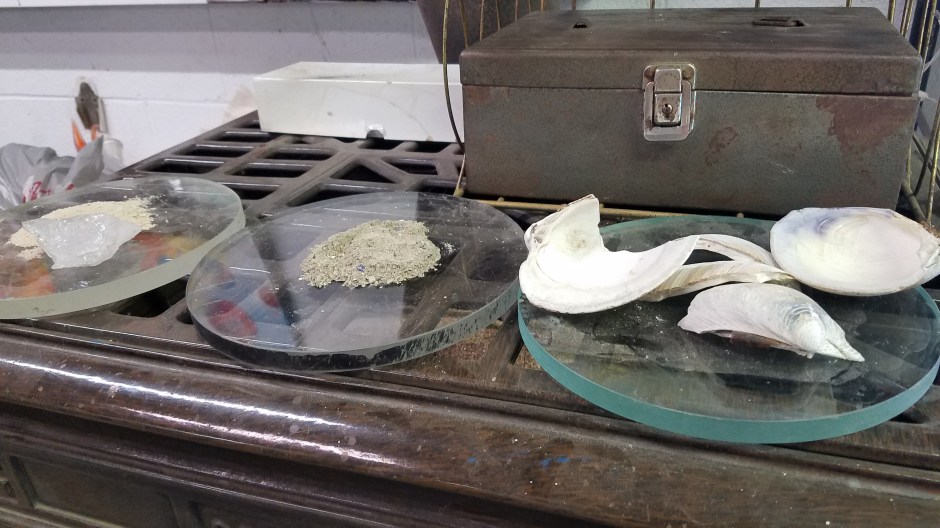
After all, who looks at sand and imagines it becoming something so beautiful? Pick up a handful and let it run through your fingers. Feel the grit against your skin. It seems impossible that the same material could one day become a crystal-clear vase, a stained-glass window, or the screen of a smartphone. Yet mix it with soda ash—not the kind you drink—and limestone, heat it to thousands of degrees, and transformation occurs.

Perhaps that is why glass has always seemed a little magical to me.

I grew up attending the Renaissance Faire and was familiar with the art of glassmaking from the many demonstrations. It was fascinating watching artisans transform solid minerals into a glowing liquid and then cool them back into entirely different forms. One could only conclude that magic, at least in a sense, was indeed real as dragons, unicorns, flowers, and delicate ornaments emerged from what had once been little more than sand.

Glassmaking is a tradition thousands of years old, originating somewhere in the ancient world, perhaps Syria, perhaps Egypt. However it began, one cannot help but marvel at the discovery. Imagine being the first person to witness the transformation. One day you are standing before a furnace filled with sand and stone. The next, a strange translucent substance emerges from the flames. It is easy to understand why ancient peoples often blurred the line between craftsmanship and magic.

It was this appreciation for its rich history and fascination with magic that seemed just out of reach that piqued my curiosity to seek out a glassblowing class during the midst of COVID restrictions. Yes, flights may have been canceled, cruise ships docked, some states open, others shuttered. Travel seemed impossible, and any chance at adventure seemed out of reach. However, for someone who knows that adventure can be just outside the door, it seemed like the perfect time to explore opportunities closer to home.

Besides, what better activity could there be in a pandemic than one that involves blowing into glass that’s thousands of degrees while the vents continually suck out the air, ensuring one is only breathing fresh air? Any germs you may have will certainly perish in the flames of oblivion. Forgive the dramatic flair, but this is my blog, and I can be dramatic if I desire.

I set out in the beginning of July, just when the first COVID restrictions were being lifted in my home state of Pennsylvania. We reached out to a local craftsman who offered classes and booked a session for two to make glass ornaments. We met with a very friendly teacher, Michael, who first assured us of the safety of the activity before launching into some of the science and history of glassmaking.

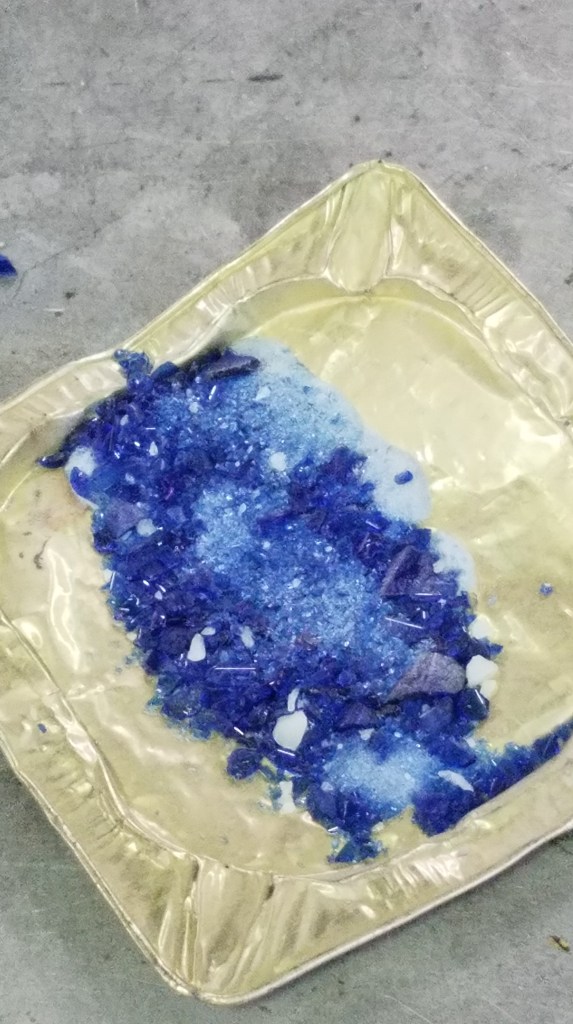
Even though it was mostly review for the two of us, we still listened with rapt attention, barely containing our excitement. He explained how we were going to add color to our glass and gave us an overview of the technique: how to blow and turn to keep the glass even, and how quickly the glass cooled despite the heat, making it a little tricky to manipulate. Then we were able to start.

The workshop itself sat open to the warm Pennsylvania summer. One entire wall functioned as a garage door and had been rolled up to welcome the evening air. Beyond it stretched fields and trees glowing beneath the golden light of late afternoon. It was a surprisingly peaceful setting for an activity centered around furnaces hot enough to soften stone.

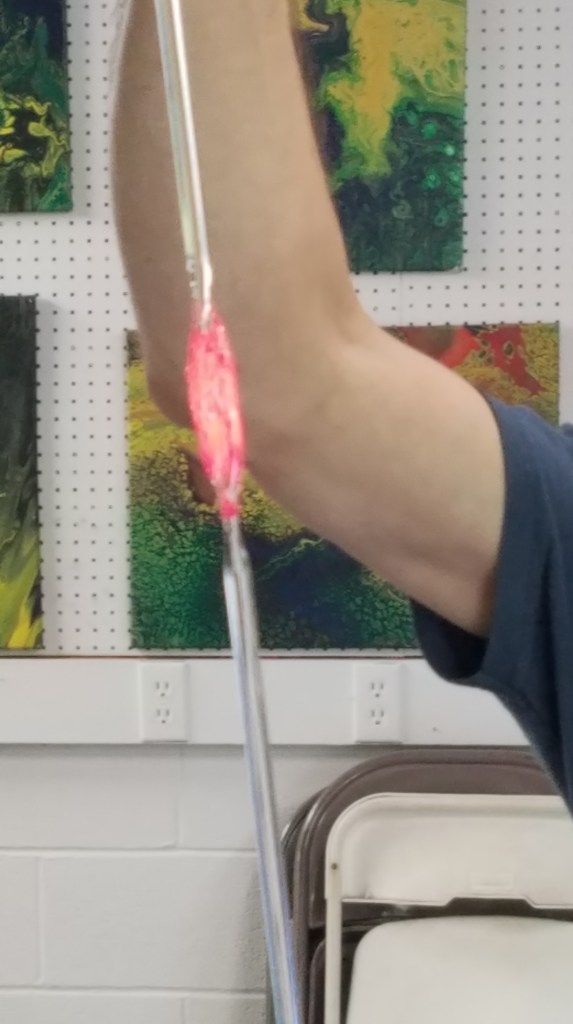
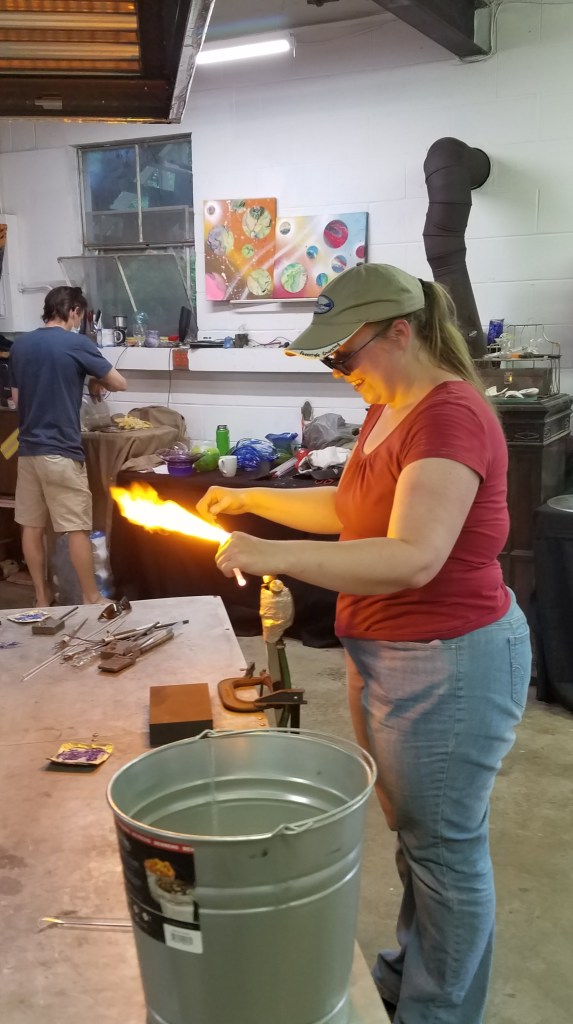
Inside, the studio pulsed with heat and orange light. Glass gathered from the furnace emerged glowing yellow-white before fading through shades of orange, amber, and red as it cooled. Every few moments Michael would send us back to the furnace to reheat our work before the glass stiffened once again.

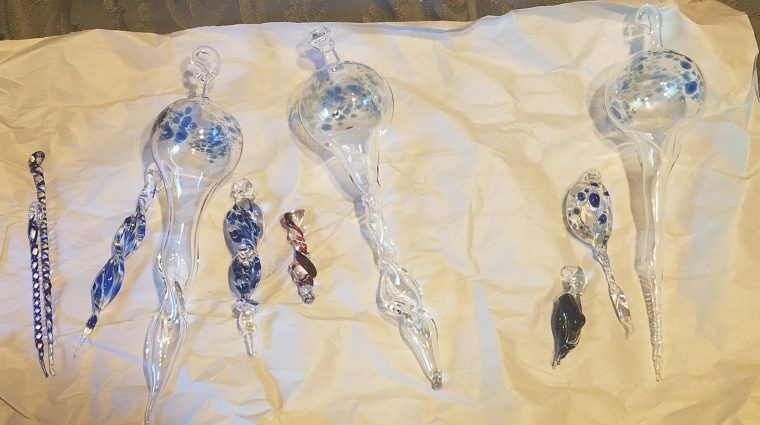
It was both easier and harder than I anticipated. The glass came to temperature and cooled more rapidly than I thought it would despite his warnings. I had fun experimenting with twisting it and manipulating it into various shapes, not much minding whether it turned out to be a piece of art or not. After all, the idea was simply to experience the process, not necessarily to create something worthy of display.

Although, I must say, for a first attempt, I did quite well.

As the lesson progressed, I became so focused on the task that I barely noticed the passage of time. My attention narrowed to the rhythm of turning the blowpipe, reheating the glass, and carefully shaping it before it cooled. Only occasionally would I glance up and realize the world outside had changed.

The bright summer afternoon had softened into twilight. Long shadows stretched across the fields beyond the open doorway, and the golden light that had greeted us slowly gave way to the blues and purples of evening. Somewhere between the furnace and the workbench, hours had slipped away unnoticed.

How can you create your own magic?

If reading this has awakened a bit of curiosity, you may be surprised to learn that glassblowing classes are more accessible than you might think. A quick search for “glassblowing classes near me,” “glass art studios,” or “glass workshops” will often reveal local artisans offering beginner-friendly lessons. Community art centers, craft schools, and independent studios frequently host one-time classes where no prior experience is required.

Perhaps you will make an ornament, a paperweight, or a vase. Perhaps your creation will emerge a little lopsided, much like mine. That hardly matters. The real magic lies in stepping through the studio door, feeling the heat of the furnace, and experiencing an ancient craft with your own hands. You never know what wonders may be hiding just around the corner of your hometown, waiting to transform an ordinary afternoon into an adventure.

Completed: 2020

Cost: $95

Miles from home: 30 miles

Want to discover more adventures? Check out my whole Bucket List and Reverse Bucket List

The Lost Art of Becoming a Regular

Subscribe to continue reading

Subscribe to get access to the rest of this post and other subscriber-only content.

The Day My Phone Saved Me From Buying Another Purse

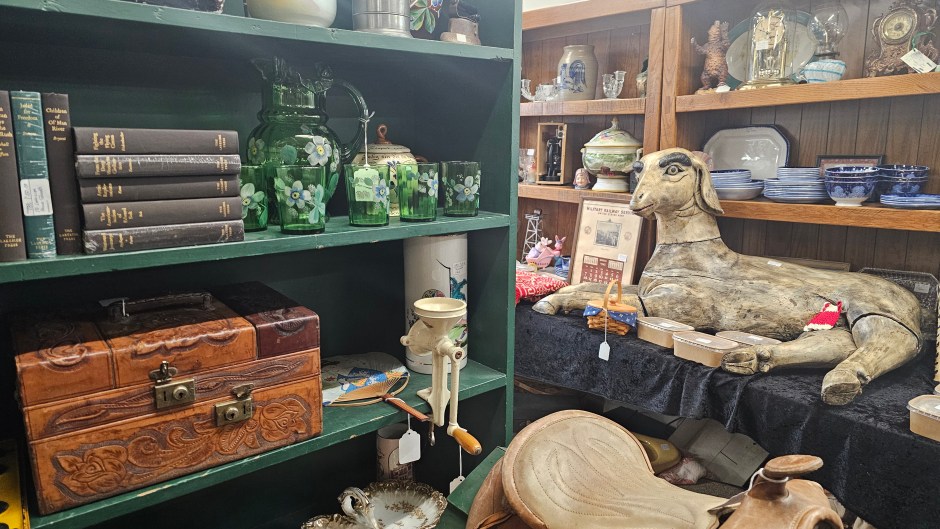
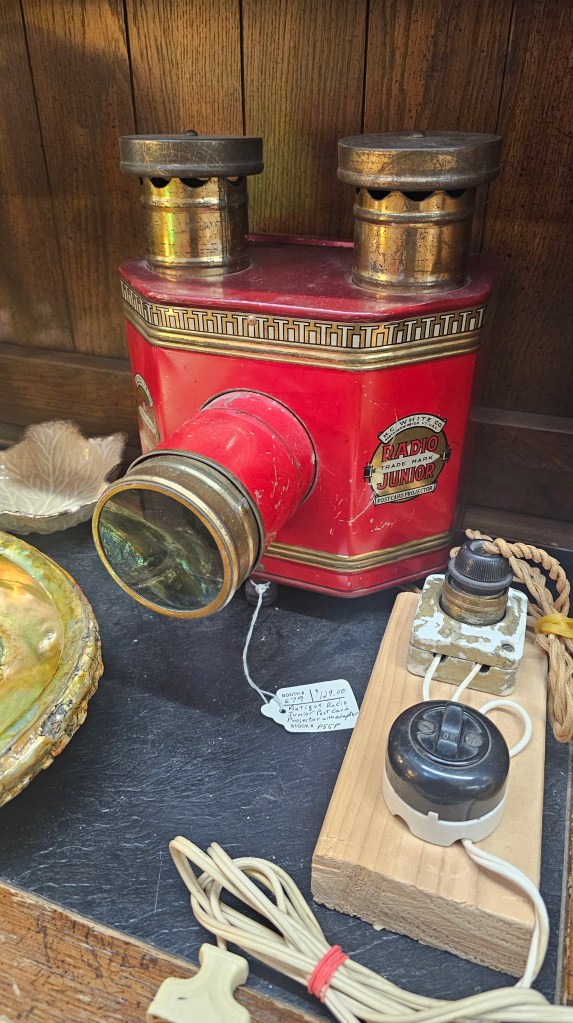
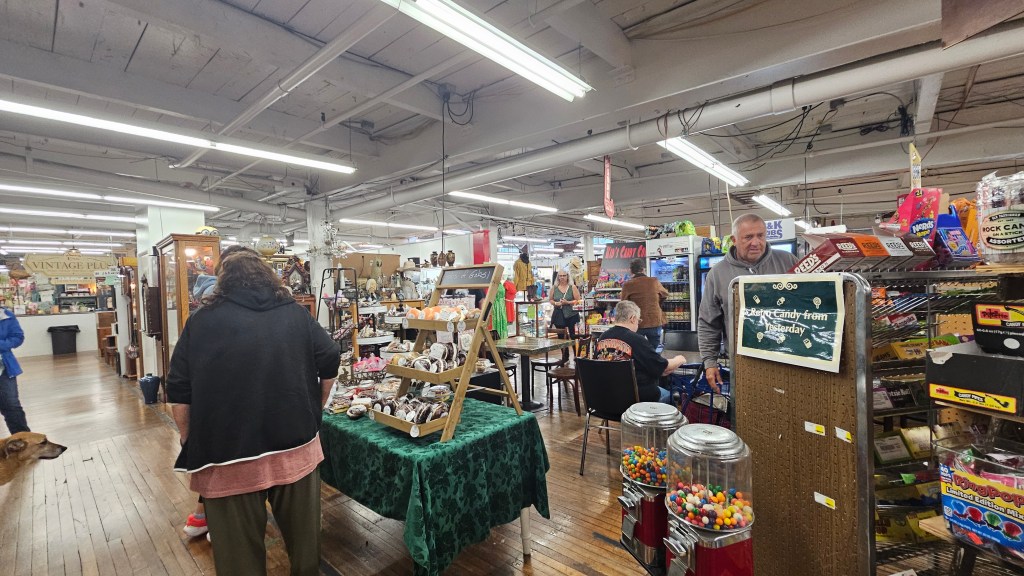
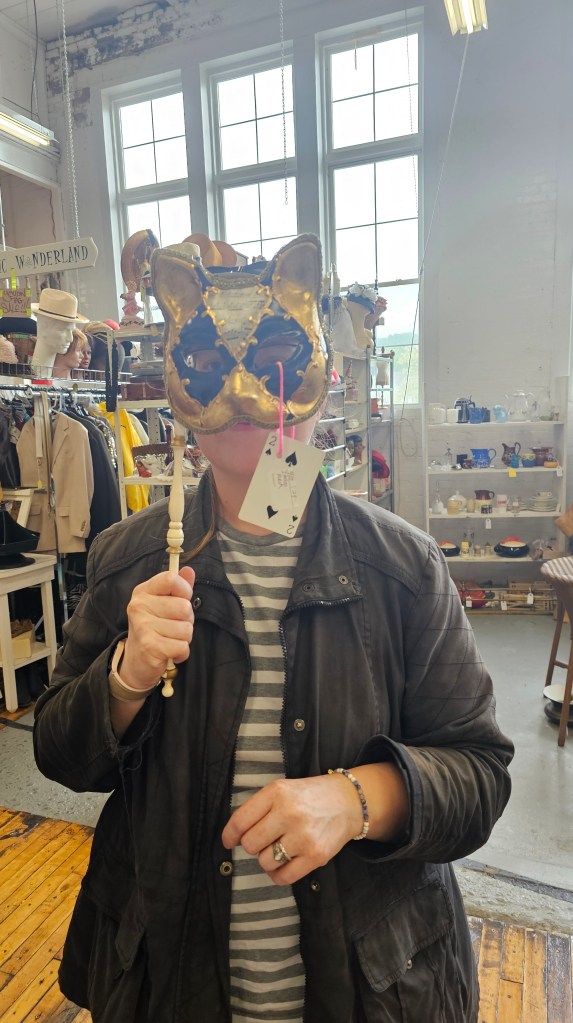
The other weekend, on a rainy afternoon, my sister and I ventured into a massive indoor antique store housed in an old warehouse. Two stories of treasures stacked on top of each other unfolded into a sprawling maze of booths, each one as varied as the colors of the rainbow.

Old uranium glassware sat beside vintage clothing. A now-derelict gas pump stood comfortably next to forgotten household tools. It was a hodge-podge of decades and even centuries, all jumbled together in a kind of quiet, chaotic harmony. A cacophony of objects, each with its own story, none of them particularly concerned with being organized by time period.

We happily set off on a kind of treasure hunt, letting whatever caught our eye guide us. There is something uniquely joyful about wandering without purpose except curiosity, being delighted by strange finds and pausing often to compare notes.

Being both history nerds, we took turns educating one another, filling in the gaps of each other’s knowledge as we went. “Oh, that’s a…” inevitably became the start of several long conversations that may or may not have been entirely accurate but were delivered with great confidence nonetheless.

What makes antique stores so uniquely fun is that unlike museums, where objects are carefully preserved behind glass with a strict “do not touch” policy, here you are invited to engage directly. You can pick things up. Turn them over in your hands. Imagine not just where they came from, but what it would feel like to let them live in your space now. History becomes something you can hold, not just observe.

My sister and I have many fond memories of antiquing with our mother when we were younger, learning about objects we didn’t yet have the language to name, and giggling over cultural relics that felt ancient at the time but are now beginning to resemble our own childhood.

There is always a slightly unsettling moment, of course, when you realize something from your own past has made its way into an antique store. Yes, I am approaching forty, but are we really prepared to call the Tamagotchi “historical artefact” rather than simply “vintage nostalgia with battery anxiety”? Time, it turns out, is a bit unkind that way.

But that is part of the charm. Antique stores collapse time in on itself. What was once ordinary becomes curious again. What was once discarded becomes interesting. And what was once personal history becomes someone else’s discovery.

It turns out you don’t always need a destination to have an adventure. Sometimes you just need a rainy afternoon, a large warehouse full of forgotten things, and someone beside you willing to say, “Wait, come look at this.”

My sister, in her own successful treasure hunt, found a brass penguin, her husband’s favorite animal, which will now take up residence in her living room as a small but very specific piece of joy.

I, on the other hand, left empty-handed in the most literal sense. Well… almost.

There was an adorable purse shaped like a magazine that I briefly considered adopting. Unfortunately, it failed the most important test of all: it would not fit my phone. And if a purse cannot carry the one object I am legally required to bring everywhere, then it is more sculpture than accessory.

Honestly, my phone has probably saved me more money on impulsive purse purchases than any amount of self-control ever could. Perhaps it has already paid for itself in avoided financial mistakes alone.

And yet, even without a purchase, I did not leave empty. Because sometimes the point is not what you bring home. It is what you notice along the way.

How can you experience the thrill of the hunt?

If you ever find yourself with a rainy afternoon and a bit of curiosity, I would encourage you to go on your own treasure hunt. You never quite know what you will find when you let yourself wander without expectation. What’s wonderful is that antique stores litter the US so you’re almost certain to live nearby one. Of course, you will be hard pressed to beat Adamstown, the Antique Capital of the United States (located conveniently in my backyard), but don’t let that discourage your treasure hunt! 

If you do it right, you might even come home with something unexpected. Maybe a story. Maybe an object. Maybe both. Or, if you are my sister, a brass penguin that now lives quite happily on a living room shelf, quietly reflecting on the meaning of life but never sharing. 

Either way, the hunt is the point. 

Miles from home: 45 miles

Cost: Free (well gas is getting expensive)

Completed: First in childhood

Want to discover more adventures? Check out my whole Bucket List and Reverse Bucket List

Reverse Bucket List: A Weekend in Paris (Part I)

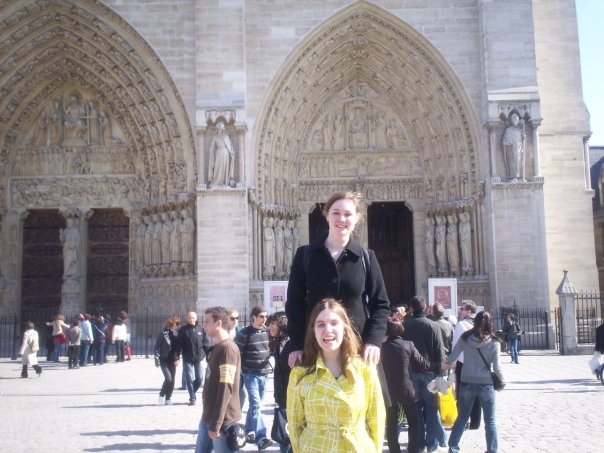
“How do you feel about a weekend in Paris?”

I twirled in my chair, hair whipping across my face, and fixed my friend Erika with a look that needed no elaboration. Her response was immediate. A squeal. A clap. An emphatic, “Yes.”

After all, what else does one say to Paris in the spring?

Such spontaneity, dear reader, is only possible when you are determined to drink deeply from the cup of life while living abroad. For an American especially, there is something intoxicating about the ability to hop on a train and cross into another country before lunch. When you come from a place where a single state can rival the size of an entire nation, the idea feels almost illicit, perhaps even scandalous.

So without further ado, we secured tickets on the high-speed train from Frankfurt to Paris. Arm in arm, we walked toward the station, already breathless with plans: art, museums, music, culture, food, people. And what a people!

A sudden unplanned Paris in a weekend?

Madness. An affliction surely.

Which is precisely why we had to do it.

The true catalyst was a message from a dear friend who would be spending a week in the city and wondered if I might join him for a day. An afternoon in Paris with a friend who happened to be an artist of some renown? The answer could only be yes. After all, who could be the more perfect tour guide?

This was before smartphones lived in our pockets. Before we had google at our fingertips and the assuredness that comes with having all the answers tucked away. We packed lightly, wrote down the number of the American embassy, ensured we had our emergency contacts into our bags, and armed ourselves with a travel guide and a healthy dose of gumption. Travel then required nerve. Trust. If you got lost, you figured it out. If you mispronounced something, you survived the embarrassment. There was no digital rescue waiting in your palm. Which is honestly, what I miss most about travel these days.

The train hurled us across the countryside, fields bursting with early spring color flashing past the windows. I could not help comparing it to Pennsylvania. Lancaster County, in particular, bears a resemblance to parts of Germany, and for the first time I understood, in a small but tangible way, why so many Germans had settled there. Hiemweh melted away leaving a strange sense of coming home even across an ocean.

Three hours is long enough to plan a city and short enough to realize you cannot conquer it. We trimmed our ambitions to a few must-sees and a handful of hopefuls. The Louvre alone could swallow a week. Paris, we decided, would not be conquered. It would simply be experienced.

Crossing the border was almost anticlimactic. An announcement crackled overhead. That was all. No passport stamp. No interrogation. It felt like slipping into Ohio, except the anticipation hummed in your bones. No offense to Ohio of course, but really are we going to say it compares to France?

And then we arrived.

First Things First: Find the Bed

Before romance, before art, before croissants on café terraces, there is one universal truth of travel; You must find where you are sleeping.

Armed with a folded map and confidence wildly disproportionate to our navigational skill, we set off to locate our hostel.

Now, in our defense, the streets of Paris are confusing.

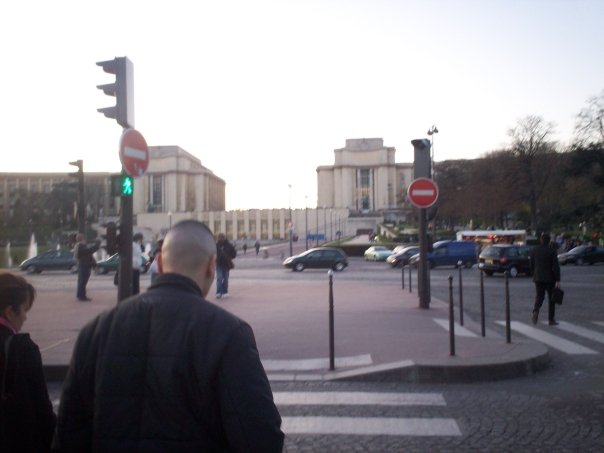
Unlike the tidy grid systems Americans grow up with, Paris feels as though it was designed by someone who enjoyed curves, diagonals, and the occasional act of mischief. Streets fork unexpectedly. They change names without warning. A road that appears straight on a map somehow bends in real life. And the street signs? They are affixed to the sides of buildings, charming blue plaques that would be immensely helpful if they were not routinely obscured by graffiti, peeling posters, or layers of mysterious paper advertising concerts long since passed. It was an exercise in hopeless confusion and frustration.

More than once we stood directly beneath a sign, craning our necks and squinting upward, trying to determine whether we were on Rue de Something Important or merely staring at a band flyer partially concealing our destiny.

And then there was the metro.

For the uninitiated American traveler, the Paris metro is not transportation. It is an initiation ritual.

Lines spiderweb across the city in a dizzying tangle of colors and numbers. Trains are labeled by their final destination rather than the direction you believe you are traveling, which requires you to know far more geography than you actually do. Stops are announced quickly, sometimes swallowed by the metallic roar of the car, and the maps inside the train might as well have been abstract art for all the clarity they offered at first glance. Especially, if one has never traversed public transit before. Which alas, many Americans have never been on anything more than a school bus.

You descend into the underground with confidence. You emerge twenty minutes later into a vast plaza with six exits, each pointing toward a different arrondissement, blinking in the daylight thinking, This seems right.

It is rarely right.

One exit leads you in the exact opposite direction. Another deposits you onto a boulevard you did not know existed. A third leaves you staring at a fountain that looks vaguely familiar but is, in fact, not the fountain you were seeking.

Given these small obstacles, I consider it nothing short of miraculous that after a few wrong turns and some enthusiastic but misguided pointing, we found our hostel at all. 

Little did we know, this was only the beginning of our navigational adventures and given the amount of confusion the metro caused, we determined that the best way to get anywhere was by foot. Yes, you read that correctly. I walked Paris in a weekend. I estimated that I traversed at least 15 miles. Though as this was before the popularity of step counters, I only have my best estimates.

The hostel itself was functional in the most generous sense of the word.

If you have never experienced a European student hostel, allow me to clarify something, it is not glamorous by any stretch of the imagination. It is economical. And it is very much a young person’s sport.

The shower required physical encouragement. You had to press the button, and water would flow for approximately twelve optimistic seconds before shutting off again. Want to rinse shampoo from your hair? You had to keep pressing it like you were negotiating terms. The “hot” water hovered somewhere between hopeful and politely lukewarm.

Breakfast was included, which sounded promising until we discovered that “included” meant toast, jelly, and coffee. For Americans raised on sprawling hotel buffets complete with eggs, waffles, fruit, yogurt, and pastries, this was a humbling cultural exchange. There was no omelet station. No waffle iron. There was toast.

And you were grateful for it.

We adapted quickly. A stop at a neighborhood grocery store provided bread, cheese, and sliced meat. It was the perfect strategy: sustain ourselves during the day, conserve our funds, and reserve our modest budget for dinners out in the evening. For two college students, it was a masterclass in practical travel. Frugal by day. Indulgent by night.

The hostel was never meant to be the highlight. It was the launchpad. A place to drop our bags. A place to sleep. A place from which to begin.

And begin we did.

What followed was a blur of museums and miscalculations, attempted French and accidental detours. We wandered into neighborhoods we had only read about. We misread maps. At one point, quite unintentionally, we discovered that we had strayed into the red-light district. There is nothing quite like realizing you are lost in a foreign city and that the neon lighting is… intentional.

But that, dear reader, deserves its own telling.

Because Paris was not merely art and architecture. It was a lesson in courage. In frugality. In friendship. In the quiet bravery required to step into the unknown without guarantees and trust that you will find your way.

This is what I mean by a reverse bucket list. Not the grand achievements we hope to accomplish someday when everything is perfect, but the moments we dared to say yes to when they appeared. The train we boarded. The map we unfolded. The hostel we made work. The city we entered anyway.

A fulfilling life is not built by waiting until conditions are ideal.

It is built by saying yes before you feel entirely ready.

In the next post, we will step fully into the city itself. The beauty. The bewilderment. The glorious inconvenience of getting lost in Paris.

And why, sometimes, that is exactly the point.

Want to discover more adventures? Check out my whole Bucket List and Reverse Bucket List

Rethinking Love in February

Love is in the air, or at least Valentine’s Day is.

It’s the time of year when the town is painted red, couples linger a little closer, and a different kind of warmth permeates despite the bitter chill of winter. The days are growing lighter. Spring is promised. Something soft waits patiently beneath the cover of snow.

And yet, Valentine’s Day carries a strange contradiction.

Did you know it is one of the most common days for breakups?

For a holiday brimming with sappy poems, fragrant flowers, and sweet chocolate, it has earned a surprisingly bitter reputation. Perhaps that is because a day devoted to love forces us to reflect on what love actually is… and sometimes, upon closer examination, we discover that what we thought was love… wasn’t.

Believe it or not, our culture, and often even our families, do a poor job of teaching us what real, authentic love looks like.

We talk about butterflies in our stomachs and feeling lightheaded from a kiss. In love songs, boundaries blur and two people fuse into one. In stories, love is intense and consuming. The hero protects the heroine, but also possesses her, sealing devotion with the words: “You are mine.”

Sometimes we are taught to view love through obligation and duty. Love becomes something we owe. Something we earn by fulfilling expectations and playing our roles correctly. Love becomes sacrifice at the expense of the self.

Photo by Pixabay on Pexels.com

But is that love?

I would argue that these versions are infatuation at best, and unhealthy, even abusive, at worst. And yet, between cultural depictions and our own internal patterns, we often confuse what love is.

We learn from our earliest experiences what love looks like. As we grow older, we don’t always seek what is healthy, we seek what is familiar.

I could list a million examples of unhealthy love. I could write out endless red flags. But the problem with red flags is that if something doesn’t match them exactly, we may dismiss what we feel.

We tell ourselves, “Well, it’s not abusive.”

And yet, something can fall short of abuse while still falling far short of love.

That is why I want to focus instead on what healthy love actually looks like.

Across poems, philosophy, research, and human experience, certain themes arise again and again. Love is more than a feeling or an attachment. Healthy love is a consistent presence, the willingness to stay, not because one must, but because one chooses to.

And while love may cost us something at times, it should never come at the cost of ourselves.

Healthy love is not self-erasure. It is not martyrdom. It is a widening sense of us that still contains a me. Sacrifice in love should not diminish either partner, but strengthen both.

To love someone is also to truly see them.

Love recognizes the beloved as they are: flawed, human, singular, worthy. Love says, “You matter. You are not interchangeable. You cannot simply be replaced.”

Love is not possession. It is not fear disguised as devotion. Nor is it the merging of two souls into one entwined being, as popular as the fated-mate trope may be.

Photo by Pixabay on Pexels.com

Love does not have chains.

It is choice and freedom.

Healthy love enhances rather than restricts. It fosters growth rather than suffocation. One person is not diminished so the other can shine. Both are made better, not because they complete one another, but because they support one another.

In short, healthy love is a relationship where both people feel emotionally safe, seen as they are, and free to grow without fear of punishment, abandonment, or control.

Love says:

“I won’t disappear when you’re inconvenient.”
“I won’t punish you for being human.”
“I won’t leave you alone in your pain.”

But healthy love does not say:

“I will erase my own needs.”
“I will surrender my boundaries.”
“I will make your suffering my identity.”

Love is safety for both.

It allows both partners to exist without feeling they must earn their right to be there.

And perhaps that is the quiet challenge of Valentine’s Day, beneath all the roses and romance. Love is not something waiting for us in some distant future, once we are finally healed, finally perfect, finally enough. It is something we practice in the present, in the relationships we choose, in the boundaries we hold, in the way we refuse to mistake survival for devotion. A life well lived is not built “someday.” It is built here, now, in the steady courage to believe that love can be both real and safe, and that we are worthy of it exactly where we are.

Photo by Rogu00e9rio Souza on Pexels.com

Eat Bravely: A Love Letter to Curious Appetites

Not all adventures require stepping out into the world and exploring new places. There is not always a need to don our shoes or cross the threshold of our homes. Some adventures wait for us in a far more intimate space, where heat and spice mingle to create expectation. Where anticipation builds slowly. Where the experience lingers in memory and sends small electric thrills through the senses. Where worries are set aside, hands get busy, and something deeply satisfying, and dare I say even sensual, takes shape.

Lower your eyebrows, this is a family blog.

Of course, dear reader, I speak of the kitchen.

For thousands of years, humans have gathered around fire and flame, bonding through the shared rituals of preparing and eating food. Long before written language, recipes were passed hand to hand, memory to memory. Food has always been warmth, safety, and love made tangible. It is how we celebrate, how we grieve, and how we care for one another when words fall short. I once had a Puerto Rican colleague who would bring me food during especially stressful seasons of my life. One day, she arrived with a cake she had carefully crafted just for me. It was not simply a dessert or a cultural exchange. It was care wrapped in sweetness, a quiet reminder that I was not alone. 

Food is deeply embedded in a people. It is history, culture, memory, and survival served on a plate. Entire stories can be told through a single dish. Take Haiti’s Soup Joumou, a pumpkin-based soup once forbidden to enslaved people and now eaten each year to celebrate independence and freedom. Or consider corned beef and cabbage, a meal that became closely associated with Irish-American immigrants, not because it was common in Ireland, but because it was affordable and accessible in their new home. These dishes tell stories of resilience, adaptation, and identity.

Pasta dinner in Rome

Sometimes food carries the quiet evidence of cultural exchange. Italy, so famously associated with pasta and tomato sauce, sits at a historical crossroads of trade. Noodles arrived through contact with the East, while tomatoes made their way from the New World. Local tradition met imported ingredients, and something entirely new was born. That cuisine later traveled across the Atlantic, where it transformed yet again into what we now call Italian-American cooking. This is why beloved favorites like fettuccine Alfredo or chicken parmigiana are rarely found in Italy itself. Food evolves as people move, adapt, and make do.

Many of the dishes I have named so far are familiar to most of us, especially here in America. But adventurous eating does not have to stop at what we already know. Those of us with wandering spirits often associate travel with food, and for good reason. What marks a journey more clearly than the flavors we encounter along the way? Thanks to global shipping networks and the rapid exchange of information, it is now easier than ever to recreate dishes from around the world in our own kitchens, no plane ticket required.

Will it always be perfect? No. The clotted cream I buy at my local grocery store is not quite the same as the clotted cream I was served in Cornwall. Still, for those of us who are budget-conscious or simply curious, it is close enough to spark delight and inspiration. Sometimes approximation is not a failure, but an invitation.

I am fortunate to live in a place that makes culinary exploration especially accessible. My hometown is something of a food mecca. We have a specialty meat and cheese shop, several farmers markets, close access to fresh seafood, and grocery stores that carry an impressive range of international ingredients. We are also home to many authentic markets representing cultures not typically found in mainstream American stores. This means I can often find traditional ingredients locally and at a fraction of the cost of ordering them online.

Lancaster is also known as America’s refugee capital, thanks in large part to the ongoing efforts of Church World Service. Refugees from around the world have made their homes here, continuing a long tradition of welcome rooted in our Amish and Mennonite history. With them, they have brought their food. And generously, they have shared it. Restaurants that prioritize employing refugees allow them to tell the story of their culture through cooking, creating a deeply local melting pot of flavors. It is history you can taste. Remember, food tells a story and in Lancaster it tells more than just an exchange of culture, it whispers welcome as well. 

Escargot

Perhaps that is why I have always been adventurous with my food. I grew up with the world’s kitchen at my doorstep. I learned early that flavor has no single nationality and that spices are not something to be feared. When people joke that white people do not use spices, I laugh, spice is all I’ve known. My spice cabinet is perpetually overflowing with flavors from every corner of the globe. One of my favorite dishes to make is lamb with five spices, a recipe that fills the kitchen with warmth and complexity long before it reaches the plate.

Over the years, I have tried an astonishing range of foods. Kangaroo and lychee. Beluga caviar and jackfruit. Escargot, conch, buffalo, alligator, raw oysters. Authentic pad Thai and ramen. Croissants in Paris, doner kebab, calamari, and a full English breakfast. I have sipped absinthe, fine wines, countless teas, and more than a few drinks whose names I can no longer recall. I have eaten at Ichiban grills, Brazilian churrascarias, four-diamond restaurants, and casual pig roasts. I have wandered farmers markets while sipping fresh coconut water straight from the shell and watched rolled ice cream take shape on a freezing plate. Street food, in all its glorious variety, deserves an essay of its own. I’ve eaten at rotating restaurants high above the skyline. I’ve also eaten deep in the earth in old wine cellars. I’ve dined on the ocean and at the peak of mountains. 

Some of my most meaningful food memories, though, were made at home. Hours spent in the kitchen with my mother, learning new dishes together, experimenting, tasting, and laughing. Food is not only about novelty or prestige. It is about connection.

Lebanese Cuisine

In the end, adventurous eating is not about chasing the most exotic ingredient or the most impressive dish. It is about the willingness to step outside your comfort zone and try something new. It is about expanding your palate beyond the familiar rotation of meals. I still remember the first time I tried lavender ice cream. It stopped me in my tracks. I had never considered lavender as a flavor before, and suddenly a door opened. I started seeking out all sorts of new flavors like rose and violet. Since then, I have fallen in love with pine and rosemary ice cream as well.

If lavender feels intimidating, start small. Try substituting lavender for rosemary in a recipe. Their flavor profiles are surprisingly similar, and the result is both comforting and slightly unexpected. That small shift is often all it takes. There are plenty of recipes and flavors out there. The world is truly your oyster! Adventure does not always roar and it doesn’t always require a passport. Sometimes it simmers quietly on the stove, waiting for you to take the first bite.

Want to discover more adventures? Check out my whole Bucket List and Reverse Bucket List

When Winter Howls, Let the Opera Sing

We are experiencing a bit of a cold snap here in Pennsylvania. The wind howls outside as I write this, and temperatures plummet from merely chilly to, quite frankly, unbearable. We are advised to stay indoors, and even the sun itself has decided to deprive us of what little warmth it might have offered. While I can certainly enjoy winter outdoor activities, it is on days like these that perhaps we ought to turn to indoor pursuits. Ones that do not come with frostbite warnings attached.

Given the gloomy monotony of the outdoors, I also tend to gravitate toward things with a bit more flair and ambiance. And what could offer more of both than the opera?

Now, dear reader, I can imagine what you may be thinking. The opera? Where everything is sung in a language you do not understand? Where people dress in finery and say things like, “Why, Penelope, your gown looks absolutely divine. I am certain it will catch Edward’s eye,” as if you have been whisked away to eighteenth-century England. Perhaps you are intimidated by the grand architecture of the opera house itself, the richness of the spectacle, or the sheer weight of history behind it all. You may worry the plotlines will feel distant or the music dull.

Allow me to assuage your fears. Opera is far more down to earth than it first appears, especially today, when it has become a welcoming space for all, not just wealthy elites and snobbish intellectuals. Though I am sure they are still wandering about somewhere, we need not pay them any mind.

As for dressing up, you certainly can, but you do not have to. I did on my first visit, simply for the fun of it. Besides, I had a beautiful gown begging for a night out, and how could I deny it the pleasure of an opera house? It was stunning, a deep purple with a jeweled neckline that hugged my waist before falling into an A-line skirt. It swirled around my legs as I practically danced through the halls in excitement. As a senior in high school at the time, I earned a mixture of approving and amused glances from my elders.

That first experience was a German opera, Die Fledermaus (The Bat), at the Fulton Opera House, one of the few opera houses designated as a National Historic Landmark. The building itself was breathtaking, restored in 1995 to its original Victorian elegance. One step inside, and you might think yourself transported to the opera halls of Europe, with ivory hues, rich red accents, gilded columns, and balconies adorned with swirling gold details. The ceiling features elegant arches and intricate designs that invite the eye upward. I remember being awestruck by this unassuming treasure in my own community.

From the outside, the Fulton sits modestly among other historic buildings, its facade surprisingly plain. The sign announcing “Fulton” feels more reminiscent of a mid-century movie theater than an esteemed opera house, which is fitting in a way. For a time, it did serve as a run-down movie theater before its restoration transformed it into the jewel of Lancaster City that it is today.

My second opera experience, however, was far more casual. It did not take place in an opera house at all, but rather at my local movie theater. It is hard to find anything less intimidating than a relaxed afternoon at the cinema, complete with popcorn and soda. You could show up in pajamas and no one would bat an eye.

This accessibility is thanks to the Metropolitan Opera, often shortened to the Met, which streams live performances to movie theaters around the world. The Met is one of the most renowned opera houses in existence and sits high on any opera lover’s list of must-visit destinations. With the Met: Live in HD series, one no longer needs to travel to New York City to experience world-class performances. Depending on your theater, the seats may even be more comfortable. Mine has reclining chairs and serves alcohol, which makes a four-hour performance surprisingly enjoyable.

One of my favorite parts is coordinating visits with friends who live far away. We attend the same performance in different cities, text during intermission, and discuss it afterward. Even separated by hundreds of miles, it becomes a shared experience. The Met: Live in HD series offers a wide range of composers and styles. Some productions are modernized with contemporary settings and costumes, while others lean into the historical period in which they were written. Still others fully embrace fantasy, transporting audiences into worlds of myth and legend. Because the performances are filmed, you never miss a detail. Every embellishment on a costume and every carefully placed set piece is visible.

Of course, far beyond the costumes, props, scenery, and architecture is the music itself. It is enchanting, enrapturing, and enthralling in equal measure. Opera spans the full breadth of human emotion, joy, sorrow, longing, fury, tenderness, capturing your heart and refusing to let go. I still remember the hush that fell over the audience as the first notes rose from the orchestra pit, the way sound seemed to ripple through the room. Then came the singers, their voices soaring with jaw-dropping range and power, filling every corner of the space. You do not simply hear opera. You feel it vibrating in your chest, settling into your bones.

Although I speak German conversationally, it is nowhere near sufficient to follow an opera. Thankfully, modern audiences no longer need fluency in French, Italian, or German to enjoy the art form. Operas are almost always subtitled in English, allowing viewers to follow the plot while fully immersing themselves in the music. I vividly remember sitting in the theater, completely enraptured in a way I had never experienced through recordings at home. The notes were richer and fuller, the harmonies more layered, the emotion unmistakable.

Opera is more than a theatrical performance. It is poetic song and living art. It carries a rich cultural history across Europe, filled with timeless stories and enduring truths. Nor is opera confined to the past. Contemporary operas continue to be written and performed, carrying the tradition forward into the modern world.


First Operas to Try (A Gentle Introduction)

If you are curious about opera but unsure where to begin, starting with the right work makes all the difference. These operas are frequently recommended for newcomers because they feature engaging stories, memorable music, and emotional clarity.

Die Fledermaus – Johann Strauss II
A lively comic opera full of humor, mistaken identities, and infectious music. Lighthearted and approachable. It was also my own first opera, so it comes highly recommended.

La Bohème – Giacomo Puccini
A deeply human story of love, friendship, and loss, paired with lush, emotionally direct music.

Carmen – Georges Bizet
Dramatic, passionate, and instantly recognizable, with a strong central character and unforgettable melodies.

The Magic Flute – Wolfgang Amadeus Mozart
A blend of fantasy, symbolism, and humor, written to appeal to broad audiences and still accessible today.

The Barber of Seville – Gioachino Rossini
Fast-paced, witty, and energetic, this comedy is a joy from start to finish.


How to See an Opera Yourself

If you find yourself intrigued, seeing an opera is easier than you might expect.

Check local listings.
Many cities have regional opera companies or host touring productions. Local arts calendars are a great place to start.

Look into streaming performances.
The Met: Live in HD series brings world-class opera to movie theaters worldwide, often at a much lower cost than live tickets.

Seek out local opera houses and smaller companies.
Do not overlook intimate venues. Smaller productions are often more affordable and can feel wonderfully personal.

Do not be afraid to start small.
Matinees, shorter operas, or chamber performances can be ideal first experiences.

Opera has a way of meeting you where you are. All you need to do is step inside and listen.


Opera does not have to be intimidating. It is a welcoming, fantastical place that offers refuge from the cold and invites you into a world of sound and story. So when the wind howls and winter presses in, consider, dear reader, letting the opera sing you warm.

Completed: 2006

Cost: $23 (The Met Live is typically $23 and Opera house tickets can range from $25 to $100)

Miles from home: Home town

Want to discover more adventures? Check out my whole Bucket List and Reverse Bucket List

Mid-January Musings: Embracing the Pause

It’s the middle of January. The year stretches ahead, vast and unknown, while the busyness of the holidays has already slipped behind. Resolutions that felt urgent on January 1 may have already slipped through your fingers. PTO is carefully rationed for future trips. Unless you’re a federal employee, the next holiday is a small consolation at best. Life feels paused, caught in the gray space between what has ended and what has yet to begin. There is nothing to mark the calendar, nothing urgent to do, and maybe you’re not even sure what you’re waiting for.

For many, this stretch can feel unsettling — a restlessness like an itch you can’t quite scratch. It’s a space that’s heavy with anticipation yet empty of drama. It could drive even the most patient person slightly mad if we try to resist it.

And yet, I’ve learned that this “long middle” is fertile if we allow it to be. You see, dear reader, I approach my year much as I approach my day: with contemplation and reflection. Of course, the day does not begin quietly. I am awakened by two yowling, demanding, furry tyrants named Gemini and Orion, who treat my legs like an obstacle course and my face like a morning bell. I weave around them, careful not to trip, while they make it abundantly clear that food is a matter of life and death. Only once their bowls are full and their attention momentarily diverted do I grab my journal. One might ask why I don’t start journaling first — but only someone who has never had a cat would pose such a question. Thinking, let alone writing, with feline insurrection in full swing is impossible.

Once fed, my little darlings curl up beside me, their purrs vibrating softly against the quiet room, a small price to pay for peace. In that early window, my mind hovers delicately between sleep and wakefulness, with the last traces of dreams still clinging like morning fog. I often surprise myself with what emerges on the page — fleeting worries, lingering hopes, tiny insights I might never notice in the rush of the day. For fifteen minutes, I am fully present with my own thoughts, listening as the day slowly unfolds around me. The gentle hum of a cat’s contentment is the perfect backdrop for reflection, a reminder that even chaos can give way to stillness if we wait for it patiently.

This early-morning clarity feels like a metaphor for January itself. The holidays are over, spring is far off, and yet there is a quiet, powerful energy in the pause. The month stretches before us, unspectacular on the surface, but full of potential for reflection, insight, and subtle preparation. Like my journaling practice, mid-January asks us to slow down, to notice, and to tune into what is quietly emerging.


Learning to Live Well in the Liminal Space

So how do we inhabit this “long middle” without feeling restless or lost? The answer is not in rushing or in forcing productivity. It is in embracing the small windows of presence, in tuning in instead of turning away. Some practices I have found particularly grounding:

  • Early-morning reflection: Like my journaling habit, these quiet moments give you access to thoughts and feelings that are often buried under daily noise. Your subconscious speaks differently when the world is still.
  • Observation: Take notice of subtle details around you — the shifting patterns of light through bare trees, the smell of frost in the air, the warmth of a cat curled at your feet.
  • Gentle intentions: Instead of big, sweeping resolutions, consider small focus points for the day or week. What do you want to notice? How do you want to feel?
  • Micro-reflections: Write down one fleeting thought, one small win, or one subtle insight each day. Over time, these quiet observations add up into something meaningful.

January, like those first fifteen minutes of the day, is an invitation to listen. To yourself. To your environment. To the stillness that so often goes unnoticed during busier seasons.


Restlessness as Opportunity

That itch of January is not a problem. It is a signal, a nudge toward attention, reflection, and subtle growth. It can be uncomfortable, yes, but it is alive, and alive is what matters. By leaning into this restlessness, rather than avoiding it, you cultivate patience and clarity. You discover small insights that can set the tone for your weeks and months ahead.

Think of it like seeds beneath frozen soil. The ground seems still, colorless, empty. And yet beneath the surface, quiet processes are unfolding, preparing for bloom. So it is with mid-January. What appears as waiting or monotony is, in fact, preparation. The quiet work of thought, reflection, and noticing lays the foundation for meaningful action in the months ahead.


The Gift of Mid-January

January is not empty. It is full, not with spectacle or noise, but with subtle, meaningful opportunities. The long middle teaches us to slow down, pay attention, and care for ourselves in ways the busyness of December rarely allows.

Much like my morning journaling ritual, this month invites us to stop, listen, and notice. To honor the stillness and let it guide us. To embrace small rituals, quiet reflection, and gentle intentions.

So rather than rushing to fill the days, linger. Observe. Journal. Walk. Notice. And trust that this quiet, understated month is shaping you in ways that will ripple through your year. Even in the gray, even in the waiting, there is quiet wonder.

Podcast From a Galaxy Not All That Far Away

Dear readers, I have a bit of a confession to make. I am not always the posh, delicately spoken flower you may have come to know me as. There are moments when I am decidedly less than ladylike, especially when I am in the throes of passion. Passionate nerdom, to be precise.

Picture me fiercely debating and analyzing the world of science fiction with three of my friends. Add to that the unfortunate fact that I learned to swear from a literal sailor, and when I get salty, I bring the whole ocean with me. It is actually rather freeing to allow a different aspect of myself to shine. After all, we are all multifaceted beings with many sides to ourselves. I am not always channeling my inner Victorian. Sometimes it is my inner Viking warrior, and in this case, it is a girl with some serious beef with filmmakers who simply cannot respect the source material. Is it really so difficult? But honestly, that is part of the fun. My wit and banter at full strength, turned loose on a topic near and dear to my heart: science fiction.

About twice a month, I get together with Scott, Miles, and Dave to review and discuss all things sci-fi. We tend to focus on movies and television, largely because not everyone in the group is as avid a reader as I am. Asking someone to complete an 800-page novel in two weeks is unlikely to end happily. A film, by contrast, is a two-and-a-half-hour commitment instead of twenty hours of reading. Well, twenty hours for them. I can usually polish off a book in eight to ten, depending on how compelling it is.

Alongside reviews, we dive into science fiction news, theories, and the occasional heated debate. Opinions are shared freely, defended passionately, and sometimes gleefully attacked. There is a lot of laughter, teasing, and the kind of spirited disagreement that only works when everyone genuinely enjoys one another. Lest you worry that the boys cannot hold their own against me, fear not. Listen long enough and you will hear them all start to sing “It’s Been a Long Road” just to derail me. Of course, we cannot help but needle Dave for his love of lens flares in Star Trek (for the record, he detests the J. J. Abrams films known for them).

It wouldn’t be a convention without cosplayers

One of my favorite aspects of the podcast is that we do not limit ourselves to recent releases. Often, we revisit older films, the kind that have been forgotten, overlooked, or never widely known in the first place. Sometimes we strike gold. Other times we are left staring into the abyss, wondering how something ever made it to screen. Either way, the process has expanded my palate and deepened my appreciation for different kinds of media.

Some of the films I have ended up loving are ones I never would have chosen on my own. Not because they were masterpieces, but because they offered a fascinating window into how past generations imagined the future. One surprising treasure was Battle Beyond the Stars, which drew inspiration from The Magnificent Seven and the classic Japanese story Seven Samurai. Was it campy? Yes. Was it ridiculous? Absolutely. But goodness, was it funny to watch. Which, admittedly, I was already primed to enjoy given my fondness for older Japanese films. Believe it or not, it was nominated for five Saturn Awards, including Best Science Fiction Film and Best Special Effects. Watching films like this, you can see how cultural values, fears, and hopes were projected forward in time. I have found myself thinking more about how special effects have evolved, how our expectations of technology have shifted, and how often we miss the mark when predicting where we will be in twenty, fifty, or even a hundred years. It makes me wonder what things we consider innate and unchanging now will one day be quietly overturned.

That is what I love most about science fiction. It asks questions. It forces us to examine the implications of technologies just beyond our reach and to consider whether they will ultimately be used for good or for harm. Science fiction reflects the norms of its time, but at its best, it challenges them.

My pilgrimage to Star Trek’s Enterprise housed in the Smithsonian

Star Trek, in particular, has always excelled at this. It does not just explore the possibilities among the stars, but asks us to consider what is possible here on Earth. It gave us the first interracial kiss on television. It pushed audiences to wrestle with the idea of artificial personhood through Data, asking what consciousness really is and what, if anything, separates us from a machine.

This franchise comes up the most on our podcast, likely because it has spanned generations, but also because it is such a deeply philosophical show, challenging and shaping its viewers’ thinking. It certainly shaped mine growing up. I vividly remember watching the Voyager episode “Nemesis,” where Chakotay is seemingly taken in by an alien race, the Vori, who are fighting against the technologically advanced and oppressive Kradin. It is later revealed that this conflict is part of a brainwashing simulation designed to condition him to hate the Kradin. Even after the truth is uncovered, Chakotay struggles to be in their presence. That episode left a lasting impression on me, illustrating how propaganda can turn a compassionate heart toward hatred more effectively than any history book ever could.

I have been podcasting with the guys for nearly ten years now, and it has been a wild ride. Beyond broadcasting my thoughts and engaging with listeners on social media, the podcast has taken me to science fiction conventions, where I have had the opportunity to interview actors, creators, and other figures within the genre.

None of them have been A-list celebrities, but many have graced a red carpet or two. More importantly, the vast majority have been genuinely lovely people: gracious, thoughtful, and generous with their time. They offer insightful answers, often laced with humor, and seem truly appreciative that anyone still cares about the stories they helped bring to life.

Star Trek Panel 2025 Shore Leave Convention

I still vividly remember my first solo interview. It was surreal walking up to the booth at the start of the convention and being handed a press pass. Me? Press? I had not gone to school for journalism. I was a cheeky woman arguing on the internet with her friends for entertainment. I glanced down again and began taking pictures of the wild chaos that is a convention: costumed characters from different franchises co-mingling with those of us dressed in street clothes. I studied the map and instructions for where I needed to go and made my way through the crowd, stopping to take photos and absorb everything around me. Since the interview would not happen for an hour or two, I scouted the location so I knew exactly where I needed to be. In the meantime, I checked the convention schedule, trying to determine which panels to cover so I could report back properly to my colleagues who were counting on me. Ever the overachiever, I was determined not to disappoint the guys.

As the time approached, my nervousness grew. Here I was, face to face with someone who surely had better things to do than talk to me, yet had kindly agreed to do so anyway. I had carefully written and submitted my questions in advance for approval, determined to avoid any last-minute improvisation. My stomach fluttered with butterflies as I reread my notes, silently begging my ADHD impulse control to please, just this once, stick to the script. Somehow, I managed not to fumble with the recording equipment.

After the first question, something shifted. The nerves faded, and the conversation began to flow. Perhaps it was the therapist in me, instinctively comfortable in a question-and-answer rhythm. I promise there was no psychoanalyzing involved. Mostly. Some habits are harder to turn off than others. I walked away with the realization that these people are, at their core, just like everyone else I have met along the way. One particularly lovely memory from this past summer is of Tracee Cocco, who was simply delightful. She seemed genuinely stunned by the crowd cheering for her, walking out on stage with her phone raised, filming the audience with the same awe we felt toward her. This from a woman who has spent over thirty years in Hollywood as an actress, model, and stuntwoman, appearing in more than one hundred Star Trek episodes and rubbing elbows with the likes of Patrick Stewart.

Not all my interviews were famous for their screen time: Charles Dunbar is an anthropologist who studies anime

Being on the podcast has opened doors I never imagined possible and has cemented friendships across generations: Boomer, Gen X, and Millennial, with the occasional appearance by Scott’s son, a Gen Z. When I was first invited on, I never imagined I would still be doing this years later, or that saying “sure” to chatting about shows I loved would lead to such unexpected experiences.

What it has ultimately given me is a space where all my selves are welcome: the thoughtful analyst, the passionate fan, the therapist, the nerd, the woman who swears too much and cares deeply. In a genre devoted to imagining better futures, the podcast has quietly given me something just as meaningful in the present, a place to belong, to question, to laugh, and to keep wondering.

Thinking About Starting a Podcast?

If you have ever considered starting a podcast, my best advice is to begin simply. Pick a topic you genuinely care about and find people you enjoy talking to. You do not need professional equipment or a perfectly polished format right out of the gate. What matters most is consistency, curiosity, and a willingness to keep showing up even when the audience is small. A good podcast grows out of conversation, not performance. If you are having fun and asking thoughtful questions, listeners will feel it.

Give yourself time to find your rhythm. Early episodes may feel awkward, unfocused, or rough around the edges, and that is completely normal. Podcasting, like any creative practice, is learned by doing. The skills come with repetition, reflection, and the humility to improve as you go.

Miles getting attacked by an alien

A Gentle Reality Check

It is also worth saying that starting a podcast does not automatically lead to press passes, convention access, or interviews with celebrities. Those opportunities take time and careful cultivation. They are built on reputation, respect for the process, and a genuine appreciation for the people whose work you are covering.

If you hope to conduct interviews at conventions, begin by reaching out to the event’s leadership to learn their specific process. Each convention handles media requests differently, and respecting those boundaries matters. From there, reach out to guests thoughtfully, ideally through their handler or publicist when possible, and be prepared to hear no. A declined request is not a failure; it is simply part of the landscape.

Always do your research. Know who you are speaking with, understand their work, and come prepared with questions in advance. Showing up informed and professional signals that you value their time. Over time, that consistency builds trust. And trust, more than anything else, is what earns you a reputation as someone who is respectful, reliable, and welcome in these spaces.

Completed: Started 2018

Cost: I honestly have no idea how much it costs Scott to host the website each month or the recording equipment for me it’s free.

Miles from home: We record virtually

For more reflections on meaningful experiences, future dreams, and moments worth remembering, explore my Bucket List and Reverse Bucket List posts.