Keep the Thing You Love Useless

Dear readers, I have been in the midst of an ADHD hyperfixation.

Poetry.

For the past three months, I have been utterly consumed—writing forty-plus poems in three months, which even I have to admit is a slightly absurd amount of poetry

Now, I shalln’t subject you to the entirety of the collection. However, I have shared a few with friends and family, who have begun to gently (and not so gently) encourage me to seek publication. After all, it seems such a shame that such a collection should simply languish on my desktop.

Suddenly, a list of journals sits before me, complete with deadlines looming and pressure quietly building. Some even come with significant cash prizes if the poems are selected.
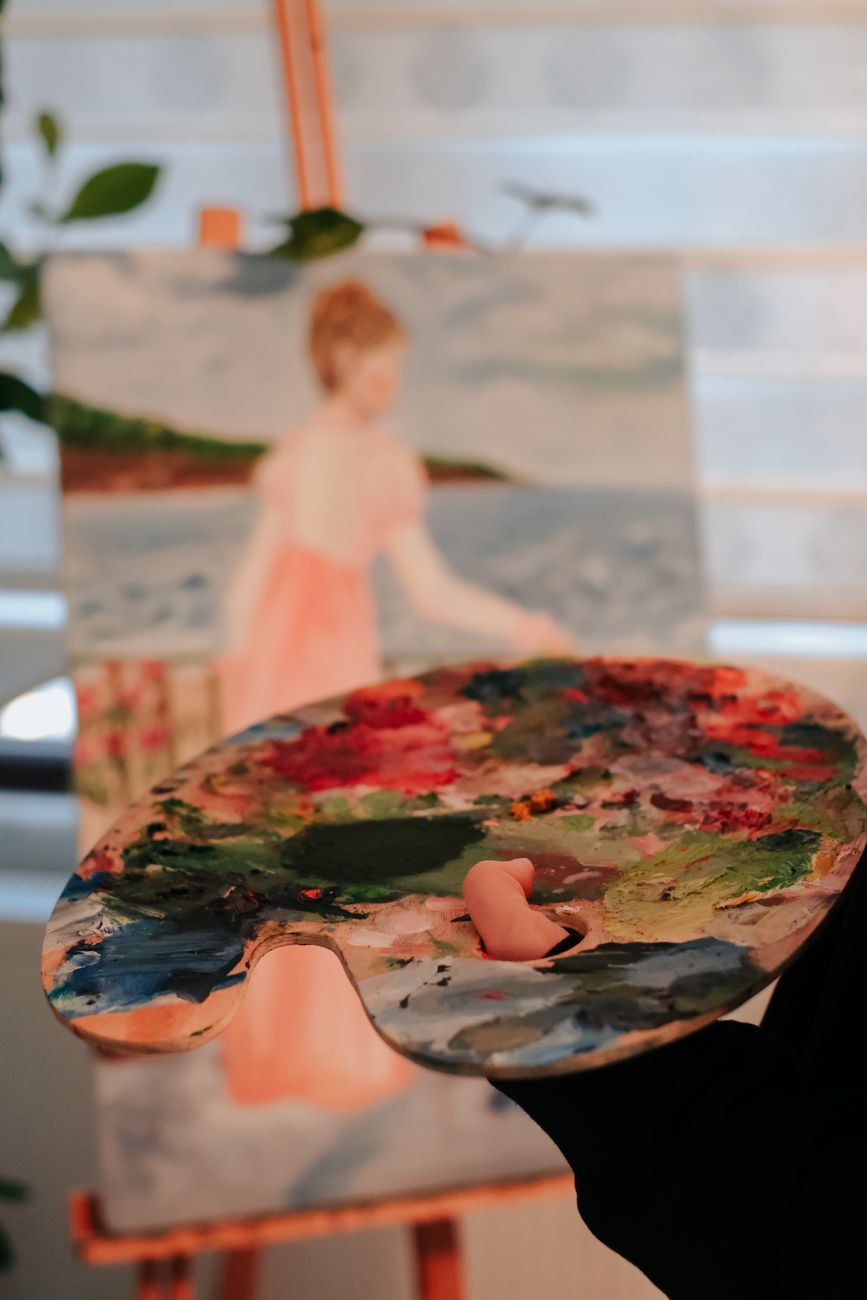
Photo by Hatice Baran on Pexels.com

Isn’t that just the way of hobbies?

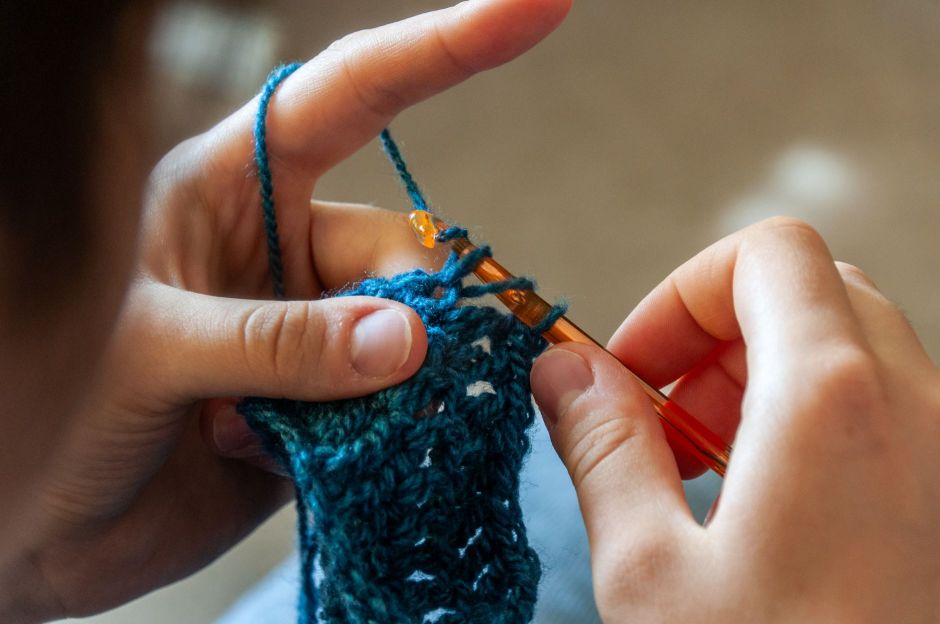
The crocheter is asked when she’s opening an Etsy shop. The painter is asked if they’ve considered the local gallery. The yoga enthusiast is told they should teach. The baker is suddenly “volunteered” for every birthday cake in a five-mile radius. And the poet, inevitably, is encouraged to submit to journals.

And it sounds reasonable, doesn’t it?

We are constantly told to pursue our passions. To follow what we love. To “do what you love and you’ll never work a day in your life.” A beautiful idea. And also… a slightly suspicious one. Because somewhere along the way, we stopped asking whether turning everything we love into something productive might quietly change the thing itself.

There was once an experiment with children who loved to draw. They were divided into groups—one received an external reward for drawing, the other did not.

The result was surprisingly consistent: the group that drew without reward maintained their interest. The group that drew for the reward lost motivation over time. And the group that received an unexpected reward? They also maintained their enjoyment.

In other words: motivation thrives not on chasing reward, but on the absence of needing one. We are most creatively alive when we are not negotiating with outcomes.
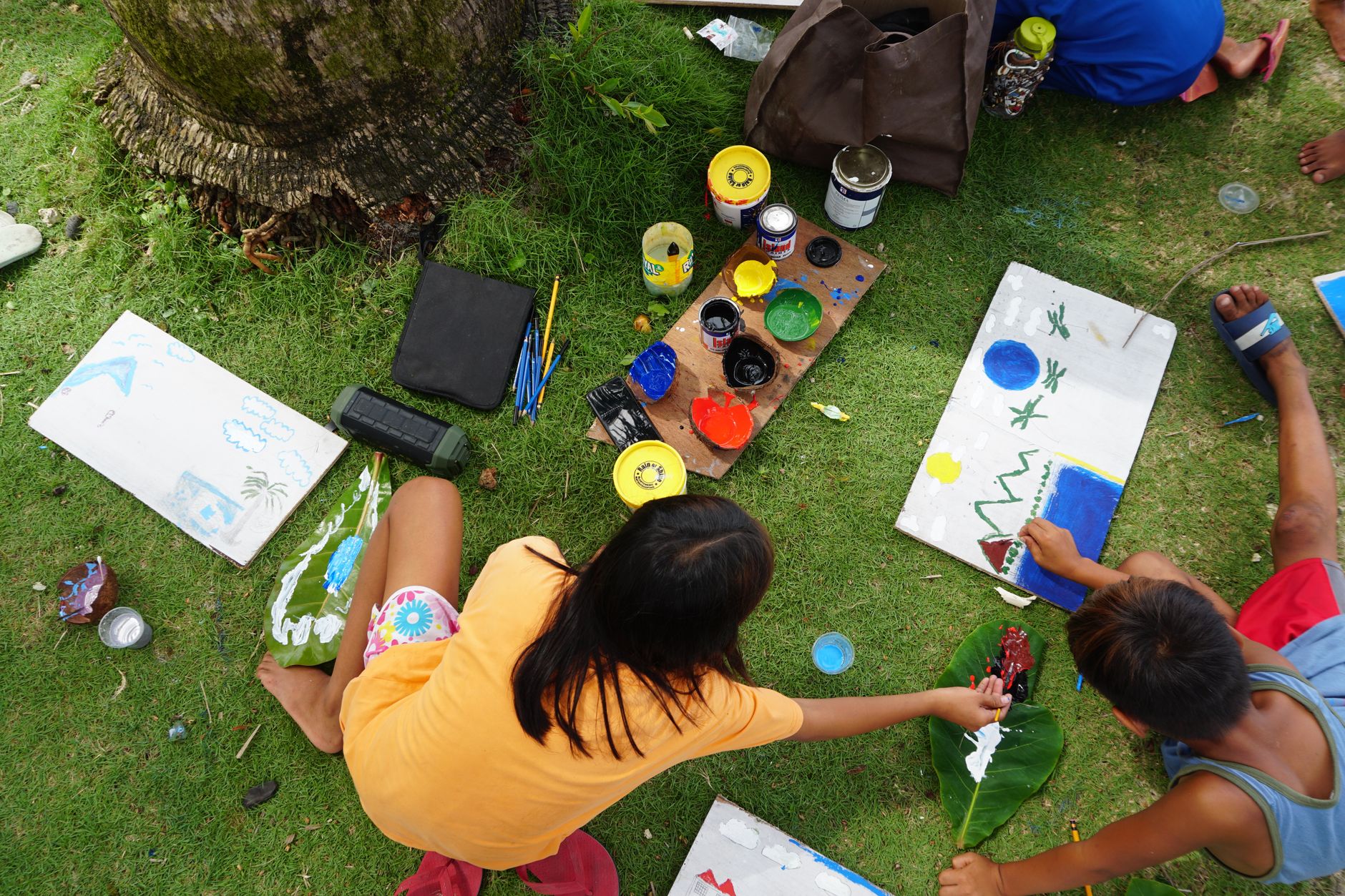
Photo by Cort Landt on Pexels.com

Another study, this time with adults, found something equally odd. One group completed a deliberately dull task before being asked to solve creative problems. The group that had just done the “boring” task actually produced more creative solutions.

Which is funny, because some of my best poetry has never arrived at a desk. It arrives while driving. While walking. While weeding the garden or cleaning something I definitely didn’t want to clean. It arrives when the conscious mind is occupied just enough to step aside.

But that kind of mental spaciousness is hard to come by when every hour is accounted for, optimized, monetized, or squeezed into productivity. And that’s where hobbies quietly begin to change shape. Because turning a hobby into a side hustle sounds empowering—until it isn’t.

At first, it’s just sharing something you love. Then it becomes selling something you love. Then it becomes needing to sell something you love. Then it becomes needing to make something people will buy. And slowly, almost imperceptibly, the question shifts from: “What do I want to make?” to “What will perform well?” The hobby is still there. But the play is not. And without play, something essential quietly drains out of the work. Not always immediately. Not dramatically. But steadily—like a color fading from fabric left in too much sun.

Photo by SHVETS production on Pexels.com

The uncomfortable truth is that most side hustles do not pay nearly as much as we imagine they will. Often, the return is small compared to the time invested. Sometimes it amounts to a few dollars an hour—or less—once everything is accounted for.

Which would be fine, if the primary goal was joy. But when the goal becomes income, validation, or traction… the relationship changes. We stop being in conversation with the thing we love. And start being evaluated by it. And I think that is the part we rarely say out loud: Not everything we love is meant to be optimized. Not everything we create is meant to scale. And not everything beautiful needs to become a business plan.

Sometimes the point is simply that it exists at all. Sometimes the point is that it made you feel alive while you were making it. And perhaps the real danger is not that we fail to monetize our passions… But that we succeed in doing so, and lose the ability to enjoy them without permission. So for now, I remain in my poetry hyperfixation. Not as a product. Not as a strategy. Just as a person who has been, for a while, deeply interested in making things that do not need to become anything else.

Oh do not get me wrong, dear reader, I will submit things to journals here and there, but not for any other reason than to put them out into the world. But mostly, I shall continue to focus on having fun.
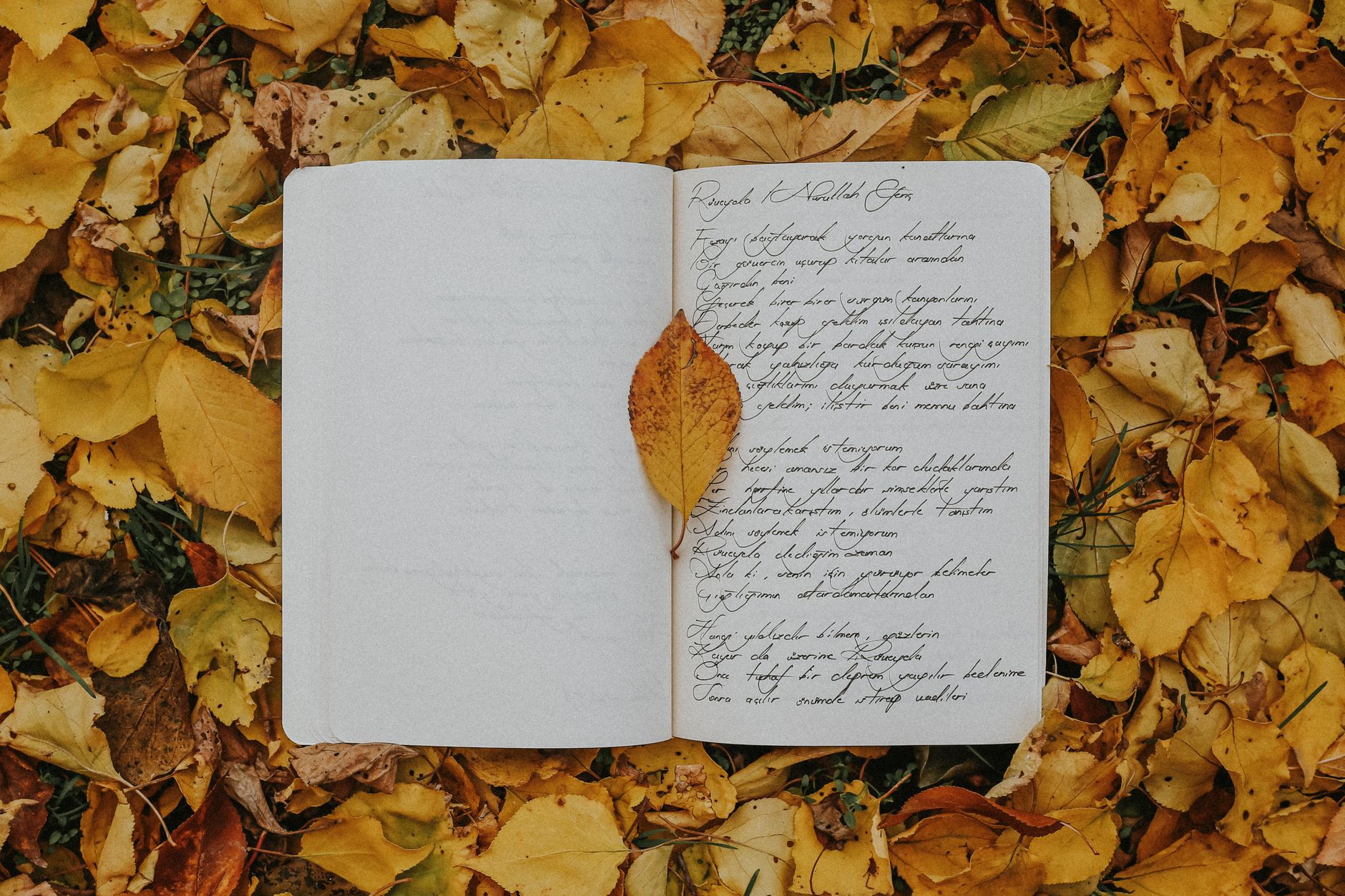
Photo by betu00fcl nur akyu00fcrek on Pexels.com

The Lost Art of Becoming a Regular

Subscribe to continue reading

Subscribe to get access to the rest of this post and other subscriber-only content.

The Day My Phone Saved Me From Buying Another Purse

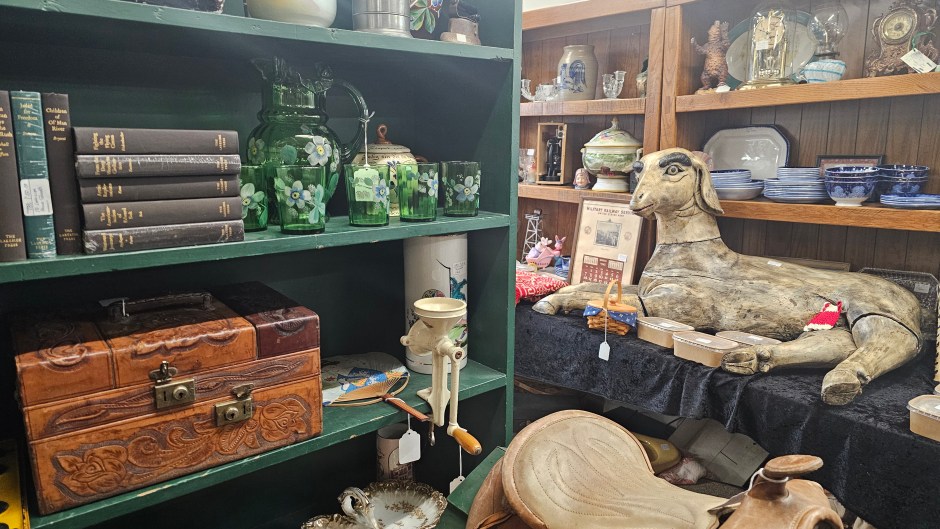
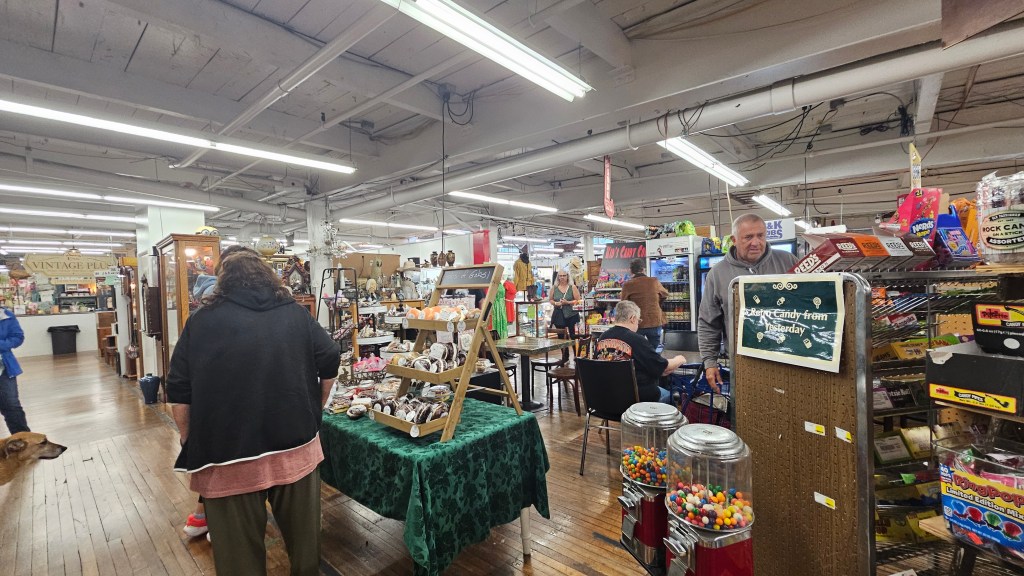
The other weekend, on a rainy afternoon, my sister and I ventured into a massive indoor antique store housed in an old warehouse. Two stories of treasures stacked on top of each other unfolded into a sprawling maze of booths, each one as varied as the colors of the rainbow.

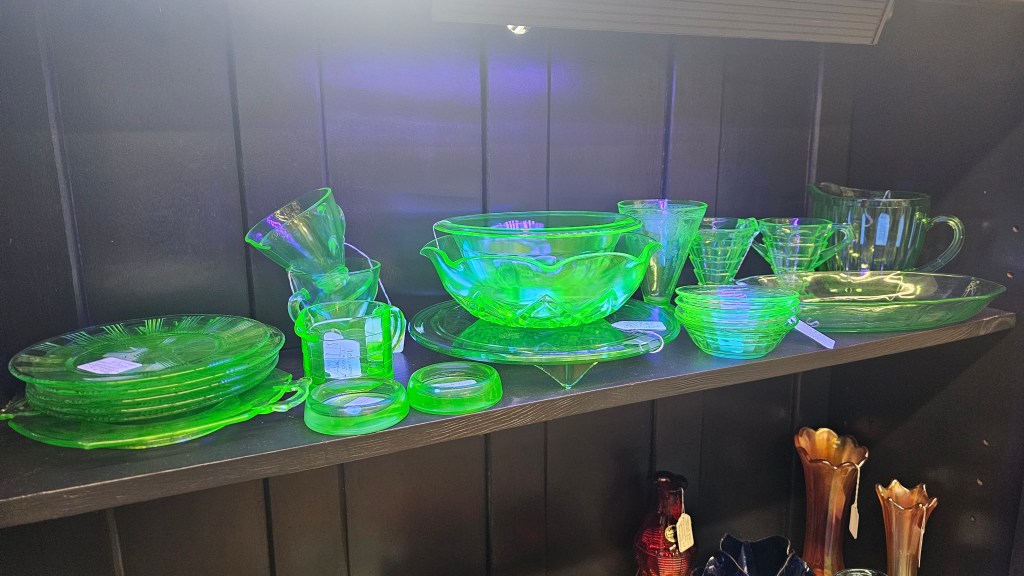
Old uranium glassware sat beside vintage clothing. A now-derelict gas pump stood comfortably next to forgotten household tools. It was a hodge-podge of decades and even centuries, all jumbled together in a kind of quiet, chaotic harmony. A cacophony of objects, each with its own story, none of them particularly concerned with being organized by time period.

We happily set off on a kind of treasure hunt, letting whatever caught our eye guide us. There is something uniquely joyful about wandering without purpose except curiosity, being delighted by strange finds and pausing often to compare notes.

Being both history nerds, we took turns educating one another, filling in the gaps of each other’s knowledge as we went. “Oh, that’s a…” inevitably became the start of several long conversations that may or may not have been entirely accurate but were delivered with great confidence nonetheless.

What makes antique stores so uniquely fun is that unlike museums, where objects are carefully preserved behind glass with a strict “do not touch” policy, here you are invited to engage directly. You can pick things up. Turn them over in your hands. Imagine not just where they came from, but what it would feel like to let them live in your space now. History becomes something you can hold, not just observe.

My sister and I have many fond memories of antiquing with our mother when we were younger, learning about objects we didn’t yet have the language to name, and giggling over cultural relics that felt ancient at the time but are now beginning to resemble our own childhood.

There is always a slightly unsettling moment, of course, when you realize something from your own past has made its way into an antique store. Yes, I am approaching forty, but are we really prepared to call the Tamagotchi “historical artefact” rather than simply “vintage nostalgia with battery anxiety”? Time, it turns out, is a bit unkind that way.

But that is part of the charm. Antique stores collapse time in on itself. What was once ordinary becomes curious again. What was once discarded becomes interesting. And what was once personal history becomes someone else’s discovery.

It turns out you don’t always need a destination to have an adventure. Sometimes you just need a rainy afternoon, a large warehouse full of forgotten things, and someone beside you willing to say, “Wait, come look at this.”

My sister, in her own successful treasure hunt, found a brass penguin, her husband’s favorite animal, which will now take up residence in her living room as a small but very specific piece of joy.

I, on the other hand, left empty-handed in the most literal sense. Well… almost.

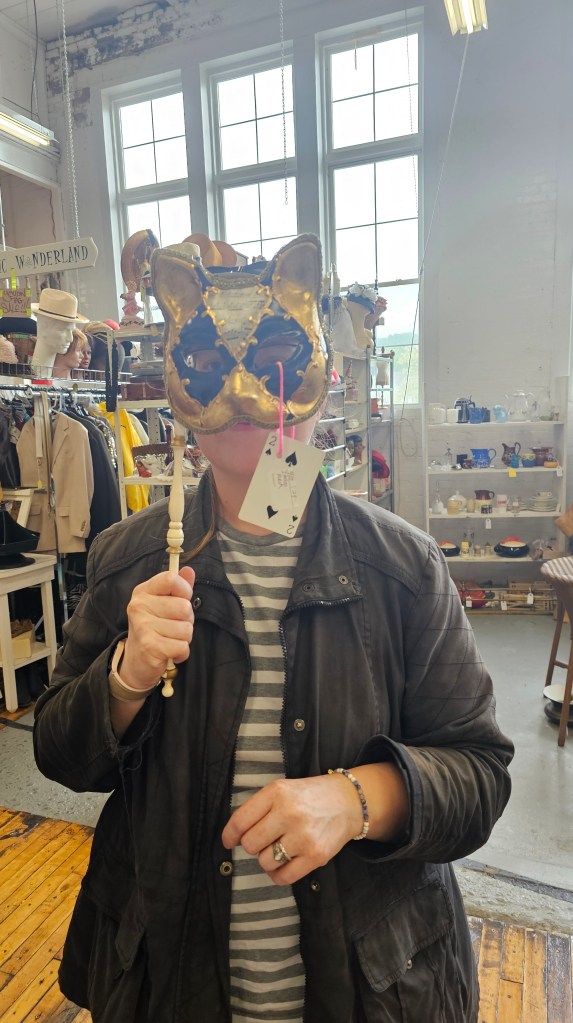
There was an adorable purse shaped like a magazine that I briefly considered adopting. Unfortunately, it failed the most important test of all: it would not fit my phone. And if a purse cannot carry the one object I am legally required to bring everywhere, then it is more sculpture than accessory.

Honestly, my phone has probably saved me more money on impulsive purse purchases than any amount of self-control ever could. Perhaps it has already paid for itself in avoided financial mistakes alone.

And yet, even without a purchase, I did not leave empty. Because sometimes the point is not what you bring home. It is what you notice along the way.

How can you experience the thrill of the hunt?

If you ever find yourself with a rainy afternoon and a bit of curiosity, I would encourage you to go on your own treasure hunt. You never quite know what you will find when you let yourself wander without expectation. What’s wonderful is that antique stores litter the US so you’re almost certain to live nearby one. Of course, you will be hard pressed to beat Adamstown, the Antique Capital of the United States (located conveniently in my backyard), but don’t let that discourage your treasure hunt! 

If you do it right, you might even come home with something unexpected. Maybe a story. Maybe an object. Maybe both. Or, if you are my sister, a brass penguin that now lives quite happily on a living room shelf, quietly reflecting on the meaning of life but never sharing. 

Either way, the hunt is the point. 

Miles from home: 45 miles

Cost: Free (well gas is getting expensive)

Completed: First in childhood

Want to discover more adventures? Check out my whole Bucket List and Reverse Bucket List

Stop Waiting for the After

After the trip. After things calm down. After I fix myself. After I get my finances together.

Always after. Always somewhere in the future.

We tell ourselves these stories so often they begin to feel like truth. Life will really begin once the chaos settles, once we become more disciplined, more organized, more healed, more prepared. Until then, we endure. We keep our heads down, grit our teeth, and tell ourselves this is just a season—even when that season stretches on for years.

And yet, time has a way of slipping through our fingers when we are always waiting. One day we look up and realize we have not so much lived as survived. The days were filled. The calendar was full. But the life itself felt strangely absent.

Of course, there were moments of joy. There always are.

A long-awaited weekend getaway. A carefully planned weeklong vacation. Maybe, if we were especially lucky or brave, a two-week escape that felt almost indulgent. These moments gave us oxygen. We counted down to them obsessively, letting anticipation carry us through exhausting workweeks. The promise of rest, novelty, and beauty became the thing that kept us moving forward.

For a brief while, we could breathe.

Photo by MART PRODUCTION on Pexels.com

But then the trip ended. The air thinned again. And the familiar weight returned, heavier somehow for having been briefly lifted. The emotional letdown after travel crashed over us like a wave, knocking us off our feet. What was meant to restore us instead highlighted how depleted we were the rest of the time.

I remember this feeling vividly after my very first cruise.

I had been so excited to experience it with my sister, who had gone on one before and filled my imagination with stories and photos. We planned everything meticulously, savoring the anticipation as much as the trip itself. And the week away truly was a dream. Swimming with dolphins. Snorkeling over a shipwreck. Walking along the famed pink beaches of Bermuda. For a few precious days, life felt expansive and light.

Then it ended.

I was sitting in a train terminal in New York, waiting for the train back to Philadelphia, when a familiar sense of dread began to creep in. My heart started pounding. My mind raced ahead of me, already back at my desk. Had I missed deadlines? What had happened with my clients while I was gone? What did my inbox look like? Would I be returning to chaos I could never quite get ahead of?

The anxiety built quickly, swallowing all the ease and joy I had felt just hours earlier. The relaxation I had carefully collected over the week evaporated, replaced by a sense of impending doom. I realized, with startling clarity, that the problem was not that the vacation was too short. It was that my daily life was unsustainable.

I did not stay at that job much longer.

Photo by Jill Wellington on Pexels.com

Looking back, I can see what was really happening. Time away had become the only time I felt fully alive. Travel was no longer something that enhanced my life. It was something that made my life bearable. It was not a chance to breathe deeply, but the only moment I was allowed to breathe at all.

That is a heavy thing to place on something meant to be joyful.

Travel, adventure, and novelty are not the villains here. They are generous teachers. They show us beauty. They remind us of wonder. They broaden our perspective and refresh our spirits. But when they become lifelines rather than highlights, they quietly reveal a deeper problem: a life structured in a way that requires escape.

It is hard to feel at home in your own life if every day feels like scaling a mountain rather than taking a gentle walk through the woods. When effort is constant and rest is rationed, even joy begins to feel transactional—something we earn only after enduring enough discomfort.

Living well does not happen by accident. It requires intention, attention, and a willingness to examine the parts of our lives we have normalized simply because they are familiar.

So what does it mean to design a life that supports you rather than one you need rescuing from?

It does not mean eliminating hard work or responsibility. It does not mean chasing constant happiness or turning every day into a highlight reel. It means building rhythms that allow you to inhabit your life rather than flee from it. It means making choices—sometimes small, sometimes uncomfortable—that reduce the daily friction slowly draining your energy.

Photo by Quincy Anderson on Pexels.com

It might look like boundaries that protect your evenings. Or financial systems that lower your baseline anxiety. Or a job that challenges you without consuming you. It might look like simplifying instead of accumulating, choosing enough instead of more, rest instead of relentless self-improvement.

Most of all, it means refusing to postpone your life until some imagined version of yourself finally arrives.

If we are always waiting to become someone better before we allow ourselves to live well, we may wait forever. Growth does not require self-denial as proof of worthiness. A meaningful life is not a reward reserved for those who have perfected themselves.

When we begin to live well now—imperfectly, quietly, intentionally—something subtle but powerful happens. Travel changes its role. Adventures stop carrying the weight of our unmet needs. They become what they were always meant to be: enhancements rather than escapes.

Instead of giving our lives color, travel adds highlights.

A beautiful trip becomes like the right accessory. It does not replace the outfit. It elevates it. It brings contrast, texture, and delight to something already functional and meaningful. The joy of returning home no longer feels like loss, but like integration—bringing what we learned and felt back into a life that can hold it.

This is not a call to stop dreaming, exploring, or longing for more. It is an invitation to stop living entirely in the future. To notice where you are postponing joy out of habit rather than necessity. To ask, gently and honestly, what would make this season more livable.

The goal is not to suck the marrow out of every moment. The goal is to stop starving ourselves the rest of the year.

A life you do not want to escape from does not have to be extraordinary. It simply has to be yours, tended to with care, lived in with intention, and allowed to matter right now, not later. So what are you waiting for dear reader? Go forth and create a life for now.

Mid-January Musings: Embracing the Pause

It’s the middle of January. The year stretches ahead, vast and unknown, while the busyness of the holidays has already slipped behind. Resolutions that felt urgent on January 1 may have already slipped through your fingers. PTO is carefully rationed for future trips. Unless you’re a federal employee, the next holiday is a small consolation at best. Life feels paused, caught in the gray space between what has ended and what has yet to begin. There is nothing to mark the calendar, nothing urgent to do, and maybe you’re not even sure what you’re waiting for.

For many, this stretch can feel unsettling — a restlessness like an itch you can’t quite scratch. It’s a space that’s heavy with anticipation yet empty of drama. It could drive even the most patient person slightly mad if we try to resist it.

And yet, I’ve learned that this “long middle” is fertile if we allow it to be. You see, dear reader, I approach my year much as I approach my day: with contemplation and reflection. Of course, the day does not begin quietly. I am awakened by two yowling, demanding, furry tyrants named Gemini and Orion, who treat my legs like an obstacle course and my face like a morning bell. I weave around them, careful not to trip, while they make it abundantly clear that food is a matter of life and death. Only once their bowls are full and their attention momentarily diverted do I grab my journal. One might ask why I don’t start journaling first — but only someone who has never had a cat would pose such a question. Thinking, let alone writing, with feline insurrection in full swing is impossible.

Once fed, my little darlings curl up beside me, their purrs vibrating softly against the quiet room, a small price to pay for peace. In that early window, my mind hovers delicately between sleep and wakefulness, with the last traces of dreams still clinging like morning fog. I often surprise myself with what emerges on the page — fleeting worries, lingering hopes, tiny insights I might never notice in the rush of the day. For fifteen minutes, I am fully present with my own thoughts, listening as the day slowly unfolds around me. The gentle hum of a cat’s contentment is the perfect backdrop for reflection, a reminder that even chaos can give way to stillness if we wait for it patiently.

This early-morning clarity feels like a metaphor for January itself. The holidays are over, spring is far off, and yet there is a quiet, powerful energy in the pause. The month stretches before us, unspectacular on the surface, but full of potential for reflection, insight, and subtle preparation. Like my journaling practice, mid-January asks us to slow down, to notice, and to tune into what is quietly emerging.


Learning to Live Well in the Liminal Space

So how do we inhabit this “long middle” without feeling restless or lost? The answer is not in rushing or in forcing productivity. It is in embracing the small windows of presence, in tuning in instead of turning away. Some practices I have found particularly grounding:

  • Early-morning reflection: Like my journaling habit, these quiet moments give you access to thoughts and feelings that are often buried under daily noise. Your subconscious speaks differently when the world is still.
  • Observation: Take notice of subtle details around you — the shifting patterns of light through bare trees, the smell of frost in the air, the warmth of a cat curled at your feet.
  • Gentle intentions: Instead of big, sweeping resolutions, consider small focus points for the day or week. What do you want to notice? How do you want to feel?
  • Micro-reflections: Write down one fleeting thought, one small win, or one subtle insight each day. Over time, these quiet observations add up into something meaningful.

January, like those first fifteen minutes of the day, is an invitation to listen. To yourself. To your environment. To the stillness that so often goes unnoticed during busier seasons.


Restlessness as Opportunity

That itch of January is not a problem. It is a signal, a nudge toward attention, reflection, and subtle growth. It can be uncomfortable, yes, but it is alive, and alive is what matters. By leaning into this restlessness, rather than avoiding it, you cultivate patience and clarity. You discover small insights that can set the tone for your weeks and months ahead.

Think of it like seeds beneath frozen soil. The ground seems still, colorless, empty. And yet beneath the surface, quiet processes are unfolding, preparing for bloom. So it is with mid-January. What appears as waiting or monotony is, in fact, preparation. The quiet work of thought, reflection, and noticing lays the foundation for meaningful action in the months ahead.


The Gift of Mid-January

January is not empty. It is full, not with spectacle or noise, but with subtle, meaningful opportunities. The long middle teaches us to slow down, pay attention, and care for ourselves in ways the busyness of December rarely allows.

Much like my morning journaling ritual, this month invites us to stop, listen, and notice. To honor the stillness and let it guide us. To embrace small rituals, quiet reflection, and gentle intentions.

So rather than rushing to fill the days, linger. Observe. Journal. Walk. Notice. And trust that this quiet, understated month is shaping you in ways that will ripple through your year. Even in the gray, even in the waiting, there is quiet wonder.