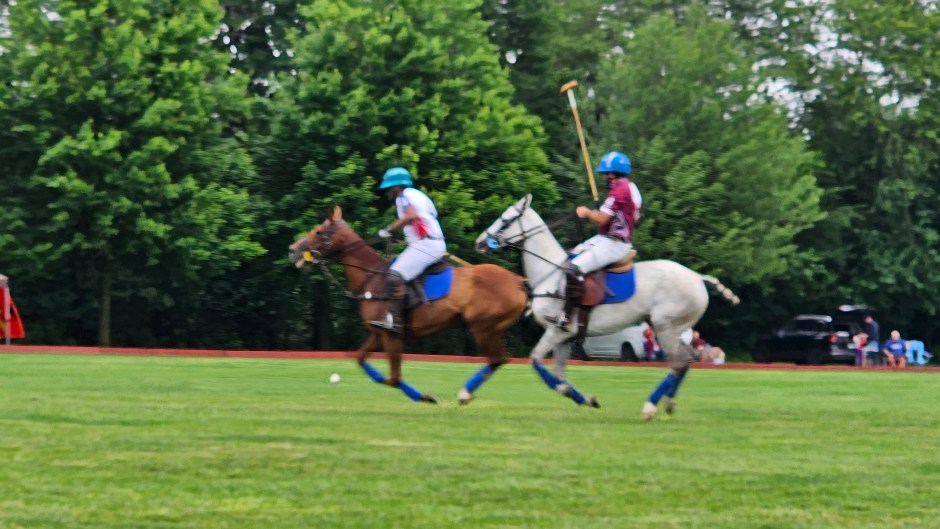
For 85 years, a curious spectacle has unfolded each summer Sunday on a quiet stretch of Pennsylvania grass. Horses graze peacefully beneath the trees while a few of their compatriots are dressed in elegant regalia by riders buzzing with anticipation. Across the field, spectators unfurl picnic blankets, create elegant table spreads, uncork wine bottles, and crank up the music, all in preparation to watch a sport nearly 2,000 years old: polo.
Though largely unknown to many American audiences, polo is far from obscure. Played in at least 16 countries and once an Olympic sport from 1900 to 1936, it began in ancient Persia as cavalry training and evolved into a game for royalty and, more recently, for anyone bold enough to mount a horse and swing a mallet. The name “polo” is derived from the Tibetan word pulu meaning ball, a term eventually anglicized after the British encountered the sport in India and brought it back to England in the 1800s.
Often called the “Game of Kings,” polo is surprisingly inclusive. Men and women compete alongside one another in most parts of the world, though America, characteristically, has a separate women’s federation.
The game itself is straightforward in concept: two teams of four try to drive a ball through the opposing team’s goal using long-handled mallets, all while galloping full-tilt on horseback. The match is divided into chukkas (short periods lasting about 7.5 minutes), and a game usually includes six to eight of them. The rules may be simple on paper, but in practice, it takes incredible precision, timing, and horsemanship.
Growing up, I often saw flyers and glimpses of these summer polo matches. I was always struck by the grace of the horses and the fluid choreography between rider and steed. Truthfully, the sport seemed quite magical as if from another world. Still, I never actually made the effort to watch a full match. Summer after summer slipped by, my interest mild but never quite motivated.
Was it the fear of sweltering in the midday sun from 1 to 5 p.m.? Or maybe the lingering belief that polo was reserved for the wealthy and well-heeled? I wasn’t sure. Perhaps the former was simply a socially acceptable excuse to avoid confronting the latter. Would I, a clear outsider to this world, be welcomed, or merely tolerated with tight-lipped smiles and sidelong glances?
Besides, I’m not exactly a sports person. My athletic literacy is on par with a particularly confused golden retriever. I spent six years attending football games in marching band and still couldn’t explain the rules beyond “ball goes in the end zone.” But dear reader, I’m not one to retreat in the face of self-imposed challenges. So this summer, I finally asked myself the honest question: what was really stopping me?
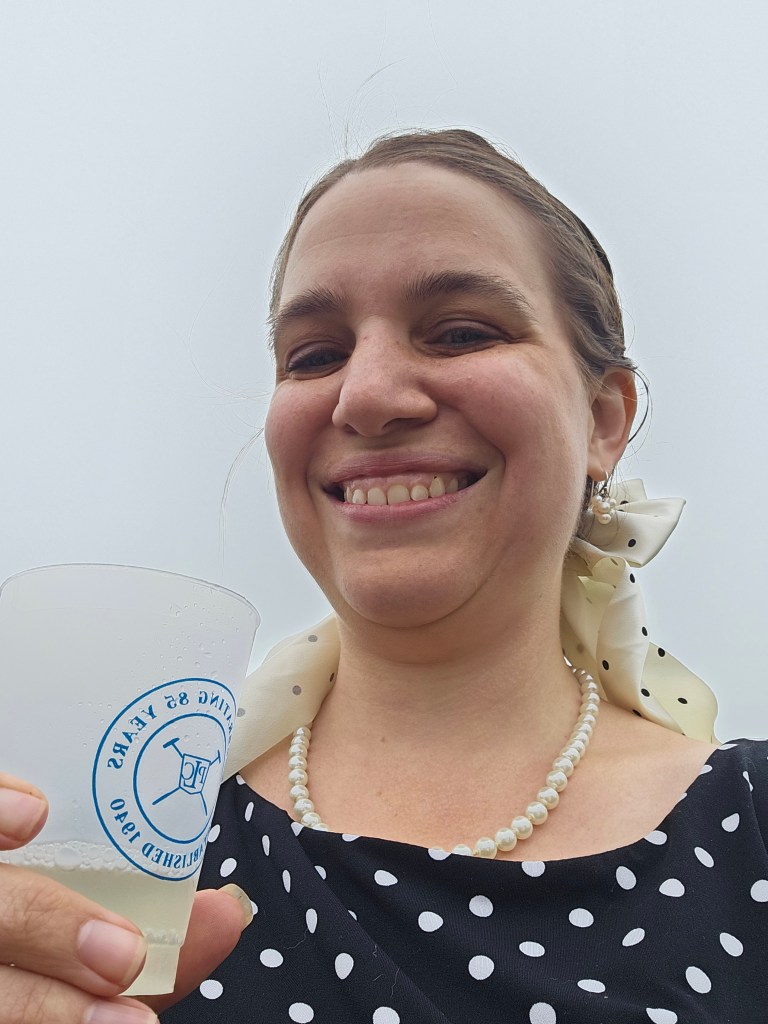
A little research gave me just enough confidence to understand the basics of the game. I picked out a charming outfit to look the part without overdoing it, an elegant black sheath dress with white polka dots and a flirty wrap skirt. I added a sunny yellow bow to my hair, antique gold and pearl necklace, and matching earrings. The pearls lent a quiet elegance, the polka dots kept things playful, and the whole ensemble whispered “chic,” not “trying too hard”, which is honestly a good rule of thumb when encountering an unknown social situation which most likely requires at least some form of dressing up.
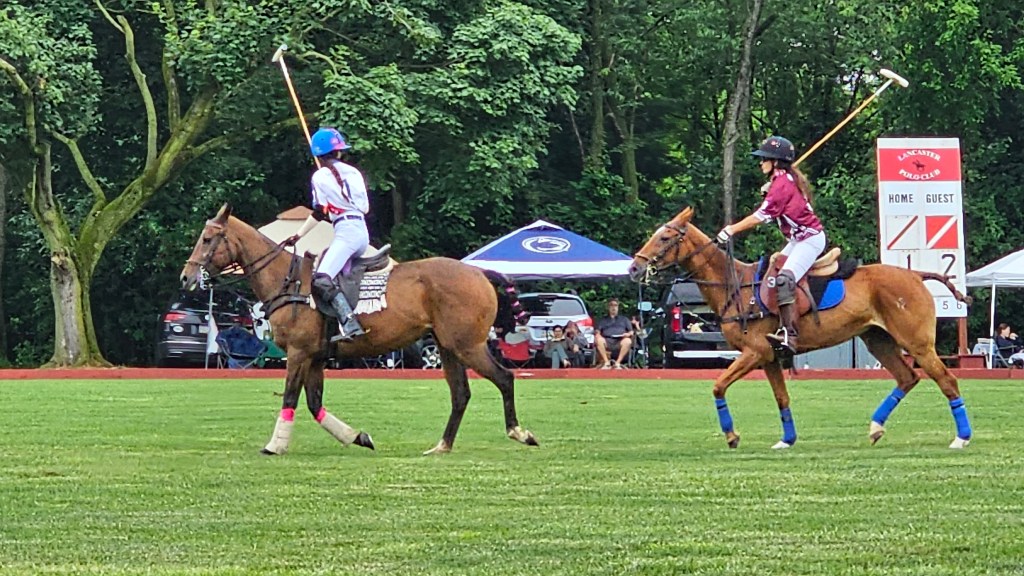
Admission was a modest $10. While many of the best sidelines were claimed by patrons whose names were proudly displayed on small plaques, there were metal bleachers dead center offering a great view to those of us without season passes. Tailgaters lined the edge of the field, sipping rosé and nibbling on charcuterie. Food trucks formed a loose U-shape, doling out delectable treats to tempt even the pickiest of diners. A cornhole tournament buzzed nearby, a surprising attention, and the unseasonably cool June weather had people donning sweaters instead of sundresses.
The field was roughly the size of four or five soccer fields, bounded by red-painted wooden planks barely a foot high. A modest scoreboard hung opposite the bleachers, manned by cheerful volunteers ready to update the chukkas and scores. Trees lined either side to provide shade and natural ambiance. Everything had a homegrown, almost quaint quality to it, from the weathered announcer’s booth to a timeworn shed on the edge of the grounds. The whole setup felt far less intimidating than I’d feared, far more neighborly than exclusive. Instead of a glittering world of inaccessibility, it held a rustic charm, more countryside than country club.
To my delight, the crowd was warm and welcoming. Several patrons stopped to chat, and one even offered a crash course in polo rules. I met a retired player, his name escapes me, but his gorgeous collie, Koda, certainly doesn’t. He shared stories of falling off horses, fond memories of team camaraderie, and the tradition of having teammates sign the ball after scoring your first goal.
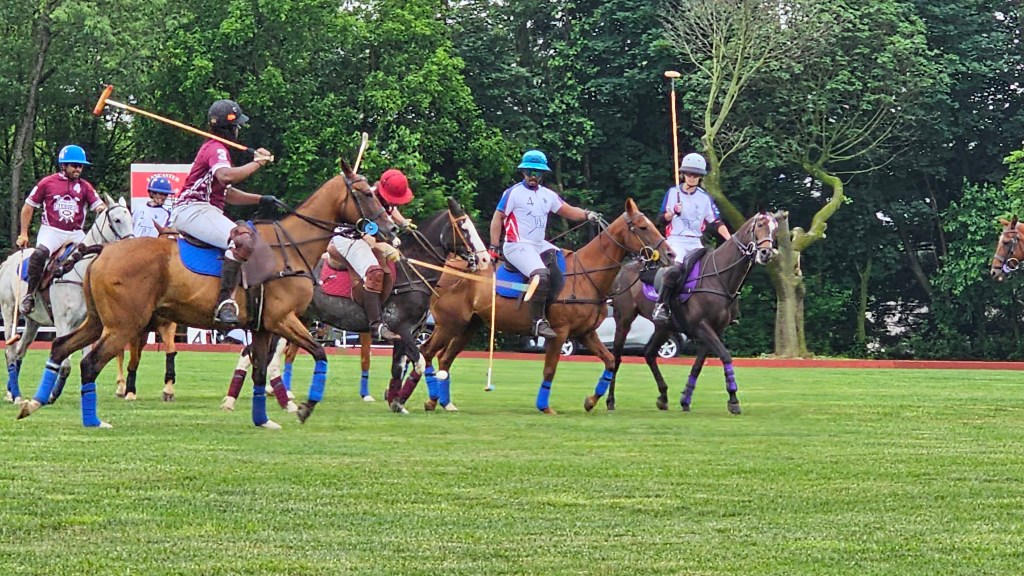
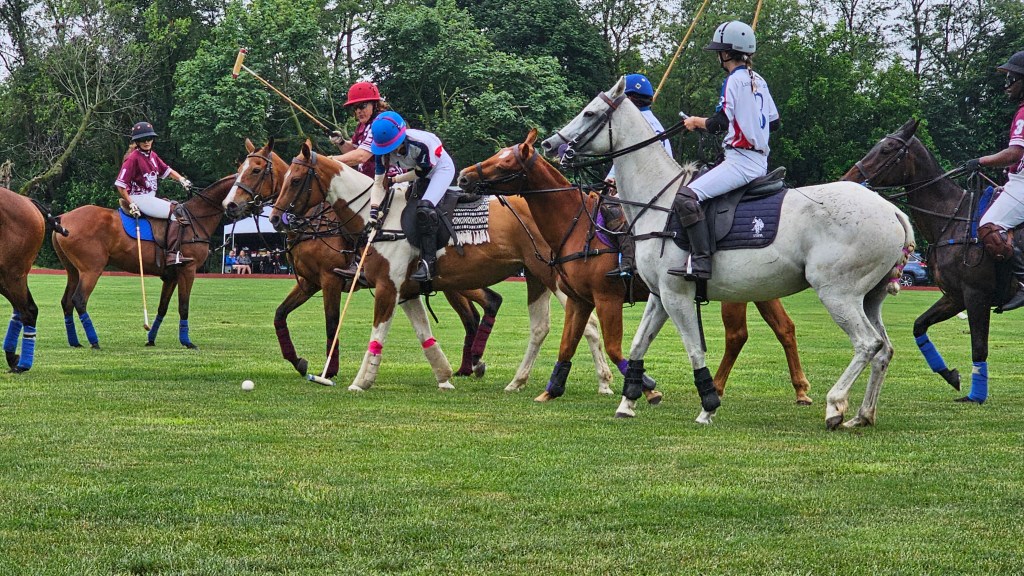
The game itself was surprisingly gentle. There was minimal jostling, and players called out plays supportively, checking in with one another to ensure both rider and horse remained safe. Perhaps this courtesy was because the match featured junior players, but I had the feeling this mutual respect was baked into the sport. Spectators clapped enthusiastically for every goal, regardless of team allegiance.
During intermissions, we all wandered onto the field for the charming tradition of field stomping, where spectators repair divots by stomping the grass back into place, all while pop music blared from the announcer’s booth. (Pro tip: verify that what you’re stomping is indeed turf, not… fertilizer.)
Halfway through the match, we were summoned to the center for a celebratory champagne toast. Each guest received a plastic glass stamped with the Lancaster Polo emblem. I raised mine high in salute, and now it sits proudly on my shelf as a souvenir of an afternoon well spent.
The Lancaster team won in the end, though no one seemed particularly bothered by the score. The teams congratulated one another with genuine smiles and handshakes. It was sport in its purest form, competition rooted in grace, community, and camaraderie.
And as I walked back, pearls gleaming, polka dots swaying, I couldn’t help but smile. I may not be a sports person. But I might just be a polo person as I immediately texted my sister, that I may have found a future sister date for the two of us later that summer.
Want to See a Match Yourself? Here’s How to Find One Near You
If you’re now a little bit curious (or at least craving champagne and turf-stomping), you might be surprised to learn that polo is more accessible than it sounds. Here are a few tips to help you track down a match near you:
- Start with the United States Polo Association (USPA): Their website (uspolo.org) has a club directory where you can search by state or zip code. Many clubs host free or low-cost public matches during their season, typically from late spring through early fall.
- Google is your friend: Try searching “polo matches near me” or “equestrian events [your city/state].” Bonus points if you add “tailgating” or “spectator” to the search.
- Check out local event sites or social media: Many smaller clubs advertise matches on Facebook, Instagram, or local tourism calendars rather than big-ticket platforms. Look for community boards, weekend roundup newsletters, or even Eventbrite listings.
- Call your local riding or equestrian center: If they don’t host matches, they probably know who does.
Don’t be shy about going as a first-timer, polo spectators are often an eclectic mix of devoted fans, casual picnickers, and curious newcomers just like you. Wear something fun, bring snacks, and prepare to cheer. (And maybe pack a sweater. Or a hat. Or both. It’s an outdoor sport, after all.)
Completed: June 2025
Cost: $10 at the gate
Miles from home: 1 mile
One never knows what might be lurking just outside your door. Be sure to check out the rest of my Bucket List and Reverse Bucket List for ideas of what might be outside yours!
 Budget Bliss: Bucket List