
Slowly, slowly he worked stone against stone chiseling out a dimed sized impression. The sun marched its way across the sky as he worked each part of the snake. An hour’s work would only yield four and he had so many to go. Still in this sacred place of sun, earth, water and sky where the underworld opened to the deep below, he kept to his work. One piece among a dozen others each marking the important spiritual events of his people. As the sun kissed the rock on the fall equinox lined up perfectly with the head of the man’s snake, he smiled. The stories of these drawings the life, spirit and blood of his people, a testament to their presence which would continue to echo for a thousand years and more. A thousand years later, though lost to time after the conquest of the Susquehannocks and the colonization of the Europeans, they are not forgotten but remembered simply as the Safe Harbor tribe.
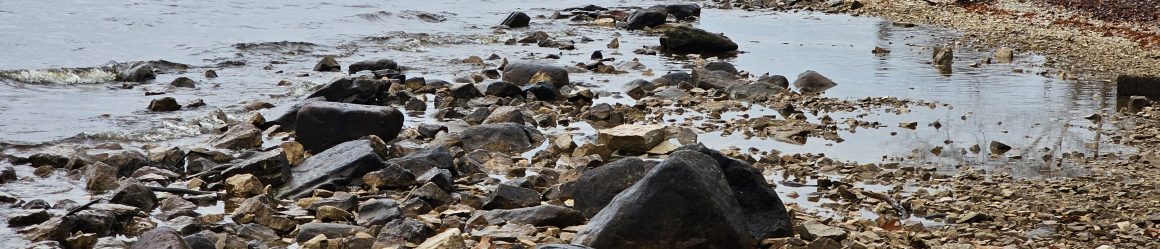
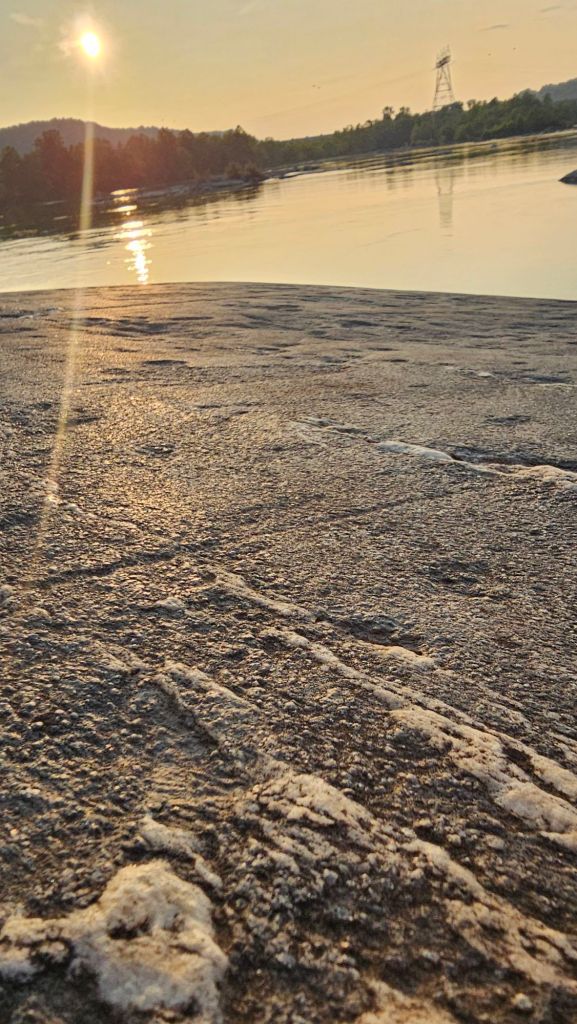
To stand on the Little Indian Rock and Big Indian Rock is to be transported back in time. On either side of the river the trees still stand tall and proud and to the west, not even the telephone lines can break the illusion that one is seeing the forest as it has been for a thousand years. Though truthfully the dam has raised the water levels significantly and the river has eroded the shore line. Still one can see why they felt this place was special. With the thickness of the forest the sky would have been often blocked out from view under the canopy of leaves. The wide river would have opened up to the glittering cosmos even as the deep crevasses beckoned to the underworld below. The jutting rock up out of the water would have been a place of earth within water. A place of earth, water, sky and the underworld colliding where the river goes from a soft, lazy merading flow to rushing current as it suddenly drops.
Big Indian Rock seemed to have been used primarily for social purposes with its markings for hunting, directions and even a helpful gps tag noting that it is a two day’s walk to the mouth of the river. There is evidence of camp fires perhaps for when they wished to view the night sky. Despite its size the petroglyphs are mainly concentrated in the cardinal directions. Little Indian Rock seems to have primarily been used for spiritual purposes having several Thunderbirds and snakes which line up with the spring and summer equinoxes. There are several which seem to depict the mystical Wendigo and even a Misiginebig.

Graffiti dots the rest of the rock from the various visitors over the years primarily from the 1800’s until about the 1980’s when the rediscovery of the petroglyphs and their significance put a halt to any additional markings. Not through any sort of ordinance, but through education and the respect that education has bred through the local populace who still kayak and fish around the rocks. Despite its historical significance and being home to what is considered the greatest collections of petroglyphs east of the Mississippi there is no official protection for either Big or Little Indian Rock, no barriers preventing anyone from clamoring up the rocks to see them. The location of this ancient art is perhaps the best protection that can be offered: a wall of water separates it from the land on either side requiring a boat to gain access and most mischief makers are easily deterred by the strenuous physical exercise required to obtain access.
At first, one could easily miss the ancient markings as no more than strange impressions in the rock. It takes a sharp eye to spot them, they are most easily seen at sunrise and sunset when the angle of the light allows them to stand out in sharp contrast. Which is why on a late August evening, my sister and I set out with a small tour group in kayaks to the two islands. I was a little nervous having grown up hearing the dangers of the river especially around the dams which so easily can sweep a person down into their churning depths never to be recovered as their body remains trapped within. However, we were a safe distance from the dam and our guides delayed our departure twice due to unsafe river conditions, so I trusted them to take us out. We donned our life jackets and were given a quick overview of kayaking. My sister and I were the only two non-experienced kayakers as the other members of the tour had brought their own kayaks.
With little ceremony, we hauled our small vessels to the launch site and were quickly swept up in the quick current of the conestoga river rushing to meet the Susquehanna. At first, I paid little heed to my natural surroundings focusing primarily on learning how to steer and maneuver the kayak. There were a few run ins with others but we laughed it off with some pirate jokes. One of our guides rushed to the front of the group where the other stayed in the back to assist any stragglers. We were assured that if we needed a tow back they would assist to ensure we all made it back safely. Being a novice, I was not very good at reading the river and got swept up a few times in quick, churning currents which swirled my vessel around. After a few moments of panic and fruitless fighting, anxious that I would be swept away from the group and lost down river, I regained my footing (so to speak) and allowed myself to literally go with the flow. I was able to maneuver my kayak behind some rocks which broke up the flow long enough for me to jet across to rejoin the group of boats. Having conquered my first challenge, I felt much more confident in my ability to traverse the waterway, though I was certainly not ready for a solo venture.

Not being quite so nervous about the river, I was able to start to take in my surroundings and really enjoy the experience of the kayak gliding across the surface as my paddle dipped into water. Overhead birds circled and cried to one another. The trees on either side of the river blocked out signs of civilization, the illusion only broken by the distant sounds of traffic and the dam nearby. However, with the dam behind me it was easy to get lost in it. Occasionally, I would place my paddle across the kayak to simply float and breathe. I could see why so many people will spend their weekends out on the water leaving behind the sometimes suffocating atmosphere of the urban environment for the open expanse.
We first visited Big Indian Rock where we were shown the petroglyphs and given some education on the people who once made them. Though we no longer know their name they are thought to have been part of the Algonquin people who were known for their making of petroglyphs; other artifacts that have been found in the area also point to cultural similarities with other known Algonquins. We were given a brief overview of native beliefs when he showed us a thunderbird. The one on Big Indian Rock is a rarity for its depiction of feathers on the wings. It is uncertain what the significance of the feathers were. We then clamored down the rock back to our kayaks to go back up the river to Little Indian Rock. We were warned to stay away from the poison oak. Having had poison ivy earlier in the summer, I was quite motivated to stay away.
I was absolutely amazed by the incredible amount of petroglyphs concentrated on Little Indian Rock, a feast, a mythical serpent creature, snakes marking the passage of the sun, deer prints, footprints, bear paws, thunderbirds, animals that could be beavers or otters and more. It was such a plethora of art made meticulously over hundreds of hours. Each dime sized impression took over twenty minutes to make leaving little doubt that it was done with intention rather than something a few bored teens may have completed. It seemed that all too soon we had to leave this magical place, but the announcements coming from the dam warned us that it would soon be time to get off the river and the setting sun threatened us with coming darkness. As a novice kayaker I did not wish to embark on my first night adventure.

The trip back was considerably more effort than going down as the primary task was steering the kayak with the current. The trip back was against so it required us to hug the shore of the larger island in the middle for a significant portion where the current was slower. I made the mistake of trying to jut across too soon which left me fighting the current. I strained my muscles forcing them to conquer the river’s strength with my own and was quite grateful I had been working out using a sledgehammer to mimic kayaking throughout the summer. My sister required some assistance and was towed part way for the trip back. Primarily to help her navigate the river and not get caught as I was in the stronger currents which threatened to push me back. Despite a novice’s mistake, I was able to overcome and make it back on my own, my arms happily exhausted but not overdone.
The sun had not yet completed its journey to the underworld and we were happy to have made it back. We helped haul the kayaks back up the shore to the grass and thanked our guides for the lovely evening and assistance in getting back.

How Can You Kayak or See Petroglyphs?
This was definitely one of those “bang for your bucks” kind of trips in that it crossed two things off my list at the same time: petroglyphs and kayaking. I had been kayaking as a child, but it was only on a small lake at summer camp and I wanted a real experience. Renting a kayak would have been pretty easy, but given the dangers of the river nearby, I wasn’t comfortable exploring on my own. Just two weeks before, two people perished in the aftermath of the flooding from the hurricane, and others had to be rescued. The river can be quite dangerous under certain conditions and had it not been for the guide shouting some advice to get out of the churning current, I may have ended up many miles downriver. I recommend that while you can easily purchase or rent a kayak, you ensure you have completed any necessary licensing requirements for boating and you have done the necessary research to ensure you understand the dangers of any particular river.
As for the petroglyphs, they are found throughout the United States and even the world. They range in ages from 1,000 to 40,000. Some can be found still in the native surroundings like the petroglyphs on Big and Little Indian Rock whereas others have been removed and placed in museums or have had barriers built around them to protect them from harm. It really depends on what you consider “good enough”. For most people, I imagine seeing them in a museum is perfectly fine. For me, it was important to view a set in their original surroundings. For instance, it was really cool to see how close the sun aligned with the snake marking the fall solstice which was only a month away when this trip was untaken. There were footprints on the rocks and we stood close by them wondering what they marked and whether we were supposed to look out and see something important. Has anyone looked to see if they align with any star signs? All of these questions can only be asked and answered if they remain where they were untouched. Unfortunately, leaving them untouched also means risking them to the elements and potential vandalism.
I found out about these petroglyphs several years ago and was very disappointed to see that they were nearly inaccessible for someone without access to the water via boat or kayak. I had almost resigned myself to not being able to see them, until a post on Facebook caught my eye, Lancaster Uncharted was hosting kayaking tours to them. It was unfortunate that because of an earlier trip I took that year, I was unable to afford to go that summer, but I marked my calendar for the following spring when I was sure tickets would go on sale and sure enough was able to snag them in May for August of the same year. There are many sites dedicated to the location of various petroglyphs and tours to go see them. As always, I encourage you to decide what suits you. Remember it’s not about replicating my adventures as they are merely to inspire you with the possibilities that are out there! After all, what is available in my backyard may not be in yours, but that’s what makes these adventures so fun and unique! Go forth and explore dear reader one never knows when and where one might find a portal to 1,000 years in the past.
Completed: Aug 23, 2024
Cost: $115 per person
Miles from home: 20 (plus another 1/2 mile of kayaking down the river)
 Budget Bliss: Bucket List