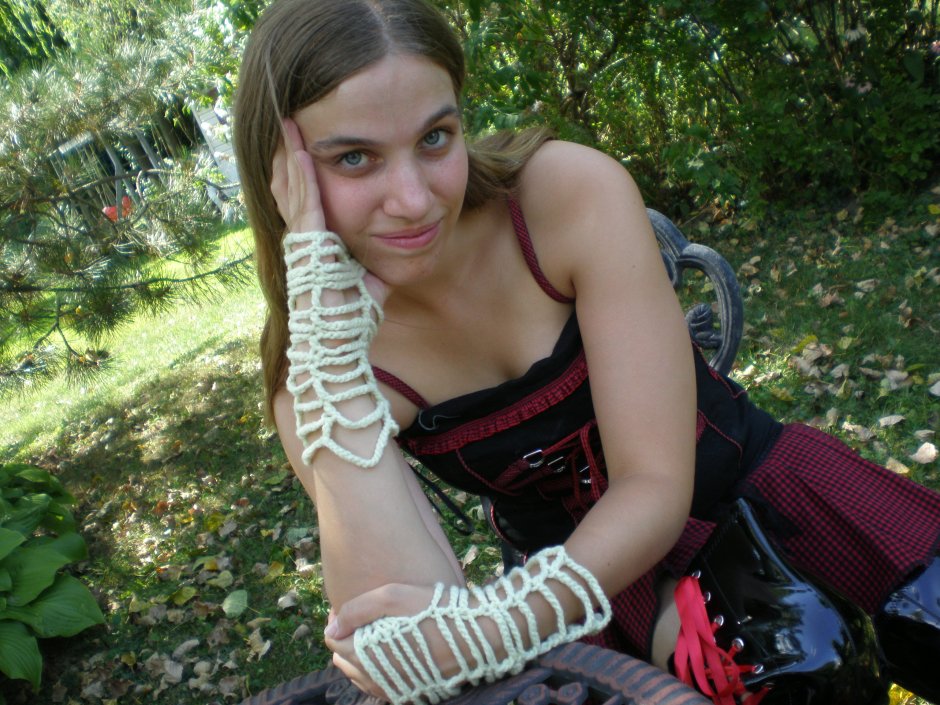
My mother was the one who first introduced crochet to me as a craft that was something other than for grandmothers. When she first became disabled, she suddenly found herself with plenty of time on her hands but not a lot of energy by which to do things. She could no longer fill her days with work and housework. She spent most of her time in bed and as so many of us learned during the pandemic, there is only so many TV shows and movies one can watch before feeling stir crazy. So with plenty of time on her hands, she returned to the crafting of her youth, in this particular case knitting and crocheting. Suddenly our house was being filled with piles of yarn that were transformed before my eyes into elegant scarves, beautiful shawls, stylish hats and warm gloves. I was surprised by how the things she made actually looked fashionable. In particular, I was fascinated by crochet with its ability to take on shape and form so unlike other textiles. Naturally, I wanted to learn.
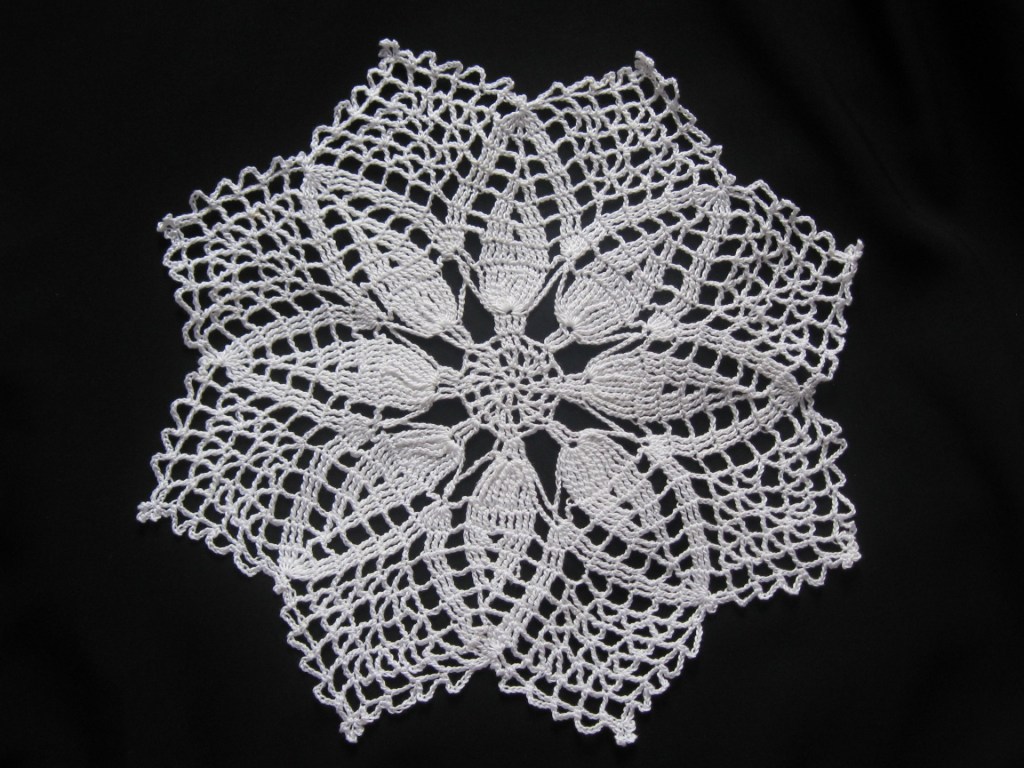
Despite what you may have heard, there was not a strong association between crochet and prostitution. The lace of the ladies of the night had nothing to do with this fine and noble craft! Crochet originated as an art form in the 1800’s coming from “shepherd’s knitting” which was primarily practiced in Denmark and tambour embroidery, a chain-stitch embroidery from China. Despite its French name meaning “hook” it was actually most popular in England, going to show that the upper class English are quite determined to continue the Norman conquest some 800’s years later. Just kidding! The art continued to flourish and especially took off in Ireland during the potato famine as a way for young ladies to earn a living. It wasn’t until about the 1940’s that it became more popular over here in America and of course in the 1970’s it gave rise to the granny squares.
It was with this long and noble tradition in mind that I picked my first project. A simple hat in lime green. I picked lime green primarily because it was a bright color by which to see and learn on. I sat dutifully next to my mother and she began to teach me. In principle, it is a matter of making a loop and then pulling next bit of yarn through the loop, to make another loop and so on and so forth. They use simple terms like yarn over which is just wrapping the yarn around the hook to be able to pull it through one makes bigger. What makes crochet interesting is that because it is so basic one can do things like wrap more yarn around the hook, pull it through a different hole than the one right next to it, twist it one way or the other in order to make interesting shapes. You can make blankets, clothes, flowers, even toys! The world is really your oyster when it comes to this art form.
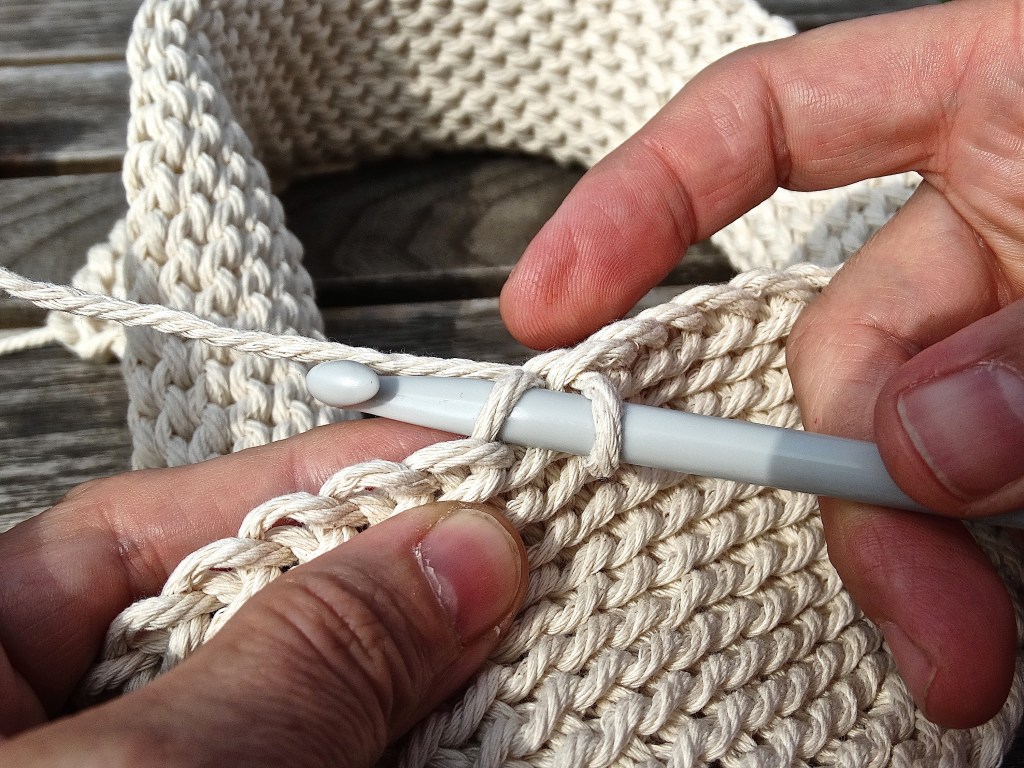
However, as with most things it is easier said than done. One would think that one would get a nice uniform size of loops by dint of the size of the hook. After all patterns call for certain sizes of hook in order to ensure the holes are that size. Not so, apparently I subconsciously tense and my holes become smaller and smaller and smaller until my darn hook can barely fit. Then my stitches become bigger. This pulls the existing fabric one way or the other. At times it was truly an exercise in frustration. My mother gave me different pieces of advice and assisted with getting it less lopsided. She encouraged me to keep trying while her pieces continued to dazzle. She made it look so easy, so relaxing, like going for a stroll in the park. My stroll consisted of going up a mountain in the pouring rain followed by falling down the mountain and landing face first in mud. Still, the hat did get done, misshapened as it was and too small for my own head, it graced the head of a stuffed bear.
Having been abysmal at crocheting, I tried knitting, another noble art form, but failed to even knit a scarf as the problem of “tightness” was even worse with the knitting needles. I literally could not knit loose enough to fit my needles through the holes I was making as they became ever smaller with each stitch. Alas, it would seem that such an art form is not really for me.
What can be gleaned from this bucket list item? Was it a failure? A waste of time? First, there is value in persistence even in the face of low performance. After all, no one’s first attempt at anything is particularly spectacular. The point was to gain a greater appreciation for the art, to try my hand at it and get the literal feel for it. I had a much better understanding of crochet afterwards, even though I could not replicate it, I had at least begun to develop an eye for the art form. There was a certain satisfaction in completing the project. Sometimes the act of persistence and perseverance through a difficult task makes the task worth it. After all, does it matter how one summit the mountain?
Finally, it was something that I could do with my mom at a time when she couldn’t do much. She had just suffered a stroke at the age of 46, lost her job, lost her income and a lot of her physical abilities. It kick started the next twenty years of surgeries and multiple hospitalizations. There were times when she almost died and so having spent time with her learning one of her passions was in of itself important. I was able to connect with her in a new way through her art. I may not ever get very good at it, but it is something I shall carry with me as a gift from my mom to me. I do not have that hat with me anymore. I did not see the need to keep it because I have the memories of learning with my mom.
How can you learn crochet?
In the wake of the pandemic lockdowns, many people took up various arts and crafts, including crocheting. There is a rich world of online tutorials, classes at local craft stores and kits you can buy offline. The start up cost can be very little with kits starting at 15 bucks or so. You don’t even need to leave your house and it’s a small project that can be taken anywhere.
If crocheting isn’t for you, maybe there’s someone special in your life who has a hobby you’ve been meaning to learn. Take the opportunity to ask them to share their passion; maybe find a small project that you can try your hand at. I’m sure they’ll be glad you asked and afterwards you’ll have a newfound appreciation for what they do. Who knows you may find yourself a new hobby!
Completed: 2007
Miles from home: 0 miles
Cost: Free materials provided (15 – 20 for a starter kit from amazon)