Living Out Your Values

Our values are often reflected in what we do much more than what we say. The things we strive for and goals we want to achieve demonstrate what we actually believe. There’s a saying that goes “shut up and put your money where your mouth is” which is short is stop talking and actually sacrifice for what you believe in. Shouldn’t we consider this when looking to complete our bucket lists?

If the point of a budget bucket list is to help create a meaningful life where we’re at, then a meaningful life reflects our values, morals and ethics. I want to have a life that is well lived. One that aligns with who I am as a person and to be able to look back at all the things I have seen, done and accomplished and feel at peace. I don’t want to have regrets for things left undone, but also for things that I did that left me feeling empty or guilty. 

When considering what I want to accomplish in my life, it’s not just about what might be fun to do, but also what I value. I took pride in my German and Irish roots, especially living in a German-American area like Lancaster, County. So, I learned German and studied abroad in Germany. I made certain to spend a little time in Ireland when I was over there. When learning the violin, I studied folk Irish songs. I took Irish step dancing in college. I said I valued those items and backed it up with actions. Those things were more than just learning a language or a dance style plucked at random, they reflected what was important to me.

Your values can inspire you to add things to your list. Do you value your heritage? Then maybe explore activities that connect you to your family’s past. Maybe you value being self-sufficient, then taking workshops to learn crafts such as woodworking and carpentry may be your jam, more than say spending a week in Bora Bora. Most of what I started with were the things that reflected what was important to me, nature, art, music, travel to specific places that held special meaning to me. Some of the things I’ve done have been in support of what was important to the people I do them with. 

Sometimes, a value will prevent you from doing something. Do you value animals? Those animal encounters may be quite tempting but they are rife with exploitation and abuse of the very animals you claim to love. You cannot say that you value elephants and then go ride them. Even alternatives like bathing still involve a traumatic training known as the “crush” where young calves are separated from their mothers, isolated, deprived of food and water and beaten until they are broken. Elephant tourism is driving those numbers up. In almost every case, an interaction with an elephant means interaction with a traumatized elephant for your benefit. Not every animal encounter is a result of abuse, but it is important to be careful with them because abuse is so rampant, especially in underdeveloped countries. 
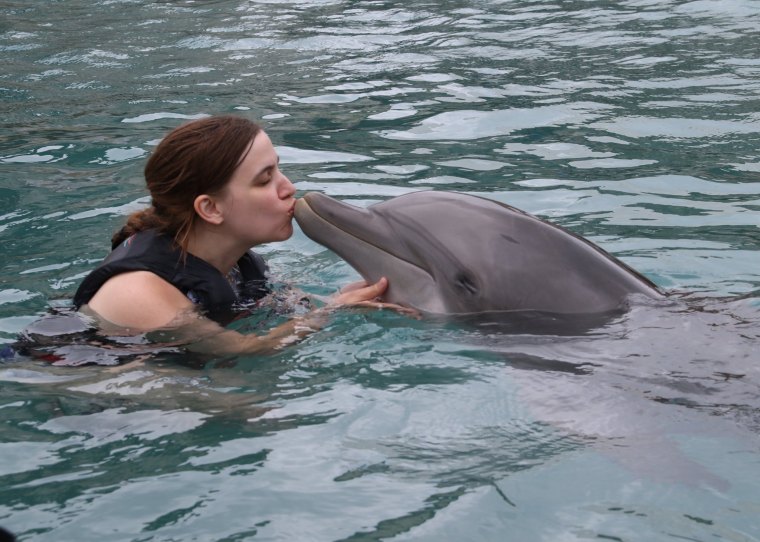
I carefully researched this dolphin led encounter before booking and even consulted a friend who works at a zoo to help me ensure I was participating in an ethical encounter.

You will need to pick and choose your battles. There is almost no undertaking that does not involve murky ethical decisions in our modern world. Buying a cell phone? How were the minerals mined in Africa? How were the workers treated, who assembled it in China or Taiwan? Is the money that is going to the company being used to fund policies and politics that you disagree with? What about the environmental impact? That’s just a cell phone, what about attending a concert? Traveling to a festival? 

When considering my budget bucket list, I started with my values first, understanding what I stood for and where the lines would be drawn. I was careful to do my research and pick my battles. I encourage you to also start with the things you value before writing down everything that comes to mind or taken from someone else’s list.  

When you start out with guardrails, it’s easier to say no. Whether we intend to or not, when we see something “cool” that we want to do, we start to form an emotional attachment through our excitement. It can be hard to reel that back in. I don’t shop at places like Shein and Temu, but I see advertisements for them all the time. It makes it easier for me to not get tempted by the cute clothing or gatchet that I really want to have when I have set the boundary of “I will not buy from these places.” I said I will not exploit animals, and it made it easy to say no to interacting with baby tigers, even in the face of their cute adorable faces. Before I could even picture holding those sweet babies and petting their soft fur, the firm “no” stopped all thoughts of the activity. Whereas if I had written my list, saw the opportunity first, I may have been tempted to try and justify keeping it there or saying to myself “I’m just one person….” 

On this blog, I will encourage you to drink richly from the cup of life and to follow my example of finding things in your own backyard to do. However, there are many different places that one can drink from, it’s up to each of us to be mindful of what we’re taking out of life and whether its right for us. It’s not up to me to dictate to you what values, ethics or morals you should have, that’s up to you to decide. I’m only here to remind you to think about them before you take a drink that ends up tasting bitter and gross. 
Things that should not be on your list

I should hope that in your explorations of my various posts that it is fairly clear that I wholeheartedly and enthusiastically encourage you to add things that are authentic to you to your list with almost no limitations. If for you a bucket list item is finally baking the perfect cake, then by all means put it on your list. If saving up money to follow your favorite band across the country on tour – go for it!

However, there are some things that I strongly discourage and believe should not grace anyone’s bucket list. Namely items that are harmful or exploitative. Now, I won’t get down too deeply into the various nuances of exploitation and how almost everything we do is exploiting someone in someway, so there may be times when it seems like we’re splitting hairs. However, there are some activities that are quite clearly harmful to engage in. 

Take the ever popular animal encounters. Many of them are quite fine and benefit both the animal and the people. But not every animal encounter is good, some are down right evil. Take baby tiger encounters, if someone is able to make a business entirely out of baby animal interactions you can almost be certain that the animals are being harmed. I would no sooner go to a puppy mill and pay them to interact with their puppies, but that is essentially what you would be doing. After all, animals don’t stay small and cute for long. Where are these babies coming from? How do they keep a continuous supply of baby animals? Where do they go when they grow up? Babies that are being constantly handled by humans are certainly not going back into the wild nor are they probably going to zoos.

It is important to consider if these animals are bred for human interaction, what sort of enclosure do they have, does the facility have any sort of accreditation such as the The Association of Zoos and Aquariums (AZA) the gold standard for the industry, are there limits to group size, is it an animal led interaction and how likely is it that this is an animal that is being exploited? Some animals are much more likely to be part of a larger system of exploitation such as elephants. As much as I would love to interact with an elephant, unless it’s an encounter at a zoo or other facility with a fairly stringent accreditation, I won’t be participating in it. There are many stories coming out of Asia where even at places “meant” to help the elephants are actually places where they are being exploited and harmed.

When I was in Bermuda and I had the opportunity to do a dolphin encounter. Before even signing up for it, I started to do research into whether this was an ethical thing for me to do as I had read that many dolphin encounters in the Caribbean were harmful to the dolphins. I was pleased to see they had several accreditations and even reached out to one of my friends who worked at a zoo to see what she thought. She affirmed in her own investigation the organization seemed above board. With the best of intentions, I signed up for the encounter. 

My caution was rewarded because when I went they kept the groups of visitors small and it was a dolphin led encounter. This meant that they opened the doors whichever dolphin showed up was the dolphin we would work with. The dolphins got to decide on the limits for themselves and make the decision to come or go. Honestly even the “enclosure” they were in, was really a net in the open water. The entire pod could have left at any time with a simple jump out to freedom. It was as effective at keeping them in as a one foot fence might be at keeping your dog in your yard. I am quite happy to recommend the encounter to people as positive for both people and dolphins. I did my research and had an amazing experience. I also don’t have to live with the guilt and even shame of having done something to harm these beautiful creatures that I adore because I took time to reflect first. The same could not have been said had I given into temptation and gone to cuddle the baby tigers. 

Another common area for harm is the environment though this one is a bit fuzzy. Still, I encourage you to do your research and see if what you’re about to embark on is going to be drastically harmful. Releasing items up into the sky is a decided red flag as what goes up must come down. Balloons kill thousands of animals every year because of balloon releases. Would you really kill an animal for a few hours of fun? (We’ll table the hunting debate for now, I’m not referencing hunting.) When I decided to engage in a lantern fest, part of what I was paying for in my ticket price was for the clean up after the event. The lantern was 90% biodegradable and they had a significant rate of lantern recovery of between 85 – 95%. They had an agreement with the local land management that if lanterns were recovered after the event they would donate a certain amount of money to conservation of the land per lantern recovered. It meant that I was confident in my engagement with the activity as something that was minimally harmful to the local environment. Once again, it’s about doing your research and figuring out where you draw the line. For some people, releasing anything into the air is too harmful and risky to be worth it. For some people, my choice to go on a cruise is too much. 

Lantern Fest

This post should not be read as some sort of permission to name and shame. It’s to make you really consider the potential consequences of your actions and to be willing to re-assess past decisions in light of new information. Take the ever popular, simple and seemingly harmless practice of rock stacking. Stacking rocks has been made so popular by social media, the national park service has started to ask people to knock them down as the practice is becoming increasingly harmful to the environment. It turns out, the small animals that need those rocks are the bedrock of the entire ecosystem and we were destroying them with our little instagram pictures. Apparently, If we want the wolves to stick around, we need to leave those rocks be. Things we would never think of as harmful can be devastating. 

Unfortunately, the exploitation of people is probably the most fuzzy area, even though it seems like it should be easiest. This is mostly because there is so much exploitation of people in the tourism industry it is almost impossible not to end up in its clutches. At the risk of sounding like a broken record, do your research. Cruises are notorious for their poor treatment of the crew. Certain cruise lines are the typical offenders whereas others have pretty good reputations. Some hotels hold people in semi-domestic slavery. Others may be hubs of sex trafficking. I won’t publish a list here because these things can change overtime with changes in management and leadership. I certainly don’t want people coming to me later saying that I said a certain line was okay only to find out five years later it’s now one of the worst offenders. 

Going on a mission or service trip may seem like the least exploitive thing you can do, but it can actually be one of the worst things you can do. There are stories of people going to orphanages to give toys that the children never see, or shoes the children will never get to wear. Essentially, saving the “poor orphans” is the thing the company is selling and if there aren’t “poor orphans” they lose their product. They can’t be saved if they’re already living in a beautiful facility provided with toys, food and clothing? 

Handing out food in Haiti

If you go to build houses, you can be assured that there was a group of local professionals who had to come in after you to fix all your mistakes just so you could feel good about what you were doing. There are other tales of churches being painted multiple times in the same summer by various youth groups robbing the locals of a job and money. These weren’t service trips, these were tourism experiences disguised as service. This isn’t to say every mission trip was like that and that by going you are robbing locals of business and self-sufficiency. However, it’s a good idea to question what you’re being asked to do. Are you doing something that is within your expertise or skillset or something you’d call a professional to do? If it’s a company that is consistently sending people to the same place, then why is it in such dire straits all the time? 

Finally, things that go against your ethics and morals should never be on your list. Do your research and use your brain to ask the questions. As you learn more, the questions will begin to seem more and more obvious to ask. Additionally, if you engage in something and then later discover that you did participate in something that goes against your morals and ethics, it may be best to simply leave it off the “list”. This isn’t to hide it or out of a sense of shame. It is so the inclusion of it doesn’t encourage others to do it. For example, I did ride an elephant as a child long before the internet was widely available and the concerns for the elephants had reached my parents. All I knew was that I loved elephants and I got to ride one. However, you won’t see it on my list and other than this brief aside, I don’t think I will publish it elsewhere. This is to discourage elephant rides as I’m not celebrating it as a bucket list item that I have done. When we leave those sorts of things on our list, it is a celebration of that experience and it isn’t an experience worthy of celebration. 

Not everyone’s morals and ethics will align. I already mentioned hunting, lantern releases and cruises. Some people may find consumption of any animal or animal product to be abhorrent. There are activist throwing soup at art because they feel the environmental impact of the museums is too much and so seeing the Mona Lisa probably isn’t something they’d have on their list. For me, cuddling a baby tiger isn’t something I’ll probably ever do because I cannot think of an ethical way to do it. This is a personal decision that you have to make and live with, but I will encourage you to continue to learn about the ethical practices of a given activity. One more reason for staying closer to home, it’s a bit easier for you to find out what’s actually going on.