
I’m not sure if you’ve noticed, dear reader, but we’re in the thick of a technological revolution—what with artificial intelligence, immersive media, and smart devices popping up faster than I can finish my morning coffee. With every leap forward, the world reshapes itself: some innovations are delightful, others… decidedly less so.
But before you brace for a philosophical tirade, rest easy. This isn’t about the doom and gloom of progress. Today’s post is about something far more charming, and perhaps a bit science fiction, how technology is transforming the way we experience visual art, and how I got to see that transformation firsthand through the Immersive Van Gogh Experience.
For centuries, visual art has been something we look at, admired behind velvet ropes or under museum lighting. We view a painting, reflect on its symbolism, absorb its mood, and then move on. It’s typically a passive interaction, appreciated but always held at arm’s length.
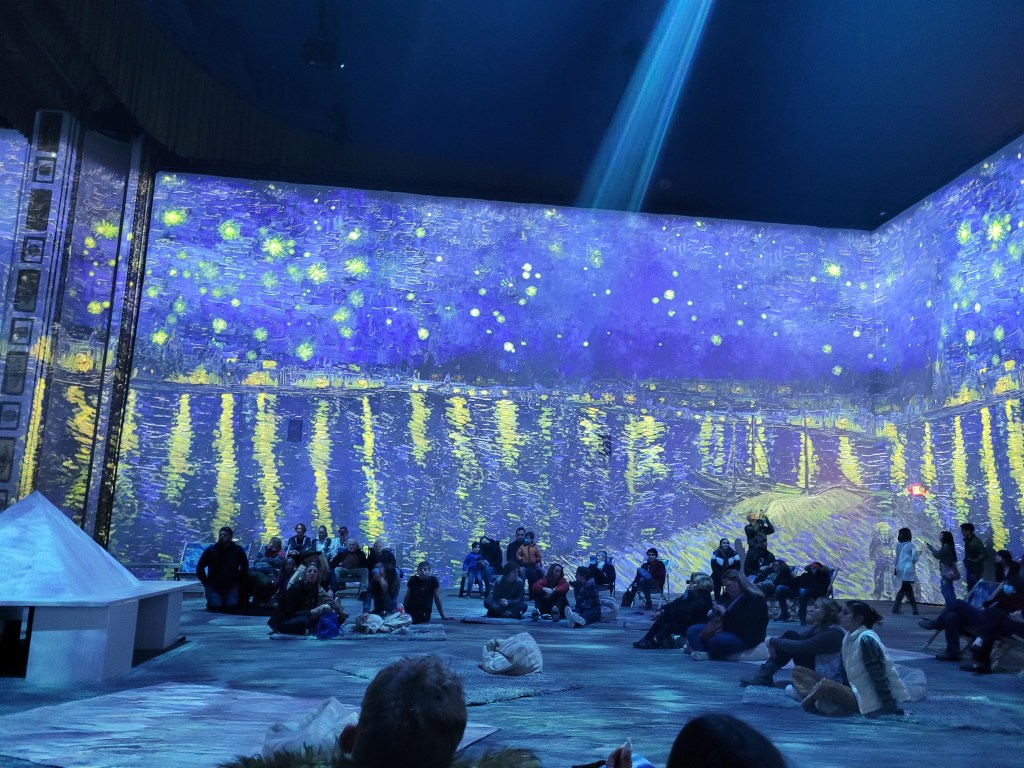
Now, thanks to clever combinations of projection mapping, music, props, and sometimes even VR goggles, we can step into the world of a painting. These experiences dissolve the frame. The art swirls around us, alive with movement, sound, and color. It invites not just observation, but participation. We’re transported into a world shaped by brushstroke and emotion, where time bends and the impossible feels touchable. If you’re a fan of Star Trek it can feel as though the Holodeck isn’t far behind us – or would it be ahead of us?
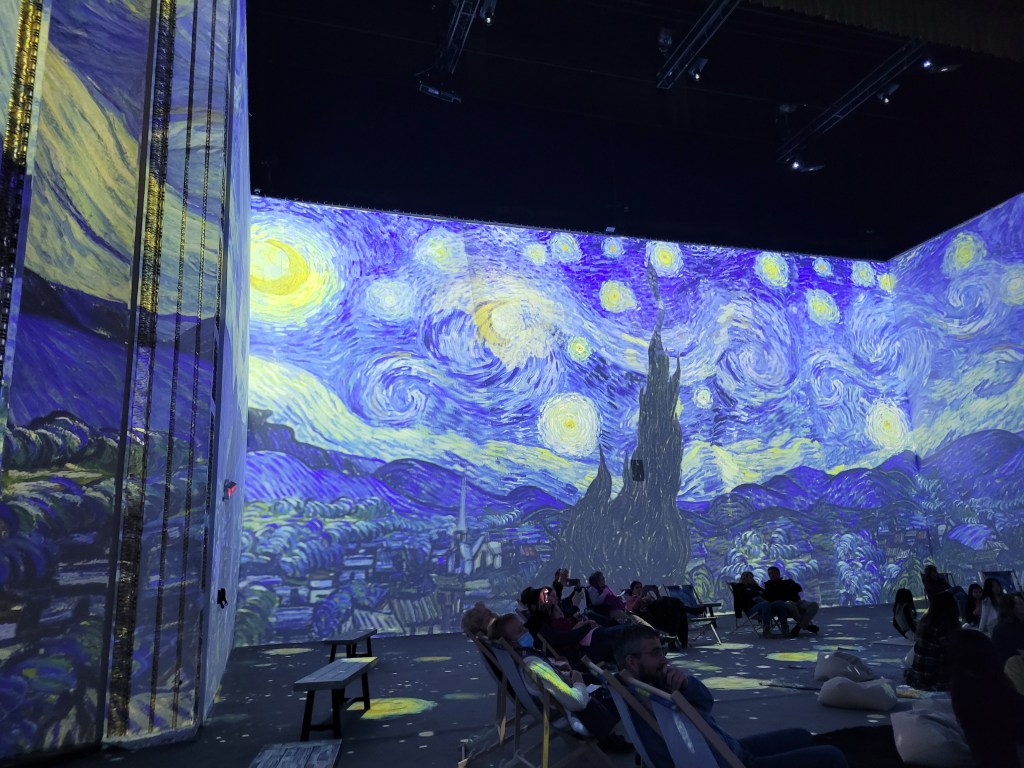
Such was my adventure on the outskirts of Philadelphia. I attended the Immersive Van Gogh Exhibit, where his iconic works leapt from flat canvas into full surround. It was a modest production by immersive art standards, but well worth the 50-minute drive. The exhibit unfolded in three rooms, beginning with a respectful introduction to the artist’s life: the genius, the grief, and the legacy.
Vincent Willem van Gogh, the Dutch Post-Impressionist painter, is now recognized as one of the most influential artists in Western history. He created over 2,000 works, 800 of which were oil paintings, many during the final two years of his life. Though immensely talented, he also struggled deeply with mental illness, most likely Bipolar Disorder, experiencing intense periods of depression and mania. He spent time in psychiatric hospitals, often neglected his health, and famously cut off part of his left ear after a dispute with a close friend.
I would be remiss if not highlighting the efforts of his sister-in-law. As It’s entirely possible the world would have forgotten him, had it not been for her, Johanna van Gogh-Bonger, who championed his work and preserved his letters after his death. Her tireless efforts not only shared his story but helped cement his artistic legacy. Too often we focus on the face and talent of a given operation without appreciating the supporting cast of characters. After all in any endeavor it takes a village to succeed.
While the trope of the “tortured artist” is often romanticized, Van Gogh’s story has opened broader conversations about mental health, creativity, and resilience. Beyond the mythos, his art also sparked interest in unexpected fields, like fluid dynamics. Scientists have observed that Starry Night mirrors real-world mathematical models of turbulence, patterns that weren’t formally understood until decades after Van Gogh painted them. He may not have known the equations, but his brush captured the energy of the cosmos with stunning intuition.
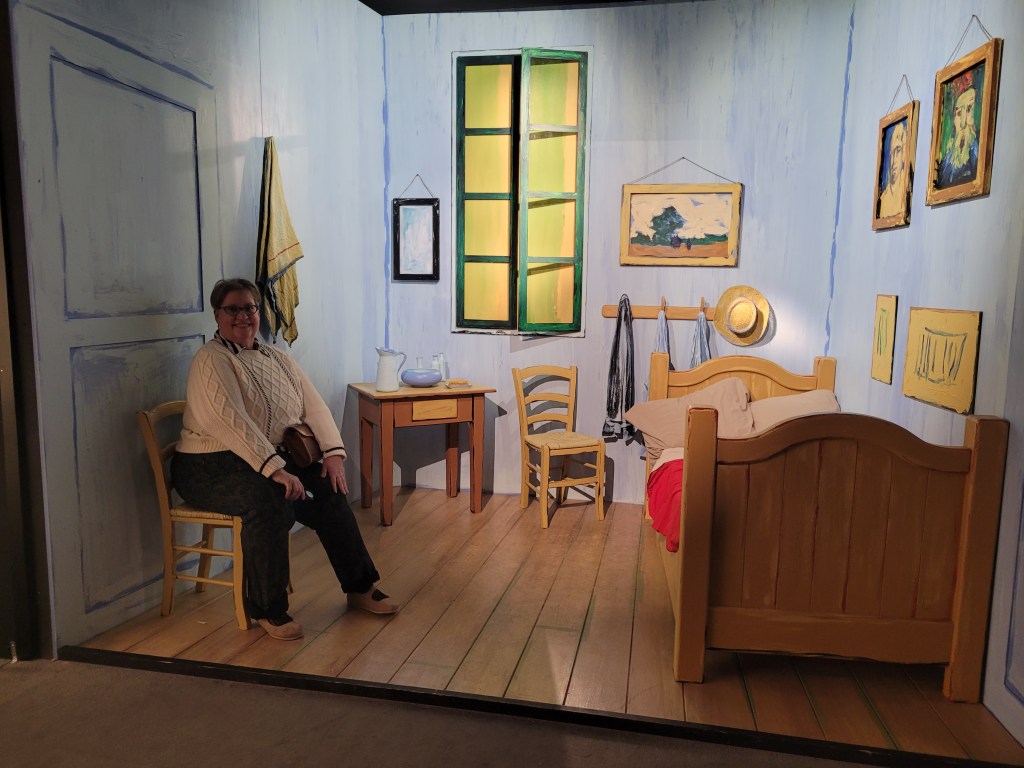
His story gently unfolded as I walked through the exhibit. I heard excerpts from his letters and watched his still-lifes float, twist, and evolve across the walls. One moment, I was standing in his bedroom; the next, sunflowers danced around me, filling the space with golden light. My favorite moment was in the largest room, reclining on a seat and watching Starry Night come to life, accompanied by music that echoed the emotion of each painting. I could’ve stayed there for hours, had my parking meter not rudely reminded me of the outside world.
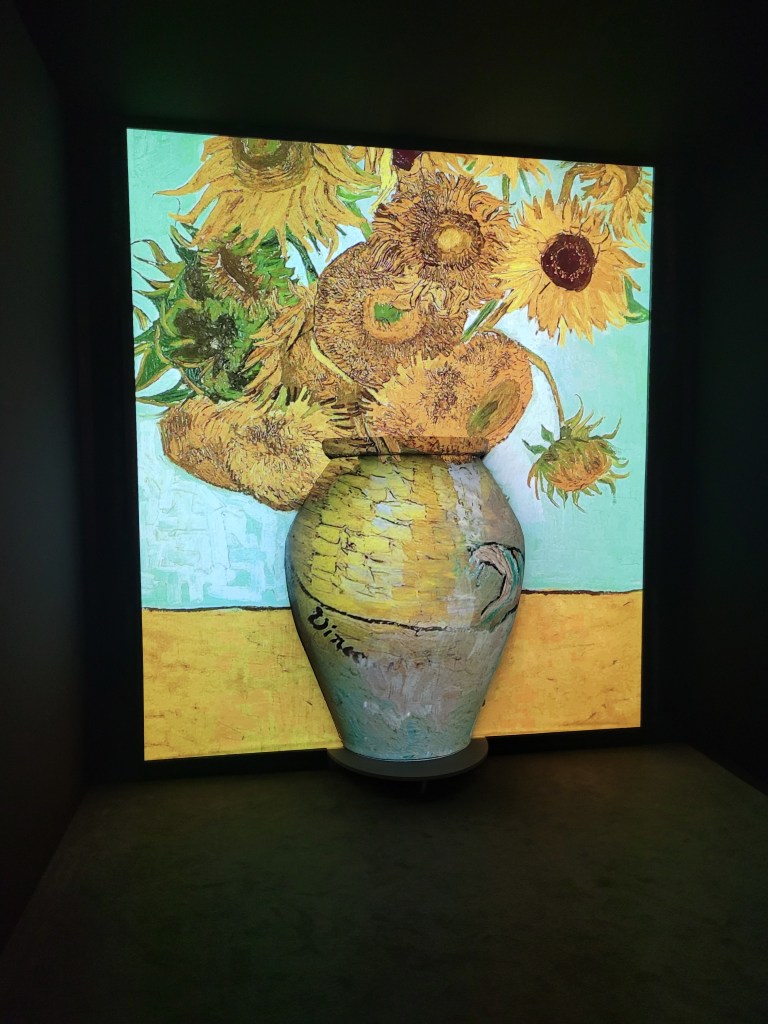
There was something deeply calming about it all. The way the paintings moved, the soft narration, the glow of color, it felt like being wrapped in a blanket of light and sound. The only thing missing was a hot cup of tea to sip while I drifted through it all.
Eventually, I had to peel myself away from Van Gogh’s swirling skies and rejoin reality. I refilled the meter and met my traveling companion (my mom) in the gift shop to find a souvenir. She chose a beautiful necklace that still earns her compliments. I, ever the practical one, picked up a set of coasters, because if I must collect things, they might as well be useful. Additionally, if I must have things, they may as well be beautiful. A memento with function and a memory with purpose.
While technology certainly has its downsides, I’m genuinely excited to see how it will continue to open new windows into the past, especially when it’s done with care, creativity, and reverence. If we can blend art and innovation without losing the soul of either, I’d say that’s progress worth celebrating.
Finding Your Own Immersive Art Adventure
If your curiosity is piqued and you’re ready to step inside a painting (or at least escape your laundry pile for an afternoon), immersive art exhibits are popping up in cities all over the world. A quick search for “immersive art experience near me” or checking sites like Exhibit Listings, Eventbrite, and even local museum calendars can help you find upcoming shows. Popular exhibitions include Immersive Van Gogh, Monet: The Immersive Experience, and Frida Kahlo: Immersive Biography, among others. Many cities now have dedicated digital art spaces that rotate different artists throughout the year. Social media is also surprisingly helpful, follow local art museums, galleries, and pop-up exhibit pages to stay in the loop. And don’t be afraid to go solo! These exhibits are made to be experienced personally, and sometimes the quietest wanderings are the most rewarding.
Completed: 2022
Cost: $24 per person
Miles from home: 75 miles
If you enjoyed this tale, there are many others which can be found on my Bucket List and Reverse Bucket List
 Budget Bliss: Bucket List