
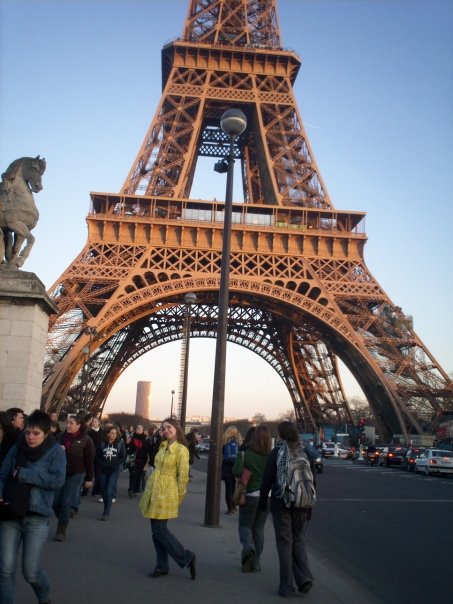
We continue our journey through beautiful, enchanting Paris.
It is important, dear reader, that when traveling one is not too set on any particular place or thing, lest you miss out on a spectacular find or hidden gem the guidebook overlooked. This is one of the reasons I rarely book a full day of activities. I like to leave space for moments of serendipity to take hold.
Which is precisely where we found ourselves next.
For beneath the vaulted ceilings and looming gargoyles, the Lady of Paris holds a small secret: the Archaeological Crypt. A title, as you know, certain to get my attention.
Just as we were about to leave the cathedral in search of the Eiffel Tower, we stumbled upon a small sign beckoning us to explore below.
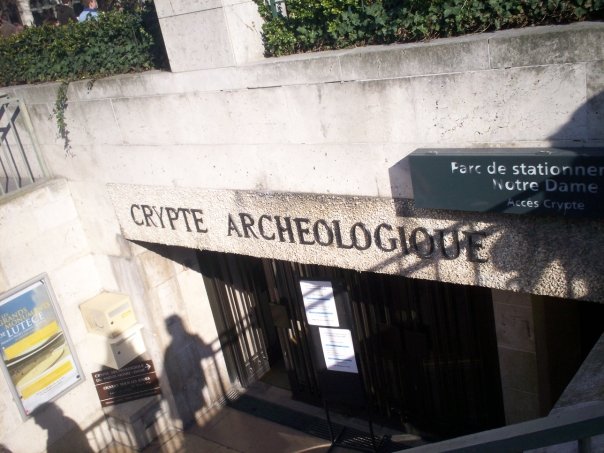
It felt almost mythical descending the steps into the dimly lit corridors of the crypt, as if stepping through a portal in time.
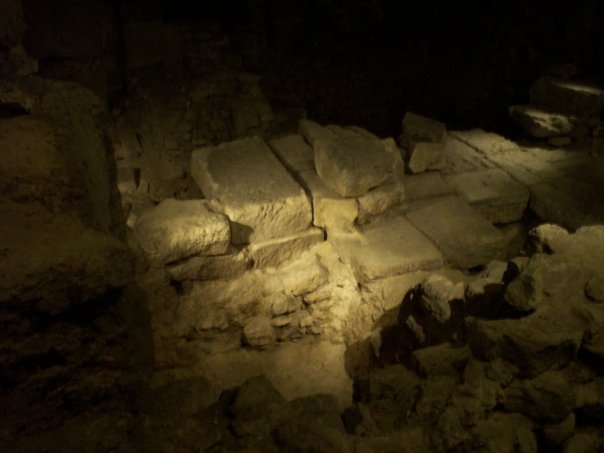
Unlike most museums, where artifacts are removed, broken apart, and neatly arranged in brightly lit halls with placards explaining their importance, this space preserves them exactly where they were found.
The layers tell the story of Paris.
Stone remains whisper of traders calling out their wares, pilgrims making their way to holy places, children laughing in the morning sun. The quiet of the crypt stands in sharp contrast to the cacophony above.
Most tourists pass it by in their rush toward the next “must-see.” They do not pause to reflect on the centuries that built this city.
Yet the stones remember.
Roman ruins: wharves and docks once used for trade. Bathhouses where elites conducted business. Defensive walls against invading Germanic tribes. Medieval streets leading travelers toward the cathedral. Remnants of an ancient chapel. Foundations of a Renaissance orphanage.
Today, the museum includes interactive displays that bring the past to life. But even without them, I could feel the weight of history, a hundred generations whispering across time.
We emerged from the crypt back into the sunlight, now drifting toward the horizon.
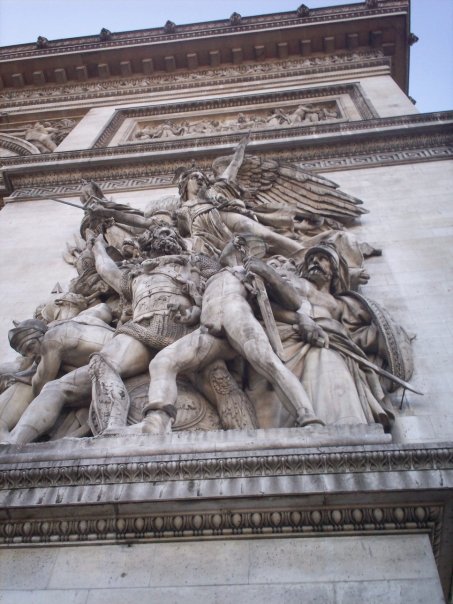
Consulting our map, we had two more “must-sees” to check off our list: the Arc de Triomphe and, of course, the Eiffel Tower.
Now, dear reader, a word of warning. The Arc de Triomphe sits in the middle of a very busy traffic circle. Do not do as we did and dart across the road, flirting equally with traffic and death.
There are underground entrances, as we later discovered, that allow for safe and easy access to this memorial honoring those who fought in the Revolutionary and Napoleonic Wars.
To be honest, while impressive in size, it lacked emotional weight for me. In contrast to the crypt, it felt flashier but ultimately hollow.
Perhaps for a French citizen, it carries far greater meaning, standing as a reminder of the blood shed for their country. But for me, it was something I could have skipped in favor of lingering in a café.
And then, of course, the Eiffel Tower.
What other landmark is more instantly recognizable as the symbol of a city, or even a country? A single silhouette, and the mind goes immediately to Paris.
Dear reader, I highly recommend visiting the tower at dusk.
The daytime crowds begin to thin, and a kind of hush settles over the air. Oh, there are still tourists milling about, but there is a softness to the evening, as if people have remembered that life is not about rushing, but about savoring small moments.
We approached the tower after a long day of walking and purchased tickets for the elevator (though today, you would be wise to book ahead).
The top level was closed for renovations, but we did not mind. We could still visit the café and take in the view.
As the sun dipped below the horizon, the city transformed.
Lights flickered on like scattered stars. Colors softened into shades of gray. And the tower itself shimmered to life in a glittering display.
We sipped warm hot chocolate and looked out across the city, quietly content.
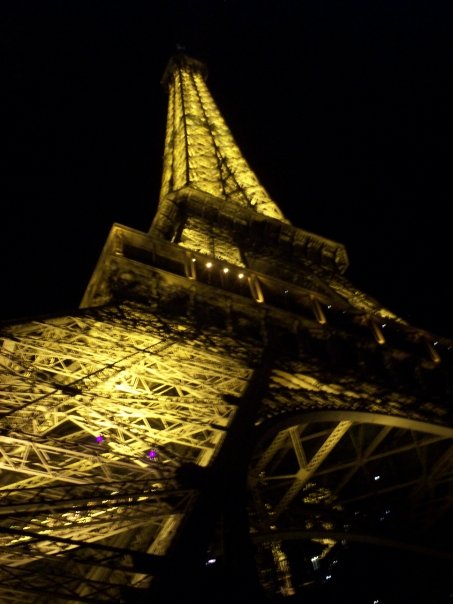
Exhausted, famished, and thrilled, we made our way back toward the hostel, stopping at a restaurant for dinner.
I had taken one year of French in eighth grade, which proved entirely useless when attempting to decipher the menu. I could identify mushrooms and cheese in a few places, but the rest was complete gibberish.
Hungry and overwhelmed, I did not relish the idea of struggling through a back-and-forth with the wait staff.
So I employed a trick that has served me well ever since: I asked the waiter what his favorite dish was and told him to bring me that.
He seemed delighted that I was entrusting my palate to him.
This approach is not for picky eaters, but I am fairly adventurous. In fact, there are only two foods I genuinely detest: pickles and Jell-O.
In the years since, this trick has never failed me. Wait staff often know the menu better than anyone. They return to the same dishes again and again, and those are often exactly what you want to try.
Now, I would be remiss not to mention the shameless flirting that followed, nor the belated April Fool’s joke he played on two unsuspecting Americans.
Having entrusted him with our meal, we had also, to some extent, entrusted him with our wallets.
So imagine my surprise when he returned with a bill for nearly 300 euros, entirely in French.
Unsure what else to do, I prepared to pay it. After all, we had ordered the food. If there had been a misunderstanding, I was ready to take responsibility for it.
I believe he was just as surprised by my reaction as I was by the bill.
Instead of arguing, I simply accepted it.
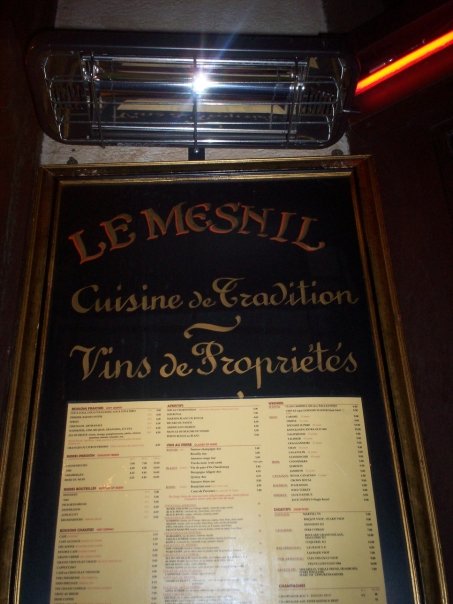
Fortunately, he did not take advantage of my naivety. He laughed and revealed it was a joke, much to my immense relief.
He did, however, invite us dancing. We politely declined. We were both spoken for and had no desire to lead him on.
The lesson here is simple: if you let someone choose your meal, have them point to it on the menu. No surprises.
And do not be intimidated by a language you do not know. A little pointing and a rough mental tally go a long way.
We were fortunate. The lesson came through humor rather than costly experience.
Late that evening, we wandered back to our hostel through quiet, darkened streets.
Surprisingly, whether due to youth or good shoes, I was not footsore despite walking all day. Instead, I was happily exhausted, my head filled with history and excitement.
It felt like a waking dream. Paris was no longer an abstract idea, but something real and tangible.
Still, exhaustion finally caught up with me, and I fell asleep almost instantly.
Morning came with sunlight streaming through the window.
I stretched lazily, not quite as energized as the day before, but still eager to see what lay ahead.
As we discussed our plans before meeting Frieman later, I happened to glance up.
There, just beyond the buildings, stood the white dome of the Basilique du Sacré-Cœur.
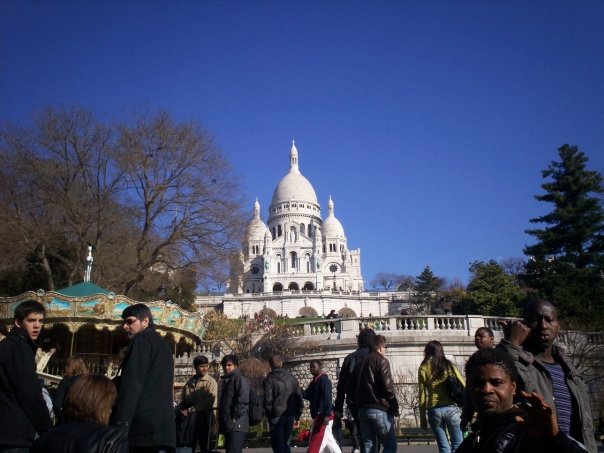
I turned to Erika.
“Remember how I said there was no way we were walking all the way across the city to see that church?”
“Yes?”
“Well… we already did. Because it’s right there.”
Oh, how the universe laughs, dear reader.
 Budget Bliss: Bucket List