I spend quite a bit of my time here writing about having a positive outlook. I talk about looking at challenges as opportunities, to focus on the blessings you have and going with the flow. These are all good things to do.
However, there are times when life sucks. Sure you may have lost your job and the magical opportunity for a new one may be just around the corner, but in the meantime you still have to pay the electric bill and put food on your table. That’s stressful and it stinks. Sometimes you get terrible news about your health. I suppose good things can come of having cancer but let us not pretend it will be a picnic or that in general life is much better having not had cancer. I have yet to meet a single person with a chronic illness who says the “perks” are worth the price. I know I have written about how lost relationships can be opportunities for new ones to come into our lives, but a loss through death isn’t something that should be reframed in that light.
It would be emotional dishonesty to not allow yourself the time to really process the negative emotions. Skipping over the “suck” right to the positive rainbows and unicorns of positive thinking renders positive thinking into exactly that, useless positive thoughts. Repressing our emotions is not healthy. If we are hurt, sad or angry, we need to let ourselves fully feel them first before we can move forward. Like a small child our emotions deserve more than a cold “buck up”. They deserve a warm hug and an understanding ear. They deserve acknowledgement and compassion.
How do we feel when we try to express ourselves to a loved one only to have them rush us through because they cannot sit in our discomfort? Do we feel seen or even valued? Why do we do this to ourselves?
I try to approach myself in the way I might a dear friend when trying to offer genuine comfort. The key is to be curious about what’s really going on rather than offering trite “it will be okay” or “well at least….” I may ask myself why I am so worried. I may ask some challenging questions to stop turning my worries into a catastrophe or even ask okay well if the worst does happen then what? I may ask myself what beliefs about myself I’m currently cultivating or if the situation is a threat to my sense of identity. These are all hard questions that can be difficult to face, but face them I must if I am to truly get down in the muck and embrace the suck. I often find that journaling out the emotions to examine them is the most helpful exercise. I can look at the entries for themes and underlying negative beliefs that ought to be challenged. I can see when I’ve blown something out of proportion.
Often by working through the emotions and acknowledging the truth of the situation as one that is objectively awful to go through, I can start to shift into a genuinely positive state. I can find ways to look at the situation as a place of opportunity. I may look at the situation as a time for me to grow closer to God and renew my faith. I can feel true gratitude for being in such a place at this time. I can say that while not a great experience, it is a necessary one for my own personal growth. This is not always the case, after having a terminal cancer diagnosis isn’t going to suddenly become a good thing with a few journal entries and some light cognitive behavioral therapy. Potentially losing your home and becoming homeless may later on be a great thing because it helped you get your life on a better track and even led to you being eligible for a program that got you permanently out of poverty, but the process is not fun by any stretch of the imagination. It is often extremely traumatizing and trauma isn’t something to be covered up with fairy stickers and glitter.
However, only by working through negative emotions, even trauma, can we begin to move beyond them to the place where we want to be. As long as we ignore them and suppress them, they will continue to rule our lives popping up in the form of anxieties, doubts, negative self-talk, poor self-esteem, depression, sleep disorders and other psycho-somatic and psychological symptoms. We’re not just trying to cross off things on our bucket lists, we’re striving to live life to the fullest and be the best possible versions of ourselves. After all, if we don’t deal with the things that are bothering us, then we may fall into the trap of hedonism and escapism, not fully experiencing life because we’re too numb to feel.
So embrace, the suck, feel it deeply and fully, cry, scream, yell, punch your pillow, throw something at the wall and watch it shatter! Seriously, go to Goodwill buy some $2 cups and go nuts! Just don’t damage your walls, ensure pets and small children are clear from the area, warn your partner/roommates. Or smash it to bits with a hammer! Put it in a plastic bag wrap it in an old towel and enjoy! Do whatever you need to do to get your emotions out and feel some catharsis. It’s only when we’re emotionally honest and recognize our negative feelings, that we can really begin to process them.
No one ever wins the game, “what could have been”, but we all play it to our own demerament. The game “what could have been” is when we sit and think about the path not taken. The “one who got away”, the degree not pursued, the job offer you didn’t take, the house you didn’t buy or the trip you didn’t go on. It is usually when we are sitting in regret for not taking that path and say “if only I had….” Indeed, if only you had and then life would be wonderful! That, dear reader, is the dangerous and poisonous trap.
You see when we play this game, we only ever present ourselves with the idealized version of events had we only made a different choice. I should probably write a post later about the choices we make since I keep saying it, but life is full of choices and saying yes to one thing means no to others. We choose to give up something to take a given path, often more than one thing. If we pursue a higher degree we may land our dream job and make lots of money, we may also find ourselves drowning in student debt working at McDonald’s. Rarely do we consider the second part when playing “what could have been.” We only think of the best possible outcome of the path not taken, dreaming that if we had just done something slightly different we would have a life that frankly was probably never in the cards to begin with.
I had a wonderful co-worker who was quite talented in the social services field. She was arguably better than most people with their master’s given the amount of additional training and experience she had. Unfortunately, without that degree her job prospects were limited and her salary was less than it should have been for what she brought to the table. It was to her deep regret that she did not finish school. However, she shared that she had in part chosen not to pursue a career in order to support her husband’s children in their blended family. They needed additional support and because of her pouring herself into them, they turned out wonderfully. They are successful young men and women who love and adore her.
I reassured her that at the time of the decision she could have no idea that the job market would be so demanding of a higher degree and that she made the best possible decision for her and her family in those moments. I told her that she has no idea the positive impact that her presence in the family brought and what horrible things may have happened if she pursued her higher education which would have required her to sacrifice the extra time and attention she gave those children. I told her she has no idea if the gamble would have paid off or if she would have been stuck with debt or how it would have impacted the dynamics of the home. Perhaps, those children would have gotten into drugs or joined a gang without her love, care and support (a possibility in the city she lived in). Would she be sitting in an office today, wishing she had made a different choice and cursing herself for not staying home?
Much like in the movie it’s a Wonderful Life, we have no idea how the choices we make effect the world around us and how without those choices the world may actually be far darker.
That “dream” home may have been a money pit or a financial stressor that ruined you. That vacation you didn’t go on, maybe would have been the place of a freak accident that left you without a leg. That job that you didn’t take may have been the most toxic work environment that you ever experienced. Yes, it may have led to a magical land of happiness, but look around you, do you know anyone who is truly happy? If so, then I will ask you to look closer at them, are they happy because of a dream life or for some other reason? The Kardarasians are arguably one of the most successful families in America and I don’t need to watch their show to know they are miserable. They spend their lives creating endless drama for our entertainment and that sounds like a gilded hell. How many celebrities have completed suicide or turned to drugs to numb their pain? How many people regret getting married? How many single people long for it?
You accomplish nothing sitting up and thinking up a fantasy life for paths not taken. It only leads to regret for a life that you do not have and for one that may have never existed no matter what choices you made. You cannot change the path that has already been taken. The only possible way is forward to make the best choices you can in the moment with the information that you have. Living our best lives means living this life and making this one the best one we can with the tools at our disposal not trying to live a life that can never be. Do not play what could have been, dear reader, for it is a game you will never win.
I think one of the reasons everything seems so much better on a vacation is because we’re able to leave behind the worries, stresses, and responsibilities of everyday life. IWhen I do go on vacation, not only do I leave it behind, I almost always have a “flex” day for when I return, I make sure all bills are paid up early and I make sure my house is spotless before I go. This means that I don’t have to worry about returning to housework, everything is paid for and I still have an extra day where I’m not working. I have an entire day to prepare to “return” to the mundanity of life with all the worries, stresses and responsibilities of everyday life. It also means that I don’t have to begin to prepare to return until after the vacation is completely over thus “protecting” the vacation mindset. Another protection I give myself is having things fairly planned out, with room to change them if the need arises, but having done most of the decision making beforehand means that not even the worry of a decision can possibly bother me.
Sidenote: The flex day is usually spent snuggling my pets who missed me and ensures that I meet their emotional needs after being separated from me. It’s like a whole bonus vacation day and I love absolutely it.
Cat snuggles at the end of a vacation away is the purrrrrfect welcome home
Because we’re able to “set aside” our “real” lives while away, it means that we are much more able to focus on what’s happening to really enjoy what’s happening in the present and savor those moments. Vacations just feel more fun even if we’re doing an activity that we could arguably do at home.
Consider going to the beach or the lake. A day at the beach or lake nearby is lovely, but what about say going on a cruise and picking a day at a tropical beach. Objectively, a beach is a beach. Sand, check. Water check. Waves check. Yet, in comparison to my last day at the beach on the Atlantic coast vs my day at the beach on my cruise. The cruise one stands out as better. Why? Both trips, I spent time swimming in the water and then laid out under some shade to read my book. Perhaps it was less crowded, but I went to a less crowded beach before. Perhaps, it’s because I didn’t have to lug my chairs and towels. Maybe? Or perhaps it was the mindset I was in. I was mindful to be in the present. It seemed better because I was more relaxed and worry free. I simply was in the moment. All I was concerned about was the beautiful weather, the feel of sand between my toes and the gentle lapping of the waves as I sipped a drink and read. I was in my body in a way that I wasn’t really before.
I would hazard a guess that was the biggest difference, not the location, not the fact that I was on a cruise or whatever else, but my mindset. If I went away for a vacation and life followed me there, I probably would be miserable and perhaps, vow to never visit that location again having associated it with a terrible experience. No wonder we’re all looking to escape to far flung places rather than living where we’re at.
So how does one cultivate a vacation mindset while doing things at home, perhaps on the weekend, a single day off or on an evening out? First, you must create some boundaries around those activities. For me, I may schedule a preparation evening the day before. One where I do a more thorough cleaning of the house or at least make sure it’s well straightened up so that when I leave to go do what I want to do, a bunch of housework isn’t lingering behind in my mind’s eye. I may look ahead of upcoming responsibilities such as bills or projects I need to get done and try to get as many of them done beforehand. My alternative is to have on my calendar a block of time dedicated to those activities. I find that when I block out time to get a task done, the stress associated with it diminishes greatly. Mostly because my brain is able to accept it will get done and then not worry about it. It also means disconnecting, airplane mode can be your friend or if you’re too afraid of that because you have children at home and you want to make sure you’re available in an emergency, setting your phone to “Do not Disturb” where you can still get phone calls in an absolute emergency. All of these things help me set a boundary to keep the outside world out of my leisure activities.
By setting a boundary with the rest of the world, it’s much easier to cultivate mindfulness. What do I mean by mindfulness? I mean being fully present in the moment, being aware of the physical realm around you and your own body. One could call it being grounded in your current reality without being distracted by things in the past and the future. This allows you to turn the mundane into something extraordinary. Consider a trip to the farmer’s market. Apparently, this fairly ordinary thing here in Lancaster is a coveted activity by many a tourist and don’t get me started on the “farm to table experience” that people pay an arm and a leg for or as I call it Wednesday night’s dinner.
When I go shopping, I am on a mission. I get in and out as quickly as possible, I have a list, I know where the items are at and I don’t want to spend a single moment lingering. I am busy and I have things to do. A tourist on the other hand, linger. They pick up the fruit and smell it. They admire the textures and colors of the different vegetables. They see the display baskets as quaint, harkening back to the days when all our food was sold in little markets and stands such as this one. They admire the baked goods, mouths almost watering in anticipation. They strike up a conversation with the farmer behind the counter asking curious questions. For them, this is their bucket list experience. For me it’s grocery shopping. The same place, the same activity, two completely different experiences.
My farm to table dinner: tomato pie
What might I find if I scheduled some extra time in my busy schedule to meander through the aisles? What delights might my eyes see? What smells might make my own mouth water if only I would pay attention? If one can turn grocery shopping into a bucket list experience, what might happen if when one goes to an event like a festival, concert or museum one cultivates this same mindset? As for Wednesday night’s dinner, a trip to Root’s Farmers Market on Tuesday can yield a farm to table experience without the price tag. Buy direct from the farmer at their stand to make in your own kitchen.
If you take time to cultivate moments to be on vacation, even for an afternoon, you will find you are more refreshed and better equipped for the daily inconveniences and stresses of life. It is different than escaping into your phone which is merely a distraction and often fuels negative feelings about yourself. Unless you’ve carefully trained the instagram algorithm to only show you cat videos – which I have intentionally from day one – scrolling on social media will not help you feel better. Being mindful connects you back to your body, relaxes you and allows you to cultivate moments of joy and gratitude even for simple things like a bushel of tomatoes.
It isn’t about what you’re doing, but how you’re doing it. We can create amazing moments in the ordinary if we only open our eyes to see what a wonderful world we live in.
Oh dear, failure! Is there anything else American culture is more allergic to? Failure is such a part of life and yet we do almost everything we can to avoid it. I am certainly not immune to the fear of it. Do not get me wrong, dear reader, I fancy myself better than most at facing it, but there are still many times that I do not try for fear of it. While it may be tempting to present myself as a paragon on this blog, I am, alas, human rather than a demi-goddess. Shocking, I know, but it’s the truth! So, I will not lie to you and say that I have conquered this particular truth despite my best efforts.
Why do we fear failure so much? Not even failure, but even small mistakes? We live in fear of the judgments, the reprimands and the consequences of our mistakes. We worry about it negatively reflecting on us and what others might think or say. We worry that we might suffer terrible consequences if these failures should come to light. Worse, we may work to hide them and cover them up rather than owning them and taking responsibility. We may try to pass them off as someone’s mistake. We may try to downplay or minimize. There are many unhealthy ways to handle failure, because we fear the consequences so much rather than embracing failure as part of the process to become better versions of ourselves.
I cannot promise that you will not get reprimanded, embarrassed or made to feel less than for mistakes. One of the reasons we fear making them is precisely because that is what so often happens. I will not sugar coat this reality, messing up sucks and sometimes the consequences really suck. What I can promise you is that if you don’t let yourself mess up even in the face of potential negative consequences, you will never move forward and you will continue to be stuck. Messing up is how we learn. It is part of the process of getting better. The entire world of science is based on a series of failures leading to success. Negative data is still data! Edison tried hundreds of ways to make the lightbulb work. Even good ideas may fail initially, it took almost 10 years for sliced bread to catch on and now we say the phrase “the best idea since sliced bread”!
If we spend our time in fear of failure, we will never try and if we never try, we will never succeed. It is easy to watch people performing at their highest level on television without considering all the many times they must have failed to achieve that skill. We don’t see the number of times a gymnast has fallen or how many times a violinist struggled on a particular musical phrase. We don’t taste the botched dishes from the five star chef or the barely recognizable drawings of an artist. So when we try our hand at something, how quickly do we throw in the towel when it is less than perfect? How many things have we lost to ourselves pursuing perfection rather than joy?
The trick is not to dwell on the mistakes. Hence, the second part of this truth, moving on and learning. One should not forget and move on, or we will of course be doomed to keep repeating the mistake which is no fun. One should remember, learn and move on. Now most people would stop here and let the post stand, but I find that they are missing one of the most important steps of the whole process. How to effectively analyze so that one can learn without rumination.
I like to start with a strengths based approach. Studies indicate that when we focus on and cultivate our strengths rather than merely working to overcome weakness, that we make much faster progress. Therefore, I encourage you dear reader to first consider what went well or what was going well. If we get 48 of 50 questions right, should you really dwell overly much on the 2 questions you got wrong? One might end up spending so much time studying on the small section one struggled with in the unit leading up to the final exam, one ends up bombing the final because one didn’t review the other material! Ask, what did you do that helped you achieve as much as you did then, keep doing that!
Then ask yourself what did not go well and begin to brainstorm solutions. Perhaps, it was lack of sleep. Perhaps it was an ineffective method for tracking your tasks. Perhaps, it was looking at the wrong line in the spreadsheet. I often like to try and “mechanize” my approach to fixing mistakes. As a dyslexic, I know I will always struggle with reading spreadsheets unless I use the very simple fix of highlighting every other line in a given color. So, my spreadsheets utilize that method to help me track things effectively. As someone with ADHD, I have routines and develop “self-checks” to keep me on track. I set boundaries with interruptions, even small ones, when I am in the middle of a task because I know how easily I can “lose” a task near its completion. It will be 90% done, someone will ask me to do something else and it will stay 90% done for weeks if I am not careful to say “let me write that down on this to do list and I will get to it in just a few minutes.” this step allows you to plan for and prevent future mistakes.
This is also a time to practice self-compassion to observe without judgment, accepting that you are in fact, human. It is not a time for self-pity or excuse making because taking responsibility for the mistake is part of this process. However, forgiveness of the mistake is important to be able to move forward. I always find it much easier to practice this step after steps 1 and 2. When I can see what I did well and have a feasible plan to move forward the stress and worry that comes from the mistake almost seems to melt away. This is the step that helps us move on.
Sometimes, you do need to add the extra apology step depending on the mistake that you made. An apology should include an admission of harm caused by your actions, whether intentional or not without blame on the other person. If they contributed to the issue it is on them to take ownership of their part when it’s their time to apologize to you. If you’re apologizing to them this is their time to get an apology, not yours, yours will come. It should be followed up with your plan to make amends and you should seek their input for this plan to move forward. Remember it’s not just about the “thing” that went wrong, it’s also about repairing the relationship, helping the other person feel heard, understood and cared for. What makes you feel better about a situation, may not make them feel better about the situation. Once the plan is agreed upon, you need to follow through with that plan for repairing the relationship.
You will mess up, but messing up is a gift. A gift to learn and grow to be the best versions of ourselves and live our best life.
There are many reasons to learn a language and this is something I often see on people’s bucket list. However, unlike many of the bucket list items where it is easily checked off in an afternoon, this one takes time and dedication to achieve. I know there are many different ideas around what it means to learn a language. For some people unless you are able to carry out a completely fluent conversation, you did not learn a language. For others, they may say that being able to order food at a restaurant and make their most basic needs known is being fluent. There is an international standard for language learning which goes from A1 to C2 with most countries enforcing a B1 limit on new citizens. Hence the phrase “B1 and done”. It is also nebulous in that it is a skill that needs maintenance.
I double majored in both psychology and German, but I used my psychology degree and not my German degree. I probably would have tested at a B1 or B2 at the time of my graduation, but I would currently test at an A2 level. When I first started reviewing German after a nearly ten year hiatus, I probably would have been at an A1, which demonstrates that if you don’t use it, you lose it. In the ten plus years between graduation and now, I had not used my German at all, which begs the question if in almost ten years I didn’t need it and even now don’t need it, why bother at all?
There are many reasons to learn a language that people quote, the most common, are probably B.S. for most people. How often do we encounter people from other places to establish cross-cultural friends, see a job that requires it or travel? Being a native English speaker I am blessed to know one of the most commonly spoken languages in the world, as such I have not had the difficulty of making cross-cultural friends. Over the years, I have connected with many individuals from Asia, China, South America, Africa and even the Caribbean. I’m on servers with people from all over the globe and we all speak English.
Visiting Berlin during my semester abroad
Now some people will argue that by refusing to be monolingual and expecting the world to accommodate you, that people will find that interesting or commendable. I have had mixed reviews from non-English speakers. I have been berated for not learning their language. Surprisingly enough, I was in Germany for my semester abroad and the Spaniard in the class was telling me that I insulted him by not choosing to learn Spanish. I have also been told by Germans that I shouldn’t bother to learn German and my attempts to do so were offensive and basically unless I was already fluent not to bother them. These were not the most encouraging interactions in my language learning process. I have had other very positive experiences from people when I’ve worked to learn their language, just don’t expect the process to always yield positive results.
As for jobs, unless you are in a particular sector of the economy that will be sending people abroad or working with a particular population in the human services, chances are you will not be needing anything other than English. Travel, as I have noted on this blog before, is something that we don’t really engage with more than a week (if we’re lucky) each year.
To be honest, everyone is going to come to this with their own reasons. They may be doing it for their job, for travel, to expand their mind – increase memory, creativity, attention span, and logical thinking – to get outside their own culture, to better understand languages as a whole, to improve their own native language skills, and for just plain fun. There are people who learn “fake” languages or Conlangs such as Klingon, Na’vi and Dothraki. The desire comes from wanting to fully immerse themselves in a fictionalized world and to connect with others, who like them, are obsessed with the fandom. Some people know every single fact about Taylor Swift’s life; others can hold conversations in High Valyrian. To each their own fandom!
For my own part, I have wanted to learn another language ever since I was young. I felt it was another way to explore the world. To me culture and language were linked and to truly understand a place, I needed to speak the language of that place. I loved learning about other cultures and in particular Irish and German topped my list because that’s what my family is, a mixture of Scots-Irish and German. Our area is predominately of German descent and has many German cultural influences thanks to the strong Amish and Mennonite community here. It’s quite common for us to use German phrases in English such as “it’s all” in order to say “it’s all gone” or “throw me down a pair a socks” which harkens back to the use of German reflective verbs. These are things that are unique to our area not usually found in other places of the English speaking world.
Marburg Castle, Germany
I originally tried French because of my desire to go into music and my mother really pushed for me to do French. Honestly, as a dyslexic, French is terrible. The spelling is an incomprehensible mess and I have no words. German on the other hand is actually pretty easy to spell as it is fairly consistent and logical. So in 9th grade, I made the switch to German and I’ve never looked back. Although, I am interested in learning French so long as I don’t ever have to spell anything in it.
It hasn’t always been fun. This isn’t an afternoon jaunt, this is a long slough of cognitive challenges and mind bending grammar, oblique turns of phrases and baffling cultural norms. People who gush about learning language as “fun” and “interesting” have obviously not had to spend hours trying to comprehend the ridiculousness of irregular verbs or trying to master der, die and das. A car could be der wagon or das auto, it’s a car, it should be the same gender but it’s not! There are legitimate historical reasons for this quirk, but I digress. Yet, it was always worth it to me.
Berlin Wall
Does it help me connect with others? I don’t know that it has. I haven’t found it necessary to know anything other than English, because it is one of the most common secondary languages. Some people will claim that learning a language, especially as a native English speaker when you don’t have to, makes you more interesting.
I have had mixed reviews from non-English speakers. I have been berated for not learning their language. Surprisingly enough, I was in Germany for my semester abroad and the Spaniard in the class was telling me that I insulted him by not choosing to learn Spanish and that it was clearly the superior language. I wanted to tell him that I should be commended for learning anything at all when the whole world is geared towards me not learning. I have also been told by Germans that I shouldn’t bother to learn German and my attempts to do so were offensive. Basically unless I was already fluent, I had no right to speak to them, which was baffling because how was I supposed to become fluent if I didn’t try speaking with native speakers? These were not the most encouraging interactions in my language learning process. I have had other very positive experiences from people when I’ve worked to learn their language, just don’t expect the process to always yield positive results.
However, it has been an incredibly rewarding journey to learn German and later on, Spanish. It did afford me a semester abroad which greatly expanded my horizons in the world. It has allowed me to make connections with people in my own travels that I would not otherwise be able to make. Twice, I have ended up befriending, even for an afternoon, small groups of German tourists who were delighted that I knew German. I have seen it build up connections between myself and my clients when I have spoken to them in Spanish and Haitian Creole. It hasn’t always been easy to master the languages. It has been confusing and frustrating especially when I know that I used to be able to communicate at a much higher level, but sadly time has eroded the skill.
Stefi, the adorable German woman I met while visiting Boston
I also developed a greater appreciation for those who are coming to America who don’t know the language, the challenges they face when trying to navigate our systems and the requirements on them to know how to communicate. I understand the history of Germany from their perspective and how that history unfolded. It’s given me a deeper understanding of our own history as told from an outside perspective. In the simplest terms, learning a language has expanded my horizons in ways I didn’t know it would do. Oftentimes we travel to immerse ourselves in a place, but without the language, we only dip our toe in the waters, when we learn a language we can immerse ourselves deeply without ever having to leave the couch. When we do finally arrive at a place, it’s almost like being at the house of an old friend. It’s familiar and it just “fits”. For me, staying in Germany for five months was very much like staying at a friend’s house that I’ve visited many times before. It wasn’t home, but it very much could be.
How can you learn a language?
Most of you aren’t going to be able to go to school and just join a class and college classes are extremely expensive and probably more time than you have. There are many books, computer programs and apps out there to use. I’ve used Duolingo myself and found it to be decent for reviewing my German, but not as good for learning my Spanish. The app designer himself said that he was more interested in “gamifying” language learning than being the most effective way to learn. His justification was that any learning is better than no learning and the best way to keep you learning was to focus on making it an addictive game you wanted to keep playing. There are lots of other apps available and don’t just pick the most popular because it might not be what you’re looking for. I haven’t really found other methods like books, flashcards or listening to be all that effective for me, but everyone is different, what works for me may be terrible for you. The great thing about today’s world is that it has never been easier to get access to information and tools for learning and most of it is fairly accessible. Rosetta Stone is famously good, but also famously expensive. Myself and my mom are both on the same family plan for duolingo at about $10 per month.
Some of my bucket list items come from the desire for self-improvement. I have written about how certain things that grace the typical bucket list are representative of some higher value like health. Learning to meditate comes out of that value system. I do want to be a healthy individual physically, mentally, emotionally and spiritually. I had hoped that learning would help me achieve this continuous goal.
Meditation isn’t something I had been able to do before this challenge. In the movies, they’re always talking about “clearing your mind”. I don’t know about any of you, but my mind is never quiet. It’s always going, thinking of new things, making new connections, analyzing, processing, creating and making up an entire new worlds or languages. I often have trouble sleeping not because I’m up worrying about anything. No, I have a vivid and active imagination. I’ll space out and be dreaming up a whole creative story without even really being conscious of it. So being able to “clear” my mind is almost impossible.
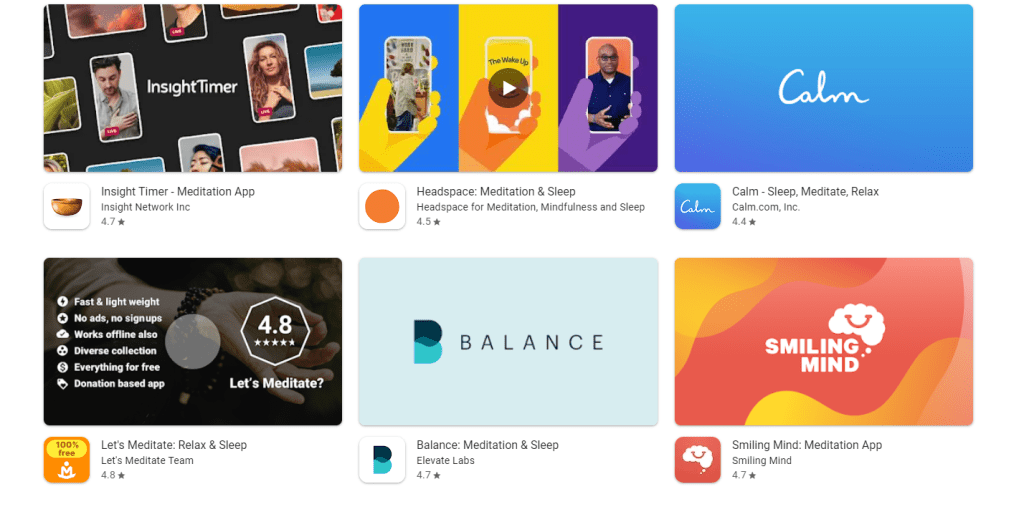
I tried a meditation app which told me to picture my mind as a horse that I’m gently lassoing and making the rope shorter and shorter in order to learn the skill of clearing my mind. It would have me try to build up the time of having a clear mind with short bursts and to not worry if the thoughts drift in. It didn’t really work. My mind does not shut up, like ever. I would be just taking in the sound of a fan and suddenly, I’m thinking about the wind and thunderstorms and writing a poem about a gothic fairy prince stealing children like in the German poem Erlkoenig. I am very easily distracted.
The word meditation comes from a latin word meaning “to ponder” but the practice of meditation is far older than even the latin language itself going back perhaps 150,000 or even 200,000 years. There are some theories that propose that the very act of “fire-gazing” meditation caused key changes in the brains of our ancestors to give rise to humans meaning that meditation may be older than the human species itself. There is a lot of evidence to suggest a long history of meditative states being used in rituals and shamanic practices. The earliest written records of the practice are found in the Hindu Vedas about 1500 BCE, but It isn’t as many may think strictly an Eastern practice. Records of meditative practices exist in the records of ancient Greeks, the Jewish Torah, druidry practices of the pagans spanning Ireland, France and Spain and even the Christian tradition. However, it got its more secular roots in the late 70’s from Kabat-Zinn when he founded the Stress Reduction Clinic which helped spawn the mindfulness movement in psychology.
Going into the second summer of the pandemic, I found myself with a little more time at work than usual, in that I actually could take my 30 minute lunch break instead of shoving food in my mouth at my desk for about five minutes in between clients and writing my notes. We were also one of the only agencies not working from home because the nature of my job required me to work directly with people. This meant the common areas of our office building were sitting empty.
Considering we were entering the second year of the pandemic and there didn’t seem to be a real end in sight to the ongoing upheaval as the affect shocks continued to roll their way through our society, it seemed that it was the opportune time to expand my repertoire of stress management. So I decided to spend a month meditating on my lunch break. I wasn’t doing it as part of a social media craze or anything, I just wanted to try meditation for 30 days and see whether my overall stress was reduced. I once heard a habit takes about 30 days, it actually is closer to 66 days.
I went to one of the common rooms which was usually vacant away from any distractions or noise and pulled up youtube on my phone. A quick search yielded a 30 day meditation for beginners with most of the videos lasting about 20 minutes. I put myself in a comfortable position on the floor, closed my eyes and hit play. A soothing male voice then introduced me to the world of meditation. It was unlike any meditation I had ever tried before.
Instead of telling me to clear my mind, my guide invited me to take in all the different sounds to let them flow into my mind and just notice the things around me. Instead of trying to “clear my mind” and ignore things, I was told to become aware of my surroundings. It was the first successful meditation I had ever tried and it was enjoyable. The previous times even a 10 minute habit a day quickly became a dreaded chore. Listen, if your “relaxation” technique becomes a dreaded chore, you’re not relaxing. He also had me try things like walking meditation, which also jived with me. I am someone who fidgets a lot and has trouble sitting still so a walking meditation was perfect for those days that I just needed to move. Ironically by not fighting all the inputs my brain was much quieter than when I was trying to not focus on the inputs and just exist.
After 30 days, I don’t know that I found my overall stress was that much reduced, but I did have another tool in my belt for handling stress. There are times when I do take a few moments to get a cup of tea and meditate on the tea itself. The principles that I learned and the skill that I began to develop are things I use and have used in my own social work practice. It gave me a better understanding of meditation and a different way of communicating its principles to clients. I actually really enjoyed my daily meditation, so much that even afterwards I continued to visit his videos and listen to his guided mediations. Sadly, work did pick up again and I wasn’t able to keep up with the new lunch time habit. I did not find a way to incorporate it consistently at home.
Overall, it was a good experience and I do recommend you try it. You may find, like me, that the usual guided meditations don’t work for you. Fear not! You may be neuro-atypical and a
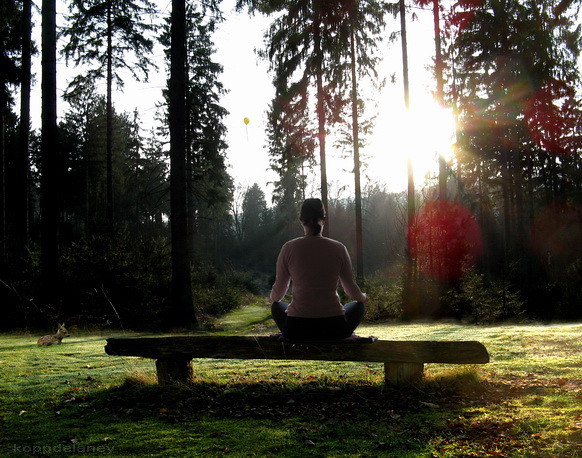
different approach is needed to achieve the same effect. Remember there are many forms of mediation that have been developed over the millenia, it isn’t a one size fits all. Sitting cross legged on the floor breathing deep and clearing your mind is one form. Talking a meditative walk may be more effective for you. It isn’t about the how, more developing the skill of being able to relax and allow the world to happen around you without the need to change it.
How can you learn to meditate?
It’s easy! There are many aps and youtube channels which take you through various kinds and methods of meditation. The key is finding one that resonates with you. Maybe you find one voice soothing or another irritating (pick the soothing voice), maybe telling you to “notice” things starts your brain racing and you need a different sort of strategy. Experiment and try it. It’s a crazy world and it seems that we are continuing to move from one global crisis to the next. While it won’t fix the crisis, meditation can help give you the extra edge to navigate your way through it successfully.
I watched a 30 Day Meditation Challenge from One Mind Dharma on Youtube





















 Budget Bliss: Bucket List