We all have goals and if you’re reading this blog, you probably have a long list of them like me. Things you want to do, places you want to see, milestones you want to accomplish. Some of the items on the list are more just for fun or it seems like it would be a cool thing, some are things we really do want to do and a few of them are deep, burning desires. It’s those last ones that this post is for. After all one will not obtain goals simply by sitting around awaiting the golden opportunity. As in a previous post, sometimes fate needs a little nudge in the right direction. If one is going to achieve something truly worthwhile then it stands to reason that one will be putting a significant amount of effort into the cause.
Obtaining a goal is about clarity, focus and action. It’s those first two steps that often trip people up because before one acts one ought to take time to plan, right? Maybe not or at least not how most people plan. What if we stopped asking “How” and instead started to ask “What”?
I’m stealing this piece of advice from the business world for improving our lives and meeting our goals. It takes the classic approach of obtaining goals and turns it on its head. Most people set a goal then ask the next, seemingly logical question of, how am I going to achieve that? After all that’s the problem solving approach most of us were taught. You set a goal and make a plan which is always followed by “How am I going to do it”? However, that question is a trap! It’s a question designed to take you down a path that’s ineffective and frustrating, to get you bogged down in the details. You’re bound to get yourself so tied up in knots thinking of all the reasons you can’t achieve your goal and the seemingly insurmountable barriers that the question is bound to bring up. You lose your focus and start trying to break down the goal into other sub-goals to get around the barriers which only lead to more how questions. It can also get you lost in the illusion of taking the action of “planning” rather than the action of “doing”.
What skills and resources do I have to make it happen?
What resources do I have need?
What people should I connect with?
What will keep me motivated and inspired?
What will I do to celebrate the milestones?
What will I do when I’ve obtained this goal?
It’s about shifting you from thinking about a plan to actually doing the steps which will actually take you there. There isn’t time to worry about the barriers because you’re too busy ticking off your to-do list after answering those questions. It moves the goal from a what if to a when. In the immortal words of Zig Ziglar “when obstacles arise, you change your direction to reach your goal; you do not change your decision to get there”.
When I set out to start checking off my list, I didn’t really focus on the how. Had I done that, I probably wouldn’t have much checked off because I would have gotten caught up in all the barriers, the cost of travel, the distance, the time, the difficulties, etc. But because I’m not focused on the how, I’ve found that I am constantly finding and stumbling upon opportunities to complete my goals. When I decided to become a therapist, I didn’t worry about the exact how but rather the what college would I go to, what major, what jobs should I apply for? It also keeps you flexible to discover a different path to your goal that you may not have realized was there before. When becoming a therapist, I had a path that I thought I would need to follow, which was to get a PhD in psychology. Instead, I ended up with a LCSW, which was a much cheaper option. Had I been too focused on the how, I would have never strayed from the original “what” to a much better fit for my goal. I have a friend whose goal is to help people in a similar way and is in the process of becoming a Life Coach.
This simple but powerful change can help you go from merely goal setting to goal achievement.
Having recently celebrated another journey around the globe, it seems like a good time to reflect back on life milestones that I have accomplished. After all a birthday is a milestone that we mark off each year. As we get older, birthdays can become times of existential dread. Time has passed and we may becoming overly focused on all the things we haven’t accomplished. Maybe we got married, but we still don’t have children. Or maybe you had kids but never got to school. Maybe you went to school and launched a successful career but never got around to tying the knot. We can become so overly focused on all the things we still haven’t done, that I think we should make sure to celebrate the things we have accomplished. Hence my reverse bucket list and this blog – by writing things here it helps keep me focused on the positives to build on them rather than allow myself to get bogged down in the quagmire of unfilled dreams.
Now most big milestones of life are usually things like marriages, birth of children, graduations, professional accomplishments, etc. That isn’t to say those are things we must do or should do. For some people none of those things are things they want to pursue and good for them! A life milestone for them may be adopting a pet, starting a non-profit, backpacking solo through Asia. As always, dear reader, embrace your own journey and individual inklings.
When going through my Reverse Bucket List, it was a natural thing to include my education and professional development as past items worthy to celebrate. Higher Education is often something that graces people’s Bucket List and for good reason. It is one way for an individual to develop themselves professionally and have opportunities open to what one hopes is a better path forward. As many in my generation can attest, a degree is not a promise of success, it is merely opening the door to possibilities that would otherwise be closed.
High School Graduation: The start of the journey
There are also many paths to education after high school including trade schools, certificates, and even self-taught skills. College isn’t for everyone depending on their own personal goals. If you desire to have your own plumbing business, getting a degree in engineering may contain useful information a plumber would need, but it’s not going to help you with that goal. My goal was to become a therapist, so I knew that I would need to obtain a higher education in order to achieve the goal. The education piece was part of the journey, not necessarily the goal in and of itself.
Over the course of almost 13 years, I obtained a dual undergraduate degree in Psychology and German, completed my MSW program, and successfully sat for two licensing exams, first the LSW and then the LCSW. Not only did I graduate from these programs, I graduated with honors or if you’re feeling fancy “cum laude”. The LCSW represents the long journey to achieve one of the highest levels of expertise and competency in my chosen field. Completing it took thousands of supervised clinical hours, continuing education credits, studying, attending classes and commitment. There were times when I did consider not completing it, wondering if it was really worth it. However, I knew the opportunities it would open up once I got it, more so than any degree or certificate I had yet obtained.
I think it’s important to celebrate not only the achievement of an end goal, but also all the smaller goals in between. When we reflect on the journey, we can appreciate how that journey enriched our lives, potentially more so than the goal itself. Going to college was more than just the knowledge gained, though I certainly gained a solid foundation at Messiah College with regards to my profession. I went through rigorous coursework, taught by phenomenal professors who truly cared about my development as a budding mental health professional.
In addition, college was an experience of living on my own, having additional responsibilities and freedoms, navigating different social systems and expanding my world views. For the first time, I was regularly interacting face to face with people who came from not only all over America but all over the world. I found myself challenged and stretched in unexpected ways. I learned to look at things from a different perspective. I formed tight-knit bonds with my circle of friends, who while I may not see very often, the moment we get together again, it is as if no time has passed. Part of my undergrad experience was the opportunity to live and study in another country for five months (post on that later). My semester abroad is something I wouldn’t trade for the world.
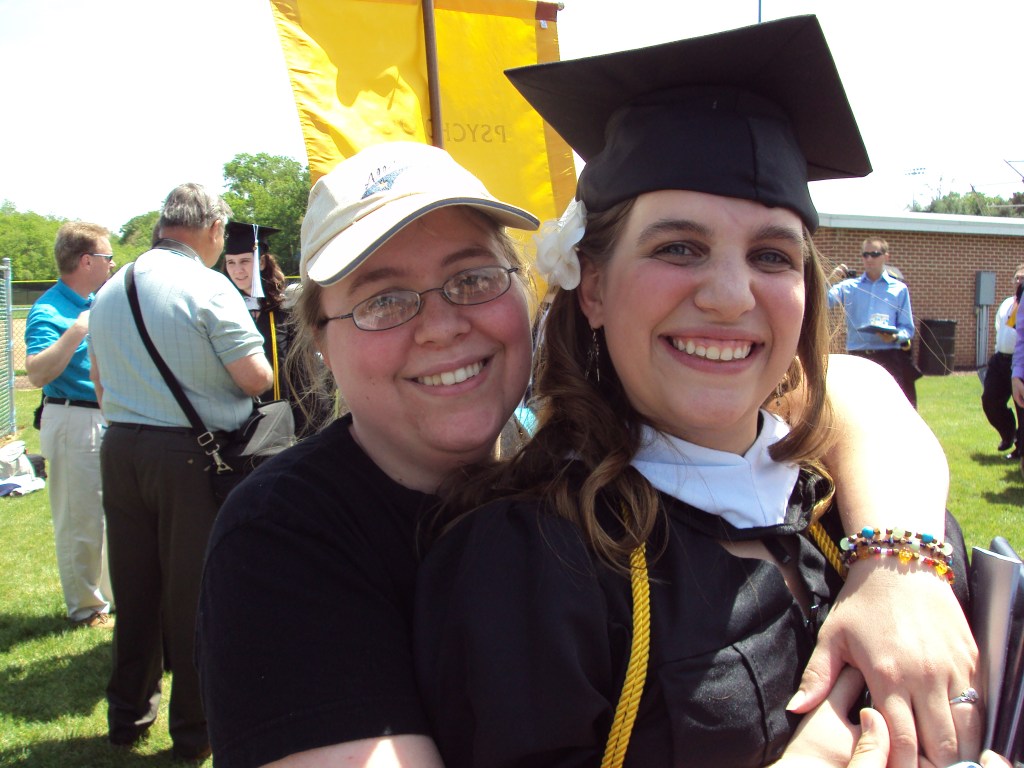
Walking across the stage to stand in collective triumph at the end of college, with all my friends and classmates who took the journey with me, is a moment that will stay forever in my mind. I still remember the pride in my sister’s eyes as she hugged me close to say, you did it and how grateful I was that my mom got to see that moment when only four years before in my freshman year I got the phone call that she was in the hospital with a stroke. I was filled with excitement and hope for the future. I had dreams of what my life was about to become.
A lot of those dreams didn’t exactly pan out. Graduating into the recession made life difficult and a lot of the projected decent jobs that I was told would be there when I entered the workforce, were gone. The original plan was to get a good job and work towards paying my student loans down before going back to graduate school. The economy had different ideas. After two years of working at a low paying but enjoyable job with autistic children, I decided to apply for graduate school and get my higher education. Honestly, had the pay been decent for an undergraduate degree, I probably would have never left that job. I loved working with those kids! However, despite requiring a degree it paid about the same amount as someone with only a high school diploma with zero prospects of a decent raise, so I choose to go back to school.
Unlike college, my experience in grad school was more a frantic run than a journey I took the time to savor. There was no room for extra things like Japanese Culture Club, Swing Dancing, Irish Step Dancing, Fencing or Flags. There wasn’t even time for making friends. I worked and went to school, both keeping me busy during most of my waking hours. Rather than invest in social relationships of grad school, I choose to simply maintain the ones I had. However, lest it seem that the experience was less glamorous than my undergrad, the highlight of my graduate experience was my internships and my discovery of macro level social work.
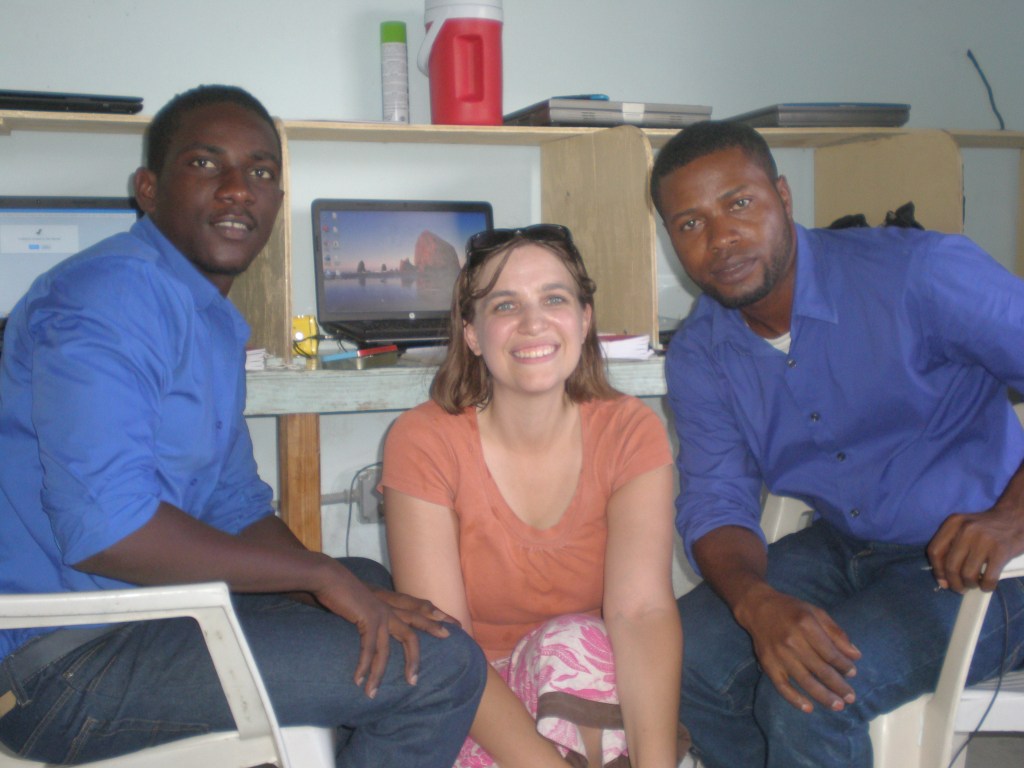
Two amazing gentlemen that I had the privilege of working with in Haiti
I had the privilege of being the American contact for a non-profit committed to assisting young men and women in Haiti obtain a higher education and improve their job prospects. I worked with about 20 young men and my Haitian counterparts Daniel and Lubin to develop the education program, coordinate with the American educational resources and encourage the students. I even spent a week down there meeting with the students and providing professional development workshops. My second internship was helping to plan and implement a Golf & Gala Fundraiser for orphans in Africa. My final internship was helping to run an emergency winter shelter for homeless women in my local city.
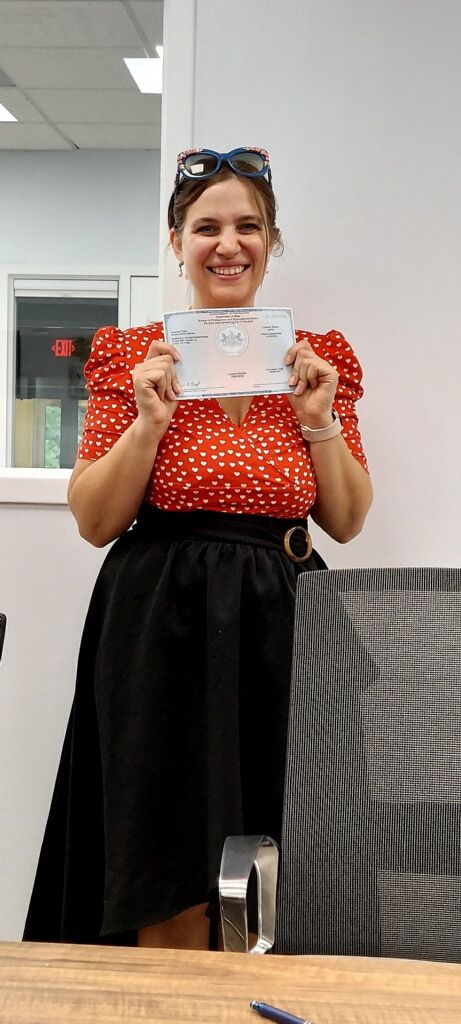
After graduate school, I sat for my LSW exam and passed. It would be another 7 years before I finally had the necessary 3,000 hours of clinical supervision and could sit for my LCSW. In that time, I was a Family Therapist, a coordinator of another Homeless Shelter and a coordinator of a housing program for individuals with disabilities. In the summer of 2023, I was able to sit for the exam and passed with flying colors. From the time I decided to become a therapist in my senior year of high school, I finally could call myself a LCSW after almost 17 years. Naturally, my family and I celebrated this achievement.
Proudly holding my LCSW license at my job
The journey was not an easy one. There were many setbacks and delays with going to grad school and finding a clinical supervisor resulting in almost 6 years “lost”. However, I wouldn’t call them truly lost or wasted. I have always trusted the path that was before me and that despite everything, it was the one I was meant to walk. There were reasons for the delays and setbacks, skills I needed to develop, lessons I had to learn, experiences I had to have and perhaps, people I needed to meet.
How can you celebrate your own professional journey?
Take time to reflect on your accomplishments! Toot your own horn! Be proud of all the things you’ve done! Obviously, dear reader, if you got a degree, you should look on that for the accomplishment that it is. However, if you did not, there is still much to celebrate. One of the most successful people I ever had the privilege of knowing never got her college degree, yet she started a non-profit, ran a successful hospitality business, started a consulting business, runs an annual fundraiser for charity, recently sold her business for well over a million dollars and started up another one. She has been a vice-president of operations of an international company, an actress, model and more. There are so many different careers and journeys out there each with their own measurements of competency, expertise and success.
Regardless of whether you’ve gotten a degree or not, it is important to remember your own measure of achievement. What the world says is a mark of achievement and what you want to actually obtain, might be different things. It’s your life; you only get to live it once, so you get to set your own professional goals and what it means to obtain them. Only you know what it took to get to this point in your life. Only you know the personal struggles that you had to overcome and all the small victories along the way that got you here. Celebrate your journey and look to the future!
Completed: LCSW Obtained July 2023
LSW Obtained July 2016
Master of Social Work magna cum laude Obtained May 2016
Bachelor’s of Psychology & Bachelor’s of German cum laude Obtained 2010
Miles from home: A Reverse Bucket List can be completed at home. I wrote out a whole list of items, but to do a deeper dive, I recommend journaling about them, like my blog post above.
Cost: For purposes of a Budget Bucket List Reverse Bucket List Items are free as they are celebrating past achievement.
However, full disclosure is in order – Going to school is expensive, the average student debt for college degree & master’s degree is $71,000 and my debt was about this average. My graduate school was less than an hour from my house and my college was about an hour and fifteen minutes from home, so still close to home.
I highly recommend that if you are considering school or other post-secondary education, to research carefully the projected job market of your chosen field, the starting salaries and the cost of living in your area.





 Budget Bliss: Bucket List