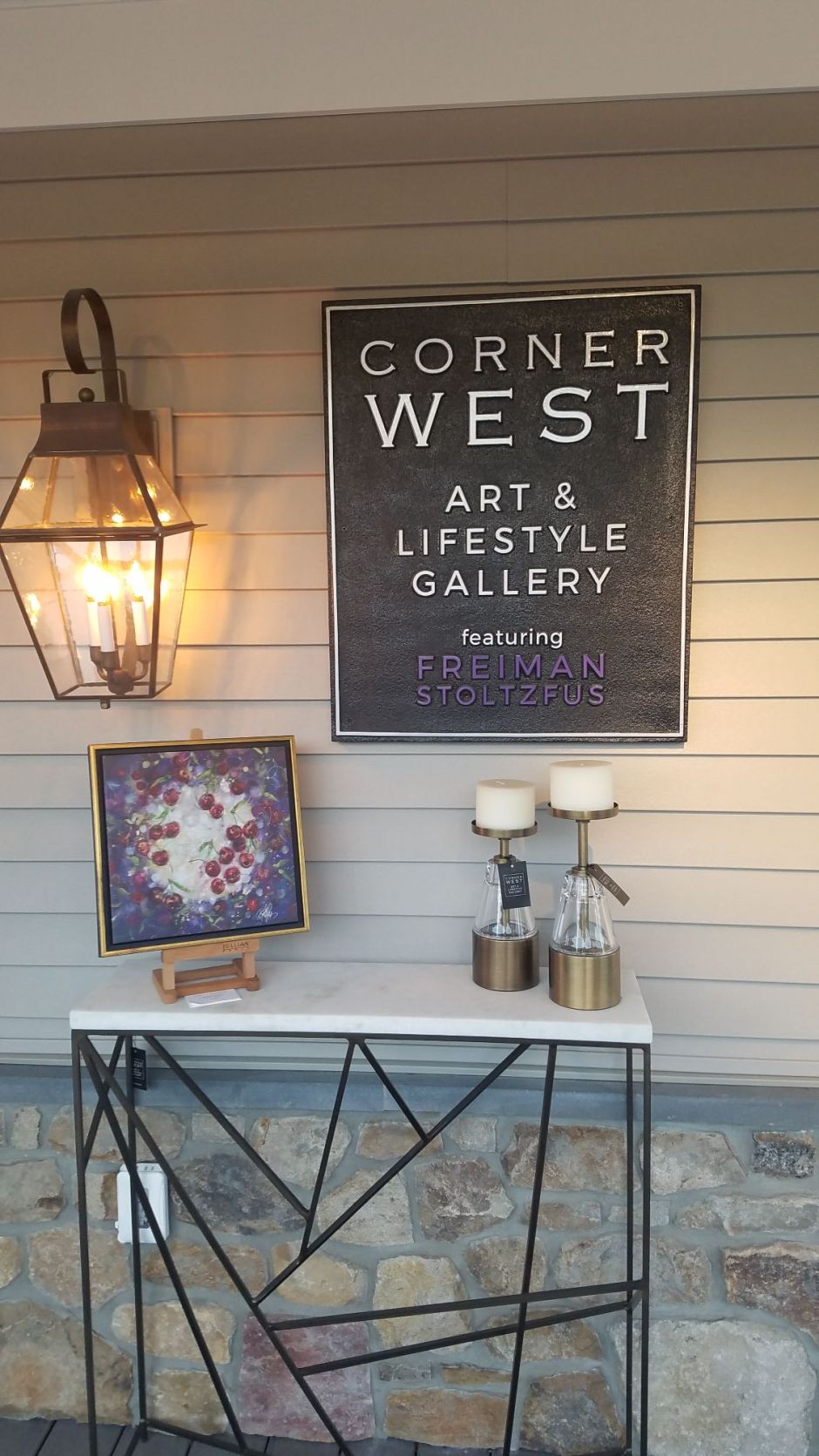
It was a beautiful day in late June, one of those rare, comfortable mid-summer days. The ones where the humidity is low and a cool light breeze blows through the air. After driving about twenty minutes to Intercourse, Pennsylvania through rolling farmlands, I arrived to what might at first seem a rather curious sight. Nestled among the shops peddling Amish made goods, quilts and antiques, an art gallery was hosting its grand opening. Curious indeed – but only to those not in the know about Lancaster’s not so secret art scene. I eagerly stepped into the gallery certain of what I would find.
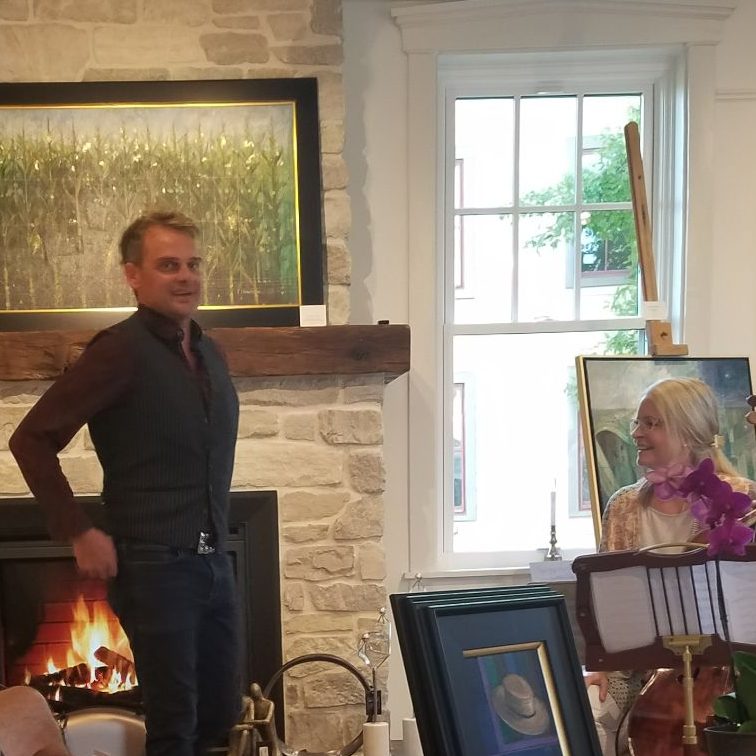
A few minutest later, the sound of a violin and cello serenaded me as I sipped on a chilled glass of rose and took in the latest collection of art by Freiman Stoltzfus – personal friend and brilliant artist. A small crowd meandered inside speaking in hushed tones to one another excitedly. I caught snippets of conversation as I pursued almost as intrigued by those around me as the art itself. Who doesn’t love people watching? By all accounts, they were as enamored by the art as I was, but of course, his work was resplendent, as always.
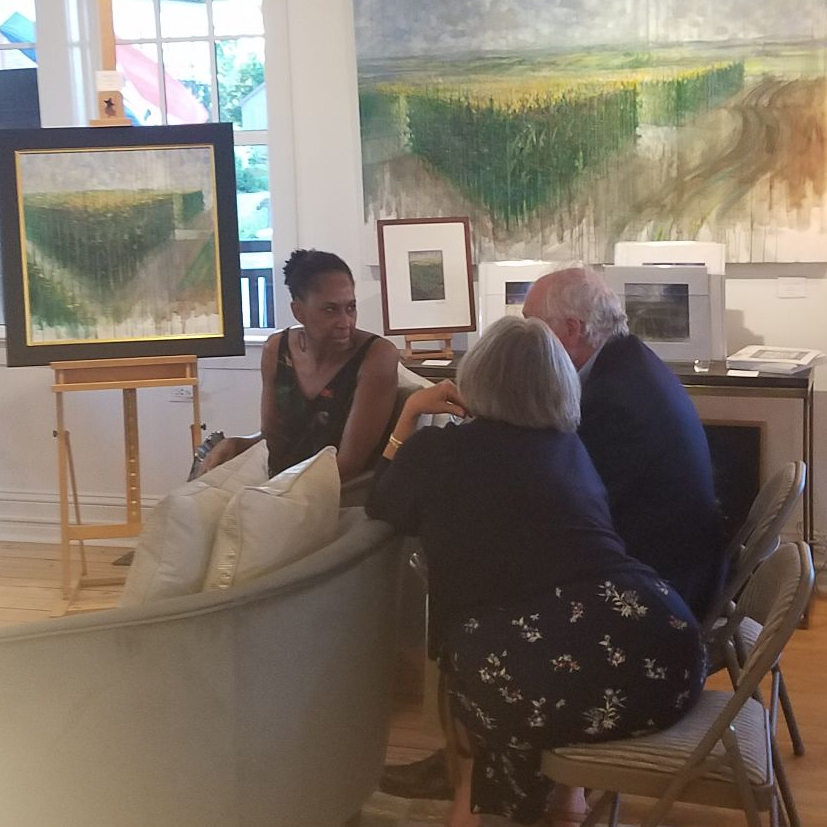
Naturally, I wanted to gush at him for a job well done one his second gallery, but one does not take up too much of an artist’s time on an evening like this. A gallery opening is not the time for catching up and conversing with the artist, but a time for him to mix and mingle with the crowd to sell his art. Manners dictated that I give him a polite hello, a brief congratulations and then space to do his job. An intimate dinner at a later time would be more than sufficient to catch up.
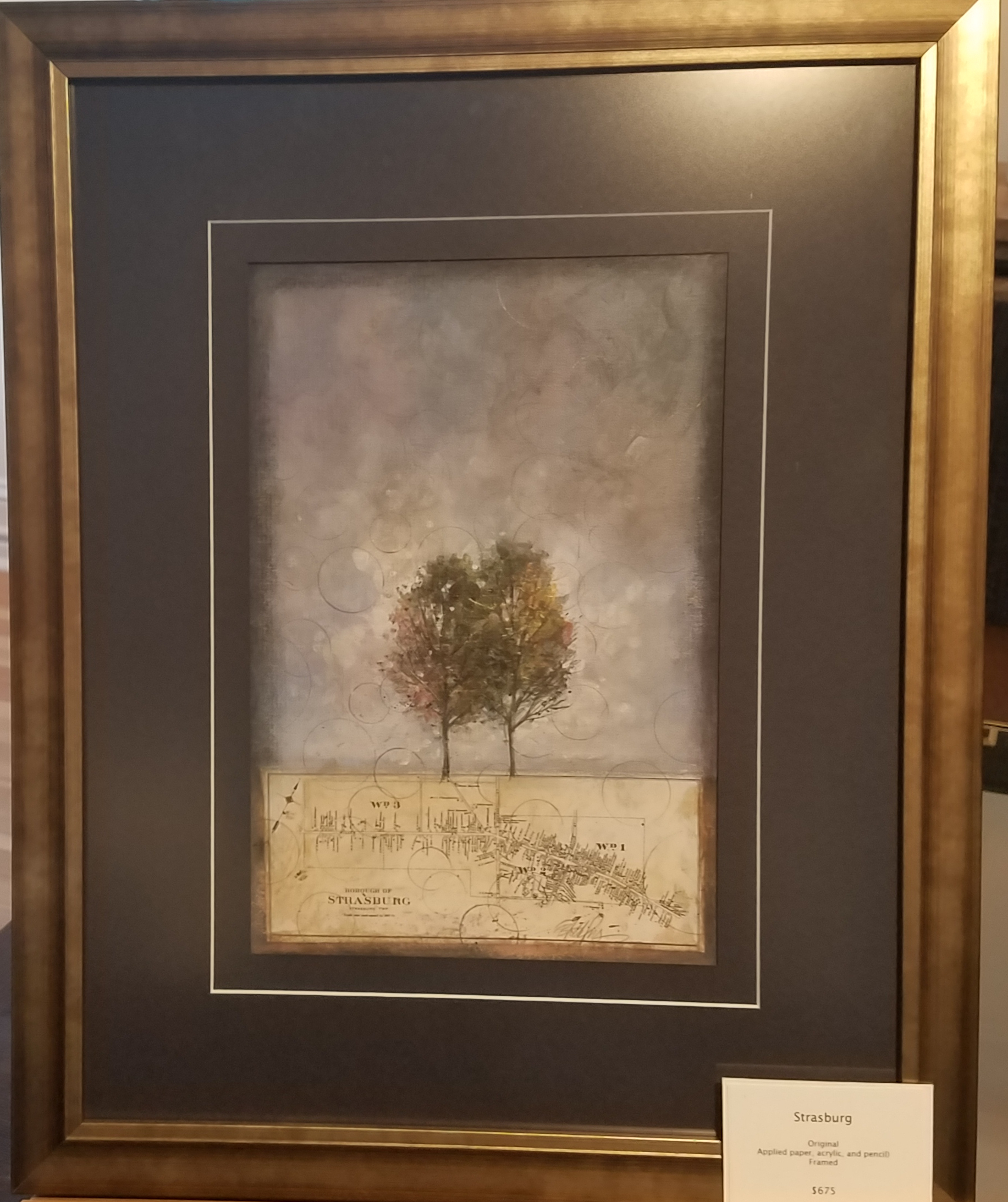
Others mingled nearby, appreciating his use of color in combination with that subtle geometry of nature so prevalent in his works. Somehow his pieces manage to convey movement as well as sound, one can almost hear the pieces of Bach and Vivaldi when looking at them. His juxtaposition of nature and architecture transforms groves of trees into churches and flowers into stained glass windows. Many of his pieces harken back to his Amish roots and feature quilt patterns, pastures, fields and orchards.
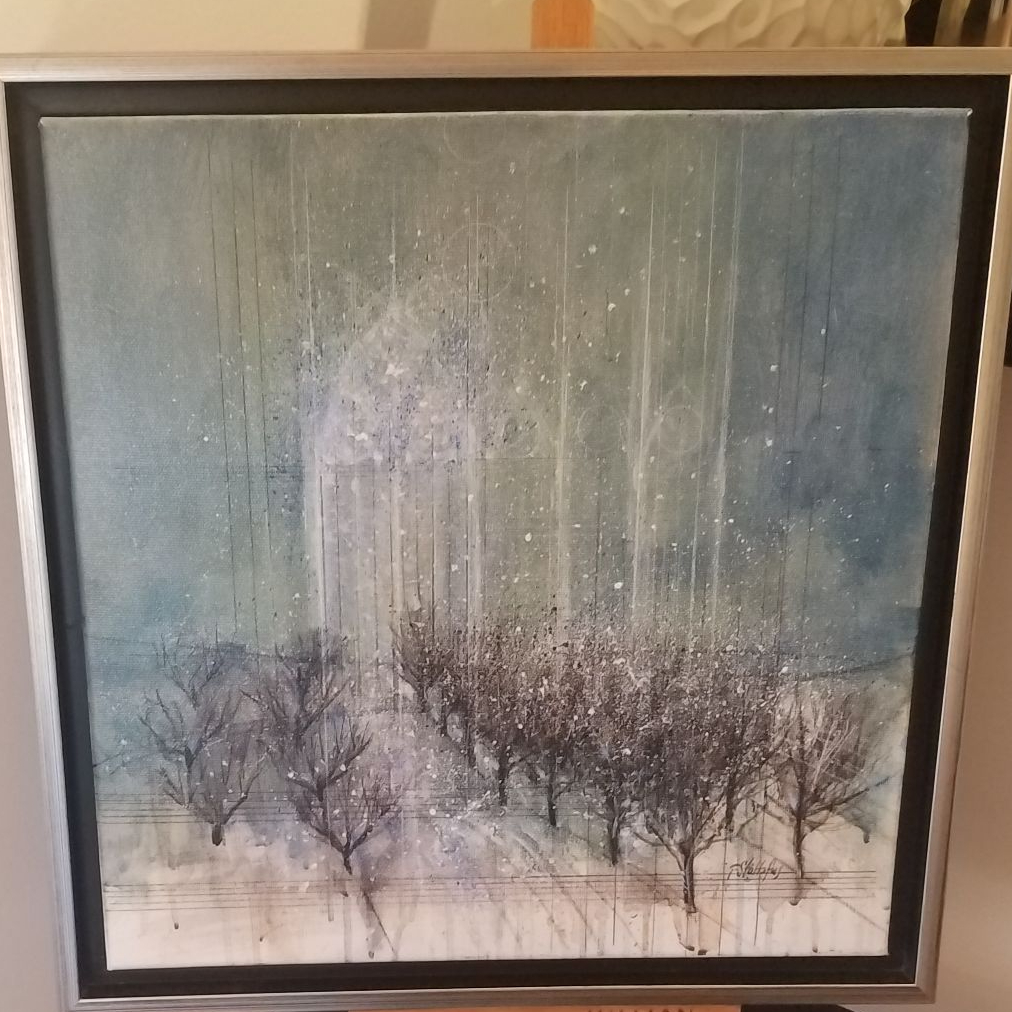
I am always dazzled by the re-imagine of the themes that frequent his work. While he may often feature flowers or music, each time a different rendering or another motif has been added to the repertoire. As of this writing, his most recent motif has been Japanese, as he spent about a month visiting a friend in Japan. It is most reminiscent of Van Gogh’s own post-Japan phase. Who can blame either artist for being so enchanted by a country who created an entire profession dedicated to being a living work of art, the geisha?
When one pictures a gallery opening, perhaps you see in your mind’s eye wealthy men and women milling around in a stark white room, sipping wine as they pretentiously critique the art that adorns the walls. Their oblique vocabulary and near incomprehensible assessment of the pieces in question may lead you to believe that such a place would not be for you. I assure you dear reader that art is indeed for everyone. After all, even the Neanderthals made art! The need and desire to create is embedded in our DNA! I am not recommending we jet off to New York City to attend some opening where an artist has squiggled across the page as some sort of obtuse commentary on the state of the world or art or some other thing.
Don’t get me wrong, while I am not an aficionado of the art world and certainly not contemporary or modern or postmodern or whatever we’re calling current art these days, I can appreciate art as a commentary piece. I just object to having to read an entire essay in order to understand a work – at that point, you probably could have skipped the art and gone to the essay, but to each their own! Although, one could make an argument that the piece itself conveys emotions that an essay cannot. I shall halt in my musing less this become its own essay on modern art and its merits. I shall leave you to your own musings, gentle reader.
This post is for those of us who want to appreciate a more accessible, down to earth art. Few people are going to look at a Renaissance, Neo-classical or Pre-Raphaelite painting and scratch their heads going “I don’t get it”. They at least can identify the subject matter even if they might not fully understand what the artist was trying to convey, the culture surrounding its creation and the values of that culture to influence the work. These however are a good 200 – 400 years old in terms of styles and one may be forgiven thinking the only art being produced these days are bananas taped to walls. However, there are many artists who paint in the older styles with a modern flare. Not every artist is a pretentious snob deriding the masses for simply not “getting” their art and walling art off as some sort of exclusive club. Most, if not all, really are producing art for everyone. They want their pieces to be appreciated by the most unsophisticated child to the greatest art critics of our time. They range from the bright playful colors of Brito, to the surrealist fantasies of Nam Das, to the impressionist Slava Ilyayev and beyond.

There are many places in the various towns and cities across America where these artists gather either to sell together as a collaborative effort or in their own small galleries. Some blend art and craft together in an almost seamless line where you can’t quite decide where craft becomes art. I suppose the easiest is that crafts tend to have a practical purpose whereas art simply exists for beauty’s sake. I recommend going and checking out the local artists. I especially love speaking with them, learning about their passion, hearing why they tend to pick certain subjects or colors. Go and check them out, see which artist speaks to you and then lend them your support!
Whether you attend a gallery opening or not, do take time to look at art. You will find your spirit enriched by the experience. Art connects us, communicates with us in a way words cannot, what we see reflected in art is also a reflection of ourselves. Art is creation and destruction. Art reaches across boundaries. Art can propel movements and shake empires. Art can also be a simple thing like a deep breath after a long day of work or a cool glass of water on a hot day. But whatever art is, it is for everyone.
How can you go to an art gallery or exhibition opening?
It’s simple! Find your local art community and watch out for events. You may find your local university frequently displays artists or even one night events at your library. You may be surprised at the talent you see displayed or that your local artist is actually world renowned! Some may be a bit more humble on both counts, but that wasn’t really the point.
Completed: July 2021
Miles from home: 15 miles
Cost: Free to go (most openings are)
Art Cost: You most likely will not be able to purchase the art at an opening because let’s face it, we’re budget bucket listers and having 3 grand to drop on even a modest painting is not something we can do. However, many artists have alternatives such as giclées and prints. Freiman usually has a small collection of 6×6 paintings for $125 to help make his art accessible to those who want original art without the large price tag.
 Budget Bliss: Bucket List