

A Purpose Life: Lifting Up Others

I’ve now espoused upon cultivating your talents and exploring your calling as pieces of a purposeful life or applying your y amounted to applying your talents in support of your calling to serve others in some nebulous manner. Of course in my post about your calling, it was basically looking at your passions and applying them to helping others. But what does it look like to help others? How does one help? Who does one choose? 

It really does depend doesn’t it? On who you are helping and what you are helping them achieve. How do we choose who to help? Does the who have to be another human being? There are plenty of people who dedicate themselves to helping animals. Jane Goodall is often hailed in the same breath as Martin Luther King Jr or Ghandi and she concerned herself primarily with gorillas. Julia Hill was lauded for her activism to save a tree from a logging company. Yes, their actions certainly helped the human race as a whole later on but in the meantime their energy could have been put forth in other areas. 

As someone who has worked and interned at non-profits one of my favorite interview questions to ask people both when I was being interviewed and when I was doing the interviewing, was “why this issue”. Why out of the hundreds of social issues and concerns this one. Why Haiti? Why the homeless? Why mothers and children? Why not Kenya? Why not veterans? Why not people suffering from addiction? Why not cute, cuddly puppies? After all, if you devote a majority of your time, effort and resources into a given area that means those same resources aren’t being spent on another area of importance and naturally one cannot reasonably support all areas of importance. In a way, that means you are saying that this thing here is the most important thing to me to be doing. That’s a pretty big statement when you think about it. 

Photo by Matthias Zomer on Pexels.com

Now it may be that there were numerous things that were important to you and this is the one that happened to have the opportunity for you at the time to use your gifts and passions for it. When I did an internship for a non-profit that worked in Haiti it was because I needed an internship and that happened to be the one offered to me. It wasn’t because Haiti was the top of my list of countries that needed my support and I was particularly passionate about Haiti. I have become more passionate about it for my experience, but I also understand it is because I now have a personal connection to that country whereas previously there was nothing to push Haiti higher on my list than any other developing country. I wanted to help others and this happened to be an opportunity that opened up for me – but remember my job isn’t necessarily my calling (we already discussed how the two shouldn’t be conflated). 

Still, one can find that one has stumbled more or less into something that is calling adjacent. That doesn’t make it wrong necessarily. After all, one may be called to something and then discover the opportunities just aren’t there or you haven’t found them yet. The point is that one should not leave it unexamined. Why this population in this particular part of the world? Why this issue and not another issue? Is this really your top priority? There are, after all, a near infinite array of issues facing us today that all scream for attention from climate change to housing issues from substance use disorders to lack of access to healthcare. There are different ways to approach these issues as well from a one on one individual level to pushing for larger social and political changes. Which one do you pick? 

In social work, we have this adorable story of a boy walking along the beach picking up starfish and throwing them back into the ocean. Around the boy there are hundreds of starfish all struggling to survive. An old man asks the boy what he’s doing telling him sadly that there is simply no way for him to save all the starfish so what does it matter? The boy responds that it mattered to the one that he threw back. It reminds those of us working in a system that is always throwing more “starfish” on the beach not to stop fighting, not to give up because it matters to each person we do help, each life we’re able to impact. Personally, I like to add that there’s another child, a girl, who has climbed onto a boat and is out in the water looking for the reason why all the damn starfish are washing up on the shore in the first place. I call those people the macro-level social workers who are trying to fix the underlying issue. 

Now, I’m not saying the people on the shore are doing something wrong. The macro level people may remind us that you can feed a man a fish and he will eat one day of his life, but if you teach a man to fish, he will eat every day of his life. My flippant response is he can’t learn if he’s dead so many you should feed him first anyways. In other words, you need to triage the problem and fix the underlying issue. Some people are there to prevent an issue, some people are there to stabilize one diaster hits, others are there to fix underlying causes and other are there to repair damage. It’s like how in the Intensive Care Unit you often have a patients who require multiple different specialties in order to recover. If all the doctors had said that only the heart is necessary and to forget about pesky other organs like lungs then a lot of us would be dead. If the only science anyone cared about was chemistry we wouldn’t have gone to the moon. Each of us is part of a bigger whole trying to triage this patient called human society. 
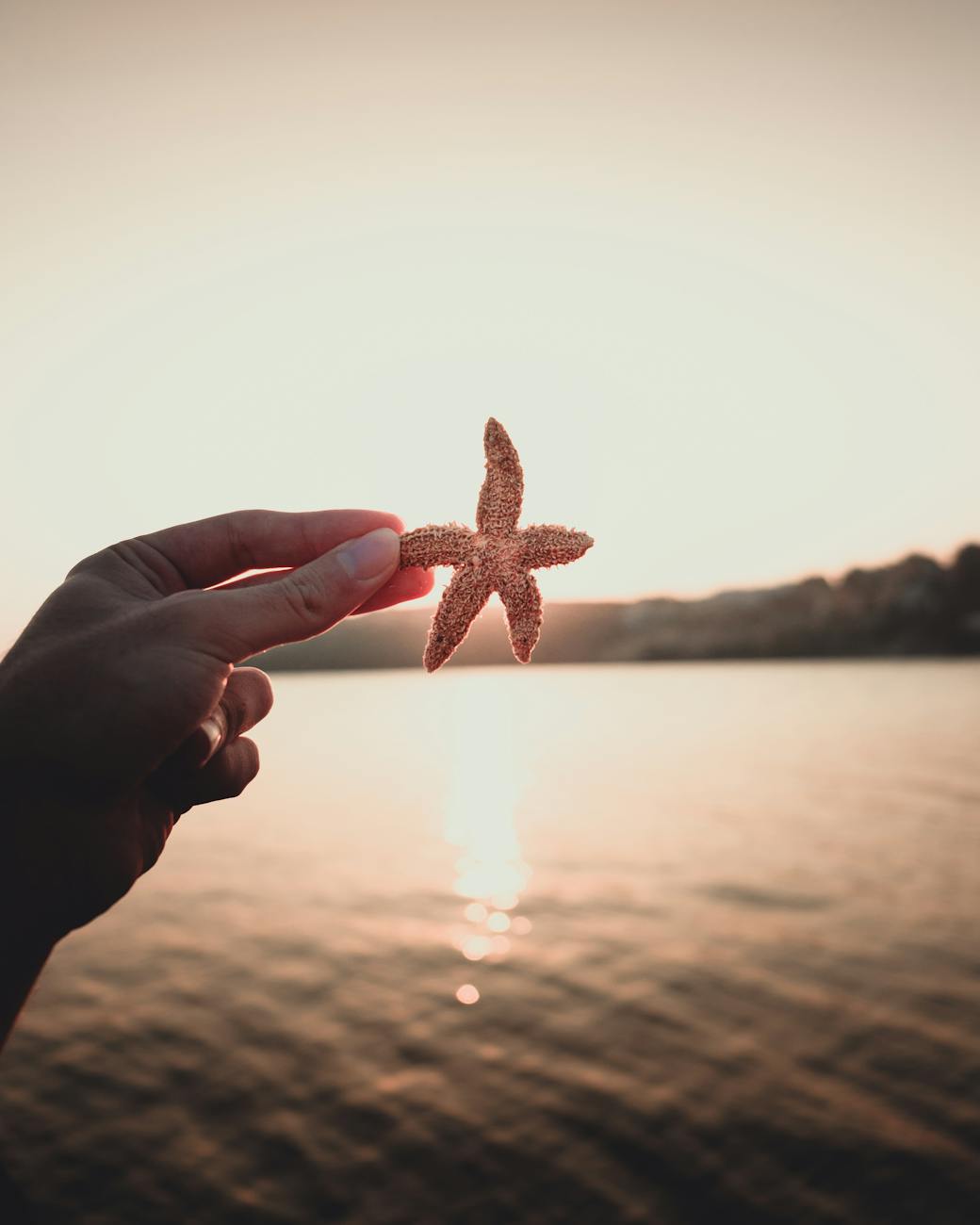
Photo by Efe Yau011fu0131z Soysal on Pexels.com

Some of us have been called to fix plants and save trees. Others of us have been asked to focus on the cute fuzzy creatures or not so fuzzy creatures. Some of us need to answer the call to our neighbors here in our backyard, others are to be called away to lands far from home. There are many, many different areas of the world that desperately need your time, talent, attention and resources. The question is which ones are you most drawn to help? Which ones need your talents the most? My great uncle was an amazing statistician and helped work on projects like calculating where the fish in the ocean are to help guide international fishing laws and treaties through the UN. He also worked with astronomers to help unmask the mysteries of space.

As always it’s important to reflect on these things when talking stock of your own life. What have you been doing with your time? Does it line up with your values? Was it something you just sort of fell into? Have you looked around more recently to see if there are opportunities that more align with what you feel called to do? Do you know why you’re supporting this particular cause over others? Some of us are lucky and obtain a singular vision that helps guide them forward. The majority of us are left stumbling about grasping at whatever happens to be near and hoping it’s the right thing. Although truthfully, it might not matter that you land on precisely the right thing. There are many different passions one can pursue and there are many different causes by which one can apply one’s talents and passions to. 

Perhaps, we spend too much time wondering about our purpose in life and worrying about it when the truth is there are many different paths to living a purposeful life so long as you are able to do meaningful work where your talents and skills are utilized. Some people are meant to be devoted their whole lives to a singular issue. Others are meant to move between issues. After all, my great uncle didn’t spend his whole time focused on the movement of fish in the ocean. He helped them figure out how much they could reasonably fish and where so that we wouldn’t run out of food. A huge contribution to the human race if I do say so myself. However, he was one of several people who prepared reports and of course, he wasn’t the one who drew up the final agreements, so it was a group effort. However, he moved on from that project and applied himself to the next. Which was fine! There are some people out there whose sole purpose is just to start things and let others take over once they’ve started a project. The point is to reflect on your own personal journey toward meaning and allow yourself to shape it without preconceived notions about what it should look like. The most purposeful life is not necessarily becoming a nun and spoon feeding the starving orphans of some wartorn area of the world. A purposeful life is one in which we can develop our interests into skills, to apply those skills and gifts to alleviate a deep wound in the world that we are passionate about healing in whatever way that may be. 

A Purposeful Life: The Calling

In my last post, I referenced how living one’s best life is in part living a life with purpose or a life in which one applies ones talents in support of a calling to serve others. I went on to wax poetic about the first of three parts, mostly about talents and how to cultivate them. In this post, I shall attempt to unpack the second part of that statement, mainly one’s calling. This is probably the trickiest part of the whole thing. The first part is rather simple, just consider your interests and start to develop them, they’ll become skills and later talents. Yes, there is a certain difficulty in the discipline required to do that, but in general one is not sitting around with no idea of what one’s own interests are. The third part is also fairly easy, find other people, utilize said skills/talents to assist them. 

So what is a calling? How would we even know what it looks like? What does it mean? I am no philosopher and certainly lack the wisdom of the sages to give a definitive answer. Still, if one seeks enlightenment then one must learn to wrestle with such questions and start to consider the answers for oneself and not merely rely on the elders who have come before to answer for us. We are not here to merely echo the philosophers that came before otherwise we would have been satisfied with the answers of Plato and Socretes and Descartes and Vonnegut would have needed to occupy themselves with other diversions. So that is what I shall do here and perhaps, dear reader, you shall wrestle with this question yourself. I certainly hope so, otherwise how shall I become wiser if no one challenges me – I digress. 

So first what is a calling? Often people will feel a strong desire towards a certain profession or job that feels fulfilling. Passion + meaning = calling. However, I question the idea that it should be connected with a particular profession. At risk of coming off conceited or judgemental, I doubt that most people would consider being a garbage man or grocery work a calling. Do not mistake, dear reader, the statement for condescension. It takes little stretch of the imagination to see how vital these roles are, but our society does not hold such roles in high regards despite their inherent importance. When the pandemic shut down much of the world, it was not the garbage collectors and grocery workers who stayed home. Yet, I doubt that many of those in those positions would say that such a profession is their calling even though these are vital to the functioning of society.  Those jobs are meaningful in that they help others, but few people are passionate about them. 

Photo by shajahan shaan on Pexels.com

Contrarywise, many people in higher paying and higher status jobs lack both passion and meaning. They may push papers around a desk, crunch numbers and complete tasks for the corporate overlords. Many may not even really understand why their position is vital to the company, some may even struggle to articulate what precisely they do when their friends and families ask. If their job disappeared tomorrow would it have a negative impact on society? Would others miss it? Would they even notice it’s passing? When mass layoffs occurred in the tech sector, were many of us concerned about it? Did any of us outside the industry truly worry that vital goods and services would be disrupted? That isn’t to diminish the pain of those who were part of that, it is merely to illustrate that those jobs most likely do not have much meaning associated with them as it requires the stretch of the imagination to consider how they are all that helpful to society as a whole. 

 In fact, there’s an anthropologist who theorizes that up to 40% of our jobs are “bullshit” jobs or a job that is so completely pointless, unnecessary, the person doing it can’t justify its existence. These are jobs usually taken up by meetings and emails and are so bogged down in paperwork that one is left wondering if you’re doing anything other than existing. Elon Musk fired 90% of people at twitter and it had almost zero impact on the service it provided. Do you see the danger in tying a calling to one’s profession? These jobs are still important, some are quite meaningful if not readily recognized and others lack passion and meaning are nonetheless important in other ways. I won’t go too far down the rabbit trail of the sheer amount of job bloat in corporate America. It is only that there are very few professions that will allow a person to pursue a passion and have meaning. 

For most of human history, one’s profession was the way to keep a roof overhead, food in one’s stomach and clothes on one’s back. It truly wasn’t until much more recently that we started hearing the message that we should follow our dreams and surely good things would follow. Most of my generation grew up on stories admonishing us that happiness was to be found in pursuing jobs that were our “calling” and the reality came crashing down on us. While others may waggle their fingers at us for pursuing “underwater basket weaving” as majors, who was it that told us we not only could by offering it to us in the first place as a legitimate major but encouraged us that we should do it from our earliest years? I know I certainly grew up on stories that one should follow one’s passions as the path to happiness. A lovely notion perhaps for a different time. 

Photo by Pixabay on Pexels.com

As with many ideals our society pushes, we must free ourselves of the shackles that bind us to them. Our calling need not be our job – a good thing too, considering the constraints upon us otherwise. That isn’t to say that one cannot find a profession that exactly matches one’s calling, simply that it isn’t necessary. Your job does not have to be your calling or even your passion. It’s nice when that happens and there are a few lucky people who “never have to work” because they love what they do so much. If you are one of them, I raise a glass to your good fortune friend! However, there will always be people who are needed to complete the passionless work – whether that be the necessary paper pushing bureaucrats who shuffle the necessary government forms about or the oil rig workers who risk life and limb to ensure we have the necessary fuel for our modern world. It is a rare person indeed who finds either one of those to be their passion. 

Now that we’ve dispensed, such a silly notion that our calling must directly lead to our job, we discover that there is in fact quite a wide range of things we could do in those hours not spent on the job. Your job could help fund your passion or otherwise help connect you with the right resources be they monetary or social to pursue them. So long as whatever you do arises from things that you are truly passionate about and works towards the benefit of others. Perhaps, you have a strong talent for sports and take up coaching youth soccer in your hometown. Perhaps, you have strong feelings about conservation and turn your efforts to going to your town meetings to make your voice heard or you go around collecting signatures on a petition. 

You may not even quite know yet how to figure out which one of your many passions to pursue. There are a myriad of things to be passionate about, music, art, sports, politics, the environment, trees, air quality, public health, homelessness, the law, philosophy, teaching, psychology, and well, pretty much anything in existence. I am rather passionate about cats myself, but are they my calling? I have adopted several of them and care for them, they certainly enrich my life, but I don’t know that I’d call it a calling. I don’t feel called to be a pet parent. I merely enjoy being one. A calling is the match of your deepest passions and beliefs with the deep needs of the world around you. 

It can take many years to discover one’s true calling or path and one must be willing to pivot with new information. Most people simply do not have the necessary introspection or knowledge base at 18 or 19 to decide what their calling truly is. Most have some inkling of interests if no actual skill set or talent and they certainly don’t know enough to be truly passionate about anything. If you, dear reader, are of the younger sort, put down your pitch fork before you angrily respond to the above statement in the comments. There is simply far too much to know about the world in order for you not to go down some well-meaning and perhaps misguided path. There is some evidence to suggest that you don’t really have a good idea of your true calling until you’re about 40 years old. Which is honestly a bit of a relief for those of us who are younger than that. You may dear reader, be breathing a sigh of relief – “Oh good, I’m not supposed to have it figured out yet”. Perhaps, I really am meant to open up that cat cafe and spending my days with my feline friends is actually my calling after all! 

Photo by Pixabay on Pexels.com

I encourage you dear reader to take some time to journal and explore your passions. Think about the things you used to enjoy or were once interested in before the world got in the way and told you it was dumb or not valuable. Perhaps, your calling lurks in there. Consider what you enjoyed when you were quite small. Think about your heroes and people you really admired. I find that a lot of good things comes from journaling, especially when you let go and just let the thoughts come forth. It’s like your subconscious builds a bridge to your unconscious and everything just sort of flows out. You may be quite shocked at what you put to page once you let it go. 

The key is not to let whatever you think your calling is become part of your ego. Don’t get too attached to any one path or idea because it will change and evolve. After all, I just said that one’s job is probably not one’s calling. Money is necessary to do things like eat and have a roof over your head. And the expression of ones calling can take many forms. A person whose calling is working with the youth may become a teacher, a coach, a youth pastor, a therapist who specializes in children, a volunteer for big brothers, big sisters, a mentor, a foster parent or something else not listed here. However, if one is too stuck on a singular idea or path you may miss the boat entirely. If you think that you must be a teacher because you feel called to prepare the next generation and you objectively suck at teaching larger groups of students, you will be miserable and your students won’t get your gifting. If you instead volunteer for big brothers, big sisters after becoming an accountant, you will find that your gift is working as a mentor for disadvantaged youth and perhaps tutoring them in math thus helping shape their futures in a much more meaningful and powerful way. 

I’m not exactly sure if this post is all that useful, since finding one’s calling is rather tricky. I only hope that I have helped dispel some of the misconceptions that people have around their calling to help free you to be a bit more creative and open to the possibilities of how it might manifest itself. Truth be told, I’m still working out exactly what my calling is, but I keep getting closer with each trial and error that I make and with each new experience that I have. After all, part of my bucket list is to help me explore and get to know myself better. 

A Purposeful Life: Practice Becoming

I’ve written earlier about how living one’s best life is in part living a life with purpose. It was truthfully a small paragraph at the end of another post which mostly amounted to applying your talents in support of your calling to serve others in some nebulous manner. A trite piece of advice which commits to almost nothing and leaves you saying “yes, yes, very nice, but how exactly is one supposed to do that?!” An understandable response, dear reader. I beg your indulgence as I did not wish to make a long winded post. 

There are some clues in my nebulous statement. The first is understanding and cultivating your talents. The second is understanding your calling, which is probably the trickiest part and the “meat” of this series of posts. The third is service to others. Which can honestly range from your next door neighbors to strangers on the other side of the globe. 

Depending on your level of self-esteem, finding and cultivating your talents may be as easy as taking a walk or as difficult as learning to do a 360 flip on a snowboard. Although, those with an inflated sense of self may find reality is a cruel teacher when faced with the truth that one is not as “smart” and “talented” as one first believed. When reality inevitably smacks one in the face, there can be an understandable re-examining. This can lead to questions of whether one really has a talent worthy of cultivating and the temptation to “throw in the towel” or “give up” may soon creep in. It may be better to replace the idea of talents with skills or interests. These may be less daunting to consider and our egos are not as tied up in a skill or interest allowing us to be more honest in our current abilities.

Given that most of the population is on a bell curve for almost any given trait, the best most of us can hope for is slightly above average, maybe, if we are quite lucky, gifted in a certain area. For those of you unfamiliar with the actual definition of gifted when discussing the overall population, it means that a person is above 84% of the population in a given ability. I can assure you dear reader that neither yourself nor me shall find ourselves in that coveted 26%. To be a true “genius”, one must be greater than 98% of the population. Can you truly say, dear reader, that you are better than nearly 8 billion people in anything?

Photo by Shelagh Murphy on Pexels.com

Now the pessimistic reader will most likely be throwing up their hands in defeat at these facts. If one cannot expect greatness why even bother? Should we not leave such things to those who are our betters? Let those with the gifts toil away and leave the rest of us to our petty amusements. If you are one of those, do not despair just yet!  As most people are not innately talented in any given area we can free ourselves of a false assumption that people are talented because they are born that way or that we cannot better ourselves. However, talent is often just a skill or interest that someone has built upon with consistent practice and coaching. It is not a matter of “having it or not”, it is more a matter that you are born with inclinations towards certain skills or interests and then in building upon those they become talents.

One does not need to be a child prodigy or the world’s “best whatever” to use talents for a calling. The world famous violinist Joshua Bell is not described as a child prodigy. In fact, he is considered rather unremarkable until his natural inclination towards music was cultivated by his parents and then his teachers when he was an older child. Nor was it the goal for him to become a prodigy of sorts, instead his parents simply wanted him to enjoy the instrument. He became what he is through dedicated practice and excellent coaching. Having access to world class teachers, he became a world class violinist thus shattering any notion that unless a person begins before the age of 5 one can never achieve the greatest heights. 

Now, this doesn’t mean that one should expect that you will achieve the greatest heights in any given field or area. The higher one goes the less and less opportunities there are for advancement that is the way of things. Competition becomes more fierce as the field narrows. So focusing overly much on climbing a ladder of sorts is probably not the best use of your time and consideration. The aforementioned example was more to illustrate that one need not begin in early childhood to start cultivating a skill or talent and that you can, through hardwork and dedication, achieve a true talent. Remember the cultivation of the skill is part of the purposeful life not the end of itself. 

Not every interest and skill needs to lead to the highest heights. Not every hobby must become a fortune 500 business, not every skill must yield profit. Cannot a thing be simply for yourself? It is nice when one’s talents and purposes yield income, but it is not necessary. There is something in us as humans that longs to simply be – a drive towards something. It may be the creation of art or music; it may be a connection to nature through hiking or fishing; it may be the thrill of pushing yourself physically through a sport. It needs no audience other than ourselves. In the words of Kurt Vonnegurt, “Practice any art, music, singing, dancing, acting, drawing, painting, sculpting, poetry, fiction, essays, reportage, no matter how well or badly, not to get money and fame, but to experience becoming, to find out what’s inside you, to make your soul grow.” 

So how do we make room for our souls to grow? My general rule of thumb is 10-15 minutes a day. After all, finding an hour or even 30 minutes every day can be challenging. However, it’s almost impossible not to find a spare 10-15 minutes laying around. You certainly scroll on your phone for longer than that here and there in those awkward in between moments where you don’t quite have enough time for longer activities like when you’re waiting on water to boil or you’ve got a few minutes in the morning after you’re done getting ready. Besides, there’s almost certainly some sort of app that you can put on your phone which will allow you to focus on that interest. Perhaps, you can utilize your morning commute to listen to a podcast or audiobook about your given interest area. Maybe you can enroll in an online course, or read textbooks on your phone. Replace your phone habit with your interests and suddenly, you’ve started to develop a talent. 

Photo by Kelvin Siqueira on Pexels.com

What’s interesting is that oftentimes, I may start a given activity under my “10-15 minute rule” and soon discover that I have spent 20 to 40 minutes on it. Sometimes it’s difficult to muster up the mental energy to do something for 60 minutes or even 30, but once you get going it’s easy to keep going. Just as objects that once in motion stay in motion, so too do we. However, given my busy schedule, there are just as many days where it’s all I can do to find the 10 minutes. Still, by keeping with the 10-15 minutes every day, I stay in the habit of making time to do the interests I actually want to develop. This way the habits don’t slip away among the busyness of life. Sometimes, you have a period of days where it’s all you can do to go to work, make dinner, clean up the house and take care of the basics. It can be so easy to let your good habits slip and let doom scrolling or other distractions take over if you’re trying for those longer stretches of time every day as opposed to those “stolen” in between moments. 

Soon, those interests start to muscle in on the parts of your day that aren’t dedicated to other things. It becomes your way of relaxing and instead of reaching for the TV remote you find yourself locking yourself away to be with that thing. There are certainly days when I spend a considerable amount of time playing the violin and have even found myself getting irritated if I haven’t been able to play. It has become part of my self-care routine as important as any other form of relaxation. I cannot tell you the last time I binged watched a show. My time has been consumed by other interests that I am actively trying to develop. Scrolling on my phone has been replaced with learning languages, practicing calligraphy and reading. That isn’t to say I look down my nose at people who watch shows or scroll, I still do those things along with playing video games. It’s that those things are no longer my first “go-to” activities because I’m now focused on skills that I want to improve. 

I’m not entirely sure what I am “becoming” just yet. However, I do know that by spending time each day on those things I feel more myself than I have before. What might your own interests yield if given the opportunity to grow?