
The Confidence Boost of a Facial

I remember my very first pimple in 5th grade. It was right on my chin and it was HUGE. I felt like everyone was just starting at this giant, white thing on my face. It felt like it would never go away. I wasn’t even an especially vain child, but it was certainly an uncomfortable feeling. I was reassured by the adults in my life that acne was just a phase and it would pass, just wash your face more and all will be well. I diligently washed my face and waited for the acne of the teen years to pass. I waited, and waited and waited, and waited. I tried various products over the years to no avail. The acne just never quite went away. 

As it turns out, I was viciously lied to, dear reader! I had been unfortunately cursed with adult acne driven by hormones and like herolds of war it came each month right before ahem my “visitor”. So it was in my late twenties that I somewhat resigned myself to the fact that I would almost always be plagued with these unfortunate blemishes and that there was really nothing quite to be done about them. 

Now, I have shared about my monthly habit of going for a massage and indulging in a small mini-vacation. Each month, I entered the waiting room, noticed the wall of products for skin and saw the advertisements for facials. I decided that perhaps, I did not need to resign myself to such a fate as simply accepting that I would always struggle every month to control the small mountain range which jutted up from my chin each month in new and interesting patterns. Perhaps, I need not worry that a small child could be entertained for hours by connecting the dots. So, I scheduled an appointment with Camille not really knowing what it would entail or even to expect that much. 

It was, dear reader, one of the very best decisions of my life. Camille is knowledgeable, personable and the sweetest woman one could ever ask for. She was so very kind about my problem and spoke with me about exactly what I wanted from the appointment, was honest about the sorts of products she would need to use and discussed the cost of the initial treatments as it would require upgrades to the basic facial. I told her that I was here to solve a problem not necessarily to simply relax and enjoy myself and that I was willing to give the upgrades a try. She carefully examined my skin and set to work. 

Photo by Gustavo Fring on Pexels.com

It was not an unpleasant experience by any means. It was absolutely wonderful to have my skin carefully tended to with gentle scrubs and tinctures designed to combat the acne and leave me feeling fresh. The only part that was unpleasant was when she offered to do some extractions to which I acquiesced and she carefully pushed out the gunk that was blocking my pores and creating unsightly mounds upon my face. Through out the treatment we talked and got to know one another better. I told her about my job and she shared about her own interests. As it turns out, we both are partial to Japanese Black and White Horror Films from the 1960’s. A niche interest if there ever was one. 

At the end, she gave me a simple routine of two daily products and a weekly exfoliant. My skepticism was palpable that surely these three products were not the key to unlocking clear skin after I have tried everything else under the sun. She reassured me to trust her and I felt that I had little else to lose. I bought them and went home. Now, the next day, I could have been easily forgiven for almost giving up entirely and throwing in the towel, because lo and behold, a giant pimple had risen up in defiance of everything to taunt my efforts. I took a deep breath and reminded myself that sometimes treatment may require putting up with some temporary pains. Sure enough, it did quickly go away and by following the routine laid out by Camille, my face actually stayed relatively clear. I still had monthly cycles of acne but not nearly what it was. What were formerly my very best days where my skin was almost clear, were now my very worst days.  Now, I do notice if I go too long between facials my skin starts to backslide, but in general I can go 3 to 4 months in between more intensive treatments to manage my adult acne.. 

I am not a vain person, dear reader, but I was at times embarrassed by my acne. I knew that despite it being caused by an underlying hormone imbalance that I couldn’t control, people did judge me because of it. Being able to walk around with clear skin and looking good has been such a confidence booster. In fact, looking good is linked with better performance, increased productivity, decreased anxiety and sparking those happy, feel good hormones. Which makes sense, if you don’t feel good about the way you look you’re going to anticipate people judging you poorly, not getting the assistance you may need and increase your sense that things aren’t going to go your way. I am in no way, dear reader, saying that your self-worth should be tied to your looks. We should try to take care of ourselves the best we can and work to feel comfortable with how we look.

How can you look your best and feel your best?

Now this is decidedly one of those items that fall under “principles of the thing” rather than the thing itself. For me, the facials are about helping me look my best to help me live my best life. It’s not about getting a facial as part of my bucket list. Although, a full spa day is certainly on the list now as just a day of pampering and relaxation.

As I just shared looking our best, helps us feel our best. When we have things that get in the way it can be much harder to feel good about ourselves. For me it was acne, for my mother it was rosacea. For someone else it may be wrinkles or chronic dandruff. So while, I am not encouraging you to simply go get a facial (although you can, they’re rather enjoyable), what I am encouraging you to do, dear reader, is try going to the experts and professionals who are trained to assist you with whatever problem you happen to have.. You may be surprised at how easy a fix your seemingly insurmountable problem is!

What I loved about Camille was she was extremely honest about her limitations, her education and recommendations and readily communicated with me to help me make the best decisions for my skin’s health. Is getting a semi-regular facial expensive? Yes, but so were all the various products that I tried which failed to produce results.

The Ultimate Fear Factor: Public Speaking

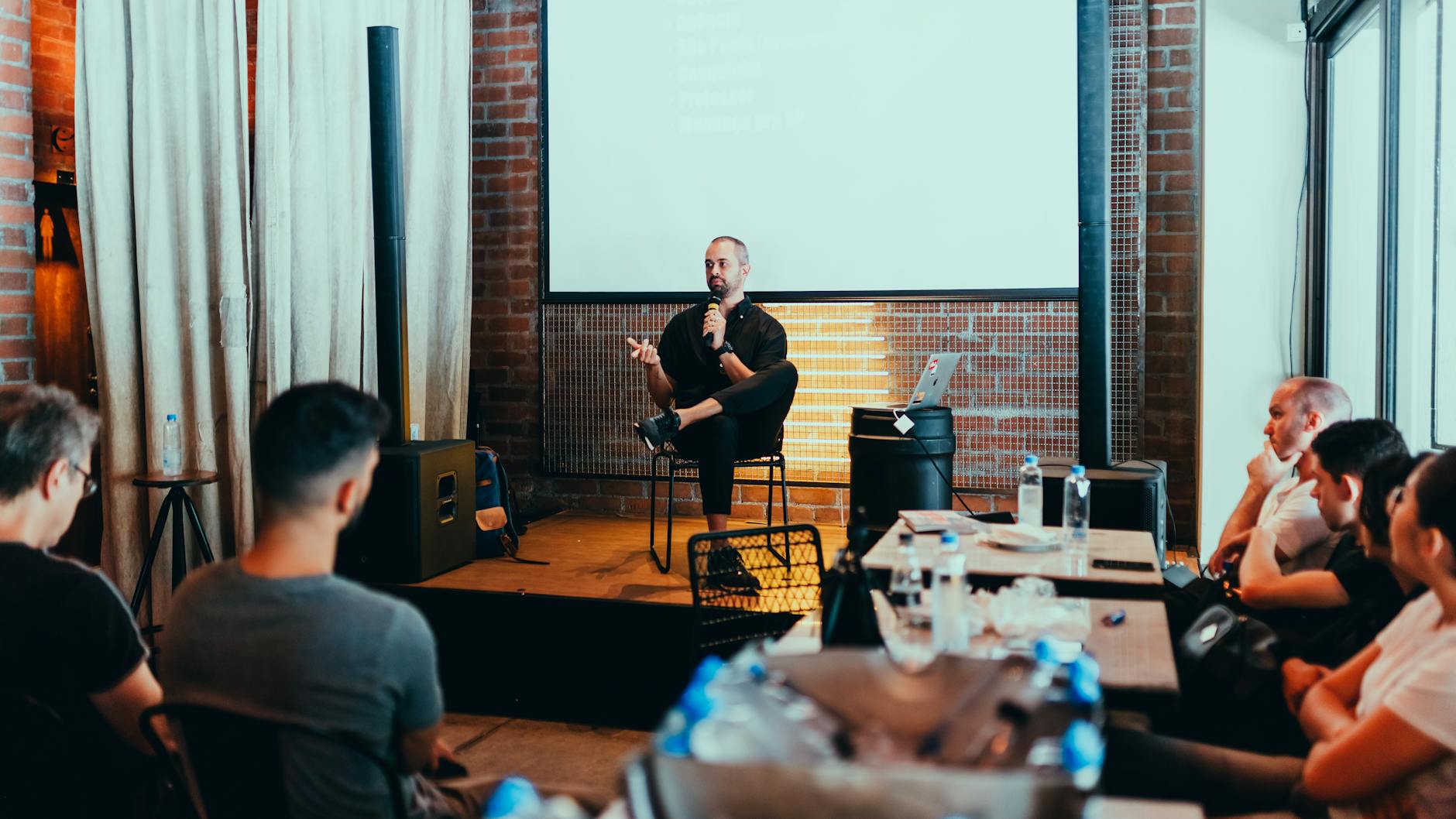
Did you know that over 75% of people report being fearful of public speaking? Some people even have anxiety or even full blown panic attacks. My very first one happened while giving a speech in 10th grade. I ended up in the bathroom in tears and could not finish the speech I was giving in class. It probably could have happened during any sort of anxiety inducing activity, but unfortunately or fortunately depending on how you look at the situation, it happened during a speech and my “fate” as it were, was sealed. 

Most people don’t realize that the first anxiety attack can be triggered off without warning, but whatever situation you’re in the first time it happens, becomes a trigger for more. For me, it became speeches and auditions. Which sort of tanked any career in music. I had wanted to do music, but performing in front of anyone solo was impossible. Perhaps, if I had been a piano player I could have managed my shaking fingers to do something productive, but alas I chose a cruel and mercurial mistress. The violin is not for the faint of heart for she must be played boldly and masterfully, lest she shake you off as unworthy of her affections.

In my Freshman year of college, I had to take a communications course. I picked intrapersonal communications because everytime I went to give a speech, I would end up having an anxiety attack. I purposefully picked courses where speeches were at a minimum to non-existent. I might be able to get through the speech (barely) and then immediately run to the bathroom to cry. Like many people, I avoided the thing that made me anxious. However, as fate would have it, I had an amazing psychology professor for Psych 101 who briefly talked about anxiety and panic attacks from his clinical practice. He told us about how he would help his clients get over their fears. Which was to face them and to not run from the situation when the attacks happened because it was training the brain to respond to the stimulus as something catastrophic and life threatening. 

Which meant that I learned from him that I had to stop running out of the room every time the panic and anxiety hit and at least finish the speech. Curiously, there was one place where I could give speeches without panicking. German class. An interesting tidbit for you gentle reader, is that when we activate the more logical parts of our brain it’s harder for us to anxious. So asking someone who is having a panic attack to complete simple math problems helps activate the parts of their brains which can help emotionally regulate them. 

Photo by Matheus Bertelli on Pexels.com

Because German was a second language, it helped to activate that part of my brain. I was so focused on just getting the words out regardless of how it was delivered I half-forgot it was technically a speech. Also it helped that I was being graded more on how I spoke the language and not my presentation skills. However, it helped me find a place of strength to build from. I was able to see where the symptoms weren’t present in a similar activity in order to find a starting point. I understood that it was stemming from an underlying anxiety related to performance and perfectionism, so I worked to find ways to manage the anxiety and to put myself in situations where I could safely not be perfect. No one expects you to speak your second language perfectly so it was easy to shrug off mistakes. 

From my successes in German class where I stopped having any anxiety during presentations at all, I was able to sign up for a pass/fail acting class. I purposefully choose it as pass/fail so that way even if I completely bombed it wouldn’t negatively impact my GPA and the worst outcome that could be was not earning the credits I didn’t need. It was difficult at first to stand up in front of people and read off lines. I felt awkward with my expressions and that I wasn’t doing it very well. My stance felt wooden and my deliverance stilted. The professor was enthusiastic and my fellow students were gracious. We bonded over trying to overcome the awkwardness together. It was kind of like being in German class where no one expected to do great, but we’re all trying and learning anyways. I only ended up crying in the bathroom once the whole semester and it was after the “final” exam. 

The experiences I had in college, helped me form a foundation from which to build from. I learned about how to better manage my anxiety, what triggered it, and how to challenge some of the thoughts that came with it. I started to look at public speaking differently recognizing that when I tied expectations and pressure of performance that’s when I made it worse. When I could relax and just enjoy the interplay between myself and the audience, it became a lot less stressful. I went back to grad school and was able to do better with presentations once again analyzing when I was able to do well to replicate the success, and forcing myself to stick with it even when the panic started to rise, remembering that I wasn’t going to train my brain to see this as something to freak out about. 

After graduate school, I have been in positions where I’ve needed to do case presentations in front of a hundred other clinicians. I have given speeches at multiple churches and other functions to raise money and recruit volunteers. I’ve developed and given trainings to volunteers and staff. All with ease. The road was not by any means easy, and it took over 15 years to really conquer it and there are still times when I start to feel the anxiety rising once again in the middle of a speech. However, each time, I roll with it, use positive self-talk, take a few deep breaths and refuse to let it control me. I will probably be giving a presentation in a few months and I’m actually looking forward to it. 

Photo by Suzy Hazelwood on Pexels.com

How can you conquer your fears?

Not everyone has a fear of public speaking, but I bet, dear reader,  you’re afraid of something. You may not have panic attacks or anxiety attacks which leave you gasping for breath and crying uncontrollably, but you probably have things that you avoid doing or places you avoid going because of anxiety. Don’t get me wrong, I’m not saying we remove all fears and begin to simply roam around in the dark without any regard for safety, that unlit alley at midnight should probably be avoided. Fear and anxiety help to inform us of danger to keep us safe. That is why conquering fear can be so tricky, it’s meant to help us survive. 

The key is to try and start with something that is similar enough to the thing without causing the panic and then exposing yourself repeatedly to the it. Let’s say you’re terrified of spiders. Perhaps, you can kill them in World of Warcraft, you might not be thrilled about them, but a tiny one on your desk makes you freak out. So you’d start with maybe going out of your way to kill them in the game. It teaches you that hey this big scary spider isn’t so scary after all, in fact, I can conquer them. Or if you’re not into gaming, maybe just a picture of one. You look at a whole slew of pictures, using grounding, deep breathing and other calming techniques to keep yourself from feeling overly anxious. A little is good, but not too much. 

Once you are able to handle the baseline situation well, you move onto the next stage. Maybe it’s watching movies with spiders (not scary ones but like documentaries). Once you can handle that then you move up again. Maybe it’s visiting spiders in a zoo and spending a long time with the spiders at the zoo or pet store. You may follow up this step with touching the spider or letting it crawl on you. As you can see, the process is a gradual exposure to increasingly more difficult and fear-inducing things. However, by scaffolding the experiences you are continually teaching yourself not to respond with fear but instead relative calmness. Each small step is a building block upon which you can add to. 

Photo by MART PRODUCTION on Pexels.com

Now this isn’t something that will be done in an afternoon and you have to be intentional in your approach to the fear. I purposefully sought out and put myself in situations where I would have to speak in public in order to get myself to get over it. Our natural inclination is to avoid that which makes us afraid because it’s a survival instinct. Don’t go hang out with the hungry lions, the fool who wasn’t afraid of them got eaten! However, we need to recognize when our emotional brain is in the driver seat making up irrational nonsense. Public speaking won’t kill me, hundreds of people do it every day. Very few spiders will actually cause me harm and many are quite useful. When we see that it’s irrational nonsense, then we have to take over and show it, gently, that there isn’t anything to be afraid of and that we are indeed safe. 

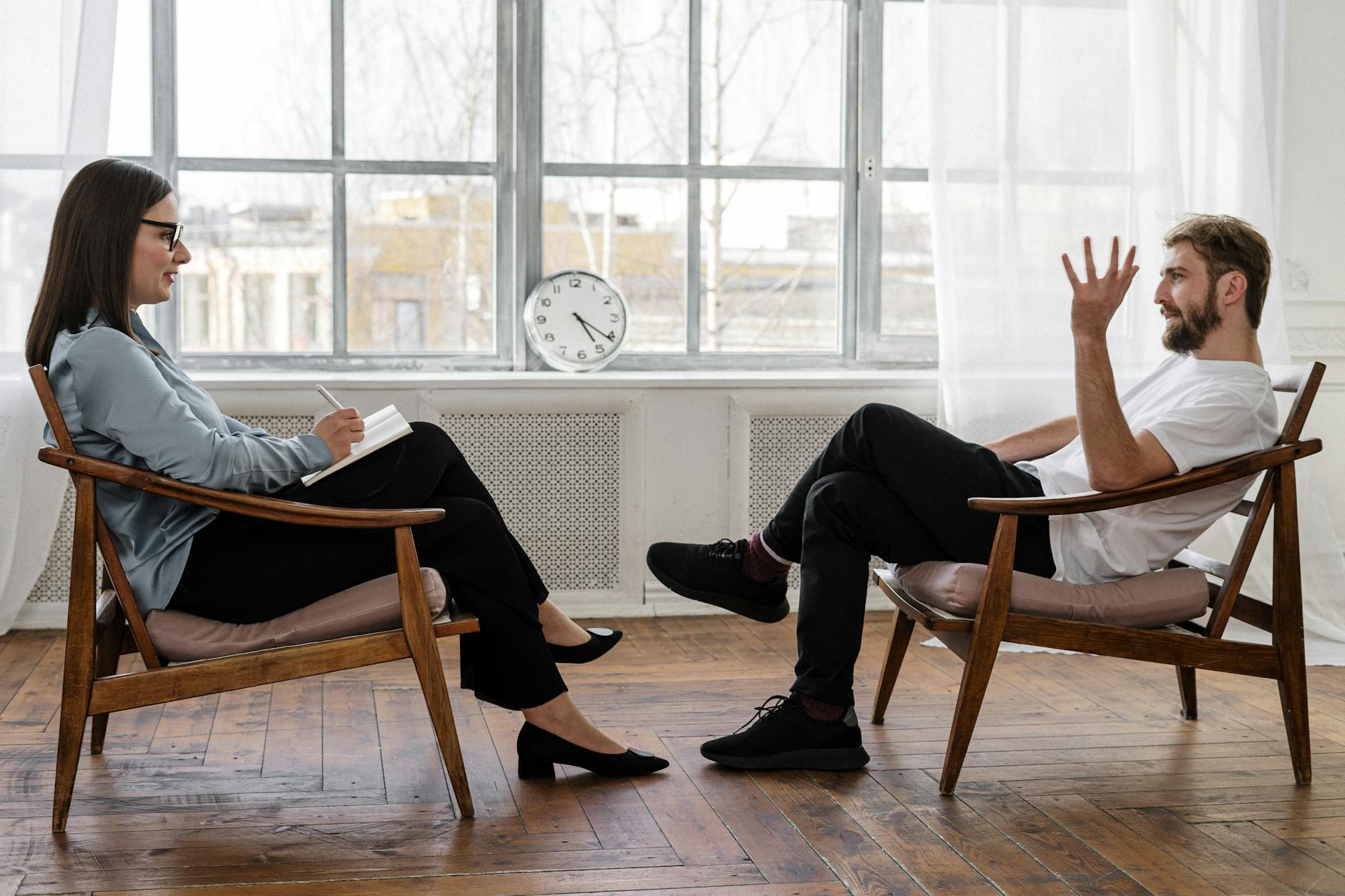
If you are someone who suffers from panic and anxiety attacks, my recommendation is to seek professional assistance in this journey. I know very few people who were able to do it on their own. Know that this is the process you will most likely endure, a gradual exposure to the things you’re afraid of. There may be other cognitive behavioral components such as an exploration of why you developed this fear, where it comes from and how your beliefs shape and fuel it. 

New Year’s Resolution or New Year’s Themes?

As it is Christmas Eve, that means that in only one week’s time, the New Year shall be upon us. After the Christmas festivities, carols, feasting, presents, and pageants, our attention shall turn to reflection of the year previous and to the year ahead. If you are like most people, dear reader, as always, you started the year with the best of intentions. You resolved to lose weight, write that novel, go on that vacation, finally get married, pay off that debt and others I haven’t named here.

Like most other people your resolution probably quickly faded. The habit you were trying to set didn’t quite “stick”. You may have faced a set back like an unexpected health issue preventing you from going to the gym every day or the time you set aside to work out got eaten up by staying late at work or if we’re honest, you were probably too exhausted and burned out to keep it up every single day. Then the feeling of failure crept in, negative self-judgments and justifications as to why you just can’t follow through with your plans followed quickly by negative coping usually in the form of doom scrolling through feeds you don’t even actually like and binge watching objectively terrible shows on whatever streaming services you happen to have.

Photo by cottonbro studio on Pexels.com

Now, I could parrot the many articles as to why it is so difficult to keep resolutions. Yes, we often aim too high and bite off more than we can chew. The common advice is to set smaller more obtainable goals along the way like if we want to learn a new language, to devote 5 minutes a day to learn a word of phrase (that won’t work to help you learn a new language that’s terrible advice!). We’re extoled to consider the why we want to change. The experts will remind us of the adage that the pain of not changing has to be greater than the pain of changing for us to really change. Therefore, we must consider the greater purpose to our goals! Which is true to some extent – but I digress. I have yet to see these well meaning advice columns actually help.

However, there is one very clever YouTuber CGP Grey who introduced me to a new and novel approach to New Year’s Resolutions. Now, some of you may already be familiar with his work. If you’re someone who likes history, flags and other niche esoteric topics and have not yet discovered this gem of the internet, now you have and you’re welcome – but I digress again.

He suggests that we throw out the SMART Goal version of resolutions (Specific, Measurable, Achievable, Realistic, Time-bound) and instead introduce ourselves to a general theme. A SMART Goal may be I will reach A2 in Spanish by the end of the year; instead I might say “Year of Spanish”. It’s broad because it’s supposed to be. After all the point of most resolutions is that you’re trying to improve yourself in some manner so exact milestones don’t matter so long as the trend is positive you’re still reaching the goal. Even just stopping a negative trend can be a positive or decelerating one is still improvement. Maybe you didn’t lose weight, but you stopped gaining weight. Maybe you didn’t put on muscle mass, but you created a work out habit.

With a theme you’re focused less on the “big SMART goals” and mostly just focused on any small, positive changes you can make towards your theme. Your life is full of small branching decisions that allow you to have more, less or the same of the things you want. If your theme is Spanish and you find yourself standing in line, rather than scrolling on Instagram you pull out your phone and start learning Spanish words.

Photo by Kindel Media on Pexels.com

As Grey describes it, your theme becomes a friendly little bot pushing you in small moments towards your theme and a good theme can’t really fail because those small changes will start to add up. It’s a matter of picking large enough themes, to move your life in a positive direction that can encompass a myriad of ways to get there. Let’s say you want to lose weight, maybe your theme could instead be “Year of Health”. Your friendly little bot may nudge you towards eating healthier. However, you find that you struggle to make good choices with your eating habits but instead start walking every day, you are still on theme. Maybe you were thinking of going to the gym, instead of that gym member ship, your bot nudges you to buy those weights and you start doing some light exercise at home.

After all, we can’t plan for the future. If the resolution is I will lose x amount of weight by the end of the year and then you become ill, you may not be able to lose weight, heck your only goal may simply to be improve your health at all. If your theme was say health, then you haven’t failed because it wasn’t about the weight it was just making small choices in each moment towards the theme of health. Having a theme allows you to pivot with the hills and dales of life, a theme is adaptable. Maybe you started off trying to memorize different Spanish words and found that learning a word a day didn’t actually help you speak to your Spanish speaking co-worker. However, after a few stumbling interactions, she agrees to have lunch with you each day and starts to teach you – you haven’t failed because you stopped memorizing words. In fact that would be one of the best ways to learn!

By keeping yourself “on theme” you will begin to notice all the different choices that you make each day either towards the theme or away from the theme. This gets you to reflect on how you think which changes how you think. Instead of experiencing yet another failure of not meeting goals of your past self, you are free to experience the successes of the person you are in this moment and free to set down the path for your future self. Often what we envision the theme of the year to mean in January isn’t as we envision it in December, which is beautiful! According to CGP Grey, Themes should be broad, directional and resonant. It’s about building a life you want to live – which incidentally is exactly what this blog is about. Helping people life exceptional lives.

Photo by Andre Furtado on Pexels.com

CGP Grey breaks down “Building A Life You Want to Live” into Themes, which goes into systems to build up those themes, to targets for creating those systems, targets which may or may not get you there and small actions you take to hit those targets. Consider learning a language. An action I may do is practicing Spanish on Duolingo everyday. A target may be “get through 1 unit each week” a system may be that I need to practice for 30 minutes after dinner each day. This encompasses a theme of language learning which helps me build a life in which I can converse in Spanish with relative ease. It’s in those in between steps targets and systems that our resolutions fall apart. We think we need to take the life we want and break it down into small bite size chunks. Instead, with a theme we allow the targets and systems to arise more organically from the actions we can reasonably take towards the theme.

Finally, CGP Grey encourages us to consider that a year is a long time but a season is a very nice chunk of time, not so long as to slip away from us but also not so short as to be unreasonable. As we just hit the Winter Solstice, perhaps you would consider Winter of Order to try and become more organized. As nature changes reminding you of passage of time, it can help keep you “on theme”. So over this next week, I encourage you dear reader to consider a theme instead of a resolution.

You Will Mess Up. The Best Thing You Can Do is Learn From it and Move On

Oh dear, failure! Is there anything else American culture is more allergic to? Failure is such a part of life and yet we do almost everything we can to avoid it. I am certainly not immune to the fear of it. Do not get me wrong, dear reader, I fancy myself better than most at facing it, but there are still many times that I do not try for fear of it. While it may be tempting to present myself as a paragon on this blog, I am, alas, human rather than a demi-goddess. Shocking, I know, but it’s the truth! So, I will not lie to you and say that I have conquered this particular truth despite my best efforts.

Why do we fear failure so much? Not even failure, but even small mistakes? We live in fear of the judgments, the reprimands and the consequences of our mistakes. We worry about it negatively reflecting on us and what others might think or say. We worry that we might suffer terrible consequences if these failures should come to light. Worse, we may work to hide them and cover them up rather than owning them and taking responsibility. We may try to pass them off as someone’s mistake. We may try to downplay or minimize. There are many unhealthy ways to handle failure, because we fear the consequences so much rather than embracing failure as part of the process to become better versions of ourselves. 

I cannot promise that you will not get reprimanded, embarrassed or made to feel less than for mistakes. One of the reasons we fear making them is precisely because that is what so often happens. I will not sugar coat this reality, messing up sucks and sometimes the consequences really suck. What I can promise you is that if you don’t let yourself mess up even in the face of potential negative consequences, you will never move forward and you will continue to be stuck. Messing up is how we learn. It is part of the process of getting better. The entire world of science is based on a series of failures leading to success. Negative data is still data! Edison tried hundreds of ways to make the lightbulb work. Even good ideas may fail initially, it took almost 10 years for sliced bread to catch on and now we say the phrase “the best idea since sliced bread”!  

Photo by Andrea Piacquadio on Pexels.com

If we spend our time in fear of failure, we will never try and if we never try, we will never succeed. It is easy to watch people performing at their highest level on television without considering all the many times they must have failed to achieve that skill. We don’t see the number of times a gymnast has fallen or how many times a violinist struggled on a particular musical phrase. We don’t taste the botched dishes from the five star chef or the barely recognizable drawings of an artist. So when we try our hand at something, how quickly do we throw in the towel when it is less than perfect? How many things have we lost to ourselves pursuing perfection rather than joy? 

The trick is not to dwell on the mistakes. Hence, the second part of this truth, moving on and learning. One should not forget and move on, or we will of course be doomed to keep repeating the mistake which is no fun. One should remember, learn and move on. Now most people would stop here and let the post stand, but I find that they are missing one of the most important steps of the whole process. How to effectively analyze so that one can learn without rumination. 

I like to start with a strengths based approach. Studies indicate that when we focus on and cultivate our strengths rather than merely working to overcome weakness, that we make much faster progress. Therefore, I encourage you dear reader to first consider what went well or what was going well. If we get 48 of 50 questions right, should you really dwell overly much on the 2 questions you got wrong? One might end up spending so much time studying on the small section one struggled with in the unit leading up to the final exam, one ends up bombing the final because one didn’t review the other material! Ask, what did you do that helped you achieve as much as you did then, keep doing that! 

Then ask yourself what did not go well and begin to brainstorm solutions. Perhaps, it was lack of sleep. Perhaps it was an ineffective method for tracking your tasks. Perhaps, it was looking at the wrong line in the spreadsheet. I often like to try and “mechanize” my approach to fixing mistakes. As a dyslexic, I know I will always struggle with reading spreadsheets unless I use the very simple fix of highlighting every other line in a given color. So, my spreadsheets utilize that method to help me track things effectively. As someone with ADHD, I have routines and develop “self-checks” to keep me on track. I set boundaries with interruptions, even small ones, when I am in the middle of a task because I know how easily I can “lose” a task near its completion. It will be 90% done, someone will ask me to do something else and it will stay 90% done for weeks if I am not careful to say “let me write that down on this to do list and I will get to it in just a few minutes.” this step allows you to plan for and prevent future mistakes.  

Photo by Engin Akyurt on Pexels.com

This is also a time to practice self-compassion to observe without judgment, accepting that you are in fact, human. It is not a time for self-pity or excuse making because taking responsibility for the mistake is part of this process. However, forgiveness of the mistake is important to be able to move forward. I always find it much easier to practice this step after steps 1 and 2. When I can see what I did well and have a feasible plan to move forward the stress and worry that comes from the mistake almost seems to melt away. This is the step that helps us move on. 

Sometimes, you do need to add the extra apology step depending on the mistake that you made. An apology should include an admission of harm caused by your actions, whether intentional or not without blame on the other person. If they contributed to the issue it is on them to take ownership of their part when it’s their time to apologize to you. If you’re apologizing to them this is their time to get an apology, not yours, yours will come. It should be followed up with your plan to make amends and you should seek their input for this plan to move forward. Remember it’s not just about the “thing” that went wrong, it’s also about repairing the relationship, helping the other person feel heard, understood and cared for. What makes you feel better about a situation, may not make them feel better about the situation. Once the plan is agreed upon, you need to follow through with that plan for repairing the relationship.

You will mess up, but messing up is a gift. A gift to learn and grow to be the best versions of ourselves and live our best life.  

30-Day Meditation Challenge 

Some of my bucket list items come from the desire for self-improvement. I have written about how certain things that grace the typical bucket list are representative of some higher value like health. Learning to meditate comes out of that value system. I do want to be a healthy individual physically, mentally, emotionally and spiritually. I had hoped that learning would help me achieve this continuous goal. 

Meditation isn’t something I had been able to do before this challenge. In the movies, they’re always talking about “clearing your mind”. I don’t know about any of you, but my mind is never quiet. It’s always going, thinking of new things, making new connections, analyzing, processing, creating and making up an entire new worlds or languages. I often have trouble sleeping not because I’m up worrying about anything. No, I have a vivid and active imagination. I’ll space out and be dreaming up a whole creative story without even really being conscious of it. So being able to “clear” my mind is almost impossible.

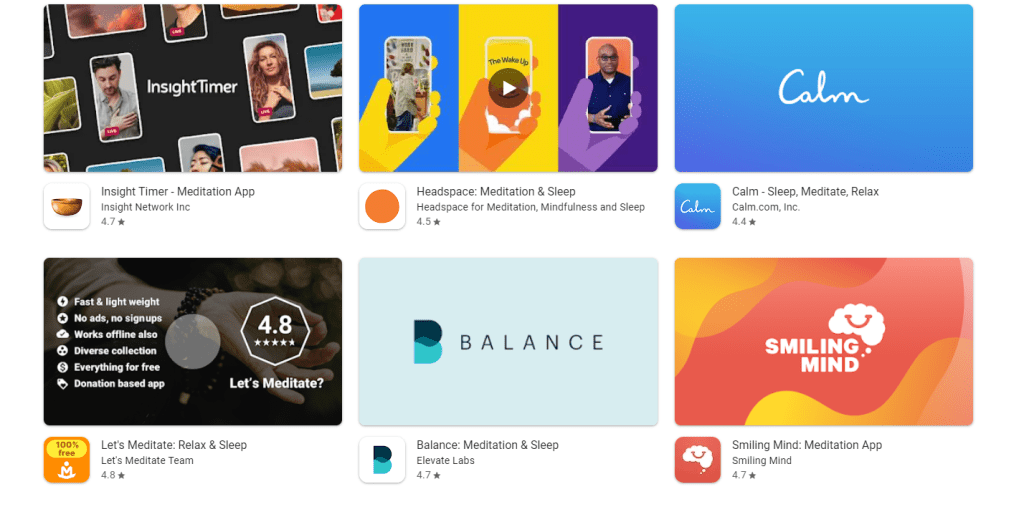
I tried a meditation app which told me to picture my mind as a horse that I’m gently lassoing and making the rope shorter and shorter in order to learn the skill of clearing my mind. It would have me try to build up the time of having a clear mind with short bursts and to not worry if the thoughts drift in. It didn’t really work. My mind does not shut up, like ever. I would be just taking in the sound of a fan and suddenly, I’m thinking about the wind and thunderstorms and writing a poem about a gothic fairy prince stealing children like in the German poem Erlkoenig. I am very easily distracted. 

The word meditation comes from a latin word meaning “to ponder” but the practice of meditation is far older than even the latin language itself going back perhaps 150,000 or even 200,000 years. There are some theories that propose that the very act of “fire-gazing” meditation caused key changes in the brains of our ancestors to give rise to humans meaning that meditation may be older than the human species itself. There is a lot of evidence to suggest a long history of meditative states being used in rituals and shamanic practices. The earliest written records of the practice are found in the Hindu Vedas about 1500 BCE, but It isn’t as many may think strictly an Eastern practice. Records of meditative practices exist in the records of ancient Greeks, the Jewish Torah, druidry practices of the pagans spanning Ireland, France and Spain and even the Christian tradition. However, it got its more secular roots in the late 70’s from Kabat-Zinn when he founded the Stress Reduction Clinic which helped spawn the mindfulness movement in psychology. 

Going into the second summer of the pandemic, I found myself with a little more time at work than usual, in that I actually could take my 30 minute lunch break instead of shoving food in my mouth at my desk for about five minutes in between clients and writing my notes. We were also one of the only agencies not working from home because the nature of my job required me to work directly with people. This meant the common areas of our office building were sitting empty. 

Considering we were entering the second year of the pandemic and there didn’t seem to be a real end in sight to the ongoing upheaval as the affect shocks continued to roll their way through our society, it seemed that it was the opportune time to expand my repertoire of stress management. So I decided to spend a month meditating on my lunch break. I wasn’t doing it as part of a social media craze or anything, I just wanted to try meditation for 30 days and see whether my overall stress was reduced. I once heard a habit takes about 30 days, it actually is closer to 66 days. 

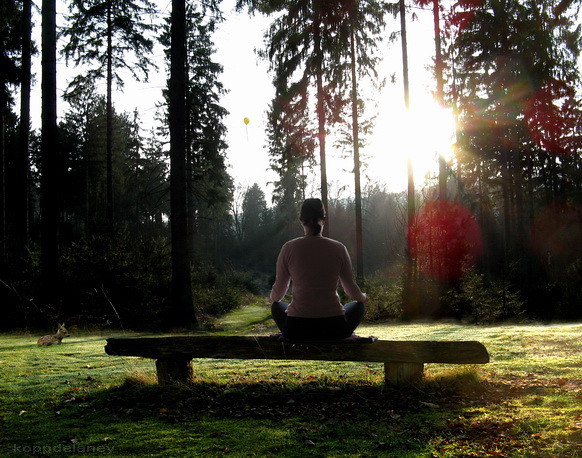
I went to one of the common rooms which was usually vacant away from any distractions or noise and pulled up youtube on my phone. A quick search yielded a 30 day meditation for beginners with most of the videos lasting about 20 minutes. I put myself in a comfortable position on the floor, closed my eyes and hit play. A soothing male voice then introduced me to the world of meditation. It was unlike any meditation I had ever tried before. 

Instead of telling me to clear my mind, my guide invited me to take in all the different sounds to let them flow into my mind and just notice the things around me. Instead of trying to “clear my mind” and ignore things, I was told to become aware of my surroundings. It was the first successful meditation I had ever tried and it was enjoyable. The previous times even a 10 minute habit a day quickly became a dreaded chore. Listen, if your “relaxation” technique becomes a dreaded chore, you’re not relaxing. He also had me try things like walking meditation, which also jived with me. I am someone who fidgets a lot and has trouble sitting still so a walking meditation was perfect for those days that I just needed to move. Ironically by not fighting all the inputs my brain was much quieter than when I was trying to not focus on the inputs and just exist. 

After 30 days, I don’t know that I found my overall stress was that much reduced, but I did have another tool in my belt for handling stress. There are times when I do take a few moments to get a cup of tea and meditate on the tea itself. The principles that I learned and the skill that I began to develop are things I use and have used in my own social work practice. It gave me a better understanding of meditation and a different way of communicating its principles to clients. I actually really enjoyed my daily meditation, so much that even afterwards I continued to visit his videos and listen to his guided mediations. Sadly, work did pick up again and I wasn’t able to keep up with the new lunch time habit. I did not find a way to incorporate it consistently at home. 

Overall, it was a good experience and I do recommend you try it. You may find, like me, that the usual guided meditations don’t work for you. Fear not! You may be neuro-atypical and a

different approach is needed to achieve the same effect. Remember there are many forms of mediation that have been developed over the millenia, it isn’t a one size fits all. Sitting cross legged on the floor breathing deep and clearing your mind is one form. Talking a meditative walk may be more effective for you. It isn’t about the how, more developing the skill of being able to relax and allow the world to happen around you without the need to change it. 

How can you learn to meditate?

It’s easy! There are many aps and youtube channels which take you through various kinds and methods of meditation. The key is finding one that resonates with you. Maybe you find one voice soothing or another irritating (pick the soothing voice), maybe telling you to “notice” things starts your brain racing and you need a different sort of strategy. Experiment and try it. It’s a crazy world and it seems that we are continuing to move from one global crisis to the next. While it won’t fix the crisis, meditation can help give you the extra edge to navigate your way through it successfully. 

I watched a 30 Day Meditation Challenge from One Mind Dharma on Youtube

https://www.youtube.com/@oneminddharma/playlists

Completed: 2021

Miles from home: Can be completed anywhere

Cost: $0-10 depending on the app you use