If you’re on a budget, the answer could very well be “no, not really.” But fear not, my fiscally responsible friend! I’ve got a bag of tricks to help stave off boredom without emptying your pocketbook. Whether your vibe is books, movies, games, or local adventures, there’s always a fun, frugal version to explore.
Let’s start with the screen-sized elephant in the room: entertainment subscriptions. Cable? Extinct. Like a fossilized VHS, it’s long gone in my world. Streaming? It gets a seat at the table, but only as a guest, not a live-in family member. I rotate subscriptions the way fashionistas rotate seasonal wardrobes. Netflix one month, Hulu the next, and maybe Disney+ when I’m in the mood for animated nostalgia or intergalactic drama. This way, I avoid both boredom and ballooning bills. Pro tip: brands have no feelings, and loyalty won’t earn you discounts so play hard to get. They often toss free trials or discounts your way just to lure you back. Works like a charm.
YouTube also fills in the gaps with everything from quirky documentaries to cozy cottagecore vlogs. Admittedly, the recent AI invasion is a bit much, but with some creative searching, there are still gems to be found.
Gaming on a budget? Don’t let the $80 price tags on new Triple-A titles scare you. Steam is a wonderland of indie games, charming, innovative, and often under $20. Many are just as satisfying (if not more so) than their big-budget cousins. Your local library might surprise you too, offering games for various consoles. And don’t forget secondhand marketplaces, because gently loved games still spark joy.
Speaking of libraries, they’ve fully stepped into the digital age. Between the Libby app, Project Gutenberg, and Librivox, you can have books (ebooks, audiobooks, classics) all for free, 24/7. Libraries are no longer just for the Dewey Decimal devotees; many offer board games, workshops, and community events like Dungeons & Dragons or Magic: The Gathering nights. If Magic’s your thing, I recommend building your own Commander decks; they’re easier on the budget and still a blast to play.
Now let’s talk about the ultimate budget hack: borrowing. Not just from libraries, but from your friends, family, and community. Swap DVDs, music, books, board games, video games, you name it. Not only does it cut down costs, it gives you access to a curated collection based on people who know you. You might even discover a new favorite hobby through someone else’s obsession. Gather your friends and family for game nights.
And don’t sleep on your local area! Free events, museum days, neighborhood festivals, and nature trails are often just a quick search away. Parks, gardens, and hiking paths offer a change of scenery (and pace) without a price tag. You may be shocked at the fun things you discover that are close by and completely free! Apps like Meetup can connect you to like-minded folks for everything from book clubs to language exchanges to “bring your own blanket” picnics. Socializing doesn’t have to cost more than a smile and a snack.
Some libraries even offer museum and state park passes, yes, you read that right. Free access to enriching experiences, courtesy of your dusty old library card. And you all thought libraries only offered books.
I am not, dear reader, a financial expert. I am a social worker by trade, so I certainly am not one to come for advice on lucrative careers. Despite my lauded profession for the good it does society, the electric company has yet to accept the goodwill that I have generated as a form of payment. Nor does the grocery store accept client hugs or testimonials – privacy laws notwithstanding.
However, as this is the Budget Bucket List, I do feel that it is high time that I address the elephant in the room of budgeting so that we can have the funds to check off our lists.
The most basic budget is essentially three steps. Track what’s going in, track what’s going out, and set your spending limits and savings goals. Easy peasy. What’s in is probably pretty easy, it’s your job. It’s adorable that all these financial websites talk about other sources of income as if we have multiple revenues, but we’re budget bucket listers. We either have one job or several part-time jobs just to get by. This isn’t 1960s where people could actually build wealth, this is the 2020’s where nearly 60% of people don’t make enough money to be considered middle class anymore.
The what’s going out part is a bit more tricky and this is probably where I have the most difficulty with financial websites because they will often put things under two categories “fixed and variable” and then act like the variables are in your control. Yes, gas is a variable expense but one cannot control the price of gas and at a certain point, the cost of gas is just what it costs me to go to work to earn the money I need to live. The fixed expenses are your housing, car, insurances, etc. Some utilities will be under this, but not all your utilities. The variable expenses are things like food, gas, entertainment and shopping.
So, how do I cut the costs of my variable expenses, even though at a certain point, you have to spend the money in order to exist and you don’t control the costs of things, especially in this economy. They may not be the most savvy tips in the world and they certainly won’t tell you how to build a stock portfolio, but in the next four posts I will share the things I do to keep the cost of existing down so I can afford the cost of actually living.
Utilities are one of those inescapable expenses—right up there with taxes and “unexpected” car repairs. Whether it’s keeping warm in winter or cool in the middle of a July heatwave, there’s always a baseline cost to existing indoors. While I can’t always control my energy rates, I can control how much energy I use. Here’s how I keep my bills manageable without turning my home into a tundra or a sweat lodge.
My home runs on electric heating and while we have the duct work to have central a/c, we have to rely on window units, so I’ve learned to get creative. In winter, I embrace layers, throw blankets, and hot tea. I also make sure to hang thick curtains. In summer, blackout curtains are my best friends—especially since my sun-blasted front windows face south. The bonus? Those same curtains help trap heat during colder months. Windows are, unfortunately a huge source for either gaining heat in the summer or losing heat in the winter.
Another thing, I really recommend for both winter and summer is to weather-proof your home as much as possible. You would be shocked at how much trouble a small draft at your front door can cause. A few years ago, I was able to upgrade my windows and doors which really helped reduce how much I was paying for heating and cooling because it meant I was able to keep the heat out in the summer and the cold out in the winter. The upgrades honestly paid for themselves in terms of energy savings over the course of a year.
Over time, we’ve also made several other changes that have really helped. As older appliances have needed replaced we’ve opted for energy-efficient ones. We also swapped out light bulbs. We turn off and unplug devices when not in use. We ditched the dryer in favor of hanging our clothes. We’re currently making the switch to more natural fabrics meaning we will need to wash our clothes less. All of this to be more sustainable, environmentally friendly and budget friendly.
In my state, we can shop around for electric providers. I always go for a fixed-rate plan at the lowest cost available. This also means that I don’t have to worry about my energy use during the day as variable rates can be effected by “peak times”. If you happen to have a variable rate, make sure you’re looking to see when it’s cheapest to run your appliances and adjust your usage accordingly. My utility company averages my bills over 12 months, which helps with budgeting, even if the number still feels annoyingly high some months. Comfort has its limits, but so does frugality.
Add heavy rugs and draft stoppers to block chilly breezes
Set your water heater to 120°F (no one likes scalding showers anyway)
Run dishwashers and laundry at night during off-peak hours (if you have a variable rate)
Wash clothes in cold water (your clothes will thank you)
Use a programmable thermostat.
The last will (hopefully) be my next home upgrade as currently, I have a very old thermostat system where I just turn a dial to turn the heat up or down. This means I am constantly having to turn the heat up and then turn the heat down depending on the weather and when I will be home. I can’t turn it off completely when I’m gone because I have pets, but I do try to turn it off for at least several hours every day during the winter. I am sure that just like my windows this upgrade will pay for itself in energy savings. Don’t be afraid of upfront costs if you know it will save you money over time.
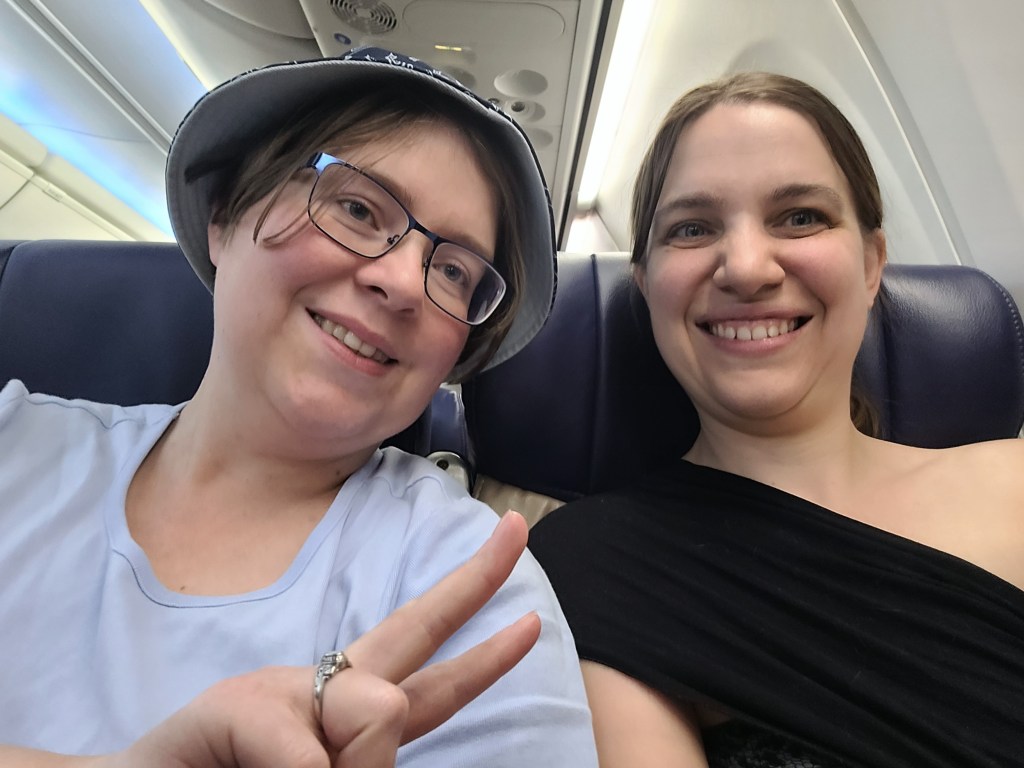
As my original intended post ended up being far too long, I had to break it down into several different ones. Since the original post was titled “Trains, planes and Automobiles”, it seems to make sense that I shall be covering tips for planes next. In a previous post, I discussed luggage and maximizing space with tricks of layering, additional pockets, etc. So I will not insult you gentle reader by repeating myself as I am certain you are capable of remembering previously presented information. Nor will I go into how to snag cheap flights as I have already covered that in other posts, although only briefly. I may eventually make a dedicated post for how to get cheap tickets when traveling, but this post isn’t that. Mostly, this will cover how to help make your plane experience as pleasant as possible because let’s face it, unless you’re flying first class, flying is pretty miserable.
One of the easiest ways to make your flight more pleasant is by having the right seat. There are many different considerations for optimal seat position. Some people love to be at the window (like me), others swear by the aisle seat because it gives them a place to stretch their legs. On some planes there are aisle seats that have no seats in front of them as they make the transition from economy plus to economy, so if you’re looking to maximize leg room, there are two aisle seats on the plane with lots of extra space. However, if you cannot snag those positions then you’ll want either a bulkhead or exit row seat. If you can look at the plane you’ll be flying on ahead of time (information that should have been available at time of booking), you’ll already know which rows those are.
Some people want to sit in the “safest” seat which surprisingly is a middle seat in the back of the plane as those have the highest survival rates in the event of a crash. The other upside to the back of the plane is this is where you’re most likely to have an empty seat next to you since most people don’t want to sit in the back. After all the back of the plane is where you’ll experience the most turbulence and have the longest disembark time. This is also where one of the on-flight kitchens is located meaning that there will be increased noise. You will also have more noise at the very front of the plane for the same reason.
Sometimes you can pick your seat the same day as you book your flight without paying a fee to do so, but most of the time you have to wait until 24 hours in advance to “check-in” in order to avoid paying a fee. Some airlines are starting to charge you even during the 24 hour window, as always do your research when comparing prices. If traveling internationally be sure to have your passport waiting with you so you don’t waste precious time looking for your passport trying to snag your preferred seat. Check out other blogs for the specific airline or airplane you’re traveling with to see if there’s any tips for optimal seating. If you’re traveling on an overnight flight, you may want to double check the location of the bathroom if you’re a light sleeper to avoid being disturbed or if you’re someone who needs to go frequently, be sure to snag that aisle seat near by.
Extra tip: Many people will rush the bathroom right after take off, after meal times and right before landing. Set an alarm for about 2 hours before landing on long haul flights to avoid the rush.
Once you have your seat selected, the next step is to time your arrival at the airport. Many first time flyers make the mistake of thinking the time of their flight is the last possible minute they can board the plane. This isn’t the case. Make sure that when you do your online check in you take a moment to check your ticket. Often they will have two other times listed, the time that you have to have cleared security by and the time the doors to the plane will close. Just because you’ve cleared security doesn’t mean that they’ll hold the plane while you shop or finish a meal. Make sure you allow an hour to make it through security, so whatever time it says try to arrive at least an hour ahead of time. If you’re parking in a long term economy lot, add an extra 15-20 minutes to locate a parking spot, get to a bus stop and take the bus to the correct terminal. Make sure you take a picture of where you parked and what bus stop you were picked up at. Depending on typical traffic for the airport you’re going to, add extra time to your commute and check online for tips of frequent travelers in and out of your airport to see if there is anything you should know. I usually try to add at least 30 extra minutes to my commute into Philadelphia and an extra 60 minutes if traveling during rush hour.
To help make security easy, try and have all your paperwork in an easy to locate place. Wear shoes that are easy to slip on and off (not every airport makes you take off your shoes anymore as it depends on their machines and the thickness of your soles). Have your clear bag of toiletries on top of any luggage you’re bringing through security (like with your shoes not every airport makes you take it out of your bag, but some still do so it’s better to be prepared). If wearing layers try to make sure you can slip your layers on and off without much fuss. The less you have to take off and out, the easier and less stressful this process is. The key is of course to follow the verbal directions of the security people, don’t try to be smart or funny with them, even if you’re the most hilarious person at the airport that day. If you’re unsure of a directive just ask politely for clarification. If you think for any reason that you may need extra assistance with a disability, contact the airport ahead of time to discuss and make sure to clarify with them their recommendations on additional time needed to get through security with assistance. I personally recommend at least an extra hour if you’re going to need assistance as a wheelchair may not be available right when you arrive, they may be short staffed or assisting other customers. Most airlines subcontract this out and the airline you booked with may have little control over these personnel.
I usually don’t get pulled aside at security but here are the three reasons I have been patted down before or searched. The first was a big surprise. I’m an avid reader and apparently the way my rather thick book was packed triggered off the alarm bells as a potential bomb. e. To avoid this, I now only use my e-reader or smaller, shorter books. The second reason is that I have really thick, long hair so when I wore it in a single braid down my back, that triggered a check. To avoid that happening again, I now wear it in two braids. The third was sweat on my back. I was just anxious that I was forgetting something important and it was clawing at the back of my mind the whole drive to the airport – as it turns out, I had forgotten to pack my hairbrush, so nothing that couldn’t be rectified upon arrival but it did trigger a search. As you can see, you can get pulled aside for a search for seemingly no reason, honestly a book, my hair and a sweaty back? The last one was slightly embarrassing, but what can I say, sweating is a natural human reaction to stress and flying can be a stressful thing. To avoid this, take deep breathes and wear breathable clothing.
Now there are many things that one can do to make the flight more comfortable. The first thing I do, is make sure I have something to block out noise and typically carry two ways to do this. The first is my earbuds, the second is a headwrap with bluetooth speakers that I can also use as a sleep mask. I really like the headwrap with bluetooth speakers because I don’t have to worry about my earbuds falling out and they’re super compact to pack. Other people swear by noise cancelling headphones, I don’t like this option because it means that I may miss important announcements, but for other people they’re a must have on a flight.
The second thing I do is to have a variety of ways to entertain myself. I load up on my e-reader and pack a small book that I can read in the event I run out of battery. I also carry a small activity book with puzzles or other games to keep me entertained. My phone has a few apps that can be used offline, along with lots of music. Most long haul flights do include headphones to allow you access to inflight movies and other entertainment, but not every airline will do this so you may want to pack ones that can use a headphone jack rather than a USB. It’s rare that I find myself watching an inflight movie, so I tend to skip packing headphones. I do, however, always carry a portable charger since I can’t guarantee that a charging station will be available or that it will have the right plug. A lot of airlines are getting better about this but in economy class there is often only two plugs per three passengers, so rather than chance ending up in the news over a charging station, I just have my own.
Prior to boarding I try and go for a brief walk just to get my legs moving and blood pumping. Usually this walk consists of going to the bathroom one last time. I also try and dress in at least two layers because I am almost never comfortable on a plane, I am either freezing cold or dying from heat. Having a layer ensures that I comfortable. The same can be said for shoes that can easily be slipped off and exchanged for slippers (remember most people do not want your bare feet out and about, it’s considered rude and there are airlines that are starting to crack down on bare feet, slippered feet however is usually acceptable). Make sure to put your shoes back on if you’re walking about the plane for sanitary reasons.
Make sure to pack a portable water bottle and some snacks. Once you’re through security, you can fill up your water bottle at the many water fountains to help keep yourself hydrated as travel can and does take a lot out of you. I also like to pack snacks. While most airlines do offer snacks and even meals there’s no promise that you’ll like them or that you will get them. On a recent long haul flight, we were supposed to end the flight with a snack. However, several of the flight staff suddenly came down with an illness mid-flight so for safety reasons they did not feed us. So with my snacks, I always pack and use hand sanitizer and sanitizing wipes. I don’t know about the other passengers on my flight, but I do know that I managed to avoid contracting the illness. Additionally, in an effort to save money some airlines have stopped including meals and now require you to pay for them. They may require you to use their app in order to make inflight purchases rather than accepting cash or credit card in flight.
Along with hand sanitizer, I will usually pack a few things to help keep me feeling fresh. As I shared earlier, flying can be stressful and when we are stressed, we sweat. Having a few baby wipes, moistures and even travel toothbrushes can help you feel, look and smell your best.
Now there are people who swear by travel pillows. Personally, I never use them. I don’t sleep on planes, I never could and often the long haul flights do offer small travel pillows and blankets anyways. But that doesn’t mean you shouldn’t if you’re the sort of person who can sleep anywhere (first stop and post in the comments below your secrets, I wish to learn oh wise one!). If you are someone who plans on sleeping, don’t sleep during take off or landing as it apparently negatively impacts your ears ability to regulate their air pressure. Not having ever slept on plane, I cannot comment to the validity of this rumor, but I’ve seen this advice in several places. Travel pillows may also be helpful for people with back or neck pain as planes aren’t known for their superior lubar support. However, if you’re not one of those people then a travel pillow becomes an unnecessary burden and I wholly recommend skipping it.
This last one should seem obvious but it always surprises me how few people do it, I see them popping up and down all flight getting their stuff. Keep your airplane essentials in one place and I recommend that be in your personal item. There is no promise that your luggage will end up in the overhead compartment above you. You may end up having it in an entire other section of the plane, or checked in at the gate for various reasons. I often will pack my personal item with all the things I may want on the plane: e-reader, portable charger, activity book, notebook, earbuds, snacks, etc. Within my personal item, these things are often packed in smaller bags which makes it really easy to just reach in and find what I want quickly. I have a collection of small purses because I either have a massive purse with everything in it or a tiny purse that literally holds my phone, my wallet, my keys and maybe a tube of lipstick. The purses are so useful for organizing my luggage and then I have cute handbags for all my outings on my trips, fashion meets practicality, a win for all.
There are certainly other tips that people may recommend and I encourage you to go out and see what other passengers have done to make flights more comfortable. As with all tips and tricks, consider whether they will work for you. As I said earlier, I don’t bother with travel pillows, I don’t ever seem to use them and always regret packing them, but for many people they are essential and worth the extra hassle they cause. You may also read tips and tricks that other passengers won’t appreciate so if it seems a little odd, you may want to check the comment section or the rest of the internet to see if you’re breaking unspoken plane etiquette which could land you in hot water with your fellow passengers. While it may be your “right” to do something, you do increase your chances of ending up in a mid-flight brawl if you ignore plane etiquette, so I encourage you to be polite.
Keep in mind the airline industry is always evolving. Airlines are cracking down on what people can carry on a plane. They’re no longer allowing a free pass on things like pillows and blankets but rather counting those as your personal item. Always, always, check the airline’s website for the most up to date rules and if you’re looking at a blog for luggage “hacks” to avoid fees, make sure you check to see when it was published because the tricks may no longer apply.
To continue on my tips for traveling, we’re going to talk about deals, their pros, cons, constraints and other considerations. Because we’ve all seen those travel blogs and social media posts promising cheap travel or insider tips and it can be tempting to jump on what seems to be an offer you can’t refuse, but there can be pitfalls that even the savviest person may find themselves prey to.. Here’s my tips on how to help you find good deals and how I keep costs down when I travel. After all this is a budget bucket list blog and I hope to show you how to live a life full of adventure without having to go into debt to do it.
In a previous post, I discussed a form of reverse travel planning of considering all your constraints ahead of time and then picking your destination. There are some people who will do a form of reverse travel by first picking the time they want to travel and then just look for deals to any destination and go based on that. I had a work colleague who took off for three weeks every summer and would travel for about one to two of those weeks being highly flexible with the dates and going to wherever was cheapest during that time. She enjoyed using Kayak to help her find those deals and then usually backpacked her way around a given country. There are many other websites and social media pages devoted to helping people find cheap flights and accommodations. Some people swear by hello going and others will literally troll websites for mistake deals and price track. If you aren’t too picky about where you’re going, these are great resources and can help you cross off your bucket list for less than you’d ever imagine.
Checking out a cruise line for last minute deals for cruises departing in only a few weeks or even days, could yield fantastic savings. I remember seeing a cruise to Iceland and the British Isles for two weeks for about $700 a person for a balcony suite. Booking it in advance would have been about $2,000 or more. So if you don’t much care where you go, then finding a destination at the last minute could open up a world of possibilities.
However, there are some considerations before grabbing your credit card and jumping on cheap fares. As previously discussed, one may find that you’ll be traveling to the destination when the weather is terrible for what you want to do. If you planned on going hiking in the mountains of Colorado, going in January might prove difficult given the snow cover, but if you want to go skiing then it’s probably the perfect time to go! The other consideration is the cost of the other parts of the vacation. The flight might be cheap but the accommodations are astronomical or it’s a flight to the middle of nowhere and it will cost you an arm and a leg to get to the actual place you want to go. Perhaps as with Rayanair the flight is cheap but it’s out of an airport that isn’t easily accessible necessitating extra travel time. It may be during a big festival that closes down the sites you want to visit or if you’re relying on public transit, there’s been a series of strikes over the past several months with no end in sight. It’s important to research the destination first before hitting that payment button.
While a cruise may seem like a surefire way to ensure that you will go to a destination during a prime time to visit, if you were hoping to join the excursions you’ll probably find them booked up meaning that you’ll be running an increased risk of being left behind. Be certain to plan plenty of extra time to return to the ship as you’ll be exploring the ports on your own.
Now before you resign yourself to only traveling during peak seasons, the off season can have its charm and with some careful timing, it may be the perfect time to go. Consider Cornwall in the UK. Its off season is the winter, many attractions are shut down, the weather isn’t the greatest, and the beaches are home to freezing waters. One may think me insane for having traveled towards the end of February. However, my visit coincided with the Half-term break for school children. This meant that attractions typically closed for the winter were open to welcome parents and children looking to pass the time. Ticket prices were still lower than during peak season, saving me money for sight-seeing. Additionally, the crowds were much lower than during the peak season because most of the people visiting were locals rather than throngs of foreign visitors.
The wonderful part of Cornwall is that the weather is actually fairly stable throughout the year so even though the summer is better weather, with the exception of one day, the weather was actually quite nice. Yes, it had frequent cloud cover, but the clouds are what help keep the climate so stable. I avoided crowds, had cheaper tickets and was still able to access everything I wanted to see by timing my visit with half-term. So before crossing off a destination because it’s not the “best time” to visit, take the time to investigate why. If you’re not someone who wants to lounge about on the beach but rather want to take in the local culture, see their museums and visit religious sites then perhaps a trip during the rainy season won’t be so bad, so long as you don’t time it with the peak of the rainy season.
Personally, a beach is a beach, so I see little reason to travel far just to lounge about when I have plenty of beaches nearby my home, but to each their own. I’m not here to judge, I’ll be a bit quizzical about it, but if you’re on the beach it means you aren’t crowding my museums or historic sites so by all means kick back and relax!
There are other tricks to keeping costs down. One of my favorite tricks comes from my time as a student studying abroad. Rather than paying to eat out for every meal, I would go to the local grocery store to pick up bread, meat and cheese. I could pack these in my backpack as I ran about a city which gave me extra time to sightsee and saved me a lot of money. For the cost of one meal out, I was able to eat two to three meals. It can certainly be fun to sample the local cuisine and to enjoy a hot meal, but if one is trying to keep a lower budget then this is a great way to do it. Of course before traveling ensure you’re done your research into what food items are generally safe to purchase for example fresh fruit may not always be safe unless you peel them or wash them yourself. One should always be mindful about the potential for food borne illnesses.
Another way I kept costs down while traveling was making liberal use of public transportation. It can be a bit tricky to use, but I will cover that in a later post. If you’re traveling to a major city the chances are pretty good that you’ll have access to half decent public transit to most major tourist destinations. I especially liked the transportation in Rome because the subway system was marked with pictures of the popular attractions making it a breeze to navigate.
When it comes to accommodations, there are ways to keep the costs down. As with everything, do your research. In the United States, many national and state parks have affordable cabins to camp in. Although they may not be more than a roof over your head with limited access to toilets, electricity and running water, so double check what sort of site you’re booking and be sure to do it in advance since they’ve become quite popular in recent years. Perhaps the country you’re visiting has a similar system.
In many European countries, youth hostels are the cheapest places to stay. The trick with them is to try and find ones in the safer part of the city and to pay a little bit more for your own private room rather than more open areas as there are some safety concerns with using them. There are some social media groups for people to house sit or even pet sit in various cities. Some groups will do house exchanges among members where they come to your house and you go to theirs. I shouldn’t have to outline the risks to these particular ventures such as people stealing from you, abusing your pets, accusing you of stealing or damage to the home, getting to the destination and finding out they were dishonest about their housing, stalking, etc. That isn’t to say staying at a regular hotel doesn’t have risks, but in general they are less risky than going to a stranger’s house from the internet. However, this is one way to get cheap accommodations.
You can also use tools to price track or even do it yourself. I found that for Norwegian Cruise Line for whatever reason booking 5 to 6 months out from the fall season yielded the best price (this may have changed). If you’re someone who is just starting to save up money and it’s going to take you several years then it might be a good idea to start tracking the prices of flights and accommodations for where you want to go. You can see when a company typically offers their best sales and adjust your plans accordingly.
One other trick is using your connections. My recent trip to the United Kingdom was only possible because I was invited to stay for free at a friend’s long term rental. That saved me about a third of the cost of the overall trip, turning it from unaffordable to affordable. My trip to Colorado and Montana was made possible by staying with some distant relatives (my mother’s uncle and cousins). My trip to Vermont was with a friend of my mom’s and while we were up North, we spent some time in the Boston area with another family friend. Be sure that if you’ve been invited to stay, you extend an invitation to your own area. I am sure after reading my blog, you have lots of ideas of fun things to do in your area to make their trip truly memorable.
Another way to use your connections is inviting them along. A hotel room split among several people can drastically reduce the cost (just ensure you know how many guests a room can accommodate and watch out for charges for extra guests). When traveling to Michigan solo, it made more sense to fly since the cost of gas and tolls was almost as expensive and it was significantly more time. However, when traveling with a companion suddenly my cost was halved and I had someone to switch off driving, which made driving the much more affordable option. My friend worked for a rental car company and so by traveling with her we were able to save on a rental car when I was going down to North Carolina. Another friend’s parents had a timeshare and we were able to use it for a hotel.
As you can see there are many ways to help keep the costs of travel down with some creativity and flexibility.
One may be forgiven for thinking that I’ve already covered preparation in the packing section. After all, is that not where one places all the things that one will need in the luggage? Well yes, but this is a dedicated section to logistical and necessary paperwork considerations.
Americans have been a bit spoiled since the advent of commercial flights given that our passports have pretty much cleared us through most countries without much fuss. However with the increased concern for security over the years more and more countries are implementing pre-checks and restrictions to people looking to cross their borders. For example, when I was a student studying in Germany I could have easily hopped a plane last minute to visit the UK without any additional paperwork than my passport. In fact, I was a little disappointed that most of the borders I crossed didn’t require any stamp or passport check during my time in Europe because of the European Union allowing for easy travel across borders. However, on my recent trip to the UK, I was required to download an app and apply for an Electronic Travel Authorization. It’s essentially a pre-screening tool for people intending to travel into a country and it is linked to your passport. They’re intended to help catch high risk individuals who may overstay their welcome or pose other security threats. I imagine that more and more countries will be adopting these in the future. Some countries require your passport to be no more than 6 or even 3 months from expiration. Other countries require visas, even for US citizens. As always research the country’s requirements before visiting and do not assume that because you were able to freely cross even a few months ago that you will be able to freely cross again as laws are constantly being updated.
Another lesser known consideration is vaccinations. During COVID some places were requiring proof of vaccination and even to this day there are countries which require you to show proof of a yellow fever vaccination. While a COVID shot was easily obtained at a local pharmacy or doctor’s office, a yellow fever vaccination is less readily available and may require an appointment at a travel clinic. Keep in mind most of these vaccinations are not necessarily covered by insurance and will cost you out of pocket to obtain them. Double check which vaccinations are covered by insurance and arrange with your doctor to obtain them there since many travel clinics don’t accept insurance.
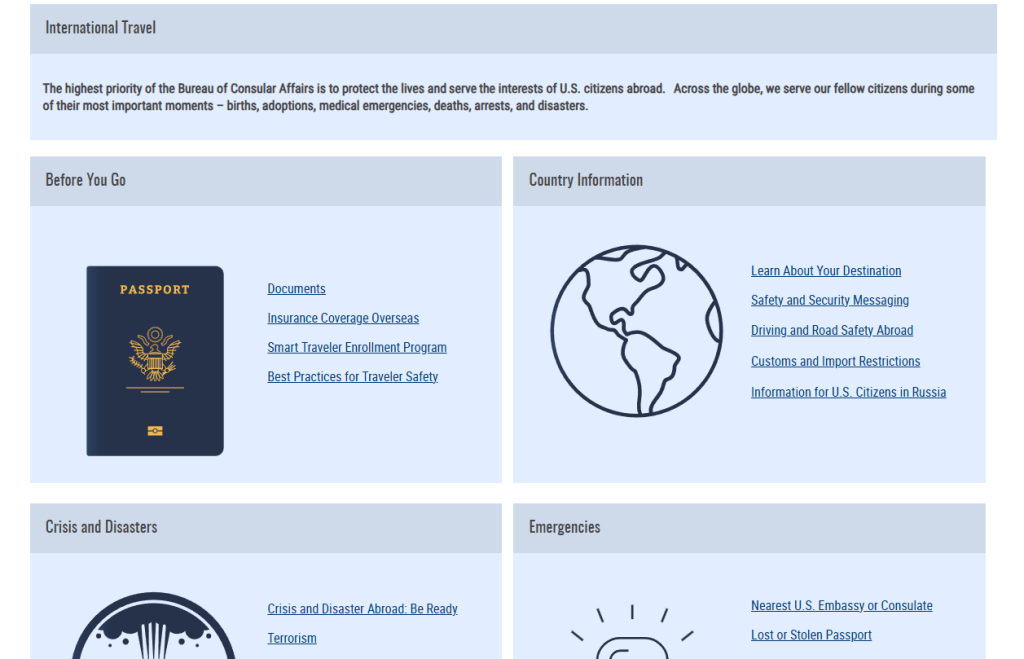
Now just because a country doesn’t require a vaccination doesn’t mean you shouldn’t consider visiting a travel clinic anyways. While traveling to many countries along the equator is affordable they do tend to be places with higher levels of disease and thus pose an increased health risk. My personal recommendation is to visit the U.S. Department of State for travel advisories. This website often lists potential concerns for travelers including diseases. When going on a mission trip to Haiti, I invested in some malaria medication to ensure I did not contract it. Not everyone in my group did but given that mosquitos adore me, I felt that I ran a higher risk than others. This website can also tell you about other risks that a country may pose. It may advise you to stay away from certain areas or of ongoing conflicts that the news may have not covered. Be mindful that when you go to the travel clinic they will try and upsell you additional things, be certain of what you want before you go in to avoid unnecessary expenses.
When looking up information on the US Department of State, I make sure to write down the US Embassy information for the country I will be visiting and you can even register your visit with the US Consulate to help smooth out processes should the need arise. I always make a copy of my passport and other travel documents, not that these will get your very far but they are helpful in emergency situations where they’ve been stolen or lost.
In addition to safety, be sure to look up the local emergency number for the country you are visiting. Dialing 911 is not a universal number which will connect you to emergency services. Be sure to program that number in your phone along with the number of the US consultant for the country you’ll be going to.
I also try and google “things Americans should know about traveling to x” to help keep me appraised of local laws we typically run afoul of. Did you know in certain countries wearing camouflage is illegal? Not that I am a fan of wearing camo for myself, but I know many Americans are. There may also be certain customs and social expectations that we frequently break through ignorance. For example, while visiting in Boston, I took up with a few German tourists and we went out to eat together. I was horrified when I realized that they were only going to round up to the nearest dollar amount as a tip instead of giving the customary minimum of 15%. I had to explain to them that what they were doing was extremely rude to the waitstaff. See, Americans aren’t the only ones who mess up when traveling abroad. It is easy to assume similarities when visiting other Western nations since we are so culturally similar in most respects, but still do your research and don’t be afraid to inquire about local customs. If people see you are earnestly trying to be polite, they usually appreciate the effort and are happy to educate you if you miss something.
Now when traveling it can be tempting to simply call your bank, inform them of your plans and then use your credit or debit card. However, this can lead to unexpected charges and cost you money in the end. Many bank cards charge additional fees unless you have obtained a card intended for travel, so double check with your bank to avoid unexpected costs. Additionally, consider going to the bank and exchanging your money for the local currency. As always double check the currencies that a country accepts. Many Caribbean and Central American countries accept dollars when visiting. As of this writing, Venezuela even accepts bitcoin if you happen to have that. Keep in mind, it can take several days for your bank to get the money in so my advice is to do it two weeks prior to your departure that way in case you make a mistake, you have time to rectify the situation. Remember most banks will exchange notes and not coins so when you are abroad be sure to use up your coins when possible to maximize your ability to exchange the money upon your return. Always take more money than you think you’ll need as you may need the money for tips, parking and other miscellaneous items.Your cards can be lost, stolen or mistakenly locked out. You’ll be grateful to have cash to get you through emergency situations.
The other phone call to make is to your phone company for potential international plans. AT&T offers a 12 dollar a day plan and you only pay for the days you access their network. It’s not terribly expensive if you plan to keep your phone in airplane mode and only plan to use it for emergencies as I personally don’t recommend using your phone abroad. Instead, if your phone is unlocked you can purchase a sim card or download an app for an electronic sim card for the country you’re in. Often you can purchase plans for about 10-15 dollars for an entire month rather than per day. If your phone isn’t unlocked, you can either get it unlocked or purchase a cheap phone for purposes of GPS and local phone calls. To communicate to people back in the US, I currently recommend Whatsapp as a way to make phone calls without incurring tons of additional costs. Along the same lines with the phone, don’t assume your apps and things will work to access items like tickets. Always download the tickets to your phone or print them out and pack them.
Depending on where you’re going, you may want to consider purchasing a camera instead of using your phone as one. Certain places in the UK, are known for phone theft and there are plenty of videos of thieves snatching phones right out of the hands of unsuspecting victims. Don’t think that because you’re going to a first world country that you won’t encounter crime. I had a work colleague whose phone was stolen off the secretary’s desk. Within minutes the thieves had broken into her phone, accessed a money transfer app and stole $1,000 out of her bank account. Her photos were never recovered and she was out $1,000 because neither the bank nor the app would reimburse her. It can and does happen here at home and abroad, so consider the risks carefully.
Along with other electronic devices, make sure you know what the electrical outlet situation is like in the places you’re going to. Nothing would be more frustrating than arriving with a low battery only to discover that the plug you packed doesn’t fit! If you think you’ll be going to a lot of different countries you can purchase one that has different attachments and then you won’t have to worry about it.
Finally consider the pros and cons of travel insurance. Are you traveling to a place where you can access their healthcare? What sort of healthcare are they offering? Are you planning on going hiking in the mountains? Do you have emergency evacuation covered? There are lots of different options and some of them are practically scams promising coverage for things that in the fine print aren’t as covered as one would think or offer coverage for things that you could have gotten for free or low cost. Research, research and research.
When encountering issues with my phone abroad, I was grateful I had the foresight to print out my tickets having solved the problem before it even happened. When driving in a foreign country, I had already looked up the common road signs so I knew what they meant and avoided potential tickets. By looking up potential risks, I knew better than to pet the local cats as they may have been carrying rabies (it was very tempting to befriend them). Although, I suppose for $700 I could have gotten a rabies vaccine and then felt free to pet, so maybe next time? With the right preparation, your trip can run smoothly even with unexpected difficulties and pitfalls.
In honor of the coming spring, I’ve decided to do a few travel posts. You see dear reader, it seems that with the end of winter with the warmer weather on the horizon, I always get a bit of wanderlust at this time of year and find myself going to far flung corners of the world. Or at least farther afield than is typical as I certainly can’t afford to travel too far every spring. Perhaps, it’s something in the air, maybe it’s from being cooped up in the house during the cold winter months.
Before we clutch our pearls in shock at such a notion, remember dear reader, I am not against travel. I simply believe that we can live a bucket-list life right where we are and that we needn’t travel frequently to experience amazing things. However, there are times when we do travel, so we may as well do it well, to ensure that it is a wise investment of our limited resources. After all, traveling is expensive and time consuming. As budget conscious people, we certainly don’t want to experience travel regret or wish we had been more thoughtful prior to hopping on a plane and wasting hundreds of dollars on a less than stellar trip. To that end, I hope that these tips will help you make the most of your travels. At this point I believe I am at least a fairly experienced traveler to be speaking on such things.
I shall begin my travel tips with the most fundamental decision of all, where to go.
Now there are many considerations to picking a place to travel. Now you may have a very specific place in mind already. In which case skip this post and read the Travel Tips for the First Time Traveler: The Art of the Deal. In this post, I’m going to share a method of reverse planning or rather than picking a place first and then planning around that. You first plan the big three: time, budget and season and based on those constraints narrow down options of where to go. It can be helpful in managing your budget and ensuring you stay within the constraints of your means. Many people underestimate the cost of their trips and it’s easier to do when blinded by a pre-made decision. This method allows you to place your constraints ahead of time and then plan from there.
My very first consideration would be time, how much time do you realistically have? Time can be a huge constraint. For example, I recently traveled to England after being invited to join a friend in her long term rental down in Penzance. The accommodations were completely free and I naturally took advantage of this. However, it took 2 hours to get to the airport, allowing for the recommended 2.5 hours to get through security and boarding onto the plane before take off, another 6 hour flight, another hour to deboard, get through customs and navigate a new airport, and another 8 hours of buses and trains. I left my house at 2 pm and arrived at 5 pm the next day. The return flight was 7 hours, with almost 2 hours to get through customs, secure our bags, take a bus back to the economy parking and 2 hours to get home. We left the hotel in London at 8 am and arrived home at 7 pm. That wasn’t accounting for the 6 hour train ride back north to London that we took 3 days before our flight to allow us two days in London. Just travel alone was 3 days of our trip. That also didn’t account for recovery days from jet lag which depending on how easily you bounce back from disrupted sleep could take another whole day from your trip. So, I really don’t recommend taking a week to travel across an ocean because you realistically end up with maybe 3 to 4 good days. This is why I took two weeks off of work to allow myself plenty of time for travel to and from, recover, unpack and get ready to return to my normally scheduled programming.
Time really determines a lot of things. It can influence your budget, how far you can travel, what you can do and whether it’s worth adding in things like rental cars and taxis or if you can stick to public transit. After all, public transit adds time to a trip. If I had access to a car that 5 to 6 hour train ride could have been closer to 3 and with the multiple train delays stretching the initial ride down to 8 hours, a car would have been preferable. Time also determines how much you can do. I only had two days in London which meant that I had to be picky about what I did and what I saw. One could spend an entire day at the British Museum but then one will have only seen one museum, granted it packs a lot into one place, but then one isn’t seeing other things. If one rushes through things can one really enjoy it or will you be so exhausted from your vacation you need a vacation to recover from your vacation? It’s very easy to overestimate the amount of time you have which can lead to exhaustion from rushing around and stress from worrying about things like missed train connections, traffic or just getting lost in a strange place.
The other major consideration is of course budget. How much money can you spend on a holiday? Do you have paid time off? If you don’t, then any time off work is calculated into the cost of your trip. The budget can really determine how and where you can travel. Perhaps you can take a 12 hour direct flight to that far flung place, but it costs twice as much as the 20 hour flight with multiple connections. When considering a budget, you should be asking yourself how much are you typically saving in a month, how much have you already saved and how much can you still save? Consider the costs of transportation, accommodations, food and souvenirs. Hint: it is always more than you think, especially if you’re going to places where your currency is weaker than theirs where it’s easy to underestimate how much you’re spending. Just because the flight is cheap doesn’t mean accommodations will be, just because the accommodations are free doesn’t mean the flights will be cheap. I recently read a blog post outlining the actual cost of a trip for a couple who managed to snag really cheap flight tickets. Even though their flight was very affordable, the cost of other transportation, sight-seeing, food, accommodations, etc. for two weeks was still $5,000. So before jumping on that “great deal”, consider the other costs.
To help you plan you may want to check out places like Expatistan, Price of Travel or Numbeo. These resources can help you with your budget to see if where you’re going is actually somewhere you can afford to go. What is cheap to one person may be expensive to another person. If you make 100,000 a year spending 5,000 is only 5% of your yearly salary but if you only make 45,000 then it’s 11% which is a significant difference. However, if you make 100,000 and you’re supporting a family of 5, spending 5,000 is less affordable than if it’s just you and your cats.
The final consideration is the time of year you’re able to travel. My sister’s job requires her to help test major systems updates which happen routinely at certain points of the year. This means there are just certain times when she knows she cannot reasonably take off without it causing a lot of issues for her work and her time off approval is tentative. When I was the Winter Shelter Coordinator for an Emergency Winter Homeless Shelter at one of my jobs, I knew I could not take off during the Winter months for extended periods of time. It was a major job expectation that I would be generally available during that season. There are certain times of the year that just aren’t good for certain destinations. It may look like an amazing deal to go during the off season, but good luck enjoying that tropical beach vacation in Maldives during the rainy season.
Now depending if you’re traveling solo or in a group, you may have to consider what others can afford in terms of time, money and when they can take off. As I previously stated, my sister has a job that semi-dictates when she can take off and I also had a job where I couldn’t take off during the winter months. If you’re traveling with a school employee, you can’t travel much from August through June. Additionally, if your travel companion has limited mobility that can impact when and how you travel. Someone who needs assistance at the airport will most likely need an additional hour or more for pre-boarding. It’s important to have open and honest discussions with your travel companions before you spend a dime.
One subcategory of all these considerations is the type of traveler you are. Do you like museums or the party scene? Do you want to spend your time lounging on the beach or do you want to go hiking? Are you content so long as you have a roof over your head and a pillow under it or do you want a little more luxury? When I was a student studying abroad I traveled as cheaply as I could, snagging deals on Ryanair, booking hostels and buying most of my food at local stores rather than eating out. Are you comfortable flying economy or do you require extra leg room? When traveling to England my mom paid for an upgraded seat both ways because she has had blood clots and decided it was worth having extra leg room and the ability to put her feet up in order to ensure she wasn’t going to spend her trip in the hospital. That impacted her budget.
Once you have your time, budget and season you’ll be traveling, it’s much easier to narrow down where you can go based on your research. Depending on where you’re traveling from you can reasonably estimate how far you can go based on your time. If you’re on the East Coast like me then Europe is a more reasonable flight than from the West Coast. There can be surprises that pop up for example, flying to Costa Rica was a 10 hour flight despite it being about the same distance as the United Kingdom. However, Costa Rica is a lot cheaper to visit. The constraints of your aforementioned decisions can dictate where you’re going to go. If you divide up your budget and discover that you only have about 50 dollars a day then you may need to go to cheaper areas of the world. Once you have your list of possible places to go, you can pick.



















 Budget Bliss: Bucket List