
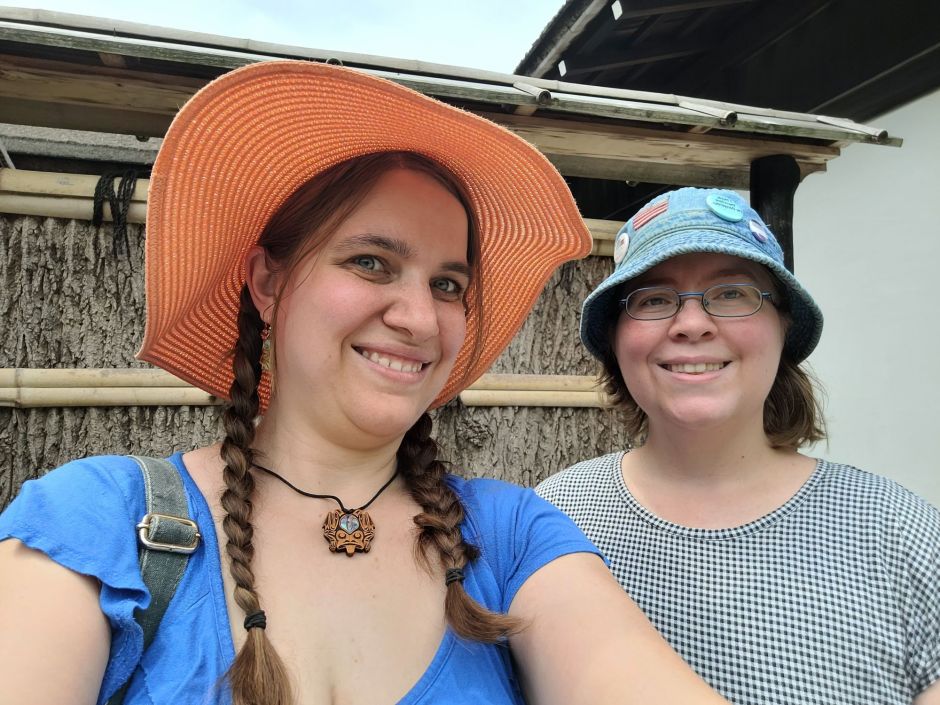
“There is no trouble so great or grave that cannot be diminished by a nice cup of tea.”. – Bernard-Paul Heroux.
When I was about five years old, I was obsessed with tea parties. I was first introduced to them through my mother’s own passion. She would take us to the local herb shop and the tea shop nearby to purchase quality tea and scones. At home, the water would be boiled and poured into a china pot, a timer set for the proper amount of time for brewing and then carefully poured out into the cups. It was during this time that she imparted to me the rules of tea, how to hold the cup, what order the tea should be poured out to each guest, the polite amount of sugar to add, when to add milk, how to stir it without making a ruckus. I learned the difference between afternoon tea and high tea (it’s not the same thing), that one eats the savory first then the sweets and exactly how one eats a scone properly (by breaking it apart into small bits).
Over tea, she taught me about Victorian England and the antiques that decorated our house. She was quite fond of the late Victorian era, and I developed the same fondness. As part of my education, she bought me a tea book for my birthday. I was elated (yes, I was a strange child, I grew up to be a strange adult and I’m okay with this fact). I flipped through the pages and discovered an entirely new sort of tea, the Japanese Tea Ceremony. The book did not go into it overly much but it did allude to the sorts of things one might encounter, the special Macha tea, the whisk and the sweet that they might serve. In combination with my discovery of the Karate Kid, my love of Japanese culture was solidified and later reinforced with my introduction into anime (which I won’t get into here, other than Princess Mononoke was a definitive experience of my childhood).
Ever since my discovery of the Japanese Tea Ceremony and all things Japan, I had wanted to experience it for myself. I got the chance in the summer of 2021, when I took the hour drive out to Shofuso Japanese Cultural Center. The house was designed by Junzo Yoshimura as a 17th century style home. It was built in Japan in 1953 utilizing traditional techniques and then shipped to New York as part of the Museum of Modern art. It found its home, however, in West Fairmount Park in 1958 where it has graced the greater Philadelphia area ever since nestled in a beautiful Japanese Garden. It includes a pond garden with a waterfall, island, koi fish, traditional tea house and bathhouse.
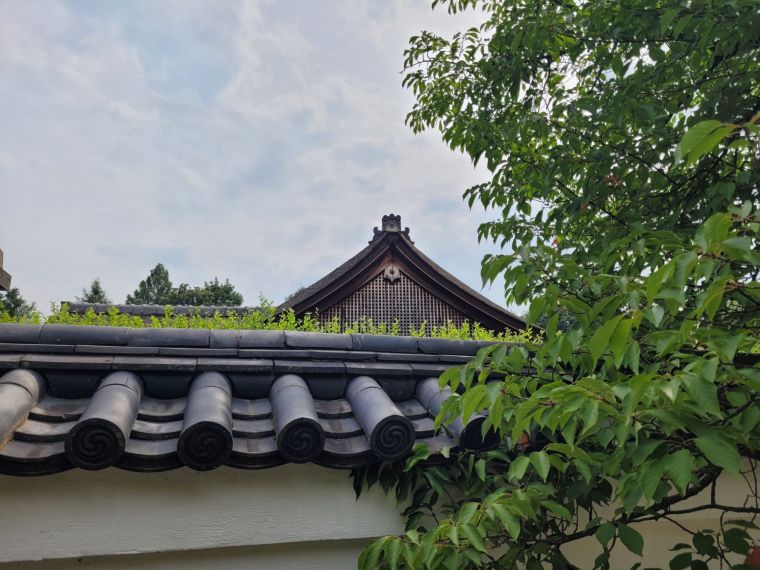
Walking through its gates, one could easily forget that one has not in fact hopped on a plane to the middle of Japan. Every corner of the building is a beautiful work of art, carefully tended and maintained. What delighted me was the dedication to keeping the building authentically Japanese. Unlike in America when something like a floorboard has some sort of damage or rot, the Japanese do not uproot the whole floorboard and replace it. Instead they cut around the damaged section and then fill it in like a puzzle piece. There was a sort of beauty in keeping the story of time rather than a focus on perfection. Flaws were a natural outgrowth of a house in use and there was a sort of artistry in the repair.
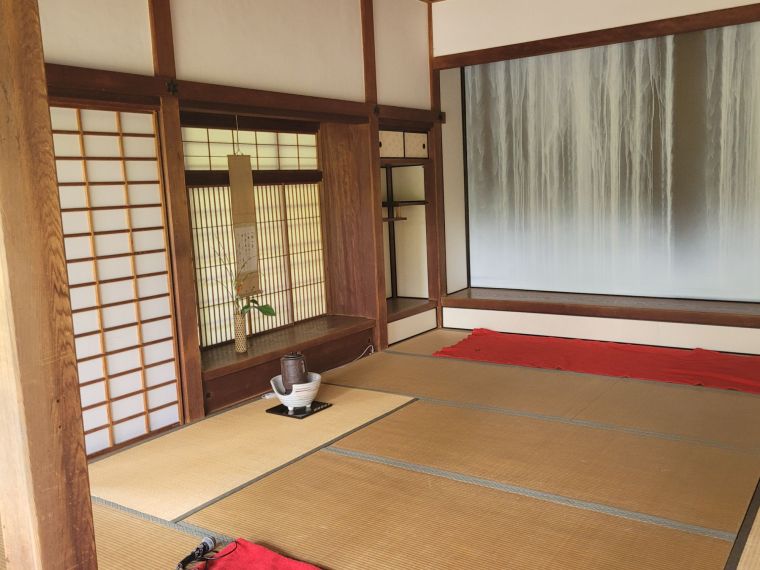
Men and women in kimonos graciously answered questions about the house and pointed out its secrets. They informed us that the murals of the house were donated by an artist in 2007 and were inspired by the waterfalls. They told us about the hinoki bark root (the only one outside of Japan) and how it took 1.4 million dollars to repair it back in 1999. They were excellent hosts whose presence engendered a sort of respectful quiet in the guests. It is not that we did not speak, only more in hushed whispers as to not disturb the peaceful atmosphere. It is a house that invites calm reflection and relaxation rather than exuberant outbursts.
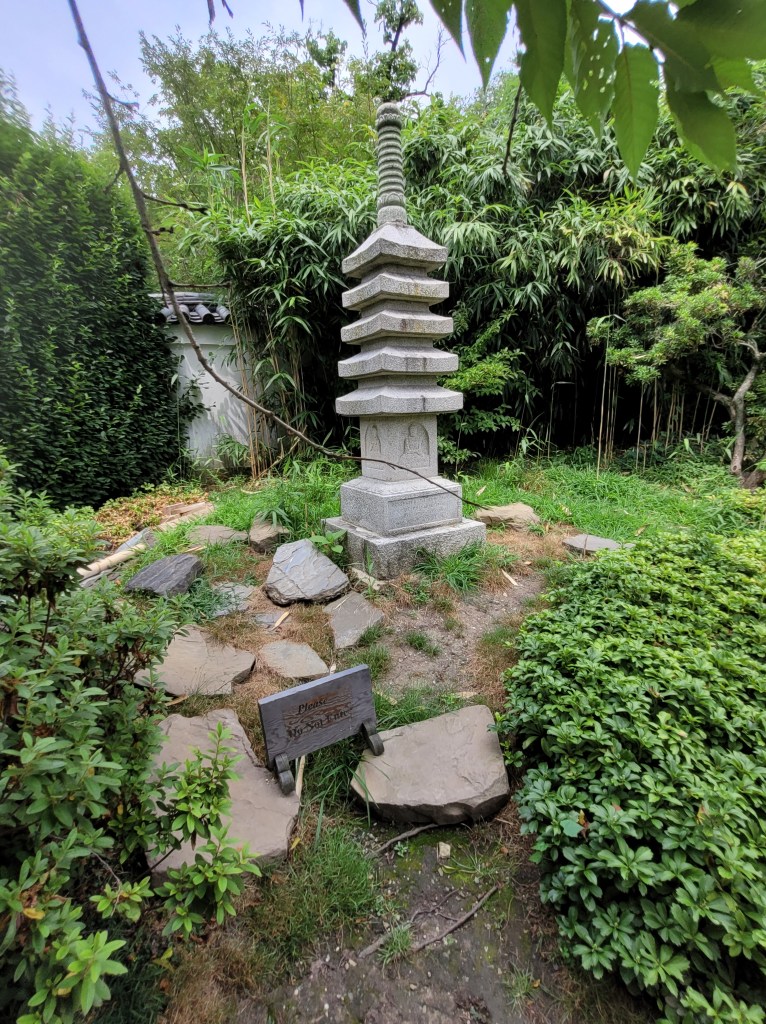
In the heat of the summer, my sister and I explored the small garden which encircles the house. We took a moment to pause by the Buddha statue, littered with small offerings and tucked away among the bamboo. We sat in quiet reflection watching the lazy circles of the koi fish which were only interrupted when a tourist decided to feed them. The noise of the nearby city melted away and one could almost believe that we had stepped through a portal to the other side of the world.
Soon we were invited to sit for tea. A woman dressed in a beautiful kimono came out to prepare the tea for us. While she began to prepare the tea. The male host graciously explained the “ceremony” as not a ceremony but more a set of expectations of manners that one should adhere to when invited to a formal tea in Japan. I suppose in truth, it was no more a “ceremony” than a proper English tea though perhaps the rules were a bit more structured to give the illusion of ceremony or ritual. One could make arguments either way – but he was speaking as a Japanese person and he indicated that it wasn’t a ceremony persay, so I am going to believe him as the expert in his own culture.
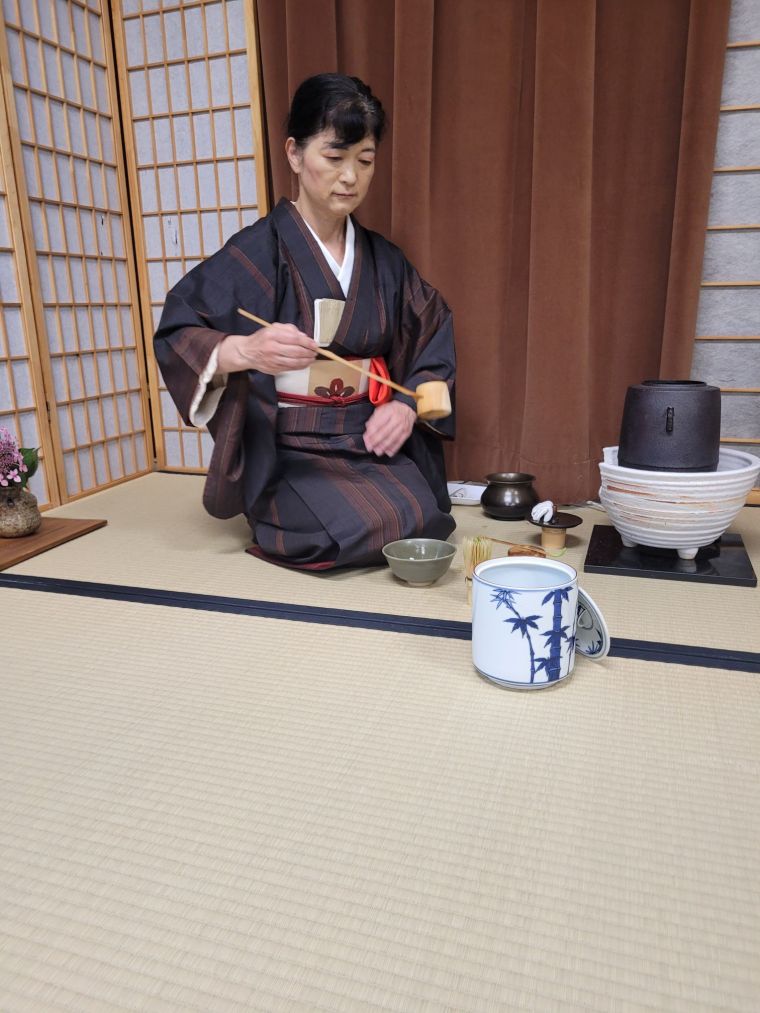
We were instructed that we would be expected to admire the carefully chosen decorations such as the scroll. He explained the symbolism of the arrangement of the flower. As the woman began to prepare the tea he explained the different instruments and tools that she was using the small white cloth, the bamboo whisk, the scoop, tea powder and the metal pot to heat the water.
First, the hostess brings in all the tools necessary for the tea preparation and then begins cleansing the utensils. Then she carefully places in the powder and hot water into the cup and whisks it expertly into a perfectly foamed tea. The cups of tea were passed around to the various guests and our male host continued his lesson.
We were instructed in how to pick up our cups, turn it the proper 90 degrees and to take slow sips. He explained that we would be expected to admire the craftsmanship of the cups and to express appreciation for everything the host had done for us.
The tea made from the matcha powder had almost a soft, velvety texture in my mouth. It was a bit more potent than a typical green tea, but lacked the harsh bitterness that the black teas can have. Despite the heat of the day the hot tea was refreshing. I enjoyed the texture of the cup in my hand and took in the smell of the tea.
We were also given a sweet to enjoy along with the tea. I felt quite terrible as the host had gone through great trouble to prepare the sweets and it had a jello like substance to it. Unfortunately, I have a sensory issue with jello as it makes me gag. I graciously accepted it and forced it down as I did not wish to offend her by refusing. However, I may still have offended her with my face. It did taste delicious, it was the texture of the jello that made it difficult to swallow.
Despite my potential faux-pas, it was a delightful time and dream come true and the following year, I was surprised to find myself once again at a Japanese Tea Ceremony. This time armed with previous knowledge and in a more intimate though less peaceful setting.
Each year, there is an annual tea festival in my state. As previously stated, I am a bit obsessed with tea. Together my sister, myself and my mom journeyed to a small town only an hour and a half away from home to a cozy tea shop tucked away along the main street. Behind the unassuming little tea house is a beautiful hidden garden which is where the highlights of the festival take place. Unfortunately for us, the day was quite wet, necessitating for much of the festival to be moved to the inside of a nearby church. This meant that the church basement was crowded, loud and somewhat uncomfortable.
So it may surprise you to hear that within the noise and the crowd, I stumbled across an oasis of peace and zen, a small tea ceremony. A woman sat on the stage, her small tea house set up and invited you to sit. My sister and I eagerly took our seats in anticipation having so thoroughly enjoyed our last tea ceremony and my mother followed close behind. With a small polite bow and a tiny smile tugging on the woman’s lips, the ceremony began. Do not ask me what magic spell the woman wove, I only know that under her expert care, the crowd disappeared from my mind. For a small window of time, we were transported out of the world and into a quiet pocket of serenity. We took our time sipping the tea and making conversation. As expected, my sister and I expressed admiration for the cups and remarked on her beautiful display. We enjoyed the sweet treat offered (thankfully nothing gelatin, so I did not have to repeat my unfortunate behavior of last time!) We complimented her and thanked her for her time and consideration both verbally and with a small donation to help support the tea house in Philadelphia. All too soon, we found ourselves back in the crowded basement, but I shall always remember the spell that such skill can weave. That is after all part of the point of the tea ceremony, to approach the act of drinking tea with a mindfulness; to transform the mundane into an extraordinary art that allows the participants to enter into a calm space. Tea, dear reader, really can be magic.
How can you participate in a tea ceremony?
If you live within a reasonable distance to Philadelphia, then you can buy tickets to the Shofu Teahouse and for an additional cost, participate in their tea ceremony. You can also check out the PA Tea Festival as the teahouse typically sends a representative to perform small ceremonies for the guests of the festival.
If not, then google is as always, your friend. See if there are any Japanese cultural clubs or organizations in your area. They may offer classes or demonstrations to the public.
A word of caution, do not join a cultural organization only to check off something off your list; someone else’s culture is not your personal playground. As with any cross-cultural experience it should be done with genuine curiosity and humility. The tea ceremonies I attended were extended by invitation to the general public. I did my best to participate with respect and to be a student of their culture.
 Budget Bliss: Bucket List