
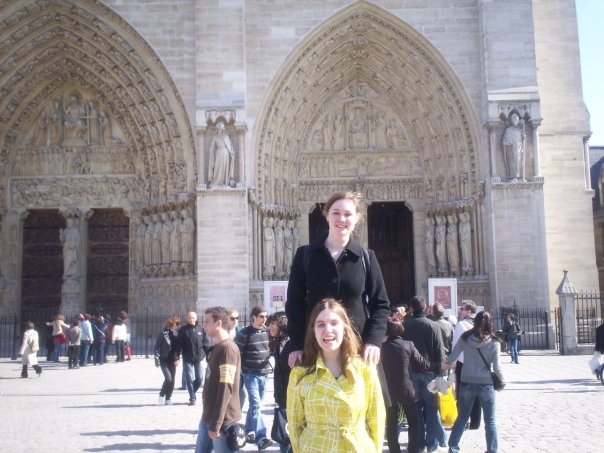
“How do you feel about a weekend in Paris?”
I twirled in my chair, hair whipping across my face, and fixed my friend Erika with a look that needed no elaboration. Her response was immediate. A squeal. A clap. An emphatic, “Yes.”
After all, what else does one say to Paris in the spring?
Such spontaneity, dear reader, is only possible when you are determined to drink deeply from the cup of life while living abroad. For an American especially, there is something intoxicating about the ability to hop on a train and cross into another country before lunch. When you come from a place where a single state can rival the size of an entire nation, the idea feels almost illicit, perhaps even scandalous.
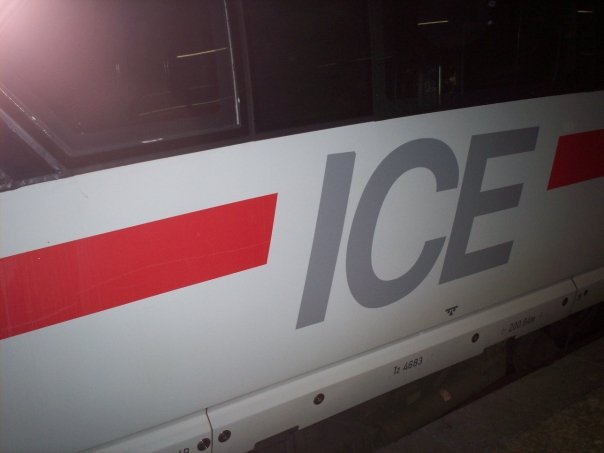
So without further ado, we secured tickets on the high-speed train from Frankfurt to Paris. Arm in arm, we walked toward the station, already breathless with plans: art, museums, music, culture, food, people. And what a people!
A sudden unplanned Paris in a weekend?
Madness. An affliction surely.
Which is precisely why we had to do it.
The true catalyst was a message from a dear friend who would be spending a week in the city and wondered if I might join him for a day. An afternoon in Paris with a friend who happened to be an artist of some renown? The answer could only be yes. After all, who could be the more perfect tour guide?
This was before smartphones lived in our pockets. Before we had google at our fingertips and the assuredness that comes with having all the answers tucked away. We packed lightly, wrote down the number of the American embassy, ensured we had our emergency contacts into our bags, and armed ourselves with a travel guide and a healthy dose of gumption. Travel then required nerve. Trust. If you got lost, you figured it out. If you mispronounced something, you survived the embarrassment. There was no digital rescue waiting in your palm. Which is honestly, what I miss most about travel these days.
The train hurled us across the countryside, fields bursting with early spring color flashing past the windows. I could not help comparing it to Pennsylvania. Lancaster County, in particular, bears a resemblance to parts of Germany, and for the first time I understood, in a small but tangible way, why so many Germans had settled there. Hiemweh melted away leaving a strange sense of coming home even across an ocean.
Three hours is long enough to plan a city and short enough to realize you cannot conquer it. We trimmed our ambitions to a few must-sees and a handful of hopefuls. The Louvre alone could swallow a week. Paris, we decided, would not be conquered. It would simply be experienced.
Crossing the border was almost anticlimactic. An announcement crackled overhead. That was all. No passport stamp. No interrogation. It felt like slipping into Ohio, except the anticipation hummed in your bones. No offense to Ohio of course, but really are we going to say it compares to France?
And then we arrived.
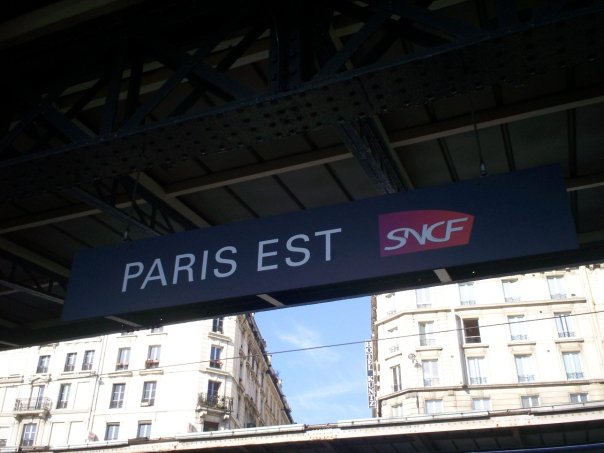
First Things First: Find the Bed
Before romance, before art, before croissants on café terraces, there is one universal truth of travel; You must find where you are sleeping.
Armed with a folded map and confidence wildly disproportionate to our navigational skill, we set off to locate our hostel.
Now, in our defense, the streets of Paris are confusing.
Unlike the tidy grid systems Americans grow up with, Paris feels as though it was designed by someone who enjoyed curves, diagonals, and the occasional act of mischief. Streets fork unexpectedly. They change names without warning. A road that appears straight on a map somehow bends in real life. And the street signs? They are affixed to the sides of buildings, charming blue plaques that would be immensely helpful if they were not routinely obscured by graffiti, peeling posters, or layers of mysterious paper advertising concerts long since passed. It was an exercise in hopeless confusion and frustration.
More than once we stood directly beneath a sign, craning our necks and squinting upward, trying to determine whether we were on Rue de Something Important or merely staring at a band flyer partially concealing our destiny.
And then there was the metro.
For the uninitiated American traveler, the Paris metro is not transportation. It is an initiation ritual.
Lines spiderweb across the city in a dizzying tangle of colors and numbers. Trains are labeled by their final destination rather than the direction you believe you are traveling, which requires you to know far more geography than you actually do. Stops are announced quickly, sometimes swallowed by the metallic roar of the car, and the maps inside the train might as well have been abstract art for all the clarity they offered at first glance. Especially, if one has never traversed public transit before. Which alas, many Americans have never been on anything more than a school bus.
You descend into the underground with confidence. You emerge twenty minutes later into a vast plaza with six exits, each pointing toward a different arrondissement, blinking in the daylight thinking, This seems right.
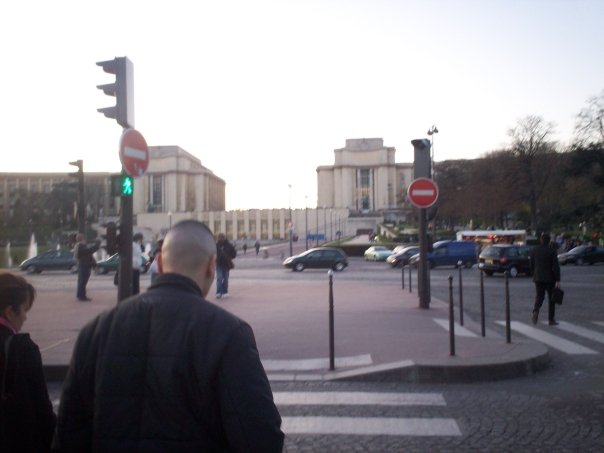
It is rarely right.
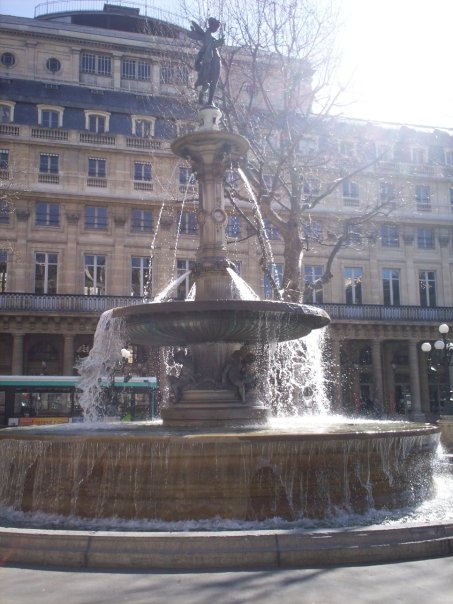
One exit leads you in the exact opposite direction. Another deposits you onto a boulevard you did not know existed. A third leaves you staring at a fountain that looks vaguely familiar but is, in fact, not the fountain you were seeking.
Given these small obstacles, I consider it nothing short of miraculous that after a few wrong turns and some enthusiastic but misguided pointing, we found our hostel at all.
Little did we know, this was only the beginning of our navigational adventures and given the amount of confusion the metro caused, we determined that the best way to get anywhere was by foot. Yes, you read that correctly. I walked Paris in a weekend. I estimated that I traversed at least 15 miles. Though as this was before the popularity of step counters, I only have my best estimates.
The hostel itself was functional in the most generous sense of the word.
If you have never experienced a European student hostel, allow me to clarify something, it is not glamorous by any stretch of the imagination. It is economical. And it is very much a young person’s sport.
The shower required physical encouragement. You had to press the button, and water would flow for approximately twelve optimistic seconds before shutting off again. Want to rinse shampoo from your hair? You had to keep pressing it like you were negotiating terms. The “hot” water hovered somewhere between hopeful and politely lukewarm.
Breakfast was included, which sounded promising until we discovered that “included” meant toast, jelly, and coffee. For Americans raised on sprawling hotel buffets complete with eggs, waffles, fruit, yogurt, and pastries, this was a humbling cultural exchange. There was no omelet station. No waffle iron. There was toast.
And you were grateful for it.
We adapted quickly. A stop at a neighborhood grocery store provided bread, cheese, and sliced meat. It was the perfect strategy: sustain ourselves during the day, conserve our funds, and reserve our modest budget for dinners out in the evening. For two college students, it was a masterclass in practical travel. Frugal by day. Indulgent by night.
The hostel was never meant to be the highlight. It was the launchpad. A place to drop our bags. A place to sleep. A place from which to begin.
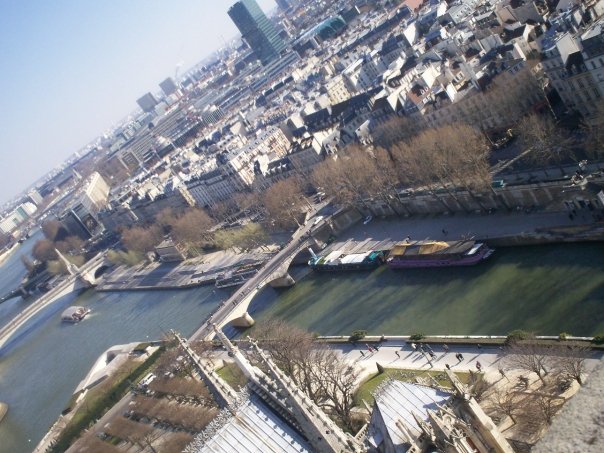
And begin we did.
What followed was a blur of museums and miscalculations, attempted French and accidental detours. We wandered into neighborhoods we had only read about. We misread maps. At one point, quite unintentionally, we discovered that we had strayed into the red-light district. There is nothing quite like realizing you are lost in a foreign city and that the neon lighting is… intentional.
But that, dear reader, deserves its own telling.
Because Paris was not merely art and architecture. It was a lesson in courage. In frugality. In friendship. In the quiet bravery required to step into the unknown without guarantees and trust that you will find your way.
This is what I mean by a reverse bucket list. Not the grand achievements we hope to accomplish someday when everything is perfect, but the moments we dared to say yes to when they appeared. The train we boarded. The map we unfolded. The hostel we made work. The city we entered anyway.
A fulfilling life is not built by waiting until conditions are ideal.
It is built by saying yes before you feel entirely ready.
In the next post, we will step fully into the city itself. The beauty. The bewilderment. The glorious inconvenience of getting lost in Paris.
And why, sometimes, that is exactly the point.
 Budget Bliss: Bucket List