
How to Find Wonder Again: Practicing Everyday Awe in Darker Months

December is always the darkest month. The Winter Solstice arrives with the longest night of the year, quietly marking the slow ascent back toward the light of spring. It is both an ending and a beginning. A hinge in the calendar. A pause between what has been and what might be.

It is also a time of renewal. We reflect on the year behind us, tallying lessons learned and losses survived, and we look ahead with cautious hope. Yet for all that symbolism, December still represents another three to four months before winter fully loosens its grip. The cold does not politely retreat once the holidays end. The bitter reach of Arctic winds lingers, stretching farther south than usual this year, brushing even warmer regions with frost and ice.

With the sun reduced to a pale visitor and the cold driving us indoors, many people feel the familiar post-holiday letdown. The lights come down. The tinsel disappears. The steady drumbeat of gatherings and celebrations fades into silence. Roads turn ugly with soot and slush. Gardens lie flattened and forgotten. Trees stand stripped bare, their branches like exposed bones against the sky. Everything feels gray, muted, suspended.

Time stretches out ahead of us, long and uncertain, offering only the occasional tease of warmth on a rare day that creeps near fifty degrees. It can feel like winter has sucked the life out of the world. And sometimes, out of us too.

All this to say, winter can really drain a person.

And yet, over the years, I have learned something important. Winter is not devoid of wonder. We are simply out of practice at seeing it.

Photo by Dave Haas on Pexels.com

Why Wonder Feels Harder in Winter

Wonder thrives on contrast, novelty, and movement. Spring explodes with color. Summer buzzes with life. Autumn dazzles us with fire and gold. Winter, by comparison, feels like subtraction. Color drains away. Sound is muffled. Life retreats underground or inward. Our modern world does not help. We are conditioned to associate wonder with spectacle, with big moments and bright displays especially at Christmas time. When those disappear, we assume wonder has gone with them. 

But winter does not offer pageantry in the same way. It offers something quieter. Subtler. More restrained. Like a dancer who understands that all she needs is a stage and her movements to create beauty, rather than an entire set and multiple costume changes. 

As we are often exhausted by the time winter truly sets in, we are not exactly primed to go looking for subtlety. December often follows a marathon of busyness. Social obligations. Emotional labor. Financial strain. The pressure to show up smiling and generous even when you are running on fumes. By the time January arrives, many of us are not ready to be curious. We are ready to be done.

So when the world slows down, we interpret it as emptiness instead of invitation to rest, reflect and truly see what is all around us.

Photo by Darius Krause on Pexels.com

The Magic Hidden in Plain Sight

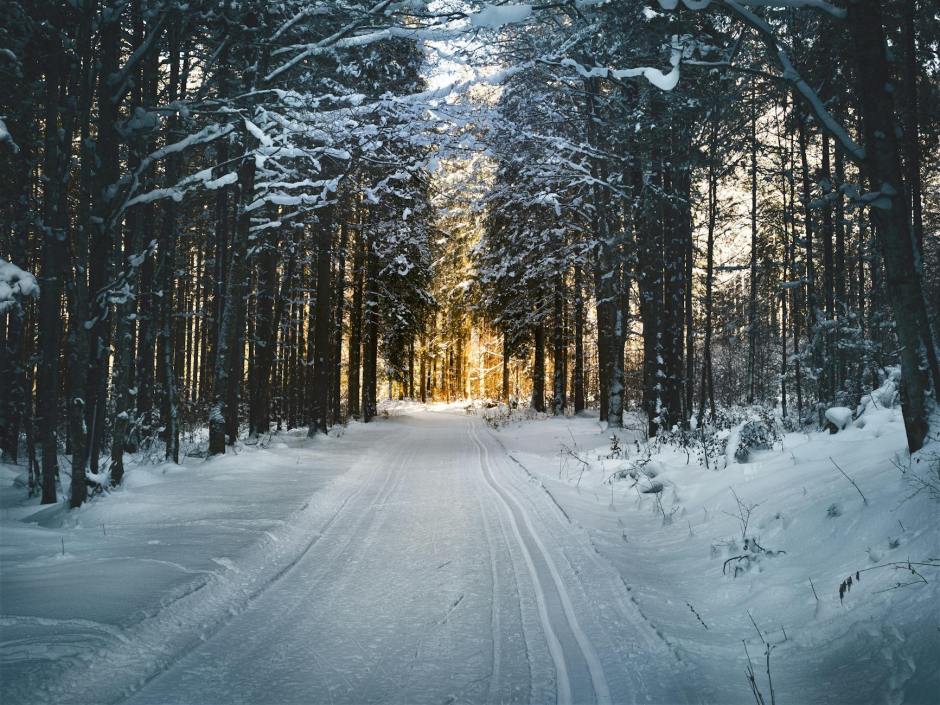
Yes, driving in snow can be maddening. The clenched jaw. The white knuckles on the steering wheel. The muttered curses when traffic crawls and visibility drops. And yet, there are moments when the frustration cracks open into something else. Sunlight hits freshly fallen snow and suddenly everything sparkles. The world looks newly made. Ordinary streets turn luminous. Even the most familiar landscape feels briefly enchanted.

A winter forest carries its own kind of beauty. Bare trees reveal shapes and patterns hidden all summer long. Branches lace together like sketches against the sky. Fog drapes itself through trunks and hollows, softening edges and swallowing sound. There is a stillness there that feels almost sacred. There is nothing quite like a walk in the forest alone in the winter. For that brief time it feels as if you have been swallowed up into another world long forgotten. 

Winter wonder often arrives unannounced and unadorned. It does not shout for attention. It waits for you to notice.

Learning to Look Differently

Finding wonder in darker months requires a shift in how we look at the world. Not faster. Slower. Not broader. Narrower. It asks us to trade spectacle for attention.

This is not a season that rewards multitasking. It rewards presence, something many of us struggle with these days. Winter is asking us to be grounded, to notice the smaller things. It’s the warm cup of tea in your hands. Watching the steam curling upwards as you gaze out at footprints in freshly fallen snow an echo of life passing through. These are not dramatic moments. They are small, fleeting, and easily overlooked.

Winter teaches us that awe does not always arrive dressed in grandeur. Sometimes it arrives disguised as ordinary.
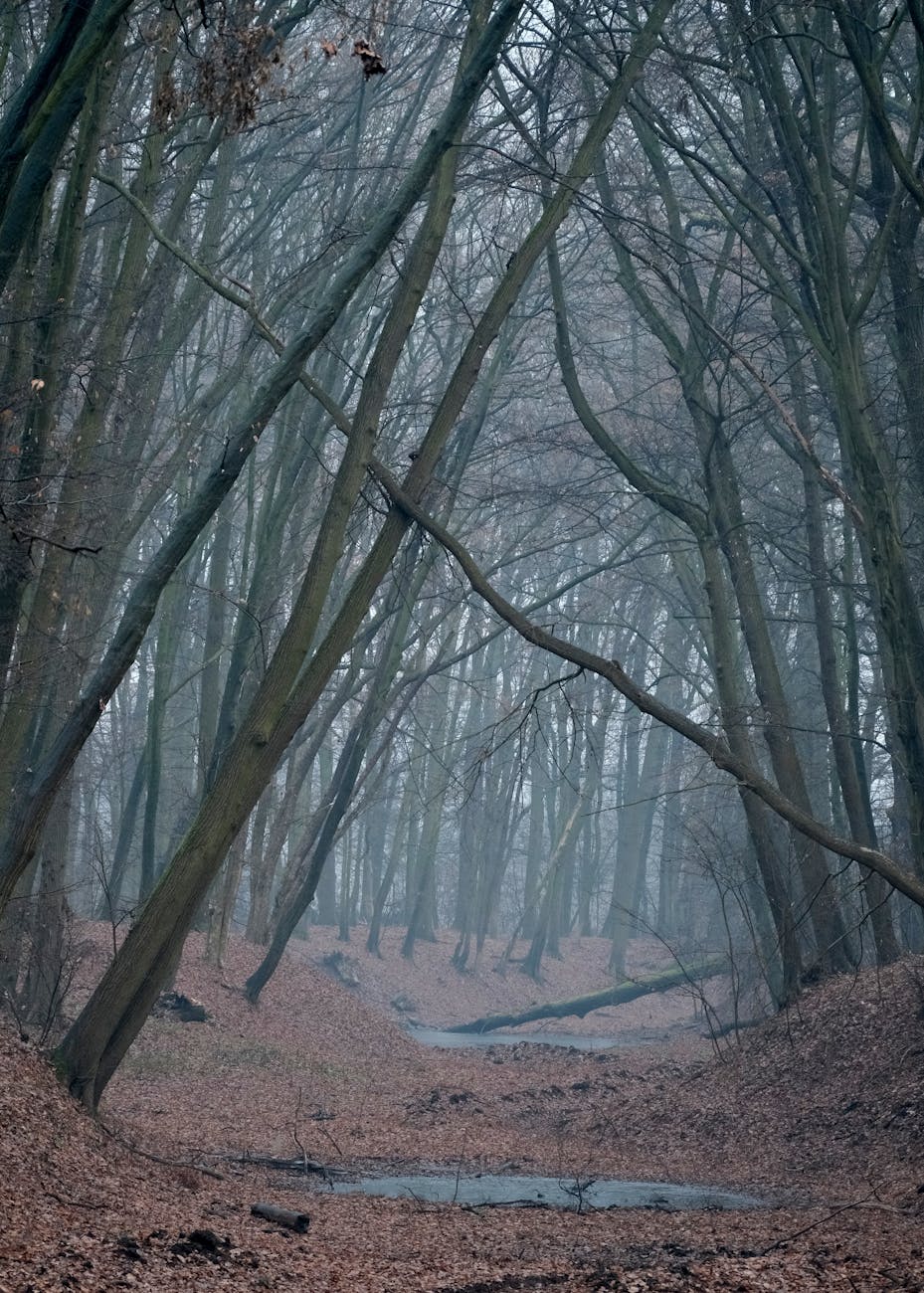
Photo by Roman Biernacki on Pexels.com

Practicing Everyday Awe

Awe is often framed as something rare. Something reserved for mountaintops and once-in-a-lifetime experiences. But everyday awe is built through habit, not circumstance.

Start small. Choose one moment each day to truly notice. The quality of the light. The texture of cold air in your lungs. The sound of wind moving through bare branches. Write it down if you can. Not to be poetic. Just to be honest.

Create rituals that slow you down. An evening walk at dusk. A morning routine that does not involve a screen. Lighting a candle not for ambiance but for intention. These small acts train your attention. They remind your nervous system that the world is still capable of holding beauty, even now.

Stillness as a Teacher

After a month of constant motion, winter almost demands that we become still. Nature itself seems to insist on it. Fields lie fallow. Animals hibernate. Growth pauses beneath frozen ground. Nothing is rushed, but rather everything seems to be waiting. 

We resist this at first. Stillness can feel uncomfortable. Without constant distraction, we are left alone with our thoughts, a dangerous proposition for many.  We are faced with questions we have postponed and emotions we have not fully processed. But stillness is not emptiness. 

Winter invites us to stop long enough to hear what has been whispering beneath the noise all year. It asks us to listen not to the loud and boisterous, but to the quiet and the waiting. To the parts of ourselves that are not yet ready to bloom but are still very much alive. Perhaps, they are parts that we have not heard in years. We may find that whatever those parts have to offer are far better ideas to pursue than whatever resolution we came up with when we were caught up in the dazzle of celebrations. 

Photo by Teona Swift on Pexels.com

Carrying Wonder Forward

Winter wonder is fragile. It thrives in moments of pause and disappears when rushed. But once you learn how to find it here, you can find it anywhere.

The practice of noticing does not end when spring returns. It deepens. The quiet skills winter teaches us carry forward into brighter seasons. Attention. Patience. Reverence for small things.

Winter is not an obstacle to wonder. It is a different teacher of it.

And perhaps that is the greatest gift of the darker months. They remind us that beauty does not only exist in bloom and abundance. Sometimes it exists in rest. In waiting. In the soft whispers of what has not yet awakened.

If you listen closely enough, winter is not empty at all. It is full of quiet promises.
Butterfly Garden 

Is there any other insect quite as magical as a butterfly? They have fascinated humans for centuries. The word psyche which is another word for the soul is derived from the Greek root for butterfly or night moth. They show up in myths and folklore throughout the world. They represent love, transformation, resurrection, triumph, endurance, immortality and ephemerality across various cultures and times. We are endlessly enthralled by them. They show up in art, literature, poetry and even political campaigns. For such small creatures, they take up a lot of space in the human world. They are vital pollinators and essential to our ecosystems. 

For all their beauty, they begin as a sort of worm-like creature which actually dissolves itself inside its chrysalis to transform. It is not that a caterpillar grows wings, it becomes complete mush to become something else. Much like how a wildfire clears out old growth to make way for new, the complete and utter destruction of the caterpillar is the only way to transform into a butterfly. 

Butterflies flitting through the air

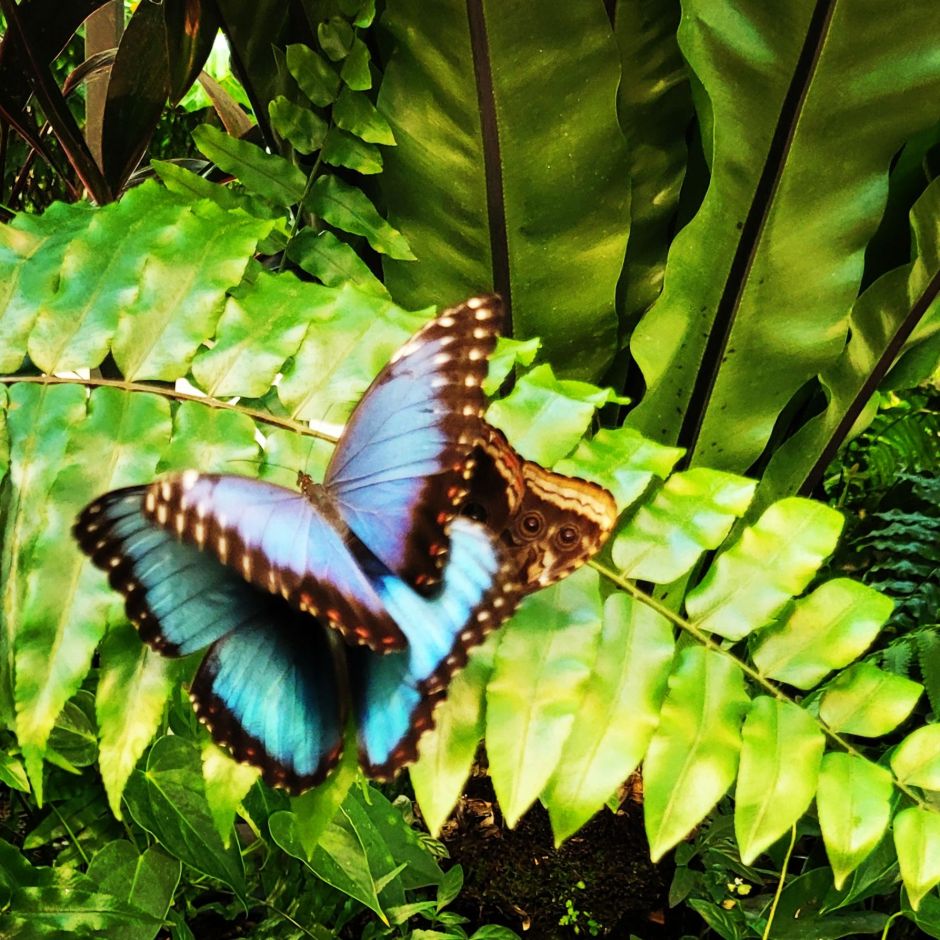
They are in some sense living jewels. Their brilliant hues run the full gambit of the rainbow and even contain colors we will never see as their wings also contain patterns of ultraviolet light. Their wings are unique in that the simmering colors we see are produced by both pigments on the wings themselves and structural color. Structural color is produced by how the light hits the wings themselves causing the color to seem to shift and change suddenly, giving the wings the characteristic iridescence. The wavelengths of light are amplified through layers of the butterfly’s wings. 

Entering the Butterfly Atrium at the Hershey Gardens is to be transported to a tropical paradise where hundreds of butterflies take flight. Visitors are delighted by rare species from South and Central America, Asia and Africa. One strolls through the winding path among the plants imported from far off places to be enchanted by the dancing jewels shimmering in the air. They are enticed to come closer with trays of hanging fruit which they gather around as a never ending feast. Sometimes they will even land on you. The delight at seeing them float effortlessly through the air is unmatched. They swarm together elegantly in a mesmerizing waltz. It is as if you had fallen through a portal to a magical realm and you half expect to be greeted by a member of the fair folk. Perhaps, one should pack a pinch of salt just to be safe when visiting such places and be mindful not to share your name with strangers. 

Different types of chrysalis

The garden is not only for mere enjoyment, there is an educational piece as well where one can see the life cycle of the butterfly and see the various stages of their lives. Additionally, it houses other displays of animals such as frogs and spiders. Do not worry, the only creature that roams free is the butterfly!

My own visit was an extension of an employee appreciation day by a previous employer. I suppose it was an apt gift to a group of social workers who needed an afternoon of self-care. We all left feeling rejuvenated from the experience. Each person’s face transformed the moment they walked through to the butterflies. The outside world melted away, stress and worries disappeared for just a small window of time. It certainly begs the question, dear reader, though the butterfly be a common creature, is it not truly magical?

These beautiful ladies that I worked with!

How you can visit a butterfly garden

This one may require you to venture a bit further afield depending on where you are. At the time of this writing, Hershey Butterfly Atrium is one of only 25 indoor butterfly gardens in the country but there are other options for watching butterflies take flight. In my research, I stumbled upon a website that listed out various options here: https://butterflywebsite.com/GARDENS/butterfly-gardens-exhibits-displays-houses-usa.cfm 

Completed: 2022

Miles from home: 30 miles

Cost: Free for me, but regular tickets are $16.50

I left a shortened compiling of the list below in case the website link no longer works. You will note that only 35 of our 50 states have either butterfly gardens or displays. I do hope that those who are in states not listed below are able to find something nearby. I recommend googling and seeing if there is anything closer, or perhaps you are lucky to be in a state where the butterfly migrations occur. Perhaps, it will simply be something to keep in mind when you do travel.

You too may be graced by a butterfly

Alabama

Huntsville Botanical Garden – Purdy Butterfly House

Arizona

Butterfly Wonderland

Tucson Botanical Gardens

California

Gilroy Gardens Family Theme Park

Natural History Museum of Los Angeles County – Butterfly Pavilion

San Diego Zoo Safari Park

Six Flags Discovery Kingdom

Turtle Bay Exploration Park

Butterfly Farms

Fairchild Tropical Botanic Garden

Water Conservation Garden

Colorado

Butterfly Pavilion

Western Colorado Botanical Gardens

Delaware

Ashland Nature Center Butterfly House

District of Columbia

Smithsonian Butterfly Garden

Florida

Arnold’s Butterfly Haven

Butterfly World

Caribbean Gardens, the Zoo in Naples

Central Florida Zoo and Botanical Gardens

Florida Museum of Natural History – Butterfly Rainforest

Lukas Butterfly Encounter

Panhandle Butterfly House

The Key West Butterfly and Nature Conservatory

Georgia

Rosalynn Carter Butterfly Trail in Plains

The Day Butterfly Center

Hawaii

Foster Botanical Garden Butterfly Habitat

Illinois

Brookfield Zoo – Chicago Zoological Society

Peck Farm Butterfly House

Peggy Notebaert Nature Museum

Indiana

Indianapolis Zoo

Iowa

Reiman Gardens

Kansas

Botanica Gardens

Kansas State University Gardens

Kentucky

Louisville Zoo

Louisiana

Audubon Nature Institute Insectarium & Butterfly Garden

Maryland

Brookside Gardens Conservatory

Ladew Gardens

Massachusetts

Magic Wings Butterfly Conservatory and Gardens

Museum of Science Butterfly Garden

The Butterfly Place

Michigan

Detroit Zoological Society

Dow Gardens

Frederik Meijer Gardens & Sculpture Park

Horticultural Gardens and Butterfly House

John Ball Zoological Garden

Mackinac Island Butterfly House

Wings of Mackinac Butterfly Conservatory

Minnesota

Como Park Zoo & Conservatory

Missouri

Saint Louis Zoo

Sophia M. Sachs Butterfly House

The Butterfly Palace & Rainforest Adventure

Nebraska

Lincoln Children’s Zoo – Laura’s Butterfly Pavilion

Omaha’s Henry Doorly Zoo

New Jersey

Camden Childrens Garden

Kate Gorrie Memorial Butterfly House

New York

Breck Chapin Memorial Native Species Butterfly House

Butterfly Garden

Dancing Wings Butterfly Garden

Sweetbriar Nature Center Butterfly House

North Carolina

Airlie Gardens

Museum of Life and Science – Magic Wings Butterfly House

Ohio

Butterfly House at Wheeler Farms

Butterfly Museum at Perry’s Cave

Cleveland Botanical Garden

Cox Arboretum MetroPark

Franklin Park Conservatory and Botanical Garden

.Krohn Conservatory

Oklahoma

Oklahoma City Zoo Butterfly Garden

Tulsa Zoo’s Wings of Wonder

Honor Heights Park Butterfly House and Gardens

Oregon

Elkton Community Education Center

Pennsylvania

Churchville Nature Center

Philadelphia Zoo

Phipps Conservatory and Botanical Gardens

The Academy of Natural Sciences of Drexel University

The Butterfly Atrium at Hershey Gardens

Bear Mountain Butterfly Sanctuary

South Carolina

Coastal Discovery Museum Butterfly House

Cypress Gardens

Roper Mountain Science Center Butterfly Garden

South Dakota

Sertoma Butterfly House & Marine Cove

Tennessee

Butterflies: In Living Color at the Memphis Zoo

Tennessee Aquarium

Texas

Cockrell Butterfly Center

Heard Museum and wildlife sanctuary

NABA National Butterfly Center

River Bend Nature Center

San Antonio Zoo

Texas Discovery Gardens

South Texas Botanical Gardens

Virginia

Bristow Butterfly Garden

Butterfly Station and Garden

Flying Flowers at Beagle Ridge

Lewis Ginter Botanical Garden

Washington

Tropical Butterfly House at Pacific Science Center

Woodland Park Zoo

Wisconsin

Beaver Creek Reserve

Butterfly Gardens of Wisconsin

Happy Tonics, Inc.