
Mid-January Musings: Embracing the Pause

It’s the middle of January. The year stretches ahead, vast and unknown, while the busyness of the holidays has already slipped behind. Resolutions that felt urgent on January 1 may have already slipped through your fingers. PTO is carefully rationed for future trips. Unless you’re a federal employee, the next holiday is a small consolation at best. Life feels paused, caught in the gray space between what has ended and what has yet to begin. There is nothing to mark the calendar, nothing urgent to do, and maybe you’re not even sure what you’re waiting for.

For many, this stretch can feel unsettling — a restlessness like an itch you can’t quite scratch. It’s a space that’s heavy with anticipation yet empty of drama. It could drive even the most patient person slightly mad if we try to resist it.

And yet, I’ve learned that this “long middle” is fertile if we allow it to be. You see, dear reader, I approach my year much as I approach my day: with contemplation and reflection. Of course, the day does not begin quietly. I am awakened by two yowling, demanding, furry tyrants named Gemini and Orion, who treat my legs like an obstacle course and my face like a morning bell. I weave around them, careful not to trip, while they make it abundantly clear that food is a matter of life and death. Only once their bowls are full and their attention momentarily diverted do I grab my journal. One might ask why I don’t start journaling first — but only someone who has never had a cat would pose such a question. Thinking, let alone writing, with feline insurrection in full swing is impossible.

Once fed, my little darlings curl up beside me, their purrs vibrating softly against the quiet room, a small price to pay for peace. In that early window, my mind hovers delicately between sleep and wakefulness, with the last traces of dreams still clinging like morning fog. I often surprise myself with what emerges on the page — fleeting worries, lingering hopes, tiny insights I might never notice in the rush of the day. For fifteen minutes, I am fully present with my own thoughts, listening as the day slowly unfolds around me. The gentle hum of a cat’s contentment is the perfect backdrop for reflection, a reminder that even chaos can give way to stillness if we wait for it patiently.

This early-morning clarity feels like a metaphor for January itself. The holidays are over, spring is far off, and yet there is a quiet, powerful energy in the pause. The month stretches before us, unspectacular on the surface, but full of potential for reflection, insight, and subtle preparation. Like my journaling practice, mid-January asks us to slow down, to notice, and to tune into what is quietly emerging.


Learning to Live Well in the Liminal Space

So how do we inhabit this “long middle” without feeling restless or lost? The answer is not in rushing or in forcing productivity. It is in embracing the small windows of presence, in tuning in instead of turning away. Some practices I have found particularly grounding:

  • Early-morning reflection: Like my journaling habit, these quiet moments give you access to thoughts and feelings that are often buried under daily noise. Your subconscious speaks differently when the world is still.
  • Observation: Take notice of subtle details around you — the shifting patterns of light through bare trees, the smell of frost in the air, the warmth of a cat curled at your feet.
  • Gentle intentions: Instead of big, sweeping resolutions, consider small focus points for the day or week. What do you want to notice? How do you want to feel?
  • Micro-reflections: Write down one fleeting thought, one small win, or one subtle insight each day. Over time, these quiet observations add up into something meaningful.

January, like those first fifteen minutes of the day, is an invitation to listen. To yourself. To your environment. To the stillness that so often goes unnoticed during busier seasons.


Restlessness as Opportunity

That itch of January is not a problem. It is a signal, a nudge toward attention, reflection, and subtle growth. It can be uncomfortable, yes, but it is alive, and alive is what matters. By leaning into this restlessness, rather than avoiding it, you cultivate patience and clarity. You discover small insights that can set the tone for your weeks and months ahead.

Think of it like seeds beneath frozen soil. The ground seems still, colorless, empty. And yet beneath the surface, quiet processes are unfolding, preparing for bloom. So it is with mid-January. What appears as waiting or monotony is, in fact, preparation. The quiet work of thought, reflection, and noticing lays the foundation for meaningful action in the months ahead.


The Gift of Mid-January

January is not empty. It is full, not with spectacle or noise, but with subtle, meaningful opportunities. The long middle teaches us to slow down, pay attention, and care for ourselves in ways the busyness of December rarely allows.

Much like my morning journaling ritual, this month invites us to stop, listen, and notice. To honor the stillness and let it guide us. To embrace small rituals, quiet reflection, and gentle intentions.

So rather than rushing to fill the days, linger. Observe. Journal. Walk. Notice. And trust that this quiet, understated month is shaping you in ways that will ripple through your year. Even in the gray, even in the waiting, there is quiet wonder.
Living Your Best Life

We often hear or even say the phrase “living my best life”, but what does it actually mean? Is it being able to reach your goals? To live a full life? What is a full life? In general when we use say look at this person living their best life, we usually see someone who has fully embraced being themselves without caring what others think. But how do we even know that they really are living their best life? What does a “best life” even entail? It probably does and should look different for different people. What makes my life “best” isn’t what will make your life “best”. There are, of course, guiding principles. After all, this whole blog is in part to help people live better lives. For most people a best life is one that comes from connection to others and a sense of meaning or purpose without worrying too much about the judgment of people. 

There are a myriad of ways to arrive at those two things. I have seen lists of anywhere from 6 items to 30 items of how to arrive at a “best life” or to live a fuller one. Some of these lists even conflict with each other like focusing on yourself and your own personal growth yet being “other” centered. If you grew up in the Christian community you may have been told that JOY comes by putting Jesus first, others second and yourself last. All well and good, until you stop caring for yourself at all and forgetting that you can’t help other people if you haven’t been taking care of yourself first. On the other hand, always putting yourself first is obviously narcissistic and self-ish, certainly not the way to form meaningful connections to others. How to reconcile the two conflicting sides? 

This post isn’t necessarily to tell you how to arrive at those two things, more to get you to try and think about what might help you get there. As illustrated above, there are people for whom the advice of putting yourself first is absolutely necessary! I talk about boundaries and self-care in other posts precisely because putting my own needs last was something I struggled with leading to burn out, resentment and bitterness. Not things that helped my relationships. 

However, there are certainly many people who need to be told to put others at the center and to focus on getting out of their own world and be more mindful about how their actions affect others. The character of Ebenezer Scrooge in Charles Dickens’ A Christmas Carol certainly needed that lesson lest he find himself cast into hell for his self-centeredness. All things in moderation I suppose. 

Photo by Andrea Piacquadio on Pexels.com

For some people living their best life may be learning to let go of stress and worries, for other people it may be that they need to worry about the future a little more. You may need to learn to stop caring so much about what others think or you may want to consider others opinions a little more. The path to a “best life” is one that is always evolving and changing. Each person is an individual and what their best life looks like is going to be different. 

One of the best ways to achieve a best life is through self-reflection. 

After all, how do we know what we need to learn and how do we know when we’re being ourselves if we don’t take time to self-reflect? One way to really get to know ourselves is to “talk to ourselves”, not in the crazy person sort of way, but through journaling. I often find myself surprised by some of the things that come out of my own journaling where I let the flow of the subconscious go where it will. I may look for various prompts to consider to help jump start my self-exploration. There are also journals out there geared to specific topics or goals. For journaling to be truly effective requires us to be really honest with ourselves willing to face possibly ugly truths. 

Journaling can also help us explore our relationships to help us determine if we are truly connected to others. In learning more about ourselves, would we be able to share these insights with those closest to us? Do we have people who we can truly express ourselves and be vulnerable with? True connection to others means that you can be authentically yourself. After all, some of the loneliest people on the planet are those who are extremely popular. Why? Because in pursuing being liked by everyone, they are too afraid to show their real selves lest they be rejected. The hard truth is that you won’t be everyone’s cup of tea, but you have a choice to make, be your authentic self to have real connection with others or disguise yourself and be alone.  

This can be extremely difficult because it requires us to live without fear of the judgment of others, which is the main reason so many of us choose to live inauthentic lives and to settle for relationships that are shallow. However, this is a key piece of living our best lives. As I said at the beginning of this post, when we say “look at this person living their best life” it’s often said as a form of respect for someone who clearly doesn’t give a “f” what others think. They’re the people walking down the street dressed outrageously. The people dancing in the street to a musician. The ones who call you darling as they don a hat before splashing in a fountain. They laugh too loud, love too deeply, hear poetry in the rain and see works of art in the swirling of leaves in the wind. They may also be the ones who aren’t afraid to piss people off with how they view the world, unafraid to speak up and speak out. However they live, they are authentically and unapologetically themselves. 

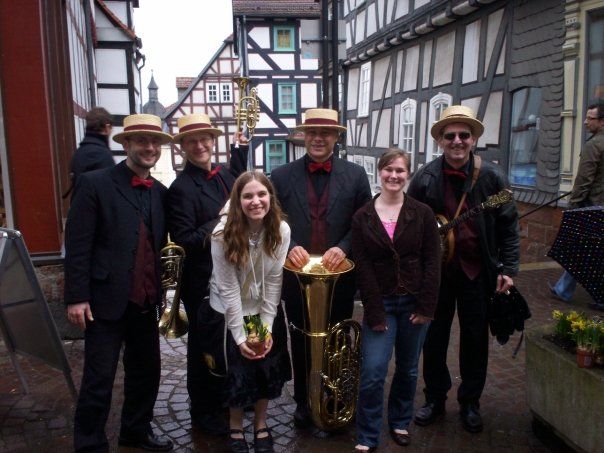
I danced for these street musicians as if no one was watching!

Living authentically isn’t being a jerk about it though. These are people who don’t care if they tick people off but they don’t purposefully go out of their way to do so. It isn’t about being mean. It’s about respectfully disagreeing and holding themselves apart from the judgment of others. It’s more of a live and let live attitude. Like okay, you don’t like that I live my life this way, but it’s no skin off your nose and I don’t have to listen to your criticisms about it if they aren’t constructive or useful. Someone living their best life knows that bees don’t argue with flies that honey is better than crap.

Another benefit to journaling is it can allow us to consider another aspect to a best life, living with purpose. I’m not here to tell you what a purposeful life is or is not. Each of us has a calling. Each of us has a gift or talent. I can’t tell you what those are because I’m not you. In general, a purposeful life involves leaving the world a better place, and helping others. Some people may have very obvious purposes like teachers, nurses and EMT workers. Teaching the next generation, healing the sick and protecting others are all very obviously meaningful things to do based on the values of our society. 

However, almost any job can be infused with meaning when placed into a larger context of helping others. Nor does your purpose have to be tied to your job. I once interned for a group of businessmen who invested money. They were quite good at it, but rather than simply take all the money for profit, they used it to open an orphanage in Africa. This orphanage did not stop assistance at the age of 18, but rather continued to invest in the children, helping them obtain higher education. The children were able to start businesses in their local community and become leaders thus laying a firm foundation for independence in the region. Their calling was to help disadvantaged children and to grow a community in Africa even though their jobs had almost nothing to do directly with this calling. Your talents and your calling may be seemingly disparate things that nonetheless are yours. 

There are, afterall, lots of ways to leave the world a better place.Talents don’t have to be utilized in a specific way. Your job doesn’t have to exactly match your calling. It’s certainly easy when the two directly align, but sometimes they may seem completely disconnected. You also don’t have to have your calling address every ill in the world to leave it a better place. Some people’s calling is to focus on the environment, others may have a calling to help sick children. Both are worthy callings that do not negate the other nor is one automatically better than the other. There are unfortunately a lot of problems in the world and there’s just no way for each of us to address all of them all at once. That isn’t to say don’t do what you can for the problems of the world, do the part you can. Your calling is the thing you focus on. 

The point is for you to determine for yourself what your talents are and how to apply them to your specific calling. I will probably write a more extensive post on a purposeful life, but as I said earlier this post is more to help you start to consider what a best life is and how you might start to consider what your best life looks like. To be honest, I’m still figuring it out. One of the reasons I have a bucket list is to try new things, complete new challenges, to grow, and learn more about myself. 

So what are you waiting for? Go forth, dear reader, and start living your authentic best life!