One thing that I love about my Bucket List is that I’m almost always trying new things. I recently read somewhere that research indicates that when we focus solely on the interests we’re already interested about we can miss out on entirely undiscovered aspects of ourselves. We may limit ourselves artificially without even knowing it. We may love art and never take up a paint brush or admire finely made clothes and never consider sewing.
I never thought I’d enjoy a videogame but I certainly enjoy playing World of Warcraft (I’m a nerd deal with it). I wouldn’t have thought I’d like D’n’D but as it turns out, I do enjoy collaborative storytelling. I’ve discovered I draw the line at larping which was a surprise because I would have thought I’d love dressing up and acting out the story like D’n’D after enjoying D’n’D, going to the Renaissance Faire, acting, etc., but absolutely not for me. My sister is afraid of heights but I have discovered a thrill for them. I’ve learned I like hacking down trees and the physical labor of gardening. I don’t have the patience for a lot of crafts, but I love trying to hone my skills on the violin.
We don’t even need to do them well. We can do something poorly, in fact it’s almost better to do something poorly at first. After all, if we’re good at it then we think that we have a “knack” for it and then when we inevitably come up against a hurtle, we lack the skills we need to overcome. Sometimes just doing something for the sheer thrill of doing it is the best way to learn. When we have fun we aren’t focused so much on doing it perfectly as enjoying ourselves. We’re no longer motivated by outside rewards and people pushing us to do it. We are competing against ourselves, learning our way of doing things and probably becoming better than we would have if it just came easy.
I think it’s good to explore new things that we may have dismissed when we were younger or just missed out on. I remember thinking that learning to ride a horse wasn’t something I could do, but then I spoke with a work colleague who was taking lessons bi-weekly. Another work colleague had joined a small college’s orchestra after taking up the violin again post-high school which in part inspired me to take up the instrument once again. It’s caused me to re-evaluate what I can do as an adult and that maybe I didn’t actually miss out on opportunities or that I could return to things that I did as a child. As it turned out the only person keeping the doors shut to possibilities was me.
I’ve also been pushed to try things I wouldn’t have previously thought to try like Eco-dying, water tubing, and zip-lining. I find myself saying “sure why not” when presented with new adventures and raising my hand to volunteer at public events because “why not”? It was that attitude that pushed me to rent a car in Britain. Before, I’m not sure that I would have had the confidence to drive on the opposite side of the road because I’m dyslexic and ADHD with poor spatial awareness and their roads are tiny. Now granted I didn’t just hop in a car and drive out of London. I knew I was going to be jet lagged, without sleep for over 24 hours (I don’t sleep in planes I have insomnia, it’s a whole thing) and so even driving under normal circumstances would not be advisable let alone in another country, on the opposite side of the road. However, I was undaunted by the idea in part because I am already in the habit of getting outside my comfort zone.
And this is sort of a life hack. When we push ourselves, we feed our confidence and our feelings of competence. Which you may think, “wait, didn’t she just say that some of the stuff she was bad at? So how does it help her feel competent?” Yes! Here’s the awesome, amazing thing, it didn’t kill me! It didn’t end me and in fact, I embraced being bad at it at first because I’ve learned to enjoy the process of mastering something. It’s about learning and growing your inner self not just checking boxes and doing something for an afternoon before swiftly moving on to the next thing. I feel more competent to try things and look foolish even in front of others. I am conquering anxiety and loving it!
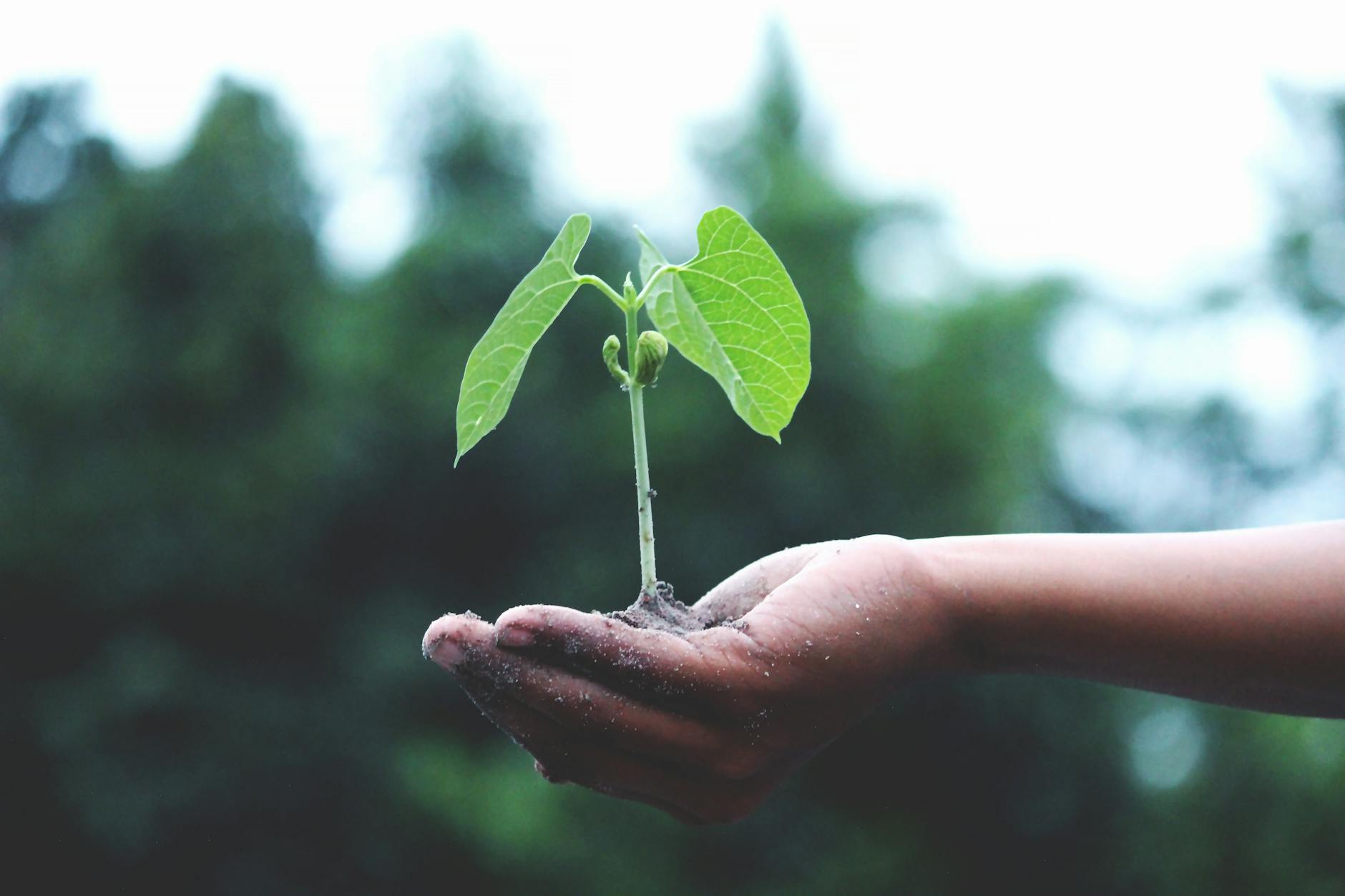
We are wired for growth, not stagnation. We are meant to go, explore and conquer. Too many times we assume that we will stay the same person that we are today until we die, that we’ve already completed our growth. However, that’s not the case and studies show that its the people who don’t stop growing that live longer, healthier, happier lives. So what are you waiting for? Go out and try that new thing!
For well over 5,000 years humans have been dyeing fabrics and advanced with the techniques for spinning and weaving. Plants such as madder, ford and bearberry were particularly prized for their bright colors. Over time, other plants became popular for their colors such as woad, saffron, kermes, mallow, turmeric, walnut and even juniper. The colors that they could produce ranged across the entire spectrum, although none were as vibrant as the synthetic dyes we use today.
Given such a long history, I was surprised to learn that Eco-dyeing was a relatively new invention in the 1990’s by an Australian textile artist India Flint. The act itself is so simplistic and produces such a lovely delicate pattern one would have thought it was one of the earliest methods. Perhaps, it was and there just isn’t enough evidence left for us to discern. It is also possible that there were others before India who were using the method, but they just did not popularize it as she did.
Eco-dyeing is very simple, as it combines two steps of the dyeing process into one. Rather than first boiling the plants to extract the dye and then adding the fabric to the boiling water to dye the fabric one seamless color, the extraction of the pigment and the application to the fabric is the same step. This produces the wonderful patterns of plants on the fabric to create a delicate web of colors and shapes. This process is known as a form of contact dye meaning the dye is transferred from the leaves directly to the fabric.
However, while it is very simple in concept, I still desired to try my hand at it under the tutelage of an expert. Additionally, the class doubled as a birthday gift to my mom as a mother-daughter outing. I signed us up at the PA Guild of Craftsmen which incidentally was celebrating 80 years of preserving the crafts. The guild serves to promote, educate, support and encourage the craftsmen of Pennsylvania. Through their work many artists have discovered their passions, developed their talents and made a living.
On an unusually warm October morning, we headed into the small city of Lancaster where the guild was located. As it was still fairly early the streets were still quiet which made finding parking in the garage a breeze. We took an easy stroll about a block to the location taking a note of the local eateries and shops for when the class had its break. There were instructions of how to enter the building before the Guild’s Shop opened which were easy to see and follow. Once we entered, there were lots of people who were helpful in pointing us up the stairs and down through the first room back to our classroom where we met Carol Reed, our wonderful and knowledgeable instructor.
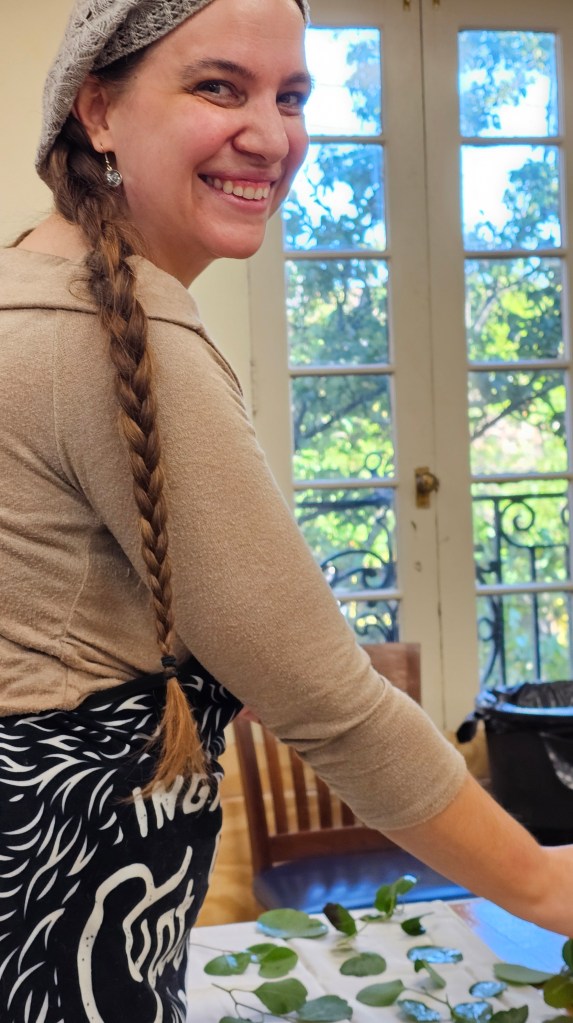
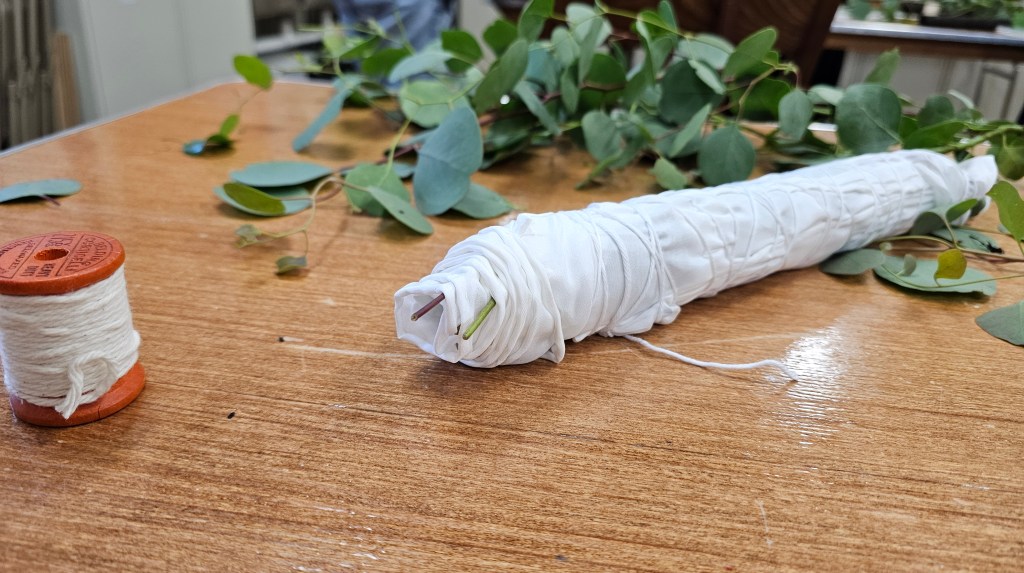
Carol explained a short history of eco-dyeing and laid out the general flow of the class, first we would lay out the plants, then we would wrap them around the dowel, tie them neatly, plop them in some water, wait about 2 hours and then have the “Great Unveiling”. Carol explained that we would be using Eucalyptus which could produce a color of pinkish-orange akin to salmon, a softer pink, a lighter green or a darker almost purplish green. The color was affected by different things such as the age of the eucalyptus, how long the leaves were left to boil, how tightly the leaves were pressed into the fabric, how hot the water got and how much iron water was in the water. While this is a process that could use just plain water, the iron water helps the dye adhere to the fabric and gives it some added texture and depth.
Utilizing her expertise, she was able to give us instructions to try and get the best results for what we desired. She explained that the outside pieces would be darker so if we wanted the darker section in the middle we should roll our scarves around the dowel in a different way. She told us which parts would transfer well, telling us that the very small, delicate leaves at the end would not transfer. She explained whether the way we were layering the leaves would end up looking lovely or like a weird blotch. She helped guide us as to when we had too many leaves or too few and how far out to go on the edges. She helped us wrap them with string and explained how the string patterns would turn up like small streaks on the outside edge.
I did not try to produce any sort of pattern, preferring to fully embrace the nature of the process as organic and natural. I cut down my long stems, having been advised that the stems would not roll well and then arranged the pieces across the scarf to mimic fallen branches and leaves scattered across the ground. I was careful not to add too many layers to avoid having ugly blotches on my scarf. I paid heed to the adage that less was more, knowing that the scarf would be folded over so the dye would be layered over the scarf. With the help of my mother I carefully wound the fabric tightly around the dowel as Carol had explained that the better the contact, the better the dye would be. I tied the string taut around the bundle securing the whole thing and then made a note of what mine looked like since Carol warned us not to put our bundles in until we could compare to discern whose was whose.
Once everyone had their bundles ready we put them in their designated pots and took a break since we would need to wait close to an hour and a half for the dye to really seep out of the leaves and onto the fabric. We were advised eucalyptus was a particularly hardly leaf which required a longer dyeing time. Carol told us that we could use a myriad of other plants for the same process, but we would find that much less time would be needed. We were also advised that if we did leave more delicate plants in that they would turn to mush and be much more difficult to get off the fabric when the dying process was over. Carol shared that the eucalyptus leaves would just fall off, but other leaves she usually has to carefully remove.
Having previously scouted out the area on our way in, my mom and I made our way just across the street to the Onion Cafe. It was a curious blend of American and Korean food where bowls of Ramen were offered beside burgers and fries. There were one or two “fusion” items mostly consisting of the addition of kimchi to the American options. However, as I was feeling a little
under the weather, I opted for a spicy Ramen, figuring a hot, spicy soup was the perfect panacea for what might be ailing me. My intuition was correct, as the Ramen was perfect and I felt much better afterwards.
We then strolled through the shops. Our favorite was a vintage clothing store,that was sadly going out of business. However, this meant they were running a clearance sale resulting in some steep discounts on our purchases, two hats (one bonus hat pin), a pair of fingerless gloves and a linen top. We then headed back to the guild for the “grand reveal”.
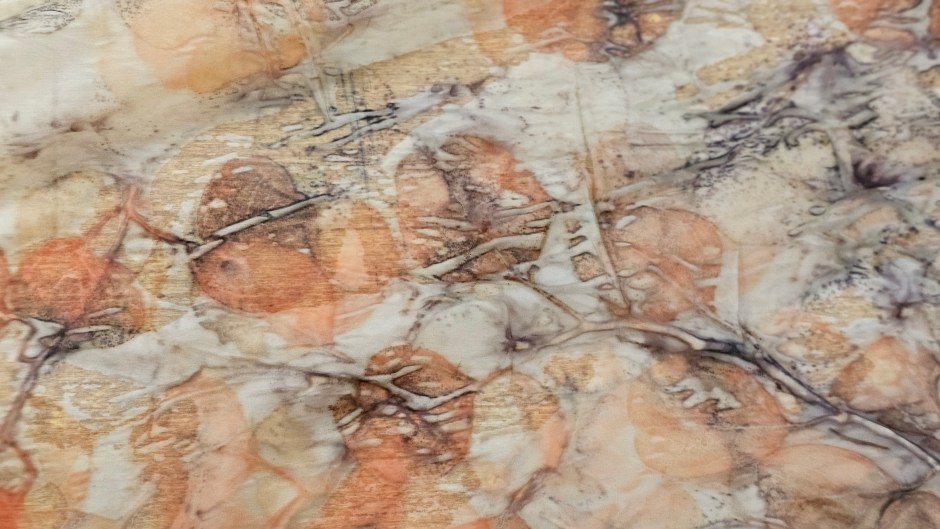
To say that I was delighted by the outcome is an understatement. I absolutely loved how my scarf turned out. Mine had transformed into soft, delicate pinks, mixed with light green hues which gradually turned into darker greens and purples. The leaves scattered across the fabric had left the impression of a field or forest of plants. The rest of the group oo’d and aw’d when they first saw it as mine was the first to be unwrapped. The others went shortly after. Despite having followed the same process, boiling in the same pots, the results ran the gambit of colors and patterns. It was so interesting and even Carol couldn’t quite explain why one person’s turned out to be a vibrant orange and another person’s stayed almost completely green.
We were told to rinse our scarves out until the water ran clear and allow them to cure for a few days before washing or wearing them to allow the color to fully set. We were told that the colors may brighten as it dried. We thanked our instructor, packed up the scarves in small plastic bags and headed home with our prizes.
I think what I really enjoyed about the whole process was how natural it all way from the silk fabric to the dye that only came from the leaves of the plant, to the patterns that were transferred to the fabric to even the simple ingredients of water and iron water (made from rusted nails, water and vinegar).
We are so disconnected from the process of what we wear and often what we wear is synthetic which utilizes process that are harmful to our environment and ultimately ourselves. This was a way to really connect to a tradition that, as I said, goes back thousands of years, even if it’s using a very modern technique. It was simple and elegant leading to beautiful results.
How can you make your own eco-dyed scarf?
You can, like me, find a class nearby which offers a lesson in the technique which not only teaches you the basics but also gives you access to an expert to help guide you in learning the smaller nuances of the craft. I find such experiences worthwhile and helps to enhance any first endeavor into a craft. I also like supporting local artisans, by helping them I continue to have access to specially made objects which enrich my life and my home. My local economy improves and I help preserve this precious piece of human culture for the future.
However, not everyone has access to craftsmen and women. However, these sorts of classes are increasing in popularity as many people are realizing that they’ve lost something by going completely digital. They want to feel physical objects, interact with their environment and embrace life. Plus studies have shown that engaging in activities of creation is good for our mental wellbeing, it reminds us that we aren’t helpless and capable of great things.
Still, you may find, dear reader, that you are unable to locate an instructor for your dyeing needs. Do not despair, as I have told you the principles of the task are quite simple and through some experimentation you are surely to get results you are happy with. I will say that it is recommended not to use the same pot for dyeing as you do for cooking. Luckily cheap pots can be found at a local thrift store. Silk scarves can be found at dharmatrading.com and the eucalyptus can be found at your local flower shop or even some chain grocery stores. Iron water is easily made with some rusty nails, water and vinegar and you’re off! More explicit instructions can of course be found online.
You may find that you truly enjoy the process of making eco-dyed fabrics and a new hobby as been discovered. I will say the temptation to make more is certainly there, but I shalln’t give in to the temptation as I don’t know that I have space in my life right now for another hobby. Mostly my storage spades for the supplies. Perhaps one day, dear reader.



 Budget Bliss: Bucket List