
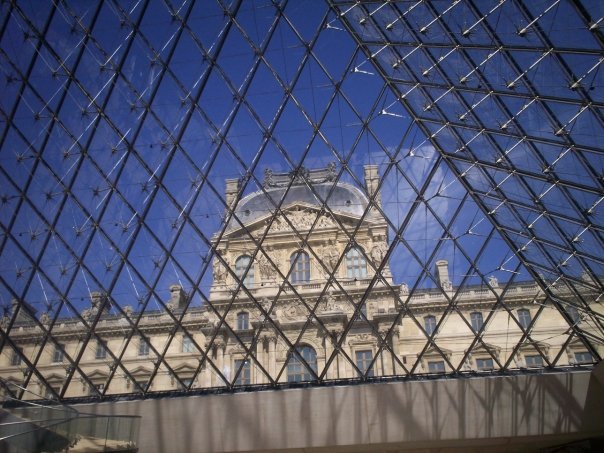
Forgive the brief interlude in my tale of Paris, but as you well know, I always sprinkle tidbits of wisdom between my stories of adventure. After all, I don’t just want you to go off and have fun. I truly hope this is a place where we can grow together and create lives punctuated by adventure rather than longing for it as an escape from daily misery.
Now, we left off, dear reader, with my arrival: tired and exhausted from a sleepless night but pumped full of adrenaline, the equivalent of five or six cups of coffee coursing through my veins.
I had already gotten thoroughly lost on the way to the hostel and had largely given up on public transit as a viable means of navigating the city. Honestly, that’s only a feat a young twenty-something can get away with.
Now, I’m not entirely certain what the rules are for crossing the streets in Paris, but they did not appear to follow the ones I had grown up with. There were multiple occasions when the light was clearly red and people were walking, and others when it was green and everyone simply stopped.
Both my travel partner and I were quite confused by this apparent inconsistency.
It was decidedly not like Germany, where people display an almost obsessive adherence to rules. Even if there isn’t a car in sight, they will dutifully wait at the crosswalk until the light indicates it is time to cross.
However, after one or two close calls with traffic, we simply looked at each other, shrugged, said “when in Rome,” and followed the Parisians for guidance, forgoing the lights entirely since they clearly could not be trusted.
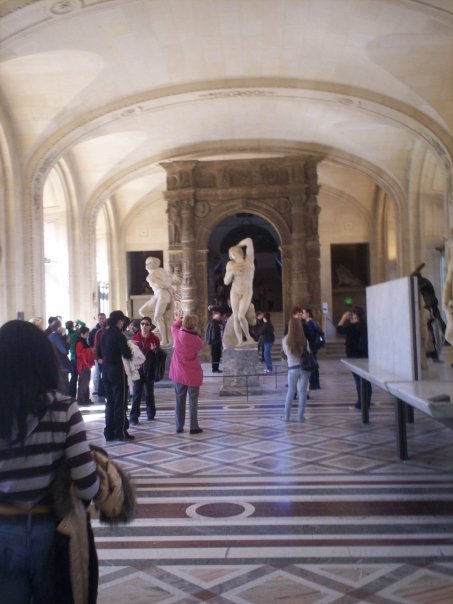
Our first stop was the Louvre, which is a must for any lover of art and history. Not only does it house one of the most famous paintings on earth, it is also the largest and most visited art museum in the world.
Originally built as a fortress and later expanded into a royal palace, the Louvre now spans roughly 2.3 million square feet. Of its approximately 380,000 objects, around 35,000 are on display at any given time.
Considering it would take over three months to see the entire collection, we decided to focus only on the highlights and the pieces that spoke most to us.
There are plenty of guides that will tell you the “must-see” works at the Louvre. But if something doesn’t speak to you, skip it. Focus on the areas of art and history you genuinely enjoy.
I, for one, would recommend skipping the Mona Lisa.
All it really amounts to is a photo opportunity for social media. It’s tiny, placed behind thick glass in a poorly lit room with hundreds of people pushing and shoving for a better look. You’re honestly better off googling a picture for all you’ll actually see.
Any contemplative awe you might have felt is drowned out by the din of the crowd and the smell of raised armpits as phones are hoisted into the air for a better shot.
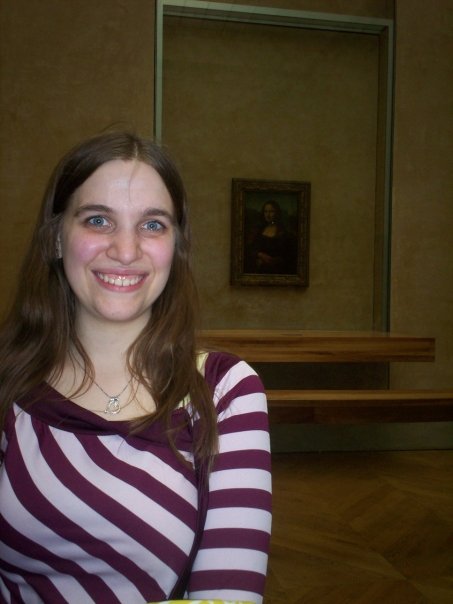
If you aren’t paying attention, your belongings might get nicked, and you could spend the rest of your Paris trip trying to recover stolen credit cards while cursing the day you were introduced to the pernicious lady with her sly smile.
After all, she too was once stolen. Why not cavort with thieves once again?
As I’ve said in other posts, don’t let other people’s opinions dictate what you do or do not do. So if you must see the Mona Lisa, I shall not judge you for it.
Just remember that the Louvre houses centuries of art, offering millennia of history to explore, not just stuffy Italians and pretentious French painters.
Its oldest piece is estimated to be around 9,000 years old and is well worth the trek to see.
Since I was traveling with an archaeology major, we spent most of our time in the Greek and Roman sections, along with some of the French collections.
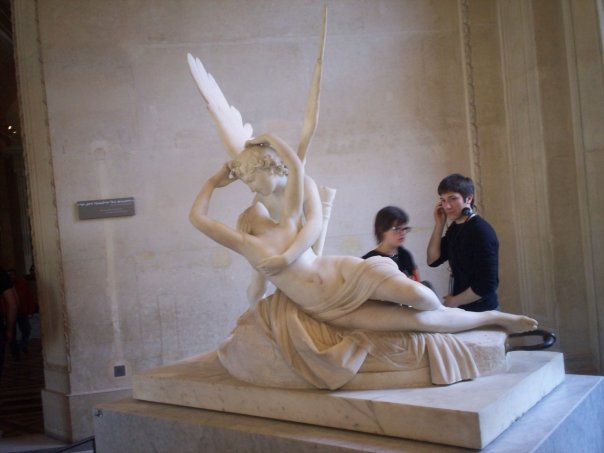
My personal favorite was the sculpture Psyche Revived by Cupid’s Kiss. Not because I have a particular fondness for eighteenth-century French sculpture, but because one of my favorite books is Psyche and Cupid by C. S. Lewis.
Art isn’t always just about what the artist intended, its place in history, or the techniques used. It is also about what it evokes in us.
I would argue that this is what art is most about: what we bring to the moment of encounter.
When I looked at that sculpture, I did not simply see the Greek myth. I saw it retold through a different lens. A revival not just of Psyche, but of myself.
Small tip: book your ticket in advance.
Prior to the pandemic, the best way to get into the Louvre was through one of the side entrances to skip the long lines. However, with its ever-growing popularity, daily visitor numbers are now capped, meaning the only way to guarantee entry is with a pre-booked ticket.
Sorry to all my free-spirited wanderers.
Having conquered a small portion of the Louvre, we ventured forth to the Lady of Paris: the Notre Dame Cathedral.
Walking through Paris instead of taking public transit allows you to experience the city in a completely different way. You breathe it in.
On foot, you notice the small shops and hidden corners that would otherwise blur past from a bus window or subway seat. The scent of coffee lingers in the air as you stroll by cafés, while the temptation of fresh-baked bread drifts from bakeries onto the street.
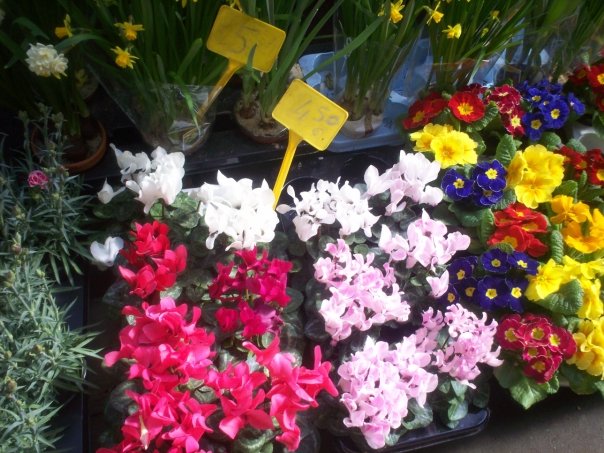
In early spring, the flowers spill across the sidewalks and painters emerge as if the season itself has burst through the concrete, refusing to remain buried beneath winter any longer.
Everywhere is a riot of color and life. Musicians greet you with cheerful melodies, and you cannot help but sway your hips just a bit in time with the music.
It was on our way to Notre Dame that we stumbled upon an artist selling watercolor paintings of the Eiffel Tower, the Arc de Triomphe, Notre Dame, and the Basilica of the Sacred Heart of Montmartre.
For a set of four, it was perhaps forty euros, an absolute steal, and it was there that my habit of buying art as a souvenir was born.
Erika and I split the cost and decided we would determine who received which painting at the end of the trip.
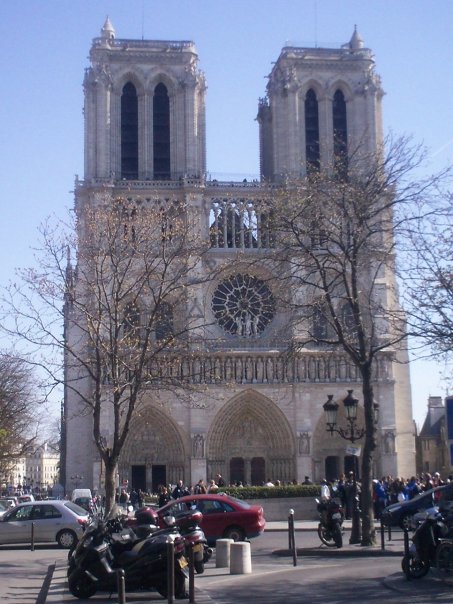
Long before we saw its doors, the twin towers of Notre Dame rose proudly above the surrounding buildings, beckoning us closer.
The cathedral was completed in 1260, though additions were made in the centuries that followed. Like any church nearly eight hundred years old, it has seen its share of glory and hardship: wars, neglect, desecration, and most recently, fire.
Fortunately, we visited before the fire and the subsequent debates over the restoration of its windows.
As a Christian myself, I was fascinated by the displays of Catholic artifacts that told the story of the church’s role in medieval Europe. I saw relics carefully displayed and read about how the church intersected with everyday life in the heart of France.
However, much like the Mona Lisa room, it was not a place of hushed awe but rather a chaotic stream of tourists passing through.
Contemplation was not something I readily found there. (For that, I recommend seeking out some of the lesser-known churches.)
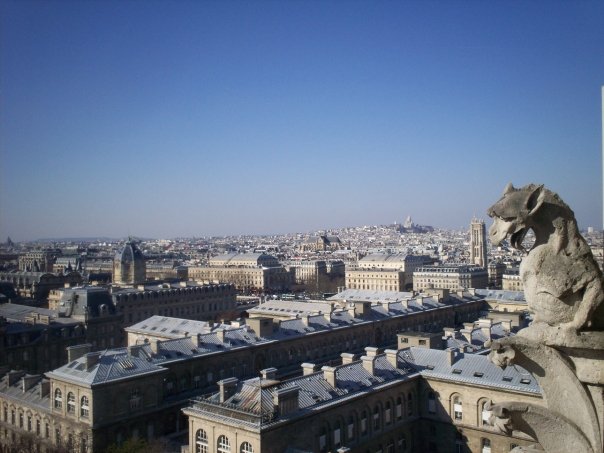
By this point my legs were beginning to feel the day’s journey, but that did not dissuade me from climbing to the top of the cathedral to take in the city below.
From there we saw, glittering in the bright spring sun, the white dome of the Basilique du Sacré-Cœur.
At the time, I must admit my ignorance. I had never heard of the church, and neither had Erika.
She suggested we should visit it.
I squinted across the grid of busy streets at what appeared to be an impossible distance to walk and declared quite confidently that there was absolutely no way I would trek all the way there.
Oh, dear reader, how the universe loves to laugh at the things we believe are beyond us.
For unbeknownst to me, I would indeed walk there.
But that is a story for another day.
And so, in the interest of time, I must pause my tale here.
You will have to return for Part Three.
 Budget Bliss: Bucket List