One thing that I love about my Bucket List is that I’m almost always trying new things. I recently read somewhere that research indicates that when we focus solely on the interests we’re already interested about we can miss out on entirely undiscovered aspects of ourselves. We may limit ourselves artificially without even knowing it. We may love art and never take up a paint brush or admire finely made clothes and never consider sewing.
I never thought I’d enjoy a videogame but I certainly enjoy playing World of Warcraft (I’m a nerd deal with it). I wouldn’t have thought I’d like D’n’D but as it turns out, I do enjoy collaborative storytelling. I’ve discovered I draw the line at larping which was a surprise because I would have thought I’d love dressing up and acting out the story like D’n’D after enjoying D’n’D, going to the Renaissance Faire, acting, etc., but absolutely not for me. My sister is afraid of heights but I have discovered a thrill for them. I’ve learned I like hacking down trees and the physical labor of gardening. I don’t have the patience for a lot of crafts, but I love trying to hone my skills on the violin.
We don’t even need to do them well. We can do something poorly, in fact it’s almost better to do something poorly at first. After all, if we’re good at it then we think that we have a “knack” for it and then when we inevitably come up against a hurtle, we lack the skills we need to overcome. Sometimes just doing something for the sheer thrill of doing it is the best way to learn. When we have fun we aren’t focused so much on doing it perfectly as enjoying ourselves. We’re no longer motivated by outside rewards and people pushing us to do it. We are competing against ourselves, learning our way of doing things and probably becoming better than we would have if it just came easy.
I think it’s good to explore new things that we may have dismissed when we were younger or just missed out on. I remember thinking that learning to ride a horse wasn’t something I could do, but then I spoke with a work colleague who was taking lessons bi-weekly. Another work colleague had joined a small college’s orchestra after taking up the violin again post-high school which in part inspired me to take up the instrument once again. It’s caused me to re-evaluate what I can do as an adult and that maybe I didn’t actually miss out on opportunities or that I could return to things that I did as a child. As it turned out the only person keeping the doors shut to possibilities was me.
I’ve also been pushed to try things I wouldn’t have previously thought to try like Eco-dying, water tubing, and zip-lining. I find myself saying “sure why not” when presented with new adventures and raising my hand to volunteer at public events because “why not”? It was that attitude that pushed me to rent a car in Britain. Before, I’m not sure that I would have had the confidence to drive on the opposite side of the road because I’m dyslexic and ADHD with poor spatial awareness and their roads are tiny. Now granted I didn’t just hop in a car and drive out of London. I knew I was going to be jet lagged, without sleep for over 24 hours (I don’t sleep in planes I have insomnia, it’s a whole thing) and so even driving under normal circumstances would not be advisable let alone in another country, on the opposite side of the road. However, I was undaunted by the idea in part because I am already in the habit of getting outside my comfort zone.
And this is sort of a life hack. When we push ourselves, we feed our confidence and our feelings of competence. Which you may think, “wait, didn’t she just say that some of the stuff she was bad at? So how does it help her feel competent?” Yes! Here’s the awesome, amazing thing, it didn’t kill me! It didn’t end me and in fact, I embraced being bad at it at first because I’ve learned to enjoy the process of mastering something. It’s about learning and growing your inner self not just checking boxes and doing something for an afternoon before swiftly moving on to the next thing. I feel more competent to try things and look foolish even in front of others. I am conquering anxiety and loving it!
We are wired for growth, not stagnation. We are meant to go, explore and conquer. Too many times we assume that we will stay the same person that we are today until we die, that we’ve already completed our growth. However, that’s not the case and studies show that its the people who don’t stop growing that live longer, healthier, happier lives. So what are you waiting for? Go out and try that new thing!
At the end of most of my posts, I will write a little “How You Can” section so that if something I have done peaks your interest, you have a starting point. However, one may very well wonder how I’ve gathered this information in the first place. After all, how did I discover the Wolf Sanctuary or the Firebird Festival or the Wine and Cheese Tasting on the Train? How have I cultivated opportunities for myself to check off my list or to add new things?
Simply put, I have a few go-to places for inspiration that I regularly check and encourage you, dear reader, to do the same. The first is Onlyinyourstate or atlas obscura to discover unique things that are in my area. Now, Onlyinyourstate isn’t exactly the most accurate name, after all there are many states that share common experiences, it would be more aptly named “collection of cool things to see and do in your state” – that is understandably less catchy, but some of us are sticklers for accuracy. The website is semi-easy to navigate. You click on your state and it brings up a long list of various posts of interesting sights to see and things to do. What makes it difficult is many posts are repetitive, and some of the listed items have closed or are no longer available to the public.
Since at this point, they’ve pretty much covered most of the things to do, newer posts just tend to rehash what has already been written about but as new things do get added occasionally, one still has to sift through to find the gems. Atlasobscura is similar in both scope and difficulty of use. There are other websites that are similar, such as PAbucklist.com, but I have yet to find one that organizes itself really well. I review these sites maybe once every 6-12 months. Despite their difficulty in use, I still recommend visiting at least once, especially if you are at the start of your Bucket List journey. They not only can help you discover how to check off your list, but also can open your eyes to new and novel possibilities you’ve never even thought of before.
One of my biggest go-to’s is Facebook Events which I will typically review once to twice a month as it is being continually updated. It’s where I’ve discovered most of my events, festivals and workshops.On almost any given week, I could log on and find something that would interest me for the upcoming weekend and many of the events are relatively cheap or free. It’s become one of the main things I use Facebook for. That’s how I found out about the Christkindlmarkt and Eco-dying. I pay attention to my local newspaper as well checking out announcements from my community which the Facebook algorithm may have missed.
I also keep a running list of the museums, colleges, universities and theaters in the area making sure to check at the beginning of each season. Depending on the venue, most of the time this means the beginning of the year in January or in July. That’s how I discovered the Da Vinci Exhibit at the Reading Museum and the performance of Drum Tao at Millersville University. Even smaller universities and colleges can have amazing events and opportunities. In 2016, my small Christian College hosted a presidential debate for the DNC primaries between Obama and Clinton. I have often been surprised at what a small venue can pull off and because of their smaller size many of their events are more intimate affairs. So don’t write off your own smaller venues just yet, dear reader.
Consider other attractions in your area: aquariums, zoos, community centers and even parks may play host to your dreams. Longs Park in Lancaster City has a summer music series that has brought some serious talent to its small stage for free, opening the opportunity for many to enjoy live concerts and other performances. It was the stage that introduced me to Shakespeare as a child. You will be surprised at the wide variety of opportunities these places offer and often for free or greatly reduced cost.
There is also a simple google search. I will do this for things that may take a little creativity or require me to go a little farther afield than my typical roaming grounds. For example, I read about grape stomping in Italy. It seemed like it would be a fun thing to try. I hadn’t seen it on any previous intel missions to my usual corners of the internet, so I did what any good millennial would do, I went to google to start to see if there were any wineries nearby that would indulge in this ancient tradition. As it turns out there is one in the neighboring state of New Jersey.
Once I discover a place in a reasonable vicinity (typically no more than 2 hours away unless I really want to make a day of it), I will make a note on my list for future reference. I won’t necessarily rush to go do it just that moment, but I will keep the information tucked away until I have need of it or for when the time is right. Perhaps, if I find myself making plans and I will be in the area anyways then I will tack on my item to the trip. I may also make specific plans to complete the item but cross reference my list to see if there are any other items that may be nearby. I am after all all about being efficient with my time and resources.
The final way is that my friends and family know that I am always on the hunt for new and novel things to try, so word of mouth goes a long way. When they see something cool that they know I might like to try, they tell me or even better invite me to join them!
As you can see, dear reader, I am not someone who sits around waiting for good things to come to her. Sometimes the fates need a little nudge. It’s about keeping your eyes and ears open, seeking opportunities and being mindful of what might be around the corner. It doesn’t mean that I can necessarily jump at every opportunity that comes my way or thing that I discover, I have (as of this writing) yet to go indoor skydiving, learn to pole dance, spend time at the alpaca farm, learn a signature dish from a cook or go grape stomping. However, I have pretty good leads on where I might do those things. Which is half the fun! I always have a list of potential adventures I could go on. There’s almost always something new around the corner waiting for me to discover and with only one glaring exception are all within a hour’s drive from my house (most are within 30 minutes). Who needs to dream of escaping your corner of the world to far flung places when it’s so full of excitement?
For well over 5,000 years humans have been dyeing fabrics and advanced with the techniques for spinning and weaving. Plants such as madder, ford and bearberry were particularly prized for their bright colors. Over time, other plants became popular for their colors such as woad, saffron, kermes, mallow, turmeric, walnut and even juniper. The colors that they could produce ranged across the entire spectrum, although none were as vibrant as the synthetic dyes we use today.
Given such a long history, I was surprised to learn that Eco-dyeing was a relatively new invention in the 1990’s by an Australian textile artist India Flint. The act itself is so simplistic and produces such a lovely delicate pattern one would have thought it was one of the earliest methods. Perhaps, it was and there just isn’t enough evidence left for us to discern. It is also possible that there were others before India who were using the method, but they just did not popularize it as she did.
Eco-dyeing is very simple, as it combines two steps of the dyeing process into one. Rather than first boiling the plants to extract the dye and then adding the fabric to the boiling water to dye the fabric one seamless color, the extraction of the pigment and the application to the fabric is the same step. This produces the wonderful patterns of plants on the fabric to create a delicate web of colors and shapes. This process is known as a form of contact dye meaning the dye is transferred from the leaves directly to the fabric.
However, while it is very simple in concept, I still desired to try my hand at it under the tutelage of an expert. Additionally, the class doubled as a birthday gift to my mom as a mother-daughter outing. I signed us up at the PA Guild of Craftsmen which incidentally was celebrating 80 years of preserving the crafts. The guild serves to promote, educate, support and encourage the craftsmen of Pennsylvania. Through their work many artists have discovered their passions, developed their talents and made a living.
On an unusually warm October morning, we headed into the small city of Lancaster where the guild was located. As it was still fairly early the streets were still quiet which made finding parking in the garage a breeze. We took an easy stroll about a block to the location taking a note of the local eateries and shops for when the class had its break. There were instructions of how to enter the building before the Guild’s Shop opened which were easy to see and follow. Once we entered, there were lots of people who were helpful in pointing us up the stairs and down through the first room back to our classroom where we met Carol Reed, our wonderful and knowledgeable instructor.
Carol explained a short history of eco-dyeing and laid out the general flow of the class, first we would lay out the plants, then we would wrap them around the dowel, tie them neatly, plop them in some water, wait about 2 hours and then have the “Great Unveiling”. Carol explained that we would be using Eucalyptus which could produce a color of pinkish-orange akin to salmon, a softer pink, a lighter green or a darker almost purplish green. The color was affected by different things such as the age of the eucalyptus, how long the leaves were left to boil, how tightly the leaves were pressed into the fabric, how hot the water got and how much iron water was in the water. While this is a process that could use just plain water, the iron water helps the dye adhere to the fabric and gives it some added texture and depth.
Utilizing her expertise, she was able to give us instructions to try and get the best results for what we desired. She explained that the outside pieces would be darker so if we wanted the darker section in the middle we should roll our scarves around the dowel in a different way. She told us which parts would transfer well, telling us that the very small, delicate leaves at the end would not transfer. She explained whether the way we were layering the leaves would end up looking lovely or like a weird blotch. She helped guide us as to when we had too many leaves or too few and how far out to go on the edges. She helped us wrap them with string and explained how the string patterns would turn up like small streaks on the outside edge.
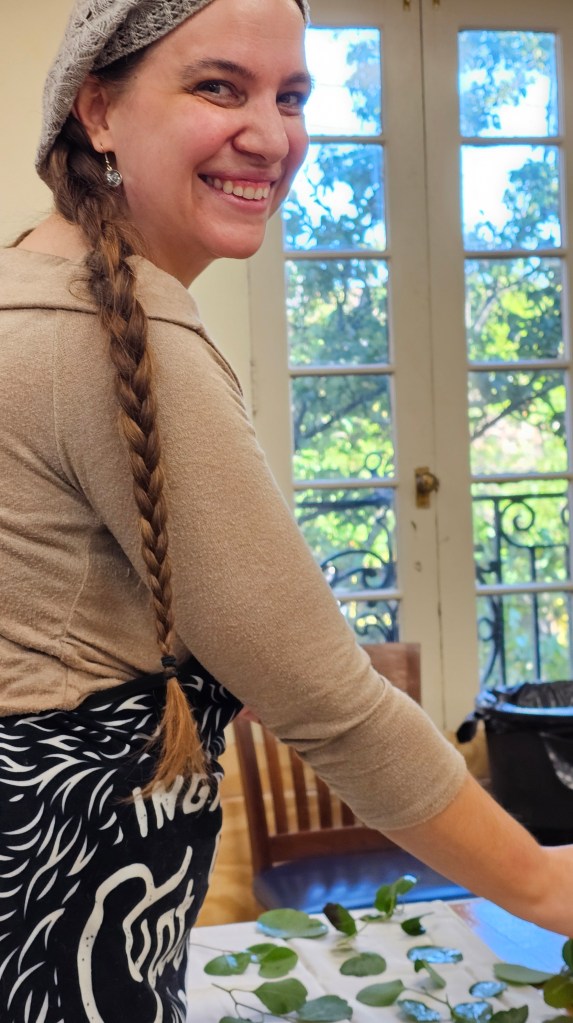
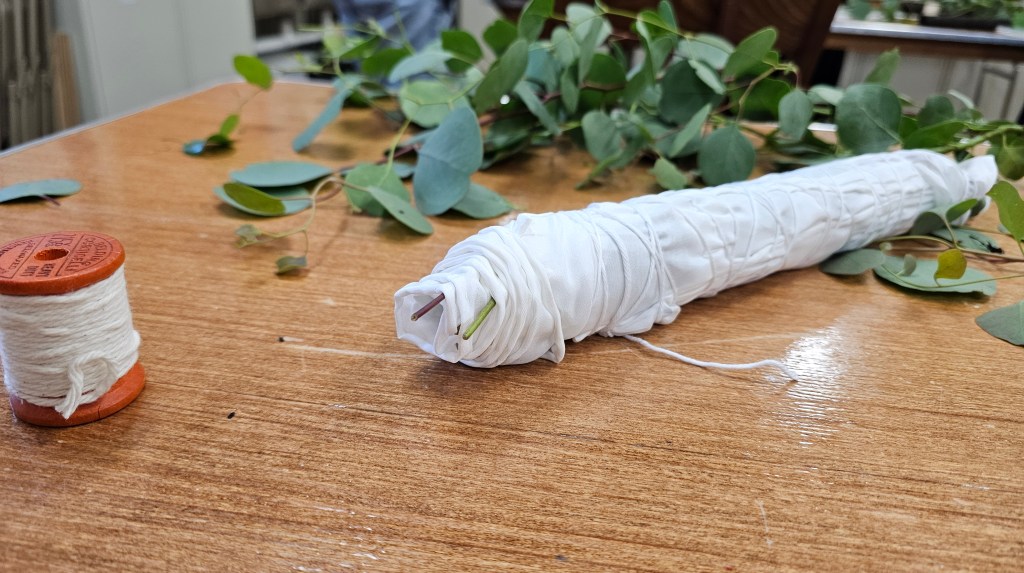
I did not try to produce any sort of pattern, preferring to fully embrace the nature of the process as organic and natural. I cut down my long stems, having been advised that the stems would not roll well and then arranged the pieces across the scarf to mimic fallen branches and leaves scattered across the ground. I was careful not to add too many layers to avoid having ugly blotches on my scarf. I paid heed to the adage that less was more, knowing that the scarf would be folded over so the dye would be layered over the scarf. With the help of my mother I carefully wound the fabric tightly around the dowel as Carol had explained that the better the contact, the better the dye would be. I tied the string taut around the bundle securing the whole thing and then made a note of what mine looked like since Carol warned us not to put our bundles in until we could compare to discern whose was whose.
Once everyone had their bundles ready we put them in their designated pots and took a break since we would need to wait close to an hour and a half for the dye to really seep out of the leaves and onto the fabric. We were advised eucalyptus was a particularly hardly leaf which required a longer dyeing time. Carol told us that we could use a myriad of other plants for the same process, but we would find that much less time would be needed. We were also advised that if we did leave more delicate plants in that they would turn to mush and be much more difficult to get off the fabric when the dying process was over. Carol shared that the eucalyptus leaves would just fall off, but other leaves she usually has to carefully remove.
Having previously scouted out the area on our way in, my mom and I made our way just across the street to the Onion Cafe. It was a curious blend of American and Korean food where bowls of Ramen were offered beside burgers and fries. There were one or two “fusion” items mostly consisting of the addition of kimchi to the American options. However, as I was feeling a little
under the weather, I opted for a spicy Ramen, figuring a hot, spicy soup was the perfect panacea for what might be ailing me. My intuition was correct, as the Ramen was perfect and I felt much better afterwards.
We then strolled through the shops. Our favorite was a vintage clothing store,that was sadly going out of business. However, this meant they were running a clearance sale resulting in some steep discounts on our purchases, two hats (one bonus hat pin), a pair of fingerless gloves and a linen top. We then headed back to the guild for the “grand reveal”.
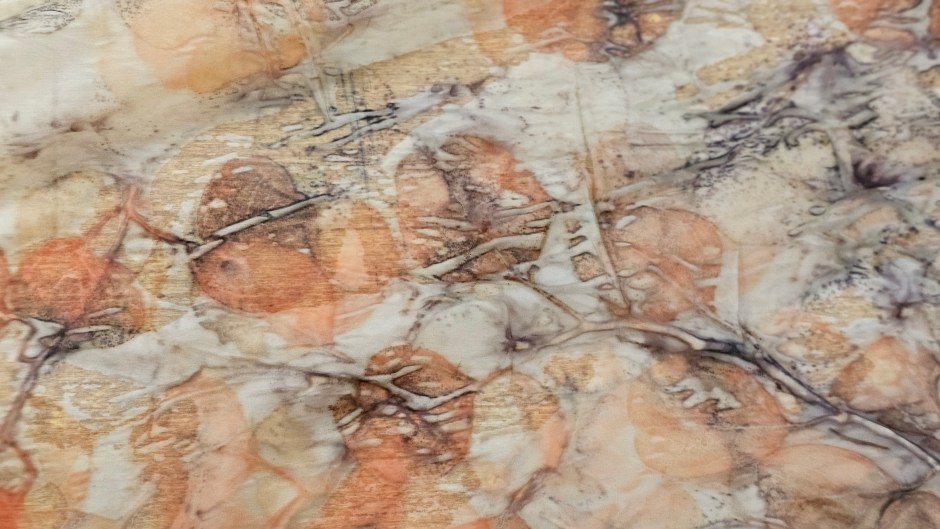
To say that I was delighted by the outcome is an understatement. I absolutely loved how my scarf turned out. Mine had transformed into soft, delicate pinks, mixed with light green hues which gradually turned into darker greens and purples. The leaves scattered across the fabric had left the impression of a field or forest of plants. The rest of the group oo’d and aw’d when they first saw it as mine was the first to be unwrapped. The others went shortly after. Despite having followed the same process, boiling in the same pots, the results ran the gambit of colors and patterns. It was so interesting and even Carol couldn’t quite explain why one person’s turned out to be a vibrant orange and another person’s stayed almost completely green.
We were told to rinse our scarves out until the water ran clear and allow them to cure for a few days before washing or wearing them to allow the color to fully set. We were told that the colors may brighten as it dried. We thanked our instructor, packed up the scarves in small plastic bags and headed home with our prizes.
I think what I really enjoyed about the whole process was how natural it all way from the silk fabric to the dye that only came from the leaves of the plant, to the patterns that were transferred to the fabric to even the simple ingredients of water and iron water (made from rusted nails, water and vinegar).
We are so disconnected from the process of what we wear and often what we wear is synthetic which utilizes process that are harmful to our environment and ultimately ourselves. This was a way to really connect to a tradition that, as I said, goes back thousands of years, even if it’s using a very modern technique. It was simple and elegant leading to beautiful results.
How can you make your own eco-dyed scarf?
You can, like me, find a class nearby which offers a lesson in the technique which not only teaches you the basics but also gives you access to an expert to help guide you in learning the smaller nuances of the craft. I find such experiences worthwhile and helps to enhance any first endeavor into a craft. I also like supporting local artisans, by helping them I continue to have access to specially made objects which enrich my life and my home. My local economy improves and I help preserve this precious piece of human culture for the future.
However, not everyone has access to craftsmen and women. However, these sorts of classes are increasing in popularity as many people are realizing that they’ve lost something by going completely digital. They want to feel physical objects, interact with their environment and embrace life. Plus studies have shown that engaging in activities of creation is good for our mental wellbeing, it reminds us that we aren’t helpless and capable of great things.
Still, you may find, dear reader, that you are unable to locate an instructor for your dyeing needs. Do not despair, as I have told you the principles of the task are quite simple and through some experimentation you are surely to get results you are happy with. I will say that it is recommended not to use the same pot for dyeing as you do for cooking. Luckily cheap pots can be found at a local thrift store. Silk scarves can be found at dharmatrading.com and the eucalyptus can be found at your local flower shop or even some chain grocery stores. Iron water is easily made with some rusty nails, water and vinegar and you’re off! More explicit instructions can of course be found online.
You may find that you truly enjoy the process of making eco-dyed fabrics and a new hobby as been discovered. I will say the temptation to make more is certainly there, but I shalln’t give in to the temptation as I don’t know that I have space in my life right now for another hobby. Mostly my storage spades for the supplies. Perhaps one day, dear reader.
I had the privilege of spending a semester abroad in my academic studies. For five months, I was halfway across the world, in a non-English speaking country for the most part on my own with limited support. This was a world before smart phones and easy roaming charges. I was for the most part armed with a local flip phone for emergencies, my wits and conversational German. It was just as daunting and fun as one imagines.
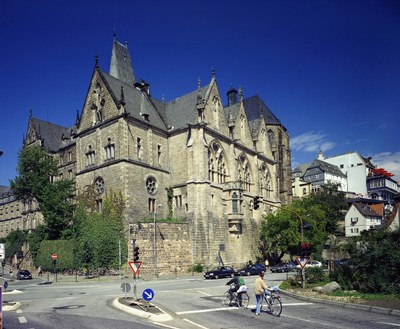
I suppose it was this experience that really solidified my adventurous spirit. How many times have I thought to myself “If I can get lost in the middle of Paris and still catch the train back to Marburg how hard can this be?” It instilled in me a sense of confidence to be able to navigate foreign places, solve problems on the fly and still be successful. There were certainly challenges.
There were the physical challenges that Germany presented me on day one. I thought I was a fairly experienced traveler having flown numerous times in the United States and I figured that Germany being another Western Country wouldn’t be too different. Stairs are apparently a thing everywhere in Germany and pose a much more serious problem than in the US when it comes to traveling with multiple bags. I had packed my bags anticipating the ease of traversing an airport with multiple rolling bags that I had in America, but Germany wasn’t as accommodating when it comes to rolling suitcases. Luckily, I did have some help in that I was traveling with a group of students, but they weren’t always the most helpful.
First, getting the bags down the escalators was a nightmare. I distinctly remember one of our bags just tumbling down the escalator as a complete hazard. Second, the trains had stairs. I had never encountered trains with stairs. I don’t even think I had seen such things in movies. Now, it does seem that since I’ve been in the country the train system is not as ruthlessly efficient as I remember it being. However, when I went, the trains were almost always on time and they did not wait for you to finish boarding, you had to get on or you would be left behind and the staff would not wave to the conductor to hold for you.
So there I was tossing my bags up onto the train and trying to get myself on with probably less than two minutes to get myself on board. The stairs were more akin to ladders than stairs, so I was trying to frantically climb onto the train with my bags. Being a naturally clumsy person, in a situation where balance was particularly challenging, I of course started to fall backwards. Luckily for me, the train doors shut just as I was about to stumble back onto the platform. Had I fallen back sooner, I would have been left on the platform with my bags on the train in a strange country and no real way to contact anyone. Had I not managed to get my bags on, I would have been on the train with the bags left behind! Certainly not my best moment! The saga of the stairs did not end there, there were stairs everywhere with almost no elevators to speak of, my legs looked amazing my the end of the trip and I do recommend the Germany Stair Master 5000, 5 month workout plan to you aspiring models.
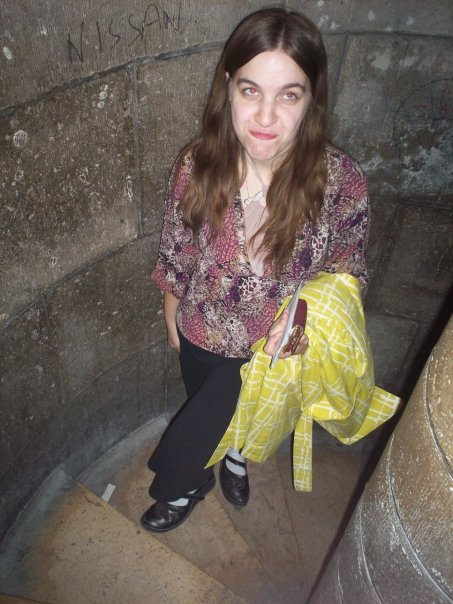
My face at seeing that I had to climb yet MORE stairs!
I faced the challenge of navigating a truly arcane system for signing up for classes. I had never seen such a discombobulated, uncoordinated system in my life. Some classes you signed up for in person, some were online, some you had to practically hunt down like some sort of secret cult meeting. I’m still not exactly sure how I managed to actually sign up for my classes, but I somehow squeaked by with the requirements and managed to get myself in courses I felt i could handle with my level of German. Although Frankfurt in Mittelalter was more than I could chew since the first day they wanted me to read latin and I had to read 15th century German documents for a research paper. Essentially, it was like handing a non native speaker of English the original Canterbury Tales and telling them to have at it. I may have spent 3 days researching the history of the German language in order to translate what I was reading before attempting to write anything.
While I was there, I independently traveled to Paris, Dublin, Nuremberg, Cologne, Frankfurt, and Rome. I planned every part of those trips from booking the plane tickets, navigating transportation to and from the airports, found the hostels and traversed the cities learning the unique public transit of each one. I went with a group of school students on a trip to Berlin and joined Brethren Colleges Abroad for trips to Vienna and Strasbourg. These trips did not involve how to get there or where to stay, but I did have to traverse them on my own, figure out which sights I wanted to see and ensure that I was on time for the checks in.
While there, I bought my own groceries on a strict budget (most of my money went to my trips rather than to food). I cooked my own food learning how to use a gas oven which terrified me the first time I used it because I had never had to light an oven with a match before. I had to learn how to sort trash like the Germans and all the quirks of their culture. I learned to navigate a completely arcane university system as well as see the world a little differently. I met a fantastic travel companion, a fellow American who shared my love of reading. I wish I could say we stayed in touch and are still best friends, but sadly like many adult friendships it did not last much beyond our semester in Germany as we were from and returned to different parts of the country.
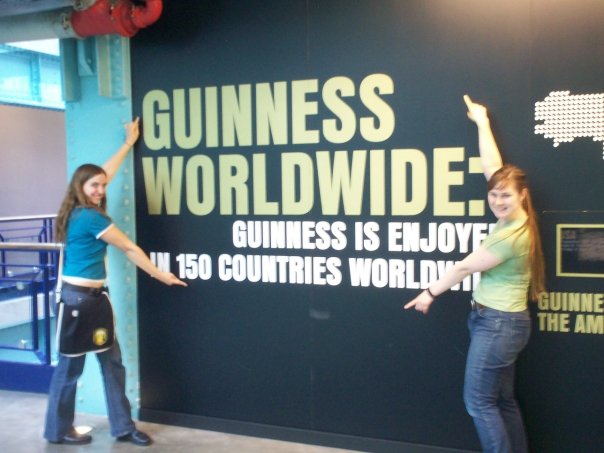
My trip to Dublin
While I was in Germany, I took advantage of the relatively cheap travel through Ryanair and checked many things off my list. I will say that for the most part I was unable to savor the cities that I visited as I often only had 1 ½ to 2 days in which to see them. That did require me to at times semi-race through places focusing on the absolute “musts” rather than casually strolling through as I may have liked. The Louver itself is a whole day affair if one is to truly take it all in. Sadly, I only saw the highlights rather than everything it had to offer. Which is really what can be said of several of the places I visited (Paris, Dublin, Berlin, and Strasbourg) other places I like Vienna and Rome, I had an entire week to see which allowed me to do much more. I even took a day trip to the beach while in Rome, so I can say that I swam in the Mediterranean. It is unsurprisingly much like swimming in the Atlantic, at least just outside of Rome it is. Also, after Paris I was much more able to navigate the foreign public transit system as I had very little experience prior to coming to Europe
Through all my adventures, I was required to bring a “can do attitude” and resourcefulness. I managed almost all my mistakes or set backs with grace under fire with one exception. But even that turned out well.
I got to know so many people in my travels. I listened to their perspective and saw how the different parts of the world views America and by extension me as an American. Some of them were harsh criticisms, others were high praise. I was baffled by the Spaniard who was insulted that I hadn’t chosen to learn Spanish rather than German. I was embraced by a very drunk Irishmen who was just thrilled to death about Obama’s recent election after George Bush. I got to witness a student protest over tuition which blew my mind because back home we all just sort of shrugged with a “what can we do?” when faced by yet more college fees. I listened to young and old shared their lives, their hopes and their thoughts.
Traveling abroad expanded my horizons, strengthened my character and taught me resilience. It reinforced my spirit of adventure and voracious appetite to learn about places, experience things and know new people.
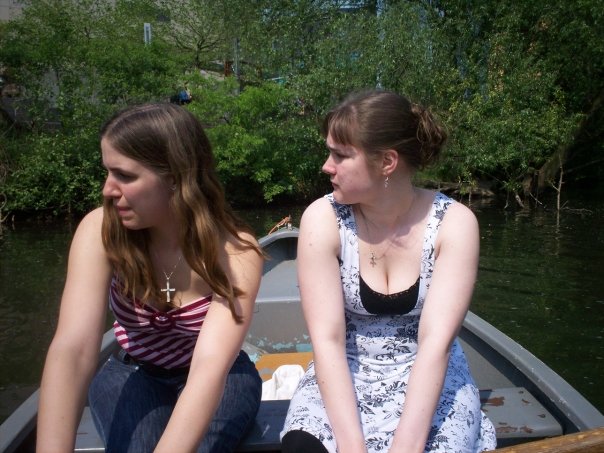
Myself and my travel buddy Erica whom I met in Marburg
How can you live abroad?
For many people this is a Bucket List item. Although, I suspect it was mostly put there by people who are much richer than the rest of us. If you aren’t a college student, this is a much more difficult prospect as the semester abroad only cost me $600 more than staying at college (not counting the extra trips I took). To me it was well worth the $600 extra investment on top of the investment I was already making in my education. Otherwise living abroad can be quite costly without gainful employment and how many of us realistically are going to find jobs where we can work in another country? I have seen some groups which advertise house sitting in Europe which would help take care of your accommodations, but there’s still pesky things like food that you need to pay for and if you’re house sitting you can’t really travel around all that much. Plus, what about your own house back home and your job?
That doesn’t mean that all is lost. One of the principles of the thing is that you’re willing to put yourself in a fairly unfamiliar situation, with limited access to outside supports forcing you to navigate unique challenges and overcome. A solo road trip through the United States where you just jump in the car and go, may present you with similar challenges.
The other principle is that you’re interacting with a lot of different people from around the globe with a willing and humble spirit to be shown their perspective. I continue to do both things in my life. Taking a short week backpacking in Mexico or Peru can be just as challenging if not more than navigating a semester in Germany. Talking to someone online who’s from Beirut may expand your understanding of the world far more than talking to someone you met in France because of the greater cultural differences.
Just living abroad does not necessarily confer these challenges either. It is easy to wall yourself off in an English speaking enclave and never leave depending on where you go. Had I gone to Germany, only hung out with American students, taken classes in English and never left my dorm, would that have given me the same experience? No, I may as well have stayed in America for all it did for me other than give me some social clout to say “I spent a semester abroad”. Remember, dear readers, we do not marry the principles of what we desire to the thing itself. Our desires can manifest in many forms and be just as satisfying if not moreso.
Still if you truly desire to do so, then my recommendation is to learn another language and start applying for jobs abroad. You obviously don’t need to learn another language, but it is certainly helpful. As of this writing the best jobs abroad are teacher, volunteer, medical industry, tour guide, yachting, au pair, scuba dive instructor, yoga instructor, working for an international company and obtaining a working holiday visa. As you can see many of them are easier said than done and do require some sort of specialization. So do your market research and consider what it would really mean to go abroad. After all you only live once, why not live it a little unbound?
Completed: Spring 2009
Cost: $600
Miles from home: about 4,000
Full disclosure: As stated above, it was only $600 in addition to my college tuition, so I’m not counting the cost of tuition as I would have paid that one way or the other. I also didn’t include my additional travels but all told they probably cost me about $1500. Two of those trips were covered in the cost of my studies.





 Budget Bliss: Bucket List