Visiting History: Gettysburg Battlefield

The battle of Gettysburg was one of the defining moments of American history. The Union’s victory over the Confederate army was the turning point in the Civil War, leading to the restoration of the union and ensuring the end of slavery. The battle took place over the course of three days from July 1st to July 3rd, almost coinciding with our nation’s 86th birthday. It was also one of the bloodiest most devastating battles in our history. 

Visiting the site of this place can be a bit surreal. Today, the fields lay semi-empty. The dead have been given proper burial. The gunfire has long since ceased and it only returns for reenactments and salutes to honor the fallen. To the educated eye one can still see the evidence of the battle and how the lay of the land was shaped by it and helped to shape the battle itself. For example, one can still see clearly how the Union’s superior position of the high ground helped them win despite having less troops. 

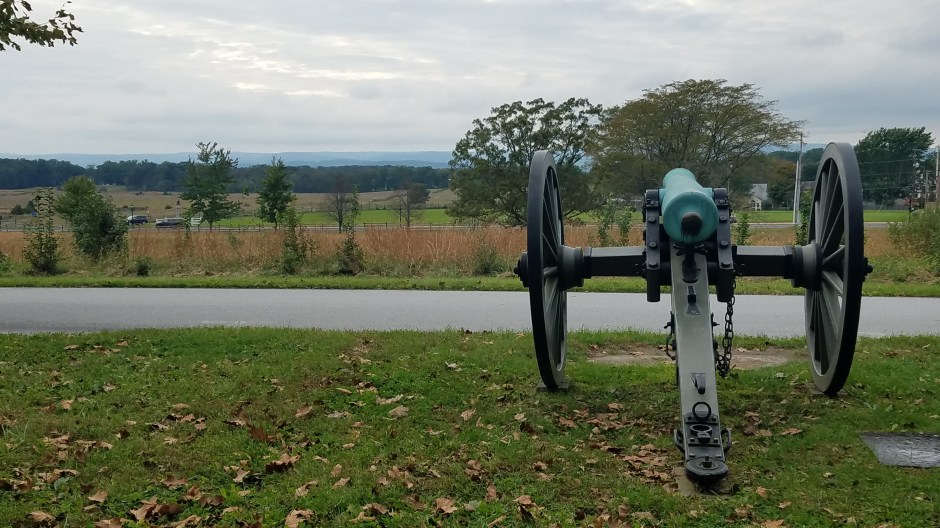
 It is now home to many monuments to the fallen from all over the states. Naturally, the Pennsylvania monument is absolutely massive, but others are smaller. Some are dedicated to large groups, but then there are more specific battalions and legions remembered. It is easy to forget that each of the men who perished on the field had a name, a story and purpose to be there. It is not easy to take up arms against one’s own countrymen. 

In the surrounding town, they offer various walking tours highlighting moments of history. They talk about the miracle that only one civilian died in the fighting, they point out bullet holes. What is really striking though is the sheer amount of death the residents saw, the description of pools of blood from the surgeries and piles of limbs that had been hacked off to try to save lives. They describe the stench that lingered for weeks in the hot summer. They whisper of ghosts still lingering on over a century later. If one believes in such things. 

Still in among the ghost stories, there is real history being remembered. There was a high cost to pay to preserve our country more than the cost to form it originally. It answered the question of whether we truly were a nation of freedom for all or only for some. A question that will need to be periodically asked and answered as we continue to navigate conflicting rights and values. It is a place that when visited demands at least some reflection of the cost that had to be paid for today’s America. 

Despite growing up relatively close to it, I had not really visited the battlefield until I was an adult. The annual classroom field trip that year had been replaced with a trip to Philadelphia to see the visiting display of the Russian Tsars. When my family did finally visit, I was a teenager and the thought of tramping about a field in the heat of summer with my father was unappealing, and I opted to go elsewhere with my mom and let my brother and father walk about the fields. So in the fall of 2018, I finally went with my boyfriend to see where it all happened, put history in perspective and learn more about this monumental event in our nation’s history. 

I can’t say that I necessarily learned anything new about the battle that I hadn’t already heard in the classroom or seen in documentaries, but what I did know was brought to life by seeing the physical artifacts from the battle and hearing the intimate stories of the people who were there both solider and civilian on both sides of the war. There’s something to be said about seeing and interacting with physical objects that allows our minds to form a more emotional connection with the knowledge or at least enhance our knowledge through other senses. 
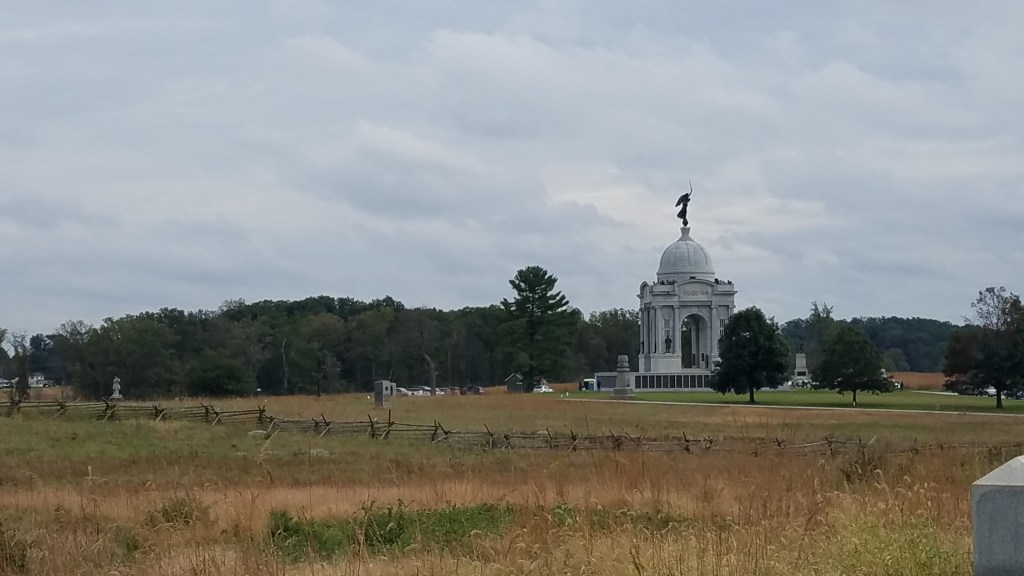
It is always strange to visit the site where tragedy took place and one must acknowledge the Civil War was tragic. It was tragic for a nation to be ripped apart and that the effects of that can still be seen over a hundred years later. It is also tragic it took a civil war to confer the basic human right of freedom from slavery to all living under our nation’s flag. On one hand, it is a place of history that should be remembered and respected, a place where people died to give other people freedom. On the other hand, it’s a site of enjoyment and relaxation. People come to visit on their vacations and for a day off of school. They enact the battle for entertainment, as well as to keep the stories alive. Children run through the fields laughing and playing around the cannons. Tourists take goofy pictures in front of memorials. For me the juxtaposition of both is important, because in some ways it means healing has taken place and is a testament to the resilience of people and our nation. 

How can you add this to your own bucket list?

Unfortunately, this is one of those things that cannot be substituted easily if going to the actual Battlefield of Gettysburg is on your list. It’s in PA and unless you’re nearby, it won’t be cheap or easy to get here. In which case, may I recommend google flight tracker and hotels.com? This may be an instance of the principle of the item rather than the item itself. The principle behind visiting Gettysburg was to see an important site of our nation’s history that helped shape our identity and defined us. If you live in the south, there are many other Civil War battlefields that you can visit. If you live in the North East, especially in New England, then you can visit many sites from the Revolutionary War. In the South West, you have the Mexican-American War. California was home to the gold rush as well as the Japanese Internment Camps and the Watts-Riots. The Midwest is of course home to the west itself and the expansion of white settlers into the territories. I highly recommend seeing what is near your hometown. You may be surprised to find your seemingly insignificant part of the country actually helped shape us in the amazing country that it is today.

Completed: 2018

Miles from home: 75

Cost: Free to visit the Battlefield, Visitor’s Center. Museum is $15, Museum+ Film is $21 

Learn A Language: German

There are many reasons to learn a language and this is something I often see on people’s bucket list. However, unlike many of the bucket list items where it is easily checked off in an afternoon, this one takes time and dedication to achieve. I know there are many different ideas around what it means to learn a language. For some people unless you are able to carry out a completely fluent conversation, you did not learn a language. For others, they may say that being able to order food at a restaurant and make their most basic needs known is being fluent. There is an international standard for language learning which goes from A1 to C2 with most countries enforcing a B1 limit on new citizens. Hence the phrase “B1 and done”. It is also nebulous in that it is a skill that needs maintenance. 

I double majored in both psychology and German, but I used my psychology degree and not my German degree. I probably would have tested at a B1 or B2 at the time of my graduation, but I would currently test at an A2 level. When I first started reviewing German after a nearly ten year hiatus, I probably would have been at an A1, which demonstrates that if you don’t use it, you lose it. In the ten plus years between graduation and now, I had not used my German at all, which begs the question if in almost ten years I didn’t need it and even now don’t need it, why bother at all?

There are many reasons to learn a language that people quote, the most common, are probably B.S. for most people. How often do we encounter people from other places to establish cross-cultural friends, see a job that requires it or travel? Being a native English speaker I am blessed to know one of the most commonly spoken languages in the world, as such I have not had the difficulty of making cross-cultural friends. Over the years, I have connected with many individuals from Asia, China, South America, Africa and even the Caribbean. I’m on servers with people from all over the globe and we all speak English. 

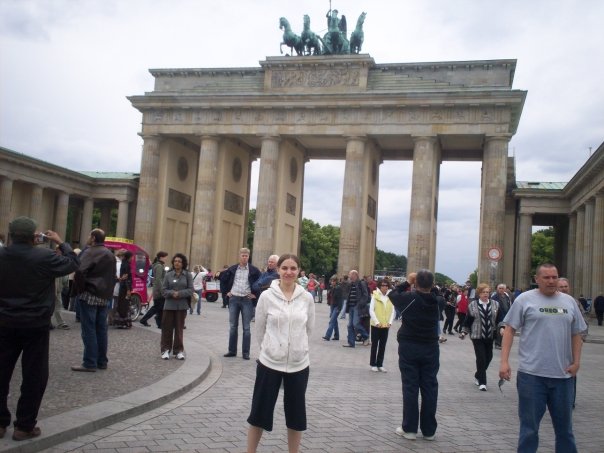
Visiting Berlin during my semester abroad

Now some people will argue that by refusing to be monolingual and expecting the world to accommodate you, that people will find that interesting or commendable. I have had mixed reviews from non-English speakers. I have been berated for not learning their language. Surprisingly enough, I was in Germany for my semester abroad and the Spaniard in the class was telling me that I insulted him by not choosing to learn Spanish. I have also been told by Germans that I shouldn’t bother to learn German and my attempts to do so were offensive and basically unless I was already fluent not to bother them. These were not the most encouraging interactions in my language learning process. I have had other very positive experiences from people when I’ve worked to learn their language, just don’t expect the process to always yield positive results. 

 As for jobs, unless you are in a particular sector of the economy that will be sending people abroad or working with a particular population in the human services, chances are you will not be needing anything other than English. Travel, as I have noted on this blog before, is something that we don’t really engage with more than a week (if we’re lucky) each year. 

To be honest, everyone is going to come to this with their own reasons. They may be doing it for their job, for travel, to expand their mind – increase memory, creativity, attention span, and logical thinking – to get outside their own culture, to better understand languages as a whole, to improve their own native language skills, and for just plain fun. There are people who learn “fake” languages or Conlangs such as Klingon, Na’vi and Dothraki. The desire comes from wanting to fully immerse themselves in a fictionalized world and to connect with others, who like them, are obsessed with the fandom. Some people know every single fact about Taylor Swift’s life; others can hold conversations in High Valyrian. To each their own fandom! 

For my own part, I have wanted to learn another language ever since I was young. I felt it was another way to explore the world. To me culture and language were linked and to truly understand a place, I needed to speak the language of that place. I loved learning about other cultures and in particular Irish and German topped my list because that’s what my family is, a mixture of Scots-Irish and German. Our area is predominately of German descent and has many German cultural influences thanks to the strong Amish and Mennonite community here. It’s quite common for us to use German phrases in English such as “it’s all” in order to say “it’s all gone” or “throw me down a pair a socks” which harkens back to the use of German reflective verbs. These are things that are unique to our area not usually found in other places of the English speaking world. 

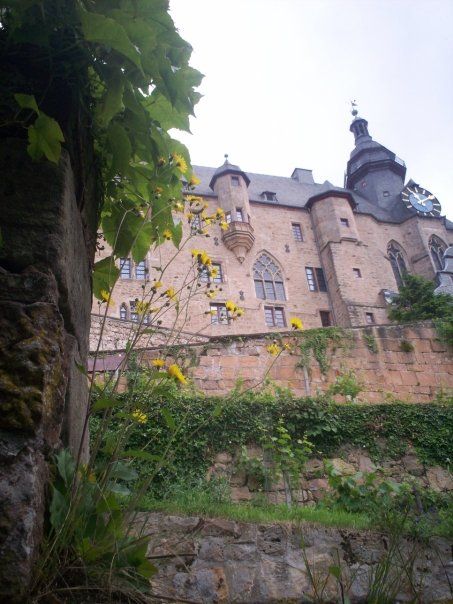
Marburg Castle, Germany

I originally tried French because of my desire to go into music and my mother really pushed for me to do French. Honestly, as a dyslexic, French is terrible. The spelling is an incomprehensible mess and I have no words. German on the other hand is actually pretty easy to spell as it is fairly consistent and logical. So in 9th grade, I made the switch to German and I’ve never looked back. Although, I am interested in learning French so long as I don’t ever have to spell anything in it.

It hasn’t always been fun. This isn’t an afternoon jaunt, this is a long slough of cognitive challenges and mind bending grammar, oblique turns of phrases and baffling cultural norms. People who gush about learning language as “fun” and “interesting” have obviously not had to spend hours trying to comprehend the ridiculousness of irregular verbs or trying to master der, die and das. A car could be der wagon or das auto, it’s a car, it should be the same gender but it’s not! There are legitimate historical reasons for this quirk, but I digress. Yet,  it was always worth it to me. 

Berlin Wall

Does it help me connect with others? I don’t know that it has. I haven’t found it necessary to know anything other than English, because it is one of the most common secondary languages. Some people will claim that learning a language, especially as a native English speaker when you don’t have to, makes  you more interesting. 

I have had mixed reviews from non-English speakers. I have been berated for not learning their language. Surprisingly enough, I was in Germany for my semester abroad and the Spaniard in the class was telling me that I insulted him by not choosing to learn Spanish and that it was clearly the superior language. I wanted to tell him that I should be commended for learning anything at all when the whole world is geared towards me not learning. I have also been told by Germans that I shouldn’t bother to learn German and my attempts to do so were offensive. Basically unless I was already fluent, I had no right to speak to them, which was baffling because how was I supposed to become fluent if I didn’t try speaking with native speakers? These were not the most encouraging interactions in my language learning process. I have had other very positive experiences from people when I’ve worked to learn their language, just don’t expect the process to always yield positive results. 

However, it has been an incredibly rewarding journey to learn German and later on, Spanish. It did afford me a semester abroad which greatly expanded my horizons in the world. It has allowed me to make connections with people in my own travels that I would not otherwise be able to make. Twice, I have ended up befriending, even for an afternoon, small groups of German tourists who were delighted that I knew German. I have seen it build up connections between myself and my clients when I have spoken to them in Spanish and Haitian Creole. It hasn’t always been easy to master the languages. It has been confusing and frustrating especially when I know that I used to be able to communicate at a much higher level, but sadly time has eroded the skill. 

Stefi, the adorable German woman I met while visiting Boston

I also developed a greater appreciation for those who are coming to America who don’t know the language, the challenges they face when trying to navigate our systems and the requirements on them to know how to communicate. I understand the history of Germany from their perspective and how that history unfolded. It’s given me a deeper understanding of our own history as told from an outside perspective. In the simplest terms, learning a language has expanded my horizons in ways I didn’t know it would do. Oftentimes we travel to immerse ourselves in a place, but without the language, we only dip our toe in the waters, when we learn a language we can immerse ourselves deeply without ever having to leave the couch. When we do finally arrive at a place, it’s almost like being at the house of an old friend. It’s familiar and it just “fits”. For me, staying in Germany for five months was very much like staying at a friend’s house that I’ve visited many times before. It wasn’t home, but it very much could be. 

How can you learn a language?

Most of you aren’t going to be able to go to school and just join a class and college classes are extremely expensive and probably more time than you have. There are many books, computer programs and apps out there to use. I’ve used Duolingo myself and found it to be decent for reviewing my German, but not as good for learning my Spanish. The app designer himself said that he was more interested in “gamifying” language learning than being the most effective way to learn. His justification was that any learning is better than no learning and the best way to keep you learning was to focus on making it an addictive game you wanted to keep playing. There are lots of other apps available and don’t just pick the most popular because it might not be what you’re looking for. I haven’t really found other methods like books, flashcards or listening to be all that effective for me, but everyone is different, what works for me may be terrible for you. The great thing about today’s world is that it has never been easier to get access to information and tools for learning and most of it is fairly accessible. Rosetta Stone is famously good, but also famously expensive. Myself and my mom are both on the same family plan for duolingo at about $10 per month. 

Completed: Reached conversational in 2010 

Miles from home: Can be completed anywhere

Cost: On average $10 monthly subscription fee