Salt, Steam, and Serenity: Self-Care on the High Seas


I’ve written before about being intentional with travel, seeking experiences that give you the most bang for your buck and making the most of every opportunity. I’ve also shared about my ongoing love affair with self-care and spa days. So when I booked my first cruise with my sister, it felt only natural to explore the ship’s wellness amenities, especially the thermal suite.

This particular suite offered a variety of spa experiences: a steam room, sauna, salt room, sanarium, hot tub, and even a snow room. It was like a smorgasbord of relaxation.

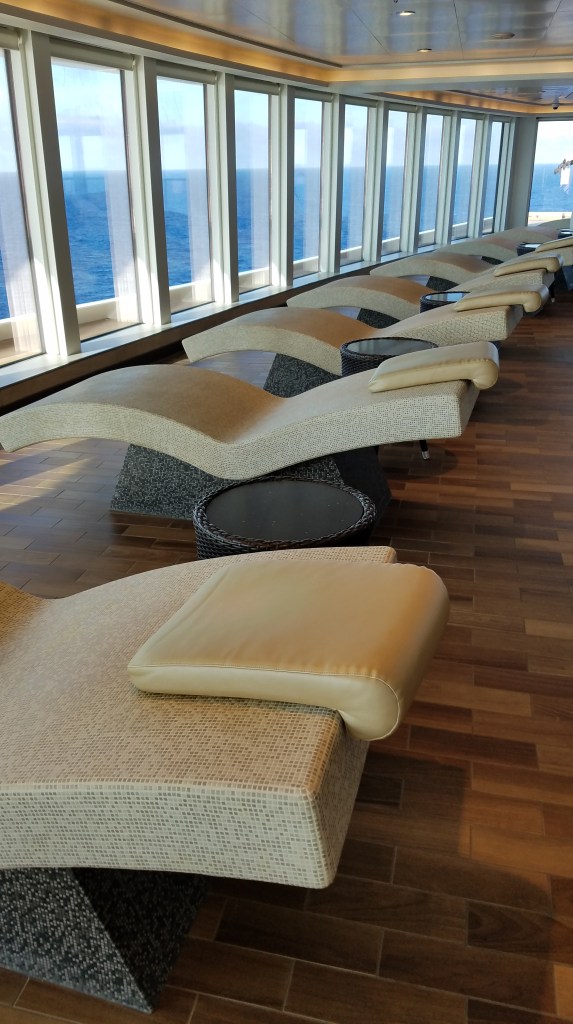
As someone who values health and is always open to new experiences, I chose to pay for the thermal suite upgrade, which granted unlimited access for the full seven-day voyage. At about $200, it felt like a worthwhile investment, an opportunity to explore several treatments without paying for each one individually. I’d been curious about these kinds of experiences for a while but hesitant to try them back home. Here, in the peaceful, adults-only section of the ship, it felt risk-free. The space offered stunning views, heated stone loungers, and a quiet, luxurious ambiance.

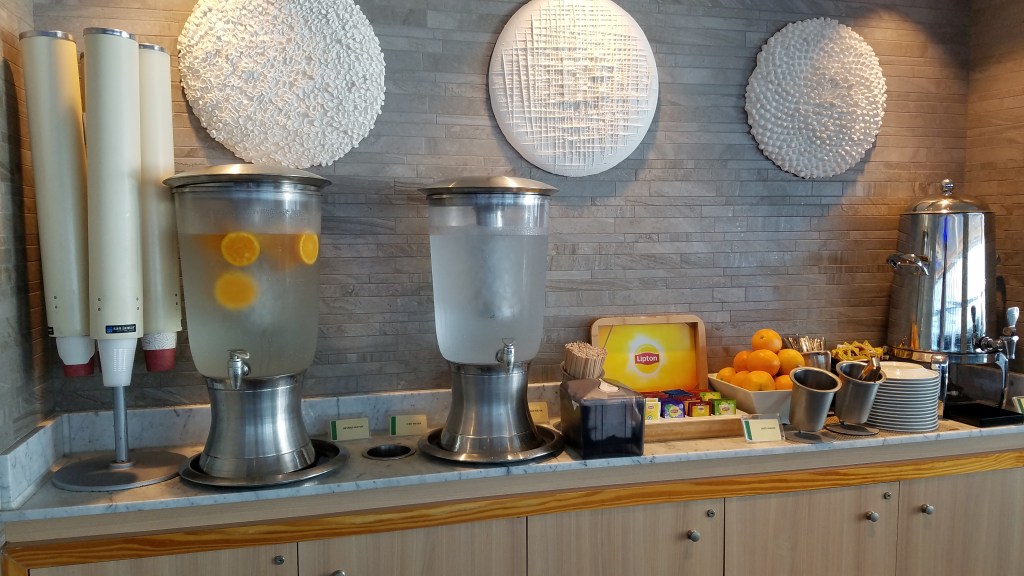
Tucked at the front of the ship and high above the ocean, the thermal suite may have had the best view onboard. The warm, lightly scented air welcomed me instantly. A refreshment station offered fruit-infused water, tea, and plush robes from the changing rooms completed the sense of serenity.

A Spa Circuit at Sea

My first stop? The sauna.

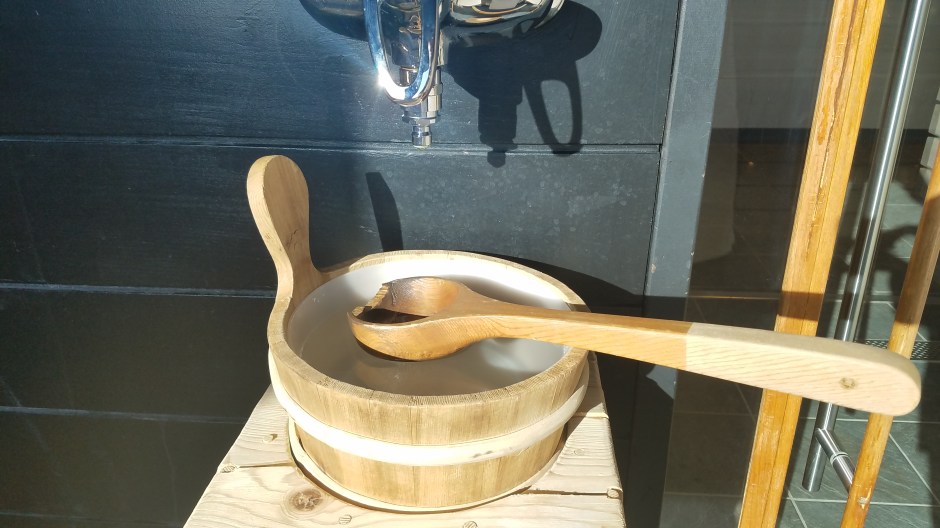
Built in traditional Scandinavian style, the sauna featured pale wood and tiered seating, with a bucket of water to ladle onto the hot stones. While the dry heat felt mild at first, I was quickly overwhelmed and made a dash for the snow room—just like a Scandinavian might leap into a snowbank after a hot session.

Normally, I loathe the cold, but fresh from the sauna, the snow room felt invigorating. I stayed for five to ten minutes, letting the chill settle into me before returning to the sauna. Alternating between hot and cold therapy is said to improve circulation and support immune health, but I simply enjoyed how it made me feel—refreshed, relaxed, and alert. This became my morning ritual. Few others visited early, so I often had the space to myself.

The sanarium, while similar in design to the sauna, was cooler and more humid—ideal for those with allergies or respiratory concerns. It didn’t appeal to me as much. Likewise, I found the steam room too intense; the heavy eucalyptus-scented air and thick mist overwhelmed my senses. I couldn’t see more than a foot in front of me, which made it feel disorienting rather than relaxing.

The salt room, on the other hand, was a quiet surprise. Halotherapy is said to support respiratory health, reduce stress, and improve skin. Whether or not those claims hold up, I appreciated the soft lighting and the calming pink glow of Himalayan salt. Without a view, it became the perfect space for reading and reflection.

To round out my spa circuit, I soaked in the thermal pool—a supersized hot tub with vigorous jets that massaged like a skilled therapist. A gentler hot tub was available nearby, and I alternated between the two before finishing each visit on the heated stone loungers, gazing out across the ocean.
Self-Care at Sea

Throughout the cruise, I returned again and again to the sauna, the thermal pool, and the loungers. These became my personal sanctuary, often the quietest places on the ship besides my own cabin. While not every experience was my favorite, I’m glad I tried them all. This voyage was about exploration, not only of new places, but also of myself. I learned what soothes me, what challenges me, and what I’ll say yes to again. A sauna-and-snow-room combo? Absolutely. Another go in the eucalyptus steam bath? Probably not.

More than anything, this experience reminded me of the importance of self-care. I’ve said it before, and I’ll say it again: it’s easy to forget your own needs. Even on vacation, we tend to bend to others’ expectations or try to do it all. In the rush, we forget to rest.

This spa day at sea gave me permission to slow down, recharge, and care for myself. It wasn’t just a treat; it was a necessity.

How Can You Enjoy a Full Spa Experience?

In my experience, land-based spas are often more limited in scope. You might find a sauna but not a steam room, or a hot tub with no cold plunge or salt room. That’s why this cruise was such a compelling opportunity, a chance to explore a wide range of spa treatments in one location. It’s a perfect example of applying the Budget Bucket List philosophy: maximizing experiences without breaking the bank.

Still, land-based options do exist. Some high-end resorts offer full thermal circuits (at a higher price point), and you might find hidden gems in unexpected places with a little research and curiosity. Keep your eyes open, and don’t hesitate to ask questions or explore.

I encourage you to seek out opportunities like this for yourself. Who knows, you may discover a new ritual to fold into your everyday life. Because a well-lived life isn’t only made up of adventures and accomplishments. It also includes intentional moments of rest, reflection, and renewal.


Completed: 2019

Miles from home: About 800 miles to Bermuda

Cost: $200 upcharge

The Winding Path to Your Destination: Prayer Labyrinth

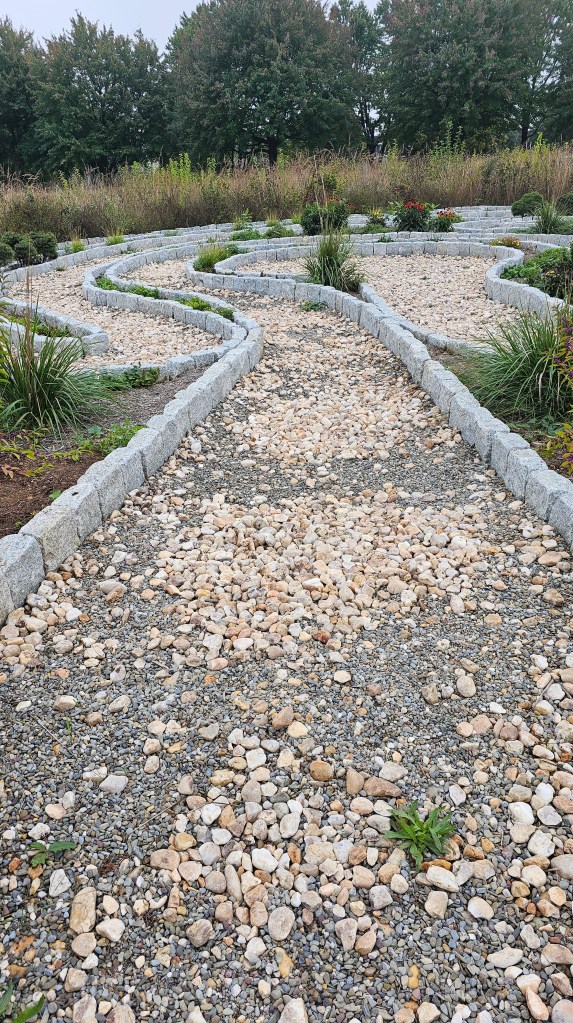
Unlike a maze, a labyrinth does not have many branching paths intent to challenge one’s navigational skills, but instead is one single path leading to the center. It is intended to symbolize a meditative spiritual journey without the possibility of becoming lost. There is one entry point and one endpoint, the only exit is to follow that path in reverse. 

Labyrinths have been used by the Christian faith since at least the 300’s and it gained popularity in the 600’s as a substitute for pilgrimage to the Holy lands after the Muslim conquest. In the faith, the labyrinth represents ones journey with God, as one arrives at the center one is entering arrives to be with God in perfect union. When one leaves, one has left a holy place to go back into the world. The practice is intended to be one of quiet contemplation and meditation, to pray and commune with God. It is a different form of worship as most often other forms are very stagnant in terms of physical movement. You sit at church to hear the preacher speak, you may stand up to sing and more modern churches may have people wave their arms in the air, but for the most part the movement is very limited. In this way, your whole body is part of the worship, the act of walking becomes part of the prayer. 

Many labyrinths are outside allowing creation to return to its intended purpose of being our Cathedrals and places of worship. It returns us in a sense to the garden paradise and thus reinforces the journey back to God which the labyrinth intends to mimic. The ordinary act of walking in nature becomes transcendent. 

The path that leads us back to God is not a straightforward path. It winds around at times seemingly moving us farther away from our goal, turning us away from it even though that is the only way to move towards it. To take that next step is an act of bold faith and trust that the path will lead where it is meant to be. In some labyrinths the path just before the final journey to the center takes us to the farthest point as it winds us all the way out and around before finally turning to the goal. 

Life can often seem that way as well. It can seem that we are being led down paths away from our goals or that we are farther away from what we are striving for than when we started. We may be tempted to turn back and try to go another way, only to discover there is no other way. We may find ourselves frustrated by the seeming lack of progress and give into the despair of hopelessness. The only way is forward, to trust the path and take that step of faith. 

As one walks the path of a labyrinth, one may notice weeds or patches of clovers popping up depending on how vigilant the groundskeepers are. Then again what is truly a weed in a garden devoted to God? Is it not his creation that has been sent there? The judgments of the world hold little sway there, perhaps they serve as a reminder that the flaws and shortcomings we see in ourselves are gifts from the creator. The obstacles in the path are not obstacles at all but blessings. 

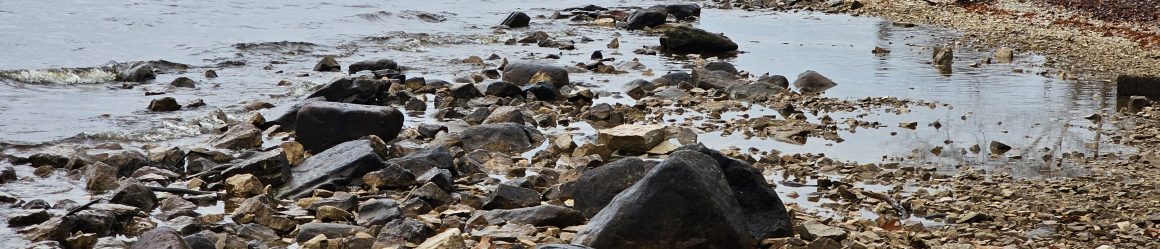
It was on a cool October morning, when the land was covered in fog that I embarked on my own prayer journey at a local church. I had read about prayer labyrinths and their meditative uses for quiet reflection and solace. As I was going to be in town on other business, I decided on a whim to drive a little out of my way and go in search of it. The labyrinth was tucked away behind the church in the wildflowers. Although being October, most of the flowers had lost their luster as they prepared for winter. The field itself was devoid of the bright hues one associates with flower fields; instead the plants had been transformed into dark sentinels to stand watch through the darkest months. 

At the entrance, I placed my phone and car keys to the side in order to devote myself fully to the practice intended by the architects of the labyrinth. Pausing at the front, I took three deep breaths to ground myself and be fully present in the moment. Then I began to walk and prayed. I wound around the path allowing it to twist and turn as it would taking in the few still blooming flowers which dotted the inside. As I approached the center, I paused knowing that in the next moment I would be stepping into the inner sanctuary. I then stepped into the middle and rested in the presence. My journey out was slightly different than my journey in as I softly hummed hymns to myself. Perhaps, I was taking the joy of heaven with me in the form of music and song.

Once I returned to my phone, I did pick it up for purposes of documenting in pictures the labyrinth in part to be able to return mentally to that place once more. In part to be able to share the experience with you dear readers with hopes that you will be encouraged to go on your own meditation journey. Still, on my second journey inward, I found myself still meditating and reflecting as if the design itself instills the mindset. It was on this second journey that I considered the imagery that labyrinth invokes. It was during that time that I reflected that at the point where I was seeming farthest away was actually when i was closest, even though when I first entered the center appeared to be just within reach. It was in taking pictures, that I reflected on the apparent weeds and wondered if I could call them weeds since they were in a sense planted by God. If God could have weeds in his Holy place then surely they are not weeds at all and if I saw them as weeds was I not looking with the world’s eyes? What did I see in my own life as weeds? When did I think that I was far from my goals when they were just within reach if only I kept going? What might I see if I looked at my own life as a labyrinth? 

On my way back to my car and out of the wild flowers, a butterfly came floating by my face, twirling around me and floating above. Was it a sign that the prayers asked would be answered? Was it a message of hope? Perhaps. Perhaps it was just a butterfly. Still, I shall take comfort in it for whatever may come in the next days. I shall remember the lessons of the labyrinth and sing the hymns of faith and thanksgiving. 

How can you experience a labyrinth? 

First dear reader, you need not be of the Christian faith or of any faith to enjoy the benefits of a prayer labyrinth. Many are simply called mediation gardens and even those without a faith find benefit to walking in them. The practice of meditative walking still helps people connect with their bodies, commune with nature, alleviates stress, supports their minds and improves over all well-being. You may find yourself making similar reflections as I did that life has its many twists and turns. You may reflect that the only way is to move forward and trust that you will obtain the goals you are reaching for. You may ask yourself if the flaws you observe are truly flaws or simply the way you’ve been trained to see them. Perhaps, you will leave as I did with a slightly different outlook than when you entered. 

Labyrinths can be found all over, at churches, hospitals and other public spaces. Some people have created them in their own backyard. Each one has a unique design and some are much bigger than the one I visited on a misty morning. It may be difficult to find as they are not always advertised and some are not necessarily open to the public. However, I found that with careful research I was able to locate one not 10 minutes from my house. I encourage you dear reader to visit a labyrinth. I think you will find the experience is worthy of your time.

If you don’t have access to one, then a meditative walk could help you achieve a similar affect. After all it’s about getting a similar result from a given experience. As always, dear reader, we needed do the exact thing to achieve the same or even better results.

Completed: Fall 2024

Miles from home: 5

Cost: Free

30-Day Meditation Challenge 

Some of my bucket list items come from the desire for self-improvement. I have written about how certain things that grace the typical bucket list are representative of some higher value like health. Learning to meditate comes out of that value system. I do want to be a healthy individual physically, mentally, emotionally and spiritually. I had hoped that learning would help me achieve this continuous goal. 

Meditation isn’t something I had been able to do before this challenge. In the movies, they’re always talking about “clearing your mind”. I don’t know about any of you, but my mind is never quiet. It’s always going, thinking of new things, making new connections, analyzing, processing, creating and making up an entire new worlds or languages. I often have trouble sleeping not because I’m up worrying about anything. No, I have a vivid and active imagination. I’ll space out and be dreaming up a whole creative story without even really being conscious of it. So being able to “clear” my mind is almost impossible.

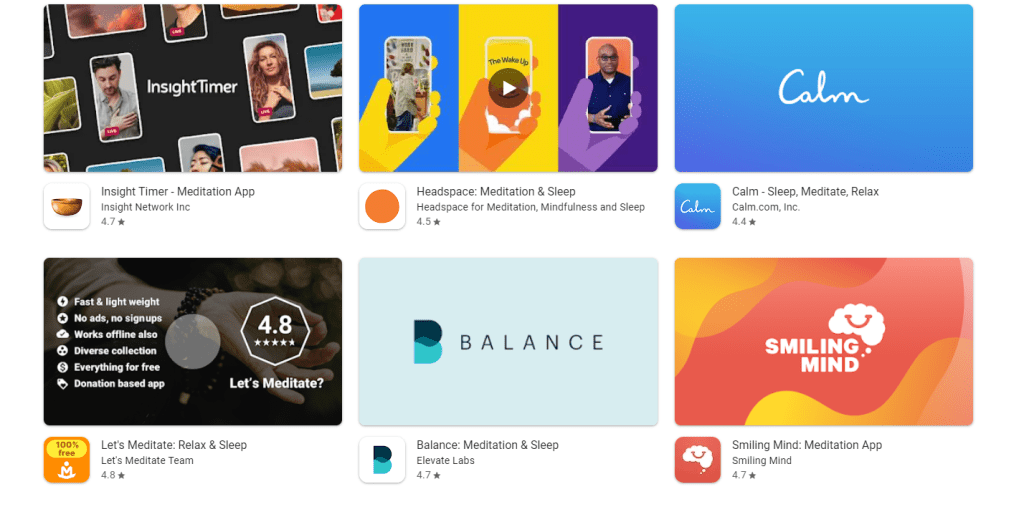
I tried a meditation app which told me to picture my mind as a horse that I’m gently lassoing and making the rope shorter and shorter in order to learn the skill of clearing my mind. It would have me try to build up the time of having a clear mind with short bursts and to not worry if the thoughts drift in. It didn’t really work. My mind does not shut up, like ever. I would be just taking in the sound of a fan and suddenly, I’m thinking about the wind and thunderstorms and writing a poem about a gothic fairy prince stealing children like in the German poem Erlkoenig. I am very easily distracted. 

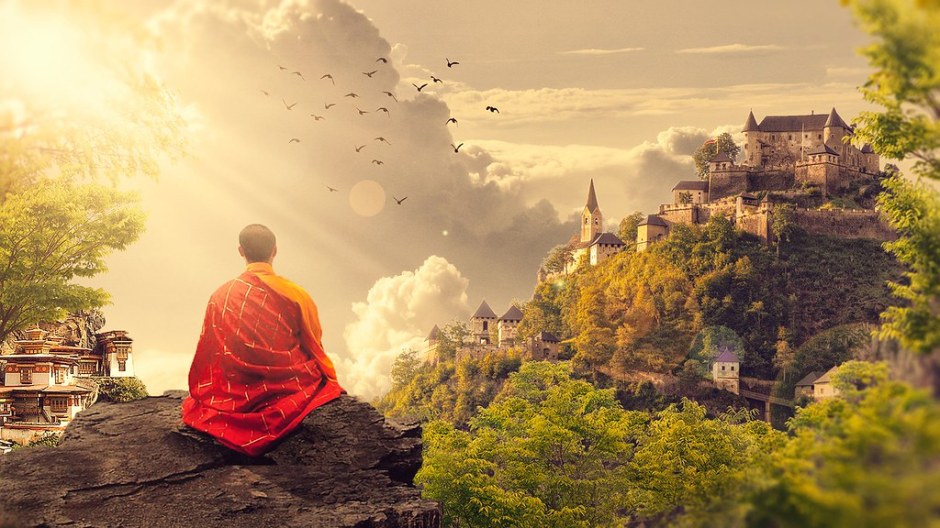
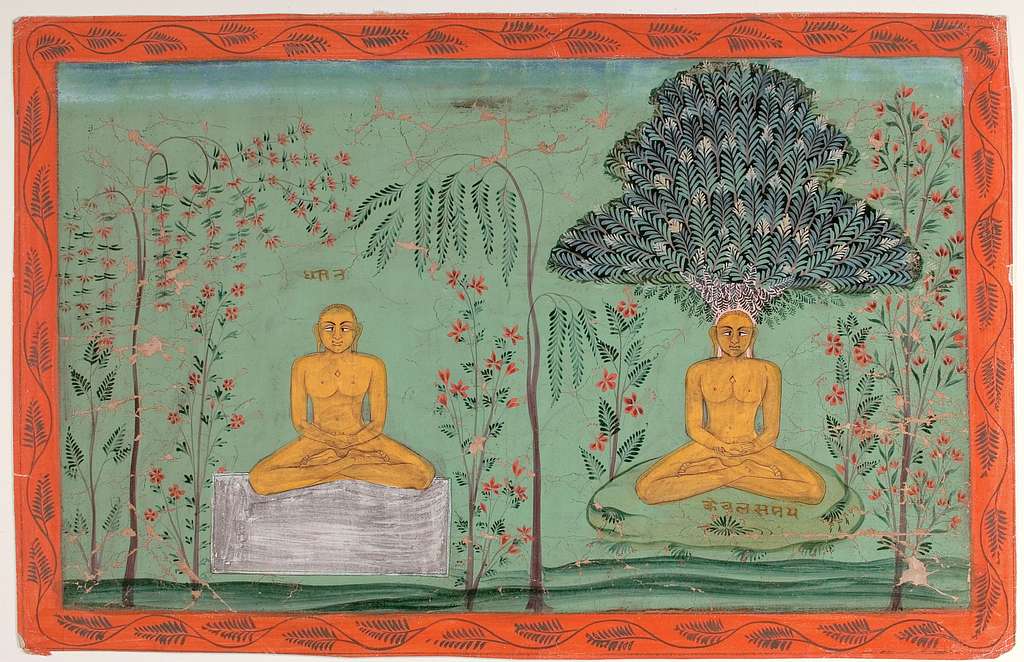
The word meditation comes from a latin word meaning “to ponder” but the practice of meditation is far older than even the latin language itself going back perhaps 150,000 or even 200,000 years. There are some theories that propose that the very act of “fire-gazing” meditation caused key changes in the brains of our ancestors to give rise to humans meaning that meditation may be older than the human species itself. There is a lot of evidence to suggest a long history of meditative states being used in rituals and shamanic practices. The earliest written records of the practice are found in the Hindu Vedas about 1500 BCE, but It isn’t as many may think strictly an Eastern practice. Records of meditative practices exist in the records of ancient Greeks, the Jewish Torah, druidry practices of the pagans spanning Ireland, France and Spain and even the Christian tradition. However, it got its more secular roots in the late 70’s from Kabat-Zinn when he founded the Stress Reduction Clinic which helped spawn the mindfulness movement in psychology. 

Going into the second summer of the pandemic, I found myself with a little more time at work than usual, in that I actually could take my 30 minute lunch break instead of shoving food in my mouth at my desk for about five minutes in between clients and writing my notes. We were also one of the only agencies not working from home because the nature of my job required me to work directly with people. This meant the common areas of our office building were sitting empty. 

Considering we were entering the second year of the pandemic and there didn’t seem to be a real end in sight to the ongoing upheaval as the affect shocks continued to roll their way through our society, it seemed that it was the opportune time to expand my repertoire of stress management. So I decided to spend a month meditating on my lunch break. I wasn’t doing it as part of a social media craze or anything, I just wanted to try meditation for 30 days and see whether my overall stress was reduced. I once heard a habit takes about 30 days, it actually is closer to 66 days. 

I went to one of the common rooms which was usually vacant away from any distractions or noise and pulled up youtube on my phone. A quick search yielded a 30 day meditation for beginners with most of the videos lasting about 20 minutes. I put myself in a comfortable position on the floor, closed my eyes and hit play. A soothing male voice then introduced me to the world of meditation. It was unlike any meditation I had ever tried before. 

Instead of telling me to clear my mind, my guide invited me to take in all the different sounds to let them flow into my mind and just notice the things around me. Instead of trying to “clear my mind” and ignore things, I was told to become aware of my surroundings. It was the first successful meditation I had ever tried and it was enjoyable. The previous times even a 10 minute habit a day quickly became a dreaded chore. Listen, if your “relaxation” technique becomes a dreaded chore, you’re not relaxing. He also had me try things like walking meditation, which also jived with me. I am someone who fidgets a lot and has trouble sitting still so a walking meditation was perfect for those days that I just needed to move. Ironically by not fighting all the inputs my brain was much quieter than when I was trying to not focus on the inputs and just exist. 

After 30 days, I don’t know that I found my overall stress was that much reduced, but I did have another tool in my belt for handling stress. There are times when I do take a few moments to get a cup of tea and meditate on the tea itself. The principles that I learned and the skill that I began to develop are things I use and have used in my own social work practice. It gave me a better understanding of meditation and a different way of communicating its principles to clients. I actually really enjoyed my daily meditation, so much that even afterwards I continued to visit his videos and listen to his guided mediations. Sadly, work did pick up again and I wasn’t able to keep up with the new lunch time habit. I did not find a way to incorporate it consistently at home. 

Overall, it was a good experience and I do recommend you try it. You may find, like me, that the usual guided meditations don’t work for you. Fear not! You may be neuro-atypical and a

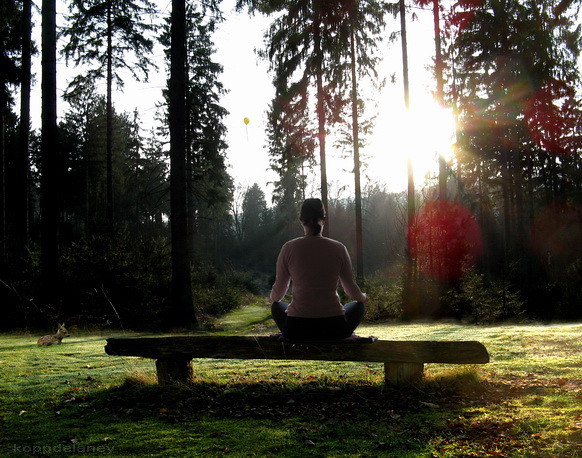
different approach is needed to achieve the same effect. Remember there are many forms of mediation that have been developed over the millenia, it isn’t a one size fits all. Sitting cross legged on the floor breathing deep and clearing your mind is one form. Talking a meditative walk may be more effective for you. It isn’t about the how, more developing the skill of being able to relax and allow the world to happen around you without the need to change it. 

How can you learn to meditate?

It’s easy! There are many aps and youtube channels which take you through various kinds and methods of meditation. The key is finding one that resonates with you. Maybe you find one voice soothing or another irritating (pick the soothing voice), maybe telling you to “notice” things starts your brain racing and you need a different sort of strategy. Experiment and try it. It’s a crazy world and it seems that we are continuing to move from one global crisis to the next. While it won’t fix the crisis, meditation can help give you the extra edge to navigate your way through it successfully. 

I watched a 30 Day Meditation Challenge from One Mind Dharma on Youtube

https://www.youtube.com/@oneminddharma/playlists

Completed: 2021

Miles from home: Can be completed anywhere

Cost: $0-10 depending on the app you use