Why Volunteering Belongs on Every Bucket List

Dear reader, we often look to our bucket lists to enrich our own lives. We book the trip, enjoy the experience, collect the memory, and savor moments of joy. There is certainly nothing wrong with that. However, a life that is truly enriched is not one that focuses only on ourselves. It also includes generosity toward others.

Some of the most meaningful experiences on my own bucket list have not involved airplanes, tickets, or distant destinations. Instead, they have involved people.

As a social worker, giving back to the community has become part of my everyday life. Currently, I work with children experiencing serious emotional disturbances and adults with ADHD. Before that, I spent several years working directly with individuals and families experiencing homelessness, helping to run a winter shelter as well as a year-round housing program.

The mission of the shelter was simple: provide a warm, safe place to spend the night. We also offered case management services designed to help people navigate their path from homelessness to housing. Yet despite all the paperwork, referrals, and housing applications, I eventually came to believe that the most important thing we offered was something far less complicated.

Connection.

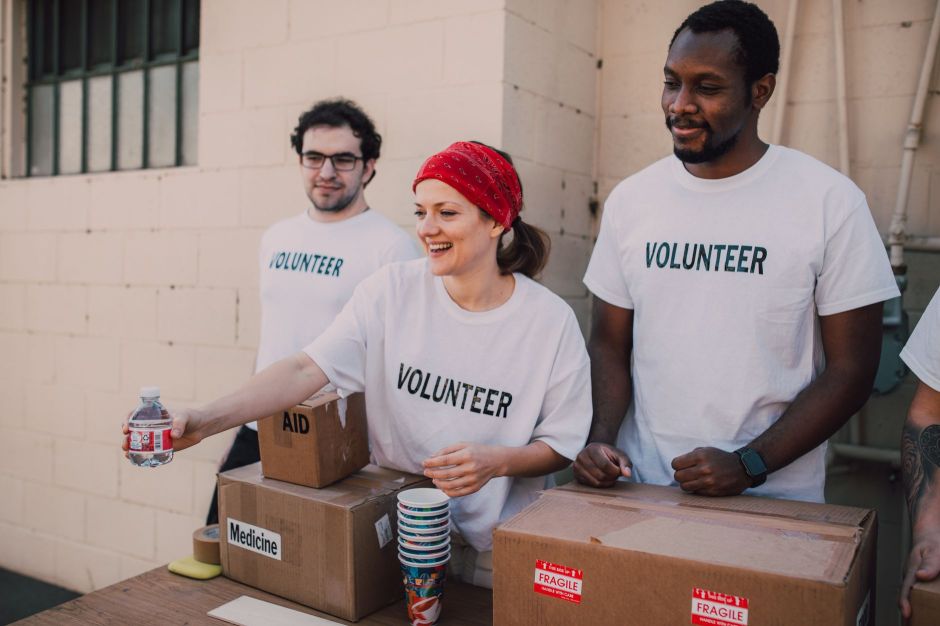
Photo by cottonbro studio on Pexels.com

Many people experiencing homelessness report feeling invisible. They describe being judged, avoided, or treated as though they are somehow less worthy than everyone else. The shelter sought to counteract that experience by creating a place where dignity came first.

When guests arrived, they were welcomed by friendly volunteers and staff. They were offered a warm meal, a hot shower, a safe place to sleep, and perhaps most importantly, a sense that they belonged.

The shelter itself reflected that philosophy. It was bright, clean, and carefully organized. We tried to create an environment that felt welcoming rather than institutional. Volunteers dressed professionally because we believed our guests deserved the same level of respect one would show anyone else. Rules were kept to a minimum whenever possible. Choices were offered whenever safety allowed. Trauma often strips people of control over their lives; restoring even small opportunities for choice can help rebuild a sense of dignity.

Round tables were placed throughout the shelter rather than rows of isolated chairs. Guests gathered to talk, share meals, play cards, and simply spend time together. Staff and volunteers joined them whenever possible. We listened without judgment and encouraged people to become the authors of their own next chapter rather than telling them what that chapter should be.

We also worked to connect people with resources beyond the shelter itself. Workers from the county crisis system visited regularly so guests could meet certified peer supports, individuals trained to provide assistance who also brought the wisdom of lived experience. If someone arrived without clothing, local community partners made it possible to ensure they left with what they needed. Every piece of support communicated the same message: you matter.
Photo by Tim Mossholder on Pexels.com

One might wonder how something as simple as connection could make such a difference.

Research consistently shows that people experience better outcomes when they feel connected to their communities. Trust, belonging, and social support influence everything from physical health to mental well-being. Before someone can trust a service, a program, or a housing plan, they often need to trust the people offering it.

Many individuals experiencing homelessness have experienced profound losses of trust. Sometimes systems have failed them. Sometimes people have failed them. Sometimes both. When your experience has taught you that help often comes with judgment, conditions, or disappointment, accepting assistance can become incredibly difficult.

That is why volunteers were such a vital part of the shelter’s mission.

While I was often occupied coordinating services, addressing crises, and making sure the shelter operated smoothly, volunteers had the opportunity to do something equally important. They sat down. They listened. They played cards. They shared meals. They learned names and remembered stories.

Often volunteers were the first to notice when someone seemed unusually withdrawn or discouraged. They noticed the quiet guest sitting alone in the corner. They noticed when something wasn’t working. They became advocates, encouragers, and companions.

And the benefits were not limited to the people we served.
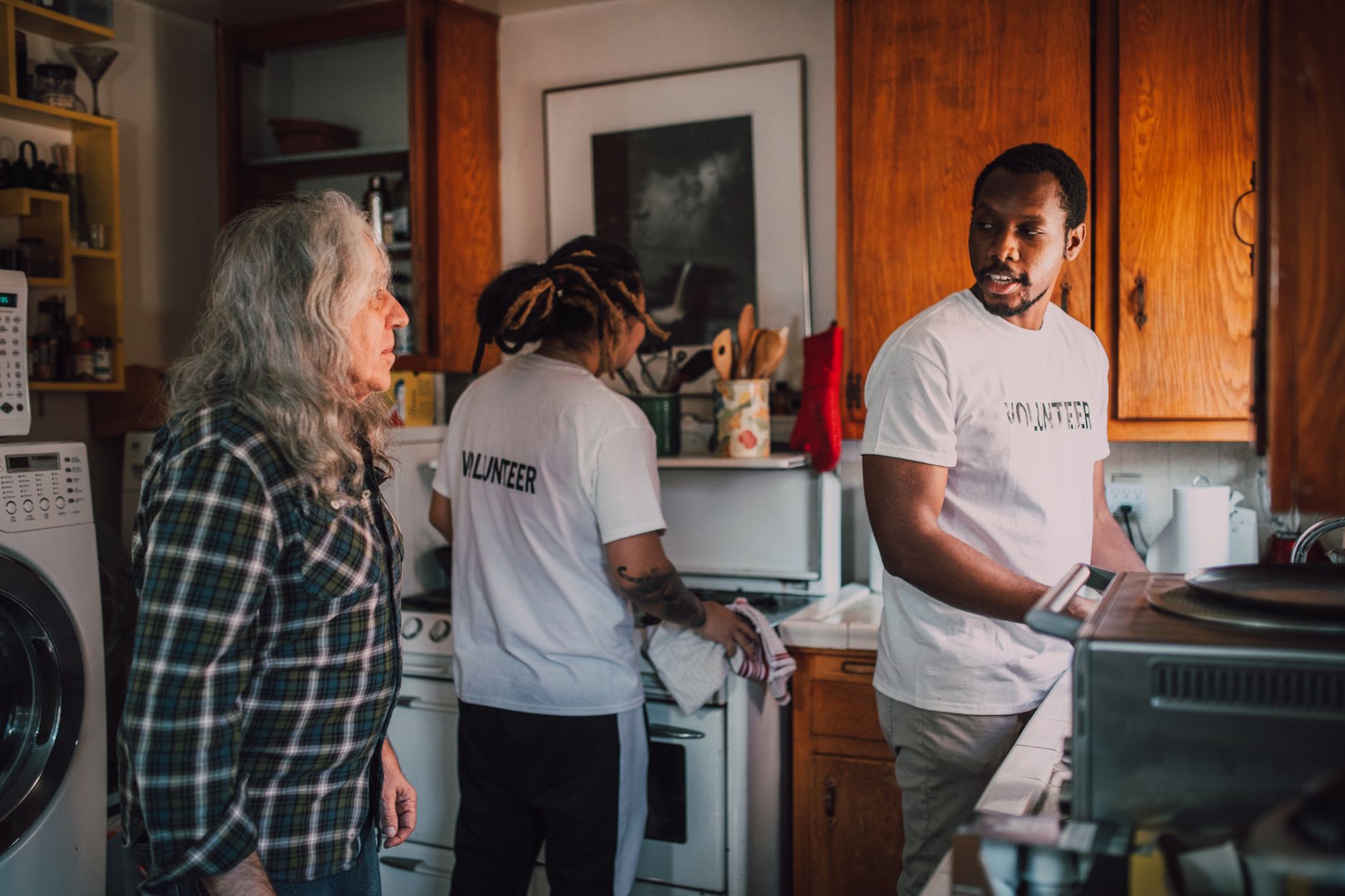
Photo by RDNE Stock project on Pexels.com

Many volunteers arrived hoping to help others and left with a broader understanding of their community. Homelessness stopped being an abstract social issue and became a collection of human stories. Assumptions were challenged. Empathy grew. Many volunteers told me they felt more connected to their neighbors and more grateful for the relationships in their own lives.

I wish I could say that everyone who walked through our doors found permanent housing. Unfortunately, that is not how these stories always end.

What I can say is that people found warmth. They found safety. They found kindness. They found a place where they were treated with dignity.

Over the years, I frequently heard guests describe us as the best shelter in the county. Other organizations occasionally visited to learn what we were doing differently. The answer was never a secret. We simply tried very hard to remember that people are people first.

If there is anything you should add to your bucket list, it is volunteering.
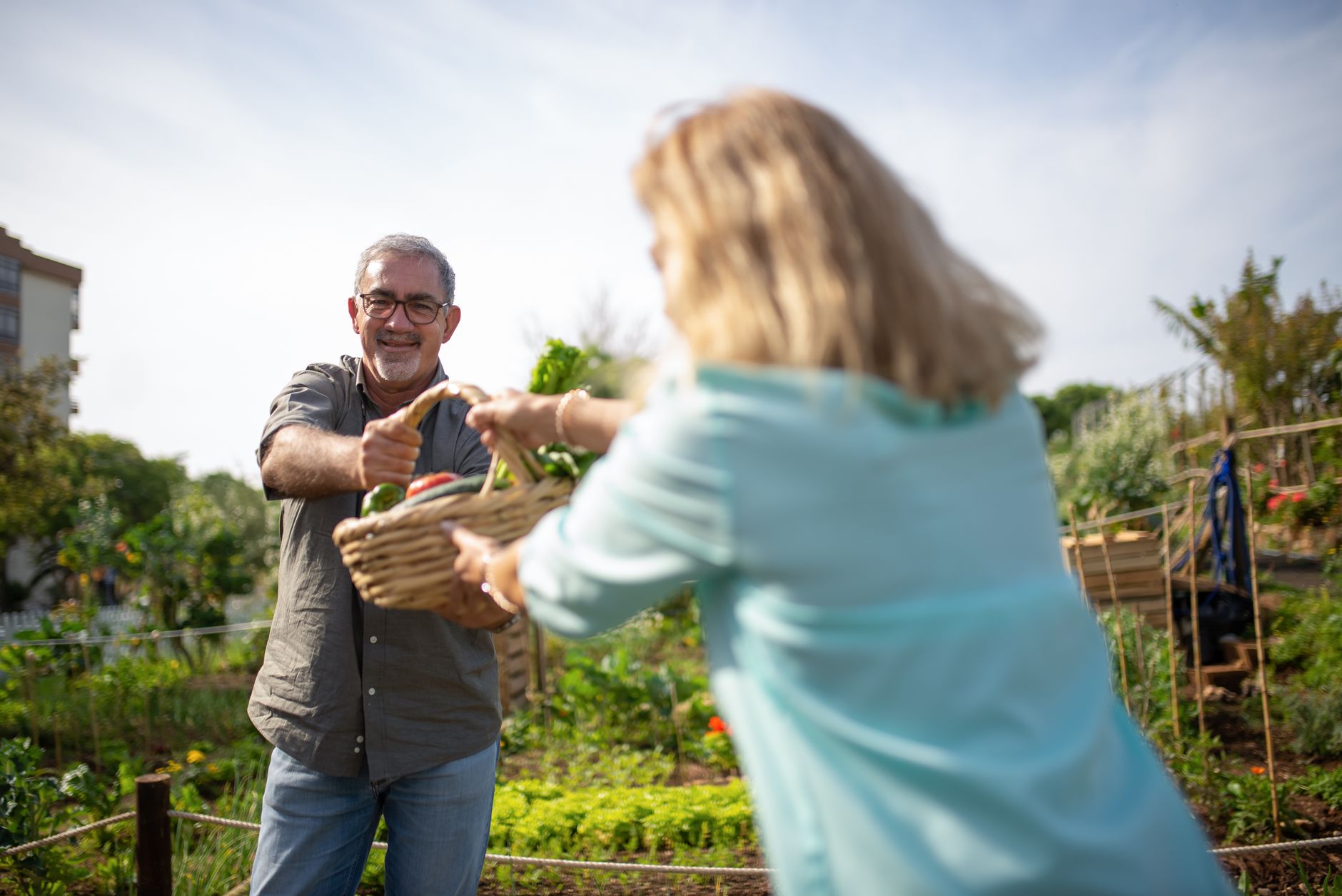
Photo by Kampus Production on Pexels.com

It does not have to be at a shelter. It could be a nursing home, an animal rescue, a food bank, a literacy program, a soup kitchen, a community garden, or an environmental cleanup. The specific cause matters far less than the willingness to show up.

We often think of bucket lists as collections of experiences. Perhaps they are better understood as collections of connections.

If you are not sure where to begin, many communities maintain volunteer opportunities through their local United Way, community foundations, or 211 information services. A quick visit to their websites will often reveal dozens of organizations looking for helping hands.

You may discover that the most meaningful adventure on your bucket list is not the place you travel to, but the person you take the time to see.

Cost: Free

Miles from home: 0

Completed: Helping the homeless 2019

The Winding Path to Your Destination: Prayer Labyrinth

Unlike a maze, a labyrinth does not have many branching paths intent to challenge one’s navigational skills, but instead is one single path leading to the center. It is intended to symbolize a meditative spiritual journey without the possibility of becoming lost. There is one entry point and one endpoint, the only exit is to follow that path in reverse. 

Labyrinths have been used by the Christian faith since at least the 300’s and it gained popularity in the 600’s as a substitute for pilgrimage to the Holy lands after the Muslim conquest. In the faith, the labyrinth represents ones journey with God, as one arrives at the center one is entering arrives to be with God in perfect union. When one leaves, one has left a holy place to go back into the world. The practice is intended to be one of quiet contemplation and meditation, to pray and commune with God. It is a different form of worship as most often other forms are very stagnant in terms of physical movement. You sit at church to hear the preacher speak, you may stand up to sing and more modern churches may have people wave their arms in the air, but for the most part the movement is very limited. In this way, your whole body is part of the worship, the act of walking becomes part of the prayer. 

Many labyrinths are outside allowing creation to return to its intended purpose of being our Cathedrals and places of worship. It returns us in a sense to the garden paradise and thus reinforces the journey back to God which the labyrinth intends to mimic. The ordinary act of walking in nature becomes transcendent. 

The path that leads us back to God is not a straightforward path. It winds around at times seemingly moving us farther away from our goal, turning us away from it even though that is the only way to move towards it. To take that next step is an act of bold faith and trust that the path will lead where it is meant to be. In some labyrinths the path just before the final journey to the center takes us to the farthest point as it winds us all the way out and around before finally turning to the goal. 

Life can often seem that way as well. It can seem that we are being led down paths away from our goals or that we are farther away from what we are striving for than when we started. We may be tempted to turn back and try to go another way, only to discover there is no other way. We may find ourselves frustrated by the seeming lack of progress and give into the despair of hopelessness. The only way is forward, to trust the path and take that step of faith. 

As one walks the path of a labyrinth, one may notice weeds or patches of clovers popping up depending on how vigilant the groundskeepers are. Then again what is truly a weed in a garden devoted to God? Is it not his creation that has been sent there? The judgments of the world hold little sway there, perhaps they serve as a reminder that the flaws and shortcomings we see in ourselves are gifts from the creator. The obstacles in the path are not obstacles at all but blessings. 

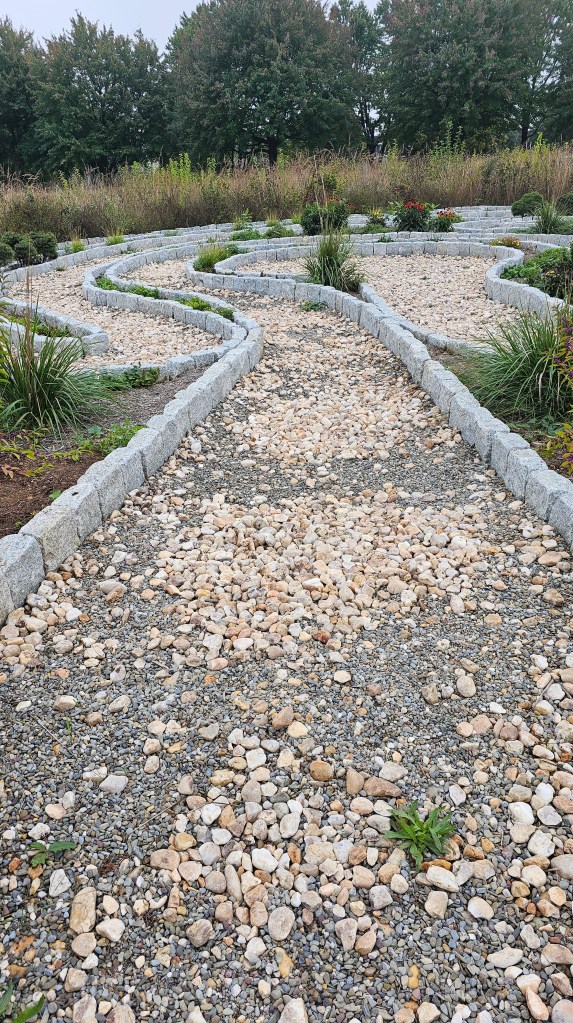
It was on a cool October morning, when the land was covered in fog that I embarked on my own prayer journey at a local church. I had read about prayer labyrinths and their meditative uses for quiet reflection and solace. As I was going to be in town on other business, I decided on a whim to drive a little out of my way and go in search of it. The labyrinth was tucked away behind the church in the wildflowers. Although being October, most of the flowers had lost their luster as they prepared for winter. The field itself was devoid of the bright hues one associates with flower fields; instead the plants had been transformed into dark sentinels to stand watch through the darkest months. 

At the entrance, I placed my phone and car keys to the side in order to devote myself fully to the practice intended by the architects of the labyrinth. Pausing at the front, I took three deep breaths to ground myself and be fully present in the moment. Then I began to walk and prayed. I wound around the path allowing it to twist and turn as it would taking in the few still blooming flowers which dotted the inside. As I approached the center, I paused knowing that in the next moment I would be stepping into the inner sanctuary. I then stepped into the middle and rested in the presence. My journey out was slightly different than my journey in as I softly hummed hymns to myself. Perhaps, I was taking the joy of heaven with me in the form of music and song.

Once I returned to my phone, I did pick it up for purposes of documenting in pictures the labyrinth in part to be able to return mentally to that place once more. In part to be able to share the experience with you dear readers with hopes that you will be encouraged to go on your own meditation journey. Still, on my second journey inward, I found myself still meditating and reflecting as if the design itself instills the mindset. It was on this second journey that I considered the imagery that labyrinth invokes. It was during that time that I reflected that at the point where I was seeming farthest away was actually when i was closest, even though when I first entered the center appeared to be just within reach. It was in taking pictures, that I reflected on the apparent weeds and wondered if I could call them weeds since they were in a sense planted by God. If God could have weeds in his Holy place then surely they are not weeds at all and if I saw them as weeds was I not looking with the world’s eyes? What did I see in my own life as weeds? When did I think that I was far from my goals when they were just within reach if only I kept going? What might I see if I looked at my own life as a labyrinth? 

On my way back to my car and out of the wild flowers, a butterfly came floating by my face, twirling around me and floating above. Was it a sign that the prayers asked would be answered? Was it a message of hope? Perhaps. Perhaps it was just a butterfly. Still, I shall take comfort in it for whatever may come in the next days. I shall remember the lessons of the labyrinth and sing the hymns of faith and thanksgiving. 

How can you experience a labyrinth? 

First dear reader, you need not be of the Christian faith or of any faith to enjoy the benefits of a prayer labyrinth. Many are simply called mediation gardens and even those without a faith find benefit to walking in them. The practice of meditative walking still helps people connect with their bodies, commune with nature, alleviates stress, supports their minds and improves over all well-being. You may find yourself making similar reflections as I did that life has its many twists and turns. You may reflect that the only way is to move forward and trust that you will obtain the goals you are reaching for. You may ask yourself if the flaws you observe are truly flaws or simply the way you’ve been trained to see them. Perhaps, you will leave as I did with a slightly different outlook than when you entered. 

Labyrinths can be found all over, at churches, hospitals and other public spaces. Some people have created them in their own backyard. Each one has a unique design and some are much bigger than the one I visited on a misty morning. It may be difficult to find as they are not always advertised and some are not necessarily open to the public. However, I found that with careful research I was able to locate one not 10 minutes from my house. I encourage you dear reader to visit a labyrinth. I think you will find the experience is worthy of your time.

If you don’t have access to one, then a meditative walk could help you achieve a similar affect. After all it’s about getting a similar result from a given experience. As always, dear reader, we needed do the exact thing to achieve the same or even better results.

Completed: Fall 2024

Miles from home: 5

Cost: Free