Not Your Ordinary Wine Tasting: Wine with a Scenic Train Ride

hat could possibly be more romantic than an antique train through the summer countryside, the cornfields lush and green, cows grazing in their pastures and the blue skies dotted with clouds? Other than including a companion known for her poise and stimulating conversation? Why a little wine, of course! And what could be a more perfect place for such an adventure than the oldest continuous railroad in the United States? 

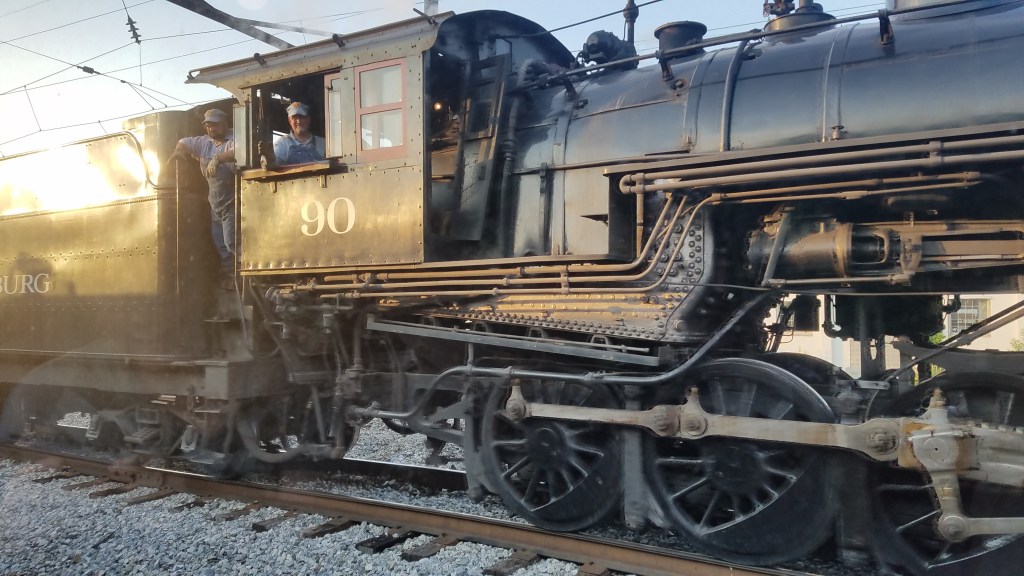
Built in the mid 1800’s, the Strasburg Rail line faithfully provided transportation to the residents of Lancaster county to ensure they stayed connected to the larger railroads. However, with the rise of the automobile and significant changes in rail usage, it had been reduced to the poorest and smallest railroads in the country. In order to save this piece of history, a group of railroad enthusiasts purchased the railroad and began to offer tourist excursion trips. Within three years, ridership had grown from 9,00 a year to 125,000. In order to keep up with customer demand the directors turned to the steam engine. Today, Strasburg offers visitors the opportunity to climb aboard a fully restored steam locomotive in a beautifully restored wooden railcar and gaze out at the lovely Lancaster County countryside. 

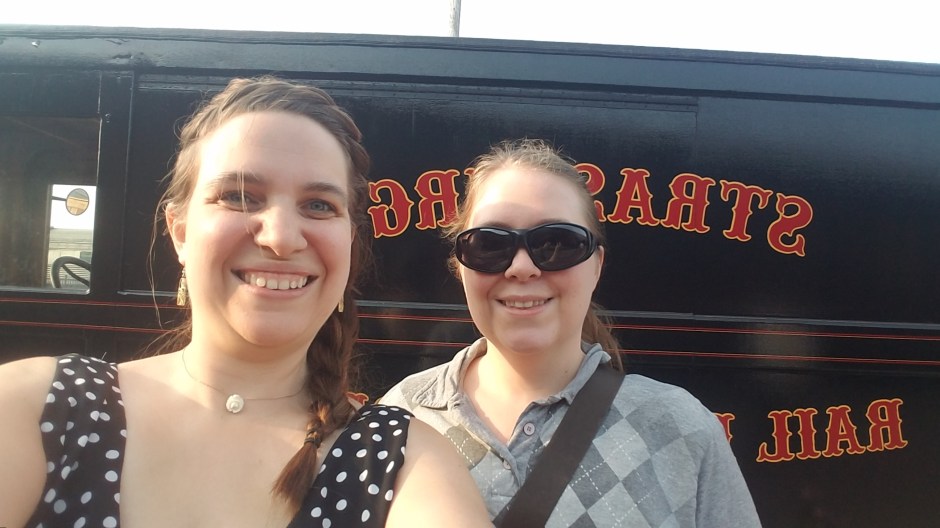
While not train enthusiasts per say, my sister and I are history buffs who enjoy experiencing how life once was. What was impressive was not only were the trains historical, the railroad itself from the ticket booth to the staff were also historical. It felt like stepping into a history book where we could leave the hustle of modern life to embrace a slower time. We had arrived early so we were able to not only stake out our seats but also to explore the railcar a little. We loved the details that went into every inch of the car from the light fixtures to the woodwork. It is difficult to imagine such care and craftsmanship being put into our railcars or airplanes today. The environment of the old-fashioned railcar was warm and welcoming rather than the cold industrial experience public transit currently offers. I immediately relaxed into the comfortable leather seats settling in for my 45 minute ride. 

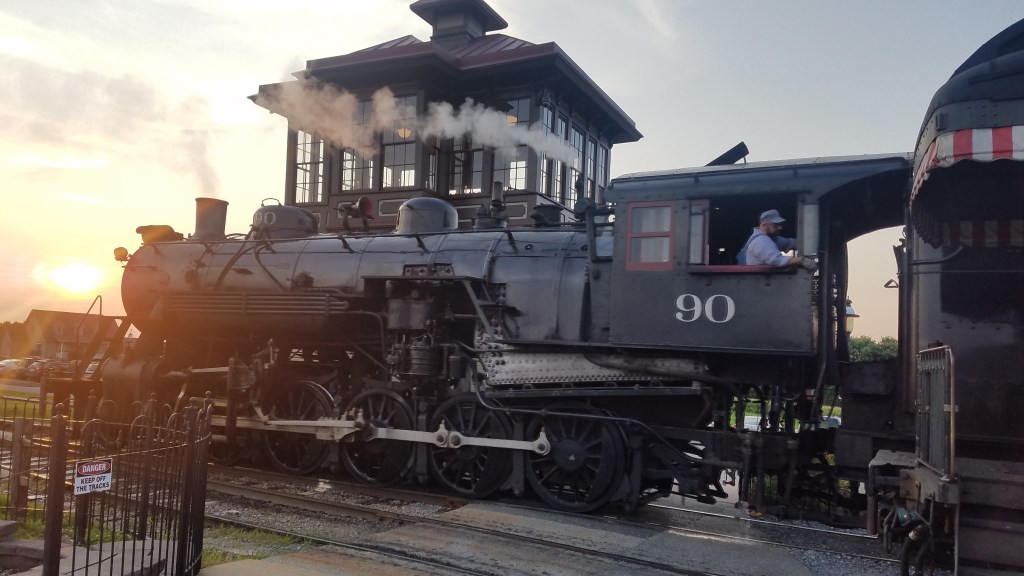
The steam locomotive, also called the Iron Horse, dominated the railways from the early 19th century through the middle of the 20th century. They were a vast improvement over the old system where horses were used to pull carts along rail tracks – hence their nickname. An early model was designed and constructed by John Fitch a steamboat pioneer in the United States in 1794, but it’s the United Kingdom that gets the credit for fully developing the idea and utilizing it for commercial use. They work by using steam to push the pistons of the engine up and down. That movement is converted into the back and forth motion of the wheels through a series of rods – piston rod to main rod, main rod to side rod, side rode to driving wheels. Through such a simple system the age of steam revolutionized the west. 

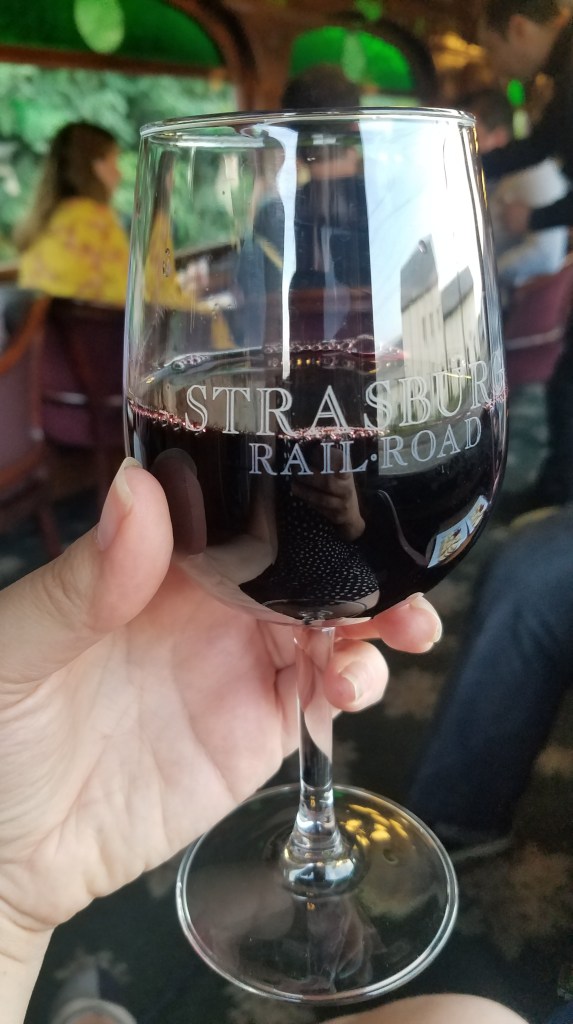
The staff, like the staff at the ticket booth, were dressed as they would have been in the 1800’s when the train was operating to connect passengers to the larger rail systems. They punched our tickets to get us started and gave a brief overview of the train. Then we began the wine tasting being offered two different whites and reds. From the four wines, we would be able to select one to enjoy a full glass. Naturally, I chose one of the reds and my sister, surprisingly, enjoyed the same one – she usually prefers the whites. 

As we snacked on the offering of cheese, crackers and grapes, we gazed out at the rolling hills. The rail car shook rhythmically and under the murmur of conversations, one could hear the characteristic pattern of the steam engine chugging along. The sun began to set, changing the sky from a near perfect blue to a paler almost lavender hue. We sipped on the full bodied red, toasting to life and adventure. We were able to catch sight of another steam engine on the tracks and even snap a few pictures of it in action as it passed us by. 

How forty five minutes manages to stretch out into what could have easily felt like two hours of relaxation can only be explained by the time machine that was the Strasburg Railroad. It seemed as if no time had passed since we started our journey and yet it also felt as if we had just spent hours traversing the fields. We disembarked fairly content with our adventure and with hopes to enjoy the other offerings that the railroad has to offer in the future. Though with an ever growing list of adventures to try, it may be a while until we are able to step back into the history books. 

How can you experience a historic train ride?

Luckily, there are many places where you can experience a ride on a historic steam locomotive, from the line of Whitepass & Yukon in Alaska to the State Train Museum in Georgia. Many places can be found https://www.trainchasers.com/steamdirectory.html though if you don’t see your state listed, it’s not an exhaustive list. It’s just a very good starting point for where you might a locomotive near you. Unfortunately, for those of you living in the middle of the country, most of our rail lines have disappeared, so if this interests you, consider checking out if there are any historical railways near your next travel destination. Remember when we do travel, we want to try and make the most of our travels and explore things we don’t typically have access to. You may also see if there are other historic modes of transportation available to you such as a steamboat ride or early automobile. Perhaps, you can enjoy a steam engine in a train museum. Remember, it isn’t about doing the exact thing but looking at what it symbolizes and what sort of experience you desire to have. 

Additionally, I cannot promise that any of these will offer a wine and cheese pairing, but each of them offer a unique experience from Murder Mystery theaters to sight-seeing to simply moving from one place to the next. On a historic train ride in Panama, we were treated to seeing the country from coast to coast, sampling coffee and being entertained with songs. 

Completed: July 31, 2021

Cost: $70 per person

Miles from home: 45

Getting Lost in a Corn Maze

In late summer of 2020, the world was still reeling from COVID. Depending on where you were in the world, you were still subjected to lockdowns and restrictions of movement or gatherings. In my own state, there were restrictions on gatherings well into 2022. I have written earlier how those of us with intrepid spirits were not daunted by restrictions on traveling further afield when it came to living life. As it turns out, myself and my co-workers did not need to look any further than the local corn fields for fun. 

After the lockdowns, my co-workers and I made a concerted effort to plan things to do together as a team after work hours once a month. It not only was helpful for team building and morale but also our mental health as it gave us the opportunity to go out and have fun. As social workers dedicated to helping the homeless this was a particularly stressful time and it was important to foster connection with others as part of resilient coping strategies. One of the activities we chose was a corn maze. In part because some of us had never done them before and we also had a corn maze aficionado in our office. After some debate on which one would be the best to introduce us to, we settled on Oregon Dairy’s. We decided on a smaller, more beginner friendly one rather than the one at Cherry Crest Adventure Farm.

Now as with everything in 2020, what could go wrong, did. In a completely on brand 2020 accident, the GPS system which helped the farmers cut the design for the maze failed dramatically and cut the maze in a completely wobbly way. Unfortunately, while yes, it will grow back there was no way for the corn to grow back in time to for a re-do. However, I don’t think this deterred anyone from enjoying the maze because like myself were so amused by it and thought it made the experience even better. 

Now, I will be the first one to admit that going through a corn maze was not my idea of a good time. Being allergic to dust, pollen and bees spending time out in a dusty corn field with the pollen floating through the air and bees potentially buzzing in from nearby fields had placed this activity firmly on the “things I’d rather not” list. However, seeing Melissa’s enthusiasm for it peaked my interest. We were also going later in the season when the corn was no longer an attractor of pollinators meaning that bees and pollen were at a minimum. Given the amount of foot traffic it would see, the dust would be pounded firmly into the ground rather than in the air. 

In Lancaster county, there are plenty of corn fields to see, so the point of going to a corn maze isn’t to look at a field of corn, but rather the experience of getting lost together. What’s quite comical is that when you have the map in your hand standing outside the entrance, it looks quite easy, a casual stroll even. Oh, how wrong you would be. The maze quickly becomes disorienting, especially a maze that is as zig-zaggy as that one. Having no real straight lines it was almost impossible to tell if you had turned a corner or merely curved with the path. The corn was too tall to get a good bearing on anything. And of course being corn, it all looked exactly the same, even if you could peek through to the other side. 

You think you know where you are and then you turn a corner only to be faced with unexpected options, this isn’t where you’re supposed to be. The simple, easy maze has transformed into a dizzying labyrinth of twists and turns. If you’re not careful, you may lose sight of your companions turning this group adventure into an unexpected solo adventure. You may call out to them but they’re gone. Or perhaps you hear each other but cannot figure out how to get back on the same path. So tread carefully and do not wander too far from your friends. 

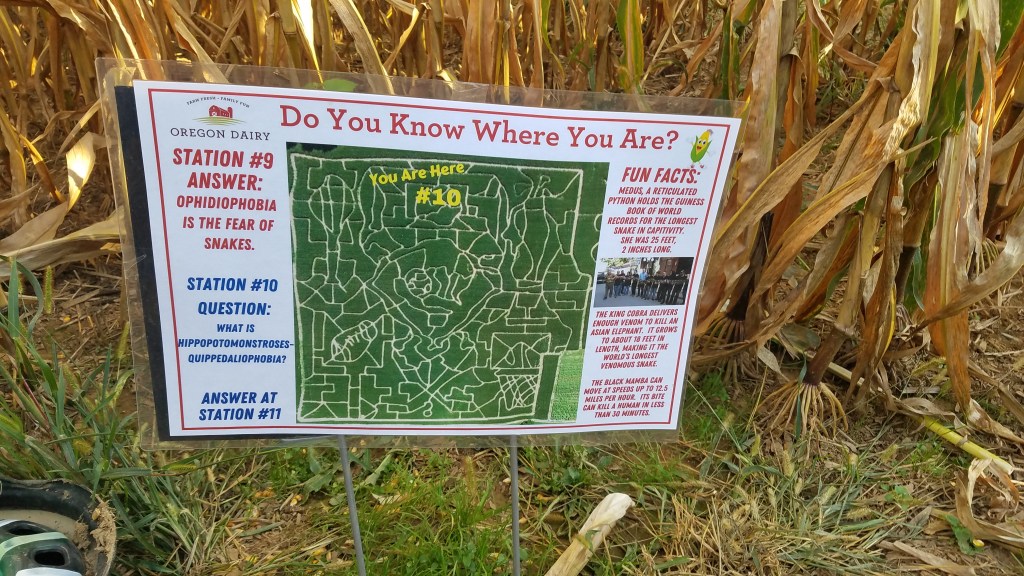
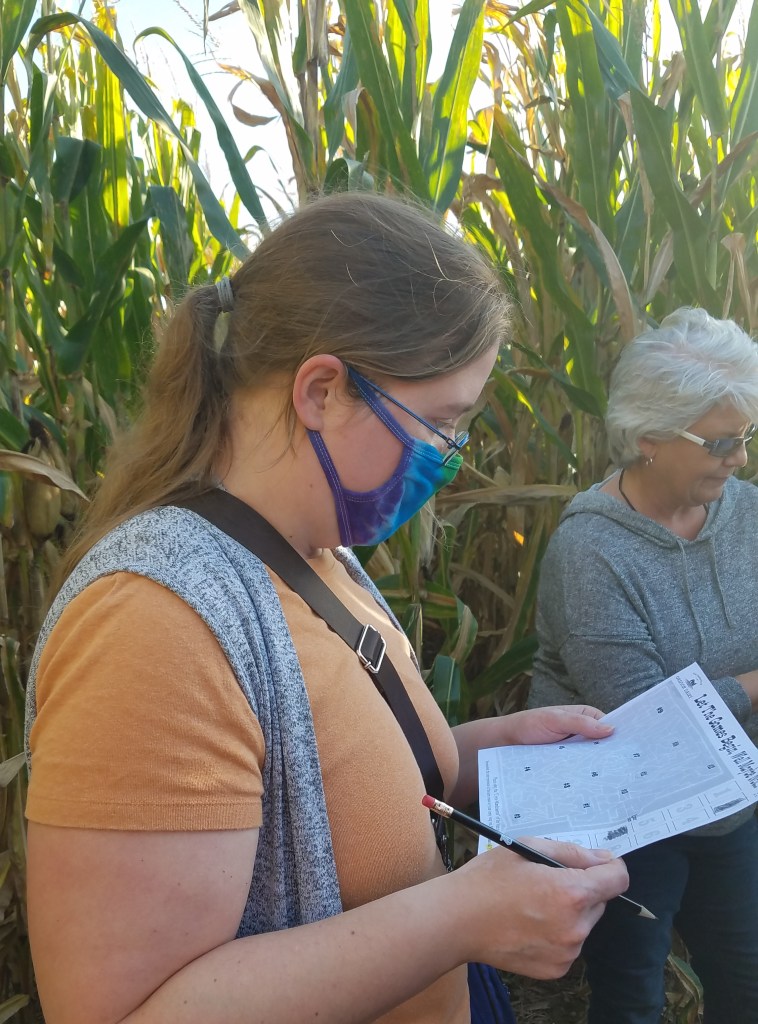
No one was really sure how long we walked or how far. We did manage to find markers which were various points that we were supposed to find and mark off in order to “complete” the maze. They helped to orient us to where we were and help keep us on track. As with any group of activity, it was all about communication and collaboration. 

Some of us took a more backseat approach, content to let the others lead rather than become overly focused on the goal. I purposefully avoided trying to take charge as there were already several chiefs taking the lead and I had played enough videogames to know that I am terrible at reading maps and knowing where I am. Though, I have gotten better at it since 2020. I enjoyed the time wandering aimlessly trying to figure out where we were and where we were going. In the age of GPS, google maps it is so rare to be truly lost and having to use what few tools you have available to answer those basic questions. It felt like a small adventure, even though there were plenty of people to help you get out of the maze if you were truly lost. 

We found about half the markers before we decided that it was beginning to get late and it was time to go home. Many of them had young children and those without children, had pets who were waiting at home for their dinner and evening snuggles. I would love to try to finish a corn maze in the future as I truly did find it enjoyable. So not only did I get to try something new, but also I got to re-evaluate an activity I previously thought would not be for me. 

I encourage you dear reader to reconsider your own “I’d really rather not” lists. Often the barriers to new and potentially exciting things are only in your mind. With careful planning as to when we went, most of my concerns for why the journey would be anything but enjoyable for me were laid to rest. 

How can you experience getting lost in a corn maze?

Mazes have been part of human cultures for thousands of years. They crop up in stories like the labyrinth and the minotaur and there is a reference to one in ancient Egypt by the writer Herodotus. In more recent history, hedge mazes were a popular form of entertainment found in gardens of the elite such as the ones at the Palace of Versailles or Hampton Court Palace. Today, corn mazes are the hedge mazes of the people. 

The first corn mazes started cropping up (pun intended) in my home state of Pennsylvania. The very first one was in the neighboring county of Lebanon in 1993 by Earl Beal. It was inspired by his father’s work on mazes at a local amusement park and the idea quickly spread across America to other farming communities. Now they are found all over the country where farmers make their living. 

I do recommend not going for the “biggest” corn mazes if you’ve never done one before or don’t have the best sense of direction. As I said, the maps are deceptively simple, because once inside you will get turned around pretty easily. Try some of the smaller ones, you will have just as much fun and feel a sense of accomplishment when you’re able to complete most if not all of the maze. This helps to ensure you have a good time as it gives you an attainable goal for a novice. It’s important with our bucket list to keep ourselves in a place where we are being stretched without being overwhelmed.

The Curious Case of the Gettysburg Ghosts: A Walking Tour of One of the Country’s Most Haunted Cities

There’s something mysterious about the late fall, when darkness creeps over the earth stealing away precious daylight hours and the earth loses its color. Once familiar trees transform into shadowy forms at twilight, their fingers reaching out to the unwary traveler. The comforting sounds of animals scurrying about take on a more sinister tone and even the wind begins to moan hauntingly. Is it any wonder that such a time of year made many believe that the veil between worlds was thin and gave rise to the spooky season we know and love so well?

It’s a time of year when many travelers flock to the former places of death in hopes of encountering a being from beyond. Certain places are known to be more haunted than others and few other places top Gettysburg, Pennsylvania on the list of most haunted places frequently earning the 3rd or 4th spot. The majority of these restless dead are thought to come from the decisive battle of Gettysburg, one of the deadliest battles in our nation’s history and is considered by many to be the definitive turning point in the civil war. Over 51,000 soldiers perished and many more were injured. 

Being both curious to learn more about the history of Gettysburg and to get ourselves in the spirit of the season, my sister and I embarked on an evening stroll to suspend belief for an hour or two and perhaps, catch a glimpse of a specter. Given the town’s reputation for its hauntings and that it goes all out with Halloween decorations, it is decidedly recommended to arrive early for a walking tour because parking was rather difficult to find as hundreds of spooky enthusiastics milled about also hoping for a ghost sighting. With a little trouble, we made it to the appointed meeting spot which was difficult to spot as it was an unassuming door for the Museum of Haunted Objects.  

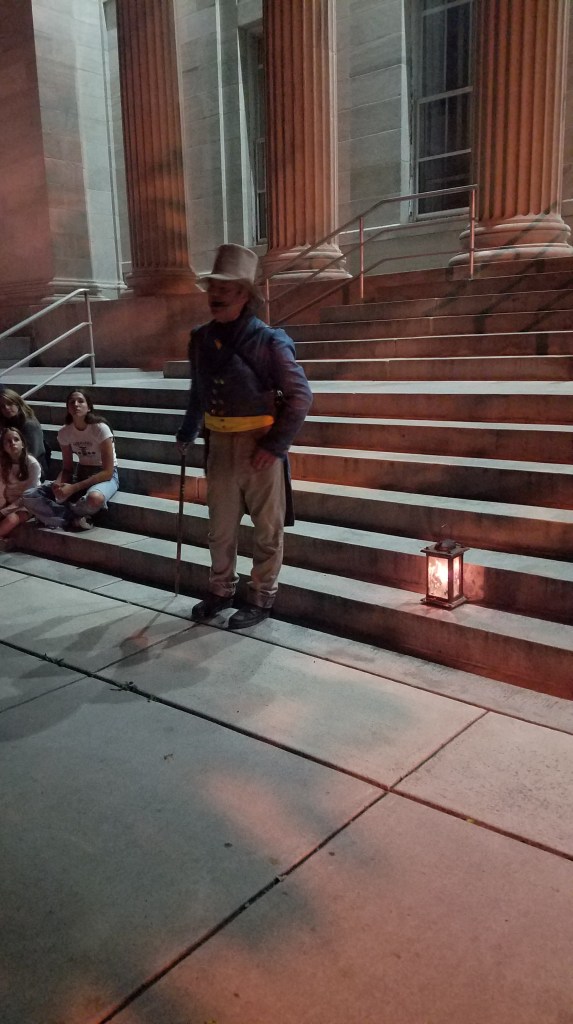
Our guide was a jovial man dressed in the manner of an 1860’s gentleman, complete with top hat, lantern and walking cane. He explained that the reason for the number of hauntings was due primarily to the unburied and still restless ghosts of the Confederate Army. He explained that in the aftermath of the battle, the town and surrounding countryside were overwhelmed with the corpses of the dead. The stench lingered for months as they struggled to lay to rest the dead. It seems almost a natural reaction in the face of so many that the dead of one’s enemies were more hastily buried with little honor or respect. Many of the townsfolk wanted to move on from the aftermath of the battle, to forget the horrors from the streams of blood and piles of amputated limbs littering the outside of the former field hospitals. Unfortunately, the dead not properly put to rest lingered on a constant reminder of the horrors of those three days. 

We actually began our tour at a curious place, the local high school where in the course of an expansion several confederate soldiers were uncovered. It was strange to think that hauntings were so common in this area that one may go to school directly next to ghosts especially when reflecting on all the late night music practices I attended. Having set the tone as being a town so haunted ghost sightings are your local high school are hardly something to comment on as out of the ordinary, we set off to learn more directly about the different places and their stories. It also gave credence to the theory that the hauntings were a result of restless Confederate soldiers in need of peace. Because after the discovery of the Confederate soldiers, they were buried properly and the reported hauntings ceased. 

But not all hauntings can be explained by disrespect for the dead. Ms. Jennie Wade was the only civilian to die during the intense fighting – a rather shocking fact when one considers the numbers lost to the fighting. Jennie had come to support her sister Georgia who had just given birth along with her mother and her brother. She was mixing dough for biscuits when a stray bullet passed through two doors before hitting her in the back. Though certainly given a proper burial by her family, it does seem she remained to haunt the home due to unfinished business – she never got married. Unlike many ghost stories, ending in misfortune, it seems that  Ms. Jennie is a generous spirit rather than a malicious one as she is said to help single ladies who visit her home. Just place your finger on the interior door bullet hole and you shall receive a marriage proposal within the year. One does hope that she is able to find rest after granting happiness to so many others.

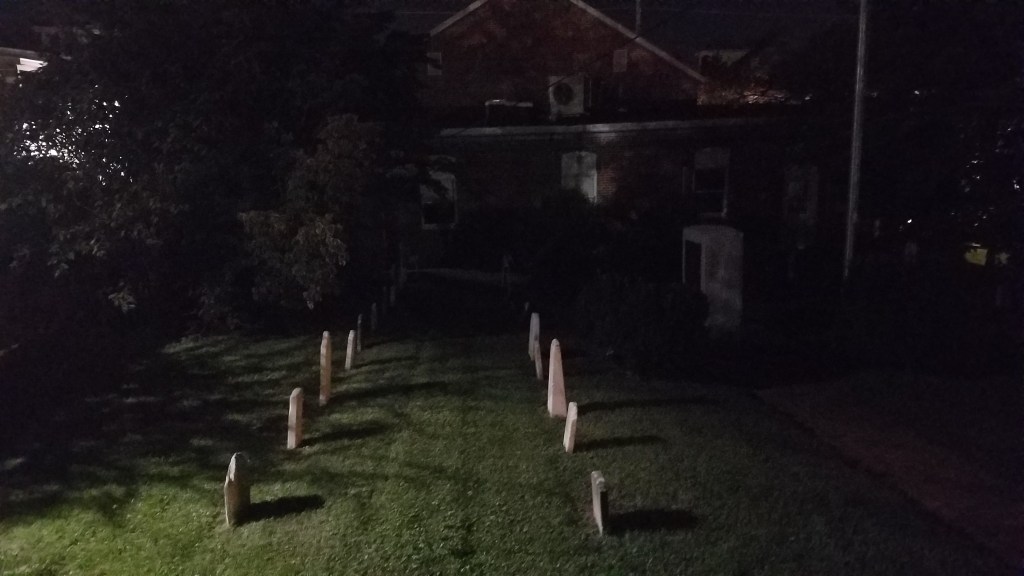
Graves behind the orphanage

We heard other stories of haunting in the area including the orphanage where the guide told us a rather chilling story of children inviting others to join in a game of ring-around-the-rosie much to the dismay of the adults. Interestingly enough the orphanage itself was not directly connected to the battle but rather its aftermath. With so many lost in the war, many children found themselves without a caregiver which led to the founding of a new orphanage in Gettysburg under Ms. Philinda Humiston. Initially, the orphans were well cared for until a new Headmistress took the reins of power, Ms. Rosa Carmichael. Ms. Rosa is reported to have locked a four year old boy in an outhouse in the bitter cold of December, keeping others in chains, sometimes in vats of water where they risked drowning and beaten them. There were several children who were missing and never found. Visitors to the orphanage are said to hear the clanking of chains and the cries and laughter of children. Some report to have seen the visage of the evil head mistress. It seems a bit macabre to me that people will pay for a chance to interact with the lost children of the orphanage and such a cruel creature. It is not the stories of ghost which haunt, but of the cruelty of people.

However, it was not the stories of ghosts that haunted me (pun intended), but rather the description of the carnage of the field hospitals and the battles. It was not just death which turned this quiet town into a horror show, but also the number of amputations. The guide described how there were so many body parts that they began to simply toss them outside the window of the hospital, piling up limbs, that doctors and nurses waded through blood trying to help the wounded and dying. At one place a group of captive soldiers being held in a basement had blood raining down on them through the floorboards. Whether one believes in ghost stories or not the reality of the battle could not be downplayed. I think in our modern era it’s easy to forget the real horrors of war being so far removed from it as we often are. 

What I found most interesting about the tour was seeing the battle from the perspective of the townsfolk and how it affected them many generations after. It is what still defines the town to this day. When many people were frolicking about in their costumes, giggling at the sightings of ghosts and enjoying a festival atmosphere, one must wonder how we arrived at this point. Almost a hundred and fifty years ago nearly 50,000 people perished in a war to decide the fate of America. The town was washed in the blood of patriots fighting for freedom. Doctors and nurses frantically rushed to save lives, hacking off limb after limb in a desperate attempt to mitigate the damage. After the armies left, it was the townsfolk who were left to pick up the pieces and bury the dead. Perhaps, there is something to be said that an experience so horrific can be transformed into an evening of lighthearted fun, traversing the streets by candlelight as the guide does his best to both educate and scare you. Perhaps, it is an indictment of a culture so indifferent to real human suffering that it seeks to capitalize on it. Perhaps, it is a coping mechanism of a place so scared by the horrors witnessed both in those three days and in the years after, that we can hardly blame them for embracing the kitsch nature of the spooky season to transform it into a more palatable form. 

Regardless, it was an intriguing evening of history and even anthropological musings on the response to collective trauma. Though those musings were from my own internal observations than anything the guide said. I found the guide to be quite informative and an avid storyteller who was quite capable of raising goosebumps as he relayed the tales of the ghosts who stalked the streets at night. 

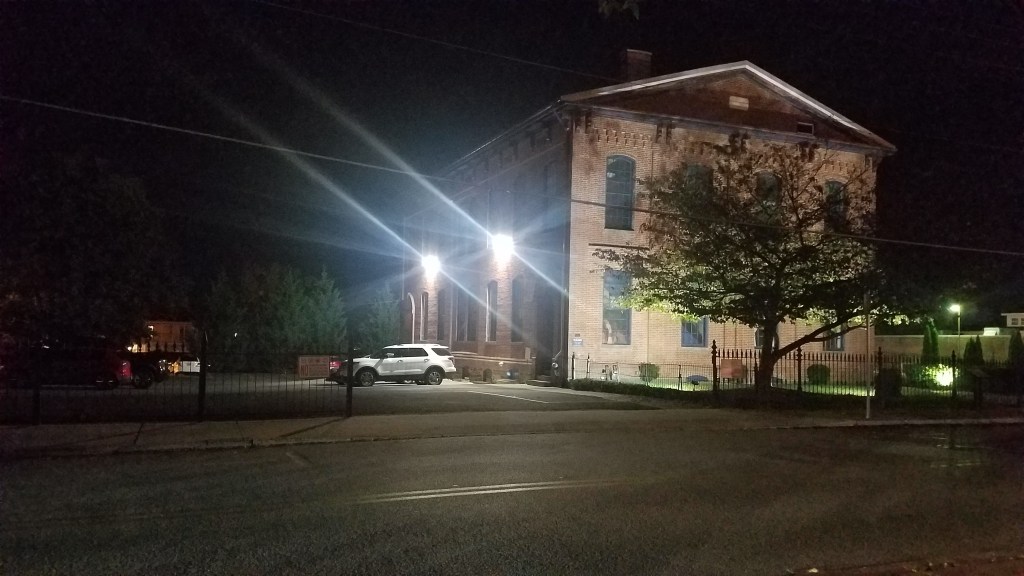
Our guide looks almost ghostly in this picture!

How can you go on a haunted tour?

There are many towns and cities throughout America that have reported hauntings from Gettysburg, PA to Savannah, Ga, from Salem, MA to Portland, OR, from Chicago, IL to Sante Fe, NM and everywhere in between. My own hometown gives a ghost tour each fall! You can usually find them being advertised from Mid-September through early November. There are places that will offer ghost tours throughout the year. 

Whether you believe in ghosts or not, I certainly recommend them for the history as they often give a different perspective than other walking tours. Often, they showcase the lives of ordinary people like Jennie Wade who only wished to help her sister and had dreams of getting married or they help us remember the victims, like the orphans who suffered at the hands of Ms. Rosa. They can be nights of fun and even frivolity, but at their core, they are stories to remember the darker parts of our collective past, even if they’re presented in more palatable forms. Nevertheless, they are stories worth remembering. 

Completed: October 2021

Cost: $35 each

Miles from home: 63 miles

Are You Going to the Ren Faire? Pirates, Fae, Cosplayers & Knights

It is no secret that I am a whimsical sort of person. I see magic in butterflies and can easily imagine that among them may be hiding a fairy. I can easily pretend that lurking in the woods is a dragon hoarding its treasure or an enchanted prince who needs only a maiden’s kiss to set him free. It is not that I am divorced from reality, far from it. I assure you, dear reader, I have both feet firmly planted on the ground. I am a pragmatic, practical person who understands well the constraints of life and the sorry lack of unicorns. However, I am also a person who chooses to live slightly off the beaten path to court the possibility of magic still with a childlike enthusiasm for the world. 

So naturally, a trip to the Renaissance Faire is the salve that those with the same sort of spirit as myself so desperately need. Let me be perfectly clear, the Renaissance Faire is not a place of historical accuracy. It is much more akin to a Renaissance Fantasy Convention with a pretty sweet setting than a historical re-enactment. So if you’re looking for that sort of thing, I suggest googling medieval reenactments and steer very clear of any Ren Faire lest you be sorely disappointed. They are however a very whimsical place for us very whimsical souls. 

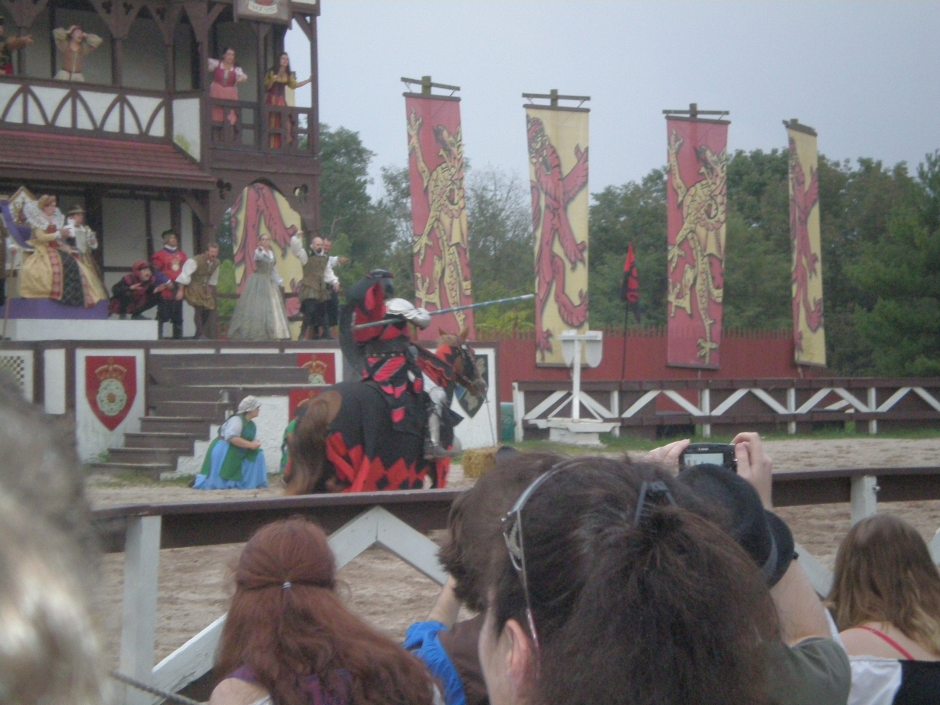
The Pennsylvania Renaissance Faire is considered by many to be one of the best ones in the country. Each year between mid-August and the end of October, Mount Hope Estate opens the door to an alternative 16th century England and invites the public to an interactive fantasy play of sorts. Throughout the day if one follows the going ons of the royal family and its court, a story will unfold. It may be an internal plot to force marriage to Queen Elizabeth or an external threat by the Spanish to conquer England. Occasionally, the story focuses on King Henry rather than his daughter Elizabeth, just to keep things spicy. It always culminates in a joust to settle the score and determine the outcome. Spoiler – England and its crown always win, but the end isn’t the fun part. 

What’s fun is all the stops in between like the Human Chess tournament – which is arguably much more fun than chess because the pieces actually have to fight each other for control of the spot.  You also can follow the actors and see their improv skills put to use. It is not that they merely stand on a stage and you watch, they will stop and speak with you. They will have you join the story and even if you go off script their expertise keeps the play going. There are also dozens of actors wandering the grounds to keep the story alive. They may stop and stare at your phone curious at such a magical device in such a curious traveler’s hands. What on earth are you wearing sir? My goodness, young lady, do you realize your knees are showing? A good sport will join in the fun. 

You are encouraged to dress up and different weeks will have different themes. Rather than fight against the crowds of nerds dressing up in various outfits which some people argue don’t belong at Ren Faire, they embraced it by giving the different fandoms their own weekend outlets. Sci. Fi. fans have time traveler’s weekend which welcomes Star Fleet, Whovians and more.  Die hard fantasy nerds have Wizarding Weekend. Us whimsical folks have Fairies and Fantasies. There’s also pirates, vikings, heroes, Irish/Scottish and October is devoted to all things spooky. 

There’s also over a hundred different vendors and merchants selling all sorts of wares, many of them unique to Ren Faires. Though I will admit with the advent of the internet it has gotten a little easier to access similar items than when I was growing up, which makes them seem a little less special than I remember them being. 

OLYMPUS DIGITAL CAMERA

I know I sound impossibly old with my references of the world before the internet was a big thing. We also didn’t have electricity or running water. We made fire by rubbing two sticks together. We used to have to run down big game in order to survive until we discovered farming! I myself invented the wheel, it was a really big hit. 

I digress. In addition to the wares, I would be remiss if I didn’t mention the food. Of course there are the infamous turkey legs which I do recommend if you have not yet tried one. Throughout the faire your mouth will be almost constantly watering with the aroma of both savory and sweet treats to tempt you. On the scorching August days, you will want to try various cold beverages and being next to a winery, they have some of the very best vintages. Though I will remind you, gentle reader, that wine is not known for its hydrating properties and you should be certain to drink plenty of water when wandering about the faire. Besides, too much will be bad for your wallet when you impulse buy that hand forged sword and moving dragon puppet. Although, you will have a sword and a dragon, so I’m not sure what the downside to this situation is. 

There are of course plenty of activities that abound throughout the faire. Face painting, palm reading, ax throwing, a maze, mock fencing, even rides powered by strong men and physics. If nothing else, admire the view ladies. Occasionally there’s a horse dressed up as a unicorn to pet. There’s even retired greyhounds who are there to raise money for their rescue and get petted. Who doesn’t enjoy petting a dog? If you’d like to get more dressed up, there’s face painting and even hair braiding.

And while I have spoken about the wares, the food, the beverages and activities, what I like most about the faire is the various shows and demonstrations scattered throughout. They have glassblowing, blacksmithing and even instrument demonstrations. It was at the Ren Faire that I learned all about the Hurdy Gurdy and was introduced to one of my favorite musical artists because of it. They often have falconry and other sports like jousting. These are the places where you will get a more authentic Renaissance experience as most of these are intended to be educational.  As many of the demonstrations tend to be less attended than the larger shows, I often get to have one on one conversations with the experts of their craft. There’s nothing quite like being able to ask questions and get well throughout, nuanced answers that chat gpt just can’t replicate. 

OLYMPUS DIGITAL CAMERA

There are other sorts of shows, usually either musical or comedic in nature, often a combination of both, as those always do well in larger crowds. One should be warned if bringing your children that many of the shows are for adult audiences so the jokes will reference adult topics. Usually those shows are marked with a small asterisk on your map and program.  When I was a teenager and young adult, I found them amusing. As a middle aged woman, I’m not as into the bawdy humor as I was. Maybe I’m just an old stick in the mud, but that’s okay, if you like that kind of humor attend those shows, enjoy them, I’m not trying to shut them down. Why would I stop other people from having fun? You can find me petting the unicorn. I don’t care if the unicorn is meant for the five year olds, I want to pet the cute animal! 

A day at the faire is a day for fantasy and fun. It can be whatever you make of it. If you’re a shopper, go shopping. If you want to only watch the shows, there are shows throughout the faire every hour and half hour. Some people religiously follow the story and so attend the human chess match, the jousts and follow the court around all day. Some people just come for the food and eat. You may want to spend all day getting a quality education about Renaissance and Medieval Europe and go to the demonstrations. Or you’re like me and go wherever the fancy strikes you. 

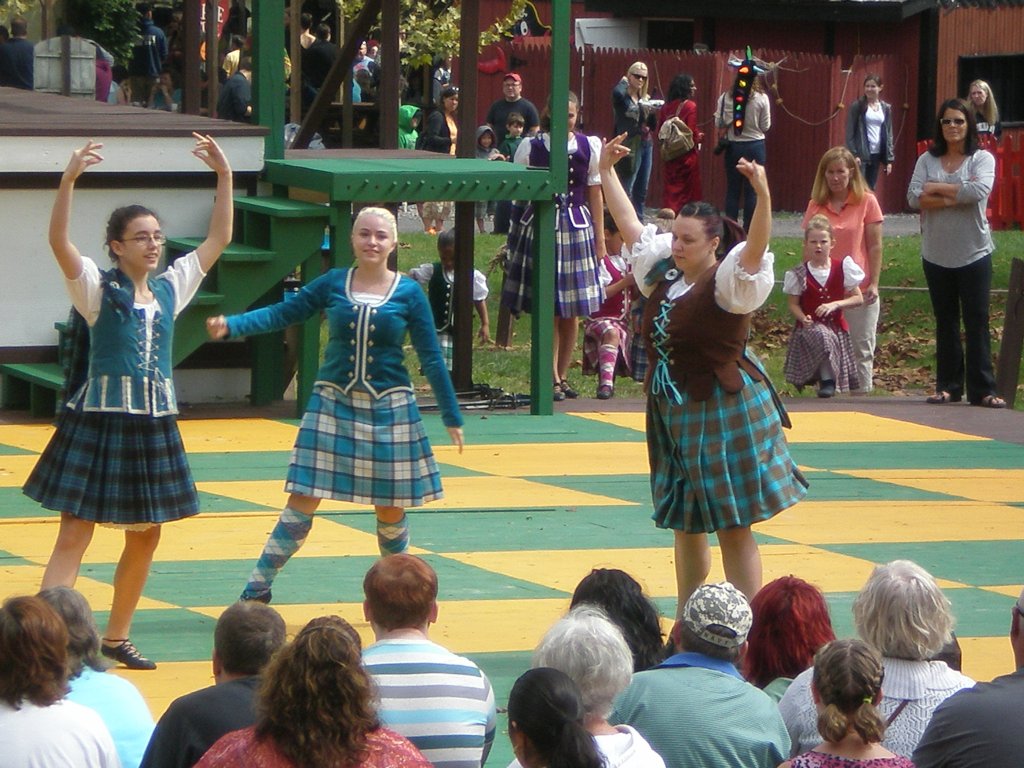
Having grown up going to the Ren Faire for most of my childhood I’ve gotten to do just about everything I’ve ever wanted to do. I don’t go every year, but I do go every few years. It is always fun to see what they’ve changed or how they’ve expanded. It’s like coming back to an old and familiar friend. I could probably find my way around half blindfolded. I know most of the songs the performers belt out and am even friends with the owner of a very good kilt shop. Some of my best summer memories are of the Faire and is decidedly one of those bucket list items that are worth repeating! Especially since the faire may have lots of things to check off your list. 

OLYMPUS DIGITAL CAMERA

How can you add some whimsy in your life and get to a faire?

Almost every state has a Renaissance Faire and some even have more than one. Depending on where you live they may take place at different times of the year. Many faires take place in the late summer/early fall in the North East but not every faire does. I believe most faires in the North and North East take place in the summer through fall because of weather, but I think in the southern parts I saw many of them being advertised for the spring months. Probably because their weather would make it impossible to wear things like a knight’s armor without dying. 

I strongly encourage you to dress up a little bit and have some fun your first time. Make sure you’ve set aside plenty of money to buy some of the cool things you’re bound to find. Many Ren Faires run both Saturdays and Sundays with a discount for a weekend pass. You will most likely be overwhelmed with the possibilities that abound, so make Saturday a day for shows and following the storyline and Sunday can be the day you return for shopping.

If you make it to the PA Ren Faire, then you should definitely stop by their winery right next door and do a wine tasting. They have many unique blends and flavors. Not only do they offer wine, but also meads. My personal recommendations are the blackberry merlot and the Traveler’s Mead, a butterfly pea blossom mead. However, you do you, that’s what tasting is for after all. 

Completed: Childhood & throughout adulthood

Miles from home:  11

Cost: $33 for person (local’s tip Turkey Hill often has discount coupons for certain weekends buy one get one free, to make it even cheaper) 

Full disclosure: You will probably spend a lot of money at the faire if you’re not careful between the food and the merchandise so budget closer to $100 if you’ve never been before.

Butterfly Garden 

Is there any other insect quite as magical as a butterfly? They have fascinated humans for centuries. The word psyche which is another word for the soul is derived from the Greek root for butterfly or night moth. They show up in myths and folklore throughout the world. They represent love, transformation, resurrection, triumph, endurance, immortality and ephemerality across various cultures and times. We are endlessly enthralled by them. They show up in art, literature, poetry and even political campaigns. For such small creatures, they take up a lot of space in the human world. They are vital pollinators and essential to our ecosystems. 

For all their beauty, they begin as a sort of worm-like creature which actually dissolves itself inside its chrysalis to transform. It is not that a caterpillar grows wings, it becomes complete mush to become something else. Much like how a wildfire clears out old growth to make way for new, the complete and utter destruction of the caterpillar is the only way to transform into a butterfly. 

Butterflies flitting through the air

They are in some sense living jewels. Their brilliant hues run the full gambit of the rainbow and even contain colors we will never see as their wings also contain patterns of ultraviolet light. Their wings are unique in that the simmering colors we see are produced by both pigments on the wings themselves and structural color. Structural color is produced by how the light hits the wings themselves causing the color to seem to shift and change suddenly, giving the wings the characteristic iridescence. The wavelengths of light are amplified through layers of the butterfly’s wings. 

Entering the Butterfly Atrium at the Hershey Gardens is to be transported to a tropical paradise where hundreds of butterflies take flight. Visitors are delighted by rare species from South and Central America, Asia and Africa. One strolls through the winding path among the plants imported from far off places to be enchanted by the dancing jewels shimmering in the air. They are enticed to come closer with trays of hanging fruit which they gather around as a never ending feast. Sometimes they will even land on you. The delight at seeing them float effortlessly through the air is unmatched. They swarm together elegantly in a mesmerizing waltz. It is as if you had fallen through a portal to a magical realm and you half expect to be greeted by a member of the fair folk. Perhaps, one should pack a pinch of salt just to be safe when visiting such places and be mindful not to share your name with strangers. 

Different types of chrysalis

The garden is not only for mere enjoyment, there is an educational piece as well where one can see the life cycle of the butterfly and see the various stages of their lives. Additionally, it houses other displays of animals such as frogs and spiders. Do not worry, the only creature that roams free is the butterfly!

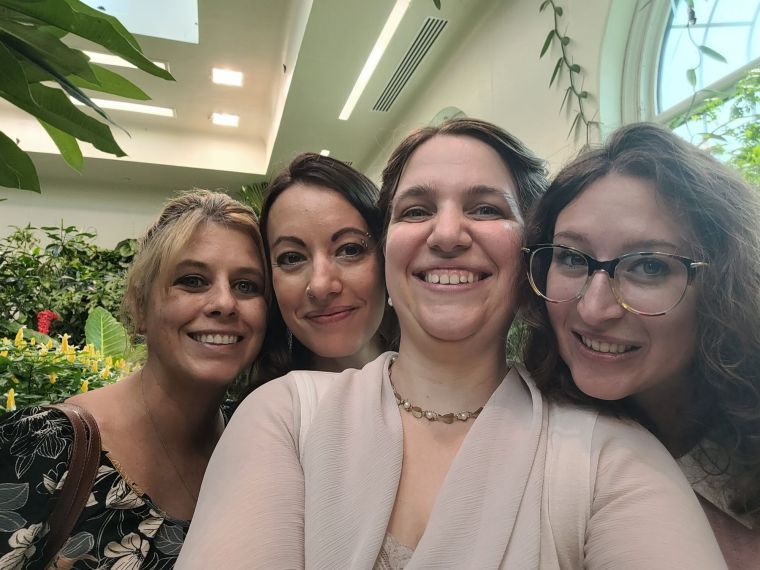
My own visit was an extension of an employee appreciation day by a previous employer. I suppose it was an apt gift to a group of social workers who needed an afternoon of self-care. We all left feeling rejuvenated from the experience. Each person’s face transformed the moment they walked through to the butterflies. The outside world melted away, stress and worries disappeared for just a small window of time. It certainly begs the question, dear reader, though the butterfly be a common creature, is it not truly magical?

These beautiful ladies that I worked with!

How you can visit a butterfly garden

This one may require you to venture a bit further afield depending on where you are. At the time of this writing, Hershey Butterfly Atrium is one of only 25 indoor butterfly gardens in the country but there are other options for watching butterflies take flight. In my research, I stumbled upon a website that listed out various options here: https://butterflywebsite.com/GARDENS/butterfly-gardens-exhibits-displays-houses-usa.cfm 

Completed: 2022

Miles from home: 30 miles

Cost: Free for me, but regular tickets are $16.50

I left a shortened compiling of the list below in case the website link no longer works. You will note that only 35 of our 50 states have either butterfly gardens or displays. I do hope that those who are in states not listed below are able to find something nearby. I recommend googling and seeing if there is anything closer, or perhaps you are lucky to be in a state where the butterfly migrations occur. Perhaps, it will simply be something to keep in mind when you do travel.

You too may be graced by a butterfly

Alabama

Huntsville Botanical Garden – Purdy Butterfly House

Arizona

Butterfly Wonderland

Tucson Botanical Gardens

California

Gilroy Gardens Family Theme Park

Natural History Museum of Los Angeles County – Butterfly Pavilion

San Diego Zoo Safari Park

Six Flags Discovery Kingdom

Turtle Bay Exploration Park

Butterfly Farms

Fairchild Tropical Botanic Garden

Water Conservation Garden

Colorado

Butterfly Pavilion

Western Colorado Botanical Gardens

Delaware

Ashland Nature Center Butterfly House

District of Columbia

Smithsonian Butterfly Garden

Florida

Arnold’s Butterfly Haven

Butterfly World

Caribbean Gardens, the Zoo in Naples

Central Florida Zoo and Botanical Gardens

Florida Museum of Natural History – Butterfly Rainforest

Lukas Butterfly Encounter

Panhandle Butterfly House

The Key West Butterfly and Nature Conservatory

Georgia

Rosalynn Carter Butterfly Trail in Plains

The Day Butterfly Center

Hawaii

Foster Botanical Garden Butterfly Habitat

Illinois

Brookfield Zoo – Chicago Zoological Society

Peck Farm Butterfly House

Peggy Notebaert Nature Museum

Indiana

Indianapolis Zoo

Iowa

Reiman Gardens

Kansas

Botanica Gardens

Kansas State University Gardens

Kentucky

Louisville Zoo

Louisiana

Audubon Nature Institute Insectarium & Butterfly Garden

Maryland

Brookside Gardens Conservatory

Ladew Gardens

Massachusetts

Magic Wings Butterfly Conservatory and Gardens

Museum of Science Butterfly Garden

The Butterfly Place

Michigan

Detroit Zoological Society

Dow Gardens

Frederik Meijer Gardens & Sculpture Park

Horticultural Gardens and Butterfly House

John Ball Zoological Garden

Mackinac Island Butterfly House

Wings of Mackinac Butterfly Conservatory

Minnesota

Como Park Zoo & Conservatory

Missouri

Saint Louis Zoo

Sophia M. Sachs Butterfly House

The Butterfly Palace & Rainforest Adventure

Nebraska

Lincoln Children’s Zoo – Laura’s Butterfly Pavilion

Omaha’s Henry Doorly Zoo

New Jersey

Camden Childrens Garden

Kate Gorrie Memorial Butterfly House

New York

Breck Chapin Memorial Native Species Butterfly House

Butterfly Garden

Dancing Wings Butterfly Garden

Sweetbriar Nature Center Butterfly House

North Carolina

Airlie Gardens

Museum of Life and Science – Magic Wings Butterfly House

Ohio

Butterfly House at Wheeler Farms

Butterfly Museum at Perry’s Cave

Cleveland Botanical Garden

Cox Arboretum MetroPark

Franklin Park Conservatory and Botanical Garden

.Krohn Conservatory

Oklahoma

Oklahoma City Zoo Butterfly Garden

Tulsa Zoo’s Wings of Wonder

Honor Heights Park Butterfly House and Gardens

Oregon

Elkton Community Education Center

Pennsylvania

Churchville Nature Center

Philadelphia Zoo

Phipps Conservatory and Botanical Gardens

The Academy of Natural Sciences of Drexel University

The Butterfly Atrium at Hershey Gardens

Bear Mountain Butterfly Sanctuary

South Carolina

Coastal Discovery Museum Butterfly House

Cypress Gardens

Roper Mountain Science Center Butterfly Garden

South Dakota

Sertoma Butterfly House & Marine Cove

Tennessee

Butterflies: In Living Color at the Memphis Zoo

Tennessee Aquarium

Texas

Cockrell Butterfly Center

Heard Museum and wildlife sanctuary

NABA National Butterfly Center

River Bend Nature Center

San Antonio Zoo

Texas Discovery Gardens

South Texas Botanical Gardens

Virginia

Bristow Butterfly Garden

Butterfly Station and Garden

Flying Flowers at Beagle Ridge

Lewis Ginter Botanical Garden

Washington

Tropical Butterfly House at Pacific Science Center

Woodland Park Zoo

Wisconsin

Beaver Creek Reserve

Butterfly Gardens of Wisconsin

Happy Tonics, Inc.