
Living Your Best Life

We often hear or even say the phrase “living my best life”, but what does it actually mean? Is it being able to reach your goals? To live a full life? What is a full life? In general when we use say look at this person living their best life, we usually see someone who has fully embraced being themselves without caring what others think. But how do we even know that they really are living their best life? What does a “best life” even entail? It probably does and should look different for different people. What makes my life “best” isn’t what will make your life “best”. There are, of course, guiding principles. After all, this whole blog is in part to help people live better lives. For most people a best life is one that comes from connection to others and a sense of meaning or purpose without worrying too much about the judgment of people. 

There are a myriad of ways to arrive at those two things. I have seen lists of anywhere from 6 items to 30 items of how to arrive at a “best life” or to live a fuller one. Some of these lists even conflict with each other like focusing on yourself and your own personal growth yet being “other” centered. If you grew up in the Christian community you may have been told that JOY comes by putting Jesus first, others second and yourself last. All well and good, until you stop caring for yourself at all and forgetting that you can’t help other people if you haven’t been taking care of yourself first. On the other hand, always putting yourself first is obviously narcissistic and self-ish, certainly not the way to form meaningful connections to others. How to reconcile the two conflicting sides? 

This post isn’t necessarily to tell you how to arrive at those two things, more to get you to try and think about what might help you get there. As illustrated above, there are people for whom the advice of putting yourself first is absolutely necessary! I talk about boundaries and self-care in other posts precisely because putting my own needs last was something I struggled with leading to burn out, resentment and bitterness. Not things that helped my relationships. 

However, there are certainly many people who need to be told to put others at the center and to focus on getting out of their own world and be more mindful about how their actions affect others. The character of Ebenezer Scrooge in Charles Dickens’ A Christmas Carol certainly needed that lesson lest he find himself cast into hell for his self-centeredness. All things in moderation I suppose. 
Photo by Andrea Piacquadio on Pexels.com

For some people living their best life may be learning to let go of stress and worries, for other people it may be that they need to worry about the future a little more. You may need to learn to stop caring so much about what others think or you may want to consider others opinions a little more. The path to a “best life” is one that is always evolving and changing. Each person is an individual and what their best life looks like is going to be different. 

One of the best ways to achieve a best life is through self-reflection. 

After all, how do we know what we need to learn and how do we know when we’re being ourselves if we don’t take time to self-reflect? One way to really get to know ourselves is to “talk to ourselves”, not in the crazy person sort of way, but through journaling. I often find myself surprised by some of the things that come out of my own journaling where I let the flow of the subconscious go where it will. I may look for various prompts to consider to help jump start my self-exploration. There are also journals out there geared to specific topics or goals. For journaling to be truly effective requires us to be really honest with ourselves willing to face possibly ugly truths. 

Journaling can also help us explore our relationships to help us determine if we are truly connected to others. In learning more about ourselves, would we be able to share these insights with those closest to us? Do we have people who we can truly express ourselves and be vulnerable with? True connection to others means that you can be authentically yourself. After all, some of the loneliest people on the planet are those who are extremely popular. Why? Because in pursuing being liked by everyone, they are too afraid to show their real selves lest they be rejected. The hard truth is that you won’t be everyone’s cup of tea, but you have a choice to make, be your authentic self to have real connection with others or disguise yourself and be alone.  

This can be extremely difficult because it requires us to live without fear of the judgment of others, which is the main reason so many of us choose to live inauthentic lives and to settle for relationships that are shallow. However, this is a key piece of living our best lives. As I said at the beginning of this post, when we say “look at this person living their best life” it’s often said as a form of respect for someone who clearly doesn’t give a “f” what others think. They’re the people walking down the street dressed outrageously. The people dancing in the street to a musician. The ones who call you darling as they don a hat before splashing in a fountain. They laugh too loud, love too deeply, hear poetry in the rain and see works of art in the swirling of leaves in the wind. They may also be the ones who aren’t afraid to piss people off with how they view the world, unafraid to speak up and speak out. However they live, they are authentically and unapologetically themselves. 
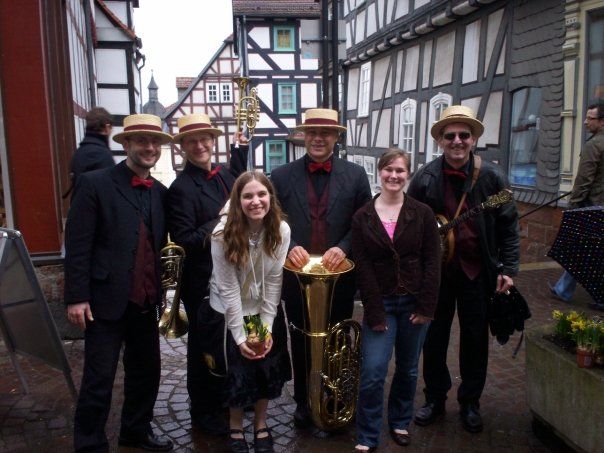
I danced for these street musicians as if no one was watching!

Living authentically isn’t being a jerk about it though. These are people who don’t care if they tick people off but they don’t purposefully go out of their way to do so. It isn’t about being mean. It’s about respectfully disagreeing and holding themselves apart from the judgment of others. It’s more of a live and let live attitude. Like okay, you don’t like that I live my life this way, but it’s no skin off your nose and I don’t have to listen to your criticisms about it if they aren’t constructive or useful. Someone living their best life knows that bees don’t argue with flies that honey is better than crap.

Another benefit to journaling is it can allow us to consider another aspect to a best life, living with purpose. I’m not here to tell you what a purposeful life is or is not. Each of us has a calling. Each of us has a gift or talent. I can’t tell you what those are because I’m not you. In general, a purposeful life involves leaving the world a better place, and helping others. Some people may have very obvious purposes like teachers, nurses and EMT workers. Teaching the next generation, healing the sick and protecting others are all very obviously meaningful things to do based on the values of our society. 

However, almost any job can be infused with meaning when placed into a larger context of helping others. Nor does your purpose have to be tied to your job. I once interned for a group of businessmen who invested money. They were quite good at it, but rather than simply take all the money for profit, they used it to open an orphanage in Africa. This orphanage did not stop assistance at the age of 18, but rather continued to invest in the children, helping them obtain higher education. The children were able to start businesses in their local community and become leaders thus laying a firm foundation for independence in the region. Their calling was to help disadvantaged children and to grow a community in Africa even though their jobs had almost nothing to do directly with this calling. Your talents and your calling may be seemingly disparate things that nonetheless are yours. 

There are, afterall, lots of ways to leave the world a better place.Talents don’t have to be utilized in a specific way. Your job doesn’t have to exactly match your calling. It’s certainly easy when the two directly align, but sometimes they may seem completely disconnected. You also don’t have to have your calling address every ill in the world to leave it a better place. Some people’s calling is to focus on the environment, others may have a calling to help sick children. Both are worthy callings that do not negate the other nor is one automatically better than the other. There are unfortunately a lot of problems in the world and there’s just no way for each of us to address all of them all at once. That isn’t to say don’t do what you can for the problems of the world, do the part you can. Your calling is the thing you focus on. 

The point is for you to determine for yourself what your talents are and how to apply them to your specific calling. I will probably write a more extensive post on a purposeful life, but as I said earlier this post is more to help you start to consider what a best life is and how you might start to consider what your best life looks like. To be honest, I’m still figuring it out. One of the reasons I have a bucket list is to try new things, complete new challenges, to grow, and learn more about myself. 

So what are you waiting for? Go forth, dear reader, and start living your authentic best life!

Take the Risk and Let Go 

In an earlier post, I wrote about letting go of the wall while ice skating. The wall was a place of safety, it kept me from falling and allowed me to build up the skills that I needed in order to traverse the ice. After all, it is by definition a rather hard surface and falling on it of course causes pain and potential injury. Yet, the wall is very limiting. One can only go as far out as one’s arms reach. If there are many people clinging to the wall, then one cannot go faster than the slowest person. One does not know the joy of freedom even though freedom brings risk (as it always does). 

If skaters only ever clung to walls we certainly wouldn’t get the phenomenal performances by the top figure skaters, we wouldn’t have hockey or speed skating. In order to be able to reach great heights one must be willing to take those risks. What we often don’t see if the number of times these top performing athletes have fallen. Those who stand on the precipice have a path paved in failure. 

In order to truly live authentic, extraordinary lives, we have to be willing to forgo some safety and take risks. If you want to pursue a certain career most of us would have to take on a least some risk of taking on student loans and going to school. Even a technical school usually requires a modest sum of money which many of us don’t have ready access to. Even if you do have that money, you’re still risking having spent a good chunk of change in hopes that it will pay off. In order to find love and get married, you have to risk heartache and loss. If you do manage to find love and get married, you risk losing that love through death or abandonment. If you go on an amazing once in a lifetime vacation, you still have to travel which carries a risk. If you want genuine friendships, then you have to risk rejection. You may lose your current relationships in your pursuit to be more authentically yourself. The pay off to these things is worth the risk because otherwise you risk living a small, unfulfilled, lonely life. 

Photo by Alexandre Cubateli Zanin on Pexels.com

Isn’t that what so many great stories are about? The person who risked it all and became famous? The person who made the big discovery or invented the next big technology. The person who became the hero. All of these stories require great risk and often personal sacrifice. Over and over again, the stories we tell require the protagonist to step outside of their comfort zone. It is the only way for them to grow and change enough to overcome the obstacles to their goals. 

It’s actually the only way for us to grow and change as well. Without letting go and challenging ourselves how will we gain new skills to overcome life’s obstacles? Can we really risk not taking the risks? After all, if we haven’t pushed ourselves to go further then we may find that we aren’t able to keep up with the ever changing world. 

We are taking a risk either way, but one way gives us an illusion of safety. We stay in the same dead-end job because it seems safer than looking for a new one or starting our own business. That is until the economy tanks and you lose that once seemingly secure job or your salary is no longer enough to keep up with inflation. The safety we had becomes our downfall because we aren’t in a position to pivot. 

Photo by Pixabay on Pexels.com

The truth is when we cling to the safety nets in fear of something bad happening to us we are choosing to let something bad happen to us anyways. I don’t condemn people who choose the wall and choose the safety net. After all, I’m a bit of a risk averse person myself. I have a lot of responsibilities and someone who is dependent on me. You, dear reader, may have children or other dependents. It is very difficult to choose the uncertainty that comes with risk. Research has demonstrated that people would rather choose the unpleasant reality that they know then experience the anxiety that uncertainty brings, even if that uncertainty would most likely lead to a better outcome. It is very difficult to fight that and we can come up with all sorts of reasons as to why we shouldn’t let go. 

I don’t wish to lie to myself or to you. When we choose not to take the risk, we are choosing the certainty of a life that is smaller than what could have been. However for all my risk aversion, I, for one, do not want to choose a small life, so it’s time to let go.

“Canned” Vacations

When I was studying abroad, I took advantage of the fact that I was nearby many of my Bucket List places, Germany, France, Ireland, Italy, Austria, all places I got to go, and places I didn’t get to go Morocco, Turkey, Budapest, England, Scandinavia and Spain. Being a poor college student, I didn’t have the money for expensive tours or guides. Plus being new to traveling, I had this weird idea that going with a tour or guide would be getting a “canned” experience rather than an “authentic”, “genuine” encounter with the locale. 

I enjoyed exploring the city on foot, going down weird alley-ways, getting a little lost, speaking with locals, trying hole in the wall shops and restaurants, all on my own terms and my own timeline. That is how I ended up getting an invite to a hole in the wall club in the middle of Paris. It was doing that that I ended up spending an afternoon in Austria with a travel journalist writing about Mozart’s and Beethovan’s homes. It was how I ended up getting tickets to a sold out show for A Midsummer’s Night’s Dream after chasing a man dressed up in Shakespearean garb through the streets of Dublin. However, there were certainly things I missed, important sites I could have visited had I been with a guide to point them out to me. I went on a Trolley Tour of Salem and was reminded that the archaeological site is actually in the next town over. I would have missed the highlight of my Salem trip without the guide. 

Without a guide, I was free to explore the unknown

That isn’t to say that having freedom by not going on a guided trip to a given place is without its own merits. Not being beholden to staying with a group allowed me to decide how much time I really wanted to spend looking at the Mona Lisa (it’s really not that impressive, sorry). It also allowed me to be spontaneous with regards to what I wanted to look at. I distinctly remember asking someone if the Unicorn Tapestries were actually in Paris as I had never thought to see exactly where in France they were housed. Probably because I never thought I’d get to France; I went to Paris on a whim, so researching beforehand wasn’t something I had done. Needless to say I raced across the city to see them – after all, how could I not see my favorite animal? I remember sitting for almost an hour just looking at the intricate details of them, marveling at the craftsmanship and recalling the imagery and symbolism that has been woven into them. Could you imagine how you would feel, if you were on a tour and learned something that was on your list was in the same place only to be told “sorry the tour doesn’t include that”? I would have spent years in regret and I am glad that I had that sort of freedom. 

It is nice to not have to be beholden to a clock of having to be somewhere at a certain time. The world is your oyster! For some people the idea of having to constantly watch the clock is stressful and stifling. It takes a mental load to worry about a tour time and it can rob you of those moments because instead of fully taking something in, you’re trying to calculate how much time you have until the appointed hour. 

However, there is a place for the “canned” vacation. First, let us not fool ourselves if you spent time looking at the online lists of must do’s and see’s, or find yourself clinging to a guidebook, you are on a canned vacation. Oh it’s a loose one to be certain, but the main criticism is that “you’re just doing the tourist crap”. Well, first, duh I am a tourist and I didn’t come all this way to see a bunch of random crap I can see back home. Another criticism is that you aren’t engaging with the people. I have yet to meet a guide that wasn’t of the people. I usually try to spend time talking and engaging with the guides which was just as enjoyable as simply stopping and trying to talk with the locals. Bonus, the guides at least will be polite to you, whereas the locals are sometimes less than friendly, especially in the places with too much tourism. The guides usually contain knowledge not in a guidebook or online review. I found the experience to be incredibly authentic because of what I put into it and did not find my experience was less for using a guide. 

Our wonderful guide in Columbia

When booking a tour through the cruise line, I was paying for the convenience of not having to book a tour myself ensuring they were safe, reputable and would ensure returning to the ship on time. I could have booked other tours that were perhaps a bit more intimate, but I didn’t find that booking tours independently saved me money or gave me a more personalized experience than through the ship. So regardless of whether the tour was through the ship or something you booked yourself, you are getting a similar experience. 

I said earlier in this post that having a tour booked can be stressful because of having to watch the clock. For me, I found it to be less stressful, specifically on the cruise line. The reason being is that all I had to do was show up in the morning or afternoon at the appointed hour, usually after breakfast and then everything else was taken care of. I didn’t need to worry about the logistics of traveling to and from the site or getting tickets to the facility. All I needed to do was sit back, relax and enjoy myself. It was relaxing getting on board and having everything already figured out, all the decisions were made and I didn’t have to make any major decisions during my trip.

Without a tour guide I would have completely missed the highlight of my Salem trip!

Decision fatigue is a real thing and to be free of it for a week or two was amazing. In comparison to my non-canned trips, my canned trips were more relaxing. That isn’t to say that non-canned trips were less fun or enjoyable, just that they were more stressful and less rejuvenating. I still worried about the times attractions were opened, when tours were going, and navigating public transit schedules. At times, I found myself watching the clock more on my non-canned adventures than my canned ones. 

At the end of the day, I simply did not find that much difference in terms of what I could get out of a “canned” vacation vs. one that wasn’t “canned”. I enjoyed both approaches to traveling. Both give a quality experience and both carry a risk of missing out on something. Without a guide or someone to show me where to go, I may leave a place before realizing I could have checked off something on my list. However, there is also a chance of being “teethered” to a tour group where one can’t be spontaneous. There is a greater sense of adventure by being on your own and challenging yourself to navigate a new place without much help, bonus points for a country where you don’t speak the language and relying on public transit, like my trip to Paris. One of my favorite memories is getting lost in Paris’ red light district. There’s a lot of personal growth to having this experience because you learn just how independent and self-reliant you can be as you creatively solve the problems that naturally arise from this approach. 

Nothing like getting off at the wrong plaza!

With a tour, it is less stressful, but it isn’t quite as exciting as it lacks the possibilities of what might be. It is very rare to have impromptu misadventures on a canned vacation. At times it is frustrating to find yourself chained to a group. Although truthfully, there’s really nothing to stop you from breaking away from your tour and going it alone. I once was on a tour with my study abroad group when suddenly one of the girls, Jewel, breaks away from our group, hops on the back of a motorcycle and drives off into the night with nary a word of explanation. We shouted after her, but to no avail. She didn’t return to our hotel room until the next morning. As it turns out, she saw an old friend and decided to ditch us and see where the night would take her. I certainly applaud her sense of adventure! Though, I probably would have at least said something to the rest of the group rather than cause worry. So you see, you aren’t in a jail, you can leave the “canned” vacation any time you want. It may incur additional expenses and you may “miss out” on something, but you’re not actually beholden to the group. As Jewel demonstrated, they can’t stop you, just hop on that motorcycle and go!