Salt, Steam, and Serenity: Self-Care on the High Seas


I’ve written before about being intentional with travel, seeking experiences that give you the most bang for your buck and making the most of every opportunity. I’ve also shared about my ongoing love affair with self-care and spa days. So when I booked my first cruise with my sister, it felt only natural to explore the ship’s wellness amenities, especially the thermal suite.

This particular suite offered a variety of spa experiences: a steam room, sauna, salt room, sanarium, hot tub, and even a snow room. It was like a smorgasbord of relaxation.

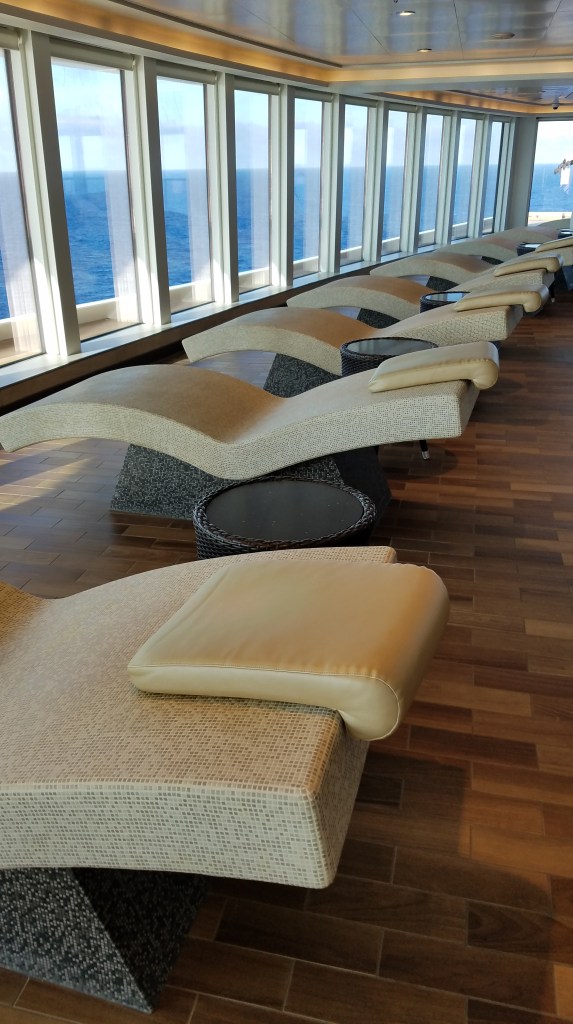
As someone who values health and is always open to new experiences, I chose to pay for the thermal suite upgrade, which granted unlimited access for the full seven-day voyage. At about $200, it felt like a worthwhile investment, an opportunity to explore several treatments without paying for each one individually. I’d been curious about these kinds of experiences for a while but hesitant to try them back home. Here, in the peaceful, adults-only section of the ship, it felt risk-free. The space offered stunning views, heated stone loungers, and a quiet, luxurious ambiance.

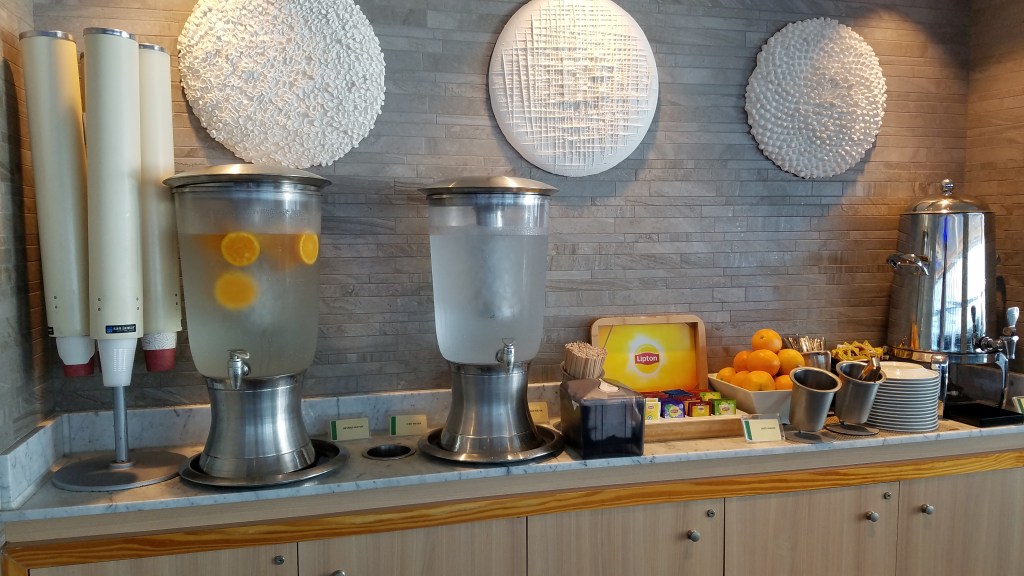
Tucked at the front of the ship and high above the ocean, the thermal suite may have had the best view onboard. The warm, lightly scented air welcomed me instantly. A refreshment station offered fruit-infused water, tea, and plush robes from the changing rooms completed the sense of serenity.

A Spa Circuit at Sea

My first stop? The sauna.

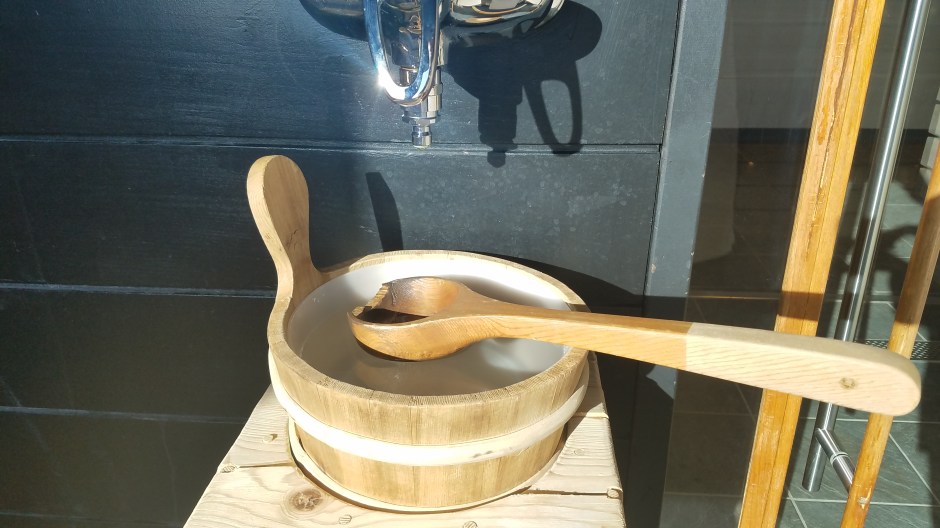
Built in traditional Scandinavian style, the sauna featured pale wood and tiered seating, with a bucket of water to ladle onto the hot stones. While the dry heat felt mild at first, I was quickly overwhelmed and made a dash for the snow room—just like a Scandinavian might leap into a snowbank after a hot session.

Normally, I loathe the cold, but fresh from the sauna, the snow room felt invigorating. I stayed for five to ten minutes, letting the chill settle into me before returning to the sauna. Alternating between hot and cold therapy is said to improve circulation and support immune health, but I simply enjoyed how it made me feel—refreshed, relaxed, and alert. This became my morning ritual. Few others visited early, so I often had the space to myself.

The sanarium, while similar in design to the sauna, was cooler and more humid—ideal for those with allergies or respiratory concerns. It didn’t appeal to me as much. Likewise, I found the steam room too intense; the heavy eucalyptus-scented air and thick mist overwhelmed my senses. I couldn’t see more than a foot in front of me, which made it feel disorienting rather than relaxing.

The salt room, on the other hand, was a quiet surprise. Halotherapy is said to support respiratory health, reduce stress, and improve skin. Whether or not those claims hold up, I appreciated the soft lighting and the calming pink glow of Himalayan salt. Without a view, it became the perfect space for reading and reflection.

To round out my spa circuit, I soaked in the thermal pool—a supersized hot tub with vigorous jets that massaged like a skilled therapist. A gentler hot tub was available nearby, and I alternated between the two before finishing each visit on the heated stone loungers, gazing out across the ocean.
Self-Care at Sea

Throughout the cruise, I returned again and again to the sauna, the thermal pool, and the loungers. These became my personal sanctuary, often the quietest places on the ship besides my own cabin. While not every experience was my favorite, I’m glad I tried them all. This voyage was about exploration, not only of new places, but also of myself. I learned what soothes me, what challenges me, and what I’ll say yes to again. A sauna-and-snow-room combo? Absolutely. Another go in the eucalyptus steam bath? Probably not.

More than anything, this experience reminded me of the importance of self-care. I’ve said it before, and I’ll say it again: it’s easy to forget your own needs. Even on vacation, we tend to bend to others’ expectations or try to do it all. In the rush, we forget to rest.

This spa day at sea gave me permission to slow down, recharge, and care for myself. It wasn’t just a treat; it was a necessity.

How Can You Enjoy a Full Spa Experience?

In my experience, land-based spas are often more limited in scope. You might find a sauna but not a steam room, or a hot tub with no cold plunge or salt room. That’s why this cruise was such a compelling opportunity, a chance to explore a wide range of spa treatments in one location. It’s a perfect example of applying the Budget Bucket List philosophy: maximizing experiences without breaking the bank.

Still, land-based options do exist. Some high-end resorts offer full thermal circuits (at a higher price point), and you might find hidden gems in unexpected places with a little research and curiosity. Keep your eyes open, and don’t hesitate to ask questions or explore.

I encourage you to seek out opportunities like this for yourself. Who knows, you may discover a new ritual to fold into your everyday life. Because a well-lived life isn’t only made up of adventures and accomplishments. It also includes intentional moments of rest, reflection, and renewal.


Completed: 2019

Miles from home: About 800 miles to Bermuda

Cost: $200 upcharge

Water Lantern: A Festival of Reflection 

It was a warm summer evening, when my sister and I embarked on a journey to the far east or rather to partake in some food and traditions imported from Asia to the United States. This particular evening, we were attended a Water Lantern Festival. One of the amazing things about America is our immigrant roots, welcoming people from across the globe. These people come and bring with them their culture, traditions, beliefs, music and cuisines. It is what makes America a rich, cultural tapestry of endless variety.

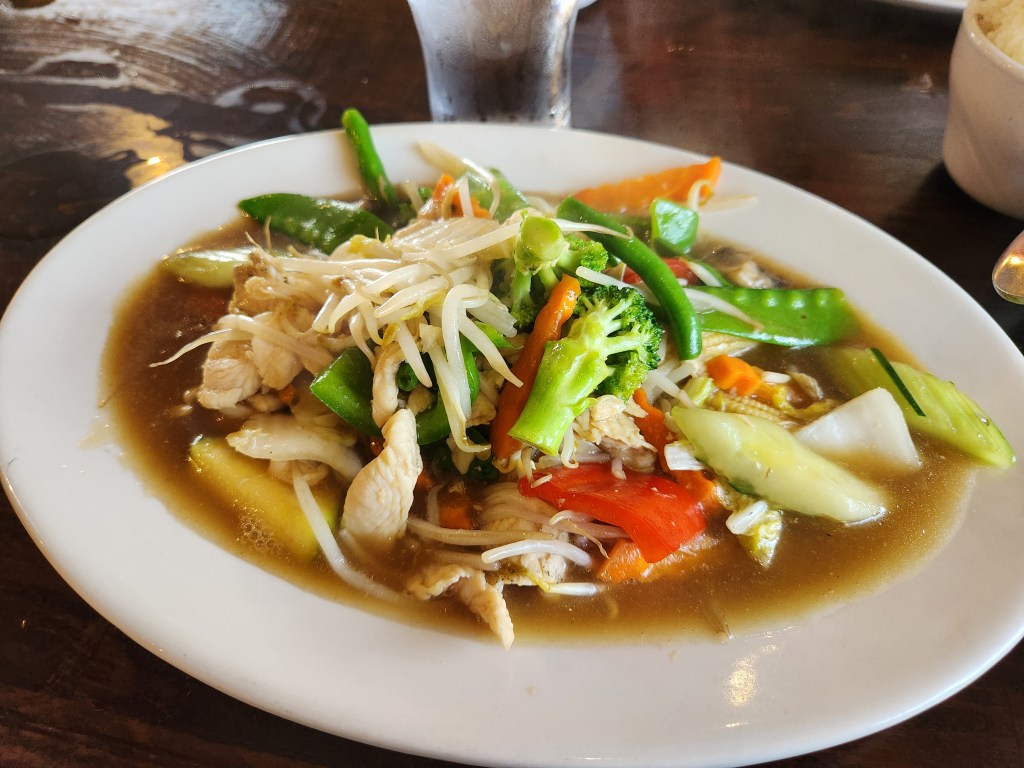
We began our journey by stopping at a Thai restaurant which is owned and operated by Thai people. I always get excited when I can stop at places owned by people who intimately understand the cuisine they are cooking, whether that be because they are originally from there, have family originally from there or spent enough time in careful study to obtain a level of mastery in the authentic way the cuisine ought to be prepared. As someone who doesn’t necessarily have the money to hop on a plane to experience authentic Thai food, I appreciated the opportunity and the culinary skill of the chef. Dinner was a delicious red curry, since I cannot resist a menu item with Thai Basil and my sister had their drunken noodles of which I stole a few bites. 

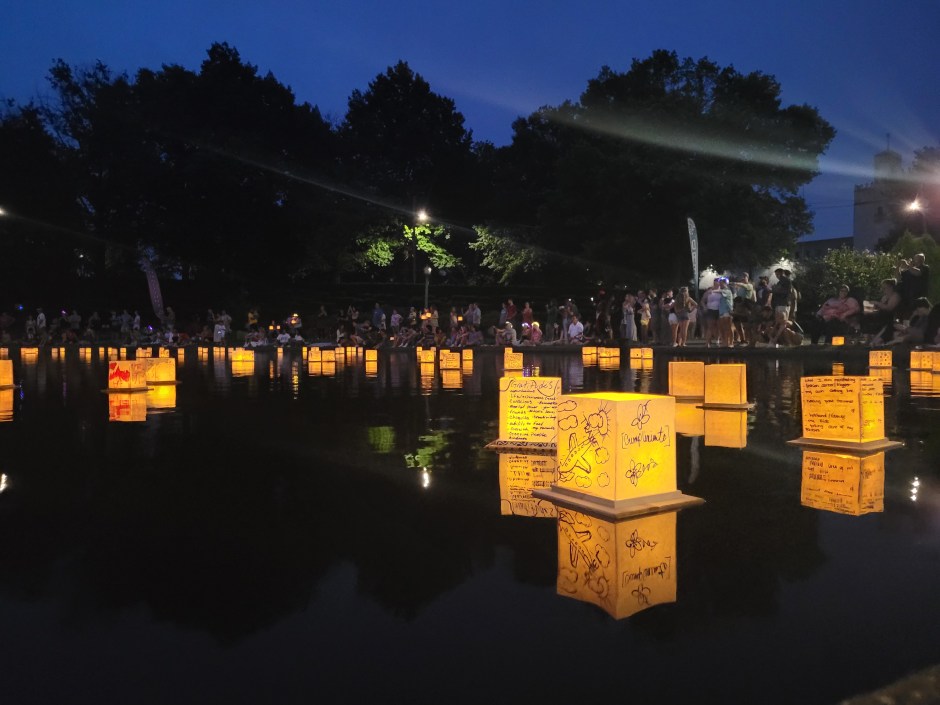
After dinner, we headed over to Harrisburg to the Italian garden where the Water Lantern Fest would be held. The Italian garden is beautiful in its own right, but it was extra festive for the fest and the weather proved to be perfect. It wasn’t too hot, nor was it chilly. The blue sky was clear overhead and it promised to be a lovely evening. It took us a little time to locate the actual stand to obtain the water lanterns as the park was open for all to enjoy. We did eventually find the true “entrance” to the fest by asking some people for directions and headed up the hill to obtain our goodie bags and lanterns. After claiming our prizes, we walked around the end of the manmade lake to find a good spot under the shade of a tree. 

I had attended a lantern fest before, where you release lanterns into the sky which took on a more party atmosphere for the people attending with music and bounce houses, bonfires and food trucks. This one had most of those things tucked away from the main event so that you could still enjoy vendors, food and other activities, but it did not distract from what you were there to do.  Nor was the crowd quite as big as at the Lantern Fest which was just as well, since I tend to favor smaller events to the massive crowds. What I enjoyed about this one was the more subdued and even reflective atmosphere. Flags proudly proclaimed things like gratitude, healing, love and connection, encouraging you to reflect rather than party. The crowd was fairly quiet with many people conversing with their heads together, smiling and laughing. The goodie bag even included conversation cards with prompts to start deeper discussions with the people you were with in order to foster deeper connections. My sister and I were delighted by these and have taken them out at other occasions and have found them to be great at prompting conversations. 

The kit for the lantern included a wooden base, a lantern which could be written upon and a small led candle to turn on and place in the lantern. We noted that most of the lantern components could be reused, recycled or easily be broken down in the environment. Being a manmade lake, the lanterns were in no danger of polluting local waterways or interfering with native wildlife. In addition, the event organizer One World proudly supports water.org. Water.org is an organization which focuses on increasing global access to safe drinking water. They include an informational pamphlet and easy options to donate to raise money to support this cause. I love it when an event is able to go beyond just an enjoyable evening and helps to provide a positive impact.

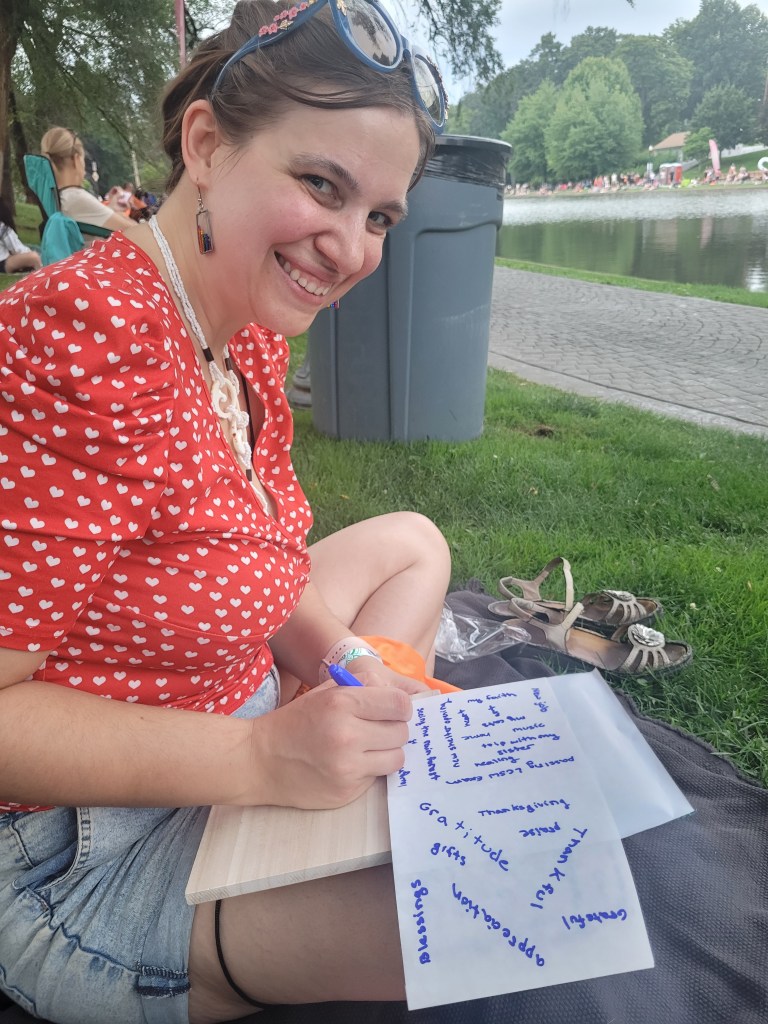
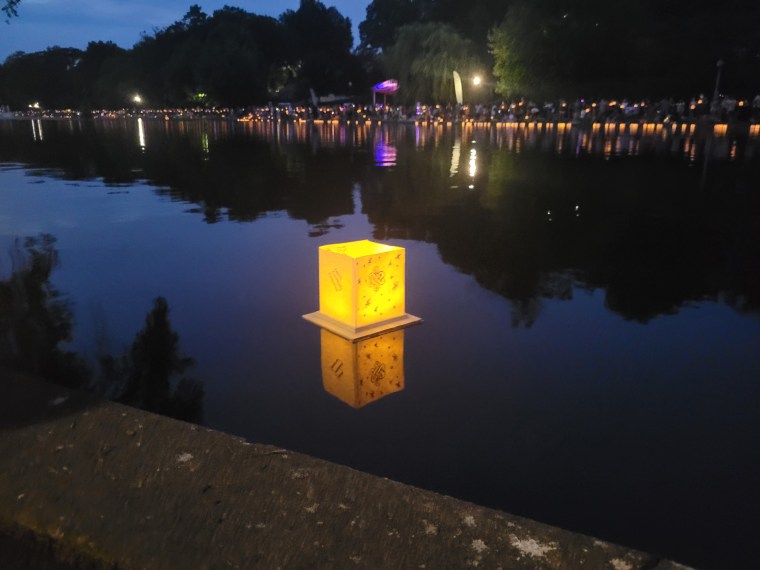
I decorated my lantern with things that I was grateful for and my sister decorated hers with art including a celtic knot and a flowers. Once the sun slipped beneath the horizon, they asked us to gather around the edges of the lake and to pause for reflection. Then they invited us to release our lanterns to allow them to float upon the water. One by one, they spread out, glittering together like stars. As I stepped back to take in the sight, I was able to let out a deep sigh of contentment. Naturally, we snapped a few photos, but mostly my sister and I just walked along the path enjoying the sight and quietly conversing. 

It should be noted that while my dinner was still firmly rooted in its culture of origin, the Water Lantern Fest was less so. Water Lamps originated in India and spread throughout Asia most likely through Buddhist diffusion. They appear in many festivals and have many meanings ranging from worshiping gods, praying for a good marriage, welcoming happiness, guiding the spirits of the departed or welcoming happiness. In Vietnam, there is a town which releases them quite frequently. In China, they are released throughout the year. In Japan, they usually release them to help guide the souls of the dead to the spirit world and allows for reflection for lost loved ones. Sometimes, things are lost in translation especially as it gets diffused across different cultures as it has in Asia since they have a lot of different meanings all over the continent.

Still, despite being a bit unmoored from its roots, it still felt as if it were in the spirit of the original customs. Where other events encourage a sort of frantic, frenanic frenzy of activity, this festival invited you to slow down, to pause and reflect. It encouraged building relationships between people and being more mindful of your surroundings. They also allowed people to come up to a microphone and share their stories. Some people shared their loss, others shared their victories, whereas others shared gratitude. There were lanterns that people dedicated to their loved ones. In a sense, the festival was a melting pot of the many traditions associated with water lanterns from Asia and transforming into something uniquely American. It certainly was not an authentic experience, but it falls under my “good enough” category. 

How can you experience a Water Lantern Fest?

The best way is to go to their website WaterLanternFestival.com and click on your state to see when they might be coming to you. I encourage you to buy tickets early since they increase in price as the date approaches. 

However, there is nothing to stop you from ordering some lanterns and LED candles and hosting your own smaller version with a group of friends. Although, it doesn’t quite hold a candle (pun intended) to seeing a few hundred floating all together, their reflections shimmering in the darkness of the water. It is also important to note that there may be local ordinances preventing such an activity and you would need to ensure proper clean up. After all, we want to keep our local environments beautiful so we can continue to enjoy it for years to come.

Completed: July 15, 2023

Cost: $36 per person (was advertised as $27 but there were vendor fees)

Miles from home: 45 

The Winding Path to Your Destination: Prayer Labyrinth

Unlike a maze, a labyrinth does not have many branching paths intent to challenge one’s navigational skills, but instead is one single path leading to the center. It is intended to symbolize a meditative spiritual journey without the possibility of becoming lost. There is one entry point and one endpoint, the only exit is to follow that path in reverse. 

Labyrinths have been used by the Christian faith since at least the 300’s and it gained popularity in the 600’s as a substitute for pilgrimage to the Holy lands after the Muslim conquest. In the faith, the labyrinth represents ones journey with God, as one arrives at the center one is entering arrives to be with God in perfect union. When one leaves, one has left a holy place to go back into the world. The practice is intended to be one of quiet contemplation and meditation, to pray and commune with God. It is a different form of worship as most often other forms are very stagnant in terms of physical movement. You sit at church to hear the preacher speak, you may stand up to sing and more modern churches may have people wave their arms in the air, but for the most part the movement is very limited. In this way, your whole body is part of the worship, the act of walking becomes part of the prayer. 

Many labyrinths are outside allowing creation to return to its intended purpose of being our Cathedrals and places of worship. It returns us in a sense to the garden paradise and thus reinforces the journey back to God which the labyrinth intends to mimic. The ordinary act of walking in nature becomes transcendent. 

The path that leads us back to God is not a straightforward path. It winds around at times seemingly moving us farther away from our goal, turning us away from it even though that is the only way to move towards it. To take that next step is an act of bold faith and trust that the path will lead where it is meant to be. In some labyrinths the path just before the final journey to the center takes us to the farthest point as it winds us all the way out and around before finally turning to the goal. 

Life can often seem that way as well. It can seem that we are being led down paths away from our goals or that we are farther away from what we are striving for than when we started. We may be tempted to turn back and try to go another way, only to discover there is no other way. We may find ourselves frustrated by the seeming lack of progress and give into the despair of hopelessness. The only way is forward, to trust the path and take that step of faith. 

As one walks the path of a labyrinth, one may notice weeds or patches of clovers popping up depending on how vigilant the groundskeepers are. Then again what is truly a weed in a garden devoted to God? Is it not his creation that has been sent there? The judgments of the world hold little sway there, perhaps they serve as a reminder that the flaws and shortcomings we see in ourselves are gifts from the creator. The obstacles in the path are not obstacles at all but blessings. 

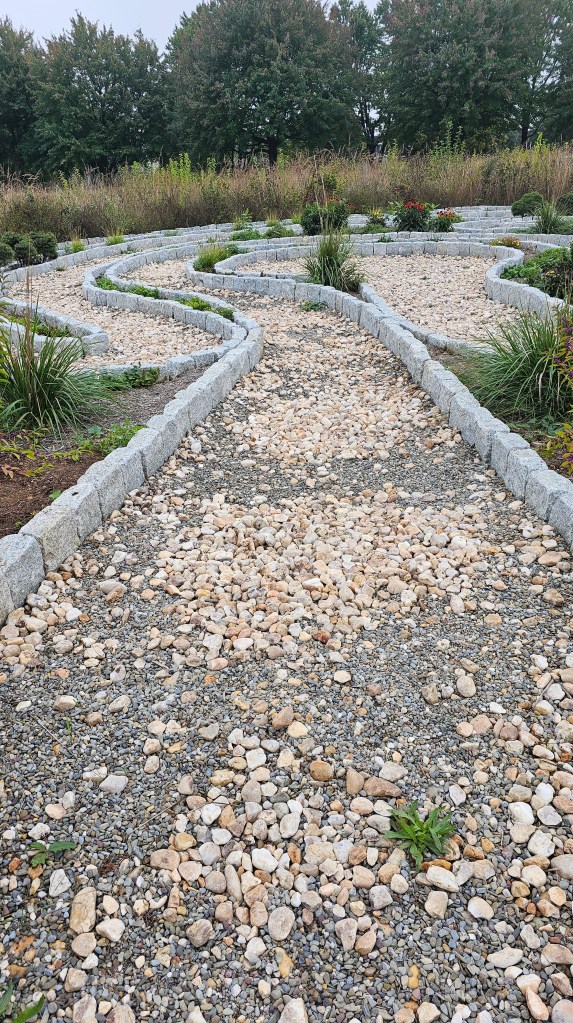
It was on a cool October morning, when the land was covered in fog that I embarked on my own prayer journey at a local church. I had read about prayer labyrinths and their meditative uses for quiet reflection and solace. As I was going to be in town on other business, I decided on a whim to drive a little out of my way and go in search of it. The labyrinth was tucked away behind the church in the wildflowers. Although being October, most of the flowers had lost their luster as they prepared for winter. The field itself was devoid of the bright hues one associates with flower fields; instead the plants had been transformed into dark sentinels to stand watch through the darkest months. 

At the entrance, I placed my phone and car keys to the side in order to devote myself fully to the practice intended by the architects of the labyrinth. Pausing at the front, I took three deep breaths to ground myself and be fully present in the moment. Then I began to walk and prayed. I wound around the path allowing it to twist and turn as it would taking in the few still blooming flowers which dotted the inside. As I approached the center, I paused knowing that in the next moment I would be stepping into the inner sanctuary. I then stepped into the middle and rested in the presence. My journey out was slightly different than my journey in as I softly hummed hymns to myself. Perhaps, I was taking the joy of heaven with me in the form of music and song.

Once I returned to my phone, I did pick it up for purposes of documenting in pictures the labyrinth in part to be able to return mentally to that place once more. In part to be able to share the experience with you dear readers with hopes that you will be encouraged to go on your own meditation journey. Still, on my second journey inward, I found myself still meditating and reflecting as if the design itself instills the mindset. It was on this second journey that I considered the imagery that labyrinth invokes. It was during that time that I reflected that at the point where I was seeming farthest away was actually when i was closest, even though when I first entered the center appeared to be just within reach. It was in taking pictures, that I reflected on the apparent weeds and wondered if I could call them weeds since they were in a sense planted by God. If God could have weeds in his Holy place then surely they are not weeds at all and if I saw them as weeds was I not looking with the world’s eyes? What did I see in my own life as weeds? When did I think that I was far from my goals when they were just within reach if only I kept going? What might I see if I looked at my own life as a labyrinth? 

On my way back to my car and out of the wild flowers, a butterfly came floating by my face, twirling around me and floating above. Was it a sign that the prayers asked would be answered? Was it a message of hope? Perhaps. Perhaps it was just a butterfly. Still, I shall take comfort in it for whatever may come in the next days. I shall remember the lessons of the labyrinth and sing the hymns of faith and thanksgiving. 

How can you experience a labyrinth? 

First dear reader, you need not be of the Christian faith or of any faith to enjoy the benefits of a prayer labyrinth. Many are simply called mediation gardens and even those without a faith find benefit to walking in them. The practice of meditative walking still helps people connect with their bodies, commune with nature, alleviates stress, supports their minds and improves over all well-being. You may find yourself making similar reflections as I did that life has its many twists and turns. You may reflect that the only way is to move forward and trust that you will obtain the goals you are reaching for. You may ask yourself if the flaws you observe are truly flaws or simply the way you’ve been trained to see them. Perhaps, you will leave as I did with a slightly different outlook than when you entered. 

Labyrinths can be found all over, at churches, hospitals and other public spaces. Some people have created them in their own backyard. Each one has a unique design and some are much bigger than the one I visited on a misty morning. It may be difficult to find as they are not always advertised and some are not necessarily open to the public. However, I found that with careful research I was able to locate one not 10 minutes from my house. I encourage you dear reader to visit a labyrinth. I think you will find the experience is worthy of your time.

If you don’t have access to one, then a meditative walk could help you achieve a similar affect. After all it’s about getting a similar result from a given experience. As always, dear reader, we needed do the exact thing to achieve the same or even better results.

Completed: Fall 2024

Miles from home: 5

Cost: Free