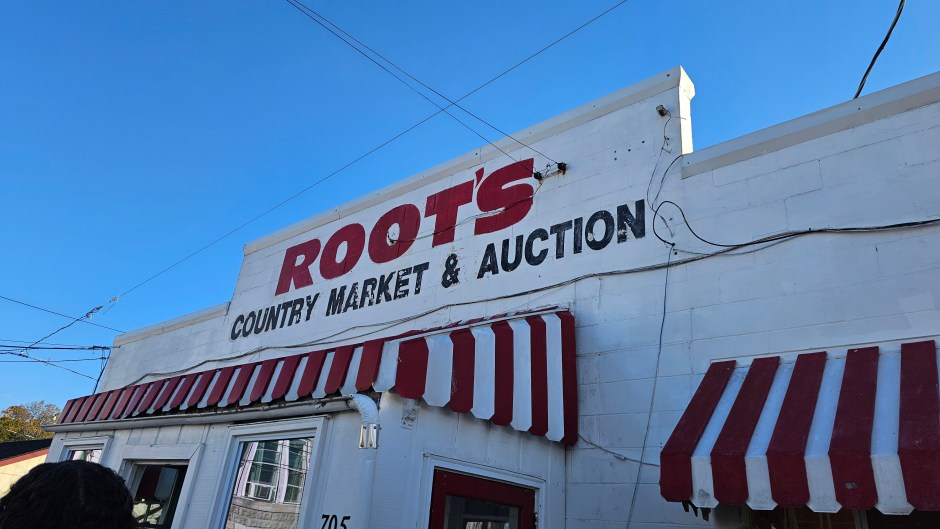
Rooted in Community: A Favorite Local Market Adventure

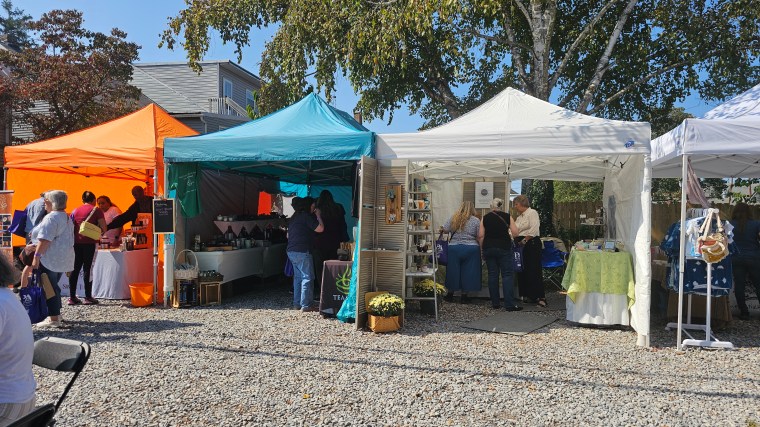
Every Tuesday, without fail, something wonderful happens in the next town over. Long before the rest of the world has finished its morning coffee, Root’s Country Market comes alive. It starts quietly at first, a few trucks pulling in, the soft murmur of vendors setting up, the smell of early morning coffee drifting across the lots, and then, before you know it, the place is buzzing. Root’s has been a Lancaster County staple since 1925, and in the hundred years since it first opened, it’s become something more than just a market. It’s a living, breathing community tradition.

Side bar: Locals pronounce it “Ruut’s,” not like tree roots, a small detail, but one that marks you as someone who really knows the place. Welcome to Lancaster County where nothing is pronounced like you think it would be, not even Lang-kiss-ter.

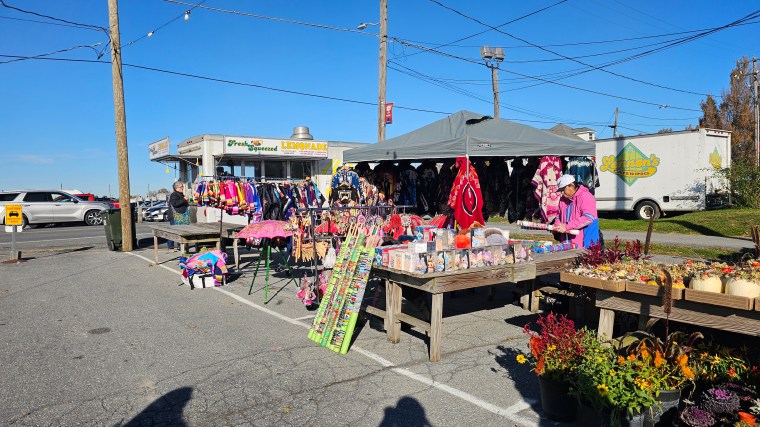
Roots is a sprawling labyrinth of over 175 indoor and outdoor stalls, each one offering a little piece of local life. You’ll find farmers with fresh produce still damp from the morning dew, bakers arranging pies so fragrant you can smell them before you see them, and crafters setting out handmade candles, quilts, and wooden toys. Step a little further and you’ll stumble into antiques and flea market finds, old tools, vintage glassware, forgotten records. It’s perfect for a treasure hunt! There’s even a livestock auction, which means you might be standing in line for a soft pretzel while hearing the rhythmic chant of a fast-talking auctioneer in the background. It’s part of the charm.

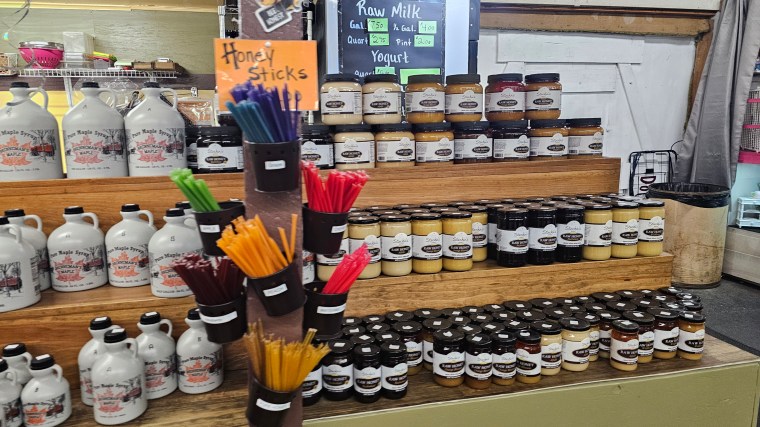
Root’s is the kind of place that engages all five senses at once. The air is thick with the smells of kettle corn and barbecued chicken, mingling with freshly turned earth from the produce stands and, occasionally, that unmistakable farm scent that reminds you you’re in the heart of the country. Fresh country air takes on a new meaning in farm country. There’s the shine of ripe tomatoes, the golden glow of honey jars, the colorful chaos of flower bouquets. Vendors call out greetings to regulars. 

If you visit during the busy seasons, late spring through early fall, the crowd hums like a hive. There’s a rhythm to it, a flow of movement as people drift from stall to stall, chatting, sampling, bargaining. You can lose hours wandering without realizing it. And then, just when you think you’ve seen it all, you’ll turn a corner and find something unexpected: a new baker, a quirky handmade sign, a table full of fresh herbs or a bin of farm-fresh eggs that look like they came from a paint box.

I may not be a morning person, but my favorite time at Root’s is the early morning, when the sun is barely up and the crowd hasn’t yet arrived. The vendors are still setting out their goods, the coffee is hot and strong, and there’s a quiet peace to it all. That’s when you can have those real, unhurried conversations, when you can talk to the man who grows the apples you buy every fall, or the woman who hand-pours every candle on her table. You’re not just shopping; you’re connecting.
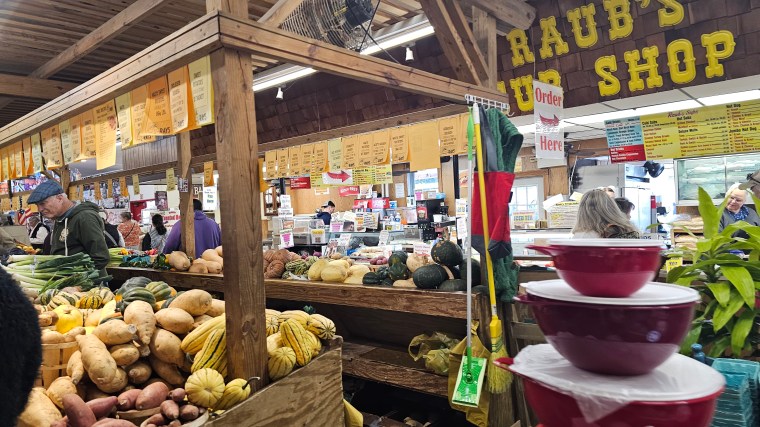
What makes Root’s special isn’t just what you can buy, it’s who you’re buying it from. There’s something grounding about handing your money directly to the person who grew your tomatoes or baked your bread that morning. You can ask them how the season’s been, or what variety of pepper this is, or how long they’ve been coming to Root’s, and they’ll tell you, usually with a story that’s worth hearing.

Some families have been selling here for generations. Others are just starting out, testing their small business dreams one Tuesday at a time. Together, they form the heartbeat of this place, a reminder that commerce can still be personal, that community can be built over a counter full of peaches and pies.

And the prices? Let’s just say that fresh, local, and affordable aren’t mutually exclusive terms here. You can fill a tote bag with vegetables, grab a fresh-baked loaf of bread, and still have money left for lunch, maybe a chicken pot pie or a funnel cake, depending on how virtuous you’re feeling, and I am seldom neglect to give into temptation here. 

Root’s began back in 1925, when local farmers gathered to sell their goods directly to neighbors. A century later, it’s grown into a sprawling market and auction complex that somehow still feels small-town. It’s open year-round, rain, snow, or sunshine (not blizzards or floods though) every Tuesday without fail. Generations have grown up wandering its aisles, marking time not by the seasons but by the rhythms of Root’s, sweet corn in July, apples in October, wreaths and crafts in December.
It’s rare, in a world where everything feels increasingly online and anonymous, to have a place like this, one where you can see the faces behind your food, hear the laughter of old friends meeting up by the pretzel stand, and know that you’re part of something with roots (pun intended) deep in local soil.

Not everyone is lucky enough to have a place like Root’s right outside their door. For me, it’s not just a market, it’s a midweek adventure, a reminder to slow down and savor the simple joys: fresh food, friendly faces, a good deal, and a connection to the land and people that make up my home. Every visit feels different, but it always leaves me with that same contented feeling — a mix of nostalgia, community, and appreciation for the abundance that surrounds us.

So if you ever find yourself in Lancaster County on a Tuesday, make your way to Root’s. Come early, bring cash (although most vendors do now accept cards), and be ready to wander. Take in the smells, the sounds, the cheerful chaos of it all. Chat with the farmers and crafters, find something unexpected, and maybe grab a slice of shoo-fly pie for the road.

Because at Root’s, you’re not just shopping,  you’re stepping into a century-old story that still unfolds, week after week, right in the heart of the community.
How can you experience your own farmer’s market adventure?

If you don’t live near Lancaster County, don’t worry, almost every community has its own version of Root’s tucked away somewhere. Previously, it seemed farmer’s markets were going the way of the dodo, but community efforts have revived the practice all over as determined locals, with pride and love for their communities decided to reconnect us all with our roots. Look for local farmers markets or seasonal pop-ups in your town or the next one over. Many run weekly through the spring and summer, while others operate year-round. Visit early, bring cash, and take the time to talk with the people behind the tables. You’ll find that even the smallest market has its own personality, its own rhythm, and its own sense of community. It’s one of the easiest, and most rewarding, ways to connect with the place you call home.

Completed: A Tuesday in my childhood and ongoing into my adulthood

Miles from home: About 10

Cost: Free parking and however much you want to spend. My most recent visit was about 6 dollars.

Still looking for ideas to do in your own local community? Check out the rest of my Bucket List – most of the items completed from my own backyard!
A Festival of Flavor: PA Tea Festival

I believe, dear reader, that I have already espoused my love and adoration for tea. I love the aroma of it wafting up from a warm cup in my hand. The first sip as it hit my tongue in an explosion of flavor. The way it moves the warmth down my throat and into my stomach. I love how well it pairs with little sandwiches. I love scones topped with clotted cream and curd. I love the frilly lace and fussy accouterments. I love the various honeys I can add for a hint of flavor from orange to lavender to raw to clover.  I love adding cream. I love adding milk to chai. I will drink it hot or cold, in the morning, afternoon or late at night. I’ve enjoyed it at my desk at work and as high tea in a parlor. So it should come as no surprise that I jumped at the chance to go to a festival devoted to this beverage.  

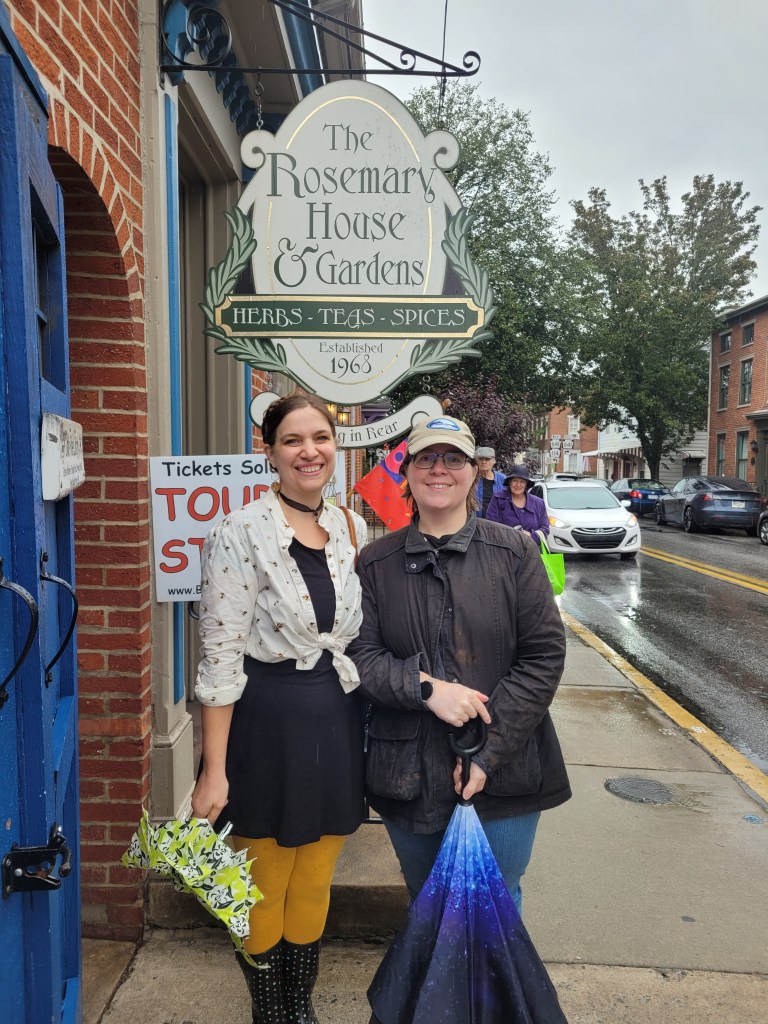
Our hosts for the Tea Festival are the ladies of The Rosemary House & Gardens. The shop is tucked in a small corner of Mechanicsburg, PA. It’s unassuming front hides an almost enchanted shop and herb garden. From the first moment, you walk in the door you know you are in someplace particularly special. The gentle smell of herbs instantly calms you as you take in the plethora of items adorning every corner of the shop. Everywhere you look merchandise is displayed on every available surface. It ranges from teas, to herbs, to honeys, to curds, to teapots, to fairies, to charms, to books and more. One could easily be mistaken into thinking one had stumbled into a fairy tale with the two older ladies carefully tending to the customers. 

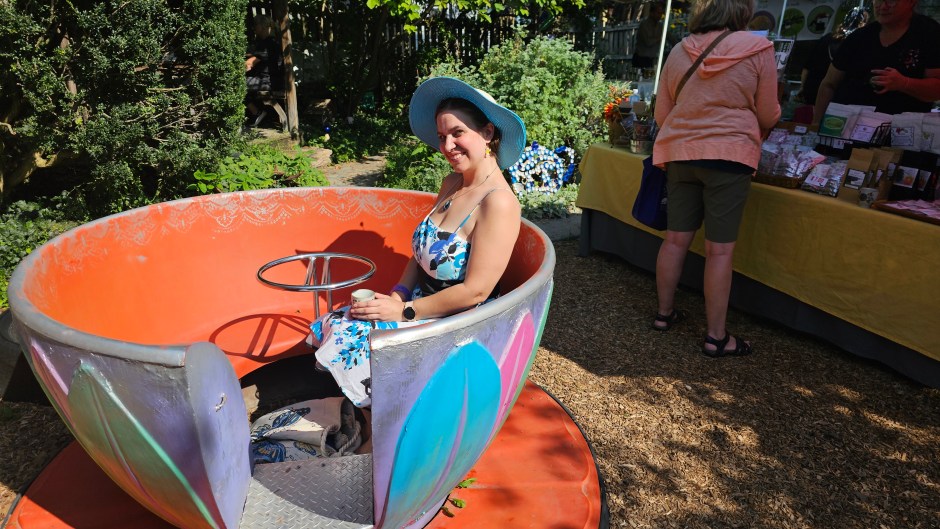
Being situated in an old house, the shop consists of two main rooms, the front and the back. The back leads out to a garden as delightful as the shop itself. The well worn paths lead visitors through the herb beds which continue to delight both the eyes and the nose. The garden is a delight to wander through as every single bed contains a surprise. One may spot a small turtle statue or be delighted by a miniature table and chairs (surely left for the visiting fae-folk). A visitor may see a sign welcoming said fair folk as well as a tower of teapots reaching for the sky. There is also no shortage of seating from the gazebo, to the benches, to a giant tea-cup from a carnival ride. The house is worth a visit even on days when a dozen or more vendors have not journeyed to grace it with their presence. 

After paying for our tickets at the shop’s counter, my sister and I slipped onto the porch where we collected a small tea cup, a bag, a tea magazine and a schedule of the day’s events. The cup was to be used for sampling the teas offered at the various vendors – which is of course the main reason we journeyed an hour from home to the festival. There was a woman offering tea ceremonies in the garden, but we opted to skip it this year as we attended one at the festival the year before and attended one at the Japanese Gardens just outside of Philadelphia. Instead, my sister selected “A Dark History of Tea” from the lectures that were offered, noted the times and determined that we would start at the front and make our way back through. 

Our first destination did not actually have any tea samples, but rather was a creative display of artwork on tea bags of all things. I was amazed at the variety of pictures she was able to create incorporating the tea bags into the paintings. I was so smitten with them, my sister ended up buying one as a birthday present. 

We then got to the highlight of the festival, the tea tasting. Each vendor had a variety of samples to showcase some of their best teas. The first one we had was a very smooth oolong tea from Taiwan that was a delight for the tongue. We then took turns smelling different teas and sipping on more. We sampled teas from Napal, Hawaii, Africa, China and beyond. There were herbal teas, white teas, black teas and green teas. There were teas that were pure and teas that had herbal additions like the lemon butterscotch teas. There was a chocolate vendor for tea and chocolate pairings. I purchased various teas for my later personal use. 

We did attend the lecture on the dark history of tea and its connection to prostitution, opium, smuggling, poisoning, and slavery. It was a fascinating look at the history of international trade, commerce and greed. It was also a sad reflection that despite efforts at reform for the past 300 years, many of the problems that were prominent throughout the 1700’s, 1800’s and 1900’s are still going on today, if in different forms. The lecture did not get into how the issues in the tea industry can be seen in the fashion and chocolate industries, but my sister and I discussed it at lunch later. One of the things I enjoyed about the tea festival was that many of the vendors were from the countries that the teas were from. We were often speaking with direct representatives of the farmers rather than a corporate sales person several steps removed from the growing and processing of the product. We felt fairly confident that our teas were ethically sourced and free of adulterations and unhealthy additives. 

After a few hours of sipping teas and wandering around the festival, the caffeine did start to get to me. I was surprised because I am such a huge tea drinker even at home, but I typically do a cold brew which tends to have less caffeine. So my advice dear reader is to bring some snacks along to help with all the tea that you will be drinking, because after three hours of sipping on the delicious beverage, I was quite jittery. With our stash of tea fully replenished for the coming winter months, my sister and I made our way back into the shop for some final purchases. We then wandered back to the car to decide where we wanted to eat. After consulting google, we realized there was a Japanese place not a five minute’s walk from her car, so we left a few of our items behind and journeyed to the former bank now turned restaurant. 

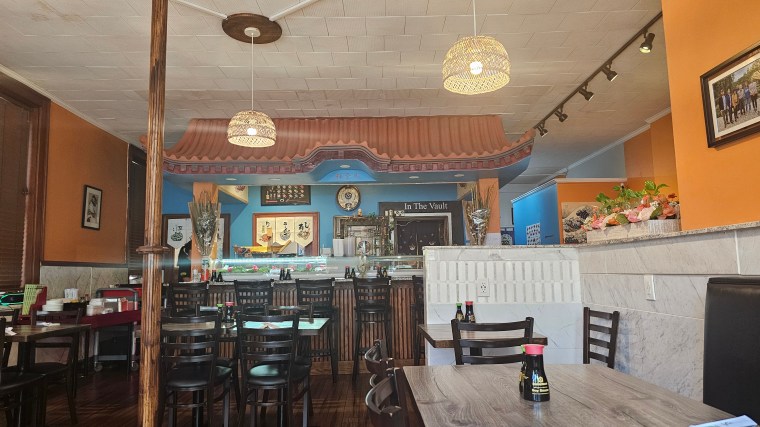
If you happen to be in Mechanicsburg, dear reader, I recommend Kanagawa. It was a quiet, intimate place with polite and friendly staff who were attentive and conscientious. My sister and I choose the small plate of salmon teriyaki with extra vegetables. The vegetables were cooked to perfection with just the right amount of sauce. They were a nice variety of zucchini, onions, mushrooms, and broccoli. The salmon was delectable, practically melting in your mouth with every bite. My sister and I split the fried cheese cake, which was a rare treat for us both. It was a mouth watering delight that must be tasted to be properly appreciated. The outside was perfectly crunchy with just the right amount of chocolate sauce which covered the delicious inside. It was the perfect ending to the day. 

How can you attend a tea festival?

I am not entirely certain that tea festivals are exceedingly popular, but that is not to say that they don’t exist in your area. They certainly could! However, there are many popular festivals devoted to different foods and drinks. There may be a beer festival or a wine festival. In my area, I have seen a bacon festival being advertised which may be difficult to convince my non-pork eating sister to attend. If you’re passionate about a particular food or just enjoy eating, then go. You will discover all sorts of flavors you’ve never dreamed of. You may learn new culinary skills or interesting history you never knew about. It could deeper your appreciation for how we obtain our food and how to make more ethical decisions about your purchases. You may discover that you actually like certain foods you always hated. You could be introduced to different cultures or ways of thinking about the foods you eat. Either way, I highly recommend adding culinary adventures to your list. After all, we have to consume food every day just to survive, why not expand your pallet, widen your horizons and explore the world with a different sense than we usually think to use. 

Completed: Fall 2023

Cost: $10 per person for tickets and much more for all the tea I bought, which we won’t talk about here. I was weak and the tea was so delicious! In my defense I have like so much tea now, it will last me months. 

Miles from home: 51

Shhh, It’s a Secret: The Best Kept Secret of the Summer

In the world before COVID, there was a growing tradition in my local city. A secret, invitation only pop-up party to kick off the summer season. One could only be invited. There was no ticket payment system or special way to get in. You simply reached out to have your name on a list. Then the list for invitees was opened and you could sign up to go (at least that is what happened the year I went and my sister went). Those in the know, knew how to find their way to this not well advertised gem. I heard about it through the grapevine, whispers in the community of such an event and with a little investigation, I found it.

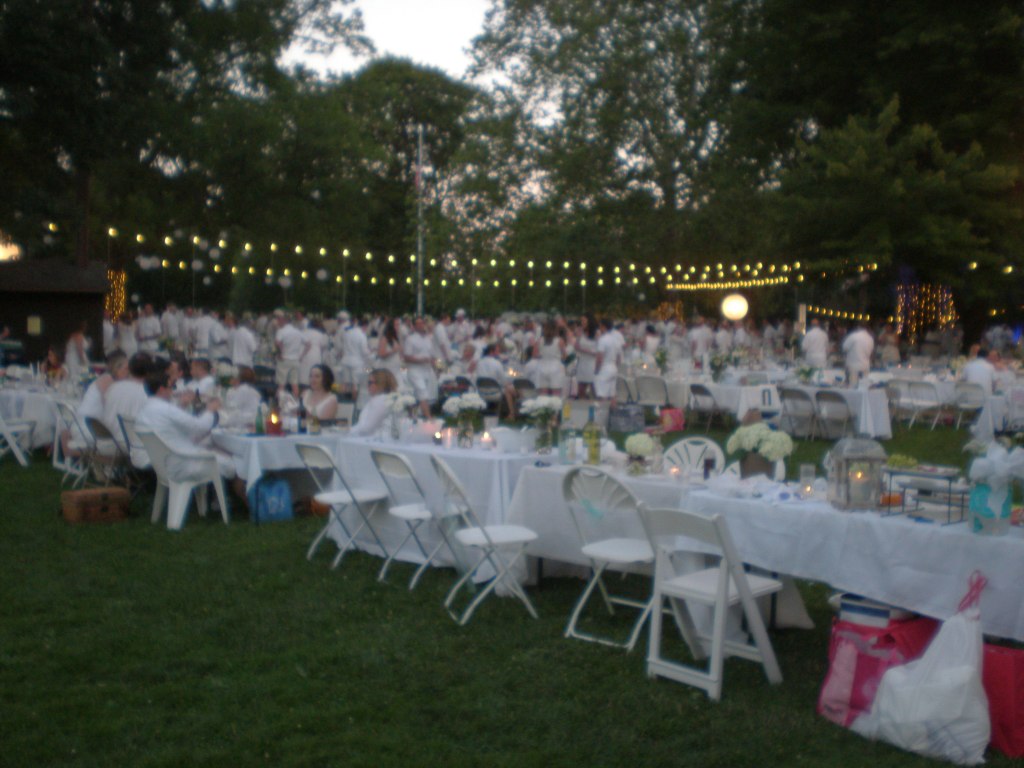
Despite the location of the event being a closely held secret, the theme of the party was not. Fete en Blanc or Party in White was a premier event. Everyone, dressed up in white, brought their own picnic, wine, tables, chairs and table decorations to create the signature party of the summer. Courtesy of our hosts, they provided the decorations and music. You found yourself seated in a long row next to neighboring tables and just enjoying the spectacle. 

OLYMPUS DIGITAL CAMERA

Fete en Blanc is one of hundreds of white pop-up parties started in Paris in 1988. The theme has always been the same. No one knows where dinner will be until the last moment and everyone wears white. You bring your own table and chairs and until recently you provided your own food. The tradition has spread to hundreds of other cities around the world. Some of them do have a ticket fee. Some are more strict on what counts as white. Whereas many places will allow “pops” of color or off white, Philadelphia is a strict white only. It varies from place to place.

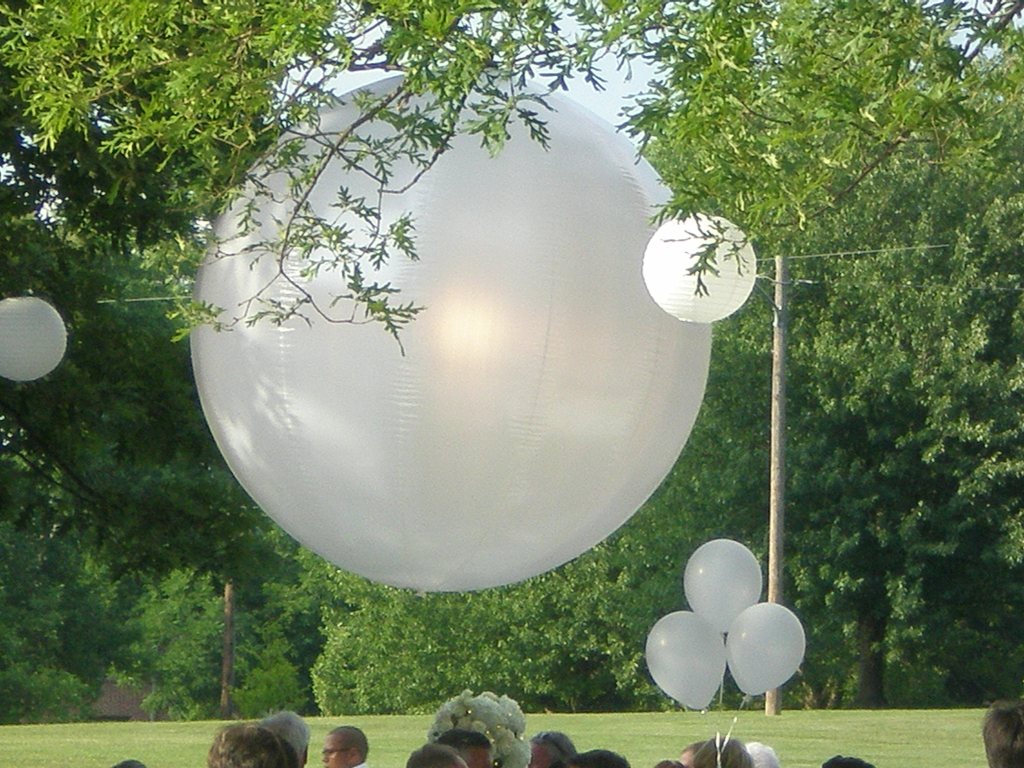
An army of volunteers helped to direct the crowd of people all overseen by an intrepid Master of Ceremonies to ensure all had a delightful time. The local park had been transformed into a magical world of floating spheres and twinkling lights. What made it special was precisely that it was not an event held only for those who could afford it. As tickets were free and by invite only, there was no monetary barrier to entry. As you were directed to sit wherever by the volunteers, one could easily find themselves shoulder to shoulder with Lancaster’s finest. Imagine what sort of friends one might make at such an event! 

OLYMPUS DIGITAL CAMERA

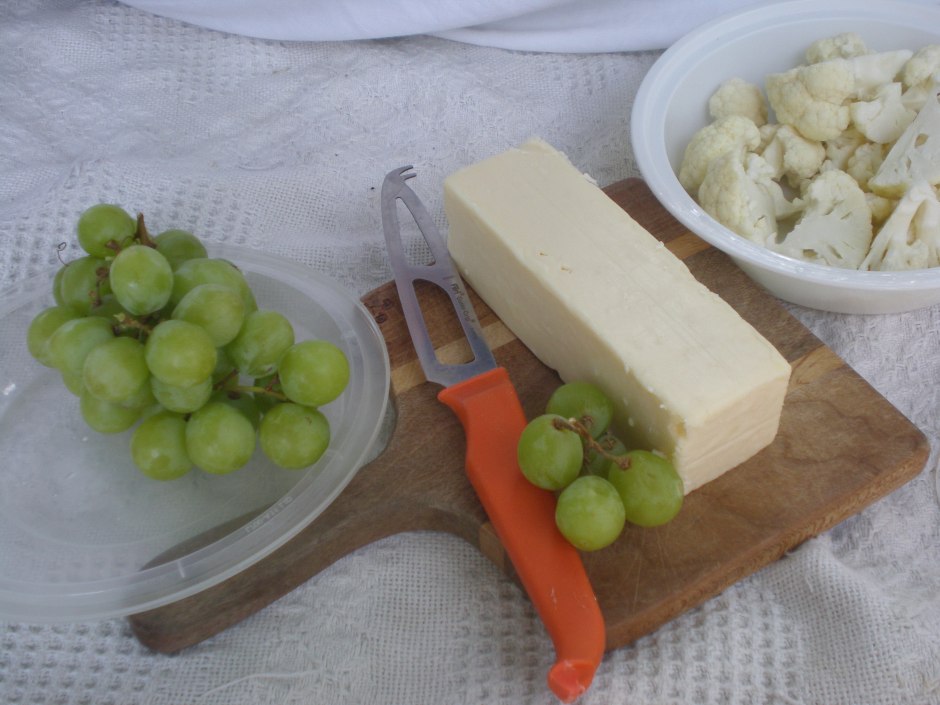
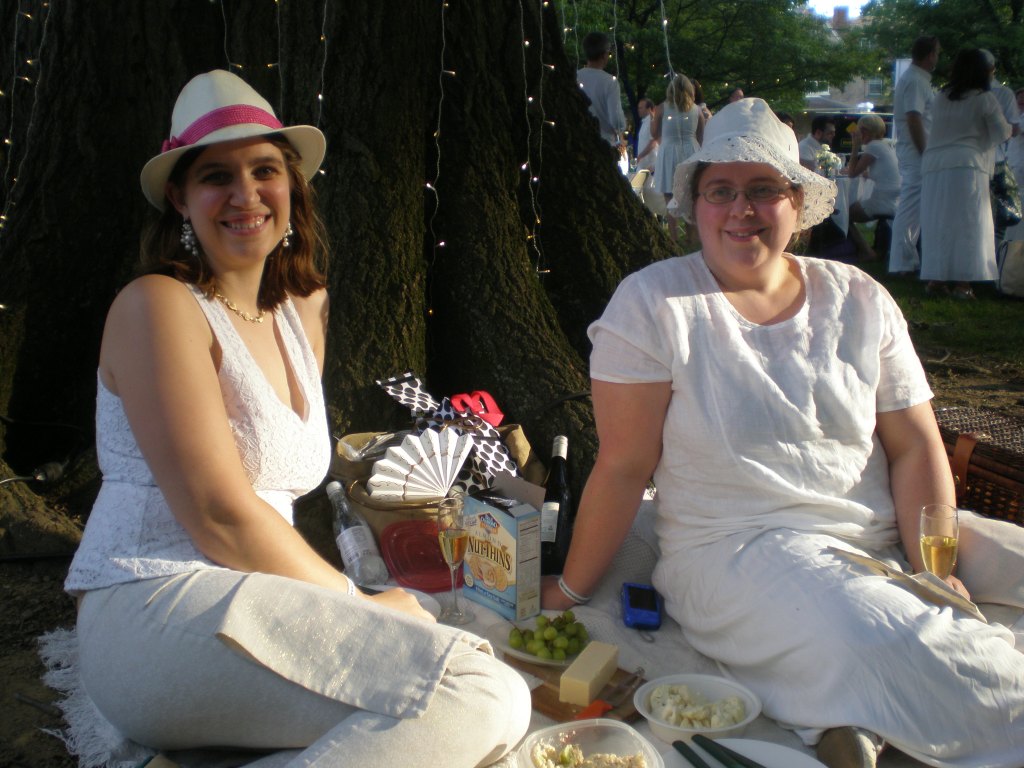
My sister and I did not have a table, so we spread ourselves out near the bottom of a tree. We enjoyed a spread of white wine, white cheese, white grapes, cauliflower and light crackers. After all, a party in white ought to have white food. However, me being myself, I could not resist just a small “pop” of  bright, pink color on my hat. I always did have to stand out in a crowd and besides, rules were made to be broken, darling! As we ate, a duo of drummers moved throughout the tables, their pops of color stark against the white of the crowd. Their enthusiasm was contagious and all to kick off the summer season!

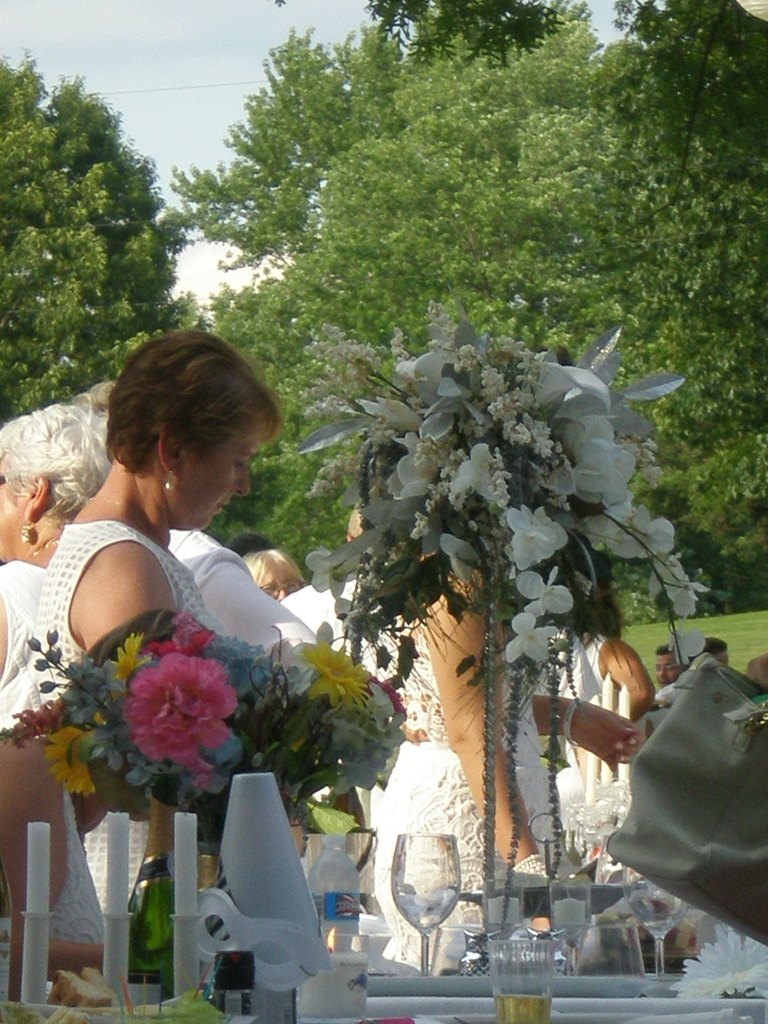
After we ate, we meandered through the crowd taking in the different decorations that graced the tables. Those who were clearly experienced party goers had some truly elaborate displays in stark contrast to our simple set up. As the dusk settled, the atmosphere took on an almost dream-like quality. One could almost believe you had been transported into an in-between realm with the changing of the season. Was the veil between worlds just a little thin that night? Perhaps, it was the wine, perhaps it really was the magic of midsummer. 

We did not stay long into the night, both of us had work in the morning. So we packed up our small picnic and made our way out of the dream and back into reality. We were unable to snag tickets the following year in 2017 and in 2018, we determined we wanted to focus on new experiences rather than repeating ones we already had. Sadly, 2019, seems to have been the last year for Fete en Blanc at least for the Lancaster area. Covid came in 2020 canceling any plans for the event and I have not seen its return since. I hope to see its return one day as it was a truly special thing for our community. Perhaps with the advent of my new job I may have extra time on my hands and it is something I could organize here in my local community. It might be something to add to my list – throw a giant party for my community? What do you think dear reader?

OLYMPUS DIGITAL CAMERA

How can you experience a Fete en Blanc?

Well, as I said, our own local White Party does not seem to have returned after COVID, so if you happen to be in my area you will have to look further afield. If you do manage to locate one, be rest assured it is a difficult event to get into as most are lottery based given the demand for attendance typically overtakes the capacity of the given venue. In Paris, over 13,000 people may attend and they still do not have enough spaces for all the people who wish to go. Paris has a waitlist of over a million people and is considered one of the most exclusive dinner parties in the world. 

The copy-cats around the world are little different in terms of demand outpacing capacity. Almost all of them take place between May and September as a celebration of the summer and given that they occur all over the world, there is a very good chance you can find one in your area. Given the difficulty and exclusivity of such an event, you may dear reader feel a bit disheartened by the prospect of ever experiencing the spectacle yourself even if you are nearby. 

Now, what have we learned in such situations? When one cannot do a specific item, one can examine the principles and values of the experience. That is not to discourage you from throwing your hat in the ring and trying to get a coveted spot, after all most of the time it is a matter of throwing your name on a list and hoping your name is drawn. 

OLYMPUS DIGITAL CAMERA

In this case there are many festivals, events, parties and even secret going-ons that are occurring in your local community. One must merely be attuned to what might be happening around you. I found that the more I got out to do things the more things I found to do. Your friends and family start reaching out with cool ideas that might interest you for your next adventure. They start inviting you to things to do with them. Do you know the number of your friends and family who want to do things but have difficulty finding people to do things with? When you’re the person always going off and doing new things, you’re often the first person they call! 

I was not looking to do this party, I heard about it, signed up and snagged a coveted spot! I encourage you dear reader to get out and do! Soon enough you’ll be hearing about all the secrets your community has been hiding right under your nose! 

There is also another option. Given that all that is necessary is a venue, some music, white decor and a few friends, there is nothing to say that you can’t start your own Fete en Blanc tradition in your local community. Imagine being able to give a bucket list experience to not only yourself but your whole town as well? That’s how Lancaster got started and I hope to see its return soon.

Completed: June 2017

Miles from home: 11 

Cost: Free Invite – $30 for dinner supplies, I already had an entirely white outfit from my wardrobe

This is a list of all the major cities that hosted a Fete en Blanc in 2018 

Seattle, Washington

Memphis, Tennessee

Charlotte, North Carolina

Philadelphia, Pennsylvania 

Wilmington, Delaware 

Chicago, Illinois 

Washington, D.C.

Baltimore, Maryland 

Honolulu, Hawaii 

Boston, Massachusetts 

Charleston, South Carolina 

Albuquerque, New Mexico 

Cincinnati, Ohio 

Pittsburgh, Pennsylvania 

Long Island, New York 

New York, New York

Indianapolis, Indiana 

Los Angeles, California 

Sacramento, California 

Atlanta, Georgia

Fort Lauderdale, Florida 

Orange County, California

San Diego, California 

Dallas, Texas 

Houston, Texas 

Miami, Florida 

Orlando, Florida 

Rochester, New York 

West Palm Beach, Florida 

Japanese Tea Ceremony

“There is no trouble so great or grave that cannot be diminished by a nice cup of tea.”. – Bernard-Paul Heroux. 

When I was about five years old, I was obsessed with tea parties. I was first introduced to them through my mother’s own passion. She would take us to the local herb shop and the tea shop nearby to purchase quality tea and scones. At home, the water would be boiled and poured into a china pot, a timer set for the proper amount of time for brewing and then carefully poured out into the cups. It was during this time that she imparted to me the rules of tea, how to hold the cup, what order the tea should be poured out to each guest, the polite amount of sugar to add, when to add milk, how to stir it without making a ruckus. I learned the difference between afternoon tea and high tea (it’s not the same thing), that one eats the savory first then the sweets and exactly how one eats a scone properly (by breaking it apart into small bits). 

Over tea, she taught me about Victorian England and the antiques that decorated our house. She was quite fond of the late Victorian era, and I developed the same fondness. As part of my education, she bought me a tea book for my birthday. I was elated (yes, I was a strange child, I grew up to be a strange adult and I’m okay with this fact). I flipped through the pages and discovered an entirely new sort of tea, the Japanese Tea Ceremony. The book did not go into it overly much but it did allude to the sorts of things one might encounter, the special Macha tea, the whisk and the sweet that they might serve. In combination with my discovery of the Karate Kid, my love of Japanese culture was solidified and later reinforced with my introduction into anime (which I won’t get into here, other than Princess Mononoke was a definitive experience of my childhood). 

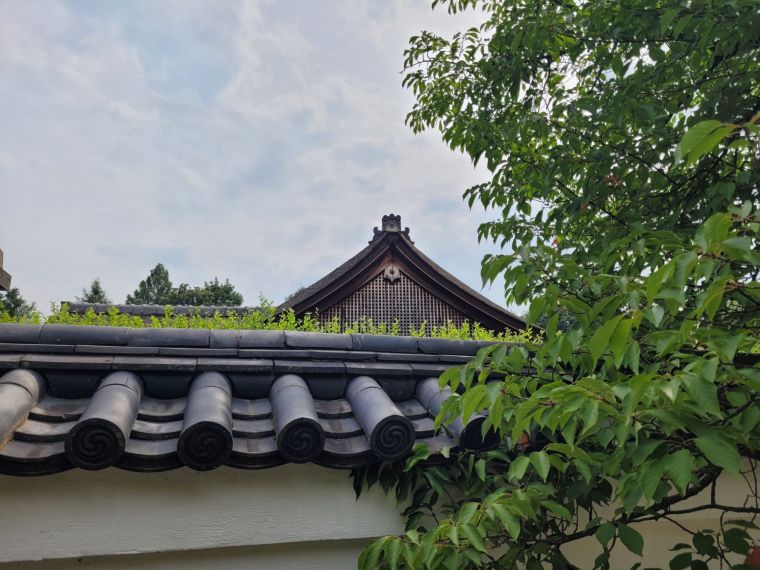
Ever since my discovery of the Japanese Tea Ceremony and all things Japan, I had wanted to experience it for myself. I got the chance in the summer of 2021, when I took the hour drive out to Shofuso Japanese Cultural Center.  The house was designed by Junzo Yoshimura as a 17th century style home. It was built in Japan in 1953 utilizing traditional techniques and then shipped to New York as part of the Museum of Modern art. It found its home, however, in West Fairmount Park in 1958 where it has graced the greater Philadelphia area ever since nestled in a beautiful Japanese Garden. It includes a pond garden with a waterfall, island, koi fish, traditional tea house and bathhouse.  

Walking through its gates, one could easily forget that one has not in fact hopped on a plane to the middle of Japan. Every corner of the building is a beautiful work of art, carefully tended and maintained. What delighted me was the dedication to keeping the building authentically Japanese. Unlike in America when something like a floorboard has some sort of damage or rot, the Japanese do not uproot the whole floorboard and replace it. Instead they cut around the damaged section and then fill it in like a puzzle piece. There was a sort of beauty in keeping the story of time rather than a focus on perfection. Flaws were a natural outgrowth of a house in use and there was a sort of artistry in the repair. 

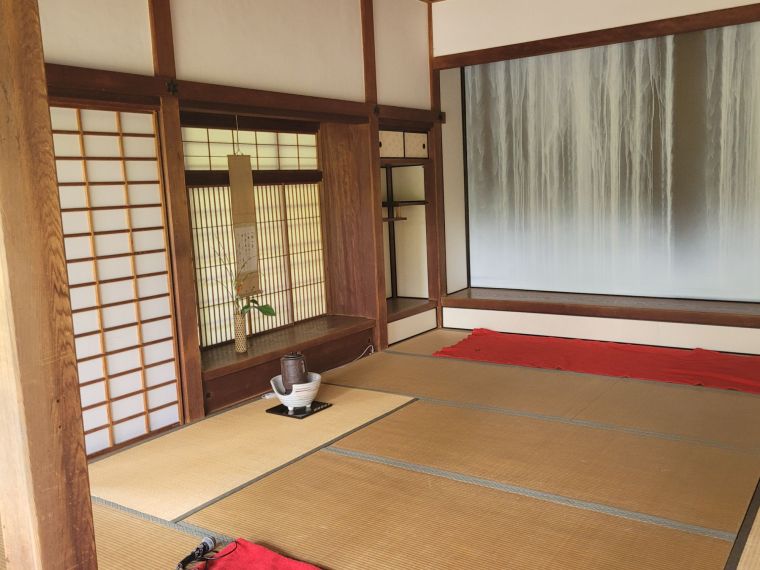
Men and women in kimonos graciously answered questions about the house and pointed out its secrets. They informed us that the murals of the house were donated by an artist in 2007 and were inspired by the waterfalls. They told us about the hinoki bark root (the only one outside of Japan) and how it took 1.4 million dollars to repair it back in 1999. They were excellent hosts whose presence engendered a sort of respectful quiet in the guests. It is not that we did not speak, only more in hushed whispers as to not disturb the peaceful atmosphere. It is a house that invites calm reflection and relaxation rather than exuberant outbursts. 

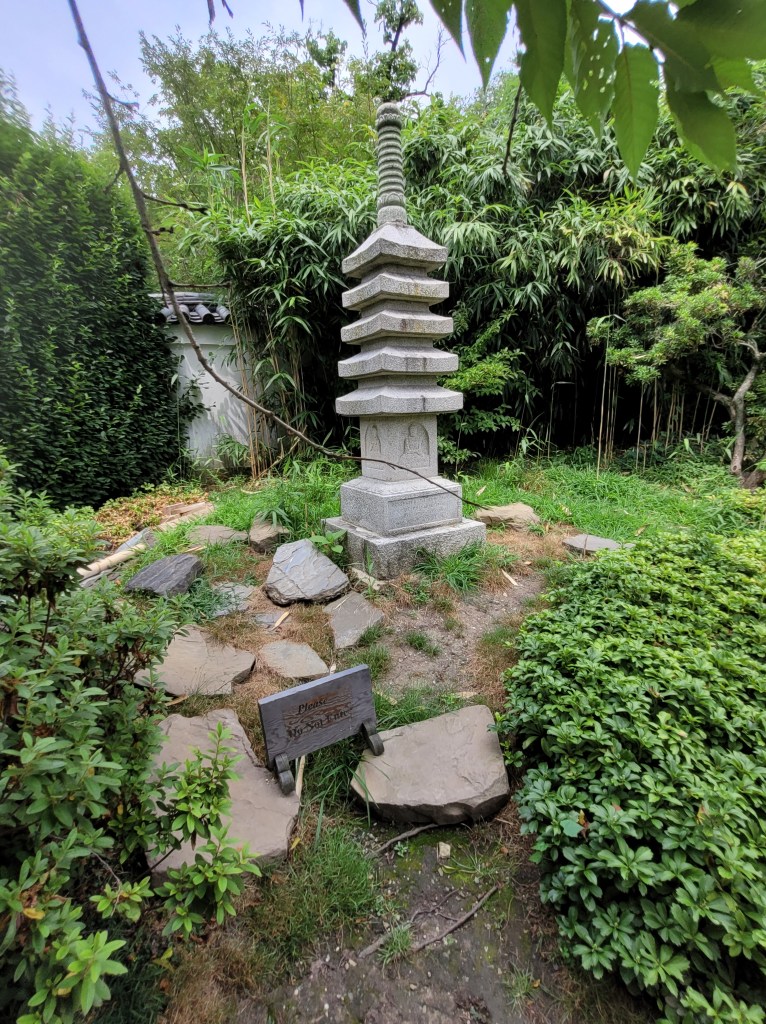
In the heat of the summer, my sister and I explored the small garden which encircles the house. We took a moment to pause by the Buddha statue, littered with small offerings and tucked away among the bamboo. We sat in quiet reflection watching the lazy circles of the koi fish which were only interrupted when a tourist decided to feed them. The noise of the nearby city melted away and one could almost believe that we had stepped through a portal to the other side of the world. 

Soon we were invited to sit for tea. A woman dressed in a beautiful kimono came out to prepare the tea for us. While she began to prepare the tea. The male host graciously explained the “ceremony” as not a ceremony but more a set of expectations of manners that one should adhere to when invited to a formal tea in Japan. I suppose in truth, it was no more a “ceremony” than a proper English tea though perhaps the rules were a bit more structured to give the illusion of ceremony or ritual. One could make arguments either way – but he was speaking as a Japanese person and he indicated that it wasn’t a ceremony persay, so I am going to believe him as the expert in his own culture. 

We were instructed that we would be expected to admire the carefully chosen decorations such as the scroll. He explained the symbolism of the arrangement of the flower. As the woman began to prepare the tea he explained the different instruments and tools that she was using the small white cloth, the bamboo whisk, the scoop, tea powder and the metal pot to heat the water. 

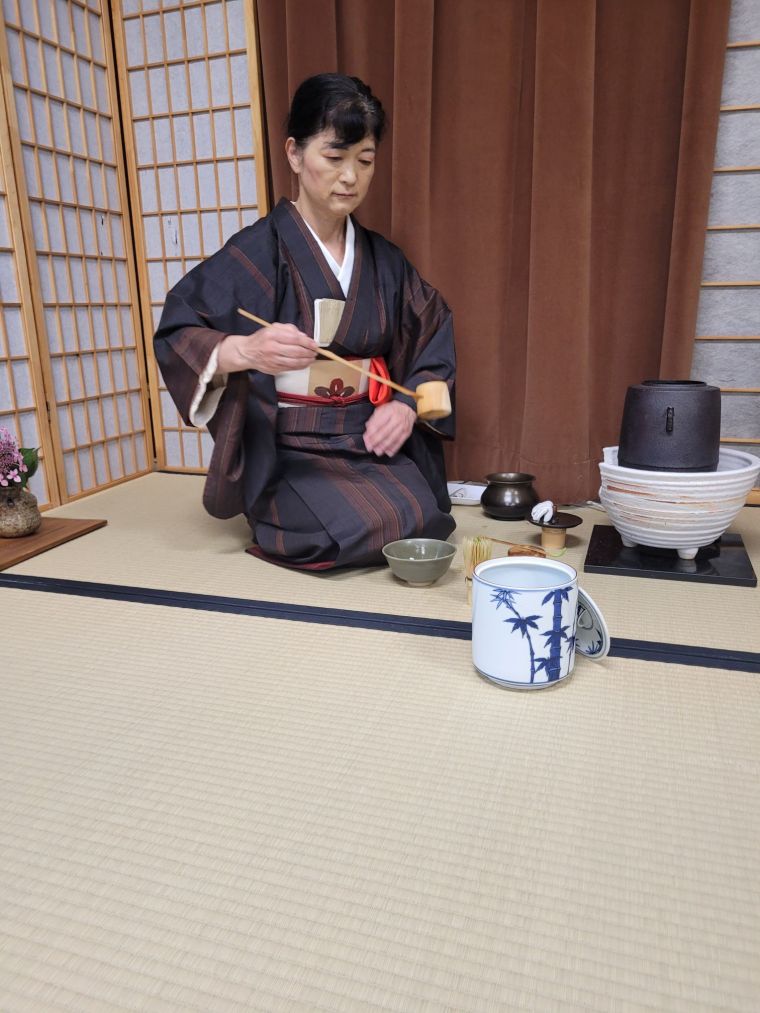
First, the hostess brings in all the tools necessary for the tea preparation and then begins cleansing the utensils. Then she carefully places in the powder and hot water into the cup and whisks it expertly into a perfectly foamed tea. The cups of tea were passed around to the various guests and our male host continued his lesson. 

We were instructed in how to pick up our cups, turn it the proper 90 degrees and to take slow sips. He explained that we would be expected to admire the craftsmanship of the cups and to express appreciation for everything the host had done for us.

The tea made from the matcha powder had almost a soft, velvety texture in my mouth. It was a bit more potent than a typical green tea, but lacked the harsh bitterness that the black teas can have. Despite the heat of the day the hot tea was refreshing. I enjoyed the texture of the cup in my hand and took in the smell of the tea. 

We were also given a sweet to enjoy along with the tea. I felt quite terrible as the host had gone through great trouble to prepare the sweets and it had a jello like substance to it. Unfortunately, I have a sensory issue with jello as it makes me gag. I graciously accepted it and forced it down as I did not wish to offend her by refusing. However, I may still have offended her with my face. It did taste delicious, it was the texture of the jello that made it difficult to swallow. 

Despite my potential faux-pas, it was a delightful time and dream come true and the following year, I was surprised to find myself once again at a Japanese Tea Ceremony. This time armed with previous knowledge and in a more intimate though less peaceful setting. 

Each year, there is an annual tea festival in my state. As previously stated, I am a bit obsessed with tea. Together my sister, myself and my mom journeyed to a small town only an hour and a half away from home to a cozy tea shop tucked away along the main street. Behind the unassuming little tea house is a beautiful hidden garden which is where the highlights of the festival take place. Unfortunately for us, the day was quite wet, necessitating for much of the festival to be moved to the inside of a nearby church. This meant that the church basement was crowded, loud and somewhat uncomfortable. 

So it may surprise you to hear that within the noise and the crowd, I stumbled across an oasis of peace and zen, a small tea ceremony. A woman sat on the stage, her small tea house set up and invited you to sit. My sister and I eagerly took our seats in anticipation having so thoroughly enjoyed our last tea ceremony and my mother followed close behind. With a small polite bow and a tiny smile tugging on the woman’s lips, the ceremony began. Do not ask me what magic spell the woman wove, I only know that under her expert care, the crowd disappeared from my mind. For a small window of time, we were transported out of the world and into a quiet pocket of serenity. We took our time sipping the tea and making conversation. As expected, my sister and I expressed admiration for the cups and remarked on her beautiful display. We enjoyed the sweet treat offered (thankfully nothing gelatin, so I did not have to repeat my unfortunate behavior of last time!) We complimented her and thanked her for her time and consideration both verbally and with a small donation to help support the tea house in Philadelphia. All too soon, we found ourselves back in the crowded basement, but I shall always remember the spell that such skill can weave. That is after all part of the point of the tea ceremony, to approach the act of drinking tea with a mindfulness; to transform the mundane into an extraordinary art that allows the participants to enter into a calm space. Tea, dear reader, really can be magic. 

How can you participate in a tea ceremony?

If you live within a reasonable distance to Philadelphia, then you can buy tickets to the Shofu Teahouse and for an additional cost, participate in their tea ceremony. You can also check out the PA Tea Festival as the teahouse typically sends a representative to perform small ceremonies for the guests of the festival. 

If not, then google is as always, your friend. See if there are any Japanese cultural clubs or organizations in your area. They may offer classes or demonstrations to the public.

A word of caution, do not join a cultural organization only to check off something off your list; someone else’s culture is not your personal playground. As with any cross-cultural experience it should be done with genuine curiosity and humility. The tea ceremonies I attended were extended by invitation to the general public. I did my best to participate with respect and to be a student of their culture.