In the age of social media, we are constantly being shown a carefully curated montage of other people’s lives whether that be our own friends and family or influencers. The pressure to present this picturesque life is almost constant, while the algorithms feed us a never ending message of inadequacy and insecurity. Not only that but influencers show us a steady stream of items, experiences and getaways that would “cure” all those pesky problems that we face.
I recently heard someone say “you can’t out consume an influencer.” Influencers are often given the items that they show us and can often turn around and sell those items. The items they do have to purchase are tax deductible and considered a business expense. They are paid to consume whereas the rest of us have to use our hard earned money to try and keep up with them. Not only are they getting paid to consume, many of them are making above the median income of $74,000. I certainly don’t make $74000. So yes, you can’t out consume an influencer.
No matter what you do, there will always be someone who makes more than you, is more successful, has a bigger house, goes to more places, does more things, buys more items and is considered “ahead.” Even if you manage to become the “top dog” of your current social group by moving up, you will expand your social group to include other people who are “higher status” than you. One of the reasons why when people move up the social ladder they continue to struggle to make it, is because they are trying to keep up. They get a promotion and make an extra $20,000 a year, but then they buy a better car, move to a better house, pretty soon that 20,000 isn’t going as far as it could have had they stayed where they were. But where they were often wasn’t that comfortable or perhaps, the “Joneses” convinced them that what they had wasn’t good enough.
It’s important to remember these things when considering your bucket list. I shared that I often go on an “adventure” about once a month. Most of the time it’s with my sister on our sister dates. This means that I have to pick and choose what I want to do when because I don’t have lots of time or money to be spending every weekend or most of my evenings out. Sometimes, this means putting an event on the calendar for next year in order to be able to go to a different one. Sometimes it means skipping out on something entirely.
Not every activity needs to be done or event attended. If it’s not for you don’t do it, even if it seems like the popular thing to do. You have limited time and resources so spend them wisely. It may be tempting to try and start to push the schedule to do more than once, maybe twice a month, especially when my feed starts to get filled up with events, activities, people doing things and going places. However, going out all the time means not resting and I have cats at home who have emotional needs that I am obligated to meet as their guardian. Besides, snuggling cats is on my bucket list.
Snuggling my little baby kitten!
Remember saying no to something, allows you to say yes to something else. Saying no to going out each weekend, allowed me to say yes to having pets. Saying no to some more expensive experiences, allowed me to say yes to going on a cruise with my family. Once we free ourselves of trying to keep up appearances and out competing the social media algorithm, we can start making real choices for ourselves that help us create real meaning in our experiences. We have to remember that what we often see is a facade hiding.
How many celebrities have we seen over the years share their struggles with depression, anxiety and feelings of inadequacy? How many stories have we read about the ultra rich with their empty marriages and loveless families? There are certainly celebrities that are quite happy and ultra rich who have wonderful families, but they did not create their fulfilling lives from chasing things and trying to keep up with others. Trying to keep up often fuels the negative feelings about ourselves. Recognize that you are enough, as you are. You are not your job, you are not your income, you are not less than because you have less, your value is not predicated on the things you have.
Having a bucket list has many benefits, but it should not be used to compare yourself to others or as a measuring stick of your self-worth. It isn’t about keeping up with the Joneses, it’s about living your best life right where you are.
I think it’s important to acknowledge that many bucket list items contain cultural experiences especially when traveling. Before going further, I understand this post may ignite some heated conversations. Please, be respectful and extend understanding and grace to one another, this post is intended to encourage us all to be respectful of one another’s cultures and differences. It is not intended to guilt or shame people, and I am open to constructive, respectful feedback.
While cultural experiences can be very exciting, it can also lead to some unfortunate incidents. Even when we’re trying to engage in good faith, we may find ourselves interacting with significant, even sacred, cultural artifacts, rituals and traditions and if we don’t understand what we’re doing, we risk offense or worse. We may find ourselves attracted to the aesthetic of a culture without understanding its significance or true nature and end up utilizing items in a completely inappropriate and disrespectful manner.
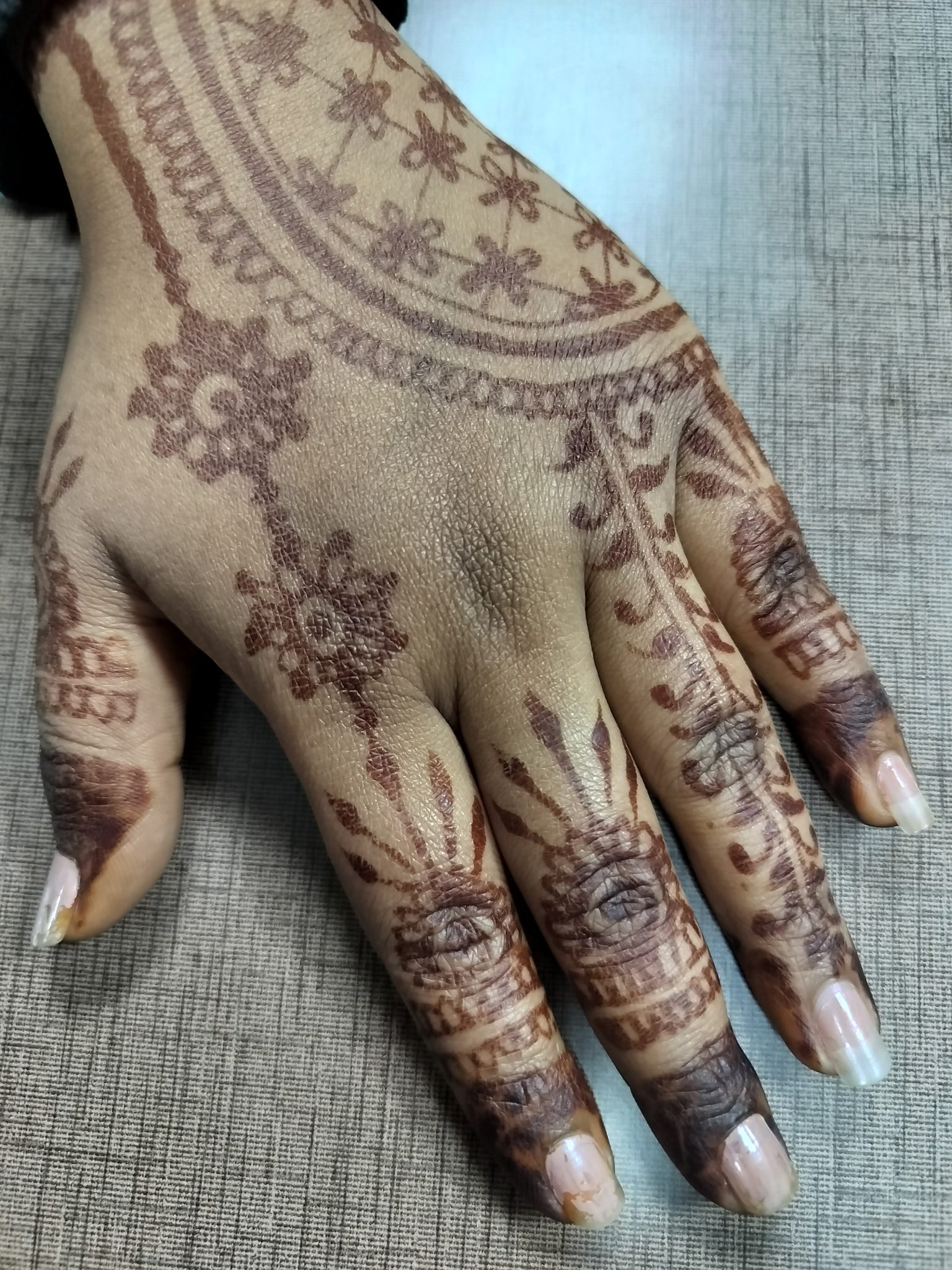
Take the 90’s henna tattoo trend which was imported to the West from India. Henna is used for marriage ceremonies. The patterns utilized have deep spiritual meaning and importance. So it must have been a bit of a surprise to them to see women and girls using henna tattoos as a fun activity to do at the beach. Westerns saw them as fun, decorative temporary fashion accessories rather than tied to the ritual of marriage. Was it wrong? Perhaps. Not knowing the history, I am uncertain if it was a conscious effort on the part of Indians to share and market their culture to the west or someone from the west seeing it, thinking its pretty and selling it to girls here. Which is the much more likely story.
The Japanese Embassy here in the US invited people to come and learn how to properly wear a Kimono. The Japanese Society in Philadelphia invites the public to participate in their tea ceremonies. Hence, I am much more comfortable engaging in those sorts of things, than, say getting a Henna tattoo or box braids. For me, one is a purposeful cultural exchange, undertaken willingly by the people themselves and often comes with a sense of cultural context. The other was taken without the understanding of the culture, not untaken by the people to whom it came from and delivered to the rest of the world without a cultural context to understand it. Despite its prevalence everywhere in my childhood, it wasn’t until I was in college that I learned that Henna was tied specifically to marriage and religious festivals. I still think it’s beautiful, but until I get a sense that Indians are setting up henna tattoo stations at the mall and selling it to us willingly, I’m going to pass.
The box braids are a little more tricky because when I’ve gone to places in the Caribbean, I do see local women offering to braid anyone’s hair. It does appear to be a willing exchange of cultural expression. During my mission trip to Haiti, the women seemed to sincerely want us to participate in that part of their culture with them. It checked my boxes of are these people freely and willingly offering us this part of their culture without coercion as part of an exchange. However, if I came back to the United States with braids, it might be seen in a very different light, not as a symbol of acceptance and friendship but of stolen identity from a subculture I have not been invited to. Sometimes people within the same group may disagree on what is allowable to share and what’s not. Context matters. Do your best to engage in good faith.
Luckily, for most of the items in this blog, we’re in the United States, so it’s not quite as tricky to navigate when it’s okay in one place but not okay back home as in that example. However, it is still tricky when engaging with a culture not your own. Whether you’re near your house or not, when entering another person’s cultural space, you are no longer home and you are an outsider. Which means, you cannot simply show up and demand to participate. The first step is of course to be invited.
In general, anything open to the general public means you’ve been invited. So cultural festivals, demonstrations, concerts and parades are usually safe to assume you can come regardless of whether you’re part of the group or not, you’re a guest. It doesn’t mean you’re an “honored’ guest, you may be a tolerated one. You can reach out to a group that meets in public places and inquire if you are permitted to join, but you should not impose yourself. If there is a group dedicated to Italian Heritage and you’re not Italian, they would have every right to politely decline you attending their next dinner even if they did book it in the park or other public place. However, if they hold an Italian Festival in the park, by all means partake in the festivities. The festival is a place for them to showcase their culture, share their traditions, have us try their food, hear their music, and take pride in themselves.
Now there are some things that aren’t quite as clear cut as them putting up a banner that says “all are welcome”. My main filter is to go back to what I said earlier to some basic questions like are these people from the culture themselves, are they willingly engaging in this exchange and not due to some sort of exploitation, is there a sense of cultural context to this experience or is it divorced from the larger culture? I may ask some further filter questions to determine in the moment if I should or should not engage such as is this invitation being extended by an individual whom I have come to know well out of friendship, or a commercial venture which exploitation is more likely? Is this activity linked to any sacred or religious rituals or traditions? Am I in a place where that person is of the dominant culture or in a place where they are the minority? Even if we are in say Chinatown does that mean that they’re still the dominant culture for this area?
This isn’t to say that you should do one or the other thing, I’m only sharing with you my process for when I’m trying to determine if I am invited or imposing. The henna tattoo seems like an imposition to me, but I’m not going to tell you, dear reader, what to do or not to do. For some my threshold is too high, for others my threshold is too low. This is not intended to shame anyone or imply they are a bad person if they get a henna tattoo. I’m still learning and evolving. Maybe in a few years, I’ll come to a different conclusion and a different way to filter when I’m a guest, when I’m an imposition and when I absolutely should not participate. The point is for us to at least consider the question to try and do better than we did before in order to be respectful of others. After all, wouldn’t we want the same consideration when people come to our home towns?
As you can see, my shirt was not considered appropriate for many of the churches in Rome as it bared my shoulders.
The second step is of course to act the part of the guest. A humble, curious spirit goes a long way. If possible, try to do a little research beforehand of proper etiquette especially if going to a culturally significant celebration. A festival in the park with music and food is a bit different than say a procession honoring a Catholic Saint. For example, in Rome I was required to have my shoulders covered when visiting many of the churches. Not having known this beforehand, I had to hastily purchase a shawl to cover my shoulders in order to spare myself the embarrassment of being turned away when I packed a tube top shirt. That was not the time to go on a rant or argument about women’s bodies and whether it was right to insist I cover it up. I was a guest of their city, in their sacred spaces, and I did not have the right to impose my culture and beliefs on them.
The third is to be open to learning and respectfully asking questions. Your questions should not be made with condescension or from the idea that what they’re doing is wrong or strange. Remember, you’re the strange one in this relationship. If you are corrected on a misstep, respond with gratitude and humility rather than defensiveness. I always make the analogy to stepping on someone’s toes. You may not have meant to step on someone’s toes, but you did. The polite, socially acceptable thing to do is apologize and be more careful where you put your feet. Be willing to get uncomfortable and try new things, that is after all the whole point otherwise you may as well have stayed in your own place.
The key principle behind all of these ideas is to be respectful of other people. Their culture isn’t your playground and they aren’t a Disney ride at Epoc. You wouldn’t show up at someone else’s house uninvited and just start messing with their stuff, getting in the way and taking their things as yours. You wouldn’t rudely tell them that their house sucks and that your house is way better. You wouldn’t demand that they make special food just for you and redecorate. The point of traveling is to experience different things and to be a little bit uncomfortable. That’s how we grow. We just don’t want our growth to be at the expense of other people and we often don’t grow very much when it is at other people’s expense. I’m not the definitive expert on this topic, but I do think it’s an important topic to consider when venturing out in the world. Hopefully as you sally forth on your own cultural experiences this short post helps you be a better global sojourner.
There are times when I do travel. At the time of this writing, I have gone on two cruises, spent a semester abroad, completed a mission trip and traveled a number of times over several states. I am not opposed to travel, though I have stated there are drawbacks to traveling especially when so many things may already be in your backyard if you just take the time to look. However, there may be things or experiences that just require travel. For example, I wanted to see a total solar eclipse. Not living in a place where that was happening in my lifetime, I was forced to travel. If you want to see the Great Wall of China you have to go to china.
Given the drawbacks to travel, environmental impact, overtourism, money involved in traveling, participating in exploitative practices, etc. it is important to make the most of your travels when you travel to minimize these drawbacks. As with everything else, do your research and be picky. When I went on my two cruises it may have been tempting to lounge about on the many sandy beaches. However as someone who is only a two to three hour drive from the beach, that wasn’t an activity high on my list. I remember distinctly telling my travel companions that if we were going to sit around on a beach we may as well drive to Maryland or New Jersey and save ourselves the time and expense as honestly beaches are fairly universal. Sand? Check. Ocean? Check. Beach. If you, dear reader, are living in the midwestern part of the United States, including a beach day in your cruise makes sense, for those of us from the coasts, we probably should consider other options.
Something I am mindful to do when traveling is to consider what are things that I simply cannot do in my own backyard? That isn’t to say that I refrain from doing anything that I can do in my own backyard, more that if given the choice of various activities, I will prioritize the ones that I cannot do or cannot do easily. When I went to Aruba, I opted to get on a submarine, as that wasn’t something I couldn’t easily do off the New Jersey shore. I saw the Panama Canal in Panama because it is a unique piece of engineering not replicated elsewhere in the world. I went to the Rain Forest in Costa Rica because like the Panama Canal, the rainforest simply can’t be replicated. That isn’t to say I didn’t go to the beach at all, I did pick one or two days that included the beach. It just wasn’t my first priority and the days I did go to the beach it was an add on to another excursion, like the caves in Curacao.
I was mindful when picking my itinerary to pick ones with the most places I wanted to experience or alternatively have excursions which include activities I want to experience. This can even stretch to smaller items. When departing from the New York port, I made sure to take time to get a good view of the Statue of Liberty when we left as I had never seen it. I took advantage of being at the equator in order to watch both a sunrise and sunset on the same day. In the north, I would have had to get up quite early to see a full sunrise and being as I am not a morning person, this would be difficult. Closer to the equator the sun rose and set at times more conducive to my schedule. These were small things, but I still got to enjoy them with just a little awareness of the opportunities around me.
The cast from the play in Stephen’s Green. Discovered by chasing down the gentleman on the far right through the streets of Dublin
This is not the time to necessarily be pig-headed about your agenda or have an agenda so full you cannot be spontaneous. Some of my best experiences come from being spontaneous. That is how I got on a tour of the capitol building in Washington, scored tickets to the British Shakespeare’s performance of MidSummer Night’s Dream in Dublin, and the unicorn tapestries in Paris. Cultivating a spirit of openness and adventure. The best strategy is one that includes openness to pivot to new opportunities.
The point is to be mindful about what you’re going to do and be mindful when you’re doing it. Don’t just travel to travel, use your time wisely. Thoreau told us to suck the marrow of life, suck the marrow from your trips! Consider carefully the itinerary of where you’re going, cast a wider net to capture the possibilities of the area, and be willing to indulge yourself on things that are inaccessible otherwise.
If you do go on a cruise ship, check out all of its offerings. On my very first cruise, I discovered it had a thermal spa suite outfitted with lots of things I had never tried before a sauna, steam room and salt room. For a little bit extra, I was able to purchase a pass to access it and found that I spent at least an hour there every day. Considering the very large hot tub and fewer people with beautiful views, it was certainly worth it. I also discovered the ship had a ropes course with a zipline. On another ship, we tried go-cart racing. Something else, I had been itching to try. I loved it, my sister not so much – needless to say we scratched that off our list of sister dates to do. So check out your ship, your hotel or wherever you may be for cheap/free options. It wasn’t like I could really go anywhere else, I had already paid to be able to use it in my fare, so I may as well make use of them and cross those items off the list. Trips I took during my semester abroad to made the best use of my time in Germany. By venturing forth from Marburg I was able to see places I’ve always wanted to see like Dublin, Paris, Berlin, Vienna and Rome. With Ryanair most of those plane tickets were under $50 bucks.
Be sure to check the dates of your trip for any special events that may be occurring in the area or be willing to adjust your dates if you discover there will be a special event in the area you want to go to. My trip to Dublin just happened to coincide with their Shakespeare Festival and a performance by the British Shakespeare Company. My trip to Vienna just happened to coincide with Monet’s Water Lilies being on exhibition at one of the many art museums. By paying attention to what was going on at a specific time, I was able to expand what I was able to do. Although contrary-wise, you may want to avoid going to places during certain times of the year. For example, avoid Disney World November through December, typically the park is open for almost 12 hours for you to enjoy. However, during the Christmas celebration, if you want to stay after dark you have to pay an extra $300 – $400 for a pass, that’s cutting your park time down by 5 to 6 hours unless you’re willing and able to pay an extra fee. Don’t go to Boston during the marathon in the spring if you want to avoid the crowds. Skip Florida’s beaches during spring break if you don’t want to be in an overcrowded place with a bunch of drunk, college students. Careful planning can help make or break your trip.
Try to add an extra day in order to add in something special. When leaving from the New York port, my family and I added an extra evening in New York to catch a Broadway musical, something my sister’s mother-in-law had never experienced and is on many people’s list. Yes, it was an extra expense but it would be more expensive to have to travel back up to New York just to see a show. When my sister went on her first cruise, she flew over a day early and enjoyed the sights of Barcelona, for a night at a hotel she was able to experience a whole city. Traveling is often one of the biggest expenses as well as your biggest carbon footprint, so by adding a little extra time, you can enjoy more. Good for your wallet and the earth!
As budget conscious people, it is important to get the most “bang for your buck” as it were. That isn’t to say pack everything full and rush around so quick you can’t even take in what you’re seeing, it is only to make sure you’re taking full advantage of what is nearby to maximize your experience. With careful planning and a spirit of adventure, you can make the most of your more expensive and far ranging trips.
Some people may rightly wonder, why have a “bucket list”? After all a bucket list is all the things you want to do before you “kick the bucket” (die) and unless you’re actively dying, why bother? Don’t you have your whole life ahead of you? Some may think it even arrogant or foolhardy to bother focusing on all these things instead of what’s right in front of them, the job, the house/apartment, the family, etc. You may even be accused of living a “check the box life” of only doing things on your bucket list to “check them off” instead of experiencing them or as social currency badges “look at me, I’m so cool!”. Others may look at it as a hedonistic form of self-aggrandizement. That certainly can be the case if a bucket list isn’t approached correctly. However, it isn’t about the thing itself, but rather how you use it.
Pulling from positive psychology, it’s about trying to make life memorable and perhaps, even meaningful. In fact, some experts theorize that without peaks (i.e. “grand” events) our memories are fuzzy messes. There’s some research to suggest that accomplishing bucket list items helps set memories. Most adults have pretty good memories of their childhood and early adulthood. Those times are often marked by clear beginnings and endings, the start of school, the field trips, the graduations. Once adult life hits and it’s the same day in day out stuff, you begin to find yourself losing track of the years. It goes by in a flash, ten years feel life five. It isn’t just that it’s a smaller percentage of your life. There’s something to suggest that when you were younger there were lots of new and novel things going on to make time “stand out” without novel “adventures” your adult life is just a smear of work with the occasional night out. Since beginning my bucket list journey, time has gotten back some of its meaning.
A Bucket List also just keeps life exciting, after all who would want to live a life without some peaks? It helps bring a sense of fulfillment, gratitude and awe about the world. Keeping an adventurous spirit can lead to all sorts of wonderful experiences. It can also get you out of a “slump”. If my only “bucket list” item was to go to Iceland and see the Northern Lights, I might overlook all the amazing experiences I was having right here and be perhaps a bit depressed by not accomplishing this life long goal. By looking around me for fun experiences right nearby, I have had so many amazing days and done so many cool things that I would have never done otherwise. I still have my bigger items, but I’m not longing for something that might never come. Instead, I’m living right now.
Bucket lists can help set goals which can motivate us to accomplish things and when goals are specific they are the most motivating. These are specific, concrete goals and by having a bucket list there semi-looming the background it can motivate you to actually go forth and conquer! A bucket list inherently reminds you that your life is short, shouldn’t you be going and making the most of it? A budget bucket list approach reminds you that life is short, shouldn’t you be looking around yourself to live right now instead of once every three to four years for maybe a week if you’re lucky?
Bucket lists can be useful on your journey of self-discovery, to assess values and understand what you truly want out of life. Henry Theoreau encourages us to suck the marrow from life and to live deliberately. A bucket list can help you reflect on what that means for you on an individual basis. How will you live deliberately? What will give you joy? What things are important to you? How do you want to spend your time? Scrolling on a phone, looking at all these people “living” as they sell you stuff you don’t even use because you’re spending all your time on a phone? Seriously, what’s the point of even having a house if your world is a couch and a screen? My bucket list are things that are meaningful to me, that reflect my interests and personality. I spend my free time on the things that matter: my cats, my dog, my books, my violin, my garden, my friends, my family and the adventures big or small with those that I love and care about.
Now, this other piece, I will say with a BIG grain of salt as I’m not, as of this writing, totally “sold” on the idea. However, there is this theory that has been making the rounds for almost a century (perhaps longer) called “The Law of Attraction”. Its most basic premise is that like attracts like. Good vibes lead to good things, bad vibes lead to negative outcomes. So if you want to be rich, you have to put yourself in a “rich” state to “attract” wealth. Often people will use things like vision boards, gratitude journals, and positive affirmations in a bid to have the universe respond in a miraculous way to help them obtain the things they are trying to attract. They will also try and look for positives in a given situation, identify negative thinking and work to reframe events in a positive way. That is the most basic explanation and if you think this is a completely looney idea, you’re not the only one.
Surprisingly, many successful people from past presidents, to movie stars, to silicone valley entrepreneurs all swear by this “law”. These are smart, successful people not some guy living in a garage with a tinfoil hat against the alien invasion. There is even some limited support of the theory in things like positive psychology. We know that visualization of goals helps increase performance. Many top athletes will visualize their games ahead of time and see positive results. So there does seem to be some truth to the idea. If we consider that luck is opportunity + preparation, then we can see how something like the law of attraction may be useful, even if it’s not actually “attracting” anything.
Consider the following, someone who buys into the law of attraction wants to become a professional football player. He may practice extra hard, he may visualize his plays and he is on the lookout for potential opportunities. He may hear through the grapevine that a recruiter is coming to the second half of a game, in part because he’s paying attention. He speaks with the coach to make sure he gets a chance to play on the field during the time the recruiter will be there. He gets recruited and the rest is history. Did he attract it? Or was it something else? After all we tend to notice opportunities when we’re focused on finding them. If he hadn’t been so focused on his dream, maybe he wouldn’t have heard about the opportunity. If he hadn’t been prepared, maybe he wouldn’t have been able to make use of that opportunity. I’m sure there are many star athletes out there who are never discovered despite their visualizations and affirmations, but then again maybe they ended up using those same talents in other areas that ended up being far more rewarding than a football career.
Listening to the stories of those who believe in it, it seems hard to deny that there is something to it because they have so many “manifestations” come true for them. Personally, I’m not sure that I believe I can just get the universe to give me stuff because I’m vibing good vibes. After all, there is such a thing as a bias against negative data. We hear about 100 people being successful with the law of attraction and think there’s something to it but never hear about the 10,000 people who’ve tried it and found nothing. Regardless, I do believe in preparation and opportunity, as that is how I get most of my bucket items done. I’ve listed out the things I want to do and then I go looking for cool events nearby, creating opportunities for myself. Some people may say that I’ve “attracted” a lot of things through the law of attraction. I might say that I just kept an eye out and that keeping a bucket list keeps me motivated to keep looking.
Either way, the principles of the law of attraction aren’t bad things to do and I don’t think they cause any harm. Call it a wager, I’m wagering that it works because if it does awesome! If it doesn’t, I haven’t lost anything by practicing gratitude, looking for the positives in a negative situation, reframing negative experiences and creating vision boards of what I want my life to look like. Positive psychology says all of these things are healthy and can improve mental health. Utilizing the bucket list can help you with these things such as cultivating gratitude for all the things you have experienced with a reverse bucket list or reframing a negative experience of missing out on a total solar eclipse in 2017 as a good thing because it meant that I ended up going to Vermont in 2024 and had an amazing experience!
Lastly, whether I have a terminal disease or not, I am getting older and I won’t be around forever. My mother became disabled at 46, she’s had twenty surgeries in twenty years, she now lives with me because she can’t live on her own. Several years ago, she had bilateral clots in her lungs and she almost died. She worked herself into sickness and almost to death. Because she was living to work, she didn’t get to really do the things she wanted to do in life. Do not mistake me, she worked really hard to provide me a good life. Now, I try to help her live her own bucket list items as her health allows – in fact, most of my current long distance travel is to check things off her list. It’s the biggest reason that I go on cruises; it’s a way for her to be able to travel because they’re much more accessible for her.
Unfortunately, many of her health problems are genetic and her family has a history of illness. This means I have a high likelihood of developing similar health issues. It’s not a given, as I’m doing my best to stay healthy with diet and exercise. But I’m aware that I may very well end up with chronic illnesses that prevent me from doing as much as I would like. We never know what the future holds, we don’t know when we’re going to “kick the bucket”. I aim to live deliberately, to suck deep from the marrow of life, right where I am. Carpe diem!
There are some things in life one cannot plan for, but when opportunity comes knocking one has to be ready to follow the white rabbit and see how far into wonderland the journey will take you. This is a short story about how I once found buried treasure.
It was my senior year of college when one of our friends who graduated the year before decided to come back to campus for a visit. She introduced us to a new idea, geocaching. She explained the concept was that someone would put out gps coordinates of a container that participants would seek out in order to exchange goods, usually trinkets and the like. The containers had a log that one would record one’s name. One of the caches she was seeking out had a location somewhere on our campus. I wasn’t quite sure about the entire process, but it seemed like an interesting idea. Being the naturally, adventurous types myself, my roommate Ray and Laura set out to look for the cache. Keep in mind this was back in 2009 when many of us didn’t have smartphones with gps capabilities. We had a printed out map with coordinates and gumption.
Soon we found ourselves out in the trails of our campus, looking through the undergrowth of the deciduous forest. You may think that I exaggerate when I speak about my college having a forest or trails, but the truth is, Messiah College (now Messiah University) had a rather large undeveloped section of campus called the “back 40”. It was always one of my favorite places to visit during my time there. Despite having walked on the trails many times, I had not ventured off the trails before that day; mostly because of my run in with a snake my first week on campus, but that day was not a day for cowards! Victory to the brave!
I distinctly remember crunching through underbrush, keeping an eye out for poison ivy and snakes. I wasn’t sure what I was looking for or how I’d know if I found it, but I was determined to help my friend on her small expedition. It was around an old wooden bridge that we discovered not what we were looking for, but rather an old tin can that had been hammered shut. We checked the map and the coordinates, the tin was decidedly not the cache in question. At first, we sort of dismissed it and continued our search but to no avail. Intrigued by our discovery, though disappointed that we had not been successful in finding the cache, we headed back to our campus apartment.
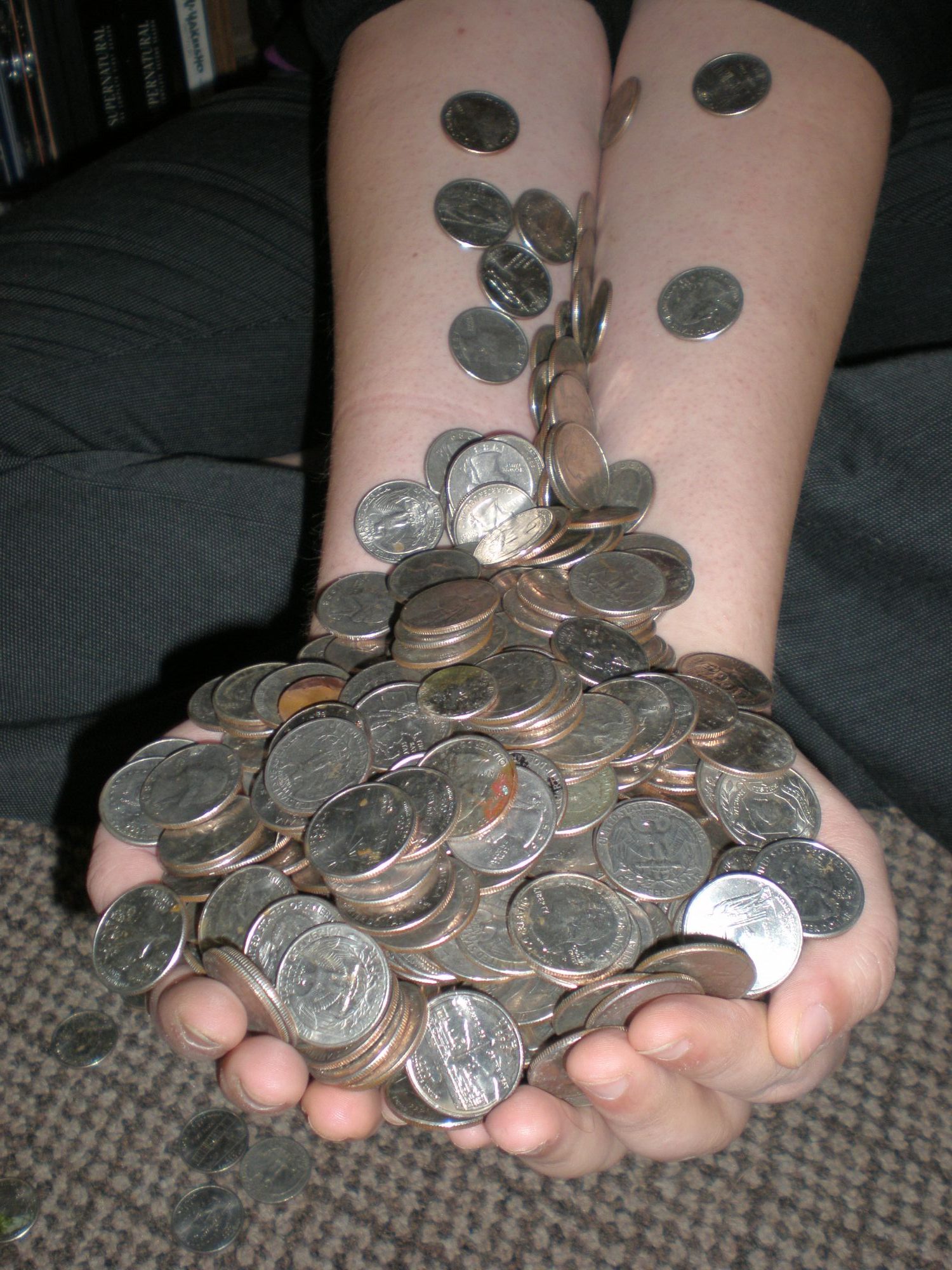
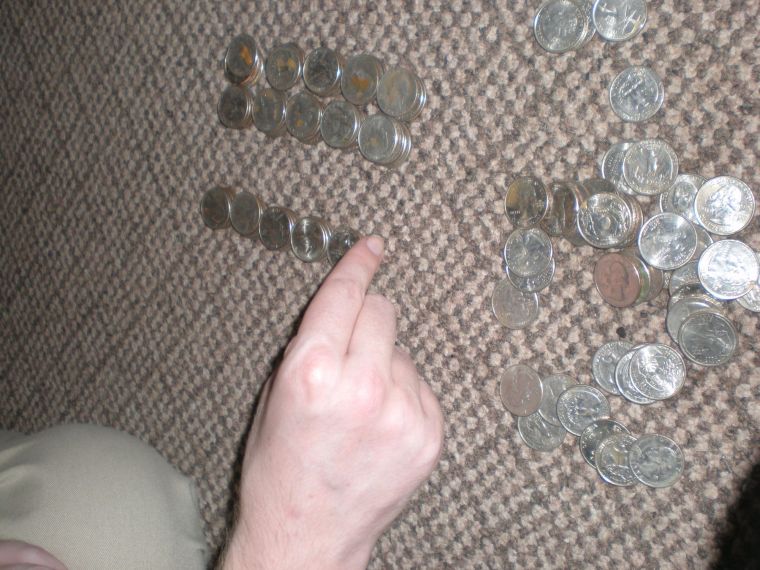
It took quite a bit of doing, but eventually we were able to pry open the can to reveal a mud filled container of something. We dumped out the contents and were surprised to find it had been filled with quarters. We immediately began counting out piles of 4 and then stacking the piles up 10 at a time. We quickly discovered we had found over $100. Buried treasure!
I had not set out that morning to find treasure, it was a spontaneous adventure untaken on a whim. Nor was it an especially long adventure, but it was memorable. And yes, I understand that $100 is not exactly buried treasure, certainly not in today’s economy, but to three poor college students it certainly felt like treasure.
How can you find buried treasure?
I cannot promise that you’ll find treasure if you decide to go geocaching, but there are plenty of aps out there that will allow you to participate.
To embody the principle of this particular post, embrace spontaneity. Go on that silly adventure with your friend, you never know where it will lead or what you will find. I have lots of stories that begin with an invitation to something unexpected. I have yet to regret saying yes. Having a list and making plans is all well and good, but one should not be so bore-sighted on the current goals that one is not open to opportunities that arise. Sure you might not have $100 at the end of the day, but you will have memories made with someone dear to you which is worth far more.
Completed: 2009
Miles from home: 0 (when counting campus as the home point)
Now there are some experiences that for you are bucket list items that others may scoff at as being worthy of gracing such a list. Their reactions may be from a misunderstanding of the significance of the experience whether historically, culturally or personally or borne out of some ignorance on their part as to the value of such an activity.
Take video games for example. Already some of you are rolling your eyes and dismissing the whole example – bear with me gentle readers! Video games have been considered a lesser art and base activity for many years. People scoff at the idea of e-sports as being a legitimate activity. I would say that those who are rolling your eyes have not taken a closer look at the industry or the history of other previously derided activities.
Years ago actors and actresses were considered little better than prostitutes yet now the are celebrated for their artistic talent and skill. They hold some of the highest social status in our society which is quite the reversal. We view the cinema now as being worthy of being carefully critiqued, as equal to opera in sophistication and artistry. We may consider that some films are as important to see as some books are to read. I daresay that we will soon be considering certain video games equal in value to any great opera, play, symphony or film.
Certain sports used to be considered reserved for the lower classes mostly the competitive sports whereas the more non-competitive activities such as music and dance were reserved for the upper class. The upper class certainly had semi-competitive sports like hunting and shooting, but you’ll note that they were with few exceptions non-contact sports. After all, we wouldn’t want young Archibald the Third to get a broken nose, think of how he’d look when he presents himself to his majesty! We wouldn’t want him to look like a common thug! However, now we push our children into these contact sports and laud lofty goals of scholarships and going professional.
These examples are to help make my point that for you, as an individual, there may be things on your list of things to achieve or experience which our culture may not value or encourage us to do. No one needs to understand your obsession with knitting and how for you a certain project may be your magnum opus. Celebrate it! Add it to your list! Maybe you want to make Challenger tier in League of Legends. Being as only .0024% of players reach Challenger, that certainly would be like making the Olympics. You don’t need to justify to anyone the amount of skill, dedication and knowledge it would take to achieve that. People who scoff at that may as well scoff at a Chess Grandmaster. Learning a programming language is just as worthy as learning a spoken language. The same can be said of creating an entire conlang.
The items for you don’t even need to be that big of a deal, they could just be things you want to do for fun. Not everything on your list needs to be elevated or lofty, some things could be small or even a bit silly. For example, I would very much like to see a drive-in movie. I love nostalgic things and experiencing pieces of the past as it enriches my understanding of historical events and cultures. It’s a fun diversion and would certainly be a different way to see a film. This certainly isn’t everyone’s cup of tea, but it is mine so it’s on my list and it isn’t something I would think would grace many other people’s list.
The point is not to be afraid to celebrate your personal achievements loudly and proudly. These achievements don’t have to be meaningful to anyone else but yourself. Part of living your best life is to do it in a way that is authentic to yourself without allowing other people’s negative judgements hold you back from pursuing activities that are meaningful to you. After all, the only person who is living your life is you!
We live in a right now world. We have amazon next day delivery. We have Netflix to stream movies directly to us. We can download our videogames off steam. Instantly find the answer using google. There are few things in life that we have to wait for which fuels our desire for instant gratification. Even a lot of our bucket list items are intended for an afternoon or a week. We spent the week backpacking through a European country, cross it off the list. It may have required some forethought and planning, but it was still done relatively quickly. But what about those things that require a long time, like learning a language or losing a lot weight? How about mastering a skill like blacksmithing or an instrument?
Learn German in 90 days! As someone who took it for 8 years of her life and spent 5 months in the country speaking it, the book is a failure. It wasn’t even useful as a review of the language after not speaking it for nearly 10 years. Get massive biceps gains in just one day with this crazy method! I had nothing to lose but a day, my biceps were sore. They did not grow massively, I assure you. Fad diets and diet pills are probably the worst of these items because not only do they not work in the long run, they can be incredibly damaging. They do not help you keep the weight off and may impact your health in the long term to make managing weight even more difficult than before.
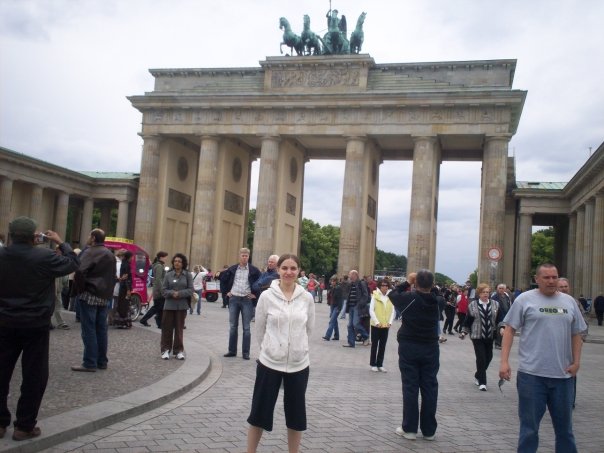
At the Brandenburg Gate in Berlin. Learning German wasn’t done in a day, but years.
Some of our goals and experiences are going to be things we have to do for the long haul. You want to learn a skill and not just try a skill, you’re going to have to put in the time, effort and sometimes expense to do so. I could do the free version of duolingo but after 5 mistakes, I would either have to wait hours for the hearts to recharge or purchase more hearts. I may as well pay for the monthly plan to help me achieve my language learning goals as I am reviewing German and learning Spanish. I’ve been at it for almost a year now and my German is almost back to where it was at the end of college, and my Spanish is still very basic. Granted, I only spend about 15 minutes a day on either language so because I don’t put in my time, my results aren’t as fast.
If I truly wanted to learn how to forge weapons, I would need to go weekly to the forge, buy my own steel and work hard to develop the skills necessary to make beautiful weapons. Heck if I really wanted to learn how to do it, I would learn smelting as well to master the entire process. Not only would this require time, it would require me to sacrifice other things as well. One can either be a jack of all trades or a master of one. If I spent my time at the forge, I probably wouldn’t have time to devote to my violin. My choosing the violin, I am saying no to many other activities that might fill my time. I’m not drawing or taking photographs. I’m not learning computer programming. Pursuits that I have at times toyed with but ultimately did not devote myself to.
Sometimes we dabble in things, we may for instance take a six of twelve week course in photography or ceramics. We may take a single lesson in glassblowing or falconry. We know that these things will not confer onto us any modicum of true skill, but the taste is enough to satisfy. These are another form of “good enough” which I discussed in another post.
However, for something we truly want to master. It requires something we have seemingly precious little of, time. One cannot become fluent in a language with a workshop or a twelve week class. It took me nearly eight years to become conversational in German and that was with semi-daily practice as I took it in both High School and college. It became quite stagnant with disuse. For one to be able to say one is fluent in a language it requires daily practice and use or else the most you will be able to say is that at one time you were fluent, but no longer. Oh it comes back quickly enough when you’re thrown in a situation requiring the language, but you are clumsy and stupid with it, the rules have gotten all muddled up in your brain and really why did the ancients insist on such an obtuse grammatical rule as changing the article based on the case? Why can’t the German “the” be, “Der, die, das, den, dem, or des”?
Taking a glass blowing class: To become proficient would takes weeks, to master would take years.
I encourage you to be judicious with the things you pick and not to overindulge in your ideas of what could be. I devote myself to just a few daily pursuits because frankly, I am a busy person. I haven’t the time to do much else. I have carefully chosen a few things that I want to do well that speak to me personally more than other activities and rarely skip on doing them. Attempting to cram in more items would mean not doing any of them all that well and I may as well not bother with more than the occasional workshop or short course on the subject.
Now dear reader, you will not be able to become a multilingual, black belt in karate, computer engineer, doctor, guitar player, chess grandmaster, and astronaut, not unless you suddenly come into a lot of wealth and find yourself with both the time, discipline, coaches and tutors to achieve such a thing. Even then I would imagine, it would take a good ten years or so to achieve any of that. If you are not willing to put in the time and effort, it would be best to eliminate the mastery of the thing and go with simply trying the thing instead. There is nothing wrong with that and no shame in the decision. Some people are meant to be jacks-of-all-trades and masters-of-none and there are those who are meant to master one thing and be amazing at it. This is what you must consider dear reader. There are things that you want to accomplish that will not be done on a weekend or in two or three months. They may be life long pursuits that require daily practice to truly achieve the things you want to achieve with them. They will require you to give up other items in order to make room for them. By all means pick that which gives you joy and makes your heart sing. The journey will be long, frustrating and trying, but the reward will be sweet.
There are many experiences that absolutely require “authenticity”. They require the larger cultural context of a given region, country, ethnicity, culture, etc. to be the genuine item. There are many others that don’t require much more than themselves. These are the “good enough” items that clear the bar of the Bucket List without the rest of trappings of a given thing (often those trappings require you to hop on a plane and go to a different country).
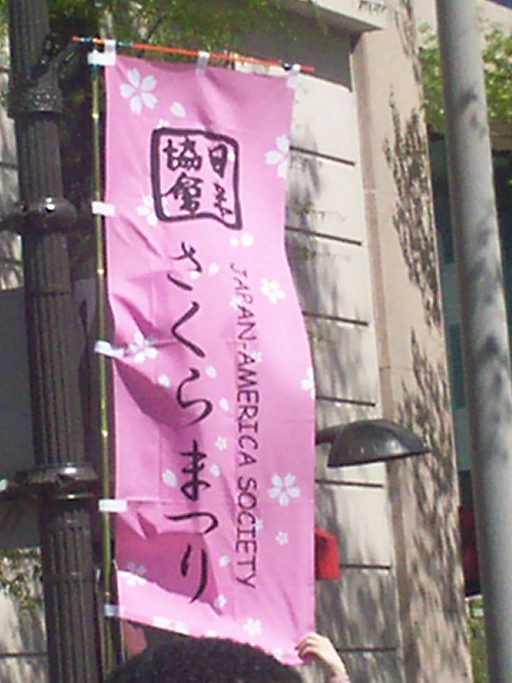
I often work backwards to my “good enoughs”. I may find myself dreaming of going to Japan. I may picture walking through a traditional Japanese house, enjoying a tea ceremony, taking in a Japanese garden, visiting one of their Buddhist temples, strolling through the bamboo, seeing the cherry blossoms, eating their street food, and seeing demonstrations of their weaponry and armor. Upon reflection, I realized I could do almost all of these things here in America. I was able to go to the Japanese Gardens with the tea house and enjoy a tea ceremony. I went down to the annual cherry blossom festival in D.C. and enjoyed street food, weapons demonstrations, music, fashion and more. These are my “good enoughs”. I didn’t need to go to Japan in order to say that I experienced the genuine item, because I found them here.
By thinking about a given Bucket List place and considering what I wanted to get out of a trip there, I was able to then build up a list of things to find nearby. I really want to see the lavender fields in France. I found a lavender field within driving distance to go visit, the same with the sunflower fields of Italy and grape stomping. Some things may be more accessible than you might imagine. I have been consistently surprised at what’s in my own backyard and what I could potentially do.
What makes a genuine item, “genuine”? It is often up to our own ideas and definitions. There may be people who say that unless I strolled through the crowded streets of Tokyo and ordered a ramen bowl from a street vendor in Japanese, I didn’t have the real Japanese experience. Perhaps, but I tend to feel that such a view comes from self-important snobs trying to aggrandize their own experiences at the expense of trying to cheapen the experiences of others. Don’t fall for the lie that the only “genuine”, “authentic” thing has to be done in the context of the “homeland” or that the necessary cultural context to appreciate them can only be achieved in a certain location.
When visiting the rainforest in Costa Rica, they took us into a butterfly house. The butterfly house in Hershey is just as lovely and just as amazing. Unless you are a butterfly expert, you aren’t going to notice that the ones in Hershey, PA are a mix of various tropical butterflies vs. the 100% butterflies exclusively from Costa Rica and frankly, does it matter? Don’t let your friend who is a butterfly expert ruin it for you by telling you how this species would just never be seen in the wild with this other species. It was still amazing to see the butterfly house in the rainforest, but I could have skipped the butterfly house and been perfectly fine. I did go on a small hike through the rainforest after the butterfly house to see a waterfall. For me hiking through the rainforest isn’t something that can be re-created in America. For someone else, maybe the fake rainforest at Disney World is good enough.
It is up to you to make the decision about what constitutes as “good enough”. If it met the desired outcome of what you wanted then it is good enough and no one gets to decide what that is other than you. You are a unique individual with unique reasons for wanting to have an item on your list. What might be good enough for you isn’t good enough for someone else, but they don’t get to dictate that to you and you don’t get to dictate that to them.
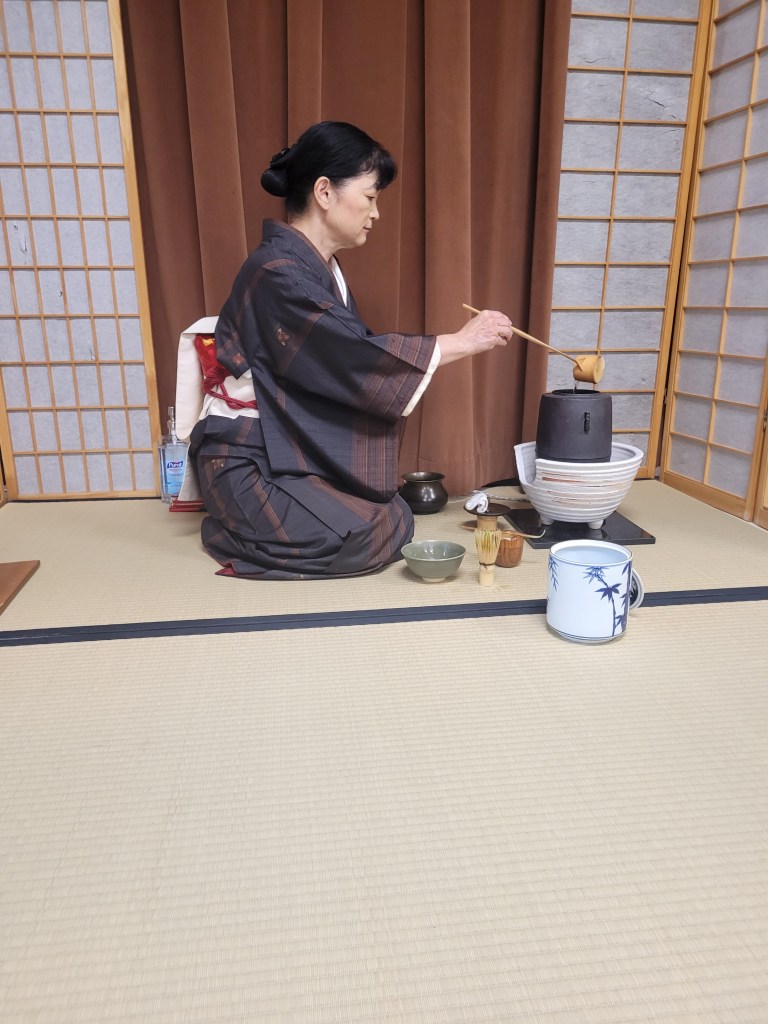
I have had a tea ceremony at the Japanese Gardens and also in the crowded, noisy basement of a church during a tea festival. Surprisingly, I enjoyed the second more because it was a more intimate affair. It speaks to her skill as a hostess that I do not really remember the crowd or the noise, only the calm and meditative nature of the ceremony. She created a space of serenity among chaos. The noise seemed to melt away as we conversed and made light conversation. I can still taste the tea on my tongue even now. Given that if I did go to Japan and schedule a tea ceremony to achieve the same level of intimacy I would have to pay a fairly high premium. For me, that is good enough and if/when I go to Japan a tea ceremony isn’t something that is going to be on my must do list. That isn’t to say I wouldn’t do one, just it’s not on my list of musts and can be sacrificed to allow me to do something else.
In fact after meeting so many “good enough”s you may find that certain places begin to lose their appeal. For example, I have been to so many museums with egyptian artifacts that honestly, Egypt isn’t that high on my list of places to go. I would rather see the Mayan pyramids to see pyramids. When I was younger, I had a much stronger desire to see Egypt because what I really wanted to see was the artifacts. However, despite checking off so many things on my Japan list, I still want to go to Japan. For some places, my good enoughs have only enhanced my desire to go whereas for others the desire has decreased.
When I was studying abroad, I took advantage of the fact that I was nearby many of my Bucket List places, Germany, France, Ireland, Italy, Austria, all places I got to go, and places I didn’t get to go Morocco, Turkey, Budapest, England, Scandinavia and Spain. Being a poor college student, I didn’t have the money for expensive tours or guides. Plus being new to traveling, I had this weird idea that going with a tour or guide would be getting a “canned” experience rather than an “authentic”, “genuine” encounter with the locale.
I enjoyed exploring the city on foot, going down weird alley-ways, getting a little lost, speaking with locals, trying hole in the wall shops and restaurants, all on my own terms and my own timeline. That is how I ended up getting an invite to a hole in the wall club in the middle of Paris. It was doing that that I ended up spending an afternoon in Austria with a travel journalist writing about Mozart’s and Beethovan’s homes. It was how I ended up getting tickets to a sold out show for A Midsummer’s Night’s Dream after chasing a man dressed up in Shakespearean garb through the streets of Dublin. However, there were certainly things I missed, important sites I could have visited had I been with a guide to point them out to me. I went on a Trolley Tour of Salem and was reminded that the archaeological site is actually in the next town over. I would have missed the highlight of my Salem trip without the guide.
Without a guide, I was free to explore the unknown
That isn’t to say that having freedom by not going on a guided trip to a given place is without its own merits. Not being beholden to staying with a group allowed me to decide how much time I really wanted to spend looking at the Mona Lisa (it’s really not that impressive, sorry). It also allowed me to be spontaneous with regards to what I wanted to look at. I distinctly remember asking someone if the Unicorn Tapestries were actually in Paris as I had never thought to see exactly where in France they were housed. Probably because I never thought I’d get to France; I went to Paris on a whim, so researching beforehand wasn’t something I had done. Needless to say I raced across the city to see them – after all, how could I not see my favorite animal? I remember sitting for almost an hour just looking at the intricate details of them, marveling at the craftsmanship and recalling the imagery and symbolism that has been woven into them. Could you imagine how you would feel, if you were on a tour and learned something that was on your list was in the same place only to be told “sorry the tour doesn’t include that”? I would have spent years in regret and I am glad that I had that sort of freedom.
It is nice to not have to be beholden to a clock of having to be somewhere at a certain time. The world is your oyster! For some people the idea of having to constantly watch the clock is stressful and stifling. It takes a mental load to worry about a tour time and it can rob you of those moments because instead of fully taking something in, you’re trying to calculate how much time you have until the appointed hour.
However, there is a place for the “canned” vacation. First, let us not fool ourselves if you spent time looking at the online lists of must do’s and see’s, or find yourself clinging to a guidebook, you are on a canned vacation. Oh it’s a loose one to be certain, but the main criticism is that “you’re just doing the tourist crap”. Well, first, duh I am a tourist and I didn’t come all this way to see a bunch of random crap I can see back home. Another criticism is that you aren’t engaging with the people. I have yet to meet a guide that wasn’t of the people. I usually try to spend time talking and engaging with the guides which was just as enjoyable as simply stopping and trying to talk with the locals. Bonus, the guides at least will be polite to you, whereas the locals are sometimes less than friendly, especially in the places with too much tourism. The guides usually contain knowledge not in a guidebook or online review. I found the experience to be incredibly authentic because of what I put into it and did not find my experience was less for using a guide.
Our wonderful guide in Columbia
When booking a tour through the cruise line, I was paying for the convenience of not having to book a tour myself ensuring they were safe, reputable and would ensure returning to the ship on time. I could have booked other tours that were perhaps a bit more intimate, but I didn’t find that booking tours independently saved me money or gave me a more personalized experience than through the ship. So regardless of whether the tour was through the ship or something you booked yourself, you are getting a similar experience.
I said earlier in this post that having a tour booked can be stressful because of having to watch the clock. For me, I found it to be less stressful, specifically on the cruise line. The reason being is that all I had to do was show up in the morning or afternoon at the appointed hour, usually after breakfast and then everything else was taken care of. I didn’t need to worry about the logistics of traveling to and from the site or getting tickets to the facility. All I needed to do was sit back, relax and enjoy myself. It was relaxing getting on board and having everything already figured out, all the decisions were made and I didn’t have to make any major decisions during my trip.
Without a tour guide I would have completely missed the highlight of my Salem trip!
Decision fatigue is a real thing and to be free of it for a week or two was amazing. In comparison to my non-canned trips, my canned trips were more relaxing. That isn’t to say that non-canned trips were less fun or enjoyable, just that they were more stressful and less rejuvenating. I still worried about the times attractions were opened, when tours were going, and navigating public transit schedules. At times, I found myself watching the clock more on my non-canned adventures than my canned ones.
At the end of the day, I simply did not find that much difference in terms of what I could get out of a “canned” vacation vs. one that wasn’t “canned”. I enjoyed both approaches to traveling. Both give a quality experience and both carry a risk of missing out on something. Without a guide or someone to show me where to go, I may leave a place before realizing I could have checked off something on my list. However, there is also a chance of being “teethered” to a tour group where one can’t be spontaneous. There is a greater sense of adventure by being on your own and challenging yourself to navigate a new place without much help, bonus points for a country where you don’t speak the language and relying on public transit, like my trip to Paris. One of my favorite memories is getting lost in Paris’ red light district. There’s a lot of personal growth to having this experience because you learn just how independent and self-reliant you can be as you creatively solve the problems that naturally arise from this approach.
Nothing like getting off at the wrong plaza!
With a tour, it is less stressful, but it isn’t quite as exciting as it lacks the possibilities of what might be. It is very rare to have impromptu misadventures on a canned vacation. At times it is frustrating to find yourself chained to a group. Although truthfully, there’s really nothing to stop you from breaking away from your tour and going it alone. I once was on a tour with my study abroad group when suddenly one of the girls, Jewel, breaks away from our group, hops on the back of a motorcycle and drives off into the night with nary a word of explanation. We shouted after her, but to no avail. She didn’t return to our hotel room until the next morning. As it turns out, she saw an old friend and decided to ditch us and see where the night would take her. I certainly applaud her sense of adventure! Though, I probably would have at least said something to the rest of the group rather than cause worry. So you see, you aren’t in a jail, you can leave the “canned” vacation any time you want. It may incur additional expenses and you may “miss out” on something, but you’re not actually beholden to the group. As Jewel demonstrated, they can’t stop you, just hop on that motorcycle and go!
There is a movement of staying local and buying local. The idea is based on a simple economic principle that if you want to have a strong local community you need to keep your money in that community. If I go and buy a hand thrown piece of pottery from the local gallery and pay $30 bucks for it, that is $5 dollars to the owner of the gallery and $25 to a local artist. That they can then take to the local grocery story and if they buy locally grown produce that’s $30 to a local farmer who can then go and buy their goods at the gallery or perhaps purchase a service I’m offering. Not to mention that each time that money is spent, there is a small tax paid to the local and state government. Taxes which are spent on public goods that you use everyday. When money stays local it benefits the whole community which benefits you.
Now if I go onto etsy and order the same mug for $30, well first less money to the artist because $5 for the shipping and handling, plus the cost of the box and shipping materials, then etsy gets its cut and so we’ll say $20 goes to the artist. Well now that $20 is in his community and he’s paying his local farmers for their local produce, etc. So you’ve benefited their community and not yours. So if given the choice between spending $30 for a locally produced item or $30 on an item not from here, I’m going to choose my local producer.
The same can be said of travel. There is a reason why so much is invested in tourism. Tourism is a huge industry that attracts tons of outside money into your local community. States spend thousands on advertising to people not living nearby to come to where you live.? I remember the story my 8th grade history teacher told of some tourists that had come to my area. He asked them semi-perplexed “why would you come here?” They said their choice for their family was between Amish Country and Disney World. Amish Country won out. My whole class was flabbergasted, who one earth would want to come here of all places? The answer is a lot of people. No matter where you live, there are people who are paying lots of money to go there or at least to a place nearby. They are bringing a lot of money into your local area and not putting it into their local economy.
Which begs the question if people are paying lots of money to come to your area and are supporting local businesses while doing it, shouldn’t you check it out too? After all, they’re paying a lot of money to come there, maybe your town isn’t as boring as you think. Shouldn’t you consider keeping your money in the local community? I’ve already outlined why keeping your money in your local area is so important. Your own leaders wouldn’t spend so much money trying to get more money into the economy if it wasn’t important.
One other thing to consider is that by encouraging locals to enjoy these venues and events it keeps a certain amount of leverage with the tourism industry. I’ve written about overtourism. Often calls to curb tourism by locals fall upon deaf ears as the response by politicians is typically something about the local community being reliant upon these tourists. However, if the local population are the ones going to these areas then they can say “actually, we’re huge supporters so we don’t need these tourists”.
This is just one of the many reasons I choose to travel less. I am keeping my community strong all while living richly. It turns out being a budget bucket lister is good for my wallet and my neighbor’s.