Beyond the Frame: Experiencing Van Gogh in 360°

I’m not sure if you’ve noticed, dear reader, but we’re in the thick of a technological revolution—what with artificial intelligence, immersive media, and smart devices popping up faster than I can finish my morning coffee. With every leap forward, the world reshapes itself: some innovations are delightful, others… decidedly less so.

But before you brace for a philosophical tirade, rest easy. This isn’t about the doom and gloom of progress. Today’s post is about something far more charming, and perhaps a bit science fiction, how technology is transforming the way we experience visual art, and how I got to see that transformation firsthand through the Immersive Van Gogh Experience.

For centuries, visual art has been something we look at, admired behind velvet ropes or under museum lighting. We view a painting, reflect on its symbolism, absorb its mood, and then move on. It’s typically a passive interaction, appreciated but always held at arm’s length.
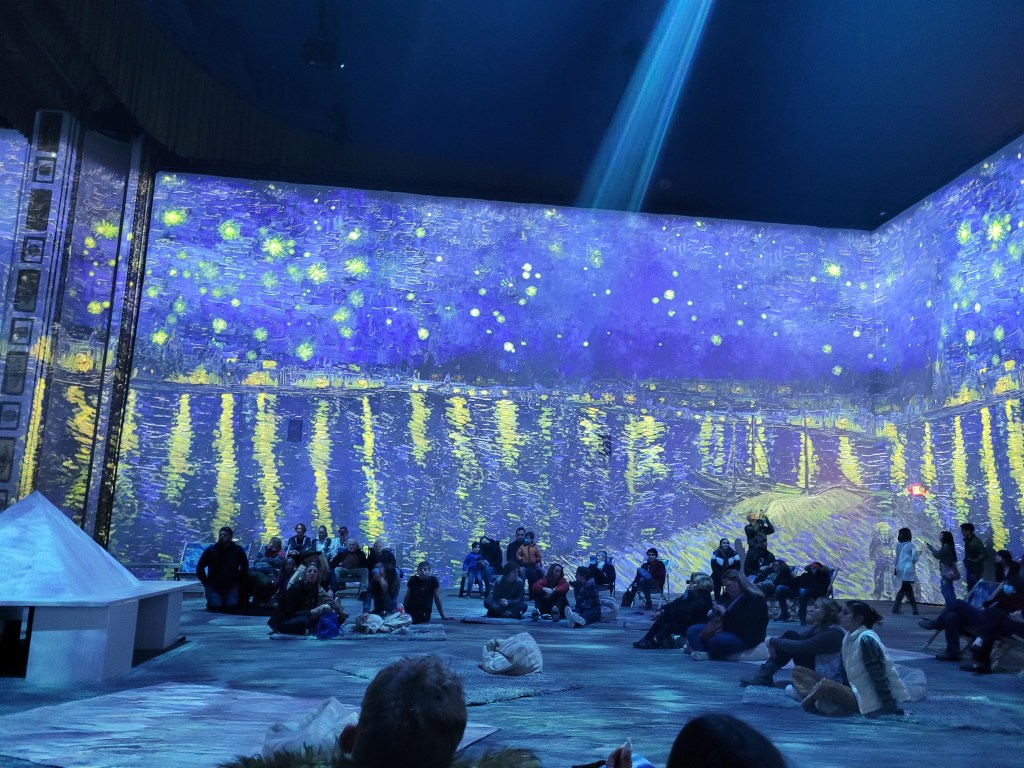
Now, thanks to clever combinations of projection mapping, music, props, and sometimes even VR goggles, we can step into the world of a painting. These experiences dissolve the frame. The art swirls around us, alive with movement, sound, and color. It invites not just observation, but participation. We’re transported into a world shaped by brushstroke and emotion, where time bends and the impossible feels touchable. If you’re a fan of Star Trek it can feel as though the Holodeck isn’t far behind us – or would it be ahead of us?

Such was my adventure on the outskirts of Philadelphia. I attended the Immersive Van Gogh Exhibit, where his iconic works leapt from flat canvas into full surround. It was a modest production by immersive art standards, but well worth the 50-minute drive. The exhibit unfolded in three rooms, beginning with a respectful introduction to the artist’s life: the genius, the grief, and the legacy.

Vincent Willem van Gogh, the Dutch Post-Impressionist painter, is now recognized as one of the most influential artists in Western history. He created over 2,000 works, 800 of which were oil paintings, many during the final two years of his life. Though immensely talented, he also struggled deeply with mental illness, most likely Bipolar Disorder, experiencing intense periods of depression and mania. He spent time in psychiatric hospitals, often neglected his health, and famously cut off part of his left ear after a dispute with a close friend.
I would be remiss if not highlighting the efforts of his sister-in-law. As It’s entirely possible the world would have forgotten him, had it not been for her, Johanna van Gogh-Bonger, who championed his work and preserved his letters after his death. Her tireless efforts not only shared his story but helped cement his artistic legacy. Too often we focus on the face and talent of a given operation without appreciating the supporting cast of characters. After all in any endeavor it takes a village to succeed.

While the trope of the “tortured artist” is often romanticized, Van Gogh’s story has opened broader conversations about mental health, creativity, and resilience. Beyond the mythos, his art also sparked interest in unexpected fields, like fluid dynamics. Scientists have observed that Starry Night mirrors real-world mathematical models of turbulence, patterns that weren’t formally understood until decades after Van Gogh painted them. He may not have known the equations, but his brush captured the energy of the cosmos with stunning intuition.

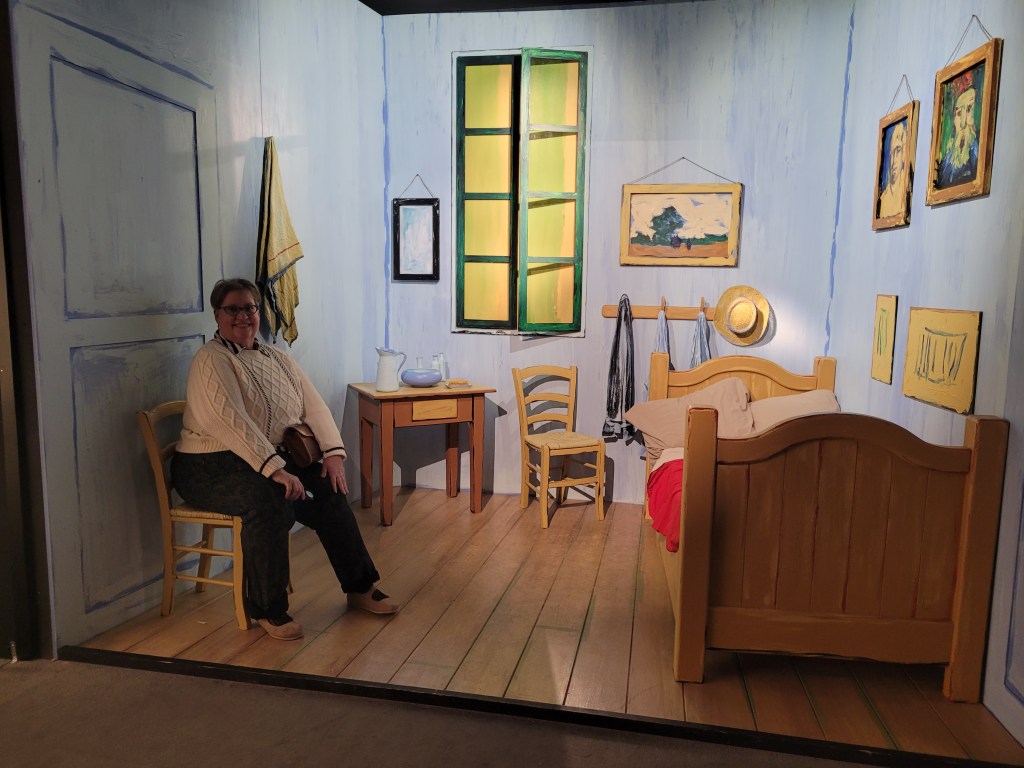
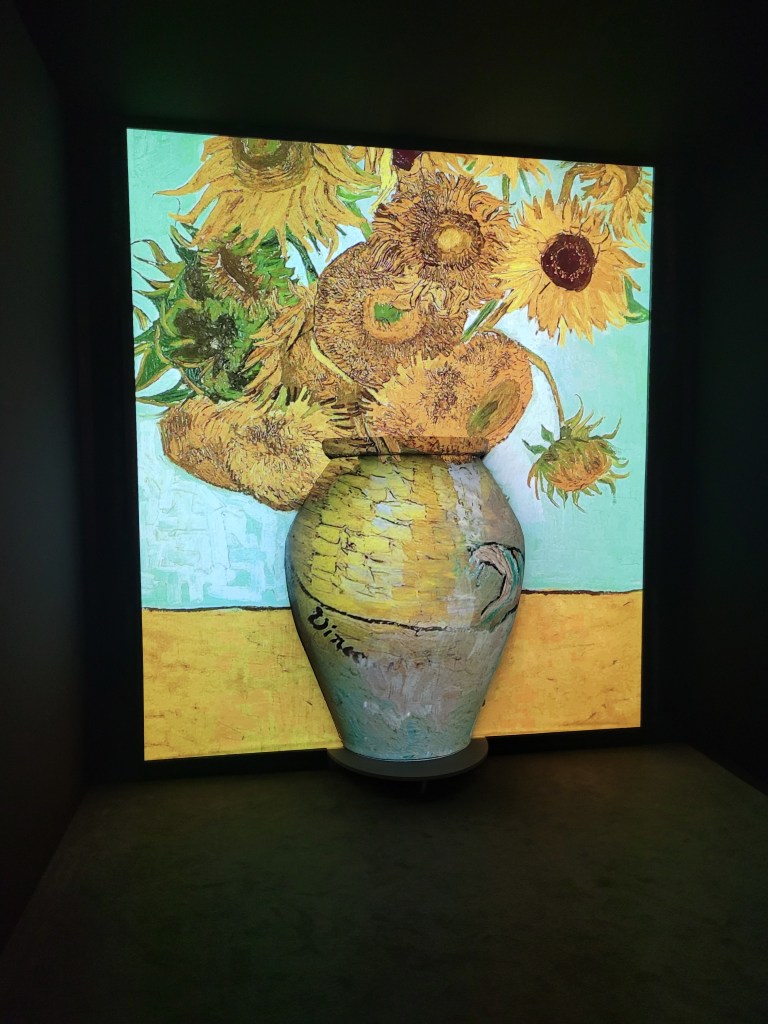
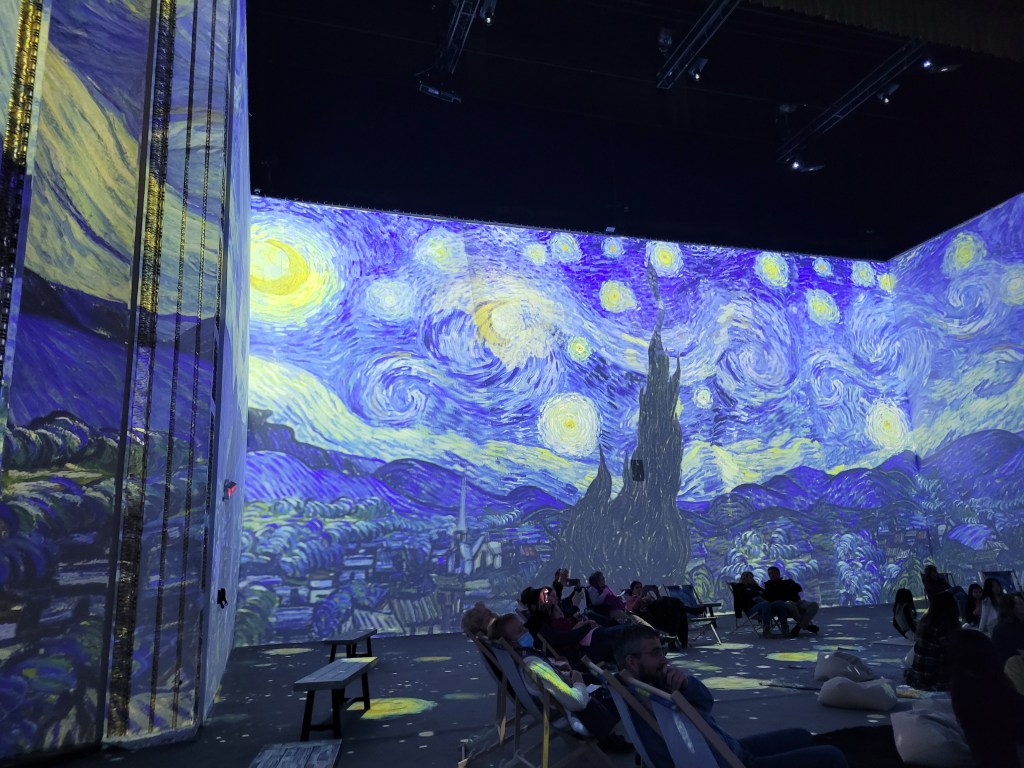
His story gently unfolded as I walked through the exhibit. I heard excerpts from his letters and watched his still-lifes float, twist, and evolve across the walls. One moment, I was standing in his bedroom; the next, sunflowers danced around me, filling the space with golden light. My favorite moment was in the largest room, reclining on a seat and watching Starry Night come to life, accompanied by music that echoed the emotion of each painting. I could’ve stayed there for hours, had my parking meter not rudely reminded me of the outside world.
There was something deeply calming about it all. The way the paintings moved, the soft narration, the glow of color, it felt like being wrapped in a blanket of light and sound. The only thing missing was a hot cup of tea to sip while I drifted through it all.

Eventually, I had to peel myself away from Van Gogh’s swirling skies and rejoin reality. I refilled the meter and met my traveling companion (my mom) in the gift shop to find a souvenir. She chose a beautiful necklace that still earns her compliments. I, ever the practical one, picked up a set of coasters, because if I must collect things, they might as well be useful. Additionally, if I must have things, they may as well be beautiful. A memento with function and a memory with purpose.

While technology certainly has its downsides, I’m genuinely excited to see how it will continue to open new windows into the past, especially when it’s done with care, creativity, and reverence. If we can blend art and innovation without losing the soul of either, I’d say that’s progress worth celebrating.
Finding Your Own Immersive Art Adventure

If your curiosity is piqued and you’re ready to step inside a painting (or at least escape your laundry pile for an afternoon), immersive art exhibits are popping up in cities all over the world. A quick search for “immersive art experience near me” or checking sites like Exhibit Listings, Eventbrite, and even local museum calendars can help you find upcoming shows. Popular exhibitions include Immersive Van Gogh, Monet: The Immersive Experience, and Frida Kahlo: Immersive Biography, among others. Many cities now have dedicated digital art spaces that rotate different artists throughout the year. Social media is also surprisingly helpful, follow local art museums, galleries, and pop-up exhibit pages to stay in the loop. And don’t be afraid to go solo! These exhibits are made to be experienced personally, and sometimes the quietest wanderings are the most rewarding.

From Fire and Ash a Phoenix Rises: Firebird Festival in Phoenixville

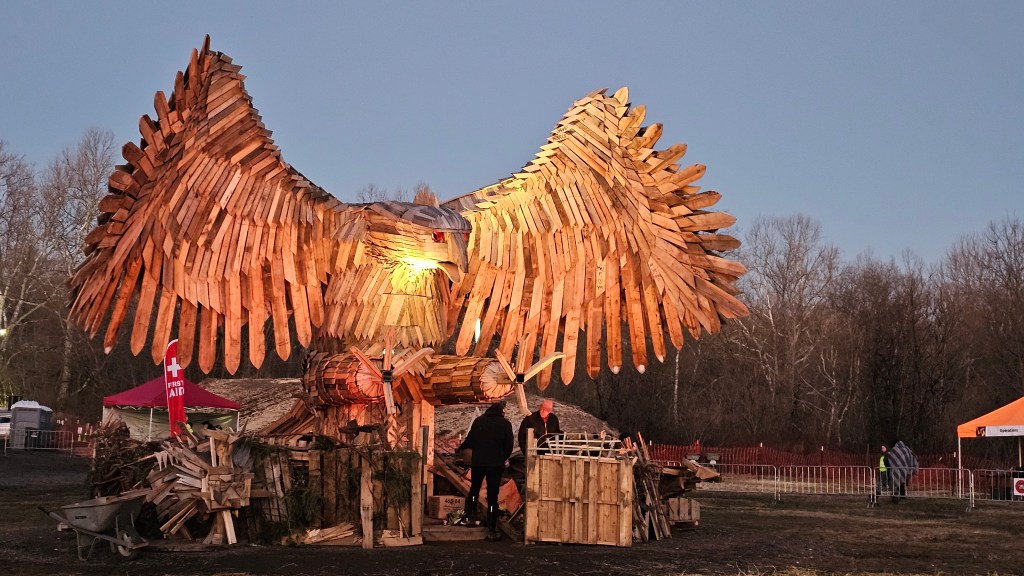
For the past twenty years a mysterious sight has unfolded in the midst of the winter’s cold. A community builds a giant wooden bird and then sets it on fire much to the delight of the spectators. And, dear reader, it is as awesome as it sounds. 

The Firebird Festival, was a dream of a Henrik Stubbe Teglbjaerg, an immigrant from Denmark who has resided in the States since the late 1980’s. He, with four other Phoenixville residents, came up with the idea, in part inspired by similar festivals of Europe where they build things and set it on fire. When he first arrived Phoenixville was a dreary little town. However, it started to revive itself, opening up a theater, art galleries, coffee house and it was as if there was a rebirth, a town rising up out of the ashes. So what could be a more perfect fit than to celebrate with the symbol of rebirth and the town’s own namesake? 

What is more is that each year, the ashes from the burned phoenix are taken and made into clay birds which are then placed inside the wooden bird. When set on fire, the wooden structure acts as a kiln, firing the birds and thus completing the cycle of last year’s bird when they are transformed into decorative pottery. 

What started as a small 150 person event has grown into a 20,000 person festival. Complete with food trucks, fire dancers, a parade, live music, and various wares for sale. It is a celebration of the town and the arts. But rather than relying on fancy performance artists most of the event is volunteer and community run which only speaks to the strength and spirit of the community, despite the growing size of the festival they have protected its heart as a grassroots events that remains untainted by the scale of the crowd. 

Most years, this event takes place in December just as the northern hemisphere enters its darkest stage and the year is coming to a close. However due to an unusually dry spell, the 2024 Firebird Festival was delayed as having a 20 foot wooden set aflame near exceedingly dry forest isn’t exactly the safest idea. Remember dear reader, as much as we all desire to check off our lists we want to make sure we live to check off the rest of our lists when doing so. 

This misfortune of weather was my opportunity. For you see, my sister and I typically celebrate the holiday season each year with our extended family on the second weekend of December. It so happens that the Firebird Festival also happens on that same weekend meaning that we are always previously engaged as the annual Holiday Feast has been a set date since before I was born. So when the organizers moved the Firebird Festival to the first weekend in February it became the must do event of the winter season. 

The new date was also fortuitous as it coincided with an ancient celebration of spring’s light returning. The ancient Celtic holiday of Imbolc was associated with the Celtic Goddess Brigid, the guardian of Hearth and Flame, a perfect pairing for the new date. The ancient holiday was a time of purification, renewal and preparation for the change in season. Fire rituals which honored the returning sun were frequently integrated into the Imbolc celebrations. It was celebrations like these which inspired the Firebird Festival in the first place making the new date perfect. 

As it happened, it was one of the coldest nights of the winter as arctic wind was carried down from the north freezing all that it touched with its icy fingers. Only a few days before the weather had been warm thawing out the ground and making it moist and muddy. Posts about the event warned celebrants of the potential for treacherous conditions on the field as the mud became slick and icy. 

My sister and I did our best to buddle up in preparation for the cold. I fared a bit better than her having a coat that mimicked a fur one, leather gloves lined with kashmir, thick socks and shoes with thick soles to keep out the cold. She had a rather old coat that she put several layers on beneath but the wind still managed to cut through the fabric and whisk away what warmth she had. As the Germans say “there is no bad weather, only bad clothing” and this was a prime example. I stayed pretty toasty throughout the evening but my poor sister struggled. Worry not, I often acted as a wind break once the crowd gathered. 

The festival occurs in two different places, the field where the bird is and downtown Phoenixville where most of the art events occur. After looking at the events and options, we determined that we wouldn’t arrive at 4 pm when the event started but rather closer to 5:30 pm to find parking, walk down to the field. That gave us about 21/2 – 2 hours before the bird was scheduled to be lit at 8 and the fire dancers would start their own performances around 6 (something else I’ve been wanting to see as part of my BucketList, maybe I’ll have to add Fire Dancing to the list now that I know I can volunteer to be one!) 

We followed the instructions for parking and managed to snag a great spot that was near enough to the field to make an easy walk in and out. It was a place that opened for parking after the official event time, I assume in part to help manage crowds. This made it a breeze to get to the Veterans Memorial Park where we were greeted by friendly volunteers who directed us into the event. They had buckets to collect donations which went to supporting it. When we got there we were a little surprised as the lackluster crowd as it seemed only a hundred people were milling about. There were a few food trucks and some tents set up. The band wasn’t playing yet and the sun was only just starting to set. We milled around looking at the different options and then decided to watch the Fire Dancers. We saw some people had chairs set up right at the center of the staging area but other than directly in front, the area was clear. We picked a spot to the left to watch and decided we’d take turns running to the food trucks. 

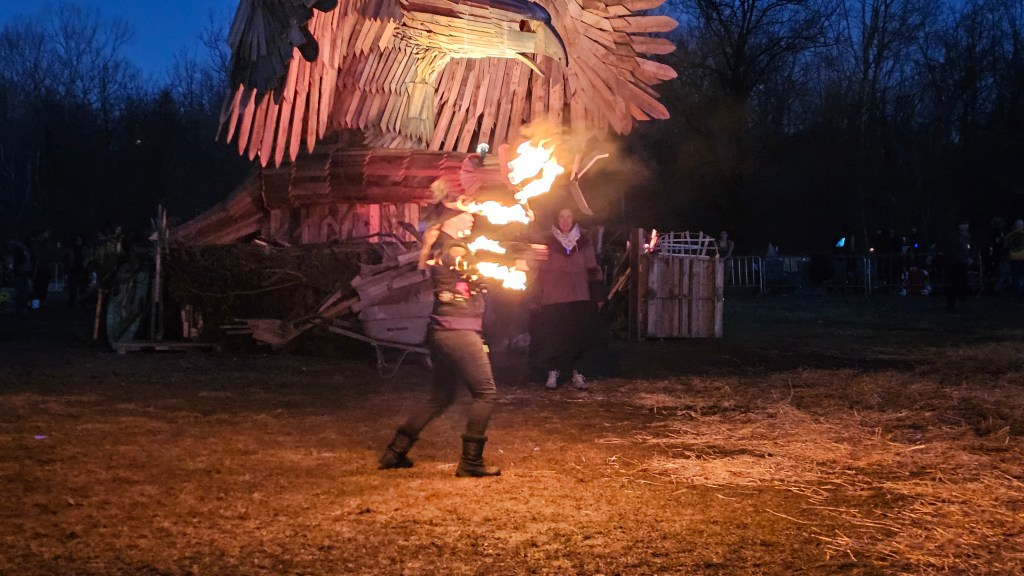
It felt a little paranoid to hold our spots when there were so few people, but as it turned out this was a crucial strategy because it seemed that within 15 minutes the crowd had tripled in size and the entire perimeter of the bird was lined with spectators enthralled by the fire dancers. Just as twilight fell, the arrived each with a unique costume and different types of instruments to move the flames about. They juggled, they moved around balls of fire, they twirled long lances and staves, they mimicked a bird with wing-like props, they used hoops of fire to make large circles. One wore a plaque mask, another looked like she came from the assassin’s creed, there were knights with shields and spears, there was a woman in a leopard catsuit. Some of the volunteers were better than others but all of them were mesmerizing in their own way as in the background a band played music. 

By the time the sky had gone dark, the crowd had ballooned behind us and we had to jostle our way to back to each other when we went for warm drinks or snacks. We nibbled on delicious food from a truck and sipped on warm apple cider available for purchase from some enthusiastic teens manning a volunteer tent. It seemed a little pricey for warm cider but the proceeds went to support the event and as it didn’t have an entry fee I was happy to pay a little more. The cider warmed my hands which had gotten cold from taking pictures of the fire dancers. 

As the appointed hour grew near, the crowd and the cold intensified. However, it was all great fun as we stood there making friends with the people behind us, chatting and laughing. We helped them hold a spot for their friend when she slipped out. Then around 7:45 the parade arrived. Headed by a giant pheonix of paper mache and cloth, the parade was host to more costumed revelers adorned with lights who danced to the beat of drums. Around the bird they circled to the cheers of the onlookers as the crowd only grew more excited in anticipation of the main event. 

Unfortunately, there seemed to be a bit of a delay as 8 pm came and went. Then 8:05, then 8:10, then 8:15, by the time 8:20 rolled around there were chants of “light the bird” which would be taken up and then die down after a minute or so. This went on for another 10 or 15 minutes until finally the torch bearers chosen by lottery were assembled and permitted to put torch to wood. At first, the flames barely licked up the wooden structure. It seemed as if the wind would snuff out the small fires struggling to find purchase against such icy conditions. How could such small flames survive? Would we be disappointed? 

No, the flames did not die. They continued their merry dance along the wooden structure, flickering brightly in the night. While it was a nice sight to see, it was hardly worth the nearly 3 hours in the freezing cold, perhaps we should pack it in, my sister suggested. I told her that I wanted to spend a little bit longer because we had been there so long and I wanted to enjoy it regardless. Then suddenly, conflagration! The whole thing was alight, the phoenix was finally truly lit. The heat pushed back the cold becoming almost more than we could bear even so far way. I pushed my hands out towards it drinking in the sudden heat. It was a glorious sight to behold as it was truly worthy of its name.It really did look like a mythical creature crackling in the cold night with the promise of the summer’s sun. We stood there enthralled by it, saying goodbye to the old and welcoming the new. 

How can you experience a Firebird Festival?

Obviously if you don’t live near Phoenixville attending this event won’t be cheap or easy and while it is certainly something I recommend if you’re in the area, it isn’t something I would plan an entire vacation around. However, there are lots of different local traditions and festivals throughout the country with their own unique and special. Florida is home to an Underwater Music Festival,  New Mexico has one dedicated to UFOs, Ohio is obsessed with Duck Tape and Washington State hosts a Kite Festival and there are many more. With some searching, you’re almost certain to find a quirky festival near you. Many of these festivals take place in the Spring and Summer months so now is the perfect time to look around your wider area for fun and interesting events.

What’s awesome is that the story of the Firebird Festival demonstrates that it only takes a few people gathering together to make something amazing. It started off as 4 friends getting together, building a small phoenix and setting it alight for 150 people. It has ballooned into an event that attracts thousands each winter. Your own event doesn’t have to be this “big thing” and there’s nothing to stop you from starting your own tradition! Don’t worry about a 20 year commitment though, as once it takes off there will be people to pass the torch to (pun very much intended). 

Small disclaimer:

Technically, there are things that can stop you from starting your own tradition. Local ordinances may prohibit you from doing certain activities like setting things on fire and I really don’t recommend that you do that if you live out in places that a prone to wildfires. I don’t want this blog to be in the news because after reading this, you decided to start your own firebird festival and set the state of California on fire. So as always check your local ordinances and use common sense before trying something you read online.

Cost: Free

Miles from home: 50

Art Gallery Opening

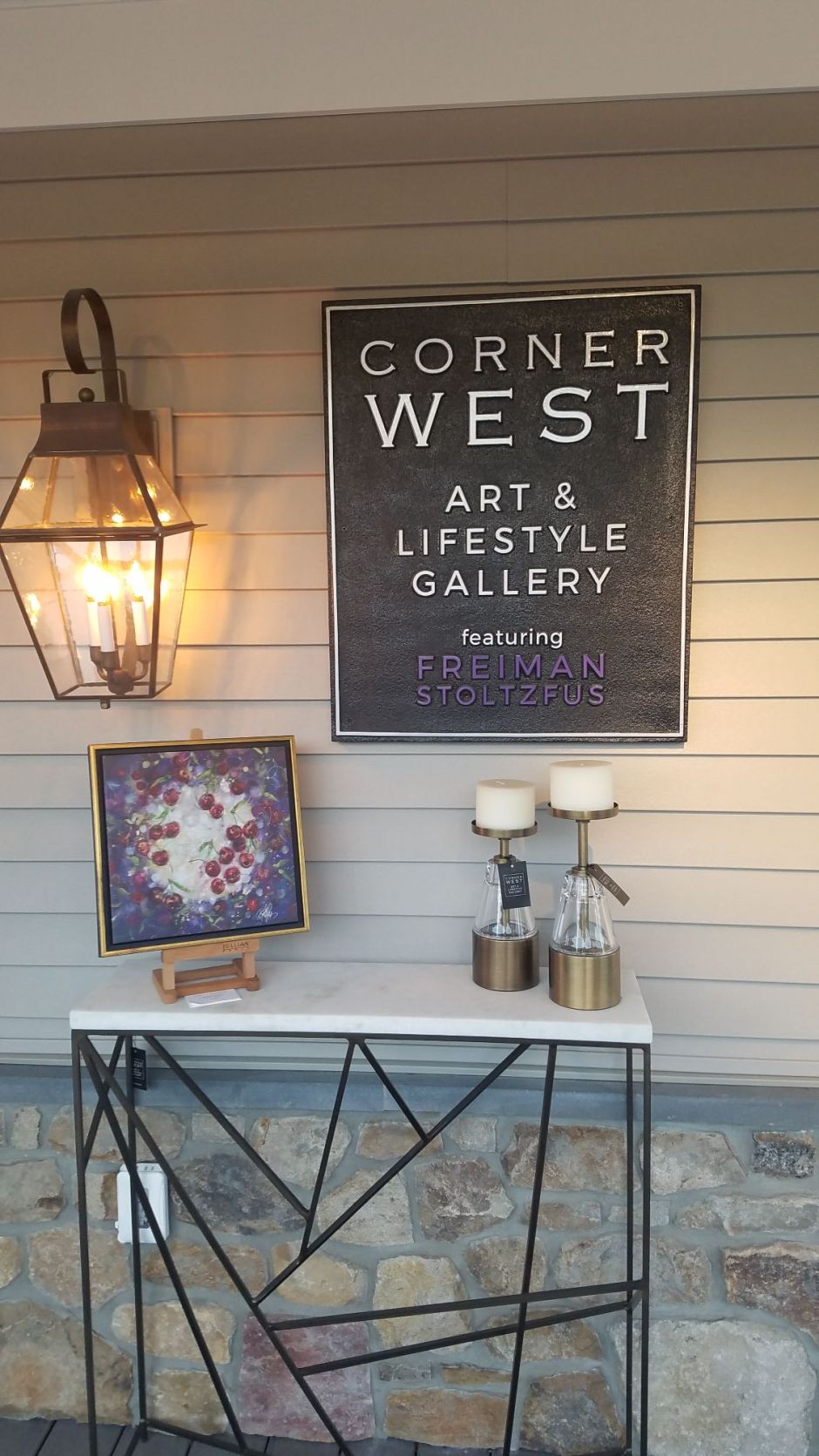
It was a beautiful day in late June, one of those rare, comfortable mid-summer days. The ones where the humidity is low and a cool light breeze blows through the air. After driving about twenty minutes to Intercourse, Pennsylvania through rolling farmlands, I arrived to what might at first seem a rather curious sight. Nestled among the shops peddling Amish made goods, quilts and antiques, an art gallery was hosting its grand opening. Curious indeed – but only to those not in the know about Lancaster’s not so secret art scene. I eagerly stepped into the gallery certain of what I would find.

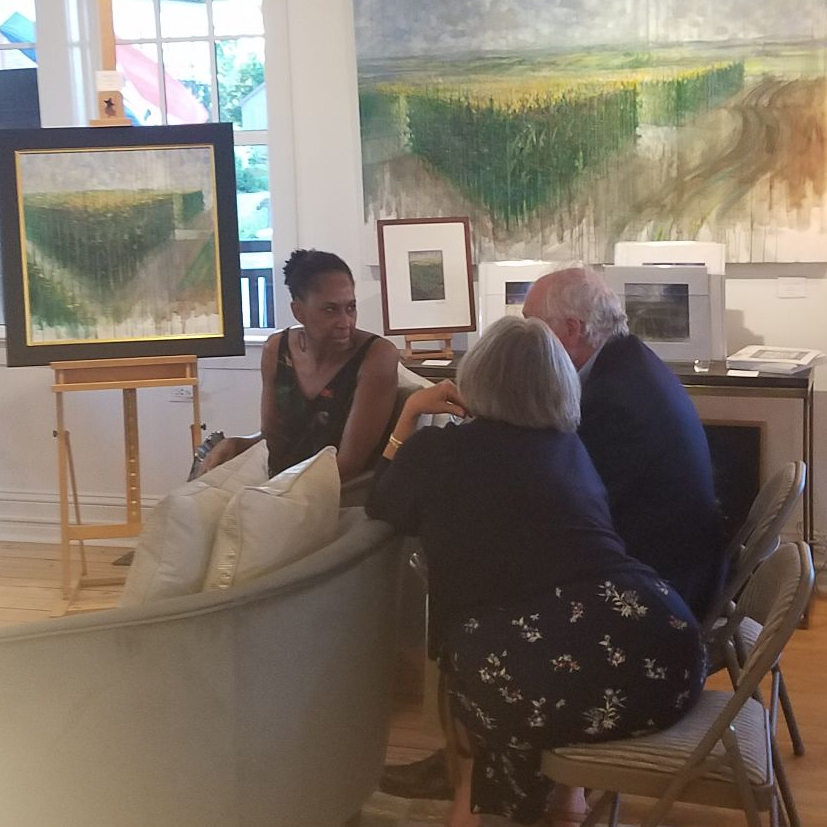
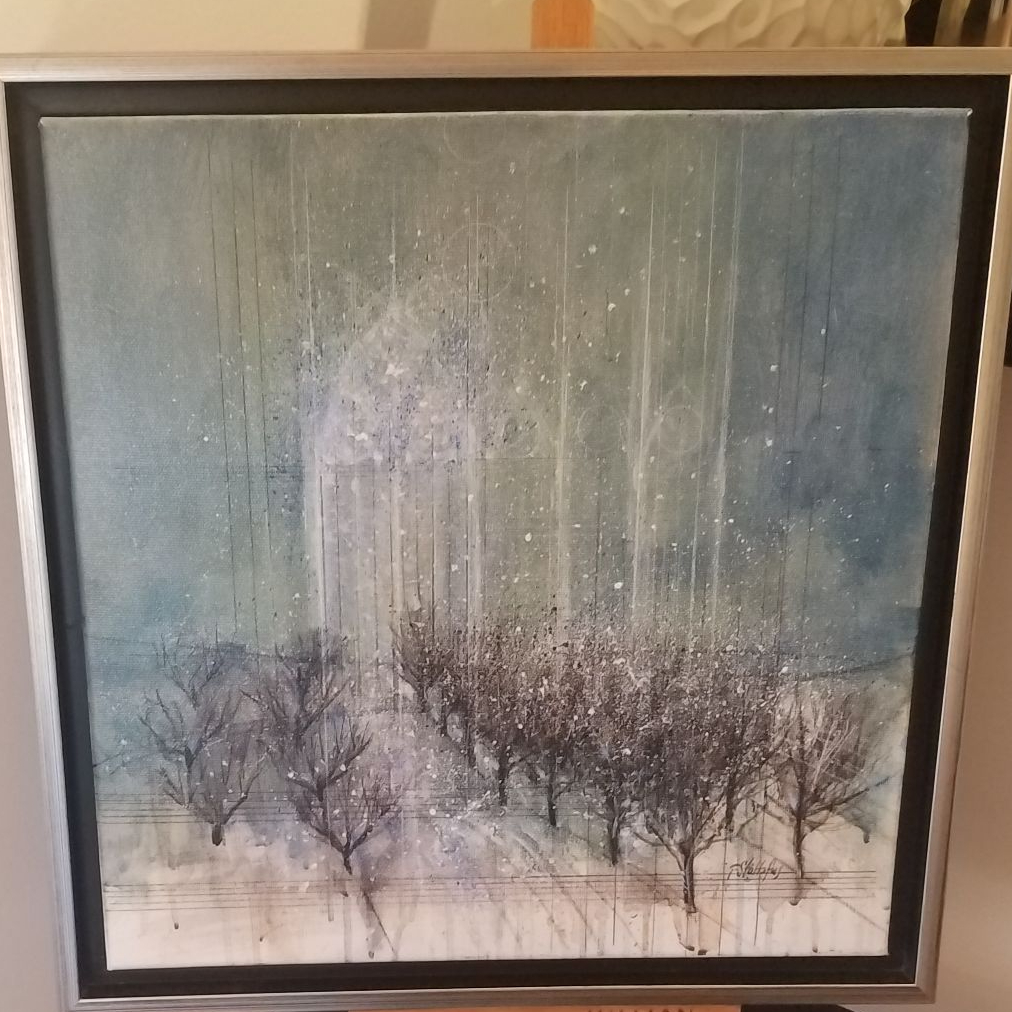
A few minutest later, the sound of a violin and cello serenaded me as I sipped on a chilled glass of rose and took in the latest collection of art by Freiman Stoltzfus – personal friend and brilliant artist. A small crowd meandered inside speaking in hushed tones to one another excitedly. I caught snippets of conversation as I pursued almost as intrigued by those around me as the art itself. Who doesn’t love people watching? By all accounts, they were as enamored by the art as I was, but of course, his work was resplendent, as always. 

Fellow art enthusiasts

Naturally, I wanted to gush at him for a job well done one his second gallery, but one does not take up too much of an artist’s time on an evening like this. A gallery opening is not the time for catching up and conversing with the artist, but a time for him to mix and mingle with the crowd to sell his art. Manners dictated that I give him a polite hello, a brief congratulations and then space to do his job. An intimate dinner at a later time would be more than sufficient to catch up. 

Others mingled nearby, appreciating his use of color in combination with that subtle geometry of nature so prevalent in his works. Somehow his pieces manage to convey movement as well as sound, one can almost hear the pieces of Bach and Vivaldi when looking at them. His juxtaposition of nature and architecture transforms groves of trees into churches and flowers into stained glass windows. Many of his pieces harken back to his Amish roots and feature quilt patterns, pastures, fields and orchards.

I am always dazzled by the re-imagine of the themes that frequent his work. While he may often feature flowers or music, each time a different rendering or another motif has been added to the repertoire. As of this writing, his most recent motif has been Japanese, as he spent about a month visiting a friend in Japan. It is most reminiscent of Van Gogh’s own post-Japan phase. Who can blame either artist for being so enchanted by a country who created an entire profession dedicated to being a living work of art, the geisha? 

When one pictures a gallery opening, perhaps you see in your mind’s eye wealthy men and women milling around in a stark white room, sipping wine as they pretentiously critique the art that adorns the walls. Their oblique vocabulary and near incomprehensible assessment of the pieces in question may lead you to believe that such a place would not be for you. I assure you dear reader that art is indeed for everyone. After all, even the Neanderthals made art! The need and desire to create is embedded in our DNA! I am not recommending we jet off to New York City to attend some opening where an artist has squiggled across the page as some sort of obtuse commentary on the state of the world or art or some other thing. 

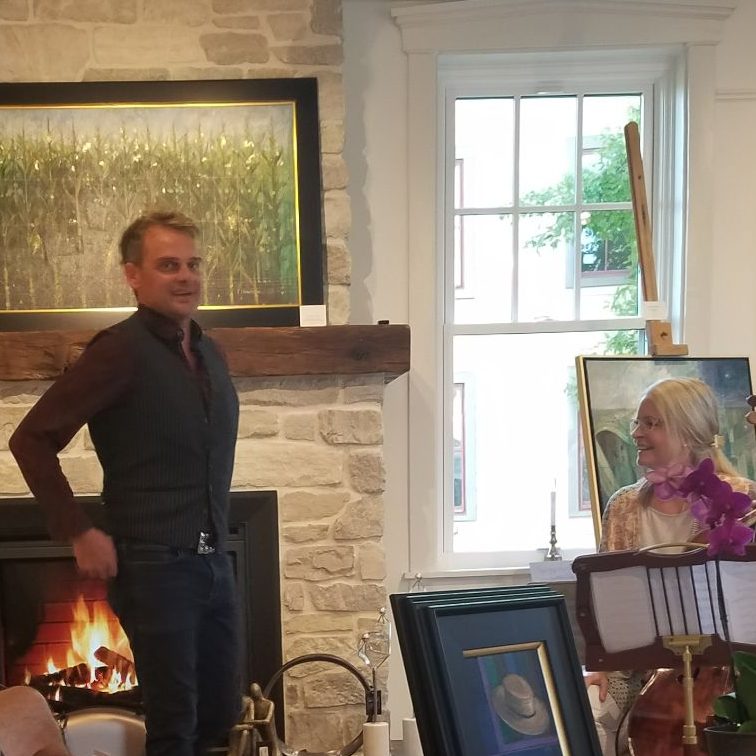
Freiman welcoming us all to his gallery

Don’t get me wrong, while I am not an aficionado of the art world and certainly not contemporary or modern or postmodern or whatever we’re calling current art these days, I can appreciate art as a commentary piece. I just object to having to read an entire essay in order to understand a work – at that point, you probably could have skipped the art and gone to the essay, but to each their own! Although, one could make an argument that the piece itself conveys emotions that an essay cannot. I shall halt in my musing less this become its own essay on modern art and its merits. I shall leave you to your own musings, gentle reader. 

This post is for those of us who want to appreciate a more accessible, down to earth art. Few people are going to look at a Renaissance, Neo-classical or Pre-Raphaelite painting and scratch their heads going “I don’t get it”. They at least can identify the subject matter even if they might not fully understand what the artist was trying to convey, the culture surrounding its creation and the values of that culture to influence the work. These however are a good 200 – 400 years old in terms of styles and one may be forgiven thinking the only art being produced these days are bananas taped to walls. However, there are many artists who paint in the older styles with a modern flare. Not every artist is a pretentious snob deriding the masses for simply not “getting” their art and walling art off as some sort of exclusive club. Most, if not all, really are producing art for everyone. They want their pieces to be appreciated by the most unsophisticated child to the greatest art critics of our time. They range from the bright playful colors of Brito, to the surrealist fantasies of Nam Das, to the impressionist Slava Ilyayev and beyond. 

There are many places in the various towns and cities across America where these artists gather either to sell together as a collaborative effort or in their own small galleries. Some blend art and craft together in an almost seamless line where you can’t quite decide where craft becomes art. I suppose the easiest is that crafts tend to have a practical purpose whereas art simply exists for beauty’s sake. I recommend going and checking out the local artists. I especially love speaking with them, learning about their passion, hearing why they tend to pick certain subjects or colors. Go and check them out, see which artist speaks to you and then lend them your support! 

Whether you attend a gallery opening or not, do take time to look at art. You will find your spirit enriched by the experience. Art connects us, communicates with us in a way words cannot, what we see reflected in art is also a reflection of ourselves. Art is creation and destruction. Art reaches across boundaries. Art can propel movements and shake empires. Art can also be a simple thing like a deep breath after a long day of work or a cool glass of water on a hot day. But whatever art is, it is for everyone. 

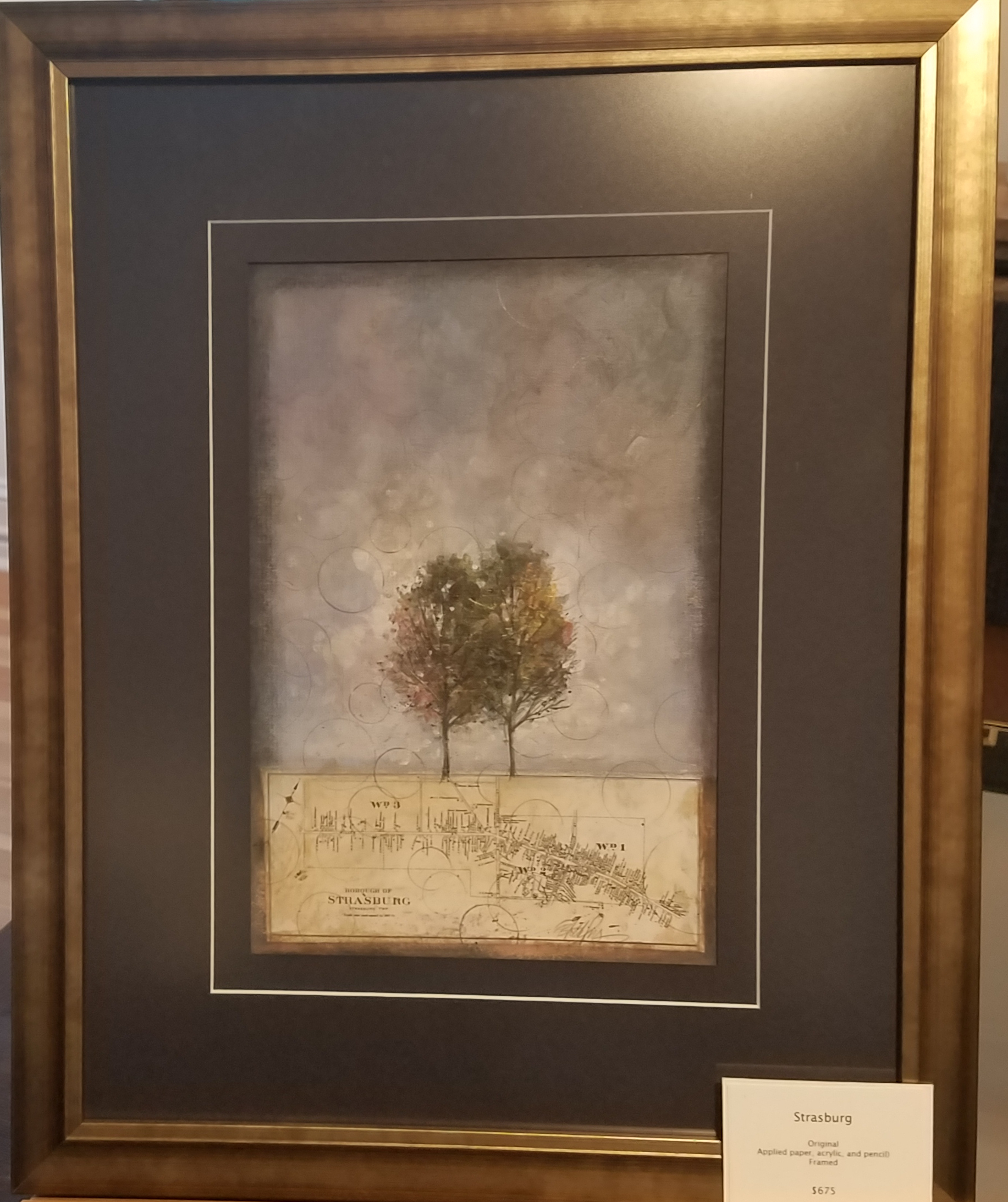
One his his many cartography inspired pieces

How can you go to an art gallery or exhibition opening?

It’s simple! Find your local art community and watch out for events. You may find your local university frequently displays artists or even one night events at your library. You may be surprised at the talent you see displayed or that your local artist is actually world renowned! Some may be a bit more humble on both counts, but that wasn’t really the point.

Completed: July 2021

Miles from home: 15 miles

Cost: Free to go (most openings are)

Art Cost: You most likely will not be able to purchase the art at an opening because let’s face it, we’re budget bucket listers and having 3 grand to drop on even a modest painting is not something we can do. However, many artists have alternatives such as giclées and prints. Freiman usually has a small collection of 6×6 paintings for $125 to help make his art accessible to those who want original art without the large price tag.