I know, dear reader, this might be the last place you’d expect to find a defense of boredom. After all, many of you probably clicked here to escape boredom, not embrace it. I may even be digging my own blogging grave by suggesting you spend less time scrolling and more time staring at your ceiling. But this space was never meant to trap you for hours. Its intention has always been to help you live a fuller, more mindful life, without breaking the bank.
As someone with ADHD, the idea of boredom used to feel impossible. Tedium was my sworn enemy. Yet I’ve come to realize that boredom is a rare luxury these days. With our phones glued to our palms, we rarely get the stillness that allows us to simply be.
And here’s the secret: boredom isn’t the enemy. It’s the birthplace of philosophy, creativity, and growth.
Why We Need Boredom
When you’re left alone with your thoughts, they can be loud, uncomfortable, even overwhelming. But without that discomfort, how can you truly know yourself? When do you ever stop to ask:
Am I on the right path?
Are my relationships enriching or draining me?
What do I actually want out of this short, strange life?
Noise drowns out those questions. Silence, and yes, boredom, makes space for them. And while the answers might not always be pleasant, they’re necessary for meaningful growth. It’s only when we ask those questions that we begin to fully develop a meaningful life which according to some researchers may be the antidote for the crushing anxiety we’ve all been feeling. According to Harvard Professor Arthur Brooks, it is the lack of meaning that drives so much of our modern world’s anxiety and depression and boredom would be part of the cure!
Boredom also boosts creativity. When the mind wanders, it problem-solves. Einstein famously worked at the Swiss Patent Office for seven years, a job so dull it practically begs for daydreaming. Out of that monotony came some of the most groundbreaking ideas in physics. Imagine what we might uncover if we swapped YouTube shorts for a little mental white space. You may be quite shocked at what problems you solve whilst driving your car.
Finally, boredom sparks curiosity. That restless itch pushes us to seek out novelty, to wander past the familiar bend in the road. Dissatisfaction with the status quo has always been the engine of human progress. It’s what drove Columbus to set sail and spark the West’s discovery of the world. It’s what drove the Wright Brothers to the sky. It’s what made humanity ask “what is up there in the vast expanse above us?”
Some of my best ideas have come when I was bored. This very blog was born while I was gardening. Insights about my therapy clients have surfaced while I was elbow-deep in dishes. I’ve written entire stories in my head while waiting in line, or mulled over questions of faith while driving down long stretches of highway.
Boredom isn’t wasted time, it’s compost. Given space, it grows something new.
How to Reclaim It
So how do you let boredom back in? Start small.
Turn off your podcast or music while you drive or clean.
Try a tech-free meal and see what real conversation shows up.
Block out one phone-free evening a week.
Take breaks from social media, or better yet, set parental controls on yourself.
Use your phone’s Do Not Disturb mode generously (you can allow emergency calls to still come through).
Will it be fun at first? No. That’s the point. But over time, you’ll come to see boredom not as an absence but as an opening. I’ve even started protecting mine, because that mental wandering is often far richer than anything TikTok could offer.
One thing that I love about my Bucket List is that I’m almost always trying new things. I recently read somewhere that research indicates that when we focus solely on the interests we’re already interested about we can miss out on entirely undiscovered aspects of ourselves. We may limit ourselves artificially without even knowing it. We may love art and never take up a paint brush or admire finely made clothes and never consider sewing.
I never thought I’d enjoy a videogame but I certainly enjoy playing World of Warcraft (I’m a nerd deal with it). I wouldn’t have thought I’d like D’n’D but as it turns out, I do enjoy collaborative storytelling. I’ve discovered I draw the line at larping which was a surprise because I would have thought I’d love dressing up and acting out the story like D’n’D after enjoying D’n’D, going to the Renaissance Faire, acting, etc., but absolutely not for me. My sister is afraid of heights but I have discovered a thrill for them. I’ve learned I like hacking down trees and the physical labor of gardening. I don’t have the patience for a lot of crafts, but I love trying to hone my skills on the violin.
We don’t even need to do them well. We can do something poorly, in fact it’s almost better to do something poorly at first. After all, if we’re good at it then we think that we have a “knack” for it and then when we inevitably come up against a hurtle, we lack the skills we need to overcome. Sometimes just doing something for the sheer thrill of doing it is the best way to learn. When we have fun we aren’t focused so much on doing it perfectly as enjoying ourselves. We’re no longer motivated by outside rewards and people pushing us to do it. We are competing against ourselves, learning our way of doing things and probably becoming better than we would have if it just came easy.
I think it’s good to explore new things that we may have dismissed when we were younger or just missed out on. I remember thinking that learning to ride a horse wasn’t something I could do, but then I spoke with a work colleague who was taking lessons bi-weekly. Another work colleague had joined a small college’s orchestra after taking up the violin again post-high school which in part inspired me to take up the instrument once again. It’s caused me to re-evaluate what I can do as an adult and that maybe I didn’t actually miss out on opportunities or that I could return to things that I did as a child. As it turned out the only person keeping the doors shut to possibilities was me.
I’ve also been pushed to try things I wouldn’t have previously thought to try like Eco-dying, water tubing, and zip-lining. I find myself saying “sure why not” when presented with new adventures and raising my hand to volunteer at public events because “why not”? It was that attitude that pushed me to rent a car in Britain. Before, I’m not sure that I would have had the confidence to drive on the opposite side of the road because I’m dyslexic and ADHD with poor spatial awareness and their roads are tiny. Now granted I didn’t just hop in a car and drive out of London. I knew I was going to be jet lagged, without sleep for over 24 hours (I don’t sleep in planes I have insomnia, it’s a whole thing) and so even driving under normal circumstances would not be advisable let alone in another country, on the opposite side of the road. However, I was undaunted by the idea in part because I am already in the habit of getting outside my comfort zone.
And this is sort of a life hack. When we push ourselves, we feed our confidence and our feelings of competence. Which you may think, “wait, didn’t she just say that some of the stuff she was bad at? So how does it help her feel competent?” Yes! Here’s the awesome, amazing thing, it didn’t kill me! It didn’t end me and in fact, I embraced being bad at it at first because I’ve learned to enjoy the process of mastering something. It’s about learning and growing your inner self not just checking boxes and doing something for an afternoon before swiftly moving on to the next thing. I feel more competent to try things and look foolish even in front of others. I am conquering anxiety and loving it!
We are wired for growth, not stagnation. We are meant to go, explore and conquer. Too many times we assume that we will stay the same person that we are today until we die, that we’ve already completed our growth. However, that’s not the case and studies show that its the people who don’t stop growing that live longer, healthier, happier lives. So what are you waiting for? Go out and try that new thing!
In my last post, I referenced how living one’s best life is in part living a life with purpose or a life in which one applies ones talents in support of a calling to serve others. I went on to wax poetic about the first of three parts, mostly about talents and how to cultivate them. In this post, I shall attempt to unpack the second part of that statement, mainly one’s calling. This is probably the trickiest part of the whole thing. The first part is rather simple, just consider your interests and start to develop them, they’ll become skills and later talents. Yes, there is a certain difficulty in the discipline required to do that, but in general one is not sitting around with no idea of what one’s own interests are. The third part is also fairly easy, find other people, utilize said skills/talents to assist them.
So what is a calling? How would we even know what it looks like? What does it mean? I am no philosopher and certainly lack the wisdom of the sages to give a definitive answer. Still, if one seeks enlightenment then one must learn to wrestle with such questions and start to consider the answers for oneself and not merely rely on the elders who have come before to answer for us. We are not here to merely echo the philosophers that came before otherwise we would have been satisfied with the answers of Plato and Socretes and Descartes and Vonnegut would have needed to occupy themselves with other diversions. So that is what I shall do here and perhaps, dear reader, you shall wrestle with this question yourself. I certainly hope so, otherwise how shall I become wiser if no one challenges me – I digress.
So first what is a calling? Often people will feel a strong desire towards a certain profession or job that feels fulfilling. Passion + meaning = calling. However, I question the idea that it should be connected with a particular profession. At risk of coming off conceited or judgemental, I doubt that most people would consider being a garbage man or grocery work a calling. Do not mistake, dear reader, the statement for condescension. It takes little stretch of the imagination to see how vital these roles are, but our society does not hold such roles in high regards despite their inherent importance. When the pandemic shut down much of the world, it was not the garbage collectors and grocery workers who stayed home. Yet, I doubt that many of those in those positions would say that such a profession is their calling even though these are vital to the functioning of society. Those jobs are meaningful in that they help others, but few people are passionate about them.
Contrarywise, many people in higher paying and higher status jobs lack both passion and meaning. They may push papers around a desk, crunch numbers and complete tasks for the corporate overlords. Many may not even really understand why their position is vital to the company, some may even struggle to articulate what precisely they do when their friends and families ask. If their job disappeared tomorrow would it have a negative impact on society? Would others miss it? Would they even notice it’s passing? When mass layoffs occurred in the tech sector, were many of us concerned about it? Did any of us outside the industry truly worry that vital goods and services would be disrupted? That isn’t to diminish the pain of those who were part of that, it is merely to illustrate that those jobs most likely do not have much meaning associated with them as it requires the stretch of the imagination to consider how they are all that helpful to society as a whole.
In fact, there’s an anthropologist who theorizes that up to 40% of our jobs are “bullshit” jobs or a job that is so completely pointless, unnecessary, the person doing it can’t justify its existence. These are jobs usually taken up by meetings and emails and are so bogged down in paperwork that one is left wondering if you’re doing anything other than existing. Elon Musk fired 90% of people at twitter and it had almost zero impact on the service it provided. Do you see the danger in tying a calling to one’s profession? These jobs are still important, some are quite meaningful if not readily recognized and others lack passion and meaning are nonetheless important in other ways. I won’t go too far down the rabbit trail of the sheer amount of job bloat in corporate America. It is only that there are very few professions that will allow a person to pursue a passion and have meaning.
For most of human history, one’s profession was the way to keep a roof overhead, food in one’s stomach and clothes on one’s back. It truly wasn’t until much more recently that we started hearing the message that we should follow our dreams and surely good things would follow. Most of my generation grew up on stories admonishing us that happiness was to be found in pursuing jobs that were our “calling” and the reality came crashing down on us. While others may waggle their fingers at us for pursuing “underwater basket weaving” as majors, who was it that told us we not only could by offering it to us in the first place as a legitimate major but encouraged us that we should do it from our earliest years? I know I certainly grew up on stories that one should follow one’s passions as the path to happiness. A lovely notion perhaps for a different time.
As with many ideals our society pushes, we must free ourselves of the shackles that bind us to them. Our calling need not be our job – a good thing too, considering the constraints upon us otherwise. That isn’t to say that one cannot find a profession that exactly matches one’s calling, simply that it isn’t necessary. Your job does not have to be your calling or even your passion. It’s nice when that happens and there are a few lucky people who “never have to work” because they love what they do so much. If you are one of them, I raise a glass to your good fortune friend! However, there will always be people who are needed to complete the passionless work – whether that be the necessary paper pushing bureaucrats who shuffle the necessary government forms about or the oil rig workers who risk life and limb to ensure we have the necessary fuel for our modern world. It is a rare person indeed who finds either one of those to be their passion.
Now that we’ve dispensed, such a silly notion that our calling must directly lead to our job, we discover that there is in fact quite a wide range of things we could do in those hours not spent on the job. Your job could help fund your passion or otherwise help connect you with the right resources be they monetary or social to pursue them. So long as whatever you do arises from things that you are truly passionate about and works towards the benefit of others. Perhaps, you have a strong talent for sports and take up coaching youth soccer in your hometown. Perhaps, you have strong feelings about conservation and turn your efforts to going to your town meetings to make your voice heard or you go around collecting signatures on a petition.
You may not even quite know yet how to figure out which one of your many passions to pursue. There are a myriad of things to be passionate about, music, art, sports, politics, the environment, trees, air quality, public health, homelessness, the law, philosophy, teaching, psychology, and well, pretty much anything in existence. I am rather passionate about cats myself, but are they my calling? I have adopted several of them and care for them, they certainly enrich my life, but I don’t know that I’d call it a calling. I don’t feel called to be a pet parent. I merely enjoy being one. A calling is the match of your deepest passions and beliefs with the deep needs of the world around you.
It can take many years to discover one’s true calling or path and one must be willing to pivot with new information. Most people simply do not have the necessary introspection or knowledge base at 18 or 19 to decide what their calling truly is. Most have some inkling of interests if no actual skill set or talent and they certainly don’t know enough to be truly passionate about anything. If you, dear reader, are of the younger sort, put down your pitch fork before you angrily respond to the above statement in the comments. There is simply far too much to know about the world in order for you not to go down some well-meaning and perhaps misguided path. There is some evidence to suggest that you don’t really have a good idea of your true calling until you’re about 40 years old. Which is honestly a bit of a relief for those of us who are younger than that. You may dear reader, be breathing a sigh of relief – “Oh good, I’m not supposed to have it figured out yet”. Perhaps, I really am meant to open up that cat cafe and spending my days with my feline friends is actually my calling after all!
I encourage you dear reader to take some time to journal and explore your passions. Think about the things you used to enjoy or were once interested in before the world got in the way and told you it was dumb or not valuable. Perhaps, your calling lurks in there. Consider what you enjoyed when you were quite small. Think about your heroes and people you really admired. I find that a lot of good things comes from journaling, especially when you let go and just let the thoughts come forth. It’s like your subconscious builds a bridge to your unconscious and everything just sort of flows out. You may be quite shocked at what you put to page once you let it go.
The key is not to let whatever you think your calling is become part of your ego. Don’t get too attached to any one path or idea because it will change and evolve. After all, I just said that one’s job is probably not one’s calling. Money is necessary to do things like eat and have a roof over your head. And the expression of ones calling can take many forms. A person whose calling is working with the youth may become a teacher, a coach, a youth pastor, a therapist who specializes in children, a volunteer for big brothers, big sisters, a mentor, a foster parent or something else not listed here. However, if one is too stuck on a singular idea or path you may miss the boat entirely. If you think that you must be a teacher because you feel called to prepare the next generation and you objectively suck at teaching larger groups of students, you will be miserable and your students won’t get your gifting. If you instead volunteer for big brothers, big sisters after becoming an accountant, you will find that your gift is working as a mentor for disadvantaged youth and perhaps tutoring them in math thus helping shape their futures in a much more meaningful and powerful way.
I’m not exactly sure if this post is all that useful, since finding one’s calling is rather tricky. I only hope that I have helped dispel some of the misconceptions that people have around their calling to help free you to be a bit more creative and open to the possibilities of how it might manifest itself. Truth be told, I’m still working out exactly what my calling is, but I keep getting closer with each trial and error that I make and with each new experience that I have. After all, part of my bucket list is to help me explore and get to know myself better.
We often hear or even say the phrase “living my best life”, but what does it actually mean? Is it being able to reach your goals? To live a full life? What is a full life? In general when we use say look at this person living their best life, we usually see someone who has fully embraced being themselves without caring what others think. But how do we even know that they really are living their best life? What does a “best life” even entail? It probably does and should look different for different people. What makes my life “best” isn’t what will make your life “best”. There are, of course, guiding principles. After all, this whole blog is in part to help people live better lives. For most people a best life is one that comes from connection to others and a sense of meaning or purpose without worrying too much about the judgment of people.
There are a myriad of ways to arrive at those two things. I have seen lists of anywhere from 6 items to 30 items of how to arrive at a “best life” or to live a fuller one. Some of these lists even conflict with each other like focusing on yourself and your own personal growth yet being “other” centered. If you grew up in the Christian community you may have been told that JOY comes by putting Jesus first, others second and yourself last. All well and good, until you stop caring for yourself at all and forgetting that you can’t help other people if you haven’t been taking care of yourself first. On the other hand, always putting yourself first is obviously narcissistic and self-ish, certainly not the way to form meaningful connections to others. How to reconcile the two conflicting sides?
This post isn’t necessarily to tell you how to arrive at those two things, more to get you to try and think about what might help you get there. As illustrated above, there are people for whom the advice of putting yourself first is absolutely necessary! I talk about boundaries and self-care in other posts precisely because putting my own needs last was something I struggled with leading to burn out, resentment and bitterness. Not things that helped my relationships.
However, there are certainly many people who need to be told to put others at the center and to focus on getting out of their own world and be more mindful about how their actions affect others. The character of Ebenezer Scrooge in Charles Dickens’ A Christmas Carol certainly needed that lesson lest he find himself cast into hell for his self-centeredness. All things in moderation I suppose.
For some people living their best life may be learning to let go of stress and worries, for other people it may be that they need to worry about the future a little more. You may need to learn to stop caring so much about what others think or you may want to consider others opinions a little more. The path to a “best life” is one that is always evolving and changing. Each person is an individual and what their best life looks like is going to be different.
One of the best ways to achieve a best life is through self-reflection.
After all, how do we know what we need to learn and how do we know when we’re being ourselves if we don’t take time to self-reflect? One way to really get to know ourselves is to “talk to ourselves”, not in the crazy person sort of way, but through journaling. I often find myself surprised by some of the things that come out of my own journaling where I let the flow of the subconscious go where it will. I may look for various prompts to consider to help jump start my self-exploration. There are also journals out there geared to specific topics or goals. For journaling to be truly effective requires us to be really honest with ourselves willing to face possibly ugly truths.
Journaling can also help us explore our relationships to help us determine if we are truly connected to others. In learning more about ourselves, would we be able to share these insights with those closest to us? Do we have people who we can truly express ourselves and be vulnerable with? True connection to others means that you can be authentically yourself. After all, some of the loneliest people on the planet are those who are extremely popular. Why? Because in pursuing being liked by everyone, they are too afraid to show their real selves lest they be rejected. The hard truth is that you won’t be everyone’s cup of tea, but you have a choice to make, be your authentic self to have real connection with others or disguise yourself and be alone.
This can be extremely difficult because it requires us to live without fear of the judgment of others, which is the main reason so many of us choose to live inauthentic lives and to settle for relationships that are shallow. However, this is a key piece of living our best lives. As I said at the beginning of this post, when we say “look at this person living their best life” it’s often said as a form of respect for someone who clearly doesn’t give a “f” what others think. They’re the people walking down the street dressed outrageously. The people dancing in the street to a musician. The ones who call you darling as they don a hat before splashing in a fountain. They laugh too loud, love too deeply, hear poetry in the rain and see works of art in the swirling of leaves in the wind. They may also be the ones who aren’t afraid to piss people off with how they view the world, unafraid to speak up and speak out. However they live, they are authentically and unapologetically themselves.
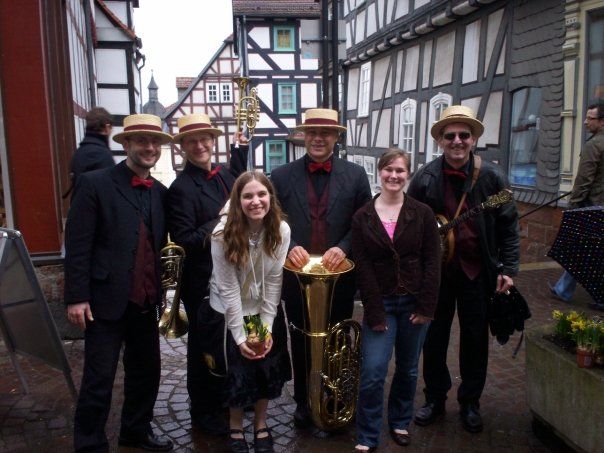
I danced for these street musicians as if no one was watching!
Living authentically isn’t being a jerk about it though. These are people who don’t care if they tick people off but they don’t purposefully go out of their way to do so. It isn’t about being mean. It’s about respectfully disagreeing and holding themselves apart from the judgment of others. It’s more of a live and let live attitude. Like okay, you don’t like that I live my life this way, but it’s no skin off your nose and I don’t have to listen to your criticisms about it if they aren’t constructive or useful. Someone living their best life knows that bees don’t argue with flies that honey is better than crap.
Another benefit to journaling is it can allow us to consider another aspect to a best life, living with purpose. I’m not here to tell you what a purposeful life is or is not. Each of us has a calling. Each of us has a gift or talent. I can’t tell you what those are because I’m not you. In general, a purposeful life involves leaving the world a better place, and helping others. Some people may have very obvious purposes like teachers, nurses and EMT workers. Teaching the next generation, healing the sick and protecting others are all very obviously meaningful things to do based on the values of our society.
However, almost any job can be infused with meaning when placed into a larger context of helping others. Nor does your purpose have to be tied to your job. I once interned for a group of businessmen who invested money. They were quite good at it, but rather than simply take all the money for profit, they used it to open an orphanage in Africa. This orphanage did not stop assistance at the age of 18, but rather continued to invest in the children, helping them obtain higher education. The children were able to start businesses in their local community and become leaders thus laying a firm foundation for independence in the region. Their calling was to help disadvantaged children and to grow a community in Africa even though their jobs had almost nothing to do directly with this calling. Your talents and your calling may be seemingly disparate things that nonetheless are yours.
There are, afterall, lots of ways to leave the world a better place.Talents don’t have to be utilized in a specific way. Your job doesn’t have to exactly match your calling. It’s certainly easy when the two directly align, but sometimes they may seem completely disconnected. You also don’t have to have your calling address every ill in the world to leave it a better place. Some people’s calling is to focus on the environment, others may have a calling to help sick children. Both are worthy callings that do not negate the other nor is one automatically better than the other. There are unfortunately a lot of problems in the world and there’s just no way for each of us to address all of them all at once. That isn’t to say don’t do what you can for the problems of the world, do the part you can. Your calling is the thing you focus on.
The point is for you to determine for yourself what your talents are and how to apply them to your specific calling. I will probably write a more extensive post on a purposeful life, but as I said earlier this post is more to help you start to consider what a best life is and how you might start to consider what your best life looks like. To be honest, I’m still figuring it out. One of the reasons I have a bucket list is to try new things, complete new challenges, to grow, and learn more about myself.
So what are you waiting for? Go forth, dear reader, and start living your authentic best life!
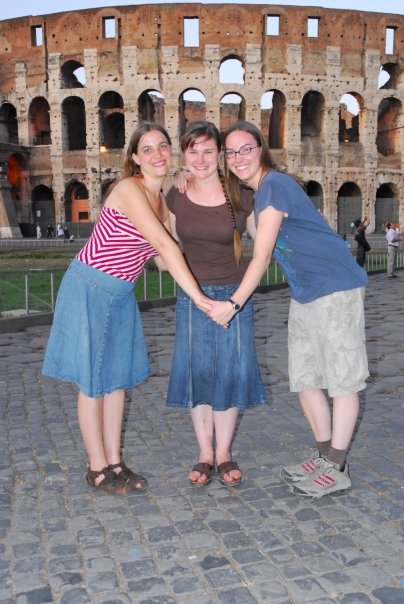
Maybe it was the music itself that enticed me. Perhaps, it was the wine at dinner. Or maybe it was the allure of Italy itself that wound itself around my legs and compelled me to dance. All I knew was the night was still young as the sky was turning to twilight and the saxophone drew me towards it. What else could I do, but begin to sway and dance to its siren call? As I twirled and danced upon cobblestones, I caught glimpses of the musicians smiling as they played, keeping the song going as I was caught up in its magic spell. My skirt swished gently about my legs, my arms flowed of their own accord. I can still almost hum the low, almost slow almost sensual tune, though in truth it plays along the boundaries of memory, faded with time and unfamiliarity.
To be young and uninhibited again, unbound by the constraints of societal expectations and propriety. To simply find yourself in a place where the music is playing and the urge to dance takes hold. It is not very often one stumbles upon street musicians unless one is in a city, such as Rome, but one must take advantage of such moments. It is one of my favorite memories from my semester abroad because I danced as if I were alone, unconcerned about the crowd or who might be watching. I let myself live freely in the moment, embracing the serendipity of music at twilight.
As it so happens, not only did I delight those playing by my ample appreciation of the music, but also of a nearby photographer. He happened to catch me dancing and was inspired by my boldness. For a short time afterward, I was his muse with a short and impromptu photoshoot in the plaza before the Great Colosseum itself! I unfortunately only have the pictures which were sent on to me and lost the gentleman’s name. But I will forever be grateful for the phenomenal memories he helped preserve. Perhaps, this blog post will find him and I will be able to give him proper credit.
It was not my first foray into impromptu dancing, for I also danced at the spring festival in Marburg in the rain, again much to the delight of the musicians. I may have said only moments ago, “to be young and uninhibited again”, but the truth is, I still am! Uninhibited that is – I’m almost 40, one has to embrace middle age gracefully and not cling to youth in some sort of grotesque fashion. One should not stop dancing to street performers just because one is no longer in one’s 20’s! One should not stop embracing moments of joyful abandon. Is there a song to sing at karaoke? Belt it out! Did you stumble across a public art project inviting you to paint? Join in! Be spontaneous! Embrace your impulses and passions! Be silly! Don’t be afraid to look foolish! Had I not been fearless to dance in the middle of public, it would not have led to a photoshoot in the middle of Rome! How many people can say that of their journeys? Not many? Exactly! Fortune favors the bold after all!
Now dear reader, you may be wondering why this would grace a bucket list as it seems like rather a small thing. Really, dancing on the street of all things to a “lowly” street performer? What sort of standards do you have for your bucket list, you may ask.
First, it’s my blog and I’ll blog what I want to. My list, my rules. You go make your own list with your own rules.
Second, consider how few people would actually be bold or brave enough to do this? How many of them hold back? Does it even occur to them to dance? Or have they been so conditioned against any sort of unauthorized or predesignated fun that they don’t even think to dance? Have you, dear reader, ever acted with such impulsive abandon? For me this was about living without fear or anyone’s judgements. A life well lived includes doing things off the beaten path, allowing your passions and impulses to occasionally run riot. I love music and I love dancing, why should I deny the urge to embrace life when it so fervently invites me to its arms?
Besides, when you do embrace life not only do you bring delight to yourself, but also you bring joy to other people. In my hometown, there is a young man who frequently goes out dressed as a templar knight. His reasons are his own, but he started to become a bit of a celebrity. People are posting sightings of him. They’re excited to see him. It brings us joy. I love that there’s someone out there just living his best life as a templar knight! There’s another town in Canada where a man walks around with a giant carrot and people LOVE it. There’s stories of people passing out flower crowns or leaving chalk art on the sidewalk of their neighbors to bring them joy. The world needs our whimsy dear reader!
Sidenote: Before doing chalk art, check your local ordinances as in some towns this may be illegal – some places really have outlawed fun!
All of these are stories of people doing something a little impulsive and making the world a better, more magical place because of it. The third reason is that it made my trip to Rome that much more memorable. Consider how many travel stories seem to consist of the same things, especially such destinations as Rome. Don’t get me wrong there is a reason people go to the same places and see the same things, it would be silly to go to Rome as a tourist and eschew the Colosseum as plebeian because everyone goes to Rome to see it. But this punctuated my week-long trip with a truly memorable experience, it made the Colosseum special to me. When I think about the Colosseum, I think about dancing! I strain to recall that haunting tune. For a moment, I am back there. If we don’t authentically express ourselves out in the world, what are we even doing? Are we really deeply experiencing life or just pretending to?
How can you dance like no one’s watching?
If you are interested in replicating the magic of impromptu dancing, the best way is to use your ears. Pay attention to your surroundings. Obviously if you visit a city, you are much more likely to encounter the stray musician. Be sure to pack along a few dollars to show your appreciation if you are intending on seeking out someone to dance to. However, I will admonish you to not seek this out specifically. After all, half the fun is stumbling about it naturally to let the music extend its hand with a flirtatious invitation to join it. Then by all means accept the invitation, let it embrace you in its arms and let go.
The principle of course is to be open to serendipity and to take advantage of the opportunities that arise. When a creative opportunity presents itself, meet it head on, boldly and passionately. Dive in with careless abandon. After all, a life well lived is one with passion and risk. Not every boldly taken action will end well. You may be booed off stage of the open mic comedy club. You may be told afterward you sang worse than a braying donkey. But that’s okay! In the words of Theodore Roosevelt, “It is not the critic who counts….The credit belongs to the man who is actually in the arena.” Do not content yourself with sitting on the sidelines dear reader! Enter the arena of life and dance as if no one was watching!
Completed: Spring 2009
Miles from home: 4,371 (though this can be completed almost anywhere)
No one ever wins the game, “what could have been”, but we all play it to our own demerament. The game “what could have been” is when we sit and think about the path not taken. The “one who got away”, the degree not pursued, the job offer you didn’t take, the house you didn’t buy or the trip you didn’t go on. It is usually when we are sitting in regret for not taking that path and say “if only I had….” Indeed, if only you had and then life would be wonderful! That, dear reader, is the dangerous and poisonous trap.
You see when we play this game, we only ever present ourselves with the idealized version of events had we only made a different choice. I should probably write a post later about the choices we make since I keep saying it, but life is full of choices and saying yes to one thing means no to others. We choose to give up something to take a given path, often more than one thing. If we pursue a higher degree we may land our dream job and make lots of money, we may also find ourselves drowning in student debt working at McDonald’s. Rarely do we consider the second part when playing “what could have been.” We only think of the best possible outcome of the path not taken, dreaming that if we had just done something slightly different we would have a life that frankly was probably never in the cards to begin with.
I had a wonderful co-worker who was quite talented in the social services field. She was arguably better than most people with their master’s given the amount of additional training and experience she had. Unfortunately, without that degree her job prospects were limited and her salary was less than it should have been for what she brought to the table. It was to her deep regret that she did not finish school. However, she shared that she had in part chosen not to pursue a career in order to support her husband’s children in their blended family. They needed additional support and because of her pouring herself into them, they turned out wonderfully. They are successful young men and women who love and adore her.
I reassured her that at the time of the decision she could have no idea that the job market would be so demanding of a higher degree and that she made the best possible decision for her and her family in those moments. I told her that she has no idea the positive impact that her presence in the family brought and what horrible things may have happened if she pursued her higher education which would have required her to sacrifice the extra time and attention she gave those children. I told her she has no idea if the gamble would have paid off or if she would have been stuck with debt or how it would have impacted the dynamics of the home. Perhaps, those children would have gotten into drugs or joined a gang without her love, care and support (a possibility in the city she lived in). Would she be sitting in an office today, wishing she had made a different choice and cursing herself for not staying home?
Much like in the movie it’s a Wonderful Life, we have no idea how the choices we make effect the world around us and how without those choices the world may actually be far darker.
That “dream” home may have been a money pit or a financial stressor that ruined you. That vacation you didn’t go on, maybe would have been the place of a freak accident that left you without a leg. That job that you didn’t take may have been the most toxic work environment that you ever experienced. Yes, it may have led to a magical land of happiness, but look around you, do you know anyone who is truly happy? If so, then I will ask you to look closer at them, are they happy because of a dream life or for some other reason? The Kardarasians are arguably one of the most successful families in America and I don’t need to watch their show to know they are miserable. They spend their lives creating endless drama for our entertainment and that sounds like a gilded hell. How many celebrities have completed suicide or turned to drugs to numb their pain? How many people regret getting married? How many single people long for it?
You accomplish nothing sitting up and thinking up a fantasy life for paths not taken. It only leads to regret for a life that you do not have and for one that may have never existed no matter what choices you made. You cannot change the path that has already been taken. The only possible way is forward to make the best choices you can in the moment with the information that you have. Living our best lives means living this life and making this one the best one we can with the tools at our disposal not trying to live a life that can never be. Do not play what could have been, dear reader, for it is a game you will never win.
Oh dear, failure! Is there anything else American culture is more allergic to? Failure is such a part of life and yet we do almost everything we can to avoid it. I am certainly not immune to the fear of it. Do not get me wrong, dear reader, I fancy myself better than most at facing it, but there are still many times that I do not try for fear of it. While it may be tempting to present myself as a paragon on this blog, I am, alas, human rather than a demi-goddess. Shocking, I know, but it’s the truth! So, I will not lie to you and say that I have conquered this particular truth despite my best efforts.
Why do we fear failure so much? Not even failure, but even small mistakes? We live in fear of the judgments, the reprimands and the consequences of our mistakes. We worry about it negatively reflecting on us and what others might think or say. We worry that we might suffer terrible consequences if these failures should come to light. Worse, we may work to hide them and cover them up rather than owning them and taking responsibility. We may try to pass them off as someone’s mistake. We may try to downplay or minimize. There are many unhealthy ways to handle failure, because we fear the consequences so much rather than embracing failure as part of the process to become better versions of ourselves.
I cannot promise that you will not get reprimanded, embarrassed or made to feel less than for mistakes. One of the reasons we fear making them is precisely because that is what so often happens. I will not sugar coat this reality, messing up sucks and sometimes the consequences really suck. What I can promise you is that if you don’t let yourself mess up even in the face of potential negative consequences, you will never move forward and you will continue to be stuck. Messing up is how we learn. It is part of the process of getting better. The entire world of science is based on a series of failures leading to success. Negative data is still data! Edison tried hundreds of ways to make the lightbulb work. Even good ideas may fail initially, it took almost 10 years for sliced bread to catch on and now we say the phrase “the best idea since sliced bread”!
If we spend our time in fear of failure, we will never try and if we never try, we will never succeed. It is easy to watch people performing at their highest level on television without considering all the many times they must have failed to achieve that skill. We don’t see the number of times a gymnast has fallen or how many times a violinist struggled on a particular musical phrase. We don’t taste the botched dishes from the five star chef or the barely recognizable drawings of an artist. So when we try our hand at something, how quickly do we throw in the towel when it is less than perfect? How many things have we lost to ourselves pursuing perfection rather than joy?
The trick is not to dwell on the mistakes. Hence, the second part of this truth, moving on and learning. One should not forget and move on, or we will of course be doomed to keep repeating the mistake which is no fun. One should remember, learn and move on. Now most people would stop here and let the post stand, but I find that they are missing one of the most important steps of the whole process. How to effectively analyze so that one can learn without rumination.
I like to start with a strengths based approach. Studies indicate that when we focus on and cultivate our strengths rather than merely working to overcome weakness, that we make much faster progress. Therefore, I encourage you dear reader to first consider what went well or what was going well. If we get 48 of 50 questions right, should you really dwell overly much on the 2 questions you got wrong? One might end up spending so much time studying on the small section one struggled with in the unit leading up to the final exam, one ends up bombing the final because one didn’t review the other material! Ask, what did you do that helped you achieve as much as you did then, keep doing that!
Then ask yourself what did not go well and begin to brainstorm solutions. Perhaps, it was lack of sleep. Perhaps it was an ineffective method for tracking your tasks. Perhaps, it was looking at the wrong line in the spreadsheet. I often like to try and “mechanize” my approach to fixing mistakes. As a dyslexic, I know I will always struggle with reading spreadsheets unless I use the very simple fix of highlighting every other line in a given color. So, my spreadsheets utilize that method to help me track things effectively. As someone with ADHD, I have routines and develop “self-checks” to keep me on track. I set boundaries with interruptions, even small ones, when I am in the middle of a task because I know how easily I can “lose” a task near its completion. It will be 90% done, someone will ask me to do something else and it will stay 90% done for weeks if I am not careful to say “let me write that down on this to do list and I will get to it in just a few minutes.” this step allows you to plan for and prevent future mistakes.
This is also a time to practice self-compassion to observe without judgment, accepting that you are in fact, human. It is not a time for self-pity or excuse making because taking responsibility for the mistake is part of this process. However, forgiveness of the mistake is important to be able to move forward. I always find it much easier to practice this step after steps 1 and 2. When I can see what I did well and have a feasible plan to move forward the stress and worry that comes from the mistake almost seems to melt away. This is the step that helps us move on.
Sometimes, you do need to add the extra apology step depending on the mistake that you made. An apology should include an admission of harm caused by your actions, whether intentional or not without blame on the other person. If they contributed to the issue it is on them to take ownership of their part when it’s their time to apologize to you. If you’re apologizing to them this is their time to get an apology, not yours, yours will come. It should be followed up with your plan to make amends and you should seek their input for this plan to move forward. Remember it’s not just about the “thing” that went wrong, it’s also about repairing the relationship, helping the other person feel heard, understood and cared for. What makes you feel better about a situation, may not make them feel better about the situation. Once the plan is agreed upon, you need to follow through with that plan for repairing the relationship.
You will mess up, but messing up is a gift. A gift to learn and grow to be the best versions of ourselves and live our best life.
It may surprise you dear reader, to discover that I am a bit of a nerd or perhaps it was obvious from the start. I have written about the importance of having bucket list items that are unique to yourself and I am a firm believer of practicing what one preaches as well as leading by example. Therefore, I will share with you one of the items that are unique to me. I’m not sure that I can be said to be a gamer as I don’t tend to play many different games. I usually tend to play one or two for a long time and they are typically mmo’s that play with my boyfriend as a joint activity.
However, I still have goals and enjoy completing challenges within the games that I play. In the spring of 2014, I found myself playing World of Warcraft’s Mists of Pandaria expansion with a singular goal, obtaining the elusive challenge mode armor. As the name implies, it was a specific challenge to be completed in the game. According to wowhead, only 9% of profiles obtained the achievement associated with obtaining the armor. That isn’t to say it was the hardest achievement in the game, I am certain there were more difficult challenges, but it certainly was difficult requiring a player to truly master an individual class. It was especially challenging, since I chose a class I had never played before, opted to “boost it” to skip over the pesky leveling process and then jumped into my first challenge mode dungeon without having done much more than read a general guide on how to play it which only added to the difficulty.
To those unfamiliar with games, I apologize if my description seems a bit obtuse, in the interest of brevity, I shall not overly burden you with lengthy explanations. I suppose the closest analogy that most people would get is to pretend that a class in a game was a position on a sports team, say a quarterback. The quarterback plays a specific role on the team and has specific responsibilities for that position. In a game, the positions have specific moves that only that position or class can utilize in the game. In this particular game, there are challenges known as dungeons in which a group of five players work together to defeat a series of bosses or “villains”. On second thought, I probably should have picked a different analogy considering how little I know about sports….I digress.
What made it challenging was that unlike the rest of the game, certain advantages that one could typically gain such as better equipment to make it easier to defeat bosses, inside the challenge mode dungeons those advantages were stripped away, requiring you to rely less on your equipment and more on your skill alone. Hence, the thrill of overcoming the challenge presented. Imagine if you will, you were given sneakers that helped you run faster and then you were asked to run the same race track again only this time they gave you shoes with lead weights attached. Then told you, you need to run the race even faster than you used to.
From Blizzard’s announcement. As you can see, they wanted to give us a mode where we could push ourselves as players.
One doesn’t need to have played wow or even any other video game to recognize that there is a certain satisfaction that comes from executing a skill based challenge rather than being afforded the ability to overcome it through other means. Consider bowling, if you score 70 – 100 points, it’s considered a good game. How would you feel if you executed a game with an end score of 120 on a lane with bumpers which prevent your ball from going in the gutter resulting in you obtaining points that would have otherwise been zero? How about if you executed the same score on a lane without bumpers? What about one that had obstacles or other handicaps? Almost all of us have had the experience of having the training wheels come off and being asked to perform at a high level. The sense of victory one feels at having conquered such a challenge is a rare treat in our modern age.
Each dungeon was timed, requiring a small team to execute the challenge within the limit in order to obtain the achievement. Not only that, but also the game required a player to complete the challenge on 9 different dungeons, each with their own mechanics and barriers. One had to learn how to quickly work with a group of strangers to execute a given strategy that may not always work given the makeup of the group you were with. Sometimes, a combination of classes simply did not work for a given dungeon like when I was on a druid healer and my boyfriend was playing his druid tank. There was one fight where the druid healer simply could not keep the tank up. We switched up the tank to a warrior and it was much easier to keep the warrior up for that particular fight than the druid. He switched to a different healer and had zero issues staying alive.
It was a bit of an adrenaline rush to play through the dungeons, responding in the moment to what other players were doing,and alternating how I was approaching a fight given the semi-randomness of the mechanics. I would use moves that I rarely if ever used before, because I never needed to. It felt like I was pushing each class to its limit of what it could do to pull out all the stops. I felt like I was learning more about how to actually play the healer role than I ever had before. I noticed that when I went into other areas of the game, it was much easier to recover bad pulls and botched mechanics.
My very first CM armor set! Isn’t it pretty?
Not to mention, it was just plain fun to dance around damage, throwing out heals, keeping other players from the brink of death, damaging the boss as time and mana allowed, all at a high level of performance. I enjoyed the hyper focus it required keeping an eye out on everyone’s health bars as well as the pools of damage one needed to avoid, making split second decisions about casting a move quickly or casting a slower spell to conserve mana, being mindful of the cooldowns on all of the moves that one could use and and timing them to support the cooldowns the other players were using at the same time. One wrong decision could mean having to restart the entire dungeon again.
There were so many failed attempts. I spent hours trying to conquer just one of the dungeons, trying again and again. Still, at the end of each successful attempt, I was elated. At the end of all nine, I had the sweet reward of victory, the achievement, a cool mount and of course one of the best looking armor sets in the game. Might some people think it’s worthless chasing a digital reward that only appears in a digital world? Perhaps, but it represents having conquered a particular skill based challenge. As I stated before, only 9% of profiles obtained this achievement, so I think it’s something worthy to brag about. Besides, it’s my list and I can do what I want!
One of the great things about playing games is that skills gained in a game can be generalized to life outside of the game. I found myself more confident in overcoming challenges in my everyday life and managing stress and anxiety in the moment to still perform at a high level. In other words, managing my performance stress in the game, helped me manage my performance stress at my job and school. It also helped me gain skills in working with other people in high stress situations to achieve mutual goals, something that as a social worker, I’ve needed to do many times. There is value in pushing yourself even in a leisure activity to perform at a high level of skill because of how those skills transfer to other areas of your life.
So what’s your challenge armor?
Obtaining the challenge mode armor is now an impossibility, (at least for now) as the dungeons to obtain them were removed from the game after the release of Warlords of Dreanor. However, the principles of this item can still be obtained whether you play WoW or not. The first principle is of course picking an activity that is unique to you. Maybe you don’t play games, but you knit or garden. The second is pushing yourself to perform that activity at a high level of skill. Is there a sewing project that is particularly difficult? Maybe there’s a musical piece that is known to be a beast to play. Maybe you play a sport and you want to master a certain skill.
You may be surprised at how satisfying it is to have mastered something new and the confidence that follows to other areas of your life. Perhaps, you will need to involve other people and make new friends along the way or strengthen existing relationships through a mutual bond of overcoming the challenge together. Even years later, those who completed the challenge modes with me reference that time together and talk about the experience. In fact, I enjoyed completing the achievement so much that in the following expansion I jumped at the chance to get the new challenge mode dungeons completed to obtain special weapons.
Completed: Summer/Fall 2014(I completed it on Paladin, Druid & Priest)
Miles from home: 0 – completed from my computer
Cost: $15 monthly sub-fee as well as $60 for the expansion at the time.
Some people may rightly wonder, why have a “bucket list”? After all a bucket list is all the things you want to do before you “kick the bucket” (die) and unless you’re actively dying, why bother? Don’t you have your whole life ahead of you? Some may think it even arrogant or foolhardy to bother focusing on all these things instead of what’s right in front of them, the job, the house/apartment, the family, etc. You may even be accused of living a “check the box life” of only doing things on your bucket list to “check them off” instead of experiencing them or as social currency badges “look at me, I’m so cool!”. Others may look at it as a hedonistic form of self-aggrandizement. That certainly can be the case if a bucket list isn’t approached correctly. However, it isn’t about the thing itself, but rather how you use it.
Pulling from positive psychology, it’s about trying to make life memorable and perhaps, even meaningful. In fact, some experts theorize that without peaks (i.e. “grand” events) our memories are fuzzy messes. There’s some research to suggest that accomplishing bucket list items helps set memories. Most adults have pretty good memories of their childhood and early adulthood. Those times are often marked by clear beginnings and endings, the start of school, the field trips, the graduations. Once adult life hits and it’s the same day in day out stuff, you begin to find yourself losing track of the years. It goes by in a flash, ten years feel life five. It isn’t just that it’s a smaller percentage of your life. There’s something to suggest that when you were younger there were lots of new and novel things going on to make time “stand out” without novel “adventures” your adult life is just a smear of work with the occasional night out. Since beginning my bucket list journey, time has gotten back some of its meaning.
A Bucket List also just keeps life exciting, after all who would want to live a life without some peaks? It helps bring a sense of fulfillment, gratitude and awe about the world. Keeping an adventurous spirit can lead to all sorts of wonderful experiences. It can also get you out of a “slump”. If my only “bucket list” item was to go to Iceland and see the Northern Lights, I might overlook all the amazing experiences I was having right here and be perhaps a bit depressed by not accomplishing this life long goal. By looking around me for fun experiences right nearby, I have had so many amazing days and done so many cool things that I would have never done otherwise. I still have my bigger items, but I’m not longing for something that might never come. Instead, I’m living right now.
Bucket lists can help set goals which can motivate us to accomplish things and when goals are specific they are the most motivating. These are specific, concrete goals and by having a bucket list there semi-looming the background it can motivate you to actually go forth and conquer! A bucket list inherently reminds you that your life is short, shouldn’t you be going and making the most of it? A budget bucket list approach reminds you that life is short, shouldn’t you be looking around yourself to live right now instead of once every three to four years for maybe a week if you’re lucky?
Bucket lists can be useful on your journey of self-discovery, to assess values and understand what you truly want out of life. Henry Theoreau encourages us to suck the marrow from life and to live deliberately. A bucket list can help you reflect on what that means for you on an individual basis. How will you live deliberately? What will give you joy? What things are important to you? How do you want to spend your time? Scrolling on a phone, looking at all these people “living” as they sell you stuff you don’t even use because you’re spending all your time on a phone? Seriously, what’s the point of even having a house if your world is a couch and a screen? My bucket list are things that are meaningful to me, that reflect my interests and personality. I spend my free time on the things that matter: my cats, my dog, my books, my violin, my garden, my friends, my family and the adventures big or small with those that I love and care about.
Now, this other piece, I will say with a BIG grain of salt as I’m not, as of this writing, totally “sold” on the idea. However, there is this theory that has been making the rounds for almost a century (perhaps longer) called “The Law of Attraction”. Its most basic premise is that like attracts like. Good vibes lead to good things, bad vibes lead to negative outcomes. So if you want to be rich, you have to put yourself in a “rich” state to “attract” wealth. Often people will use things like vision boards, gratitude journals, and positive affirmations in a bid to have the universe respond in a miraculous way to help them obtain the things they are trying to attract. They will also try and look for positives in a given situation, identify negative thinking and work to reframe events in a positive way. That is the most basic explanation and if you think this is a completely looney idea, you’re not the only one.
Surprisingly, many successful people from past presidents, to movie stars, to silicone valley entrepreneurs all swear by this “law”. These are smart, successful people not some guy living in a garage with a tinfoil hat against the alien invasion. There is even some limited support of the theory in things like positive psychology. We know that visualization of goals helps increase performance. Many top athletes will visualize their games ahead of time and see positive results. So there does seem to be some truth to the idea. If we consider that luck is opportunity + preparation, then we can see how something like the law of attraction may be useful, even if it’s not actually “attracting” anything.
Consider the following, someone who buys into the law of attraction wants to become a professional football player. He may practice extra hard, he may visualize his plays and he is on the lookout for potential opportunities. He may hear through the grapevine that a recruiter is coming to the second half of a game, in part because he’s paying attention. He speaks with the coach to make sure he gets a chance to play on the field during the time the recruiter will be there. He gets recruited and the rest is history. Did he attract it? Or was it something else? After all we tend to notice opportunities when we’re focused on finding them. If he hadn’t been so focused on his dream, maybe he wouldn’t have heard about the opportunity. If he hadn’t been prepared, maybe he wouldn’t have been able to make use of that opportunity. I’m sure there are many star athletes out there who are never discovered despite their visualizations and affirmations, but then again maybe they ended up using those same talents in other areas that ended up being far more rewarding than a football career.
Listening to the stories of those who believe in it, it seems hard to deny that there is something to it because they have so many “manifestations” come true for them. Personally, I’m not sure that I believe I can just get the universe to give me stuff because I’m vibing good vibes. After all, there is such a thing as a bias against negative data. We hear about 100 people being successful with the law of attraction and think there’s something to it but never hear about the 10,000 people who’ve tried it and found nothing. Regardless, I do believe in preparation and opportunity, as that is how I get most of my bucket items done. I’ve listed out the things I want to do and then I go looking for cool events nearby, creating opportunities for myself. Some people may say that I’ve “attracted” a lot of things through the law of attraction. I might say that I just kept an eye out and that keeping a bucket list keeps me motivated to keep looking.
Either way, the principles of the law of attraction aren’t bad things to do and I don’t think they cause any harm. Call it a wager, I’m wagering that it works because if it does awesome! If it doesn’t, I haven’t lost anything by practicing gratitude, looking for the positives in a negative situation, reframing negative experiences and creating vision boards of what I want my life to look like. Positive psychology says all of these things are healthy and can improve mental health. Utilizing the bucket list can help you with these things such as cultivating gratitude for all the things you have experienced with a reverse bucket list or reframing a negative experience of missing out on a total solar eclipse in 2017 as a good thing because it meant that I ended up going to Vermont in 2024 and had an amazing experience!
Lastly, whether I have a terminal disease or not, I am getting older and I won’t be around forever. My mother became disabled at 46, she’s had twenty surgeries in twenty years, she now lives with me because she can’t live on her own. Several years ago, she had bilateral clots in her lungs and she almost died. She worked herself into sickness and almost to death. Because she was living to work, she didn’t get to really do the things she wanted to do in life. Do not mistake me, she worked really hard to provide me a good life. Now, I try to help her live her own bucket list items as her health allows – in fact, most of my current long distance travel is to check things off her list. It’s the biggest reason that I go on cruises; it’s a way for her to be able to travel because they’re much more accessible for her.
Unfortunately, many of her health problems are genetic and her family has a history of illness. This means I have a high likelihood of developing similar health issues. It’s not a given, as I’m doing my best to stay healthy with diet and exercise. But I’m aware that I may very well end up with chronic illnesses that prevent me from doing as much as I would like. We never know what the future holds, we don’t know when we’re going to “kick the bucket”. I aim to live deliberately, to suck deep from the marrow of life, right where I am. Carpe diem!
Now there are some experiences that for you are bucket list items that others may scoff at as being worthy of gracing such a list. Their reactions may be from a misunderstanding of the significance of the experience whether historically, culturally or personally or borne out of some ignorance on their part as to the value of such an activity.
Take video games for example. Already some of you are rolling your eyes and dismissing the whole example – bear with me gentle readers! Video games have been considered a lesser art and base activity for many years. People scoff at the idea of e-sports as being a legitimate activity. I would say that those who are rolling your eyes have not taken a closer look at the industry or the history of other previously derided activities.
Years ago actors and actresses were considered little better than prostitutes yet now the are celebrated for their artistic talent and skill. They hold some of the highest social status in our society which is quite the reversal. We view the cinema now as being worthy of being carefully critiqued, as equal to opera in sophistication and artistry. We may consider that some films are as important to see as some books are to read. I daresay that we will soon be considering certain video games equal in value to any great opera, play, symphony or film.
Certain sports used to be considered reserved for the lower classes mostly the competitive sports whereas the more non-competitive activities such as music and dance were reserved for the upper class. The upper class certainly had semi-competitive sports like hunting and shooting, but you’ll note that they were with few exceptions non-contact sports. After all, we wouldn’t want young Archibald the Third to get a broken nose, think of how he’d look when he presents himself to his majesty! We wouldn’t want him to look like a common thug! However, now we push our children into these contact sports and laud lofty goals of scholarships and going professional.
These examples are to help make my point that for you, as an individual, there may be things on your list of things to achieve or experience which our culture may not value or encourage us to do. No one needs to understand your obsession with knitting and how for you a certain project may be your magnum opus. Celebrate it! Add it to your list! Maybe you want to make Challenger tier in League of Legends. Being as only .0024% of players reach Challenger, that certainly would be like making the Olympics. You don’t need to justify to anyone the amount of skill, dedication and knowledge it would take to achieve that. People who scoff at that may as well scoff at a Chess Grandmaster. Learning a programming language is just as worthy as learning a spoken language. The same can be said of creating an entire conlang.
The items for you don’t even need to be that big of a deal, they could just be things you want to do for fun. Not everything on your list needs to be elevated or lofty, some things could be small or even a bit silly. For example, I would very much like to see a drive-in movie. I love nostalgic things and experiencing pieces of the past as it enriches my understanding of historical events and cultures. It’s a fun diversion and would certainly be a different way to see a film. This certainly isn’t everyone’s cup of tea, but it is mine so it’s on my list and it isn’t something I would think would grace many other people’s list.
The point is not to be afraid to celebrate your personal achievements loudly and proudly. These achievements don’t have to be meaningful to anyone else but yourself. Part of living your best life is to do it in a way that is authentic to yourself without allowing other people’s negative judgements hold you back from pursuing activities that are meaningful to you. After all, the only person who is living your life is you!


























 Budget Bliss: Bucket List