Good Enough

There are many experiences that absolutely require “authenticity”. They require the larger cultural context of a given region, country, ethnicity, culture, etc. to be the genuine item. There are many others that don’t require much more than themselves. These are the “good enough” items that clear the bar of the Bucket List without the rest of trappings of a given thing (often those trappings require you to hop on a plane and go to a different country). 

I often work backwards to my “good enoughs”. I may find myself dreaming of going to Japan. I may picture walking through a traditional Japanese house, enjoying a tea ceremony, taking in a Japanese garden, visiting one of their Buddhist temples, strolling through the bamboo, seeing the cherry blossoms, eating their street food, and seeing demonstrations of their weaponry and armor. Upon reflection, I realized I could do almost all of these things here in America. I was able to go to the Japanese Gardens with the tea house and enjoy a tea ceremony. I went down to the annual cherry blossom festival in D.C. and enjoyed street food, weapons demonstrations, music, fashion and more. These are my “good enoughs”. I didn’t need to go to Japan in order to say that I experienced the genuine item, because I found them here.

By thinking about a given Bucket List place and considering what I wanted to get out of a trip there, I was able to then build up a list of things to find nearby. I really want to see the lavender fields in France. I found a lavender field within driving distance to go visit, the same with the sunflower fields of Italy and grape stomping. Some things may be more accessible than you might imagine. I have been consistently surprised at what’s in my own backyard and what I could potentially do.

What makes a genuine item, “genuine”? It is often up to our own ideas and definitions. There may be people who say that unless I strolled through the crowded streets of Tokyo and ordered a ramen bowl from a street vendor in Japanese, I didn’t have the real Japanese experience. Perhaps, but I tend to feel that such a view comes from self-important snobs trying to aggrandize their own experiences at the expense of trying to cheapen the experiences of others. Don’t fall for the lie that the only “genuine”, “authentic” thing has to be done in the context of the “homeland” or that the necessary cultural context to appreciate them can only be achieved in a certain location. 

When visiting the rainforest in Costa Rica, they took us into a butterfly house. The butterfly house in Hershey is just as lovely and just as amazing. Unless you are a butterfly expert, you aren’t going to notice that the ones in Hershey, PA are a mix of various tropical butterflies vs. the 100% butterflies exclusively from Costa Rica and frankly, does it matter? Don’t let your friend who is a butterfly expert ruin it for you by telling you how this species would just never be seen in the wild with this other species. It was still amazing to see the butterfly house in the rainforest, but I could have skipped the butterfly house and been perfectly fine. I did go on a small hike through the rainforest after the butterfly house to see a waterfall. For me hiking through the rainforest isn’t something that can be re-created in America. For someone else, maybe the fake rainforest at Disney World is good enough. 

It is up to you to make the decision about what constitutes as “good enough”. If it met the desired outcome of what you wanted then it is good enough and no one gets to decide what that is other than you. You are a unique individual with unique reasons for wanting to have an item on your list. What might be good enough for you isn’t good enough for someone else, but they don’t get to dictate that to you and you don’t get to dictate that to them. 

I have had a tea ceremony at the Japanese Gardens and also in the crowded, noisy basement of a church during a tea festival. Surprisingly, I enjoyed the second more because it was a more intimate affair. It speaks to her skill as a hostess that I do not really remember the crowd or the noise, only the calm and meditative nature of the ceremony. She created a space of serenity among chaos. The noise seemed to melt away as we conversed and made light conversation. I can still taste the tea on my tongue even now. Given that if I did go to Japan and schedule a tea ceremony to achieve the same level of intimacy I would have to pay a fairly high premium. For me, that is good enough and if/when I go to Japan a tea ceremony isn’t something that is going to be on my must do list. That isn’t to say I wouldn’t do one, just it’s not on my list of musts and can be sacrificed to allow me to do something else. 

In fact after meeting so many “good enough”s you may find that certain places begin to lose their appeal. For example, I have been to so many museums with egyptian artifacts that honestly, Egypt isn’t that high on my list of places to go. I would rather see the Mayan pyramids to see pyramids. When I was younger, I had a much stronger desire to see Egypt because what I really wanted to see was the artifacts. However, despite checking off so many things on my Japan list, I still want to go to Japan. For some places, my good enoughs have only enhanced my desire to go whereas for others the desire has decreased. 

Dancing with Wolves

We humans seem to have a love-hate relationship with wolves. In fairy tales and folklore, wolves are often seen as evil. It was after all the big, bad wolf that ate Little Red Riding Hood and blew down the houses of the three little pigs. Two wolves will herald the apocalypse in Norse Mythology. They were hunted to almost extinction because of their “threat” to farmers and people. Up until more recent times when every supernatural being got a sexy makeover, werewolves were considered hideous monsters. 

Yet, we know that man’s best friend came from a wolf or shared a common ancestor to the wolf. There are also folktales and myths of good wolves. The founders of Rome were raised by a she-wolf.  In Egypt, it was a wolf that separated the heavens and the earth and protected the pharaoh and his army. The Wolf-Kamey of Japan protects people from disease and other disasters. Wolves are totem animals, spirit guides and more. 

Though to be honest many of the apex predators enjoy a similar treatment, bears, tigers, lions and crocodiles to name a few. Most of these are both revered and feared subjected to various treatments depending on the prevailing thought of the day. Unfortunately, for many of these creatures the previous thought was destruction and in some areas continues to be.  Wolves have spent many years on the endangered species list with many of them disappearing from areas they had previously reigned for thousands of years occupying only 10% of their previous range. Their return to places like Yellowstone were hailed across the nation as a huge win for conservation efforts. Their return actually demonstrated how critical they are to other species as their arrival helped support plant life, birds, and other mammals. There is no substitute for an ecosystem’s apex predator. 

One of the larger packs at the sanctuary

With education public support has slowly grown over the years for wolves and with that support people’s love of them. Unfortunately, this has led to some negative consequences for some individual wolves. For some insane, unbeknownst reason, people think that they should keep wolves as pets. They also think that for things like tigers, but I digress. Wild animals are wild animals and are not like your dog. Sadly, this means that they are often mishandled and ill treated. However, because of their intense interaction with humans this also means they are unsuitable to return to the wild. 

This is where the PA Wolf Sanctuary comes in. For over 40 years, they have provided a home for wolves and wolf-dog hybrids where these beautiful creatures can live out their days in an environment suited to their needs with people who understand and can properly care for them. In order to support the care of their over 50 wolves, they offer educational tours where you can get close to the wolves, hear their stories and learn about these amazing animals. 

I first visited the sanctuary in college with my now ex-boyfriend. The tour was a small intimate affair of only a handful of people. This allowed us to linger near the wolves and really take them in. It’s hard to describe these majestic creatures in words. They are clearly very intelligent and inquisitive. They watch you with a certain intensity with eyes ranging in color from golden yellow to deep amber. The pack moves together with grace and purpose. You find yourself holding your breath as you take them in and then, the spell is broken and they remind you that they can be big, lovable goofs. 

My sister and I embarking on an early November excursion to see the wolves in their glory!

Your face cracks into a smile and then a delighted laugh at their antics as they play with one another. You watch them splay out their front paws, their faces low to the ground in the universal “play bow”, much like your own dog at home. They wrestle and chase one another with the elders nearby to supervise. 

The juxtaposition of their graceful, majestic selves and clown hints at their complex personalities and individuality. They become more than just a “wolf” they become Freya, Odin, Scandal, Kodie and Rumor. You fall in love with them as you hear their stories and you connect with them through the fence. Spending time with them is truly an honor and you leave even more committed to their preservation because it’s not just about fighting to save the “wolves” but wolves like Violet, Fenrir and Vivian Laurel of the Serenity Pack. They are truly ambassadors of their species. 

I had the pleasure of visiting again years later with my sister during one of their full moon fundraisers. What I hadn’t expected was the sheer explosion of popularity in the interim of my first full moon tour and my much more recent tour. What had been a small affair of perhaps a dozen people had exploded to be hundreds. The place was absolutely packed with people and cars. I was understandably a little disappointed by the large crowd. When one is expecting a quiet evening, it can be a bit shocking. 

However, it is important to adjust one’s expectations when confronted with reality and not allow such things to ruin your fun. There are times when the unexpected can truly make an experience extraordinary. This was not the case this time, but we got to see the wolves at a time of day when they are most active. In being mindful to be flexible and maneuverable with regards to our expectations, we were still able to have a wonderful evening. 

Some of them came really close to visit us, you could almost forget they’re wild animals

How can you visit wolves?

There are not many dedicated wolf only sanctuaries throughout the country, but there are plenty of zoos and other wildlife encounters that feature them. The biggest drawback to this option will of course be the lack of dedicated guides for the wolves that you see and of course seeing fewer of them. However, you can still get up close to these beautiful animals and learn about their species. Check the calendar to see if there are any dedicated programs for wolves specifically at your local zoo or other wildlife encounters. As with any activity involving animals, it is important to do research into the entity beforehand to ensure you aren’t unintentionally contributing to animal abuse. The Wolf Sanctuary is a well respected institution and known for its extraordinary care of the wolves.  

Completed: 2007

Miles from home: 8.2

Cost: Guided tour $25/Private tour $45 

Some suggestions for Wolf Sanctuaries throughout the United States: 

Apex Protection Project in California

Wolf Mountain Sanctuary California

Seacrest Wolf Preserve Florida

Wolf Creek Habitat Indiana

Predators of the Heart Washington

Howling Acres Wolf Spirit Arkansas

W.O.L.F. Sanctuary Colorado

Run With Wolves Maine

Endangered Wolf Center Missouri

Howling Woods Farm New Jersey

My Pack of Wolves Ohio 

Saint Frances Wolf Sanctuary Texas

“Canned” Vacations

When I was studying abroad, I took advantage of the fact that I was nearby many of my Bucket List places, Germany, France, Ireland, Italy, Austria, all places I got to go, and places I didn’t get to go Morocco, Turkey, Budapest, England, Scandinavia and Spain. Being a poor college student, I didn’t have the money for expensive tours or guides. Plus being new to traveling, I had this weird idea that going with a tour or guide would be getting a “canned” experience rather than an “authentic”, “genuine” encounter with the locale. 

I enjoyed exploring the city on foot, going down weird alley-ways, getting a little lost, speaking with locals, trying hole in the wall shops and restaurants, all on my own terms and my own timeline. That is how I ended up getting an invite to a hole in the wall club in the middle of Paris. It was doing that that I ended up spending an afternoon in Austria with a travel journalist writing about Mozart’s and Beethovan’s homes. It was how I ended up getting tickets to a sold out show for A Midsummer’s Night’s Dream after chasing a man dressed up in Shakespearean garb through the streets of Dublin. However, there were certainly things I missed, important sites I could have visited had I been with a guide to point them out to me. I went on a Trolley Tour of Salem and was reminded that the archaeological site is actually in the next town over. I would have missed the highlight of my Salem trip without the guide. 

Without a guide, I was free to explore the unknown

That isn’t to say that having freedom by not going on a guided trip to a given place is without its own merits. Not being beholden to staying with a group allowed me to decide how much time I really wanted to spend looking at the Mona Lisa (it’s really not that impressive, sorry). It also allowed me to be spontaneous with regards to what I wanted to look at. I distinctly remember asking someone if the Unicorn Tapestries were actually in Paris as I had never thought to see exactly where in France they were housed. Probably because I never thought I’d get to France; I went to Paris on a whim, so researching beforehand wasn’t something I had done. Needless to say I raced across the city to see them – after all, how could I not see my favorite animal? I remember sitting for almost an hour just looking at the intricate details of them, marveling at the craftsmanship and recalling the imagery and symbolism that has been woven into them. Could you imagine how you would feel, if you were on a tour and learned something that was on your list was in the same place only to be told “sorry the tour doesn’t include that”? I would have spent years in regret and I am glad that I had that sort of freedom. 

It is nice to not have to be beholden to a clock of having to be somewhere at a certain time. The world is your oyster! For some people the idea of having to constantly watch the clock is stressful and stifling. It takes a mental load to worry about a tour time and it can rob you of those moments because instead of fully taking something in, you’re trying to calculate how much time you have until the appointed hour. 

However, there is a place for the “canned” vacation. First, let us not fool ourselves if you spent time looking at the online lists of must do’s and see’s, or find yourself clinging to a guidebook, you are on a canned vacation. Oh it’s a loose one to be certain, but the main criticism is that “you’re just doing the tourist crap”. Well, first, duh I am a tourist and I didn’t come all this way to see a bunch of random crap I can see back home. Another criticism is that you aren’t engaging with the people. I have yet to meet a guide that wasn’t of the people. I usually try to spend time talking and engaging with the guides which was just as enjoyable as simply stopping and trying to talk with the locals. Bonus, the guides at least will be polite to you, whereas the locals are sometimes less than friendly, especially in the places with too much tourism. The guides usually contain knowledge not in a guidebook or online review. I found the experience to be incredibly authentic because of what I put into it and did not find my experience was less for using a guide. 

Our wonderful guide in Columbia

When booking a tour through the cruise line, I was paying for the convenience of not having to book a tour myself ensuring they were safe, reputable and would ensure returning to the ship on time. I could have booked other tours that were perhaps a bit more intimate, but I didn’t find that booking tours independently saved me money or gave me a more personalized experience than through the ship. So regardless of whether the tour was through the ship or something you booked yourself, you are getting a similar experience. 

I said earlier in this post that having a tour booked can be stressful because of having to watch the clock. For me, I found it to be less stressful, specifically on the cruise line. The reason being is that all I had to do was show up in the morning or afternoon at the appointed hour, usually after breakfast and then everything else was taken care of. I didn’t need to worry about the logistics of traveling to and from the site or getting tickets to the facility. All I needed to do was sit back, relax and enjoy myself. It was relaxing getting on board and having everything already figured out, all the decisions were made and I didn’t have to make any major decisions during my trip.

Without a tour guide I would have completely missed the highlight of my Salem trip!

Decision fatigue is a real thing and to be free of it for a week or two was amazing. In comparison to my non-canned trips, my canned trips were more relaxing. That isn’t to say that non-canned trips were less fun or enjoyable, just that they were more stressful and less rejuvenating. I still worried about the times attractions were opened, when tours were going, and navigating public transit schedules. At times, I found myself watching the clock more on my non-canned adventures than my canned ones. 

At the end of the day, I simply did not find that much difference in terms of what I could get out of a “canned” vacation vs. one that wasn’t “canned”. I enjoyed both approaches to traveling. Both give a quality experience and both carry a risk of missing out on something. Without a guide or someone to show me where to go, I may leave a place before realizing I could have checked off something on my list. However, there is also a chance of being “teethered” to a tour group where one can’t be spontaneous. There is a greater sense of adventure by being on your own and challenging yourself to navigate a new place without much help, bonus points for a country where you don’t speak the language and relying on public transit, like my trip to Paris. One of my favorite memories is getting lost in Paris’ red light district. There’s a lot of personal growth to having this experience because you learn just how independent and self-reliant you can be as you creatively solve the problems that naturally arise from this approach. 

Nothing like getting off at the wrong plaza!

With a tour, it is less stressful, but it isn’t quite as exciting as it lacks the possibilities of what might be. It is very rare to have impromptu misadventures on a canned vacation. At times it is frustrating to find yourself chained to a group. Although truthfully, there’s really nothing to stop you from breaking away from your tour and going it alone. I once was on a tour with my study abroad group when suddenly one of the girls, Jewel, breaks away from our group, hops on the back of a motorcycle and drives off into the night with nary a word of explanation. We shouted after her, but to no avail. She didn’t return to our hotel room until the next morning. As it turns out, she saw an old friend and decided to ditch us and see where the night would take her. I certainly applaud her sense of adventure! Though, I probably would have at least said something to the rest of the group rather than cause worry. So you see, you aren’t in a jail, you can leave the “canned” vacation any time you want. It may incur additional expenses and you may “miss out” on something, but you’re not actually beholden to the group. As Jewel demonstrated, they can’t stop you, just hop on that motorcycle and go!

Stay Local: Buy Local

There is a movement of staying local and buying local. The idea is based on a simple economic principle that if you want to have a strong local community you need to keep your money in that community. If I go and buy a hand thrown piece of pottery from the local gallery and pay $30 bucks for it, that is $5 dollars to the owner of the gallery and $25 to a local artist. That they can then take to the local grocery story and if they buy locally grown produce that’s $30 to a local farmer who can then go and buy their goods at the gallery or perhaps purchase a service I’m offering. Not to mention that each time that money is spent, there is a small tax paid to the local and state government. Taxes which are spent on public goods that you use everyday. When money stays local it benefits the whole community which benefits you. 

Now if I go onto etsy and order the same mug for $30, well first less money to the artist because $5 for the shipping and handling, plus the cost of the box and shipping materials, then etsy gets its cut and so we’ll say $20 goes to the artist. Well now that $20 is in his community and he’s paying his local farmers for their local produce, etc. So you’ve benefited their community and not yours. So if given the choice between spending $30 for a locally produced item or $30 on an item not from here, I’m going to choose my local producer. 

The same can be said of travel. There is a reason why so much is invested in tourism. Tourism is a huge industry that attracts tons of outside money into your local community. States spend thousands on advertising to people not living nearby to come to where you live.? I remember the story my 8th grade history teacher told of some tourists that had come to my area. He asked them semi-perplexed “why would you come here?” They said their choice for their family was between Amish Country and Disney World. Amish Country won out. My whole class was flabbergasted, who one earth would want to come here of all places? The answer is a lot of people. No matter where you live, there are people who are paying lots of money to go there or at least to a place nearby. They are bringing a lot of money into your local area and not putting it into their local economy. 

Which begs the question if people are  paying lots of money to come to your area and are supporting local businesses while doing it, shouldn’t you check it out too? After all, they’re paying a lot of money to come there, maybe your town isn’t as boring as you think. Shouldn’t you consider keeping your money in the local community? I’ve already outlined why keeping your money in your local area is so important. Your own leaders wouldn’t spend so much money trying to get more money into the economy if it wasn’t important. 

One other thing to consider is that by encouraging locals to enjoy these venues and events it keeps a certain amount of leverage with the tourism industry. I’ve written about overtourism. Often calls to curb tourism by locals fall upon deaf ears as the response by politicians is typically something about the local community being reliant upon these tourists. However, if the local population are the ones going to these areas then they can say “actually, we’re huge supporters so we don’t need these tourists”.  

This is just one of the many reasons I choose to travel less. I am keeping my community strong all while living richly. It turns out being a budget bucket lister is good for my wallet and my neighbor’s. 

Escape Room

The clock was ticking and every moment counted down to either our escape or doom. Even if we managed to beat one clock, another was also ticking, an uncertain one because just as quickly as we were solving the puzzles, so was the other just through the bars. If we could just solve the puzzle we would win! Her fingers trembled with excitement as realization struck and my sister’s friend exclaimed “I got it!” We were off! But so was the other team. Knowledge that they were as close as we were semi-scattered our members for a brief second before order could be restored, but it was the delay that would cost us. As we tried to get our final pieces in place, we heard their yells of elation. We were too late, by mere seconds. We did complete the puzzle, we were not about to simply throw in the towel completely, but the sting of defeat was still there. We looked over at the other team, well played sirs and madams, well played. 

My team after our loss.

In 2007, the first escape room was launched by Takao Kato in Kyoto Japan. A fan of manga and in the publishing business, he told the Japan Times “I wondered why interesting things didn’t happen in my life, like they did in books. I thought I could create my own adventure, a story, and then invite people to be a part of it. The world certainly accepted such an invitation as the concept of “escape rooms” swept nation after nation. Ironically bringing everything full circle as it can trace its roots back through “escape the room” video games, adventure game shows on television, which spawned from D’n’D where you can be the protagonist of your own adventure, which is exactly the appeal. 

For me my love of puzzle adventure comes from the now classic video game of Myst. My siblings and I spent hours going through the game, sharing notes and progress, taking turns trying to solve the puzzles. I still enjoy puzzle games on the computer, but an escape room allows you to really feel and experience the story in a different way because of course you’re in the actual environment interacting with the physical objects. I’m not necessarily a fan of having a timer, since it means I can’t be as reflective as I can be in the video game. I happen to enjoy just exploring an environment, taking in the physical artifacts of a civilization as a semi-anthropologist. Do I care that the civilization doesn’t actually exist and is only a game? No, but I shalln’t digress too much. However, most escape rooms aren’t set in exotic alien civilizations so I needn’t worry about having my contemplations being overly rushed. 

Escape rooms allow you to be “in” the story, solve the crime, stop the villain, rescue the princess and all do it before needing to be home for supper. For a brief time, the outside world stops existing and you can live out the fantasy of being the hero. They are often done in small groups which means you can bring your friends along for the ride. Some you can even pit your friends against each other as I did. Others are purely cooperative. It’s a chance to get away from screens and enjoy something different. Some of the puzzles are easy, others quite fiendish and you can select the level of difficulty based on where you want to go . There are leaderboards in some places where the fastest teams to complete a given puzzle are showcased. 

For me, I joined my sister and her group of friends for a dueling escape room. The theme was the old west where a group of convicts were trying to escape the jail. We started off “tied up” with ropes that we had to “undo” by way of a rope maze and then we were off. Trying to open safes, collect clues, decipher scripts and even throw balls to try and knock down clues that were trapped on the other side of the bars. Each side had to solve puzzles, racing each other to the finish. At one point we were forced to work together despite the competitive nature of both teams. Neither team made use of the control room for hints instead spying to steal from one another. 

The showdown room….

Either way, completing it was a fun mental exercise of trying to think fast under pressure, learning how to quickly work together as a team and allowing different people to play up their strengths. I was not the person to throw the balls at the cards to knock the clues down so we could see. However, I’m a natural leader so there were times when I jumped in to give direction to help divide up the tasks. Nothing quite like being thrown in the middle of an adventure with a new group of people that you have to learn to work with quickly! 

So if you think you might want to join your friends for a semi-real life mystery adventure, an escape room may be for you. 

How can you complete your own escape room?

The cool thing about escape rooms is they come in many shapes and sizes. You can even order smaller versions online to do at your home which I did in the middle of the pandemic. It’s not quite as immersive as an actual room, but it was still quite enjoyable. If you want something that is in between an escape room and a boxed version, you could do as my sister’s friend Joanne does and make your own puzzle game for your friends. 

My sister and her team solving the mystery of who broke into the backerey!

Every few months, she invites a group over to her home and introduces them to a mystery that has to be solved or a race that has to be completed. She hides clues around the house along with various puzzles that we have to use those clues to solve. We usually compete in teams for prizes, but we always have a good time working together and unveiling the answers. One doesn’t need a large room, filled with stuff to create an escape room or a lot of money to make one. It can be just as fun or more so to create it for your friends and have them create one for you. Take turns, start a yearly tradition of hosting a party. Bucket list experiences are all well and good, but cultivating close personal friendships through shared activities that everyone can enjoy is even better! 

Completed: 2019

Miles from home: 33 

Cost: $125 for 8 people (about $16 per person) / For an at home party, you will most likely spend about $50 – $100 on various materials for a group of 12 – 16 people.

Things that should not be on your list

I should hope that in your explorations of my various posts that it is fairly clear that I wholeheartedly and enthusiastically encourage you to add things that are authentic to you to your list with almost no limitations. If for you a bucket list item is finally baking the perfect cake, then by all means put it on your list. If saving up money to follow your favorite band across the country on tour – go for it!

However, there are some things that I strongly discourage and believe should not grace anyone’s bucket list. Namely items that are harmful or exploitative. Now, I won’t get down too deeply into the various nuances of exploitation and how almost everything we do is exploiting someone in someway, so there may be times when it seems like we’re splitting hairs. However, there are some activities that are quite clearly harmful to engage in. 

Take the ever popular animal encounters. Many of them are quite fine and benefit both the animal and the people. But not every animal encounter is good, some are down right evil. Take baby tiger encounters, if someone is able to make a business entirely out of baby animal interactions you can almost be certain that the animals are being harmed. I would no sooner go to a puppy mill and pay them to interact with their puppies, but that is essentially what you would be doing. After all, animals don’t stay small and cute for long. Where are these babies coming from? How do they keep a continuous supply of baby animals? Where do they go when they grow up? Babies that are being constantly handled by humans are certainly not going back into the wild nor are they probably going to zoos.

It is important to consider if these animals are bred for human interaction, what sort of enclosure do they have, does the facility have any sort of accreditation such as the The Association of Zoos and Aquariums (AZA) the gold standard for the industry, are there limits to group size, is it an animal led interaction and how likely is it that this is an animal that is being exploited? Some animals are much more likely to be part of a larger system of exploitation such as elephants. As much as I would love to interact with an elephant, unless it’s an encounter at a zoo or other facility with a fairly stringent accreditation, I won’t be participating in it. There are many stories coming out of Asia where even at places “meant” to help the elephants are actually places where they are being exploited and harmed.

When I was in Bermuda and I had the opportunity to do a dolphin encounter. Before even signing up for it, I started to do research into whether this was an ethical thing for me to do as I had read that many dolphin encounters in the Caribbean were harmful to the dolphins. I was pleased to see they had several accreditations and even reached out to one of my friends who worked at a zoo to see what she thought. She affirmed in her own investigation the organization seemed above board. With the best of intentions, I signed up for the encounter. 

My caution was rewarded because when I went they kept the groups of visitors small and it was a dolphin led encounter. This meant that they opened the doors whichever dolphin showed up was the dolphin we would work with. The dolphins got to decide on the limits for themselves and make the decision to come or go. Honestly even the “enclosure” they were in, was really a net in the open water. The entire pod could have left at any time with a simple jump out to freedom. It was as effective at keeping them in as a one foot fence might be at keeping your dog in your yard. I am quite happy to recommend the encounter to people as positive for both people and dolphins. I did my research and had an amazing experience. I also don’t have to live with the guilt and even shame of having done something to harm these beautiful creatures that I adore because I took time to reflect first. The same could not have been said had I given into temptation and gone to cuddle the baby tigers. 

Another common area for harm is the environment though this one is a bit fuzzy. Still, I encourage you to do your research and see if what you’re about to embark on is going to be drastically harmful. Releasing items up into the sky is a decided red flag as what goes up must come down. Balloons kill thousands of animals every year because of balloon releases. Would you really kill an animal for a few hours of fun? (We’ll table the hunting debate for now, I’m not referencing hunting.) When I decided to engage in a lantern fest, part of what I was paying for in my ticket price was for the clean up after the event. The lantern was 90% biodegradable and they had a significant rate of lantern recovery of between 85 – 95%. They had an agreement with the local land management that if lanterns were recovered after the event they would donate a certain amount of money to conservation of the land per lantern recovered. It meant that I was confident in my engagement with the activity as something that was minimally harmful to the local environment. Once again, it’s about doing your research and figuring out where you draw the line. For some people, releasing anything into the air is too harmful and risky to be worth it. For some people, my choice to go on a cruise is too much. 

Lantern Fest

This post should not be read as some sort of permission to name and shame. It’s to make you really consider the potential consequences of your actions and to be willing to re-assess past decisions in light of new information. Take the ever popular, simple and seemingly harmless practice of rock stacking. Stacking rocks has been made so popular by social media, the national park service has started to ask people to knock them down as the practice is becoming increasingly harmful to the environment. It turns out, the small animals that need those rocks are the bedrock of the entire ecosystem and we were destroying them with our little instagram pictures. Apparently, If we want the wolves to stick around, we need to leave those rocks be. Things we would never think of as harmful can be devastating. 

Unfortunately, the exploitation of people is probably the most fuzzy area, even though it seems like it should be easiest. This is mostly because there is so much exploitation of people in the tourism industry it is almost impossible not to end up in its clutches. At the risk of sounding like a broken record, do your research. Cruises are notorious for their poor treatment of the crew. Certain cruise lines are the typical offenders whereas others have pretty good reputations. Some hotels hold people in semi-domestic slavery. Others may be hubs of sex trafficking. I won’t publish a list here because these things can change overtime with changes in management and leadership. I certainly don’t want people coming to me later saying that I said a certain line was okay only to find out five years later it’s now one of the worst offenders. 

Going on a mission or service trip may seem like the least exploitive thing you can do, but it can actually be one of the worst things you can do. There are stories of people going to orphanages to give toys that the children never see, or shoes the children will never get to wear. Essentially, saving the “poor orphans” is the thing the company is selling and if there aren’t “poor orphans” they lose their product. They can’t be saved if they’re already living in a beautiful facility provided with toys, food and clothing? 

Handing out food in Haiti

If you go to build houses, you can be assured that there was a group of local professionals who had to come in after you to fix all your mistakes just so you could feel good about what you were doing. There are other tales of churches being painted multiple times in the same summer by various youth groups robbing the locals of a job and money. These weren’t service trips, these were tourism experiences disguised as service. This isn’t to say every mission trip was like that and that by going you are robbing locals of business and self-sufficiency. However, it’s a good idea to question what you’re being asked to do. Are you doing something that is within your expertise or skillset or something you’d call a professional to do? If it’s a company that is consistently sending people to the same place, then why is it in such dire straits all the time? 

Finally, things that go against your ethics and morals should never be on your list. Do your research and use your brain to ask the questions. As you learn more, the questions will begin to seem more and more obvious to ask. Additionally, if you engage in something and then later discover that you did participate in something that goes against your morals and ethics, it may be best to simply leave it off the “list”. This isn’t to hide it or out of a sense of shame. It is so the inclusion of it doesn’t encourage others to do it. For example, I did ride an elephant as a child long before the internet was widely available and the concerns for the elephants had reached my parents. All I knew was that I loved elephants and I got to ride one. However, you won’t see it on my list and other than this brief aside, I don’t think I will publish it elsewhere. This is to discourage elephant rides as I’m not celebrating it as a bucket list item that I have done. When we leave those sorts of things on our list, it is a celebration of that experience and it isn’t an experience worthy of celebration. 

Not everyone’s morals and ethics will align. I already mentioned hunting, lantern releases and cruises. Some people may find consumption of any animal or animal product to be abhorrent. There are activist throwing soup at art because they feel the environmental impact of the museums is too much and so seeing the Mona Lisa probably isn’t something they’d have on their list. For me, cuddling a baby tiger isn’t something I’ll probably ever do because I cannot think of an ethical way to do it. This is a personal decision that you have to make and live with, but I will encourage you to continue to learn about the ethical practices of a given activity. One more reason for staying closer to home, it’s a bit easier for you to find out what’s actually going on. 

30-Day Meditation Challenge 

Some of my bucket list items come from the desire for self-improvement. I have written about how certain things that grace the typical bucket list are representative of some higher value like health. Learning to meditate comes out of that value system. I do want to be a healthy individual physically, mentally, emotionally and spiritually. I had hoped that learning would help me achieve this continuous goal. 

Meditation isn’t something I had been able to do before this challenge. In the movies, they’re always talking about “clearing your mind”. I don’t know about any of you, but my mind is never quiet. It’s always going, thinking of new things, making new connections, analyzing, processing, creating and making up an entire new worlds or languages. I often have trouble sleeping not because I’m up worrying about anything. No, I have a vivid and active imagination. I’ll space out and be dreaming up a whole creative story without even really being conscious of it. So being able to “clear” my mind is almost impossible.

I tried a meditation app which told me to picture my mind as a horse that I’m gently lassoing and making the rope shorter and shorter in order to learn the skill of clearing my mind. It would have me try to build up the time of having a clear mind with short bursts and to not worry if the thoughts drift in. It didn’t really work. My mind does not shut up, like ever. I would be just taking in the sound of a fan and suddenly, I’m thinking about the wind and thunderstorms and writing a poem about a gothic fairy prince stealing children like in the German poem Erlkoenig. I am very easily distracted. 

The word meditation comes from a latin word meaning “to ponder” but the practice of meditation is far older than even the latin language itself going back perhaps 150,000 or even 200,000 years. There are some theories that propose that the very act of “fire-gazing” meditation caused key changes in the brains of our ancestors to give rise to humans meaning that meditation may be older than the human species itself. There is a lot of evidence to suggest a long history of meditative states being used in rituals and shamanic practices. The earliest written records of the practice are found in the Hindu Vedas about 1500 BCE, but It isn’t as many may think strictly an Eastern practice. Records of meditative practices exist in the records of ancient Greeks, the Jewish Torah, druidry practices of the pagans spanning Ireland, France and Spain and even the Christian tradition. However, it got its more secular roots in the late 70’s from Kabat-Zinn when he founded the Stress Reduction Clinic which helped spawn the mindfulness movement in psychology. 

Going into the second summer of the pandemic, I found myself with a little more time at work than usual, in that I actually could take my 30 minute lunch break instead of shoving food in my mouth at my desk for about five minutes in between clients and writing my notes. We were also one of the only agencies not working from home because the nature of my job required me to work directly with people. This meant the common areas of our office building were sitting empty. 

Considering we were entering the second year of the pandemic and there didn’t seem to be a real end in sight to the ongoing upheaval as the affect shocks continued to roll their way through our society, it seemed that it was the opportune time to expand my repertoire of stress management. So I decided to spend a month meditating on my lunch break. I wasn’t doing it as part of a social media craze or anything, I just wanted to try meditation for 30 days and see whether my overall stress was reduced. I once heard a habit takes about 30 days, it actually is closer to 66 days. 

I went to one of the common rooms which was usually vacant away from any distractions or noise and pulled up youtube on my phone. A quick search yielded a 30 day meditation for beginners with most of the videos lasting about 20 minutes. I put myself in a comfortable position on the floor, closed my eyes and hit play. A soothing male voice then introduced me to the world of meditation. It was unlike any meditation I had ever tried before. 

Instead of telling me to clear my mind, my guide invited me to take in all the different sounds to let them flow into my mind and just notice the things around me. Instead of trying to “clear my mind” and ignore things, I was told to become aware of my surroundings. It was the first successful meditation I had ever tried and it was enjoyable. The previous times even a 10 minute habit a day quickly became a dreaded chore. Listen, if your “relaxation” technique becomes a dreaded chore, you’re not relaxing. He also had me try things like walking meditation, which also jived with me. I am someone who fidgets a lot and has trouble sitting still so a walking meditation was perfect for those days that I just needed to move. Ironically by not fighting all the inputs my brain was much quieter than when I was trying to not focus on the inputs and just exist. 

After 30 days, I don’t know that I found my overall stress was that much reduced, but I did have another tool in my belt for handling stress. There are times when I do take a few moments to get a cup of tea and meditate on the tea itself. The principles that I learned and the skill that I began to develop are things I use and have used in my own social work practice. It gave me a better understanding of meditation and a different way of communicating its principles to clients. I actually really enjoyed my daily meditation, so much that even afterwards I continued to visit his videos and listen to his guided mediations. Sadly, work did pick up again and I wasn’t able to keep up with the new lunch time habit. I did not find a way to incorporate it consistently at home. 

Overall, it was a good experience and I do recommend you try it. You may find, like me, that the usual guided meditations don’t work for you. Fear not! You may be neuro-atypical and a

different approach is needed to achieve the same effect. Remember there are many forms of mediation that have been developed over the millenia, it isn’t a one size fits all. Sitting cross legged on the floor breathing deep and clearing your mind is one form. Talking a meditative walk may be more effective for you. It isn’t about the how, more developing the skill of being able to relax and allow the world to happen around you without the need to change it. 

How can you learn to meditate?

It’s easy! There are many aps and youtube channels which take you through various kinds and methods of meditation. The key is finding one that resonates with you. Maybe you find one voice soothing or another irritating (pick the soothing voice), maybe telling you to “notice” things starts your brain racing and you need a different sort of strategy. Experiment and try it. It’s a crazy world and it seems that we are continuing to move from one global crisis to the next. While it won’t fix the crisis, meditation can help give you the extra edge to navigate your way through it successfully. 

I watched a 30 Day Meditation Challenge from One Mind Dharma on Youtube

https://www.youtube.com/@oneminddharma/playlists

Completed: 2021

Miles from home: Can be completed anywhere

Cost: $0-10 depending on the app you use 

The case for travel

You would think that after making the case to not travel that I wouldn’t shortly have a post about traveling. After all, the whole point is living where you’re at, not waiting for the PTO and money but doing it right now! Before you pick up the pitchforks of hypocrisy, I never said that you shouldn’t travel at all. I said there is a case for traveling less and exploring places closer to home. 

However, you will have already read that I have traveled. I have gone to Europe, the Caribbean and Central America. I have also traveled a bit around the United States, so I can’t say that I never travel. I am in the process of making travel plans again. Travel has its place. Don’t think it doesn’t!

There are many well meaning movements with catchy slogans that work well in a number of places but can’t be transferred to all places. Take the “No Mow May” which is a movement to try and get people to hold off on mowing their lawns until June in order to give pollinators a chance to emerge from their winter hibernation. The movement was started in the United Kingdom which is much smaller than the US, has a different ecosystem and weather. It’s a specific movement that works in the UK. Not mowing the lawn until June simply doesn’t work for places like Georgia. So my travel less may not work for everyone depending on where they are. People living near the coast with big cities, tend to have a lot more going on near them than people living in “fly over country” in the middle of America.

When traveling, make sure to pack the essentials!

And what do I mean by travel less? For some people traveling less may mean “no leaving the country”. The US is a BIG place. We have states bigger than some countries! Okay, maybe not leave your state then. But the states themselves can vary widely by size, Rhode Island is extremely tiny and Texas is HUGE. Is it the travel time from home? My daily commute is about 40 minutes, 20 of which is in the city I work in and it can largely depend on traffic. Perhaps the miles traveled? The carbon footprint of taking a long train ride is still smaller than a shorter car ride. The carbon footprint of travel? Maybe? But not everyone has access to public transit! It’s easy to get lost in the legalistic interpretation. The basic premise is that rather than traveling around the world for a specific experience, see if there isn’t an experience nearby; to look around you to see what people travel to your area for. It’s about reducing travel, not forgoing it altogether. However, there are just some experiences and places that cannot be replicated. There are some people who can’t be replicated. Which brings me to my case for travel. 

I tend to travel for two reasons, the first is to see the people that I know and love. If I happen to be able to check off some bucket list items on my visit all the better. Experiences are meant to be shared and it’s much more fun to reminiscence with the person you were there with rather than tell your tale once to a few semi-interested people and never share again. No one ever asks me about my semester in Germany and if they do they get a general “it was an amazing experience”. I have yet to have someone respond to that with “no tell me all about it!” In fact, we were coached to give a two minute synopsis of our time there because people weren’t going to want to hear it. Visiting people and having them join you on your adventures is always fun. It’s a chance to form stronger bonds and to see people in a new light. 

“Uncle” Jay and I at Hammon Castle

I had known my “Uncle” Jay for years, but spending a few days in his house near Boston showed me a side of him I hadn’t seen before. I got to see all the different pieces of art he had made over the years from baskets to glasswork. I learned he is a rather amazing cook. Plus, he knew exactly what to show me and where to go in the area because as a local, he is quite intimate with the area, something Trip Advisor just can’t replicate. I did get to check some things off my bucket list, but my best memories will be of him. 

The other reason is to see those things that just cannot be replicated. I want to see a geyser and other geothermal activity. I was excited to find a geyser in my home state and started making plans to go see it. Unfortunately, it’s not a result of geothermal activity and more a man-made oops. Needless to say, I stopped making plans. If I just want to see some water squirt up from the ground I can go see a sprinkler at any of my neighbor’s gardens. My only choice is to travel some distance to see it, but I tried to see it locally first.

Now my travel bucket list is a carefully curated list of items that I will be trying to travel for. This isn’t a list of “oh that sounds cool” or a list of “I could go see that”, no these are things that I have dreamed of seeing for years, have watched documentaries on, read books about, looked at pictures, things I really want to see and there just isn’t an acceptable substitution. If this sounds like you, then by all means save up and go! 

Travel is meant to allow you to see and experience things you don’t in your everyday life. To interact with people who think differently, speak differently, act differently and live differently. Travel can expand your horizons. As we all know social media lies and documentaries can edit things almost as much. Going to a place allows you to see it with your own eyes. There is also elements of smell, touch and taste that cannot be transferred through a photo or with words. 

Travel gets you out of your element and forces you to take some risks. This can boost your self-confidence, help you learn new skills and stretch you. When I was studying in Germany, I took it upon myself to travel to the different nearby countries figuring (rightly) it would be many years if ever I would get to see Europe again. However, being a poor college student it meant that I didn’t have money for a travel agent or fancy hotels. It meant booking hostels online, navigating to the budget airline and sometimes going places where I didn’t even know the language like France and Italy. I’ve taken that experience with me ever since, often rolling up my sleeves and thinking “well if I can get lost in Paris and still find my way back without speaking French and before smartphones were even invented, how hard can this be with google at my fingertips?” 

One of my favorite stories is accidently getting lost in the Red Light District of Paris – fun times!

When traveling with my mother, she went off on a small excursion without me and ended up having a lovely time with a local booth owner because of her Spanish skills. She took a risk and was rewarded with special memories, great prices on her souvenirs and even got to pet a sloth! After that experience, I noticed her confidence about moving in the world had increased. Sometimes getting out of our comfort zone can help us learn just how capable we really are.

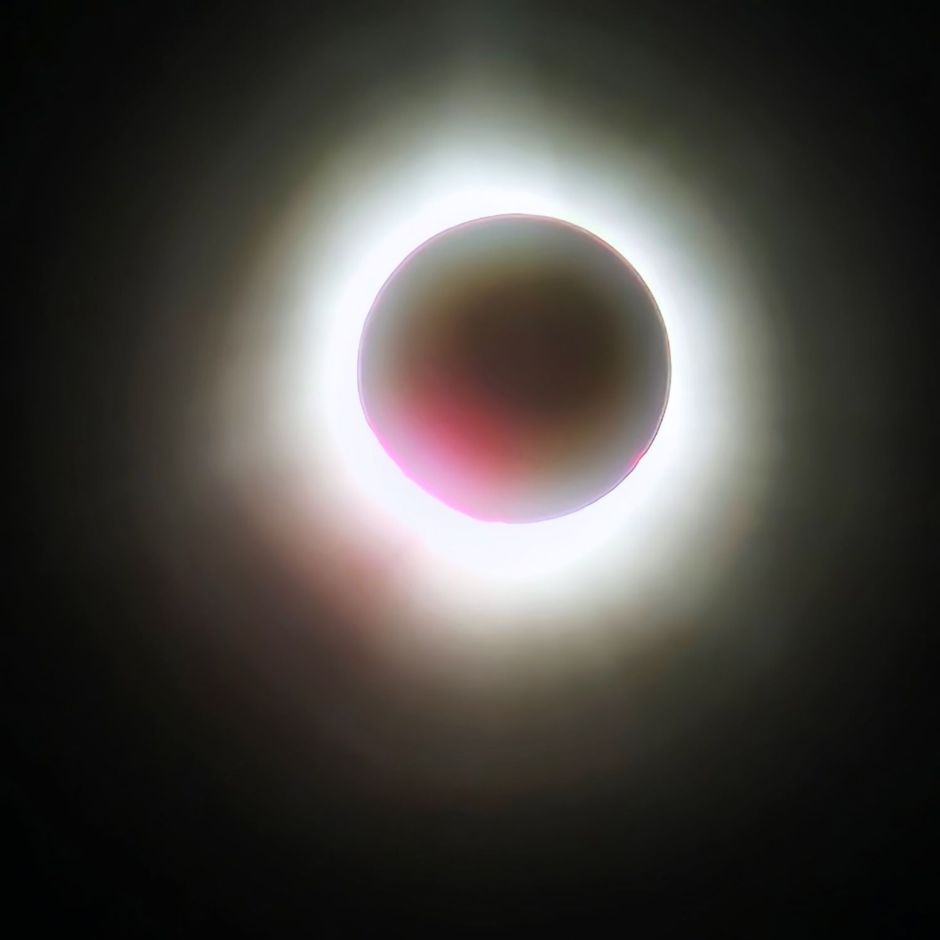
If you must travel, do so carefully and thoughtfully. When I went to visit a family friend in Vermont, I timed it to coincide with the total solar eclipse. I also scheduled a few days to see other parts of New England and visit the aforementioned Uncle Jay. When I see my boyfriend who lives in Michigan, he often will take me to various places in his state. 

Took advantage of a trip to see my boyfriend to visit Lake Superior together

Are you having to travel a long distance by car? Check your route for cool things! Several years ago my boyfriend went to school in Arizona, he planned extra time for a road trip so he could see the many national parks along the way including arches. He had to make the trip anyway, but by being mindful, he was able to see his own bucket list items. Though he wouldn’t call it a bucket list. 

Remember, travel was never the enemy, only our limited perspective on it being necessary to live a full life. So go ahead pack your bags, order that plan ticket and be off! 

Butterfly Garden 

Is there any other insect quite as magical as a butterfly? They have fascinated humans for centuries. The word psyche which is another word for the soul is derived from the Greek root for butterfly or night moth. They show up in myths and folklore throughout the world. They represent love, transformation, resurrection, triumph, endurance, immortality and ephemerality across various cultures and times. We are endlessly enthralled by them. They show up in art, literature, poetry and even political campaigns. For such small creatures, they take up a lot of space in the human world. They are vital pollinators and essential to our ecosystems. 

For all their beauty, they begin as a sort of worm-like creature which actually dissolves itself inside its chrysalis to transform. It is not that a caterpillar grows wings, it becomes complete mush to become something else. Much like how a wildfire clears out old growth to make way for new, the complete and utter destruction of the caterpillar is the only way to transform into a butterfly. 

Butterflies flitting through the air

They are in some sense living jewels. Their brilliant hues run the full gambit of the rainbow and even contain colors we will never see as their wings also contain patterns of ultraviolet light. Their wings are unique in that the simmering colors we see are produced by both pigments on the wings themselves and structural color. Structural color is produced by how the light hits the wings themselves causing the color to seem to shift and change suddenly, giving the wings the characteristic iridescence. The wavelengths of light are amplified through layers of the butterfly’s wings. 

Entering the Butterfly Atrium at the Hershey Gardens is to be transported to a tropical paradise where hundreds of butterflies take flight. Visitors are delighted by rare species from South and Central America, Asia and Africa. One strolls through the winding path among the plants imported from far off places to be enchanted by the dancing jewels shimmering in the air. They are enticed to come closer with trays of hanging fruit which they gather around as a never ending feast. Sometimes they will even land on you. The delight at seeing them float effortlessly through the air is unmatched. They swarm together elegantly in a mesmerizing waltz. It is as if you had fallen through a portal to a magical realm and you half expect to be greeted by a member of the fair folk. Perhaps, one should pack a pinch of salt just to be safe when visiting such places and be mindful not to share your name with strangers. 

Different types of chrysalis

The garden is not only for mere enjoyment, there is an educational piece as well where one can see the life cycle of the butterfly and see the various stages of their lives. Additionally, it houses other displays of animals such as frogs and spiders. Do not worry, the only creature that roams free is the butterfly!

My own visit was an extension of an employee appreciation day by a previous employer. I suppose it was an apt gift to a group of social workers who needed an afternoon of self-care. We all left feeling rejuvenated from the experience. Each person’s face transformed the moment they walked through to the butterflies. The outside world melted away, stress and worries disappeared for just a small window of time. It certainly begs the question, dear reader, though the butterfly be a common creature, is it not truly magical?

These beautiful ladies that I worked with!

How you can visit a butterfly garden

This one may require you to venture a bit further afield depending on where you are. At the time of this writing, Hershey Butterfly Atrium is one of only 25 indoor butterfly gardens in the country but there are other options for watching butterflies take flight. In my research, I stumbled upon a website that listed out various options here: https://butterflywebsite.com/GARDENS/butterfly-gardens-exhibits-displays-houses-usa.cfm 

Completed: 2022

Miles from home: 30 miles

Cost: Free for me, but regular tickets are $16.50

I left a shortened compiling of the list below in case the website link no longer works. You will note that only 35 of our 50 states have either butterfly gardens or displays. I do hope that those who are in states not listed below are able to find something nearby. I recommend googling and seeing if there is anything closer, or perhaps you are lucky to be in a state where the butterfly migrations occur. Perhaps, it will simply be something to keep in mind when you do travel.

You too may be graced by a butterfly

Alabama

Huntsville Botanical Garden – Purdy Butterfly House

Arizona

Butterfly Wonderland

Tucson Botanical Gardens

California

Gilroy Gardens Family Theme Park

Natural History Museum of Los Angeles County – Butterfly Pavilion

San Diego Zoo Safari Park

Six Flags Discovery Kingdom

Turtle Bay Exploration Park

Butterfly Farms

Fairchild Tropical Botanic Garden

Water Conservation Garden

Colorado

Butterfly Pavilion

Western Colorado Botanical Gardens

Delaware

Ashland Nature Center Butterfly House

District of Columbia

Smithsonian Butterfly Garden

Florida

Arnold’s Butterfly Haven

Butterfly World

Caribbean Gardens, the Zoo in Naples

Central Florida Zoo and Botanical Gardens

Florida Museum of Natural History – Butterfly Rainforest

Lukas Butterfly Encounter

Panhandle Butterfly House

The Key West Butterfly and Nature Conservatory

Georgia

Rosalynn Carter Butterfly Trail in Plains

The Day Butterfly Center

Hawaii

Foster Botanical Garden Butterfly Habitat

Illinois

Brookfield Zoo – Chicago Zoological Society

Peck Farm Butterfly House

Peggy Notebaert Nature Museum

Indiana

Indianapolis Zoo

Iowa

Reiman Gardens

Kansas

Botanica Gardens

Kansas State University Gardens

Kentucky

Louisville Zoo

Louisiana

Audubon Nature Institute Insectarium & Butterfly Garden

Maryland

Brookside Gardens Conservatory

Ladew Gardens

Massachusetts

Magic Wings Butterfly Conservatory and Gardens

Museum of Science Butterfly Garden

The Butterfly Place

Michigan

Detroit Zoological Society

Dow Gardens

Frederik Meijer Gardens & Sculpture Park

Horticultural Gardens and Butterfly House

John Ball Zoological Garden

Mackinac Island Butterfly House

Wings of Mackinac Butterfly Conservatory

Minnesota

Como Park Zoo & Conservatory

Missouri

Saint Louis Zoo

Sophia M. Sachs Butterfly House

The Butterfly Palace & Rainforest Adventure

Nebraska

Lincoln Children’s Zoo – Laura’s Butterfly Pavilion

Omaha’s Henry Doorly Zoo

New Jersey

Camden Childrens Garden

Kate Gorrie Memorial Butterfly House

New York

Breck Chapin Memorial Native Species Butterfly House

Butterfly Garden

Dancing Wings Butterfly Garden

Sweetbriar Nature Center Butterfly House

North Carolina

Airlie Gardens

Museum of Life and Science – Magic Wings Butterfly House

Ohio

Butterfly House at Wheeler Farms

Butterfly Museum at Perry’s Cave

Cleveland Botanical Garden

Cox Arboretum MetroPark

Franklin Park Conservatory and Botanical Garden

.Krohn Conservatory

Oklahoma

Oklahoma City Zoo Butterfly Garden

Tulsa Zoo’s Wings of Wonder

Honor Heights Park Butterfly House and Gardens

Oregon

Elkton Community Education Center

Pennsylvania

Churchville Nature Center

Philadelphia Zoo

Phipps Conservatory and Botanical Gardens

The Academy of Natural Sciences of Drexel University

The Butterfly Atrium at Hershey Gardens

Bear Mountain Butterfly Sanctuary

South Carolina

Coastal Discovery Museum Butterfly House

Cypress Gardens

Roper Mountain Science Center Butterfly Garden

South Dakota

Sertoma Butterfly House & Marine Cove

Tennessee

Butterflies: In Living Color at the Memphis Zoo

Tennessee Aquarium

Texas

Cockrell Butterfly Center

Heard Museum and wildlife sanctuary

NABA National Butterfly Center

River Bend Nature Center

San Antonio Zoo

Texas Discovery Gardens

South Texas Botanical Gardens

Virginia

Bristow Butterfly Garden

Butterfly Station and Garden

Flying Flowers at Beagle Ridge

Lewis Ginter Botanical Garden

Washington

Tropical Butterfly House at Pacific Science Center

Woodland Park Zoo

Wisconsin

Beaver Creek Reserve

Butterfly Gardens of Wisconsin

Happy Tonics, Inc.

Seeking Inspiration Without Living Someone Else’s Life

I have said before not to put down things on your list because it “ought” to be there if it does not speak to you. If you hate running, don’t put down run a marathon. If you aren’t into spending a lot of time in the great outdoors, maybe leave off spending a week in a tent. If sports aren’t for you skip Fenway Park. However, that does not mean you cannot still find inspiration in those goals. 

Why does running a marathon grace so many people’s lists? What does running a marathon represent? What cultural values might we find in this goal? To many people it represents peak fitness. After all, the first man to ever run a marathon allegedly died delivering a message of an invasion, so running a marathon and not dying is an indication of fitness. Which makes the modern marathon a weird flex on a poor dead man – I digress. It also represents perseverance, discipline and overcoming obstacles.

Would developing other health goals fulfill those same things? Perhaps being able to bench press your own body weight or even do ten full pull ups. Those could be just as impressive feats of physical prowess, require just as much discipline and are for many people significant obstacles to overcome. I hate running, but I enjoy weight lifting. Having strength goals to meet and overcome are my own version of a marathon and being strong rather than fast is more important to me. I’m not living someone else’s life training to run a marathon when what I want to do is be strong enough to wield a war hammer. Both reflect the values of fitness, perseverance, discipline and overcoming obstacles. One might be a more popular version of it and imho an inferior one, but this is neither the time nor place to debate the merits of running vs. weight lifting.

Being able to smash things with a hammer is my kind of fitness goal!

Being healthy is a goal that everyone has. After all, being healthy feels good. So I absolutely encourage you to adopt fitness goals that resonate with you as a person and are reasonably obtainable. What is a measure of health for one person isn’t the same for another given their own limitations and inclinations. Someone with long term chronic health conditions may find that just getting out of bed and being able to walk a few steps is equal to a marathon. They may spend hours in physical therapy trying to get their body to do tasks many of us never think about. And there are many different kinds of body types that are better or worse at certain tasks. A cursory examination of the various sports in the Olympics will showcase various body types, levels of muscularity and abilities, all are in peak physical condition for the task they are trying to perform. The sprinters look very different than the long distance runners. So ask yourself what are the tasks you want your body to perform and then train for those tasks. 

Health of course is not the only thing that graces a bucket list. What are other typical bucket list items? Usually there is some sort of travel like tropical islands, seeing certain things like the pyramids, experiences like sky diving, perhaps life milestones like graduations, obtaining certain degrees, owning your own business. Just as we can easily dismiss those items as “not my thing so not for me” we can easily miss what they represent. Consider owning your own business. You don’t have the capital to do so and even if you did, you know you’re not the sort of person who would enjoy doing so, but what it may represent is having a certain level of freedom within the realm of finances. Having both enough money and freedom to do what you want with it are worthy things to strive to. How you get there may look very different for different people. Perhaps, you want to expand your horizons intellectually and so you add read a certain number of books. However, reading 100 classic books would make your eyes bleed, whereas reading the top rated fantasy novels breeds excitement. Funnily, enough you’ll find that there are books that grace both lists such as Dracula and Frankenstein. 

Once we start considering the actual goal behind the thing, it is much easier to get creative with how we want to approach our own list without getting caught up in the pressure of doing things that don’t resonate with us as individual people. Revisiting common items or even uncommon items, reflecting on what they represent and asking ourselves if those ideals resonate with us can lead us to some surprising experiences or looking at things in a different lens. Take for example, one person’s “walking across a suspension bridge” which at first I thought rather odd. However, for that person (and I’m just guessing) is she may have had some sort of fear about it. So getting across it was conquering a fear. So what was I afraid or anxious about? Well for a long time, spiders and other bugs. Public speaking caused massive panic attacks. So being able to deal with spiders and other bugs without freaking out and being able to give speeches on behalf of my job, are quite the accomplishments and deserving of gracing my list. If you’re someone who doesn’t have either of those fears, then perhaps leave them off.

What are things that you value? What are your areas of interest or expertise? Perhaps there are premier events in your areas of interest. Are you a nerd like me? Is comic-con on your list? Maybe you’re a civil war reenactor, then attending the reenactment camp of a famous battle like Gettysburg should be on your list! It isn’t so much about the thing itself but what is behind the thing. Once you do that it is easy to take inspiration from the things you have no interest in doing to expand your own list to include the things you do. It also has the added benefit of taking some of the pressure off to do certain things that grace most people’s list because you’re able to still fulfill the values of what those represent so long as those values are things that you actually want to fulfill (another post on that later).