
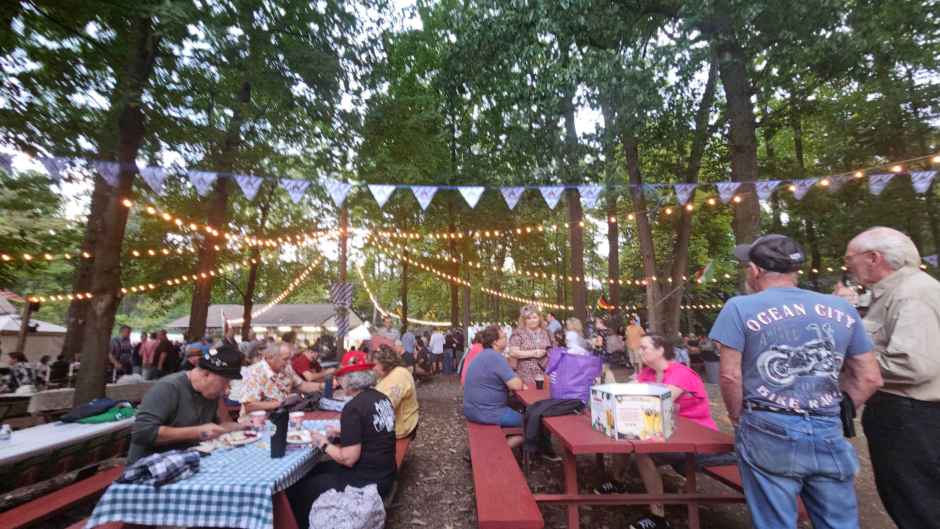
It was the accordion music pumped from the stage that sealed the deal. A crowd gathered on the dance floor, raising a hundred glasses in unison as we chanted, “Zicke-Zacke, Zicke-Zacke, Oi, Oi, Oi!” and drank as one.
Beer sloshed over the edges of full mugs as they clanged together. Schnitzel and wurst were piled high on plates next to potato salad, kraut and red cabbage. The crowd was squeezed together underneath the tents, and strangers squished themselves onto the long benches of the impromptu beer halls. For those left with standing room only, they found themselves dancing and swaying with the music, whether it was a polka or a rendition of “Thunderbird.” For a few hours, everyone was friends. It was a barely controlled, perpetual party on the edge of a mountain range.
No, dear reader, I did not book a flight to Germany for Oktoberfest. I did, however, do the next best thing by attending one of the top Oktoberfests this side of the Atlantic, conveniently located only 45 minutes from my house.
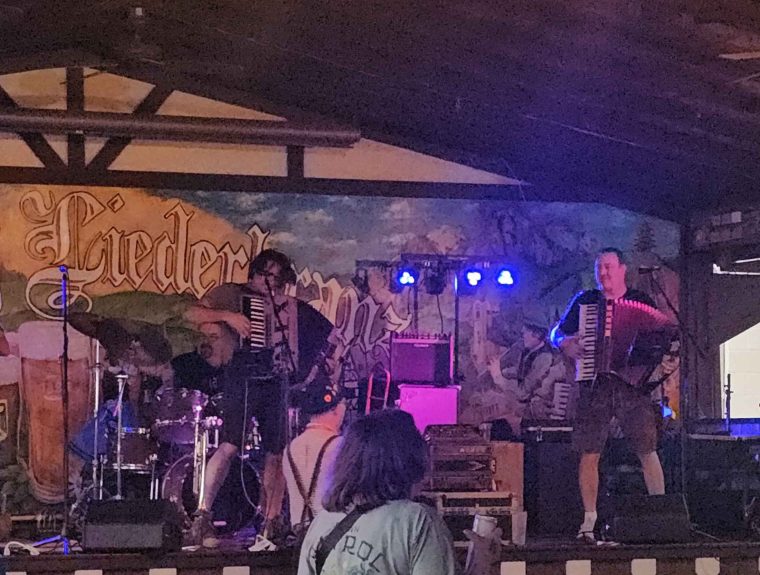
The Reading Liederkranz is known for putting on one heck of a party. It is consistently ranked among the top four Oktoberfests in America and has snagged the number one spot twice. What makes it so good isn’t necessarily the sheer size, though it boasts that it is the largest in Pennsylvania, but rather its adherence to authenticity. At least as much as one can get in the United States.
Rather than being put on by a beer corporation or local tourism bureau looking to cash in, it is hosted by a German social club. This means they are dedicated to preserving their German heritage, as they have been since the late 1800s. They are descendants of German settlers, committed to maintaining their culture. The celebrations open with the tapping of the beer by local officials. German bands are brought in to play, and many of the members show up wearing authentic lederhosen and dirndls.
The food is certainly worth celebrating as well. It held up to my memories of Bavarian food from my brief sojourn there during my study abroad. And, of course, there is the beer. It flows from every corner of the festivities, with generous pours.
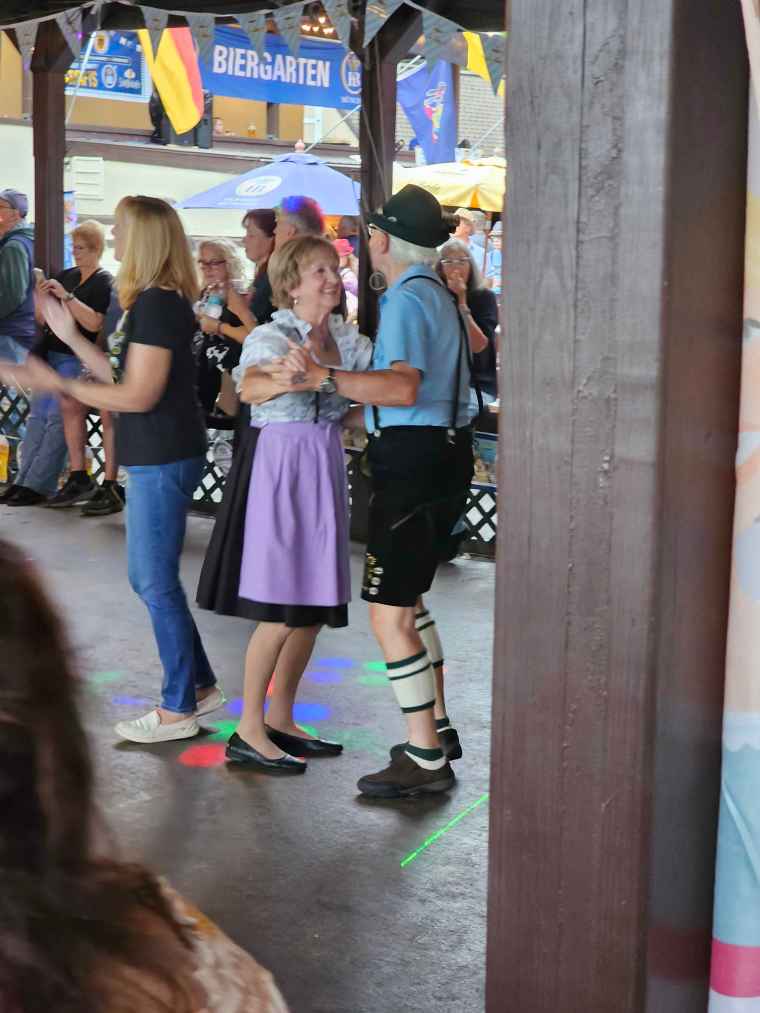
I went on a Friday evening with my sister. Unlike Oktoberfest in Bavaria, the Reading Oktoberfest is a bit more truncated, with only a few days beginning in September and running into the first weekend of October. We met at one of the free parking lots to take the shuttle up to the Liederkranz, which sits near the summit of Mount Washington, although it’s technically more of a hill. We arrived right around 5:00 pm, when the food vendors were opening and before the crowd could fill up.
The first thing we did was just wander around to take it all in. For me, it was like taking a plane ride back to Germany, with the exception that almost no one spoke German, an oversight if you ask me.
For my sister, it was like stepping into a whole other world. When I just seemed to know exactly what to do when prompted, such as calling out “Oi, Oi, Oi!” or knowing to drink when they said “Prost,” she just looked semi-confused. Half the fun was sharing my love of German culture with her and teaching her things about it that I had forgotten weren’t self-evident to an American unfamiliar with it.
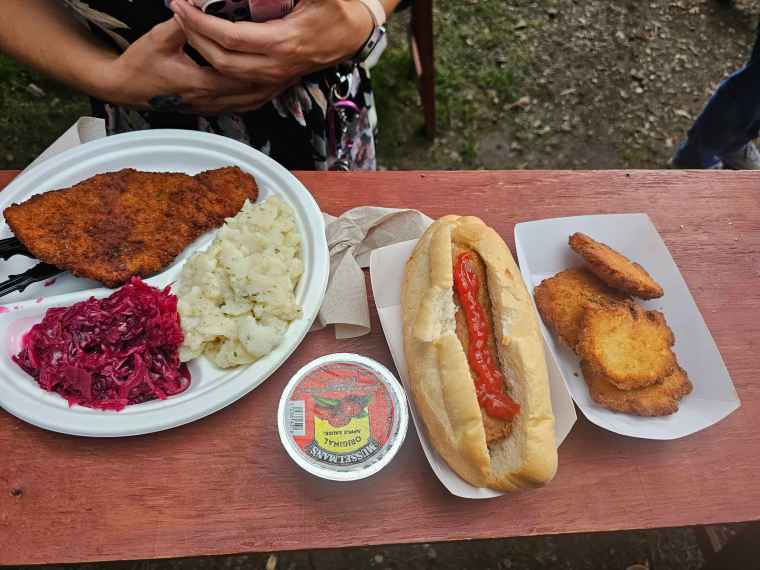
Naturally, we had to sample the food and have a beer before being thoroughly entertained by the band that was playing. I had the schnitzel platter, whereas she had a “Beyond Wurst” and potato pancakes with applesauce, as she doesn’t eat pork. We split an apple strudel with ice cream for dessert. The beer we chose was an apple cider beer, as my sister is also not that fond of beer. I suppose it’s not much of a surprise why she wasn’t overly familiar with German culture prior to this outing. I probably drank most of the beer, but she had some as well.
Of course, this particular Oktoberfest cannot compare to the one in Munich. A small social club simply cannot compete with a city hosting over 7 million people. It was much closer to the “quieter” celebrations of the rest of Bavaria, which is precisely why I enjoyed it.
I am not someone who enjoys huge crowds and, while I love German culture, I’m also not a huge beer drinker. I enjoy a party, but I went to a dry campus on purpose in college. So, to be honest, I wasn’t sure I would actually ever want to go to Oktoberfest in Germany. It would be extremely expensive to go and discover that I actually do not want to spend hours drinking beer, eating food, riding random attractions, singing loudly in a huge crowd and being part of one of the world’s largest parties.
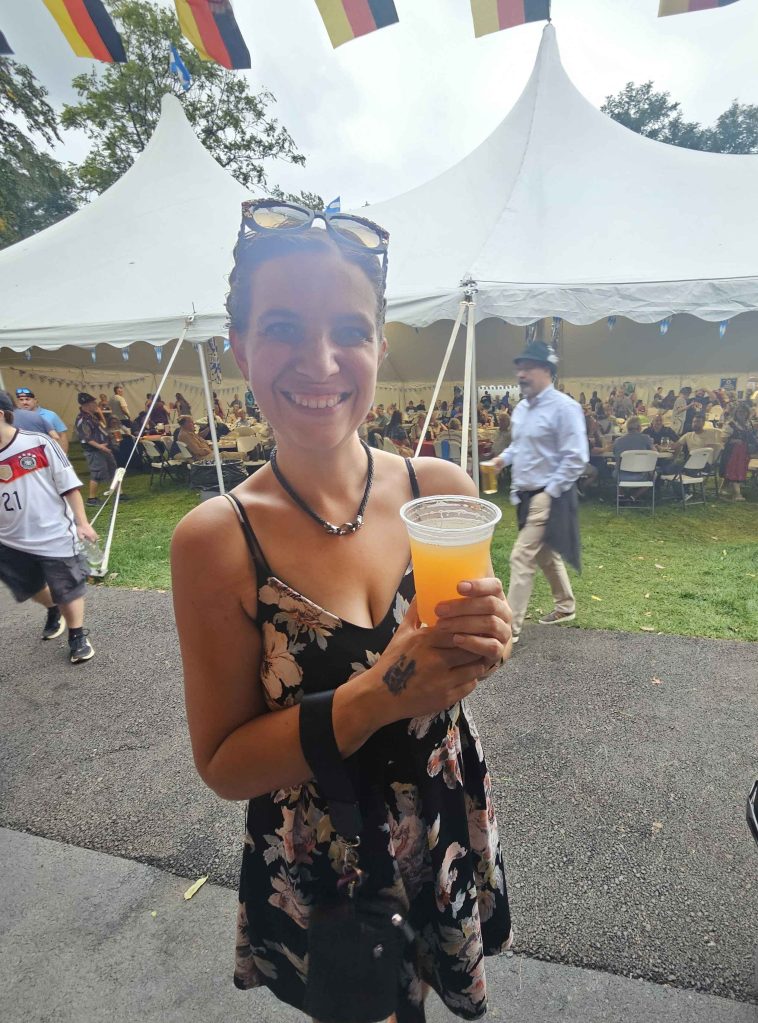
As it turns out, it probably would not be on my Bucket List to do.
I enjoyed my time, but not for more than a few hours. I certainly wouldn’t want to go for a whole week or more. Besides, there are many other places I would want to go in Germany other than a beer tent. If I happened to be travelling around that time and happened to have a day to pop in, I could see going. Although the sheer logistics of trying to get in would probably make it a pass, and I’d instead opt for a smaller celebration nearby.
Which I only really learned by trying out a scaled-down version of it in my own backyard.
And honestly, that might be one of my favourite things about the Bucket List Life. Sometimes you don’t have to travel halfway around the world to discover whether something belongs on your list. You can find a smaller version nearby, try it for yourself and discover that the experience you imagined might not actually be the experience you wanted.
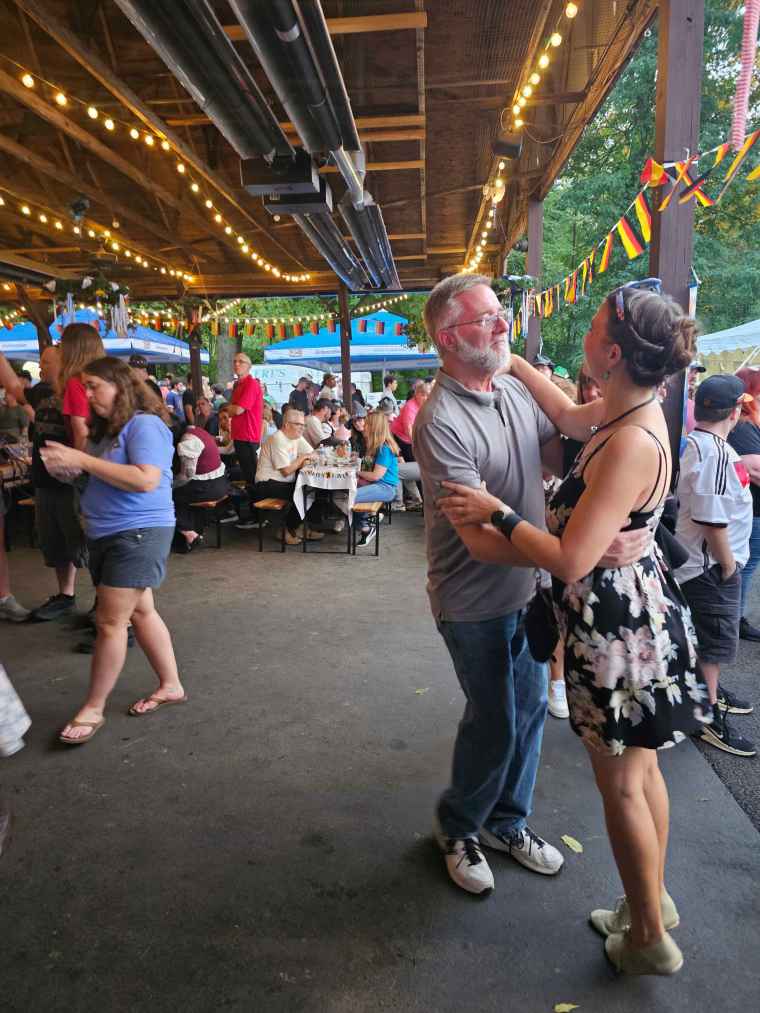
If you’re looking for your own Oktoberfest next year, I’d recommend doing a little digging before simply buying tickets to the biggest event you can find. If authenticity is what you’re after, skip the corporate-sponsored celebrations and look for a local Liederkranz, German social club or German cultural organisation. These smaller celebrations are often rooted in the communities that are actually preserving the traditions, rather than simply recreating the aesthetic of them.
You might not get seven million people, a giant midway or enough beer to fill a swimming pool. What you might get is an accordion band, a plate of schnitzel, someone teaching you when to yell “Oi, Oi, Oi!” and a table full of strangers who are suddenly your friends.
And really, isn’t that what a good Oktoberfest is supposed to be?

