Perseverance, Patience, and the Messy Middle

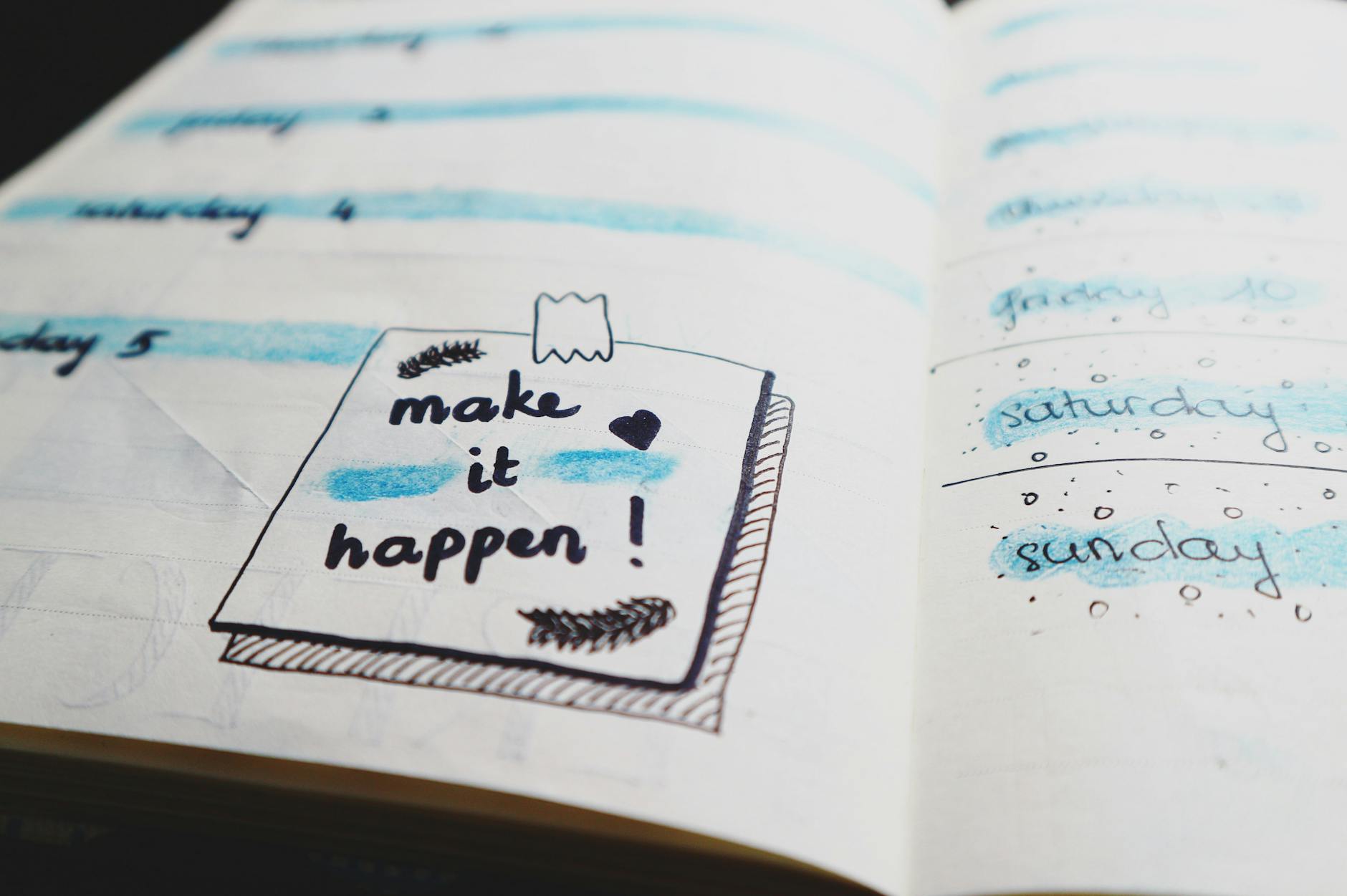
There’s a particular kind of grit that comes with chasing a dream. We love to imagine it looks like early morning coffee, crisp planners, and perfectly color-coded calendars. But more often? It looks like forgetting to do your make up in the morning, an ever growing to do list, and you googling things like “how do small business taxes even work??” at 1:43 a.m.

At least, that’s been my experience.

When I first decided to start my own business, I thought the hard part would be the leap, the “yes” moment of committing. I have a master’s degree in social work, after all. I know how to put in effort, write long papers, and juggle competing deadlines. But what I didn’t know at the time was that starting a business has less to do with your shiny diplomas and more to do with your tolerance for uncertainty.

And spreadsheets. So many spreadsheets.


Photo by cottonbro studio on Pexels.com

The Unexpected Curriculum

Here’s the thing no one told me when I hung out my proverbial shingle: running a business isn’t just doing the work you’re trained for. It’s marketing. It’s budgeting. It’s answering emails without throwing your laptop out the window when you become overwhelmed.

There have been days where I thought, “Maybe I should’ve gone for an MBA instead,” because suddenly I’m learning about SEO, website analytics, and why my carefully written social media post only reached three people (two of which were my mom and my sister).

I didn’t expect to be stretched in so many directions at once. But somewhere along the way, I realized that every spreadsheet conquered, every awkward networking event survived, and every late-night “YouTube crash course in branding” is not just a skill gained; it’s evidence of perseverance.


The Myth of Straight Lines

I’ll be honest: I’m a “goal person.” Always have been. There’s a thrill in setting a finish line and then running toward it with laser focus. But the problem with laser focus is that you miss everything happening around you. The flowers along the path. The unexpected detours. The side quests.

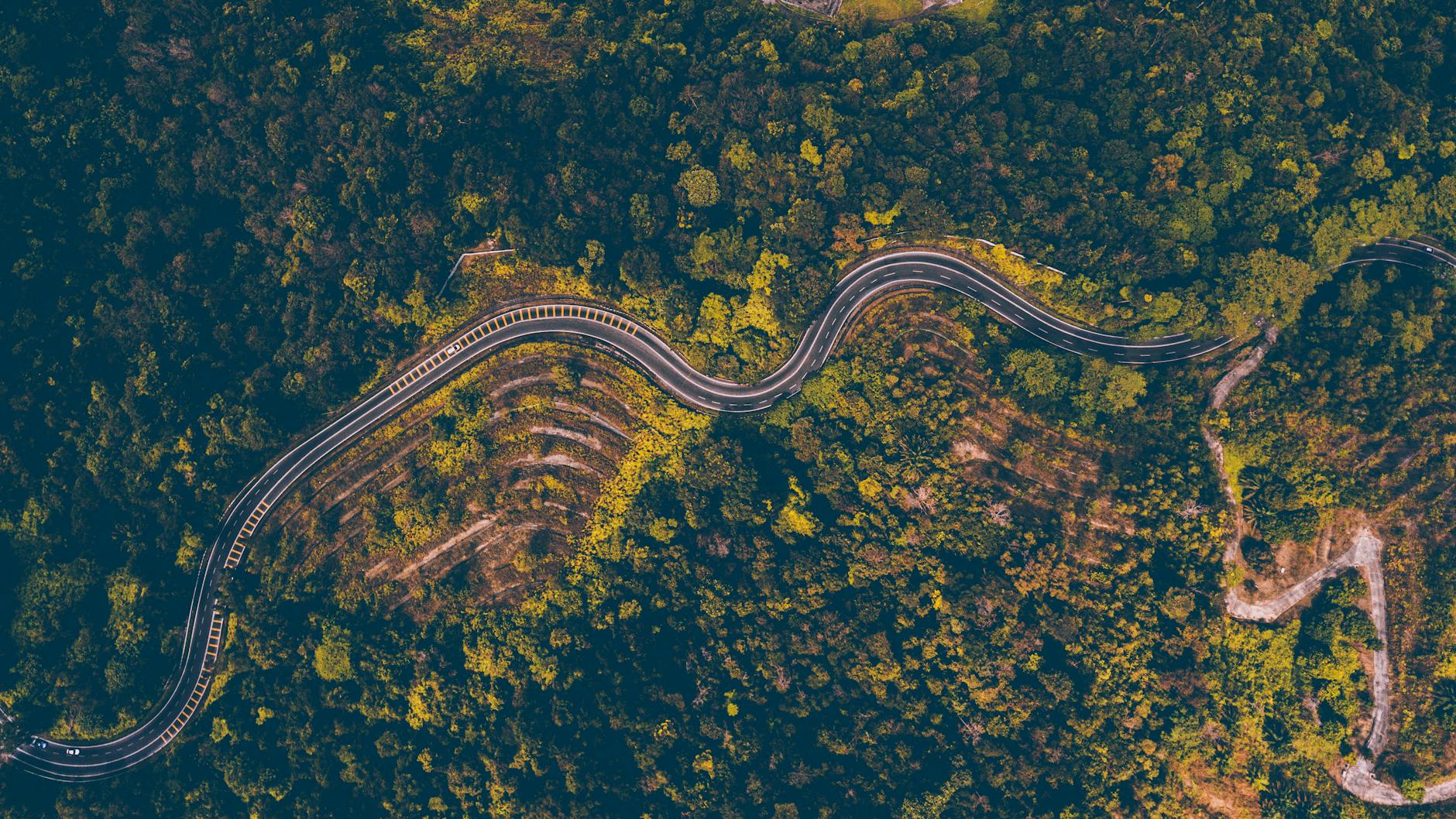
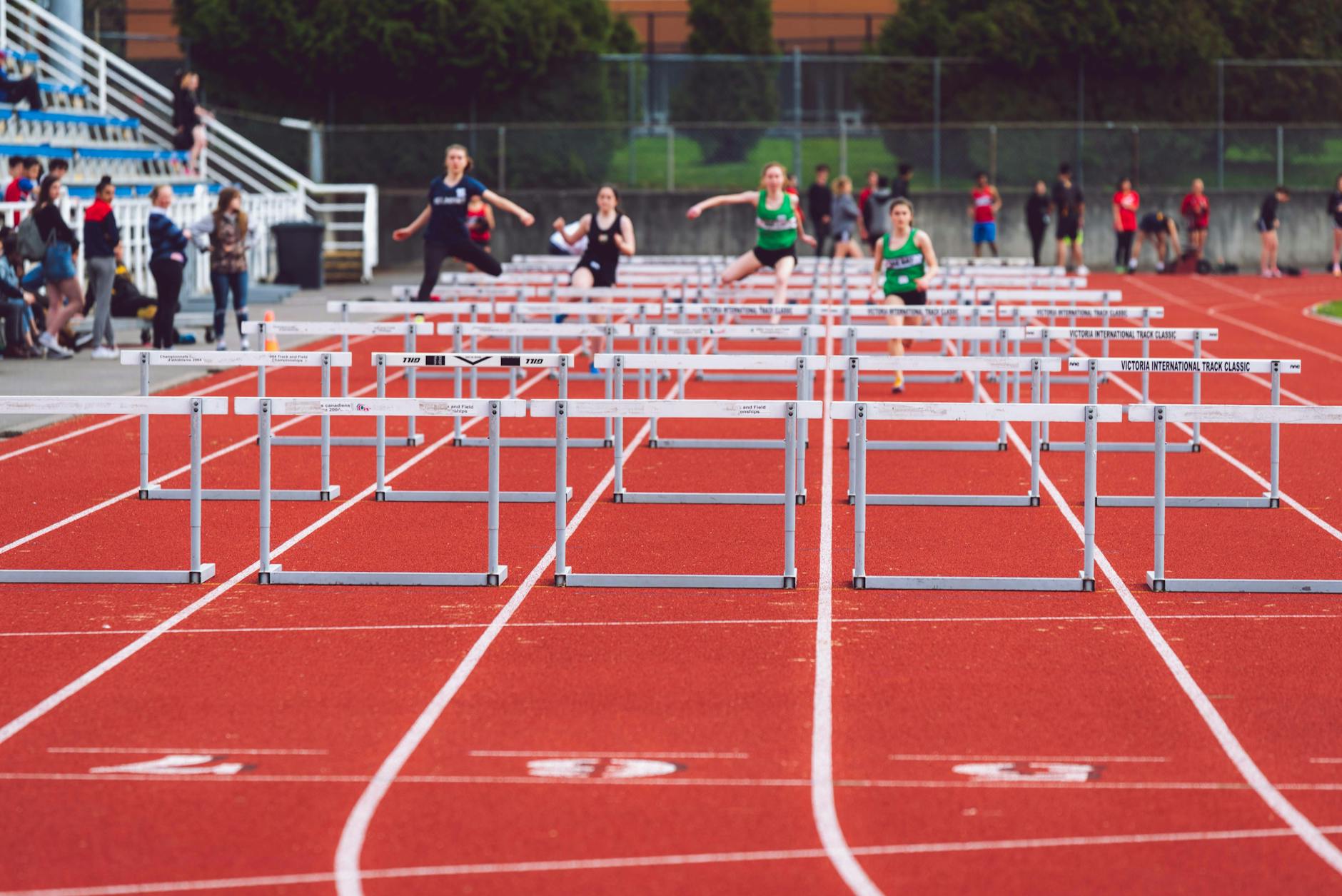
When I started this business, I wanted to sprint. Set it up, succeed immediately, then coast on the satisfaction of a dream realized. But that’s not how growth works.

Instead, it looks more like two steps forward, one step back, and then an unplanned sideways shuffle because some new challenge popped up. It’s messy. It’s nonlinear. And if you only measure yourself against the end goal, you’re going to feel like you’re failing most of the time.


Photo by Bich Tran on Pexels.com

Setbacks ≠ Failure

There’s this dangerous narrative out there that if you’re not crushing your goals 24/7, you’re doing it wrong. I call nonsense.

Setbacks are not failure; they’re part of the process. And boy is it a process!

That day you spent spinning your wheels on a project that went nowhere? You learned something. The week you felt unmotivated and questioned if you were even cut out for this? That’s not wasted time, that’s recovery. Muscles grow in rest, not constant strain.

The truth is, perseverance isn’t about never stumbling. It’s about stumbling, catching your breath, and saying, “Well, that was humbling,” before you get up and try again.


Kindness Along the Way

Here’s where I’ve had to check myself: I’m quick to extend kindness to others, but when it comes to me, I have a default setting of “be harder, push more, no excuses.” That mindset can be useful when you’re grinding out a degree or chasing a deadline, but in long-haul pursuits like building a business? It’s a recipe for burnout. And honestly, as a therapist I need to practice what I preach.

If a friend told me they were exhausted from learning ten new skills at once, would I say, “Well, tough luck, push harder”? No. I’d probably say, “Wow, you’ve already stretched so much. Celebrate that, then rest.”

And maybe I’d hand them a cookie.

So why is it so hard to give ourselves that same gentleness? Maybe because we think perseverance has to look like suffering. But what if true perseverance includes kindness? What if the only way to keep going is to balance the push with the pause?


Photo by Kymco VN on Pexels.com

Embracing the Journey

Here’s what I’ve learned: success isn’t just reaching the goal. Success is in the stretch. In the skills I never thought I’d learn. In the ways I’ve been humbled, refined, and sometimes (begrudgingly) patient.

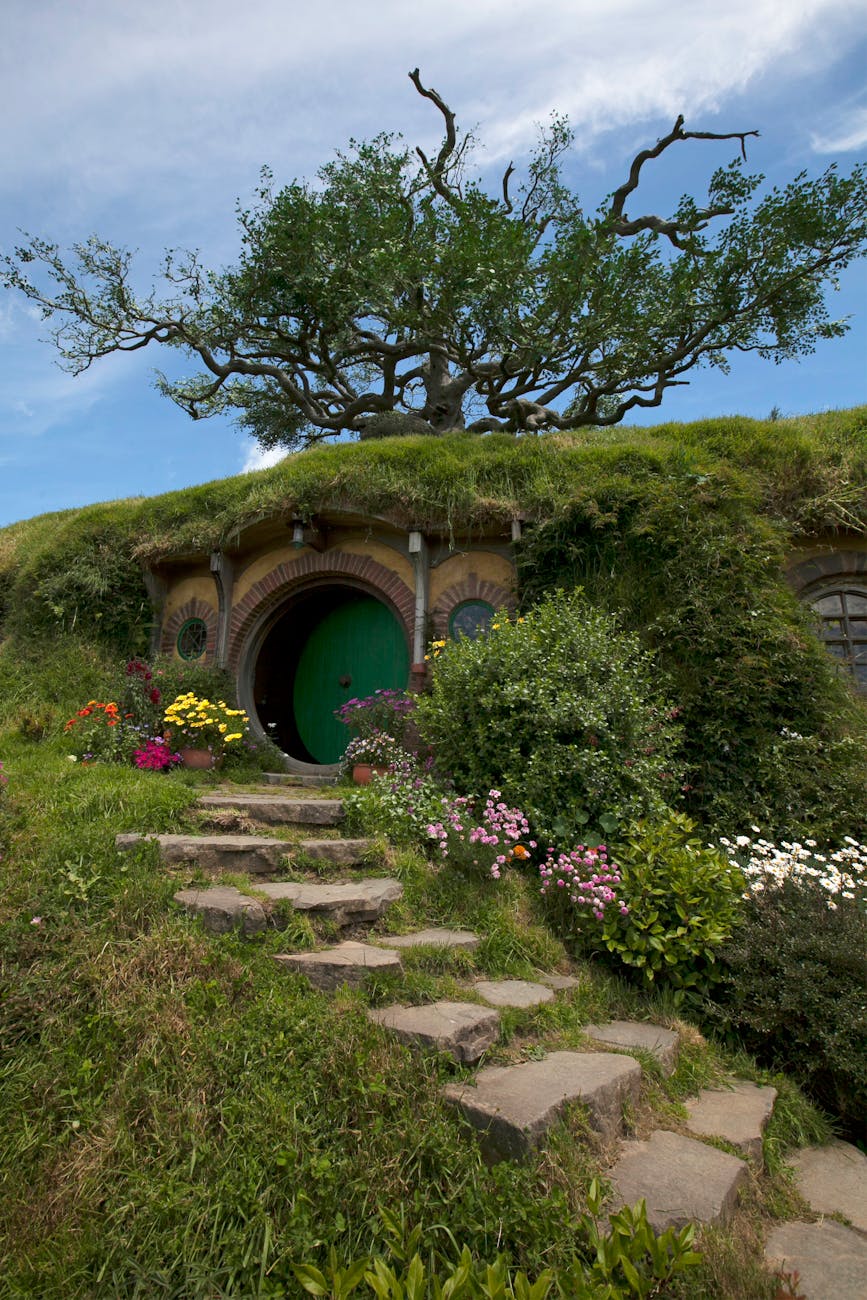
Don’t get me wrong, I still want the goal. I still picture what it’ll feel like when all the pieces finally fit together. But I’m learning to appreciate the scenery on the way. To actually stop and smell the flowers (sometimes literally, when I escape to my garden after too many hours at my laptop).

Because the truth is, if you’re only happy at the finish line, you’re going to spend most of your life discontent. Goals take time. Growth takes time. And joy doesn’t live exclusively in the future, it’s right here in the messy middle, if we let ourselves see it.


Final Thoughts

So if you’re in the thick of pursuing something big, whether that’s starting a business, chasing a personal dream, or just trying to hold it together during a tough season, here’s what I want you to know:

  • Perseverance isn’t a straight line.
  • Setbacks don’t mean failure.
  • You deserve kindness from yourself, not just from others.
  • The journey itself matters as much as the destination.

If you need to pause, pause. If you need to pivot, pivot. None of it erases your progress. In fact, it’s proof that you’re still in the game.

And if you’re like me, so laser-focused on the goal that you forget the beauty of the in-between, take this as your gentle reminder: stop for a moment. Breathe. Smell the flowers.

The finish line will still be there when you’re ready to run again.

Beyond the Classics: Fantasy Books to Add to Your Reading Bucket List

While most bucket list items require at least a trip out your front door, some of the best ones ask for nothing more than a comfortable chair, a cup of tea, a purring cat, and a book. Not everyone thinks of reading as a bucket list activity, but plenty of readers consider finishing the “greats” an accomplishment worth doing before you “kick the bucket.”

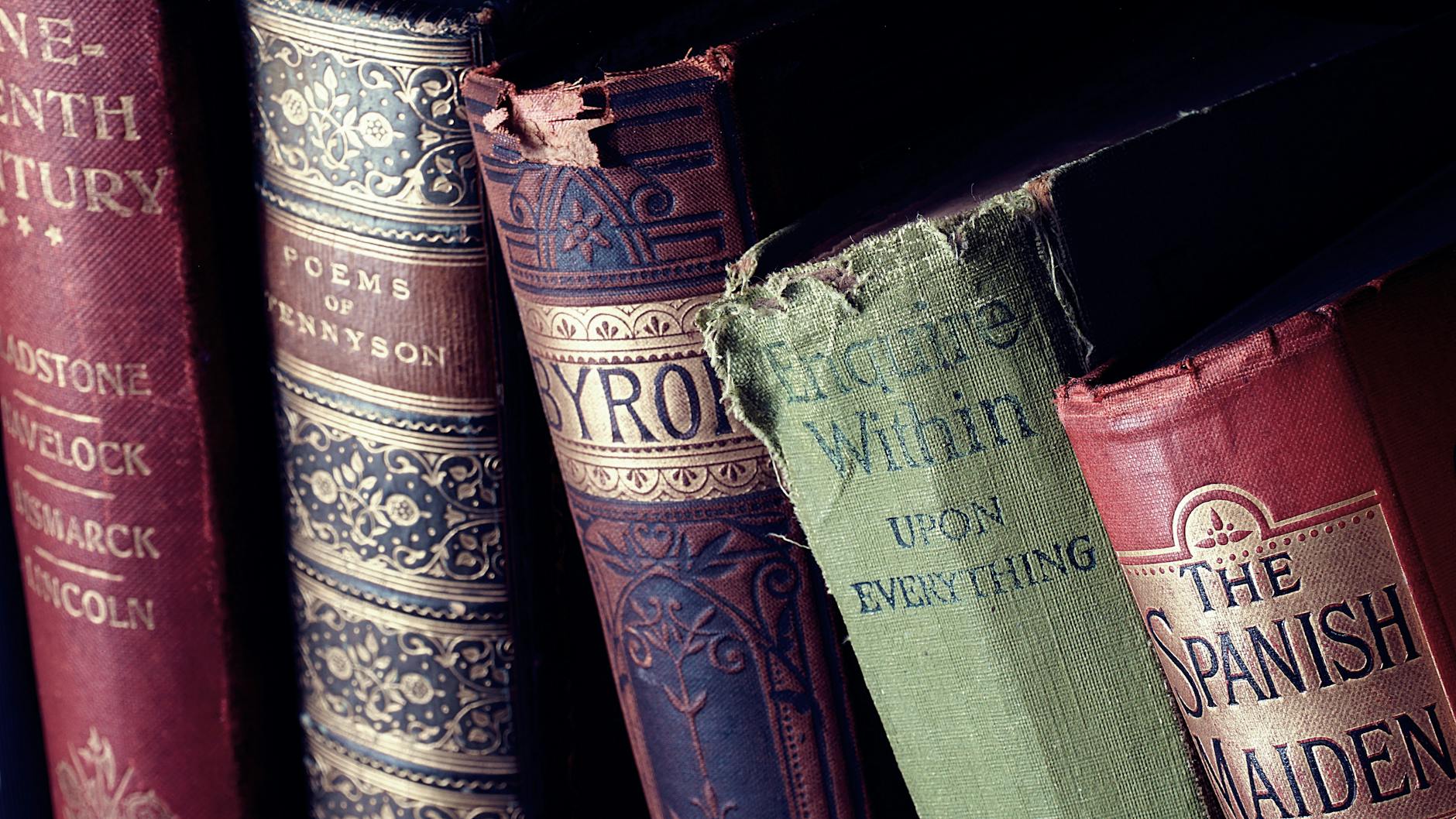
Lists of Books to Read Before You Die are everywhere, compiled by literary authorities, publishers, or critics. The argument for reading them is solid: classics can enrich your life through timeless themes, enduring wisdom, and universal insights into the human condition. They can expand your vocabulary, sharpen your writing, and deepen your appreciation for culture and history. Sometimes, one book really does shift your perspective forever.

And yet, I don’t always agree with these lists. It’s not that the classics aren’t worthy, it’s just that… well… many of them are boring. There, I said it and I shan’t take it back! I’m a fantasy and science fiction reader at heart. Outside a few exceptions, books outside those genres are of little interest to me. Oh, do not mistake me for an uneducated plebian. I’ve read my share of “required” classics (even in German, no less), but some really do go on. Did I really need to know that much about the Parisian sewer system, Victor? I appreciate the symbolism, but I nodded off halfway through. Perhaps, it’s my ADHD mind which just wanders off when things don’t spark my intrigue.

Photo by Suzy Hazelwood on Pexels.com

That doesn’t mean I don’t have a reading bucket list outside my “To Be Read Pile”, which we aren’t discussing. They will be read, when they are read! I digress.

My Reading Bucket List simply reflects my love for fantasy and science fiction, the genres that spark my imagination most. A few years ago, I stumbled upon a “Top 20 Fantasy Series of All Time” list, not compiled by critics, but by a survey of BookTube influencers. Yes, it’s biased toward modern titles (and leans millennial/Gen Z), but I liked the idea of readers (not industry insiders) deciding which stories deserved a place on the list. (We won’t get into all the politics behind what books get placed on those classic lists, we’d be here all day with me ranting.)

To my delight, I had already read about half. The rest became my summer project in 2022. Armed with my library card and Kindle, I sampled each new series, reading at least the first book to see if it hooked me. Some didn’t, but then not every book will be my cup of tea. Others were revelations, hidden gems I never would have found without the list. They were witty, profound, beautifully written, and layered with history, culture, and insight, even while transporting me to other worlds. While none of them were life-changing, they certainly sparked introspection and reflection, opened up ideas, and at times challenged my ways of thinking.

If you’ve struggled through traditional “must-read” lists and found yourself uninspired, maybe it’s time to look at fantasy. Between epic sagas and modern masterpieces, there’s a wealth of stories waiting to change the way you think, or at least keep you delightfully entertained. The list below is a great place to start. You’ll find household names alongside underappreciated treasures, each with the potential to expand your reading horizons.

Photo by Jeffry S.S. on Pexels.com

Suggested Top 20 Fantasy Series to Read Before You Die

Rank 19 (3 series)

  • Ash and Sand — Richard Nell
  • The Dandelion Dynasty — Ken Liu
  • The Earthsea Cycle — Ursula K. Le Guin

Rank 17 (2 series)

  • Harry Potter — J.K. Rowling
  • The Kingkiller Chronicle — Patrick Rothfuss (warning this series is unfinished and has been for over 10 years)

Rank 15 (2 series)

  • The Books of Babel — Josiah Bancroft
  • The Broken Earth Trilogy — N.K. Jemisin

Rank 14

  • Memory, Sorrow, and Thorn — Tad Williams

Rank 13

  • The Green Bone Saga — Fonda Lee

Rank 11 (2 series)

  • The Poppy War Trilogy — R.F. Kuang
  • Gentleman Bastard — Scott Lynch (also an unfinished series, my recommendation is you read the first as a stand alone as it does give a satisfying ending)

Rank 10

  • The Greatcoats — Sebastien de Castell

Rank 9

  • Discworld — Terry Pratchett

Rank 8

  • Malazan — Steven Erikson & Ian Esslemont,

Rank 7

  • The Realm of the Elderlings — Robin Hobb

Rank 5 (2 series)

  • A Song of Ice and Fire — George R.R. Martin (Also unfinished, but feel like you all should know this by now)
  • The First Law Universe — Joe Abercrombie

Rank 4

  • The Wheel of Time — Robert Jordan

Rank 3

  • The Banished Lands — John Gwynne

Rank 2

  • Middle-earth — J.R.R. Tolkien

Rank 1

  • The Cosmere — Brandon Sanderson

Photo by Lisa from Pexels on Pexels.com

Final Thought

Reading bucket lists don’t need to be confined to dusty classics or daunting tomes. If fantasy and sci-fi are what light you up, then let those genres guide your journey. After all, books are more than assignments, they’re invitations into new worlds. And what better way to spend your limited time than wandering through worlds filled with wonder?

Reclaiming Boredom: Why Doing Nothing Might Be the Best Thing You Do

I know, dear reader, this might be the last place you’d expect to find a defense of boredom. After all, many of you probably clicked here to escape boredom, not embrace it. I may even be digging my own blogging grave by suggesting you spend less time scrolling and more time staring at your ceiling. But this space was never meant to trap you for hours. Its intention has always been to help you live a fuller, more mindful life, without breaking the bank.

As someone with ADHD, the idea of boredom used to feel impossible. Tedium was my sworn enemy. Yet I’ve come to realize that boredom is a rare luxury these days. With our phones glued to our palms, we rarely get the stillness that allows us to simply be.

And here’s the secret: boredom isn’t the enemy. It’s the birthplace of philosophy, creativity, and growth.


Why We Need Boredom

When you’re left alone with your thoughts, they can be loud, uncomfortable, even overwhelming. But without that discomfort, how can you truly know yourself? When do you ever stop to ask:

  • Am I on the right path?
  • Are my relationships enriching or draining me?
  • What do I actually want out of this short, strange life?

Noise drowns out those questions. Silence, and yes, boredom, makes space for them. And while the answers might not always be pleasant, they’re necessary for meaningful growth. It’s only when we ask those questions that we begin to fully develop a meaningful life which according to some researchers may be the antidote for the crushing anxiety we’ve all been feeling. According to Harvard Professor Arthur Brooks, it is the lack of meaning that drives so much of our modern world’s anxiety and depression and boredom would be part of the cure!

Boredom also boosts creativity. When the mind wanders, it problem-solves. Einstein famously worked at the Swiss Patent Office for seven years, a job so dull it practically begs for daydreaming. Out of that monotony came some of the most groundbreaking ideas in physics. Imagine what we might uncover if we swapped YouTube shorts for a little mental white space. You may be quite shocked at what problems you solve whilst driving your car.

Finally, boredom sparks curiosity. That restless itch pushes us to seek out novelty, to wander past the familiar bend in the road. Dissatisfaction with the status quo has always been the engine of human progress. It’s what drove Columbus to set sail and spark the West’s discovery of the world. It’s what drove the Wright Brothers to the sky. It’s what made humanity ask “what is up there in the vast expanse above us?”

Photo by cottonbro studio on Pexels.com

Boredom in Real Life

Some of my best ideas have come when I was bored. This very blog was born while I was gardening. Insights about my therapy clients have surfaced while I was elbow-deep in dishes. I’ve written entire stories in my head while waiting in line, or mulled over questions of faith while driving down long stretches of highway.

Boredom isn’t wasted time, it’s compost. Given space, it grows something new.


How to Reclaim It

So how do you let boredom back in? Start small.

  • Turn off your podcast or music while you drive or clean.
  • Try a tech-free meal and see what real conversation shows up.
  • Block out one phone-free evening a week.
  • Take breaks from social media, or better yet, set parental controls on yourself.
  • Use your phone’s Do Not Disturb mode generously (you can allow emergency calls to still come through).

Will it be fun at first? No. That’s the point. But over time, you’ll come to see boredom not as an absence but as an opening. I’ve even started protecting mine, because that mental wandering is often far richer than anything TikTok could offer.

Beyond the Frame: Experiencing Van Gogh in 360°

I’m not sure if you’ve noticed, dear reader, but we’re in the thick of a technological revolution—what with artificial intelligence, immersive media, and smart devices popping up faster than I can finish my morning coffee. With every leap forward, the world reshapes itself: some innovations are delightful, others… decidedly less so.

But before you brace for a philosophical tirade, rest easy. This isn’t about the doom and gloom of progress. Today’s post is about something far more charming, and perhaps a bit science fiction, how technology is transforming the way we experience visual art, and how I got to see that transformation firsthand through the Immersive Van Gogh Experience.

For centuries, visual art has been something we look at, admired behind velvet ropes or under museum lighting. We view a painting, reflect on its symbolism, absorb its mood, and then move on. It’s typically a passive interaction, appreciated but always held at arm’s length.

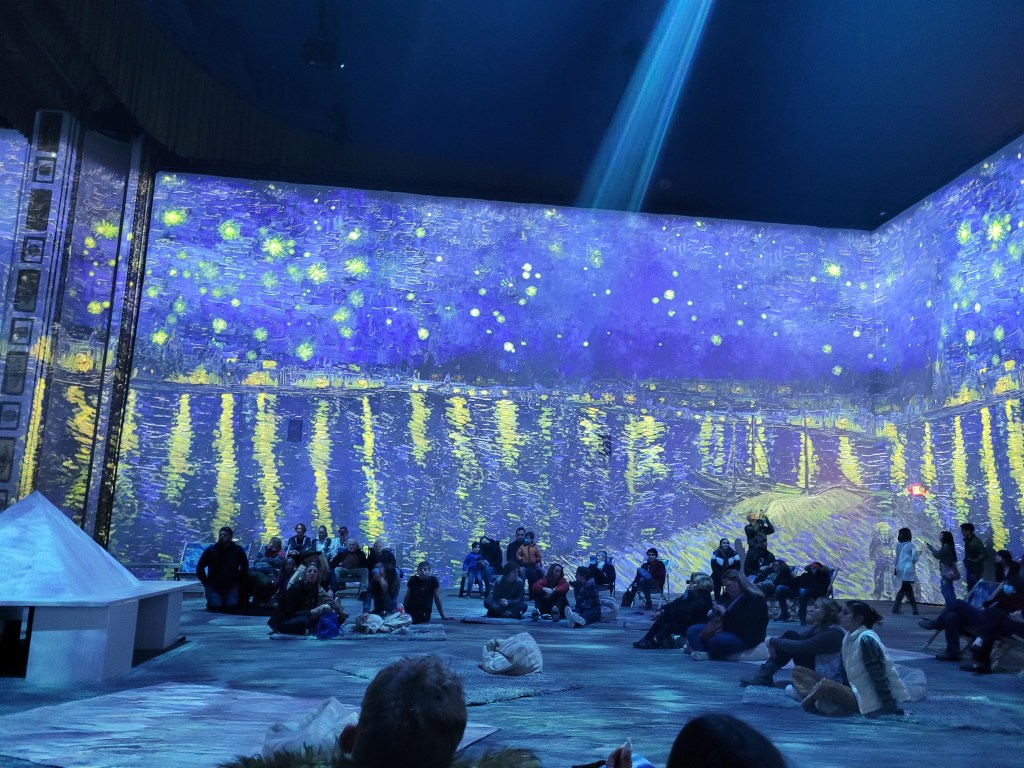
Now, thanks to clever combinations of projection mapping, music, props, and sometimes even VR goggles, we can step into the world of a painting. These experiences dissolve the frame. The art swirls around us, alive with movement, sound, and color. It invites not just observation, but participation. We’re transported into a world shaped by brushstroke and emotion, where time bends and the impossible feels touchable. If you’re a fan of Star Trek it can feel as though the Holodeck isn’t far behind us – or would it be ahead of us?

Such was my adventure on the outskirts of Philadelphia. I attended the Immersive Van Gogh Exhibit, where his iconic works leapt from flat canvas into full surround. It was a modest production by immersive art standards, but well worth the 50-minute drive. The exhibit unfolded in three rooms, beginning with a respectful introduction to the artist’s life: the genius, the grief, and the legacy.

Vincent Willem van Gogh, the Dutch Post-Impressionist painter, is now recognized as one of the most influential artists in Western history. He created over 2,000 works, 800 of which were oil paintings, many during the final two years of his life. Though immensely talented, he also struggled deeply with mental illness, most likely Bipolar Disorder, experiencing intense periods of depression and mania. He spent time in psychiatric hospitals, often neglected his health, and famously cut off part of his left ear after a dispute with a close friend.

I would be remiss if not highlighting the efforts of his sister-in-law. As It’s entirely possible the world would have forgotten him, had it not been for her, Johanna van Gogh-Bonger, who championed his work and preserved his letters after his death. Her tireless efforts not only shared his story but helped cement his artistic legacy. Too often we focus on the face and talent of a given operation without appreciating the supporting cast of characters. After all in any endeavor it takes a village to succeed.

While the trope of the “tortured artist” is often romanticized, Van Gogh’s story has opened broader conversations about mental health, creativity, and resilience. Beyond the mythos, his art also sparked interest in unexpected fields, like fluid dynamics. Scientists have observed that Starry Night mirrors real-world mathematical models of turbulence, patterns that weren’t formally understood until decades after Van Gogh painted them. He may not have known the equations, but his brush captured the energy of the cosmos with stunning intuition.

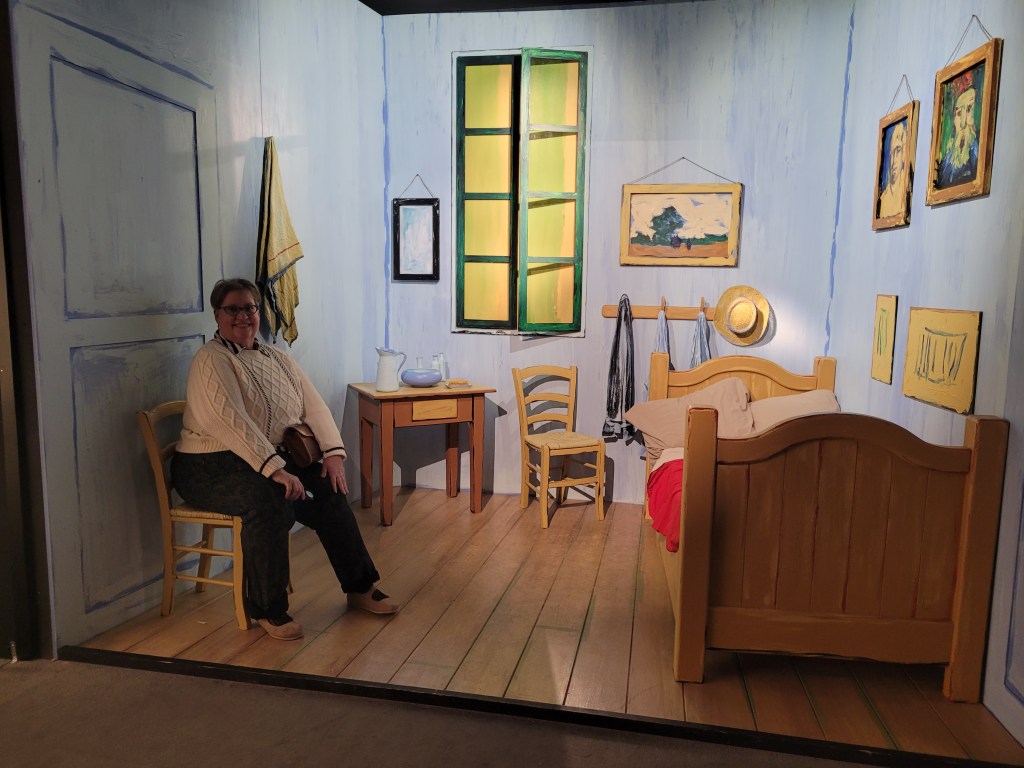
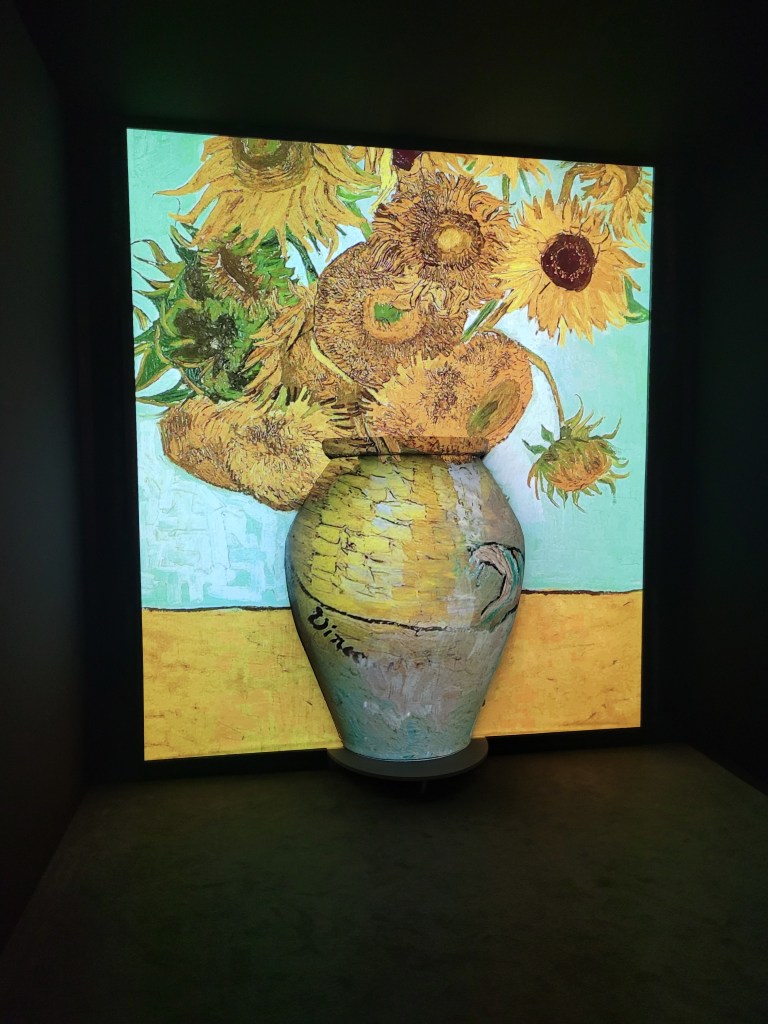
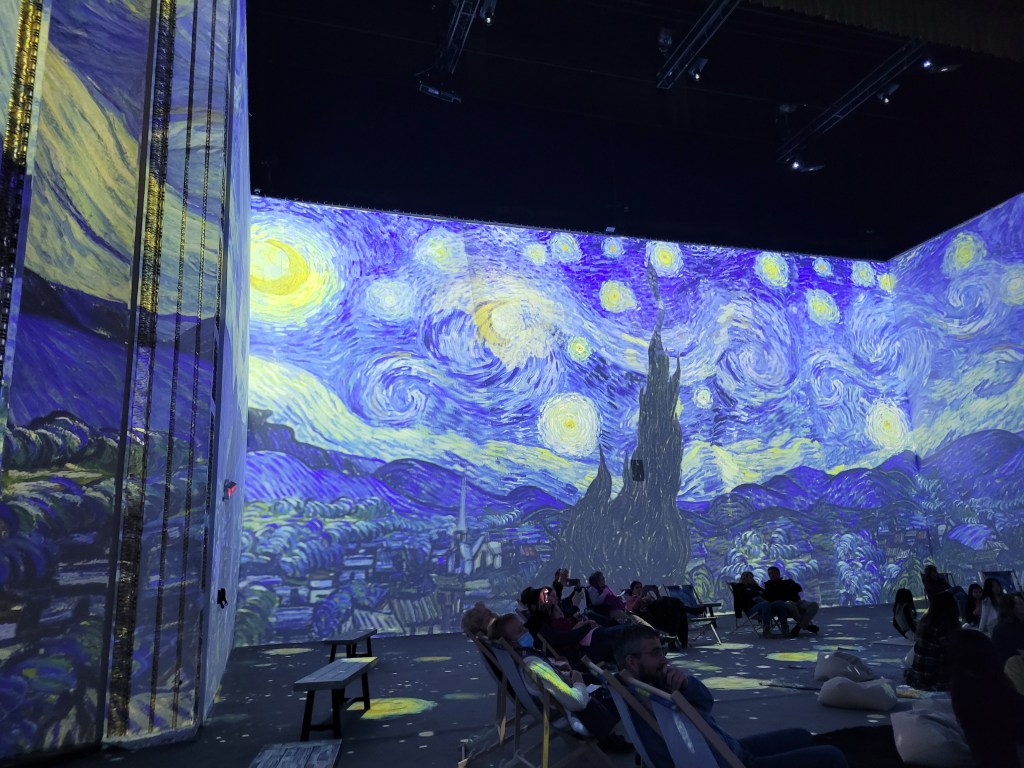
His story gently unfolded as I walked through the exhibit. I heard excerpts from his letters and watched his still-lifes float, twist, and evolve across the walls. One moment, I was standing in his bedroom; the next, sunflowers danced around me, filling the space with golden light. My favorite moment was in the largest room, reclining on a seat and watching Starry Night come to life, accompanied by music that echoed the emotion of each painting. I could’ve stayed there for hours, had my parking meter not rudely reminded me of the outside world.

There was something deeply calming about it all. The way the paintings moved, the soft narration, the glow of color, it felt like being wrapped in a blanket of light and sound. The only thing missing was a hot cup of tea to sip while I drifted through it all.

Eventually, I had to peel myself away from Van Gogh’s swirling skies and rejoin reality. I refilled the meter and met my traveling companion (my mom) in the gift shop to find a souvenir. She chose a beautiful necklace that still earns her compliments. I, ever the practical one, picked up a set of coasters, because if I must collect things, they might as well be useful. Additionally, if I must have things, they may as well be beautiful. A memento with function and a memory with purpose.

While technology certainly has its downsides, I’m genuinely excited to see how it will continue to open new windows into the past, especially when it’s done with care, creativity, and reverence. If we can blend art and innovation without losing the soul of either, I’d say that’s progress worth celebrating.

Finding Your Own Immersive Art Adventure

If your curiosity is piqued and you’re ready to step inside a painting (or at least escape your laundry pile for an afternoon), immersive art exhibits are popping up in cities all over the world. A quick search for “immersive art experience near me” or checking sites like Exhibit Listings, Eventbrite, and even local museum calendars can help you find upcoming shows. Popular exhibitions include Immersive Van Gogh, Monet: The Immersive Experience, and Frida Kahlo: Immersive Biography, among others. Many cities now have dedicated digital art spaces that rotate different artists throughout the year. Social media is also surprisingly helpful, follow local art museums, galleries, and pop-up exhibit pages to stay in the loop. And don’t be afraid to go solo! These exhibits are made to be experienced personally, and sometimes the quietest wanderings are the most rewarding.

You Are Not Your Job Title or Accomplishments

If you hold a lauded job title or a coveted position of prestige, there’s a certain smug satisfaction in answering the question, “So, what do you do?” It’s a subtle flex, a way to signal you’ve “made it” in the eyes of your listener.

But how quickly those titles lose their shine. Positions are demoted, job descriptions rewritten, and reputations shift depending entirely on the values and prejudices of the crowd around you.

Consider the plumber who proudly tells his wife’s academic friends that he owns his own business. Their admiration evaporates the moment they realize he’s a tradesman. Or his wife, who announces at his company picnic that she’s accepted a university teaching position, only to have his employees quietly roll their eyes at her “ivory tower” job.

Prestige, it turns out, is not universal and rather fickle.


Perhaps when I mention that my full-time job is as a therapist, you’re impressed. Or perhaps you think, Oh, that’s nice, but why didn’t she get a doctorate? Or maybe you shrug, completely unmoved.

Our identities are often tied to our titles and achievements. And it’s not entirely irrational—after all, our accomplishments are a kind of social currency. They determine whether we’re welcomed into certain groups or quietly excluded. They tell others, at least superficially, our “value” as a person.

The trouble begins when that’s the only place our sense of worth comes from.

Achievements fade. Their novelty wears off. You ran a marathon…..ten years ago. You climbed to the base camp of Everest, great, but that was so last season. You earned $90,000 last year, until someone else mentions they earned $100,000.

When your worth is pegged to being ahead of the curve, you’re doomed to chase the next thing endlessly and there’s always someone ahead of you. Even those on top must always try to stay ahead of the people nipping at their heels.

Photo by Vlad Vasnetsov on Pexels.com

It’s the comparison trap in action:

  • Stacey got married.
  • Joanna bought a house.
  • Darlene is having a baby next month.
  • Marcy is off to Japan.

And you? You got a promotion, but you’re still single, renting, and aware of a ticking biological clock. Suddenly, your win doesn’t feel like much of a win.


But why should our worth be determined by what we’ve done instead of who we are?

Yes, I am a therapist, but that’s not all I am.

I am a daughter, a sister, a girlfriend, a cat mom, and a loyal friend. I am an avid reader who likes to snuggle into blankets and a seeker of adventure itching to explore. I adore tea and classical music. However, I also love coffee and metal. I’m not much into mainstream sports, but I do enjoy horses, kayaking, dancing, and hiking. I play the violin and videogames. I can be sarcastic and biting, yet equally capable of deep compassion and empathy. I’m a bit of a perfectionist and a bit of a mess.

I am nuanced and complex.

My degrees, my travels, my career, they’ve shaped me, yes. But they are not me.

Photo by Mindaugas Lazdauskas on Pexels.com

Some cultures have already figured this out. In many parts of the world, “What do you do?” is not the opening line of a conversation.

In the Netherlands, it’s considered downright rude to lead with your job title. People there would much rather discuss shared interests than compare résumés. In France, introductions often revolve around passions, ideas, and experiences. The goal is to find connection, not establish a pecking order.

Imagine how different our relationships might feel if we borrowed that approach.


A Thought to Leave You With:
If your job disappeared tomorrow, if your title, salary, and résumé vanished, what would you still have to say for yourself?

Because that answer… is who you truly are and it’s an answer worth exploring.

The Game of Kings (and Curious Commoners)

For 85 years, a curious spectacle has unfolded each summer Sunday on a quiet stretch of Pennsylvania grass. Horses graze peacefully beneath the trees while a few of their compatriots are dressed in elegant regalia by riders buzzing with anticipation. Across the field, spectators unfurl picnic blankets, create elegant table spreads, uncork wine bottles, and crank up the music, all in preparation to watch a sport nearly 2,000 years old: polo.

Though largely unknown to many American audiences, polo is far from obscure. Played in at least 16 countries and once an Olympic sport from 1900 to 1936, it began in ancient Persia as cavalry training and evolved into a game for royalty and, more recently, for anyone bold enough to mount a horse and swing a mallet. The name “polo” is derived from the Tibetan word pulu meaning ball, a term eventually anglicized after the British encountered the sport in India and brought it back to England in the 1800s.

Often called the “Game of Kings,” polo is surprisingly inclusive. Men and women compete alongside one another in most parts of the world, though America, characteristically, has a separate women’s federation.

The game itself is straightforward in concept: two teams of four try to drive a ball through the opposing team’s goal using long-handled mallets, all while galloping full-tilt on horseback. The match is divided into chukkas (short periods lasting about 7.5 minutes), and a game usually includes six to eight of them. The rules may be simple on paper, but in practice, it takes incredible precision, timing, and horsemanship.

Growing up, I often saw flyers and glimpses of these summer polo matches. I was always struck by the grace of the horses and the fluid choreography between rider and steed. Truthfully, the sport seemed quite magical as if from another world. Still, I never actually made the effort to watch a full match. Summer after summer slipped by, my interest mild but never quite motivated.

Was it the fear of sweltering in the midday sun from 1 to 5 p.m.? Or maybe the lingering belief that polo was reserved for the wealthy and well-heeled? I wasn’t sure. Perhaps the former was simply a socially acceptable excuse to avoid confronting the latter. Would I, a clear outsider to this world, be welcomed, or merely tolerated with tight-lipped smiles and sidelong glances?

Besides, I’m not exactly a sports person. My athletic literacy is on par with a particularly confused golden retriever. I spent six years attending football games in marching band and still couldn’t explain the rules beyond “ball goes in the end zone.” But dear reader, I’m not one to retreat in the face of self-imposed challenges. So this summer, I finally asked myself the honest question: what was really stopping me?

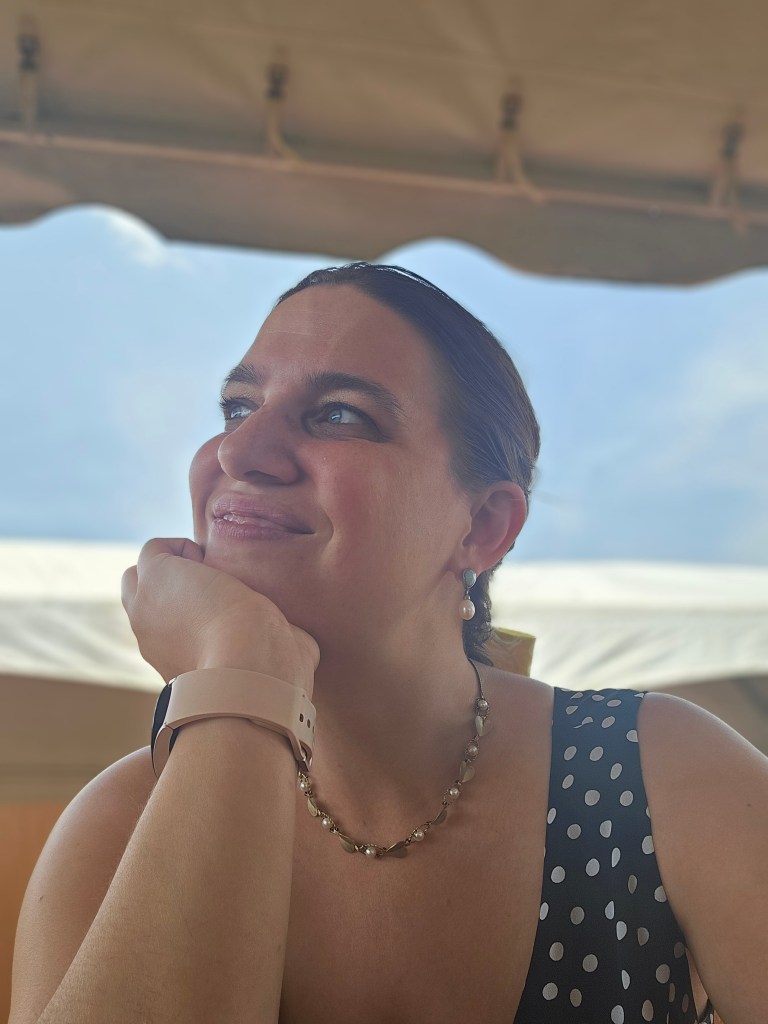
A little research gave me just enough confidence to understand the basics of the game. I picked out a charming outfit to look the part without overdoing it, an elegant black sheath dress with white polka dots and a flirty wrap skirt. I added a sunny yellow bow to my hair, antique gold and pearl necklace, and matching earrings. The pearls lent a quiet elegance, the polka dots kept things playful, and the whole ensemble whispered “chic,” not “trying too hard”, which is honestly a good rule of thumb when encountering an unknown social situation which most likely requires at least some form of dressing up.

Admission was a modest $10. While many of the best sidelines were claimed by patrons whose names were proudly displayed on small plaques, there were metal bleachers dead center offering a great view to those of us without season passes. Tailgaters lined the edge of the field, sipping rosé and nibbling on charcuterie. Food trucks formed a loose U-shape, doling out delectable treats to tempt even the pickiest of diners. A cornhole tournament buzzed nearby, a surprising attention, and the unseasonably cool June weather had people donning sweaters instead of sundresses.

The field was roughly the size of four or five soccer fields, bounded by red-painted wooden planks barely a foot high. A modest scoreboard hung opposite the bleachers, manned by cheerful volunteers ready to update the chukkas and scores. Trees lined either side to provide shade and natural ambiance. Everything had a homegrown, almost quaint quality to it, from the weathered announcer’s booth to a timeworn shed on the edge of the grounds. The whole setup felt far less intimidating than I’d feared, far more neighborly than exclusive. Instead of a glittering world of inaccessibility, it held a rustic charm, more countryside than country club.

To my delight, the crowd was warm and welcoming. Several patrons stopped to chat, and one even offered a crash course in polo rules. I met a retired player, his name escapes me, but his gorgeous collie, Koda, certainly doesn’t. He shared stories of falling off horses, fond memories of team camaraderie, and the tradition of having teammates sign the ball after scoring your first goal.

The game itself was surprisingly gentle. There was minimal jostling, and players called out plays supportively, checking in with one another to ensure both rider and horse remained safe. Perhaps this courtesy was because the match featured junior players, but I had the feeling this mutual respect was baked into the sport. Spectators clapped enthusiastically for every goal, regardless of team allegiance.

During intermissions, we all wandered onto the field for the charming tradition of field stomping, where spectators repair divots by stomping the grass back into place, all while pop music blared from the announcer’s booth. (Pro tip: verify that what you’re stomping is indeed turf, not… fertilizer.)

Halfway through the match, we were summoned to the center for a celebratory champagne toast. Each guest received a plastic glass stamped with the Lancaster Polo emblem. I raised mine high in salute, and now it sits proudly on my shelf as a souvenir of an afternoon well spent.

The Lancaster team won in the end, though no one seemed particularly bothered by the score. The teams congratulated one another with genuine smiles and handshakes. It was sport in its purest form, competition rooted in grace, community, and camaraderie.

And as I walked back, pearls gleaming, polka dots swaying, I couldn’t help but smile. I may not be a sports person. But I might just be a polo person as I immediately texted my sister, that I may have found a future sister date for the two of us later that summer.

Want to See a Match Yourself? Here’s How to Find One Near You

If you’re now a little bit curious (or at least craving champagne and turf-stomping), you might be surprised to learn that polo is more accessible than it sounds. Here are a few tips to help you track down a match near you:

  • Start with the United States Polo Association (USPA): Their website (uspolo.org) has a club directory where you can search by state or zip code. Many clubs host free or low-cost public matches during their season, typically from late spring through early fall.
  • Google is your friend: Try searching “polo matches near me” or “equestrian events [your city/state].” Bonus points if you add “tailgating” or “spectator” to the search.
  • Check out local event sites or social media: Many smaller clubs advertise matches on Facebook, Instagram, or local tourism calendars rather than big-ticket platforms. Look for community boards, weekend roundup newsletters, or even Eventbrite listings.
  • Call your local riding or equestrian center: If they don’t host matches, they probably know who does.

Don’t be shy about going as a first-timer, polo spectators are often an eclectic mix of devoted fans, casual picnickers, and curious newcomers just like you. Wear something fun, bring snacks, and prepare to cheer. (And maybe pack a sweater. Or a hat. Or both. It’s an outdoor sport, after all.)

Your Bucket List Is a Lie

Before we clutch our pearls at such a title, you must first indulge me in a bit of theatrical storytelling.

There was once a painting known to the art world but given little regard by the general public. Sure, some waxed poetic about it, but the intelligentsia has always been a bit eccentric in its proclamations of greatness. To anyone outside the art world, it was unremarkable. It may have hung in a museum, but no one would have gone out of their way to see it. Like so many other paintings in a gallery, it was forgettable, small, dark, and easy to overlook.

Then it was stolen.

No one knew how. One day, it was just gone. And suddenly, people noticed. For two years, the public speculated wildly. The fever-dream of mystery only grew with every twist. Perhaps absence does make the heart grow fonder, or at least more curious. While the intelligentsia is eccentric, the general public is fickle, like a cat who demands to be let out only to want back in the moment the door shuts.

When the painting was returned, it became a sensation. A must-see. A cultural event. And not just any painting – THE painting.

The painting in question? The Mona Lisa.
The real reason it’s famous? The drama. The theft. The story. The hype.

Without that? It might still be hanging half-forgotten, quietly smirking at a handful of art students instead of hoarding crowds behind velvet ropes.

And that, dear reader, is what your bucket list might be made of: hype.


So many bucket list items are fueled not by intrinsic value, but by the frenzy that surrounds them. Don’t get me wrong, the Mona Lisa is a lovely painting, and Da Vinci was no slouch, but why that painting? Why not another of his works? Why not another artist entirely? Yes, yes, I am sure you’ll tell me all the reasons it’s such a great painting, a master piece of its time, blah, blah, blah., but there’s lots of great paintings you can’t name or even are aware of. The answer lies in marketing. In myth-making. In the way a compelling narrative shapes our desires

Travel magazines dazzle, influencers entice, advertisements whisper, “You must go here.” But what’s really behind that? How many times have you visited a place only to find it…underwhelming? A glorified photo op? Something that looks better on Instagram than it feels in person?

Perception shapes reality. And marketing shapes perception. Don’t believe me? Riddle me this, dear reader why do we consider Jackson Pollock a great artist? The CIA orchestrated the entire Art Movement of Abstract Expressionism’s rise to prominence, engineering hype around the artist Jackson Pollock by buying his paintings and creating a frenzy around the art movement through bought and paid for critics. It was for political reasons and to combat the dangers of Soviet Russia. However, until the CIA engineered the hype, it was mostly ignored and barely considered real art. After all, it looked like a five year old could have painted it.

Nor is the art world, the only place where bought and paid for critics shape our perceptions. There was an rather large controversy in the video game world of creators influencing magazines and reviewers to generate hype around game releases. Those travel influencers filling your feed are often being paid by travel magazines, hotels and even the local department of tourism to promote various locations and experiences.

Signature of Jackson Pollock on Pasiphaë (1943; Metropolitan Museum of Art) Ned Hartley – Own work

Let’s be clear: I’m not criticizing your personal travel goals. I’m encouraging you to interrogate them.

Are your bucket list items there because you want to experience them, or because someone told you they’re “must-see”? Would another location fulfill the same desire, perhaps with less hype and fewer crowds?

For instance: Why London? What do you actually want to see there? Do you even know the history behind the city’s major attractions? Could a neighboring town offer the same experience without the same price tag?

Yes, Stonehenge is cool. But have you heard of the Calanais Standing Stones in Scotland? Same vibe. Fewer tour buses. Also, older.

We should be asking ourselves:

  • Do I understand why this place matters?
  • Does it resonate with me personally?

I, for example, will probably never visit the Great Wall of China. It’s a feat of engineering, sure. But so was ancient Rome. And frankly, the Wall didn’t even fulfill its intended purpose, more a monument to hubris than a functional defense system. And trust, me there are plenty of monuments to hubris. There are other ancient walls, built with equal ingenuity, that never make the “Top 10 Things to See Before You Die” lists. Just because it’s the biggest, doesn’t mean it’s the best or even the most impressive.


Take Napa Valley, for example, America’s answer to French wine country. It became famous after a 1976 wine tasting in which Napa wines beat out French ones and cementing its place in the wine world as one of the premier wine regions. But wine tasting is…flawed. Studies show judges rate wines inconsistently. Presentation plays an outsized role. In one study, the same wine earned wildly different scores when served in different bottles.

So why is Napa “the place” and not, say, the Finger Lakes or Walla Walla? Marketing. Perception. Hype. South-central Pennsylvania has lots of wineries that produce lots of delicious wines.

If we let others dictate what’s “best,” we surrender our own preferences to their story. But if we challenge that narrative, we open the door to a world of options.

Maybe that famed “must-see” destination isn’t any better than the quieter, lesser-known place next door. And that’s great news for the budget-conscious among us. It means you can experience something wonderful without the tourist trap markup, and maybe even get a more authentic experience while you’re at it.


Vineyard Napa Valley, California by Carol M Highsmith is licensed under CC-CC0 1.0

More importantly, it means you’re not missing out.

So many bucket list items are inaccessible to people with normal jobs and normal paychecks. That doesn’t make your life less fulfilling. It just means your version of “extraordinary” isn’t dictated by a Top 10 list.

Why the Panama Canal and not the Welland Canal in Canada? They use the same technology. One just has better PR. Okay, yes, there are certain historical contexts which does make the Panama extremely significant, perhaps more so than Welland Canal. But could you honestly, tell me what those are without looking them up? I didn’t think so. Would you have done that research before booking your trip to Panama? Probably not.

If you told your friend you went to Welland, they might look at you funny. But unless they’re an engineering nerd (in which case, they’d love it), they probably can’t explain why Panama is “better.” They’re just repeating what they’ve heard.


To help you separate real desires from borrowed hype, ask yourself:

  • What is the historical or cultural significance of this place or experience?
  • Do I genuinely care about that significance?
  • Are there other options that fulfill the same interest or vibe?
  • If it’s “the best,” who decided that—and how subjective is that claim?
  • Is it overrun with tourists to the point of losing what made it special?
  • Are there similar or adjacent experiences nearby that are less crowded, more affordable, or more authentic?
  • Am I excited for this because it aligns with my values and interests, or because I saw an influencer do it?

Once you start asking these questions, you may find your list isn’t a map of your soul’s desires—but a collage of other people’s priorities.

The good news? You can scrap that list and make your own.

Because the best journeys aren’t built on hype, they’re built on what matters to you.

A Small Announcement (and a Big Dream)

Hello, dear reader, just a quick update and a bit of exciting news.

I’m in the process of pursuing a really BIG bucket list goal: opening my own therapy practice. After years of studying through college, then grad school, working under the supervision of seasoned professionals, and passing not one but two licensing exams (first as a Licensed Social Worker, then as a Licensed Clinical Social Worker, yes we have to take two different tests one for each level), I’m finally able to practice independently.

I’ve officially launched my website, joined a few corners of social media to market myself, and, perhaps most exciting of all, I’ve welcomed my first client. It’s a huge milestone… but as you can probably guess, one client doesn’t quite pay the bills.

I’m still working full-time as a therapist for another organization while devoting most of my spare time to building this practice from the ground up. Which brings me to the main point of this announcement: I’ll be adjusting my blog posting schedule.

Instead of posting twice a week (Tuesdays and Fridays), I’ll now be sharing new content once a week, on Wednesdays. I’ll continue alternating between posts about local adventures and posts about making everyday life more intentional, joyful, and sustainable.

This decision wasn’t made lightly, but it’s in line with something I talk about often here: the power of choice. Saying yes to one thing often means saying no to something else, and right now, I’m choosing to prioritize building my small business.

Once I’m able to transition out of my full-time job and run my practice full-time, I fully intend to circle back and grow this blog and community even more. I still believe in everything this space stands for:


✦ That you don’t need to spend a fortune or cross an ocean to live a life filled with wonder.
✦ That adventure can be found right where you are.
✦ That a meaningful life is built, not bought.

So this isn’t goodbye. Just a bit of a slowdown.

I hope to report back in a few months with stories from this new adventure, lessons learned, challenges conquered, and one more dream crossed off the list.

Thanks, as always, for being here.

Sole-Full Sips: The Joy of Grape Stomping

If a bottle of wine contains more philosophy than all the books in the world, then a barrel of freshly picked grapes awaiting their fate must contain all the mysteries of the ancients. Wine making has been a centuries-old tradition, originating over 8,000 years ago when the transformation of juice to wine was thought to be a divine mystery. Though the modern era has brought stainless steel presses and fermentation machines, it may have lost some of its ancient wisdom and mystery, rendering the process more mundane. Perhaps that’s why there’s such allure in the old ways, hand-picked grapes tossed into wooden barrels, squished by stomping feet, then carefully aged in wood to absorb its complex flavors over time.

The crushing releases the grape’s juice, allowing it to mix with the skins to absorb flavor, color, and tannins. Depending on the type of wine desired, the presence of stems or skins may be either vital or avoided. After the initial crushing, yeast is added; the juice is fermented, pressed, and finally aged. While details may vary, the process has remained largely unchanged for centuries.

Many were first introduced to grape stomping through the infamous I Love Lucy episode. For me, it was A Walk in the Clouds, the laughter, singing, and juice-splashing celebration enchanted me. It transformed wine into a celebration of life and love. Hollywood may have romanticized it, but wine itself is inherently romantic, so I can be forgiven my idealized vision of the process.

Determined to check off this long-standing bucket list item, I began searching for grape stomping opportunities. While I was certain a plane ticket to Portugal wouldn’t be necessary, I was surprised to discover just how few vineyards in my state actually offered it. Some festivals held stomping competitions, but alas, I lacked a team. And most options were three to four hours away, not exactly convenient for a quick outing. Perhaps, if I could make a weekend of it, but I was loathe to do an overnight.

Undeterred, I expanded my search. That’s how I found Four Sisters Winery, just across the Pennsylvania/New Jersey border, only two hours away. They offered barefoot grape stomping, wine tasting, and dinner. When I floated the idea to my sister, she declined, apparently, squishy, slimly, sticky grapes between the toes was not her idea of a good time. Which, fair. It’s not everyone’s glass of wine.

What is a bucketlister to do when one’s partner in crime is not up for the proposed heist? Would I need to shelve the idea? Remove it from possibility altogether? Fear not, dear reader, I had a backup adventurer: my mother. As fate would have it, she also had grape stomping on her bucket list. And thus, it became a perfect Mother’s Day gift.

We registered for the event on June 21st, a fine way to ring in the summer. With the heatwave beginning, we drove through picturesque farm hills dotted with vineyards, perfect for a potential wine-themed day trip. We used the time to chat and simply enjoy each other’s company.

Four Sisters Winery was tucked among the trees with an unassuming sign and small shop. It belied the expansive four-acre vineyard boasting 19 varieties of grapes and three event spaces. We arrived early and relaxed under an awning listening to live music. The rustic benches and tables added to the atmosphere that they’ve clung to the older ways (although they probably have the modern machinery tucked away).

Once ushered into the event space, we were seated at a table with two other adult children treating their mothers and a pair of friends. It was delightful to make new acquaintances over the course of the evening.

Before the dinner commenced, we were given a short overview of the winery. The Four Sisters has been in operation for over 40 years, having begun by a farmer from Essex in 1984. His main focus was on vegetables but began to produce wine as a secondary revenue stream. It was such a success, the vineyard paid for all four sisters to go to college and obtain both their masters and PhD. However, it meant that none of the sisters were much interested in continuing to manage the vineyard and it was sold to the new owners a few years ago.

We tasted ten wines, ranging from whites to reds, dry to sweet. My preference leaned toward the reds and dry varieties, though a semi-dry called Cayuga stood out. We rated each wine, chatted about pairings, and judged grape varietals like seasoned sommeliers.

Dinner included a raspberry vinaigrette salad, parmesan chicken with pasta and seasonal vegetables, and a brownie for dessert. Dietary restrictions? Accommodated with grace. The vegan dessert of peaches and blueberries looked particularly delicious, a strong case for food envy.

Then came the moment we’d been waiting for: the stomp. Three barrels were prepped for us to take turns. Slipping off my shoes, I stepped in. The sensation was surprising; the grapes rolled like a foot massage, slick and dense underfoot.  They slipped around as I tried to crush them and the barrel became slick underneath me. Grapes are a bit more dense than one may imagine. The stems of the grapes added an extra texture which lightly scraped my feet. I could not help but remember the songs about crushing the grapes as I moved around in the small barrel. It was clumsy, slippery, and joyful. I paused for a photo, then climbed out to let others have their turn.

A rinse station awaited to wash off the sticky grape residue. I grabbed my complimentary wine glass, said my goodbyes, and my mother and I set off, bottles of our favorite wines in hand, winding our way home with laughter and plans for our next adventure.

Most of my escapades happen close to home, but sometimes a short road trip delivers a memory worth bottling. This one was certainly like walking among the clouds.

How can you have a stomping good time?

If you’re lucky, you may live near a winery offering grape stomping events. A quick Google search of local wineries or wine festivals may reveal hidden gems. If it requires a road trip, consider turning it into a full-day or weekend experience.

But for those far from the vines? Bring the stomp to you. Invite friends, fill a barrel with grapes, spin some music, open a few bottles, and get stomping. (Just don’t drink the juice!) When you’re done, convert the barrel into a flower planter or save it for your next party.

Whether we go to the adventure or bring the adventure to us, life tastes better when we take the time to stomp the grapes.


Completed: 2025

Miles from home: 95

Cost: $60 per person

Salt, Steam, and Serenity: Self-Care on the High Seas


I’ve written before about being intentional with travel, seeking experiences that give you the most bang for your buck and making the most of every opportunity. I’ve also shared about my ongoing love affair with self-care and spa days. So when I booked my first cruise with my sister, it felt only natural to explore the ship’s wellness amenities, especially the thermal suite.

This particular suite offered a variety of spa experiences: a steam room, sauna, salt room, sanarium, hot tub, and even a snow room. It was like a smorgasbord of relaxation.

As someone who values health and is always open to new experiences, I chose to pay for the thermal suite upgrade, which granted unlimited access for the full seven-day voyage. At about $200, it felt like a worthwhile investment, an opportunity to explore several treatments without paying for each one individually. I’d been curious about these kinds of experiences for a while but hesitant to try them back home. Here, in the peaceful, adults-only section of the ship, it felt risk-free. The space offered stunning views, heated stone loungers, and a quiet, luxurious ambiance.

Tucked at the front of the ship and high above the ocean, the thermal suite may have had the best view onboard. The warm, lightly scented air welcomed me instantly. A refreshment station offered fruit-infused water, tea, and plush robes from the changing rooms completed the sense of serenity.

A Spa Circuit at Sea

My first stop? The sauna.

Built in traditional Scandinavian style, the sauna featured pale wood and tiered seating, with a bucket of water to ladle onto the hot stones. While the dry heat felt mild at first, I was quickly overwhelmed and made a dash for the snow room—just like a Scandinavian might leap into a snowbank after a hot session.

Normally, I loathe the cold, but fresh from the sauna, the snow room felt invigorating. I stayed for five to ten minutes, letting the chill settle into me before returning to the sauna. Alternating between hot and cold therapy is said to improve circulation and support immune health, but I simply enjoyed how it made me feel—refreshed, relaxed, and alert. This became my morning ritual. Few others visited early, so I often had the space to myself.

The sanarium, while similar in design to the sauna, was cooler and more humid—ideal for those with allergies or respiratory concerns. It didn’t appeal to me as much. Likewise, I found the steam room too intense; the heavy eucalyptus-scented air and thick mist overwhelmed my senses. I couldn’t see more than a foot in front of me, which made it feel disorienting rather than relaxing.

The salt room, on the other hand, was a quiet surprise. Halotherapy is said to support respiratory health, reduce stress, and improve skin. Whether or not those claims hold up, I appreciated the soft lighting and the calming pink glow of Himalayan salt. Without a view, it became the perfect space for reading and reflection.

To round out my spa circuit, I soaked in the thermal pool—a supersized hot tub with vigorous jets that massaged like a skilled therapist. A gentler hot tub was available nearby, and I alternated between the two before finishing each visit on the heated stone loungers, gazing out across the ocean.

Self-Care at Sea

Throughout the cruise, I returned again and again to the sauna, the thermal pool, and the loungers. These became my personal sanctuary, often the quietest places on the ship besides my own cabin. While not every experience was my favorite, I’m glad I tried them all. This voyage was about exploration, not only of new places, but also of myself. I learned what soothes me, what challenges me, and what I’ll say yes to again. A sauna-and-snow-room combo? Absolutely. Another go in the eucalyptus steam bath? Probably not.

More than anything, this experience reminded me of the importance of self-care. I’ve said it before, and I’ll say it again: it’s easy to forget your own needs. Even on vacation, we tend to bend to others’ expectations or try to do it all. In the rush, we forget to rest.

This spa day at sea gave me permission to slow down, recharge, and care for myself. It wasn’t just a treat; it was a necessity.


How Can You Enjoy a Full Spa Experience?

In my experience, land-based spas are often more limited in scope. You might find a sauna but not a steam room, or a hot tub with no cold plunge or salt room. That’s why this cruise was such a compelling opportunity, a chance to explore a wide range of spa treatments in one location. It’s a perfect example of applying the Budget Bucket List philosophy: maximizing experiences without breaking the bank.

Still, land-based options do exist. Some high-end resorts offer full thermal circuits (at a higher price point), and you might find hidden gems in unexpected places with a little research and curiosity. Keep your eyes open, and don’t hesitate to ask questions or explore.

I encourage you to seek out opportunities like this for yourself. Who knows, you may discover a new ritual to fold into your everyday life. Because a well-lived life isn’t only made up of adventures and accomplishments. It also includes intentional moments of rest, reflection, and renewal.


Completed: 2019

Miles from home: About 800 miles to Bermuda

Cost: $200 upcharge