All Aboard for Christmas Magic

There is something undeniably quintessential about a model train at Christmas. Perhaps it is the nostalgia of it, those miniature worlds humming softly beneath a glowing tree, harkening back to simpler times. Or perhaps it is the romance of travel itself, when journeys felt grand and full of promise, long before crowded terminals and flight delays dulled their shine.

Model trains were not just toys but marvels. At the turn of the twentieth century, railroads represented the height of modern technology. They stitched together cities, transformed commerce, and shrank vast distances into something manageable. It was only natural that this fascination would find its way into the home. Trains became one of the earliest mechanized toys of the modern era, first gaining popularity in the early 1900s. These were not flimsy playthings but sturdy, intricate machines meant to be admired as much as played with.

By the 1920s and 1930s, model trains had cemented their place in Christmas tradition. Department stores leaned heavily into the spectacle, constructing increasingly elaborate displays that wound through snowy villages and bustling cities, all carefully designed to stop shoppers in their tracks. The base of the Christmas tree became the perfect stage. It was practical, yes, but it was also symbolic. A glowing tree overhead, a circling train below, motion and magic contained within the heart of the home.

Whether by convenience or clever marketing, Christmas and trains became inseparable. That connection only deepened over time. Films like The Polar Express reignited the wonder for new generations, reminding us that belief, imagination, and a little suspension of disbelief are part of the season. During the pandemic, when traditions were disrupted and people sought comfort in familiar rituals, many rediscovered hobbies that had quietly faded into the background. Model trains experienced a resurgence, not as relics, but as reminders of patience, craftsmanship, and shared joy.

In recent years, that magic has increasingly moved into public spaces. Libraries, historical societies, and community centers across the country now host model train displays each December. Often these exhibits double as fundraisers, particularly for children’s literacy programs, ensuring that the magic of stories and imagination carries on long after the trains are packed away.

It was on a cold December evening that I found myself invited to see one of these displays for myself. I will admit, dear reader, that I was not initially enthused. I am not someone who has ever considered myself a “train person,” and model trains seemed, at best, mildly interesting. However, I was willing to indulge my companions in a bit of whimsy; I am nothing if not whimsical. Imagine my surprise, then, at just how utterly delightful the library display turned out to be.

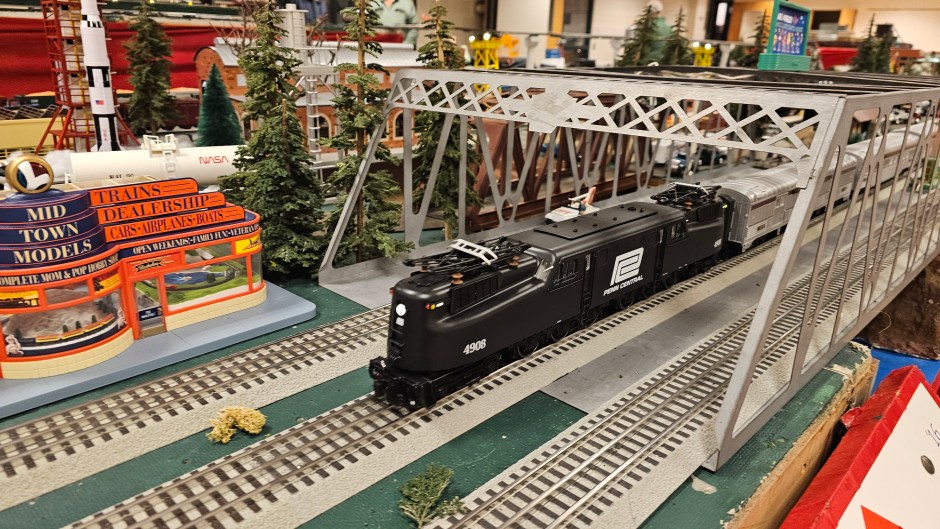
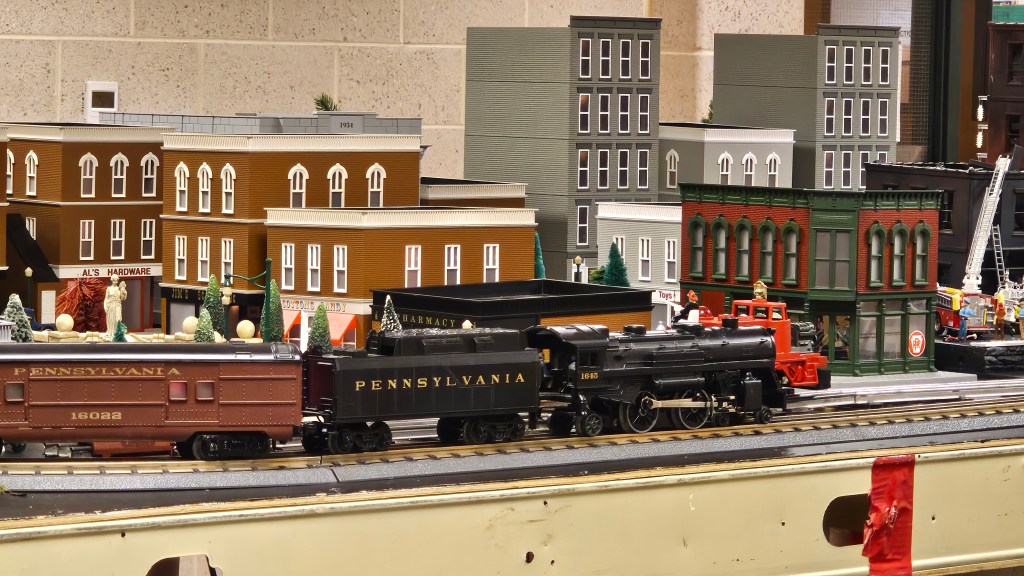
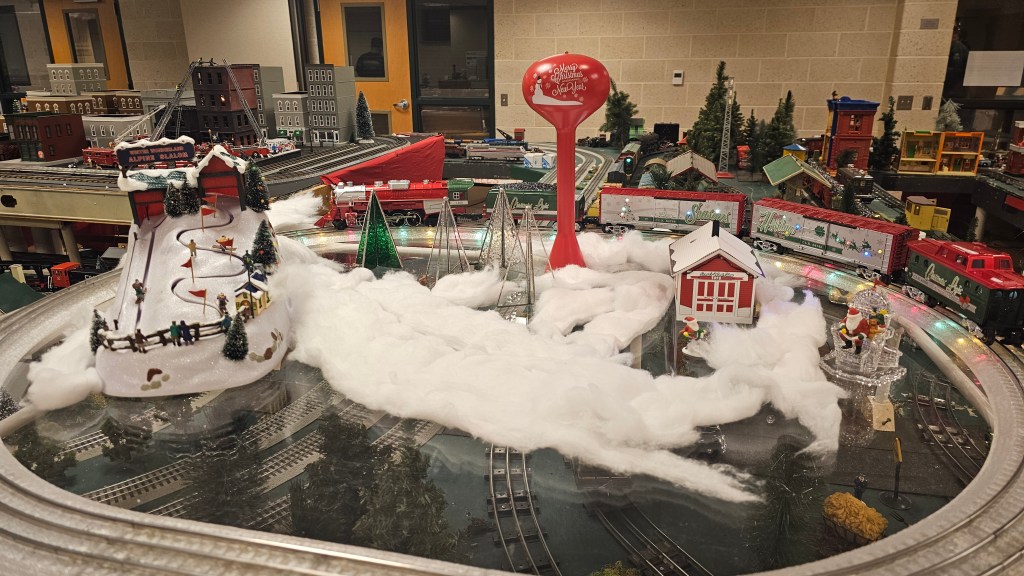
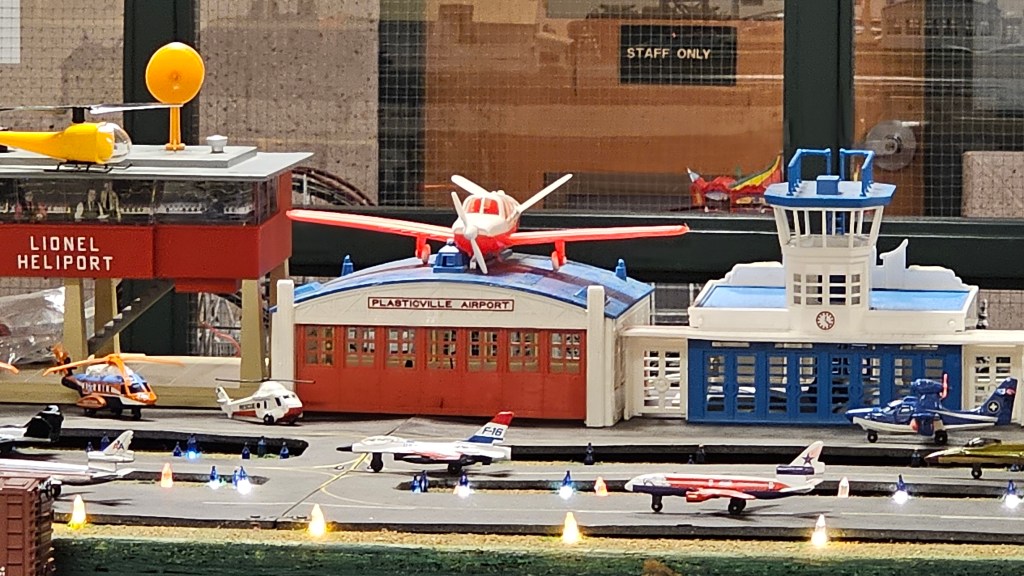
The small library’s basement had been transformed into a sprawling miniature world. The display ran nearly wall to wall, a carefully constructed metropolis alive with motion and detail. Multiple tracks wove through snowy villages and industrial hubs. A baseball field sat mid-game, an airport buzzed with tiny planes, shipping lanes carried cargo through a busy harbor, and a circus burst with color and whimsy. There was even a theme park, complete with rides in motion.

What made it truly special was how interactive it all was. Throughout the display, visitors were encouraged to press buttons and bring the city to life. A ski slope sprang into motion. Barrels were loaded onto a train car. Lights flickered on in tiny buildings. Each interaction revealed another layer of thought and care poured into the exhibit.

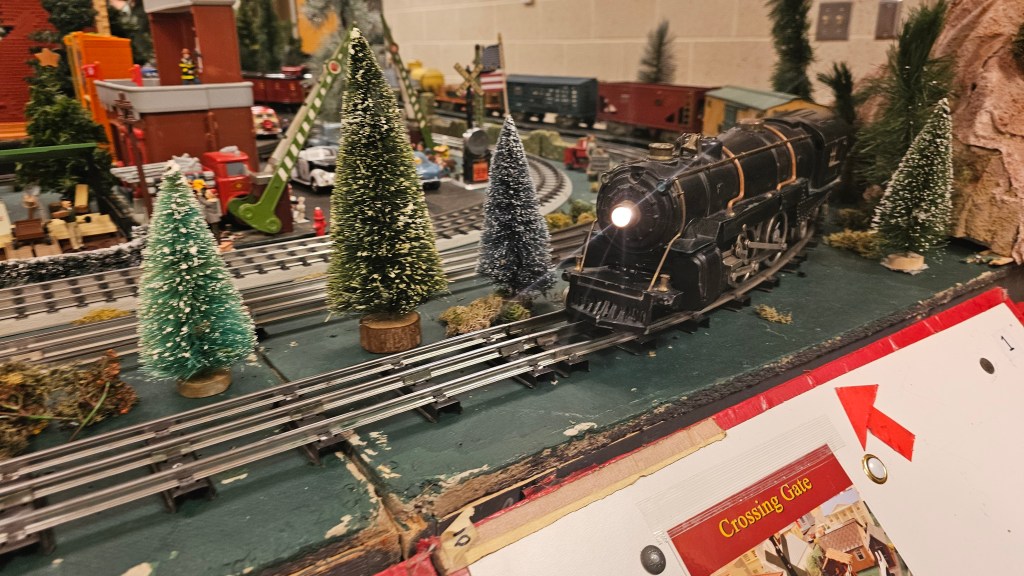
I felt like a child again, eagerly pressing buttons and craning my neck to take it all in. Every section had been lovingly created by a volunteer using their own personal train sets. One display even featured a train over a hundred years old, still running, still enchanting, a direct link to the earliest days of electric model trains. It was humbling to realize how many Christmases that little engine had seen.

For nearly an hour, I was completely absorbed, pointing out details to my companions and discovering something new with each pass around the room. The volunteers were just as much a part of the experience as the trains themselves. They eagerly shared stories about the models and about the local area. One tale recounted the time a major league baseball team stopped to play the local team while passing through town, a small but vivid slice of history preserved alongside the miniature world.

It was, in every sense, magical.

Where can you see Christmas Magic?

For those inspired to seek out a display of their own, they are often closer than you think. Local libraries are a wonderful place to start, especially in December. Historical societies, model railroad clubs, botanical gardens, and even shopping centers frequently host seasonal displays. Many towns also have dedicated train shows or open houses where hobbyists invite the public to view their layouts. And for the truly adventurous, there is always the option of creating a small display at home. Even a single loop of track under a tree can carry more charm than one might expect.

Sometimes, Christmas magic arrives in unexpected forms. Sometimes, it hums quietly, circles endlessly, and reminds us that wonder is often found in the smallest of worlds.

Completed: 2025

Cost: Suggested donation $2

Miles from home: 18 miles

From Chaos to Charm: Rediscovering Black Friday in a Small Town

Is there anything more quintessential to the American Christmas experience than Black Friday shopping? After we’ve filled ourselves with turkey, stuffing and assorted sides, whether that’s salad, mashed potatoes, rolls, cranberry sauce or something entirely unique to your family, we transition from a day of gratefulness to a day dedicated to preparing for giving.

A cynic might look at this shift and scoff. We spend one day proclaiming gratitude for everything we have only to spend the next guzzling greedily from capitalism as we scramble for more. And that criticism isn’t completely unfounded. Yet more often than not, our Black Friday shopping isn’t about ourselves. It’s about stretching every dollar to bring joy to the people we love. Perhaps I’m getting soft in my “old age” of my mid-to-late thirties, but I choose to focus on that spirit of giving rather than the cynicism.

I’ve only gone Black Friday shopping twice in my life. I’ve never been someone who enjoys crowds, chaos or traffic, and for years I couldn’t comprehend the whiplash of Thanksgiving gratitude followed by a pre-sunrise battle for discounted televisions.

Photo by Max Fischer on Pexels.com

When I was a teenager, my brother, sister and I decided we wanted to see what all the fuss was about. We had heard stories from friends whose families braved the early-morning madness each year, tales of “insane” bargains, crowds so tight you could barely breathe and people practically wrestling over toys. It all seemed equal parts thrilling and preposterous. In our house, where our mother had every birthday and Christmas gift purchased by November 1 (the benefit of children with birthdays spanning Nov. 3 through Jan. 16), the tradition seemed very foreign. But we were curious.

I remember the three of us piling into the car while our father drove us to the mall and nearby stores. People were everywhere. It felt like the entire town had the same idea, and the sheer crush of humanity threatened to sweep us along with it. One moment I’d be looking at an item and the next I’d glance up to realize a sibling had been carried several aisles away by the crowd.
Every store was decked out in holiday finery. Decorations blinked and sparkled, loudspeakers belted out everything from 1950s classics to early-2000s pop renditions of Christmas songs and more than once we passed the Salvation Army bell ringer. I dutifully tossed in a few dollars, still not entirely sure what the organization did beyond running the thrift store my father was forever dragging me to, much to my teenage horror. (This was before I learned how to create a fashionable outfit from a thrift-store treasure hunt.)

But the bright lights, blaring music, crushing crowds and snaking traffic were far too overstimulating for my ADHD brain. I bought what I needed as quickly as possible, then begged to go home. My siblings weren’t far behind. We left exhausted, overstimulated and unanimously convinced we’d never do Black Friday again. And honestly? For nearly twenty years, I didn’t.

Now, you might be wondering why I’m writing about an experience that was so thoroughly miserable. I generally write about things that enrich my life, not ones that leave me wrung out. But here’s the thing, trying new things is part of living a rich, curious life. Not every new experience is going to be a good one, but that doesn’t mean we’re worse off for trying. That first Black Friday taught me that environments with overwhelming crowds, lights and noise simply aren’t for me. It helped me understand what I need to feel comfortable, and now I plan accordingly.

The second reason I’m writing about it is that time changes things. Something awful twenty years ago may not be awful now. Clinging to old assumptions can keep us from discovering something new, something better, something transformed.

Fast-forward almost two decades. My sister now hosts Thanksgiving for our family and her in-laws each year. Some years my brother joins; other years I host a small get-together that weekend for the immediate family. My sister often uses the Saturday after Thanksgiving to participate in Small Business Saturday.

But this year, after we hosted a breakfast with my brother on Black Friday, she suggested we wander into our small town instead of making two trips. At first, my old aversion surged back. I could practically feel the traffic inching along, recall the shoulder-to-shoulder crowd and hear the echo of blaring speakers in my mind.
But this wouldn’t be malls and big-box stores. It would be my charming little town, complete with twinkling star decorations on lamp posts and small Christmas trees outside each storefront. Maybe, just maybe, it would be different.

On a whim, I decided to lean into the cheer by wearing my green Victorian coat and a wreath of ivy with white and cranberry ribbons in my hair. We planned to arrive around 9:30, hoping crowds would still be at the big stores. We guessed right. The streets were lively, but not chaotic, and I easily parked at the local elementary school, a trick locals use to avoid the meters and keep street parking open for tourists.

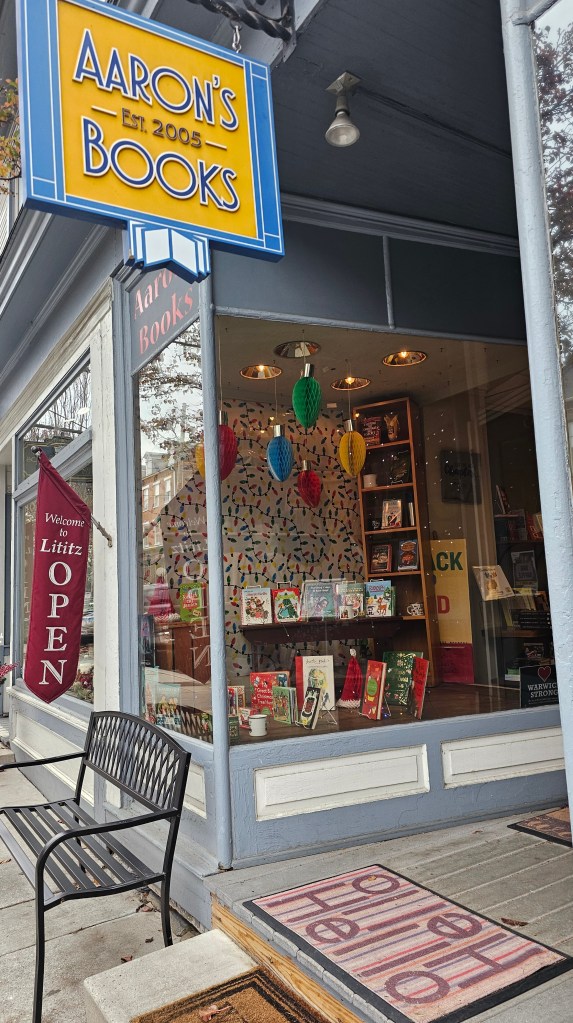
My sister and I wandered through our favorite small shops: The Tea Affair, Matthew 25 Thrift Store, Wilbur Chocolate, Purple Robin, Aaron’s Bookstore, Earth to Lititz, Bunyaad and more. Rather than being crushed by crowds, we could browse comfortably. The Tea Affair was especially delightful, a sensory experience of smelling teas and choosing blends. Most stores didn’t even play music. Instead, they relied on tasteful decor and genuine smiles to create the holiday atmosphere.

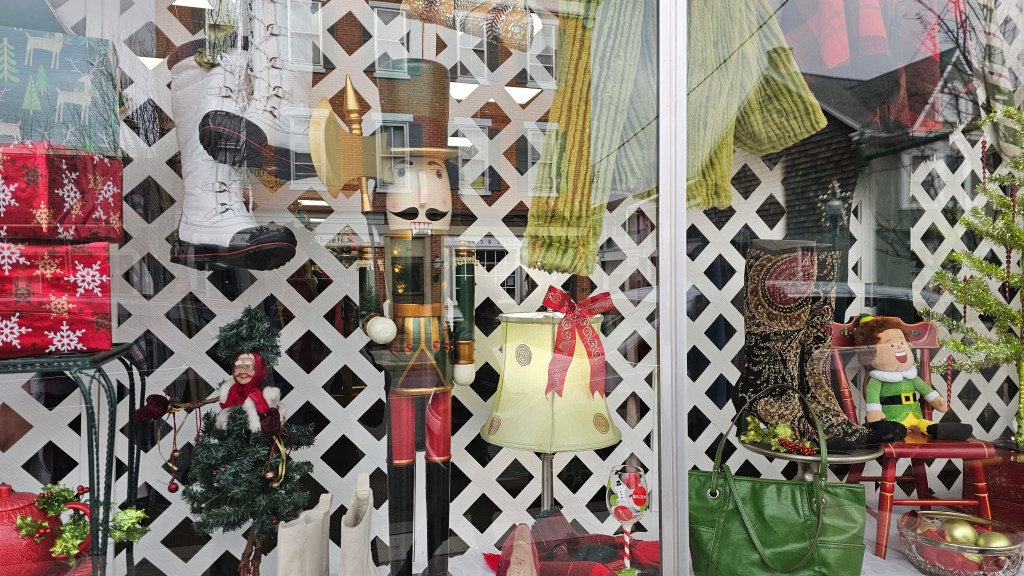
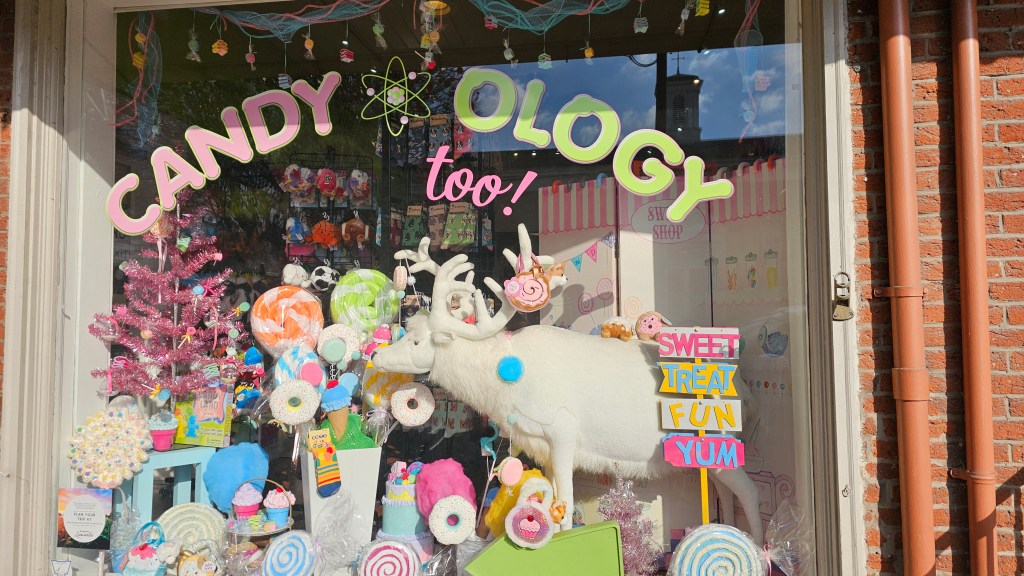
As we walked, the holiday window displays felt magical. People stopped me frequently to ask about my outfit, and my answers ranged from “spreading Christmas cheer” to “the occasion is myself,” depending on my mood. By noon the vibe shifted as more determined shoppers began to appear and the stores grew crowded. Fortunately, we had completed our shopping and decided to wrap up the day.

This time, I didn’t leave exhausted or vowing never to return. I left thinking I might like to do it again next year. It turns out that timing matters. Crowds aren’t what they used to be now that online shopping dominates early-morning sales and Cyber Monday exists. People are savvier about deals throughout the year, and many prefer to shop from home in pajamas, significantly thinning out those old-school Black Friday mobs.

Did I score any spectacular deals? Not really. The closest was a six-dollar apron from the thrift store, a lucky find that probably would’ve vanished had I arrived later. But I loved supporting my local shops, knowing my money stayed in my own community and circulated among people I care about. I loved shopping with my sister and finding her the perfect gift: a painting by a local artist.

Time does change things. Experiences can transform, soften or reinvent themselves. Of course, the opposite can also be true (as my different Disney World trips will attest, one lovely, the other quite disappointing), which is why approaching familiar things with an open mind matters, especially when years have passed.

Black Friday is a time-honored American tradition. It isn’t for everyone, but then again, nothing I write about is. Still, it sits on many Christmas bucket lists and holiday-season must-dos. And because I try to live life with curiosity, openness and a willingness to rediscover old things anew, I gave it another chance.

And I’m glad I did.

(Usually, I include a short section on how you can experience this bucket list item for yourself. However, I shaln’t cover that which the marketing departments have so thoroughly disseminated.)

Completed: Once in childhood

Miles from home: Local mall 12 miles from home

Cost: Budget in childhood was $50

How I Became a Lady (Sort Of)

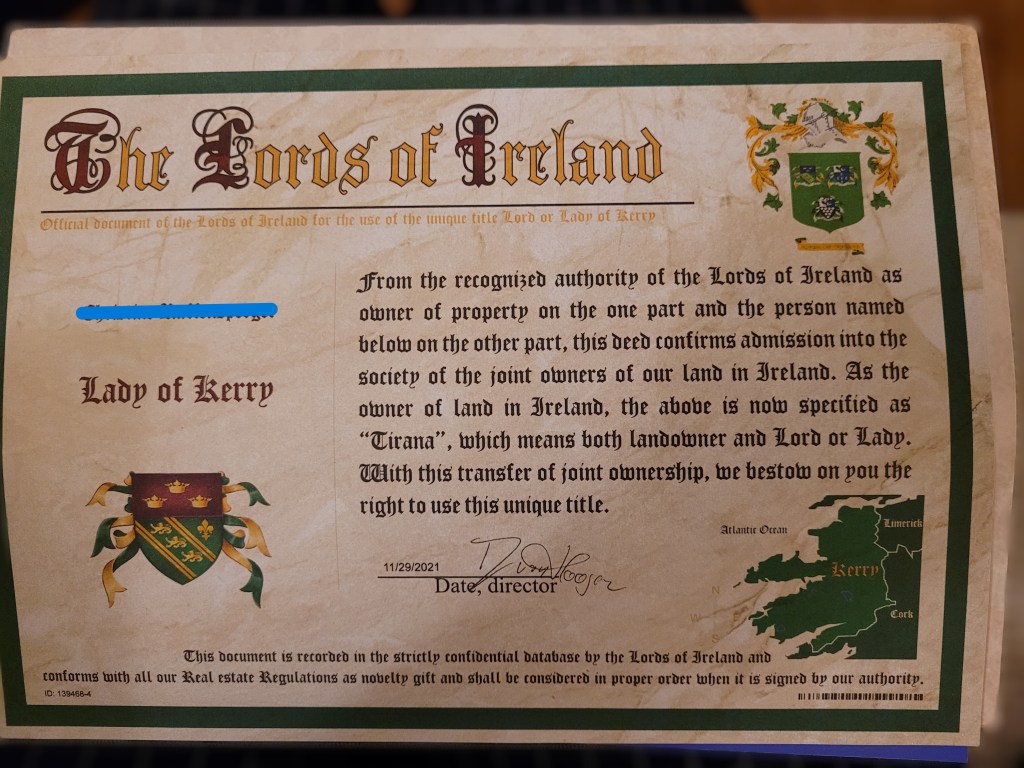
It finally happened, dear reader, I’ve ascended the social ladder or perhaps I was just finally given my due. After years of modest living and an enduring fondness for mud-splattered hiking boots, I am now… a Lady. Or at least, that’s what the certificate says.

This rather illustrious transformation occurred thanks to my brother, who, in an act of Christmas generosity (and perhaps a touch of mischief), purchased me an “Irish title.” Technically, I am now the Lady of Kerry, complete with a small plot of land, or as the fine print clarifies, a symbolic square foot that could just about accommodate a particularly skinny daisy. I can go visit it, but I can’t redecorate or reside there on a permanent basis. 

A castle in Kerry, Ireland

Now, before you curtsey, a word of reality: companies like Established Titles offer honorary recognition rather than true nobility. My title doesn’t come with a castle, serfs, or even a teapot emblazoned with my crest. Although, now that I think of it, I could perhaps purchase one for my stove here at home. Historically, “Lord” and “Lady” were titles granted by monarchs or inherited through noble bloodlines, not acquired via online checkout. But honestly, who am I to let historical accuracy get in the way of a good story?

Besides, the funds go toward preserving the land and history of Ireland, a cause close to my heart. My mother’s family is Scots-Irish, and I’ve always felt a deep connection to that misty emerald isle. I fell in love with its spirit: the wild cliffs, the songs that seem to rise from the earth itself, and the way history hums beneath every stone wall and ruined abbey. I love reading its stories, exploring its history back into the very days of Newgrange over 7,000 years old.

When I was younger, I took up the Irish fiddle and have returned to the instrument of my youth. I dabbled in Irish step dance in college. More recently, I even tried my hand at learning the language through Duolingo — Dia dhuit, if you will. When I finally visited Ireland, it felt like walking into the pages of an old legend. The Book of Kells took my breath away, and the rolling green hills seemed to whisper secrets older than time. Part of me was quite tempted to simply disappear into the countryside and see if the fae truly existed.

A day in Dublin

So yes, while my noble title may be symbolic, the sentiment behind it is genuine. And as an avid fantasy reader, I’d be lying if I said I hadn’t dreamed of being a Lady, though perhaps more the sword-wielding, dragon-slaying kind. If this little piece of parchment brings me one step closer to that dream, then I say it was money well spent.

Of course, being a lady hasn’t exactly transformed my daily routine. I still brew my own tea, scrub my own floors, and trip over my own dignity with regularity. No invitations to high society luncheons have arrived (yet), and my “estate” is still contained within a flowerpot on my porch. But perhaps the true nobility lies not in titles, but in finding humor, history, and heart in the small things.

So here I stand, Lady of Kerry, warrior of laundry day, slayer of dust bunnies, and humble admirer of the Irish hills. My crown may be metaphorical, but my affection for Ireland is entirely real.

My very own title!

So how might you become a “lord” or “lady”

Ever since the launch of Established Titles, there has been a plethora of copy-cat companies all offering the same thing, a little certificate saying you “own” a piece of land or castle in Ireland or elsewhere in the British Isles and therefore can now call yourself a “lady”. The money raised usually goes to the preservation of that land or castle, because it is expensive to maintain that history. Who knew that nobility was only a mouse click away?

Completed: 2021

Miles from home: 0

Cost: $25- $60 depending on the kit purchased

Beyond the Classics: Fantasy Books to Add to Your Reading Bucket List

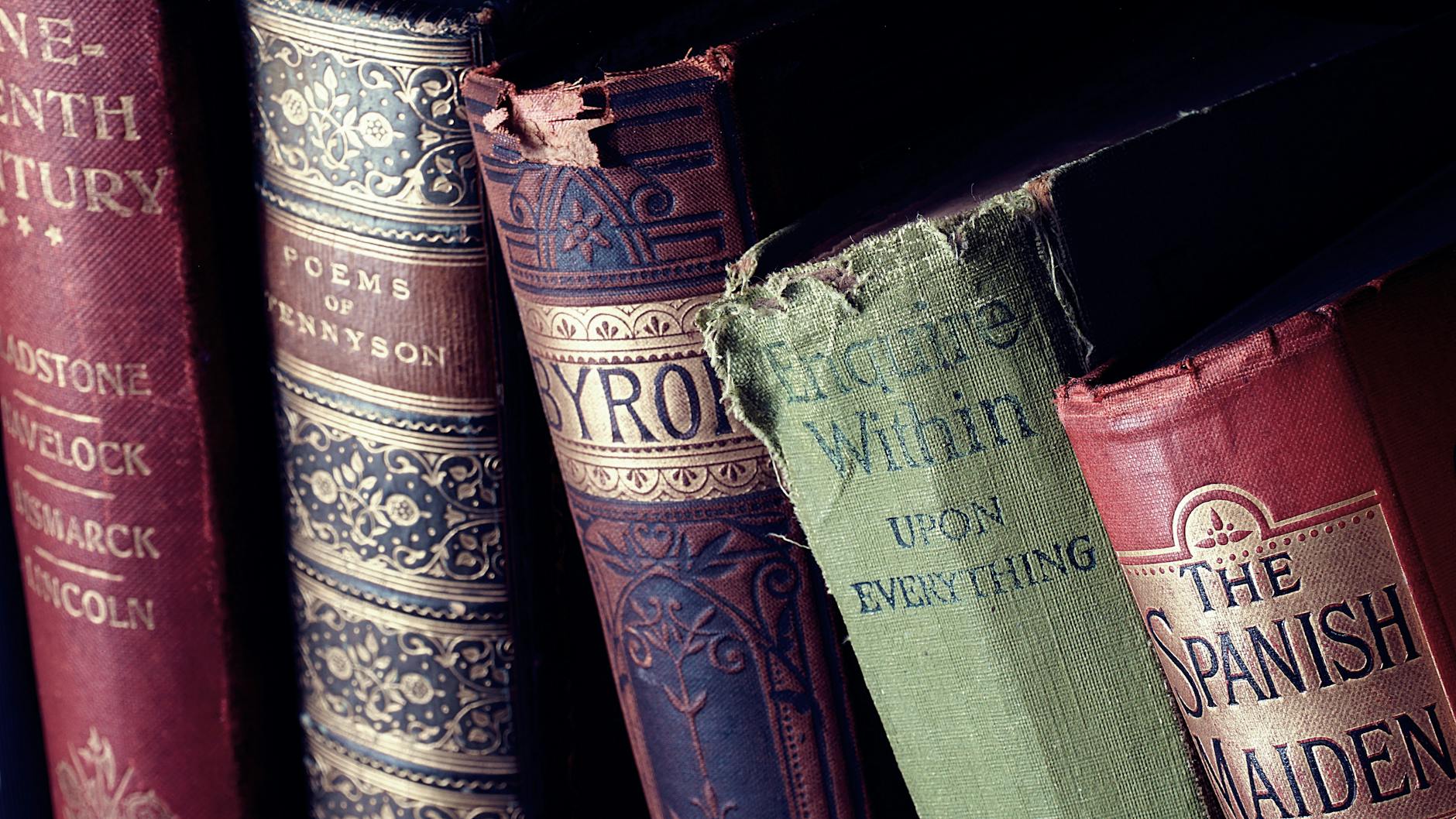
While most bucket list items require at least a trip out your front door, some of the best ones ask for nothing more than a comfortable chair, a cup of tea, a purring cat, and a book. Not everyone thinks of reading as a bucket list activity, but plenty of readers consider finishing the “greats” an accomplishment worth doing before you “kick the bucket.”

Lists of Books to Read Before You Die are everywhere, compiled by literary authorities, publishers, or critics. The argument for reading them is solid: classics can enrich your life through timeless themes, enduring wisdom, and universal insights into the human condition. They can expand your vocabulary, sharpen your writing, and deepen your appreciation for culture and history. Sometimes, one book really does shift your perspective forever.

And yet, I don’t always agree with these lists. It’s not that the classics aren’t worthy, it’s just that… well… many of them are boring. There, I said it and I shan’t take it back! I’m a fantasy and science fiction reader at heart. Outside a few exceptions, books outside those genres are of little interest to me. Oh, do not mistake me for an uneducated plebian. I’ve read my share of “required” classics (even in German, no less), but some really do go on. Did I really need to know that much about the Parisian sewer system, Victor? I appreciate the symbolism, but I nodded off halfway through. Perhaps, it’s my ADHD mind which just wanders off when things don’t spark my intrigue.

Photo by Suzy Hazelwood on Pexels.com

That doesn’t mean I don’t have a reading bucket list outside my “To Be Read Pile”, which we aren’t discussing. They will be read, when they are read! I digress.

My Reading Bucket List simply reflects my love for fantasy and science fiction, the genres that spark my imagination most. A few years ago, I stumbled upon a “Top 20 Fantasy Series of All Time” list, not compiled by critics, but by a survey of BookTube influencers. Yes, it’s biased toward modern titles (and leans millennial/Gen Z), but I liked the idea of readers (not industry insiders) deciding which stories deserved a place on the list. (We won’t get into all the politics behind what books get placed on those classic lists, we’d be here all day with me ranting.)

To my delight, I had already read about half. The rest became my summer project in 2022. Armed with my library card and Kindle, I sampled each new series, reading at least the first book to see if it hooked me. Some didn’t, but then not every book will be my cup of tea. Others were revelations, hidden gems I never would have found without the list. They were witty, profound, beautifully written, and layered with history, culture, and insight, even while transporting me to other worlds. While none of them were life-changing, they certainly sparked introspection and reflection, opened up ideas, and at times challenged my ways of thinking.

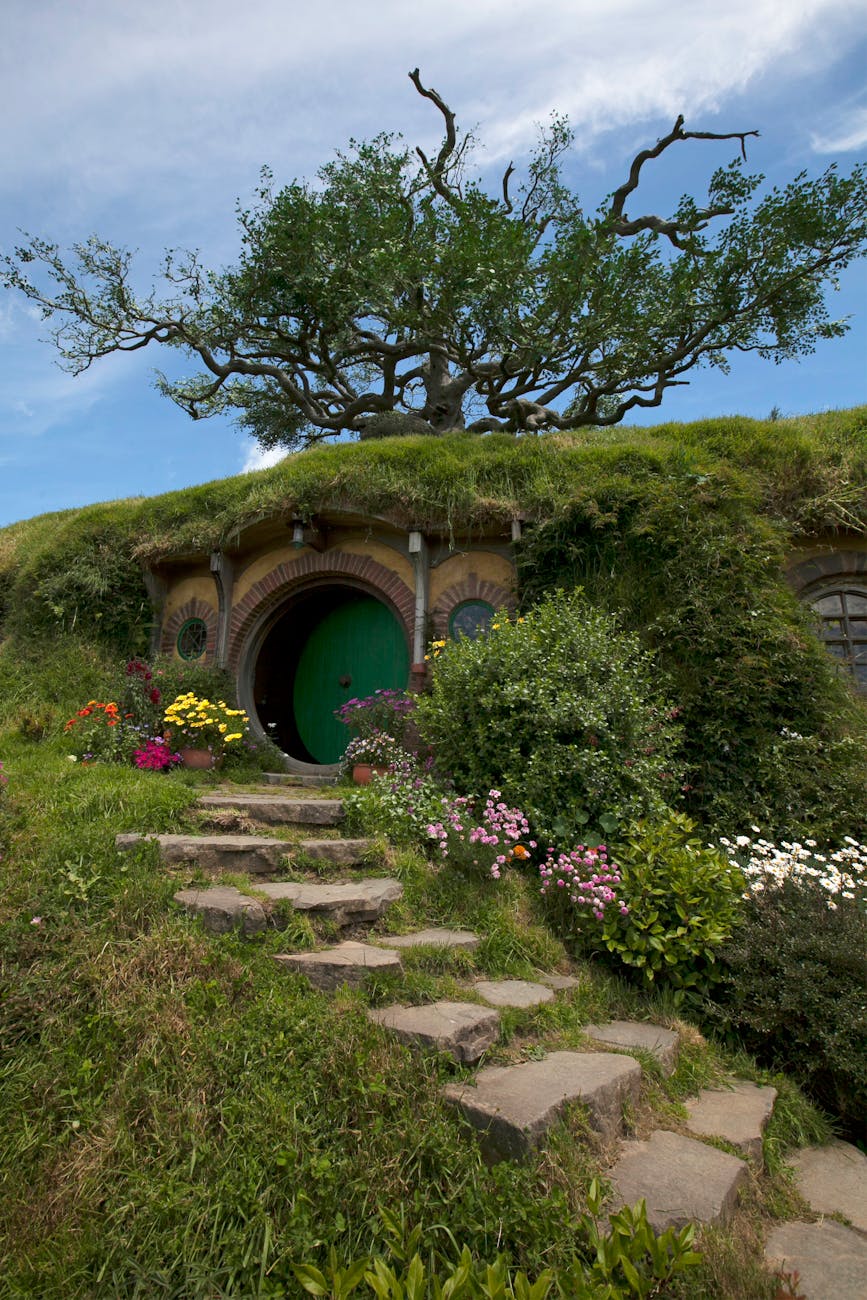
If you’ve struggled through traditional “must-read” lists and found yourself uninspired, maybe it’s time to look at fantasy. Between epic sagas and modern masterpieces, there’s a wealth of stories waiting to change the way you think, or at least keep you delightfully entertained. The list below is a great place to start. You’ll find household names alongside underappreciated treasures, each with the potential to expand your reading horizons.

Photo by Jeffry S.S. on Pexels.com

Suggested Top 20 Fantasy Series to Read Before You Die

Rank 19 (3 series)

  • Ash and Sand — Richard Nell
  • The Dandelion Dynasty — Ken Liu
  • The Earthsea Cycle — Ursula K. Le Guin

Rank 17 (2 series)

  • Harry Potter — J.K. Rowling
  • The Kingkiller Chronicle — Patrick Rothfuss (warning this series is unfinished and has been for over 10 years)

Rank 15 (2 series)

  • The Books of Babel — Josiah Bancroft
  • The Broken Earth Trilogy — N.K. Jemisin

Rank 14

  • Memory, Sorrow, and Thorn — Tad Williams

Rank 13

  • The Green Bone Saga — Fonda Lee

Rank 11 (2 series)

  • The Poppy War Trilogy — R.F. Kuang
  • Gentleman Bastard — Scott Lynch (also an unfinished series, my recommendation is you read the first as a stand alone as it does give a satisfying ending)

Rank 10

  • The Greatcoats — Sebastien de Castell

Rank 9

  • Discworld — Terry Pratchett

Rank 8

  • Malazan — Steven Erikson & Ian Esslemont,

Rank 7

  • The Realm of the Elderlings — Robin Hobb

Rank 5 (2 series)

  • A Song of Ice and Fire — George R.R. Martin (Also unfinished, but feel like you all should know this by now)
  • The First Law Universe — Joe Abercrombie

Rank 4

  • The Wheel of Time — Robert Jordan

Rank 3

  • The Banished Lands — John Gwynne

Rank 2

  • Middle-earth — J.R.R. Tolkien

Rank 1

  • The Cosmere — Brandon Sanderson

Photo by Lisa from Pexels on Pexels.com

Final Thought

Reading bucket lists don’t need to be confined to dusty classics or daunting tomes. If fantasy and sci-fi are what light you up, then let those genres guide your journey. After all, books are more than assignments, they’re invitations into new worlds. And what better way to spend your limited time than wandering through worlds filled with wonder?

The Game of Kings (and Curious Commoners)

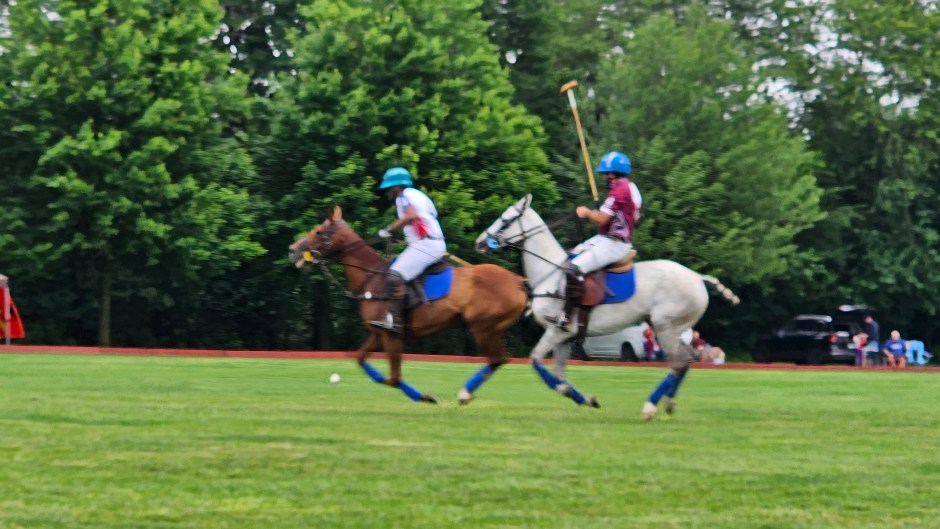
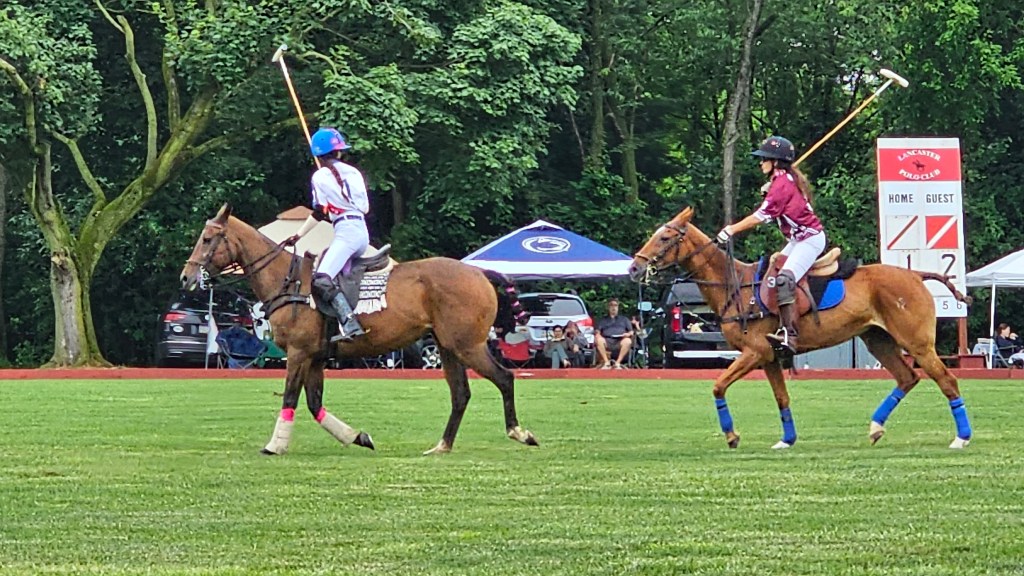
For 85 years, a curious spectacle has unfolded each summer Sunday on a quiet stretch of Pennsylvania grass. Horses graze peacefully beneath the trees while a few of their compatriots are dressed in elegant regalia by riders buzzing with anticipation. Across the field, spectators unfurl picnic blankets, create elegant table spreads, uncork wine bottles, and crank up the music, all in preparation to watch a sport nearly 2,000 years old: polo.

Though largely unknown to many American audiences, polo is far from obscure. Played in at least 16 countries and once an Olympic sport from 1900 to 1936, it began in ancient Persia as cavalry training and evolved into a game for royalty and, more recently, for anyone bold enough to mount a horse and swing a mallet. The name “polo” is derived from the Tibetan word pulu meaning ball, a term eventually anglicized after the British encountered the sport in India and brought it back to England in the 1800s.

Often called the “Game of Kings,” polo is surprisingly inclusive. Men and women compete alongside one another in most parts of the world, though America, characteristically, has a separate women’s federation.

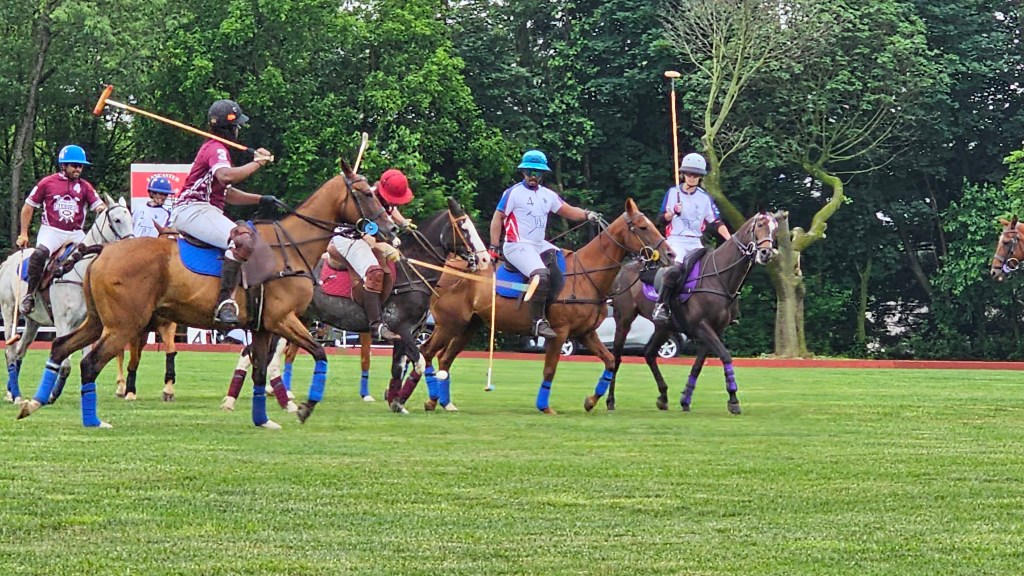
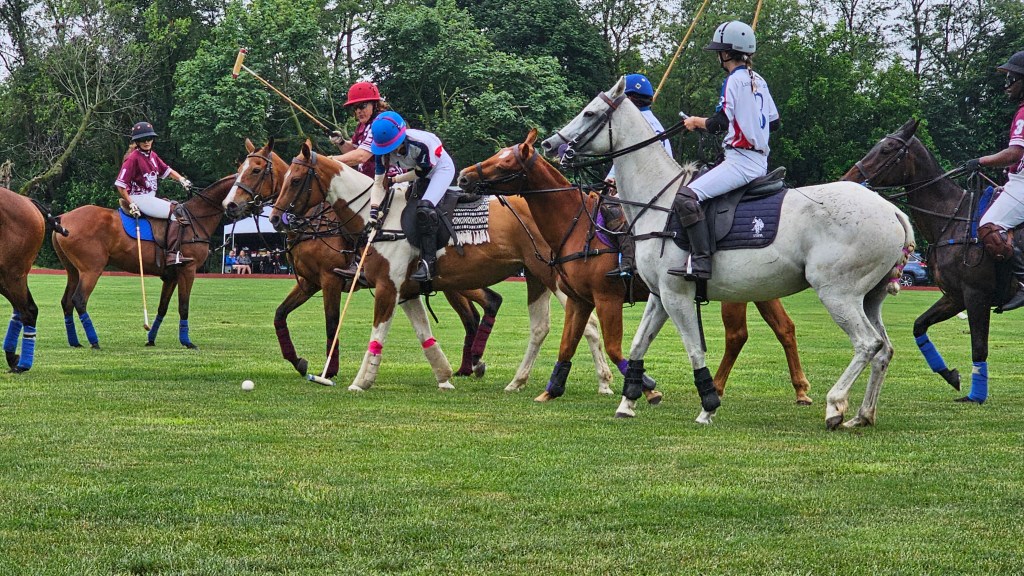
The game itself is straightforward in concept: two teams of four try to drive a ball through the opposing team’s goal using long-handled mallets, all while galloping full-tilt on horseback. The match is divided into chukkas (short periods lasting about 7.5 minutes), and a game usually includes six to eight of them. The rules may be simple on paper, but in practice, it takes incredible precision, timing, and horsemanship.

Growing up, I often saw flyers and glimpses of these summer polo matches. I was always struck by the grace of the horses and the fluid choreography between rider and steed. Truthfully, the sport seemed quite magical as if from another world. Still, I never actually made the effort to watch a full match. Summer after summer slipped by, my interest mild but never quite motivated.

Was it the fear of sweltering in the midday sun from 1 to 5 p.m.? Or maybe the lingering belief that polo was reserved for the wealthy and well-heeled? I wasn’t sure. Perhaps the former was simply a socially acceptable excuse to avoid confronting the latter. Would I, a clear outsider to this world, be welcomed, or merely tolerated with tight-lipped smiles and sidelong glances?

Besides, I’m not exactly a sports person. My athletic literacy is on par with a particularly confused golden retriever. I spent six years attending football games in marching band and still couldn’t explain the rules beyond “ball goes in the end zone.” But dear reader, I’m not one to retreat in the face of self-imposed challenges. So this summer, I finally asked myself the honest question: what was really stopping me?

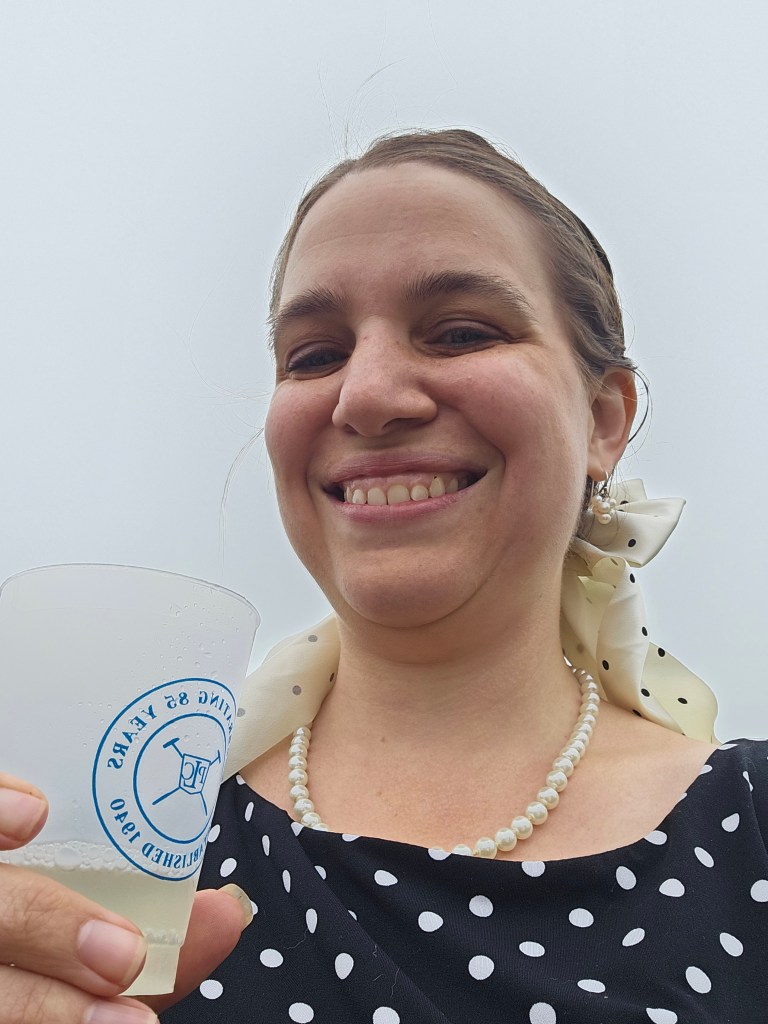
A little research gave me just enough confidence to understand the basics of the game. I picked out a charming outfit to look the part without overdoing it, an elegant black sheath dress with white polka dots and a flirty wrap skirt. I added a sunny yellow bow to my hair, antique gold and pearl necklace, and matching earrings. The pearls lent a quiet elegance, the polka dots kept things playful, and the whole ensemble whispered “chic,” not “trying too hard”, which is honestly a good rule of thumb when encountering an unknown social situation which most likely requires at least some form of dressing up.

Admission was a modest $10. While many of the best sidelines were claimed by patrons whose names were proudly displayed on small plaques, there were metal bleachers dead center offering a great view to those of us without season passes. Tailgaters lined the edge of the field, sipping rosé and nibbling on charcuterie. Food trucks formed a loose U-shape, doling out delectable treats to tempt even the pickiest of diners. A cornhole tournament buzzed nearby, a surprising attention, and the unseasonably cool June weather had people donning sweaters instead of sundresses.

The field was roughly the size of four or five soccer fields, bounded by red-painted wooden planks barely a foot high. A modest scoreboard hung opposite the bleachers, manned by cheerful volunteers ready to update the chukkas and scores. Trees lined either side to provide shade and natural ambiance. Everything had a homegrown, almost quaint quality to it, from the weathered announcer’s booth to a timeworn shed on the edge of the grounds. The whole setup felt far less intimidating than I’d feared, far more neighborly than exclusive. Instead of a glittering world of inaccessibility, it held a rustic charm, more countryside than country club.

To my delight, the crowd was warm and welcoming. Several patrons stopped to chat, and one even offered a crash course in polo rules. I met a retired player, his name escapes me, but his gorgeous collie, Koda, certainly doesn’t. He shared stories of falling off horses, fond memories of team camaraderie, and the tradition of having teammates sign the ball after scoring your first goal.

The game itself was surprisingly gentle. There was minimal jostling, and players called out plays supportively, checking in with one another to ensure both rider and horse remained safe. Perhaps this courtesy was because the match featured junior players, but I had the feeling this mutual respect was baked into the sport. Spectators clapped enthusiastically for every goal, regardless of team allegiance.

During intermissions, we all wandered onto the field for the charming tradition of field stomping, where spectators repair divots by stomping the grass back into place, all while pop music blared from the announcer’s booth. (Pro tip: verify that what you’re stomping is indeed turf, not… fertilizer.)

Halfway through the match, we were summoned to the center for a celebratory champagne toast. Each guest received a plastic glass stamped with the Lancaster Polo emblem. I raised mine high in salute, and now it sits proudly on my shelf as a souvenir of an afternoon well spent.

The Lancaster team won in the end, though no one seemed particularly bothered by the score. The teams congratulated one another with genuine smiles and handshakes. It was sport in its purest form, competition rooted in grace, community, and camaraderie.

And as I walked back, pearls gleaming, polka dots swaying, I couldn’t help but smile. I may not be a sports person. But I might just be a polo person as I immediately texted my sister, that I may have found a future sister date for the two of us later that summer.

Want to See a Match Yourself? Here’s How to Find One Near You

If you’re now a little bit curious (or at least craving champagne and turf-stomping), you might be surprised to learn that polo is more accessible than it sounds. Here are a few tips to help you track down a match near you:

  • Start with the United States Polo Association (USPA): Their website (uspolo.org) has a club directory where you can search by state or zip code. Many clubs host free or low-cost public matches during their season, typically from late spring through early fall.
  • Google is your friend: Try searching “polo matches near me” or “equestrian events [your city/state].” Bonus points if you add “tailgating” or “spectator” to the search.
  • Check out local event sites or social media: Many smaller clubs advertise matches on Facebook, Instagram, or local tourism calendars rather than big-ticket platforms. Look for community boards, weekend roundup newsletters, or even Eventbrite listings.
  • Call your local riding or equestrian center: If they don’t host matches, they probably know who does.

Don’t be shy about going as a first-timer, polo spectators are often an eclectic mix of devoted fans, casual picnickers, and curious newcomers just like you. Wear something fun, bring snacks, and prepare to cheer. (And maybe pack a sweater. Or a hat. Or both. It’s an outdoor sport, after all.)

A Blind Date: A Bookshop, A Park, and A Historic Site

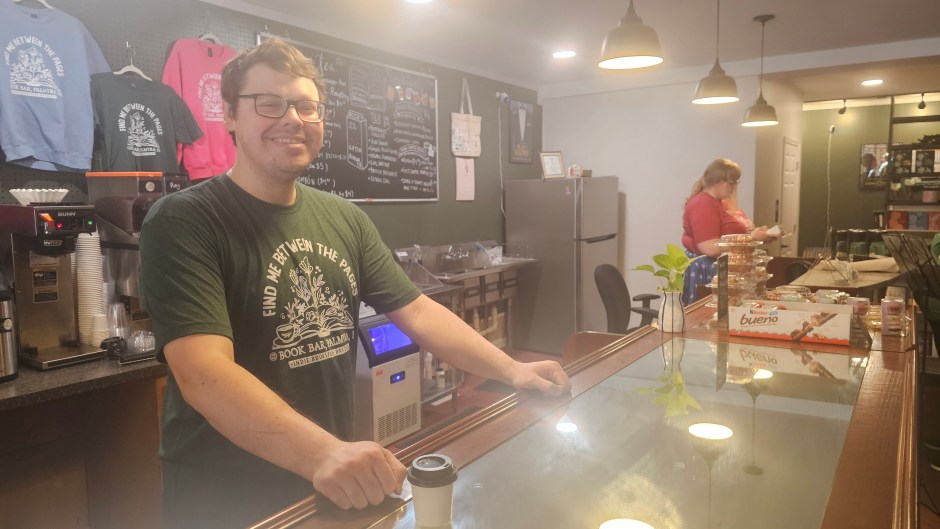
We were first introduced on Indie Book Day, with a subtle hint of mystery and the allure of suspense among the bookshelves of the BookBar. The bartender handed me a drink on the house with a wink and a smile. The aroma wafted up from the cup, promising a rare treat. With a slow sip, a burst of rich flavor exploded across my tongue, accenting the dark roast and chocolate with a lingering whisper of strawberry for a sweeter finish. It was with this drink in hand that I browsed the shelves in search of hidden treasures.

The aesthetic of the shop resembled an old private library in England with a slightly gothic bent: dark walls, rich old leather sofas, and trinkets more expected in a professor’s office than a place of capitalism. It all set the atmosphere of whispered stories on stormy nights. But indie bookstores are known for their peculiarities.

It was there that I was first introduced. Not directly, of course—nothing so uncouth. Our meeting was arranged through the usual channels: a third party carefully selecting options suited to a lady’s general tastes. The matchmaker, ever busy, offered a short meeting and a curated selection of potentials. Each came wrapped, labeled only by genre, with a few clues as to what might await.

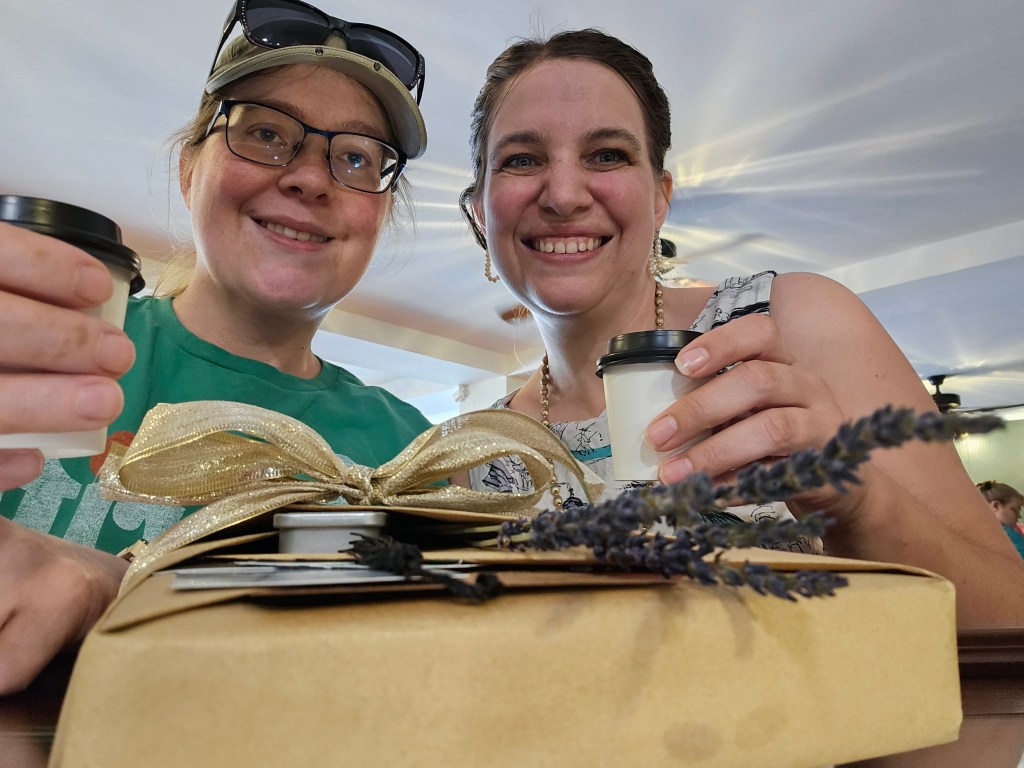
I made my choice and a plan was hatched: a rendezvous, a park, a picnic, and of course, my blind date. My sister joined me, not as a chaperone, but with a date of her own. A married woman, you ask? Was I part of a scandal? Not when the blind date is with a book, dear reader!

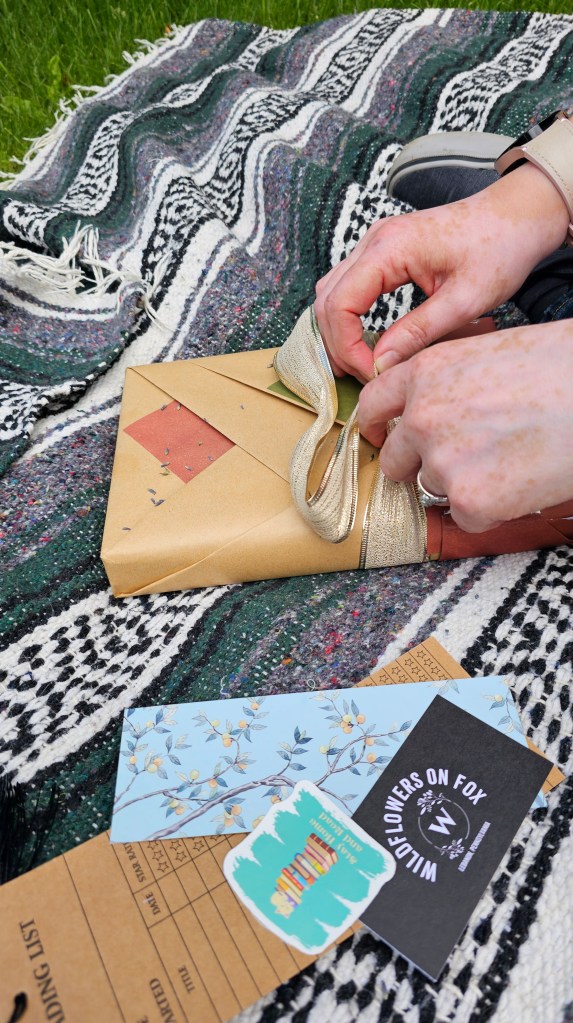
Yes, BookBar not only serves up delicious coffee and mocktails with a side of dark academia, but it also offers a unique reading experience designed to stretch your literary palate. Each mystery book is carefully wrapped with a genre label, accompanied by a few sprigs of lavender, a lip balm, bookmarks, and stickers—everything you need to charm a curious reader.

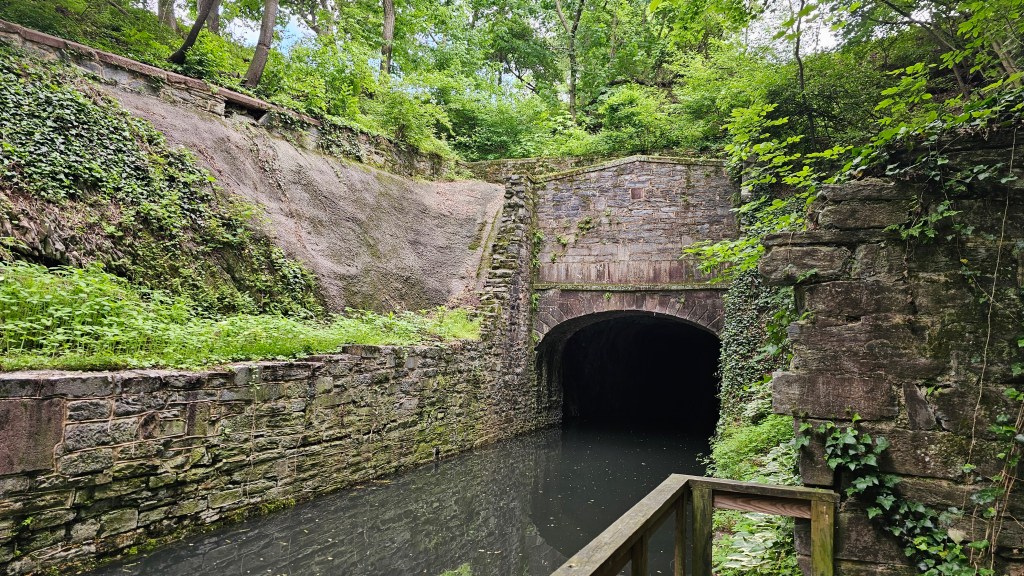
A few days before, we checked the weather and settled on a park near my sister’s home. To our delight, we discovered a local hidden gem: the oldest existing water transportation tunnel in the United States. Naturally, the history nerds in us were thrilled.

The canal’s beginnings date back to 1792, during George Washington’s administration, though financial troubles delayed its completion until 1828. This golden link of trade connected east and west, serving the expanding nation until 1881, when the Lebanon Valley Railroad rendered it obsolete.

Today, the remaining stretch is lovingly maintained by the Historical Society of Lebanon County. Only a small fraction of the canal remains, surrounded by parkland and dotted with plaques detailing the history and engineering marvels of the time. The park includes a pavilion, picnic benches, and a meandering path alongside the river. Every Sunday, they even offer boat tours through the tunnel—a dream for any history buff.

My sister and I spread out a picnic of crackers, cheese, and meats under a shady grove. We caught up on life as the breeze gently rustled the trees. The weather was cool for mid-May, but nearly perfect for reading. No harsh glare from the sun, no stifling heat—just peace and pages.

When we opened our blind date books, mine turned out to be a historical mystery thriller with a dash of time travel, set in Victorian Scotland. A surprisingly perfect pairing with our 19th-century setting! I found the forensic methods of the era fascinating, especially in contrast to modern crime-solving techniques. My sister’s book was a thriller translated from Ukrainian, and she was equally pleased with her pick. We agreed this date was well worth repeating.

After an hour of reading, we explored the rest of the park. What we found was a quiet oasis tucked away from the modern world. Birdsong echoed across the water, interrupted only by the occasional “plop” of frogs and fish. We climbed a small hill to better see the tunnel and read each historical plaque. A small bridge overlooked an old lock that once helped boats travel along the canal.

It wasn’t quite the Panama Canal we visited last spring, but it was still an impressive feat of engineering and a reminder of human perseverance. We couldn’t help but reflect on how far we’ve come—not just in terms of technology, but culture and society. What would the Irish laborers who built the canal think of the world today?

Want to Plan Your Own Literary Adventure?

You don’t need a fancy bookstore to enjoy the fun of a blind date with a book. Etsy has plenty of options, and you can always go with a DIY version. Take a friend or sibling to a bookstore, pick out books for one another, wrap them up, and head to your favorite park for a reading picnic.

Even cheaper? Just borrow something new from a friend’s bookshelf. My sister and I frequently swap books this way, and we’ve each discovered new favorite authors as a result.

To find local gems, try Google Maps with keywords like “historic site”, “attractions,” “museums” “hidden park,” or “walking trails.” Check the reviews on obscure places with 4.5+ stars but few reviews as these are often true gems. Believe it or not Reddit can be a source for ideas from locals that you won’t find on the travel sites. Try searching for hidden gems in your city or browse the local subreddits. I also recommend going to your local library and checking out the bulletin board. Some cities have bloggers devoted to uncovering local secrets—you might be surprised what you find just outside your front door.

Completed: 2025

Miles from home: 25 miles

Cost: $50 (for the book and picnic)

Tea at Sea!

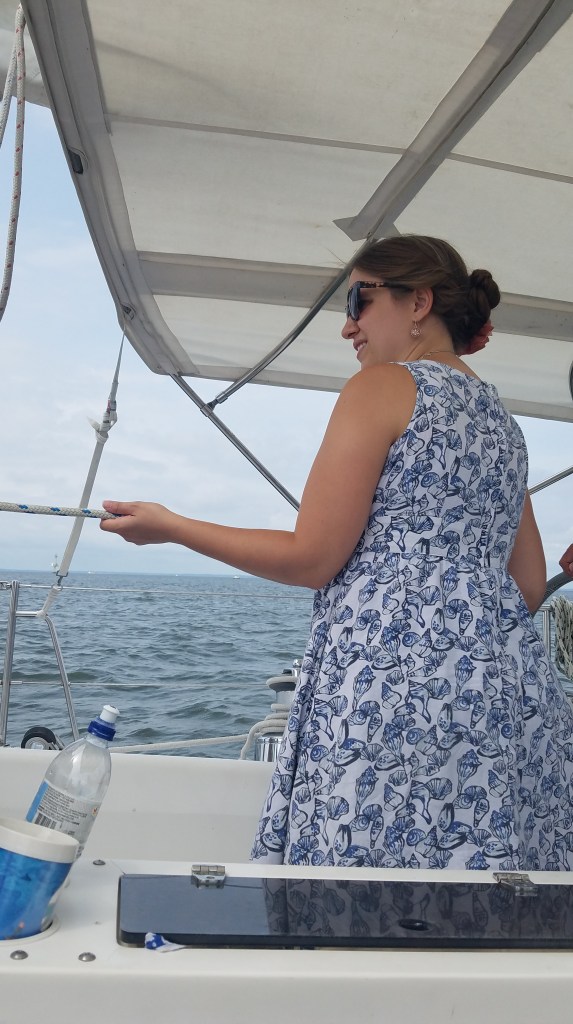
Alright gentle reader, technically, it was a bay and not a sea. However, I did get to hoist the sails and attempt to steer the ship. Yes, technically it was a boat; although I”m not sure I know the difference if we’re being honest. Regardless of the pesky nomenclature, I provided an excellent afternoon tea out on a large body of water in a sailing vessel of some sort. Additionally, I made sure to be properly attired for a day’s outing on the water. With the help of a well placed hat pin not even the wind could dissuade me from my determination to have a little extra flare. After all, where would we be as a society if we allowed ourselves to descend into the mundane and boring, especially when it comes to fashion?

In the midst of COVID, with everything shut down and limitations on movement and gathering, the small but scrappy non-profit I worked for decided to offer its employees a day out with one of our board members, Peggy, on her private boat. To say that I was excited is truly an understatement. It was once again, one of those Bucket List Items that I had mentally placed under “most likely not happening any time soon” as I thought it would cost a lot of money to go. This might be the reason I was a little over the top, but honestly that’s part of who I am. I’m the woman who will put together an entire costume or outfit for even the most slightly themed party or obscure holiday. 

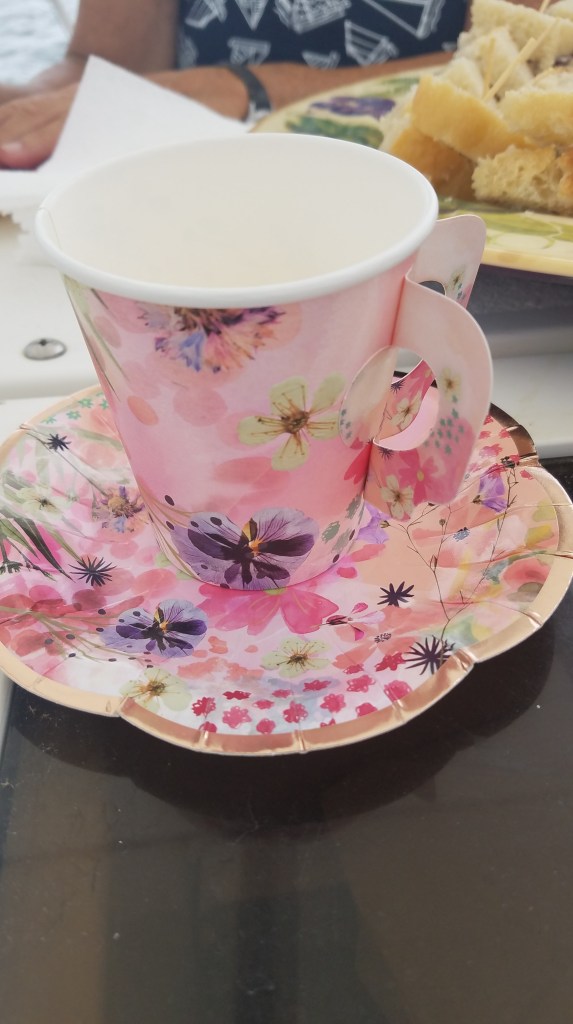
It was truly the morale boost that we needed. To avoid a disruption of vital client services and given the size of the boat, we divided ourselves into two teams which would go on two different days. We also divided up bringing food and other snacks to share. I led the way with letting them all know that I was going to have us do a tea at sea, I would provide the sandwiches, the tea cups, scones and clotted cream. Was it the more costly and time consuming option? Yes, but I was going to take this opportunity that the universe presented me and make the absolute most of it. Before you question my judgement of bringing tea cups on board a ship, know I take quite good care of my china and wouldn’t subject them to the dangers of the open waters. I found these absolutely gorgeous paper cups online! 

We loaded ourselves up early that morning, crammed into one of my co-worker’s vans like the start of some quiet, well-mannered heist armed with gps and good humor. I had chosen to go with the more reserved, soft-spoken of my co-workers. What can I say? They paired better with tea than with the loud, pirate-hearted group that went the day before, I am fairly certain they snuck booze despite the prohibition against it, like I said, pirates. Not that I couldn’t hang with both, I absolutely could. And the temptation to burst into sea shanties was quite real, I assure you.

As we drew closer to our destination, the world around us began to shift. The foliage thinned, and the trees gave way to the briny breath of the sea. The air changed too, tinged with salt and carried on a breeze that hinted at something just beyond the horizon. We heard the call of gulls before we even saw the water. Then suddenly, there it was—a small forest of masts rising from the docks like white trees, standing in quiet anticipation.

Waiting for us at the dock was our fearless leader and Executive Director, Deb, who waved us down with her signature confidence. She led us up the wooden planks to our boat, where we were introduced to our captain for the day, Peggy’s husband, Captain Bob.

I was surprised by the size of the boat as it was deceptively spacious, like a magician’s trick. Every inch of it had a purpose. Storage tucked into nooks, seating that converted, a compact bathroom that came with very specific instructions. Bob walked us through the essentials with the seasoned calm of someone who knew that one improperly flushed toilet could quite ruin the whole experience.

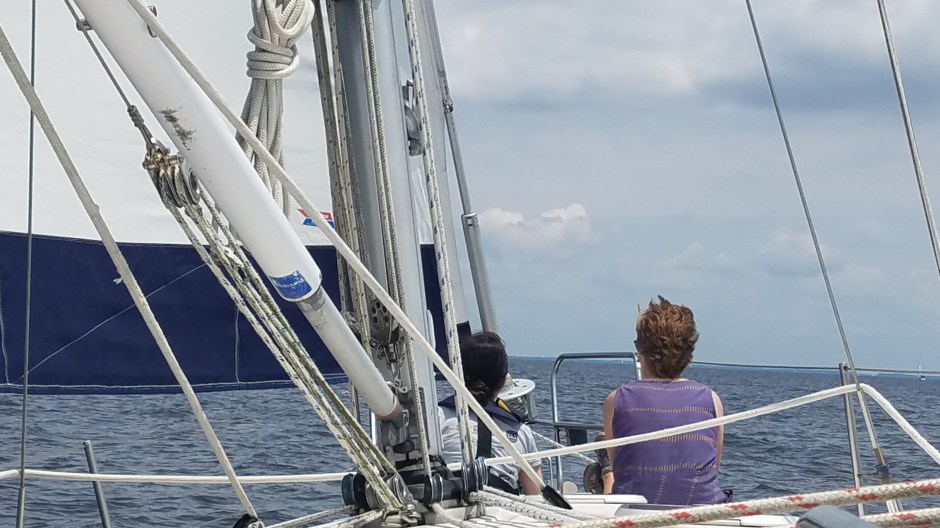
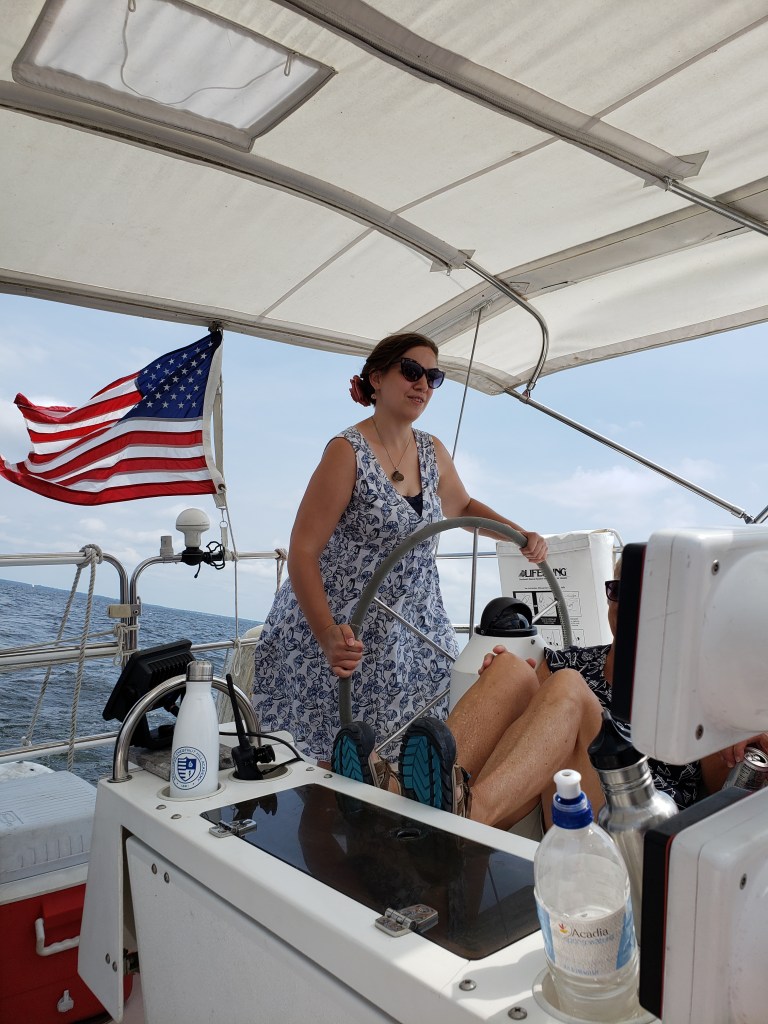
After a short safety overview, it was time to sail. Bob asked for volunteers, and I naturally stepped forward to hoist the sails. He called out instructions with the steady ease of a man who’s done this a thousand times, while Peggy provided cheerful backup support. I took hold of the rope with both hands to gleefully, heave ho and all that. The wind caught, the sails filled, and the boat surged forward with a kind of wild grace.

From that moment on, everything shifted into something more elemental. The boat leaned into the wind, the ropes pulled taut, and the world became motion and sound—the rush of air, the splash of spray, the low groan of wood and rope in motion. It felt like stepping out of the everyday and into something ancient.

Those brave enough made their way to the prow, legs dangling over the edge, laughing as waves splashed up to greet them. Time didn’t pass in hours out there. It passed in shadows, in sunlight shifting on the water, in bursts of laughter and long silences where we just watched the horizon breathe.

Then came the offer I hadn’t expected, Bob asked if anyone wanted to steer.

Of course, I wanted to steer the ship!

Taking the wheel was like grabbing hold of something alive. The boat didn’t just move; it responded. The wind pulled one way, the water pushed another, and the rudder spoke a language I didn’t quite know but instinctively wanted to understand. Every twitch of my hands echoed through the vessel. I had to fight the urge to overcorrect—big boat, big movements, right? Wrong. It was the subtle shifts that mattered. I wasn’t just steering a boat, I was holding a moment in my hands, trying not to crush it. I shall admit, I was not the best helmsman, but it wasn’t bad for a first go! 

At lunchtime, I unveiled my small, slightly theatrical feast of tea sandwiches and scones. Though there was no clinking of teacups, people were quite amused by them. A delighted Peggy gasped when she spotted the clotted cream asking for where on earth I had found it; she hadn’t had clotted cream since she was in England years ago.

I smiled and told her, with all the drama she deserved, “The local grocery store.”

We laughed, we feasted, we sipped, and apart from poor Beth, who succumbed to a bit of seasickness, our tea at sea was a grand success.

The rest of the sail was a blend of freedom and focus, the hiss of waves, the sudden thrill of turning into the wind, the scent of salt and sun warming the deck. It was chaos and calm, all wrapped into one. I couldn’t have asked for a more perfect day for checking off my list. . 

By late afternoon, we returned to the dock. We changed into swimsuits and slipped into the pool, letting the cool water wash away the heat of the day. We splashed and floated, reluctant to let the water go.

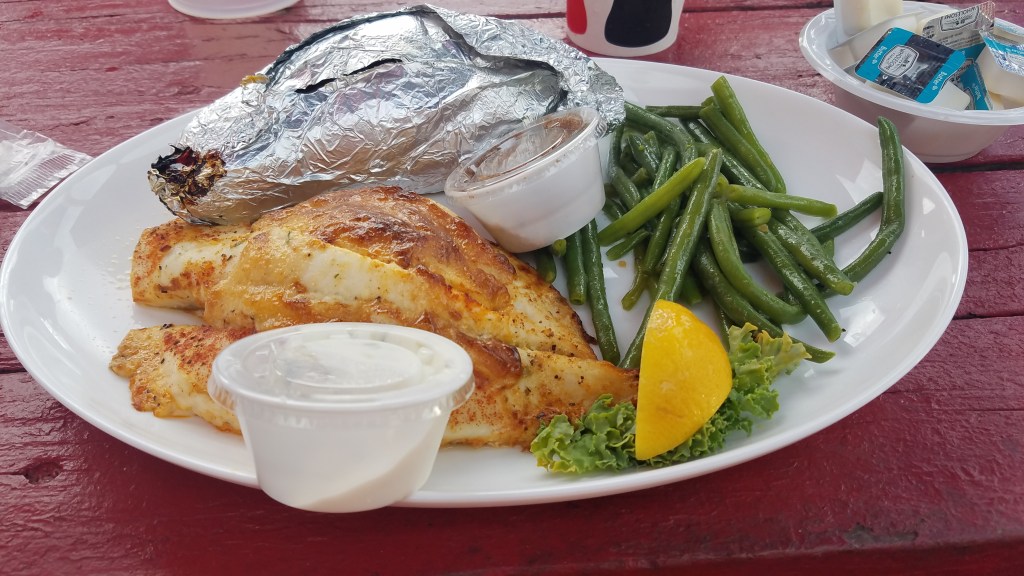
That evening, we gathered for dinner at a local seafood spot, the kind with fresh-caught fish, buttery hushpuppies, and that oh, so infamous, Maryland crab. I will say the crab practically demanded a moment of silence in appreciation. Luckily for the crab, eating is just about the only time I am quiet. And just when we thought the day had ended, someone suggested a detour when they spotted a sign for ice cream. Because some days deserve a sweet ending. And this one? This one absolutely did.

So how can you enjoy a sailing adventure?

I’ll admit, not everyone has a friend with a boat—or a boss generous enough to invite you aboard. But that doesn’t mean a day at sea is out of reach. You can always charter a boat for yourself and a few intrepid comrades. Prices can range from around $200 to upwards of $2000, depending on the type of vessel and the duration of your trip. That said, splitting the cost among your group makes it much more manageable. If you’re like me and pack your own feast, you can trim expenses even further. The boat we sailed on would’ve likely cost each of us about $50 to $75 had we booked it ourselves. Sure, we probably wouldn’t have been trusted to hoist the sails or steer, but with seven of us, the cost would have been quite reasonable. 

This was one of those rare gifts from the universe, an unexpected adventure in the middle of a pandemic, at a time when most people could only dream of checking something off their list. I felt deeply grateful, especially after working so hard to help people who were experiencing homelessness with nowhere to go. Those long hours, with little reprieve and a general feeling of hopelessness at times to solve the problem can begin to wear on a person’s spirit. Sometimes, when you’re out there trying to do good, life surprises you with something beautiful in return.

So go ahead, pursue the good. You never know where it might take you, gentle reader.

How can you enjoy a day on the water?

Cost: Free (food was about 50) 

Miles from home: 115 miles

Completed 2020

Visiting Exhibtions: When the World Comes to You

Pennsylvania is known as the Keystone State in part because of its strategic position on the Eastern Seaboard. It sits at the heart of the action on the East Coast and, thanks to the Mississippi River, serves as a gateway to the West. This historic and geographical advantage means I have relatively easy access to some incredible places. By extension, when traveling exhibitions come to those places, it’s not a terrible imposition for me to make the trip. Cities like New York, Philadelphia, Washington D.C., Pittsburgh, and Baltimore are all within reasonable distance.

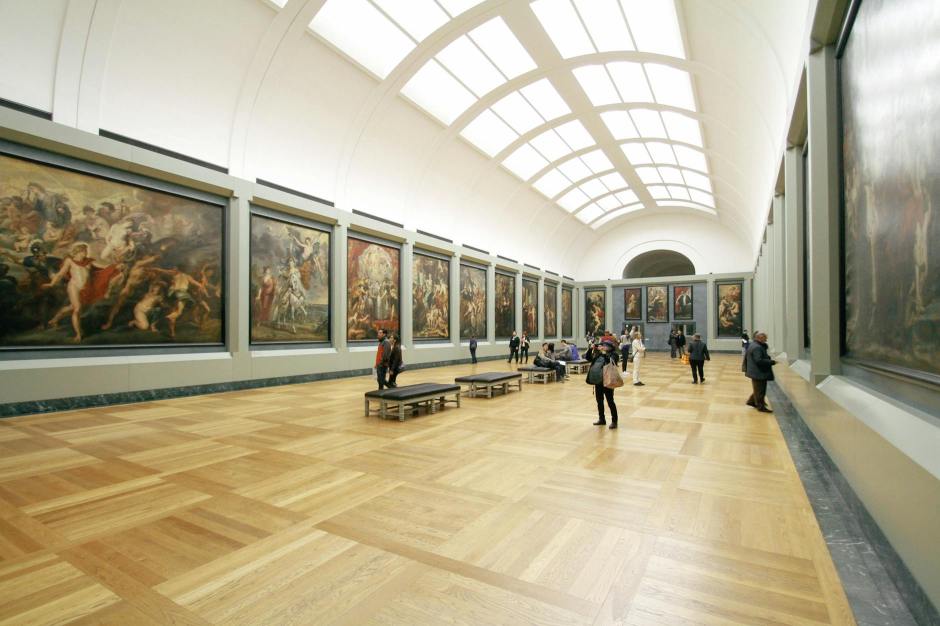
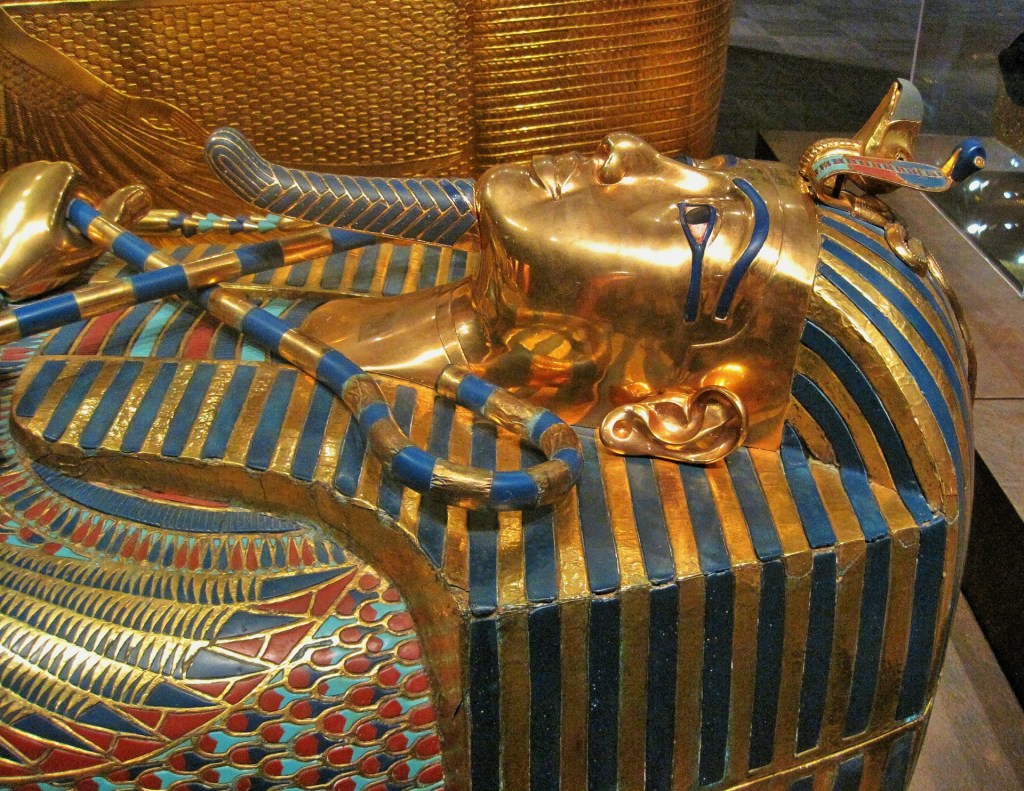
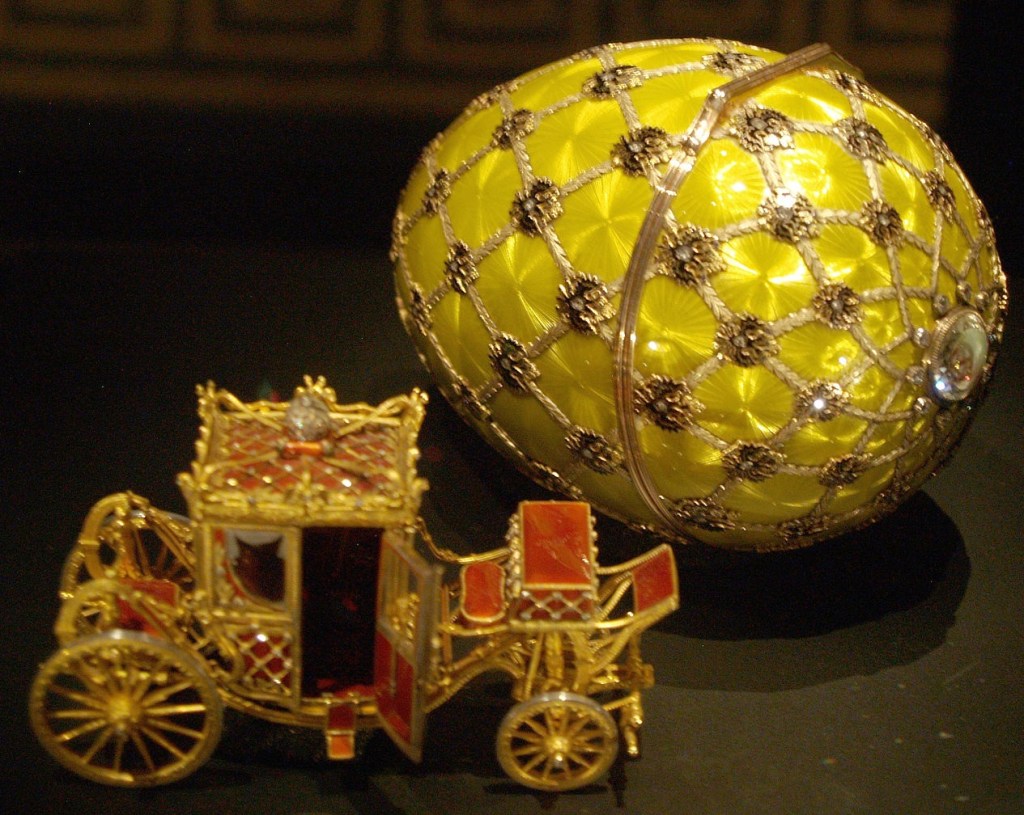
It was by leveraging this advantage that I was able to see the Darwin exhibition at the American Museum of Natural History in New York, the King Tut exhibition in Philadelphia, and the Russian Tsars exhibition in Delaware. I’m not sharing this to brag about my state but rather to point out that, depending on where you are, you may be closer to the action than you realize. There are often more opportunities in your area than meet the eye.

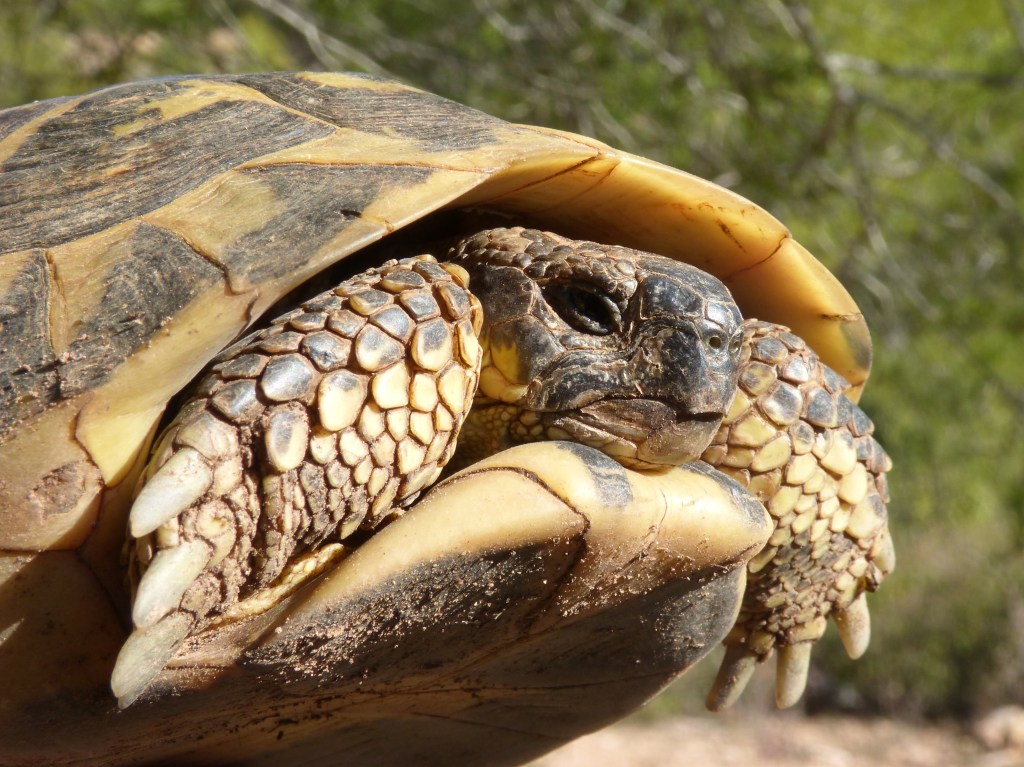
The Darwin exhibition offered a fascinating look at the scientist’s life, work, and impact. It even featured two Galápagos giant tortoises. Darwin was a keen observer of nature, and through those observations, he developed one of the most revolutionary theories in the history of biology. His theory of evolution has shaped everything from genetics and epidemiology to biodiversity and our understanding of the fossil record. Prior to Darwin, most people saw the natural world as static and unchanging since the moment of creation. Instead, he proposed a dynamic and interdependent system in which relationships and exchanges alter the inhabitants of the world, who in turn shape their environment.

One of my favorite stories is how he looked at an orchid and hypothesized the existence of an undiscovered insect capable of pollinating it. That insect was discovered forty years after his death. This exhibit was the perfect combination of science, history, and anthropology. It showed how discoveries ripple outward into society and helped me understand just how interconnected everything truly is. Is it any wonder that seeing Darwin’s journals, tools, and legacy made its way onto my Bucket List?

Not to be outdone by New York, Philadelphia often hosts exhibitions and installations that rival its northern neighbor. Just because it’s the Keystone State doesn’t mean it lets the other states have all the fun. In the winter of 2007, I braved a snowstorm to visit the exhibition Tutankhamun and the Golden Age of the Pharaohs at the Franklin Institute. The exhibition included fifty major objects from King Tut’s tomb—among them a vessel containing his mummified organs—and over seventy artifacts from the royalty of Egypt’s 18th Dynasty (1555 to 1305 BC), including a sarcophagus.

King Tut’s tomb was discovered in 1922, sparking a global fascination with ancient Egypt that still persists—my own obsession included. Many of these artifacts have rarely left Egypt, so I certainly wasn’t going to let a snowstorm stop me from seizing this rare opportunity. It was history made tangible, a brush with the ancient world that I’ll never forget.

In 1998, Delaware hosted the first major Tsarist exhibition, Nicholas and Alexandra, and I was lucky enough to see it on a fifth-grade field trip. It left a lasting impression on me. We had spent several weeks learning about Russia’s history leading up to the Bolshevik Revolution and the rise of the Communist Party. Featuring nearly 700 objects, it was one of the largest and most prestigious collections of Russian treasures ever to tour outside the country. Most of the items had never before left Russia.

Among the many items on display were the Coronation Egg, an imperial throne, court gowns and uniforms, a gilded state carriage, and artifacts from the Russian Orthodox Church. Even as a child, I was struck by the sheer opulence of the exhibit—particularly the Fabergé Egg, which felt all the more extravagant when considered against the suffering of the Russian people at the time. The experience helped solidify my understanding of the revolution and the dangers of unchecked power and inequality. I’ll avoid getting too political here, but suffice it to say, it made an impression.

Each of these exhibitions made my Bucket List for different reasons. Each one broadened my perspective, deepened my understanding, and shaped how I see the world. They weren’t just collections of artifacts; they were immersive experiences that gave context to history, society, culture, and their ongoing relevance today. Most importantly, they taught me that I don’t always need to travel far to experience the world. Sometimes, the world comes to me.


How Can You Experience Unique Exhibitions?

Start by identifying how far you’re willing to travel. Then make a list of major cities or cultural hubs within that radius—they’re your best bets for hosting large-scale or rare exhibitions. But don’t count out smaller museums, either.

Check their websites to find out when they release their exhibition calendars. I’ve found that many post their schedules for the coming year, although some are less predictable. Once you know when they update their schedules, you can simply mark your calendar to check back. If there’s no set schedule, just take note of when the current exhibition ends and plan to check again around that time.

If you’re searching for something specific—say, an artist or historical topic you love—an online search every six to eight months may yield results. Just be prepared to wait. Some exhibitions, like the Russian Tsars, are generational events.

Lastly, if you’re visiting a city you don’t often travel to, take a few minutes to see what exhibitions are currently on display. You never know what rare gem you might find. It’s easy to miss out by only checking travel sites when planning your trip.

Costs: Range in price from $15 – $25 for museum entrance

Miles from home: Range from a 35 miles to 150

Completed: Childhood – College

A Festival of Flavor: PA Tea Festival

I believe, dear reader, that I have already espoused my love and adoration for tea. I love the aroma of it wafting up from a warm cup in my hand. The first sip as it hit my tongue in an explosion of flavor. The way it moves the warmth down my throat and into my stomach. I love how well it pairs with little sandwiches. I love scones topped with clotted cream and curd. I love the frilly lace and fussy accouterments. I love the various honeys I can add for a hint of flavor from orange to lavender to raw to clover.  I love adding cream. I love adding milk to chai. I will drink it hot or cold, in the morning, afternoon or late at night. I’ve enjoyed it at my desk at work and as high tea in a parlor. So it should come as no surprise that I jumped at the chance to go to a festival devoted to this beverage.  

Our hosts for the Tea Festival are the ladies of The Rosemary House & Gardens. The shop is tucked in a small corner of Mechanicsburg, PA. It’s unassuming front hides an almost enchanted shop and herb garden. From the first moment, you walk in the door you know you are in someplace particularly special. The gentle smell of herbs instantly calms you as you take in the plethora of items adorning every corner of the shop. Everywhere you look merchandise is displayed on every available surface. It ranges from teas, to herbs, to honeys, to curds, to teapots, to fairies, to charms, to books and more. One could easily be mistaken into thinking one had stumbled into a fairy tale with the two older ladies carefully tending to the customers. 

Being situated in an old house, the shop consists of two main rooms, the front and the back. The back leads out to a garden as delightful as the shop itself. The well worn paths lead visitors through the herb beds which continue to delight both the eyes and the nose. The garden is a delight to wander through as every single bed contains a surprise. One may spot a small turtle statue or be delighted by a miniature table and chairs (surely left for the visiting fae-folk). A visitor may see a sign welcoming said fair folk as well as a tower of teapots reaching for the sky. There is also no shortage of seating from the gazebo, to the benches, to a giant tea-cup from a carnival ride. The house is worth a visit even on days when a dozen or more vendors have not journeyed to grace it with their presence. 

After paying for our tickets at the shop’s counter, my sister and I slipped onto the porch where we collected a small tea cup, a bag, a tea magazine and a schedule of the day’s events. The cup was to be used for sampling the teas offered at the various vendors – which is of course the main reason we journeyed an hour from home to the festival. There was a woman offering tea ceremonies in the garden, but we opted to skip it this year as we attended one at the festival the year before and attended one at the Japanese Gardens just outside of Philadelphia. Instead, my sister selected “A Dark History of Tea” from the lectures that were offered, noted the times and determined that we would start at the front and make our way back through. 

Our first destination did not actually have any tea samples, but rather was a creative display of artwork on tea bags of all things. I was amazed at the variety of pictures she was able to create incorporating the tea bags into the paintings. I was so smitten with them, my sister ended up buying one as a birthday present. 

We then got to the highlight of the festival, the tea tasting. Each vendor had a variety of samples to showcase some of their best teas. The first one we had was a very smooth oolong tea from Taiwan that was a delight for the tongue. We then took turns smelling different teas and sipping on more. We sampled teas from Napal, Hawaii, Africa, China and beyond. There were herbal teas, white teas, black teas and green teas. There were teas that were pure and teas that had herbal additions like the lemon butterscotch teas. There was a chocolate vendor for tea and chocolate pairings. I purchased various teas for my later personal use. 

We did attend the lecture on the dark history of tea and its connection to prostitution, opium, smuggling, poisoning, and slavery. It was a fascinating look at the history of international trade, commerce and greed. It was also a sad reflection that despite efforts at reform for the past 300 years, many of the problems that were prominent throughout the 1700’s, 1800’s and 1900’s are still going on today, if in different forms. The lecture did not get into how the issues in the tea industry can be seen in the fashion and chocolate industries, but my sister and I discussed it at lunch later. One of the things I enjoyed about the tea festival was that many of the vendors were from the countries that the teas were from. We were often speaking with direct representatives of the farmers rather than a corporate sales person several steps removed from the growing and processing of the product. We felt fairly confident that our teas were ethically sourced and free of adulterations and unhealthy additives. 

After a few hours of sipping teas and wandering around the festival, the caffeine did start to get to me. I was surprised because I am such a huge tea drinker even at home, but I typically do a cold brew which tends to have less caffeine. So my advice dear reader is to bring some snacks along to help with all the tea that you will be drinking, because after three hours of sipping on the delicious beverage, I was quite jittery. With our stash of tea fully replenished for the coming winter months, my sister and I made our way back into the shop for some final purchases. We then wandered back to the car to decide where we wanted to eat. After consulting google, we realized there was a Japanese place not a five minute’s walk from her car, so we left a few of our items behind and journeyed to the former bank now turned restaurant. 

If you happen to be in Mechanicsburg, dear reader, I recommend Kanagawa. It was a quiet, intimate place with polite and friendly staff who were attentive and conscientious. My sister and I choose the small plate of salmon teriyaki with extra vegetables. The vegetables were cooked to perfection with just the right amount of sauce. They were a nice variety of zucchini, onions, mushrooms, and broccoli. The salmon was delectable, practically melting in your mouth with every bite. My sister and I split the fried cheese cake, which was a rare treat for us both. It was a mouth watering delight that must be tasted to be properly appreciated. The outside was perfectly crunchy with just the right amount of chocolate sauce which covered the delicious inside. It was the perfect ending to the day. 

How can you attend a tea festival?

I am not entirely certain that tea festivals are exceedingly popular, but that is not to say that they don’t exist in your area. They certainly could! However, there are many popular festivals devoted to different foods and drinks. There may be a beer festival or a wine festival. In my area, I have seen a bacon festival being advertised which may be difficult to convince my non-pork eating sister to attend. If you’re passionate about a particular food or just enjoy eating, then go. You will discover all sorts of flavors you’ve never dreamed of. You may learn new culinary skills or interesting history you never knew about. It could deeper your appreciation for how we obtain our food and how to make more ethical decisions about your purchases. You may discover that you actually like certain foods you always hated. You could be introduced to different cultures or ways of thinking about the foods you eat. Either way, I highly recommend adding culinary adventures to your list. After all, we have to consume food every day just to survive, why not expand your pallet, widen your horizons and explore the world with a different sense than we usually think to use. 

Completed: Fall 2023

Cost: $10 per person for tickets and much more for all the tea I bought, which we won’t talk about here. I was weak and the tea was so delicious! In my defense I have like so much tea now, it will last me months. 

Miles from home: 51

Shhh, It’s a Secret: The Best Kept Secret of the Summer

In the world before COVID, there was a growing tradition in my local city. A secret, invitation only pop-up party to kick off the summer season. One could only be invited. There was no ticket payment system or special way to get in. You simply reached out to have your name on a list. Then the list for invitees was opened and you could sign up to go (at least that is what happened the year I went and my sister went). Those in the know, knew how to find their way to this not well advertised gem. I heard about it through the grapevine, whispers in the community of such an event and with a little investigation, I found it.

Despite the location of the event being a closely held secret, the theme of the party was not. Fete en Blanc or Party in White was a premier event. Everyone, dressed up in white, brought their own picnic, wine, tables, chairs and table decorations to create the signature party of the summer. Courtesy of our hosts, they provided the decorations and music. You found yourself seated in a long row next to neighboring tables and just enjoying the spectacle. 

OLYMPUS DIGITAL CAMERA

Fete en Blanc is one of hundreds of white pop-up parties started in Paris in 1988. The theme has always been the same. No one knows where dinner will be until the last moment and everyone wears white. You bring your own table and chairs and until recently you provided your own food. The tradition has spread to hundreds of other cities around the world. Some of them do have a ticket fee. Some are more strict on what counts as white. Whereas many places will allow “pops” of color or off white, Philadelphia is a strict white only. It varies from place to place.

An army of volunteers helped to direct the crowd of people all overseen by an intrepid Master of Ceremonies to ensure all had a delightful time. The local park had been transformed into a magical world of floating spheres and twinkling lights. What made it special was precisely that it was not an event held only for those who could afford it. As tickets were free and by invite only, there was no monetary barrier to entry. As you were directed to sit wherever by the volunteers, one could easily find themselves shoulder to shoulder with Lancaster’s finest. Imagine what sort of friends one might make at such an event! 

OLYMPUS DIGITAL CAMERA

My sister and I did not have a table, so we spread ourselves out near the bottom of a tree. We enjoyed a spread of white wine, white cheese, white grapes, cauliflower and light crackers. After all, a party in white ought to have white food. However, me being myself, I could not resist just a small “pop” of  bright, pink color on my hat. I always did have to stand out in a crowd and besides, rules were made to be broken, darling! As we ate, a duo of drummers moved throughout the tables, their pops of color stark against the white of the crowd. Their enthusiasm was contagious and all to kick off the summer season!

After we ate, we meandered through the crowd taking in the different decorations that graced the tables. Those who were clearly experienced party goers had some truly elaborate displays in stark contrast to our simple set up. As the dusk settled, the atmosphere took on an almost dream-like quality. One could almost believe you had been transported into an in-between realm with the changing of the season. Was the veil between worlds just a little thin that night? Perhaps, it was the wine, perhaps it really was the magic of midsummer. 

We did not stay long into the night, both of us had work in the morning. So we packed up our small picnic and made our way out of the dream and back into reality. We were unable to snag tickets the following year in 2017 and in 2018, we determined we wanted to focus on new experiences rather than repeating ones we already had. Sadly, 2019, seems to have been the last year for Fete en Blanc at least for the Lancaster area. Covid came in 2020 canceling any plans for the event and I have not seen its return since. I hope to see its return one day as it was a truly special thing for our community. Perhaps with the advent of my new job I may have extra time on my hands and it is something I could organize here in my local community. It might be something to add to my list – throw a giant party for my community? What do you think dear reader?

OLYMPUS DIGITAL CAMERA

How can you experience a Fete en Blanc?

Well, as I said, our own local White Party does not seem to have returned after COVID, so if you happen to be in my area you will have to look further afield. If you do manage to locate one, be rest assured it is a difficult event to get into as most are lottery based given the demand for attendance typically overtakes the capacity of the given venue. In Paris, over 13,000 people may attend and they still do not have enough spaces for all the people who wish to go. Paris has a waitlist of over a million people and is considered one of the most exclusive dinner parties in the world. 

The copy-cats around the world are little different in terms of demand outpacing capacity. Almost all of them take place between May and September as a celebration of the summer and given that they occur all over the world, there is a very good chance you can find one in your area. Given the difficulty and exclusivity of such an event, you may dear reader feel a bit disheartened by the prospect of ever experiencing the spectacle yourself even if you are nearby. 

Now, what have we learned in such situations? When one cannot do a specific item, one can examine the principles and values of the experience. That is not to discourage you from throwing your hat in the ring and trying to get a coveted spot, after all most of the time it is a matter of throwing your name on a list and hoping your name is drawn. 

OLYMPUS DIGITAL CAMERA

In this case there are many festivals, events, parties and even secret going-ons that are occurring in your local community. One must merely be attuned to what might be happening around you. I found that the more I got out to do things the more things I found to do. Your friends and family start reaching out with cool ideas that might interest you for your next adventure. They start inviting you to things to do with them. Do you know the number of your friends and family who want to do things but have difficulty finding people to do things with? When you’re the person always going off and doing new things, you’re often the first person they call! 

I was not looking to do this party, I heard about it, signed up and snagged a coveted spot! I encourage you dear reader to get out and do! Soon enough you’ll be hearing about all the secrets your community has been hiding right under your nose! 

There is also another option. Given that all that is necessary is a venue, some music, white decor and a few friends, there is nothing to say that you can’t start your own Fete en Blanc tradition in your local community. Imagine being able to give a bucket list experience to not only yourself but your whole town as well? That’s how Lancaster got started and I hope to see its return soon.
Completed: June 2017

Miles from home: 11 

Cost: Free Invite – $30 for dinner supplies, I already had an entirely white outfit from my wardrobe

This is a list of all the major cities that hosted a Fete en Blanc in 2018 

Seattle, Washington

Memphis, Tennessee

Charlotte, North Carolina

Philadelphia, Pennsylvania 

Wilmington, Delaware 

Chicago, Illinois 

Washington, D.C.

Baltimore, Maryland 

Honolulu, Hawaii 

Boston, Massachusetts 

Charleston, South Carolina 

Albuquerque, New Mexico 

Cincinnati, Ohio 

Pittsburgh, Pennsylvania 

Long Island, New York 

New York, New York

Indianapolis, Indiana 

Los Angeles, California 

Sacramento, California 

Atlanta, Georgia

Fort Lauderdale, Florida 

Orange County, California

San Diego, California 

Dallas, Texas 

Houston, Texas 

Miami, Florida 

Orlando, Florida 

Rochester, New York 

West Palm Beach, Florida