A Macabre House of Oddities 

You may be familiar, dear reader, with the traveling shows, carnivals and even houses of “oddities” of yesteryear. Those peddlers of myths and horror to fascinate and perhaps even, scandalize their audience. The most famous of which would have been P.T. Barnum’s, Barnum & Bailey Circus home to such attractions as Myrtle Corbin the Four Legged Woman (a woman born with two pelvises and four legs), Fedor Jeftichuw, The Dog Boy (an individual with hypertrichosis), Isaac Sprague, the Feejee mermaid (a small monkey glued to the tail of a large fish), and many more. Though the “freak show” has been around since the medieval era (and probably before) where crowds would gather to see humans with deformities, it wasn’t until the Victorian Era that they fully matured into a for profit exhibition. It was Barnum’s “Greatest Show on Earth” that truly brought it to the forefront of American culture. Though not all abnormalities were real and were actually made up for the purposes of the show. While freak shows and circuses were exploitative, some, like P. T. Barnum’s Circus did pay well and was (for the time) quite progressive in its treatment of its “human oddities”. 

Under brightly colored fabric and dazzling lights, crowds of spectators stared in amazement at the parade of “strangeness” before them. This was in a time before movies and colored photographs where one might see such things otherwise. It was certainly before commercial flight where far flung places such as Siam and Turkey were easily accessible. Certainly before the internet where one could fact check to see that, there was no missing Albanian prince who was raised in a harem and that woman he claims is 160 years old, is in fact only 80. I imagine quite a few left the shows believing they had seen something truly remarkable and perhaps even mythical. Is it any wonder this was the same era for seances and contacting the dead?
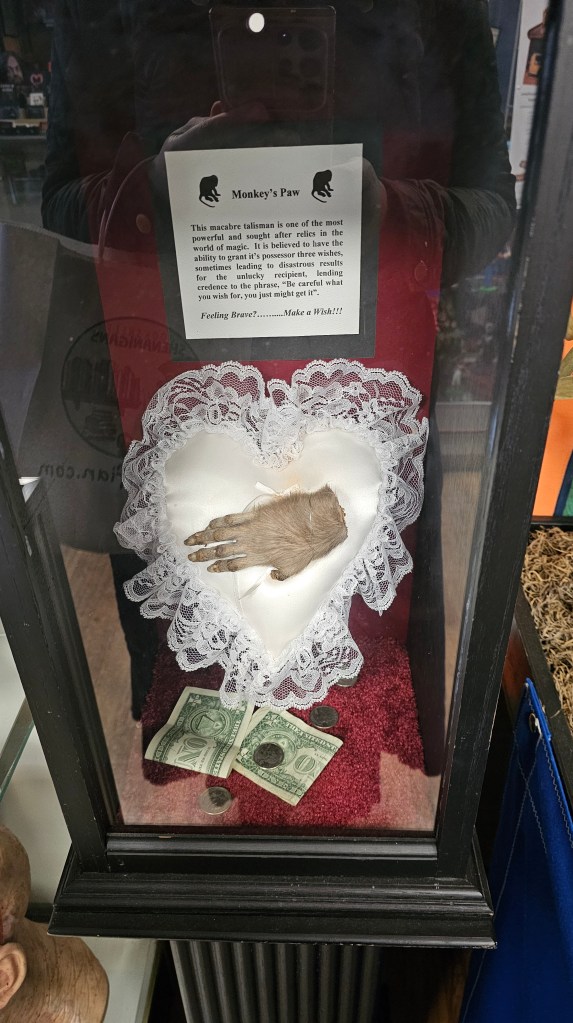
When perusing freak shows and museums of strangeness, visitors unfamiliar with taxidermy were easily fooled by the macabre art  of combining parts of different animals to support outlandish claims of myth come true such as the Jackalope. They may also display artifacts such as cursed monkey paws or pictures. As America expanded its colonization of the New World, so too did folk stories of the legendary creatures and strange happenings such as sasquatch or the vampires of New England. All adding to the idea that the world is truly far stranger than science can account for. 

For the most part it seems that over the years, such places have dwindled down. The circuses no longer showcase individuals with abnormalities for exploitation and with medical advancements many are able to be addressed to improve quality of life. Nor are abnormalities viewed with such suspicion and fear, but are increasingly welcomed as a part of life. Most of the oddities have been lost, destroyed or merely forgotten. Although there are a few small roadside attractions which have collected or perhaps re-created various pieces of history in the same spirit of P. T. Barnum who when accused of duping the public with hoaxes responded “I don’t believe in duping the public, but I believe in first attracting and then pleasing them.” So it made no difference to me if what I was looking at was truly the same pair of pants from Barnum’s giant or just a really large pair of pants. That’s part of the charm, it is a house of hoaxes. Perhaps, it is fun to pretend for a bit.

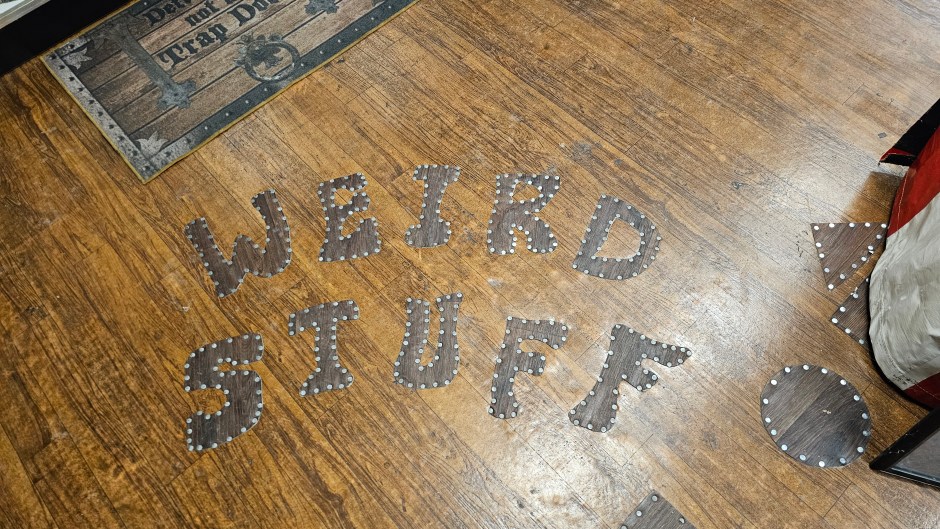
It was with this strange and controversial history in mind, that I went to the House of Oddities and Curious Goods in Elizabethtown, PA. This free museum was the beneficiary of a now closed down Gettysburg Dime Museum preserving Jo-Jo the Dog-Faced Boy (from P. T. Barnum’s circus) and Edgar the Alligator Man. The house certainly captures the odd mixture of barely contained horror and ridiculousness. Like almost all museums of this nature there is little rhyme or reason to the displays as everything is haphazardly squeezed together. Everywhere one looks there is a new, at times stomach churning, oddity as music reminiscent of the circuses of old plays in the background. 

It was a small place of barely two rooms, though the second room was more of a back hallway. Most of it were obvious hoaxes that at one time fascinated the public and led the more easily duped into belief that monsters truly do exist. There were a few genuine gems such as the alligators who had been deformed due to improper disposal of chemicals in the neighboring bayous. Some of the items had small paper “plaques” with explanations of what they were, but most were left to my imagination. I found most of it to be a strange mix of delight and eerie. It was truly like stepping into the beginning of a horror movie. The only thing missing was the creepy person offering to tell your fortune or to sell you some cursed object. Actually, there was a small offer to purchase some cursed objects at the front, but I kindly passed and instead put a small donation in the box (after all, one should probably avoid the ire of the owner of so many “cursed and powerful objects”). 

The museum was less a museum of true oddities and more an experiential museum of what people may have seen in decades past and how they thought of seemingly unexplainable phenomena. It was intriguing to see how people interpreted scant pieces of data and extrapolated it out as evidence for monsters. I wondered how many people walk away from it truly believing in what they see or if, like me, they find it a fascinating piece of living history of a time and phenomena of when such shows were taken seriously. Of a time when the world still held a hint of magic before all the maps were filled in and science explained most of what we experience. Do not get me wrong, I like living in the era I live in now, but we don’t have a must mystery as we once did. Still, I can now tell people I have beheld one of the legendary Giants of Lovelock Cave and a Wolpertinger! 

Ready for your own adventure into the macabre, mysterious and strange?

Obviously a google search of your local area would be easiest. However, it can be a bit difficult to know precisely what to google “freak show”, “museum” “house of oddities”, “curiosity house”. You may need to play around with the precise terms of your search as they are not (to my knowledge) the most popular of attractions. I have stumbled upon the site https://www.roadsideamerica.com which may be a good source for not only such places as these but also other fun attractions not readily advertised. I was surprised by the number of curiosity houses listed nearby that I had never heard of before. 

A Trip Back in Time: Tubing at Sickman’s Mill

Ah, summer. What springs to mind when we think of those blazing hot days and long evenings? Cookouts and water games, people gathered round, laughing gaily as dogs drift in and among the crowd, children playing lawn games? The reality is that, sadly, summer is spent far too often on our phones. Even when out and about, they are an ever-present distraction. Speaking with strangers is practically taboo, lest you disrupt their very important text conversation or latest social media doom-scrolling venture. There are few sanctuaries of the bygone eras where summer meant a blissful abandonment of the world for nature and all her bountiful glory.

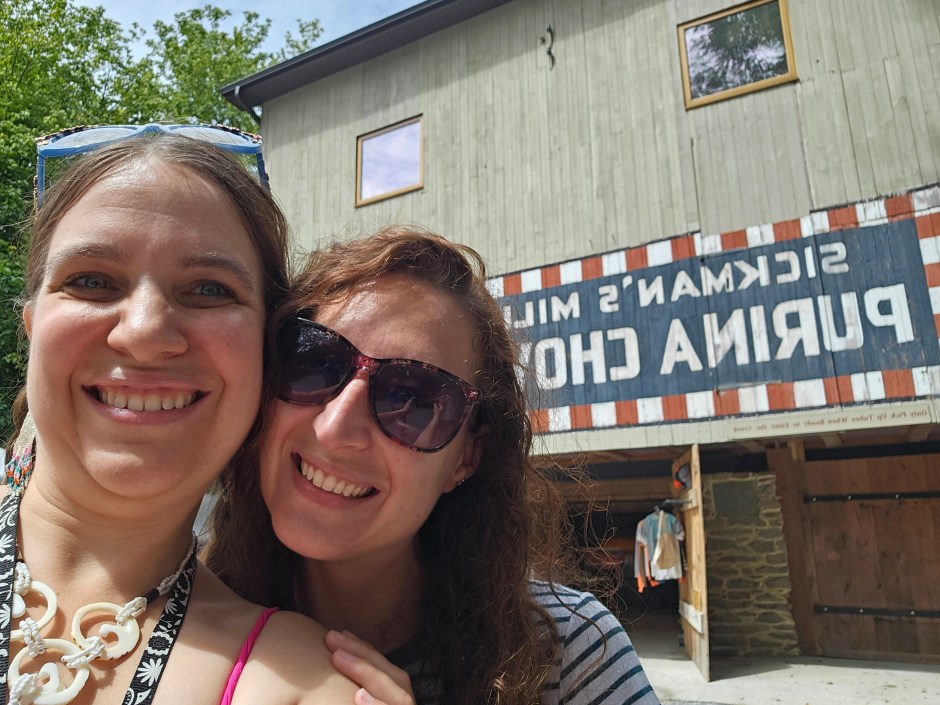
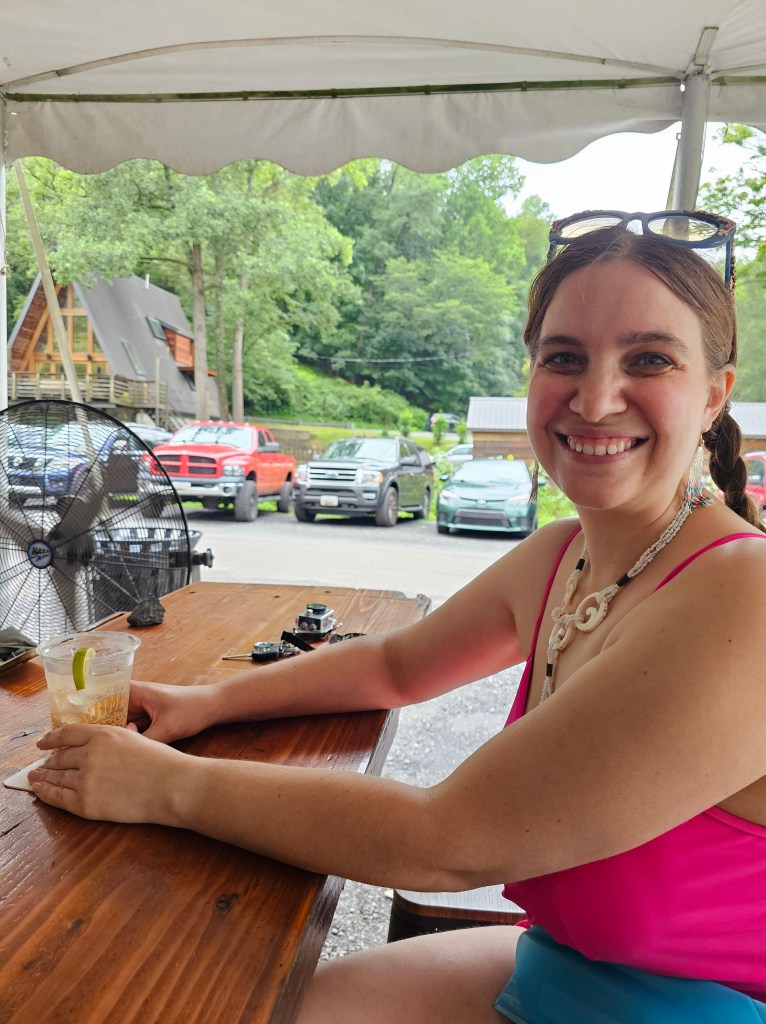
It was one such sanctuary that I happened upon on a summer morning—not entirely by accident, as I had made plans to go—but I was surprised to discover that Sickman’s Mill was such a place. Nestled in the southern part of Lancaster County, it doesn’t have the best reception, and lacking any Wi-Fi, one is forced, as their sign proudly declares, to pretend it’s 1969 and talk to other people. I found the bartenders friendly and hospitable, eager to make me feel welcome to a party I didn’t know I’d been invited to as I awaited my friend Kayla’s arrival. They assured me that despite the weather forecast for potential showers, I would still be able to participate in the not-quite-forgotten summer tradition of tubing down a river.

Almost as soon as there were rubber inner tubes leftover from tires, there have been people putting tubs in rivers and floating down them. What could be a more relaxing way to beat the summer heat? After a trip down the Pequea Creek, I’m not sure I can answer that question. It was the perfect panacea for the blistering heat of the season.

The rain from the night before had raised the creek’s levels and left the morning quite comfortable. The clouds that had threatened thunderstorms gave way to beautiful blue skies, allowing dappled rays of sunlight to stream down through the trees. The crowds had not yet arrived, leaving the creek mostly to ourselves to enjoy the sounds of nature all around us. Occasionally, we were treated to faster-moving sections as the water flowed rapidly over a series of rocks. The only main concern was the occasional felled tree that created unexpected obstacles, but aside from those minor disruptions, it was a beautifully relaxing trip.

The entire route took us about an hour to complete, as the creek was moving more rapidly that morning due to the recent rainfall. It can take up to two hours when the water is slower. We were directed by a polite young man to get out of our tubes and climb the convenient stairs to await a bus that would transport us back to the mill. We didn’t need to wait long before it came lumbering up the lane, and after another group disembarked from the creek to board, we were on our way. It was a short but delightful ride through the countryside.

The old mill itself was not open for exploration, but they more than made up for it with the bar affectionately named Jimmy’s Place after the family’s dog. Naturally, Kayla and I tried the Jimmy Juice—all four flavors. She had the Pineapple and Cranberry, whereas I enjoyed an Orange and a Ginger. Our favorites were the Pineapple and the Ginger, and we were able to take a four-pack home to share. For food, we went only a few feet away from the bar to Mama T’s. I learned the name is a bit of a joke, as Mama T is by all accounts a terrible cook. Don’t worry—the food was quite delicious and includes vegetarian options. Prices ranged from $5 for a slice of sourdough pizza to the more expensive Mama T Burger at $14. The portion sizes were as generous as the people serving us.

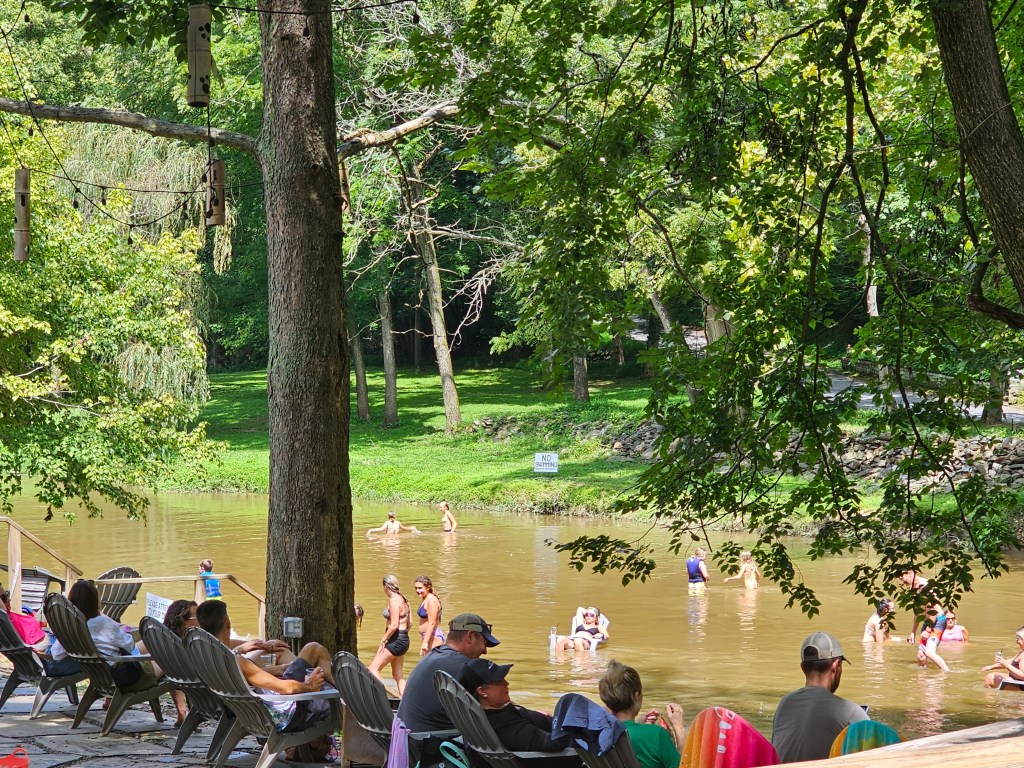
When we returned to the mill, we were surprised to see that the sleepy bar had transformed into an impromptu party. Dogs ran among the people and splashed into the creek with their owners. Some had taken chairs to sit directly in the creek while sipping on the infamous Jimmy Juice, a vodka-based cocktail. Children and adults played lawn games together, and everywhere I looked, people were actually talking to each other instead of scrolling on their phones. It felt as if I had indeed been transported back to 1969. I even had the distinct pleasure of meeting Mama T, who had just landed from Ireland.

It would seem that while the mill has taken on many purposes in its 250-plus years of existence, it remains timeless. One certainly feels as if time simply melts away. Hours and minutes blend together as the party stretches into the afternoon. You forget to check the time, and text messages go unanswered—if they even get through the spotty reception. It is a place to forget the modern world and embrace the echoes of summers past. Though I wouldn’t have thought it all that different from a lazy river at an amusement park, there was something special about tubing down a real river in the middle of the woods. It may be a relic of an era now gone, but it remains a time-honored tradition. As long as there are tubes and rivers, people will continue to float down them.

How can you go tubing?

Luckily, the United States is dotted with rivers, and if nothing else, you can probably find one nearby to float down—provided you have a tube. It’s recommended to bring a friend along and park your cars in two different places unless you find a spot like Sickman’s Mill where you can rent a tube and catch a bus ride back. It’s a bit more adventurous doing it yourself. Though I must confess, as someone with a poor sense of direction, I’d likely miss the designated pickup spot, drift miles downriver, and end up hopelessly lost.

If you don’t want to go the DIY route, finding a place like Sickman’s is usually as simple as Googling “water tubing.” There are plenty of places that offer this kind of summer activity. I can’t promise they’ll all have the same family cookout atmosphere, but the river experience will be similar. I do think there’s something magical about finding a place where cell service isn’t great and Wi-Fi isn’t available. It encourages people to put their phones away and genuinely engage with each other.

Completed: August 2024
Cost: $25 for tubing ($40 additional for drinks and food)
Miles from home: 20
Potentially time warped: 55 years into the past

From Fire and Ash a Phoenix Rises: Firebird Festival in Phoenixville

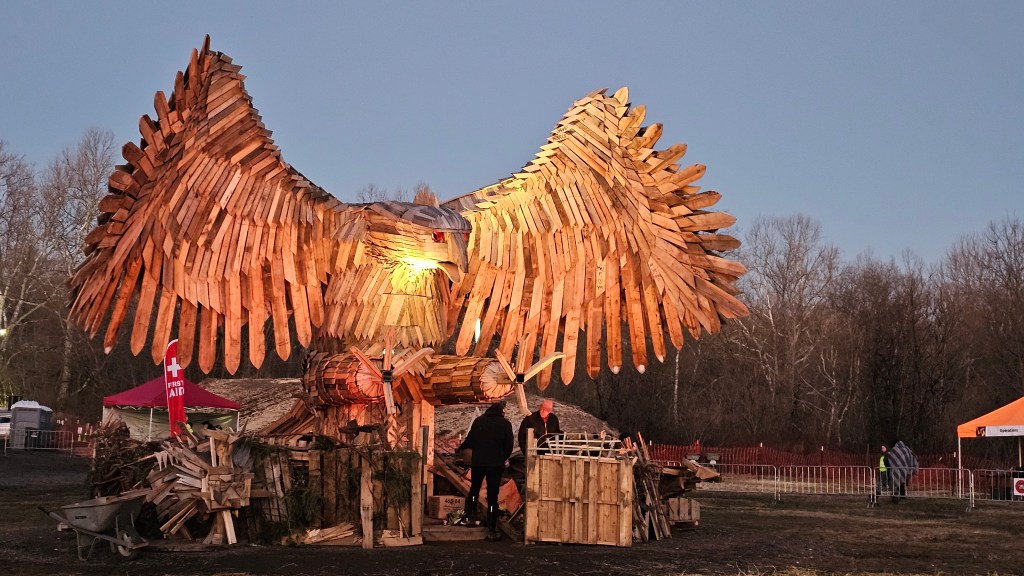
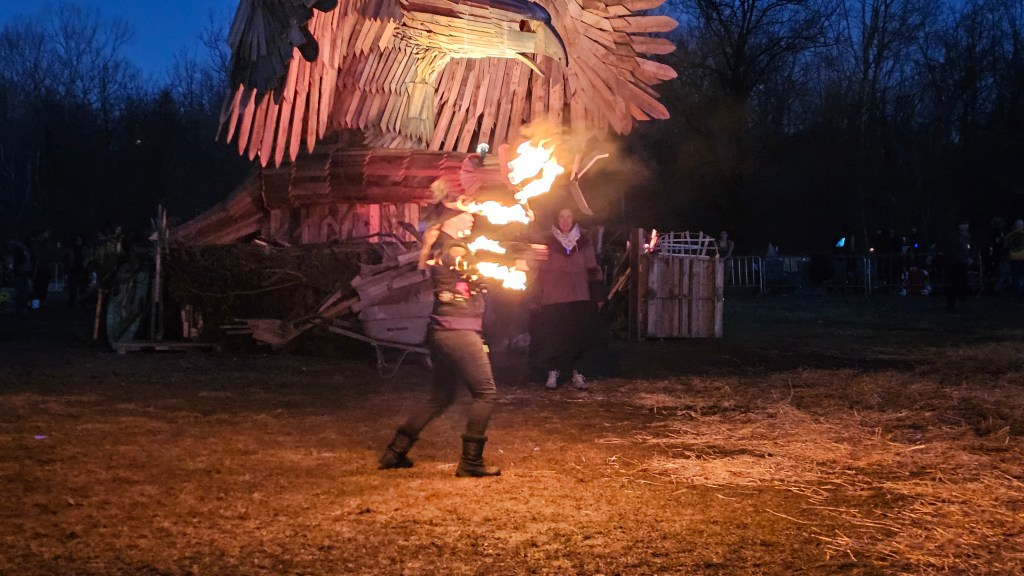
For the past twenty years a mysterious sight has unfolded in the midst of the winter’s cold. A community builds a giant wooden bird and then sets it on fire much to the delight of the spectators. And, dear reader, it is as awesome as it sounds. 

The Firebird Festival, was a dream of a Henrik Stubbe Teglbjaerg, an immigrant from Denmark who has resided in the States since the late 1980’s. He, with four other Phoenixville residents, came up with the idea, in part inspired by similar festivals of Europe where they build things and set it on fire. When he first arrived Phoenixville was a dreary little town. However, it started to revive itself, opening up a theater, art galleries, coffee house and it was as if there was a rebirth, a town rising up out of the ashes. So what could be a more perfect fit than to celebrate with the symbol of rebirth and the town’s own namesake? 

What is more is that each year, the ashes from the burned phoenix are taken and made into clay birds which are then placed inside the wooden bird. When set on fire, the wooden structure acts as a kiln, firing the birds and thus completing the cycle of last year’s bird when they are transformed into decorative pottery. 

What started as a small 150 person event has grown into a 20,000 person festival. Complete with food trucks, fire dancers, a parade, live music, and various wares for sale. It is a celebration of the town and the arts. But rather than relying on fancy performance artists most of the event is volunteer and community run which only speaks to the strength and spirit of the community, despite the growing size of the festival they have protected its heart as a grassroots events that remains untainted by the scale of the crowd. 

Most years, this event takes place in December just as the northern hemisphere enters its darkest stage and the year is coming to a close. However due to an unusually dry spell, the 2024 Firebird Festival was delayed as having a 20 foot wooden set aflame near exceedingly dry forest isn’t exactly the safest idea. Remember dear reader, as much as we all desire to check off our lists we want to make sure we live to check off the rest of our lists when doing so. 

This misfortune of weather was my opportunity. For you see, my sister and I typically celebrate the holiday season each year with our extended family on the second weekend of December. It so happens that the Firebird Festival also happens on that same weekend meaning that we are always previously engaged as the annual Holiday Feast has been a set date since before I was born. So when the organizers moved the Firebird Festival to the first weekend in February it became the must do event of the winter season. 

The new date was also fortuitous as it coincided with an ancient celebration of spring’s light returning. The ancient Celtic holiday of Imbolc was associated with the Celtic Goddess Brigid, the guardian of Hearth and Flame, a perfect pairing for the new date. The ancient holiday was a time of purification, renewal and preparation for the change in season. Fire rituals which honored the returning sun were frequently integrated into the Imbolc celebrations. It was celebrations like these which inspired the Firebird Festival in the first place making the new date perfect. 

As it happened, it was one of the coldest nights of the winter as arctic wind was carried down from the north freezing all that it touched with its icy fingers. Only a few days before the weather had been warm thawing out the ground and making it moist and muddy. Posts about the event warned celebrants of the potential for treacherous conditions on the field as the mud became slick and icy. 

My sister and I did our best to buddle up in preparation for the cold. I fared a bit better than her having a coat that mimicked a fur one, leather gloves lined with kashmir, thick socks and shoes with thick soles to keep out the cold. She had a rather old coat that she put several layers on beneath but the wind still managed to cut through the fabric and whisk away what warmth she had. As the Germans say “there is no bad weather, only bad clothing” and this was a prime example. I stayed pretty toasty throughout the evening but my poor sister struggled. Worry not, I often acted as a wind break once the crowd gathered. 

The festival occurs in two different places, the field where the bird is and downtown Phoenixville where most of the art events occur. After looking at the events and options, we determined that we wouldn’t arrive at 4 pm when the event started but rather closer to 5:30 pm to find parking, walk down to the field. That gave us about 21/2 – 2 hours before the bird was scheduled to be lit at 8 and the fire dancers would start their own performances around 6 (something else I’ve been wanting to see as part of my BucketList, maybe I’ll have to add Fire Dancing to the list now that I know I can volunteer to be one!) 

We followed the instructions for parking and managed to snag a great spot that was near enough to the field to make an easy walk in and out. It was a place that opened for parking after the official event time, I assume in part to help manage crowds. This made it a breeze to get to the Veterans Memorial Park where we were greeted by friendly volunteers who directed us into the event. They had buckets to collect donations which went to supporting it. When we got there we were a little surprised as the lackluster crowd as it seemed only a hundred people were milling about. There were a few food trucks and some tents set up. The band wasn’t playing yet and the sun was only just starting to set. We milled around looking at the different options and then decided to watch the Fire Dancers. We saw some people had chairs set up right at the center of the staging area but other than directly in front, the area was clear. We picked a spot to the left to watch and decided we’d take turns running to the food trucks. 

It felt a little paranoid to hold our spots when there were so few people, but as it turned out this was a crucial strategy because it seemed that within 15 minutes the crowd had tripled in size and the entire perimeter of the bird was lined with spectators enthralled by the fire dancers. Just as twilight fell, the arrived each with a unique costume and different types of instruments to move the flames about. They juggled, they moved around balls of fire, they twirled long lances and staves, they mimicked a bird with wing-like props, they used hoops of fire to make large circles. One wore a plaque mask, another looked like she came from the assassin’s creed, there were knights with shields and spears, there was a woman in a leopard catsuit. Some of the volunteers were better than others but all of them were mesmerizing in their own way as in the background a band played music. 

By the time the sky had gone dark, the crowd had ballooned behind us and we had to jostle our way to back to each other when we went for warm drinks or snacks. We nibbled on delicious food from a truck and sipped on warm apple cider available for purchase from some enthusiastic teens manning a volunteer tent. It seemed a little pricey for warm cider but the proceeds went to support the event and as it didn’t have an entry fee I was happy to pay a little more. The cider warmed my hands which had gotten cold from taking pictures of the fire dancers. 

As the appointed hour grew near, the crowd and the cold intensified. However, it was all great fun as we stood there making friends with the people behind us, chatting and laughing. We helped them hold a spot for their friend when she slipped out. Then around 7:45 the parade arrived. Headed by a giant pheonix of paper mache and cloth, the parade was host to more costumed revelers adorned with lights who danced to the beat of drums. Around the bird they circled to the cheers of the onlookers as the crowd only grew more excited in anticipation of the main event. 

Unfortunately, there seemed to be a bit of a delay as 8 pm came and went. Then 8:05, then 8:10, then 8:15, by the time 8:20 rolled around there were chants of “light the bird” which would be taken up and then die down after a minute or so. This went on for another 10 or 15 minutes until finally the torch bearers chosen by lottery were assembled and permitted to put torch to wood. At first, the flames barely licked up the wooden structure. It seemed as if the wind would snuff out the small fires struggling to find purchase against such icy conditions. How could such small flames survive? Would we be disappointed? 

No, the flames did not die. They continued their merry dance along the wooden structure, flickering brightly in the night. While it was a nice sight to see, it was hardly worth the nearly 3 hours in the freezing cold, perhaps we should pack it in, my sister suggested. I told her that I wanted to spend a little bit longer because we had been there so long and I wanted to enjoy it regardless. Then suddenly, conflagration! The whole thing was alight, the phoenix was finally truly lit. The heat pushed back the cold becoming almost more than we could bear even so far way. I pushed my hands out towards it drinking in the sudden heat. It was a glorious sight to behold as it was truly worthy of its name.It really did look like a mythical creature crackling in the cold night with the promise of the summer’s sun. We stood there enthralled by it, saying goodbye to the old and welcoming the new. 

How can you experience a Firebird Festival?

Obviously if you don’t live near Phoenixville attending this event won’t be cheap or easy and while it is certainly something I recommend if you’re in the area, it isn’t something I would plan an entire vacation around. However, there are lots of different local traditions and festivals throughout the country with their own unique and special. Florida is home to an Underwater Music Festival,  New Mexico has one dedicated to UFOs, Ohio is obsessed with Duck Tape and Washington State hosts a Kite Festival and there are many more. With some searching, you’re almost certain to find a quirky festival near you. Many of these festivals take place in the Spring and Summer months so now is the perfect time to look around your wider area for fun and interesting events.

What’s awesome is that the story of the Firebird Festival demonstrates that it only takes a few people gathering together to make something amazing. It started off as 4 friends getting together, building a small phoenix and setting it alight for 150 people. It has ballooned into an event that attracts thousands each winter. Your own event doesn’t have to be this “big thing” and there’s nothing to stop you from starting your own tradition! Don’t worry about a 20 year commitment though, as once it takes off there will be people to pass the torch to (pun very much intended). 

Small disclaimer:

Technically, there are things that can stop you from starting your own tradition. Local ordinances may prohibit you from doing certain activities like setting things on fire and I really don’t recommend that you do that if you live out in places that a prone to wildfires. I don’t want this blog to be in the news because after reading this, you decided to start your own firebird festival and set the state of California on fire. So as always check your local ordinances and use common sense before trying something you read online.

Cost: Free

Miles from home: 50

Water Lantern: A Festival of Reflection 

It was a warm summer evening, when my sister and I embarked on a journey to the far east or rather to partake in some food and traditions imported from Asia to the United States. This particular evening, we were attended a Water Lantern Festival. One of the amazing things about America is our immigrant roots, welcoming people from across the globe. These people come and bring with them their culture, traditions, beliefs, music and cuisines. It is what makes America a rich, cultural tapestry of endless variety.

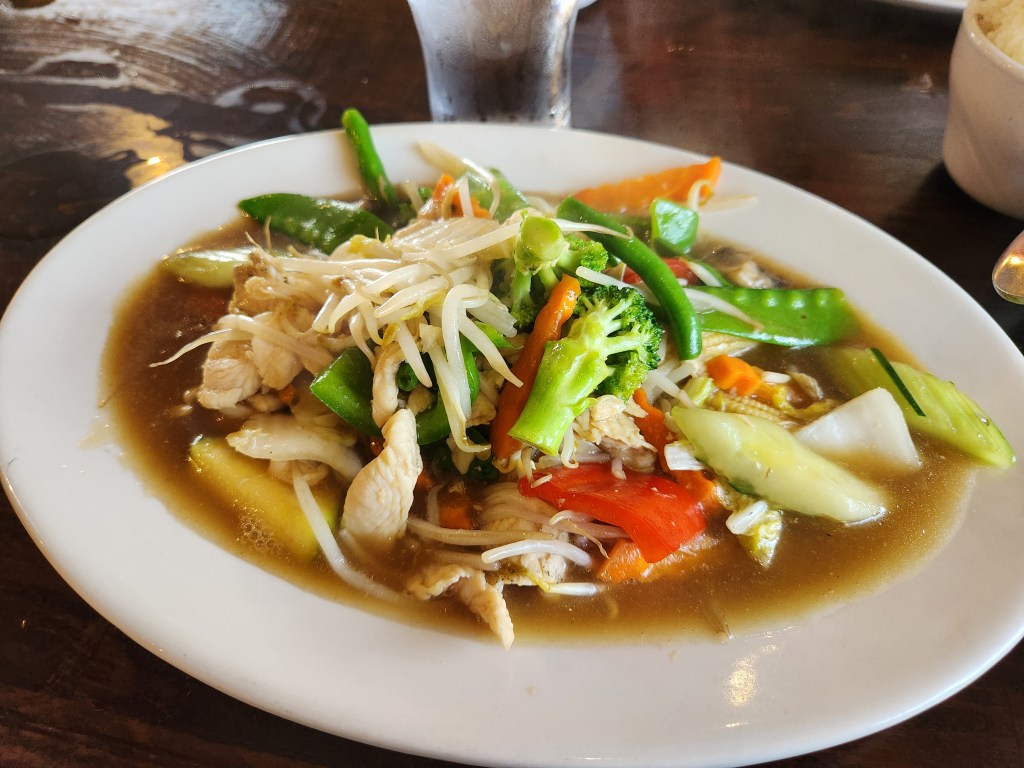
We began our journey by stopping at a Thai restaurant which is owned and operated by Thai people. I always get excited when I can stop at places owned by people who intimately understand the cuisine they are cooking, whether that be because they are originally from there, have family originally from there or spent enough time in careful study to obtain a level of mastery in the authentic way the cuisine ought to be prepared. As someone who doesn’t necessarily have the money to hop on a plane to experience authentic Thai food, I appreciated the opportunity and the culinary skill of the chef. Dinner was a delicious red curry, since I cannot resist a menu item with Thai Basil and my sister had their drunken noodles of which I stole a few bites. 

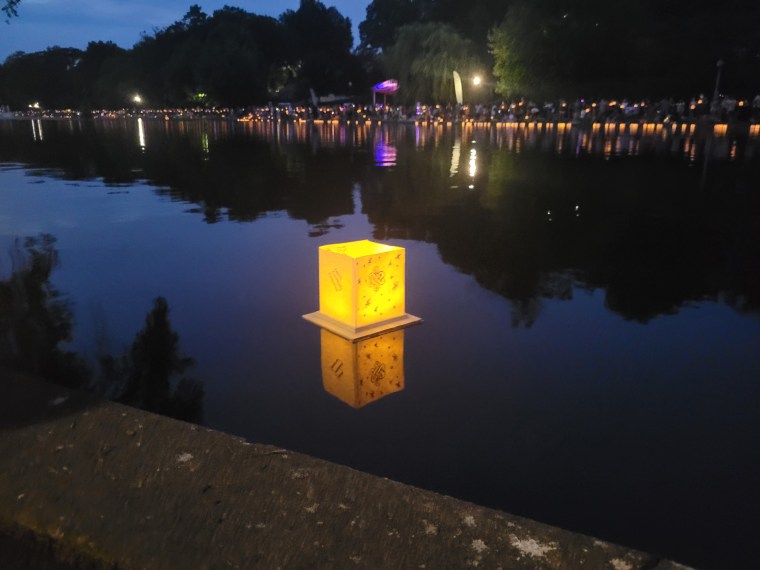
After dinner, we headed over to Harrisburg to the Italian garden where the Water Lantern Fest would be held. The Italian garden is beautiful in its own right, but it was extra festive for the fest and the weather proved to be perfect. It wasn’t too hot, nor was it chilly. The blue sky was clear overhead and it promised to be a lovely evening. It took us a little time to locate the actual stand to obtain the water lanterns as the park was open for all to enjoy. We did eventually find the true “entrance” to the fest by asking some people for directions and headed up the hill to obtain our goodie bags and lanterns. After claiming our prizes, we walked around the end of the manmade lake to find a good spot under the shade of a tree. 

I had attended a lantern fest before, where you release lanterns into the sky which took on a more party atmosphere for the people attending with music and bounce houses, bonfires and food trucks. This one had most of those things tucked away from the main event so that you could still enjoy vendors, food and other activities, but it did not distract from what you were there to do.  Nor was the crowd quite as big as at the Lantern Fest which was just as well, since I tend to favor smaller events to the massive crowds. What I enjoyed about this one was the more subdued and even reflective atmosphere. Flags proudly proclaimed things like gratitude, healing, love and connection, encouraging you to reflect rather than party. The crowd was fairly quiet with many people conversing with their heads together, smiling and laughing. The goodie bag even included conversation cards with prompts to start deeper discussions with the people you were with in order to foster deeper connections. My sister and I were delighted by these and have taken them out at other occasions and have found them to be great at prompting conversations. 

The kit for the lantern included a wooden base, a lantern which could be written upon and a small led candle to turn on and place in the lantern. We noted that most of the lantern components could be reused, recycled or easily be broken down in the environment. Being a manmade lake, the lanterns were in no danger of polluting local waterways or interfering with native wildlife. In addition, the event organizer One World proudly supports water.org. Water.org is an organization which focuses on increasing global access to safe drinking water. They include an informational pamphlet and easy options to donate to raise money to support this cause. I love it when an event is able to go beyond just an enjoyable evening and helps to provide a positive impact.

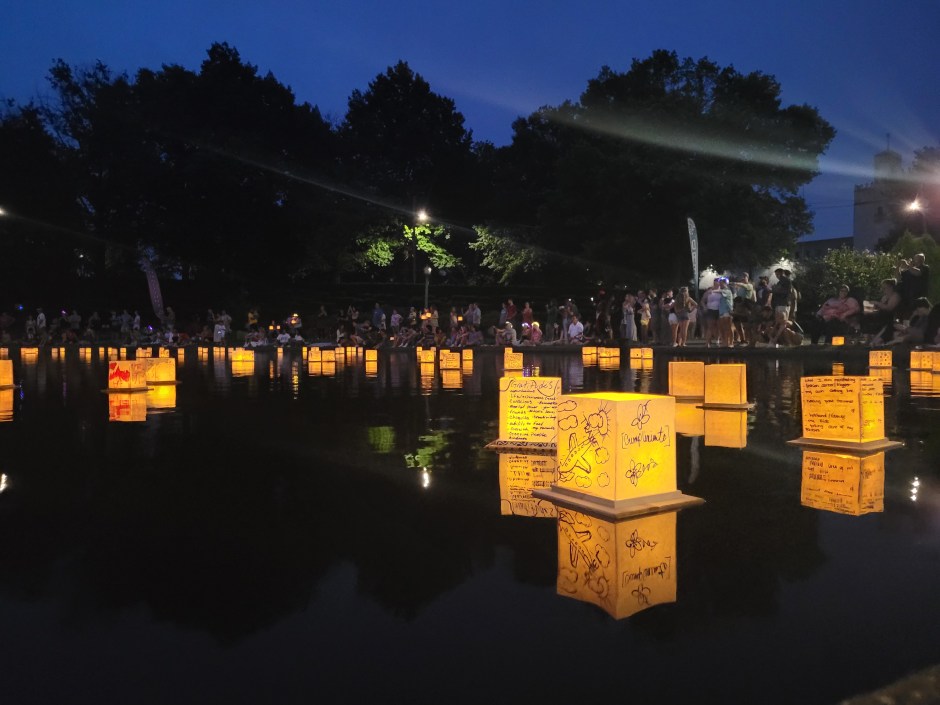
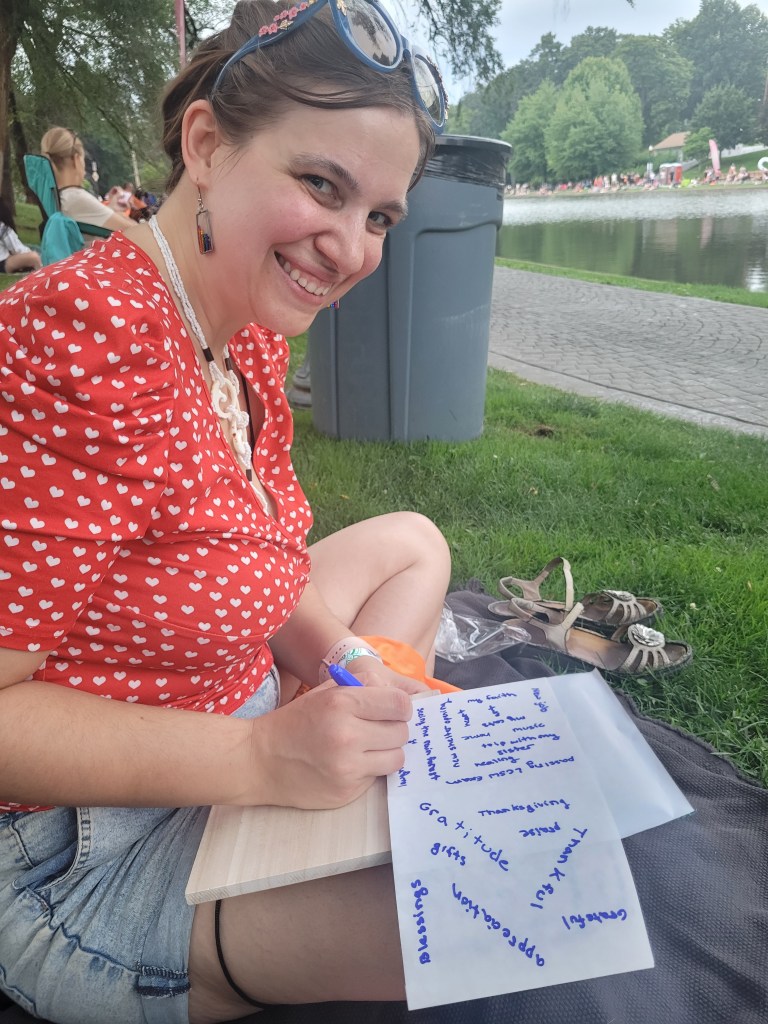
I decorated my lantern with things that I was grateful for and my sister decorated hers with art including a celtic knot and a flowers. Once the sun slipped beneath the horizon, they asked us to gather around the edges of the lake and to pause for reflection. Then they invited us to release our lanterns to allow them to float upon the water. One by one, they spread out, glittering together like stars. As I stepped back to take in the sight, I was able to let out a deep sigh of contentment. Naturally, we snapped a few photos, but mostly my sister and I just walked along the path enjoying the sight and quietly conversing. 

It should be noted that while my dinner was still firmly rooted in its culture of origin, the Water Lantern Fest was less so. Water Lamps originated in India and spread throughout Asia most likely through Buddhist diffusion. They appear in many festivals and have many meanings ranging from worshiping gods, praying for a good marriage, welcoming happiness, guiding the spirits of the departed or welcoming happiness. In Vietnam, there is a town which releases them quite frequently. In China, they are released throughout the year. In Japan, they usually release them to help guide the souls of the dead to the spirit world and allows for reflection for lost loved ones. Sometimes, things are lost in translation especially as it gets diffused across different cultures as it has in Asia since they have a lot of different meanings all over the continent.

Still, despite being a bit unmoored from its roots, it still felt as if it were in the spirit of the original customs. Where other events encourage a sort of frantic, frenanic frenzy of activity, this festival invited you to slow down, to pause and reflect. It encouraged building relationships between people and being more mindful of your surroundings. They also allowed people to come up to a microphone and share their stories. Some people shared their loss, others shared their victories, whereas others shared gratitude. There were lanterns that people dedicated to their loved ones. In a sense, the festival was a melting pot of the many traditions associated with water lanterns from Asia and transforming into something uniquely American. It certainly was not an authentic experience, but it falls under my “good enough” category. 

How can you experience a Water Lantern Fest?

The best way is to go to their website WaterLanternFestival.com and click on your state to see when they might be coming to you. I encourage you to buy tickets early since they increase in price as the date approaches. 

However, there is nothing to stop you from ordering some lanterns and LED candles and hosting your own smaller version with a group of friends. Although, it doesn’t quite hold a candle (pun intended) to seeing a few hundred floating all together, their reflections shimmering in the darkness of the water. It is also important to note that there may be local ordinances preventing such an activity and you would need to ensure proper clean up. After all, we want to keep our local environments beautiful so we can continue to enjoy it for years to come.

Completed: July 15, 2023

Cost: $36 per person (was advertised as $27 but there were vendor fees)

Miles from home: 45 

Did I visit a Botanical Garden or Paradise?

The title is a slight exaggeration, but I think the comparison is apt. After all, in three of the world’s major monotheistic religions, paradise is a garden. 

So, what exactly is a botanical garden? Aside from being a beautiful place to wander around in quiet contemplation, botanical gardens are gardens with a documented collection of plants for the purposes of scientific research, education, conservation and display. They feature the botanical names of the plants. Hence the name botanical garden – not necessarily the cleverest of names, but it certainly gets the job done. 

Some of my earliest memories consist of gardening. Lacking cable, one of my favorite pastimes was actually watching “The Digging Show” or my parents gardening. I loved spending time among the plants and the flowers learning their names, cataloging their color, inhaling their scents and at times nibbling upon them. I quite enjoyed the various herbs and was quite familiar with which ones were safe for me to consume and which ones were best avoided. I spent many hours going to various nurseries. As my parents shopped, they became my playgrounds. Not that I disturbed the merchandise (I had been taught to look not to touch), but I still explored, searching out new plants and finding the statutory and other garden decor scattered about. Our garden was huge and well known in the neighborhood as one of the best. We even had a photographer request to come and take photographs of our garden. 

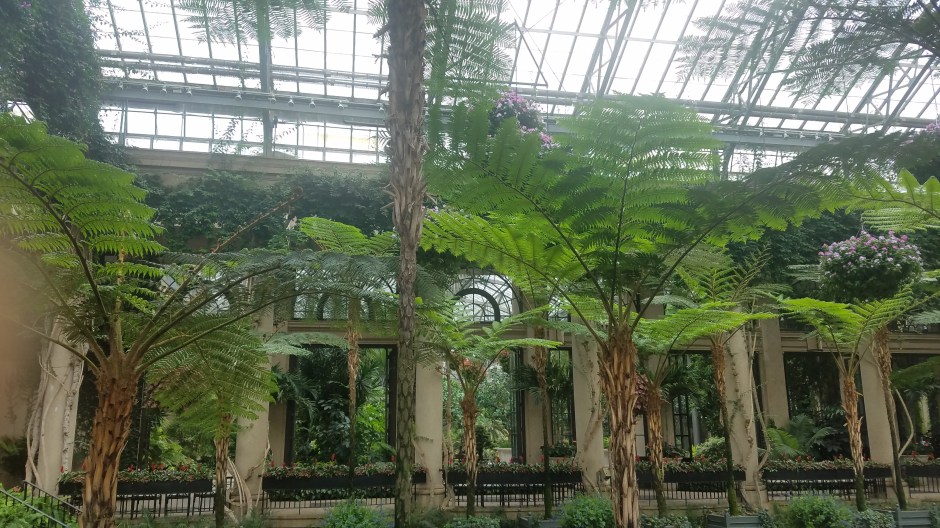
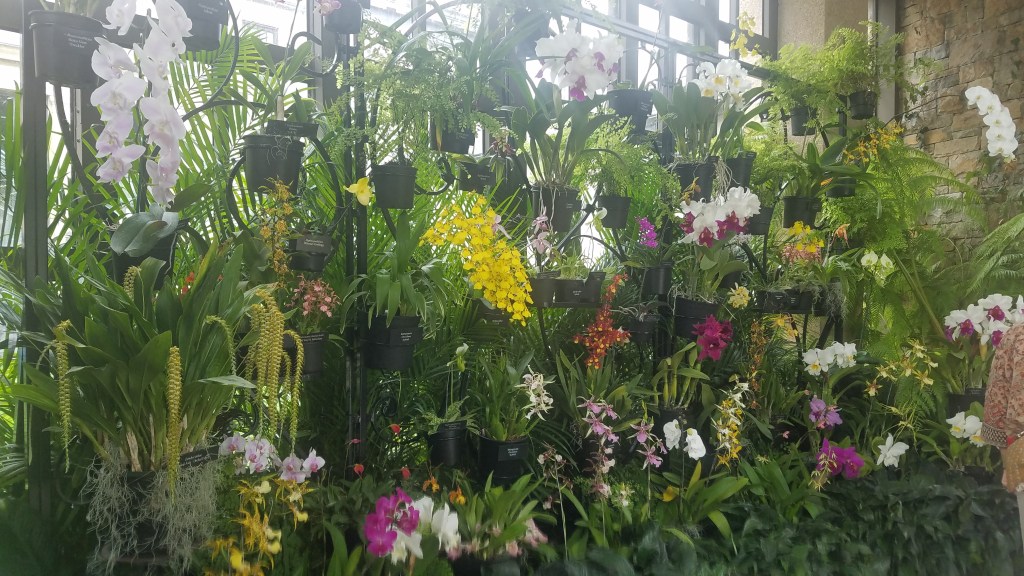
It should come as no surprise then, that I love going to botanical gardens to stroll among the flowers and greenery. Each one is so different which only serves to highlight the vast biodiversity of our planet where no two gardens are alike. Some focus on specific areas while others span ecosystems throughout the planet. No matter what I always find a bit of wonder in them as I am taken in by the majestic blooms and vibrant hues of the leaves. I’ve seen giant lilly pads and a huge array of orchids. I have been overpowered by the sweet scent of roses and delighted by the scent of apple blossoms.

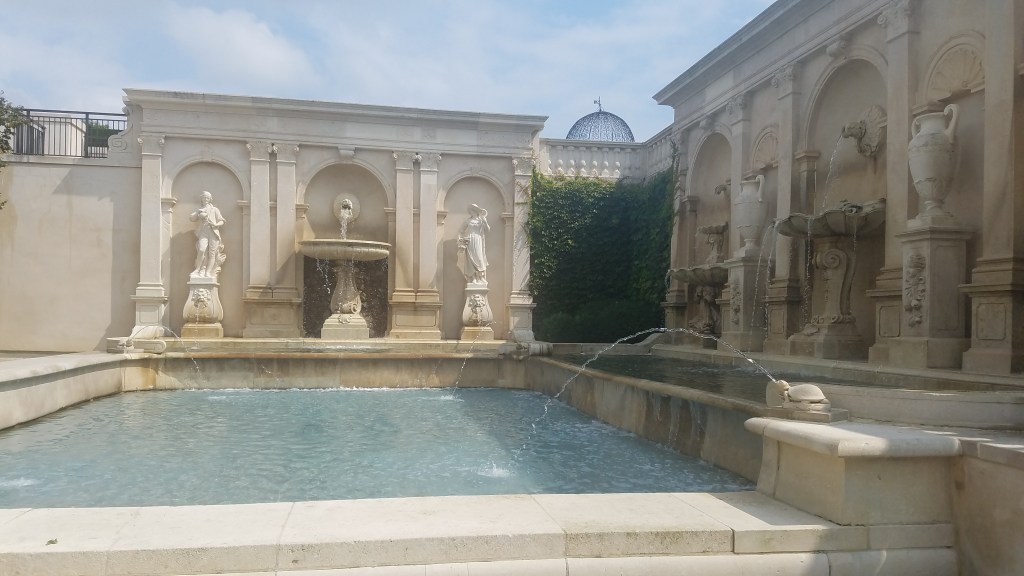
The architecture of these gardens are often a highlight as well featuring delicate archways and imposing pillars. Many of the gardens have various fountains and waterways snaking through them. They may even have plunging waterfalls. Longwood Gardens in particular is known for its spectacular water show which is predominately displayed in the center of the gardens. However, it is also home to more humble buildings, small wooden cottages or small towers tucked away in forested areas.  To traverse the gardens is to move from landscape to landscape each with its own unique take on what makes a garden. There are times when the juxtaposition of the two can almost seem jarring as one moves from one area to the next as if the doorways themselves are portals to between worlds. 

Each world is a delight to the senses and one hardly notices the passage of time or the encroaching heat of a warm day or the way the chill of a winter begins to seep its way into your bones on those cooler days. In all seasons, the gardens offer something new as they are always changing with the pattern of the year. It means there is never a bad time to visit and one can visit quite often as there is always a shift. What was in bloom only a few weeks ago may have faded and a new plant has come to take its turn in the spotlight. The gardens can be enjoyed both in quiet solitude or with a group of friends. 

I find that day among the plants and flowers is as refreshing as a day at the spa. A connection to nature is an important part of mental health. Time outdoors helps to reduce stress and anxiety. Fresh air is also correlated with increased physical health. Exposure to nature is associated with better cognitive function. Certainly spending time in such oxygen rich environments is good for your lungs when we spend so much of our time inside. So yes, it can certainly feel like one has discovered a small slice of paradise when visiting as the stress of the outside world begins to melt away. I certainly envision heaven as a botanical garden, populated with cats of course, with ready access to a vast library of books and tea. 

How can you visit your own slice of paradise?

Luckily, botanical gardens are found throughout the country and indeed the world, so finding one should be relatively simple. I recommend wearing comfortable walking shoes and to pick a day when the weather is particularly good. You will most likely want to bring some water as they are often deceptive in size – they are always bigger than you anticipate. Armed with proper hydration and shoes, you will ensure that your beautiful garden experience doesn’t become hellish. 

Completed: First completed in childhood in a visit to Longwood Gardens

Cost: $32 per person (can vary depending on time of year)

Miles from home: 45 miles from home

I have also visited other gardens throughout the country as I am always up for visiting a garden.

Step Up: Irish Step Dancing

When I was a little girl, I loved watching people dance. I was absolutely obsessed, spending hours watching the Nutcracker Ballet and Riverdance on VHS. I wanted so badly to take dance lessons, but sadly, growing up in a lower middle class household we lacked the funds for dance. This meant I would have to content myself with mimicking what I saw on the screen in my living room with little success both from lack of coaching and space. Jumping around in my room, causing a ruckus wouldn’t have been appreciated. 

As I entered my teen years, it was something that I began to mentally put away. Dance was something that kids and teens did and after highschool, if you didn’t “make it” by having the skill and talent to progress beyond, it was “too late”. I enjoyed color guard for three of my six years in marching band, but that was as close as I came to it. I still sighed somewhat wistfully whenever I got a chance to watch professional dancers especially ballet or Irish Step dance, but I accepted they were things that I wouldn’t be doing. 

However, that was not to be the final chapter on my foray into dance. Because, in the fall of my freshman year at college, I discovered there was in fact a dance ministry on campus. The ministry was student run by young women who had been doing dance since they were young and were willing to pass on their knowledge and skills to anyone who wanted to join up. They did group us by skill level so the more advanced dancers could still be challenged and grow, but they were incredibly welcoming to those of us who had never danced before. 
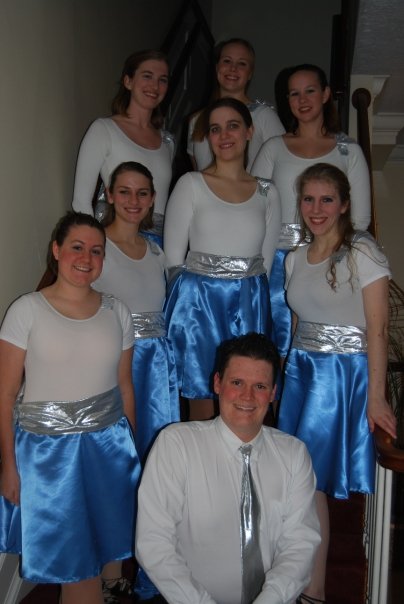
We were given the option to try out different dances and then commit for the semester (or full year). I ended up picking Irish Step Dancing and flags. We paid a small membership due of about $10 each semester. So for $20 bucks, I was able to have a year’s worth of dance classes. Not only that, but also they had a huge collection of costumes meaning that I had very little to buy for the concerts. They directed us to a discount retailer for things like our shoes and I was able to snag my Irish Step Dancing shoes for $10. I believe the total cost for the year was about $50 between the dues, the shoes and one or two items for the costumes.

I will say my first day of class, I felt a bit like a five year old again. I was so excited to finally learn at least something of a dance I’ve loved so much for so long. My teacher was absolutely amazing and the sweetest person. She was a junior year nursing student who brought her calm, compassionate bedside manner into the classroom. She never scolded or lectured us when we messed up, but instead offered gentle correction and critique. We never sought perfection, only to do better each time. 

There are references to Irish step dancing as far back as the 16th century. In a letter to Queen Elizabeth, Sir Henry Sydney references his love for Irish jigs. At first, the music was primarily bagpipes with the hornpipe entering in the 1760’s giving the music its distinctive rhythms. There is some arguments as to when the fiddle was introduced with some people placing it in the 1700’s, but there are references in writing to fiddles in the mid to late 1600’s. 

The modern day form is recognizable for its rigid torso and dancing primarily on the balls of ones feet – like in Riverdance. However, that wasn’t always the case and it is as the name suggests a more modern form of the dance. There are also two distinctive types known as hard shoe and soft shoe. Hard shoe is basically like the tap dance of Irish Step. The hard shoe clacks on the floor making a noise and so the dancer becomes a moving percussion instrument. I danced soft shoe as hard shoe was for the more advanced students. I, sadly, did not get to dance hard shoe. Long story short, I needed to have two years of experience to be able to go into the more advanced class, I went abroad my junior year to study German and in my senior year, there was no one to teach Irish Step as the dances offered depended on having dancers with enough experience to teach it. 

What I found interesting about learning Irish step was that I expected the steps to have fancy Irish sounding names like how ballet has french words for their many movements. We did not have those at all, we had a seemingly limited vocabulary mostly consisting of lifts, beats, cuts, steps, and overs. She would tell us “now we’re going to do the step, step, back” or “Lift, step, step” to help us figure out what set of movements we were about to do. We’d put them together to the beat do them with one foot, then reverse it and do it on the other foot. The pieces of the whole movement would last a few bars of the music. We’d take turns circling our partners and join up as a larger circle going in and out. I cannot say that we were ready to take on the world stage by any stretch of the imagination. Our lifts were certainly not as high as they could be, legs lower, foot movements were decidedly sloppy at times, but we had fun learning. 

Each week I looked forward to going to it even if I was left exhausted by the end of class. Although, it did make going to flags right afterward difficult. My legs would feel like jelly by the time we were finished and instead of being able to go back to my nearby dorm room, I had to trek across campus, often in the cold darkness to the racquetball courts where we held flag practice. By the time I finished flags both my legs and my arms were exhausted. In between class, I practiced my steps in my dorm room and tried to increase my flexibility. I like to think it paid off in our performances.

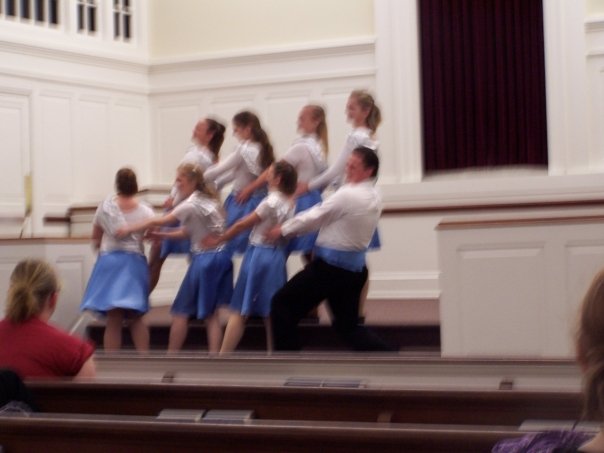
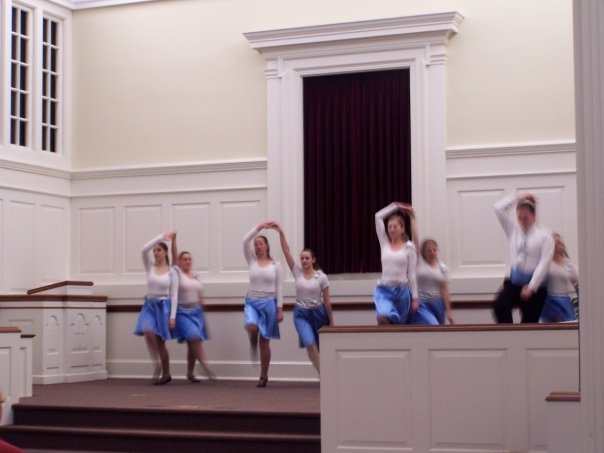
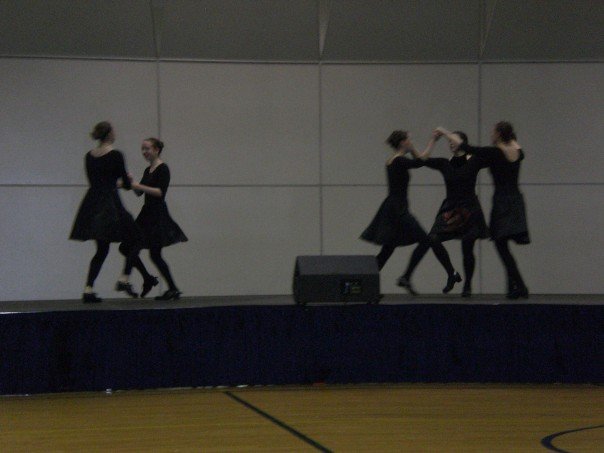
Every year, we put on two concerts. One was the Christmas concert in the small chapel on campus. That one was free for anyone to attend. The other was the larger one in the gymnasium which was put on each spring, to the delight of the entire school. The second one had a small fee to attend to help us raise money to continue to buy costumes. The college let us have access to the sound system and set up a stage for us. During the concerts, each class picked a bible verse to share which went along with the song that we picked. 

My favorite song and verse combination came from my freshman year. Our song was the Salt Lick by Gaelic Storm and our verse was Mathew 5:30 “You are the salt of the earth. But if the salt loses its saltiness, how can it be made salty again? It is no longer good for anything, except to be thrown out and trampled underfoot.” It was a verse to remind us to be as salt, preserving, enhancing and flavoring the world with God’s love and light. 

I was incredibly blessed to have the opportunity to dance in college and to live out a childhood dream of learning a skill I thought was closed off to me. I think many of us wish we had certain opportunities to learn things when we were younger, but we think that there won’t be people to teach us. Perhaps, like me, you may think that unless you’re super talented there isn’t aren’t opportunities for you as an adult to learn. It may seem that the time to try and get into an interest has passed, but there are actually opportunities all around you if you keep your eyes and ears open. I can say that there are places which offer adult dance lessons even if they are harder to find. I also see that there are places for adult beginners to learn martial arts, sports, music, art and more. 
One of the people I do a podcast with, started his martial arts journey in his late 40’s. While he may not be as flexible or learn as quickly as some of the younger guys, he is doing it and loving it. He wasn’t afraid to be embarrassed by his lack of skill and embraced learning something new. Nor is the goal or focus to be a world champion or professional, it’s something that can be done just for fun. 

So often the activities we do in childhood semi-translate to work at this thing really hard so you can get a scholarship or go be a professional. The messages we receive as children is that these activities are not for themselves, they’re for doing something with them. They have to be tied to these larger goals. There’s also this obsession with accomplishing things as a young person and this false narrative that if you don’t master it by the time you’re 20, you’re never going to, so don’t even bother. So as adult learners we have to say to the first, actually, I can do this just for fun. To the second, we can say my life has not already been completely written and I can still accomplish a lot, so if I want to master this thing, I still can. It really depends on your own individual goals for whatever it is you want to do. 

So how can you step up as it were?

As I said earlier, it’s a matter of keeping your eyes and ears open. In my area, there are several places which offer adult classes for dance. One place is another dance ministry which helps keep the cost down. It is even offering a martial arts class which I am hopeful to join next year! Occasionally, you can find places offering introductory workshops for dance which gives you a taste of what a class would be like. It’s really a matter of actively seeking out those opportunities. 

Now, I have seen some online dance apps and courses. I’m not sure how effective they are because you may not have the feedback that you’d get from a live person to help correct your form and to explain a move more fully if you don’t understand the first explanation. Also you won’t be in an actual dance studio. I personally found the mirrors in the dance studio to be really helpful because I could visually see exactly what my body looked like. So I knew that my leg wasn’t perfectly straight or the lift was sloppy. I could see if my arms weren’t held up evenly with one side dropping down. I think they’d be really good for absolute beginners and for people who just want to try it for fun. There is of course no substitution for personalized instruction that live classes bring, but I do think the apps provide access to tools and information that are difficult to otherwise obtain.

Completed: Fall 2006 through Fall 2008

Cost: $100 for 3 semesters

Miles from home: 0 from college dorm / 39 from home

Baldwin’s Bookstore: Beautiful Books! 

Book lovers know the allure of bookstores and libraries. There’s something about walking into these sanctuaries of knowledge and stories. The distinct smell of the books, the quiet atmosphere that is seldom found in other public spaces, the aesthetic symmetry of rows and rows of carefully shelved worlds. The promise that an entire universe may be unlocked with just the turn of a page. The stories almost seem to whisper an invitation and your fingers start to itch with an eagerness to begin the search. So many dance partners want to fill your card and it is almost dizzying. 

There is even something extra special about a bookstore that offers a little more. Beautiful bookstores, charming bookstores, the ones with cats and tea, the ones with stacks upon stacks of books. Ones that even use books as structures like the book tunnel in L.A.’s famous Last Bookstore. Baldwin’s bookstore is just the sort of bookstore for booklovers. Named one of the most beautiful Bookstores in America, this hidden treasure of Chester County can be easily overlooked if one is not careful. 
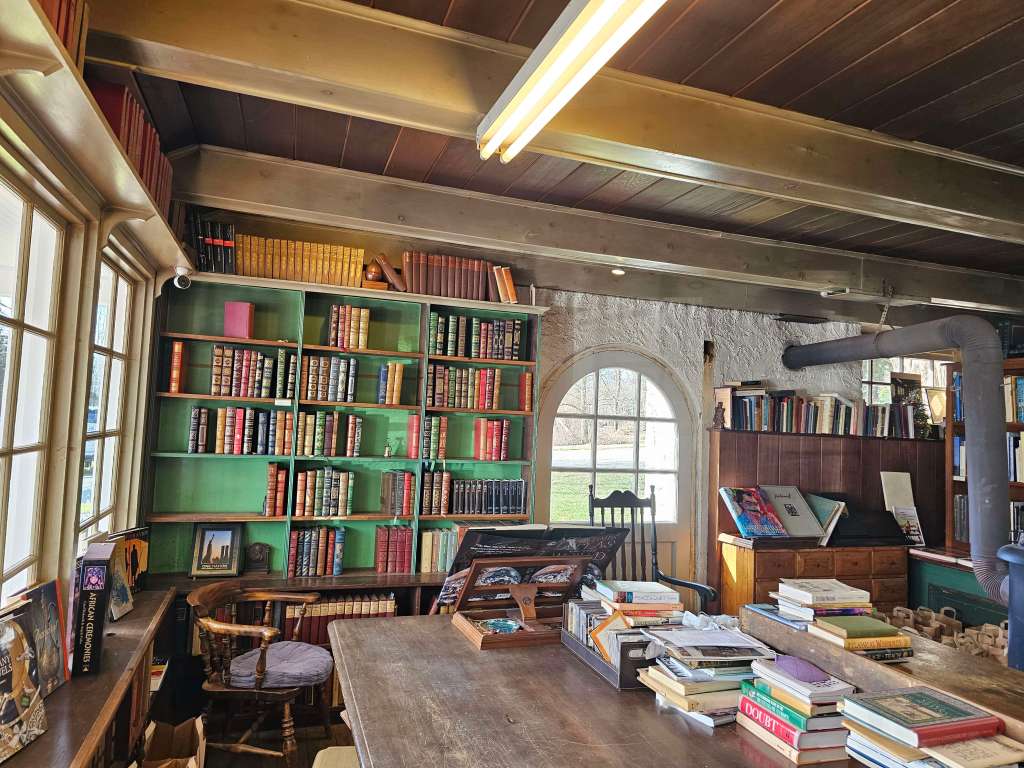
Seriously, you can drive right by it and not even notice that you’ve passed it as outside it is an unassuming stone barn. One would never guess that it houses 5 stories of books and has a sizeable collection of rare and antique books. As it is primarily a used bookstore, it is always a treasure hunt and one never knows what one will find tucked away on the shelves. It is so large and extensive that it has a map for visitors at the front and even with the map, one can find oneself semi-lost among the stacks of books. 

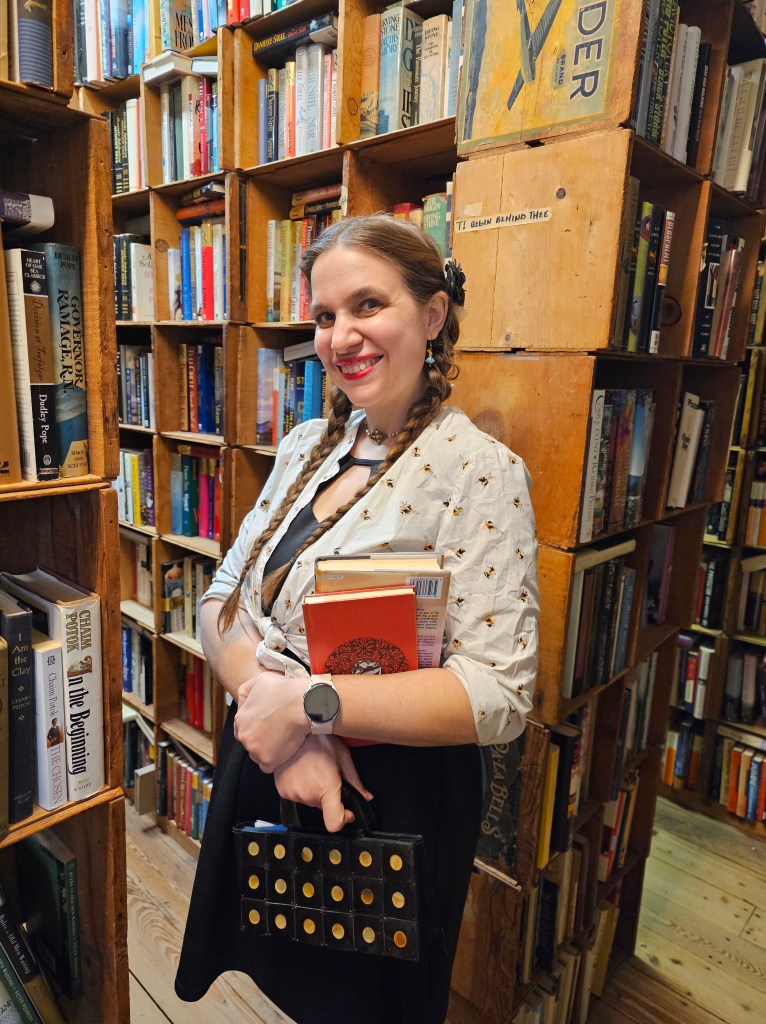
A quirk of the bookstore is that many of the shelves are not shelves at all, but rather nailed together crates. This charming store invites you to venture up stairs to ever higher levels. Tucked around every corner are chairs, some more enticing than others, for you to sit and read to your heart’s content. It would be easy to spend hours if not days inside the store. 

My sister and I ventured forth on a cold’s winter’s day after grabbing breakfast together at a coffee shop near my house. We had saved this particular outing for the colder months as we are not overly fond of extreme hot or cold weather. It is always good to have a few indoor activities in your back pocket for those times when it is simply too miserable to spend much time outdoors. 

Upon entering the store, we were greeted by a delightful display of older and rare books. We breathed in deep, savoring the familiar smell of books. The older gentleman behind the front desk said good morning and inquired as to whether it was our first time to the store. He showed up the map and politely explained the general layout of the store and encouraged us to peak in the backroom which housed a few artifacts from when this barn was also a home. After the short orientation, we began our exploration of the store. 

We carefully meandered through the rows of books of over 300,000 books, stopping to peruse for overlooked gems. One of the gems was the map of Philadelphia from over 100 years ago displayed on a table (not for sale). Both my sister and I adore old maps, so it was an unexpected treat to be able to sit and study it before continuing our book adventure. 

One thing of note for the taller readers, there are numerous signs to “duck” when going up and down the stairs, so be wary when transitioning between floors. Despite being in a barn, most of the areas were quite comfortable with only one or two places lacking in proper insulation for the temperature to be comfortable. We did stop to take a few pictures of ourselves in the books. 

It was easy to see why it was named one of the loveliest bookstores both inside and out. The original stone building was built in 1822 and the rustic shelving and floors only add to its charm. Sadly, I did not spy any of the rumored cats said to be residing in the barn. It is possible they were sleeping in a corner somewhere or perhaps they were no longer in residence.

My sister and I found a few treasures and made our way down the steps to the front of the building for our purchases. Satisfied with our treasure hunt, we went home to enjoy our books. I am certain that I will make the journey again for another visit. After all, with an ever changing inventory there is certain to be other diamonds in the rough to find in the future. 

How can you visit a beautiful bookstore?

Bookstores abound and business is booming. Something good that came out of the pandemic was the increased demand for real things, real recommendations from real people. We’re wired for community and connection, something that a digital reality can’t really replicate (though they do try). Not only are books a form of entertainment, but also people are forming communities around books. Bookstores are also one of the few places that seemed to sell a variety of board and card games aimed at adults. Bookstores have become hubs of community and connection. 

Going to Indie and used bookstores like Baldwin’s is often a treat not only for finding books but also for the atmosphere they provide. I encourage you to seek out the hole in the wall places. They don’t necessarily have to make a list of “most beautiful” because with all the hundreds of bookstores, how could a writer of a popular magazine or blog really know if they missed yours? And besides beauty is in the eye of the beholder. 

Forging Axes & Sibling Bonds!

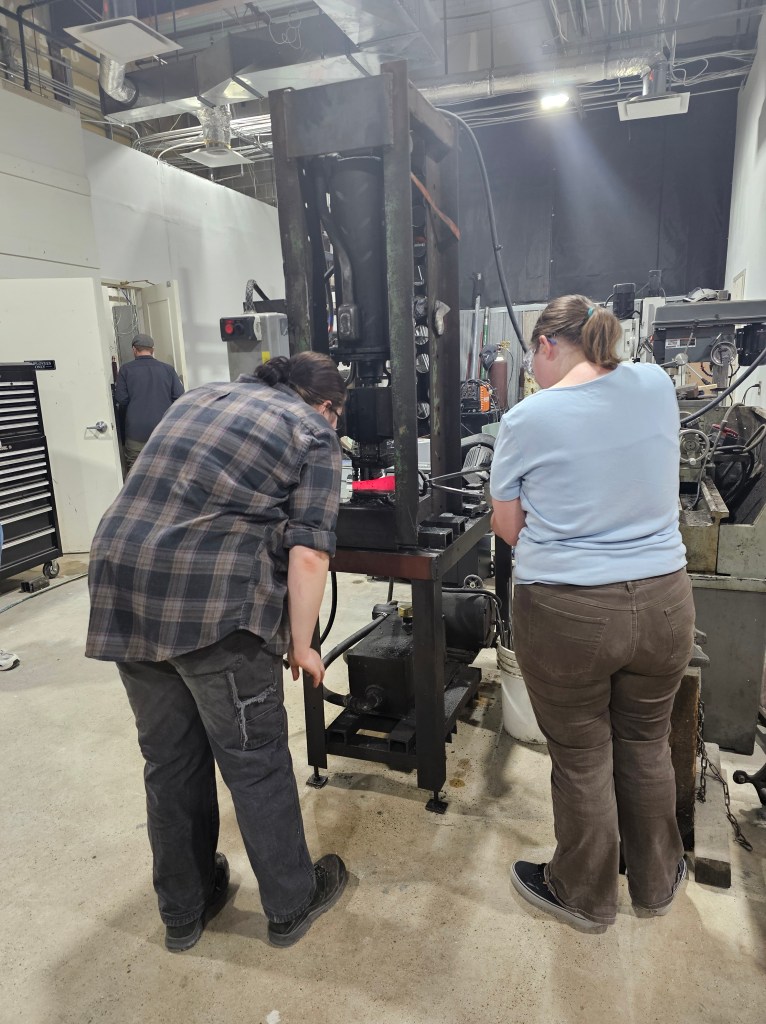
As an avid fantasy reader, blacksmithing has always carried a bit of an allure. So when I was invited to attend a birthday party with my sister at the Drunken Smithy, I naturally acquiesced and trekked with her on a cold’s winter day to get warmed up by the forge. To say I was excited is an under-exaggeration. What could be more exciting than combining some of my favorite things, sharp objects, fire and hitting things? 

I was stoked to put my muscles to the test hammering out molten hot metal and shaping it to my will. I do work out and I always enjoy using my muscles for something other than merely moving weights up and down semi-pointlessly. It makes all those hours spent sweating worth it when I can use them competently to accomplish my goals independently. 

Forging weapons is an ancient human art. In fact the very materials that we humans used for weapons give rise to the delineation of pre-historical epochs Stone Age (stone weapons and tools – though this is such a long period of time it’s now broken down into palaeolithic, mesolithic and neolithic), Copper Age (copper weapons), Bronze Age (bronze weapons), and Iron Age. There is evidence that we humans have been using metals for over 40,000 years with the discovery of gold in some Spanish caves dating back to the neolithic era. The oldest known culture which utilized smelting was located in Serbia in the 6th millennium BC. Many places say that it originated there, but I allow for the possibility that there is an even older, yet undiscovered culture which may go back even further either in the same area of the world or perhaps, another part. 

It is this very long and ancient history that has always captured my imagination when reading about blacksmithing or other metallurgical crafts. In a way, it is the magic of our world. We take two lumps of unrefined metal and somehow through fire and our own sheer will manage to craft it into something truly useful. It was this craft that gave the rise to empires and civilizations. Advance knowledge or lack thereof could topple a once mighty kingdom or stop an invading horde. I was always fascinated by how different styles of weaponry and fighting arose in different parts of the world and how their strengths and weaknesses interacted with the styles of other cultures to rise to power or fall into ruin. 

There is reading about something and then there is doing something. I am someone who relishes doing, even if it’s only a small taste of the activity as it gives me a more intimate understanding of what I’m reading or studying. Being able to physically see how the metal really does slowly flow when it’s heated up and to feel the feedback of my strikes against the anvil through my arm really made it a visceral connection to all the things I’d learned. Abstract concepts became cemented in firm reality. Also, it’s just really fun to hit stuff. 

The gentlemen of the Drunken Smithy were excellent teachers. They gave general guidance to the whole group and then one on one assistance as we needed it. They listened to your goals and vision first, to try and give you enough information to go in the direction you desired without holding your hand or doing it for you. They provided just enough scaffolding for us as students of the craft to keep us engaged and excited without feeling overwhelmed. 

They did this by first limiting the range of options we could choose from keeping the initial lessons fairly simple, throwing axes or knives. Each of those options came with a pre-cut piece of metal which meant it shortened the process of crafting considerably. We would not be melting down the metals, mixing them and then shaping our weapons from a hard lump. That would be one too advanced for beginners and two take way too long for a single afternoon. 

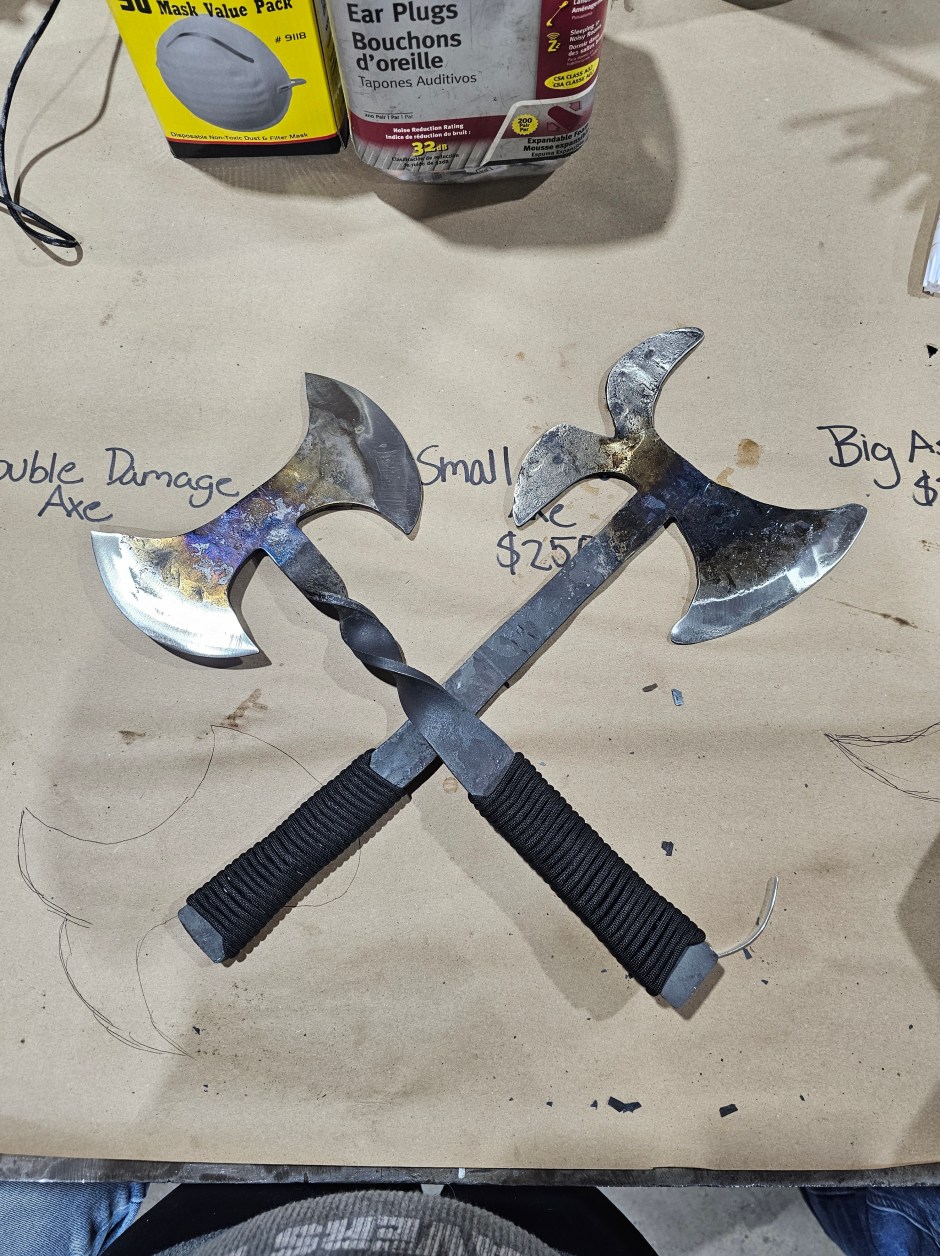
I picked a throwing ax, because I am a Viking at heart, and my sister picked the knife. As the one who always has to go slightly off the beaten path, I naturally added a little bit of flair to my ax by splitting butt into two artfully curled pieces. I was informed this was a little more of an advanced technique but rather than discourage me from my vision, they supported me by spending a little more time one on one with me to help me see it through. 

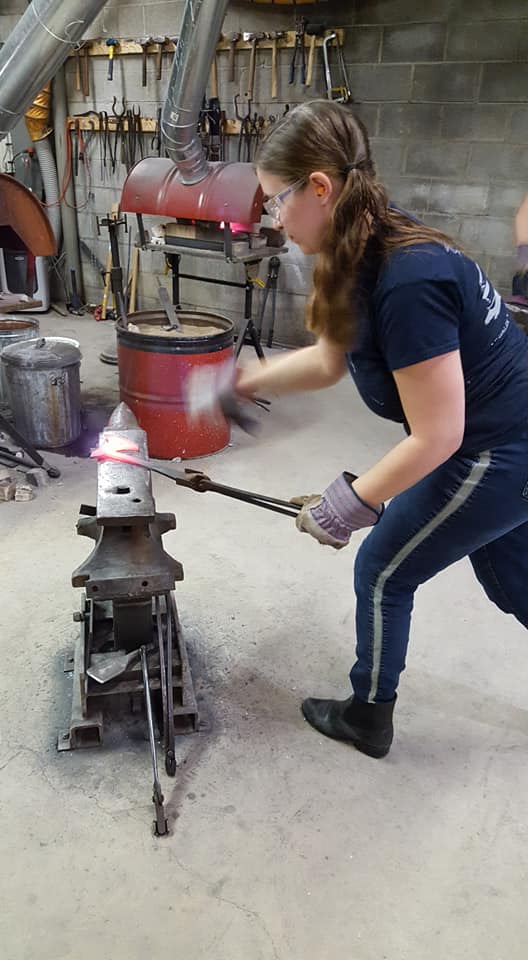
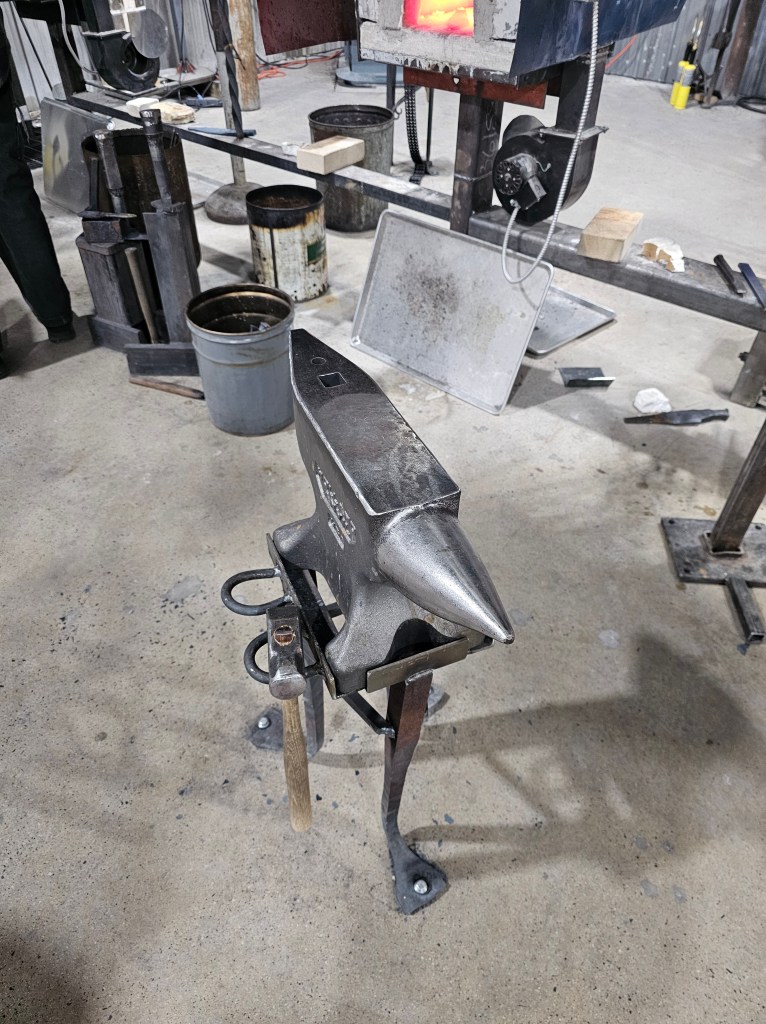
After picking out our templates, we set to work by first making them extremely hot. We did this by placing them inside the forge which is about 1,800 degrees fahrenheit and waited until the metal looked red. Once they were red, we pulled them out with tongs and took them to the anvil. The anvil is a peculiar shape, but each part is useful in creating the different desired shapes of the various tools and weapons a smith may desire to create. The act of hammering causes the metal to flow in a desired direction and shape in the process of “drawing out” the metal. In my case, rather than only focusing on the blade of the ax, I also focused on the butt of the ax. In order to achieve the desired shape, the butt had to be split. They did this by first cutting a small piece of the metal out and then helping me drive down the split. I then drew the metal out in two different directions giving it a distinctive shape. 

What I appreciated about the process was they consistently told us that it was when we felt the blade had reached a desired shape that it was done. They gave praise and constructive feedback about how a given shape may affect the weapon’s performance, but never dissuaded people from what they were doing or trying to achieve. If we were happy with it, they were happy with it. 

After we got our weapons into the general desired shape, we left them all to cool off in sand. As they were cooling, our gracious hosts offered us snacks including sausage that we could roast near the forge. They also allowed us free reign of their drinks which included some delicious cider. If you are a vegetarian, vegan or do not eat pork products you may wish to bring something along as the primary source of protein was sausage.  

After a quick snack, we then went to the sanding machines to further refine and grind down the rougher parts. Once sanded, we dipped them in some sort of chemical that I don’t really remember what they said it was (oil?) to give them a characteristic black color rather than the gray of stainless steel. Then we put the final touches on our work by sharpening the edges into a true blade worthy of the shield wall! 

The day could not have been complete, without some ax throwing. It is a bit trickier than you’d think because the ax has to hit the target bladeside up in order to stick otherwise it bounces harmlessly off. We had a glorious time trying to hit the target and make it stick. My sister was a little better at it than myself, but in my next attempt at ax throwing, I not only hit the target, I managed a bullseye (more on that later). 

Satisfied with our weapons, we got back into our car and the first thing we said was “We have to take Josh!” (our brother). It took almost five years (thanks COVID), but we did return to the forge with our brother and forged again. The smithy has moved to a bigger location and has another expansion in the works. Once again, my sister chose a knife, but a bigger one. I chose an ax (but a bigger one) and my brother also chose an ax. We truly enjoyed both experiences and look forward to returning to the forge for another time. Who says Bucket List items can’t be done more than once? 

How can you forge your own weapon?

If you’re in the south-central PA area then the Drunken Smithy is the best choice. There are blacksmiths throughout the United States, some of them may offer classes like this one. Depending on how hands-on they want to be, the classes may range from a half day (like this one) or several days, if they are trying to give you more of the process. If you want a more intensive course, then your local college, trade school or arts centers may offer an introductory course. Artist Blacksmith Association of North America may be a good online resource to find blacksmiths in your area. 

Be on the lookout for demonstrations and ask the person where they got their start or if they know of any instructors who may be interested in teaching. One of the great things about artisans is that they desire to keep their craft alive especially in this age of technology when crafts are in danger of dying out, so many are very eager to find and direct students to keep the craft alive.

Completed: Feb. 2019 & May 2024 

Miles from home:  23

Cost: Ranges depending on the project and type of class. The Drunken Smithy has weapons ranging from $150 – $375, but they have other options such as rings and flowers which are about $50. 

My siblings and I opted for a more expensive experience. We were able to do this in part because the following month the sister outing was much cheaper. 

Christkindlmarkt: A 700 Year Old German Tradition 

Since the 1300’s small pop-up markets have been part of the Christmas season in Europe. These small December markets intended to allow people to stock up on meat and other necessities at the beginning of the winter season. These markets grew overtime to allow toy makers, confectioners and other craftsmen to set up stalls under the name “Saint Nicholas market”. They also began to sell roasted chestnuts, nuts and almonds. This tradition spread throughout the German Speaking world. It was later renamed Christkindlmark during the Reformation and the tradition continues to this day. 

Each December stalls are set up to showcase various wares for either a few days or for weeks depending on the event. Along with the wares, food vendors come out to sell traditional foods like currywurst, potato pancakes, gulasch, sauerkraut and of course Gluhwein (a mulled red wine). Those stalwart enough to brave the cold can enjoy pursuing these outdoor markets by the light of twinkling lights. 

So popular and beloved are these markets, that there are entire river cruises devoted to taking tourists along the Rhein to visit them during the Christmas season. These visitors bring back tales of the delicious food, sparkling lights and of course carefully crafted wares. After seeing photos of these places, one might begin to think that the magic of the season is best found abroad and start to dream of flying over to the old country. However, dear reader, as you have no doubt already guessed, these coveted markets are not only found across the vast expanse of ocean but rather can be found right here in the United States. Like their European counterparts, there are the larger and more famous Christkindlmarkts, such as the ones found in Grand Rapids Michigan or Bethlehem Pennsylvania. However, just as there are smaller markets in the smaller towns of Germany, there are smaller markets here in the United States. 

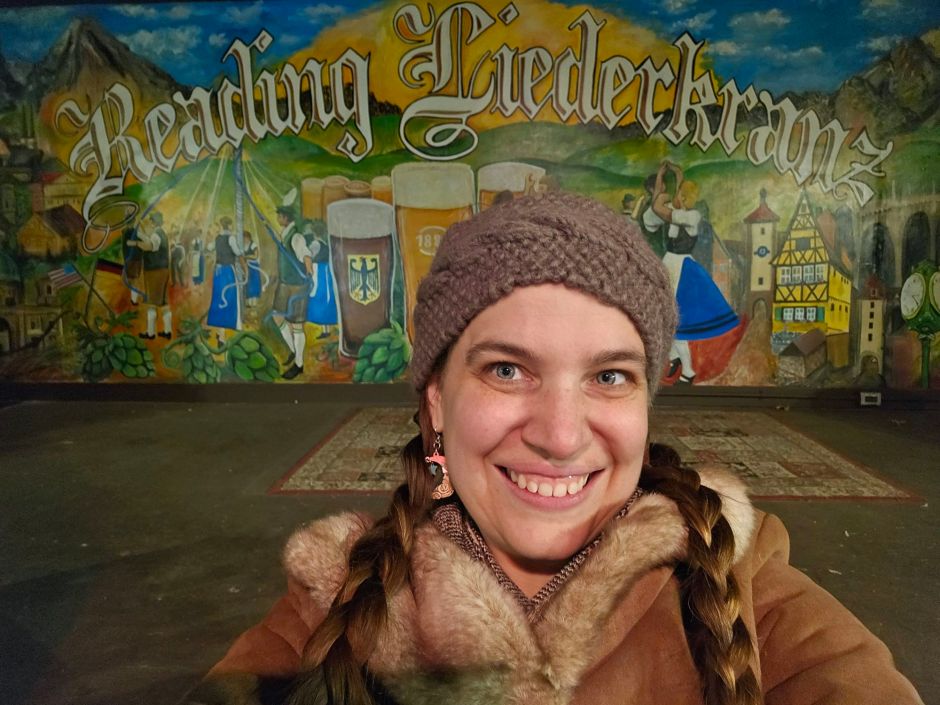
So it was early in the evening that I set out with my work partner, Nicole, to visit the Reading Liederkranz Christkindlmarkt. We choose that time because the market would just be getting dark and the lights would really pop against the darkness of the sky. The city of Reading is situated along the Blue Mountain Ridge of the Appalachian Mountains and so part of our journey included going up the side of the ridge overlooking the city. As we climbed above the urban center, the city gave way to suburban areas covered with trees, reminding us both of our time in Marburg, Germany. Up, up, up we went, passing houses that vaguely resembled German architecture and it was if we had been transported across the sea. Suddenly on our right the forest gave way to a small piece of Germany, the Reading Liederkranz. 

For those not in the know a Liederkranz is a German singing and cultural society which was established to promote and perpetuate German singing, dancing, music, language, foreign exchange and culture. Branches of Liederkranz can be found throughout the United States with many of them established in the mid to late 1800’s. There does not appear to be one overarching society which oversees all the branches, but rather each branch is independent of the others. Like many branches, the Reading Liederkranz hosts various german festivals throughout the year to mirror the ones in Germany. So, just like their German counterparts the Christkindlmarkt of the Reading Liederkranz occurs for a few short days during the Christmas season with stalls set up outside for customers to shop for unique gifts for their loved ones.

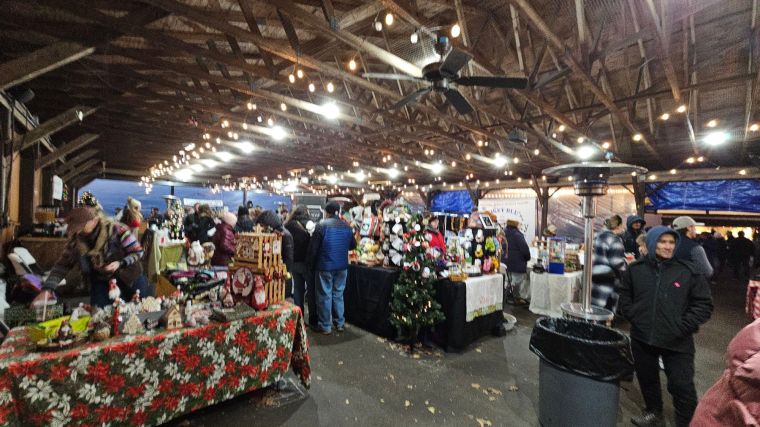
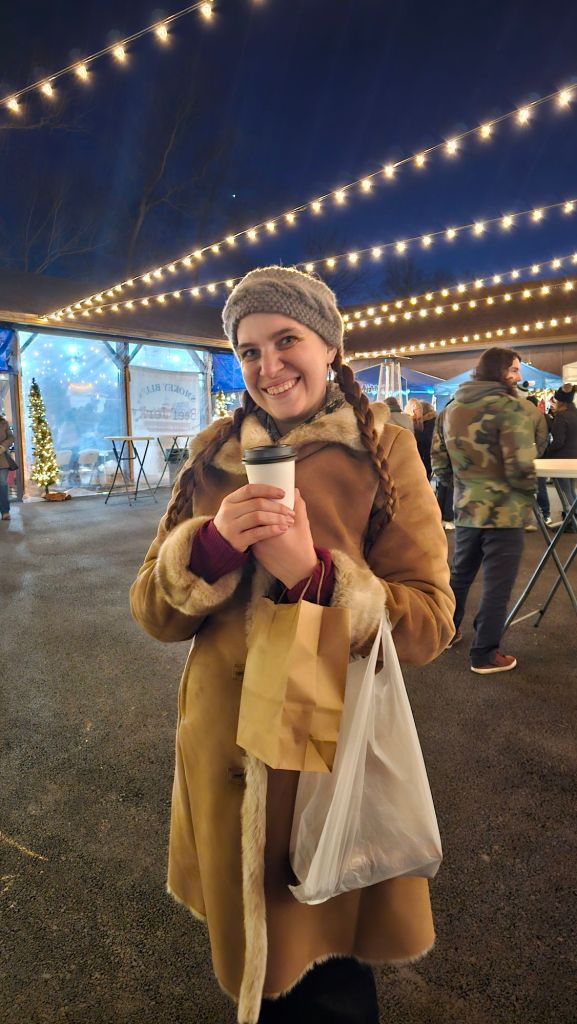
In addition to unique gifts, some of them imported from Germany and Austria, they offered traditional German food that can be found at the markets. I naturally had to buy some choosing to partake in the Currywurst, and potato pancakes. I was a little disappointed that the potato pancakes did not come with the traditional applesauce but instead came with sourcream. It is possible that they were simply sold out of the applesauce. I noted there were some items crossed off the menu as no longer available. As it was cold, I could not pass up the opportunity to sip on some warm Gluhwein. Gluhwein is a mulled red wine served at almost every Christkindlmarkt and I highly recommend it as a part of your Christmas tradition. 

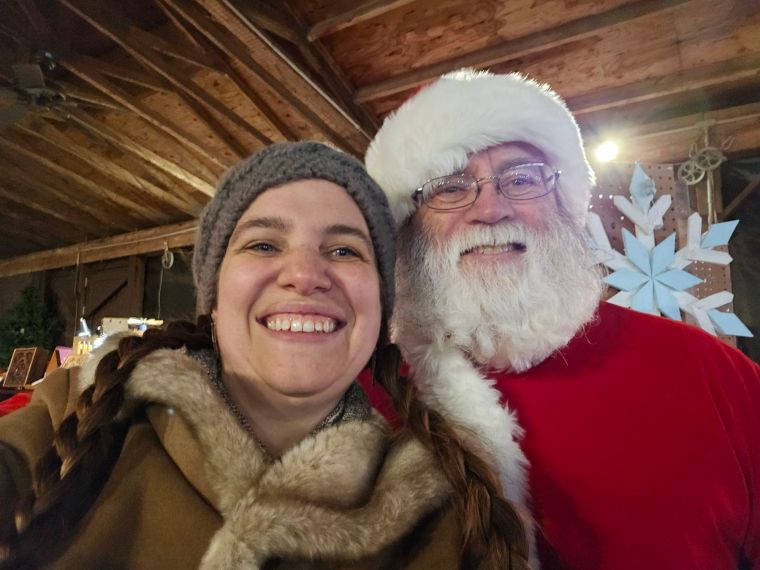
Not every stand was exclusively German, many of the stands featured local artisans and craftsmen selling their wares. I managed to find a few treasures while I was there for both my loved ones and myself. I picked up a few business cards for later reference. I met Santa Claus giving out Candy Canes and hopefully made it to the nice list (fingers crossed). Nicole found a book that she promised I could borrow from her later and her own gifts.We enjoyed looking at the different wares and meeting the sellers which is not something one can often do these days when looking online or shopping at a big box store.  

It was not a huge Christkindlmarkt, certainly not like the larger one in Bethlehem, PA which mirrors more closely those larger markets of Vienna and Munich and is open from Mid November through late December Friday through Sunday. It’s a sprawling market of hundreds of stalls, dozens of food vendors, authentic German artists, ice skating, St. Nicholas, music and more. It’s known as one of the top holiday markets in the world rivaling its European counterparts. 

However, as I have said in other places, I’m not a huge fan of crowds and sometimes it’s better to enjoy something on a smaller, more intimate scale. After all, the towns of Germany often have their own smaller celebrations and what could be more authentic than a homegrown festival? So I spent about an hour or so wandering bundled up against the cold, sipping my Gluhwein and enjoying the piece of Germany they’ve carved out on the side of the mountain. I will certainly have to see what other festivals they bring across the ocean for us to enjoy here in the states. It may not have been perfectly authentic after all, I didn’t have to stumble through my half forgotten German to order my food, but to two people who lived in Germany it certainly got our stamp of approval. Just proving once again that one doesn’t need to book a ticket to see the world, sometimes the world comes for a visit in a nearby town. 

How can you visit a German Christkindlmarkt?

The first step is to obviously wait for the right time of the year, it is after all a Christmas Market. Most of them take place between Thanksgiving and Christmas with a few occurring earlier in November. The smaller ones often only occur on one weekend with the larger markets spanning the entire season. There are of course the more famous ones such as the one in Bethlehem but there are smaller ones like the one I went to in Reading, PA and the one in Lancaster, PA (which I am told has even better food). 

Travel websites are a useful tool to get a start as they will often name the “best” ones. Keep in mind these “best” are subjective and will be prone to more tourists and crowds. If you’re looking for a smaller, more intimate version, then google searching Christkindlmarkt or Weihnachtsmarkt (another name for these markets) may yield some good results. As always, I keep an eye out on my Facebook events page. I haven’t found other social media formats that so easily showcase events in my area. 

Completed: December 2024

Cost: $30 for admission and food 

Miles from home: 30 miles

Below is a small list of Christkindlmarkts in the United States. It is by no means a complete list but it is a good place to start especially if you’re in these areas. The dates vary each year and there is often a ticket price associated with entry.  

Arlington, TX Texas Christkindl Market

Atlanta, GA Atlanta Christkindl Market

Augusta, NJ German Christmas Market of NJ

Baltimore, MD Christmas Village in Baltimore

Belleville, IL Belleville Christkindlmarkt

Bethlehem, PA Christkindlmarkt Bethlehem

Cambria, CA Cambria Christmas Market

Canandaigua, NY Canandaigua Christkindl Market

Carlinville, IL Carlinville Christmas Market

Carmel, IN Carmel Christkindlmarkt

Charlotte, NC Charlotte Christkindlmarkt

Chicago, IL Chicago Christkindlmarkt

Chicago, IL Christkindlmarkt Wrigleyville

Cincinnati, OH Germania Christkindlmarkt

Dayton, OH Dayton Liederkranz Turner Christkindlmarkt

Denver, CO Denver Christkindlmarkt

Des Moines, IA Christkindlmarket Des Moines

Elkhart Lake, WI Old World Christmas Market

Ferdinand, IN Ferdinand Christkindlmarkt

Frankenmuth, MI Frankenmuth Christkindlmarkt

Georgetown, CO Georgetown Christmas Market

Harmony, PA Harmony Museum WeihnachtsMarkt

Helen, GA Helen Christkindlmarkt

Holland, MI Holland Kerstmarkt

Lake Worth, FL The American-German Club of the Palm Beaches Christkindlmarkt Leavenworth, WA Leavenworth Christkindlmarkt

Mifflinburg, PA Mifflinburg Christkindl Market

Minneapolis, MN Holidazzle

Mountain View, CA German Holiday Market

Nevada City, CA Nevada City Victorian Christmas

New Orleans, LA New Orleans Deutsches Haus Christmas Market

New York, NY Bank of America Winter Village at Bryant Park

New York, NY Union Square Holiday Market

New York, NY Columbus Circle Holiday Market

Oconomowoc, WI German Christmas Market of Oconomowoc

Philadelphia, PA Christmas Village in Philadelphia

Pittsburgh, PA Peoples Gas Holiday Market

Poughkeepsie, NY Germania Club of Poughkeepsie Christkindlmarkt

Reading, PA Reading Liederkranz Christkindlmarkt

San Francisco, CA The Great Dickens Christmas Fair & Victorian Holiday Party

Solvang, CA Solvang Julefest

St Paul, MN St Paul European Christmas Market

Tomball, TX Tomball German Christmas Market

Tulsa, OK German American Society of Tulsa Christkindlmarkt

Washington DC DowntownDC Holiday Market

Koizer’s Christmas Village: Let There Be Light! 

It seems almost impossible to think about Christmas without thinking about lights. In Western culture almost no other holiday is so linked with light, which is appropriate considering it is celebrated at the darkest time of the year (for those of us in the Northern hemisphere). There’s just something so mesmerizing about small points of light holding back the dark. They always bring a smile to my face. I especially enjoy seeing larger displays where people can showcase their creativity and transform an ordinary place into something extraordinary, and Koizar’s Christmas village is exactly that sort of place!  

Since 1948, the Spring Lake Dairy Farm has been delighting people. Originally, a display created for the enjoyment of his wife Grace and their four children, it quickly expanded front he original house and barn. People soon began to flock every year to see the display at the locally named “Christmas House.” Eventually, Koziar began to admit visitors while still operating the dairy farm. Overtime, the dairy farm and even the house were abandoned to the ever expanding light displays.  For over 75 years, the farm has been literally lighting up the night as the lights can be seen from miles around. It has even been named Best Outdoor Christmas Display in the World by Display World magazine (according to Wikipedia anyways).  

It takes approximately 90 minutes to walk through the many displays which run the gambit of themes from beloved classic tales like the Nutcracker to Bible scenes from displays showing Christmas traditions around the world to prehistoric dinosaurs. There were plenty of places for photo ops, tucked in various places and with such frequency most of them were without long lines. There are panoramas, a kissing bridge, gift shops and snack shops. One can warm up with a hot beverage like apple cider or hot chocolate while munching on popcorn or chocolate chip cookies. There is one place which serves more substantial food such as pizza and burgers. It is almost entirely outside, so dressing warmly was a must for this particular outing. 

How does one capture in writing what 8 acres of over a million lights looks like in simple words? Even the pictures I share here, dear reader, are only the smallest snippets of the sheer magnitude of that many lights. Each area held a new delight and theme, some had seamless and natural transitions, others were abrupt and almost disjointed side by side. 

What most delighted me was how simple and even outdated everything was. There were wooden decorations clearly from the 60’s and 70’s. There were handmade items which had been lovingly repainted over the years. It was in stark contrast to so many of the other light displays that one could go see, because it felt organic and human. It was clearly a labor of love untaken over decades. There were many store bought displays but they were interspersed with homemade characters and storyboards. It was simultaneously a display of Christmas lights and a museum of decorations over the decades. One of my favorites was the Wild West section with the christmas buffalo. There’s even a whole section featuring a model train. Despite being a professionally run tourist attraction, it still felt like a display cobbled together by your overly enthusiastic neighbors, perfectly capturing the nostalgia of seeing Christmas lights.  

My sister and I ambled through the lights, taking time to soak in the array of themes. We stopped to study the displays, finding small touches which brought us smiles of delight, like the angel fawn near a nativity or the zoo train with the tigers. We stopped to enjoy hot apple cider and churros. I also bought a pair of gloves having realized I accidently left mine at home. There were only a few places where we could slip into to escape the biting cold of the evening, but we were lucky that it wasn’t too cold. Eventually we ended up passing through a large garage which proudly displayed the history of the village before going into the final gift shop. We left fully satisfied and well in the Christmas spirit. 

How can you see amazing displays of Christmas Lights?

Luckily, this is something that you can see almost anywhere during the Christmas season and there is almost always a place nearby with overly enthusiastic neighbors. Some may be drive through places, others may be like Koziar Christmas Village where you can walk. It depends on whether you wish a slow meandering stroll in the cold where you can stop and really take in each display or if you wish to remain warm in your car. There may be ones that are put on by professionals such as Candy Lane at Hershey Park or family affairs with all their quirks like Kozier’s Christmas Village. You can also find a local neighborhood and walk around to see everyone’s displays. In the last few years, my home town has been holding a contest which has helped to revitalize people’s interests in putting up lights. You could even start a contest in your hometown if you’re feeling particularly entrepreneurial. 

Completed: December 2023

Cost: $13 per person (It would have been an extra five dollars to attend on a weekend or the week of christmas)

Miles from home: 26 miles