
The Game of Kings (and Curious Commoners)

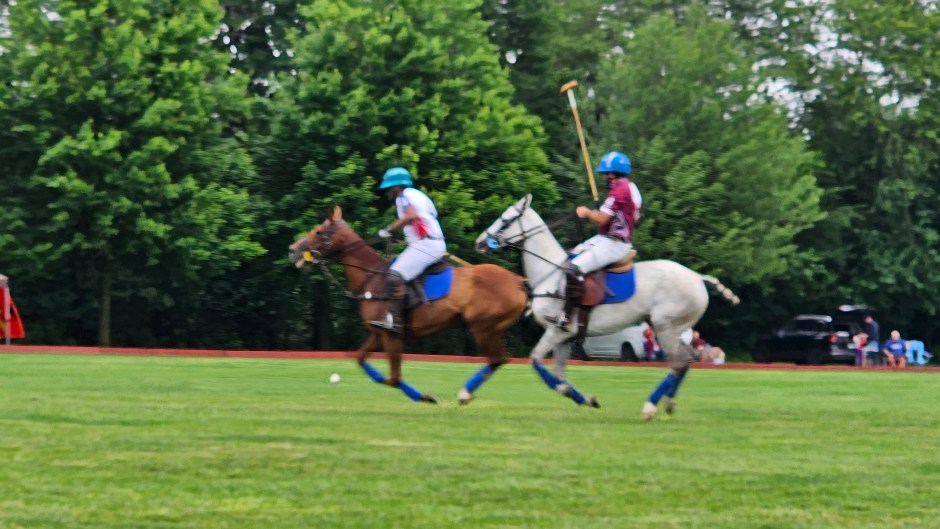
For 85 years, a curious spectacle has unfolded each summer Sunday on a quiet stretch of Pennsylvania grass. Horses graze peacefully beneath the trees while a few of their compatriots are dressed in elegant regalia by riders buzzing with anticipation. Across the field, spectators unfurl picnic blankets, create elegant table spreads, uncork wine bottles, and crank up the music, all in preparation to watch a sport nearly 2,000 years old: polo.

Though largely unknown to many American audiences, polo is far from obscure. Played in at least 16 countries and once an Olympic sport from 1900 to 1936, it began in ancient Persia as cavalry training and evolved into a game for royalty and, more recently, for anyone bold enough to mount a horse and swing a mallet. The name “polo” is derived from the Tibetan word pulu meaning ball, a term eventually anglicized after the British encountered the sport in India and brought it back to England in the 1800s.

Often called the “Game of Kings,” polo is surprisingly inclusive. Men and women compete alongside one another in most parts of the world, though America, characteristically, has a separate women’s federation.

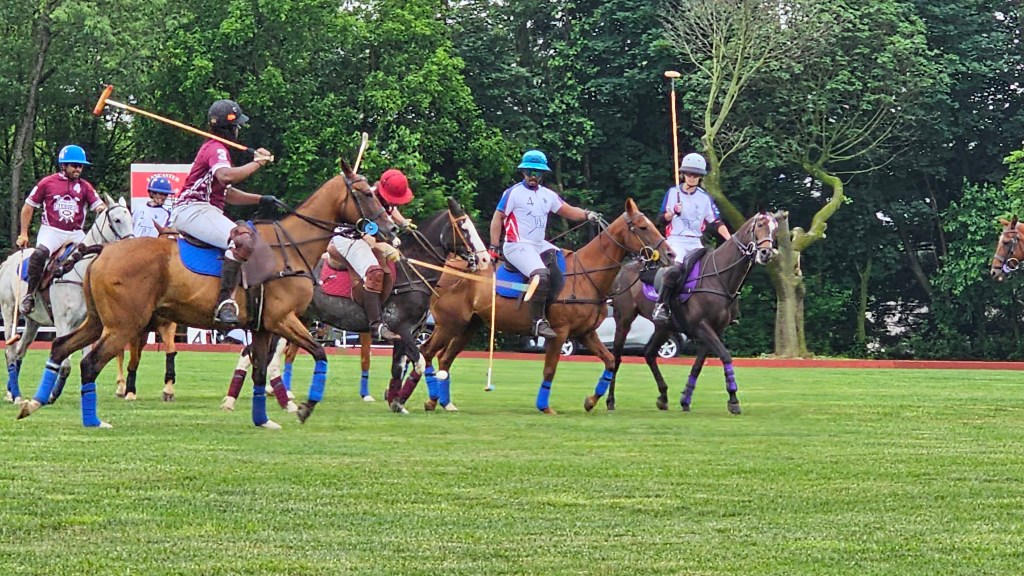
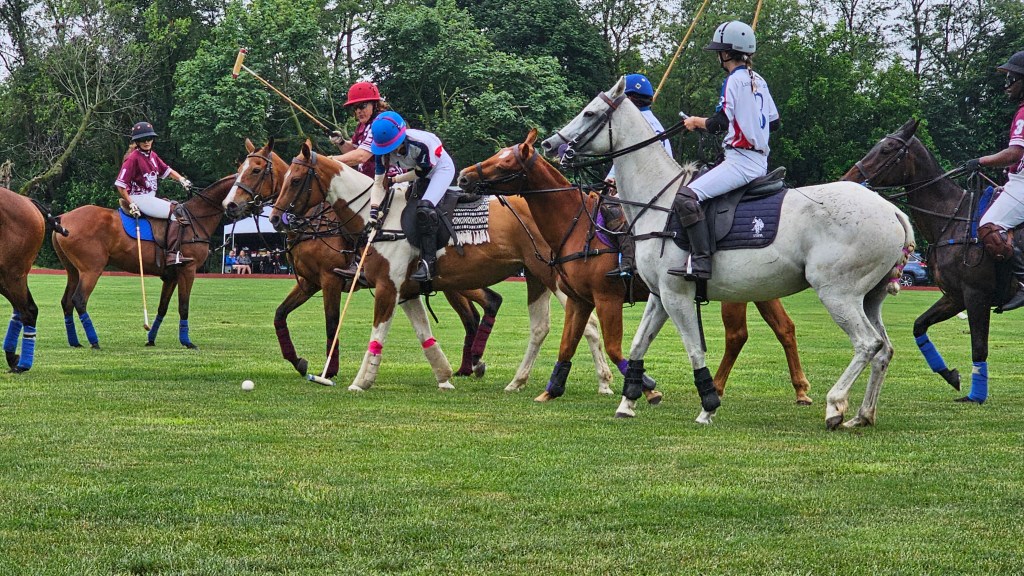
The game itself is straightforward in concept: two teams of four try to drive a ball through the opposing team’s goal using long-handled mallets, all while galloping full-tilt on horseback. The match is divided into chukkas (short periods lasting about 7.5 minutes), and a game usually includes six to eight of them. The rules may be simple on paper, but in practice, it takes incredible precision, timing, and horsemanship.

Growing up, I often saw flyers and glimpses of these summer polo matches. I was always struck by the grace of the horses and the fluid choreography between rider and steed. Truthfully, the sport seemed quite magical as if from another world. Still, I never actually made the effort to watch a full match. Summer after summer slipped by, my interest mild but never quite motivated.

Was it the fear of sweltering in the midday sun from 1 to 5 p.m.? Or maybe the lingering belief that polo was reserved for the wealthy and well-heeled? I wasn’t sure. Perhaps the former was simply a socially acceptable excuse to avoid confronting the latter. Would I, a clear outsider to this world, be welcomed, or merely tolerated with tight-lipped smiles and sidelong glances?

Besides, I’m not exactly a sports person. My athletic literacy is on par with a particularly confused golden retriever. I spent six years attending football games in marching band and still couldn’t explain the rules beyond “ball goes in the end zone.” But dear reader, I’m not one to retreat in the face of self-imposed challenges. So this summer, I finally asked myself the honest question: what was really stopping me?

A little research gave me just enough confidence to understand the basics of the game. I picked out a charming outfit to look the part without overdoing it, an elegant black sheath dress with white polka dots and a flirty wrap skirt. I added a sunny yellow bow to my hair, antique gold and pearl necklace, and matching earrings. The pearls lent a quiet elegance, the polka dots kept things playful, and the whole ensemble whispered “chic,” not “trying too hard”, which is honestly a good rule of thumb when encountering an unknown social situation which most likely requires at least some form of dressing up.

Admission was a modest $10. While many of the best sidelines were claimed by patrons whose names were proudly displayed on small plaques, there were metal bleachers dead center offering a great view to those of us without season passes. Tailgaters lined the edge of the field, sipping rosé and nibbling on charcuterie. Food trucks formed a loose U-shape, doling out delectable treats to tempt even the pickiest of diners. A cornhole tournament buzzed nearby, a surprising attention, and the unseasonably cool June weather had people donning sweaters instead of sundresses.

The field was roughly the size of four or five soccer fields, bounded by red-painted wooden planks barely a foot high. A modest scoreboard hung opposite the bleachers, manned by cheerful volunteers ready to update the chukkas and scores. Trees lined either side to provide shade and natural ambiance. Everything had a homegrown, almost quaint quality to it, from the weathered announcer’s booth to a timeworn shed on the edge of the grounds. The whole setup felt far less intimidating than I’d feared, far more neighborly than exclusive. Instead of a glittering world of inaccessibility, it held a rustic charm, more countryside than country club.

To my delight, the crowd was warm and welcoming. Several patrons stopped to chat, and one even offered a crash course in polo rules. I met a retired player, his name escapes me, but his gorgeous collie, Koda, certainly doesn’t. He shared stories of falling off horses, fond memories of team camaraderie, and the tradition of having teammates sign the ball after scoring your first goal.

The game itself was surprisingly gentle. There was minimal jostling, and players called out plays supportively, checking in with one another to ensure both rider and horse remained safe. Perhaps this courtesy was because the match featured junior players, but I had the feeling this mutual respect was baked into the sport. Spectators clapped enthusiastically for every goal, regardless of team allegiance.

During intermissions, we all wandered onto the field for the charming tradition of field stomping, where spectators repair divots by stomping the grass back into place, all while pop music blared from the announcer’s booth. (Pro tip: verify that what you’re stomping is indeed turf, not… fertilizer.)

Halfway through the match, we were summoned to the center for a celebratory champagne toast. Each guest received a plastic glass stamped with the Lancaster Polo emblem. I raised mine high in salute, and now it sits proudly on my shelf as a souvenir of an afternoon well spent.

The Lancaster team won in the end, though no one seemed particularly bothered by the score. The teams congratulated one another with genuine smiles and handshakes. It was sport in its purest form, competition rooted in grace, community, and camaraderie.

And as I walked back, pearls gleaming, polka dots swaying, I couldn’t help but smile. I may not be a sports person. But I might just be a polo person as I immediately texted my sister, that I may have found a future sister date for the two of us later that summer.

Want to See a Match Yourself? Here’s How to Find One Near You

If you’re now a little bit curious (or at least craving champagne and turf-stomping), you might be surprised to learn that polo is more accessible than it sounds. Here are a few tips to help you track down a match near you:

  • Start with the United States Polo Association (USPA): Their website (uspolo.org) has a club directory where you can search by state or zip code. Many clubs host free or low-cost public matches during their season, typically from late spring through early fall.
  • Google is your friend: Try searching “polo matches near me” or “equestrian events [your city/state].” Bonus points if you add “tailgating” or “spectator” to the search.
  • Check out local event sites or social media: Many smaller clubs advertise matches on Facebook, Instagram, or local tourism calendars rather than big-ticket platforms. Look for community boards, weekend roundup newsletters, or even Eventbrite listings.
  • Call your local riding or equestrian center: If they don’t host matches, they probably know who does.

Don’t be shy about going as a first-timer, polo spectators are often an eclectic mix of devoted fans, casual picnickers, and curious newcomers just like you. Wear something fun, bring snacks, and prepare to cheer. (And maybe pack a sweater. Or a hat. Or both. It’s an outdoor sport, after all.)

A Blind Date: A Bookshop, A Park, and A Historic Site

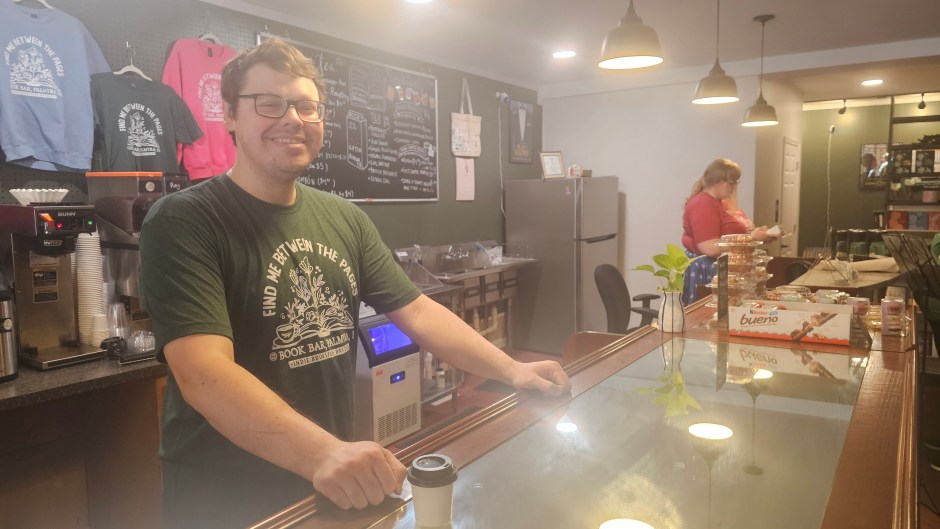
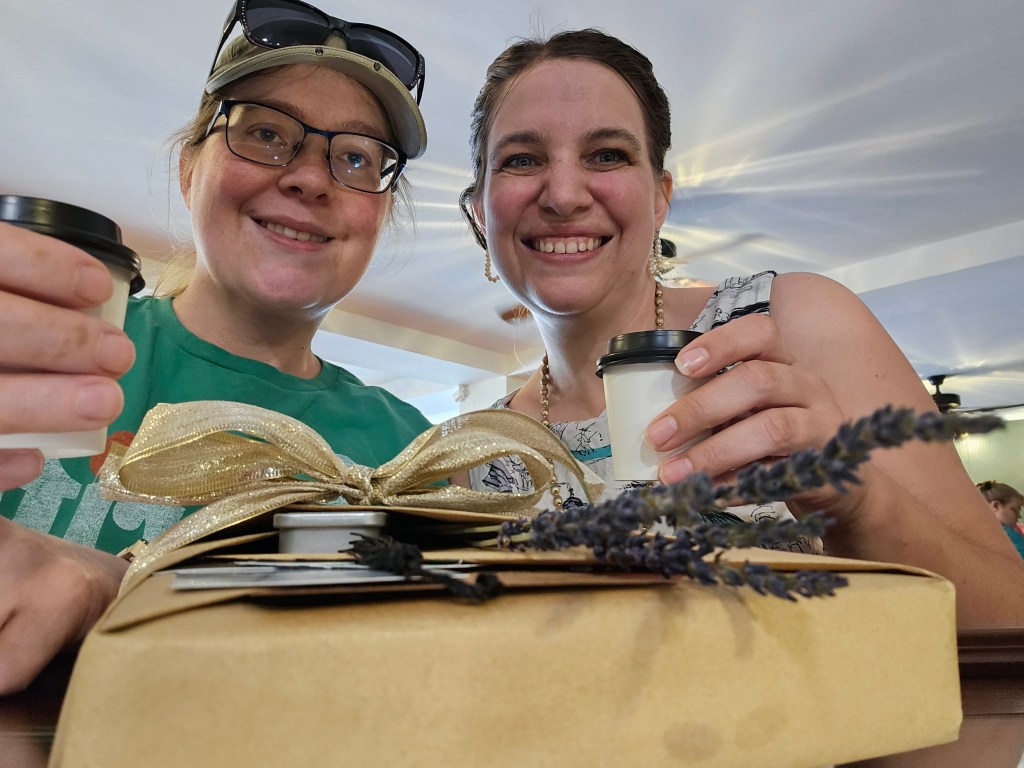
We were first introduced on Indie Book Day, with a subtle hint of mystery and the allure of suspense among the bookshelves of the BookBar. The bartender handed me a drink on the house with a wink and a smile. The aroma wafted up from the cup, promising a rare treat. With a slow sip, a burst of rich flavor exploded across my tongue, accenting the dark roast and chocolate with a lingering whisper of strawberry for a sweeter finish. It was with this drink in hand that I browsed the shelves in search of hidden treasures.

The aesthetic of the shop resembled an old private library in England with a slightly gothic bent: dark walls, rich old leather sofas, and trinkets more expected in a professor’s office than a place of capitalism. It all set the atmosphere of whispered stories on stormy nights. But indie bookstores are known for their peculiarities.

It was there that I was first introduced. Not directly, of course—nothing so uncouth. Our meeting was arranged through the usual channels: a third party carefully selecting options suited to a lady’s general tastes. The matchmaker, ever busy, offered a short meeting and a curated selection of potentials. Each came wrapped, labeled only by genre, with a few clues as to what might await.

I made my choice and a plan was hatched: a rendezvous, a park, a picnic, and of course, my blind date. My sister joined me, not as a chaperone, but with a date of her own. A married woman, you ask? Was I part of a scandal? Not when the blind date is with a book, dear reader!

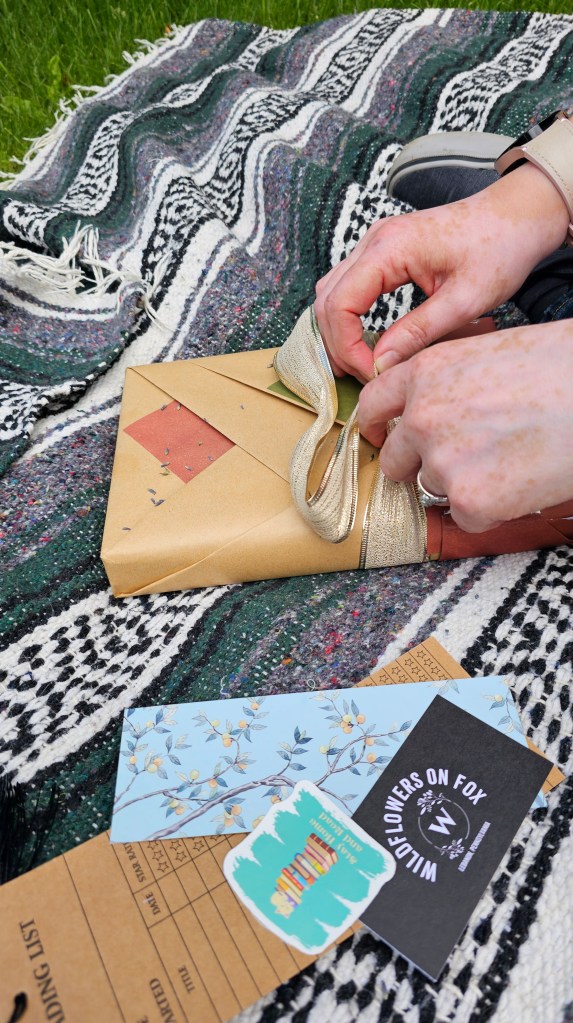
Yes, BookBar not only serves up delicious coffee and mocktails with a side of dark academia, but it also offers a unique reading experience designed to stretch your literary palate. Each mystery book is carefully wrapped with a genre label, accompanied by a few sprigs of lavender, a lip balm, bookmarks, and stickers—everything you need to charm a curious reader.

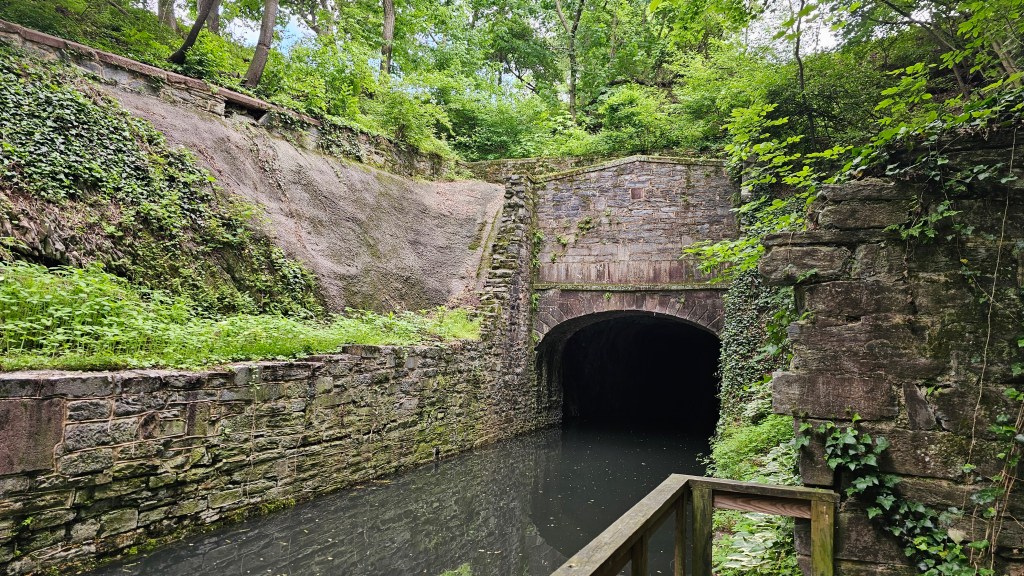
A few days before, we checked the weather and settled on a park near my sister’s home. To our delight, we discovered a local hidden gem: the oldest existing water transportation tunnel in the United States. Naturally, the history nerds in us were thrilled.

The canal’s beginnings date back to 1792, during George Washington’s administration, though financial troubles delayed its completion until 1828. This golden link of trade connected east and west, serving the expanding nation until 1881, when the Lebanon Valley Railroad rendered it obsolete.

Today, the remaining stretch is lovingly maintained by the Historical Society of Lebanon County. Only a small fraction of the canal remains, surrounded by parkland and dotted with plaques detailing the history and engineering marvels of the time. The park includes a pavilion, picnic benches, and a meandering path alongside the river. Every Sunday, they even offer boat tours through the tunnel—a dream for any history buff.

My sister and I spread out a picnic of crackers, cheese, and meats under a shady grove. We caught up on life as the breeze gently rustled the trees. The weather was cool for mid-May, but nearly perfect for reading. No harsh glare from the sun, no stifling heat—just peace and pages.

When we opened our blind date books, mine turned out to be a historical mystery thriller with a dash of time travel, set in Victorian Scotland. A surprisingly perfect pairing with our 19th-century setting! I found the forensic methods of the era fascinating, especially in contrast to modern crime-solving techniques. My sister’s book was a thriller translated from Ukrainian, and she was equally pleased with her pick. We agreed this date was well worth repeating.

After an hour of reading, we explored the rest of the park. What we found was a quiet oasis tucked away from the modern world. Birdsong echoed across the water, interrupted only by the occasional “plop” of frogs and fish. We climbed a small hill to better see the tunnel and read each historical plaque. A small bridge overlooked an old lock that once helped boats travel along the canal.

It wasn’t quite the Panama Canal we visited last spring, but it was still an impressive feat of engineering and a reminder of human perseverance. We couldn’t help but reflect on how far we’ve come—not just in terms of technology, but culture and society. What would the Irish laborers who built the canal think of the world today?

Want to Plan Your Own Literary Adventure?

You don’t need a fancy bookstore to enjoy the fun of a blind date with a book. Etsy has plenty of options, and you can always go with a DIY version. Take a friend or sibling to a bookstore, pick out books for one another, wrap them up, and head to your favorite park for a reading picnic.

Even cheaper? Just borrow something new from a friend’s bookshelf. My sister and I frequently swap books this way, and we’ve each discovered new favorite authors as a result.

To find local gems, try Google Maps with keywords like “historic site”, “attractions,” “museums” “hidden park,” or “walking trails.” Check the reviews on obscure places with 4.5+ stars but few reviews as these are often true gems. Believe it or not Reddit can be a source for ideas from locals that you won’t find on the travel sites. Try searching for hidden gems in your city or browse the local subreddits. I also recommend going to your local library and checking out the bulletin board. Some cities have bloggers devoted to uncovering local secrets—you might be surprised what you find just outside your front door.

Completed: 2025

Miles from home: 25 miles

Cost: $50 (for the book and picnic)

Beneath the Blooms: Sakura Dreams

I believe it shall come as no surprise to you, dear reader, that I’ve long held a dream of visiting Japan and count myself as a bit of an otaku. I’ve imagined seeing Mt. Fuji rising above the mist, taking in the sights of Tokyo, enjoying the fashion, engaging in traditional dances, exploring vibrant festivals, wandering through a pagoda, pausing at a temple, sipping macha in a teahouse, visiting a cat café, contemplating nature in a garden and, of course, strolling beneath the cherry blossoms.

A few of these I’ve managed to do here in the States. Others remain only possibilities, others still achievable only if I someday find myself walking on Japanese soil.

Each spring, I see flowering trees dotting my neighborhood and lining the roads, and I sigh wistfully. They tease me with just a taste of what could be. My social media feeds fill with dreamy pictures from the far East (or perhaps more accurately, the West?). Japan’s landscape becomes a fleeting spectacle of pink and white blooms, a soft riot of ephemeral beauty.

This delicate flower, sakura, is more than just a seasonal joy. It is a cultural icon, deeply rooted in Japanese tradition and mythology. The goddess of blossoms and delicate matters is said to have nurtured the cherry trees. One beloved tale tells of Princess Sakura, cursed to bloom and wither like the trees she loved. Only a prince who could watch her fade without despair could break the spell. The blossoms have graced artwork for centuries, inspired poets, and appeared again and again in anime and manga as symbols of renewal and hope.

Is it any wonder, then, that I too have fallen in love with this flower?

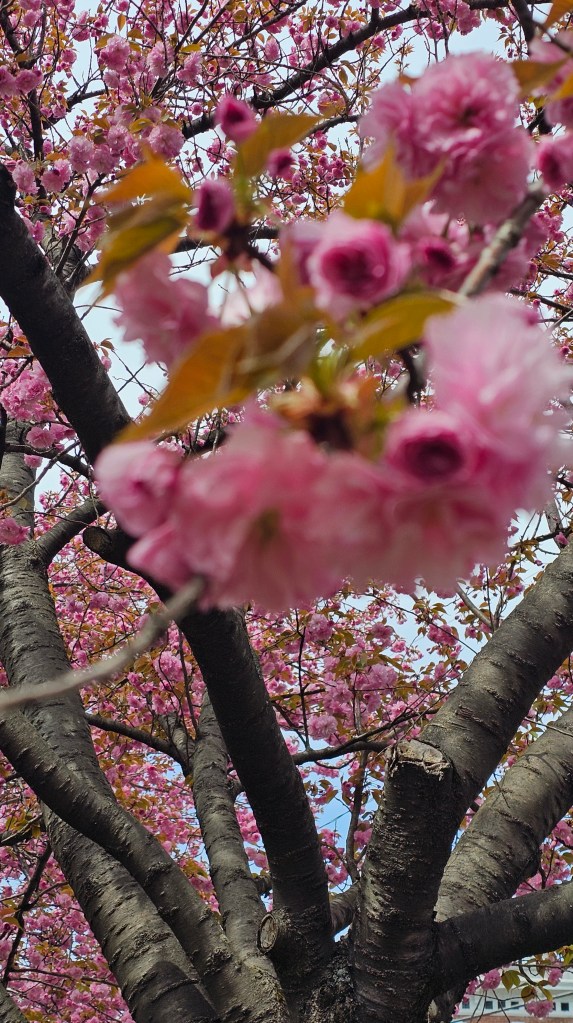
So, each spring, I look longingly at the blooming trees and wish I could follow the blossoms across Japan, chasing their brief splendor up the country. Imagine my delight, then, when I discovered that a nearby town is home to a row of 150 cherry trees that burst into bloom each year. Naturally, I set out on a quiet morning to witness the display.

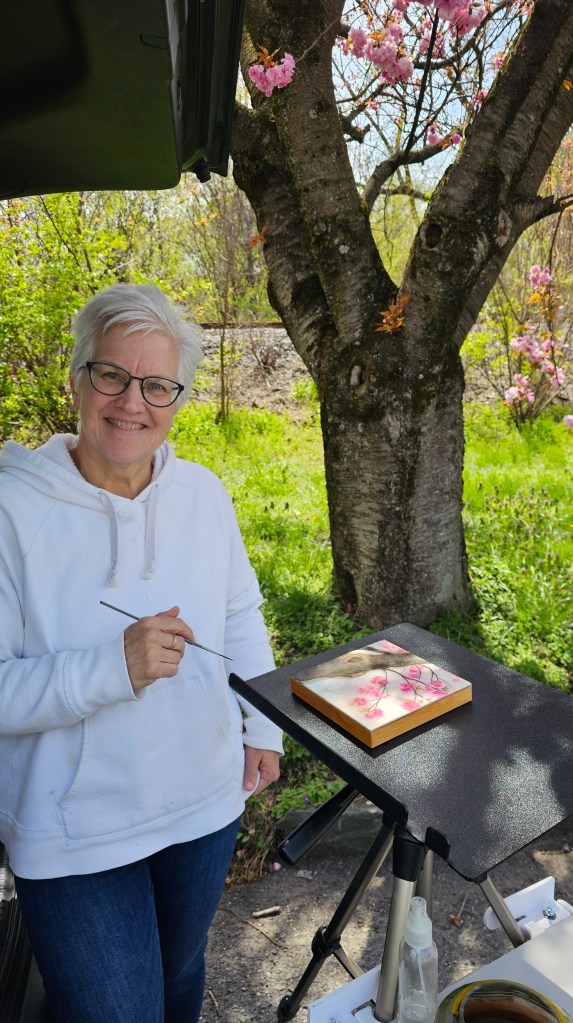
The trees stood in a stately row, forming a tunnel of soft pink. The delicate scent hung in the air, and a gentle breeze coaxed the blossoms into a graceful dance. Bicyclists glided past on the quiet street, and two painters sat capturing the season’s glory on canvas.

I wandered beneath the trees, breathing in the fragrance, taking photos to help preserve the memory. There was no formal path beneath them, just dark, soft earth that yielded slightly beneath my feet. The blossoms hadn’t yet begun to fall, though a few brave petals had already drifted to the ground, a gentle reminder that all too soon the branches would give way to summer’s green.

I was in good company as several painters were scattered along the row of trees. It was a delightful treat to be able to watch them capture the beauty of the trees extending it beyond the ephemeral spring season.

While it may not rival the landscapes of Japan, it was a small and beautiful taste of a dream. I’m glad I made the short journey to Marietta to witness their bloom, even if only for a moment.

How can you stroll beneath the cherry blossoms?

You may not need a passport or a plane ticket to find them. Sometimes, the dreams we tuck away for “someday” bloom quietly just down the road. Perhaps your local trees are smaller, or fewer, or missing the dramatic backdrop of a mountain temple, but their beauty is no less worthy of awe. A few trees in a quiet town, the whisper of petals in the breeze, and a moment stolen from the rush of life to simply stand and marvel, that, too, is magic.

So, dear reader, look around. Google may be your travel agent, but curiosity is your compass. The world, as it turns out, is blooming right outside your door.

Completed: 2025

Miles from home: 20

Cost: Free

Tiptoe Through the Tulips

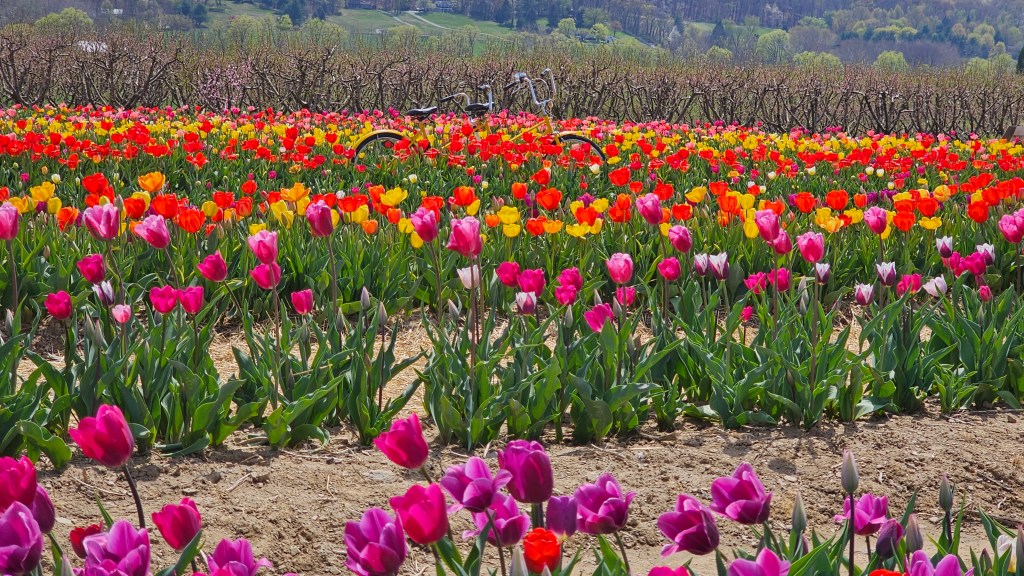
Tulips the early heralds of spring and the changing weather fill the hills with bright rows of color. Their hues stretch across the spectrum, from fiery red to deepest purple, and their petals are just as varied. They’re also famously tied to history’s first financial speculative bubble, a craze that plunged many Dutch citizens into ruin and left a lasting mark on market regulations. Still, despite that rocky past, the Dutch never forgot their love affair with the flower. Today, they remain a leading producer of tulip bulbs, and each spring, massive swaths of land transform into a living quilt of color as millions of flowers bloom.

I’ve always loved pictures of those majestic fields, windmills standing vigil over seas of blossoms. That said, my allergies would likely stage a protest in the Dutch countryside—and truthfully, the Netherlands doesn’t rank high on my list of must-see destinations. Maybe I’d go if the opportunity presented itself, but there’s no guarantee that it would align with the short-lived tulip season.

What’s a budget-minded girl to do? As it turns out, sometimes you stumble upon the perfect solution when you’re not even looking for it.

There are times when an answer appears to a question you didn’t even know you’d asked. I’ve certainly enjoyed pictures of Holland’s flower fields, but they never inspired the wistful longing other countries have stirred in me. So, I didn’t add them to my list, dismissing the idea out of hand. I try to keep my travel dreams at least somewhat realistic—or else the list would be three times as long. But let this be a lesson, dear reader: never dismiss a dream, no matter how small or unformed.

Though I never truly asked, the universe still answered with a humble billboard: “Tulip Field, Opening April 12th.” Tulip fields? In Pennsylvania? Perhaps I was too quick to rule out my floral fantasy.

April 12th turned out to be cold, wet, and rainy and not ideal for tiptoeing through anything. Besides, opening day crowds come with added chaos and, let’s be honest, possibly terrible music. Twangy Country or bouncy pop blasting over loudspeakers isn’t how I envision my contemplative flower field stroll. I checked my calendar for a better date, one early enough to catch peak bloom, but not a weekend (crowds again!) and ideally with cheaper tickets (this is a budget minded blog, after all).

Less than a week later, on a balmy spring day, I made my way to Flaughbach’s Orchard. The temperature was a perfect 70°F (21°C), and a cheerful breeze danced among the tulips, gently teasing them as she passed. While it was a far cry from the sprawling Dutch fields of my imagination, it was a lovely scene in its own right. Had I been truly committed to a riot of color, I could’ve waited two more weeks and driven three hours north to Brown Hill Farms, where 500,000 tulips bloom across four acres.

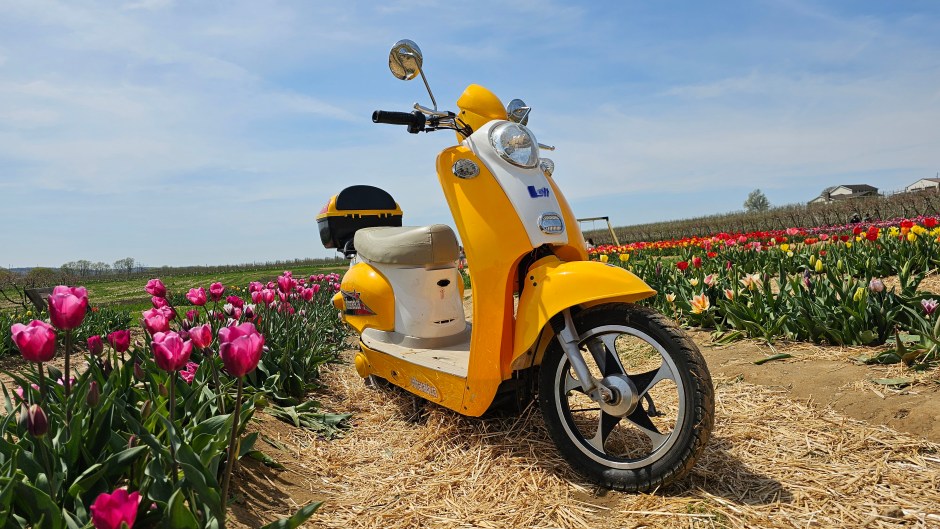
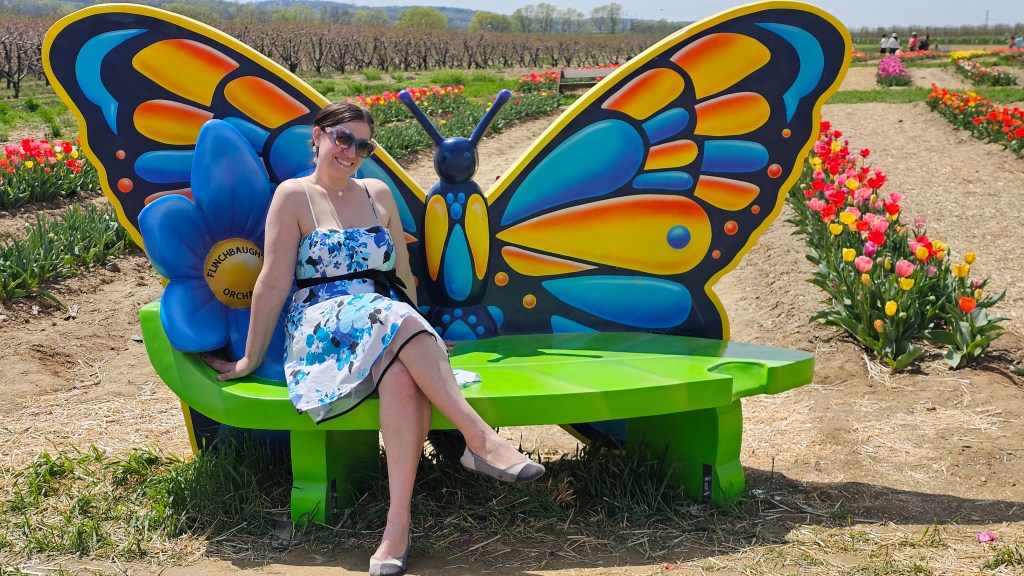
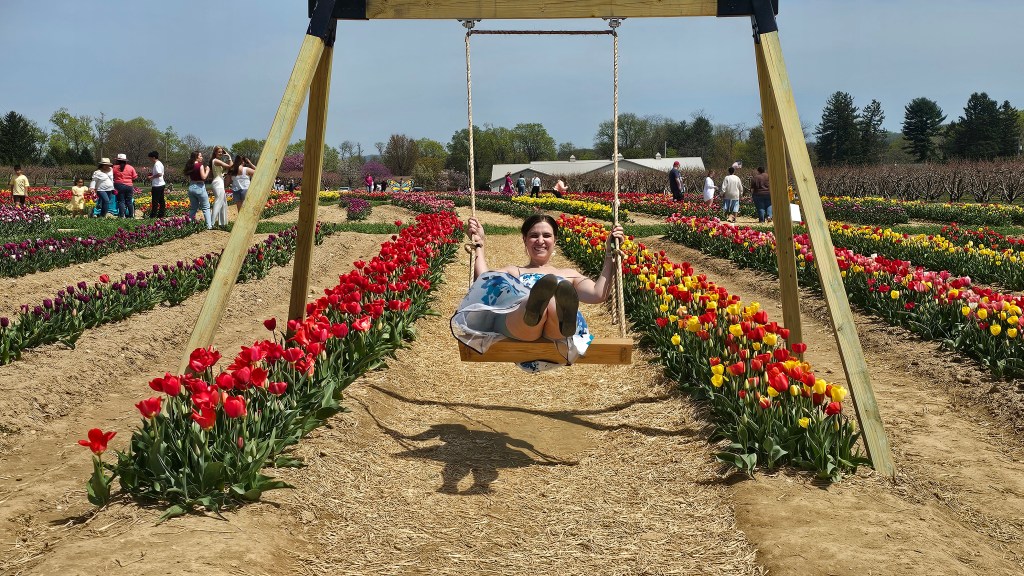
Upon arrival, I was handed a pair of shears and informed I could pick two flowers as part of my ticket (with the option to purchase more). But my goal wasn’t to build a bouquet, it was to bask in beauty. I wandered through neatly arranged rows of flowers, encountering charming photo ops along the way: antique bikes, vintage tractors, even a swing for a more whimsical touch. Naturally, I couldn’t resist snapping a few photos, but mostly, I just walked. The field reminded me of a stained-glass window or a floor made of colorful mosaic tiles.

Benches were thoughtfully scattered around the field, perfect for quiet contemplation. I loved feeling the warm sun on my face and the breeze on my skirt. I didn’t stay long, but long enough to enjoy the moment and properly welcome spring in all her glory.

Next year, I may make that pilgrimage north to see the larger fields that have enchanted me for so long. But maybe not. This experience might fall under my “good enough” category; it was joyful, beautiful, and deeply satisfying.

So, how can you tiptoe through the tulips?

You don’t need to wait for the universe to come knocking. Just open your browser and search for tulip fields near you. If you live in the South, it may be a bit trickier, but don’t lose hope. Pilot Point, Texas, and New Market, Alabama both boast quite respectable fields. Up North, there are plenty of spots to chase tulip season. Some may come in the form of botanical gardens; others, humble local farms like Flaughbach’s. Or you might go all in and visit Windmill Island Gardens in Holland, MI (with over four miles of tulips!), or top spots like Pella, Iowa; Woodburn, Oregon; Modesto, California; Mount Vernon, Washington; and Exeter, Rhode Island.

The lesson I learned? Don’t be so quick to downplay your dreams, even the small ones. I try to keep my “undone” list reasonable, and I often add to my “done” list as opportunities arise, especially if they’re spur-of-the-moment or just for fun. But this was something I truly wanted to do, and I’m glad the universe nudged me toward it.

So, I encourage you, dear reader: dream big. Write it all down. Ask for it. The blessing may find you anyway.

Completed: 2025

Cost: $7 to visit the field

Miles from home: 25

Tea at Sea!

Alright gentle reader, technically, it was a bay and not a sea. However, I did get to hoist the sails and attempt to steer the ship. Yes, technically it was a boat; although I”m not sure I know the difference if we’re being honest. Regardless of the pesky nomenclature, I provided an excellent afternoon tea out on a large body of water in a sailing vessel of some sort. Additionally, I made sure to be properly attired for a day’s outing on the water. With the help of a well placed hat pin not even the wind could dissuade me from my determination to have a little extra flare. After all, where would we be as a society if we allowed ourselves to descend into the mundane and boring, especially when it comes to fashion?

In the midst of COVID, with everything shut down and limitations on movement and gathering, the small but scrappy non-profit I worked for decided to offer its employees a day out with one of our board members, Peggy, on her private boat. To say that I was excited is truly an understatement. It was once again, one of those Bucket List Items that I had mentally placed under “most likely not happening any time soon” as I thought it would cost a lot of money to go. This might be the reason I was a little over the top, but honestly that’s part of who I am. I’m the woman who will put together an entire costume or outfit for even the most slightly themed party or obscure holiday. 

It was truly the morale boost that we needed. To avoid a disruption of vital client services and given the size of the boat, we divided ourselves into two teams which would go on two different days. We also divided up bringing food and other snacks to share. I led the way with letting them all know that I was going to have us do a tea at sea, I would provide the sandwiches, the tea cups, scones and clotted cream. Was it the more costly and time consuming option? Yes, but I was going to take this opportunity that the universe presented me and make the absolute most of it. Before you question my judgement of bringing tea cups on board a ship, know I take quite good care of my china and wouldn’t subject them to the dangers of the open waters. I found these absolutely gorgeous paper cups online! 

We loaded ourselves up early that morning, crammed into one of my co-worker’s vans like the start of some quiet, well-mannered heist armed with gps and good humor. I had chosen to go with the more reserved, soft-spoken of my co-workers. What can I say? They paired better with tea than with the loud, pirate-hearted group that went the day before, I am fairly certain they snuck booze despite the prohibition against it, like I said, pirates. Not that I couldn’t hang with both, I absolutely could. And the temptation to burst into sea shanties was quite real, I assure you.

As we drew closer to our destination, the world around us began to shift. The foliage thinned, and the trees gave way to the briny breath of the sea. The air changed too, tinged with salt and carried on a breeze that hinted at something just beyond the horizon. We heard the call of gulls before we even saw the water. Then suddenly, there it was—a small forest of masts rising from the docks like white trees, standing in quiet anticipation.

Waiting for us at the dock was our fearless leader and Executive Director, Deb, who waved us down with her signature confidence. She led us up the wooden planks to our boat, where we were introduced to our captain for the day, Peggy’s husband, Captain Bob.

I was surprised by the size of the boat as it was deceptively spacious, like a magician’s trick. Every inch of it had a purpose. Storage tucked into nooks, seating that converted, a compact bathroom that came with very specific instructions. Bob walked us through the essentials with the seasoned calm of someone who knew that one improperly flushed toilet could quite ruin the whole experience.

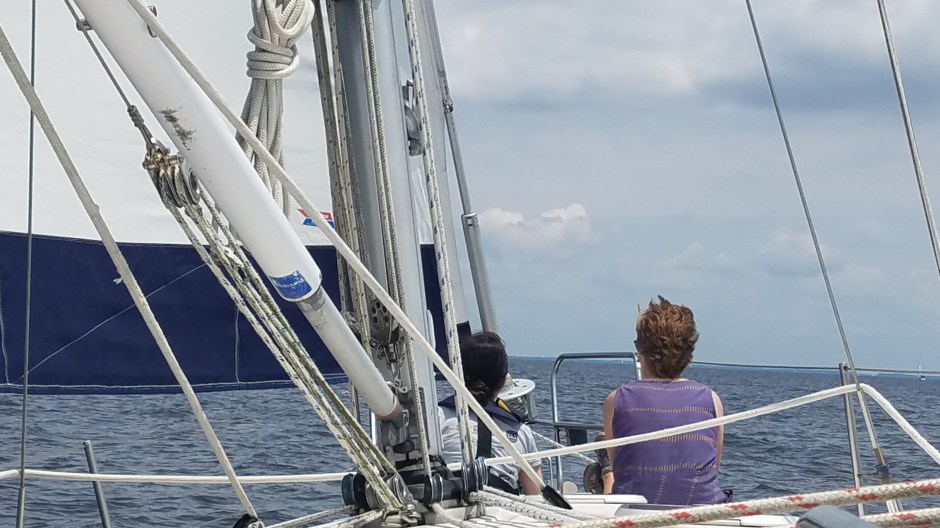
After a short safety overview, it was time to sail. Bob asked for volunteers, and I naturally stepped forward to hoist the sails. He called out instructions with the steady ease of a man who’s done this a thousand times, while Peggy provided cheerful backup support. I took hold of the rope with both hands to gleefully, heave ho and all that. The wind caught, the sails filled, and the boat surged forward with a kind of wild grace.

From that moment on, everything shifted into something more elemental. The boat leaned into the wind, the ropes pulled taut, and the world became motion and sound—the rush of air, the splash of spray, the low groan of wood and rope in motion. It felt like stepping out of the everyday and into something ancient.

Those brave enough made their way to the prow, legs dangling over the edge, laughing as waves splashed up to greet them. Time didn’t pass in hours out there. It passed in shadows, in sunlight shifting on the water, in bursts of laughter and long silences where we just watched the horizon breathe.

Then came the offer I hadn’t expected, Bob asked if anyone wanted to steer.

Of course, I wanted to steer the ship!

Taking the wheel was like grabbing hold of something alive. The boat didn’t just move; it responded. The wind pulled one way, the water pushed another, and the rudder spoke a language I didn’t quite know but instinctively wanted to understand. Every twitch of my hands echoed through the vessel. I had to fight the urge to overcorrect—big boat, big movements, right? Wrong. It was the subtle shifts that mattered. I wasn’t just steering a boat, I was holding a moment in my hands, trying not to crush it. I shall admit, I was not the best helmsman, but it wasn’t bad for a first go! 

At lunchtime, I unveiled my small, slightly theatrical feast of tea sandwiches and scones. Though there was no clinking of teacups, people were quite amused by them. A delighted Peggy gasped when she spotted the clotted cream asking for where on earth I had found it; she hadn’t had clotted cream since she was in England years ago.

I smiled and told her, with all the drama she deserved, “The local grocery store.”

We laughed, we feasted, we sipped, and apart from poor Beth, who succumbed to a bit of seasickness, our tea at sea was a grand success.

The rest of the sail was a blend of freedom and focus, the hiss of waves, the sudden thrill of turning into the wind, the scent of salt and sun warming the deck. It was chaos and calm, all wrapped into one. I couldn’t have asked for a more perfect day for checking off my list. . 

By late afternoon, we returned to the dock. We changed into swimsuits and slipped into the pool, letting the cool water wash away the heat of the day. We splashed and floated, reluctant to let the water go.

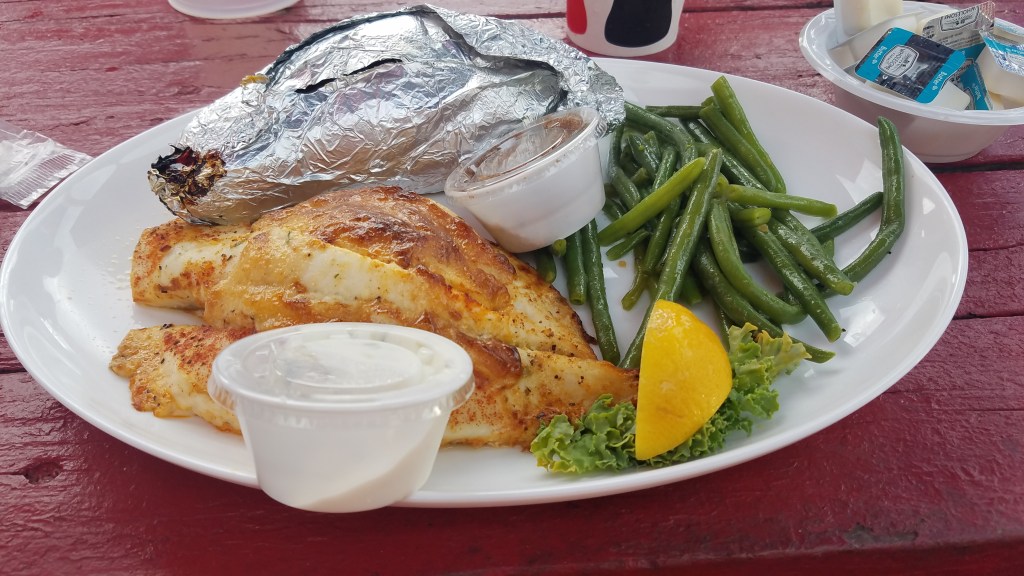
That evening, we gathered for dinner at a local seafood spot, the kind with fresh-caught fish, buttery hushpuppies, and that oh, so infamous, Maryland crab. I will say the crab practically demanded a moment of silence in appreciation. Luckily for the crab, eating is just about the only time I am quiet. And just when we thought the day had ended, someone suggested a detour when they spotted a sign for ice cream. Because some days deserve a sweet ending. And this one? This one absolutely did.

So how can you enjoy a sailing adventure?

I’ll admit, not everyone has a friend with a boat—or a boss generous enough to invite you aboard. But that doesn’t mean a day at sea is out of reach. You can always charter a boat for yourself and a few intrepid comrades. Prices can range from around $200 to upwards of $2000, depending on the type of vessel and the duration of your trip. That said, splitting the cost among your group makes it much more manageable. If you’re like me and pack your own feast, you can trim expenses even further. The boat we sailed on would’ve likely cost each of us about $50 to $75 had we booked it ourselves. Sure, we probably wouldn’t have been trusted to hoist the sails or steer, but with seven of us, the cost would have been quite reasonable. 

This was one of those rare gifts from the universe, an unexpected adventure in the middle of a pandemic, at a time when most people could only dream of checking something off their list. I felt deeply grateful, especially after working so hard to help people who were experiencing homelessness with nowhere to go. Those long hours, with little reprieve and a general feeling of hopelessness at times to solve the problem can begin to wear on a person’s spirit. Sometimes, when you’re out there trying to do good, life surprises you with something beautiful in return.

So go ahead, pursue the good. You never know where it might take you, gentle reader.

How can you enjoy a day on the water?

Cost: Free (food was about 50) 

Miles from home: 115 miles

Completed 2020

Visiting Exhibtions: When the World Comes to You

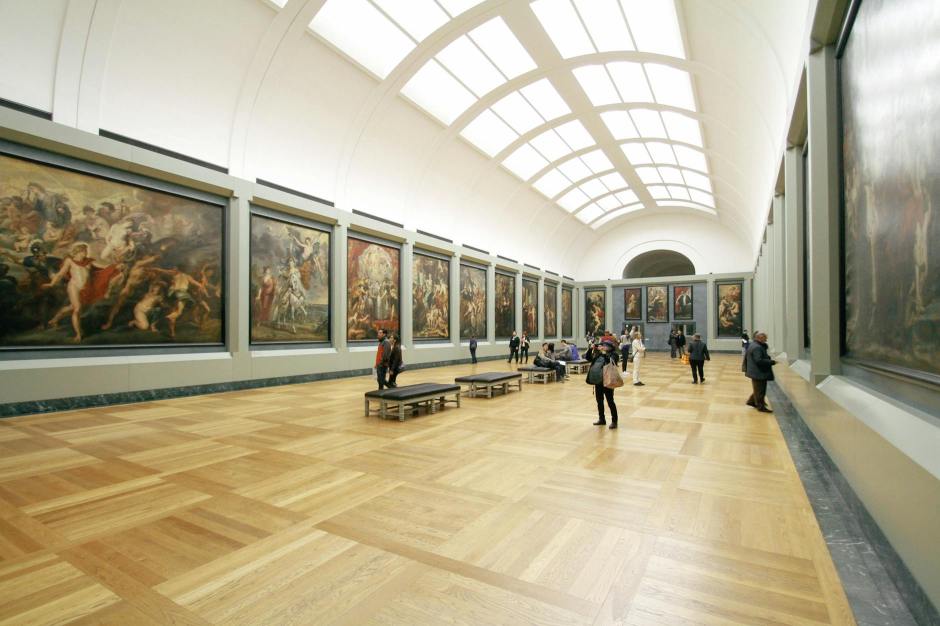
Pennsylvania is known as the Keystone State in part because of its strategic position on the Eastern Seaboard. It sits at the heart of the action on the East Coast and, thanks to the Mississippi River, serves as a gateway to the West. This historic and geographical advantage means I have relatively easy access to some incredible places. By extension, when traveling exhibitions come to those places, it’s not a terrible imposition for me to make the trip. Cities like New York, Philadelphia, Washington D.C., Pittsburgh, and Baltimore are all within reasonable distance.

It was by leveraging this advantage that I was able to see the Darwin exhibition at the American Museum of Natural History in New York, the King Tut exhibition in Philadelphia, and the Russian Tsars exhibition in Delaware. I’m not sharing this to brag about my state but rather to point out that, depending on where you are, you may be closer to the action than you realize. There are often more opportunities in your area than meet the eye.

The Darwin exhibition offered a fascinating look at the scientist’s life, work, and impact. It even featured two Galápagos giant tortoises. Darwin was a keen observer of nature, and through those observations, he developed one of the most revolutionary theories in the history of biology. His theory of evolution has shaped everything from genetics and epidemiology to biodiversity and our understanding of the fossil record. Prior to Darwin, most people saw the natural world as static and unchanging since the moment of creation. Instead, he proposed a dynamic and interdependent system in which relationships and exchanges alter the inhabitants of the world, who in turn shape their environment.

One of my favorite stories is how he looked at an orchid and hypothesized the existence of an undiscovered insect capable of pollinating it. That insect was discovered forty years after his death. This exhibit was the perfect combination of science, history, and anthropology. It showed how discoveries ripple outward into society and helped me understand just how interconnected everything truly is. Is it any wonder that seeing Darwin’s journals, tools, and legacy made its way onto my Bucket List?

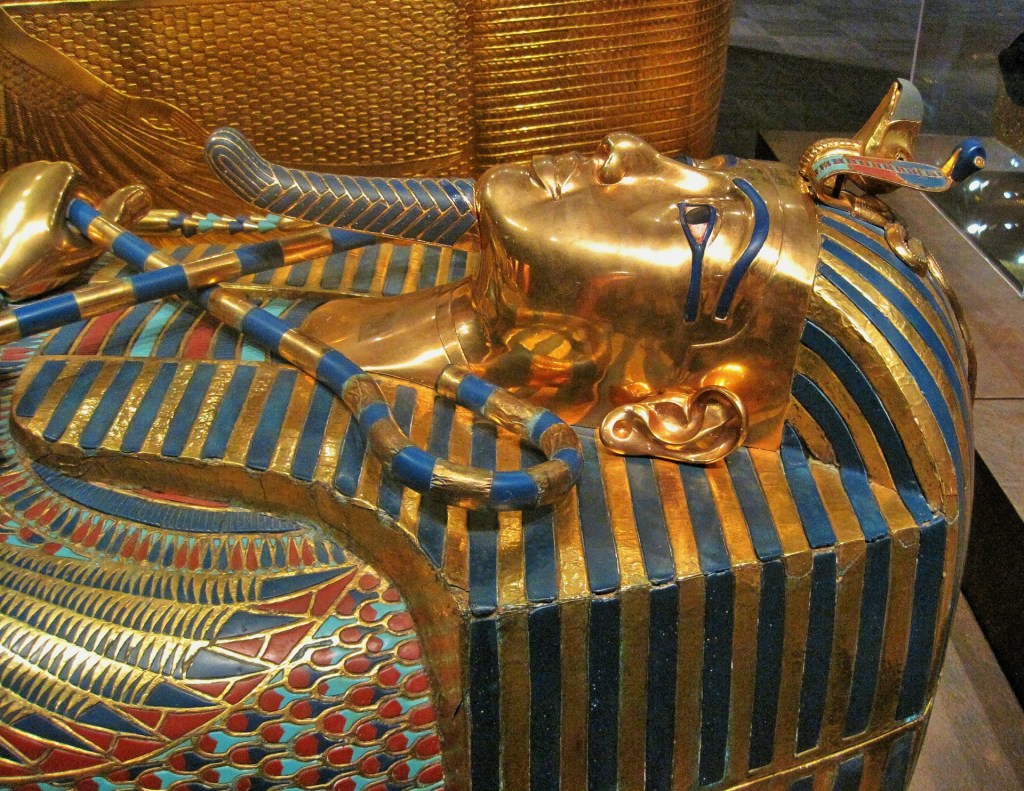
Not to be outdone by New York, Philadelphia often hosts exhibitions and installations that rival its northern neighbor. Just because it’s the Keystone State doesn’t mean it lets the other states have all the fun. In the winter of 2007, I braved a snowstorm to visit the exhibition Tutankhamun and the Golden Age of the Pharaohs at the Franklin Institute. The exhibition included fifty major objects from King Tut’s tomb—among them a vessel containing his mummified organs—and over seventy artifacts from the royalty of Egypt’s 18th Dynasty (1555 to 1305 BC), including a sarcophagus.

King Tut’s tomb was discovered in 1922, sparking a global fascination with ancient Egypt that still persists—my own obsession included. Many of these artifacts have rarely left Egypt, so I certainly wasn’t going to let a snowstorm stop me from seizing this rare opportunity. It was history made tangible, a brush with the ancient world that I’ll never forget.

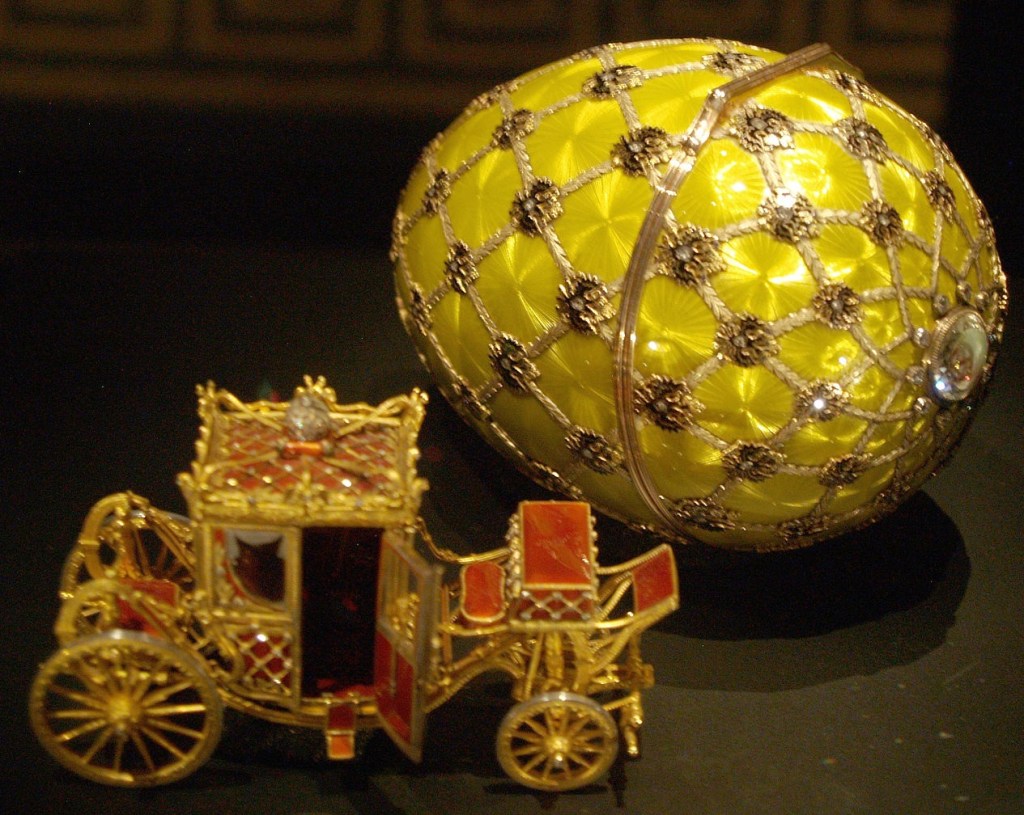
In 1998, Delaware hosted the first major Tsarist exhibition, Nicholas and Alexandra, and I was lucky enough to see it on a fifth-grade field trip. It left a lasting impression on me. We had spent several weeks learning about Russia’s history leading up to the Bolshevik Revolution and the rise of the Communist Party. Featuring nearly 700 objects, it was one of the largest and most prestigious collections of Russian treasures ever to tour outside the country. Most of the items had never before left Russia.

Among the many items on display were the Coronation Egg, an imperial throne, court gowns and uniforms, a gilded state carriage, and artifacts from the Russian Orthodox Church. Even as a child, I was struck by the sheer opulence of the exhibit—particularly the Fabergé Egg, which felt all the more extravagant when considered against the suffering of the Russian people at the time. The experience helped solidify my understanding of the revolution and the dangers of unchecked power and inequality. I’ll avoid getting too political here, but suffice it to say, it made an impression.

Each of these exhibitions made my Bucket List for different reasons. Each one broadened my perspective, deepened my understanding, and shaped how I see the world. They weren’t just collections of artifacts; they were immersive experiences that gave context to history, society, culture, and their ongoing relevance today. Most importantly, they taught me that I don’t always need to travel far to experience the world. Sometimes, the world comes to me.


How Can You Experience Unique Exhibitions?

Start by identifying how far you’re willing to travel. Then make a list of major cities or cultural hubs within that radius—they’re your best bets for hosting large-scale or rare exhibitions. But don’t count out smaller museums, either.

Check their websites to find out when they release their exhibition calendars. I’ve found that many post their schedules for the coming year, although some are less predictable. Once you know when they update their schedules, you can simply mark your calendar to check back. If there’s no set schedule, just take note of when the current exhibition ends and plan to check again around that time.

If you’re searching for something specific—say, an artist or historical topic you love—an online search every six to eight months may yield results. Just be prepared to wait. Some exhibitions, like the Russian Tsars, are generational events.

Lastly, if you’re visiting a city you don’t often travel to, take a few minutes to see what exhibitions are currently on display. You never know what rare gem you might find. It’s easy to miss out by only checking travel sites when planning your trip.

Costs: Range in price from $15 – $25 for museum entrance

Miles from home: Range from a 35 miles to 150

Completed: Childhood – College

Tales from Abroad: Stonehenge

I am, as of this writing, recently returned from a trip to Merry Ol’ England after finding myself with the unexpected invitation to join a family friend, Shelia, at her long term rental in the beautiful Penzance area of Cornwall. The previously unaffordable trip of plane tickets, lodging, food and sightseeing, suddenly became much more affordable with her willingness to host myself and my mom for over a week. Naturally, I did not let such an opportunity slip through my fingers as England was home to one of my top Bucket List items, Stonehenge.

Now, my non-American readers may be a bit perplexed at my excitement of going to Penzance when Stonehenge is a good four hours away. You may very well think, it’s so far, you couldn’t possibly add that on to your trip! First, dear reader, you underestimate the American enthusiasm for driving. After all, the road trip is a quintessential American experience! Besides lacking any sort of reasonable public transit, driving is just what we do and if you’re like me who drives for a living (at the time of this writing) spending several hours in the car is nothing. I had a co-worker who regularly thought nothing of driving 8 hours every other weekend up to New England to help take care of her ailing mother. Americans love driving. 

Second, given that in order to have the opportunity to see Stonehenge again I would need to take another 6 hour flight after needing to take up an additional 2 to 3 hours just to get onto the flight after arriving at the airport after a 2 hour drive to the airport, and another 2 hours driving from London to Stonehenge, I think I can afford the day trip back and forth when considering the time and money it would cost to do at a later date. It was this cost analysis that really tipped the scales in favor of renting a car and visiting this site. As I am always reminding you, dear reader, that when one travels one ought to maximize the opportunity in order to get the most bang for your buck. We are, as much as it pains us all to admit, on a budget and when’s the next time we’re gonna be able to hop a plane to England from America? Exactly. 

After determining that in addition to Stonehenge there were sites scattered about Cornwall that were simply too inconvenient to get to via bus (why they don’t go to the neolithic sites like the Merry Maidens or the Cuny Village is beyond me) and given that taking multiple taxis in a day would prove to be quite expensive to do multiple trips to various places around Cornwall in one day, renting a car ended for the week ended up being the optimal solution of almost $175 in savings when I broke down the costs. Plus, I didn’t have to wait around for rides or worry about meeting my taxi driver at a designated pre-booked time. Once again, my cost benefit analysis kicked in and it tipped it in favor of car rental as much as I prefer relying on public transit.

Now, the best laid plans of mice and men will go astray. In this case, the hiccup I encountered was my phone’s gps. Despite paying for the ability to roam and setting it up ahead of time, when I arrived in England my phone refused to connect and kept telling me that I needed to turn on international data. I would go into the phone settings to see that it was indeed turned on and got a text message from my provider stating that it was turned on. We tried several different work-arounds suggested by the internet once I got to my friend’s place and was able to connect to her internet but nothing worked. Luckily, Sheila allowed us to use her phone for the day to get around. With the crisis adverted, we set out in the wee hours of the morning to make it for our 10 am admission time. 

I had downloaded music to my phone for us to jam to and decided to put my newfound mastery of the British road system to the test. I had (smartly in my estimation) scheduled Stonehenge for the middle of the week in order to give me two full days of test driving on the opposite side of the road in more rural areas before trying to go to more populated and congested places. I actually took to it quite well and credit my dyslexia for being an advantage as I really could hardly tell the difference. I just kept the steering wheel in the middle and followed the visuals provided by the gps rather than following her left or right turns since I can’t do that anyways. So, cross off driving on the opposite side of the road as a bonus!

The way up to Stonehenge was relatively uneventful and I got to really take in the rolling English countryside. The morning started out with classic English weather of rain. However, by the time we reached our destination the rain had cleared leaving a mostly overcast sky that threatened sunshine. 

Now to say that I was excited to see this legendary place, is bit of an understatement. Of all the monuments and sights in this world, Stonehenge is without a doubt one of my top destinations and probably one of the first places I ever truly longed to visit. I was fascinated by the ancient world of Great Britain and Ireland, obsessed with learning about them even though I could (when I was younger) find very little about it. It was this blank hole of questions that burned into my mind, what were they like, why did they build this, how did they build it, what spiritual meaning did it have, how did it connect to other sites and on and on these questions plagued me. I loved the theories, no matter how crazy or outlandish they were. And what I love is that we’re still uncovering things about it, only just last year they did yet another study of the stones and discovered that they come from all over indicating that this may have been a unifying project to unite the island.How does that fit with other archaeological evidence for the rest of Britain? There’s just so much we don’t know. 

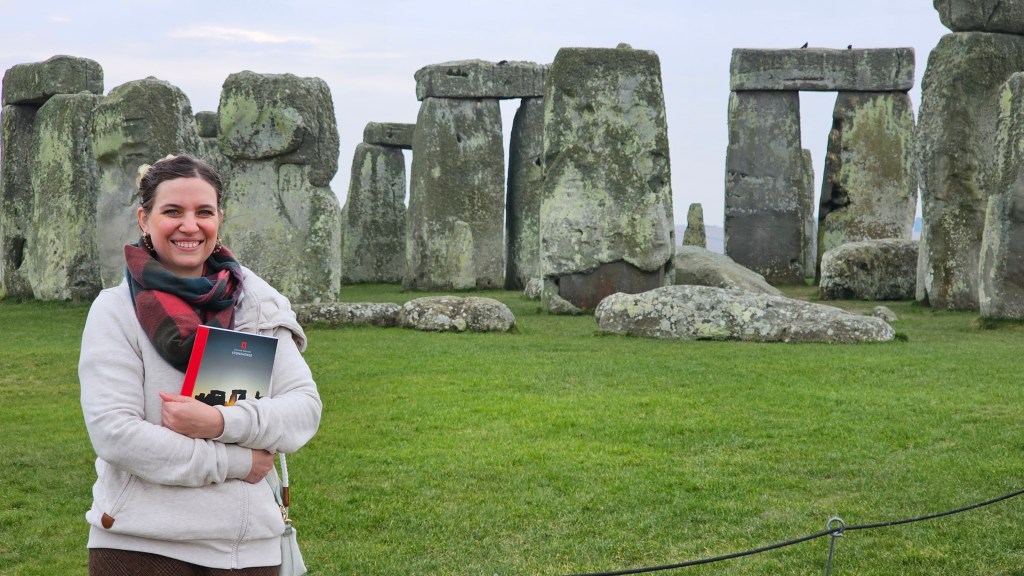
Stonehenge is over 5,000 years old and is the largest neolithic monument in Britain. There is evidence of important structures and even other henges prior to the building of Stonehenge in the general area marking it as an important or prominent site in the stone age. Some of those sites are from 8000 BC You may be forgiven dear reader for thinking it’s just a stone circle, as impressive as that may be; it actually sits upon an earther work with a marked avenue leading up to it. A “heel stone’ marks the alignment with the summer solstice. This avenue and stone is the reason we can say it aligns with solstice and not some other random astrological event. It is also not just one stone circle but two concentric circles and other stone pieces to create a masterpiece of that era.

I am standing by the “heel stone” which marks the line of the summer solstice

It took over 1,500 years to complete in four different stages. The first stage was in 3100 BC, the second stage occurred in 2500 BC; the third took place 150 years later and the final stage occurred in 1,500 BC. This is when the stones were rearranged into their iconic horseshoe shape. There were about 60 stones originally, but sadly many are broken or even missing today.  Despite the presence of human remains, it is not believed to have been a burial site but that these remains were utilized in religious ritual. Although if you read other people’s opinions they’ll tell you that it was a burial site. See? So much mystery!

It was being armed with this knowledge (and much more, but I shalln’t bore you with all the details), that I practically squealed in sheer anticipation more than once as we approached. I was finally actually there, instead of seeing it on a screen or in a book. There was equal parts excitement and awe as we drew closer. The thing about the site is it is actually located in an almost surreal location because one expects that it would be in an area relatively built up. However, it is just out in the middle of nowhere surrounded by sheep and farmer’s fields. Yet, it fits exactly in the landscape that one finds it in because thousands of years ago the builders may have had sheep. For all we know sheep have been hanging out near those stones this entire time.

I loved being able to closely study the stones, to see how they may have been joined together by the knobs at the top of some of them and to picture how it may have once been so many years ago. I marveled at the craftsmanship that must have taken to hew rock into rough formations of giant blocks and to lift them up atop each other. 

What was particularly nice was that I went at the slower time of the year for England, choosing to go right before spring at the end of winter, so it was relatively uncrowded. I didn’t have to fight to look at it and I was even able to snag pictures without people in them. Most pictures contained very few people. This also meant that I was able to really focus on what I was seeing without having to worry about what everyone else was doing around me. After my first circle around the stones snapping lots of pictures, I put my phone away and made another loop so that I would be able to just enjoy the place taking in the sight and locking it in my memory. Too often we are so busy “documenting” our experiences we forget to actually experience them. I was determined to not make that mistake. 

After spending nearly two hours at Stonehenge, we journeyed back on the bus to the visitor center for a quick bite to eat before departing. There was a reconstructed Stoneage village that I took a brief detour in. But having been in the ancient village of Carn Euny the day before (another post on that later), I didn’t spend very long. They also had a small museum of the artefacts found in and around Stonehenge which is very informative if you haven’t spent a lot of time studying the site. 

How to visit Stonehenge (and other suggested sites): 

I’ll not insult you with instructions on how to get to England. However, it is important to know Stonehenge is located about 2 hours south of London making it a fairly easy trip for most people who are intended to tour the country. It is a far less easy trip if you’re flying into Scotland. My American readers may be forgiven for underestimating the size of Great Britain as it is about a 7 hour drive between the two and while we do love driving that is a bit of a haul even for us unless it’s part of an entire road trip especially since most of us only have two weeks of vacation a year.  

However upon arrival, you have two options to see the actual site. Option 1: Is paying the admission ticket (and parking) to Stonehenge which grants you access to the bus transfer over, the reconstructed village and museum. The main advantages to this option is the bus transfer if you’re with someone with mobility issues and the ability to walk around the entire site to see it from all angles.

Option 2: Is parking a little away from the site and accessing the footpath which traverses right next to the walkway in front of Stonehenge. It does require a bit of a hike to get from where you can park the car and Stonehenge. The path isn’t well maintained, in part because while the English have the right to roam on the ancient footpaths, the right to roam doesn’t necessarily convey the promise that someone will be maintaining those footpaths. It also only allows you to really see the front, but it is the best and most famous vantage point. If you go during the peak season you’ll probably be disappointed by the sheer number of people blocking your view and any pictures you’ll want to take. If you go during the non peak season you will probably be able to get a decent view and maybe a few pictures with only a few people milling around in the background. It honestly depends on your priorities. 

My wonderful and amazing mum!

For me, I was traveling with my mom, who doesn’t have the best health and needed the extra support with mobility. I also wanted to be able to get as close as I was permitted. There was an option to get there at 8 am, pay a lot of extra money and be able to go into the circle at sunrise, but I would have needed to leave by like 3:30 am, wake up at like 2:30 am which would have meant no sleep for me and I didn’t want to be driving that long on no sleep as driving without sleep is akin to driving drunk. I wanted to see Stonehenge, not die in a car accident on the way there. Remember we want to check off our bucket list, not hurry the bucket along. 

Now, you may be thinking that there is absolutely no way that I could possibly write a list of “good enoughs” when comparing them to Stonehenge, but it entirely depends on you as an individual. For me, Stonehenge has been a top priority since childhood, so when given the opportunity I jumped on it. However, there are many Neolithic sites and Neolithic stone circles scattered not only across Britain and Europe but also throughout the world and you may be closer to them than you think. Granted there aren’t many that are quite as old as Stonehenge but there are many that are within the 3,000 – 1,000 range. 

If you don’t care much about the size of the stone circles, Britain, Ireland, and Brittany (France) has over 1,300 circles. Many are quite impressive in their own way. They are also less visited and often allow you to be able to go right up to them without needing to pay for tickets or have them roped off, meaning you don’t have to fight with crowds, you can actually touch them and you can enjoy them more as they were intended, as places of spiritual connection, celebration and reflection.

The Merry Maidens of Cornwall!

Stone circles aren’t just found in Europe. There are stone circles in Australia which are sacred to the Aboriginal peoples like the stone arrangements in Victoria at Carisbrook. You may also be surprised to find out that Japan has stone circles from the late Jomon period located in the northern region. Like Stonehenge the Japanese Stone circles contain an inner and outer ring which is aligned with solstices. Even the states has its own stone circle in Wyoming called the Medicine wheel. There are other less famous circles hidden in Nebraska’s Sandhills and Bluemont Virginia.

If you don’t really care what formation a neolithic site takes, then the world is truly your oyster because scattered throughout the globe are sites from ancient pre-civilization peoples. Ohio is famous for its Great Snake Mound as well as the Newark Earthworks. White Sands New Mexico has footprints from over 20,000 years ago – take that Stonehenge! Colorado is home to the Cliff Palace located in Mesa Verde National Park. New Mexico has its own cliff dwellings as well as Aztec ruins. The small island of Malta has Megalithic temples. Ireland is home to Newgrange. One of the oldest known megaliths in the world, Gobekli Tepe, can be found in Turkey. Spain is home to the Dolmen Menga. India has its own dolmens in Marayoor Munnar and I could go on. As you can see dear reader the world is awash with ancient monuments if you know where to look. You may very well be shocked at how close you are to one. So don’t feel the need to put Stonehenge on your list of “must-do’s” if you haven’t already developed an obsession like me, but if you happen to find yourself in England the it is decidedly something I would recommend you make part of your trip.

Cost: $50*

* give or take with the exchange rate, going during non-peak season for a “super saver” discount and pre-booking online for an additional 15% discount and then accounting for the gas to arrive there from the rental.

Miles from home: 2,000

Miles from rental: 200 miles

Cost accounting for plane tickets, etc.: $150*

* You may wonder how I arrived at this number, it’s simple, I took the total cost of my travel (planes, buses, taxis, etc.) and then counted up all the places I checked off my list as a result of traveling to England, divided the total cost of travel by the number of places I got to go to arrive at about $100 per place. As it turns out England has a lot of places and experiences that are on my list which is why it was a top place to visit. I made certain to check off that list to maximize the money I was spending. Using this basic formula is something you can do when deciding where to go and what to do in order to maximize your travels. Yes, the upfront overall cost is quite high, but when considering how many things you can do at once, it may be worth the cost.

A Macabre House of Oddities 

You may be familiar, dear reader, with the traveling shows, carnivals and even houses of “oddities” of yesteryear. Those peddlers of myths and horror to fascinate and perhaps even, scandalize their audience. The most famous of which would have been P.T. Barnum’s, Barnum & Bailey Circus home to such attractions as Myrtle Corbin the Four Legged Woman (a woman born with two pelvises and four legs), Fedor Jeftichuw, The Dog Boy (an individual with hypertrichosis), Isaac Sprague, the Feejee mermaid (a small monkey glued to the tail of a large fish), and many more. Though the “freak show” has been around since the medieval era (and probably before) where crowds would gather to see humans with deformities, it wasn’t until the Victorian Era that they fully matured into a for profit exhibition. It was Barnum’s “Greatest Show on Earth” that truly brought it to the forefront of American culture. Though not all abnormalities were real and were actually made up for the purposes of the show. While freak shows and circuses were exploitative, some, like P. T. Barnum’s Circus did pay well and was (for the time) quite progressive in its treatment of its “human oddities”. 

Under brightly colored fabric and dazzling lights, crowds of spectators stared in amazement at the parade of “strangeness” before them. This was in a time before movies and colored photographs where one might see such things otherwise. It was certainly before commercial flight where far flung places such as Siam and Turkey were easily accessible. Certainly before the internet where one could fact check to see that, there was no missing Albanian prince who was raised in a harem and that woman he claims is 160 years old, is in fact only 80. I imagine quite a few left the shows believing they had seen something truly remarkable and perhaps even mythical. Is it any wonder this was the same era for seances and contacting the dead?

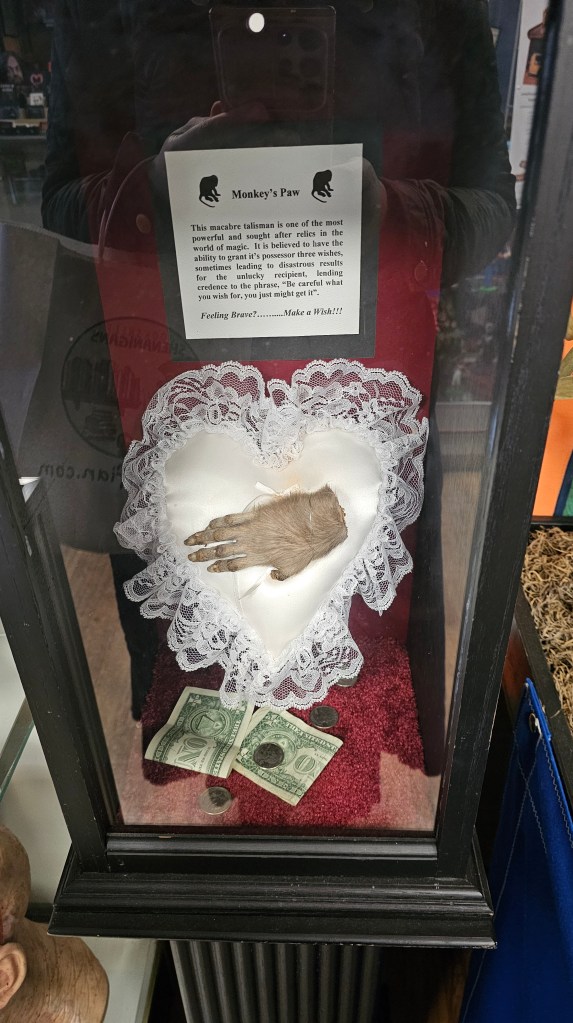
When perusing freak shows and museums of strangeness, visitors unfamiliar with taxidermy were easily fooled by the macabre art  of combining parts of different animals to support outlandish claims of myth come true such as the Jackalope. They may also display artifacts such as cursed monkey paws or pictures. As America expanded its colonization of the New World, so too did folk stories of the legendary creatures and strange happenings such as sasquatch or the vampires of New England. All adding to the idea that the world is truly far stranger than science can account for. 

For the most part it seems that over the years, such places have dwindled down. The circuses no longer showcase individuals with abnormalities for exploitation and with medical advancements many are able to be addressed to improve quality of life. Nor are abnormalities viewed with such suspicion and fear, but are increasingly welcomed as a part of life. Most of the oddities have been lost, destroyed or merely forgotten. Although there are a few small roadside attractions which have collected or perhaps re-created various pieces of history in the same spirit of P. T. Barnum who when accused of duping the public with hoaxes responded “I don’t believe in duping the public, but I believe in first attracting and then pleasing them.” So it made no difference to me if what I was looking at was truly the same pair of pants from Barnum’s giant or just a really large pair of pants. That’s part of the charm, it is a house of hoaxes. Perhaps, it is fun to pretend for a bit.

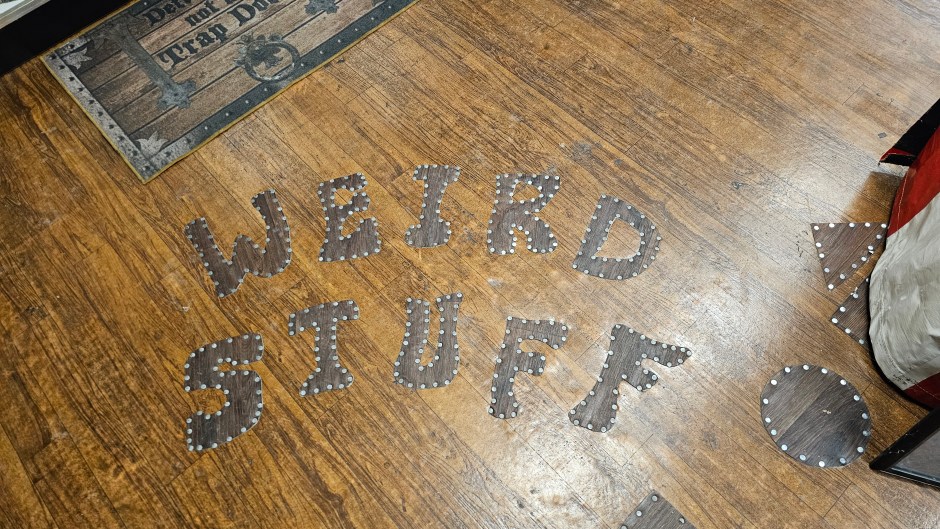
It was with this strange and controversial history in mind, that I went to the House of Oddities and Curious Goods in Elizabethtown, PA. This free museum was the beneficiary of a now closed down Gettysburg Dime Museum preserving Jo-Jo the Dog-Faced Boy (from P. T. Barnum’s circus) and Edgar the Alligator Man. The house certainly captures the odd mixture of barely contained horror and ridiculousness. Like almost all museums of this nature there is little rhyme or reason to the displays as everything is haphazardly squeezed together. Everywhere one looks there is a new, at times stomach churning, oddity as music reminiscent of the circuses of old plays in the background. 

It was a small place of barely two rooms, though the second room was more of a back hallway. Most of it were obvious hoaxes that at one time fascinated the public and led the more easily duped into belief that monsters truly do exist. There were a few genuine gems such as the alligators who had been deformed due to improper disposal of chemicals in the neighboring bayous. Some of the items had small paper “plaques” with explanations of what they were, but most were left to my imagination. I found most of it to be a strange mix of delight and eerie. It was truly like stepping into the beginning of a horror movie. The only thing missing was the creepy person offering to tell your fortune or to sell you some cursed object. Actually, there was a small offer to purchase some cursed objects at the front, but I kindly passed and instead put a small donation in the box (after all, one should probably avoid the ire of the owner of so many “cursed and powerful objects”). 

The museum was less a museum of true oddities and more an experiential museum of what people may have seen in decades past and how they thought of seemingly unexplainable phenomena. It was intriguing to see how people interpreted scant pieces of data and extrapolated it out as evidence for monsters. I wondered how many people walk away from it truly believing in what they see or if, like me, they find it a fascinating piece of living history of a time and phenomena of when such shows were taken seriously. Of a time when the world still held a hint of magic before all the maps were filled in and science explained most of what we experience. Do not get me wrong, I like living in the era I live in now, but we don’t have a must mystery as we once did. Still, I can now tell people I have beheld one of the legendary Giants of Lovelock Cave and a Wolpertinger! 

Ready for your own adventure into the macabre, mysterious and strange?

Obviously a google search of your local area would be easiest. However, it can be a bit difficult to know precisely what to google “freak show”, “museum” “house of oddities”, “curiosity house”. You may need to play around with the precise terms of your search as they are not (to my knowledge) the most popular of attractions. I have stumbled upon the site https://www.roadsideamerica.com which may be a good source for not only such places as these but also other fun attractions not readily advertised. I was surprised by the number of curiosity houses listed nearby that I had never heard of before. 

A Trip Back in Time: Tubing at Sickman’s Mill

Ah, summer. What springs to mind when we think of those blazing hot days and long evenings? Cookouts and water games, people gathered round, laughing gaily as dogs drift in and among the crowd, children playing lawn games? The reality is that, sadly, summer is spent far too often on our phones. Even when out and about, they are an ever-present distraction. Speaking with strangers is practically taboo, lest you disrupt their very important text conversation or latest social media doom-scrolling venture. There are few sanctuaries of the bygone eras where summer meant a blissful abandonment of the world for nature and all her bountiful glory.

It was one such sanctuary that I happened upon on a summer morning—not entirely by accident, as I had made plans to go—but I was surprised to discover that Sickman’s Mill was such a place. Nestled in the southern part of Lancaster County, it doesn’t have the best reception, and lacking any Wi-Fi, one is forced, as their sign proudly declares, to pretend it’s 1969 and talk to other people. I found the bartenders friendly and hospitable, eager to make me feel welcome to a party I didn’t know I’d been invited to as I awaited my friend Kayla’s arrival. They assured me that despite the weather forecast for potential showers, I would still be able to participate in the not-quite-forgotten summer tradition of tubing down a river.

Almost as soon as there were rubber inner tubes leftover from tires, there have been people putting tubs in rivers and floating down them. What could be a more relaxing way to beat the summer heat? After a trip down the Pequea Creek, I’m not sure I can answer that question. It was the perfect panacea for the blistering heat of the season.

The rain from the night before had raised the creek’s levels and left the morning quite comfortable. The clouds that had threatened thunderstorms gave way to beautiful blue skies, allowing dappled rays of sunlight to stream down through the trees. The crowds had not yet arrived, leaving the creek mostly to ourselves to enjoy the sounds of nature all around us. Occasionally, we were treated to faster-moving sections as the water flowed rapidly over a series of rocks. The only main concern was the occasional felled tree that created unexpected obstacles, but aside from those minor disruptions, it was a beautifully relaxing trip.

The entire route took us about an hour to complete, as the creek was moving more rapidly that morning due to the recent rainfall. It can take up to two hours when the water is slower. We were directed by a polite young man to get out of our tubes and climb the convenient stairs to await a bus that would transport us back to the mill. We didn’t need to wait long before it came lumbering up the lane, and after another group disembarked from the creek to board, we were on our way. It was a short but delightful ride through the countryside.

The old mill itself was not open for exploration, but they more than made up for it with the bar affectionately named Jimmy’s Place after the family’s dog. Naturally, Kayla and I tried the Jimmy Juice—all four flavors. She had the Pineapple and Cranberry, whereas I enjoyed an Orange and a Ginger. Our favorites were the Pineapple and the Ginger, and we were able to take a four-pack home to share. For food, we went only a few feet away from the bar to Mama T’s. I learned the name is a bit of a joke, as Mama T is by all accounts a terrible cook. Don’t worry—the food was quite delicious and includes vegetarian options. Prices ranged from $5 for a slice of sourdough pizza to the more expensive Mama T Burger at $14. The portion sizes were as generous as the people serving us.

When we returned to the mill, we were surprised to see that the sleepy bar had transformed into an impromptu party. Dogs ran among the people and splashed into the creek with their owners. Some had taken chairs to sit directly in the creek while sipping on the infamous Jimmy Juice, a vodka-based cocktail. Children and adults played lawn games together, and everywhere I looked, people were actually talking to each other instead of scrolling on their phones. It felt as if I had indeed been transported back to 1969. I even had the distinct pleasure of meeting Mama T, who had just landed from Ireland.

It would seem that while the mill has taken on many purposes in its 250-plus years of existence, it remains timeless. One certainly feels as if time simply melts away. Hours and minutes blend together as the party stretches into the afternoon. You forget to check the time, and text messages go unanswered—if they even get through the spotty reception. It is a place to forget the modern world and embrace the echoes of summers past. Though I wouldn’t have thought it all that different from a lazy river at an amusement park, there was something special about tubing down a real river in the middle of the woods. It may be a relic of an era now gone, but it remains a time-honored tradition. As long as there are tubes and rivers, people will continue to float down them.

How can you go tubing?

Luckily, the United States is dotted with rivers, and if nothing else, you can probably find one nearby to float down—provided you have a tube. It’s recommended to bring a friend along and park your cars in two different places unless you find a spot like Sickman’s Mill where you can rent a tube and catch a bus ride back. It’s a bit more adventurous doing it yourself. Though I must confess, as someone with a poor sense of direction, I’d likely miss the designated pickup spot, drift miles downriver, and end up hopelessly lost.

If you don’t want to go the DIY route, finding a place like Sickman’s is usually as simple as Googling “water tubing.” There are plenty of places that offer this kind of summer activity. I can’t promise they’ll all have the same family cookout atmosphere, but the river experience will be similar. I do think there’s something magical about finding a place where cell service isn’t great and Wi-Fi isn’t available. It encourages people to put their phones away and genuinely engage with each other.

Completed: August 2024
Cost: $25 for tubing ($40 additional for drinks and food)
Miles from home: 20
Potentially time warped: 55 years into the past

From Fire and Ash a Phoenix Rises: Firebird Festival in Phoenixville

For the past twenty years a mysterious sight has unfolded in the midst of the winter’s cold. A community builds a giant wooden bird and then sets it on fire much to the delight of the spectators. And, dear reader, it is as awesome as it sounds. 

The Firebird Festival, was a dream of a Henrik Stubbe Teglbjaerg, an immigrant from Denmark who has resided in the States since the late 1980’s. He, with four other Phoenixville residents, came up with the idea, in part inspired by similar festivals of Europe where they build things and set it on fire. When he first arrived Phoenixville was a dreary little town. However, it started to revive itself, opening up a theater, art galleries, coffee house and it was as if there was a rebirth, a town rising up out of the ashes. So what could be a more perfect fit than to celebrate with the symbol of rebirth and the town’s own namesake? 

What is more is that each year, the ashes from the burned phoenix are taken and made into clay birds which are then placed inside the wooden bird. When set on fire, the wooden structure acts as a kiln, firing the birds and thus completing the cycle of last year’s bird when they are transformed into decorative pottery. 

What started as a small 150 person event has grown into a 20,000 person festival. Complete with food trucks, fire dancers, a parade, live music, and various wares for sale. It is a celebration of the town and the arts. But rather than relying on fancy performance artists most of the event is volunteer and community run which only speaks to the strength and spirit of the community, despite the growing size of the festival they have protected its heart as a grassroots events that remains untainted by the scale of the crowd. 

Most years, this event takes place in December just as the northern hemisphere enters its darkest stage and the year is coming to a close. However due to an unusually dry spell, the 2024 Firebird Festival was delayed as having a 20 foot wooden set aflame near exceedingly dry forest isn’t exactly the safest idea. Remember dear reader, as much as we all desire to check off our lists we want to make sure we live to check off the rest of our lists when doing so. 

This misfortune of weather was my opportunity. For you see, my sister and I typically celebrate the holiday season each year with our extended family on the second weekend of December. It so happens that the Firebird Festival also happens on that same weekend meaning that we are always previously engaged as the annual Holiday Feast has been a set date since before I was born. So when the organizers moved the Firebird Festival to the first weekend in February it became the must do event of the winter season. 

The new date was also fortuitous as it coincided with an ancient celebration of spring’s light returning. The ancient Celtic holiday of Imbolc was associated with the Celtic Goddess Brigid, the guardian of Hearth and Flame, a perfect pairing for the new date. The ancient holiday was a time of purification, renewal and preparation for the change in season. Fire rituals which honored the returning sun were frequently integrated into the Imbolc celebrations. It was celebrations like these which inspired the Firebird Festival in the first place making the new date perfect. 

As it happened, it was one of the coldest nights of the winter as arctic wind was carried down from the north freezing all that it touched with its icy fingers. Only a few days before the weather had been warm thawing out the ground and making it moist and muddy. Posts about the event warned celebrants of the potential for treacherous conditions on the field as the mud became slick and icy. 

My sister and I did our best to buddle up in preparation for the cold. I fared a bit better than her having a coat that mimicked a fur one, leather gloves lined with kashmir, thick socks and shoes with thick soles to keep out the cold. She had a rather old coat that she put several layers on beneath but the wind still managed to cut through the fabric and whisk away what warmth she had. As the Germans say “there is no bad weather, only bad clothing” and this was a prime example. I stayed pretty toasty throughout the evening but my poor sister struggled. Worry not, I often acted as a wind break once the crowd gathered. 

The festival occurs in two different places, the field where the bird is and downtown Phoenixville where most of the art events occur. After looking at the events and options, we determined that we wouldn’t arrive at 4 pm when the event started but rather closer to 5:30 pm to find parking, walk down to the field. That gave us about 21/2 – 2 hours before the bird was scheduled to be lit at 8 and the fire dancers would start their own performances around 6 (something else I’ve been wanting to see as part of my BucketList, maybe I’ll have to add Fire Dancing to the list now that I know I can volunteer to be one!) 

We followed the instructions for parking and managed to snag a great spot that was near enough to the field to make an easy walk in and out. It was a place that opened for parking after the official event time, I assume in part to help manage crowds. This made it a breeze to get to the Veterans Memorial Park where we were greeted by friendly volunteers who directed us into the event. They had buckets to collect donations which went to supporting it. When we got there we were a little surprised as the lackluster crowd as it seemed only a hundred people were milling about. There were a few food trucks and some tents set up. The band wasn’t playing yet and the sun was only just starting to set. We milled around looking at the different options and then decided to watch the Fire Dancers. We saw some people had chairs set up right at the center of the staging area but other than directly in front, the area was clear. We picked a spot to the left to watch and decided we’d take turns running to the food trucks. 

It felt a little paranoid to hold our spots when there were so few people, but as it turned out this was a crucial strategy because it seemed that within 15 minutes the crowd had tripled in size and the entire perimeter of the bird was lined with spectators enthralled by the fire dancers. Just as twilight fell, the arrived each with a unique costume and different types of instruments to move the flames about. They juggled, they moved around balls of fire, they twirled long lances and staves, they mimicked a bird with wing-like props, they used hoops of fire to make large circles. One wore a plaque mask, another looked like she came from the assassin’s creed, there were knights with shields and spears, there was a woman in a leopard catsuit. Some of the volunteers were better than others but all of them were mesmerizing in their own way as in the background a band played music. 

By the time the sky had gone dark, the crowd had ballooned behind us and we had to jostle our way to back to each other when we went for warm drinks or snacks. We nibbled on delicious food from a truck and sipped on warm apple cider available for purchase from some enthusiastic teens manning a volunteer tent. It seemed a little pricey for warm cider but the proceeds went to support the event and as it didn’t have an entry fee I was happy to pay a little more. The cider warmed my hands which had gotten cold from taking pictures of the fire dancers. 

As the appointed hour grew near, the crowd and the cold intensified. However, it was all great fun as we stood there making friends with the people behind us, chatting and laughing. We helped them hold a spot for their friend when she slipped out. Then around 7:45 the parade arrived. Headed by a giant pheonix of paper mache and cloth, the parade was host to more costumed revelers adorned with lights who danced to the beat of drums. Around the bird they circled to the cheers of the onlookers as the crowd only grew more excited in anticipation of the main event. 

Unfortunately, there seemed to be a bit of a delay as 8 pm came and went. Then 8:05, then 8:10, then 8:15, by the time 8:20 rolled around there were chants of “light the bird” which would be taken up and then die down after a minute or so. This went on for another 10 or 15 minutes until finally the torch bearers chosen by lottery were assembled and permitted to put torch to wood. At first, the flames barely licked up the wooden structure. It seemed as if the wind would snuff out the small fires struggling to find purchase against such icy conditions. How could such small flames survive? Would we be disappointed? 

No, the flames did not die. They continued their merry dance along the wooden structure, flickering brightly in the night. While it was a nice sight to see, it was hardly worth the nearly 3 hours in the freezing cold, perhaps we should pack it in, my sister suggested. I told her that I wanted to spend a little bit longer because we had been there so long and I wanted to enjoy it regardless. Then suddenly, conflagration! The whole thing was alight, the phoenix was finally truly lit. The heat pushed back the cold becoming almost more than we could bear even so far way. I pushed my hands out towards it drinking in the sudden heat. It was a glorious sight to behold as it was truly worthy of its name.It really did look like a mythical creature crackling in the cold night with the promise of the summer’s sun. We stood there enthralled by it, saying goodbye to the old and welcoming the new. 

How can you experience a Firebird Festival?

Obviously if you don’t live near Phoenixville attending this event won’t be cheap or easy and while it is certainly something I recommend if you’re in the area, it isn’t something I would plan an entire vacation around. However, there are lots of different local traditions and festivals throughout the country with their own unique and special. Florida is home to an Underwater Music Festival,  New Mexico has one dedicated to UFOs, Ohio is obsessed with Duck Tape and Washington State hosts a Kite Festival and there are many more. With some searching, you’re almost certain to find a quirky festival near you. Many of these festivals take place in the Spring and Summer months so now is the perfect time to look around your wider area for fun and interesting events.

What’s awesome is that the story of the Firebird Festival demonstrates that it only takes a few people gathering together to make something amazing. It started off as 4 friends getting together, building a small phoenix and setting it alight for 150 people. It has ballooned into an event that attracts thousands each winter. Your own event doesn’t have to be this “big thing” and there’s nothing to stop you from starting your own tradition! Don’t worry about a 20 year commitment though, as once it takes off there will be people to pass the torch to (pun very much intended). 

Small disclaimer:

Technically, there are things that can stop you from starting your own tradition. Local ordinances may prohibit you from doing certain activities like setting things on fire and I really don’t recommend that you do that if you live out in places that a prone to wildfires. I don’t want this blog to be in the news because after reading this, you decided to start your own firebird festival and set the state of California on fire. So as always check your local ordinances and use common sense before trying something you read online.

Cost: Free

Miles from home: 50