Hello, dear reader, just a quick update and a bit of exciting news.
I’m in the process of pursuing a really BIG bucket list goal: opening my own therapy practice. After years of studying through college, then grad school, working under the supervision of seasoned professionals, and passing not one but two licensing exams (first as a Licensed Social Worker, then as a Licensed Clinical Social Worker, yes we have to take two different tests one for each level), I’m finally able to practice independently.
I’ve officially launched my website, joined a few corners of social media to market myself, and, perhaps most exciting of all, I’ve welcomed my first client. It’s a huge milestone… but as you can probably guess, one client doesn’t quite pay the bills.
I’m still working full-time as a therapist for another organization while devoting most of my spare time to building this practice from the ground up. Which brings me to the main point of this announcement: I’ll be adjusting my blog posting schedule.
Instead of posting twice a week (Tuesdays and Fridays), I’ll now be sharing new content once a week, on Wednesdays. I’ll continue alternating between posts about local adventures and posts about making everyday life more intentional, joyful, and sustainable.
This decision wasn’t made lightly, but it’s in line with something I talk about often here: the power of choice. Saying yes to one thing often means saying no to something else, and right now, I’m choosing to prioritize building my small business.
Once I’m able to transition out of my full-time job and run my practice full-time, I fully intend to circle back and grow this blog and community even more. I still believe in everything this space stands for:
✦ That you don’t need to spend a fortune or cross an ocean to live a life filled with wonder. ✦ That adventure can be found right where you are. ✦ That a meaningful life is built, not bought.
So this isn’t goodbye. Just a bit of a slowdown.
I hope to report back in a few months with stories from this new adventure, lessons learned, challenges conquered, and one more dream crossed off the list.
If a bottle of wine contains more philosophy than all the books in the world, then a barrel of freshly picked grapes awaiting their fate must contain all the mysteries of the ancients. Wine making has been a centuries-old tradition, originating over 8,000 years ago when the transformation of juice to wine was thought to be a divine mystery. Though the modern era has brought stainless steel presses and fermentation machines, it may have lost some of its ancient wisdom and mystery, rendering the process more mundane. Perhaps that’s why there’s such allure in the old ways, hand-picked grapes tossed into wooden barrels, squished by stomping feet, then carefully aged in wood to absorb its complex flavors over time.
The crushing releases the grape’s juice, allowing it to mix with the skins to absorb flavor, color, and tannins. Depending on the type of wine desired, the presence of stems or skins may be either vital or avoided. After the initial crushing, yeast is added; the juice is fermented, pressed, and finally aged. While details may vary, the process has remained largely unchanged for centuries.
Many were first introduced to grape stomping through the infamous I Love Lucy episode. For me, it was A Walk in the Clouds, the laughter, singing, and juice-splashing celebration enchanted me. It transformed wine into a celebration of life and love. Hollywood may have romanticized it, but wine itself is inherently romantic, so I can be forgiven my idealized vision of the process.
Determined to check off this long-standing bucket list item, I began searching for grape stomping opportunities. While I was certain a plane ticket to Portugal wouldn’t be necessary, I was surprised to discover just how few vineyards in my state actually offered it. Some festivals held stomping competitions, but alas, I lacked a team. And most options were three to four hours away, not exactly convenient for a quick outing. Perhaps, if I could make a weekend of it, but I was loathe to do an overnight.
Undeterred, I expanded my search. That’s how I found Four Sisters Winery, just across the Pennsylvania/New Jersey border, only two hours away. They offered barefoot grape stomping, wine tasting, and dinner. When I floated the idea to my sister, she declined, apparently, squishy, slimly, sticky grapes between the toes was not her idea of a good time. Which, fair. It’s not everyone’s glass of wine.
What is a bucketlister to do when one’s partner in crime is not up for the proposed heist? Would I need to shelve the idea? Remove it from possibility altogether? Fear not, dear reader, I had a backup adventurer: my mother. As fate would have it, she also had grape stomping on her bucket list. And thus, it became a perfect Mother’s Day gift.
We registered for the event on June 21st, a fine way to ring in the summer. With the heatwave beginning, we drove through picturesque farm hills dotted with vineyards, perfect for a potential wine-themed day trip. We used the time to chat and simply enjoy each other’s company.
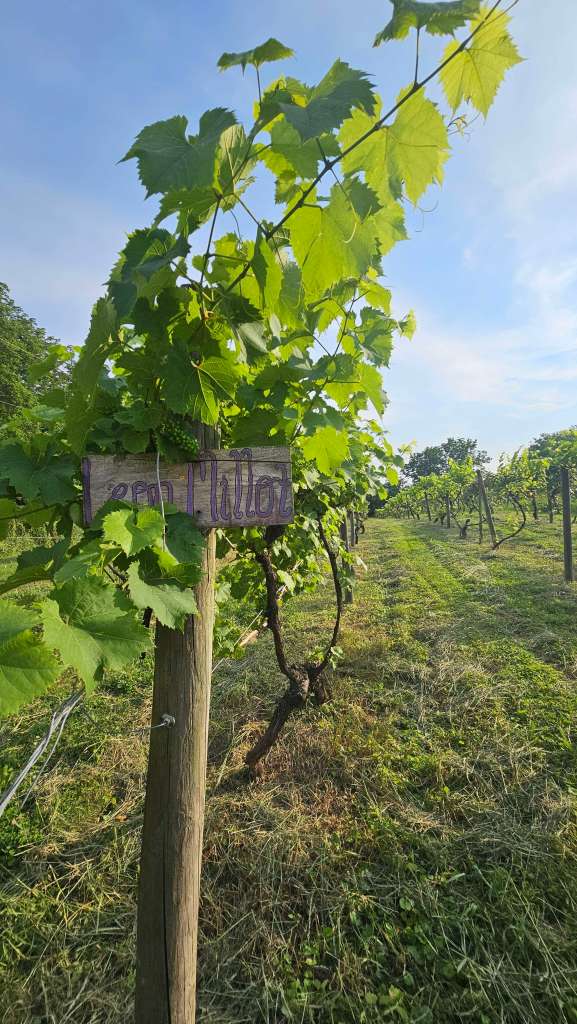
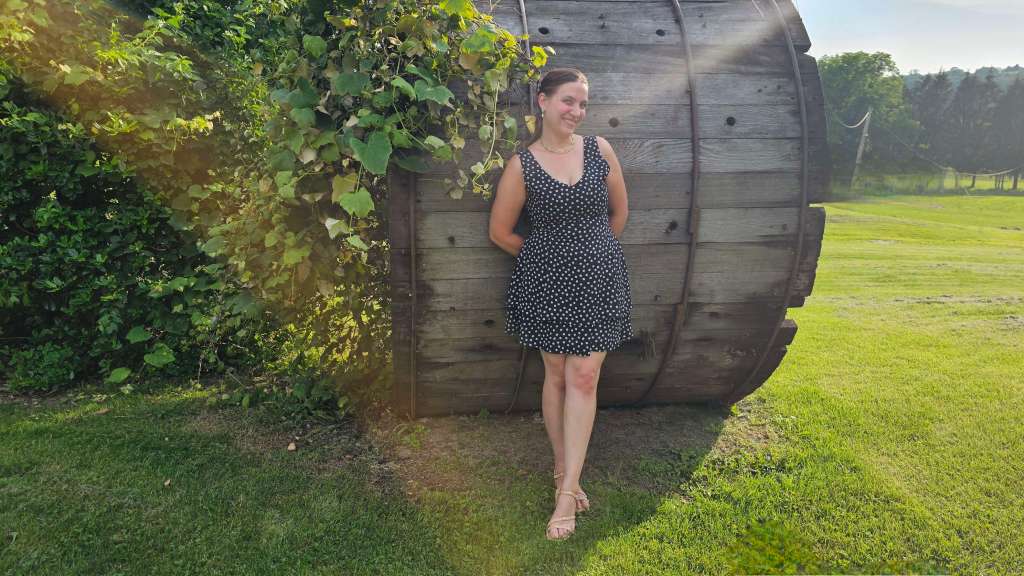
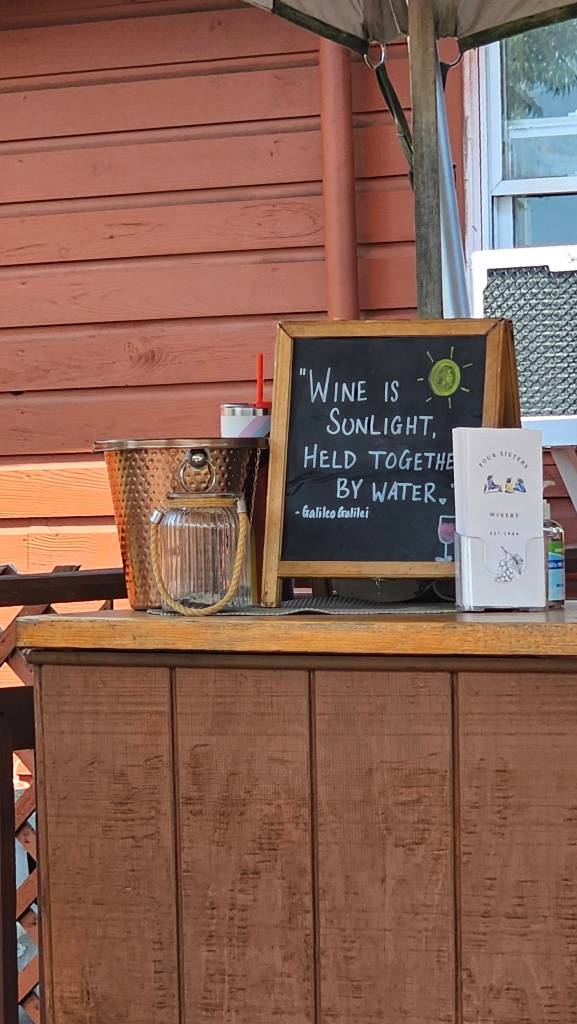
Four Sisters Winery was tucked among the trees with an unassuming sign and small shop. It belied the expansive four-acre vineyard boasting 19 varieties of grapes and three event spaces. We arrived early and relaxed under an awning listening to live music. The rustic benches and tables added to the atmosphere that they’ve clung to the older ways (although they probably have the modern machinery tucked away).
Once ushered into the event space, we were seated at a table with two other adult children treating their mothers and a pair of friends. It was delightful to make new acquaintances over the course of the evening.
Before the dinner commenced, we were given a short overview of the winery. The Four Sisters has been in operation for over 40 years, having begun by a farmer from Essex in 1984. His main focus was on vegetables but began to produce wine as a secondary revenue stream. It was such a success, the vineyard paid for all four sisters to go to college and obtain both their masters and PhD. However, it meant that none of the sisters were much interested in continuing to manage the vineyard and it was sold to the new owners a few years ago.
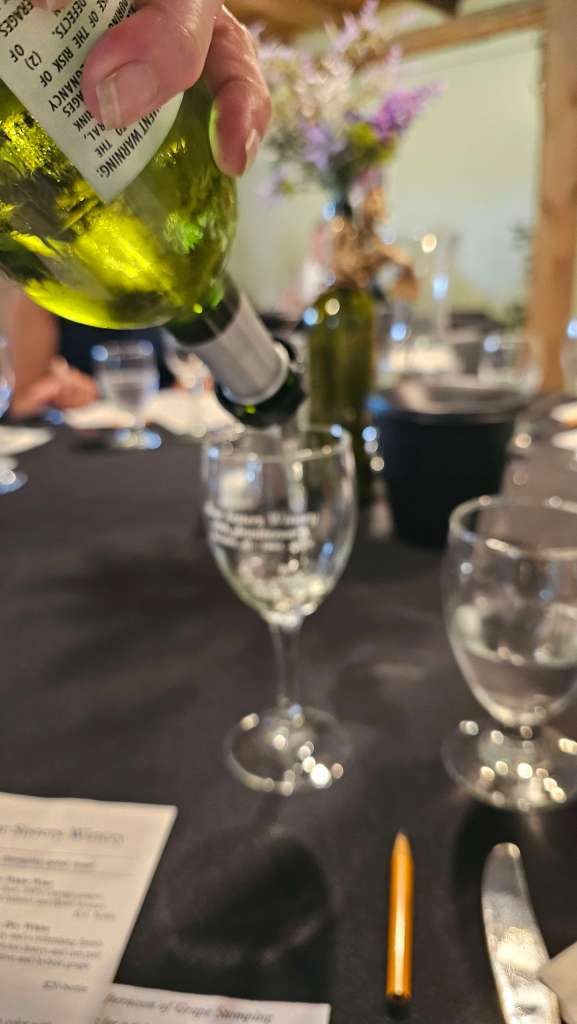
We tasted ten wines, ranging from whites to reds, dry to sweet. My preference leaned toward the reds and dry varieties, though a semi-dry called Cayuga stood out. We rated each wine, chatted about pairings, and judged grape varietals like seasoned sommeliers.
Dinner included a raspberry vinaigrette salad, parmesan chicken with pasta and seasonal vegetables, and a brownie for dessert. Dietary restrictions? Accommodated with grace. The vegan dessert of peaches and blueberries looked particularly delicious, a strong case for food envy.
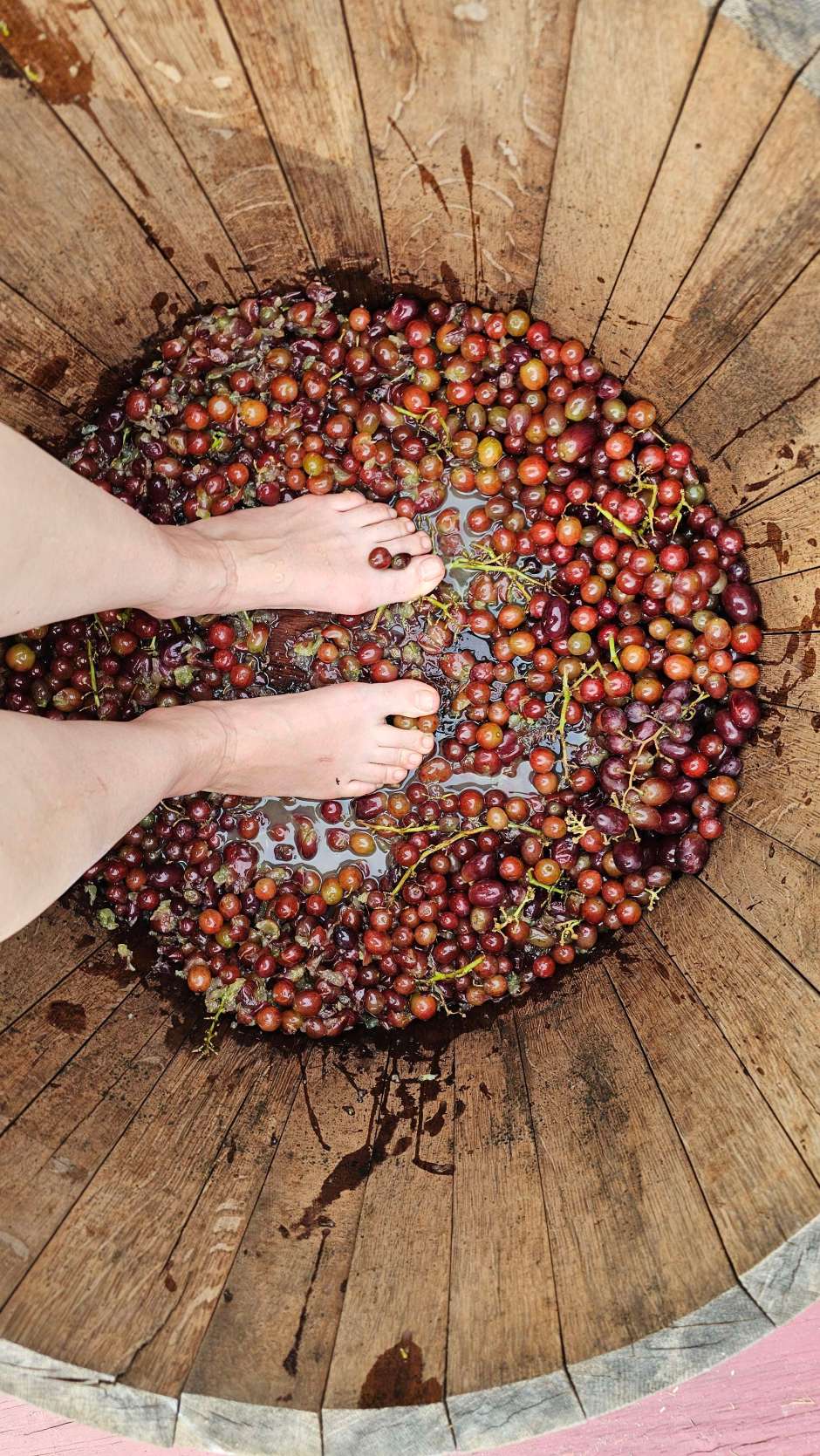
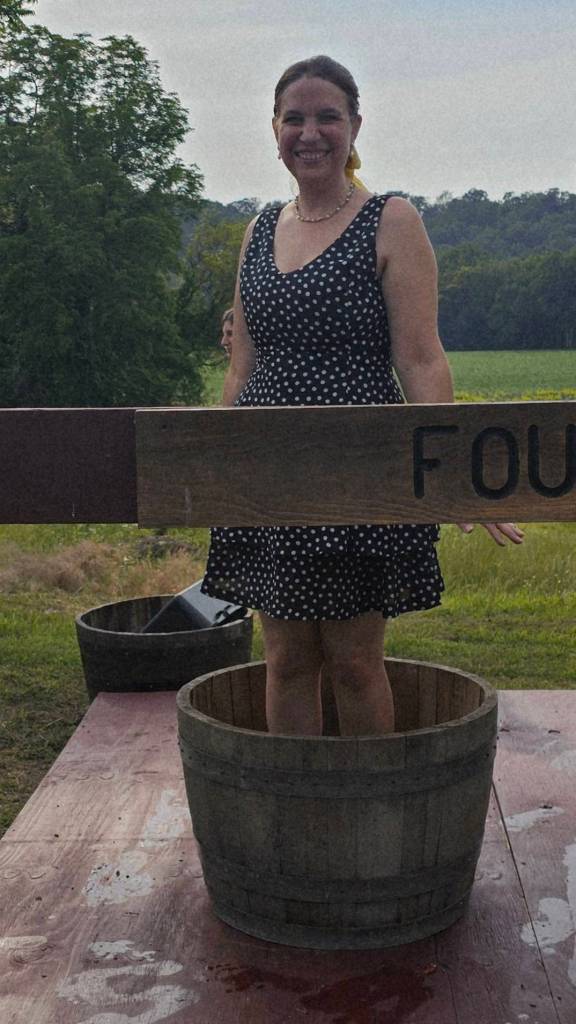
Then came the moment we’d been waiting for: the stomp. Three barrels were prepped for us to take turns. Slipping off my shoes, I stepped in. The sensation was surprising; the grapes rolled like a foot massage, slick and dense underfoot. They slipped around as I tried to crush them and the barrel became slick underneath me. Grapes are a bit more dense than one may imagine. The stems of the grapes added an extra texture which lightly scraped my feet. I could not help but remember the songs about crushing the grapes as I moved around in the small barrel. It was clumsy, slippery, and joyful. I paused for a photo, then climbed out to let others have their turn.
A rinse station awaited to wash off the sticky grape residue. I grabbed my complimentary wine glass, said my goodbyes, and my mother and I set off, bottles of our favorite wines in hand, winding our way home with laughter and plans for our next adventure.
Most of my escapades happen close to home, but sometimes a short road trip delivers a memory worth bottling. This one was certainly like walking among the clouds.
How can you have a stomping good time?
If you’re lucky, you may live near a winery offering grape stomping events. A quick Google search of local wineries or wine festivals may reveal hidden gems. If it requires a road trip, consider turning it into a full-day or weekend experience.
But for those far from the vines? Bring the stomp to you. Invite friends, fill a barrel with grapes, spin some music, open a few bottles, and get stomping. (Just don’t drink the juice!) When you’re done, convert the barrel into a flower planter or save it for your next party.
Whether we go to the adventure or bring the adventure to us, life tastes better when we take the time to stomp the grapes.
Dear reader, today is the day that my home country celebrates its independence! Our festivities may vary from cookouts to parades to poolside parties to relaxing in the woods, but almost everyone celebrates with fireworks. It’s practically a patriotic requirement. So it seems appropriate to reminisce about some of my favorite firework experiences, both from this time of year and from unexpected corners of the world.
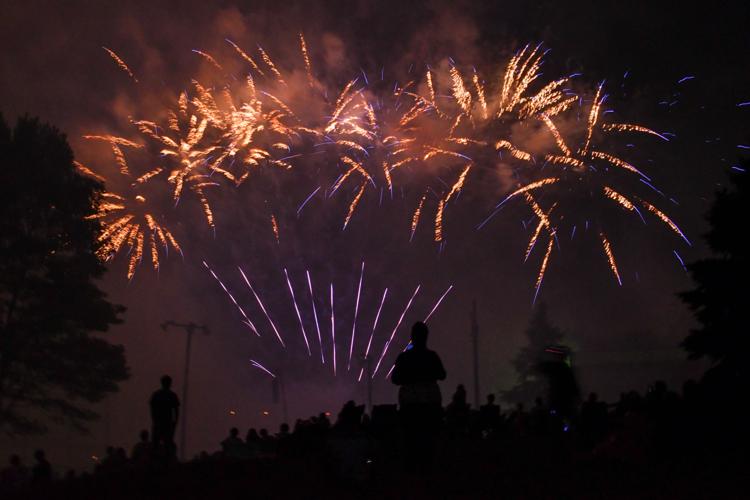
Let’s begin where traditions run deep: the annual Fourth of July celebration at Lititz Springs Park. Nestled in one of America’s oldest and most charming small towns, this celebration is one of the longest-running Independence Day events in the country. The entire town rolls out the proverbial red, white, and blue carpet. There’s a lively parade, complete with waving kids, twirling batons, and the obligatory fire engine sirens. In the park, music drifts through the air, mingling with the scent of funnel cakes, roasted corn, and sunscreen. The spring-fed stream is transformed into a glowing ribbon of light, lined with thousands of floating candles. Wooden swans from the 1950s, elegant, slightly weathered, and endlessly photogenic, glide across the water like time travelers from a more genteel age. And of course, there’s the Queen of Candles pageant, which, in a uniquely Lititz twist, has historically filled the role of prom queen, hence the local high school doesn’t crown one separately. As dusk settles in and fireflies join the fun, the evening culminates in a firework display that lights up the night sky, echoes through the nearby hills and can be seen throughout the surrounding area.
But that’s not the only show in town. Just a few miles away, another local tradition offers a decidedly more dramatic flair, complete with orchestras and cannon fire. Yes, dear reader, you read that correctly: cannon fire. In a neighboring park, an open-air concert features a full symphony performing patriotic and classical pieces. Families sprawl out on blankets, picnics are enjoyed, and toddlers chase bubbles while the sun slowly dips below the treetops. As the orchestra swells into the iconic strains of the 1812 Overture, a real, honest-to-goodness cannon is wheeled out. At the appointed moment, BOOM! The shockwave hits your chest, toddlers jump, and somewhere a dog begins howling in protest. Then of course the second one rings out in time with the music just as Pyotr Ilyich Tchaikovsky intended! And then, fireworks! Bright, bursting blooms cascading overhead in a breathtaking finale that leaves your ears ringing and your soul strangely soothed.
Not all firework memories come with stars and stripes. In the summer of 2009, I found myself studying abroad in Marburg, Germany. As July 4th approached, I was surprised by a small, sentimental wave of homesickness. Normally, I wasn’t one for the massive crowds that accompany large celebrations (after all, humanity is best enjoyed in moderation), but the quiet sense of cultural ritual was something I missed. I was preparing myself for a solo evening of wistful nostalgia, perhaps consoled with chocolate. Instead, I learned that Marburg hosts its own festival around the same time of year. I joined the locals for ice cream by the Lahn River, enjoyed a leisurely boat ride beneath the canopy of summer trees, and danced (awkwardly) to rock music echoing through the cobbled streets. As night fell, fireworks erupted in a brilliant display over the 13th-century Landgrave Castle. Watching colors explode above a medieval fortress while nestled in the Oberstadt (Marburg’s charming old town) felt like stepping into a fairytale. It was a reminder that celebration and beauty know no borders.
And then there are the fireworks that set the global standard: Disney. If America had a national fireworks team, Disney would be it. Their shows are not just displays; they are full-blown productions of light, music, narration, lasers, and occasional pyrotechnic sorcery the likes that only Disney’s mouse are capable of! I’ve had the pleasure of witnessing them both at Epcot and Magic Kingdom. At Epcot, it wasn’t just nostalgia that hit me, but personal pride, my high school marching band once choreographed an entire halftime show to the music of “Reflections of Earth.” Seeing it performed live, as fireworks danced to familiar melodies, was a surreal and deeply satisfying moment, especially since that was the show that landed us 7th at our Championships. At Magic Kingdom, the fireworks soar above Cinderella’s Castle like Tinkerbell’s own personal art project. The crowd gasps, the music swells, and even the most stoic adults find themselves grinning like five-year-olds in awe of the magic.
Fireworks are more than just explosions in the sky. They are shared moments of awe, connection, and celebration, tiny temporary galaxies that remind us, if only for a moment, to look up and be amazed.
So, dear reader, how might you best enjoy your own firework festivities?
I needn’t tell you were to find fireworks as displays abound, especially at this time of year. However, whether you’re lighting your own sparklers in the backyard or attending a grand symphonic spectacular complete with live cannon fire (as one should), a little preparation turns a chaotic scramble into a delightful experience. Here are some practical tips to help you enjoy the show like the seasoned firework connoisseur I know you are (or could be):
1. Stake Out Your Spot Early Fireworks wait for no one, and neither do the best viewing spots. Arrive at least an hour before dusk if you’re heading to a public park or festival. Bonus points if you bring a blanket and a foldable chair, doubly so if the chair has a cupholder.
2. Embrace the Picnic Mentality Don’t rely on concession stands unless you love $8 hot dogs and unidentifiable cheese. Pack your own snacks, fruit, cheese, a cheeky beverage (where legal), and something sweet for the grand finale. A thermos of hot cocoa for chilly nights or a chilled lemonade for sweltering ones makes all the difference.
3. Dress for the Elements Check the weather, then dress for being outside twice as long as you think. Mosquitos? Bring bug spray. Chilly breeze? Bring a wrap. Possibly raining? Ponchos over umbrellas, they’re less stabby in a crowd. Sensible shoes are your friend. You will be walking in the dark, on grass. Heels are for fantasy novels and indoor galas.
4. Think Like a Scout: Be Prepared Wet wipes, tissues, and a flashlight app will instantly make you the MVP of your group. And for those with sensitive ears (or children in possession of them), ear protection can turn terror into delight.
5. Make It a Whole Evening Fireworks are the climax, not the whole story. Bring a book, a deck of cards, or engage in the ancient art of people-watching. Let the pre-show ambiance become part of the memory.
6. Be Kind to the Creatures If you’re a pet parent, please remember that Fido is not a fan of fireworks. Leave him safely at home with a white noise machine and his favorite toy. Fireworks are for humans and ducks that didn’t get the memo to migrate.
7. Take It All In: With Your Eyeballs I say this with love: put your phone down. Snap one or two photos if you must, then actually watch the show. Fireworks are about the experience, the sound rumbling in your chest, the heat of the crowd, the oohs and aahs, and your iPhone will never do it justice.
In the end, whether you’re watching from a blanket in a quiet town park, a crowded theme park plaza, or your own backyard with sparklers and a playlist of John Philip Sousa, the magic is the same. For a few brief moments, we all look up at the same sky, eyes wide, hearts light, reminded of wonder.
Completed: multiple times in childhood
Cost: Ranges from Free to $164 (Epcot day pass circa 2025)
Miles from home: 0 (hometown) to 4,000 (Marburg, Germany)
Share your own adventures with me on Instagram! Just tag BudgetBucketList!
A Seneca Chief, O-ko-cho his severn sons and beautiful daughter Nita-nee lived on the shores of Spring Creek. An intrepid French trapper, Malachi Boyer befriended the tribe. One day he caught a glimpse of Nita-nee whom the chief kept hidden away and fell hopelessly in love. Alas, the love was not to be as the tribe would not permit their marriage. Desperate to be together, they ran away. The stars did not favor their love and they were captured by the seven brothers and returned to the chief. For his crimes against the tribe, Malachi was thrown into a yawning cavern filled with water. He swam back and forth seeking escape, but every way was barred by the brothers. Vowing that the sons would not see him perish, he crawled into the inner most recess of the cavern and embraced death. To this death, on the summer nights, one can hear his mournful call from the cave, “Nita-nee, Nita-nee, Nita-nee”.
Or so the legend of Penn’s Cave goes.
In truth, the dry areas were utilized by the Seneca tribe for centuries for shelter and storage. It is doubtful they used it for any sort of executions. The cave like most was formed over millions of years. Flat-laying rocks were compressed and then the pressure buckled the rocks into folds pushing them upwards and downwards. This caused the formation of the cavern. Then as water seeped in from the ceiling beautiful stalactites and stalagmites formed.
Penn’s Cave is one of nine show caves in the state of Pennsylvania but it claims the title of being the only all-water cavern in the state, and possibly America. It has been a tourist destination since 1885 when Jesse and Samual Long built their hotel and began to guide visitors to the cave. In 1927, they opened the other side of the cave and added a man-made lake.
The tour lasts about 45 minutes. Like almost any other show cave tour, tour guides point out rock formations that may or may not resemble the items they are named for. There is also the obligatory cave puns and jokes. They do give some of the geological history of the cave throughout the tour. It features a short light show which also helps to highlight various parts of the cave.
If the cave does not strike your fancy then perhaps the other offerings of Penn’s Cave may entice your interest such as gemstone panning, a maze and the wild-life tour. The wildlife tour is a 90 minute drive through the 1,600 acre grounds which houses many Native North-America animals such as bison, Texas longhorn cattle, foxes, black bears, elk, whitetail deer, big horn sheep, wild burros, mountain lions, wolves and more. Part of the tour allows you to be up close with the animals while the other parts, understandably, have fencing to keep you and the animals safe. Regardless of whether they could come up to the bus, most of the animals had large natural enclosures with plenty of room to roam around.
I went with my sister who invited me along for an outing with her friends. We went on the boat tour first enjoying hearing about the cave system and groaning at the terrible puns. Although, true confession, the worse a pun is, the funnier I find it, so I thoroughly enjoyed them as they were awful. Naturally, we made sure to snap lots of pictures. We avoided getting a nasty headache when we were required to duck as the boat made its way out to the lake. (So if you are a taller person, be warned.) I always enjoy seeing the natural beauty of the cave formations. Nature’s sculptures have their own mystique few artists can truly capture. Some truly rival the beauty of Europe’s cathedrals in terms of their ethereal formations and captivating lighting.
After the cave tour, we piled into a bus for the wildlife tour. The highlight of the tour for me was when we were able to get out of the bus to get up close to the cows and other herd animals. The animals were clearly accustomed to friendly tourists and calmly stood nearby for pictures. The wolves were also quite friendly coming up to the fence with an eagerness to see their human friends. The large cats were less interested in their human counterparts, but I still enjoyed seeing them in their enclosures. I think I enjoyed seeing the animals that are not often featured in zoos like the longhorns.
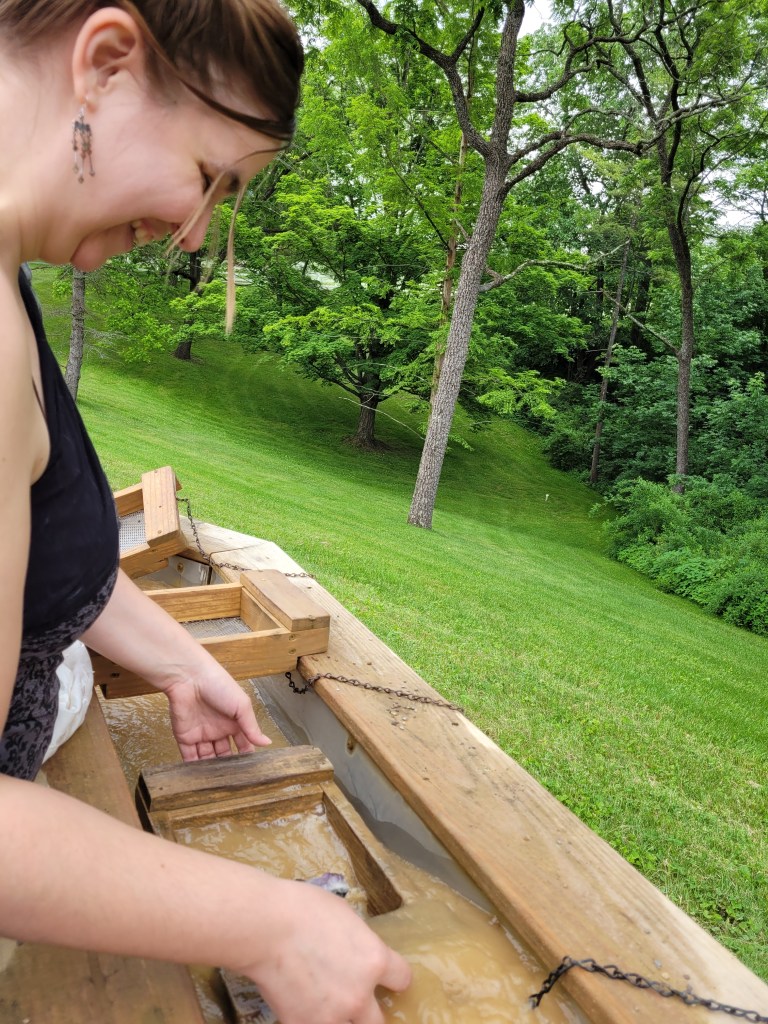
I also tried my hand at gemstone “panning” which was a decidedly canned experience, but I was there for a lark, so why not? It was fun to see what “prizes” turned up among the gemstones. I did not keep any of the stones I found, preferring to give them away since I had little use for them back home. I wandered the gift shop with my sister and was delighted by the man offerings they had. All in all, a pretty good day for a visit to a cave, learn some geological history, see cute animals, and enjoy some local folklore.
How can you visit a cave and take in these natural wonders?
There are many show caves throughout the country and each will have its own claim to fame. With over 45,000 caves to choose from, I can almost promise you, dear reader, that someone has transformed a cave near you into an easily accessible tourist attraction. Penn’s Cave is unique in that it is a boat tour rather than your typical walking tour, but there are other caves with boat tours. The states east of the Mississippi tend to boast the most caves in the United States with Tennessee, Missouri (outlier), Alabama, Kentucky, Indiana, Virginia, West Virginia, Georgia, Arkansas, and Pennsylvania topping the list.The US is uniquely situated on top of a sizable amount of limestone that has been easily carved over thousands of years by water giving rise to our numerous caves. This is also why we have so many sinkholes – so it’s not always a good thing to have so much limestone. For most of your caving experiences, I do recommend you bring a sweater or other warm jacket since the majority of these caves are about 50 degrees year round even on the hottest summer days.
For the extra adventurous, there are caves that you can go spelunking in. However, be warned it can be quite dangerous without proper equipment, preparation and guide to assist you on your first few adventures. It is recommended that you always tell someone when you’re going to explore a cave on your own. It is very easy to get turned around and lost. My strong recommendation is that if you do desire to do this, see if any of the show caves offer caving courses and take them so that you are fully aware of the dangers and how to mitigate them. I cannot stress the dangers of this activity enough. The goal of this blog is for us to have fun and live life to the fullest, not perish alone in the dark. Be safe, dear reader!
Completed:
Miles from home: 23
Cost: Cavern + Wildlife Tour $40.50 (cave only $24.50)
Looking for more inspiration for your Bucket List? Check out mine here and my reverse Bucket List here!
I am not, dear reader, a financial expert. I am a social worker by trade, so I certainly am not one to come for advice on lucrative careers. Despite my lauded profession for the good it does society, the electric company has yet to accept the goodwill that I have generated as a form of payment. Nor does the grocery store accept client hugs or testimonials – privacy laws notwithstanding.
However, as this is the Budget Bucket List, I do feel that it is high time that I address the elephant in the room of budgeting so that we can have the funds to check off our lists.
The most basic budget is essentially three steps. Track what’s going in, track what’s going out, and set your spending limits and savings goals. Easy peasy. What’s in is probably pretty easy, it’s your job. It’s adorable that all these financial websites talk about other sources of income as if we have multiple revenues, but we’re budget bucket listers. We either have one job or several part-time jobs just to get by. This isn’t 1960s where people could actually build wealth, this is the 2020’s where nearly 60% of people don’t make enough money to be considered middle class anymore.
The what’s going out part is a bit more tricky and this is probably where I have the most difficulty with financial websites because they will often put things under two categories “fixed and variable” and then act like the variables are in your control. Yes, gas is a variable expense but one cannot control the price of gas and at a certain point, the cost of gas is just what it costs me to go to work to earn the money I need to live. The fixed expenses are your housing, car, insurances, etc. Some utilities will be under this, but not all your utilities. The variable expenses are things like food, gas, entertainment and shopping.
So, how do I cut the costs of my variable expenses, even though at a certain point, you have to spend the money in order to exist and you don’t control the costs of things, especially in this economy. They may not be the most savvy tips in the world and they certainly won’t tell you how to build a stock portfolio, but in the next four posts I will share the things I do to keep the cost of existing down so I can afford the cost of actually living.
Utilities are one of those inescapable expenses—right up there with taxes and “unexpected” car repairs. Whether it’s keeping warm in winter or cool in the middle of a July heatwave, there’s always a baseline cost to existing indoors. While I can’t always control my energy rates, I can control how much energy I use. Here’s how I keep my bills manageable without turning my home into a tundra or a sweat lodge.
My home runs on electric heating and while we have the duct work to have central a/c, we have to rely on window units, so I’ve learned to get creative. In winter, I embrace layers, throw blankets, and hot tea. I also make sure to hang thick curtains. In summer, blackout curtains are my best friends—especially since my sun-blasted front windows face south. The bonus? Those same curtains help trap heat during colder months. Windows are, unfortunately a huge source for either gaining heat in the summer or losing heat in the winter.
Another thing, I really recommend for both winter and summer is to weather-proof your home as much as possible. You would be shocked at how much trouble a small draft at your front door can cause. A few years ago, I was able to upgrade my windows and doors which really helped reduce how much I was paying for heating and cooling because it meant I was able to keep the heat out in the summer and the cold out in the winter. The upgrades honestly paid for themselves in terms of energy savings over the course of a year.
Over time, we’ve also made several other changes that have really helped. As older appliances have needed replaced we’ve opted for energy-efficient ones. We also swapped out light bulbs. We turn off and unplug devices when not in use. We ditched the dryer in favor of hanging our clothes. We’re currently making the switch to more natural fabrics meaning we will need to wash our clothes less. All of this to be more sustainable, environmentally friendly and budget friendly.
In my state, we can shop around for electric providers. I always go for a fixed-rate plan at the lowest cost available. This also means that I don’t have to worry about my energy use during the day as variable rates can be effected by “peak times”. If you happen to have a variable rate, make sure you’re looking to see when it’s cheapest to run your appliances and adjust your usage accordingly. My utility company averages my bills over 12 months, which helps with budgeting, even if the number still feels annoyingly high some months. Comfort has its limits, but so does frugality.
Add heavy rugs and draft stoppers to block chilly breezes
Set your water heater to 120°F (no one likes scalding showers anyway)
Run dishwashers and laundry at night during off-peak hours (if you have a variable rate)
Wash clothes in cold water (your clothes will thank you)
Use a programmable thermostat.
The last will (hopefully) be my next home upgrade as currently, I have a very old thermostat system where I just turn a dial to turn the heat up or down. This means I am constantly having to turn the heat up and then turn the heat down depending on the weather and when I will be home. I can’t turn it off completely when I’m gone because I have pets, but I do try to turn it off for at least several hours every day during the winter. I am sure that just like my windows this upgrade will pay for itself in energy savings. Don’t be afraid of upfront costs if you know it will save you money over time.
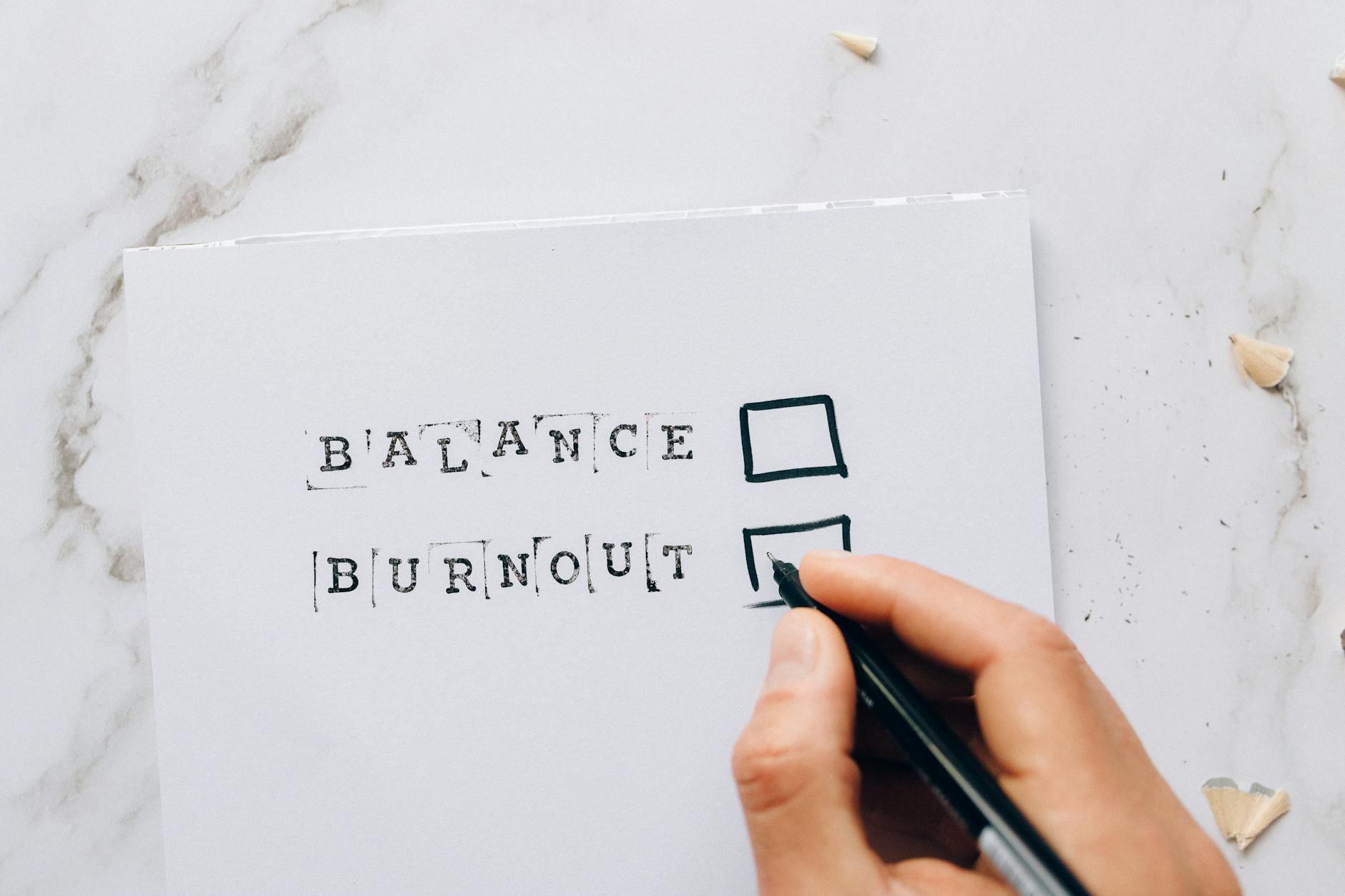
It may seem shocking to people who know me as a bit of a workaholic, but rest isn’t a reward. It’s not something we earn by slogging through long days, hitting every deadline, or checking every box. Rest is a fundamental human need. Still, how often do we hear ourselves or others say, “I’ll rest when I’m done,” or worse, “I can sleep when I’m dead”? An amusing turn of phrase to be sure, but there’s hard truth behind it and that truth often lands us squarely in the doctor’s office or emotionally drained on the bathroom floor.
Rest isn’t a luxury. It’s a lifeline.
This is hardly a new idea. In fact, it’s deeply rooted in the rhythms of life and spirituality. Two of the major monotheistic religions, Judaism and Christianity, place rest at the center of their practice. In both traditions, followers are instructed to rest every seven days, mirroring the divine pattern of creation. Jesus himself reminds us: “The Sabbath was made for man.” That is, we were created to rest. It is not merely permissible; it is essential.
Nature mirrors this cycle. Soil that lies fallow becomes fertile. Trees drop their leaves to rest in winter. Crops rotate and fields pause. So why do we, of all living things, believe that perpetual output makes us better?
Ironically, research shows the opposite: productivity increases when we work less, not more. Countries with shorter workweeks and more frequent breaks often report higher productivity, not lower. It’s not about working harder; it’s about working smarter and that includes knowing when to stop.
There was a video circulating online of two people racing to move bottles into a box. The first ran the length of the line, starting from the farthest bottle and working toward the closest. The second began with the closest bottles, exerting more effort up front. Though they both moved the same number of bottles, the first person conserved energy, maintained a steadier pace, and completed the task with less fatigue. The lesson? We aren’t machines. Even in short bursts, poor pacing exhausts us. Conserving energy through rest lets us go further.
Beyond productivity, rest is a matter of health. Chronic stress has been shown to reduce cognitive performance, compromise immune function, and even shrink parts of the brain related to memory and decision-making. One study found that high stress can drop your IQ by as much as 20 points in the moment. That’s not just inconvenient; it’s dangerous. When we’re running on fumes, we’re more likely to make poor decisions, lash out, or withdraw.
Here’s where things get even more interesting: when we rest, we’re not just recovering. We’re improving. Creativity increases. Problem-solving sharpens. Emotional regulation steadies. We return to ourselves.
I used to think I couldn’t rest until everything on my list was done. Laundry needed folding, emails needed replies, the garden needed weeding. There was always something. I would sit down, tea in hand, only to jump back up at the sight of a dusty shelf or an unchecked item on my to-do list. I felt guilty for resting. It felt lazy. But I’ve come to understand that rest itself is a task, one just as essential as any errand. If I only ever rested when the work was done, I’d never rest at all.
Now, I protect my rest. I schedule it, defend it, honor it. Just like I wouldn’t skip meals, I won’t skip rest. And something beautiful has happened: I’m more present. More focused. More me.
Practical Ways to Prioritize Rest
Schedule it. Treat rest like an appointment. Block it off.
Start small. Try a “mini-Sabbath”: 30 minutes of screen-free silence, a guilt-free nap, or a short walk with no destination.
Name your rest. Know what makes you feel restored—books, baths, hikes, baking, journaling, music.
Watch the guilt. If you feel it creeping in, treat it as a signal—not to push harder, but to ask yourself why rest feels wrong.
Other cultures have long understood this need. In Spain, the siesta remains a valued (if shrinking) tradition. In Japan, the concept of forest bathing walking quietly in the woods is seen as medicine. Scandinavians practice hygge, a cozy kind of restful living that celebrates softness and slowness. These aren’t lazy practices, they’re wise.
Rest also helps us manage crisis. When I’m in a high-stress period, family illness, professional setbacks, emotional upheaval, I know now that my first move isn’t to power through. It’s to pause. Even five minutes of stillness can reset my thinking, stop a spiral, and allow my rational brain to return. Otherwise, I’m just making tired decisions on a tired brain that will create more problems down the line.
Let me be clear: sometimes we do need to push through. Emergencies happen. Sacrifice is real. But those should be the exception, not the norm. If we consistently ignore our bodies and brains when they beg for rest, we won’t just burn out; we’ll break down.
We live in a culture that worships hustle and labels exhaustion as noble. It tells us to chase productivity like a prize. We see rest as a reward to be earned something we get only when everything else is perfect. But life doesn’t work that way. There’s always another errand. Another inbox. Another obligation.
So here’s your permission, if you needed it: you don’t have to finish everything to earn rest. You’re allowed to stop. You’re allowed to care for yourself not because you’ve done enough but because you are enough.
Rest isn’t about checking out. It’s about tuning in. It’s the quiet space where we meet ourselves again.
So kick up your heels, grab a cup of tea, find your favorite corner of the couch, and take the rest of the afternoon off. You’ve got nothing to prove. And everything to gain.
Reflection prompt: When was the last time you rested—not because you earned it, but because you needed it? What changed afterward?
In the world before COVID, there was a growing tradition in my local city. A secret, invitation only pop-up party to kick off the summer season. One could only be invited. There was no ticket payment system or special way to get in. You simply reached out to have your name on a list. Then the list for invitees was opened and you could sign up to go (at least that is what happened the year I went and my sister went). Those in the know, knew how to find their way to this not well advertised gem. I heard about it through the grapevine, whispers in the community of such an event and with a little investigation, I found it.
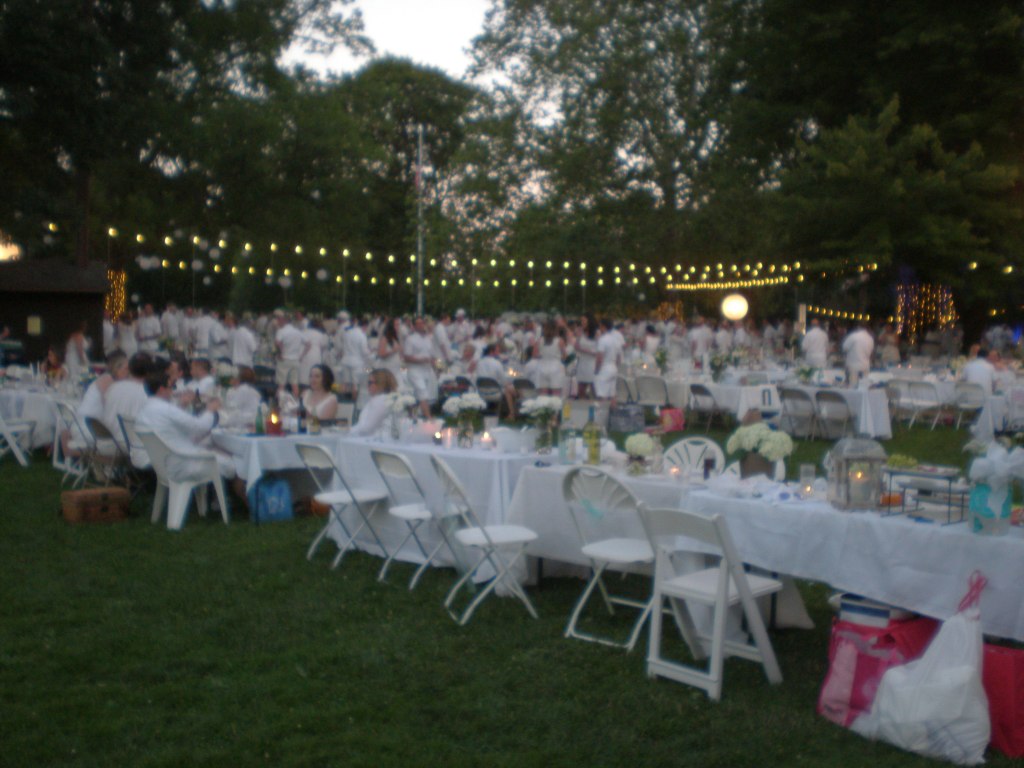
Despite the location of the event being a closely held secret, the theme of the party was not. Fete en Blanc or Party in White was a premier event. Everyone, dressed up in white, brought their own picnic, wine, tables, chairs and table decorations to create the signature party of the summer. Courtesy of our hosts, they provided the decorations and music. You found yourself seated in a long row next to neighboring tables and just enjoying the spectacle.
OLYMPUS DIGITAL CAMERA
Fete en Blanc is one of hundreds of white pop-up parties started in Paris in 1988. The theme has always been the same. No one knows where dinner will be until the last moment and everyone wears white. You bring your own table and chairs and until recently you provided your own food. The tradition has spread to hundreds of other cities around the world. Some of them do have a ticket fee. Some are more strict on what counts as white. Whereas many places will allow “pops” of color or off white, Philadelphia is a strict white only. It varies from place to place.
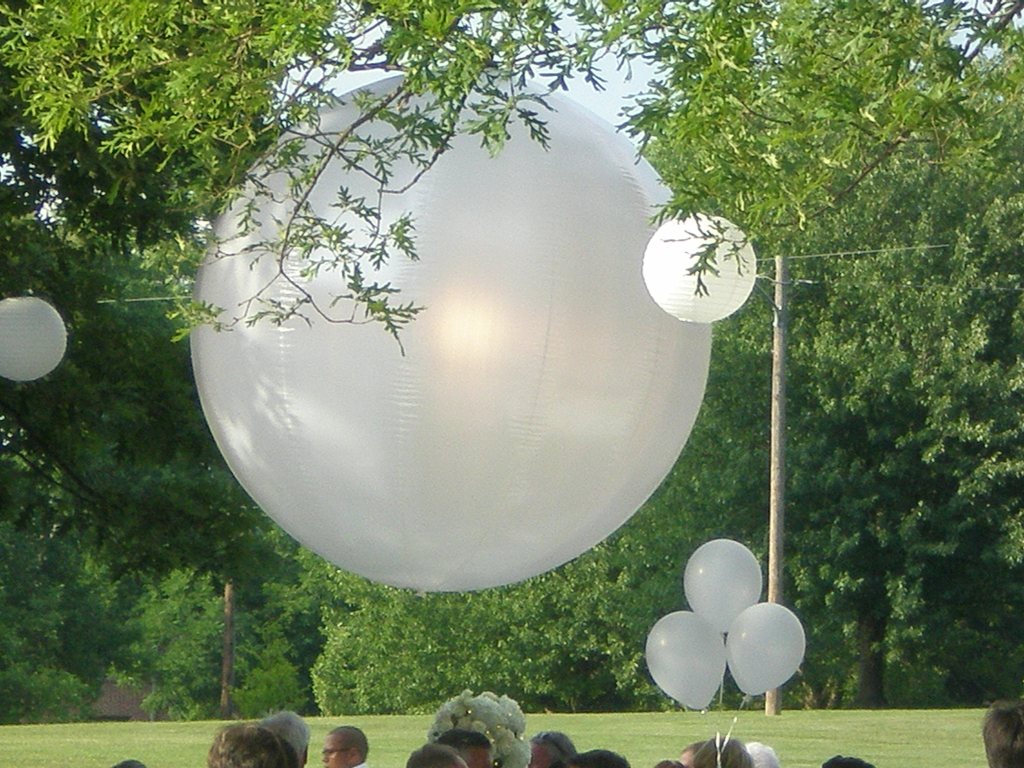
An army of volunteers helped to direct the crowd of people all overseen by an intrepid Master of Ceremonies to ensure all had a delightful time. The local park had been transformed into a magical world of floating spheres and twinkling lights. What made it special was precisely that it was not an event held only for those who could afford it. As tickets were free and by invite only, there was no monetary barrier to entry. As you were directed to sit wherever by the volunteers, one could easily find themselves shoulder to shoulder with Lancaster’s finest. Imagine what sort of friends one might make at such an event!
OLYMPUS DIGITAL CAMERA
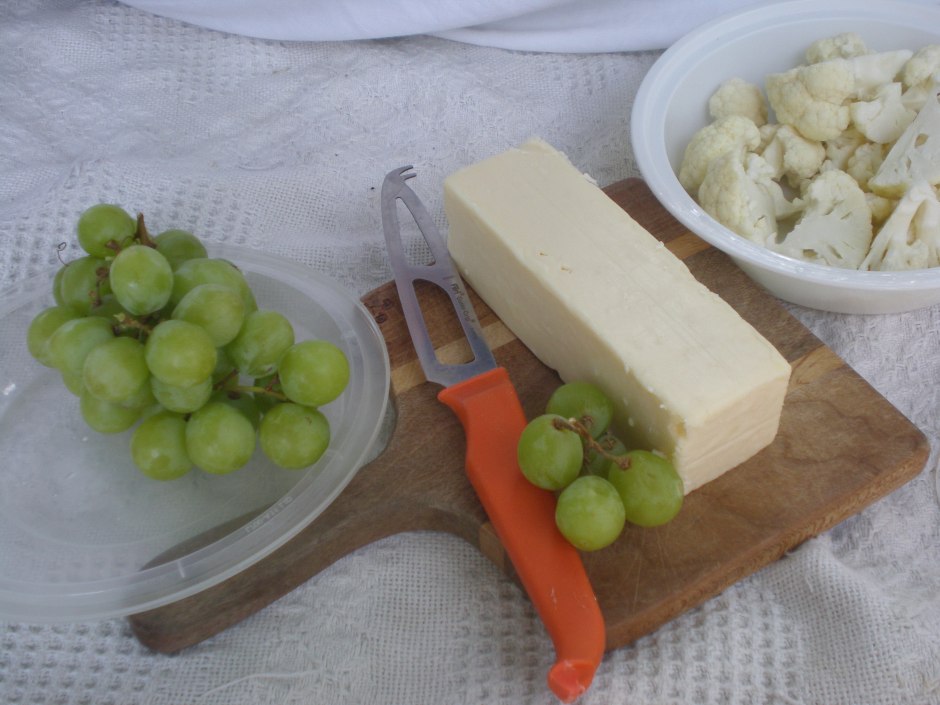
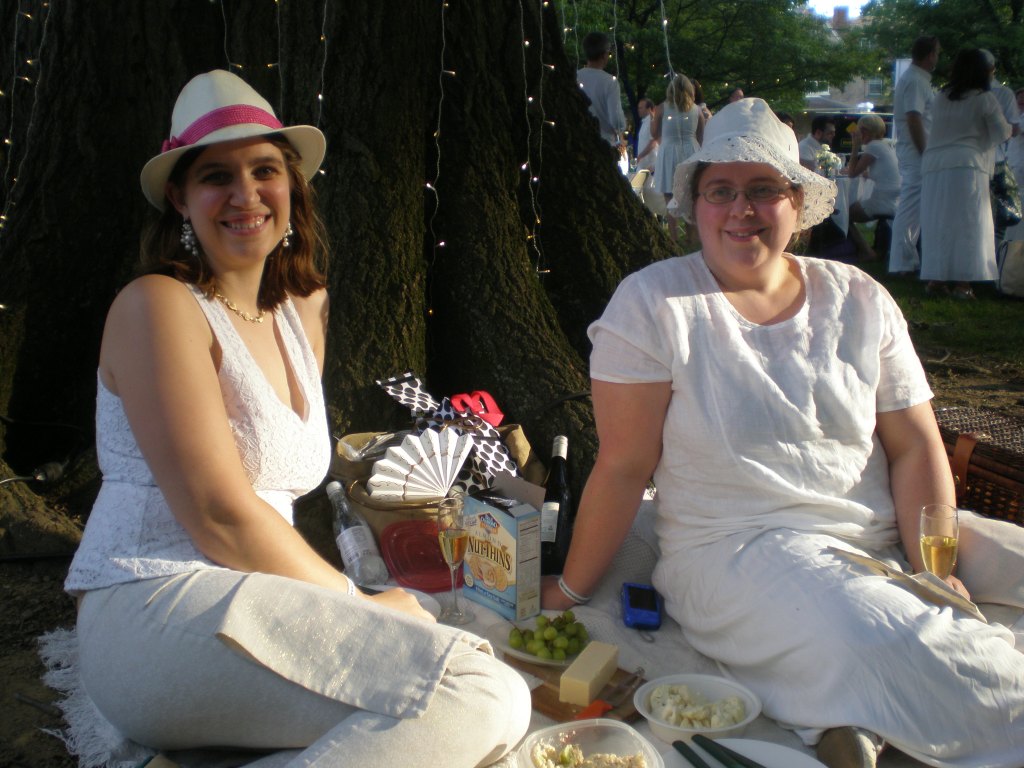
My sister and I did not have a table, so we spread ourselves out near the bottom of a tree. We enjoyed a spread of white wine, white cheese, white grapes, cauliflower and light crackers. After all, a party in white ought to have white food. However, me being myself, I could not resist just a small “pop” of bright, pink color on my hat. I always did have to stand out in a crowd and besides, rules were made to be broken, darling! As we ate, a duo of drummers moved throughout the tables, their pops of color stark against the white of the crowd. Their enthusiasm was contagious and all to kick off the summer season!
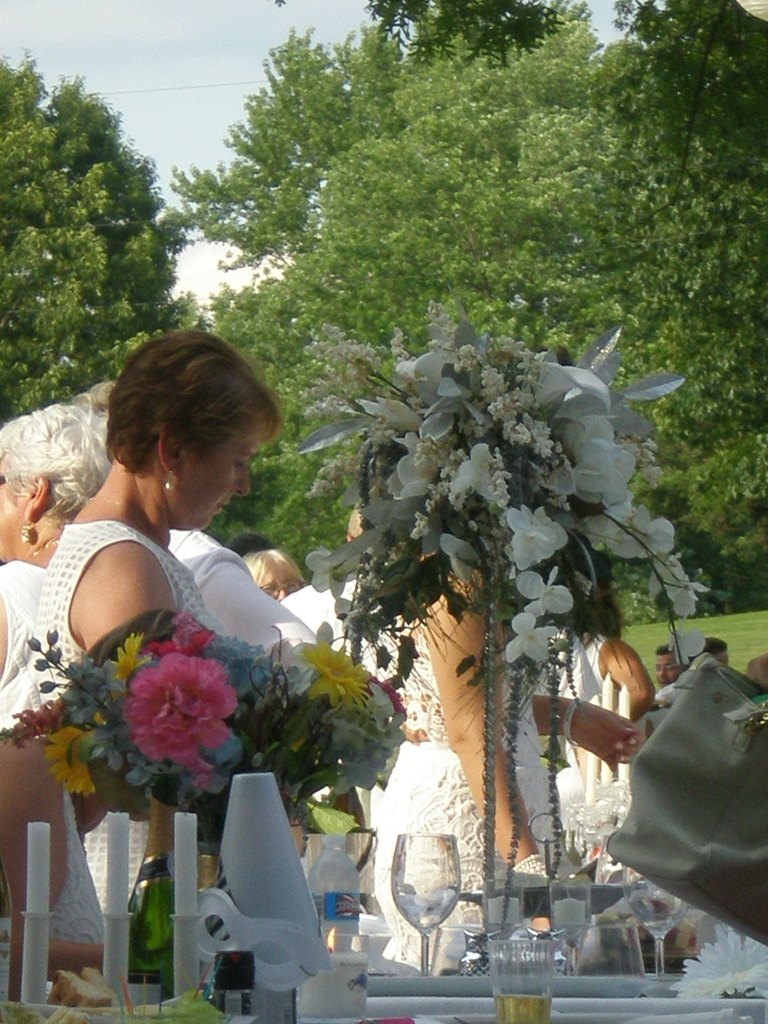
After we ate, we meandered through the crowd taking in the different decorations that graced the tables. Those who were clearly experienced party goers had some truly elaborate displays in stark contrast to our simple set up. As the dusk settled, the atmosphere took on an almost dream-like quality. One could almost believe you had been transported into an in-between realm with the changing of the season. Was the veil between worlds just a little thin that night? Perhaps, it was the wine, perhaps it really was the magic of midsummer.
We did not stay long into the night, both of us had work in the morning. So we packed up our small picnic and made our way out of the dream and back into reality. We were unable to snag tickets the following year in 2017 and in 2018, we determined we wanted to focus on new experiences rather than repeating ones we already had. Sadly, 2019, seems to have been the last year for Fete en Blanc at least for the Lancaster area. Covid came in 2020 canceling any plans for the event and I have not seen its return since. I hope to see its return one day as it was a truly special thing for our community. Perhaps with the advent of my new job I may have extra time on my hands and it is something I could organize here in my local community. It might be something to add to my list – throw a giant party for my community? What do you think dear reader?
OLYMPUS DIGITAL CAMERA
How can you experience a Fete en Blanc?
Well, as I said, our own local White Party does not seem to have returned after COVID, so if you happen to be in my area you will have to look further afield. If you do manage to locate one, be rest assured it is a difficult event to get into as most are lottery based given the demand for attendance typically overtakes the capacity of the given venue. In Paris, over 13,000 people may attend and they still do not have enough spaces for all the people who wish to go. Paris has a waitlist of over a million people and is considered one of the most exclusive dinner parties in the world.
The copy-cats around the world are little different in terms of demand outpacing capacity. Almost all of them take place between May and September as a celebration of the summer and given that they occur all over the world, there is a very good chance you can find one in your area. Given the difficulty and exclusivity of such an event, you may dear reader feel a bit disheartened by the prospect of ever experiencing the spectacle yourself even if you are nearby.
Now, what have we learned in such situations? When one cannot do a specific item, one can examine the principles and values of the experience. That is not to discourage you from throwing your hat in the ring and trying to get a coveted spot, after all most of the time it is a matter of throwing your name on a list and hoping your name is drawn.
OLYMPUS DIGITAL CAMERA
In this case there are many festivals, events, parties and even secret going-ons that are occurring in your local community. One must merely be attuned to what might be happening around you. I found that the more I got out to do things the more things I found to do. Your friends and family start reaching out with cool ideas that might interest you for your next adventure. They start inviting you to things to do with them. Do you know the number of your friends and family who want to do things but have difficulty finding people to do things with? When you’re the person always going off and doing new things, you’re often the first person they call!
I was not looking to do this party, I heard about it, signed up and snagged a coveted spot! I encourage you dear reader to get out and do! Soon enough you’ll be hearing about all the secrets your community has been hiding right under your nose!
There is also another option. Given that all that is necessary is a venue, some music, white decor and a few friends, there is nothing to say that you can’t start your own Fete en Blanc tradition in your local community. Imagine being able to give a bucket list experience to not only yourself but your whole town as well? That’s how Lancaster got started and I hope to see its return soon.
Completed: June 2017
Miles from home: 11
Cost: Free Invite – $30 for dinner supplies, I already had an entirely white outfit from my wardrobe
Now, while other people may be good at keeping secrets, clearly I am not. In fact, I’m revealing all my best secrets on how to have bucket list experiences on a budget both here on my Bucket List and here on my Reverse Bucket List.
This is a list of all the major cities that hosted a Fete en Blanc in 2018
We all have goals and if you’re reading this blog, you probably have a long list of them like me. Things you want to do, places you want to see, milestones you want to accomplish. Some of the items on the list are more just for fun or it seems like it would be a cool thing, some are things we really do want to do and a few of them are deep, burning desires. It’s those last ones that this post is for. After all one will not obtain goals simply by sitting around awaiting the golden opportunity. As in a previous post, sometimes fate needs a little nudge in the right direction. If one is going to achieve something truly worthwhile then it stands to reason that one will be putting a significant amount of effort into the cause.
Obtaining a goal is about clarity, focus and action. It’s those first two steps that often trip people up because before one acts one ought to take time to plan, right? Maybe not or at least not how most people plan. What if we stopped asking “How” and instead started to ask “What”?
I’m stealing this piece of advice from the business world for improving our lives and meeting our goals. It takes the classic approach of obtaining goals and turns it on its head. Most people set a goal then ask the next, seemingly logical question of, how am I going to achieve that? After all that’s the problem solving approach most of us were taught. You set a goal and make a plan which is always followed by “How am I going to do it”? However, that question is a trap! It’s a question designed to take you down a path that’s ineffective and frustrating, to get you bogged down in the details. You’re bound to get yourself so tied up in knots thinking of all the reasons you can’t achieve your goal and the seemingly insurmountable barriers that the question is bound to bring up. You lose your focus and start trying to break down the goal into other sub-goals to get around the barriers which only lead to more how questions. It can also get you lost in the illusion of taking the action of “planning” rather than the action of “doing”.
What skills and resources do I have to make it happen?
What resources do I have need?
What people should I connect with?
What will keep me motivated and inspired?
What will I do to celebrate the milestones?
What will I do when I’ve obtained this goal?
It’s about shifting you from thinking about a plan to actually doing the steps which will actually take you there. There isn’t time to worry about the barriers because you’re too busy ticking off your to-do list after answering those questions. It moves the goal from a what if to a when. In the immortal words of Zig Ziglar “when obstacles arise, you change your direction to reach your goal; you do not change your decision to get there”.
When I set out to start checking off my list, I didn’t really focus on the how. Had I done that, I probably wouldn’t have much checked off because I would have gotten caught up in all the barriers, the cost of travel, the distance, the time, the difficulties, etc. But because I’m not focused on the how, I’ve found that I am constantly finding and stumbling upon opportunities to complete my goals. When I decided to become a therapist, I didn’t worry about the exact how but rather the what college would I go to, what major, what jobs should I apply for? It also keeps you flexible to discover a different path to your goal that you may not have realized was there before. When becoming a therapist, I had a path that I thought I would need to follow, which was to get a PhD in psychology. Instead, I ended up with a LCSW, which was a much cheaper option. Had I been too focused on the how, I would have never strayed from the original “what” to a much better fit for my goal. I have a friend whose goal is to help people in a similar way and is in the process of becoming a Life Coach.
This simple but powerful change can help you go from merely goal setting to goal achievement.
One thing that I love about my Bucket List is that I’m almost always trying new things. I recently read somewhere that research indicates that when we focus solely on the interests we’re already interested about we can miss out on entirely undiscovered aspects of ourselves. We may limit ourselves artificially without even knowing it. We may love art and never take up a paint brush or admire finely made clothes and never consider sewing.
I never thought I’d enjoy a videogame but I certainly enjoy playing World of Warcraft (I’m a nerd deal with it). I wouldn’t have thought I’d like D’n’D but as it turns out, I do enjoy collaborative storytelling. I’ve discovered I draw the line at larping which was a surprise because I would have thought I’d love dressing up and acting out the story like D’n’D after enjoying D’n’D, going to the Renaissance Faire, acting, etc., but absolutely not for me. My sister is afraid of heights but I have discovered a thrill for them. I’ve learned I like hacking down trees and the physical labor of gardening. I don’t have the patience for a lot of crafts, but I love trying to hone my skills on the violin.
We don’t even need to do them well. We can do something poorly, in fact it’s almost better to do something poorly at first. After all, if we’re good at it then we think that we have a “knack” for it and then when we inevitably come up against a hurtle, we lack the skills we need to overcome. Sometimes just doing something for the sheer thrill of doing it is the best way to learn. When we have fun we aren’t focused so much on doing it perfectly as enjoying ourselves. We’re no longer motivated by outside rewards and people pushing us to do it. We are competing against ourselves, learning our way of doing things and probably becoming better than we would have if it just came easy.
I think it’s good to explore new things that we may have dismissed when we were younger or just missed out on. I remember thinking that learning to ride a horse wasn’t something I could do, but then I spoke with a work colleague who was taking lessons bi-weekly. Another work colleague had joined a small college’s orchestra after taking up the violin again post-high school which in part inspired me to take up the instrument once again. It’s caused me to re-evaluate what I can do as an adult and that maybe I didn’t actually miss out on opportunities or that I could return to things that I did as a child. As it turned out the only person keeping the doors shut to possibilities was me.
I’ve also been pushed to try things I wouldn’t have previously thought to try like Eco-dying, water tubing, and zip-lining. I find myself saying “sure why not” when presented with new adventures and raising my hand to volunteer at public events because “why not”? It was that attitude that pushed me to rent a car in Britain. Before, I’m not sure that I would have had the confidence to drive on the opposite side of the road because I’m dyslexic and ADHD with poor spatial awareness and their roads are tiny. Now granted I didn’t just hop in a car and drive out of London. I knew I was going to be jet lagged, without sleep for over 24 hours (I don’t sleep in planes I have insomnia, it’s a whole thing) and so even driving under normal circumstances would not be advisable let alone in another country, on the opposite side of the road. However, I was undaunted by the idea in part because I am already in the habit of getting outside my comfort zone.
And this is sort of a life hack. When we push ourselves, we feed our confidence and our feelings of competence. Which you may think, “wait, didn’t she just say that some of the stuff she was bad at? So how does it help her feel competent?” Yes! Here’s the awesome, amazing thing, it didn’t kill me! It didn’t end me and in fact, I embraced being bad at it at first because I’ve learned to enjoy the process of mastering something. It’s about learning and growing your inner self not just checking boxes and doing something for an afternoon before swiftly moving on to the next thing. I feel more competent to try things and look foolish even in front of others. I am conquering anxiety and loving it!
We are wired for growth, not stagnation. We are meant to go, explore and conquer. Too many times we assume that we will stay the same person that we are today until we die, that we’ve already completed our growth. However, that’s not the case and studies show that its the people who don’t stop growing that live longer, healthier, happier lives. So what are you waiting for? Go out and try that new thing!
It is easy dear reader to compare ourselves to others especially since others splash their lives up on social media for all to see. Granted, they are curated versions of themselves, but it’s so difficult to remember that. We see people more successful, more well traveled, in the perfect job, having the perfect relationship, enjoying their children, wearing the latest fashion, doing whatever it is we wish we were doing. The algorithm is merciless in that it shows us that which we engage with and of course we are going to engage in the very things we long to have and thus the viscous cycle.
In focusing so much on all the things we do not have, we lose sight of the things we have. We are lost in the mire of have not. Not only that but it robs us of the joy of the things we previously had. How often have we finally received that which we asked for, full of joy and wonder only for a few months later to be grumbling about it?
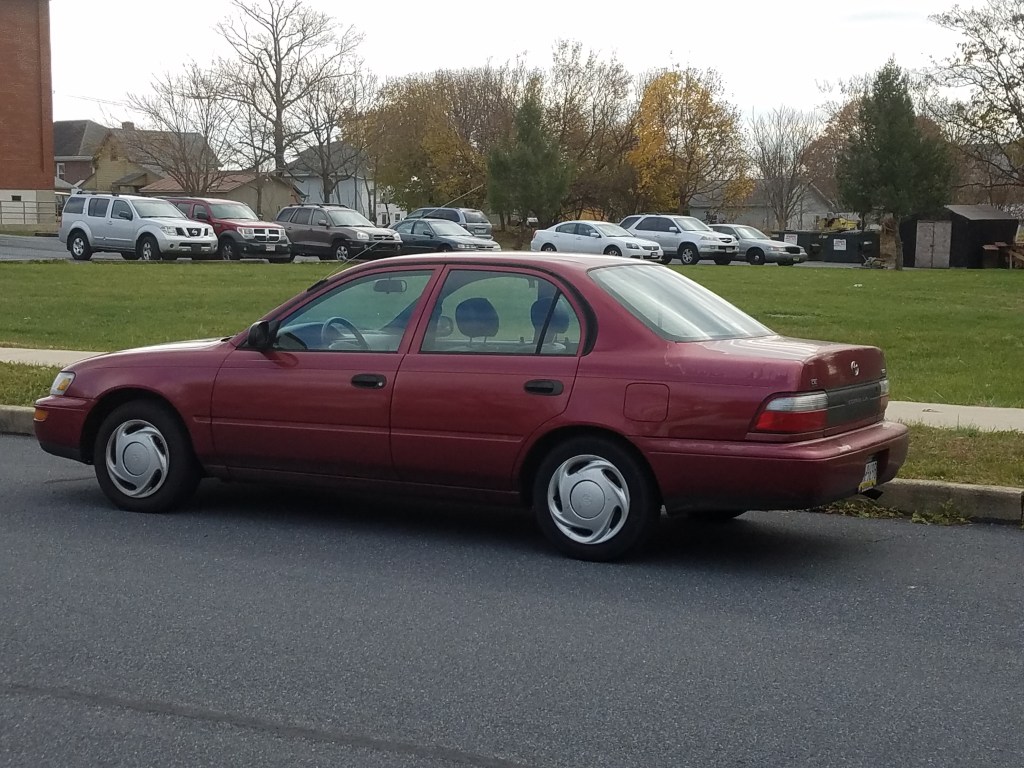
When I received a rather cheap car that had been through a hailstorm and was close to 20 years old, I was incredibly grateful and amazed at my luck. After all, having not had a car before, having any car was a dream. However, it wasn’t long before the twinges of comparison started. It was by no means a looker in the car department with its dents, faded color and sagging cloth. It was clearly old and not only that but also dented from the hailstorm. When I was interning for an organization whose donors were from the higher echelons of society, I was embarrassed by it. Where was my joy? Where was my gratitude? And frankly, why did I care what they thought?
We pray for a house and then grumble that it doesn’t have a living room and a family room after visiting our aunt’s house. We pay for new floors and then wish we had paid for a vacation instead when we see our friend’s Instagram photos. We give our boyfriend the cold shoulder when Jill from accounting flashes her new engagement ring. We force a smile when our sister announces her second pregnancy and then go home to cry. Our best friend gets a promotion at work and we feel that we’ve fallen behind now. We scroll online and see a headline of a 26 year old retiring using the Fire Method or a list of 30 millionaires under 30 when our 40th birthday looms ever closer. We forget what we have when we start focusing on others. Their blessings become our lack.
Do not get me wrong, ambition and wanting more can be great things. After all, it’s drive and ambition that has put a man on the moon, given us electricity, discovered antibiotics, written symphonies and painted masterpieces. Without it we wouldn’t have our modern world. Competition can also be a good thing when you have someone to push against and with, you both can end up going further than if you were by yourself. However, when that comparison of value and worth starts to creep in, we lose. Part of the problem is that there is always someone above us on the ladder of life and we tend to look ahead of us rather than behind us.
When you move to a nicer neighborhood that you’ve dreamed of being able to be in, after a few months you start seeing the cracks in the sidewalk, the unkempt garden (sorry, neighbors I don’t use herbicides, it’s more a habitat for pollinators) and soon the next neighborhood looks much better. Each house is detached with a garage and clearly has plenty of space each surrounded by a nice neat fence. If you do manage to move then you start eyeing the one where everyone has a 3 to 5 door garage, the houses are more accurately described as mansions with private pools and there’s even a gate to keep out the riff raff. We are so prone to eye the next rung up to strive for what we do not have that we become burdened by ambition creating our own gilded cages of dissatisfaction and envy.
No matter how much we get, how far we go, how much we achieve, it will never be enough so long as we keep comparing ourselves to others because we can never win. The happiest people I know are the ones who live simply unburdened by things, pretenses and social status. They’re the ones who live in the woods or cultivate a small garden in the midst of their urban center. They snuggle cats and walk their dogs. They form genuine connections with others.
Not only does comparison rob us of our joy, but also it robs us of shared joy with others and the connections those shared joys can form. Rather than celebrating those we care most about and instead those moments are like small thorns twisting in our hearts poisoning our spirit. It also poisons our relationships causing a rift to form as you turn away. You begin to question your value and what you bring to the relationship. Perhaps, they sense your distance and wonder at your less than enthusiastic response to their news. They may attribute it to jealousy rather than feelings of inadequacy which can erode the foundations of your relationship.
It robs them of their joy as well. Have you ever gotten great news and when you shared it with someone you got a less than enthusiastic response? What about one that sucks the joy right out of you, leaving you with guilt or remorse? Yes, there are certain circumstances where two people cannot have the same thing, two friends may enter a contest knowing that if one wins the other will lose, but often that’s not the case. If my friend gets a promotion and I respond making it about me and my lack of one, I’ve just diminished her joy instead of amplifying it.
This isn’t to say that you can’t feel how you feel. After all, when you have worked really hard to get somewhere only to see someone else seemingly skate on by to the top, it can be incredibly frustrating and disheartening. You absolutely should let yourself feel those feelings in order to process them. I never recommend suppression and pretending. You can be joyful for another’s triumph while holding your own pain. That’s why I speak about joy rather than happiness. I don’t want to be happy, I want to be joyful.
However, bitterness against your circumstances, the world and even those you care about can set in. Usually, it’s not about the not having, it’s about what the not having means, that you’re less than everyone else. You’re not your job title, your social status, your income bracket, your marital status or any of the world’s measures for worth and value. Focusing on what brings you joy and bringing beauty, kindness, compassion, hope and love to the world are far more worthy pursuits than keeping up with the Joneses. Besides, why do we care what they think? If they look down on you for not having a brand new car or being able to go on a vacation in Belize every summer, that speaks to the low level of their character not yours.
When we stop worrying about what others think and embrace ourselves fully we find joy. When we stop comparing ourselves to everyone around us and “above” us, we find that we are enough just as we are. You are enough, dear reader.












 Budget Bliss: Bucket List